Sunday, November 28, 2021

Quiet Time


St. Thomas’ Episcopal Church, Owings Mills MD
November 28, 2021

Year C: The First Sunday of Advent
Jeremiah 33:14-16
Psalm 25:1-9
1 Thessalonians 3:9-13
Luke 21:25-36

Quiet Time

Well, last Sunday we had quite the celebration of our new ministry together!
Thanks to the talent and hard work of so many parishioners and our staff, the church and grounds looked beautiful, the music was beyond excellent, and it was so good to finally have at least some fellowship in the hall – the chance to enjoy each other’s company, not to mention those delicious cupcakes, each bearing the seal of our church – such a classic St. Thomas’ touch.
And it was great to have our bishop here with us.
And my dad was here, as well as a few good friends from New Jersey.
And it was especially wonderful to see so many parishioners at both services, including more than a few I had not met before, and an encouraging number of children and youth, too.
And let’s not forget all those Thanksgiving dinner bags – over 180 of them – so much overflowing generosity from our parish and preschool to our neighbors in need!
Yes, it was quite a day. 
Everyone seemed overjoyed to celebrate the official start of our work together – and, maybe more than that, everyone just seemed excited to be together again.
And, as for me, I think I know how St. Paul felt when he wrote these words to the Thessalonians:
“How can we thank God enough for you in return for all the joy that we feel before God because of you?”
St. Thomas’, how can I thank God enough for all of you? 
How can I thank God enough for this holy and amazing place?
Of course, I do have an advantage over Paul, because he was far away from his beloved Thessalonians, but you and I get to be together on a regular basis!
But, you know, as great as last Sunday was, I do have a few regrets.
Not everyone was here – some parishioners were out of town – and my mother couldn’t be here, though I’m glad to say that Sue and I and both of my parents celebrated a beautiful Thanksgiving together in the rectory.
Another regret is that since we were busy celebrating our new ministry together, we did not get to commemorate the last Sunday of the church year: the Feast of Christ the King – although Wanda and the quartet did give us a glorious rendition of Crown him with many crowns.
So, if you don’t mind, today I want to spend a few minutes talking about Christ the King.
Unlike most of the rest of the church calendar, which is pretty ancient, the Feast of Christ the King is relatively new, dating to only 1925.
Back in the 1920’s the leaders of the Roman Catholic Church recognized that Christians – lots of Christians – were putting their ultimate trust in the “kings” of the world.
There were strongmen taking charge of countries, elevating themselves to the place of God, and demanding absolute loyalty from “their” people.
And, in a search for salvation, or at least solutions to their very real problems, growing numbers of people were putting their faith in ideologies and political and economic systems – the “isms”  - including nationalism, fascism, communism, and capitalism.
So, in response these distressing and destructive developments, the Catholic Church, and soon after, Anglicans like us and Lutherans and other churches, adopted the new Feast of Christ the King.
This relatively new addition to the calendar is a pointed reminder that our king is not a political or military leader.
Our king is not an ideology or a system.
Our king is Christ the King.


A century ago, one of the Christian leaders concerned about Christians following kings other than Christ was our own homegrown Episcopal saint, Samuel Shoemaker.
You may remember I talked a little bit about Shoemaker on All Saints’ Sunday.
He was baptized at St. Thomas’, grew up in Greenspring Valley, celebrated his first Holy Communion as a priest right here in our church, and is buried in our graveyard, just outside the church door.
Back in the middle part of the last century, Sam Shoemaker was perhaps the best-known Episcopal priest in the land, writing a couple of dozen books, broadcasting on the radio, and releasing his sermons on records.
Today he is best remembered for providing the spiritual foundations for AA, and all the other Twelve Step groups that have followed.
As I’ve been learning more about Shoemaker, I’ve become convinced that he has a lot to say to our own time today, when, let’s face it, many Christians are again – or still – placing their ultimate faith in “kings” other than Christ.
Throughout his preaching and writing, Shoemaker plotted a course for us to follow back to Christ – it was this path that AA’s founders borrowed to help people achieve and maintain sobriety.
And one of Shoemaker’s bedrock principles and practices was what he called Quiet Time.
For Shoemaker, Quiet Time was so important that he capitalized it.
Quiet Time.
Shoemaker repeatedly urged people to practice Quiet Time, ideally in the morning before the start of the business and busyness of the day.
Shoemaker taught that there are three main parts to Quiet Time.
First, is Bible study – to spend some time with a passage of scripture, to attentively read and ponder God’s Word. 
The second part of Quiet Time is prayer – to open our heart to God – to let God know what God already knows: our needs, our hopes, our fears, our regrets.
And the third is the quietest and, for Shoemaker, the most important part of Quiet Time – to simply listen for guidance from God.
You know, the “kings” of the world are usually noisy, clamoring for our attention, aiming to drown us in words and slogans, numbing us into submission.
But Christ is a different kind of king, a quiet king.
That’s why for Shoemaker, “listening became the dominant note” during Quiet Time.
A hundred years ago, people were busy just like many of us are busy today.
A hundred years ago, people were distracted by demands on our attention and weighed down by worry and grief, just like many of us are distracted and weighed down today.
But Shoemaker insisted that Quiet Time was essential.
And, by the way, AA borrowed Quiet Time from Shoemaker, and, in fact, during AA’s early days, Quiet Time was seen as even more important for recovering alcoholics than attending the meetings that are the best-known part of the program.
Quiet Time.

And now here we are today - the start of a new church year – the First Sunday of Advent.
In an effort to draw our attention to this holy season, we’ve made a few changes to our service, including switching our liturgical color to blue, the color often associated with hope and with the Virgin Mary, the young woman whose faith and courage will be at the heart of the Advent story.
And there’s our beautiful wreath, its candles reminding us that Advent is an all-too-quick season of just four Sundays – with the third Sunday represented by a rose candle, signaling that Christmas joy will soon be here.
Today and over the next few weeks, we will prepare for the birth of Christ the King, our king who was born not in a grand palace but quietly, in an out-of the-way and barely adequate place, recognized by almost no one.
And, as we heard loud and clear in today’s gospel lesson, during Advent we will also prepare for our king’s return on the Last Day.
With all the commotion and distractions of the world, I know it’s not easy, but Advent is meant to give us a few weeks of Quiet Time.
It’s an important opportunity, so let’s not miss it. 
  During these Advent days, let’s set aside even just a few extra moments for study, prayer, and, most of all, listening.
This quiet Advent, let’s once again place our faith and trust in Christ the King.
        And, if we do that, Jesus assures us that there is really nothing to fear from the inevitable troubles and tribulations of life – nothing to fear from the false kings of the world.
So, as a new year begins, together, let’s pray for a holy Advent - and for some much-needed Quiet Time.
Amen.

Sunday, November 14, 2021

God's Place


St. Thomas’ Episcopal Church, Owings Mills MD
November 14, 2021

Year B, Proper 28: The Twenty-Fifth Sunday after Pentecost
1 Samuel 1:4-20
1 Samuel 2:1-10
Hebrews 10:11-25
Mark 13:1-8

God’s Place

Usually you see me wearing a mask, so maybe you can’t tell that I’ve been having a wonderful time here with all of you.
It feels like I hit a kind of spiritual jackpot that I get to serve beside so many devoted and wise lay leaders, most especially our wardens.
It feels like I hit a kind of spiritual jackpot that each day I get to work with an incredibly talented and hardworking church staff. As many of you know, they really are quite a team.
And, although the pandemic has limited our opportunities for fellowship, it feels like I hit a kind of spiritual jackpot that I have the chance to get to know you, to learn your stories from the past and your dreams for the future of our church.
And next week, Bishop Sutton will be here to make the whole thing official!
One of the best parts of these first months together has been traveling around with our friend Caroline Stewart. She has been introducing me to lots of ministry leaders in our community – and I’ve benefited from her knowledge and wisdom as we make our way around town.
But, it’s not just Caroline. About a week and a half ago, Kathy Capp and Betsy Wilmerding brought me down to Pigtown, where we toured Paul’s Place – a profoundly life-giving ministry, that, as many of you know, St. Thomas’ has supported for many years, including by providing countless casseroles and innumerable sandwiches.
We saw the dining room where hungry people were being fed a hearty midday meal. We saw the kitchen and met the cooks who take such obvious pride in their work. We saw the laundry facilities, where guests can have their laundry washed and folded. We saw the computer room that allows people to keep in touch with the outside world and where they can get help with resumes. We saw the “boutique,” a room arranged like a real clothing store, giving people the dignity of choosing their own clothes. And we saw the culinary school, offering a viable career path without amassing student debt.
And, finally, we had lunch at Groundwork Kitchen, the beautiful new restaurant operated by Paul’s Place, where the culinary students get to put their skills to work.
It was a delicious meal.
For me, the most memorable moment of the visit came when right at the start when we were looking at the Paul’s Place dining room. One of the guests, maybe because of drugs or simply the exhaustion of poverty, fell asleep in his chair, his face sliding onto his plate of food.
One of the workers noticed and came over to him. He gently, almost tenderly, placed a hand on the poor man’s shoulder to wake him, and handed him a napkin so he could wipe his face.
That simple and beautiful act told me all I really needed to know about Paul’s Place.

Another reason I feel like I hit a kind of spiritual jackpot is the incredible beauty of this place, especially now with the riot of gold, orange, and yellow that’s all around us.
All of that color and the morning chill tell us that the season is changing out there, and there are signs that the season is changing here in church, too.
It’s a little hard to believe but in just two weeks, it will be Advent, a brief, four Sunday-long season, a season with two distinct themes. 
One is the preparation for Jesus’ birth. 
And the other is looking ahead to the last day. 
And, in today’s gospel lesson, we most certainly heard some hard and frightening words about the last day, or, actually, the days before the last day. 
Jesus and his disciples have just left the Jerusalem Temple. And one of the disciples, sounding very much like he was on his first trip to the big city, looks in awe at the Temple. But, who can blame him, since the Temple was the religious and cultural heart of the Jewish people, a spectacular structure that one of the wonders of the ancient world.
The disciple says, “Look, teacher, what large stones and large buildings!”
But instead on agreeing with the disciple’s honest and kind of endearing observation, Jesus replies with a shocking prophecy: “Do you see these great buildings? Not one stone will be left here upon another; all will be thrown down.”
And, about 40 years later, Jesus’ frightening prophecy was fulfilled.
In the year 70, the Romans burned the Temple and looted its treasures. Eventually, by the time they were done all that remained was just a massive retaining wall – the Western Wall – which stands to this day.
It’s hard to describe the magnitude of this disaster for the Jewish people. But, try to imagine it: the holiest place on earth – the place where, in a sense, God was believed to dwell – God’s Place – was no more.
In the face of such a catastrophe, it was easy to assume that this really was the end - that the last day had arrived.
At first, it must have been nearly impossible to imagine a future.
But, over time, the Jewish people went on without the Temple and its sacrifices, recognizing and remembering that God’s Place has always been and will always be with God’s People.
And, over time, the little band of Jews who claimed Jesus as Messiah – they went on without the Temple, too.  They recognized that God’s Place is wherever the Body of Christ gathers – God’s Place is wherever and whenever we continue to share the Good News in word and deed.
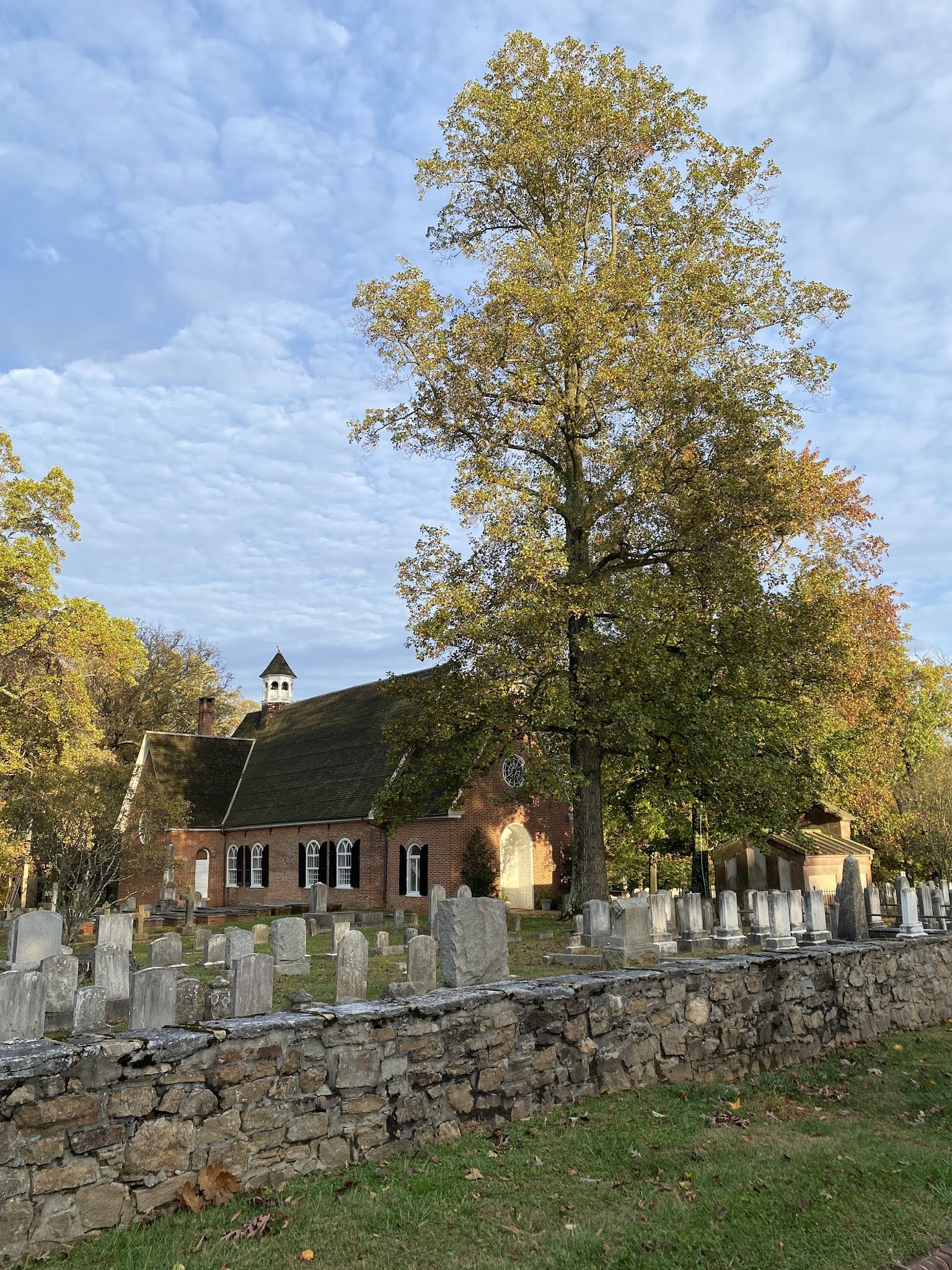
So, God’s Place is certainly here in our beautiful temple, where generations of faithful people have gathered, bathing these old walls with prayers of hope and thanksgiving.
And, long ago, God’s Place was with Hannah who, despite her sadness and humiliation, prayed faithfully to God. And when God answered her prayer with the gift of a son, she sang her great song, dedicating Samuel to God - the God who “raises up the poor from the dust” and “lifts the needy from the ash heap.”
And, as we will soon remember and celebrate during Advent, God’s Place will most of all be with Mary, the young woman from Nazareth who at great cost to herself, will say “yes” to God and carry God’s Son into the world.
And, just like Hannah, Mary will sing her own song to the God who casts down the mighty from their thrones and lifts up the lowly.
And, yes, God’s Place is at Paul’s Place, where the poor are raised from the dust, where the needy are lifted from the ash heap.
God’s Place was in that brief, simple, but profoundly moving moment, when a worn-out man asleep at the table was touched gently and respectfully, treated as a beloved child of God.

My new friends, here in this beautiful place, you and I have all hit the spiritual jackpot.
But, we know that doesn’t mean that everything will be easy.
Sometimes, it may even be hard or nearly impossible to imagine a future.
But, no matter what happens, God’s Place is here, whenever we are together.
And, God’s Place is also out there, beyond the temple walls.
God’s Place is wherever people like Hannah and Mary put their trust in God.
  And, God’s Place is wherever the poor are welcomed as honored guests, cared for and fed as if they were Jesus himself.
Amen.

Sunday, November 07, 2021

Expedited Sainthood


St. Thomas’ Episcopal Church, Owings Mills MD
November 7, 2021

Year B: All Saints’ Sunday
Isaiah 25:6-9
Psalm 24
John 11:32-44

Expedited Sainthood

Out in the world, All Saints’ Day doesn’t get very much attention. If it’s recognized at all it’s as the day after Halloween, the day when day Giant and CVS slash their prices on all that leftover candy!
So, imagine my surprise on Monday morning when I opened my copy of The Sun  – and right there on the front page was a story about…saints!
Maybe some of you saw it, too.
It was a story about a group of Black Catholics in Baltimore who are petitioning the Vatican to expedite the sainthood of six Black holy women and men.


The six include Mother Mary Lange, who back in 1818 founded St. Frances Academy in Baltimore, the very first Catholic school for children of color, a school that is still educating city children more than two centuries later.
As you may know, the Catholic Church has a long and complicated process for officially declaring saints – sometimes it can take decades or even centuries.
But, you know how it is, when an institution wants to, it can bend or even break the rules, like in the case of Mother Teresa and Pope John Paul II, who were fast-tracked to sainthood.
And the people petitioning the Vatican argue that, considering the historic racism of the church, these six holy people should be fast-tracked, too.
I’ve been thinking about this story all week.
First of all, the lives and ministry of these six people are inspiring, especially when we remember the obstacles they faced. 
But, I’m also struck by how the petitioners have such a sense of urgency – there is no time to waste – these people were clearly exceptionally holy – and in a time of so much despair we need all the faithful role models we can get, right?
So, they call for “expedited sainthood” – not sainthood some other time, but sainthood right now.
Expedited Sainthood.


Many of you know that we have an “official” Episcopal saint right here at St. Thomas’.
Samuel Shoemaker spent much of his youth here in the Greenspring Valley, and after his ordination to the priesthood he celebrated his first service of Holy Communion right here in our church.
In his day, back in the middle part of the last century, Sam Shoemaker was one of the best-known Episcopal priests. He wrote dozens of books. He hosted radio programs. Recordings of his sermons were released on records. 
From 1925 to 1952, he was Rector of Calvary Church in New York City, where he operated Calvary Mission – a ministry that served anyone in need, including alcoholics who were looking for a hot meal and a place to dry out, at least for a while.
Two of those alcoholics were Bill W. and Doctor Bob, who went on to start Alcoholics Anonymous. Bill W. worked with Shoemaker to develop the Twelve Steps. Shoemaker is remembered and honored as the spiritual founder of AA.
Since I first became aware of Shoemaker’s connection to this place – and the fact that he rests in our churchyard - I’ve been learning as much as I can about him.
And what amazes me most is his sense of urgency.
For Sam Shoemaker, there was no time to waste – there were always more people who needed to receive the Good News, both in word and in a bowl of soup.
I suppose Shoemaker would have been too modest to say this out loud – he was an Episcopalian, after all – but, with God’s help, he strived for an “expedited sainthood” – not sainthood some other time, but sainthood right now.
Expedited Sainthood.

And now here we are today, on All Saints’ Sunday.
In just a few moments, I’m going to have the great joy and privilege of baptizing three beautiful children: Parker, Edward, and Violet.
Just like Sam Shoemaker, and like so many of you, they have deep roots in this holy place.
Their journey to sainthood will begin right here in the water of Baptism – when their parents and godparents will make some big promises on their behalf.
Their journey to sainthood will begin in the water of Baptism – when God will make an indissoluble, unbreakable bond, with them. 
God will simply not let go of them, no matter what.
The journey to sainthood begins in the water of Baptism, when we will all promise to support them in their Christian life.
The journey to sainthood begins in the water of Baptism, when, with God’s help, we all renew our promises to pray and break bread together, to love God and our neighbor, very much including the people we don’t like, or maybe even don’t trust.
The journey to sainthood begins in the water of Baptism.
The only question is the pace.

So, my prayer for Parker, Edward, and Violet – and for all of us – is that we will be blessed with the gift of holy urgency.
May we be blessed with the holy urgency that moved Mother Mary Lange who, when slavery was still the law of the land, opened a school for Black children, offering them new life just as surely as Jesus called Lazarus out of the tomb.
May we be blessed with the holy urgency that moved Samuel Shoemaker to open wide the doors of his church and his mission, inviting in absolutely everyone. And, Shoemaker's ministry, still to this day, long after his death, offers new life to addicts, just as surely as Jesus called Lazarus out of the tomb.
As in the days of Mother Mary Lange and Sam Shoemaker, today people are entombed by oppression and addiction, hatred and anger, loneliness and fear.
Our broken world sorely needs saints, and lots of them.
Our journey to sainthood begins in the water of Baptism.
And since there really is no time to waste, may Parker, Edward, and Violet, and all of us, each in our own way and always with God’s help, strive to be “expedited saints.”
Amen.

Sunday, October 31, 2021

The Kingdom of God is Not Far From Us


St. Thomas’ Episcopal Church, Owings Mills MD
October 31, 2021

Year B: The Twenty-Third Sunday after Pentecost
Ruth 1:1-18
Psalm 146
Hebrews 9:11-14
Mark 12:28-34

The Kingdom of God is Not Far From Us

You know, very often I find it difficult to live in the present moment.
Maybe you have the same trouble.
It’s easy to spend a lot of time in the past, tempted by nostalgia or haunted by regret.
And then there’s the future, which, it’s true, I spend a fair amount of time worrying about – though, fortunately, there’s still a lot I look forward to, as well.
Of course, when I was younger, I was nearly always looking ahead to the future, convinced that at some point, when I had the relationship I wanted, the degree I wanted, the job I wanted, the place I wanted, then – then – my real life would finally begin.
Well, I’m old enough now to know that this – this moment – is my real life.
(Which, in case you’re wondering, I’m very glad about.)
But, nevertheless, I still do struggle to stay in this present moment. 
The truth is, I’m often thinking about my to-do list – like, for example, I really need to finally unpack those boxes of books that are still stacked in our living room.
And, I’m often looking ahead to what we might do together as a church community – things like all the exciting ideas that we talked about at our outreach meeting on Thursday evening.
And, right now, today, I’m trying to stay focused on this Sunday, but I confess that I’m really looking forward to NEXT Sunday when I’ll have the privilege of baptizing three beautiful children – Parker, Edward, and Violet – my first baptisms here at St. Thomas’.
I’ve probably said this to you already, but I really love baptizing people – it’s just about my favorite priestly thing to do. 
So, yes, as usual, maybe a little more than usual, I’m struggling to stay focused on right here and right now.

If you were here last Sunday you may remember that we heard the wonderful story of Jesus restoring sight to Bartimaeus – Bartimaeus who, as Caroline Stewart reminded us so vividly in her sermon, threw off his cloak and approached Jesus with faith – faith that was rewarded with more than he could have asked or imagined.
The Bartimaeus story is a turning point in the Gospel of Mark.
After healing the blind man, Jesus now makes his way to Jerusalem, where he has difficult encounters with some unfriendly religious people – people who try to trap or to ridicule Jesus, setting the stage for his rejection, suffering, and death.
But, that’s not the case with the scribe we meet in today’s lesson.
The scribe certainly seems genuinely impressed by how Jesus handled those unfriendly religious people. And now he sincerely wants to know Jesus’ answer to a big question:
“What commandment is the first of all?”
Since there are 613 commandments in the Torah – the Jewish Law – this was not an unusual question at all. Then and now, people like the scribe tried to prioritize and summarize the vast complexities of the Law.
For example, Jesus’ near-contemporary, the great Jewish sage Hillel, famously summed up God’s Law this way:
“What is hateful to you do not do to your neighbor; that is the whole Torah, while the rest is commentary. Go and learn it.”
So, Jesus’ response to the scribe is very Jewish, very mainstream.
To summarize the Law, Jesus combines two verses, one from Deuteronomy and the other from Leviticus:
“…you shall the love the Lord your God with all your heart, and with all your mind, and with all your strength.
And,
“You shall love your neighbor as yourself.”
The scribe is delighted by Jesus’ thoroughly orthodox answer, and then the scribe takes things in a somewhat different direction, saying that love of God and love of neighbor are much more important than rituals and sacrifices – perhaps that was a little shot at the religious people who had been giving Jesus such a hard time.
And, in turn, Jesus says to the scribe: “You are not far from the kingdom of God.”
“You are not far from the kingdom of God.”
At our Wednesday afternoon Bible study we spent some time puzzling over that line – which could be taken as praise for the scribe’s wisdom and insight, or it could also be Jesus’ way of saying “close, but no cigar” since the scribe has been unable to recognize Jesus as more than a teacher or a skilled debater – or it could be encouragement to the scribe that he’s on the right track, to keep going.
Or, maybe, Jesus is giving the scribe a little hint.
After all, Jesus is right there, so the kingdom of God is not far at all.
And the same is true for us, too.
Jesus is here with us in this holy place.
We are not far from the kingdom of God.
In this moment.
Right here and right now.

Last Sunday during the 10:00 service, while Caroline reflected on Bartimaeus throwing off his cloak, I was with our confirmation class, faced with the daunting task of talking about the Trinity.
The deck was definitely stacked against us – we were on Zoom and I don’t know our confirmands, yet. And, we were supposed to talk about a very complicated – impossible to explain, really – subject – our understanding of God as One in three Persons: Father, Son, and Holy Spirit.
Frankly, I don’t think my time with the confirmation class was my best work, but since some of you have asked, I’ll tell you what I told them:
The Trinity reveals that God is a community of love – in a fundamental and mysterious sense, this is what God is.
And, I assume that God-is-Community could have gone on alone forever and ever. But, that’s not what happened. That’s not what happens. Instead of going it alone, God-is-Community creates all of us, and invites us to be part of the divine community of love, too.
So, the kingdom of God is not far from us whenever we accept this holy invitation, whenever we try, with God’s help, to love God and to love our neighbor as our self. 
The kingdom of God is not far from us when generous and faithful volunteers teach Confirmation class, not as a special guest, but week after challenging week.
The kingdom of God is not far from us when, in just five or six days, we open our piggy banks and hunt under our sofa cushions to come up with quarters - $410 worth of quarters, to be exact, my friends – all so that Afghan refugees here in Maryland, people we probably won’t meet, who can’t ever thank us - can wash their laundry and live in dignity.
The kingdom of God is not far from us when we celebrate and reflect on what our church is already doing to serve people beyond our doors, and dream of what more might be possible.
The kingdom of God is not far from us when we take the time to call, or send a card to, a parishioner who we know is having a hard time.
The kingdom of God is not far from us when some of you generously open your homes so that Sue and I have a chance to meet more people in our parish and community.
The kingdom of God is not far from us when we greet a newcomer to church as warmly as we would want to be welcomed.
And, yes, here I go again, but the kingdom of God will definitely not be far from us next Sunday when I’ll baptize Parker, Edward, and Violet, and when we all will renew our own baptismal promises to love God and love our neighbor as our self. 
I really am trying to stay in the moment, but I can hardly wait!
In the meantime, look around St. Thomas’, right here and right now.
The kingdom of God is not far from us.
Amen.

Sunday, October 17, 2021

A Servant Church


St. Thomas’ Episcopal Church, Owings Mills MD
October 17, 2021

Year B, Proper 24: The Twenty-First Sunday after Pentecost
Job 38:1-7, 34-41
Psalm 104:1-9, 25, 37b
Hebrews 5:1-10
Mark 10:35-45

A Servant Church

As most of you know only too well, the search for your next rector was a long and complex process.
You began by taking a good, long look at yourselves – glancing back at the past, taking stock of who and where you are now, and, most important of all, daring to hope and dream about the future of this great old church.
You gathered all of that and more into a parish profile – which was really well done, by the way.
And then you sent that profile out into the world, praying for God’s will to be done.
And all of us priests who were drawn to St. Thomas’ had our work to do, too. Aside from updating resumes and gathering references, there was a series of questions that we were required to answer.
One of those questions was about management style. I remember pondering that for a while, feeling a little uncomfortable with the business sound of that word “management.” In the end, I decided to write about management but also expanded it a bit to offer some thoughts about leadership.
Anyway, I guess that was OK, because, well, here I am.

I thought about that management/leadership question when I first began reflecting on today’s gospel lesson.
For the past few Sundays we’ve been making our way through the Gospel of Mark.
Last week we heard the poignant and challenging story of the rich man who was unable to part with his possessions and follow Jesus.
Right after that, Jesus offers the third prediction of his suffering, death, and resurrection. We don’t get to hear that third prediction in church. I guess the thinking is that hearing it twice should be enough for us to get the message. That definitely wasn’t true for the first disciples, and I’m not so sure about us, either.
Anyway, that’s the context for the exchange that Jesus has with the apostle brothers James and John, and with the other ten.
Jesus has once again predicted his suffering, death, and resurrection, and James and John use this somber moment to say to Jesus: 
“Teacher, we want you to do for us whatever we ask of you.”
Welcome, everybody to episode 614 of our long-running series, “The Disciples Just Don’t Get It.”
Now, I don’t want to pick on the disciples, but can you imagine speaking that way to Jesus?
“We want you to do for us whatever we ask of you.”
Fortunately for the brothers – and for all of us – Jesus is infinitely patient. 
Instead of telling them to get out of his sight, Jesus replies, “What is it you want me to do for you?” 
And then, here comes the kicker – it turns out that James and John want the best seats in the kingdom – at Jesus’ right hand and his left hand.
Jesus knows that they don’t know what they’re asking, but he plays along, asking, “Are you able to drink the cup that I drink…?”
They respond with almost comical confidence, “We are able.”
Right. Sure.
We know that James and John and all of the others will soon fail Jesus, abandoning him in his moments of despair and suffering – not at all able to drink the cup of suffering, at least not yet.
Even now, the other disciples don’t distinguish themselves, either.
They get angry at the brothers, presumably because they want the best seats in the kingdom for themselves!
But, patient Jesus doesn’t ditch these guys. Instead, in his usual way, Jesus uses this opportunity to teach – to teach about what leadership looks like in the kingdom. He says:
“Whoever wishes to be great among you must be your servant, and whoever wishes to be first among you must be slave of all.”
Jesus has one and only leadership style.
Jesus calls his disciples – calls all of us – to be servant leaders.
And, Jesus teaches us servant leadership not only in words, but through his actions.
Think of the Last Supper, when Jesus gets up from the table and washes the disciples’ feet. It was a shocking demonstration of servant leadership: the Lord of all stooping to such lowly service.
And most of all, think of Jesus’ suffering and death – the hard future that Jesus had been predicting. Jesus the suffering servant leader, giving away his very life so that his disciples – so that all of us – could have new life, forever.
In his words, and, more importantly, through his actions, Jesus teaches us that true greatness comes not from wealth or power, not from having the best seats in the house, but through service.
James and John - and really, in our own ways, all of us, are called to be servant leaders.

In addition to answering questions, gathering references, and speaking with the Search Committee, I also had a Zoom conversation with Bishop Sutton.
And, I’ve told some of you that while we were talking he asked me, if I was called as your rector, what I would do during my first 100 days.
I was a little surprised by the question, but I told the bishop I would try to not talk too much. Instead, I wanted to mostly listen and learn – to better get to know you and this place – and to provide the space for you to get to know me.
Well, I suppose it depends on what we count as my start date, but we are definitely at or near the 100-day mark.
One parishioner told me that she was a little nervous what I would say once the 100 days were up!
There’s nothing to fear, but I do want to use this opportunity to offer a broad vision for our future together.
My expectation is that we will continue to be good stewards of all that has been entrusted to us: our beautiful old buildings, the cemetery, the preschool, and the vast grounds beyond.
My expectation is that we will continue to care for one another, to reach out to parishioners we know are having a hard time, to reassure each other that being part of this community means you are never really alone.
And, my hope is that we will build on the long and beautiful history of this church’s service to people beyond our doors.
My hope is that we can move what we call “outreach” from the margins of the church – led by a relatively few dedicated and seemingly tireless people – to the very heart of our life together.
Maybe someday we could even drop the term “outreach” because serving others “out there” is simply who we are and what we do as a church.
My dream is that we each follow Jesus’ example individually, and also as a community – so that St. Thomas’ will come to be known as a servant church.
So, after 100 or so days together, I’m convinced that this is our vocation: to use our many gifts, not for our own glory, and certainly not for the best seats in the kingdom.
Our vocation is to “wash some feet” – to use our many gifts to serve people who will never be able to repay us or maybe even thank us, people we should thank for the privilege of serving them.
So, together, with God’s help, let’s strive to be servant leaders. 
Let’s be a servant church. 
Amen.

Sunday, October 10, 2021

A Poor Man With Some Rich Friends


St. Thomas’ Episcopal Church, Owings Mills MD
October 10, 2021

Year B, Proper 23: The Twentieth Sunday after Pentecost
Job 23:1-9, 16-17
Psalm 22:1-15
Hebrews 4:12-16
Mark 10:17-31

A Poor Man With Some Rich Friends

So, you may have noticed that we live in troubling times.
And, especially in troubling times like these, it’s a good idea to be on the lookout for signs of hope, for people who are out there fighting the good fight, standing beside the oppressed and demanding justice.
One of those people of hope is the Rev. William Barber II, a North Carolina pastor who in recent years has restarted the Poor People’s Campaign.
Maybe you know that Martin Luther King, Jr. created the Poor People’s Campaign. He was working on it when his life was violently cut short. And, unfortunately, after Dr. King’s death, the Poor People’s Campaign also died. 
But now, Rev. Barber and many others all across the country are back out there fighting the good fight, challenging, as they say, “the lie of scarcity in the midst of abundance.”
At services and protests, Rev. Barber often wears a stole that, every time I see it, makes me think.
It’s very simple, bearing the words:
“Jesus Was A Poor Man.”
Jesus was a poor man.
And, you know, that’s absolutely true – but it’s also a little more complicated than it might seem.
Two of the gospels – Matthew and Luke – give us information about Jesus’ birth and infancy. But, aside from the story of the boy Jesus in the Jerusalem Temple, we know nothing about Jesus’ life from his infancy until he presents himself to John for baptism, which marks the beginning of his public life and ministry.
The birth and infancy stories give us some clues that Mary and Joseph were not well-to-do people. But, we also know that Joseph was a craftsman – and, then and now, a skilled craftsman could make pretty good money.
There’s an old tradition that Joseph died sometime during Jesus’ childhood or young adulthood. So, maybe Jesus and other family members took over the shop and kept the business going. Maybe they made pretty good money, too.
But, the gospels are clear that Jesus left all of that behind to begin his real work – and during his three years of proclaiming the Kingdom of God, during his time teaching and healing, Jesus really was a poor man, with few if any possessions, no home of his own.
As Jesus says, “Foxes have dens, and birds have nests, but the Son of Man has no place to lay his head.”
Jesus was a poor man.
And many of his followers were poor, for sure. But not all of them.
Jesus was a poor man – with some rich friends.
Here and there the gospels tip us off that there were some rich people – or at least relatively well-off people – who dug into their treasure to support, honor, and care for the Lord.
Think of the sisters Mary and Martha, who welcomed Jesus and the disciples into their home.
Or, the woman who bathed Jesus’ feet in costly perfume, shocking some with her extravagance, seeming to waste so much treasure in service to Jesus.
Or, Joseph of Arimathea, who was rich enough to have his own new tomb cut from stone, a tomb that he gave away so the body of Jesus could be laid to rest.
Yes, Jesus was a poor man – a poor man with some rich friends.

Now, we don’t know if the rich man in today’s gospel lesson was one of those friends, but he obviously knows and respects Jesus, kneeling before him, and asking an important question:
“What must I do to inherit eternal life?”
Jesus offers what would have been the expected answer – obey the commandments. But the rich man claims he’s done all of that – he’s followed the rules – and yet in his heart he senses that there is something missing – there must be something more.
It’s easy to see why Jesus loves him. 
But, when Jesus tells him what that something more is – sell what you own, give the money to the poor, and follow Jesus – well, that was a bridge too far for the rich man.
We’re told that he “went away grieving, for he had many possessions.”
Now, I don’t know anyone’s particular financial position but let’s face it: even the poorest among us here are pretty well off compared to most people, past or present.
I speak to you as someone who recently moved a big truck filled with possessions from New Jersey to Maryland.
So, since we are rich, right about now we may be grieving like the rich man in the story – wondering what hope is there for us if it really is easier for a camel to pass through they eye of a needle than for a rich person to enter the kingdom of God.
Where’s the good news for us?
Are we really called to sell all of our possessions and give the money to the poor?
And then what?
So, a couple of things:
First, the rich man in today’s lesson is clearly a “spiritual overachiever.” If we take him at his word, and there’s no reason not to, he has kept all of the commandments. So, having mastered the requirements, Jesus calls him to more than what he asks of others.
Jesus calls the spiritually overachieving rich man to do more, to go even deeper, to follow Jesus’ own example and give it all away.
Again, I’ll just speak for myself and say I am not a spiritual overachiever. I still have plenty of work to do on the requirements – you know, loving God and loving my neighbor – so I don’t think I’m ready for the AP course in following Jesus – not yet, anyway, and maybe never.
Second – and here’s the really Good News - let’s not miss Jesus’ reassurance that salvation is a gift from God, for whom nothing is impossible. Even if we do give away everything, we can’t earn our salvation. It’s a gift from God, the God who is pure mercy.
So, there is hope for the rich man – and there is hope for us rich people, too.
Finally, it’s true that Jesus called the spiritual overachieving rich man to give away everything, but he calls all of us rich people to be his friends.

Most of you know that I’ve begun my rectorship by meeting and listening to as many people as I can, and by inviting us all to take a good look at what the church calls “outreach” – all the ways that we serve Jesus’ many friends who are not so rich in the things of the world.
“Outreach” is not a kind of extracurricular activity for the church – not just something we do if we have extra time or money. “Outreach” should be close to the heart of our mission.
So, over these past few months I’ve learned quite a lot about just how often and how much this old church has given to others.
It’s really beautiful.
And, I can’t tell you how exciting it is when I see your hunger and enthusiasm to do more – to go even deeper – to challenge the lie of scarcity in the midst of abundance - to look more closely and creatively at the needs of our community and our world today, during these troubling times.
Now, maybe some among us are spiritual overachievers, called to give away everything and follow Jesus the way Francis of Assisi did.
Maybe. But, Jesus is calling all of us to be some of his rich friends.
All of us rich people are called to follow the examples of Mary and Martha who opened their doors, and the woman who poured out all that precious ointment, and Joseph of Arimathea who gave away his tomb.
Jesus calls us to feed and shelter people, to glorify God, to care for the Body of Christ.
And what could be more exciting than that, right? 
So, yes, Jesus was a poor man – a poor man who wants – in a way, even needs - some rich friends like us.
Amen.

Sunday, October 03, 2021

Celebrating Jesus By Celebrating Francis


St. Thomas’ Episcopal Church, Owings Mills MD
October 3, 2021

St. Francis Day
The Creation Story (abbreviated from Genesis 1:1-34)
The Prayer Attributed to St. Francis
Matthew 11:25-30

Celebrating Jesus By Celebrating Francis

So, I don’t want to get anyone upset, but we’re kind of breaking the rules here today.
No, it’s not because many if us have our pets at the service, which is great.
It’s because every Sunday is supposed to be a celebration of Jesus, especially his Resurrection. Every Sunday is meant to be “a little Easter.”
This morning, of course, we’re breaking the rules a little because we’re also celebrating Francis of Assisi.
Now, I’m absolutely positive that Francis would not want this kind of attention, but I think it’s OK for us celebrate him because Francis was one of the all-time most faithful followers of Jesus.
In fact, he was so faithful that when we celebrate Francis we’re really celebrating Jesus.

There’s plenty we could say about Francis, but since we’ve got lots of creatures here today who are eager for a blessing, I’ll be quick.
Francis lived a long time ago. He was born in Italy back in 1181. He grew up in a well-to-do family. His father was a cloth merchant. 
Francis was fun and popular. And he dreamed of all the things typical of a young man of his time, place, class: glory in battle and chivalry. He was also a lover of life’s finer things, particularly clothes.
But, to make a long story short, over time God began to turn Francis’ heart away from worldly things and toward spiritual things.
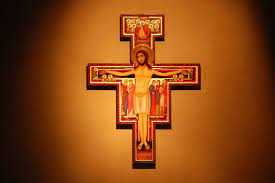
One day, Francis was praying in a chapel that was in poor repair. A cross that looked like this was hanging in that chapel. As he was praying he heard the voice of Jesus say from the cross, “Francis, repair my church.”
Reasonably enough, Francis heard that command as a buildings and grounds issue, so he sold some cloth from his father’s shop, intending to use the money to repair the chapel.
But, Jesus had more in mind than fixing stone and mortar.
During Francis’ time, the Church had largely lost its way. It had become more concerned with worldly power and wealth than following Jesus’ way of love and service.
So, for the rest of his life Francis worked to repair the church by following Jesus’ commands and examples as faithfully as he could: giving away his possessions and offering love and service to the poorest of the poor.
So, when we celebrate Francis we’re really celebrating Jesus.
The other thing to mention about Francis, especially today, is his love for creation. Francis famously preached to the birds, telling them to give God thanks for their beautiful clothing. He calmed a wolf that had been terrorizing a town, and he got the townspeople to care for the wolf, which is maybe the bigger miracle. And, he claimed the sun as his brother and the moon as his sister.
In fact, Francis saw all creatures as his sisters and brothers, all created by God, all of us meant to live in harmony – an especially timely reminder for us this weekend after the government declared 23 more species extinct.

So, today, on this Sunday as we celebrate Jesus and his most faithful follower Francis, let’s hear the call to repair the church – to repair the church not y calling the Buildings and Grounds Committee, but by following Jesus even more faithfully.
And, let’s look at all of God’s creatures, very much including our pets, as our brothers and sisters.
Together, let us be instruments of God’s peace.
Amen.

Mutual Joy


St. Thomas’ Episcopal Church, Owings Mills MD
October 3, 2021

Year B, Proper 22: The Nineteenth Sunday after Pentecost
Job 1:1, 2:1-10
Psalm 26
Hebrews 1:1-4; 2:5-12
Mark 1-0:2-16

Mutual Joy

One of the best parts of starting something new – a new job, moving to a new place – is that there are so many firsts.
Here at St. Thomas’, I will always remember my first service with all of you - one of the ultimate mountaintop experiences of my life.
Over the past couple of months since that memorable morning, there have been a lot of other firsts, but there are still more to come.
I’m particularly excited about my first baptism here, in just about a month.
And, I’ve got my first wedding on the calendar, in June. In fact, the other day I had the pleasure of meeting with the bride and her mother.
Actually, because of the pandemic, it’s been a while since I’ve officiated at a wedding, and while talking with the bride and her mother I realized that I’ve missed it. I’ve missed the weddings themselves – all the joy and excitement as the couple makes some big promises to each other, usually surrounded by family and friends who love them so much. 
But, more than the service itself – which, I’ll be honest, can sometimes be more than a little stressful – I’ve missed meeting with couples, helping them to prepare for their wedding and, much more important, doing my best to get them ready for their married life together.
We usually begin by spending some time getting to know each other. I like to find out how they met, what they love best about each other, and what made them decide to make these big promises to each other.
We talk about their relationship, looking at some of the weak and maybe even painful spots, recognizing that the Church’s blessing, and a certificate issued by the State, will not solve any of the problems or challenges they may have.
And, lastly, we walk through the service – the marriage liturgy of The Book of Common Prayer – the service that’s used in almost every TV and movie wedding because the beauty of its language is unmatched.
They always smile when I begin with the famous words, “Dearly beloved.” And then the service continues with a little history of marriage.
There’s one part where I always slow down. The Prayer Book declares that this union “in heart, body, and mind is intended by God for their mutual joy; for the help and comfort given one another in prosperity and adversity; and, when it is God’s will, for the procreation of children and their nurture in the knowledge and love of the Lord.”
And then I stop. And, in case they missed it, I point out that the very first intention – the very first purpose – of marriage is mutual joy.
I remind them that more than anything else, they will be promising to give one another joy.
Now, at this point, there are usually some tears in the room.

I thought of all those premarital sessions, all those excited and sometimes nervous couples, when I first sat down to grapple with today’s particularly difficult gospel lesson.
As I don’t need to tell you, this passage has been used to hurt a whole lot of people – people who have divorced, people who have divorced and remarried, and also gay people who have so wanted to commit to mutual joy but were turned away by the Church for so long.
Because this passage has been used to hurt people, I was tempted to dodge it and maybe just talk about St. Francis or something, but I know that you would not approve of me chickening out!
So, let’s get to it.
The passage begins with the Pharisees, who are often depicted as foes of Jesus, asking a question to test him.
“Is it lawful for a man to divorce his wife?”
Now, since the Pharisees get a bad rap in the New Testament, I usually try to give them the benefit of the doubt. But this time they are asking a question to which every Jew of that time and place knew the answer:
Yes. Jewish Law absolutely allowed a man to divorce his wife.
It did not allow a woman to divorce her husband but, in an interesting little wrinkle, Roman Law did give women that right. So, Jewish women living under the Roman rule could and sometimes did divorce their husbands.
But, Jewish Law was clear. So, there really was no debate about if a man could divorce his wife, only about the details about why and how.
Since the answer was obvious, I wonder why the Pharisees asked Jesus this question. Maybe they wanted to debate the fine points of the law. Or, maybe they had gotten wind of what Jesus had been saying about marriage and divorce and wanted to get him on the record.
Well, for whatever reason, the question was asked.
And, rather than debating fine points of the law, Jesus looks all the way back to the beginning, back to the original intention of marriage: to become one flesh.
And, if Jesus had just stopped there, this passage would not be so difficult. But, then he continues with what certainly sounds like an uncompromising condemnation of divorce and remarriage.
So, what are we to make of this?
Well, it’s certainly true that first century Palestine was a patriarchal society. And, as I mentioned, under Jewish Law only men could initiate divorce. And, let’s be frank, probably more than a few of those men suffered from what Jesus calls “hardness of heart.” So, we don’t have to stretch too far to imagine that divorce was often very bad news for women, who were likely to be cast aside and left in desperate straits.
And, it’s really important to remember that in this teaching Jesus is not speaking about physically or emotionally abusive relationships - abuse which, tragically, is an epidemic in our country. It is sobering to consider how this one passage has forced so many people to remain in marriages that were dangerous, and sometimes even deadly.
And, speaking of one passage, as you know we only read and hear brief biblical excerpts each Sunday. But, despite this kind of episodic practice, it’s essential that we don’t lose sight of the big picture.
And the big picture is that God sent Jesus into the world not to condemn the world but to save the world. Over and over, when the disciples and others fell short of the ideal, Jesus offered correction, yes, but most of all forgiveness, and the encouragement to go forth and sin no more.
In fact, the only people Jesus condemns are the hypocrites, the people whose own lives are far from perfect but who are quick to place heavy burdens on others, quick to point out the failings of others, quick to beat up people with a single scrap of Scripture taken out of context.
And, finally, while there is no getting around this hard teaching on divorce and remarriage, we also shouldn’t lose sight of how Jesus responds to the Pharisees by cutting through the fine points of the law and getting to the heart of the matter. 
Just like back in the first century, marriage today is a contract. In today’s world, nearly all of the couples I meet with for premarital counseling have been living together for quite some time. It’s easy for them to think that a piece of paper won’t make much difference one way or the other. So, I always remind them that once I sign the marriage license, the legal nature of their relationship changes dramatically. In short, it becomes a lot harder to get out of.
But Jesus reminds us that marriage is meant to be much more than a contract.
So, today, Jesus gives us a hard teaching on divorce and remarriage – a teaching that was hard to hear two thousand years ago and that is hard for us to hear today.
But, today Jesus also reminds us that the heart of marriage is two becoming one flesh, meant to give each other mutual joy.
So, today let’s pray for all married couples: those whose union is strong, those who are struggling, and those who have decided they can no longer go forward together.
May God bless them all.
Amen.