Showing posts with label Lesser Feasts. Show all posts

Monday, January 31, 2022

Our Brother Sam


St. Thomas’ Episcopal Church, Owings Mills MD
January 31, 2022

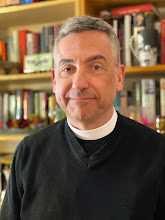
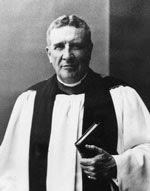
The Feast of Samuel Shoemaker, Priest
Isaiah 51:17-52:1
Psalm 130
1 Corinthians 5:6-8
Luke 4:40-40

Our Brother Sam

Although our celebration is not as grand as I had hoped, I’m glad that we can be together to honor our own local Episcopal “saint,” Samuel Shoemaker.
As you all know only too well, I’ve gotten very interested in Shoemaker – both because of his deep connections to our church and also because I think of him as a prophet, one who has a lot to say about the challenges and opportunities of today.
Shoemaker was born on December 27, 1893 in a rented house in Baltimore City.
He was baptized here at St. Thomas’ on February 25, 1894.
When he was two years old, his family moved from the city to the Shoemaker estate, Burnside, not far from here.
He enjoyed a privileged upbringing in that beautiful setting.
When he was 14 years old he was uprooted from that rather sheltered life and sent to St. George’s School in Newport RI, which was challenging for him, culturally and socially.
Later, he followed in his father’s footsteps to Princeton.
It was while he was at Princeton that Shoemaker met Helen Smith, who became his wife and partner in ministry, and is also an important figure in her own right.
  It was also at Princeton where Shoemaker became interested in the topics that would shape the rest of his life and ministry:
Personal evangelism: bringing the Good News to the world, one person at a time.
Missionary work: bringing the Good News both to faraway places and also to our own neighborhood.
And, ecumenicalism: working to minimize differences among Christian denominations, moving toward Christian unity that would help us share the Good News more convincingly and effectively.
After Princeton, Shoemaker went to China where he started a branch of the YMCA and taught in the “Princeton-in China” program. It was in China that he met Frank Buchman, founder of the “First Century Christian Fellowship,” later known as the Oxford Group.
As you can tell by its name, Buchman and his followers wanted and worked for a spiritual reawakening, a return to the fervor of the early Church, focusing on passionate evangelism and small group ministry.
Buchman taught what he called the “Four Absolutes” – absolute honesty, absolute purity, absolute unselfishness, and absolute love.
Those “absolutes” would become a theme that ran through Shoemaker’s entire ministry – and would help shape AA.
After returning from China, Shoemaker attended the General Theological Seminary in New York City. (He deliberately chose General because its Anglo-Catholicism was quite different from his own evangelical “Low Church” sensibility.) He was ordained a priest on June 11, 1921 and celebrated his first Service of Holy Communion the following day, right here at St Thomas’.
Not long after, with only brief ordained experience, he was called to serve as Rector of Calvary Church in New York – near Gramercy Park which had been a well-to-do area and is again now, but by Shoemaker’s time the neighborhood had declined and the church was struggling.
Well, the new rector threw himself into his work, and Calvary Church grew a great deal.
He famously greeted people at the church door and also held outdoor services in Madison Square Park.
He built Calvary Mission, which could house up to 57 homeless men and served many thousands of meals – and where the Oxford Group hosted meetings for “drunks.”
I’ll come back to that in a minute.
In 1926, Shoemaker established “Faith at Work”  - a ministry for lay people who would gather each week and share how they had evangelized in their everyday life, how they had been good Christians at work.
An amazing example of “Faith at Work” that Shoemaker often recounted was Ralston C. Young, the “Red Cap Preacher” of Grand Central Station.
Three times a week, Young – who was a “red cap,” a porter - hosted a lunchtime service in a railroad car on Track 13 of the station. These services attracted an economically and, unusual for the time, racially diverse congregation.
Faith at Work.

The Oxford Group was always somewhat controversial and over time it changed, losing some of its Christian focus, and eventually Shoemaker broke with Buchman – although the basic ideas of the Oxford Group continued to influence Shoemaker, and AA.
So, Sam Shoemaker and AA is a complicated topic.
But in a nutshell, both Bill W. and Dr. Bob, the future founders of AA, visited Calvary Mission in 1934 and attended Oxford Group meetings there.
After finally getting sober, Bill W. made it his life’s mission to both stay sober and to help other alcoholics – and he attempted to do that by following one of the key Oxford Group and Shoemaker ideas: the best way to hold onto something is to give it away.
There was a rift between Shoemaker and Bill W. in the early days of AA, but eventually they patched it up and Shoemaker, although not sober himself, spent the rest of his life as an avid and vocal supporter of the group.
Shoemaker was the primary spiritual influence on the development of the Twelve Steps, especially the ideas of self-examination, acknowledgement of character defects, restitution for harm done, and helping others achieve sobriety. 
Shoemaker himself was modest about his role in the Twelve Steps, giving credit to God for inspiring Bill W., but there’s no doubt that Bill was deeply influenced by what he had learned from Shoemaker.

After 25 years at Calvary Church New York, Shoemaker accepted the call to serve as Rector of Calvary Church in Pittsburgh.
There he started the “Pittsburgh Experiment,” which aimed to make Pittsburgh as famous for God as it was for steel.
The “Experiment,” which still exists, was essentially the same idea as “Faith at Work” – helping and encouraging people to live out their faith and share their faith in their everyday lives.
Throughout his life and ministry, Shoemaker was tireless. In addition to his pastoral duties, he conducted many thousands of one-on-one meetings, hosted radio programs, conducted preaching tours, and wrote 28 books.
Whenever I think about him, I feel like a total slacker who should be doing a whole lot more!
He was probably the best-known Episcopal priest of his day, his influence reaching far beyond our church.
In fact, Billy Graham once said that no one “in our generation has made a greater impact for God on the Christian world, than did Samuel Shoemaker.”
That’s quite a statement, quite a legacy, isn’t it?
Shoemaker’s health began to fail and in 1962 he retired to Burnside, but continued to write and broadcast until his death, in 1963.
As you know he was buried here, joined by his beloved wife Helen, thirty years later.

So, what does Shoemaker’s life and work say to us here today?
A lot, I think, but I’m going just highlight three points.
First, just like in his day, we need to bridge the gap between what we say and do here in church and what we say and do out there in the world.
We have to find ways to live our faith at work, at school, at the club, at the train station, in the supermarket, on the Internet - everywhere.
Second, we can no longer assume that people are just going to find us on their own and come to church. We need to go out and meet people and share our story and personally invite them to join us.
I know that’s hard for most of us, but as Shoemaker said over and over, there is just no substitute for personal Christian witness.
Finally, we need to be who we say we are – just like Shoemaker’s Calvary Mission, we must really be a servant church, offering God’s love to people in need, welcoming them as best we can, as if we were welcoming Christ himself.
And, with God’s help, when we put our faith to work, there is no limit to the difference we can make, no limit to the number of lives we can touch.
Just look at what our brother Sam was able to accomplish! 
Amen.

Sunday, October 03, 2021

Celebrating Jesus By Celebrating Francis


St. Thomas’ Episcopal Church, Owings Mills MD
October 3, 2021

St. Francis Day
The Creation Story (abbreviated from Genesis 1:1-34)
The Prayer Attributed to St. Francis
Matthew 11:25-30

Celebrating Jesus By Celebrating Francis

So, I don’t want to get anyone upset, but we’re kind of breaking the rules here today.
No, it’s not because many if us have our pets at the service, which is great.
It’s because every Sunday is supposed to be a celebration of Jesus, especially his Resurrection. Every Sunday is meant to be “a little Easter.”
This morning, of course, we’re breaking the rules a little because we’re also celebrating Francis of Assisi.
Now, I’m absolutely positive that Francis would not want this kind of attention, but I think it’s OK for us celebrate him because Francis was one of the all-time most faithful followers of Jesus.
In fact, he was so faithful that when we celebrate Francis we’re really celebrating Jesus.

There’s plenty we could say about Francis, but since we’ve got lots of creatures here today who are eager for a blessing, I’ll be quick.
Francis lived a long time ago. He was born in Italy back in 1181. He grew up in a well-to-do family. His father was a cloth merchant. 
Francis was fun and popular. And he dreamed of all the things typical of a young man of his time, place, class: glory in battle and chivalry. He was also a lover of life’s finer things, particularly clothes.
But, to make a long story short, over time God began to turn Francis’ heart away from worldly things and toward spiritual things.
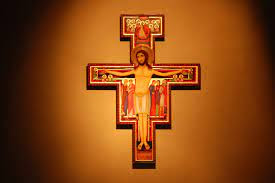
One day, Francis was praying in a chapel that was in poor repair. A cross that looked like this was hanging in that chapel. As he was praying he heard the voice of Jesus say from the cross, “Francis, repair my church.”
Reasonably enough, Francis heard that command as a buildings and grounds issue, so he sold some cloth from his father’s shop, intending to use the money to repair the chapel.
But, Jesus had more in mind than fixing stone and mortar.
During Francis’ time, the Church had largely lost its way. It had become more concerned with worldly power and wealth than following Jesus’ way of love and service.
So, for the rest of his life Francis worked to repair the church by following Jesus’ commands and examples as faithfully as he could: giving away his possessions and offering love and service to the poorest of the poor.
So, when we celebrate Francis we’re really celebrating Jesus.
The other thing to mention about Francis, especially today, is his love for creation. Francis famously preached to the birds, telling them to give God thanks for their beautiful clothing. He calmed a wolf that had been terrorizing a town, and he got the townspeople to care for the wolf, which is maybe the bigger miracle. And, he claimed the sun as his brother and the moon as his sister.
In fact, Francis saw all creatures as his sisters and brothers, all created by God, all of us meant to live in harmony – an especially timely reminder for us this weekend after the government declared 23 more species extinct.

So, today, on this Sunday as we celebrate Jesus and his most faithful follower Francis, let’s hear the call to repair the church – to repair the church not y calling the Buildings and Grounds Committee, but by following Jesus even more faithfully.
And, let’s look at all of God’s creatures, very much including our pets, as our brothers and sisters.
Together, let us be instruments of God’s peace.
Amen.

Sunday, October 03, 2010

Francis on Sunday

St. Michael’s Episcopal Church, Gainesville FL
The Chapel of the Incarnation, Gainesville FL
October 3, 2010

The Blessing of the Animals in Honor of St. Francis of Assisi
Matthew 11:25-30

Francis on Sunday


We go to church on Sunday because the Church considers every Sunday to be a feast dedicated to Jesus – to be, in fact, a “little Easter.” Every Sunday we remember and celebrate the life, death and resurrection of Jesus Christ.

And as we hear the Word of God, sing our hymns, pray together, exchange the peace and most of all when we receive the Body and Blood of Christ we deepen our commitment to be a follower of Jesus, to be part of the Body of Christ.

So, every Sunday is dedicated to Jesus. On many of the other days of the week the church remembers some extraordinary people who have lived lives devoted to Jesus; who have lived lives that pointed to Jesus. Some of those people are not very well known. For example, on Friday we remembered St. Remigius. Extra credit to anyone who can tell me one fact about his life!

Others are very famous and much-beloved – like St. Francis, whose feast day is tomorrow. So, we’re bending the rules a bit by honoring Francis today, but I think it’s worth it, because Francis lived a life totally devoted to Christ. And so, by honoring him, we honor the One to whom he devoted his life. And we’re reminded that our faith calls for us to have that same kind of radical devotion to our crucified and risen Lord.

Francis was born in 1181 or 1182 into a wealthy merchant family northern Italy. No surprise, when he was young he had some money so he really liked having a good time, but a year as a prisoner of war and a vision directing him back to Assisi sent his life in a different direction.

In 1207, while praying in a ruined chapel Francis heard Jesus call to him, saying, “Francis, Francis, go and rebuild my house.” Naturally enough, Francis began to rebuild the crumbling chapel stone by stone and then he went on to repair other churches. His radical change of direction led to a break with his father and his old friends.

Gradually, though, Francis came to understand that Jesus was calling him to something much bigger and more radical than repairing falling-down church buildings. Instead, Jesus was calling Francis to rebuild the Church that in his day had largely lost its way, had grown corrupt, whose leaders had forgotten that Jesus called them - and calls all of us - to lives of service and simplicity.

Jesus calls all of us to take on his yoke – to obey Jesus, to follow Jesus, to put our trust in Jesus.

Francis devoted his life to obeying Jesus’ command to give up everything and proclaim the Good News – sometime through words but mostly through his actions. You’d think that kind of life would be hard and miserable, yet by all reports, Francis was a remarkably joyful person.

Francis discovered that Jesus’ yoke really is easy and his burden really is light.

That kind of devotion and integrity and joy is attractive, and soon other men began to join Francis’ movement and women began to gather around his friend Clare. And the Franciscan religious orders for men and women were born and continue to echo the life and work and faith of Francis.

It was important to Francis that we not separate our work and our prayer. He believed our whole life should be a prayer. And since that means we’re doing a lot of praying out in the world, then we are going to encounter God in nature. So, Francis is associated with deep devotion to Christ and also a deep appreciation for God’s creation, a deep love for nature.

Francis knew that if we’re open and paying attention, we’re going to encounter God in Brother Sun and Sister Moon, through Brother Wind and Sister Water, through Brother Fire and Sister Mother Earth. If we’re open and paying attention, we can encounter God in all of the earth’s creatures – even alligators.

For Sue and me this is a difficult day, because our own cat, Noelle, is each day struggling a little more with cancer of the jaw. Over the ten years she’s been with us, she has poured out a lot of love for us – even after we put her in a cat carrier and drove her to Florida! And over the ten years she’s been with us, loving her has made Sue and me more loving people – more aware of what God’s love is like.

And so today we ask God’s blessing on Noelle and all our pets. We ask God’s blessing on Brother Dog and Sister Cat, because through their love and companionship we experience God’s love. Today we bless Brother Fish and Sister Bird, because our care for them reminds us of how we are to treat all our brothers and sisters, and how we are to treat every living thing.

Because of his love of nature, we have a tendency to sentimentalize Francis. But, make no mistake, Francis was a radical who gave away his life in obedience to and in imitation of Jesus Christ.

And near the end of his life, Francis’ desire to imitate Christ was rewarded with the gift of the stigmata – Francis suffered the same wounds suffered by the crucified Christ. His imitation of Christ was complete.

Inspired by the example of Francis, may we all follow Jesus with great joy and devotion, taking on Jesus’ easy yoke and his light burden, transforming our lives into prayer, and building the Kingdom of God right here on earth.

Amen.

Wednesday, September 17, 2008

Mystics in the World

Drew University: Craig Chapel
September 17, 2008
The Feast of Hildegard of Bingen

Sirach 43:1-2,6-7,9-12,27-28
John 3:16-21
Psalm 104: 25-34

Mystics in the World

One of the great joys and privileges of serving as a priest down the street at Grace Episcopal Church is that, unusually for an Episcopal church, we have at least one service every day. This means I get to preach a lot and often I get to preach on what we call the lesser feasts – the days in the Episcopal calendar when we honor some of the great men and women of our Christian heritage.

I like to think of this task as part of my continuing education. Sometimes the lesser feast honors someone very familiar such as Augustine of Hippo or Dietrich Bonhoeffer. But other times the lesser feast honors someone not very well known (at least to me) such as Bernard Mizeki or Thomas Gallaudet, to mention just two recent examples. When faced with preaching about people like that, it’s time to dust off those books from seminary and get busy continuing my education.

But I think it’s safe to say that out of all the great women and men honored on our church calendar, only one has made it to the Billboard charts. Only one has her name on the wall of the HMV store in midtown Manhattan, alongside other illustrious musicians such as John Coltrane and Duke Ellington. Only one had her music featured in the hit movie A Beautiful Mind. Only one has five or six different CDs of her music in the bin at Barnes and Noble on Route 10 in Morris Plains. And that one is the person we honor today, the remarkable Hildegard of Bingen.

That’s quite a lot of fame for a woman who was born 1098 in the Rhineland Valley. Apparently from a very early age Hildegard began having mystical experiences. Conveniently enough as the tenth child in her family she was tithed to the church – perhaps something to consider during your next stewardship campaign!

Eventually she and other women formed a convent and later Hildegard will found other convents. Her visions continued but Hildegard was reluctant to share them with others until at the age of 43 a voice told her to “See and speak! Hear and write!” And so she compiled descriptions of her visions along with her own interpretations in three books.

Then, as now, the institutional church was skeptical of those claiming to have mystical experiences, but Hildegard had a powerful patron in Bernard of Clairvaux who it just so happens had the ear of the pope. So Hildegard’s mystical writings received an imprimatur from the highest level and Hildegard and her work became famous across Europe.

She conducted four preaching tours and offered her advice and direction to the political and religious leaders of the day. She practiced medicine with a special focus on women’s health. She wrote about natural science and philosophy. In her spare time she wrote a liturgical drama, The Play of Virtues, in which women sing the parts of the virtues and the lone man in the cast plays the part of …the devil, who is unable to sing. And of course she composed large amounts of otherworldly and gorgeous music.

After her death in 1179 there was a movement to canonize her, using the newly created procedure in the Roman church to make new saints, but in Hildegard’s case it never quite came together. And then this remarkable woman was forgotten.

Until the 1970s when thanks to the new interest in the great Christian women, Hildegard and especially her music was rediscovered and celebrated.

Which is wonderful. But, I wonder about Hildegard the mystic. I wonder what we make of the vast Christian mystical heritage. For many centuries now, of course, many Christians have grown increasingly uneasy with mystical experience. How often have we heard someone – maybe even ourselves – say something like “If St. Francis were alive today he’d be institutionalized or be heavily medicated”? And the same might be said of Hildegard. I read that Oliver Sacks chalked up Hildegard’s mystical experiences as the result of migraines.

Is that good enough for us Christians in the 21st Century? Are we willing to dismiss the mystical as a symptom or manifestation of mental illness? Are we willing to leave mystical experience to the New Agers? Are we willing to conclude that God does not speak through mystical experience? Is mysticism embarrassing for Christians in the 21st Century? Are we open to the possibility of having mystical experiences? Have we had mystical experiences?

Those of you who have been ordained or are preparing for ordination may have received the advice that if you believe you’ve had mystical experiences do not under any circumstances tell your Commission of Ministry or whoever the gatekeepers are in your denomination. And that’s unfortunate, but probably good advice. The truth is once we start talking about mystical experiences all sorts of red flags go up.

So I won’t ask for a show of hands about how many of us have had some kind of mystical experience. But I do remember a sermon given by John Koenig, New Testament professor at General Seminary and longtime member of the seminary’s admissions committee. In his sermon he noted that a very large number of applicants to the seminary described experiences – maybe not quite on the level of Hildegard’s visions – but nonetheless experiences that could be described as mystical. Professor Koenig concluded that God speaks to us in this way more often than we might think.

Maybe the key way to recover our confidence in Christian mysticism is to recall that mystical experiences are not given for our enjoyment or edification, but instead they call us to action right here in the flesh and blood world in which we live. The Jesuit scholar Robert J. Eagan notes that mystical experiences are liberating – they remind us that things do not have to be this way.

Maybe we can recover our confidence in Christian mysticism by reminding ourselves that being a mystic doesn’t mean going off on a mountain forever and pondering but instead it means working to translate the mystical vision into a physical reality, in the manner of the 20th Century mystic Martin Luther King.

And sometimes even mystics themselves need to learn the role they are called to play in the world. I remember seeing a photograph of Thomas Merton taken on the day he entered the Abbey of Gethsemane. In the photo he’s laughingly holding up a newspaper, apparently thinking that he was saying farewell to the world described in its pages. Instead, of course, God was going to nudge Merton the cloistered Trappist monk into an even more public role in the world.

In the Christian tradition mysticism calls us to action in the world. And this connection is very clear in the visions of Hildegard. Her visions, for all their mystery and power, usually have a very concrete, here and now message.

For example, there is Hildegard’s vision of God enthroned. She writes: “I saw a great mountain of the color of iron, and enthroned on it One of such great glory that it blinded my sight.” And then God speaks to Hildegard and says: “O human, who are fragile dust of the earth and ashes of ashes! Cry out and speak of the origin of pure salvation until those people are instructed, who, though they see the inmost contents of the Scriptures, do not wish to tell them or preach them, because they are lukewarm and sluggish in serving God’s justice. Unlock for them the enclosure of mysteries that they, timid as they are, conceal in a hidden and fruitless field. Burst forth into a fountain of abundance and overflow with mystical knowledge, until they who now think you contemptible because of Eve’s transgression are stirred up by the flood of your irrigation."

And then the voice of God concludes: “Arise, therefore, cry out and tell what is shown to you by the strong power of God’s help, for He who rules every creature in might and kindness floods those who fear him and serve him in sweet love and humility with the glory of heavenly enlightenment and leads those who persevere in the ways of justice to the joys of the eternal vision.”

The mystics – and you and I – are called to arise and cry out. Mystical experiences are not given for our own enjoyment but rather to give us the strength to speak out, to stand up for the oppressed, to speak the truth to power.

And that’s exactly what the great Christian mystics have done. Think of Paul and his powerful transforming mystical experience of the Risen Lord – which gave him the strength and courage to live a life filled with setbacks and adversity. And Hildegard bravely involved herself in the world – challenging those in authority; a medieval woman emboldened by her mystical experience.

And that’s what we’re called to do. We “Professional Christians” have a special role to play in a society that leaves no time for contemplation and is dismissive of mysticism. We are called to be mystics in the world. When I was ordained a deacon the bishop said something that has continued to haunt and challenge me. He said “We pay you to pray.” “We pay you to pray.”

That pay isn’t just for my own personal spiritual growth. That pay is for me, for us, to translate our spiritual – mystical – experiences into the flesh and blood world, right here and now.

And isn’t that the message of today’s gospel? This very familiar passage sums up the message of the very mystical fourth gospel. “For God so loved the world…” The flesh and blood, right here and now world. “Indeed God did not send the Son into the world to condemn the world, but in order that the world might be saved through him.”

God’s love for the world – for this world - is expressed in the flesh and blood life, death and resurrection of Jesus – the mystical Jesus who had a vision of the Kingdom of God and who lived and proclaimed that vision.

Today we give thanks for Hildegard whose mysticism gave her the confidence and the courage to live and proclaim her Christian faith. May we be open to the possibility that God continues to speak. May we make the time and establish the quiet so we might have our own mystical experiences. And may we follow Hildegard’s example and in our own way, in our own time and place, be mystics in the world.

Amen.