Showing posts with label All Saints Day. Show all posts

Sunday, November 02, 2025

Saints Aim Higher


St. Thomas’ Episcopal Church, Owings Mills MD
November 2, 2025

Year C: All Saints’ Sunday
Daniel 7:1-3, 15-18
Psalm 149
Ephesians 1:11-23
Luke 6:20-31

Saints Aim Higher

Over at the rectory, Sue and I have one of those “flip calendars” which gives a little inspirational saying for each day.
We keep it on one of the windowsills in the kitchen.
So, every morning, I turn the page to the saying of the day, which I look at for a few minutes as I eat my breakfast.
It’s not a religious or even particularly spiritual calendar. Most of the sayings are cliched and I often roll my tired eyes at whatever sentiment is being expressed.
But sometimes the words seem to be right on the nose.
So, here was the bit of calendar inspiration for yesterday, for November 1, which happened to be All Saints’ Day:
“Aim Higher.”
Cliché, yes, of course, but exactly right for the day because the truth is that saints do aim higher.
In today’s gospel lesson, we hear loud and clear Jesus’ lofty and demanding expectations for his followers, for the saints, for all of us.
And the saints, both past and present, have taken Jesus at his word, they’ve aimed higher than may have seemed reasonable or realistic, they’ve aimed higher to love and give and forgive more generously than might have seemed possible or even prudent.
Saints are not perfect and often fall short, but saints aim higher.
And, with God’s help, it’s the high aim of the saints that makes Jesus’ vision of a downside-up world a reality.

And, although we’re certainly not perfect, isn’t this the story of St. Thomas’?
As a church, as a community of saints, we aim higher:
The genuine warmth of our welcome.
The simple beauty of our worship.
The wisdom and generosity of our lay leaders.
The care for one another, especially when someone is sick or struggling.
The tireless work of our devoted church staff, very much including our wonderful Assistant Rector.
The nurturing of our children and our young people.
The excellence of our choir.
The creative and transformational ways we serve people in our community, people outside our doors, beyond our walls.
And thanks especially to the leadership and dedication of Amy Sussman, we’ve been aiming higher with our stewardship, too – telling our stories more openly and giving more sacrificially.
So, as we celebrate all the saints, may the saints of St. Thomas’ – may all of us – continue to aim higher.
Amen.

Sunday, November 03, 2024

Removing the Trappings of Death


St. Thomas’ Episcopal Church, Owings Mills MD
November 3, 2024

Year B: All Saints’ Sunday
Wisdom of Solomon 3:1-9
Psalm 24
Revelation 21:1-6a
John 11:32-44

Removing the Trappings of Death

Today is All Saints' Sunday, when we celebrate the women and men throughout history recognized by the Church for their holiness: the apostles and martyrs, the “fools for Christ.”
And today we also recall the saints of our own lives – people unlikely to ever receive any official acknowledgment – but men and women whose sanctity has touched us and others in powerful and life-changing ways.
If you’ve been around here for a while and paying attention to my sermons, you’ve already met some of my personal saints:
There’s my grandmother Rita who faced her final illness with profound faith. Once, when I was sitting beside her hospital bed, she suddenly turned to me and said, “I know where I’ve come from, and I know where I am going.”
Whether she realized it or not, she was quoting Jesus in the Gospel of John.
And there’s Dave, who was the rector of our church in Jersey City. On our very first Sunday there, at the Exchange of Peace he made his way down the aisle to Sue and me, extended his hand and said, “I’m Dave. Welcome to St. Paul’s.”
His welcome changed our lives forever, beginning for me a journey from teacher to priest, a journey that eventually led Sue and me here with all of you.
And there’s Paula, a woman about my age, sick for a long time, dying of cancer. One time when I was sitting with her in the hospital she said to me, “When I first got sick, I asked ‘Why me?’ But now, having seen all these other sick people, I ask ‘Why not me?’”
And there’s Sister June, who for decades led St. Vincent Academy, an all-girls high school in Newark. Along with other remarkably dedicated and talented educators, she stayed in that struggling city, while many other institutions either closed or fled to the suburbs. When I interviewed for a job St. Vincent’s, she told me that my job wouldn’t just be teaching history, that the school’s work wasn’t only education. No, the school’s mission was doing our part in Christ’s ongoing redemption of the world.
These are some of my personal saints – not perfect people, of course - but their holiness and faithfulness are gifts that continue to inspire and challenge me, continue to shape my life.
I hope today you’ll recall your own personal saints and give thanks for their witness.
And today - with God’s help and with all humility - maybe we can aspire to be saints in our broken and frightened and angry world.
But how might we do that?

        Well, let’s look at today’s gospel lesson, the raising of Lazarus.
        During his earthly ministry, Jesus worked many miracles, performed many signs. We heard one of his greatest just last week: restoring the sight of the bind beggar, Bartimaeus. 
        But the raising of Lazarus is Jesus’ greatest sign, pointing to what his life and ministry are all about: defeating death and offering new life.
        This can be hard for us to believe, especially when death seems to have the upper hand.
        I mean, even Jesus’ friends Mary and Martha, Lazarus’ sisters, they trusted in Jesus, they believed that if Jesus had been present during their brother’s illness, he could have and would have healed his friend, just as he had healed so many others.
        But even Mary and Martha, who knew and loved Jesus so well, even they couldn’t imagine that Jesus could and would offer new life to their dead brother.
        After all, four days in the tomb is a long time.
        Well, you just heard what happened next.
        Jesus calls the dead man out of his tomb, and to the totally understandable shock of everyone present, Lazarus lives again.
        I want to point out one easy-to-miss detail in this story.
        When Lazarus came out of the tomb, he was still wrapped in his burial cloth.
        Jesus says, “Unbind him, and let him go.”
        Jesus offers new life.
        But, as my friend Sister June and so many other saints have understood, we have a role to play in this ongoing redemption.
        Jesus offers us new life.
        And Jesus calls us to unbind one another, to remove the trappings of death.

        This is not easy work, because, especially today, the trappings of death in our world are very powerful and frightening – they’re heavy and they hold us tight.
        The trappings of death poison so many of our hearts.
        The trappings of death include:
        Our refusal to give others the benefit of the doubt, refusing to even try to understand their points of view.
        Our mistrust of people who are different, different in how they live, believe, love, think, and look.
        Our tendency to use cruel or even violent language – our tendency to use cruelty and violence in the mistaken belief that somehow this will solve all our problems.
        Our willingness to look away from the suffering of others, focusing only on our own needs and comforts, quick to blame others for their troubles, and conveniently letting ourselves off the hook.
        Our fear and faithlessness, forgetting that just like God did not give up on Lazarus, just like God did not leave Jesus dead in the tomb, God will not give up on us, will not let go of us, no matter what.
        I could go on, but these are some of the trappings of death that weigh us down.
        And, yes, especially two days before Election Day, we can feel those binds, can’t we?
        But Jesus offers us new life.
        And Jesus calls us to unbind one another, to remove the trappings of death.

        If you’ve been around for a while and paying attention to my sermons, not only do you already know some of my personal saints, but you’ve also heard me preaching a lot about the importance of community.
        I’ve often preached about the gift - the special vocation - of this particular community.
        St. Thomas’ is one of the few places around where we rub shoulders with, where we build relationships with, a diverse group of people, people who probably disagree with us about a whole lot.
        I’ve never taken a poll, and I really don’t want to know, but I would guess that politically we’re about 50/50, Republican/Democrat.
        Just like our country, more or less.
        And yet.
        And yet, we pray together, week after week.
        We share a cup of coffee and a pastry together, week after week.
        We welcome absolutely everyone who comes through our doors, week after week.
        We offer loving service at Owings Mills Elementary School and the Community Crisis Center.
        We’re about to fill Thanksgiving bags for people we’ll never meet, for people who can never thank us or do anything for us in return, people we don’t know anything about except that they’re hungry – and that’s all we need to know.
        And when one of us is sick or in trouble or sorrowing, we offer hope and support, sending forth prayers to heaven, preparing meals, writing cards, making calls.
        The world binds us with the trappings of death - with fear and anger and hate – but here, here, no matter our differences, we love one another.

        Just like for Lazarus long ago, Jesus offers us new life.
        And Jesus calls us to unbind one another, to remove the trappings of death.
        With God’s help, this is our special vocation.
        With God’s help, this is the work of the church.
        With God’s help, this is the way to sainthood.
        Amen.


Sunday, November 05, 2023

Living Sacraments


St. Thomas’ Episcopal Church, Owings Mills MD
November 5, 2023

Year A: All Saints’ Sunday
Revelation 7:9-17
Psalm 34:1-10, 22
1 John 3:1-3
Matthew 5:1-12

Living Sacraments

In last week’s sermon, I mentioned that I know that my love of Baptism has become kind of a running joke around here.
And that’s all right. I can take it.
The other running joke (or, at least the other one that I know about!) is that I like an active church.
I don’t make any apologies for that. Part of good stewardship is using the blessings – the resources – that we have received. And, especially these last few weeks, or months, really, I’d say that we have been exceptionally good stewards – serving and learning and growing in so many wonderful ways.
For me, one recent highlights was our study of the excellent little book by Rowan Williams, the former Archbishop of Canterbury.
Being Christian, it’s called.
I’ve been part of a lot of book studies but this one produced some of the best conversations I’ve experienced – thoughtful, interesting, and challenging.
And you know it’s a good book study when the participants think about the book during the week between our meetings. In fact, some parishioners got in touch with me by email or text because they wanted to talk more about something that they had read.
For example, one parishioner reached out to ask about sacraments.
She said that someone she knew had told her that at her church they consider the passing of the peace to be a sacrament! 
Our parishioner asked me, “Is this true?”
Well, maybe from a long-ago Confirmation class, some of you may remember that sacraments are defined as “outward and visible signs of inward and spiritual grace.”
Jesus himself gave us the sacraments of Baptism and Communion.
And then there are the five other “sacramental rites” that recognized by the Church: Confirmation, Ordination, Matrimony, Reconciliation, and Anointing of the Sick.
But, God is not limited by what we determine to be official and so the truth is that, yes, with the right intention, the passing of the Peace can totally be a sacrament - an outward sign of invisible grace.
In fact, so much of the good that, with God’s help, we do here can be, and often is, sacramental – the beautiful music that our choir offers us week after week, and the fellowship we enjoy, and the welcoming of the stranger, and the feeding of the hungry, even the filling out of a pledge card and, who knows, maybe even the sermon!
Really, at its best, the whole church is a giant sacrament – an outward sign of invisible grace.
And, the saints – both the “capital S” saints officially certified by the church and the holy people of our own lives – they are living sacraments.

All Saints’ Day, which we’re celebrating today, always gets me thinking about the many saints – the many living sacraments – that I’ve met.
The first was probably my grandmother – my mother’s mother. I’ve told you about her before. Like every other saint, she was imperfect but God’s invisible grace was easy to see in and through her life, right to the end.
One time when I was visiting her in the hospital, not long before her death, my grandmother turned to me and said, “I know where I have come from and I know where I am going.”
Whether she realized it or not, my grandmother was quoting Jesus (It’s John 8:14). And that day in her hospital room, it was her solid faith, her unwavering trust, that got me thinking about my own life and got me started on a journey that, eventually, led right here.

One of the most recent saints I’ve met was our parishioner Donna Gribble, who died a little over a month ago.
Early on in my time here, Donna and her husband Larry made an appointment to meet with me.
As we sat in my office, they shared their story with me, how Larry had repaired school buses and Donna drove them – how they had both served as volunteer fire fighters for many years.
They also told me how Donna had been battling cancer for a couple of years.
And they told me that they wanted to come back to St. Thomas’, back to the church where Donna had grown up, back home.
Later, Donna and Larry celebrated their fortieth anniversary by renewing their vows right here, surrounded by their loving family and friends.
It was a beautiful service, one of the most moving I’ve ever been part of. There was so much love in this room that day. 
Not too long ago, Donna’s cancer passed the point of no return.
Although it was such a terribly sad time, it was also a great privilege to make this final journey with Donna and Larry. 
During those last weeks, I began to understand just how much Donna had meant to so many people, how much she had given to her family and friends, her co-workers, the children who rode on her bus, and her fellow firefighters.
Through tears, over and over, people talked about her selflessness.
It wasn’t just her own children who called her “mom.”
Her funeral here was a testament to the kind of life she led. Even the chief of the County Fire Department kept choking up as she tried to honor Donna.
Although she definitely wanted to live, to spend more time with Larry and her family, Donna had faced her death with the kind of faith and trust that reminded me very much of my grandmother.
During one of my visits, I told Donna about my grandmother and how she had said, “I know where I have come from and I know where I am going.”
I think Donna recognized a kindred spirit, and during her last days, including her very last day, she repeated those confident words of Jesus.
Donna was a saint. Like all of us, she was imperfect. But she was most certainly a living sacrament: an outward and visible sign of inward and spiritual grace.

And now, today, on All Saints’ Sunday, I am about to have the great joy of baptizing our parishioner, Sean.
Of course, every baptism is joyful – remember the running joke – but, I have to say, there is something extra special when it’s an adult making this choice for himself, standing before his church community, with his sponsors at his side.
In the water of Baptism, God will make an unbreakable bond with Sean. But at the same time, the holy water is only a visible sign of what has been invisibly true all along.
Those of us who’ve had the chance to get to know Sean know that he, too, is a living sacrament.
When I look back over the past couple of years – back to when Sean and his mom and his aunt first started to attend church here – and how Sean has grown in his faith, grown in this community – sharing God’s grace in seemingly small but beautiful ways – working on the Altar Guild (he’s the “muscle” of the Altar Guild), participating in our Adult Confirmation class and now the Young Adult Group – when I think of the journey we’ve all been on together, well, God’s grace is already shining so bright, even before we get to the water.
Like my grandmother, like Donna, like Sean, all of us are called to be saints.
We are meant to be living sacraments – outward and visible signs of God’s invisible grace – the grace that is powerful enough to make real Jesus’ vision of the downside-up Kingdom of God, the world where it’s the poor and sorrowful and meek and hungry who are truly blessed.
We are all meant to be – and, with God’s help, can be - living sacraments.
Amen.

Sunday, November 06, 2022

"To Be a Saint Means to Be Myself"


St. Thomas’ Episcopal Church, Owings Mills MD
November 6, 2022

Year C: All Saints’ Sunday
Daniel 7:1-3, 15-18
Psalm 149
Ephesians 1:11-23
Luke 6:20-31

“To Be a Saint Means to Be Myself”

By now, I’m guessing that at least some of you are starting to get tired of hearing about the silent retreat that I went on a couple of weeks ago.
You may be asking, “Hasn’t he caught up on talking yet?” 
To which I answer, almost.
Retreats are different from vacations, but in both cases you can return and have to catch up on so many tasks that it feels like you need a vacation or a retreat from your vacation or retreat - or that your getaway never happened at all.
But, for whatever reason, my retreat has been sticking with me, helping me feel more grounded, even when there’s so much anxiety and fear all around.
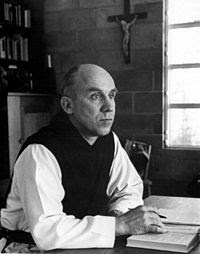
For my retreat I visited the Abbey of Gethsemani in Kentucky. It’s a Trappist monastery that first became well known to the wider world thanks to its most famous monk, the writer Thomas Merton.
Merton, who was born in 1915, was an adult convert to Christianity.
In 1938, while Merton was finishing a Master’s Degree at Columbia University in New York City, he was baptized in the Roman Catholic Church.
And not long after his Baptism, a friend of his named Bob Lax asked Merton what he wanted to become.
That can be a hard question to answer and Merton struggled a bit to come up with something until he finally said, “I don’t know, I guess what I want to be is a good Catholic.”
But his friend corrected him, “What you should say is that you want to be a saint.”
Merton thought this was crazy talk – how could he, a just-baptized Christian, getting such a late start on the road of faith, ever hope to be a saint?
But Merton’s wise friend explained, “All that is necessary to be a saint is to want to be one. Don’t you believe God will make you what He created you to be, if you consent to let Him do it? All you have to do is desire it.”


Well today, on All Saints’ Sunday, we have a lot going on!
We’re celebrating the saints whose holiness has been recognized by many and officially acknowledged – holy women and men like the Virgin Mary, St. Thomas, St. Paul, St. Francis, and all the rest.
At the same time we’re also giving thanks for a vastly larger group, all the baptized, all of those who died and rose again with Christ in the water of Baptism, just as Teddy and Frankie will in just a few minutes.
And today is also an opportunity to remember the people who have been saints in our lives, the parents, grandparents, godparents, teachers, mentors, friends, and others who first shared the faith with us – the people who taught us, often through their quiet example, just what love, mercy, forgiveness, and generosity look like.
And there’s one last most important thing that we are meant to remember today on All Saints’ Sunday.
We  - you and I - are already saints – this is what we are made for – this is who we really are.
Later in life, after he had entered the monastery and reflected more deeply on the idea of sainthood, Thomas Merton wrote this:
“For me to be a saint means to be myself.”
Merton didn’t mean that to be a saint we should just act normal – you know how we say to a person who’s nervous about an interview or some other big event, “Just be yourself!”
No, Merton is talking about something much deeper – to be our true selves – to be the loving and generous people that God created us to be.
Often this is not so easy.
And, in fact, there are many of us who maybe never really know who we are – or maybe we forget – or maybe we would just rather not know, since our true identity can be inconvenient and downright costly.
In my time here with you, it has become kind of a running gag that I love Baptism - that as a priest there’s not much I like better than baptizing people.
And that’s the absolute truth – I hope you can tell I’m not faking it – but I’ve also hoped that my excitement would be contagious – that you would also feel the joy of these days – that you would see that Baptism isn’t just a nice little ritual we do with and to children, the quiet ones and the ones who scream their heads off.
No, Baptism is a big deal because it’s here and now that we are reminded of who God made us to be – the person we really are.
For me to be a saint means to be my true self, a person who gathers here with other saints to ponder God’s Word, to pray together, to break bread. 
For me to be a saint means to be my true self, a person resisting evil but, when I mess up, quick to repent and return to the Lord.
For me to be a saint means to be my true self, a person proclaiming by word and example the Good News.
For me to be a saint means to be my true self, a person seeking and serving Christ in all persons, loving my neighbor as myself.
For me to be a saint means to be my true self, a person striving for justice and peace, respecting the dignity of every human being.
For me to be a saint means to be myself – my true self  – with God’s help – always and only with God’s help.

I don’t need to tell you that, especially these days, there are some powerful forces at work, tempting us to be other than – much less than - who we really are.
But when we, with God’s help, really are our true selves – when we love one another, including the people we’re not too sure about – when we strive to even love the people we’re told we should hate and fear – when we are our true selves, then Jesus’ beautiful vision of the Kingdom starts to become more real.
And when we who are rich and full and laughing remember the poor and the hungry and the mournful – when we stand beside them and love them and serve them as beloved brothers and sisters, then Jesus’ beautiful vision of the Kingdom starts to become real.

At the start of my sermon, I mentioned that the grace of my recent retreat hasn’t faded very much, so far.
I’m not sure why exactly, but I wonder if it’s because I find myself here, surrounded by so many people who strive, with God’s help, to fulfill their baptismal vows – to be the loving and generous people God created them to be.
After today’s 10:00 service, many of us will have lunch with our guest from Afghanistan, Hizbullah.
Or, actually, I should say that Hizbullah is our first guest from Afghanistan, because last week we welcomed guest number two, a fine young man named Abdul.
When I think of the courage, generosity and creativity and persistence of the little team that has stepped into the unknown and welcomed Hizbullah and now Abdul and has cared for them and gotten them off to such a good start – and when I think of the people who have worked so hard to prepare a beautiful feast for us later today - well, no doubt they will recoil in embarrassment and modesty, but this is saintly behavior for sure, moving us a little closer to the Kingdom of God.
So, you know, St. Thomas’ may not be a quiet monastery in the Kentucky countryside, but this is a holy place where many people answer God’s call to be our true selves.
To be a saint means to be myself.
Amen.


Sunday, November 07, 2021

Expedited Sainthood


St. Thomas’ Episcopal Church, Owings Mills MD
November 7, 2021

Year B: All Saints’ Sunday
Isaiah 25:6-9
Psalm 24
John 11:32-44

Expedited Sainthood

Out in the world, All Saints’ Day doesn’t get very much attention. If it’s recognized at all it’s as the day after Halloween, the day when day Giant and CVS slash their prices on all that leftover candy!
So, imagine my surprise on Monday morning when I opened my copy of The Sun  – and right there on the front page was a story about…saints!
Maybe some of you saw it, too.
It was a story about a group of Black Catholics in Baltimore who are petitioning the Vatican to expedite the sainthood of six Black holy women and men.


The six include Mother Mary Lange, who back in 1818 founded St. Frances Academy in Baltimore, the very first Catholic school for children of color, a school that is still educating city children more than two centuries later.
As you may know, the Catholic Church has a long and complicated process for officially declaring saints – sometimes it can take decades or even centuries.
But, you know how it is, when an institution wants to, it can bend or even break the rules, like in the case of Mother Teresa and Pope John Paul II, who were fast-tracked to sainthood.
And the people petitioning the Vatican argue that, considering the historic racism of the church, these six holy people should be fast-tracked, too.
I’ve been thinking about this story all week.
First of all, the lives and ministry of these six people are inspiring, especially when we remember the obstacles they faced. 
But, I’m also struck by how the petitioners have such a sense of urgency – there is no time to waste – these people were clearly exceptionally holy – and in a time of so much despair we need all the faithful role models we can get, right?
So, they call for “expedited sainthood” – not sainthood some other time, but sainthood right now.
Expedited Sainthood.


Many of you know that we have an “official” Episcopal saint right here at St. Thomas’.
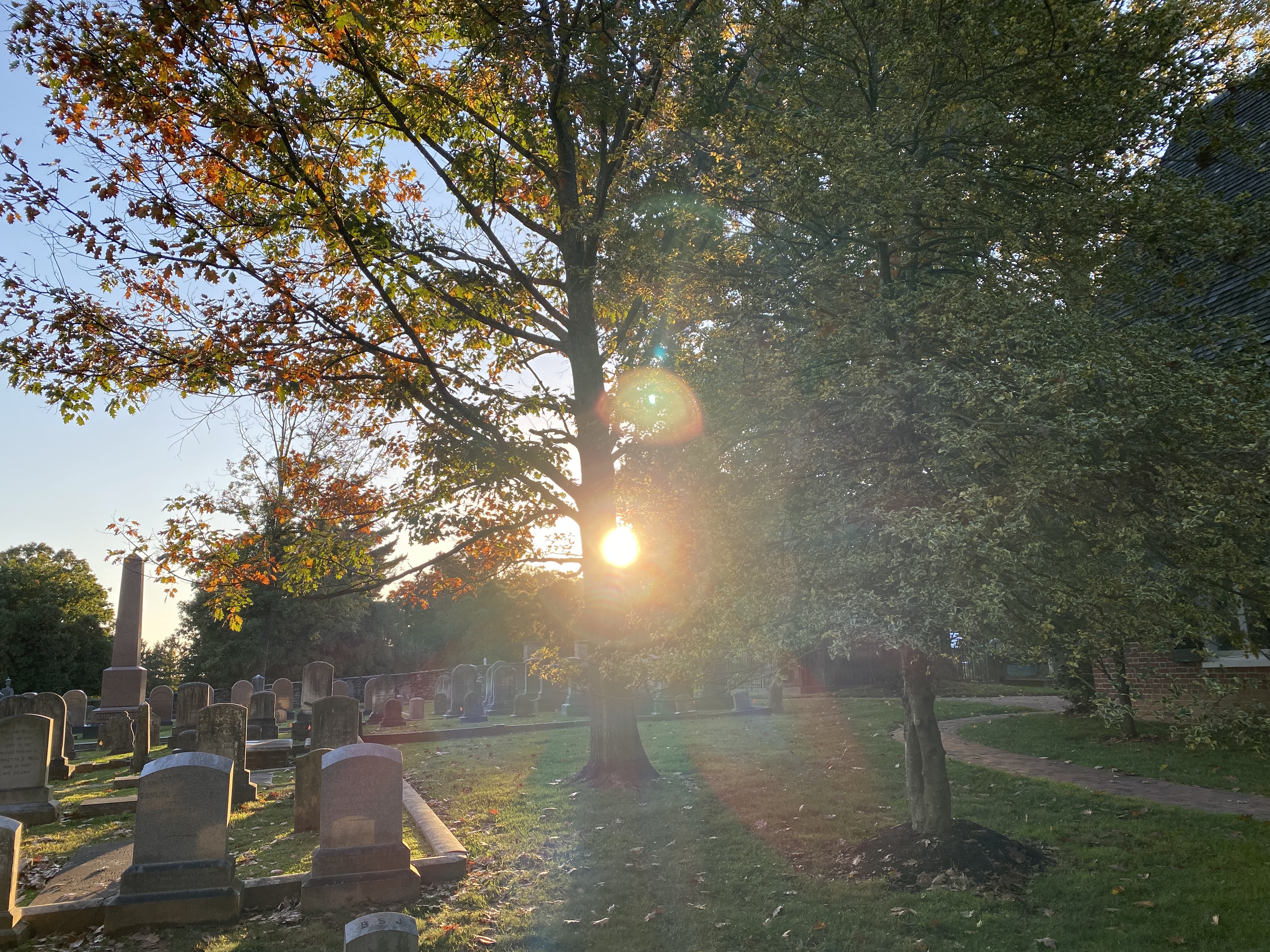
Samuel Shoemaker spent much of his youth here in the Greenspring Valley, and after his ordination to the priesthood he celebrated his first service of Holy Communion right here in our church.
In his day, back in the middle part of the last century, Sam Shoemaker was one of the best-known Episcopal priests. He wrote dozens of books. He hosted radio programs. Recordings of his sermons were released on records. 
From 1925 to 1952, he was Rector of Calvary Church in New York City, where he operated Calvary Mission – a ministry that served anyone in need, including alcoholics who were looking for a hot meal and a place to dry out, at least for a while.
Two of those alcoholics were Bill W. and Doctor Bob, who went on to start Alcoholics Anonymous. Bill W. worked with Shoemaker to develop the Twelve Steps. Shoemaker is remembered and honored as the spiritual founder of AA.
Since I first became aware of Shoemaker’s connection to this place – and the fact that he rests in our churchyard - I’ve been learning as much as I can about him.
And what amazes me most is his sense of urgency.
For Sam Shoemaker, there was no time to waste – there were always more people who needed to receive the Good News, both in word and in a bowl of soup.
I suppose Shoemaker would have been too modest to say this out loud – he was an Episcopalian, after all – but, with God’s help, he strived for an “expedited sainthood” – not sainthood some other time, but sainthood right now.
Expedited Sainthood.

And now here we are today, on All Saints’ Sunday.
In just a few moments, I’m going to have the great joy and privilege of baptizing three beautiful children: Parker, Edward, and Violet.
Just like Sam Shoemaker, and like so many of you, they have deep roots in this holy place.
Their journey to sainthood will begin right here in the water of Baptism – when their parents and godparents will make some big promises on their behalf.
Their journey to sainthood will begin in the water of Baptism – when God will make an indissoluble, unbreakable bond, with them. 
God will simply not let go of them, no matter what.
The journey to sainthood begins in the water of Baptism, when we will all promise to support them in their Christian life.
The journey to sainthood begins in the water of Baptism, when, with God’s help, we all renew our promises to pray and break bread together, to love God and our neighbor, very much including the people we don’t like, or maybe even don’t trust.
The journey to sainthood begins in the water of Baptism.
The only question is the pace.

So, my prayer for Parker, Edward, and Violet – and for all of us – is that we will be blessed with the gift of holy urgency.
May we be blessed with the holy urgency that moved Mother Mary Lange who, when slavery was still the law of the land, opened a school for Black children, offering them new life just as surely as Jesus called Lazarus out of the tomb.
May we be blessed with the holy urgency that moved Samuel Shoemaker to open wide the doors of his church and his mission, inviting in absolutely everyone. And, Shoemaker's ministry, still to this day, long after his death, offers new life to addicts, just as surely as Jesus called Lazarus out of the tomb.
As in the days of Mother Mary Lange and Sam Shoemaker, today people are entombed by oppression and addiction, hatred and anger, loneliness and fear.
Our broken world sorely needs saints, and lots of them.
Our journey to sainthood begins in the water of Baptism.
And since there really is no time to waste, may Parker, Edward, and Violet, and all of us, each in our own way and always with God’s help, strive to be “expedited saints.”
Amen.

Sunday, November 01, 2020

To Be Bread


The Church of St. Paul and Incarnation, Jersey City NJ
November 1, 2020

Year A: All Saints’ Day
Revelation 7:9-17
Psalm 34:1-10, 22
1 John 3:1-3
Matthew 5:1-12

To Be Bread

Well, once again we find ourselves in an unsettling in-between time.
After a bit of a lull during the summer, the plague of Covid-19 is once again raging across our country and around much of the world – rates of infection and hospitalization are soaring, and here in the United States we’re losing something close to 1,000 people every day, a number that hopefully still shocks us and breaks our hearts.
Many businesses and schools and, yes, some houses of worship, are still open, but we wonder how long that will last. It feels like we’re sliding right back to where we were back in March when so much of daily life shut down and we were all scrounging around for toilet paper.
We are in an unsettling in-between time.
And, you may have heard that there’s a big election – it’s already underway, of course – hopefully most, if not all, of you have already voted – it’s already underway but it’s entirely possible, maybe even likely, that we won’t know the outcome on Tuesday night – there may not be a concession speech or a victory celebration anytime soon. Instead, the days after Election Day may be even more contentious than the days before.
We are in an unsettling in-between time.
And, here in church, last Sunday we completed the exodus with the people of Israel – their journey through the wilderness from Egypt to the Promised Land.
For Israel, it was a forty-year long in-between time, years when they sometimes got frightened and impatient, when they sometimes gave into the temptation to be just like everybody else, choosing to worship gold instead of God.
But, also during their forty-year in-between time, the Israelites got to know God better than ever, they received God’s Law, and they came to know in their bones that God would never abandon them, no matter what.
And, in our gospel lessons, we’ve been hearing the ongoing conflict between Jesus and the religious leaders of his time.
Jesus could get along with almost anybody it seems, even people like lepers and prostitutes and tax collectors – all the people that he was supposed to avoid like the plague – Jesus could get along with everybody it seems…except for the religious leaders.
He called out their hypocrisy – their willingness to place extra burdens on people already weighed down – he critiqued the love they had for their prestige and privilege.
Maybe worst of all, most of the religious leaders weren’t able to see God at work around them, especially in a craftsman from Galilee who was somehow able to teach and heal like no one else.
As a religious leader myself, I find these stories uncomfortable, to say the least. They make me wonder if my kind and I don’t fall into those same traps – getting full of ourselves, or so concerned about keeping the institution going, or protecting our own well-being, that we miss God at work all around us, usually in the people we might least expect.
I’ve mentioned Dorothy Day to you before – back in the last century she was the co-founder of the Catholic Worker.
She spent her life living among and feeding the poor, taking some very unpopular positions against war and capitalism, offering and modeling a very different vision of what life – what the Christian life - is supposed to be like.
Dorothy Day once said that she never expected very much from religious leaders. She said, “I never expected leadership from them. It is the saints that keep appearing all through history who keep things going. What I do expect is the bread of life and down through the ages there has been that continuity.”
Today we are in an unsettling in-between time, a place between sickness and health – a place between the last four years and whatever is to come – a place between exodus and the Promised Land – and, a place between the kingdom of earth and the kingdom of heaven.
And, as Dorothy Day understood, it’s the saints who keep things going – it’s the saints who will lead us from here to where we are meant to be.

Long ago Moses encountered God on a mountain.
It was on a mountain that God gave the Law to Moses, offering the people a roadmap to keep them on the right path, to keep them in right relationship with God and with each other.
And now, in today’s gospel lesson, it’s on a mountain where the Son of God offers his vision of the kingdom – the downside-up kingdom where the people the world sees as fools or losers are the ones who are, in fact, truly blessed.
In the downside-up kingdom of Jesus, the blessed ones are the poor in spirit, the mournful, and the meek.
In the downside-up kingdom of Jesus, the blessed ones are those who hunger and thirst for righteousness, the merciful, the pure in heart, the peacemakers, and the persecuted.
Whenever I read Jesus’ beautiful but also kind of overwhelming downside-up vision of the kingdom, I always wonder what the disciples made of it.
Jesus had used parables to describe the kingdom, of course.
It’s like a tiny mustard seed growing into a big shrub providing shelter for the birds.
The kingdom is like a father so happy and excited to welcome his seemingly good for nothing son back home, back into the family.
The kingdom is like the person you might fear or even hate turning out to be the one who shows mercy.
Those parables are beautiful and challenging, but here, on the mountain, Jesus lays out his downside up vision.
What did the disciples think?
Probably the same thing that we think:
We have a long way to go.
And, as Dorothy Day understood, it’s the saints who will lead us from here to where we are meant to be.

Growing up as I did in the Roman Catholic Church, I was well acquainted with the saints – or, at least, the saints who were officially recognized by the church, the saints whose statues were in front of houses, the saints we were taught to pray to, maybe when something was lost or when our cause seemed otherwise hopeless.
To be honest, it was well into adulthood before I really understood that saints are not some special category of human being, but, as Christians, all of us called to be saints, all of us are meant to be saints – whether the church or anybody else ever recognizes our sainthood.
With God’s help, we are called to lead each other through this unsettling in-between time to the Promised Land, to the downside-up kingdom.
But, how might we do that?
I was puzzling over that question when on Friday I read the obituary of the poet Diane di Prima, who died last week at the age of 86.
I had never heard of her, but reading her story I learned that she had led a long and unconventional and richly creative life, first in New York and then in San Francisco. She’s probably best remembered as one of the few female Beat poets.
Anyway, for a few minutes her obituary provided a fine distraction from my work, until I came to an excerpt from one of her poems, called “The Poetry Deal.” 
In this poem, Diane di Prima addresses “poetry” itself, making a kind of agreement, or religious types like us might even say, a covenant, with poetry. 
She writes,

I’d like my daily bread however you arrange it, and I’d also like to be bread, or sustenance for some others even after I’ve left.

I read that and I thought, well, there it is.
To be bread.
To be bread.

Long ago, God gave the Israelites manna in the wilderness.
God gives us Jesus the Bread of Life.
And, God gives us one another – each with the potential to be bread for others.
To be a saint is to be bread.
To be a saint is to be the bread of life, here and now, in our broken world.
To be a saint is to be bread that feeds others – feeding others with love and beauty and hope and truth and, even before all of that, being a saint means feeding others with real good food that fills their bellies, the way Dorothy Day did, and like we do at Triangle Park, and the homeless drop-in center, and at Stone Soup.
To be a saint is to be bread.
As Dorothy Day said, “It is the saints that keep appearing all through history who keep things going. What I do expect is the bread of life and down through the ages there has been that continuity.”

Today we are in an unsettling in-between time.
We would probably all like to race ahead, to somehow fast-forward through the next few days, or the next few months.
That’s not possible, of course.
But, Jesus has given us the vision of our destination: the downside-up kingdom, so different from our broken world.
God continues to send saints to keep things going, to get us from here to there.
And, those saints are not “them.”
The saints are us. 
Especially on this particular All Saints’ Day, especially during this unsettling in-between time, sainthood may seem impossible, but, with God’s help, all that’s required is for us…
To be bread.
Amen.



Sunday, November 03, 2019

A School for Saints

The Church of St. Paul & Incarnation, Jersey City NJ
November 3, 2019

Year C: All Saints’ Sunday
Daniel 7:1-3, 15-18
Psalm 149
Ephesians 1:11-23
Luke 6:20-31

A School for Saints
            If you’ve been here over the past couple of weeks you know that we’ve been having kind of a rough time.
            On top of all the usual challenges of life here in the big city, several parishioners have faced serious illness and we’ve gotten the unwelcome news that the rectory boiler and most likely the church boiler both need to be replaced.
            So, it’s been a lot.
            And, since we’ve had to deal with all of these pressing matters, we’ve placed other items on the back burner, pardon the expression!
            So, no, we haven’t yet moved the nursery to the back of the church, though I promise that’s coming.
            And, no, the vestry has not yet finished creating a new mission statement for our unified church.
            Both of those unfinished items on our to-do list – and there are a lot more, believe me – have been on my mind, especially the mission statement.
What is my vision of our church?
What is your vision of our church?
And, most important, what is our vision of our church?
            Who are we?
            Why are we here?
            What are we here to do?
            Christians have been praying and thinking about these questions for two thousand years and have come up with many different visions - many different images - for what the church is and how it should live out its mission.
            First and foremost, there’s St. Paul’s vision of the church as the Body of Christ in the world – an image we heard in today’s second lesson from Ephesians.
            There’s also the image of the church as a boat providing safety in the stormy seas of the world – that’s an image that’s expressed in lots of church architecture, including ours. It’s why you’re sitting in a part of the church that’s called the nave.
            I also like Pope Francis’ vision of the church as a field hospital after a battle, here to heal the wounds of people who are so injured by life.
            All of those visions are beautiful and true but lately – and this won’t come as a surprise to those of you who know my background – lately I’ve been thinking about the church as a school – a school where we learn how to be saints.
            A school for saints.
            Today as we celebrate the Feast of All Saints, we give thanks for the apostles and martyrs, the heroes of our faith, who have given away their lives for Jesus.
            But, as we celebrate the official Saints, we can’t let ourselves off the hook.
We need to remember that you and I are called to be saints.
            In the words of the charming hymn we just sang, saints “live not only in ages past, there are hundreds of thousands still.”
            “You can meet them in school, or in lanes, or at sea, in church, or in trains, or in shops, or at tea.”
            Or, to update that for our time and place, “You can meet saints on the PATH train, or the bus, or at C-Town, or in Lincoln Park, or in Bayonne!”
            (Sorry, I’m not good at rhyming!)
            But, you know, being a saint does not come easily.
            Just look at the vision and the teachings that Jesus presents in today’s gospel lesson.
            It’s a downside-up vision of the world where the blessed ones are those who are poor and hungry and weeping and hated.
            It’s a downside-up vision of a world where the ones who are rich and full and laughing are those who are in big trouble.
            It’s a downside-up vision of a world where we are called to not just respect our enemies but to love them – to give away what we have – to do to others as we would have them do to us.
            Whenever I read this passage I’m amazed that Christianity ever got going – because it’s so hard, so counter-cultural, so counter-intuitive.
            That’s why we need a school for saints, a school where, yes, we learn about the great Saints of the past but also where we learn to be saints ourselves, a school where we are given the opportunities to become saints, a school where God teaches us and where we teach each other.
            The school for saints is a place for lifelong learners.
            We can’t flunk out, unless we stop showing up.
            And, we never really graduate, at least not in this life.
            And, today, in the water of Baptism, we will enroll our newest student, beautiful little Karina Edwards.
            She has no idea what she’s getting signed up for. But, her parents know. And, we know, too.
And, together here in our school, Karina and we will learn how to be saints, all with God’s help.

So, I started off today’s sermon talking about the rough time we’ve been having around here lately.
And, I’ll admit that I was really feeling a little down about our troubles last Sunday – worried about the lack of heat and the arrival of our Family Promise guests – and how we are going to pay for it all.
The weather was bad and so attendance was pretty light and the energy in the nave seemed way lower than usual.
Anyway, after the 10:00 service, I hung out for a while in coffee hour, where, unusually, there were quite a few empty seats.
But, then, I remembered that the Sandwich Squad was working in the kitchen – and when I went in there to see how it was going I found the place pretty well packed with young people and not so young people all happily making sandwiches for people they would probably never meet, people who would never have the chance to say thank you, people who would never and could never pay us back.
Even on a gray, stormy, downer of a day, the school for saints was in session, just as it is in session right now, just as it will be in session today as we open our doors and give up our space (as we give up coffee hour!), making room for families who have no other place to call home.
And so, with God’s help, here we are, you and me and Karina, all of us students in the school for saints, learning together how to make Jesus’ vision of a downside-up world a reality.
Amen.