Saturday, May 16, 2020

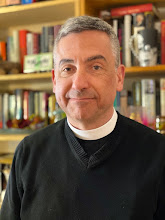
Sidney's Legacy


"Sidney's Legacy"

Dear Friends,

I am still absorbing the shock of Sidney King's death. Maybe because I just couldn't imagine our church without him, I was convinced that Sidney would pull through and that we would soon hear him again on our prayer calls and see his comments during our Sunday services on Facebook. The truth is I still have a hard time picturing our church without him, without his deep knowledge and tireless commitment, without his familiar laugh, without his support of our congregation and of me.

Although we're having a hard time accepting Sidney's death, I believe he was prepared for it. Sidney certainly loved life and wanted to live. To the end, he was working hard at his therapy, first in person and then online after the pandemic made travel impossible. In the last few weeks before we closed our doors, Sidney had returned to church and when we were separated he was still eagerly participating in Finance Committee and Vestry meetings via conference call and Zoom. At the same time, Sidney's Illness had made him even more mindful that we are given a limited number of days and also deepened his trust that the Lord was beside him, no matter what.

I'm sure like many of you, Sidney has not been far from my thoughts and prayers. And, along with his unshakeable faith, I've also been thinking about his love of ministry. As I wrote to you last week, Sidney never said "no" to ministry. I remember how eager he was to host Family Promise guests at the Parish House on Storms Avenue. I remember how disappointed he was that we weren't able to continue the Fourth Monday dinners here on Duncan Avenue. And, in a recent conversation, Deacon Jill shared how Sidney had played a large role in the Lighthouse, larger than many of us probably realized. If Jill was the mother of the Lighthouse, then Sidney was the father. He spent a lot of time with the residents - people who had fled danger to seek asylum in the United States - gaining not just their trust but also their love. Perhaps because he knew what it was like to leave a homeland and try to find a footing in a strange new land, Sidney took the time to get to know and to help each person. And, as a careful steward of God's gifts, Sidney was happy that our building was being used for such good and important ministry.

Sidney loved the church. You old-timers know that the history of the Episcopal Church in Jersey City is not always a happy story. There have been many disappointments, misunderstandings, and conflicts along the way. No one knew this painful history better than Sidney. Few people lived more of this history more deeply than Sidney. Yet, although he was sometimes frustrated, disappointed, and even hurt, he never gave up on the church. Just the opposite! He gave many hundreds of hours of his life to the often tedious work of attending meetings, both locally and on the diocesan level. While today many people have perhaps understandably soured on institutions, Sidney understood that they are necessary if we want to work together and achieve as much good as possible. Sidney recognized that institutions are needed if together we are to put our faith into action. So, all of those Garden State Episcopal CDC Board meetings helped to construct decent housing for the poor. All of those Union of Black Episcopalians meetings provided promising students with scholarships. And, all of those vestry meetings built a church that has the ability to do the kinds of ministry that Sidney loved so much.

I already miss Sidney. And I'm sure in the weeks and months ahead when we're faced with a problem or an opportunity I'll catch myself thinking. "I'll ask Sidney what he thinks." It really is hard to imagine our church without him. But, Sidney has left us a rich legacy: an unshakeable faith, a hunger for ministry, and a love for our flawed but beautiful church.
In last Sunday's gospel lesson - the lesson we usually read at funerals - Jesus tells the disciples, "I am the way the truth and the life." Sidney King knew Jesus to be the way. He followed the way. And, thanks to his example, we also know the way.

Sunday, May 10, 2020

Following the Way of Jesus


The Church of St. Paul and Incarnation, Jersey City NJ
May 10, 2020

Year A: The Fifth Sunday of Easter
Acts 7:55-60
Psalm 31:1-5, 15-16
1 Peter 2:2-10
John 14:1-14

Following the Way of Jesus
            Alleluia! Christ is risen!
            The Lord is risen indeed! Alleluia!
            If you tuned in last week, you may remember that I talked about how we humans are pretty amazing but we do have our limits, including when it comes to talking about God.
            The best we can do is come up with images - some that work better than others - images that point to what God is like.
            God is like a Father or a Mother.
            God is like a king, a potter, or a shepherd.
            But, for us Christians the clearest image we have of God is Jesus.
            As Jesus says to the Apostle Philip in today’s gospel lesson, to see Jesus is to see the Father.
            If we want to see what God is really like, we look to Jesus – we look to his love, his life, his teaching, his healing, his self-sacrifice, and, most of all, his resurrection, transforming death into new life.
            Alleluia! Christ is risen!
            The Lord is risen indeed! Alleluia!
            Today is the Fifth Sunday of Easter – yes, it’s still Easter – it’s still Easter even though we’ve been distracted by so much fear and sadness and separation and loneliness.
It’s still Easter even though we’ve been horrified by yet another deadly appearance of barbaric racism – the cold-blooded but unfortunately not really shocking killing in Georgia of Ahmaud Arbery, whose life was brutally cut short simply because he was a black man out for a jog in a white neighborhood.
It’s still Easter even though we face an uncertain future, not knowing when we will all be reunited, not knowing how we will all be reunited, not knowing when some of us who have been working so hard will finally get a rest, not knowing when some of us who have lost our jobs will find work again.
            So, yes, it’s still Easter even though it doesn’t really feel like it.
            And, it doesn’t really feel like Easter in today’s gospel lesson either.
            Actually, the setting is before the first Easter – it’s the Last Supper – and Jesus has gathered with his closest friends for one last meal, one final opportunity to teach how they are to live – how they – we - are to be washers of feet – how they – we – will always have Jesus with us, especially when we gather together around the table and remember him.
            At the Last Supper, with time running out, Jesus promises that they – we - will all be reunited and that they – we – know the way to the place where Jesus is going.
            At this point I always imagine at least some of the disciples nodding along with Jesus even though they have no idea what he’s talking about – and maybe others are surreptitiously looking around at each other with slight shrugs of the shoulders.
            But, it’s only Thomas who seems brave enough to speak up and admit he doesn’t get it. He says, “Lord, we do not know the way to the place where you are going. How can we know the way?”
            And, Jesus says, “I am the way, the truth, and the life.”
            Jesus is the way.
            As many of you know, this is the passage that we usually read at funerals – a reminder when we need it most that Jesus isn’t going to let go of us, no matter what – a reminder that we have seen Jesus – a reminder that we have been shown the way.
            And this isn’t a funeral but maybe in our time of trouble we need to be reminded that Jesus is the way – and that we know the way.


            A few weeks ago I had to drop off something at the home of one of our parishioners.
            As it happens, she lives in a high-rise apartment building where my parents and I lived when I was very little, when I was 2 and 3 years old.
            I guess I was in a chatty mood that day because I boasted to the man at the front desk that I had lived in this very building about fifty years ago! He didn’t seem terribly interested or impressed but he did give me a second look, as if asking himself, just how old is this guy?!?
            Since I was so young when we lived there, I only have two very vivid memories from that time and place.
            One is the garbage chute down the hall from our apartment, which definitely captured my imagination and probably scared me a little.
            Where did all of our trash go, anyway?
            Just what was at the bottom of the chute?
            And the other thing I remember is the balcony. The apartment (which my sources tell me was on the tenth floor) had a balcony and so we could go outside and look out at the sprawling city below.
            And, at least in my memory, my favorite thing to watch was the buses.
            Unlike today when most of our buses are all basically painted white, back then each bus company had its own color. You old-timers will remember: gray for the Boulevard; brown for Central Avenue; green for Public Service.
            Maybe this is how I learned my colors – I’ll check with my sources.
            Anyway, I liked the buses so much that the very first job I ever wanted was to be a bus driver!
            And, I don’t want to overanalyze this, but think I wanted to be a bus driver not for the excitement of driving a big vehicle or getting to meet lots of different people, but because buses follow fixed routes – day after day the drivers steer their buses along the same way.
            In fact, when I was a little older I used to love looking at maps and tracing the routes of buses and trains – and, I can’t see you but if you’re making fun of me, knock it off! There’s nothing unusual about any of this!
            And, ever since I was able to go out on my own, I’ve always liked following a set route – I still do that today when I take my morning walks through Lincoln Park – most days I go the same way in the same order.
            Now, it’s possible that I’m completely lacking in creativity and I’m the most boring person you’ve ever met, but I think that following the same route day after day eliminates many distractions, helps to keep focus, and allows an awareness of subtle changes that we might otherwise miss if we’re all going over the place.
            Right now in the park, it’s wonderful to see new life bursting out all over, along the same paths that were gray and barren just a few weeks ago.
            Each time we travel along our route we deepen our bond to these places, to this particular way.

            Jesus is the way.
Following the way of Jesus is a lot like taking the same route every day - we pray and we break bread – we tell and re-tell the old stories – we sing songs that some of us have been singing our whole lives – we offer help to people in need – we mess up and say we’re sorry and try to do better and we offer forgiveness to those who have wronged us – we share the Good News, sometimes by word but mostly through example.
We follow the way of Jesus.
For many of you, I’m just reminding you of something you know so well.
For example, quite a few of you have been asking about how to get your copy of Forward Day By Day. To be honest, I hadn’t realized that so many of you relied on that handy and daily resource, didn’t know that so many of you followed that particular daily route.
(Good news: the latest issue has finally arrived and went out in the mail at the end of last week – I know some of you have already received your copy.)
Following the way of Jesus is a lot like taking the same route day after day – and along the way we deepen our bond to Jesus or, rather, Jesus deepens his bond to us.
So, during this strange and troubling Easter season when so much has been taken away from us – so many of the activities of our lives have been canceled or postponed – we’ve been separated from many of the people we love - so many of our usual routes have been blocked – during this strange time maybe we’re able to see the way of Jesus – a way that will never be canceled or blocked – maybe we can see and follow the way of Jesus a little more clearly than before.

Long ago, Jesus the Image of God promised Thomas and Philip and the other disciples that they would all be reunited – and Jesus makes the same promise to us today.
And we know the way – it’s the way of bread and wine – it’s the way of washing feet – it’s the way of love and forgiveness – it’s the way of sisterhood and brotherhood – it’s the way of justice for the innocent and the vulnerable – and, most of all, the way of Jesus is the way from death to new life.
Alleluia! Christ is risen!
            The Lord is risen indeed! Alleluia!
Amen.


Friday, May 08, 2020

In the Wilderness


A Note to the Parish

"In the Wilderness"

Dear Friends,

Even in the midst of pandemic and quarantine, God continues to give us good gifts.

By now you know that I think one of the best gifts we have received has been the chance to pray together three times a day over the phone. It's been good to hear your voices greeting one another and lifting up so many intentions to God. It has also been an extraordinary opportunity to read Scripture together, sharing more of God's Word than we ever have before.

During this week's Zoom conference call with the clergy, Bishop Hughes mentioned how the Exodus story (which we've been reading during the morning prayer services) has really spoken to her during this difficult time. I've been thinking the same thing and I bet many of you have, too. We probably all know the story in broad strokes, the journey from slavery in Egypt to the promised land of freedom, this great tale of liberation that has inspired oppressed people through the centuries and captures the imagination even today. But, our daily reading of Exodus, step by step, has been like hearing the story for the first time, each portion offering new details, including some that may remind us of our own time in the wilderness today.

Admittedly, certain episodes in Exodus are difficult for us to digest. Would God really engineer the drowning of the Egyptians so that the Israelites could escape? Would God really want the "sons of Levi" to kill three thousand of their countrymen? Passages like these are strange and uncomfortable, highlighting the great distance between us and the people who recorded these memories.

But, much of the story seems all too recognizable. There is the unlikely leader of Moses, an imperfect man who, with God's help, rises to the challenge of guiding his people through the wilderness, just as some leaders today, including some we might not have expected, have bravely and honestly met this most challenging moment. And then there is Moses' brother Aaron, a leader who at one point fails badly, encouraging the worst instincts of the people. Aaron gives them what they think they want by gathering gold to create an idol, the famous "Golden Calf," so that now the Israelites can worship a god like all the other gods. Unfortunately, some of today's leaders are quick to tap into our worst instincts, cleverly stoking our fear and selfishness. Our worst leaders call us to worship in a shrine full of golden calves: the false gods of the economy, ignorance, violence, nationalism, and, as we have just seen so tragically yet again, white supremacy.

Throughout much of their wilderness journey, the "stiff-necked" Israelites complain bitterly. They blame Moses for getting them into this mess, and yearn for a return to Egypt, back to the way things used to be, no matter the consequences. In a similar way, misguided people in our own land are pushing - sometimes with ominous threats of violence - to immediately open up the country once again, apparently not believing or not caring that they would be sentencing even more people to illness and death.

The exodus story even features hoarding! When God gives the hungry Israelites the gift of manna, they are given strict instructions to only gather one day's worth of food (two days' worth before the sabbath). The story goes that even those who tried to gather more still ended up with only just enough. But, human nature being what it is, and the fear of scarcity being very real, some of the Israelites didn't trust that God would continue to provide and instead stashed away some manna, only to discover the next morning that the leftovers were rotten with maggots. (It's tempting to wish that those who hoarded toilet paper at the start of our crisis might have had a similarly unwelcome surprise!)

The forty years of the exodus must have been unimaginably difficult, and yet God was with the Israelites each step of their journey in the wilderness. God provided for the people. God taught them how to live. God called them to turn away from golden calves and to put their trust in God. And, in the end, God brought the people home.

Today, during our strange and unsettling stay-at-home exodus, during our time in the wilderness of disease and fear, God continues to show us the way - speaking the Word into our ears and hearts, melting the golden calves before our very eyes and lifting up leaders of wisdom and compassion, and giving us food enough and even some to share with the less fortunate.

For the Israelites long ago, God appeared mysteriously as a "pillar of cloud" by day and as a "pillar of fire" at night. We Christians see God best in and through Jesus, our brother who walks beside us, promising us that no matter how dangerous and frightening the wilderness, life and love always have the final word.

Sunday, May 03, 2020

Love and Abundance


The Church of St. Paul and Incarnation, Jersey City NJ

May 3, 2020

Year A: The Fourth Sunday of Easter
Acts 2:42-47
Psalm 23
1 Peter 2:19-25
John 10:1-10

Love and Abundance

            Alleluia! Christ is risen!
            The Lord is risen indeed! Alleluia!
            You know, we humans are pretty remarkable creatures.
At our best, we are capable of amazing compassion and creativity and, unfortunately, at our worst we are also able to unleash terrible hatred and destruction.
            We are remarkable creatures but, whether we like it or not, we do have our limits.
As we’ve been painfully reminded during the current crisis, there are some things we just can’t do, or at least can’t do as quickly as we might like.
            Sometimes those limits lead to sadness and frustration, like what we’re all feeling these days when we can’t live our lives the way we did before, can’t be together here in person this morning.
And sometimes those limits even lead to anger as we have seen in certain parts of the country where some misguided people have put on their camouflage outfits and armed themselves and marched on – and in at least one case, into - state capitols, loudly and dangerously protesting the restrictions placed on us by the government in an attempt to slow the spread of the coronavirus.
            No matter how sad, frustrated, or even angry we may get, no matter how much we may not like it, the hard truth is that we are limited when it comes to dealing with a deadly pandemic.

            And, we’re also limited when it comes to understanding and describing God.
            God is beyond space and time and yet somehow also present with us right here and now.
            God is beyond our imagination and yet somehow also known to us.
The best we can do is come up with images to describe what God is like.
            Throughout the centuries people have looked at the world around them and come up with so many different ways of describing God, descriptions that made sense for people in different times and places - and may or may not work so well for us today:
            So, God is like a Lord, a Father, a Mother, a King, a Rock, a Mighty Fortress, a Potter, a Master, a Warrior… and on and on.
And then there’s the very popular image we’re focusing on today – God is like… a Shepherd.
As the psalmist wrote long ago, using words that are familiar even to people who haven’t been in church for a long time, the traditional words often remembered by people even if their memories have been largely erased by dementia:
The Lord is my shepherd, I shall not want.
Throughout the Hebrew Scriptures, God is described as a shepherd, guiding and protecting the flock.
And, in the New Testament, Jesus describes himself as the Good Shepherd.
In today’s lesson from the Gospel of John, there’s an additional image. Not only is Jesus the shepherd who knows his sheep - and who is known by his sheep - but Jesus is also the sheep gate – the gate the sheep pass through to find pasture, where the sheep are fed and kept safe.
Now, normally in my sermon on Good Shepherd Sunday, I mention how I’m a city guy who doesn’t really know anything about sheep or shepherds. I have never seen a shepherd in real life and I’ve only encountered sheep in petting zoos, and I usually go on about how I’m not sure if this old sheep and shepherd image still works for me or for most of us.
But, you know, this year is different.
And, the idea of Jesus as a shepherd watching over us, knowing each of us by name, looking at us not just as a flock but recognizing each of us as a unique individual, as someone who really matters, knowing each of us by name – this image is really touching my heart.
Because these days we really need the Good Shepherd, don’t we?
We need the shepherd - and, we also need the pasture – the place of safety and abundance – the place where we shall not want.
As Jesus says, “I came that they” that would be the sheep – you and me “may have life and have it abundantly.”

We have many images of God and some work better for us than others.
 But, God is always about love.
 And, God always offers abundance – the abundance of a beautiful pasture, the abundance of baskets overflowing with bread and fish, the abundance that is all around us, even in our time of trouble.

You know, one of the unfortunate parts of human nature is that we tend to not appreciate what we have. Often we can’t see the good stuff that’s right in front of our face.
I don’t know if it’s too soon to talk about the good that may come out of our present crisis, but it’s possible that we’ll be able to see more clearly how God has blessed us with so much – abundance that we may often take for granted, and abundance that is somehow always provided in our moments of need.
In the early weeks of the pandemic it was so disorienting and even frightening to walk up and down the supermarket aisles and see all of the empty shelves – no bottled water, no pasta, no canned soup, no milk, no eggs, …no toilet paper.
We’ve had this experience before, of course, especially in the run-up to a hurricane or a blizzard, but this time has been different because it has gone on for weeks – a powerful reminder of the usual abundance we usually don’t even notice – I mean, there are supposed to be a hundred different types of salad dressing, right?
 And, if we’re being extra mindful these days, we’ve also been given a taste of how so many people - here in our own community and around the world - live all the time, not because God is stingy or plays favorites but because we live in a system that makes life much harder, so much less abundant, than what God intends for all of us.
Jesus says, “I came that they may have life and have it abundantly.”
We have many images of God but God is always about love and God always offers abundance.

And, sure enough, throughout this crisis, we have been blessed with so much love and abundance.
In my weekly email a couple of weeks ago, I wrote about driving down Montgomery Street near Ferris High School, a couple of blocks from the Jersey City Medical Center.
In front of the school, there was a long line of out-of-state ambulances parked, each painted in different colors and bearing unfamiliar names.
In a way that I hadn’t expected I was deeply moved to see all of that equipment. It made me stop and think about the many EMTs and doctors and nurses who had traveled long distances to be with us here, sharing their skill and training, trying to save the lives of people they didn’t know, people the world might dismiss as strangers and really not their problem but who are, in fact, beloved sisters and brothers.
God is like a long line of out-of-state ambulances and brave EMTs, working alongside our own talented doctors and nurses, risking their lives to offer us caring and healing.
Love and abundance.

And then there is Triangle Park.
I know I keep talking about it but I’m so grateful and proud that our community center has remained open throughout this crisis, providing a safe haven – yes, with appropriate social distancing – distributing diapers and formula and food, lots and lots of food – including this past Thursday when 270 people from all across Hudson County lined up around the block and each received a big box of food and so many talked about how hungry they were, how grateful they were.
God is like a community center in a neighborhood long neglected, considered beyond hope, a community center where all are welcome and all are fed.
Love and abundance.

And then there is our own beautiful community.
As many of you know, our beloved parishioner Jean had major surgery on Thursday.
In the days leading up to her operation, Jean kept calling into our daily phone prayer services, first from home and then even from the hospital. She spoke very openly about what she was facing and about her trust in God – and she was blanketed with so much love and concern, so many prayers from people who have known Jean for years, and some people who are not exactly sure who she is, and even people who have definitely never met her.
I know Jean was lifted up by all of those prayers and in those moments I think all of us on the call could feel our bonds growing even tighter, drawing us closer together even over phone lines and through the air.
God is like a church, required to keep apart and yet still very much together, holding on to each other, especially the sick and vulnerable.
Love and abundance.

So, we amazing but limited humans have come up with many images of God, and some work better for us than others.
But, God is always about love.
And, God always offers abundance – the abundance of a beautiful pasture, the abundance of baskets overflowing with bread and fish, the abundance of people risking their lives for strangers, the abundance of a community center where so many are fed, the abundance of brothers and sisters who hold on tight to each another, even if it’s over the phone.
The Lord is our shepherd and we shall not want.
Love and abundance.
Alleluia! Christ is risen!
            The Lord is risen indeed! Alleluia!
Amen.