Grace Episcopal Church, Madison NJ
November 20, 2011
Year A: The Last Sunday after Pentecost – Christ the King
Ezekiel 34:11-16, 20-24
Psalm 100
(Ephesians 1:15-23)
Matthew 25:31-46
New Year’s Eve
Well, we made it back in time for the last Sunday after Pentecost – the last Sunday of the church year – the feast of Christ the King. In a way, today is like the Church’s version of New Year’s Eve.
Of course, people have all sorts of New Year’s Eve traditions – maybe getting together with family and friends, or going to Times Square (which seems like a nightmare to me), or watching Dick Clark’s Rockin’ New Year’s Eve on TV or maybe just skipping the whole thing and going to bed early.
And New Year’s Eve is a natural time for reflecting on the past year and making those quickly broken resolutions for the year ahead.
In today’s lessons the Church has given us a pretty clear and appropriate theme for reflection: God’s judgment.
Now, I know very well that this is a wonderful church made up of very fine people so maybe thinking about God’s judgment doesn’t bother you too much. But, I’ll be honest, thinking about God’s judgment makes me really nervous.
Thinking about God’s judgment makes me remember my personal failings, the ways I’ve fallen short, the ways I’ve hurt people, the ways I haven’t been as loving or as generous as I could have been.
And God, to whom all hearts are open, all desires are known and from whom no secrets are hid, knows my failings even better than I know them myself.
Then there’s our collective responsibility and guilt. We humans have created a world in which a few live in great comfort and nearly everyone else lives in desperate poverty. We humans have literally trashed the good creation - from the huge garbage patch swirling in the North Pacific to space debris orbiting the planet.
Fortunately for all of us, God’s mercy always trumps God’s judgment.
I don’t know whether it made him nervous, but the Prophet Ezekiel definitely thought a lot about God’s judgment. He lived during one of the bleakest periods of Israel’s history. In the 6th Century BC, the Babylonians destroyed Jerusalem, including the Temple. Since it was believed that in a sense God lived in the Temple maybe we can only begin to imagine how traumatic this was. And then most of the people were taken from their home and exiled in Babylon.
I’m sure many people felt that somehow God was absent. Ezekiel believed that God was punishing the people, yet, even in the midst of this disaster, Ezekiel didn’t think that God had abandoned the people. Ezekiel believed that God was still very much at work doing what God always does, turning fear into hope and death into life.
In the passage we heard today, God speaking through Ezekiel declares that since it’s the leaders who have caused this calamity, God is going to step in and personally take control of the flock.
“I myself will be the shepherd of my sheep, and I will make them lie down says the Lord God. I will seek the lost, and I will bring back the strayed, and I will bind up the injured, and I will strengthen the weak, but the fat and the strong I will destroy. I will feed them with justice.”
I will feed them with justice.
Despite our individual and collective failures, God doesn’t give up on us. Instead, God’s justice feeds us by showing us and reminding us how we are meant live. God’s justice feeds us by showing us and reminding us that we are born to love one another, especially the poorest and the weakest, and we are born to take care of the creation that God has entrusted to us.
At the end of the passage we heard from Ezekiel, God promises to set over the people one shepherd. And of course we Christians recognize that one shepherd as Jesus.
And in today’s gospel lesson from Matthew, Jesus has a lot to say about judgment.
Probably this passage was originally about judgment of the gentiles – not Jews and not followers of Jesus. And it’s interesting that Matthew quotes Jesus as seeming to say that these non-believers aren’t going to be judged on their lack of belief but on their actions. These non-believers will be judged on how they treated Jesus’ followers!
Did they offer compassion to Jesus’ followers who were hungry, thirsty, homeless, naked, sick and imprisoned? If yes, then Jesus says that these non-believers will enter the kingdom prepared for them from the foundation of the world. If not, well then the news isn’t so good.
Now, if this passage really is directed at non-believers then what does that mean for us?
Certainly we are all called to feed the hungry, quench the thirsty, house the homeless, clothe the naked, care for the sick and visit the imprisoned.
There’s always a lot more we could and should do but we don’t have to look too hard to see people here in this community answering that call when we drop items into the Food for Friends barrel or spend the night at the homeless shelter or take a tag or two off the Christmas angel tree or sit at the bedside of a dying friend reading from the prayer book or some lines of poetry.
But, as followers of Jesus you and I are called to an even higher standard.
And we hear that higher standard in the Baptismal Covenant.
As followers of Jesus we’re called to continue in the apostles’ teaching and fellowship, in the breaking of the bread and in the prayers.
We’re called to resist evil, and, whenever we fall into sin, repent and return to the Lord.
We’re called to proclaim by word and example the Good News of God in Christ.
We’re called to seek and serve Christ in all persons, loving our neighbor as our self.
We’re called to strive for justice and peace among all people and to respect the dignity of every human being.
It’s quite a tall order and if you’re like me you may be starting to feel nervous again as you consider just how far short we fall from striving for justice and peace and respecting the dignity of every human being.
The truth is that we can’t do any of these on our own but only, as the response says, “with God’s help.”
And although they’re daunting, by setting these high standards God is feeding us with justice. God’s justice feeds us by showing us and reminding us how we are meant live. God’s justice feeds us by showing us and reminding us that we are born to love one another, especially the poorest and the weakest, and we are born to take care of the creation that God has entrusted to us.
It’s the last Sunday after Pentecost, the last Sunday of the church year. It’s the Church’s version of New Year’s Eve.
It’s a good day to reflect on God’s justice and judgment and the ways that we’ve all fallen short of both the minimum standards of taking care of one another and how we’ve fallen short of the high standards set by Christ the King.
But, since God’s mercy always trumps God’s justice, there’s no reason to be nervous. No matter how much we’ve fallen short, next week a new church year begins and we get another chance.
Right here at Grace Church, we get a new year to pray together and to support one another when, like for the people of Israel in exile, it seems like God is absent and our whole world is falling apart.
We get a new year to care for the hungry, thirsty, homeless, naked, sick and imprisoned.
We get a new year to take better care of the good creation that God has entrusted to us.
We get a new year to seek and serve Christ in all persons, loving our neighbor as our self.
And we will - with God’s judgment, God’s mercy, and God’s help.
Happy New Year!
Amen.
Sunday, November 20, 2011
Sunday, October 23, 2011
The Unfinished Work of Love
St. Thomas’ Episcopal Church, Lyndhurst NJ
October 23, 2011
Year A: Proper 25 – The 19th Sunday after Pentecost
Deuteronomy 34:1-12
Psalm 90: 1-6, 13-17
1 Thessalonians 2:1-8
Matthew 22:34-46
The Unfinished Work of Love
In this morning’s Old Testament lesson, we heard the story of the death of Moses. For the past few weeks we’ve been following the story of Moses – this reluctant leader who was called by God to shepherd his people out of Egyptian slavery and into the freedom of the promised land.
The Exodus story is filled with testing and quarreling but through it all Moses remained steadfast in his determination to do the work that God had given him to do.
That’s why there’s a deep poignancy to today’s story of Moses’ death. He is undiminished even in his great age. It’s not old age or illness or battle that end his life. Instead, God’s command brings his life to a close.
The story of Moses’ death brings the story of the exodus to a close and marks the end of the Torah – the first five books of the Bible.
There’s one last element of this story that is particularly moving.
Despite his steadfastness and patience and courage and stamina, Moses is unable to complete the work God has given him to do.
Moses is given the chance to glimpse the promised land but he doesn’t live long enough to see his people return to their homeland. Moses leaves behind unfinished work. His unfinished work is handed off to Joshua and the next generation.
I guess that we can all relate to leaving things – both important and not so important – unfinished.
How many of us have started a home improvement project only to abandon it when we’ve gotten tired or bored or overwhelmed?
How many of us have taken up a hobby or a musical instrument only to set it aside long before we’ve gotten all our stamps into albums or been able to play a piece of music all the way through?
How many of us have started keeping a journal, only to call it quits after a few days or maybe weeks?
And then there are some more important things that we leave unfinished.
Before I became a priest I was a high school history teacher. At the end of every school year I would scramble to cover all the material that I thought was important. And every May and June I’d realize there was no way that I could get the job done to my satisfaction.
Maybe you’ve had the same kind of experience at work. Maybe you’ve had that experience at the end of the day or the week. Or maybe you’ve had that experience at the end of a career. Maybe when you’ve retired you realized there were lots of things you wanted to achieve that would remain forever unfinished.
Maybe you’ve had that experience with your children or grandchildren. There are all sorts of things you wanted to teach them, all kinds of experiences you wanted to share with them. But, before you know it, they’re all grown up and you realize that the work of parenting will forever remain unfinished.
It’s really important for us Christians to realize and remember that our work will always be unfinished.
And just what is our work as Christians?
Often it feels like our work as Christians is struggling to keep the church doors open – to make sure that our community of faith remains alive to meet our spiritual needs and the needs of the world around us.
So, we spend lots of time trying to balance the budget, to keep the roof from leaking, to keep the furnace going, to arrange for supply clergy, to…well, most of you know the drill better than I do.
And that’s good work and it’s important work.
But, in today’s gospel lesson Jesus reminds us of our most important work.
Over the past few weeks we’ve been hearing excerpts from the Gospel of Matthew describing Jesus’ activities in Jerusalem. This teacher and healer from sticks arrived in the capital city on what we call Palm Sunday and then immediately made quite an impression by chasing the money changers out of the Temple.
Then he taught using parables – parables that suggested that God was not so pleased with the religious leaders – people who were so, so proud of their careful religious observance.
The way Matthew tells the story, the religious leaders – the Pharisees and the Sadducees – are understandably angered by Jesus’ criticism.
Which brings us to today’s spiritual debate between the Pharisees and Jesus.
The Pharisees ask him out of the 613 laws in the Torah, which one is the greatest?
Matthew claims that the Pharisees asked this question to “test” Jesus. I’m sure that’s true, but maybe they also sincerely wanted to know what this infuriating and mysterious rabbi from Galilee really thought was the greatest commandment.
There’s a story that the great Jewish teacher Rabbi Hillel (who lived just a little bit before Jesus) was asked by a Gentile to have the entire Law explained to him while he stood on one foot.
The great rabbi replied, “What is hateful to you do not do to your neighbor; that is the whole Torah. The rest is commentary. Go and learn it.”
Jesus’ answer is similar – though stated more positively.
Jesus quotes Deuteronomy about loving God with all that we have and all that we are.
And Jesus quotes Leviticus about loving our neighbor as our self.
This is our most important work: to love God and to love one another.
In our world broken by sin and suffering, loving God and loving one another is the hardest work of all. And it’s work that, no matter how loving we are, will always remain unfinished.
St. Paul understood and embraced our unfinished work of love.
After his conversion he spent the rest of his life sharing the Good News of Christ all around the Mediterranean world, setting up little Christian communities in place like Thessalonica, an important Greek trading city.
Paul went there and did the work of a Christian, the work of love.
In today’s second lesson we heard how Paul recalls his work of love among the Thessalonians:
“But we were gentle among you, like a nurse tenderly caring for her own children. So deeply do we care for you that we are determined to share with you not only the gospel of God but also our own selves, because you have become dear to us.”
Paul moved on to other places, accepting that his work of love among the Thessalonians would remain unfinished. Instead, it was up to people there – the next generation – to take up the work of love – a work that would forever remain unfinished.
Our work of love remains forever unfinished. And maybe that’s discouraging. After all, most of us really like to cross items off our to-do list.
But, I think the unfinished nature of our work should comfort us.
The martyred Roman Catholic archbishop of San Salvador, Oscar Romero, once wrote:
“We cannot do everything, and there is a sense of liberation in realizing that. This enables us to do something, and to do it very well. It may be incomplete, but it is a beginning, a step along the way, an opportunity for the Lord’s grace to enter and do the rest. We may never see the end results, but that is the difference between the master builder and the worker. We are workers, not master builders; ministers, not messiahs. We are prophets of a future not our own.”
Long ago God chose Moses to take on the important work of leading the Israelites from slavery to freedom. Despite the years of testing and quarreling, Moses remained steadfast in his determination to do the work that God had given him to do. And in the end, although Moses had glimpsed the promised land, he had to leave his work unfinished.
Today in a world broken by sin and suffering, God chooses us to take on the most important work of all – the work of love.
Every once in a while, like Moses, we may glimpse the promised land. But, like Moses, we too will leave our work unfinished.
And that’s OK.
All God the master builder asked of Moses and Paul and all God asks of us is to be workers – to do the work of love, right here and right now.
Amen.
October 23, 2011
Year A: Proper 25 – The 19th Sunday after Pentecost
Deuteronomy 34:1-12
Psalm 90: 1-6, 13-17
1 Thessalonians 2:1-8
Matthew 22:34-46
The Unfinished Work of Love
In this morning’s Old Testament lesson, we heard the story of the death of Moses. For the past few weeks we’ve been following the story of Moses – this reluctant leader who was called by God to shepherd his people out of Egyptian slavery and into the freedom of the promised land.
The Exodus story is filled with testing and quarreling but through it all Moses remained steadfast in his determination to do the work that God had given him to do.
That’s why there’s a deep poignancy to today’s story of Moses’ death. He is undiminished even in his great age. It’s not old age or illness or battle that end his life. Instead, God’s command brings his life to a close.
The story of Moses’ death brings the story of the exodus to a close and marks the end of the Torah – the first five books of the Bible.
There’s one last element of this story that is particularly moving.
Despite his steadfastness and patience and courage and stamina, Moses is unable to complete the work God has given him to do.
Moses is given the chance to glimpse the promised land but he doesn’t live long enough to see his people return to their homeland. Moses leaves behind unfinished work. His unfinished work is handed off to Joshua and the next generation.
I guess that we can all relate to leaving things – both important and not so important – unfinished.
How many of us have started a home improvement project only to abandon it when we’ve gotten tired or bored or overwhelmed?
How many of us have taken up a hobby or a musical instrument only to set it aside long before we’ve gotten all our stamps into albums or been able to play a piece of music all the way through?
How many of us have started keeping a journal, only to call it quits after a few days or maybe weeks?
And then there are some more important things that we leave unfinished.
Before I became a priest I was a high school history teacher. At the end of every school year I would scramble to cover all the material that I thought was important. And every May and June I’d realize there was no way that I could get the job done to my satisfaction.
Maybe you’ve had the same kind of experience at work. Maybe you’ve had that experience at the end of the day or the week. Or maybe you’ve had that experience at the end of a career. Maybe when you’ve retired you realized there were lots of things you wanted to achieve that would remain forever unfinished.
Maybe you’ve had that experience with your children or grandchildren. There are all sorts of things you wanted to teach them, all kinds of experiences you wanted to share with them. But, before you know it, they’re all grown up and you realize that the work of parenting will forever remain unfinished.
It’s really important for us Christians to realize and remember that our work will always be unfinished.
And just what is our work as Christians?
Often it feels like our work as Christians is struggling to keep the church doors open – to make sure that our community of faith remains alive to meet our spiritual needs and the needs of the world around us.
So, we spend lots of time trying to balance the budget, to keep the roof from leaking, to keep the furnace going, to arrange for supply clergy, to…well, most of you know the drill better than I do.
And that’s good work and it’s important work.
But, in today’s gospel lesson Jesus reminds us of our most important work.
Over the past few weeks we’ve been hearing excerpts from the Gospel of Matthew describing Jesus’ activities in Jerusalem. This teacher and healer from sticks arrived in the capital city on what we call Palm Sunday and then immediately made quite an impression by chasing the money changers out of the Temple.
Then he taught using parables – parables that suggested that God was not so pleased with the religious leaders – people who were so, so proud of their careful religious observance.
The way Matthew tells the story, the religious leaders – the Pharisees and the Sadducees – are understandably angered by Jesus’ criticism.
Which brings us to today’s spiritual debate between the Pharisees and Jesus.
The Pharisees ask him out of the 613 laws in the Torah, which one is the greatest?
Matthew claims that the Pharisees asked this question to “test” Jesus. I’m sure that’s true, but maybe they also sincerely wanted to know what this infuriating and mysterious rabbi from Galilee really thought was the greatest commandment.
There’s a story that the great Jewish teacher Rabbi Hillel (who lived just a little bit before Jesus) was asked by a Gentile to have the entire Law explained to him while he stood on one foot.
The great rabbi replied, “What is hateful to you do not do to your neighbor; that is the whole Torah. The rest is commentary. Go and learn it.”
Jesus’ answer is similar – though stated more positively.
Jesus quotes Deuteronomy about loving God with all that we have and all that we are.
And Jesus quotes Leviticus about loving our neighbor as our self.
This is our most important work: to love God and to love one another.
In our world broken by sin and suffering, loving God and loving one another is the hardest work of all. And it’s work that, no matter how loving we are, will always remain unfinished.
St. Paul understood and embraced our unfinished work of love.
After his conversion he spent the rest of his life sharing the Good News of Christ all around the Mediterranean world, setting up little Christian communities in place like Thessalonica, an important Greek trading city.
Paul went there and did the work of a Christian, the work of love.
In today’s second lesson we heard how Paul recalls his work of love among the Thessalonians:
“But we were gentle among you, like a nurse tenderly caring for her own children. So deeply do we care for you that we are determined to share with you not only the gospel of God but also our own selves, because you have become dear to us.”
Paul moved on to other places, accepting that his work of love among the Thessalonians would remain unfinished. Instead, it was up to people there – the next generation – to take up the work of love – a work that would forever remain unfinished.
Our work of love remains forever unfinished. And maybe that’s discouraging. After all, most of us really like to cross items off our to-do list.
But, I think the unfinished nature of our work should comfort us.
The martyred Roman Catholic archbishop of San Salvador, Oscar Romero, once wrote:
“We cannot do everything, and there is a sense of liberation in realizing that. This enables us to do something, and to do it very well. It may be incomplete, but it is a beginning, a step along the way, an opportunity for the Lord’s grace to enter and do the rest. We may never see the end results, but that is the difference between the master builder and the worker. We are workers, not master builders; ministers, not messiahs. We are prophets of a future not our own.”
Long ago God chose Moses to take on the important work of leading the Israelites from slavery to freedom. Despite the years of testing and quarreling, Moses remained steadfast in his determination to do the work that God had given him to do. And in the end, although Moses had glimpsed the promised land, he had to leave his work unfinished.
Today in a world broken by sin and suffering, God chooses us to take on the most important work of all – the work of love.
Every once in a while, like Moses, we may glimpse the promised land. But, like Moses, we too will leave our work unfinished.
And that’s OK.
All God the master builder asked of Moses and Paul and all God asks of us is to be workers – to do the work of love, right here and right now.
Amen.

Sunday, October 09, 2011
Invitations to the Banquet
St. Paul’s Church in Bergen, Jersey City NJ
October 9, 2011
Year A: Proper 23 – The Seventeenth Sunday after Pentecost
Exodus 32:1-14
Psalm 106:1-6, 19-23
Philippians 4:1-9
Matthew 22:1-14
Invitations to the Banquet
It's good to be home.
Many of you know that my wife Sue and I lived in Florida for a year where I served as the Episcopal chaplain at the University of Florida and rector of a nearby church.
At the university chapel the Sunday service is at 5:30 in the evening, followed by a dinner prepared each week by parishioners of local Episcopal churches. Those faithful Episcopalians love preparing some special home-cooked foods for the often stressed-out students whose diet usually consists of institutional food, or fast food, or whatever else they can grab cheaply and quickly.
So on Sunday evenings we were treated to meals like baked ham with fresh green salads and fresh vegetables followed by dessert of ice cream homemade brownies.
Word about good, free food gets around, of course. So, our Sunday dinners not only attracted students but also some local poor and homeless people.
At the end of a long Sunday I’d often find myself sitting at a table with a graduate student in acoustical engineering who was sitting beside a homeless man who each night slept on a bench outside our chapel who was sitting beside a young woman who was preparing to live and teach in France after graduation who was sitting beside a veterinary student who was sitting beside a man who walked the neighborhood streets and loved to play tennis, sometimes even practicing his swing at the table while mumbling to himself, who was sitting next to a parishioner from a little church in a small Florida town who was happily watching everyone enjoying her food.
And observing that scene, when I was really mindful, really paying attention, I’d think, this is what the kingdom of God is really like.
Family, friend and stranger – we are all invited to the banquet.
In Florida we met many wonderful people and we were offered many opportunities and challenges, but after a while both Sue and I realized that we needed to be closer to our friends and family.
So, in August we moved back to New Jersey. I’ll be starting a new position next month. In the meantime we’ve been renting an apartment in downtown Jersey City – just around the corner from where we lived when we were first married.
In my free time I’ve been taking lots of walks around the neighborhood, and I often pass by my grandparents’ old house on Coles Street.
So, they’ve been on my mind more than usual. And when I think about them I nearly always remember the Thanksgivings my family celebrated in that house. Each year my grandmother cooked for her children, their husbands and wives, and eventually their children, beginning with me. So, each year the guest list grew longer and longer and yet somehow we all managed to squeeze into a modest living room and kitchen.
But, it wasn’t just immediate family on the guest list. Each year there would be some distant relatives whose connection I can’t explain, or the man who owned the shade store where my grandmother worked and his wife, or another stray person or two who obviously needed a place to celebrate the holiday and so received an invitation from my grandparents.
Now, when I walk past my grandparents’ house, when I’m really mindful, really paying attention, I think, that’s what the kingdom of God is really like.
Family, friend and stranger – we are all invited to the banquet.
It’s hard to believe, but it was nearly eleven years ago that Sue and I were looking for a spiritual home. Based on the recommendation of a colleague, of mine we came here to check out St. Paul’s. It was the Second Sunday of Advent.
I was immediately struck by the beauty of this church and moved by the friendliness of the welcome. The music was beautiful and the sermon was both smart and inspiring.
But, it was the passing of the peace that I’ll never forget. We were used to people in church hoping that no one would sit near them so that during the peace they could avoid physical contact and just give a polite wave. But, here at this church the people seemed genuinely happy to see one another, happy to be together, so just about everybody was out in the aisle, shaking hands, giving hugs, along with some pecks on the cheek.
Near the end of the peace on our first Sunday here, the rector walked up to Sue and me, reached out his hand and said, “I’m Dave Hamilton. Welcome to St. Paul’s.”
Obviously this place and its people – many of you – have shaped my life in ways that I could scarcely have imagined that first Sunday more than a decade ago.
Now, especially standing here in this place with all of you, when I look back on those wonderful days and remember so many special people, many of you here today and also those who have died, like Fr. Carr and Bertha, Cortez, Sarah, Gertrude Clarabell, Frieda, Harriet, and Arthur, I think this is what the kingdom of God is really like.
Family, friend and stranger – we are all invited to the banquet.
Like other Jewish teachers, Jesus used the image of the banquet, the feast, to describe what life with God is like. Joyfully sharing food, drink and fellowship – that’s what the kingdom of God is really like.
In today’s lesson from the Gospel of Matthew, we pick up where we left off last week. Jesus has entered Jerusalem and in a bold move chased the moneychangers out of the Temple, directly attacking the center of Jewish religious and political life.
Obviously that got the attention of the religious leaders. Matthew follows up that bold move with Jesus offering three parables that accuse at least some of the religious leaders of rebelling against God – and warning that because of that rebellion they are not going to enter the kingdom of God.
Instead, Jesus says that God is going to send out a lot more invitations to the banquet.
Family, friend and stranger – we are all invited to the banquet.
God sends the invitations. The only question is how do we respond.
In today’s lesson from the Book of Exodus, we have the famous scene of the Israelites growing impatient waiting for God and Moses. They fall back on the false comfort of an idol – in this case, a golden calf.
By leading the Israelites out of Egypt and through the desert, by offering them food and drink, God had extended a very tangible invitation to the banquet.
The ancient Israelites weren’t bad people. They were just frightened and impatient. And, this time, out of fear and impatience, they put their faith in a dumb idol. This time, they rejected God’s invitation.
No one here is melting down their gold and making golden idol. But, especially during these tough times facing our country and our world and facing many of us personally, like the ancient Israelites at the foot of the mountain we can forget how God has blessed us. We can forget the banquets we’ve enjoyed. We can give into despair and hopelessness and fall back on the false comfort of an idol.
We aren’t bad people. But, these days many of us are frightened and impatient people. And, out of fear and impatience, we put our faith in dumb idols. We reject God’s invitation.
We know there are consequences when we reject God’s invitation. Matthew likes to quote Jesus warning about “the outer darkness where there will be weeping and gnashing of teeth.”
But, the good news for the ancient Israelites, the good news for the chief priests and the good news for us is that even when God gets fed up with us, even when we rebel against God, God’s love and mercy always trump God’s justice.
So, our persistent God keeps sending out invitations. Over and over, we are invited to the banquet.
We accept God’s invitation when we open our eyes and our hearts – really paying attention to how God is at work in the world around us.
We accept God’s invitation when we allow God to work through us by sharing what we have and reaching out our hand to welcome the stranger in our midst.
We accept God’s invitation each time we gather at the altar, reach out our hands and take the Body and Blood of Christ into our bodies and into our hearts.
Finally, we accept God’s invitation when we put on our spiritual wedding robe and take the feast we share here each Sunday out into streets of Jersey City - out into a world starving for the love and joy of Christ that we receive here at St. Paul’s.
And when we accept God’s invitation, and when we really live like we’ve accepted God’s invitation, then someday we’ll reach the promised land that has been prepared for us, the promised land I glimpsed at a table in Florida and at my grandparents’ Thanksgiving feast, the promised land I’ve seen right here on Duncan Avenue.
When we accept God’s invitation, and when we really live like we’ve accepted God’s invitation, then someday we’ll feast in the kingdom where family, friend and stranger are all gathered at the great banquet.
Amen.
October 9, 2011
Year A: Proper 23 – The Seventeenth Sunday after Pentecost
Exodus 32:1-14
Psalm 106:1-6, 19-23
Philippians 4:1-9
Matthew 22:1-14
Invitations to the Banquet
It's good to be home.
Many of you know that my wife Sue and I lived in Florida for a year where I served as the Episcopal chaplain at the University of Florida and rector of a nearby church.
At the university chapel the Sunday service is at 5:30 in the evening, followed by a dinner prepared each week by parishioners of local Episcopal churches. Those faithful Episcopalians love preparing some special home-cooked foods for the often stressed-out students whose diet usually consists of institutional food, or fast food, or whatever else they can grab cheaply and quickly.
So on Sunday evenings we were treated to meals like baked ham with fresh green salads and fresh vegetables followed by dessert of ice cream homemade brownies.
Word about good, free food gets around, of course. So, our Sunday dinners not only attracted students but also some local poor and homeless people.
At the end of a long Sunday I’d often find myself sitting at a table with a graduate student in acoustical engineering who was sitting beside a homeless man who each night slept on a bench outside our chapel who was sitting beside a young woman who was preparing to live and teach in France after graduation who was sitting beside a veterinary student who was sitting beside a man who walked the neighborhood streets and loved to play tennis, sometimes even practicing his swing at the table while mumbling to himself, who was sitting next to a parishioner from a little church in a small Florida town who was happily watching everyone enjoying her food.
And observing that scene, when I was really mindful, really paying attention, I’d think, this is what the kingdom of God is really like.
Family, friend and stranger – we are all invited to the banquet.
In Florida we met many wonderful people and we were offered many opportunities and challenges, but after a while both Sue and I realized that we needed to be closer to our friends and family.
So, in August we moved back to New Jersey. I’ll be starting a new position next month. In the meantime we’ve been renting an apartment in downtown Jersey City – just around the corner from where we lived when we were first married.
In my free time I’ve been taking lots of walks around the neighborhood, and I often pass by my grandparents’ old house on Coles Street.
So, they’ve been on my mind more than usual. And when I think about them I nearly always remember the Thanksgivings my family celebrated in that house. Each year my grandmother cooked for her children, their husbands and wives, and eventually their children, beginning with me. So, each year the guest list grew longer and longer and yet somehow we all managed to squeeze into a modest living room and kitchen.
But, it wasn’t just immediate family on the guest list. Each year there would be some distant relatives whose connection I can’t explain, or the man who owned the shade store where my grandmother worked and his wife, or another stray person or two who obviously needed a place to celebrate the holiday and so received an invitation from my grandparents.
Now, when I walk past my grandparents’ house, when I’m really mindful, really paying attention, I think, that’s what the kingdom of God is really like.
Family, friend and stranger – we are all invited to the banquet.
It’s hard to believe, but it was nearly eleven years ago that Sue and I were looking for a spiritual home. Based on the recommendation of a colleague, of mine we came here to check out St. Paul’s. It was the Second Sunday of Advent.
I was immediately struck by the beauty of this church and moved by the friendliness of the welcome. The music was beautiful and the sermon was both smart and inspiring.
But, it was the passing of the peace that I’ll never forget. We were used to people in church hoping that no one would sit near them so that during the peace they could avoid physical contact and just give a polite wave. But, here at this church the people seemed genuinely happy to see one another, happy to be together, so just about everybody was out in the aisle, shaking hands, giving hugs, along with some pecks on the cheek.
Near the end of the peace on our first Sunday here, the rector walked up to Sue and me, reached out his hand and said, “I’m Dave Hamilton. Welcome to St. Paul’s.”
Obviously this place and its people – many of you – have shaped my life in ways that I could scarcely have imagined that first Sunday more than a decade ago.
Now, especially standing here in this place with all of you, when I look back on those wonderful days and remember so many special people, many of you here today and also those who have died, like Fr. Carr and Bertha, Cortez, Sarah, Gertrude Clarabell, Frieda, Harriet, and Arthur, I think this is what the kingdom of God is really like.
Family, friend and stranger – we are all invited to the banquet.
Like other Jewish teachers, Jesus used the image of the banquet, the feast, to describe what life with God is like. Joyfully sharing food, drink and fellowship – that’s what the kingdom of God is really like.
In today’s lesson from the Gospel of Matthew, we pick up where we left off last week. Jesus has entered Jerusalem and in a bold move chased the moneychangers out of the Temple, directly attacking the center of Jewish religious and political life.
Obviously that got the attention of the religious leaders. Matthew follows up that bold move with Jesus offering three parables that accuse at least some of the religious leaders of rebelling against God – and warning that because of that rebellion they are not going to enter the kingdom of God.
Instead, Jesus says that God is going to send out a lot more invitations to the banquet.
Family, friend and stranger – we are all invited to the banquet.
God sends the invitations. The only question is how do we respond.
In today’s lesson from the Book of Exodus, we have the famous scene of the Israelites growing impatient waiting for God and Moses. They fall back on the false comfort of an idol – in this case, a golden calf.
By leading the Israelites out of Egypt and through the desert, by offering them food and drink, God had extended a very tangible invitation to the banquet.
The ancient Israelites weren’t bad people. They were just frightened and impatient. And, this time, out of fear and impatience, they put their faith in a dumb idol. This time, they rejected God’s invitation.
No one here is melting down their gold and making golden idol. But, especially during these tough times facing our country and our world and facing many of us personally, like the ancient Israelites at the foot of the mountain we can forget how God has blessed us. We can forget the banquets we’ve enjoyed. We can give into despair and hopelessness and fall back on the false comfort of an idol.
We aren’t bad people. But, these days many of us are frightened and impatient people. And, out of fear and impatience, we put our faith in dumb idols. We reject God’s invitation.
We know there are consequences when we reject God’s invitation. Matthew likes to quote Jesus warning about “the outer darkness where there will be weeping and gnashing of teeth.”
But, the good news for the ancient Israelites, the good news for the chief priests and the good news for us is that even when God gets fed up with us, even when we rebel against God, God’s love and mercy always trump God’s justice.
So, our persistent God keeps sending out invitations. Over and over, we are invited to the banquet.
We accept God’s invitation when we open our eyes and our hearts – really paying attention to how God is at work in the world around us.
We accept God’s invitation when we allow God to work through us by sharing what we have and reaching out our hand to welcome the stranger in our midst.
We accept God’s invitation each time we gather at the altar, reach out our hands and take the Body and Blood of Christ into our bodies and into our hearts.
Finally, we accept God’s invitation when we put on our spiritual wedding robe and take the feast we share here each Sunday out into streets of Jersey City - out into a world starving for the love and joy of Christ that we receive here at St. Paul’s.
And when we accept God’s invitation, and when we really live like we’ve accepted God’s invitation, then someday we’ll reach the promised land that has been prepared for us, the promised land I glimpsed at a table in Florida and at my grandparents’ Thanksgiving feast, the promised land I’ve seen right here on Duncan Avenue.
When we accept God’s invitation, and when we really live like we’ve accepted God’s invitation, then someday we’ll feast in the kingdom where family, friend and stranger are all gathered at the great banquet.
Amen.
Sunday, September 25, 2011
In a Desert of Testing and Quarreling
The Church of the Transfiguration, Towaco NJ
St. Andrew’s Episcopal Church, Lincoln Park NJ
September 25, 2011
Year A: Proper 21 – The Fifteenth Sunday after Pentecost
Exodus 17:1-7
Psalm 78:1-4, 12-16
Philippians 2:1-13
Matthew 21:23-32
In a Desert of Testing and Quarreling
For the past few Sundays we’ve been making our way through the great liberation story found in the Book of Exodus.
Throughout their exodus from Egypt the Israelites experienced the power of God in extraordinarily vivid ways. Two weeks ago we heard the story of God allowing them to escape from the mighty Egyptian army by parting the sea.
Last Sunday we heard the story of the Israelites hungry in the desert and beginning to wonder if this whole exodus thing was such a good idea and if Moses was in fact the leader they needed. In response to their need, God provides manna – the bread of heaven.
And today we pick up with the Israelites getting understandably nervous about the lack of water. They demand that Moses give them water to drink. Once again they wonder if this whole exodus thing was such a good idea and if Moses is in fact the man for the job.
Once again God comes through for them, providing water gushing from the rock.
For the Israelites, the desert was a place between the familiar, if difficult, past and an uncertain and frightening future. For the Israelites, the desert was a place of testing and quarreling.
Even after experiencing God’s love in the desert the Israelites asked one of the saddest and fundamental of all questions:
“Is the Lord among us or not?”
Well, in many ways we find ourselves today in a desert of testing and quarreling, don’t we?
I’m between jobs at the moment so I’ve been able to keep with current events even more than I usually do. But, you don’t need to pay close attention to know that we are in the desert of testing and quarreling.
Our economy just can’t seem to get going. We limp along month after month with anemic growth or no growth at all. Unemployment is a profound crisis – with millions of people giving up on finding a job anytime soon – or maybe ever. There are fears that our young people will become a lost generation – a generation never able to fulfill its potential and certainly unable to live lives as full and rich as their parents and grandparents.
Around the world, Greece is on the verge of default and Europe is at the edge of a banking crisis. The conflict between Israel and the Palestinians is entering a new and dangerous stage while we wonder what kind of autumn and winter will follow the Arab Spring.
And there are the things that don’t get much news coverage. There’s a staggering humanitarian crisis unfolding in the Horn of Africa with millions facing starvation. And, whatever happened to the people of Haiti after last year’s devastating earthquake? And, whatever happened to those leaking Japanese nuclear reactors and the people who lost their homes after the earthquake? For that matter, what all the people still suffering as result of Hurricane Irene, including many right here in this community.
Like the long-ago Israelites in the desert, we also lack faith in our leadership. Confidence in the president has eroded and I’m sure you’ve seen the ridiculously low poll numbers for Congress.
And that’s just what’s going on in our country and around the world. I’m sure many of us here this morning are facing our own personal challenges and fears.
Like the ancient Israelites, we are in a desert of testing and quarreling.
And like the Israelites, maybe we also ask one of the saddest and most fundamental questions of all:
“Is the Lord among us or not?”
No one knew more about times of testing and quarreling than St. Paul. Paul, you’ll remember, had been a Pharisee actively involved in persecuting the early followers of Jesus. Then he had an extraordinarily powerful encounter with the Resurrected Christ that set his life off in a totally unexpected and unprecedented direction.
Paul spent the rest of his life traveling around the Mediterranean region telling people the Good News of Jesus Christ and setting up little Christian congregations. Paul knew times of testing and quarreling. The people who actually knew Jesus during his earthly lifetime weren’t so sure about Paul – and weren’t sure that the Good News of Jesus is really for everyone.
Paul’s knew times of testing and quarreling. Travel was difficult and dangerous. Paul often competed against other traveling preachers who were more eloquent and better looking and who taught things that were easier for people to accept.
Paul knew times of testing and quarreling because no sooner would he leave a congregation then he’d hear that they were doing exactly what he had told them not to do and so he’d have to write letters full of reprimand and what he hoped were clear instructions.
Paul knew times of testing and quarreling. We know from his letters that he was often beaten and arrested. In fact, the letter we heard a piece of today – the letter to the Philippians – was written during one of the times Paul was in prison.
Paul knew times of testing and quarreling yet he kept going because of love. Throughout the ups and downs of Israel’s history God had shown God’s love through signs both big and small – during the Exodus God had shown God’s love in the parting of the Sea, in the manna from heaven and in the water gushing from the broken rock.
Now, Paul was overjoyed to tell everyone that God had shown God’s love in the most amazing way – in the life, death and resurrection of Jesus.
One of the places Paul shared this good news was Philippi, a city in Macedonia, in what would be today eastern Greece. Paul founded a Christian congregation there and it seems to have had a special place in his heart.
Paul writes to the Philippians because apparently there is some kind of division in this beloved congregation. Once again for Paul and the Philippians it’s a time of testing and quarreling.
But, rather than criticizing the Philippians, Paul writes them what’s essentially a love letter.
Paul reminds them of his own love and most especially he reminds them of the love that they – and we – see in the life, death and resurrection of Jesus Christ. It’s a special kind of love – the most rare of loves – a love that is so generous, so sacrificial, that it is, finally, self-emptying.
The love of Christ is the love that’s poured out in his teachings and the healings. It’s the love that’s poured out on the people hardest of all to love – on the tax collectors who cheated people out of their hard-earned money and the prostitutes, who blatantly violated the law.
The love of Christ is the love that was emptied out on the Cross. And the love of Christ is the love that was replenished three days later in the empty tomb.
In a desert of testing and quarreling Paul tried to imitate Jesus and to live a life of self-emptying love. Paul did that by allowing God to work and love in and through him.
Paul encouraged the Philippians to also live lives of love. He encouraged the Philippians to allow God to work and love in and through them. As Paul writes, “Let the same mind be in you that was in Christ Jesus.”
I don’t know you, so I don’t know what’s going on in your lives or in the life of this church. But, I do know that as a people we are in a desert – we are in the place between the familiar, if difficult, past and an uncertain and frightening future. We are in a desert of testing and quarreling.
The question is: how do we respond?
Maybe we grumble and complain like the Israelites in the desert, maybe even asking the saddest and most fundamental question of them all,
“Is the Lord among us or not?”
Or, maybe, we remember that we’ve seen God’s self-emptying love most clearly in Jesus. Maybe we remember that we’ve seen God’s self-emptying love in Paul. Maybe we remember that we’ve seen God’s self-emptying love in special people in our own lives.
Remembering all the self-emptying love that we’ve seen, maybe we open ourselves up to God, letting the same mind be in us as was in Jesus.
In a desert of testing and quarreling, maybe we open ourselves up to God, emptying out our lives in love.
Amen.
St. Andrew’s Episcopal Church, Lincoln Park NJ
September 25, 2011
Year A: Proper 21 – The Fifteenth Sunday after Pentecost
Exodus 17:1-7
Psalm 78:1-4, 12-16
Philippians 2:1-13
Matthew 21:23-32
In a Desert of Testing and Quarreling
For the past few Sundays we’ve been making our way through the great liberation story found in the Book of Exodus.
Throughout their exodus from Egypt the Israelites experienced the power of God in extraordinarily vivid ways. Two weeks ago we heard the story of God allowing them to escape from the mighty Egyptian army by parting the sea.
Last Sunday we heard the story of the Israelites hungry in the desert and beginning to wonder if this whole exodus thing was such a good idea and if Moses was in fact the leader they needed. In response to their need, God provides manna – the bread of heaven.
And today we pick up with the Israelites getting understandably nervous about the lack of water. They demand that Moses give them water to drink. Once again they wonder if this whole exodus thing was such a good idea and if Moses is in fact the man for the job.
Once again God comes through for them, providing water gushing from the rock.
For the Israelites, the desert was a place between the familiar, if difficult, past and an uncertain and frightening future. For the Israelites, the desert was a place of testing and quarreling.
Even after experiencing God’s love in the desert the Israelites asked one of the saddest and fundamental of all questions:
“Is the Lord among us or not?”
Well, in many ways we find ourselves today in a desert of testing and quarreling, don’t we?
I’m between jobs at the moment so I’ve been able to keep with current events even more than I usually do. But, you don’t need to pay close attention to know that we are in the desert of testing and quarreling.
Our economy just can’t seem to get going. We limp along month after month with anemic growth or no growth at all. Unemployment is a profound crisis – with millions of people giving up on finding a job anytime soon – or maybe ever. There are fears that our young people will become a lost generation – a generation never able to fulfill its potential and certainly unable to live lives as full and rich as their parents and grandparents.
Around the world, Greece is on the verge of default and Europe is at the edge of a banking crisis. The conflict between Israel and the Palestinians is entering a new and dangerous stage while we wonder what kind of autumn and winter will follow the Arab Spring.
And there are the things that don’t get much news coverage. There’s a staggering humanitarian crisis unfolding in the Horn of Africa with millions facing starvation. And, whatever happened to the people of Haiti after last year’s devastating earthquake? And, whatever happened to those leaking Japanese nuclear reactors and the people who lost their homes after the earthquake? For that matter, what all the people still suffering as result of Hurricane Irene, including many right here in this community.
Like the long-ago Israelites in the desert, we also lack faith in our leadership. Confidence in the president has eroded and I’m sure you’ve seen the ridiculously low poll numbers for Congress.
And that’s just what’s going on in our country and around the world. I’m sure many of us here this morning are facing our own personal challenges and fears.
Like the ancient Israelites, we are in a desert of testing and quarreling.
And like the Israelites, maybe we also ask one of the saddest and most fundamental questions of all:
“Is the Lord among us or not?”
No one knew more about times of testing and quarreling than St. Paul. Paul, you’ll remember, had been a Pharisee actively involved in persecuting the early followers of Jesus. Then he had an extraordinarily powerful encounter with the Resurrected Christ that set his life off in a totally unexpected and unprecedented direction.
Paul spent the rest of his life traveling around the Mediterranean region telling people the Good News of Jesus Christ and setting up little Christian congregations. Paul knew times of testing and quarreling. The people who actually knew Jesus during his earthly lifetime weren’t so sure about Paul – and weren’t sure that the Good News of Jesus is really for everyone.
Paul’s knew times of testing and quarreling. Travel was difficult and dangerous. Paul often competed against other traveling preachers who were more eloquent and better looking and who taught things that were easier for people to accept.
Paul knew times of testing and quarreling because no sooner would he leave a congregation then he’d hear that they were doing exactly what he had told them not to do and so he’d have to write letters full of reprimand and what he hoped were clear instructions.
Paul knew times of testing and quarreling. We know from his letters that he was often beaten and arrested. In fact, the letter we heard a piece of today – the letter to the Philippians – was written during one of the times Paul was in prison.
Paul knew times of testing and quarreling yet he kept going because of love. Throughout the ups and downs of Israel’s history God had shown God’s love through signs both big and small – during the Exodus God had shown God’s love in the parting of the Sea, in the manna from heaven and in the water gushing from the broken rock.
Now, Paul was overjoyed to tell everyone that God had shown God’s love in the most amazing way – in the life, death and resurrection of Jesus.
One of the places Paul shared this good news was Philippi, a city in Macedonia, in what would be today eastern Greece. Paul founded a Christian congregation there and it seems to have had a special place in his heart.
Paul writes to the Philippians because apparently there is some kind of division in this beloved congregation. Once again for Paul and the Philippians it’s a time of testing and quarreling.
But, rather than criticizing the Philippians, Paul writes them what’s essentially a love letter.
Paul reminds them of his own love and most especially he reminds them of the love that they – and we – see in the life, death and resurrection of Jesus Christ. It’s a special kind of love – the most rare of loves – a love that is so generous, so sacrificial, that it is, finally, self-emptying.
The love of Christ is the love that’s poured out in his teachings and the healings. It’s the love that’s poured out on the people hardest of all to love – on the tax collectors who cheated people out of their hard-earned money and the prostitutes, who blatantly violated the law.
The love of Christ is the love that was emptied out on the Cross. And the love of Christ is the love that was replenished three days later in the empty tomb.
In a desert of testing and quarreling Paul tried to imitate Jesus and to live a life of self-emptying love. Paul did that by allowing God to work and love in and through him.
Paul encouraged the Philippians to also live lives of love. He encouraged the Philippians to allow God to work and love in and through them. As Paul writes, “Let the same mind be in you that was in Christ Jesus.”
I don’t know you, so I don’t know what’s going on in your lives or in the life of this church. But, I do know that as a people we are in a desert – we are in the place between the familiar, if difficult, past and an uncertain and frightening future. We are in a desert of testing and quarreling.
The question is: how do we respond?
Maybe we grumble and complain like the Israelites in the desert, maybe even asking the saddest and most fundamental question of them all,
“Is the Lord among us or not?”
Or, maybe, we remember that we’ve seen God’s self-emptying love most clearly in Jesus. Maybe we remember that we’ve seen God’s self-emptying love in Paul. Maybe we remember that we’ve seen God’s self-emptying love in special people in our own lives.
Remembering all the self-emptying love that we’ve seen, maybe we open ourselves up to God, letting the same mind be in us as was in Jesus.
In a desert of testing and quarreling, maybe we open ourselves up to God, emptying out our lives in love.
Amen.
Friday, September 16, 2011
Agape
The Wedding of Jeremiah and Lori Shaw
Spray Beach Chapel, Long Beach Island
September 16, 2011
1 John 4:7-16
John 15:9-12
Agape
Today’s first reading was taken from the First Letter of John. It was written pretty late by New Testament standards – sometime near the end of the First Century. It’s a passage that’s often read at weddings, so for at least some of us the language is familiar. And like everything else that’s grown familiar there’s a danger that we no longer see or hear what it means – what it’s really about.
“God is love.” That sounds almost trite. We might shrug and ask, “What else is new?”
The First Letter of John was written for a Christian community broken by division. We don’t really know what caused the division, but it’s no surprise. You may have noticed that heated arguments and bitter separations are pretty common among religious people…
The author of First John realizes that these followers of Jesus have missed the whole point.
The whole point is love.
In this passage, written originally in Greek, the author of First John summarizes how for Christians the whole point is love. And he’s not the first follower of Jesus to realize that the whole point is love.
Half a century earlier St. Paul wrote about love in a letter to the Corinthians – another passage that’s often read at weddings.
In that letter Paul writes, “and now faith, hope and love abide, these three; and the greatest of these is love.”
Both the author of First John and St. Paul agree: the whole point is love.
Now, of course people in Greece and elsewhere in the ancient world knew about love before Christians came along in the middle of the First Century.
In fact, the Greeks had three different words for love.
There was eros, which generally referred to physical love.
And there was philia, the affection among family and friends.
And then there was a third kind of love – a kind of love that almost never appears in Greek writing before the New Testament. This third type of love is agape – selfless love.
For people in the ancient world, agape - selfless love - was almost unheard of. Both eros and philia offered pretty obvious benefits – physical pleasure and the security of having people around who would watch your back.
But, people wondered what’s the benefit of agape? What’s the benefit of selfless love?
One modern writer has described agape this way, “It is utterly impractical and makes no sense, but it is real. It comes from God.”
Not only does agape come from God, but, as the author of First John realized and proclaimed, God is love – God is agape.
God reveals God’s selfless love in creation – in this dazzling universe, this beautiful planet, and in special places like this island.
For us Christians God reveals God’s selfless love most clearly in Jesus. In the selfless love of Jesus, God says, this is who I really am. And in the selfless love of Jesus, God says to us, this is who you really are.
It turns out that we are made for agape – we are made for selfless love.
Of course, we often forget - or try to forget - that we are made for selfless love and instead look for other, less loving ways to find fulfillment – and fail every time.
Fortunately, every once in a while we get a wonderful reminder that we are made for agape – we are made for selfless love.
And so here we are today. Here we are today witnessing the love of Lori and Jerry - this agape story that is also a classic Hudson County love story that began when their paths crossed one evening in a Hoboken bar.
In talking – through the modern miracle of skype - with Lori and Jerry to prepare for today it was clear to me (even through a fuzzy computer connection) that their hearts are wide open to each other. From nearly the start of their relationship they shared the hurts that come from being on earth for a few decades. From nearly the start they shared the fears about what the future might bring. And from nearly the start they shared the hopes of what a life together could be.
Now, today in this ceremony they are formalizing the gift of selfless love – the gift of agape – the gift that they have already given to each other.
You and I are here as witnesses. We’re here to pray. We’re here to celebrate. We’re here to promise our support whenever times get tough.
And, if we keep our eyes and our hearts open we’re also here to glimpse the agape of God in the love shared by Lori and Jerry. We are here to glimpse in the love shared by these two wonderful people the love that is patient and kind, the love that bears all things, believes all things, hopes all things, endures all things.
We’re here to glimpse in Lori and Jerry’s love the selfless love of God – the love that never ends.
Amen.
Spray Beach Chapel, Long Beach Island
September 16, 2011
1 John 4:7-16
John 15:9-12
Agape
Today’s first reading was taken from the First Letter of John. It was written pretty late by New Testament standards – sometime near the end of the First Century. It’s a passage that’s often read at weddings, so for at least some of us the language is familiar. And like everything else that’s grown familiar there’s a danger that we no longer see or hear what it means – what it’s really about.
“God is love.” That sounds almost trite. We might shrug and ask, “What else is new?”
The First Letter of John was written for a Christian community broken by division. We don’t really know what caused the division, but it’s no surprise. You may have noticed that heated arguments and bitter separations are pretty common among religious people…
The author of First John realizes that these followers of Jesus have missed the whole point.
The whole point is love.
In this passage, written originally in Greek, the author of First John summarizes how for Christians the whole point is love. And he’s not the first follower of Jesus to realize that the whole point is love.
Half a century earlier St. Paul wrote about love in a letter to the Corinthians – another passage that’s often read at weddings.
In that letter Paul writes, “and now faith, hope and love abide, these three; and the greatest of these is love.”
Both the author of First John and St. Paul agree: the whole point is love.
Now, of course people in Greece and elsewhere in the ancient world knew about love before Christians came along in the middle of the First Century.
In fact, the Greeks had three different words for love.
There was eros, which generally referred to physical love.
And there was philia, the affection among family and friends.
And then there was a third kind of love – a kind of love that almost never appears in Greek writing before the New Testament. This third type of love is agape – selfless love.
For people in the ancient world, agape - selfless love - was almost unheard of. Both eros and philia offered pretty obvious benefits – physical pleasure and the security of having people around who would watch your back.
But, people wondered what’s the benefit of agape? What’s the benefit of selfless love?
One modern writer has described agape this way, “It is utterly impractical and makes no sense, but it is real. It comes from God.”
Not only does agape come from God, but, as the author of First John realized and proclaimed, God is love – God is agape.
God reveals God’s selfless love in creation – in this dazzling universe, this beautiful planet, and in special places like this island.
For us Christians God reveals God’s selfless love most clearly in Jesus. In the selfless love of Jesus, God says, this is who I really am. And in the selfless love of Jesus, God says to us, this is who you really are.
It turns out that we are made for agape – we are made for selfless love.
Of course, we often forget - or try to forget - that we are made for selfless love and instead look for other, less loving ways to find fulfillment – and fail every time.
Fortunately, every once in a while we get a wonderful reminder that we are made for agape – we are made for selfless love.
And so here we are today. Here we are today witnessing the love of Lori and Jerry - this agape story that is also a classic Hudson County love story that began when their paths crossed one evening in a Hoboken bar.
In talking – through the modern miracle of skype - with Lori and Jerry to prepare for today it was clear to me (even through a fuzzy computer connection) that their hearts are wide open to each other. From nearly the start of their relationship they shared the hurts that come from being on earth for a few decades. From nearly the start they shared the fears about what the future might bring. And from nearly the start they shared the hopes of what a life together could be.
Now, today in this ceremony they are formalizing the gift of selfless love – the gift of agape – the gift that they have already given to each other.
You and I are here as witnesses. We’re here to pray. We’re here to celebrate. We’re here to promise our support whenever times get tough.
And, if we keep our eyes and our hearts open we’re also here to glimpse the agape of God in the love shared by Lori and Jerry. We are here to glimpse in the love shared by these two wonderful people the love that is patient and kind, the love that bears all things, believes all things, hopes all things, endures all things.
We’re here to glimpse in Lori and Jerry’s love the selfless love of God – the love that never ends.
Amen.
Sunday, September 11, 2011
Evolution
St. Agnes’ Episcopal Church, Little Falls NJ
September 11, 2011
Year A: Proper 19 – The 13th Sunday after Pentecost
Exodus 14:19-31
Psalm 114
Romans 14:1-12
Matthew 18:21-35
Evolution
Ten years ago I was a history teacher at St. Peter’s Prep in Jersey City, just beginning to explore what I thought might be a call to be a priest.
At Prep, my classroom was on the top floor with large windows that offered a spectacular view of the Lower Manhattan skyline, just across the Hudson River.
Ten years ago today, as that horrific morning unfolded I felt fear like I had never felt before – fear for myself and fear for my students sitting at their desks, stunned and confused. While some teachers continued to conduct their classes in an effort to keep some semblance of normalcy, I decided to turn on the radio so my students and I could listen to the history that was being scorched into our lives just across the Hudson and at the Pentagon and in a Pennsylvania field.
Later that day, after school had been dismissed, a friend and I walked, trying to get as close to the river as we could. From my classroom windows I had seen the towers fall, yet as I turned the corner onto Montgomery Street somehow I imagined that the towers would still be standing – burned out husks maybe – but still standing.
Getting my first good look at the smoldering and brutalized skyline I felt absence – the absence of the towers and the absence of the thousands of people who just a few hours earlier had been going about their business on a beautiful late summer morning.
Later that day, I mourned the absence of seemingly ordinary World Trade Center places that I would never see again: the PATH Station, the newsstands, the Borders Book Store, the Krispy Kreme donut shop. I remembered when I was a kid seeing workers laying the bricks in the floor of the mall that was under the towers. Now that pavement and so many other familiar sights were all gone.
And on that terrible day I mourned what felt like the absence of God.
Like me, lots of people felt God’s seeming absence that morning.
But, not everyone.
Certainly the people responsible for these evil acts mistakenly felt that God was on their side. For them, the proof of God’s presence and support was in their successful strikes at symbols of American power and wealth.
And there were some in our own country who saw the attacks as signs of God’s punishing hand or as a lifting of God’s protection.
But, as the days went on, others of us felt what I’d say was a more authentic sense of God’s presence.
We felt God’s presence in the excruciatingly beautiful phone messages left by doomed men and women trapped in the burning towers to those they loved.
We felt God’s presence in the stories of heroism – the story of two men carrying a handicapped woman down the 68 flights of stairs in the North Tower, further risking their lives in an act of compassion – and the story of the firefighters bravely marching up the stairs through intense heat and poisonous smoke, overcoming their fears through a profound sense of duty.
We felt God’s presence in the story of the passengers of United Flight 93 who gave their lives to prevent even greater tragedies on that terrible day.
We felt God’s presence in the short “Portraits of Grief” the New York Times published for each 9/11 victim – the stories of dads who loved coaching their kids’ little league teams, the immigrants who were washing dishes in a humble start to the American dream, the recent college graduates beginning their first real jobs, all those firefighters and cops from the outer boroughs, and on and on.
Ten years ago we were terrified and brokenhearted and furious – and I know those feelings are still raw in us.
It’s been a time when a lot of us have turned to God, looked for God, raged at God, pleaded with God, bargained with God, or just wondered about God.
For some of us God has seemed achingly absent. For some of us God has felt powerfully present. And for most of us, I think, somehow God has felt both absent and present.
Which raises the basic but essential question: Who exactly is this God who can seem both achingly absent and powerfully present?
Reflecting on who God is has been on my mind more than usual because I just finished reading a provocative book that came out a couple of years ago called The Evolution of God, by Robert Wright, who is skeptical but respectful of religion. In his book, he traces how our perception of God has evolved in fits and starts over thousands of years.
Wright makes the point that the only hope for the world is if our perception of God continues to evolve.
Today’s lessons illustrate beautifully how our perception of God has evolved. Today’s lessons also challenge us to take the next evolutionary step in our perception of God.
From Exodus we heard the familiar and yet still powerful story of the parting of the Red Sea. Israel’s God manipulates nature so that his people might escape from the Egyptians who were in hot pursuit.
It’s a great story of God’s liberating power – a story that still inspires people yearning for freedom. It’s also a story that’s told entirely from Israel’s perspective – reflecting Israel’s perception that their national god was acting to protect and liberate them.
But, our perception of God has evolved from a national god to a loving God of all. Our perception of God has evolved to the point that today we wonder about all those drowned Egyptian soldiers. Our perception of God has evolved so we might recognize that while God could rejoice in Israel’s liberation, at the same time God’s heart could also break for the dead Egyptian soldiers and for the families and friends who would soon be pained by grief.
Our perception of God has evolved from a national god to a loving God of all.
The greatest evolutionary leap in our perception of God is the life, death and resurrection of Jesus. In Jesus, we see most clearly what God is really like.
Over the past weeks we’ve been making our way through the Gospel of Matthew. Out of the four gospels Matthew is often considered the most Jewish and it is certainly the gospel most concerned with life in the Christian community, life in the church.
Last week, you may remember we heard Matthew’s account of Jesus telling the disciples what to do if someone seems to be in danger of falling away from the community or if someone actually does break with the community.
Essentially, Jesus tells the disciples that no one is to be excluded. We Christians are meant to go to bend over backwards to hold the community together.
Peter, maybe thinking this is crazy, asks for a clarification. Just to be clear, Peter asks how often he should forgive a church member who sins against him. Seven times?
Now, seven was a special number meaning perfection or completeness but just so there’s no confusion Jesus goes totally overboard and says, “Not seven times, but I tell you, seventy-seven times.”
Yes, we are to hold people accountable for their actions. Yes, we are to strive for justice. And, yes, we are to forgive and forgive and forgive.
In its original context the gospel message of infinite forgiveness is clearly meant for life within the church.
And, let’s be honest, that’s hard enough. Forgiveness isn’t so easy in the church where too often relationships get broken and too often we hold on to our grudges for dear life.
But, what if the next evolutionary step in our perception of God is the hardest step of all?
What if we perceive that God is calling us to break the cycle of violence and revenge once and for all?
What if we perceive that the loving God of all is calling us to extend infinite forgiveness out into all the world?
Anne Lamott once wrote, “Forgiveness is giving up all hope of having had a better past.”
Today of all days we remember that we’ve had a terrible past and there’s nothing we can do to change that.
The only hope for a better future is taking the next evolutionary step in our perception of the loving God of all, who offers infinite forgiveness to all.
The next evolutionary step in our perception of God won’t happen on the battlefield or in the chambers of Congress. The next evolutionary step in our perception of God won’t happen on cable news channels or out on the presidential campaign trail.
The next evolutionary step in our perception of God will be when we hold people accountable for their actions, strive for justice, and, most of all, are truly willing to forgive seventy-seven times – to forgive and forgive and forgive.
The next evolutionary step in our perception of God will be when we break the cycle of violence and revenge. The next evolutionary step in our perception of God will be when we give up all hope of having had a better past and dedicate ourselves to building the kingdom of God here on earth – the kingdom where all of God’s people – all of us - will finally live in peace.
Amen.
September 11, 2011
Year A: Proper 19 – The 13th Sunday after Pentecost
Exodus 14:19-31
Psalm 114
Romans 14:1-12
Matthew 18:21-35
Evolution
Ten years ago I was a history teacher at St. Peter’s Prep in Jersey City, just beginning to explore what I thought might be a call to be a priest.
At Prep, my classroom was on the top floor with large windows that offered a spectacular view of the Lower Manhattan skyline, just across the Hudson River.
Ten years ago today, as that horrific morning unfolded I felt fear like I had never felt before – fear for myself and fear for my students sitting at their desks, stunned and confused. While some teachers continued to conduct their classes in an effort to keep some semblance of normalcy, I decided to turn on the radio so my students and I could listen to the history that was being scorched into our lives just across the Hudson and at the Pentagon and in a Pennsylvania field.
Later that day, after school had been dismissed, a friend and I walked, trying to get as close to the river as we could. From my classroom windows I had seen the towers fall, yet as I turned the corner onto Montgomery Street somehow I imagined that the towers would still be standing – burned out husks maybe – but still standing.
Getting my first good look at the smoldering and brutalized skyline I felt absence – the absence of the towers and the absence of the thousands of people who just a few hours earlier had been going about their business on a beautiful late summer morning.
Later that day, I mourned the absence of seemingly ordinary World Trade Center places that I would never see again: the PATH Station, the newsstands, the Borders Book Store, the Krispy Kreme donut shop. I remembered when I was a kid seeing workers laying the bricks in the floor of the mall that was under the towers. Now that pavement and so many other familiar sights were all gone.
And on that terrible day I mourned what felt like the absence of God.
Like me, lots of people felt God’s seeming absence that morning.
But, not everyone.
Certainly the people responsible for these evil acts mistakenly felt that God was on their side. For them, the proof of God’s presence and support was in their successful strikes at symbols of American power and wealth.
And there were some in our own country who saw the attacks as signs of God’s punishing hand or as a lifting of God’s protection.
But, as the days went on, others of us felt what I’d say was a more authentic sense of God’s presence.
We felt God’s presence in the excruciatingly beautiful phone messages left by doomed men and women trapped in the burning towers to those they loved.
We felt God’s presence in the stories of heroism – the story of two men carrying a handicapped woman down the 68 flights of stairs in the North Tower, further risking their lives in an act of compassion – and the story of the firefighters bravely marching up the stairs through intense heat and poisonous smoke, overcoming their fears through a profound sense of duty.
We felt God’s presence in the story of the passengers of United Flight 93 who gave their lives to prevent even greater tragedies on that terrible day.
We felt God’s presence in the short “Portraits of Grief” the New York Times published for each 9/11 victim – the stories of dads who loved coaching their kids’ little league teams, the immigrants who were washing dishes in a humble start to the American dream, the recent college graduates beginning their first real jobs, all those firefighters and cops from the outer boroughs, and on and on.
Ten years ago we were terrified and brokenhearted and furious – and I know those feelings are still raw in us.
It’s been a time when a lot of us have turned to God, looked for God, raged at God, pleaded with God, bargained with God, or just wondered about God.
For some of us God has seemed achingly absent. For some of us God has felt powerfully present. And for most of us, I think, somehow God has felt both absent and present.
Which raises the basic but essential question: Who exactly is this God who can seem both achingly absent and powerfully present?
Reflecting on who God is has been on my mind more than usual because I just finished reading a provocative book that came out a couple of years ago called The Evolution of God, by Robert Wright, who is skeptical but respectful of religion. In his book, he traces how our perception of God has evolved in fits and starts over thousands of years.
Wright makes the point that the only hope for the world is if our perception of God continues to evolve.
Today’s lessons illustrate beautifully how our perception of God has evolved. Today’s lessons also challenge us to take the next evolutionary step in our perception of God.
From Exodus we heard the familiar and yet still powerful story of the parting of the Red Sea. Israel’s God manipulates nature so that his people might escape from the Egyptians who were in hot pursuit.
It’s a great story of God’s liberating power – a story that still inspires people yearning for freedom. It’s also a story that’s told entirely from Israel’s perspective – reflecting Israel’s perception that their national god was acting to protect and liberate them.
But, our perception of God has evolved from a national god to a loving God of all. Our perception of God has evolved to the point that today we wonder about all those drowned Egyptian soldiers. Our perception of God has evolved so we might recognize that while God could rejoice in Israel’s liberation, at the same time God’s heart could also break for the dead Egyptian soldiers and for the families and friends who would soon be pained by grief.
Our perception of God has evolved from a national god to a loving God of all.
The greatest evolutionary leap in our perception of God is the life, death and resurrection of Jesus. In Jesus, we see most clearly what God is really like.
Over the past weeks we’ve been making our way through the Gospel of Matthew. Out of the four gospels Matthew is often considered the most Jewish and it is certainly the gospel most concerned with life in the Christian community, life in the church.
Last week, you may remember we heard Matthew’s account of Jesus telling the disciples what to do if someone seems to be in danger of falling away from the community or if someone actually does break with the community.
Essentially, Jesus tells the disciples that no one is to be excluded. We Christians are meant to go to bend over backwards to hold the community together.
Peter, maybe thinking this is crazy, asks for a clarification. Just to be clear, Peter asks how often he should forgive a church member who sins against him. Seven times?
Now, seven was a special number meaning perfection or completeness but just so there’s no confusion Jesus goes totally overboard and says, “Not seven times, but I tell you, seventy-seven times.”
Yes, we are to hold people accountable for their actions. Yes, we are to strive for justice. And, yes, we are to forgive and forgive and forgive.
In its original context the gospel message of infinite forgiveness is clearly meant for life within the church.
And, let’s be honest, that’s hard enough. Forgiveness isn’t so easy in the church where too often relationships get broken and too often we hold on to our grudges for dear life.
But, what if the next evolutionary step in our perception of God is the hardest step of all?
What if we perceive that God is calling us to break the cycle of violence and revenge once and for all?
What if we perceive that the loving God of all is calling us to extend infinite forgiveness out into all the world?
Anne Lamott once wrote, “Forgiveness is giving up all hope of having had a better past.”
Today of all days we remember that we’ve had a terrible past and there’s nothing we can do to change that.
The only hope for a better future is taking the next evolutionary step in our perception of the loving God of all, who offers infinite forgiveness to all.
The next evolutionary step in our perception of God won’t happen on the battlefield or in the chambers of Congress. The next evolutionary step in our perception of God won’t happen on cable news channels or out on the presidential campaign trail.
The next evolutionary step in our perception of God will be when we hold people accountable for their actions, strive for justice, and, most of all, are truly willing to forgive seventy-seven times – to forgive and forgive and forgive.
The next evolutionary step in our perception of God will be when we break the cycle of violence and revenge. The next evolutionary step in our perception of God will be when we give up all hope of having had a better past and dedicate ourselves to building the kingdom of God here on earth – the kingdom where all of God’s people – all of us - will finally live in peace.
Amen.
Sunday, August 28, 2011
True Religion
St. Stephen's Episcopal Church, Millburn NJ
August 28, 2011
Year A: Proper 17 – The Eleventh Sunday after Pentecost
Exodus 3:1-15
Psalm 105: 1-6, 23-26
Romans 12:9-21
Matthew 16:21-28
True Religion
In today’s collect we made several requests of God, but the one that really jumped out at me was asking God to “increase in us true religion.” I’ll admit that I don’t always pay as much attention to the collect as I should. Maybe you don’t either! But, over the past couple of days I’ve found myself wondering just what is “true religion” and what would it look like if “true religion” really did increase in us.
Right off the bat, we have to acknowledge that for many the very word “religion” carries a whole lot of baggage. I don’t know you at all, but since we’re here in church on the morning of a predicted major hurricane I suspect that all of us here this morning are to some extent “religious.”
But, because of all the religious baggage in our country and around the world, how many of us would admit to being “religious” to our colleagues at work, or on line in the supermarket, or with our classmates at school, or even with our own families and friends?
No, we know all too well what’s written on the tags hanging from religious baggage. One label reads “Closed-minded.” Another says, “Judgmental.” Another, “Ignorant” Still another says, “Bigoted.” And then there are the tags written in blood that say “Threatening” and “Violent.”
Now, I know that’s not what we want written on the tags of our religious baggage – and that’s not the kind of religion that we pray God increases in us – and, in fact, not the kind of religion that God would ever want to increase in us.
Obviously, religion doesn’t mean – or, shouldn’t mean – being closed-minded or judgmental or ignorant or bigoted and certainly not threatening or violent.
But, what does religion mean? What does it mean to be religious?
I think today’s lessons offer very powerful descriptions of religion and what it means to be religious.
In today’s gospel lesson we heard the first time Jesus predicts his fate: his arrest, his suffering, his death and his resurrection. It must have been a very shocking revelation for Jesus’ friends who had left behind their old lives to follow this rabbi who taught and healed like no one they had ever seen before.
I’m sure all the disciples were upset, and maybe none more than Peter.
I think most of us love Peter so much because we can relate to him. We can relate to his bumbling. We can relate to his usually trying to do the right thing but often coming up short. And we can relate to sometimes letting down the people we care about most.
But, like us, sometimes the very human Peter gets it right. Remember last week we heard Peter really getting it. When Jesus asked, “Who do you say that I am? Peter answered, “You are the Messiah, the Son of the living God.”
Peter must have felt like a million shekels – there’s nothing better than giving the right answer when the teacher asks a tough question!
Jesus tells Peter he is blessed. Peter isn’t blessed because he’s smarter or more insightful than the other disciples. Jesus tells Peter he is blessed, “For flesh and blood has not revealed this to you, but my Father in heaven.”
Peter got the answer right not because he was smart or insightful but because he was open to God at work in him. Because Peter’s heart was open to God he recognized Jesus for who he really is.
Contrast last week’s scene with what we heard today. Peter is so shocked by what Jesus has just said that he’s closed to God working in and through him.
Peter is so consumed by fear and anxiety that he isn’t able to hear everything Jesus is saying. Peter seems to miss the big point: that Jesus would rise again on the third day. I imagine all Peter heard was Jesus saying, “undergo great suffering…and be killed.”
And so, motivated by shock and fear and anxiety and, yes, love for his teacher, Peter “rebukes” Jesus, saying, “God forbid it, Lord! This must never happen to you.”
For his part, Jesus reflects the seriousness of Peter’s error by speaking harshly to his disciple, calling him “Satan” and telling him that Peter the rock has become a stumbling block.
Like Peter, we too can be motivated by shock and fear and anxiety.
Certainly there’s plenty in the world to be shocked by, to be afraid of, and to be anxious about.
I’m sure most of us spent much of the past few days anxiously tracking Hurricane Irene as it made its destructive way up the East Coast.
We worry that we have damaged the planet so much that we look to a future filled with ever more destructive storms and extreme weather.
We are afraid that our political system and our economy are both broken beyond repair, threatening our children and grandchildren lives far less prosperous than our own.
And we have our own personal anxieties – that occasional pain in our chest, that we’ll be the next one in the department to be let go, that losing our keys is the first sign of impending dementia, and even that a new rector will change all the things we really love about St. Stephen’s.
But if we’re truly religious, then our eyes and our minds and our hearts are open to God.
So, asking God to “increase in us true religion” means asking God to open our eyes to see God at work in the world around us.
Asking God to “increase in us true religion” means asking God to open our minds to understand how God is at work in the world around us.
And asking God to “increase in us true religion” means asking God to open our hearts so we can live lives inspired by love rather than lives motivated by shock, fear and anxiety.
I think that’s what St. Paul is getting at when he writes to the early church in Rome,
Let love be genuine; hate what is evil, hold fast to what is good; love one another with mutual affection; outdo one another in showing honor. Do not lag in zeal, be ardent in spirit, serve the Lord. Rejoice in hope, be patient in suffering, persevere in prayer. Contribute to the needs of the saints; extend hospitality to strangers.
That’s what “true religion” looks like.
“True religion” has its own baggage. But here’s what’s written on the tags hanging from true religious baggage: “love,” “mutual affection,” “show honor,” “ardent in spirit,” and “service to the Lord.”
We live in a time of fear and anxiety. Yet, the God who spoke to Moses long ago – the God was and is and will be – is still at work right now early 21st Century.
The God who raised Jesus on the third day – the God who was and is and will be – is still at work right here in us, and through us, and with us at St. Stephen’s
We pray that God will increase in us true religion so that, like Peter, our hearts will be open and we will recognize Jesus as Messiah, Son of the Living God.
We pray that God will increase in us true religion so that in a world filled with anxiety and bad religious baggage, our lives will be tagged by love, generosity and service.
Amen.
August 28, 2011
Year A: Proper 17 – The Eleventh Sunday after Pentecost
Exodus 3:1-15
Psalm 105: 1-6, 23-26
Romans 12:9-21
Matthew 16:21-28
True Religion
In today’s collect we made several requests of God, but the one that really jumped out at me was asking God to “increase in us true religion.” I’ll admit that I don’t always pay as much attention to the collect as I should. Maybe you don’t either! But, over the past couple of days I’ve found myself wondering just what is “true religion” and what would it look like if “true religion” really did increase in us.
Right off the bat, we have to acknowledge that for many the very word “religion” carries a whole lot of baggage. I don’t know you at all, but since we’re here in church on the morning of a predicted major hurricane I suspect that all of us here this morning are to some extent “religious.”
But, because of all the religious baggage in our country and around the world, how many of us would admit to being “religious” to our colleagues at work, or on line in the supermarket, or with our classmates at school, or even with our own families and friends?
No, we know all too well what’s written on the tags hanging from religious baggage. One label reads “Closed-minded.” Another says, “Judgmental.” Another, “Ignorant” Still another says, “Bigoted.” And then there are the tags written in blood that say “Threatening” and “Violent.”
Now, I know that’s not what we want written on the tags of our religious baggage – and that’s not the kind of religion that we pray God increases in us – and, in fact, not the kind of religion that God would ever want to increase in us.
Obviously, religion doesn’t mean – or, shouldn’t mean – being closed-minded or judgmental or ignorant or bigoted and certainly not threatening or violent.
But, what does religion mean? What does it mean to be religious?
I think today’s lessons offer very powerful descriptions of religion and what it means to be religious.
In today’s gospel lesson we heard the first time Jesus predicts his fate: his arrest, his suffering, his death and his resurrection. It must have been a very shocking revelation for Jesus’ friends who had left behind their old lives to follow this rabbi who taught and healed like no one they had ever seen before.
I’m sure all the disciples were upset, and maybe none more than Peter.
I think most of us love Peter so much because we can relate to him. We can relate to his bumbling. We can relate to his usually trying to do the right thing but often coming up short. And we can relate to sometimes letting down the people we care about most.
But, like us, sometimes the very human Peter gets it right. Remember last week we heard Peter really getting it. When Jesus asked, “Who do you say that I am? Peter answered, “You are the Messiah, the Son of the living God.”
Peter must have felt like a million shekels – there’s nothing better than giving the right answer when the teacher asks a tough question!
Jesus tells Peter he is blessed. Peter isn’t blessed because he’s smarter or more insightful than the other disciples. Jesus tells Peter he is blessed, “For flesh and blood has not revealed this to you, but my Father in heaven.”
Peter got the answer right not because he was smart or insightful but because he was open to God at work in him. Because Peter’s heart was open to God he recognized Jesus for who he really is.
Contrast last week’s scene with what we heard today. Peter is so shocked by what Jesus has just said that he’s closed to God working in and through him.
Peter is so consumed by fear and anxiety that he isn’t able to hear everything Jesus is saying. Peter seems to miss the big point: that Jesus would rise again on the third day. I imagine all Peter heard was Jesus saying, “undergo great suffering…and be killed.”
And so, motivated by shock and fear and anxiety and, yes, love for his teacher, Peter “rebukes” Jesus, saying, “God forbid it, Lord! This must never happen to you.”
For his part, Jesus reflects the seriousness of Peter’s error by speaking harshly to his disciple, calling him “Satan” and telling him that Peter the rock has become a stumbling block.
Like Peter, we too can be motivated by shock and fear and anxiety.
Certainly there’s plenty in the world to be shocked by, to be afraid of, and to be anxious about.
I’m sure most of us spent much of the past few days anxiously tracking Hurricane Irene as it made its destructive way up the East Coast.
We worry that we have damaged the planet so much that we look to a future filled with ever more destructive storms and extreme weather.
We are afraid that our political system and our economy are both broken beyond repair, threatening our children and grandchildren lives far less prosperous than our own.
And we have our own personal anxieties – that occasional pain in our chest, that we’ll be the next one in the department to be let go, that losing our keys is the first sign of impending dementia, and even that a new rector will change all the things we really love about St. Stephen’s.
But if we’re truly religious, then our eyes and our minds and our hearts are open to God.
So, asking God to “increase in us true religion” means asking God to open our eyes to see God at work in the world around us.
Asking God to “increase in us true religion” means asking God to open our minds to understand how God is at work in the world around us.
And asking God to “increase in us true religion” means asking God to open our hearts so we can live lives inspired by love rather than lives motivated by shock, fear and anxiety.
I think that’s what St. Paul is getting at when he writes to the early church in Rome,
Let love be genuine; hate what is evil, hold fast to what is good; love one another with mutual affection; outdo one another in showing honor. Do not lag in zeal, be ardent in spirit, serve the Lord. Rejoice in hope, be patient in suffering, persevere in prayer. Contribute to the needs of the saints; extend hospitality to strangers.
That’s what “true religion” looks like.
“True religion” has its own baggage. But here’s what’s written on the tags hanging from true religious baggage: “love,” “mutual affection,” “show honor,” “ardent in spirit,” and “service to the Lord.”
We live in a time of fear and anxiety. Yet, the God who spoke to Moses long ago – the God was and is and will be – is still at work right now early 21st Century.
The God who raised Jesus on the third day – the God who was and is and will be – is still at work right here in us, and through us, and with us at St. Stephen’s
We pray that God will increase in us true religion so that, like Peter, our hearts will be open and we will recognize Jesus as Messiah, Son of the Living God.
We pray that God will increase in us true religion so that in a world filled with anxiety and bad religious baggage, our lives will be tagged by love, generosity and service.
Amen.
Sunday, August 14, 2011
More Than We Can Ask Or Imagine
St. Michael’s Episcopal Church, Gainesville FL
The Chapel of the Incarnation, Gainesville FL
August 14, 2011
Year A: Proper 15, the Ninth Sunday after Pentecost
Genesis 45:1-15
Psalm 133
Romans 11:1-2a, 29-32
Matthew 15: (10-20), 21-28
More Than We Can Ask Or Imagine
Many of you know that one of the first things I did when I arrived in Gainesville last year was to start offering Morning Prayer each weekday at the chapel – or, actually, in the chapel garden.
I did that for a couple of reasons but mostly because like everybody else I can get a little lazy. But, I realized that if I put Morning Prayer on the schedule then - no matter how lazy or busy I was - I had to start my day with prayer.
At the end of Morning Prayer the officiant may say one of three verses from Scripture. My favorite of these verses is from Ephesians. It begins:
“Glory to God whose power, working in us, can do infinitely more than we can ask or imagine…”
That’s a beautiful description of how God is at work in our lives.
If our hearts are open, God takes us to unexpected places.
If our hearts are open, God brings amazing people into our lives.
If our hearts are open, God uses us to heal our broken world.
“Glory to God whose power, working in us, can do infinitely more than we can ask or imagine…”
I’ve been hearing that verse from Ephesians in my head as my time here with all of you in Gainesville draws to a close. Over the past year God has done more in my life than I could ever have asked or imagined.
And I’ve also been hearing that verse in my head as I’ve been reflecting on this week’s lessons, in which, as usual, God does more than anyone could have asked or imagined.
You may remember that last week we heard the story of Joseph being sold into slavery by his jealous brothers. They were jealous that Joseph was his father’s favorite. They were angry that Joseph had dreams in which they bowed before him. And, don’t forget, they were irritated that their father honored Joseph by giving him a fancy robe with long sleeves.
Ah, family!
To make a long story short, Joseph did very well in Egypt, rising to a position of great honor and power.
The rest of his family didn’t do as well. Things got so bad that during a time of famine, Joseph’s brothers go to Egypt looking for help.
At first, Joseph played some mind games with his brothers who don’t recognize him. The last of these games was demanding that Benjamin, the youngest and Joseph’s only full brother, stay behind in Egypt as a slave.
In an act of great courage and love, Judah, who had been primarily responsible for selling Joseph into slavery, offers to take Benjamin’s place because he knows the loss of both Joseph and Benjamin would devastate their father.
It’s a powerful moment and an amazing reversal. It’s so powerful and amazing, in fact, that in the passage we heard today Joseph breaks down and reveals his identity to his shocked brothers.
The healing of a family broken by jealousy, deceit and violence begins.
“Glory to God whose power, working in us, can do infinitely more than we can ask or imagine…”
If our hearts are open, God takes us to unexpected places.
If our hearts are open, God brings amazing people into our lives.
If our hearts are open, God uses us to heal our broken world.
Today’s lesson from the Gospel of Matthew might, at first, seem a little disjointed.
It begins with Jesus challenging the teaching of the Pharisees, who usually get a bad rap in the New Testament. We don’t know as much about the Pharisees as we’d like but it seems that they were interested in sanctifying everyday life. So, they intensified some of the demands of Jewish Law, for example requiring ritual hand washing before meals.
There’s nothing wrong with those kinds of practices unless of course they become more important than the way we actually live our lives. In the gospel, Jesus emphasizes that it’s not our rituals but our moral behavior that makes us clean or unclean.
Important words for the Pharisees and for us - and then almost immediately Jesus is challenged to put those important words into practice.
Jesus goes into the non-Jewish territory of Tyre and Sidon where he encounters a pushy and persistent Canaanite woman. She honors Jesus when she shouts to him, “Have mercy on me, Lord, Son of David; my daughter is tormented by a demon.”
Now, this is a familiar scene. Throughout the gospels we see Jesus in these kinds of situations – people begging him for healing. But, in this case, Jesus acts in an un-Jesus like way.
After all, she’s both not Jewish and a woman. So, Jesus and any other Jewish man shouldn’t have anything to do with her.
The disciples want to get rid of her – undoubtedly her shouting was attracting a crowd in this foreign land. Jesus offers a very narrow vision of his mission when he says, “I was sent only to the lost sheep of the house of Israel.”
The woman persists, “Lord, help me.”
And then Jesus does something very un-Jesus like. He insults the woman:
“It is not fair to take the children’s food and throw it to the dogs.”
Yet, even after this ugly insult, the woman not only persists but is quick-witted:
“Yes, Lord, yet even the dogs eat the crumbs that fall from their masters’ table.”
And then, impressed by her faith and maybe her wit, Jesus relents, and heals her daughter instantly.
This is a difficult passage for us to hear. It’s often interpreted as a story about faith and persistence – and, in part, it’s certainly about that. But, if that’s all that this story is about, what does it say about God? Would God’s attitude towards the woman really be, “If only you had gone back at Jesus after he insulted you then your daughter would have been healed! Too bad you didn’t have more faith and persistence!”
No, this passage isn’t so much about the Canaanite woman. This story is much more about Jesus. There has always been a tendency in the Church to overemphasize either Jesus’ humanity or his divinity. I think in our time the tendency is to focus so much on his divinity that we lose sight of Jesus our brother, a flesh and blood human being who had to learn and grow like we all need to learn and grow.
In this passage we glimpse a flesh and blood human Jesus who was challenged by a persistent Canaanite woman to put his important words into practice.
The rules say no contact with this woman. But this quick-witted woman seems to have reminded Jesus that our conduct is far more important than our rituals.
And maybe in that encounter Jesus had the nearly overwhelming realization that his identity and his mission were far greater than he had previously believed.
Maybe Jesus’ heart was opened to realize that he wasn’t only the long awaited Messiah of Israel, but he was also the Savior of this Canaanite woman and her daughter - and the Savior of the whole world.
Maybe in that encounter with the persistent woman, Jesus recognized that in him and through him, God was doing more than this Jewish peasant from Nazareth could have ever asked or imagined.
And now it’s our turn. We’re all aware of the challenges we face in our lives, our families, our community and the world. But, God is at work today in Gainesville just as God was at work when Joseph revealed his identity to his brothers and when Jesus chose healing over rules and regulations.
If our hearts are open, God takes us to unexpected places.
If our hearts are open, God brings amazing people into our lives.
If our hearts are open, God uses us to heal our broken world.
“Glory to God whose power, working in us, can do infinitely more than we can ask or imagine. Glory to him from generation to generation in the Church, and in Christ Jesus for ever and ever.”
Amen.
The Chapel of the Incarnation, Gainesville FL
August 14, 2011
Year A: Proper 15, the Ninth Sunday after Pentecost
Genesis 45:1-15
Psalm 133
Romans 11:1-2a, 29-32
Matthew 15: (10-20), 21-28
More Than We Can Ask Or Imagine
Many of you know that one of the first things I did when I arrived in Gainesville last year was to start offering Morning Prayer each weekday at the chapel – or, actually, in the chapel garden.
I did that for a couple of reasons but mostly because like everybody else I can get a little lazy. But, I realized that if I put Morning Prayer on the schedule then - no matter how lazy or busy I was - I had to start my day with prayer.
At the end of Morning Prayer the officiant may say one of three verses from Scripture. My favorite of these verses is from Ephesians. It begins:
“Glory to God whose power, working in us, can do infinitely more than we can ask or imagine…”
That’s a beautiful description of how God is at work in our lives.
If our hearts are open, God takes us to unexpected places.
If our hearts are open, God brings amazing people into our lives.
If our hearts are open, God uses us to heal our broken world.
“Glory to God whose power, working in us, can do infinitely more than we can ask or imagine…”
I’ve been hearing that verse from Ephesians in my head as my time here with all of you in Gainesville draws to a close. Over the past year God has done more in my life than I could ever have asked or imagined.
And I’ve also been hearing that verse in my head as I’ve been reflecting on this week’s lessons, in which, as usual, God does more than anyone could have asked or imagined.
You may remember that last week we heard the story of Joseph being sold into slavery by his jealous brothers. They were jealous that Joseph was his father’s favorite. They were angry that Joseph had dreams in which they bowed before him. And, don’t forget, they were irritated that their father honored Joseph by giving him a fancy robe with long sleeves.
Ah, family!
To make a long story short, Joseph did very well in Egypt, rising to a position of great honor and power.
The rest of his family didn’t do as well. Things got so bad that during a time of famine, Joseph’s brothers go to Egypt looking for help.
At first, Joseph played some mind games with his brothers who don’t recognize him. The last of these games was demanding that Benjamin, the youngest and Joseph’s only full brother, stay behind in Egypt as a slave.
In an act of great courage and love, Judah, who had been primarily responsible for selling Joseph into slavery, offers to take Benjamin’s place because he knows the loss of both Joseph and Benjamin would devastate their father.
It’s a powerful moment and an amazing reversal. It’s so powerful and amazing, in fact, that in the passage we heard today Joseph breaks down and reveals his identity to his shocked brothers.
The healing of a family broken by jealousy, deceit and violence begins.
“Glory to God whose power, working in us, can do infinitely more than we can ask or imagine…”
If our hearts are open, God takes us to unexpected places.
If our hearts are open, God brings amazing people into our lives.
If our hearts are open, God uses us to heal our broken world.
Today’s lesson from the Gospel of Matthew might, at first, seem a little disjointed.
It begins with Jesus challenging the teaching of the Pharisees, who usually get a bad rap in the New Testament. We don’t know as much about the Pharisees as we’d like but it seems that they were interested in sanctifying everyday life. So, they intensified some of the demands of Jewish Law, for example requiring ritual hand washing before meals.
There’s nothing wrong with those kinds of practices unless of course they become more important than the way we actually live our lives. In the gospel, Jesus emphasizes that it’s not our rituals but our moral behavior that makes us clean or unclean.
Important words for the Pharisees and for us - and then almost immediately Jesus is challenged to put those important words into practice.
Jesus goes into the non-Jewish territory of Tyre and Sidon where he encounters a pushy and persistent Canaanite woman. She honors Jesus when she shouts to him, “Have mercy on me, Lord, Son of David; my daughter is tormented by a demon.”
Now, this is a familiar scene. Throughout the gospels we see Jesus in these kinds of situations – people begging him for healing. But, in this case, Jesus acts in an un-Jesus like way.
After all, she’s both not Jewish and a woman. So, Jesus and any other Jewish man shouldn’t have anything to do with her.
The disciples want to get rid of her – undoubtedly her shouting was attracting a crowd in this foreign land. Jesus offers a very narrow vision of his mission when he says, “I was sent only to the lost sheep of the house of Israel.”
The woman persists, “Lord, help me.”
And then Jesus does something very un-Jesus like. He insults the woman:
“It is not fair to take the children’s food and throw it to the dogs.”
Yet, even after this ugly insult, the woman not only persists but is quick-witted:
“Yes, Lord, yet even the dogs eat the crumbs that fall from their masters’ table.”
And then, impressed by her faith and maybe her wit, Jesus relents, and heals her daughter instantly.
This is a difficult passage for us to hear. It’s often interpreted as a story about faith and persistence – and, in part, it’s certainly about that. But, if that’s all that this story is about, what does it say about God? Would God’s attitude towards the woman really be, “If only you had gone back at Jesus after he insulted you then your daughter would have been healed! Too bad you didn’t have more faith and persistence!”
No, this passage isn’t so much about the Canaanite woman. This story is much more about Jesus. There has always been a tendency in the Church to overemphasize either Jesus’ humanity or his divinity. I think in our time the tendency is to focus so much on his divinity that we lose sight of Jesus our brother, a flesh and blood human being who had to learn and grow like we all need to learn and grow.
In this passage we glimpse a flesh and blood human Jesus who was challenged by a persistent Canaanite woman to put his important words into practice.
The rules say no contact with this woman. But this quick-witted woman seems to have reminded Jesus that our conduct is far more important than our rituals.
And maybe in that encounter Jesus had the nearly overwhelming realization that his identity and his mission were far greater than he had previously believed.
Maybe Jesus’ heart was opened to realize that he wasn’t only the long awaited Messiah of Israel, but he was also the Savior of this Canaanite woman and her daughter - and the Savior of the whole world.
Maybe in that encounter with the persistent woman, Jesus recognized that in him and through him, God was doing more than this Jewish peasant from Nazareth could have ever asked or imagined.
And now it’s our turn. We’re all aware of the challenges we face in our lives, our families, our community and the world. But, God is at work today in Gainesville just as God was at work when Joseph revealed his identity to his brothers and when Jesus chose healing over rules and regulations.
If our hearts are open, God takes us to unexpected places.
If our hearts are open, God brings amazing people into our lives.
If our hearts are open, God uses us to heal our broken world.
“Glory to God whose power, working in us, can do infinitely more than we can ask or imagine. Glory to him from generation to generation in the Church, and in Christ Jesus for ever and ever.”
Amen.
Sunday, August 07, 2011
Little Faith
St. Michael’s Episcopal Church, Gainesville FL
The Chapel of the Incarnation, Gainesville FL
August 7, 2011
Year A: Proper 14 – the Eighth Sunday after Pentecost
Genesis 37:1-4, 12-28
Psalm 105: 1-6, 16-22, 45b
Romans 10:5-15
Matthew 14:22-33
Little Faith
Last Sunday we heard Matthew’s account of Jesus feeding the multitudes. The crowd had followed Jesus, hungry for his teaching and maybe a healing or two. The only problem was now there were thousands of people in a remote place. As the day grew late the disciples grew concerned about how all of these people were going to get fed. They tell Jesus to send the crowd into the villages so they can buy food.
Instead, Jesus tells the disciples, “They need not go away; you give them something to eat.”
The disciples have very little. They are only able to offer five loaves and two fish. It certainly doesn’t seem like they have nearly enough.
Yet, Jesus is able to take their little offering and transform it into food that feeds a multitude – with baskets of leftovers completing the picture of God’s abundance.
Today we picked up right where we left off in the Gospel of Matthew – the story of Jesus walking on water and calming the storm.
Matthew drew upon the earlier Gospel of Mark when he wrote his own account of Jesus’ life, death and resurrection. Since there’s so much of Mark in Matthew, it’s interesting to note when Matthew adds some additional details to what’s in the earlier gospel.
For example, Matthew’s account of Peter’s “little faith” isn’t found in Mark.
Peter isn’t sure if it’s really Jesus or if it’s a ghost. But, he bravely says, “Lord, if it is you, command me to come to you on the water.”
After getting the word, Peter – a fisherman who knew the dangers of the turbulent sea all too well - bravely gets out of the boat and takes a few steps on the water towards his Lord.
When he gets understandably frightened and begins to sink, Peter cries out, “Lord, save me!” Jesus immediately reaches out to him, catches him, and says, “You of little faith, why did you doubt?”
“You of little faith” is the usual description of the apostles in the Gospel of Matthew.
“You of little faith” sounds like a put-down, but I’m not so sure.
After all, God seems to be very good at making something awesome out of something very little.
God is good at taking tiny mustard seeds and growing trees that provide shelter for many.
And we just saw God’s ability to turn little into awesome in the miracle of feeding the multitudes when Jesus took the little offering from the disciples and transform it into food that satisfies a multitude – with baskets of leftovers.
Actually, all God seems to require of us is “little faith” – the faith that leaves us open to God’s power working within us – the faith that leaves a small space in our hearts where God can do the work of transforming us and transforming the world.
And it’s noteworthy that it’s Peter who is of little faith. Peter is often depicted as kind of a well-meaning bumbler. And, as we know, he will let Jesus down in his greatest moment of need – abandoning and denying his crucified Lord.
Yet Peter’s little faith is enough to get him out on the water – Peter’s little faith is enough to get Peter to take a few steps toward Jesus – Peter’s little faith is enough for him to cry out to Jesus for help.
And we know that God will take Peter’s little faith – and working from that small place in the fisherman’s heart - transform him from bumbler and coward and denier into an apostle who gave his life for Jesus and the Gospel.
So, I don’t think “little faith” is a put-down.
But, if we’re honest, I think we all wonder if we have even Peter’s little faith. Would we really take even a step or two out onto the water towards Jesus?
Does our doubt crush our little faith and close off the small space in our hearts?
Like Peter, our doubts become most apparent in turbulent times.
And we are certainly living in turbulent times.
The loss of life caused by the shooting down of one of our helicopters in Afghanistan on Saturday is a reminder that our country is involved in wars that, despite the bravery of our troops, we know will end not with victory but, at best, ambiguity.
Our economy and many economies around the world continue to sputter -leaving so many of us unemployed or underemployed or frightened that we are about to take a place in the long lines of people looking for work. Unemployment benefits are running out and there doesn’t seem to be the money or the will or even the compassion to extend them.
For the first time in our history Americans really believe that their children won’t have it as good as they did.
Over the past few weeks the world watched as leaders of both parties made a spectacle of themselves in dealing with the debt ceiling – a spectacle for which we’ll all pay. But, that was really just one example of the dysfunction and corruption that prevents our elected officials in Washington and Tallahassee from setting aside ideology and self-interest for the good of the people.
And then there is the turbulence in our own lives.
Like every community, some of us here are facing serious illness or worried about the health of someone we love. Some of us are battling addiction. Some of our relationships are strained or have ruptured. Some of us feel guilty about things we’ve done or things we’ve left undone.
And there is the turbulence that comes when a priest gets ready to leave. What will happen to the church? What will our next priest be like? Will the next priest be in place before momentum is lost and people begin to drift away?
In turbulent times it’s easy to doubt - and hard to have even little faith.
Actually, though, our idea of doubt might not be exactly what Jesus meant.
When Jesus asked Peter, “why did you doubt?” he wasn’t asking Peter why he was skeptical that a man could walk on the surface of a turbulent sea.
Instead, when Jesus asked Peter why he doubted, he was asking why didn’t he hold steady? Why didn’t he remain steadfast? Why didn’t he keep going?
Peter had heard Jesus teach and had seen Jesus heal and had seen Jesus feed the multitudes. So why he didn’t Peter trust that the Lord would hold him up and keep him afloat?
In this turbulent time, you and I are like Peter trying to walk on the turbulent sea.
During my year here I’ve gotten to know you well enough to know that you’ve seen the power of Jesus to teach, heal and feed. So I know you’ll hold steady. I know that doubt won’t crush your – our - little faith. I know that doubt won’t close off the small space reserved for God in our hearts.
We have little faith – we make a small place in our heart – when we hold steady, when we remain steadfast, when we keep going even when we’re frightened or tired or bewildered.
We have little faith – we make a small place for God in our heart – when we stick together, make time for prayer, extend peace and forgiveness to our neighbors, sing our hymns, and take the Body and Blood of Christ into our bodies and into our hearts.
With all his flaws and failures, Peter still had little faith and made a small place in his heart for God. And God used that little faith and that small place to transform Peter and to transform the world.
As usual, God made something awesome out of something very small.
The good news is that what was true for Peter is just as true for us – what God did for Peter, God can do for all of us - for all of us of little faith.
Amen.
The Chapel of the Incarnation, Gainesville FL
August 7, 2011
Year A: Proper 14 – the Eighth Sunday after Pentecost
Genesis 37:1-4, 12-28
Psalm 105: 1-6, 16-22, 45b
Romans 10:5-15
Matthew 14:22-33
Little Faith
Last Sunday we heard Matthew’s account of Jesus feeding the multitudes. The crowd had followed Jesus, hungry for his teaching and maybe a healing or two. The only problem was now there were thousands of people in a remote place. As the day grew late the disciples grew concerned about how all of these people were going to get fed. They tell Jesus to send the crowd into the villages so they can buy food.
Instead, Jesus tells the disciples, “They need not go away; you give them something to eat.”
The disciples have very little. They are only able to offer five loaves and two fish. It certainly doesn’t seem like they have nearly enough.
Yet, Jesus is able to take their little offering and transform it into food that feeds a multitude – with baskets of leftovers completing the picture of God’s abundance.
Today we picked up right where we left off in the Gospel of Matthew – the story of Jesus walking on water and calming the storm.
Matthew drew upon the earlier Gospel of Mark when he wrote his own account of Jesus’ life, death and resurrection. Since there’s so much of Mark in Matthew, it’s interesting to note when Matthew adds some additional details to what’s in the earlier gospel.
For example, Matthew’s account of Peter’s “little faith” isn’t found in Mark.
Peter isn’t sure if it’s really Jesus or if it’s a ghost. But, he bravely says, “Lord, if it is you, command me to come to you on the water.”
After getting the word, Peter – a fisherman who knew the dangers of the turbulent sea all too well - bravely gets out of the boat and takes a few steps on the water towards his Lord.
When he gets understandably frightened and begins to sink, Peter cries out, “Lord, save me!” Jesus immediately reaches out to him, catches him, and says, “You of little faith, why did you doubt?”
“You of little faith” is the usual description of the apostles in the Gospel of Matthew.
“You of little faith” sounds like a put-down, but I’m not so sure.
After all, God seems to be very good at making something awesome out of something very little.
God is good at taking tiny mustard seeds and growing trees that provide shelter for many.
And we just saw God’s ability to turn little into awesome in the miracle of feeding the multitudes when Jesus took the little offering from the disciples and transform it into food that satisfies a multitude – with baskets of leftovers.
Actually, all God seems to require of us is “little faith” – the faith that leaves us open to God’s power working within us – the faith that leaves a small space in our hearts where God can do the work of transforming us and transforming the world.
And it’s noteworthy that it’s Peter who is of little faith. Peter is often depicted as kind of a well-meaning bumbler. And, as we know, he will let Jesus down in his greatest moment of need – abandoning and denying his crucified Lord.
Yet Peter’s little faith is enough to get him out on the water – Peter’s little faith is enough to get Peter to take a few steps toward Jesus – Peter’s little faith is enough for him to cry out to Jesus for help.
And we know that God will take Peter’s little faith – and working from that small place in the fisherman’s heart - transform him from bumbler and coward and denier into an apostle who gave his life for Jesus and the Gospel.
So, I don’t think “little faith” is a put-down.
But, if we’re honest, I think we all wonder if we have even Peter’s little faith. Would we really take even a step or two out onto the water towards Jesus?
Does our doubt crush our little faith and close off the small space in our hearts?
Like Peter, our doubts become most apparent in turbulent times.
And we are certainly living in turbulent times.
The loss of life caused by the shooting down of one of our helicopters in Afghanistan on Saturday is a reminder that our country is involved in wars that, despite the bravery of our troops, we know will end not with victory but, at best, ambiguity.
Our economy and many economies around the world continue to sputter -leaving so many of us unemployed or underemployed or frightened that we are about to take a place in the long lines of people looking for work. Unemployment benefits are running out and there doesn’t seem to be the money or the will or even the compassion to extend them.
For the first time in our history Americans really believe that their children won’t have it as good as they did.
Over the past few weeks the world watched as leaders of both parties made a spectacle of themselves in dealing with the debt ceiling – a spectacle for which we’ll all pay. But, that was really just one example of the dysfunction and corruption that prevents our elected officials in Washington and Tallahassee from setting aside ideology and self-interest for the good of the people.
And then there is the turbulence in our own lives.
Like every community, some of us here are facing serious illness or worried about the health of someone we love. Some of us are battling addiction. Some of our relationships are strained or have ruptured. Some of us feel guilty about things we’ve done or things we’ve left undone.
And there is the turbulence that comes when a priest gets ready to leave. What will happen to the church? What will our next priest be like? Will the next priest be in place before momentum is lost and people begin to drift away?
In turbulent times it’s easy to doubt - and hard to have even little faith.
Actually, though, our idea of doubt might not be exactly what Jesus meant.
When Jesus asked Peter, “why did you doubt?” he wasn’t asking Peter why he was skeptical that a man could walk on the surface of a turbulent sea.
Instead, when Jesus asked Peter why he doubted, he was asking why didn’t he hold steady? Why didn’t he remain steadfast? Why didn’t he keep going?
Peter had heard Jesus teach and had seen Jesus heal and had seen Jesus feed the multitudes. So why he didn’t Peter trust that the Lord would hold him up and keep him afloat?
In this turbulent time, you and I are like Peter trying to walk on the turbulent sea.
During my year here I’ve gotten to know you well enough to know that you’ve seen the power of Jesus to teach, heal and feed. So I know you’ll hold steady. I know that doubt won’t crush your – our - little faith. I know that doubt won’t close off the small space reserved for God in our hearts.
We have little faith – we make a small place in our heart – when we hold steady, when we remain steadfast, when we keep going even when we’re frightened or tired or bewildered.
We have little faith – we make a small place for God in our heart – when we stick together, make time for prayer, extend peace and forgiveness to our neighbors, sing our hymns, and take the Body and Blood of Christ into our bodies and into our hearts.
With all his flaws and failures, Peter still had little faith and made a small place in his heart for God. And God used that little faith and that small place to transform Peter and to transform the world.
As usual, God made something awesome out of something very small.
The good news is that what was true for Peter is just as true for us – what God did for Peter, God can do for all of us - for all of us of little faith.
Amen.
Sunday, July 31, 2011
Wrestling
St. Michael’s Episcopal Church, Gainesville FL
The Chapel of the Incarnation, Gainesville FL
July 31, 2011
Year A: Proper 13 - The Seventh Sunday after Pentecost
Genesis 32:22-31
Psalm 17:1-7, 16
Romans 9:1-5
Matthew 14:13-21
Wrestling
For seven years before I went to seminary I was a history teacher at my alma mater, an all-boys Catholic school. For the most part, I loved teaching there. The students were bright and eager to learn. I taught alongside fine colleagues, some of whom were also close friends.
One of my favorite parts of the day was homeroom – which we had first thing in the morning. Always having a freshman homeroom, I tried to help these boys get acclimated to the challenges of their new school. Each year I tried to create a little homeroom community – a place where they could feel safe and welcome at the start of their four years of high school.
I have to admit, though, that starting the day with a roomful of 14 year-old boys could sometimes be too much. One of the things that drove me up a wall was when the boys would come into my classroom and talk with great excitement about the wrestling matches they had watched on TV the night before.
Remember, this was the peak of so-called professional wrestling. Night after night my students would watch mostly men in outlandish costumes with silly stage names exchange insults and toss each other around the ring.
The kids were savvy enough to know that for the most part the cartoonish violence they were watching wasn’t real – but they still loved it and loved retelling the stories in my classroom first thing in the morning.
It got so bad that eventually I issued an “executive order” banning any discussion of professional wrestling in my classroom.
Meanwhile the school had a wrestling team. Its matches against students from other schools couldn’t be more different from what the kids were watching on TV. This wrestling wasn’t flamboyant. The wrestlers really were vulnerable to their opponent. This wrestling was much more subtle than what was on TV. If you weren’t paying close attention you could easily miss how exactly one wrestler ended up pinned to the mat. And in this kind of wrestling the lasting effects were all too real.
Living a life of faith requires wrestling – wrestling with ourselves, wrestling with Scripture, wrestling with the Church, and even, as we heard this morning, wrestling with God.
Although I haven’t mentioned Jacob in a couple of weeks, we’ve continued to hear the highlights of his story. You may remember that so far we have seen Jacob for the most part as a dishonorable person – as a trickster and a fink who cheats his slightly older twin Esau out of his birthright and out of their father’s blessing.
Yet, God has big hopes and plans for this unsavory character.
Two weeks ago we heard the story of Jacob dreaming of a ladder bridging the gap between earth and heaven – a ladder that allows angels to travel back and forth.
At the end of the dream God appears to Jacob and says, “the land on which you lie I will give to you and to your offspring; and your offspring shall be like the dust of the earth, and you shall spread abroad to the west and to the east and to the north and to the south; and all the families of the earth shall be blessed in you and in your offspring. Know that I am with you and will keep you wherever you go, and will bring you back to this land; for I will not leave you until I have done what I have promised you."
Last week we glimpsed some of the goodness in Jacob when we heard the story of his love for Rachel – and his willingness to work seven years for her father in order to have her as his wife.
Now Jacob and his entourage are making their way back to Canaan. There is, however, a shadow over what might have been a joyful homecoming – Esau. Jacob knows all too well that his brother remains furious at him because of the betrayal.
Jacob has tried to reconcile with his brother by sending gifts ahead. But, he knows that Esau has a real grievance against him – and that Esau may very well kill him and his family.
Like many of us, when feeling guilt and fear, Jacob just wants to be alone.
Yet, like all of us, Jacob is not alone. God keeps the promise to be with Jacob.
And God isn’t only with Jacob. God is willing to wrestle with Jacob – God is willing to challenge Jacob in order to transform him – to transform Jacob into the person he was always meant to be – to transform Jacob into his true self.
Transformation is not easy. And so we have this ancient, powerful and mysterious story of Jacob wrestling with a man, a supernatural being, maybe an angel or maybe even God.
Regardless of the exact identity of Jacob’s opponent, there’s nothing cartoonish about this wrestling match. The stakes are real both for God and for Jacob.
Jacob proves his strength and persistence not to God - but to himself. Jacob is marked forever by the encounter. He is marked both by his limp and he is marked by his new name. Before he was Jacob – the supplanter – and now he is renamed Israel “the one who has striven with God and with humans and has prevailed.”
Early commentators streamlined the meaning of the name Israel into simply “the man who saw God.”
The rest of Jacob’s life was transformed by this mysterious divine wrestling match. But, that doesn’t mean that he always had an easy time of it or that he and his family lived happily ever after.
His reconciliation with Esau will be only partial. His daughter Dinah will be raped. And his son Joseph will be sold by his brothers into Egyptian slavery.
But throughout all the trials to come I’m sure Jacob remembered the night he saw God and knew that God would be with him through it all.
We Christians see God most clearly in the life, death and resurrection of Jesus Christ. And if we take seriously the teachings and example of Christ, then we’re likely to wrestle with ourselves, with Scripture, with the Church and even with God.
It’s going to take some wrestling to really love and trust God.
It’s going to take some wrestling to resist evil and, when we sin, to repent.
It’s going to take some wrestling to proclaim by word and example the Good News of God in Christ.
It’s going to take some wrestling to seek and serve Christ in all persons, loving our neighbor as our self.
And it’s going to take some wrestling to strive for justice and peace among all people, respecting the dignity of every human being.
The first disciples did a fair amount of wrestling as they tried to absorb the message Jesus was teaching them through his word and example. We hear a little bit of that wrestling in the story of Jesus feeding the multitudes.
We’re told that many thousands of people have followed Jesus and the disciples to a deserted place. Now, it’s evening, and the crowd is hungry.
How do the disciples respond? They tell Jesus to, “…send the crowds away so that they may go into the villages and buy food for themselves.”
Obviously they still don’t get it. But now the disciples are challenged to wrestle with what it means to trust God and to follow Christ. Jesus tells them, “They need not go away; you give them something to eat.”
On that night, one miracle was Jesus multiplying the loaves and fishes, providing more than enough for the many thousands of hungry people. But, another miracle was the wrestling challenge given to the disciples – the challenge that transformed the disciples from selfishness to self-sacrifice.
Like the first disciples we are challenged to wrestle with what it means to trust God and to follow Christ.
We are challenged to wrestle with our selfishness, our small-mindedness and our fears.
For us today, the miracle is seeing the face of God in Jesus Christ and seeing the face of Christ in one another and the people out there – the people who are hungry for a good meal – the people who are hungry for the Body and Blood of Christ – the people who are hungry for healing and reconciliation – and the people who are burdened by fear and guilt.
Just as God was willing to wrestle with Jacob long ago, fortunately God is willing to wrestle with us – to mark us forever and to transform us into the people we were always meant to be – to transform us into our true selves – to be, like Jacob, the people who have seen God.
Amen.
The Chapel of the Incarnation, Gainesville FL
July 31, 2011
Year A: Proper 13 - The Seventh Sunday after Pentecost
Genesis 32:22-31
Psalm 17:1-7, 16
Romans 9:1-5
Matthew 14:13-21
Wrestling
For seven years before I went to seminary I was a history teacher at my alma mater, an all-boys Catholic school. For the most part, I loved teaching there. The students were bright and eager to learn. I taught alongside fine colleagues, some of whom were also close friends.
One of my favorite parts of the day was homeroom – which we had first thing in the morning. Always having a freshman homeroom, I tried to help these boys get acclimated to the challenges of their new school. Each year I tried to create a little homeroom community – a place where they could feel safe and welcome at the start of their four years of high school.
I have to admit, though, that starting the day with a roomful of 14 year-old boys could sometimes be too much. One of the things that drove me up a wall was when the boys would come into my classroom and talk with great excitement about the wrestling matches they had watched on TV the night before.
Remember, this was the peak of so-called professional wrestling. Night after night my students would watch mostly men in outlandish costumes with silly stage names exchange insults and toss each other around the ring.
The kids were savvy enough to know that for the most part the cartoonish violence they were watching wasn’t real – but they still loved it and loved retelling the stories in my classroom first thing in the morning.
It got so bad that eventually I issued an “executive order” banning any discussion of professional wrestling in my classroom.
Meanwhile the school had a wrestling team. Its matches against students from other schools couldn’t be more different from what the kids were watching on TV. This wrestling wasn’t flamboyant. The wrestlers really were vulnerable to their opponent. This wrestling was much more subtle than what was on TV. If you weren’t paying close attention you could easily miss how exactly one wrestler ended up pinned to the mat. And in this kind of wrestling the lasting effects were all too real.
Living a life of faith requires wrestling – wrestling with ourselves, wrestling with Scripture, wrestling with the Church, and even, as we heard this morning, wrestling with God.
Although I haven’t mentioned Jacob in a couple of weeks, we’ve continued to hear the highlights of his story. You may remember that so far we have seen Jacob for the most part as a dishonorable person – as a trickster and a fink who cheats his slightly older twin Esau out of his birthright and out of their father’s blessing.
Yet, God has big hopes and plans for this unsavory character.
Two weeks ago we heard the story of Jacob dreaming of a ladder bridging the gap between earth and heaven – a ladder that allows angels to travel back and forth.
At the end of the dream God appears to Jacob and says, “the land on which you lie I will give to you and to your offspring; and your offspring shall be like the dust of the earth, and you shall spread abroad to the west and to the east and to the north and to the south; and all the families of the earth shall be blessed in you and in your offspring. Know that I am with you and will keep you wherever you go, and will bring you back to this land; for I will not leave you until I have done what I have promised you."
Last week we glimpsed some of the goodness in Jacob when we heard the story of his love for Rachel – and his willingness to work seven years for her father in order to have her as his wife.
Now Jacob and his entourage are making their way back to Canaan. There is, however, a shadow over what might have been a joyful homecoming – Esau. Jacob knows all too well that his brother remains furious at him because of the betrayal.
Jacob has tried to reconcile with his brother by sending gifts ahead. But, he knows that Esau has a real grievance against him – and that Esau may very well kill him and his family.
Like many of us, when feeling guilt and fear, Jacob just wants to be alone.
Yet, like all of us, Jacob is not alone. God keeps the promise to be with Jacob.
And God isn’t only with Jacob. God is willing to wrestle with Jacob – God is willing to challenge Jacob in order to transform him – to transform Jacob into the person he was always meant to be – to transform Jacob into his true self.
Transformation is not easy. And so we have this ancient, powerful and mysterious story of Jacob wrestling with a man, a supernatural being, maybe an angel or maybe even God.
Regardless of the exact identity of Jacob’s opponent, there’s nothing cartoonish about this wrestling match. The stakes are real both for God and for Jacob.
Jacob proves his strength and persistence not to God - but to himself. Jacob is marked forever by the encounter. He is marked both by his limp and he is marked by his new name. Before he was Jacob – the supplanter – and now he is renamed Israel “the one who has striven with God and with humans and has prevailed.”
Early commentators streamlined the meaning of the name Israel into simply “the man who saw God.”
The rest of Jacob’s life was transformed by this mysterious divine wrestling match. But, that doesn’t mean that he always had an easy time of it or that he and his family lived happily ever after.
His reconciliation with Esau will be only partial. His daughter Dinah will be raped. And his son Joseph will be sold by his brothers into Egyptian slavery.
But throughout all the trials to come I’m sure Jacob remembered the night he saw God and knew that God would be with him through it all.
We Christians see God most clearly in the life, death and resurrection of Jesus Christ. And if we take seriously the teachings and example of Christ, then we’re likely to wrestle with ourselves, with Scripture, with the Church and even with God.
It’s going to take some wrestling to really love and trust God.
It’s going to take some wrestling to resist evil and, when we sin, to repent.
It’s going to take some wrestling to proclaim by word and example the Good News of God in Christ.
It’s going to take some wrestling to seek and serve Christ in all persons, loving our neighbor as our self.
And it’s going to take some wrestling to strive for justice and peace among all people, respecting the dignity of every human being.
The first disciples did a fair amount of wrestling as they tried to absorb the message Jesus was teaching them through his word and example. We hear a little bit of that wrestling in the story of Jesus feeding the multitudes.
We’re told that many thousands of people have followed Jesus and the disciples to a deserted place. Now, it’s evening, and the crowd is hungry.
How do the disciples respond? They tell Jesus to, “…send the crowds away so that they may go into the villages and buy food for themselves.”
Obviously they still don’t get it. But now the disciples are challenged to wrestle with what it means to trust God and to follow Christ. Jesus tells them, “They need not go away; you give them something to eat.”
On that night, one miracle was Jesus multiplying the loaves and fishes, providing more than enough for the many thousands of hungry people. But, another miracle was the wrestling challenge given to the disciples – the challenge that transformed the disciples from selfishness to self-sacrifice.
Like the first disciples we are challenged to wrestle with what it means to trust God and to follow Christ.
We are challenged to wrestle with our selfishness, our small-mindedness and our fears.
For us today, the miracle is seeing the face of God in Jesus Christ and seeing the face of Christ in one another and the people out there – the people who are hungry for a good meal – the people who are hungry for the Body and Blood of Christ – the people who are hungry for healing and reconciliation – and the people who are burdened by fear and guilt.
Just as God was willing to wrestle with Jacob long ago, fortunately God is willing to wrestle with us – to mark us forever and to transform us into the people we were always meant to be – to transform us into our true selves – to be, like Jacob, the people who have seen God.
Amen.
Sunday, July 24, 2011
Branches
St. Michael’s Episcopal Church, Gainesville FL
The Chapel of the Incarnation, Gainesville FL
July 24, 2011
Year A: Proper 12 – The Sixth Sunday after Pentecost
Genesis 29:15-28
Psalm 105:1-11,45b
Romans 8:26-39
Matthew 13:31-33, 44-52
Branches
For the past couple of Sundays we’ve been making our way through a collection of Jesus’ parables recorded in the Gospel of Matthew.
Two weeks ago we heard the Parable of the Sower – Jesus’ powerful image of a persistent and hopeful God casting seeds all over the place – casting seeds on good soil and, more often, casting seeds not such good soil.
Last week we heard the parable of the weeds and the wheat.
And now today we have a collection of shorter parables beginning with the parable of the mustard seed.
This is one of the best known and most beloved of Jesus’ parables – giving us a glimpse of what the kingdom of God is like.
The kingdom of God begins in tiny, nearly invisible, easy to miss, ways. And yet, under the right conditions from these small beginnings the kingdom is manifested in ways that are a blessing for many.
In thinking about this beautiful and profound parable, I was reminded of a movie from France that came out last year, but Sue and I only caught up with it a couple of weeks ago.
The movie is called Of Gods and Men. It’s set in the North African country of Algeria during the 1990s.
It tells the true story of a small group of French monks who live in a monastery in a rural village in that predominately Muslim country.
In the movie’s early scenes we see the monks going about their daily tasks, living out their vocations. Like monks and nuns everywhere their days and nights are punctuated by times of prayer and worship in the monastery chapel. They eat their meals in silence listening to one monk read some spiritual writing. They wash their dishes. They scrub the floors. They gather firewood. They tend their crops and bring their products to sell at the local market.
And they operate a rudimentary clinic that seems to be the only medical facility in the village. Each day young and old gather outside the monastery door waiting to see Luc, the monk who is also a physician. Each day he dispenses medicine, along with the occasional pair of shoes and, at least once, advice to a young woman from the village on matters of the heart.
In 1991 an Islamic party won Algeria’s first multi-party election. More secular elements in the country, including the military, refused to accept that result -sparking a decade-long brutal civil war.
In the movie, at first the violence seems far away from the rural village where the French monks and their Algerian neighbors live in harmony. But, soon enough, it becomes clear that their village, including the monastery, will not be spared bloodshed.
Unlike most of the villagers, the monks have a choice. To save their lives, they could close up the monastery and head back to France.
The monks are divided. Some want to stay while others say they went to Algeria to live, not to die.
Talking with one of the villagers, a monk describes himself and his brothers this way. He says,
“We are like birds on a branch. Uncertain when we’ll leave.”
But the villager gently corrects him, saying,
“We’re the birds. You’re the branch.”
Although the monk had lived at the monastery and among the villagers for years, he had not recognized how important the monastery had become for the little village. The monastery had started as a small seed in very inhospitable Algerian soil. Thanks to the faithfulness of the monks day after day, year in and year out, that little seed had grown into a life-giving tree where the people of the village were able to make their nests in a dangerous world.
As we heard in the parable of the sower two weeks ago, God is planting seeds all over the place – in the most unlikely and inhospitable places.
And God is certainly planting seeds in us all of the time.
The only question is how do we respond to these divine seeds.
Like the monks in the movie, despite our flaws and weaknesses, do we do our best to faithfully nurture God’s seeds?
Even when we’re tired or bored or are just feeling dry and uninspired, do we still drag ourselves here week after week just as the monks punctuated each of their days with common and personal prayer?
Like the monks, despite our fear, do we come out from behind the walls of our church and our homes to walk side by side with our neighbors, with our brothers and sisters – especially those who are poor and who suffer in mind, body or spirit?
It seems to me that the only thing that prevents us from nurturing the seeds that God plants in us is fear – fear that we might have to give more than we expected – fear that we might lose what we think is most important.
The French monks in Algeria were afraid, some more than others. The threats of violence, pain and death were very real.
In the movie there’s a scene when the abbot talks with one of the monks who is afraid of losing his life. Essentially the abbot tells the monk that he has already lost his life. He lost his life when he gave it to Christ. He lost his life when he gave it to serving God and serving God’s people. He lost his life when he gave it to doing his best to nurture the seeds that God had planted in him.
You never know, but I’m guessing that no one here is called to be a monk or a nun.
But we are all called to lose our lives by giving them to Christ.
We are all called to lose our lives in service to God and God’s people.
As Jesus says, “For those who want to save their life will lose it, and those who lose their life for my sake will find it.”
Fear alone prevents us from nurturing the seeds that God plants in us. The monks in Algeria suffered a great deal. And there has been and there will be real suffering in our lives. But, ultimately, we can be sure of God’s love through every challenge and ordeal.
St. Paul – who knew a lot about suffering - wrote to the church in Rome, “For I am convinced that neither death, nor life, nor angels, nor rulers, nor things present, nor things to come, nor powers, nor height, nor depth, nor anything else in all creation, will be able to separate us from the love of God in Christ Jesus our Lord.”
There’s no guarantee that the tiny mustard seeds planted by God in each of us will ever grow into trees with branches strong enough for birds to make their nests.
With God’s help, through our openness and faithfulness the kingdom of God can take root and grow in Gainesville, in Algeria, and throughout creation.
Amen.
The Chapel of the Incarnation, Gainesville FL
July 24, 2011
Year A: Proper 12 – The Sixth Sunday after Pentecost
Genesis 29:15-28
Psalm 105:1-11,45b
Romans 8:26-39
Matthew 13:31-33, 44-52
Branches
For the past couple of Sundays we’ve been making our way through a collection of Jesus’ parables recorded in the Gospel of Matthew.
Two weeks ago we heard the Parable of the Sower – Jesus’ powerful image of a persistent and hopeful God casting seeds all over the place – casting seeds on good soil and, more often, casting seeds not such good soil.
Last week we heard the parable of the weeds and the wheat.
And now today we have a collection of shorter parables beginning with the parable of the mustard seed.
This is one of the best known and most beloved of Jesus’ parables – giving us a glimpse of what the kingdom of God is like.
The kingdom of God begins in tiny, nearly invisible, easy to miss, ways. And yet, under the right conditions from these small beginnings the kingdom is manifested in ways that are a blessing for many.
In thinking about this beautiful and profound parable, I was reminded of a movie from France that came out last year, but Sue and I only caught up with it a couple of weeks ago.
The movie is called Of Gods and Men. It’s set in the North African country of Algeria during the 1990s.
It tells the true story of a small group of French monks who live in a monastery in a rural village in that predominately Muslim country.
In the movie’s early scenes we see the monks going about their daily tasks, living out their vocations. Like monks and nuns everywhere their days and nights are punctuated by times of prayer and worship in the monastery chapel. They eat their meals in silence listening to one monk read some spiritual writing. They wash their dishes. They scrub the floors. They gather firewood. They tend their crops and bring their products to sell at the local market.
And they operate a rudimentary clinic that seems to be the only medical facility in the village. Each day young and old gather outside the monastery door waiting to see Luc, the monk who is also a physician. Each day he dispenses medicine, along with the occasional pair of shoes and, at least once, advice to a young woman from the village on matters of the heart.
In 1991 an Islamic party won Algeria’s first multi-party election. More secular elements in the country, including the military, refused to accept that result -sparking a decade-long brutal civil war.
In the movie, at first the violence seems far away from the rural village where the French monks and their Algerian neighbors live in harmony. But, soon enough, it becomes clear that their village, including the monastery, will not be spared bloodshed.
Unlike most of the villagers, the monks have a choice. To save their lives, they could close up the monastery and head back to France.
The monks are divided. Some want to stay while others say they went to Algeria to live, not to die.
Talking with one of the villagers, a monk describes himself and his brothers this way. He says,
“We are like birds on a branch. Uncertain when we’ll leave.”
But the villager gently corrects him, saying,
“We’re the birds. You’re the branch.”
Although the monk had lived at the monastery and among the villagers for years, he had not recognized how important the monastery had become for the little village. The monastery had started as a small seed in very inhospitable Algerian soil. Thanks to the faithfulness of the monks day after day, year in and year out, that little seed had grown into a life-giving tree where the people of the village were able to make their nests in a dangerous world.
As we heard in the parable of the sower two weeks ago, God is planting seeds all over the place – in the most unlikely and inhospitable places.
And God is certainly planting seeds in us all of the time.
The only question is how do we respond to these divine seeds.
Like the monks in the movie, despite our flaws and weaknesses, do we do our best to faithfully nurture God’s seeds?
Even when we’re tired or bored or are just feeling dry and uninspired, do we still drag ourselves here week after week just as the monks punctuated each of their days with common and personal prayer?
Like the monks, despite our fear, do we come out from behind the walls of our church and our homes to walk side by side with our neighbors, with our brothers and sisters – especially those who are poor and who suffer in mind, body or spirit?
It seems to me that the only thing that prevents us from nurturing the seeds that God plants in us is fear – fear that we might have to give more than we expected – fear that we might lose what we think is most important.
The French monks in Algeria were afraid, some more than others. The threats of violence, pain and death were very real.
In the movie there’s a scene when the abbot talks with one of the monks who is afraid of losing his life. Essentially the abbot tells the monk that he has already lost his life. He lost his life when he gave it to Christ. He lost his life when he gave it to serving God and serving God’s people. He lost his life when he gave it to doing his best to nurture the seeds that God had planted in him.
You never know, but I’m guessing that no one here is called to be a monk or a nun.
But we are all called to lose our lives by giving them to Christ.
We are all called to lose our lives in service to God and God’s people.
As Jesus says, “For those who want to save their life will lose it, and those who lose their life for my sake will find it.”
Fear alone prevents us from nurturing the seeds that God plants in us. The monks in Algeria suffered a great deal. And there has been and there will be real suffering in our lives. But, ultimately, we can be sure of God’s love through every challenge and ordeal.
St. Paul – who knew a lot about suffering - wrote to the church in Rome, “For I am convinced that neither death, nor life, nor angels, nor rulers, nor things present, nor things to come, nor powers, nor height, nor depth, nor anything else in all creation, will be able to separate us from the love of God in Christ Jesus our Lord.”
There’s no guarantee that the tiny mustard seeds planted by God in each of us will ever grow into trees with branches strong enough for birds to make their nests.
With God’s help, through our openness and faithfulness the kingdom of God can take root and grow in Gainesville, in Algeria, and throughout creation.
Amen.
Sunday, July 10, 2011
The Good Soil
St. Michael’s Episcopal Church, Gainesville FL
The Chapel of the Incarnation, Gainesville FL
July 10, 2011
Year A: Proper 9, The Fifth Sunday after Pentecost
Genesis 25:19-34
Psalm 119:105-112
Romans 8:1-11
Matthew 13:1-9, 18-23
The Good Soil
Back when I was a teacher it was a never-ending challenge to find methods and approaches that would get my subject – in my case history – across to my students. Some students did best with the old-fashioned chalk and talk method while others preferred to read on their own and come to class eager to discuss or debate. Others were visual learners – doing best with photographs, charts and films.
It was tough to find the right approach – and like all teachers sometimes I succeeded, and sometimes not so much.
Jesus is often held up as the greatest of all teachers because he was able to teach about the most important of subjects – the kingdom of God – in ways that still inspire and challenge us all these many centuries later.
Jesus taught by using parables – very short stories with double meanings – to give his first followers and to give us today an inkling of what God is like and what life is like in God’s kingdom.
And from the Gospel of Matthew we just heard one of the best known of Jesus’ parables – and one he probably retold many times to many different audiences: the parable of the sower.
It’s called the parable of the sower although most of the parable is about how the seeds interact with the different types of soil they land on.
Obviously agriculture in First Century Palestine was much less sophisticated than what we’re capable of today. Sowing seeds was imprecise and very risky – even under the best conditions the return was not good – and a failed crop was a matter of life and death.
So Jesus’ first audiences must have been shocked by the fact that the sower in the parable is amazingly indiscriminate – the sower tosses seeds on the path where birds can get at them, on rocky soil where they grow too fast and are scorched by the sun and among choking thorns – the sower tosses seed everywhere.
No surprise that most of the seeds are never able to take root and grow.
Yet, where the seeds do take root in the good soil, the return is astonishing – Jesus says, “Other seeds fell on good soil and brought forth grain, some a hundredfold, some sixty, some thirty.”
Most scholars believe that the explanation of the parable that we heard in the second part of the lesson comes not from Jesus himself but from the early Church as it reflected on and struggled with the meaning of this and Jesus’ other parables.
Whatever its source, from an early date there’s been an understanding that the different types of soil are a metaphor for how we receive Jesus’ teaching on the kingdom of God.
So, who are we in this parable?
Are we the ones who hear Jesus’ teaching, but since we don’t understand it the evil one is able to snatch it right out of our hearts?
Or are we the ones who first receive Jesus’ teaching with great joy but since we don’t nurture it, we fall away during times of trouble?
Or are we the ones who hear Jesus’ teaching but we’re so concerned about our lives and our material possessions that the Good News gets choked in our hearts?
Or are we the ones in whom the teachings of Jesus take root and bear abundant fruit that is a blessing to many?
A clergy colleague suggested that at different points in our lives we provide all of these different types of soil for the Good News of Jesus Christ.
That seems about right to me.
Sometimes we feel so distant from God – our faith seems like just a cruel pipedream – that we can’t see all the many ways that God is at work around us – all the ways that God is planting seeds even in the most inhospitable soil.
Sometimes we come to church and get so inspired by the service, the music and the fellowship, that it feels like we go flying back out into the world. But then during the week we do nothing to nurture our faith. We don’t set aside time for prayer or reflection. We quickly get caught up in the cares and occupations of our lives and the experience of worship becomes a faint memory.
And then sometimes we feel so close to God. We can feel God’s love and presence. We can recognize God at work even in the most ordinary experiences of our lives. And sometimes we can even feel God using us to plant even more seeds, to spread the Good News of the kingdom.
Yes, for many of us, over the course of our lives it’s all of the above.
Fortunately, God doesn’t have just one planting season. Unlike us, God doesn’t get discouraged. Instead, God the persistent farmer is constantly at work - pouring an overflowing abundance of seeds into all of us.
Despite our failings and flaws if we’re open just a little, God can find the good soil that’s been inside of us all along.
Throughout the Bible there are examples of God finding the good soil in people with very big failings and flaws.
In today’s Old Testament lesson, we heard about the birth of the twins Esau and Jacob. In some ways it’s a familiar story of sibling rivalry – a rivalry that seems to already exist in the womb as we’re told Jacob is born grasping on to his slightly older twin’s heel.
In fact, the name “Jacob” means “heel-grabber” or “supplanter.”
We’re told that, although they are twins, Esau and Jacob are very different. Esau is “a skillful hunter, a man of the field, while Jacob was a quiet man, living in tents.”
In my previous parish the last time I preached about Jacob people laughed when I referred to him as a fink – but often that’s what he was. In these early stories he’s a trickster and certainly not a very appealing or honorable character. In today’s lesson we heard the story of Jacob bartering a bowl of stew in exchange for his older brother’s birthright.
And later, Jacob (helped by his mother Rebekah) will trick blind old Isaac into giving his blessing to him instead of Esau.
This is all pretty unpleasant business. Jacob does not distinguish himself as an honorable person.
Yet, eventually God is able to find the good soil in Jacob - gradually transforming this fink, this trickster, into a blessing.
God is able to find the good soil in Jacob, transforming this deceiving younger brother into the good father of the twelve tribes of Israel.
If God can find the good soil in Jacob, then God can definitely find the good soil in each of us.
All we need to do is give God a little space, just a small opening.
We give God a little space by being here each week, hearing God’s Word, taking Christ’s Body and Blood into our bodies and hearts, and by sharing God’s love with each other.
We give God a little space each week by setting aside a little time – even just a minute or two – for prayer and reflection – even maybe just a plea for help or a cry of thanks for being alive.
We give God a little space when we give of ourselves however and whenever we can – maybe by sharing our plenty, maybe by listening to a friend in distress, or maybe by just giving a shoulder to cry on.
And when we give God a little space, eventually God the persistent farmer will find the good soil that’s been in us all along.
Thanks be to God!
Amen.
The Chapel of the Incarnation, Gainesville FL
July 10, 2011
Year A: Proper 9, The Fifth Sunday after Pentecost
Genesis 25:19-34
Psalm 119:105-112
Romans 8:1-11
Matthew 13:1-9, 18-23
The Good Soil
Back when I was a teacher it was a never-ending challenge to find methods and approaches that would get my subject – in my case history – across to my students. Some students did best with the old-fashioned chalk and talk method while others preferred to read on their own and come to class eager to discuss or debate. Others were visual learners – doing best with photographs, charts and films.
It was tough to find the right approach – and like all teachers sometimes I succeeded, and sometimes not so much.
Jesus is often held up as the greatest of all teachers because he was able to teach about the most important of subjects – the kingdom of God – in ways that still inspire and challenge us all these many centuries later.
Jesus taught by using parables – very short stories with double meanings – to give his first followers and to give us today an inkling of what God is like and what life is like in God’s kingdom.
And from the Gospel of Matthew we just heard one of the best known of Jesus’ parables – and one he probably retold many times to many different audiences: the parable of the sower.
It’s called the parable of the sower although most of the parable is about how the seeds interact with the different types of soil they land on.
Obviously agriculture in First Century Palestine was much less sophisticated than what we’re capable of today. Sowing seeds was imprecise and very risky – even under the best conditions the return was not good – and a failed crop was a matter of life and death.
So Jesus’ first audiences must have been shocked by the fact that the sower in the parable is amazingly indiscriminate – the sower tosses seeds on the path where birds can get at them, on rocky soil where they grow too fast and are scorched by the sun and among choking thorns – the sower tosses seed everywhere.
No surprise that most of the seeds are never able to take root and grow.
Yet, where the seeds do take root in the good soil, the return is astonishing – Jesus says, “Other seeds fell on good soil and brought forth grain, some a hundredfold, some sixty, some thirty.”
Most scholars believe that the explanation of the parable that we heard in the second part of the lesson comes not from Jesus himself but from the early Church as it reflected on and struggled with the meaning of this and Jesus’ other parables.
Whatever its source, from an early date there’s been an understanding that the different types of soil are a metaphor for how we receive Jesus’ teaching on the kingdom of God.
So, who are we in this parable?
Are we the ones who hear Jesus’ teaching, but since we don’t understand it the evil one is able to snatch it right out of our hearts?
Or are we the ones who first receive Jesus’ teaching with great joy but since we don’t nurture it, we fall away during times of trouble?
Or are we the ones who hear Jesus’ teaching but we’re so concerned about our lives and our material possessions that the Good News gets choked in our hearts?
Or are we the ones in whom the teachings of Jesus take root and bear abundant fruit that is a blessing to many?
A clergy colleague suggested that at different points in our lives we provide all of these different types of soil for the Good News of Jesus Christ.
That seems about right to me.
Sometimes we feel so distant from God – our faith seems like just a cruel pipedream – that we can’t see all the many ways that God is at work around us – all the ways that God is planting seeds even in the most inhospitable soil.
Sometimes we come to church and get so inspired by the service, the music and the fellowship, that it feels like we go flying back out into the world. But then during the week we do nothing to nurture our faith. We don’t set aside time for prayer or reflection. We quickly get caught up in the cares and occupations of our lives and the experience of worship becomes a faint memory.
And then sometimes we feel so close to God. We can feel God’s love and presence. We can recognize God at work even in the most ordinary experiences of our lives. And sometimes we can even feel God using us to plant even more seeds, to spread the Good News of the kingdom.
Yes, for many of us, over the course of our lives it’s all of the above.
Fortunately, God doesn’t have just one planting season. Unlike us, God doesn’t get discouraged. Instead, God the persistent farmer is constantly at work - pouring an overflowing abundance of seeds into all of us.
Despite our failings and flaws if we’re open just a little, God can find the good soil that’s been inside of us all along.
Throughout the Bible there are examples of God finding the good soil in people with very big failings and flaws.
In today’s Old Testament lesson, we heard about the birth of the twins Esau and Jacob. In some ways it’s a familiar story of sibling rivalry – a rivalry that seems to already exist in the womb as we’re told Jacob is born grasping on to his slightly older twin’s heel.
In fact, the name “Jacob” means “heel-grabber” or “supplanter.”
We’re told that, although they are twins, Esau and Jacob are very different. Esau is “a skillful hunter, a man of the field, while Jacob was a quiet man, living in tents.”
In my previous parish the last time I preached about Jacob people laughed when I referred to him as a fink – but often that’s what he was. In these early stories he’s a trickster and certainly not a very appealing or honorable character. In today’s lesson we heard the story of Jacob bartering a bowl of stew in exchange for his older brother’s birthright.
And later, Jacob (helped by his mother Rebekah) will trick blind old Isaac into giving his blessing to him instead of Esau.
This is all pretty unpleasant business. Jacob does not distinguish himself as an honorable person.
Yet, eventually God is able to find the good soil in Jacob - gradually transforming this fink, this trickster, into a blessing.
God is able to find the good soil in Jacob, transforming this deceiving younger brother into the good father of the twelve tribes of Israel.
If God can find the good soil in Jacob, then God can definitely find the good soil in each of us.
All we need to do is give God a little space, just a small opening.
We give God a little space by being here each week, hearing God’s Word, taking Christ’s Body and Blood into our bodies and hearts, and by sharing God’s love with each other.
We give God a little space each week by setting aside a little time – even just a minute or two – for prayer and reflection – even maybe just a plea for help or a cry of thanks for being alive.
We give God a little space when we give of ourselves however and whenever we can – maybe by sharing our plenty, maybe by listening to a friend in distress, or maybe by just giving a shoulder to cry on.
And when we give God a little space, eventually God the persistent farmer will find the good soil that’s been in us all along.
Thanks be to God!
Amen.
Sunday, July 03, 2011
"Dependence Day"
St. Michael’s Episcopal Church, Gainesville FL
The Chapel of the Incarnation, Gainesville FL
July 3, 2011
Year A: Proper 9 – The Third Sunday after Pentecost
Genesis 24:34-38, 42-49, 58-67
Psalm 45: 11-18
Romans 7:15-25a
Matthew 11:16-19, 25-30
"Dependence Day"
For many people across the country this weekend is a time for barbecues and fireworks, and a very appropriate time to give thanks for the liberty we enjoy as Americans.
As Christians, maybe Independence Day is also an opportunity to reflect on America’s civil religion and how well or not so well it matches up with Christianity.
There are lots of different definitions of America’s civil religion, but here are some of its key features:
There’s the idea of American exceptionalism – the idea that America is fundamentally different from all other countries – the idea that God has given the United States a unique role to play in the history of the world.
There’s the idea that in our country if you work hard and play by the rules you’ll get a fair shot at success – and by success we mean a comfortable middle class life.
And at the core of America’s civil religion are the twin ideas of individualism and self-reliance.
We don’t call our big holiday Independence Day for nothing! This is a generalization, but in America there tends to be a heavy emphasis on the rights and interests of the individual and a bit less concern for the common good. Deeply rooted in our sense of nationhood is the idea that the greatest good will be produced when we are all free to pursue our own self-interest.
What about God? How does God fit into America’s civil religion?
Maybe the answer to that question can be summed up by quoting America’s favorite Bible verse, “God helps those who help themselves.”
We’ve all heard it. Many of us have said it. Some of us believe it. There’s just one problem: “God helps those who help themselves” isn’t in the Bible. In fact, when you stop and think about it, that familiar phrase contradicts one of the great themes of Scripture: We are made to depend on God.
We hear what happens when we think we’re in control and when we try to help ourselves in today’s passage from Paul’s letter to the church in Rome. He writes, “I do not understand my own actions. For I do not do what I want, but I do the very thing I hate.”
Paul’s recognition of his and our helplessness reminds me of the first steps in Alcoholics Anonymous and other twelve-step programs.
As I’m sure some of you know, the twelve steps begin with an admission of our own powerlessness, a recognition that only a higher power can help us, and a willingness to turn over our wills and our lives to that higher power.
It’s never “independence day” at an AA meeting. Instead, it’s always dependence day – but instead of depending on alcohol or some other substance, at recovery meetings people are encouraged and challenged to recognize their life-giving dependence on God and their liberating dependence on one another.
And what’s true at a recovery meeting should be even truer for us.
I’m glad to live in a politically independent America – but on a deeper, spiritual, level we are not made for independence. And when we try to be independent – independent of God and independent of one another – we end up exhausted, making a huge mess of our lives, a mess of the lives of those around us and a mess of our country and planet.
But, for many of us, it’s not easy to admit our dependence on God and our dependence on one another. For many of us it’s not easy to trust God or to trust other people.
I’ve been reading a book about loneliness and in it the author suggests that lonely people to some extent prefer their aloneness over taking the risks involved with forming deep and complicated relationships with others. Yet, lonely people don’t enjoy their loneliness – don’t relish their independence. It’s not what we were made for.
Today’s Old Testament lesson gives us an example of the costs and rewards of dependence.
Last week you’ll remember we heard the story of the almost-sacrifice by Abraham of his son Isaac. Now a little later on the authors of Genesis tell the story of Abraham sending his servant back to his kinfolk in Haran to find Isaac a suitable wife. It’s a story sometimes called the wooing of Rebekah.
The servant makes a solemn oath to Abraham that he will carry out his mission. There’s more than a little magical thinking in the servant’s approach to finding Isaac a wife, but there is also deep dependence on God to help him find the best wife for his master’s son.
After meeting her at a well and after a very brief discernment, the servant decides that Rebekah – described as “fair to look at” and also kind and generous– is the one for Isaac. The part of the story we heard today picks up with the servant meeting with Rebekah’s brother, who seems to be in charge of the family.
We glimpse a little of the negotiations that were involved – and in many parts of the world still are involved - in arranging a marriage. We might find these kinds of negotiations distasteful, but they do reflect the reality that in a marriage it’s more than two people who are united – two families are forming a bond of mutual dependence – a real but often an uneasy process.
Thinking about these premarital negotiations I was reminded of a wedding I officiated at a few months ago. In some ways it was a very modern and somewhat complicated situation. The groom had been married before and has a young son. To make things easier, the couple could have just gotten married at city hall in a simple ceremony that would have taken a few minutes. But, instead they created a prayerful service reflecting their dependence on God, on one another and on their families and friends.
The most powerful expression of this mutual dependence took place when the bride and the groom along with the ex-wife and their son stepped forward and in front of everyone poured different colored sand into a glass jar – symbolizing mutual dependence and the new unity between and among their families.
This little ceremony was a powerful reminder that marriage is not just about two individuals – it’s about the mutual dependence of families and the mutual dependence of the whole community.
We didn’t hear it in today’s excerpt, but, naturally enough, Rebekah’s family wanted to hold on to her for a little while longer. But, here’s an amazing thing – they ask Rebekah to decide for herself. They ask her, “Will you go with this man?” And she answers, “I will.”
Rebekah boldly chooses to depend on God and to also depend on the servant and to depend on a man she has never even met.
It’s a great story of dependence.
The questions for us today are:
Will we fool ourselves into thinking that we can be independent of God and independent of one another?
Will we make the big mistake of thinking that somehow through our own efforts we can help ourselves?
Will we misunderstand the whole story of God and humanity and somehow think that God helps those who help themselves?
I’m sure we all answer yes to those questions, at least sometimes.
But, trying to go it alone, depending only on ourselves, is exhausting and ultimately self-destructive. So, in today’s gospel Jesus offers us rest. Jesus offers a yoke that is easy and a burden that is light.
Jesus offers us the chance to be part of the Body of Christ – where we depend on God and depend on one another.
Accepting Jesus’ offer doesn’t mean we’ll have an easy time of it. No, there will still be plenty of challenges and failures and suffering.
But accepting Jesus’ offer of rest and an easy yoke and a light burden does mean we can live the kind of joyful lives that we were always meant to live – the kind of lives that God still hopes we will live – lives dependent on the God who loves us more than we can imagine – and lives dependent on one another.
So, I hope everyone has a safe and happy Independence Day!
But I also hope that we Christians remember that for us every day is “dependence day.”
Thanks be to God!
Amen.
The Chapel of the Incarnation, Gainesville FL
July 3, 2011
Year A: Proper 9 – The Third Sunday after Pentecost
Genesis 24:34-38, 42-49, 58-67
Psalm 45: 11-18
Romans 7:15-25a
Matthew 11:16-19, 25-30
"Dependence Day"
For many people across the country this weekend is a time for barbecues and fireworks, and a very appropriate time to give thanks for the liberty we enjoy as Americans.
As Christians, maybe Independence Day is also an opportunity to reflect on America’s civil religion and how well or not so well it matches up with Christianity.
There are lots of different definitions of America’s civil religion, but here are some of its key features:
There’s the idea of American exceptionalism – the idea that America is fundamentally different from all other countries – the idea that God has given the United States a unique role to play in the history of the world.
There’s the idea that in our country if you work hard and play by the rules you’ll get a fair shot at success – and by success we mean a comfortable middle class life.
And at the core of America’s civil religion are the twin ideas of individualism and self-reliance.
We don’t call our big holiday Independence Day for nothing! This is a generalization, but in America there tends to be a heavy emphasis on the rights and interests of the individual and a bit less concern for the common good. Deeply rooted in our sense of nationhood is the idea that the greatest good will be produced when we are all free to pursue our own self-interest.
What about God? How does God fit into America’s civil religion?
Maybe the answer to that question can be summed up by quoting America’s favorite Bible verse, “God helps those who help themselves.”
We’ve all heard it. Many of us have said it. Some of us believe it. There’s just one problem: “God helps those who help themselves” isn’t in the Bible. In fact, when you stop and think about it, that familiar phrase contradicts one of the great themes of Scripture: We are made to depend on God.
We hear what happens when we think we’re in control and when we try to help ourselves in today’s passage from Paul’s letter to the church in Rome. He writes, “I do not understand my own actions. For I do not do what I want, but I do the very thing I hate.”
Paul’s recognition of his and our helplessness reminds me of the first steps in Alcoholics Anonymous and other twelve-step programs.
As I’m sure some of you know, the twelve steps begin with an admission of our own powerlessness, a recognition that only a higher power can help us, and a willingness to turn over our wills and our lives to that higher power.
It’s never “independence day” at an AA meeting. Instead, it’s always dependence day – but instead of depending on alcohol or some other substance, at recovery meetings people are encouraged and challenged to recognize their life-giving dependence on God and their liberating dependence on one another.
And what’s true at a recovery meeting should be even truer for us.
I’m glad to live in a politically independent America – but on a deeper, spiritual, level we are not made for independence. And when we try to be independent – independent of God and independent of one another – we end up exhausted, making a huge mess of our lives, a mess of the lives of those around us and a mess of our country and planet.
But, for many of us, it’s not easy to admit our dependence on God and our dependence on one another. For many of us it’s not easy to trust God or to trust other people.
I’ve been reading a book about loneliness and in it the author suggests that lonely people to some extent prefer their aloneness over taking the risks involved with forming deep and complicated relationships with others. Yet, lonely people don’t enjoy their loneliness – don’t relish their independence. It’s not what we were made for.
Today’s Old Testament lesson gives us an example of the costs and rewards of dependence.
Last week you’ll remember we heard the story of the almost-sacrifice by Abraham of his son Isaac. Now a little later on the authors of Genesis tell the story of Abraham sending his servant back to his kinfolk in Haran to find Isaac a suitable wife. It’s a story sometimes called the wooing of Rebekah.
The servant makes a solemn oath to Abraham that he will carry out his mission. There’s more than a little magical thinking in the servant’s approach to finding Isaac a wife, but there is also deep dependence on God to help him find the best wife for his master’s son.
After meeting her at a well and after a very brief discernment, the servant decides that Rebekah – described as “fair to look at” and also kind and generous– is the one for Isaac. The part of the story we heard today picks up with the servant meeting with Rebekah’s brother, who seems to be in charge of the family.
We glimpse a little of the negotiations that were involved – and in many parts of the world still are involved - in arranging a marriage. We might find these kinds of negotiations distasteful, but they do reflect the reality that in a marriage it’s more than two people who are united – two families are forming a bond of mutual dependence – a real but often an uneasy process.
Thinking about these premarital negotiations I was reminded of a wedding I officiated at a few months ago. In some ways it was a very modern and somewhat complicated situation. The groom had been married before and has a young son. To make things easier, the couple could have just gotten married at city hall in a simple ceremony that would have taken a few minutes. But, instead they created a prayerful service reflecting their dependence on God, on one another and on their families and friends.
The most powerful expression of this mutual dependence took place when the bride and the groom along with the ex-wife and their son stepped forward and in front of everyone poured different colored sand into a glass jar – symbolizing mutual dependence and the new unity between and among their families.
This little ceremony was a powerful reminder that marriage is not just about two individuals – it’s about the mutual dependence of families and the mutual dependence of the whole community.
We didn’t hear it in today’s excerpt, but, naturally enough, Rebekah’s family wanted to hold on to her for a little while longer. But, here’s an amazing thing – they ask Rebekah to decide for herself. They ask her, “Will you go with this man?” And she answers, “I will.”
Rebekah boldly chooses to depend on God and to also depend on the servant and to depend on a man she has never even met.
It’s a great story of dependence.
The questions for us today are:
Will we fool ourselves into thinking that we can be independent of God and independent of one another?
Will we make the big mistake of thinking that somehow through our own efforts we can help ourselves?
Will we misunderstand the whole story of God and humanity and somehow think that God helps those who help themselves?
I’m sure we all answer yes to those questions, at least sometimes.
But, trying to go it alone, depending only on ourselves, is exhausting and ultimately self-destructive. So, in today’s gospel Jesus offers us rest. Jesus offers a yoke that is easy and a burden that is light.
Jesus offers us the chance to be part of the Body of Christ – where we depend on God and depend on one another.
Accepting Jesus’ offer doesn’t mean we’ll have an easy time of it. No, there will still be plenty of challenges and failures and suffering.
But accepting Jesus’ offer of rest and an easy yoke and a light burden does mean we can live the kind of joyful lives that we were always meant to live – the kind of lives that God still hopes we will live – lives dependent on the God who loves us more than we can imagine – and lives dependent on one another.
So, I hope everyone has a safe and happy Independence Day!
But I also hope that we Christians remember that for us every day is “dependence day.”
Thanks be to God!
Amen.
Subscribe to:
Posts (Atom)
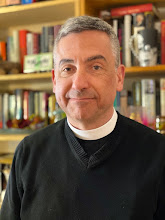

 Posts
Posts

