St. Michael’s Episcopal Church, Gainesville FL
The Chapel of the Incarnation, Gainesville FL
February 27, 2011
Year A: The Eighth Sunday after Epiphany
Isaiah 49:8-16a
Psalm 131
1 Corinthians 4:1-5
Matthew 6:24-34
Striving for the Worry-Free Kingdom
Over the past few Sundays we’ve been making our way through the Sermon on the Mount – this extraordinary collection of Jesus sayings assembled by the Evangelist Matthew.
This is one of the best-known parts of the gospel – and also one of the most challenging.
It begins with Jesus’ extraordinary vision of the downside-up kingdom of God – a kingdom in which the poor in spirit, the mournful, the meek, the peacemakers and the persecuted are blessed.
Then Jesus moves on to give us very challenging instructions on how to build the kingdom of God, right here and now.
To build the kingdom we are called to reconcile with our brothers and sisters.
To build the kingdom we are called to strive for self-control.
To build the kingdom we are called to honor our vows.
To build the kingdom we are called to turn the other cheek, give away our cloak, walk the extra mile, and to love our enemies.
To build the kingdom we are called to be perfect as God is perfect.
A very tall order.
In my sermon last week I pointed out that God has the highest expectations of us but that God also knows that in this life at least we’re not going to meet those highest expectations.
So, God invites us to try. And when we stumble and fall, God always stands ready to forgive. The God who has inscribed us on the divine palms, always stands ready to pour out the grace and strength we need to continue.
And now we come to the section of the Sermon on the Mount we heard today.
Actually, there are really three parts to what we heard today.
First, Jesus says we cannot serve God and wealth.
Then Jesus tells us not to worry about our material needs.
Finally, Jesus says to focus on today because tomorrow will bring its own worries.
I have to tell you that following these teachings are a big struggle for me – and I bet for most of you, too.
It’s hard to stay focused on what’s most important.
It’s hard not to worry about material needs – and it’s hard not to worry about the future.
About three and a half years ago I was hired to serve as curate at Grace Church in Madison, New Jersey. At the time Sue and I were living in a house we owned in our hometown of Jersey City. When we had bought this 90 year-old row house I think we both believed that this where we’d live for a long time – maybe even the rest of our lives.
But, now my new job created an unexpected complication. It came with a very nice house in Madison.
So, after some thought, we decided to move to Madison - great decision - and to rent our Jersey City house.
Big mistake. I’ll spare you the details, except to say some tenants don’t always pay their rent and can also really do a lot of damage to a house.
Finally, I guess about two years ago, “Tom and Sue Landlord” decided to sell the house.
You may remember that this was right around the time the housing market was collapsing. There were real doubts that we’d be able to sell this place anytime soon. Month after month went by of us paying a mortgage on an empty house. Despite having already spent a lot of money on home improvements, the inspection report on this nearly a century old house was forty pages of nausea.
It’s not much of an exaggeration to say that worrying about this house took over my life.
I didn’t really care about making money on our investment. Instead, I worried that we’d never be able to sell it. I worried that we’d always be absentee landlords. I worried that for decades we’d be paying the mortgage on this house where we’d probably never live again. I worried that it would be one expensive thing after another – new roof, new windows, new furnace, foundation cracks, termite infestations.
I worried and I worried.
I did my best to focus on my work, but, to be honest, I was at best distracted by – and at worst consumed by – worries about this stupid house.
Meanwhile, during those dismal months God was at work all around me I was missing out on much of what God was doing – much, but not all of it. A few people close to me knew just how much the house thing was bothering me. And they prayed for us.
I know they did because I could actually feel God using their prayers to keep me going, giving me strength in a very bleak time.
My all-consuming worrying about selling our house is exactly what Jesus warns about – what Jesus teaches us – in today’s gospel.
Jesus calls us to mindfulness – to focus on what’s most important.
Jesus calls us to mindfulness – to focus on loving God and loving our neighbor
Jesus calls us to mindfulness – to focus on building the kingdom of God, today, right here and now.
Notice that Jesus doesn’t say that our material needs are unimportant.
Instead, Jesus says, “Indeed your heavenly Father knows that you need all these things.”
And then here comes the key to the whole passage:
“But strive first for the kingdom of God and his righteousness, and all these things will be given to you as well.”
Jesus is teaching us to focus on building the kingdom of God, today, right here and now.
Jesus is teaching us, urging us, expecting us, to give our lives to building the kingdom in which the poor in spirit, the mournful, the meek, the peacemakers and the persecuted are blessed.
Jesus is teaching us, urging us, expecting us, to build the kingdom by reconciling with our brothers and sisters.
- To build the kingdom by striving for self-control.
- To build the kingdom by honoring our vows.
- To build the kingdom by turning the other cheek, giving away our cloak, walking the extra mile, and by loving our enemies.
- To build the kingdom we are called to be perfect as God is perfect.
And when we commit to this challenging work – when we commit to building the kingdom of God - sure enough our broken and worried world is transformed just a little bit more into the kingdom that God always intended, the kingdom that God dreams of, still.
We saw a glimpse of that transformation at St. Michael’s just a few weeks ago when tragedy struck two of our parishioners.
As word got out I immediately started getting calls and emails from parishioners asking how they could help – people trying to be perfect as God is perfect.
In the end, the extraordinary generosity and hospitality offered by this little parish was a powerful sign of what’s possible when we strive first to build the kingdom of God, today, right here and now.
When we strive first to build the kingdom of God, our worries about tomorrow fade.
When we strive first to build the kingdom of God, today, right here and now, God’s abundance and love is shared with all – material needs are met – and houses are eventually sold.
When we strive first to build the kingdom of God, today, right here and now, then we begin live the worry-free lives of love that God always intended for us – the worry-free lives of love that God dreams for us still.
Amen.
Sunday, February 27, 2011
Sunday, February 20, 2011
The Highest Expectations
St. Michael’s Episcopal Church, Gainesville FL
The Chapel of the Incarnation, Gainesville FL
February 20, 2011
Year A: The Seventh Sunday after Epiphany
Leviticus 19:1-2, 9-18
Psalm 119:33-40
1 Corinthians 3:10-11,16-23
Matthew 5:38-48
The Highest Expectations
Some of you know that before I got into the priest business I spent about fifteen years as a high school history teacher. I loved teaching, and still miss it – the interaction with students, the challenge of trying to come up with new ways to teach familiar material, the chance to work closely with colleagues.
And, yes, I admit it, I miss the amazingly long summer vacations.
Grading tests and essays was no fun, but the rest of it was great.
Over the years I got to be pretty good, though not perfect, at sizing up students. I got to be pretty good at knowing who was really trying and who was trying to pull a fast one. I could recognize students who really wanted to learn and those I had to keep my eye on during tests.
All of us have been students and some of us still are, so I don’t need to tell you that we all get pretty good at sizing up teachers. We can tell when a teacher (or a professor) doesn’t really care, is just phoning it in, is burnt out and is maybe only hanging in there until retirement.
And we can also tell when a teacher is passionate about his or her subject. We can tell when a teacher genuinely cares about his or her students.
And, if we’re really fortunate, every once in a while we encounter a teacher who can see something extraordinary in us - something that maybe we can’t see in ourselves.
These are the teachers who challenge us with the highest expectations.
It can be frightening to encounter a teacher who sees something in us that we don’t see – or, maybe, don’t want to see.
Jesus is often described as the greatest teacher of all. And listening to the gospel lessons these past couple of Sundays, there’s no question that Jesus the great teacher sees something extraordinary in all of us.
Jesus sees something in us that maybe we can’t see - or don’t want to see. Jesus the great teacher challenges us, his followers, with the highest expectations of all.
Over the past couple of Sundays we’ve been making our way through the collection of Jesus sayings that Matthew organized into what we call the Sermon on the Mount.
Matthew’s gospel was probably written near the end of the First Century, several generations after the earthly lifetime of Jesus.
With the passage of time, you’d think that Matthew might water down Jesus’ sayings a bit – to make it easier for people to say yes to Jesus.
You’d think that Matthew would lower Jesus’ expectations.
Instead, Matthew collects the most demanding of Jesus’ teachings and organizes them into the sermon that we’ve been hearing in church these past couple of weeks.
Jesus the great teacher uses vivid, maybe even exaggerated, language, but it’s clear that because Jesus sees something extraordinary in us, Jesus has the highest expectations of us.
Obviously, following Jesus isn’t going to be an easy course.
Jesus says that if we call another “you fool” we will be punished in hell.
Jesus says that looking at someone with lust is just as bad as acting on our desires.
Jesus says we should tear out our eye or cut off our hand if they are causing us to sin.
Jesus teaches us that we must take our marriage vows with the utmost seriousness.
And then just when we might have been considering dropping this difficult course, we have the sayings we heard today.
Jesus teaches us, do not resist evildoers, regardless of the consequences.
Jesus teaches us to give away our coat and our cloak, even if that leaves us naked.
Jesus teaches us to give to everyone who begs from us.
Jesus teaches us to love our enemies and pray for those who persecute us.
And finally, just when we might be ready to give up and transfer to another religion, Jesus concludes with, “Be perfect, therefore, as your heavenly Father is perfect.”
Jesus sees something extraordinary in us so Jesus has the highest expectations of us.
What is it that Jesus sees in us?
At the very root of our tradition there is the bold, nearly absurd, recognition that we are made in the image of the God of the universe. We have a hard time seeing that in ourselves, because so often we sin - we mess up - we fall short.
But, despite our stumbling and fumbling, God sees far better than we do what’s inside us. We are created in the divine image.
Knowing who we are and what’s inside us, God’s command to us in Leviticus makes sense:
“You shall be holy, for I the LORD your God am holy.”
In other words, God says, “I made you to be like me. You really can be like me. So be like me!”
That means, God loves all, so we should, too.
God forgives all, so we should, too.
God gives to all, so we should, too.
The highest expectations.
Since we keep coming to church, I guess we’ve decided to stick with this most challenging course.
Let’s face it, though, we know that in this life we’ll never meet God’s highest expectations, the highest expectations expressed by Jesus in the Sermon on the Mount.
Despite our best intentions, some marriages will end in divorce, and sometimes we’ll look someone who’s attractive.
Despite our best intentions, we won’t always turn the other cheek and we won’t always give to everyone who begs of us.
Despite our best intentions, we won’t always bring ourselves to pray for our enemies.
It sure seems like we’re going to fail, but the very good news is that although Jesus has the highest expectations for us, it’s actually not so hard to pass this course.
The only requirement is trusting in Christ and trying to follow God’s will.
The 20th Century monk and writer Thomas Merton summed up what’s required of us when he prayed:
MY LORD GOD, I have no idea where I am going.
I do not see the road ahead of me.
I cannot know for certain where it will end.
Nor do I really know myself, and the fact that I think I am following your will does not mean that I am actually doing so.
But I believe that the desire to please you does in fact please you.
And I hope I have that desire in all that I am doing.
Amen.
The Chapel of the Incarnation, Gainesville FL
February 20, 2011
Year A: The Seventh Sunday after Epiphany
Leviticus 19:1-2, 9-18
Psalm 119:33-40
1 Corinthians 3:10-11,16-23
Matthew 5:38-48
The Highest Expectations
Some of you know that before I got into the priest business I spent about fifteen years as a high school history teacher. I loved teaching, and still miss it – the interaction with students, the challenge of trying to come up with new ways to teach familiar material, the chance to work closely with colleagues.
And, yes, I admit it, I miss the amazingly long summer vacations.
Grading tests and essays was no fun, but the rest of it was great.
Over the years I got to be pretty good, though not perfect, at sizing up students. I got to be pretty good at knowing who was really trying and who was trying to pull a fast one. I could recognize students who really wanted to learn and those I had to keep my eye on during tests.
All of us have been students and some of us still are, so I don’t need to tell you that we all get pretty good at sizing up teachers. We can tell when a teacher (or a professor) doesn’t really care, is just phoning it in, is burnt out and is maybe only hanging in there until retirement.
And we can also tell when a teacher is passionate about his or her subject. We can tell when a teacher genuinely cares about his or her students.
And, if we’re really fortunate, every once in a while we encounter a teacher who can see something extraordinary in us - something that maybe we can’t see in ourselves.
These are the teachers who challenge us with the highest expectations.
It can be frightening to encounter a teacher who sees something in us that we don’t see – or, maybe, don’t want to see.
Jesus is often described as the greatest teacher of all. And listening to the gospel lessons these past couple of Sundays, there’s no question that Jesus the great teacher sees something extraordinary in all of us.
Jesus sees something in us that maybe we can’t see - or don’t want to see. Jesus the great teacher challenges us, his followers, with the highest expectations of all.
Over the past couple of Sundays we’ve been making our way through the collection of Jesus sayings that Matthew organized into what we call the Sermon on the Mount.
Matthew’s gospel was probably written near the end of the First Century, several generations after the earthly lifetime of Jesus.
With the passage of time, you’d think that Matthew might water down Jesus’ sayings a bit – to make it easier for people to say yes to Jesus.
You’d think that Matthew would lower Jesus’ expectations.
Instead, Matthew collects the most demanding of Jesus’ teachings and organizes them into the sermon that we’ve been hearing in church these past couple of weeks.
Jesus the great teacher uses vivid, maybe even exaggerated, language, but it’s clear that because Jesus sees something extraordinary in us, Jesus has the highest expectations of us.
Obviously, following Jesus isn’t going to be an easy course.
Jesus says that if we call another “you fool” we will be punished in hell.
Jesus says that looking at someone with lust is just as bad as acting on our desires.
Jesus says we should tear out our eye or cut off our hand if they are causing us to sin.
Jesus teaches us that we must take our marriage vows with the utmost seriousness.
And then just when we might have been considering dropping this difficult course, we have the sayings we heard today.
Jesus teaches us, do not resist evildoers, regardless of the consequences.
Jesus teaches us to give away our coat and our cloak, even if that leaves us naked.
Jesus teaches us to give to everyone who begs from us.
Jesus teaches us to love our enemies and pray for those who persecute us.
And finally, just when we might be ready to give up and transfer to another religion, Jesus concludes with, “Be perfect, therefore, as your heavenly Father is perfect.”
Jesus sees something extraordinary in us so Jesus has the highest expectations of us.
What is it that Jesus sees in us?
At the very root of our tradition there is the bold, nearly absurd, recognition that we are made in the image of the God of the universe. We have a hard time seeing that in ourselves, because so often we sin - we mess up - we fall short.
But, despite our stumbling and fumbling, God sees far better than we do what’s inside us. We are created in the divine image.
Knowing who we are and what’s inside us, God’s command to us in Leviticus makes sense:
“You shall be holy, for I the LORD your God am holy.”
In other words, God says, “I made you to be like me. You really can be like me. So be like me!”
That means, God loves all, so we should, too.
God forgives all, so we should, too.
God gives to all, so we should, too.
The highest expectations.
Since we keep coming to church, I guess we’ve decided to stick with this most challenging course.
Let’s face it, though, we know that in this life we’ll never meet God’s highest expectations, the highest expectations expressed by Jesus in the Sermon on the Mount.
Despite our best intentions, some marriages will end in divorce, and sometimes we’ll look someone who’s attractive.
Despite our best intentions, we won’t always turn the other cheek and we won’t always give to everyone who begs of us.
Despite our best intentions, we won’t always bring ourselves to pray for our enemies.
It sure seems like we’re going to fail, but the very good news is that although Jesus has the highest expectations for us, it’s actually not so hard to pass this course.
The only requirement is trusting in Christ and trying to follow God’s will.
The 20th Century monk and writer Thomas Merton summed up what’s required of us when he prayed:
MY LORD GOD, I have no idea where I am going.
I do not see the road ahead of me.
I cannot know for certain where it will end.
Nor do I really know myself, and the fact that I think I am following your will does not mean that I am actually doing so.
But I believe that the desire to please you does in fact please you.
And I hope I have that desire in all that I am doing.
Amen.

Saturday, February 12, 2011
The Way: Funeral Sermon for William M. "Bill" Foster
Grace Episcopal Church, Madison NJ
February 12, 2011
Funeral Sermon for William M. “Bill” Foster
Wisdom 3:1-5, 9
Revelation 21:2-7
John 14:1-6a
The Way
As his death approached, Jesus gathered with his friends for one last meal. Throughout his ministry Jesus had warned his disciples what was going to happen to him, yet they couldn’t or wouldn’t understand, refused to accept, refused to believe, that the one they had recognized as the messiah was going to die.
But, that last time gathered around the table, the truth must have begun to sink in.
The gospels give somewhat different accounts of the last meal shared by Jesus and his disciples.
The passage we just heard comes from the Gospel of John – the last of the four gospels to be written – probably around the end of the First Century – several generations after the earthly lifetime of Jesus.
That means this gospel is the product of God’s inspiration working through decades of Christian reflection on the life, death and resurrection of Jesus of Nazareth.
In this gospel, Jesus reassures the disciples that although he is leaving them, they know the way – they know the way to the place where they – where we - will all be reunited.
The Apostle Thomas speaks for all the disciples, speaks for all of us, when in confusion and fear, and, yes, doubt, he asks Jesus, “Lord, we do not know where you are going. How can we know the way?”
And Jesus offers his bold, reassuring and, yes, cryptic response: “I am the way, and the truth, and the life.”
And we’ve been wondering what that means ever since.
How exactly is Jesus the way, the truth and the life?
A big part of the answer, I believe, is found just a little bit earlier in John’s account of the Last Supper.
John tells us that during supper, Jesus “poured water into a basin and began to wash the disciples’ feet and to wipe them with the towel that was tied around him.”
After he was done, Jesus tells the disciples, “I have set you an example, that you also should do as I have done to you.”
The way.
Jesus is the way not only by believing in him, but by following his example – following his example of loving service to those who were closest to him and his example of loving service to those who were the least – the forgotten and the outcast.
We see the way when we look at Jesus and when we look at those who have followed him most faithfully.
We walk the way when we follow the example of Jesus and those who have followed him most faithfully.
And that’s why you and I are so fortunate to have known Bill Foster. We are so blessed to have seen right here in our midst this remarkable man walk the way of Jesus. We have seen Bill walk the way of loving service.
We have seen Bill walk the way of loving service to those who were closest to him.
We have seen the way in the profoundly deep love he shared with Lyn over more than fifty years of marriage.
I glimpsed that love one last time when I visited with Bill and Lyn at their home a few weeks ago. We all knew it would be the last time the three of us would be together. Bill was painfully thin and obviously failing.
But, he only acknowledged his own struggles by mentioning that he no longer had enough energy to stand and shave. Instead, he grew what I thought was a rather distinguished-looking beard – good-looking right to the end!
Instead of talking about his own troubles, he redirected the conversation away from himself – and to his concern about the toll caring for him was taking on Lyn.
We have seen the way in the quiet and deep reservoir of love he poured out onto his children, Beth and Jim and later, Mark and Vickie. We have seen the way in the love and pride he poured out onto his grandchildren, Kristin and Erik.
And we saw the way when Bill’s solid core of love and faith helped this family endure Beth’s wrenching and unspeakably sad final illness and death.
We have seen the way when Bill offered loving service to the countless little leaguers and to the students at Upsala and Drew, for whom he was both mentor and coach.
We have seen the way when Bill offered loving service here at Grace Church, where half a century ago Fr. Neiman, that great talent scout, spotted Bill and Lyn right away. Bill played a key role in the enormous project to expand this church building, making possible decades of ministry and growth.
He served the vestry and taught Sunday School. (And as anyone who has ever been in those positions can tell you – sometimes you’d rather was people’s feet.)
And for over fifty years he served in the crucially important ministry of usher. Thinking about all of those years of service, I’ve been wondering how much of this church’s steady and longstanding health is a result of Bill’s ushering? I mean, who wouldn’t want to be a member of a church where you were first greeted by Bill Foster?!
Finally, we have seen the way in Bill’s loving service to the forgotten and to the outcast.
You know that Bill was in remarkable shape. He was still coaching baseball until just a few years ago and was a regular at the Y until nearly the end. Now, if I were in my 80s and healthy, just about the last place I’d ever want to visit would be a nursing home.
Yet, that’s where Bill was each month as the crew from Grace Church offered its prayer service. That’s where Bill was handing out bulletins, gamely singing the hymns, or assisting residents who were very likely quite a bit younger than himself.
In his own quiet way, Bill was passionate about the work of the Community Soup Kitchen in Morristown. Some of the most powerful prayers I heard during my time here at Grace were the prayers offered by Bill Foster as we gathered - maybe with some trepidation - just before the soup kitchen doors were opened.
In his prayer Bill always reminded us of how privileged we were to feed the hungry – and how by feeding the hungry we were feeding Christ himself.
There in that soup kitchen Bill and we were feeding Christ, the way, the truth and the life.
As his death approached Jesus reassured the disciples that, although he was leaving them, they knew the way – they knew the way to the place where we will all be reunited.
Jesus told them, “I am the way, the truth and the life.”
The way is to put our trust in Christ and live a life of loving service.
The way is for each of us in our own way to get on our hands and knees and wash the feet of one another.
The way is for each of us in our own way to get on our hands and knees and wash the feet of the forgotten and the outcast.
We know the way because we have seen it. We’ve seen the way in the lives of people who have followed Jesus’ example.
We know the way because we have seen Bill Foster.
Amen.
February 12, 2011
Funeral Sermon for William M. “Bill” Foster
Wisdom 3:1-5, 9
Revelation 21:2-7
John 14:1-6a
The Way
As his death approached, Jesus gathered with his friends for one last meal. Throughout his ministry Jesus had warned his disciples what was going to happen to him, yet they couldn’t or wouldn’t understand, refused to accept, refused to believe, that the one they had recognized as the messiah was going to die.
But, that last time gathered around the table, the truth must have begun to sink in.
The gospels give somewhat different accounts of the last meal shared by Jesus and his disciples.
The passage we just heard comes from the Gospel of John – the last of the four gospels to be written – probably around the end of the First Century – several generations after the earthly lifetime of Jesus.
That means this gospel is the product of God’s inspiration working through decades of Christian reflection on the life, death and resurrection of Jesus of Nazareth.
In this gospel, Jesus reassures the disciples that although he is leaving them, they know the way – they know the way to the place where they – where we - will all be reunited.
The Apostle Thomas speaks for all the disciples, speaks for all of us, when in confusion and fear, and, yes, doubt, he asks Jesus, “Lord, we do not know where you are going. How can we know the way?”
And Jesus offers his bold, reassuring and, yes, cryptic response: “I am the way, and the truth, and the life.”
And we’ve been wondering what that means ever since.
How exactly is Jesus the way, the truth and the life?
A big part of the answer, I believe, is found just a little bit earlier in John’s account of the Last Supper.
John tells us that during supper, Jesus “poured water into a basin and began to wash the disciples’ feet and to wipe them with the towel that was tied around him.”
After he was done, Jesus tells the disciples, “I have set you an example, that you also should do as I have done to you.”
The way.
Jesus is the way not only by believing in him, but by following his example – following his example of loving service to those who were closest to him and his example of loving service to those who were the least – the forgotten and the outcast.
We see the way when we look at Jesus and when we look at those who have followed him most faithfully.
We walk the way when we follow the example of Jesus and those who have followed him most faithfully.
And that’s why you and I are so fortunate to have known Bill Foster. We are so blessed to have seen right here in our midst this remarkable man walk the way of Jesus. We have seen Bill walk the way of loving service.
We have seen Bill walk the way of loving service to those who were closest to him.
We have seen the way in the profoundly deep love he shared with Lyn over more than fifty years of marriage.
I glimpsed that love one last time when I visited with Bill and Lyn at their home a few weeks ago. We all knew it would be the last time the three of us would be together. Bill was painfully thin and obviously failing.
But, he only acknowledged his own struggles by mentioning that he no longer had enough energy to stand and shave. Instead, he grew what I thought was a rather distinguished-looking beard – good-looking right to the end!
Instead of talking about his own troubles, he redirected the conversation away from himself – and to his concern about the toll caring for him was taking on Lyn.
We have seen the way in the quiet and deep reservoir of love he poured out onto his children, Beth and Jim and later, Mark and Vickie. We have seen the way in the love and pride he poured out onto his grandchildren, Kristin and Erik.
And we saw the way when Bill’s solid core of love and faith helped this family endure Beth’s wrenching and unspeakably sad final illness and death.
We have seen the way when Bill offered loving service to the countless little leaguers and to the students at Upsala and Drew, for whom he was both mentor and coach.
We have seen the way when Bill offered loving service here at Grace Church, where half a century ago Fr. Neiman, that great talent scout, spotted Bill and Lyn right away. Bill played a key role in the enormous project to expand this church building, making possible decades of ministry and growth.
He served the vestry and taught Sunday School. (And as anyone who has ever been in those positions can tell you – sometimes you’d rather was people’s feet.)
And for over fifty years he served in the crucially important ministry of usher. Thinking about all of those years of service, I’ve been wondering how much of this church’s steady and longstanding health is a result of Bill’s ushering? I mean, who wouldn’t want to be a member of a church where you were first greeted by Bill Foster?!
Finally, we have seen the way in Bill’s loving service to the forgotten and to the outcast.
You know that Bill was in remarkable shape. He was still coaching baseball until just a few years ago and was a regular at the Y until nearly the end. Now, if I were in my 80s and healthy, just about the last place I’d ever want to visit would be a nursing home.
Yet, that’s where Bill was each month as the crew from Grace Church offered its prayer service. That’s where Bill was handing out bulletins, gamely singing the hymns, or assisting residents who were very likely quite a bit younger than himself.
In his own quiet way, Bill was passionate about the work of the Community Soup Kitchen in Morristown. Some of the most powerful prayers I heard during my time here at Grace were the prayers offered by Bill Foster as we gathered - maybe with some trepidation - just before the soup kitchen doors were opened.
In his prayer Bill always reminded us of how privileged we were to feed the hungry – and how by feeding the hungry we were feeding Christ himself.
There in that soup kitchen Bill and we were feeding Christ, the way, the truth and the life.
As his death approached Jesus reassured the disciples that, although he was leaving them, they knew the way – they knew the way to the place where we will all be reunited.
Jesus told them, “I am the way, the truth and the life.”
The way is to put our trust in Christ and live a life of loving service.
The way is for each of us in our own way to get on our hands and knees and wash the feet of one another.
The way is for each of us in our own way to get on our hands and knees and wash the feet of the forgotten and the outcast.
We know the way because we have seen it. We’ve seen the way in the lives of people who have followed Jesus’ example.
We know the way because we have seen Bill Foster.
Amen.
Sunday, February 06, 2011
Who We Really Are
St. Michael’s Episcopal Church, Gainesville FL
The Chapel of the Incarnation, Gainesville FL
February 6, 2011
Year A: The Fifth Sunday after Epiphany
Isaiah 58:1-12
Psalm 112:1-10
1 Corinthians 2:1-16
Matthew 5:13-20
Who We Really Are
Many of you know that once a month I lead the chapel service for the 60 or so children of the St. Michael’s Day School.
It’s a fun and challenging experience to engage these wonderful children and their teachers for about twenty minutes. Since it’s not my usual demographic, I struggle to come up with something that will be relevant and meaningful for their young lives.
A couple of weeks ago I thought I’d talk about the wonderful truth that God loves us, even though we’re not perfect.
So, I began by asking the kids if they knew what the word “perfect” meant. Lots of hands went up. Many of the children could use “perfect” in context such as “My house is perfect.”
That comment set off a chain reaction of children telling me about their houses. “My house is white.” “My house is white and blue.”
You know how it goes.
Finally, we pretty much nailed down what “perfect” means.
Then I asked, “How many of you are perfect?”
Without hesitation, every hand shot up.
Low self-esteem is obviously not much of a problem for this group!
I was reminded of that experience with those “perfect” children when I began to think about today’s gospel lesson.
We pick up in the Gospel of Matthew right where we left of last week. Matthew presents us with the teachings of Jesus, organized into what’s called the Sermon on the Mount.
Last week we heard the Beatitudes, Jesus’ vision of the downside-up kingdom of God. In God’s the kingdom the blessed are the poor in spirit, the mourners, the meek, those who hunger and thirst for righteousness. In God’s kingdom the blessed are the pure in heart, the peacemakers, and those who are persecuted for righteousness’ sake.
Jesus’ vision of God’s kingdom is powerful. It’s a vision of a kingdom that has already been established – these people are already blessed. But, it’s also a vision of a kingdom that has not yet been completed.
So, we – the disciples of Jesus - are invited to be part of the building of God’s kingdom here and now.
Now, Jesus switches gears. Instead of teaching about the kingdom that is already here and not yet here, Jesus addresses his disciples – addresses us – directly, using the present tense.
Jesus tells us something important, something truly awesome, about ourselves.
No, Jesus doesn’t tell us we’re perfect.
But, what Jesus does tell us is almost as amazing.
Jesus says to us, “You are the salt of the earth.”
In a world that all too often is flat and drab, Jesus tells us that we are the ones who can bring out the flavors of hope and joy.
In a world that all too often is obsessed with what doesn’t last, with what doesn’t satisfy, with what adds to our burdens rather than gives us hope and joy, we are the ones who can bring out the flavor of life as God intends it to be.
Then Jesus tells us, “You are the light of the world.”
In a world that is all too often shadowed and gloomy with suffering and despair, Jesus tells us that we are the ones who are light and we can shine our light – the light of Christ - into the world’s darkness.
Now, before we get too full of ourselves and like the children raise our hands and claim perfection (after all, we’re the salt of the earth – and the light of the world!), Jesus gives a couple of warnings.
“You are the salt of the earth; but if salt has lost its taste, how can its saltiness be restored? It is no longer good for anything, but is thrown out and trampled under foot.”
“You are the light of the world. A city built on a hill cannot be hid. No one after lighting a lamp puts it under the bushel basket, but on the lampstand, and it gives light to all in the house.”
Jesus tells us we are the salt of the earth. We are the light of the world.
This is who we are.
We will build God’s kingdom only by being who we really are.
Our challenge is to live like we are the salt of the earth; to live like we are the light of the world.
But it’s not so easy to be who we really are.
The forces of the world are very powerful. The temptations to be like everyone else – to just look out for number one, to pile up possessions, to look away from injustice, to bend or break the rules like everyone else, to despise the other - to be like everyone else – these are very great temptations. These are temptations that, sadly, you and I give into all the time.
Being like everyone else makes our salt lose its saltiness. Being like everyone else hides our light under a bushel basket.
So, the truth is, we need to practice at being the salt and light that we really are.
And that’s a big reason why we come here. Each time we gather here we practice living lives as the salt of the earth and the light of the world. In this building, as part of this community, we practice being different from the world.
We practice being the salt of the earth each time we gather here and find ourselves sitting with people we may not know and maybe don’t particularly like, and yet embracing them as beloved sisters and brothers in Christ.
We practice being the light of the world each time we gather here and in front of everyone display our weakness - admit that we’ve sinned, we’ve missed the mark, we’re not perfect – and ask God for forgiveness.
We practice being the salt of the earth each time we gather here and stretch out our hands to receive the Body and Blood of Christ – everyone receiving the same portion – everyone drinking from a common cup.
We practice being the light of the world each time when we prepare to leave this place and we remind ourselves of who we really are by thanking God for accepting us as living members of the Body of Christ.
And just before we go, we ask God’s help to be who we really are – to be the salt of the earth, to be the light of the world - to be the pure in heart, the peacemakers, to be those who hunger and thirst for righteousness - to be the builders of the kingdom of God.
(“And we humbly beseech thee, O heavenly Father, so to assist us with thy grace, that we may continue in that holy fellowship, and do all such good works as thou hast prepared for us to walk in.”)
“Send us now into the world in peace, and grant us strength and courage to love and serve you with gladness and singleness of heart.”
In today’s gospel, Jesus tells his disciples – tells us - us who we really are.
We’re not perfect, but we are the salt of the earth. On an earth that is often flat and drab, we are the ones who can bring out the flavors of hope and joy.
We’re not perfect, but we are the light of the world.
In a world that is all too often shadowed and gloomy with suffering and despair, we are the ones who are light and can shine our light – the light of Christ - into darkness.
We’re not perfect, so we’ve come here to practice at being who we really are. Soon, though, this practice session will be over.
Then once again, we’ll have the chance to walk through those doors. Then once again, we’ll have the chance to go out into the world and, with God’s help, be who we really are – the salt of the earth and the light of the world, the builders of the kingdom of God.
Thanks be to God!
Amen.
The Chapel of the Incarnation, Gainesville FL
February 6, 2011
Year A: The Fifth Sunday after Epiphany
Isaiah 58:1-12
Psalm 112:1-10
1 Corinthians 2:1-16
Matthew 5:13-20
Who We Really Are
Many of you know that once a month I lead the chapel service for the 60 or so children of the St. Michael’s Day School.
It’s a fun and challenging experience to engage these wonderful children and their teachers for about twenty minutes. Since it’s not my usual demographic, I struggle to come up with something that will be relevant and meaningful for their young lives.
A couple of weeks ago I thought I’d talk about the wonderful truth that God loves us, even though we’re not perfect.
So, I began by asking the kids if they knew what the word “perfect” meant. Lots of hands went up. Many of the children could use “perfect” in context such as “My house is perfect.”
That comment set off a chain reaction of children telling me about their houses. “My house is white.” “My house is white and blue.”
You know how it goes.
Finally, we pretty much nailed down what “perfect” means.
Then I asked, “How many of you are perfect?”
Without hesitation, every hand shot up.
Low self-esteem is obviously not much of a problem for this group!
I was reminded of that experience with those “perfect” children when I began to think about today’s gospel lesson.
We pick up in the Gospel of Matthew right where we left of last week. Matthew presents us with the teachings of Jesus, organized into what’s called the Sermon on the Mount.
Last week we heard the Beatitudes, Jesus’ vision of the downside-up kingdom of God. In God’s the kingdom the blessed are the poor in spirit, the mourners, the meek, those who hunger and thirst for righteousness. In God’s kingdom the blessed are the pure in heart, the peacemakers, and those who are persecuted for righteousness’ sake.
Jesus’ vision of God’s kingdom is powerful. It’s a vision of a kingdom that has already been established – these people are already blessed. But, it’s also a vision of a kingdom that has not yet been completed.
So, we – the disciples of Jesus - are invited to be part of the building of God’s kingdom here and now.
Now, Jesus switches gears. Instead of teaching about the kingdom that is already here and not yet here, Jesus addresses his disciples – addresses us – directly, using the present tense.
Jesus tells us something important, something truly awesome, about ourselves.
No, Jesus doesn’t tell us we’re perfect.
But, what Jesus does tell us is almost as amazing.
Jesus says to us, “You are the salt of the earth.”
In a world that all too often is flat and drab, Jesus tells us that we are the ones who can bring out the flavors of hope and joy.
In a world that all too often is obsessed with what doesn’t last, with what doesn’t satisfy, with what adds to our burdens rather than gives us hope and joy, we are the ones who can bring out the flavor of life as God intends it to be.
Then Jesus tells us, “You are the light of the world.”
In a world that is all too often shadowed and gloomy with suffering and despair, Jesus tells us that we are the ones who are light and we can shine our light – the light of Christ - into the world’s darkness.
Now, before we get too full of ourselves and like the children raise our hands and claim perfection (after all, we’re the salt of the earth – and the light of the world!), Jesus gives a couple of warnings.
“You are the salt of the earth; but if salt has lost its taste, how can its saltiness be restored? It is no longer good for anything, but is thrown out and trampled under foot.”
“You are the light of the world. A city built on a hill cannot be hid. No one after lighting a lamp puts it under the bushel basket, but on the lampstand, and it gives light to all in the house.”
Jesus tells us we are the salt of the earth. We are the light of the world.
This is who we are.
We will build God’s kingdom only by being who we really are.
Our challenge is to live like we are the salt of the earth; to live like we are the light of the world.
But it’s not so easy to be who we really are.
The forces of the world are very powerful. The temptations to be like everyone else – to just look out for number one, to pile up possessions, to look away from injustice, to bend or break the rules like everyone else, to despise the other - to be like everyone else – these are very great temptations. These are temptations that, sadly, you and I give into all the time.
Being like everyone else makes our salt lose its saltiness. Being like everyone else hides our light under a bushel basket.
So, the truth is, we need to practice at being the salt and light that we really are.
And that’s a big reason why we come here. Each time we gather here we practice living lives as the salt of the earth and the light of the world. In this building, as part of this community, we practice being different from the world.
We practice being the salt of the earth each time we gather here and find ourselves sitting with people we may not know and maybe don’t particularly like, and yet embracing them as beloved sisters and brothers in Christ.
We practice being the light of the world each time we gather here and in front of everyone display our weakness - admit that we’ve sinned, we’ve missed the mark, we’re not perfect – and ask God for forgiveness.
We practice being the salt of the earth each time we gather here and stretch out our hands to receive the Body and Blood of Christ – everyone receiving the same portion – everyone drinking from a common cup.
We practice being the light of the world each time when we prepare to leave this place and we remind ourselves of who we really are by thanking God for accepting us as living members of the Body of Christ.
And just before we go, we ask God’s help to be who we really are – to be the salt of the earth, to be the light of the world - to be the pure in heart, the peacemakers, to be those who hunger and thirst for righteousness - to be the builders of the kingdom of God.
(“And we humbly beseech thee, O heavenly Father, so to assist us with thy grace, that we may continue in that holy fellowship, and do all such good works as thou hast prepared for us to walk in.”)
“Send us now into the world in peace, and grant us strength and courage to love and serve you with gladness and singleness of heart.”
In today’s gospel, Jesus tells his disciples – tells us - us who we really are.
We’re not perfect, but we are the salt of the earth. On an earth that is often flat and drab, we are the ones who can bring out the flavors of hope and joy.
We’re not perfect, but we are the light of the world.
In a world that is all too often shadowed and gloomy with suffering and despair, we are the ones who are light and can shine our light – the light of Christ - into darkness.
We’re not perfect, so we’ve come here to practice at being who we really are. Soon, though, this practice session will be over.
Then once again, we’ll have the chance to walk through those doors. Then once again, we’ll have the chance to go out into the world and, with God’s help, be who we really are – the salt of the earth and the light of the world, the builders of the kingdom of God.
Thanks be to God!
Amen.
Sunday, January 30, 2011
The Downside-Up Kingdom
St. Michael’s Episcopal Church, Gainesville FL
The Chapel of the Incarnation, Gainesville FL
January 30, 2011
Year A: The Fourth Sunday after Epiphany
Micah 6:1-8
1 Corinthians 1:18-31
Psalm 15
Matthew 5:1-12
The Downside-Up Kingdom
I’m going to start with a big understatement.
We’re living in a time of frightening change.
Living in a time of frightening change can reduce us to survival mode – to focusing on just getting through the day – to focusing on all the scary things that have happened and might still happen.
Living in a time of frightening change can make it hard to remember – or even believe - that God is at work, just as God is always at work, restoring the good creation that has been broken.
Change is burning across the Middle East. The government of Tunisia has already fallen and now the leadership of Egypt and maybe other countries are about to tumble, as well. People in the part of the world had seemed beaten into submission forever, and, yet, now they are rising up and demanding a better life, demanding freedom.
As for the United States, it was just a few short years ago that we were strutting across the world stage, declaring ourselves the indispensible super power, declaring that it was unlikely that any other country would be able to challenge our supremacy any time soon.
And then, on Tuesday night there was the President in the State of the Union address warning us that we were losing ground. Our children are not learning what they need to learn and are falling farther and farther behind their counterparts in Europe and Asia.
So many of our jobs have been exported. Our infrastructure is crumbling around and beneath us. The Chinese, to whom we owe an astonishingly huge amount of money, seem to be breathing down our necks.
We’re living in a time of frightening change.
And there’s been much frightening change closer to home, too.
(Last week, when I was standing right here preaching from this pulpit, our beloved sister Merna was, as usual, sitting right there in the first pew, next to Gill. And now she has gone from us and is in the full presence of the God who loved her into existence.
As much as we celebrate the completion of her journey, her sudden death is another reminder that only right now is promised – nothing more.
Last week our beloved brother and sister Phil and Sue had no idea that the following day their home would be set ablaze by a lightning strike and be destroyed. While we are relieved that they are safe, I know all of us mourn with them the loss of their home.
And of course many here are still reeling from the possibility that this property may be sold and that this building that is our spiritual home may be demolished. Many of us are still struggling to accept the frightening change that began for us when the bishop visited us in November – the change of leaving this place and moving to a new church building on another piece of property.)
(It’s been only a couple of weeks since the shocking death of our sister, Shayna. Many of us are still trying to absorb – if that’s the right word - that loss. Her sudden death was a powerful reminder that only right now is promised – nothing more.
The career fair this past week is a real reminder that time is passing, the semester is already one month old, and for the seniors their days here at UF are drawing to close.
May I remind you of the fine graduate programs available at UF?
Some of us are beginning to think about what it will be like to leave this place. Others of us are beginning to think about what it will be like without some great people who have given so much to build up and support this community.
In previous years this may have been an exhilarating time. I could be wrong, but I sense fear more than excitement.)
Well, I don’t know if this will make us feel any better, but the truth is, it’s not so unusual to live during a time of frightening change. In fact, it’s probably the norm.
The Prophet Micah also lived during a time of frightening change. In his case, it was the late 8th Century BC.
He lived during the time when the Kingdom of Israel had fallen to the Assyrians and the other Israelite kingdom, Judah, was threatened.
Micah lived during a time when the old ways of life seemed to be dying as droves of people left the countryside and moved to the big city of Jerusalem.
In a time of frightening change, I’m sure it was hard to see that God was at work, building God’s kingdom right here and now.
In a time of frightening change, it was hard to remember that, as always, God was inviting people to join in the great work of building God’s kingdom. So, speaking through Micah, God reminds the people of this invitation in the most beautiful question ever asked:
“He has told you, O mortal, what is good; and what does the LORD require of you but to do justice, and to love kindness, and to walk humbly with your God?”
We are invited to work with God on the great project of building God’s kingdom, of restoring the good creation right here and now.
We are invited to work with God by doing justice, loving kindness and walking humbly with God.
The invitation from God spoken through Micah still stands.
And, as Christians, we receive God’s ultimate invitation in, and through, and from Jesus of Nazareth.
One of the highlights of this new year has been our Tuesday evening Bible study at the chapel. Each week a wonderful group has gathered to study the Gospel of Matthew – this inspired text that is so important to Christians.
One of the things we talked about was how this gospel was written during a time of frightening change.
For the first few decades after the earthly lifetime of Jesus it was possible for his Jewish followers to continue to gather at the synagogues, just as always. But that was becoming increasingly difficult by the time the gospel was written in the last decades of the First Century. The Jesus followers were making bold claims about Jesus – claims that to many seemed less and less Jewish.
So, Matthew’s gospel was written during a time of big change. The Romans had destroyed the Temple and now the Jewish followers of Jesus were faced with the reluctant parting from the faith of their ancestors.
Matthew writes to and for a mostly Jewish Christian community – a community faced with frightening change.
And once again, during a time of frightening change, a time when we might prefer just to hunker down in survival mode, God invites the people to join in the great work of building God’s kingdom. This time God’s invitation is even more direct.
Matthew sets the scene by telling us that Jesus is on a mountain, reminding us of the encounter Moses had with God on another mountain long before.
This time, though, rather than Moses receiving revelation from God, Jesus is God’s revelation.
In the poem that has come to be known as the Beatitudes, Jesus extends the invitation to join with God in the great work of building God’s kingdom.
In Matthew, Jesus calls it the “kingdom of heaven.” But, he’s probably not referring to life after death. Instead, Jesus is talking about the transformation of this world – the transformation of the good creation that has been broken.
First, Jesus tells us that this kingdom is like no kingdom we’ve ever seen.
Jesus tells us in this downside-up kingdom it’s the poor in spirit – the people who are at the end of their rope – who are blessed.
In this downside-up kingdom, it’s those who mourn and those who are meek who are blessed.
In Jesus, God offers the ultimate invitation to be part of the great work of building God’s kingdom, right here and now.
We accept God’s invitation when we hunger and thirst for righteousness, when we’re merciful, when we’re pure in heart and when we’re peacemakers.
It’s quite an invitation.
And to make matters worse, Jesus warns us that if we accept God’s invitation we’re likely to suffer.
If we accept God’s invitation we may be persecuted for righteousness’ sake.
If we accept God’s invitation we may very well be persecuted and slandered.
It’s quite an invitation.
And, as always, God leaves the response up to us.
Living in a time of frightening change can reduce us to survival mode – to focusing on just getting through the day – to focusing on all the scary things that have happened and might still happen.
Living in a time of frightening change it’s hard to remember – or even believe - that God is at work, just as God is always at work, building the downside-up kingdom, restoring the good creation that has been broken.
Yet, during this time of frightening change, God invites us – you and me - to join in the great work of building God’s kingdom, right here and now.
So, what’s it going to be?
Do we respond by hunkering down in survival mode?
Or do we respond by doing justice, loving kindness and walking humbly with God?
Amen.
The Chapel of the Incarnation, Gainesville FL
January 30, 2011
Year A: The Fourth Sunday after Epiphany
Micah 6:1-8
1 Corinthians 1:18-31
Psalm 15
Matthew 5:1-12
The Downside-Up Kingdom
I’m going to start with a big understatement.
We’re living in a time of frightening change.
Living in a time of frightening change can reduce us to survival mode – to focusing on just getting through the day – to focusing on all the scary things that have happened and might still happen.
Living in a time of frightening change can make it hard to remember – or even believe - that God is at work, just as God is always at work, restoring the good creation that has been broken.
Change is burning across the Middle East. The government of Tunisia has already fallen and now the leadership of Egypt and maybe other countries are about to tumble, as well. People in the part of the world had seemed beaten into submission forever, and, yet, now they are rising up and demanding a better life, demanding freedom.
As for the United States, it was just a few short years ago that we were strutting across the world stage, declaring ourselves the indispensible super power, declaring that it was unlikely that any other country would be able to challenge our supremacy any time soon.
And then, on Tuesday night there was the President in the State of the Union address warning us that we were losing ground. Our children are not learning what they need to learn and are falling farther and farther behind their counterparts in Europe and Asia.
So many of our jobs have been exported. Our infrastructure is crumbling around and beneath us. The Chinese, to whom we owe an astonishingly huge amount of money, seem to be breathing down our necks.
We’re living in a time of frightening change.
And there’s been much frightening change closer to home, too.
(Last week, when I was standing right here preaching from this pulpit, our beloved sister Merna was, as usual, sitting right there in the first pew, next to Gill. And now she has gone from us and is in the full presence of the God who loved her into existence.
As much as we celebrate the completion of her journey, her sudden death is another reminder that only right now is promised – nothing more.
Last week our beloved brother and sister Phil and Sue had no idea that the following day their home would be set ablaze by a lightning strike and be destroyed. While we are relieved that they are safe, I know all of us mourn with them the loss of their home.
And of course many here are still reeling from the possibility that this property may be sold and that this building that is our spiritual home may be demolished. Many of us are still struggling to accept the frightening change that began for us when the bishop visited us in November – the change of leaving this place and moving to a new church building on another piece of property.)
(It’s been only a couple of weeks since the shocking death of our sister, Shayna. Many of us are still trying to absorb – if that’s the right word - that loss. Her sudden death was a powerful reminder that only right now is promised – nothing more.
The career fair this past week is a real reminder that time is passing, the semester is already one month old, and for the seniors their days here at UF are drawing to close.
May I remind you of the fine graduate programs available at UF?
Some of us are beginning to think about what it will be like to leave this place. Others of us are beginning to think about what it will be like without some great people who have given so much to build up and support this community.
In previous years this may have been an exhilarating time. I could be wrong, but I sense fear more than excitement.)
Well, I don’t know if this will make us feel any better, but the truth is, it’s not so unusual to live during a time of frightening change. In fact, it’s probably the norm.
The Prophet Micah also lived during a time of frightening change. In his case, it was the late 8th Century BC.
He lived during the time when the Kingdom of Israel had fallen to the Assyrians and the other Israelite kingdom, Judah, was threatened.
Micah lived during a time when the old ways of life seemed to be dying as droves of people left the countryside and moved to the big city of Jerusalem.
In a time of frightening change, I’m sure it was hard to see that God was at work, building God’s kingdom right here and now.
In a time of frightening change, it was hard to remember that, as always, God was inviting people to join in the great work of building God’s kingdom. So, speaking through Micah, God reminds the people of this invitation in the most beautiful question ever asked:
“He has told you, O mortal, what is good; and what does the LORD require of you but to do justice, and to love kindness, and to walk humbly with your God?”
We are invited to work with God on the great project of building God’s kingdom, of restoring the good creation right here and now.
We are invited to work with God by doing justice, loving kindness and walking humbly with God.
The invitation from God spoken through Micah still stands.
And, as Christians, we receive God’s ultimate invitation in, and through, and from Jesus of Nazareth.
One of the highlights of this new year has been our Tuesday evening Bible study at the chapel. Each week a wonderful group has gathered to study the Gospel of Matthew – this inspired text that is so important to Christians.
One of the things we talked about was how this gospel was written during a time of frightening change.
For the first few decades after the earthly lifetime of Jesus it was possible for his Jewish followers to continue to gather at the synagogues, just as always. But that was becoming increasingly difficult by the time the gospel was written in the last decades of the First Century. The Jesus followers were making bold claims about Jesus – claims that to many seemed less and less Jewish.
So, Matthew’s gospel was written during a time of big change. The Romans had destroyed the Temple and now the Jewish followers of Jesus were faced with the reluctant parting from the faith of their ancestors.
Matthew writes to and for a mostly Jewish Christian community – a community faced with frightening change.
And once again, during a time of frightening change, a time when we might prefer just to hunker down in survival mode, God invites the people to join in the great work of building God’s kingdom. This time God’s invitation is even more direct.
Matthew sets the scene by telling us that Jesus is on a mountain, reminding us of the encounter Moses had with God on another mountain long before.
This time, though, rather than Moses receiving revelation from God, Jesus is God’s revelation.
In the poem that has come to be known as the Beatitudes, Jesus extends the invitation to join with God in the great work of building God’s kingdom.
In Matthew, Jesus calls it the “kingdom of heaven.” But, he’s probably not referring to life after death. Instead, Jesus is talking about the transformation of this world – the transformation of the good creation that has been broken.
First, Jesus tells us that this kingdom is like no kingdom we’ve ever seen.
Jesus tells us in this downside-up kingdom it’s the poor in spirit – the people who are at the end of their rope – who are blessed.
In this downside-up kingdom, it’s those who mourn and those who are meek who are blessed.
In Jesus, God offers the ultimate invitation to be part of the great work of building God’s kingdom, right here and now.
We accept God’s invitation when we hunger and thirst for righteousness, when we’re merciful, when we’re pure in heart and when we’re peacemakers.
It’s quite an invitation.
And to make matters worse, Jesus warns us that if we accept God’s invitation we’re likely to suffer.
If we accept God’s invitation we may be persecuted for righteousness’ sake.
If we accept God’s invitation we may very well be persecuted and slandered.
It’s quite an invitation.
And, as always, God leaves the response up to us.
Living in a time of frightening change can reduce us to survival mode – to focusing on just getting through the day – to focusing on all the scary things that have happened and might still happen.
Living in a time of frightening change it’s hard to remember – or even believe - that God is at work, just as God is always at work, building the downside-up kingdom, restoring the good creation that has been broken.
Yet, during this time of frightening change, God invites us – you and me - to join in the great work of building God’s kingdom, right here and now.
So, what’s it going to be?
Do we respond by hunkering down in survival mode?
Or do we respond by doing justice, loving kindness and walking humbly with God?
Amen.
Sunday, January 23, 2011
God the Risk-Taker
St. Michael’s Episcopal Church, Gainesville FL
The Chapel of the Incarnation, Gainesville FL
January 23, 2011
Year A: The Third Sunday after Epiphany
Isaiah 9:1-4
Psalm 27:1, 5-13
1 Corinthians 1:10-18
Matthew 4:12-23
God the Risk-Taker
This Sunday’s gospel is a somewhat different take on the story we heard last week – Jesus’ calling of the first disciples. Last week we heard John’s version of these events. This week we hear Matthew’s account.
The details that Matthew gives us along with the events of the past week have gotten me thinking about risk – the risk that God took in creation; the risk that God took in becoming one of us in Jesus; and the risk that you and I take when we live and love the way we are meant to.
First, I’ve been thinking about the risk God took in creating a physical world.
God didn’t have to create. God could have spent all of eternity, for ever and ever, in the perfect life and love that is God.
Yet, despite knowing fully the risks, God chose to create. God chose to share the love that is God.
I suppose God who is spirit could have been fully in charge of a kind of spiritual creation. Instead God creates a physical world filled with energy and stuff – rocks, water, flesh and blood. God chose to create a physical world in which sometimes things can get broken, things can and do go wrong.
God chose to create a physical world knowing it would bring God and bring all of us great joy and would also bring us great sorrow.
God creates us, knowing fully the risk involved.
Those of you who are parents probably have some insight into God’s desire to create. Every day women and men bring children into the world, having a pretty good idea of the risks involved.
When Sue and I couldn’t get home for Christmas one of my nieces wrote that it was the worst day of her life. I wish that would always be true, but of course, it won’t be. There will be far worse days ahead.
The Adam and Eve story in Genesis captures the truth of the risk God takes in creation. God creates a good creation, but chooses not to be in charge of creation. In the story, God sets a few ground rules, but essentially God puts man and woman in charge. In the story, Adam and Eve are free to mess things up – and they do almost immediately.
By giving us freedom to love or not to love, by giving us the freedom to make bad choices, by allowing for the chance that things may go very wrong in this physical world, God takes a risk – a risk for God, and risk for us.
It’s pretty amazing that God takes a risk on us. But what’s even more amazing is that God never gives up on us when we stumble and when we suffer.
The whole story of salvation is a story of the spiritual God relentlessly reaching out to the physical us, over and over. It’s a story of God pouring grace onto us and into us, giving us the strength we need to live our risky lives in this risky world.
God is always working to turn death into life.
At its heart, the story of salvation is the story of God appearing in Jesus. It’s the story of God taking the great risk of living, walking, laughing, suffering and weeping right beside us in this physical world.
In today’s gospel lesson, Matthew lets us know right from start about risk. Matthew tells us that Jesus heard that John the Baptist had been arrested.
I’m sure this was not unexpected news. After all, then and now, someone who challenges the political establishment and the religious establishment is likely to get into big trouble.
Just like us, the first readers and hearers of this gospel would have known that the arrest of John the Baptist was the beginning of his end. His execution was not far off.
But, the truth is, the beginning of the end of John the Baptist was the day when he first accepted his call, when he first took the risk of speaking truth to power. The beginning of the end of John the Baptist was the first day when he went out into the wilderness and began to preach repentance – the first day when he began to demand that people risk changing their ways, risk changing their hearts.
Matthew tells us that Jesus began his public ministry after the arrest of John the Baptist. So, Jesus would have been fully aware of the risk he took the first day he went out into the world to proclaim the Good News.
To underline the point, Matthew tells us that the beginning of Jesus’ message is exactly what John the Baptist had been proclaiming, “Repent, for the kingdom of heaven has come near.”
Jesus knew the risk involved in carrying out his mission. Yet, he did it anyway.
And the first disciples were willing to take the great risk of following Jesus. Apparently, they were willing to leave behind their livelihood, to leave behind the boats and the nets, to leave behind the people they loved.
We have that haunting image of Zebedee sitting in the boat, watching his sons go off and take the risk of their lives.
Peter and Andrew, James and John, they would have had some sense of the risks involved in following Jesus. Yet, they did it anyway.
God took big risks in creating all of this and in joining us in the life of Jesus of Nazareth. The first disciples and Christians throughout the ages have taken – and continue to take – big risks in following Jesus.
And now, you and I here today are called to take the risk of following Jesus, the risk of living and loving the way we are meant to.
We’re meant to be a risk-taker like God. We’re meant to take the risk of creating and loving, knowing fully that things can, and often do, go terribly wrong.
If you were here last week, you know I preached about suffering and how you and I are meant to shine the light of Christ into a world shadowed with suffering and pain.
Little did I know that many of us in the chapel community would experience a great deal of suffering and sadness the very next day, when we received the heartbreaking news of the sudden and unexpected death of one of our own, Shayna.
God took the risk of creating a physical world in which things go wrong, things get broken, and all living things eventually die.
Not that it helps with our shock, pain, confusion, anger, and sadness at the death of this young woman who radiated sunshine as she anticipated her life as a nurse, a life of service; a life that was not to be.
Whenever I encounter the death of a young person I’m reminded of a sermon given by William Sloan Coffin after the death of his 24 year-old son Alex, in a car accident. (Some of you may remember that) William Sloan Coffin was chaplain at Yale during the Vietnam War era, and later pastor of Riverside Church in New York.
It was at Riverside Church that he gave this sermon. He reflected on how after his son’s death, people said the usual things like the accident was God’s will. Here’s his response to that idea:
“The one thing that should never be said when someone dies is ‘It is the will of God.’ Never do we know enough to say that. My own consolation lies in knowing that it was not the will of God that Alex die; that when the waves closed over the sinking car, God's heart was the first of all our hearts to break.”
“God’s heart was the first of all our hearts to break.”
I love that. I think that’s exactly right.
The Good News is that for God and for us, our story doesn’t end with heartbreak.
God’s heart was the first to break when Jesus suffered and died on the cross, followed nearly immediately, I’m sure, by the broken heart of his mother, Mary.
Yet, on that first Easter, God the risk-taker showed that our story doesn’t end in heartbreak. God didn’t give up on Jesus and doesn’t give up on any of us. Ever.
God the risk-taker is the God of love, the God who creates and never gives up on creation.
Even when everything seems to have gone wrong, even when everything seems to have been broken, God the risk-taker is at work, turning death into life.
At this very moment and in every moment, God is pouring out love, grace and strength on all of us.
I could feel that powerful grace in the full chapel on Monday night when we gathered to pray, to weep, and, yes, to celebrate.
Shayna has completed her all-too-brief journey from God and to God. Her journey is now completed in the presence of the God who loved her into creation – the God who was with her through all the highs and lows, twists and turns of life – the God who was with her as she took her last breath.
Shayna’s journey is complete.
But, for us, the journey continues.
If we’re open to it, if we’re willing to take the risk, like Peter and Andrew, James and John, we can join God in the great work of creation. By loving God and loving one another, in good times and not so good, we can join God in the great, risky, work of turning death into life.
Amen.
The Chapel of the Incarnation, Gainesville FL
January 23, 2011
Year A: The Third Sunday after Epiphany
Isaiah 9:1-4
Psalm 27:1, 5-13
1 Corinthians 1:10-18
Matthew 4:12-23
God the Risk-Taker
This Sunday’s gospel is a somewhat different take on the story we heard last week – Jesus’ calling of the first disciples. Last week we heard John’s version of these events. This week we hear Matthew’s account.
The details that Matthew gives us along with the events of the past week have gotten me thinking about risk – the risk that God took in creation; the risk that God took in becoming one of us in Jesus; and the risk that you and I take when we live and love the way we are meant to.
First, I’ve been thinking about the risk God took in creating a physical world.
God didn’t have to create. God could have spent all of eternity, for ever and ever, in the perfect life and love that is God.
Yet, despite knowing fully the risks, God chose to create. God chose to share the love that is God.
I suppose God who is spirit could have been fully in charge of a kind of spiritual creation. Instead God creates a physical world filled with energy and stuff – rocks, water, flesh and blood. God chose to create a physical world in which sometimes things can get broken, things can and do go wrong.
God chose to create a physical world knowing it would bring God and bring all of us great joy and would also bring us great sorrow.
God creates us, knowing fully the risk involved.
Those of you who are parents probably have some insight into God’s desire to create. Every day women and men bring children into the world, having a pretty good idea of the risks involved.
When Sue and I couldn’t get home for Christmas one of my nieces wrote that it was the worst day of her life. I wish that would always be true, but of course, it won’t be. There will be far worse days ahead.
The Adam and Eve story in Genesis captures the truth of the risk God takes in creation. God creates a good creation, but chooses not to be in charge of creation. In the story, God sets a few ground rules, but essentially God puts man and woman in charge. In the story, Adam and Eve are free to mess things up – and they do almost immediately.
By giving us freedom to love or not to love, by giving us the freedom to make bad choices, by allowing for the chance that things may go very wrong in this physical world, God takes a risk – a risk for God, and risk for us.
It’s pretty amazing that God takes a risk on us. But what’s even more amazing is that God never gives up on us when we stumble and when we suffer.
The whole story of salvation is a story of the spiritual God relentlessly reaching out to the physical us, over and over. It’s a story of God pouring grace onto us and into us, giving us the strength we need to live our risky lives in this risky world.
God is always working to turn death into life.
At its heart, the story of salvation is the story of God appearing in Jesus. It’s the story of God taking the great risk of living, walking, laughing, suffering and weeping right beside us in this physical world.
In today’s gospel lesson, Matthew lets us know right from start about risk. Matthew tells us that Jesus heard that John the Baptist had been arrested.
I’m sure this was not unexpected news. After all, then and now, someone who challenges the political establishment and the religious establishment is likely to get into big trouble.
Just like us, the first readers and hearers of this gospel would have known that the arrest of John the Baptist was the beginning of his end. His execution was not far off.
But, the truth is, the beginning of the end of John the Baptist was the day when he first accepted his call, when he first took the risk of speaking truth to power. The beginning of the end of John the Baptist was the first day when he went out into the wilderness and began to preach repentance – the first day when he began to demand that people risk changing their ways, risk changing their hearts.
Matthew tells us that Jesus began his public ministry after the arrest of John the Baptist. So, Jesus would have been fully aware of the risk he took the first day he went out into the world to proclaim the Good News.
To underline the point, Matthew tells us that the beginning of Jesus’ message is exactly what John the Baptist had been proclaiming, “Repent, for the kingdom of heaven has come near.”
Jesus knew the risk involved in carrying out his mission. Yet, he did it anyway.
And the first disciples were willing to take the great risk of following Jesus. Apparently, they were willing to leave behind their livelihood, to leave behind the boats and the nets, to leave behind the people they loved.
We have that haunting image of Zebedee sitting in the boat, watching his sons go off and take the risk of their lives.
Peter and Andrew, James and John, they would have had some sense of the risks involved in following Jesus. Yet, they did it anyway.
God took big risks in creating all of this and in joining us in the life of Jesus of Nazareth. The first disciples and Christians throughout the ages have taken – and continue to take – big risks in following Jesus.
And now, you and I here today are called to take the risk of following Jesus, the risk of living and loving the way we are meant to.
We’re meant to be a risk-taker like God. We’re meant to take the risk of creating and loving, knowing fully that things can, and often do, go terribly wrong.
If you were here last week, you know I preached about suffering and how you and I are meant to shine the light of Christ into a world shadowed with suffering and pain.
Little did I know that many of us in the chapel community would experience a great deal of suffering and sadness the very next day, when we received the heartbreaking news of the sudden and unexpected death of one of our own, Shayna.
God took the risk of creating a physical world in which things go wrong, things get broken, and all living things eventually die.
Not that it helps with our shock, pain, confusion, anger, and sadness at the death of this young woman who radiated sunshine as she anticipated her life as a nurse, a life of service; a life that was not to be.
Whenever I encounter the death of a young person I’m reminded of a sermon given by William Sloan Coffin after the death of his 24 year-old son Alex, in a car accident. (Some of you may remember that) William Sloan Coffin was chaplain at Yale during the Vietnam War era, and later pastor of Riverside Church in New York.
It was at Riverside Church that he gave this sermon. He reflected on how after his son’s death, people said the usual things like the accident was God’s will. Here’s his response to that idea:
“The one thing that should never be said when someone dies is ‘It is the will of God.’ Never do we know enough to say that. My own consolation lies in knowing that it was not the will of God that Alex die; that when the waves closed over the sinking car, God's heart was the first of all our hearts to break.”
“God’s heart was the first of all our hearts to break.”
I love that. I think that’s exactly right.
The Good News is that for God and for us, our story doesn’t end with heartbreak.
God’s heart was the first to break when Jesus suffered and died on the cross, followed nearly immediately, I’m sure, by the broken heart of his mother, Mary.
Yet, on that first Easter, God the risk-taker showed that our story doesn’t end in heartbreak. God didn’t give up on Jesus and doesn’t give up on any of us. Ever.
God the risk-taker is the God of love, the God who creates and never gives up on creation.
Even when everything seems to have gone wrong, even when everything seems to have been broken, God the risk-taker is at work, turning death into life.
At this very moment and in every moment, God is pouring out love, grace and strength on all of us.
I could feel that powerful grace in the full chapel on Monday night when we gathered to pray, to weep, and, yes, to celebrate.
Shayna has completed her all-too-brief journey from God and to God. Her journey is now completed in the presence of the God who loved her into creation – the God who was with her through all the highs and lows, twists and turns of life – the God who was with her as she took her last breath.
Shayna’s journey is complete.
But, for us, the journey continues.
If we’re open to it, if we’re willing to take the risk, like Peter and Andrew, James and John, we can join God in the great work of creation. By loving God and loving one another, in good times and not so good, we can join God in the great, risky, work of turning death into life.
Amen.
Sunday, January 16, 2011
"There Is Light In This Situation"
St. Michael’s Episcopal Church, Gainesville FL
The Chapel of the Incarnation, Gainesville FL
January 16, 2011
Year A: The Second Sunday after Epiphany
Isaiah 49:1-7
Psalm 40:1-12
1 Corinthians 1:1-9
John 1:29-42
“There Is Light in This Situation”
In a previous sermon I mentioned that each morning I cringe a little when I open the newspaper and look at the front page. I know I’m not alone in wondering what new horrors we’ll have to face each new day.
And there’s certainly been no shortage of horrors lately.
In the natural world, this week marked the one-year anniversary of the earthquake that pulverized much of Haiti. If you’re like me, you had almost forgotten about Haiti and the plight of its desperately poor people who are still trying to reassemble the pieces of their broken lives. Despite the aid given by many, a year has gone by and apparently not much progress has been made.
More recently, there have been terrible floods in Albania, Australia, and Brazil, causing widespread devastation.
Closer to home, this has been a rough winter for much of the country. Even places like New York, well experienced with blizzards, have struggled to dig out from under massive snowfalls. Here in Florida the second cold winter in a row is leading to expensive heating bills for families, businesses and institutions and putting agriculture in danger.
And then there are the disasters created by human beings. As college seniors are discovering in a particularly painful way, at best the economy has just begun to recover from a very deep recession. At every service down at the chapel students pray for their job searches. And some of us who had worked for a long time are also praying very hard for employment.
The wars in Iraq and Afghanistan continue to grind on, although we try to push them out of our minds. And most of us know that in both countries there’s little hope of results that would justify the sacrifice of our precious blood.
There was the attack on Egyptian Christians as they left church after Christmas services.
And, a little more than a week ago, in Tucson our country was shaken by the latest incident of an absurdly well-armed and deranged person coldly executing people in an extremely ordinary setting – this time a supermarket parking lot.
The difference this time was that a federal judge and a member of the House of Representatives had been all too effectively targeted. Immediately the TV talking heads began to cast blame, pointing to the increasingly angry and violent language that passes these days for political discourse.
I think Jon Stewart was one of the first to recognize the saving grace of this terribly frightening tragedy. He said on the Daily Show:
"There is light in this situation," he insisted. "I urge everyone: Read up about those who were injured or killed; you will be comforted about [how] much anonymous goodness there is in the world... you realize people that you don't even know and have never even met are leading lives of real dignity and goodness. And you hear about crazy, but it is rarer than you think."
“There is light in this situation.”
That little phrase should carry enormous power especially for Jews and Christians. Throughout the history of our faiths, so many have faced - and continue to experience - enormous tragedies, unspeakable suffering, and yet have hung on to that core belief, to that little phrase, that powerful truth:
“There is light in this situation.”
In today’s reading from the Prophet Isaiah we heard the second of what’s called the Servant Songs. The servant is sometimes taken to represent Israel itself or the prophet himself or maybe some other historical character. From very early on, Christians have seen the servant as prophecy of Jesus, the suffering messiah.
In any event, in this song the servant recognizes a call from God that began even before he was born. But the servant also admits to many obstacles and much suffering. The servant’s faith even seems to waiver for a moment. He says,
“I have labored in vain, I have spent my strength for nothing and vanity.”
And haven’t we all waivered more often than we’d like to admit? In the face of so much suffering and tragedy in the world and in our own loives, haven’t we all thought something like, “I have labored in vain, I have spent my strength for nothing and vanity.”
But then the Prophet Isaiah declares that “there is light in this situation.”
God says to the servant, “I will give you as a light to the nations, that my salvation may reach the end of the earth.”
We Christians recognize that Jesus is that light given to the nations. And you and I are invited, given the responsibility, given the privilege, of shining the light of Christ into the world.
In her book Traveling Mercies, Anne Lamott explains why she makes her young son go to church on Sunday.
First, she writes, “I make him because I can. I outweigh him by nearly seventy-five pounds.”
Then she turns serious, writing, “But that is only part of it. The main reason is that I want to give him what I found in the world, which is to say a path and a little light to see by. Most of the people I know who have what I want – which to say purpose, heart, balance, gratitude, joy – are people with a deep sense of spirituality.”
She continues, “They follow a brighter light than the glimmer of their own candle; they are part of something beautiful.”
You and I experience the light of Christ when we gather here together in church, when we “continue in the apostles’ teaching and fellowship, in the breaking of bread and in the prayers.”
Here we are, part of an unlikely group of people who in most cases would probably never have met one another – and maybe even wouldn’t have wanted to meet one another - except that we’re all drawn to the light of Christ.
Here we are, part of something beautiful.
Here we are, part of something beautiful, because in our own way we’ve asked Jesus the same question the two disciples asked so long ago.
We’ve asked Jesus, “Where are you staying?”
And in his usual enigmatic way Jesus has answered, “Come and see.”
And so, here we are, to be illumined by light of Christ as we hear God’s Word, as we reach out our hands and hugs in peace with one another.
Here we are, to receive the light of Christ in the simple gifts of bread and wine. Here we are, about to receive Christ into our bodies, giving us the grace and strength we need.
Here we are, to receive the grace and strength we need to shine the light of Christ in a world darkened by the shadows of suffering and tragedy.
And so, after the service, we go out through those doors to share Christ with the world - in our lives and in our words– revealing to a suffering and tragic world, “There is light in this situation.”
We shine the light of Christ when we “proclaim by word and example the Good News.”
We shine the light of Christ when we “seek and serve Christ in all persons, loving our neighbor as ourselves.”
We shine the light of Christ when we “strive for justice and peace among all people, respecting the dignity of every human being.”
There’s no denying it’s a pretty bleak world out there.
We may sometimes get discouraged and feel overwhelmed. We may sometimes think, in the words of Isaiah, “I have labored in vain, I have spent my strength for nothing and vanity.”
Yet, we are part of something beautiful.
At the heart of our Judeo-Christian tradition, there is the core belief, the firm foundation, that can be summed up in a little phrase,
“There is light in this situation.”
And we are invited, given the responsibility, given the privilege, of shining that light, shining the light of Christ, into the world.
Thanks be to God.
Amen.
The Chapel of the Incarnation, Gainesville FL
January 16, 2011
Year A: The Second Sunday after Epiphany
Isaiah 49:1-7
Psalm 40:1-12
1 Corinthians 1:1-9
John 1:29-42
“There Is Light in This Situation”
In a previous sermon I mentioned that each morning I cringe a little when I open the newspaper and look at the front page. I know I’m not alone in wondering what new horrors we’ll have to face each new day.
And there’s certainly been no shortage of horrors lately.
In the natural world, this week marked the one-year anniversary of the earthquake that pulverized much of Haiti. If you’re like me, you had almost forgotten about Haiti and the plight of its desperately poor people who are still trying to reassemble the pieces of their broken lives. Despite the aid given by many, a year has gone by and apparently not much progress has been made.
More recently, there have been terrible floods in Albania, Australia, and Brazil, causing widespread devastation.
Closer to home, this has been a rough winter for much of the country. Even places like New York, well experienced with blizzards, have struggled to dig out from under massive snowfalls. Here in Florida the second cold winter in a row is leading to expensive heating bills for families, businesses and institutions and putting agriculture in danger.
And then there are the disasters created by human beings. As college seniors are discovering in a particularly painful way, at best the economy has just begun to recover from a very deep recession. At every service down at the chapel students pray for their job searches. And some of us who had worked for a long time are also praying very hard for employment.
The wars in Iraq and Afghanistan continue to grind on, although we try to push them out of our minds. And most of us know that in both countries there’s little hope of results that would justify the sacrifice of our precious blood.
There was the attack on Egyptian Christians as they left church after Christmas services.
And, a little more than a week ago, in Tucson our country was shaken by the latest incident of an absurdly well-armed and deranged person coldly executing people in an extremely ordinary setting – this time a supermarket parking lot.
The difference this time was that a federal judge and a member of the House of Representatives had been all too effectively targeted. Immediately the TV talking heads began to cast blame, pointing to the increasingly angry and violent language that passes these days for political discourse.
I think Jon Stewart was one of the first to recognize the saving grace of this terribly frightening tragedy. He said on the Daily Show:
"There is light in this situation," he insisted. "I urge everyone: Read up about those who were injured or killed; you will be comforted about [how] much anonymous goodness there is in the world... you realize people that you don't even know and have never even met are leading lives of real dignity and goodness. And you hear about crazy, but it is rarer than you think."
“There is light in this situation.”
That little phrase should carry enormous power especially for Jews and Christians. Throughout the history of our faiths, so many have faced - and continue to experience - enormous tragedies, unspeakable suffering, and yet have hung on to that core belief, to that little phrase, that powerful truth:
“There is light in this situation.”
In today’s reading from the Prophet Isaiah we heard the second of what’s called the Servant Songs. The servant is sometimes taken to represent Israel itself or the prophet himself or maybe some other historical character. From very early on, Christians have seen the servant as prophecy of Jesus, the suffering messiah.
In any event, in this song the servant recognizes a call from God that began even before he was born. But the servant also admits to many obstacles and much suffering. The servant’s faith even seems to waiver for a moment. He says,
“I have labored in vain, I have spent my strength for nothing and vanity.”
And haven’t we all waivered more often than we’d like to admit? In the face of so much suffering and tragedy in the world and in our own loives, haven’t we all thought something like, “I have labored in vain, I have spent my strength for nothing and vanity.”
But then the Prophet Isaiah declares that “there is light in this situation.”
God says to the servant, “I will give you as a light to the nations, that my salvation may reach the end of the earth.”
We Christians recognize that Jesus is that light given to the nations. And you and I are invited, given the responsibility, given the privilege, of shining the light of Christ into the world.
In her book Traveling Mercies, Anne Lamott explains why she makes her young son go to church on Sunday.
First, she writes, “I make him because I can. I outweigh him by nearly seventy-five pounds.”
Then she turns serious, writing, “But that is only part of it. The main reason is that I want to give him what I found in the world, which is to say a path and a little light to see by. Most of the people I know who have what I want – which to say purpose, heart, balance, gratitude, joy – are people with a deep sense of spirituality.”
She continues, “They follow a brighter light than the glimmer of their own candle; they are part of something beautiful.”
You and I experience the light of Christ when we gather here together in church, when we “continue in the apostles’ teaching and fellowship, in the breaking of bread and in the prayers.”
Here we are, part of an unlikely group of people who in most cases would probably never have met one another – and maybe even wouldn’t have wanted to meet one another - except that we’re all drawn to the light of Christ.
Here we are, part of something beautiful.
Here we are, part of something beautiful, because in our own way we’ve asked Jesus the same question the two disciples asked so long ago.
We’ve asked Jesus, “Where are you staying?”
And in his usual enigmatic way Jesus has answered, “Come and see.”
And so, here we are, to be illumined by light of Christ as we hear God’s Word, as we reach out our hands and hugs in peace with one another.
Here we are, to receive the light of Christ in the simple gifts of bread and wine. Here we are, about to receive Christ into our bodies, giving us the grace and strength we need.
Here we are, to receive the grace and strength we need to shine the light of Christ in a world darkened by the shadows of suffering and tragedy.
And so, after the service, we go out through those doors to share Christ with the world - in our lives and in our words– revealing to a suffering and tragic world, “There is light in this situation.”
We shine the light of Christ when we “proclaim by word and example the Good News.”
We shine the light of Christ when we “seek and serve Christ in all persons, loving our neighbor as ourselves.”
We shine the light of Christ when we “strive for justice and peace among all people, respecting the dignity of every human being.”
There’s no denying it’s a pretty bleak world out there.
We may sometimes get discouraged and feel overwhelmed. We may sometimes think, in the words of Isaiah, “I have labored in vain, I have spent my strength for nothing and vanity.”
Yet, we are part of something beautiful.
At the heart of our Judeo-Christian tradition, there is the core belief, the firm foundation, that can be summed up in a little phrase,
“There is light in this situation.”
And we are invited, given the responsibility, given the privilege, of shining that light, shining the light of Christ, into the world.
Thanks be to God.
Amen.
Sunday, January 09, 2011
Baptismal Beginnings
St. Michael’s Episcopal Church, Gainesville FL
The Chapel of the Incarnation, Gainesville FL
January 9, 2011
Year A: The First Sunday after Epiphany – the Baptism of Our Lord
Isaiah 42:1-9
Psalm 29
Acts 10:34-43
Matthew 3:13-17
Baptismal Beginnings
During these days of Epiphany we remember and celebrate the ways that the identity and power and meaning of Jesus is manifested to the whole world.
Traditionally there has been three parts of Epiphany. Of course, there’s the visit of the wise men in which Jesus’ identity as king is made manifest.
There’s also the wedding at Cana, where Jesus performs his first sign, turning water into wine. At that banquet Jesus’ power and abundance is made manifest.
And finally, there’s the event we remember and celebrate today - the greatest of the three manifestations - the Baptism of Jesus.
It’s here at the River Jordan that we are introduced to Jesus as an adult. There’s almost nothing in the gospels about Jesus as he grew up. Luke tells us about the boy Jesus causing his parents to panic by staying behind in Jerusalem and teaching in the Temple. But that’s about it.
So we’re left to imagine the formative years of Jesus of Nazareth – the years leading up to his Baptism. In my imagination I see the young Jesus looking and acting pretty much like everyone else – playing with friends, laughing at jokes, mourning those who died, studying his religious tradition and learning a trade in order to survive. I imagine the young Jesus trying to figure out who he was; trying to figure out his place in the world.
And in my imagination I also see people recognizing that there was something different about Jesus. Mary and Joseph and maybe a few others would have remembered the strange circumstances of his birth. But more than that, there would have been something intangible that set him apart from others.
And I imagine Jesus himself, with a mix of wonder and fear, recognizing that there was something that set him apart.
The gospels don’t say this exactly, but most scholars believe that Jesus like many others was drawn to John the Baptist, the wild prophet preaching repentance out in the wilderness. Most scholars accept that Jesus was a disciple of John the Baptist.
And, naturally, like most everyone else who came to John, Jesus was baptized by him.
This fact created some understandable awkwardness for early Christians. Matthew quotes John the Baptist as expressing this awkwardness when he asks Jesus, “I need to be baptized by you, and do you come to me?”
John’s question is a really good one, especially considering his understanding of Baptism. In the wilderness of Judea, John cries out, “Repent for the kingdom of heaven has come near.” John tells the people who come to be baptized in the Jordan, “I baptize you with water for repentance.”
And then John offers a frightening vision of the one who was to come, “He will baptize you with the Holy Spirit and fire. His winnowing fork is in his hand, and he will clear his threshing floor and will gather his wheat into the granary; but the chaff he will burn with unquenchable fire.”
So, for John, baptism was primarily, if not entirely, about repentance and forgiveness for sin. Since Jesus had no need of repentance and forgiveness, John naturally asks Jesus, “I need to be baptized by you, and do you come to me?”
John’s question is a really good one. It’s a really good question if Baptism is only or mostly about repentance and forgiveness.
But, our understanding of Baptism – the Christian understanding of Baptism – is much broader, much deeper and much better news – than John’s understanding of Baptism.
It’s in baptism that Jesus discovers who he really is.
The Spirit of God descends upon Jesus, not in a fiery and scary way, but peacefully, like a dove. And then a voice from heaven tells Jesus and all those who had ears to hear, “This is my Son, the Beloved, with whom I am well pleased.”
It’s in Baptism that Jesus discovers that he is God’s Son, the Beloved.
And it’s in Baptism that you and I discover who we really are.
For us, Baptism is partly about the washing away of sin – the original sin that infects all of us.
For us, Baptism is also partly about initiation. It’s in baptism that we become full members of the Church.
But, most important, for us it’s in Baptism – it’s in symbolically dying and rising again with Jesus – that God adopts us as children of God.
Let’s face it, God may not always be “well-pleased” with us. the way God was “well-pleased” with Jesus.
But, the very good news is that there is nothing that we can do to break the bond between God and us that is formed in Baptism. In the words of the prayer book, “The bond which God establishes in Baptism is indissoluble.”
In his Baptism, Jesus discovered that he is God’s Son – God’s Beloved.
And Mark, Matthew and Luke all agree that Baptism is not the end but the beginning of Jesus’ journey. After the discovery of his identity at his Baptism, Jesus begins his public ministry of teaching and healing. It’s after discovering who he really is that Jesus begins the journey of loving service that will take him to the Cross and beyond into resurrected life.
In our Baptism, our sins are washed away. In Baptism, we are initiated into the Church. But, most importantly, in Baptism, we discover who we really are. In Baptism we discover that we are the beloved adopted children of God.
And, no matter if we’re baptized as infants, or as children, or as adults, Baptism is not the end but the beginning of our journey loving service.
After the discovery of our identity, we are called to begin our journey of loving service to Jesus and to the world.
Baptism is my favorite Church service because each time a new Christian is baptized we’re all reminded of our own Baptism. We’re reminded that we’re beloved adopted children of God. We’re reminded that Baptism marks the beginning of our journey.
At every service of Baptism we are asked if we believe in the Christian faith as expressed in the Nicene Creed.
Then we are asked if we are willing to put that faith into action. We are asked if we are willing give away our lives in service to the Gospel. We are asked if we are willing to begin, or to continue, the journey that begins in the water of Baptism.
At every Baptism we are asked, Will you continue in the apostles’ teaching and fellowship, in the breaking of bread and in the prayers?
Will you persevere in resisting evil, and, whenever you fall into sin, repent and return to the Lord?
Will you proclaim by word and example the Good News of God in Christ?
Will you seek and serve Christ in all persons, loving your neighbor as yourself?
Will you strive for justice and peace among all people, and respect the dignity of every human being?
How we answer these challenging questions will shape our journey that begins in the water of Baptism. Or better, how we live the answers to these questions will shape our journey that begins in the water of Baptism.
The first Christians felt some awkwardness about the baptism of Jesus by John in the River Jordan. After all, why did Jesus need to be baptized by John?
The people who wrote the gospels could have deleted the story of Jesus’ baptism. They didn’t because they recognized its importance for Jesus and for us.
It’s at his Baptism that in a new and profound way Jesus discovers who he really is – the Son of God, God’s Beloved. And it’s Jesus’ baptism that marks the beginning of his journey of loving service.
And for us, it’s at our Baptism that we discover who we really are – beloved adopted children of God. And it’s our Baptism that marks the beginning of our journey of loving service.
Thanks be to God.
Amen.
The Chapel of the Incarnation, Gainesville FL
January 9, 2011
Year A: The First Sunday after Epiphany – the Baptism of Our Lord
Isaiah 42:1-9
Psalm 29
Acts 10:34-43
Matthew 3:13-17
Baptismal Beginnings
During these days of Epiphany we remember and celebrate the ways that the identity and power and meaning of Jesus is manifested to the whole world.
Traditionally there has been three parts of Epiphany. Of course, there’s the visit of the wise men in which Jesus’ identity as king is made manifest.
There’s also the wedding at Cana, where Jesus performs his first sign, turning water into wine. At that banquet Jesus’ power and abundance is made manifest.
And finally, there’s the event we remember and celebrate today - the greatest of the three manifestations - the Baptism of Jesus.
It’s here at the River Jordan that we are introduced to Jesus as an adult. There’s almost nothing in the gospels about Jesus as he grew up. Luke tells us about the boy Jesus causing his parents to panic by staying behind in Jerusalem and teaching in the Temple. But that’s about it.
So we’re left to imagine the formative years of Jesus of Nazareth – the years leading up to his Baptism. In my imagination I see the young Jesus looking and acting pretty much like everyone else – playing with friends, laughing at jokes, mourning those who died, studying his religious tradition and learning a trade in order to survive. I imagine the young Jesus trying to figure out who he was; trying to figure out his place in the world.
And in my imagination I also see people recognizing that there was something different about Jesus. Mary and Joseph and maybe a few others would have remembered the strange circumstances of his birth. But more than that, there would have been something intangible that set him apart from others.
And I imagine Jesus himself, with a mix of wonder and fear, recognizing that there was something that set him apart.
The gospels don’t say this exactly, but most scholars believe that Jesus like many others was drawn to John the Baptist, the wild prophet preaching repentance out in the wilderness. Most scholars accept that Jesus was a disciple of John the Baptist.
And, naturally, like most everyone else who came to John, Jesus was baptized by him.
This fact created some understandable awkwardness for early Christians. Matthew quotes John the Baptist as expressing this awkwardness when he asks Jesus, “I need to be baptized by you, and do you come to me?”
John’s question is a really good one, especially considering his understanding of Baptism. In the wilderness of Judea, John cries out, “Repent for the kingdom of heaven has come near.” John tells the people who come to be baptized in the Jordan, “I baptize you with water for repentance.”
And then John offers a frightening vision of the one who was to come, “He will baptize you with the Holy Spirit and fire. His winnowing fork is in his hand, and he will clear his threshing floor and will gather his wheat into the granary; but the chaff he will burn with unquenchable fire.”
So, for John, baptism was primarily, if not entirely, about repentance and forgiveness for sin. Since Jesus had no need of repentance and forgiveness, John naturally asks Jesus, “I need to be baptized by you, and do you come to me?”
John’s question is a really good one. It’s a really good question if Baptism is only or mostly about repentance and forgiveness.
But, our understanding of Baptism – the Christian understanding of Baptism – is much broader, much deeper and much better news – than John’s understanding of Baptism.
It’s in baptism that Jesus discovers who he really is.
The Spirit of God descends upon Jesus, not in a fiery and scary way, but peacefully, like a dove. And then a voice from heaven tells Jesus and all those who had ears to hear, “This is my Son, the Beloved, with whom I am well pleased.”
It’s in Baptism that Jesus discovers that he is God’s Son, the Beloved.
And it’s in Baptism that you and I discover who we really are.
For us, Baptism is partly about the washing away of sin – the original sin that infects all of us.
For us, Baptism is also partly about initiation. It’s in baptism that we become full members of the Church.
But, most important, for us it’s in Baptism – it’s in symbolically dying and rising again with Jesus – that God adopts us as children of God.
Let’s face it, God may not always be “well-pleased” with us. the way God was “well-pleased” with Jesus.
But, the very good news is that there is nothing that we can do to break the bond between God and us that is formed in Baptism. In the words of the prayer book, “The bond which God establishes in Baptism is indissoluble.”
In his Baptism, Jesus discovered that he is God’s Son – God’s Beloved.
And Mark, Matthew and Luke all agree that Baptism is not the end but the beginning of Jesus’ journey. After the discovery of his identity at his Baptism, Jesus begins his public ministry of teaching and healing. It’s after discovering who he really is that Jesus begins the journey of loving service that will take him to the Cross and beyond into resurrected life.
In our Baptism, our sins are washed away. In Baptism, we are initiated into the Church. But, most importantly, in Baptism, we discover who we really are. In Baptism we discover that we are the beloved adopted children of God.
And, no matter if we’re baptized as infants, or as children, or as adults, Baptism is not the end but the beginning of our journey loving service.
After the discovery of our identity, we are called to begin our journey of loving service to Jesus and to the world.
Baptism is my favorite Church service because each time a new Christian is baptized we’re all reminded of our own Baptism. We’re reminded that we’re beloved adopted children of God. We’re reminded that Baptism marks the beginning of our journey.
At every service of Baptism we are asked if we believe in the Christian faith as expressed in the Nicene Creed.
Then we are asked if we are willing to put that faith into action. We are asked if we are willing give away our lives in service to the Gospel. We are asked if we are willing to begin, or to continue, the journey that begins in the water of Baptism.
At every Baptism we are asked, Will you continue in the apostles’ teaching and fellowship, in the breaking of bread and in the prayers?
Will you persevere in resisting evil, and, whenever you fall into sin, repent and return to the Lord?
Will you proclaim by word and example the Good News of God in Christ?
Will you seek and serve Christ in all persons, loving your neighbor as yourself?
Will you strive for justice and peace among all people, and respect the dignity of every human being?
How we answer these challenging questions will shape our journey that begins in the water of Baptism. Or better, how we live the answers to these questions will shape our journey that begins in the water of Baptism.
The first Christians felt some awkwardness about the baptism of Jesus by John in the River Jordan. After all, why did Jesus need to be baptized by John?
The people who wrote the gospels could have deleted the story of Jesus’ baptism. They didn’t because they recognized its importance for Jesus and for us.
It’s at his Baptism that in a new and profound way Jesus discovers who he really is – the Son of God, God’s Beloved. And it’s Jesus’ baptism that marks the beginning of his journey of loving service.
And for us, it’s at our Baptism that we discover who we really are – beloved adopted children of God. And it’s our Baptism that marks the beginning of our journey of loving service.
Thanks be to God.
Amen.
Sunday, January 02, 2011
The Great Pilgrimage
St. Michael’s Episcopal Church, Gainesville FL
January 2, 2011
The Second Sunday after Christmas
Jeremiah 31:7-14
Psalm 84
Ephesians 1:3-6, 15-19a
Matthew 2:1-12
The Great Pilgrimage
Merry Christmas!
Although the world has moved on to New Year’s Eve and Day celebrations, for the church it is still very much Christmas.
And in today’s gospel we heard one of the last missing pieces of the Christmas story – the arrival of the magi, the wise men, bearing gifts for the newborn king of Israel.
We imagine three men in exotic costumes, topped with crowns, each carrying a gift. Yet, Matthew never tells us how many of these wise men made the trip to Bethlehem. But, in the Christmas story it’s always three, isn’t it?
In reality, “the Christmas story” itself is actually a blend of the birth stories found in two gospels, Luke and Matthew.
Luke tells the story very much from Mary’s perspective. And in Luke, it’s lowly shepherds who first pay homage to the newborn king – very much in keeping with Luke’s emphasis on the Good News that Jesus brings to the poor.
Matthew gives us our information about Joseph. And in Matthew, it’s the magi, these mysterious visitors from the East who first pay homage to the newborn king and present him with precious gifts appropriate for a royal child.
Matthew’s story of the magi is very much in keeping with his emphasis on Jesus as the messiah not only for Israel, but Jesus as the messiah for the whole world. Matthew makes this point at the beginning of his gospel with these foreign visitors to Bethlehem. And Matthew makes the same point at the end of his gospel, when the resurrected Christ tells his disciples, “Go therefore and make disciples of all nations…”
So it’s these mysterious visitors from the East who receive the first manifestation of Christ – the first Epiphany – to the non-Jewish world.
This week as I’ve reflected on the story of the magi, I’ve been drawn to the idea that they were making a pilgrimage. They wouldn’t have thought of their trip as a pilgrimage since it was common for foreign governments to send representatives to present gifts on the occasion of a royal birth.
Yet, these magi left their homes and traveled a considerable distance in order to meet and honor the newborn king of Israel. There hadn’t been a formal announcement of this royal birth. Their invitation was subtler and more personal. The magi looked to the heavens and discerned that they were to make this journey into the unknown.
And, as sometimes happens on a pilgrimage, their ultimate destination turned out to be much different than they expected. Matthew tells us first they went straight to the capital, straight to Jerusalem. After all, where else would you find a newborn king?
Instead, their pilgrimage takes the magi to the unexpected, to Bethlehem, where it had been predicted the messiah’s birth would take place. The magi wouldn’t have known that, of course, since they weren’t Jews.
And when the magi reach the unexpected destination of their pilgrimage, what do they find? There’s no palace and no servants. There’s no heavenly host singing. Matthew tells us simply,
“On entering the house, they saw the child with Mary his mother; and they knelt down and paid him homage.”
Although they couldn’t have truly understood the magnitude of this experience, for the magi this pilgrimage had ended in an unexpected place, in the presence of the Creator.
And having found the newborn king in such an unexpected place, I bet the magi were transformed by this pilgrimage. I imagine them puzzling over everything that they had seen, as “they left for their own country by another road.” I imagine them reflecting on this unusual experience in the years to come.
Pilgrimages seem to have a nearly universal appeal. Somehow we are drawn to visit places associated with the holy men and women of the past.
Christian pilgrims still make their way to the Holy Land to walk and pray in the land of Jesus and his first followers. Pilgrims continue to follow Paul’s route around the Mediterranean. Pilgrims visit Rome. And, for us Anglicans, there’s no greater pilgrimage than taking the road to Canterbury.
Part of the appeal of a pilgrimage is that when we’re on a pilgrimage we really keep our eyes open much more than in our everyday sleepwalking lives. When we’re on a pilgrimage we’re really open to having some kind of encounter with the Creator, and sure enough, we often do.
In my previous church I made two pilgrimages with some of our teenagers. Three years ago we went to San Francisco and made our way down the beautiful California coast visiting the Spanish mission churches. Nearly all of these churches straddle the uncomfortable zone between still serving as houses of worship while also being tourist attractions.
I remember one day when we were sitting in one of the mission churches (I’m not sure which, they’ve all blurred in my memory) talking probably about the art or architecture or the history. Maybe we were comparing this church with others we had seen. There were plenty of tourists milling around, chatting and taking pictures.
Gradually the room grew quiet as people stopped what they were doing to watch, either directly or out of the corner of their eye, as an old woman dressed in black from her veil to her shoes, slowly made her way on her knees up the center aisle. She paid no attention to the people around her. As she passed us we could see that she was praying the rosary that she clutched in her hands.
She was still praying at the altar rail when we quietly exited the church, a living symbol of piety and prayerfulness.
My second pilgrimage was just this past summer. We visited Montreal and Quebec City, where you Floridians would have felt right at home in the surprising heat and humidity.
Near the end of the trip we visited a grandiose, baroque chapel built for the Ursuline sisters, Roman Catholic nuns who have been in Quebec since the start of French settlement.
By this time the kids and, yes, the adults were getting pretty churched-out. So as we sat in this beautiful space with its large iron gate designed to set apart the worship space for the nuns, there was a good bit of chatter, texting, picture-taking - you get the idea.
An elderly woman who seemed to be an attendant, shushed the kids. They quieted down to what I thought was an acceptable whisper. Then she came over to us and reminded us that we were in a place of prayer and if we couldn’t be quiet we’d have to leave.
Just as I was thinking that we’d better go, in her very quiet voice this woman began to engage the kids in conversation. It turned out that she was Usuline nun and had lived in this convent for many, many years. She talked to us about the importance of prayer over her long life in the convent.
She was delightful. She radiated a deep holiness and serenity. She charmed the kids she’d been shushing a few moments earlier. What had seemed like an unpleasant situation turned out to be a great, unexpected, blessing.
Not in the same way as the magi, of course, but both in watching the black-veiled woman make her way up the aisle on her knees and in meeting the holy sister in Quebec, I felt that my pilgrimage had brought me to an unexpected place, into the presence of the Creator.
The great truth is we don’t have to go to the Holy Land or Rome or Canterbury or California or Quebec to make a pilgrimage. The truth is we are on a pilgrimage right now. We are on the great pilgrimage back to the One who created us, who loves us and whose presence, we, like the magi, find in unexpected places.
As this Christmas season draws to a close and a new year begins, maybe we can all resolve to stop sleepwalking and resolve to keep our eyes open. Maybe we can resolve to be pilgrims – knowing that our great pilgrimage will take us to unexpected places where we will have epiphanies of Christ – encounters with the Creator.
Merry Christmas.
Amen.
January 2, 2011
The Second Sunday after Christmas
Jeremiah 31:7-14
Psalm 84
Ephesians 1:3-6, 15-19a
Matthew 2:1-12
The Great Pilgrimage
Merry Christmas!
Although the world has moved on to New Year’s Eve and Day celebrations, for the church it is still very much Christmas.
And in today’s gospel we heard one of the last missing pieces of the Christmas story – the arrival of the magi, the wise men, bearing gifts for the newborn king of Israel.
We imagine three men in exotic costumes, topped with crowns, each carrying a gift. Yet, Matthew never tells us how many of these wise men made the trip to Bethlehem. But, in the Christmas story it’s always three, isn’t it?
In reality, “the Christmas story” itself is actually a blend of the birth stories found in two gospels, Luke and Matthew.
Luke tells the story very much from Mary’s perspective. And in Luke, it’s lowly shepherds who first pay homage to the newborn king – very much in keeping with Luke’s emphasis on the Good News that Jesus brings to the poor.
Matthew gives us our information about Joseph. And in Matthew, it’s the magi, these mysterious visitors from the East who first pay homage to the newborn king and present him with precious gifts appropriate for a royal child.
Matthew’s story of the magi is very much in keeping with his emphasis on Jesus as the messiah not only for Israel, but Jesus as the messiah for the whole world. Matthew makes this point at the beginning of his gospel with these foreign visitors to Bethlehem. And Matthew makes the same point at the end of his gospel, when the resurrected Christ tells his disciples, “Go therefore and make disciples of all nations…”
So it’s these mysterious visitors from the East who receive the first manifestation of Christ – the first Epiphany – to the non-Jewish world.
This week as I’ve reflected on the story of the magi, I’ve been drawn to the idea that they were making a pilgrimage. They wouldn’t have thought of their trip as a pilgrimage since it was common for foreign governments to send representatives to present gifts on the occasion of a royal birth.
Yet, these magi left their homes and traveled a considerable distance in order to meet and honor the newborn king of Israel. There hadn’t been a formal announcement of this royal birth. Their invitation was subtler and more personal. The magi looked to the heavens and discerned that they were to make this journey into the unknown.
And, as sometimes happens on a pilgrimage, their ultimate destination turned out to be much different than they expected. Matthew tells us first they went straight to the capital, straight to Jerusalem. After all, where else would you find a newborn king?
Instead, their pilgrimage takes the magi to the unexpected, to Bethlehem, where it had been predicted the messiah’s birth would take place. The magi wouldn’t have known that, of course, since they weren’t Jews.
And when the magi reach the unexpected destination of their pilgrimage, what do they find? There’s no palace and no servants. There’s no heavenly host singing. Matthew tells us simply,
“On entering the house, they saw the child with Mary his mother; and they knelt down and paid him homage.”
Although they couldn’t have truly understood the magnitude of this experience, for the magi this pilgrimage had ended in an unexpected place, in the presence of the Creator.
And having found the newborn king in such an unexpected place, I bet the magi were transformed by this pilgrimage. I imagine them puzzling over everything that they had seen, as “they left for their own country by another road.” I imagine them reflecting on this unusual experience in the years to come.
Pilgrimages seem to have a nearly universal appeal. Somehow we are drawn to visit places associated with the holy men and women of the past.
Christian pilgrims still make their way to the Holy Land to walk and pray in the land of Jesus and his first followers. Pilgrims continue to follow Paul’s route around the Mediterranean. Pilgrims visit Rome. And, for us Anglicans, there’s no greater pilgrimage than taking the road to Canterbury.
Part of the appeal of a pilgrimage is that when we’re on a pilgrimage we really keep our eyes open much more than in our everyday sleepwalking lives. When we’re on a pilgrimage we’re really open to having some kind of encounter with the Creator, and sure enough, we often do.
In my previous church I made two pilgrimages with some of our teenagers. Three years ago we went to San Francisco and made our way down the beautiful California coast visiting the Spanish mission churches. Nearly all of these churches straddle the uncomfortable zone between still serving as houses of worship while also being tourist attractions.
I remember one day when we were sitting in one of the mission churches (I’m not sure which, they’ve all blurred in my memory) talking probably about the art or architecture or the history. Maybe we were comparing this church with others we had seen. There were plenty of tourists milling around, chatting and taking pictures.
Gradually the room grew quiet as people stopped what they were doing to watch, either directly or out of the corner of their eye, as an old woman dressed in black from her veil to her shoes, slowly made her way on her knees up the center aisle. She paid no attention to the people around her. As she passed us we could see that she was praying the rosary that she clutched in her hands.
She was still praying at the altar rail when we quietly exited the church, a living symbol of piety and prayerfulness.
My second pilgrimage was just this past summer. We visited Montreal and Quebec City, where you Floridians would have felt right at home in the surprising heat and humidity.
Near the end of the trip we visited a grandiose, baroque chapel built for the Ursuline sisters, Roman Catholic nuns who have been in Quebec since the start of French settlement.
By this time the kids and, yes, the adults were getting pretty churched-out. So as we sat in this beautiful space with its large iron gate designed to set apart the worship space for the nuns, there was a good bit of chatter, texting, picture-taking - you get the idea.
An elderly woman who seemed to be an attendant, shushed the kids. They quieted down to what I thought was an acceptable whisper. Then she came over to us and reminded us that we were in a place of prayer and if we couldn’t be quiet we’d have to leave.
Just as I was thinking that we’d better go, in her very quiet voice this woman began to engage the kids in conversation. It turned out that she was Usuline nun and had lived in this convent for many, many years. She talked to us about the importance of prayer over her long life in the convent.
She was delightful. She radiated a deep holiness and serenity. She charmed the kids she’d been shushing a few moments earlier. What had seemed like an unpleasant situation turned out to be a great, unexpected, blessing.
Not in the same way as the magi, of course, but both in watching the black-veiled woman make her way up the aisle on her knees and in meeting the holy sister in Quebec, I felt that my pilgrimage had brought me to an unexpected place, into the presence of the Creator.
The great truth is we don’t have to go to the Holy Land or Rome or Canterbury or California or Quebec to make a pilgrimage. The truth is we are on a pilgrimage right now. We are on the great pilgrimage back to the One who created us, who loves us and whose presence, we, like the magi, find in unexpected places.
As this Christmas season draws to a close and a new year begins, maybe we can all resolve to stop sleepwalking and resolve to keep our eyes open. Maybe we can resolve to be pilgrims – knowing that our great pilgrimage will take us to unexpected places where we will have epiphanies of Christ – encounters with the Creator.
Merry Christmas.
Amen.
Sunday, December 26, 2010
Our Part in the Christmas Pageant
St. Michael’s Episcopal Church, Gainesville FL
December 26, 2010
The First Sunday after Christmas
Isaiah 61:10-62:3
Psalm 147
Galatians 3:23-25; 4:4-7
John 1:1-18
Our Part in the Christmas Pageant
In my Christmas sermons I’ve been talking about how last Friday the children of our day school put on a really wonderful Christmas pageant. The teachers obviously did a great job in choosing kids for their roles and rehearsing them to move and sing on cue. The church was full of delighted parents and grandparents.
I was especially moved by the little girl who played Mary. She entered the church with great solemnity, carrying her baby doll Jesus. She gently placed the newborn messiah into the crib. And then at the end of the pageant, she picked him up again and bore the Son of God out into the world.
After the pageant, the excited children and parents took pictures, visited with St. Nicholas, ate snacks and then went off to continue preparing for Christmas.
As I’ve thought about it, there was only one thing missing from our Christmas pageant. At my former parish in New Jersey, at the end of the pageant an older child would stand, holding a candle, and recite from memory the grand, cosmic verses we just heard from the prologue to John’s gospel:
“In the beginning was the Word, and the Word was with God, and the Word was God. All things came into being through him, and without him not one thing came into being. What has come into being in him was life, and the life was the light of all people. The light shines in the darkness, and the darkness did not overcome it.”
I felt the absence of those profound words. Written sometime around the end of the First Century, John’s gospel is the product of divine inspiration and also the product of decades of Jesus-followers reflecting on the meaning of Jesus’ birth, life, death and resurrection.
I wonder how many of the parents made time to really reflect on the meaning of the drama that their children had acted out so well. What was the point of all that hard work to prepare for the Christmas pageant? I worry that instead it was on to the next thing – Christmas shopping and decorating or the other tasks that can fill the days before Christmas.
And I wonder how many of us here make time to reflect on what we have remembered – what we have experienced – these last few days. What was the point of it all?
Both Christmas Eve and Christmas Day at St. Michael’s were wonderful gifts. The music was spectacular. The church looked – and still looks – beautiful. You could feel the joy in this place.
And now, today, for those of us who dragged ourselves out of bed this morning, the church offers the opportunity to reflect on what it all means. What’s the point of Christmas?
Of course, Christians have been reflecting on the meaning of Christ’s birth for a long time. And over that time, under the guidance of the Holy Spirit, we’ve come to understand that Christ’s birth to a couple of nobodies in the humblest of circumstances marked the beginning of God’s bold move to restore and transform the good creation that had gone terribly wrong – the good creation that had been disfigured and broken by human sin.
During his many years of traveling around the Mediterranean, St. Paul must have spent a lot of time reflecting on the meaning of Jesus entering the world.
Paul was someone who never met Jesus during his earthly lifetime yet was transformed by a dramatic encounter with the resurrected Christ. Paul was transformed from a persecutor of Christians into an apostle who gave away his life for Christ.
This morning we heard a snippet of Paul’s letter to the Galatians, probably written around the year 55. Because Paul had started Christian communities in Galatia, part of modern-day Turkey, his readers would have been very familiar with Paul’s understanding of the meaning of Christ’s birth, life, death and resurrection.
After Paul left them it seems that some other Jewish Christians arrived among the Galatians and were insisting that non-Jewish, gentile, Christians must follow Jewish Law. When he got wind of this development, an unhappy Paul fired off his letter to the Galatians.
Because the Galatians were already familiar with Paul’s thought he could cut right to the chase. Paul reminds the Galatians that because creation was disfigured and broken by human sin, the Law was given basically to keep us in line. Paul sees the Law as a disciplinarian – literally a house slave whose job it was to discipline the master’s children.
Paul understands that the birth of Christ marks the beginning of God’s bold move to restore and transform creation – to restore and transform us. Paul himself was transformed by his encounter with Christ, so he understand that, if we are open, all of us can be transformed by our encounter with Christ from slaves of sin to children of God.
The Gospel of John was written about forty years after Paul’s letter. John offers an even more cosmic view of Christ’s birth in the humblest of circumstances. John explicitly reaches back to the moment of creation in the opening of his gospel, “In the beginning.”
John identifies the Word as God’s creative power. “All things came into being through him, and without him not one thing came into being.”
John doesn’t need to tell us how everything got messed up because we all know the story – we’ve all experienced the story. The good creation created by the Word of God was disfigured and broken by human sin.
And so in the birth of Christ God made the bold move to restore and transform creation. In his version of the nativity story, John doesn’t tell us about Mary and Joseph, the manger, the shepherds or the wise men. In his nativity story, John offers the meaning behind the birth of Christ.
“And the Word became flesh and dwelt among us, and we have seen his glory, the glory as of a father’s only son, full of grace and truth.”
In the Christmas pageant, the little girl who played Mary solemnly carried her baby doll Jesus up the aisle and carefully placed him in the crib. She captured the holy moment when two thousand years ago in the humblest of circumstances Mary brought into the world the person in whom we see and hear what God is really like. On that first Christmas “the Word of God became flesh and dwelt among us.”
In a feeding trough in Bethlehem, God’s restoration and transformation of the world had begun.
Christian reflection on the meaning of Christmas didn’t end with the Gospel of John, of course. Christians have continued to reflect on the meaning of Christ’s birth, life, death and resurrection right up to the present day
A second century bishop named Irenaeus offers us a special insight into the meaning of Christmas as the beginning of God’s bold move to restore and transform the world.
Because of human sin, things had gone terribly wrong. God’s good creation had been broken and disfigured. But now, through Jesus, God offers us what Irenaeus “recapitulation” – a fancy word for a do-over, a second chance, the opportunity to work with God to restore creation to what it was always meant to be.
Today on this first Sunday after Christmas the church offers us a chance to reflect on the meaning behind the amazing events of two thousand years ago.
The Christmas pageant offered the children of our school the chance to act out the drama.
But, the truth is, the point of it all, is that all of us Christians have the opportunity to play our parts in the great drama.
In the birth of Christ, God has made the bold move of beginning the restoration and transformation of creation.
God’s restoration and transformation continues in and through us. Each time we open our hearts to love God and to love one another, we play a part in God’s restoration and transformation of the world.
Each time, like Joseph, we choose mercy over the rules, then we play a part in God’s restoration and transformation of the world.
Each time, like the shepherds and the wise men, we find Christ in the humblest of circumstances, then we play a part in God’s restoration and transformation of the world.
Each time, like the angels, we sing the praises of God, then we play a part in God’s restoration and transformation of the world.
And, each time, like Mary, we bear Christ out through those doors, we play a part in God’s restoration and transformation of the world.
On this First Sunday after Christmas the good news, the exciting news, the challenging news is that all of us have a role to play in the great Christmas pageant – God’s great Christmas pageant of restoring and transforming the world.
Merry Christmas!
Amen.
December 26, 2010
The First Sunday after Christmas
Isaiah 61:10-62:3
Psalm 147
Galatians 3:23-25; 4:4-7
John 1:1-18
Our Part in the Christmas Pageant
In my Christmas sermons I’ve been talking about how last Friday the children of our day school put on a really wonderful Christmas pageant. The teachers obviously did a great job in choosing kids for their roles and rehearsing them to move and sing on cue. The church was full of delighted parents and grandparents.
I was especially moved by the little girl who played Mary. She entered the church with great solemnity, carrying her baby doll Jesus. She gently placed the newborn messiah into the crib. And then at the end of the pageant, she picked him up again and bore the Son of God out into the world.
After the pageant, the excited children and parents took pictures, visited with St. Nicholas, ate snacks and then went off to continue preparing for Christmas.
As I’ve thought about it, there was only one thing missing from our Christmas pageant. At my former parish in New Jersey, at the end of the pageant an older child would stand, holding a candle, and recite from memory the grand, cosmic verses we just heard from the prologue to John’s gospel:
“In the beginning was the Word, and the Word was with God, and the Word was God. All things came into being through him, and without him not one thing came into being. What has come into being in him was life, and the life was the light of all people. The light shines in the darkness, and the darkness did not overcome it.”
I felt the absence of those profound words. Written sometime around the end of the First Century, John’s gospel is the product of divine inspiration and also the product of decades of Jesus-followers reflecting on the meaning of Jesus’ birth, life, death and resurrection.
I wonder how many of the parents made time to really reflect on the meaning of the drama that their children had acted out so well. What was the point of all that hard work to prepare for the Christmas pageant? I worry that instead it was on to the next thing – Christmas shopping and decorating or the other tasks that can fill the days before Christmas.
And I wonder how many of us here make time to reflect on what we have remembered – what we have experienced – these last few days. What was the point of it all?
Both Christmas Eve and Christmas Day at St. Michael’s were wonderful gifts. The music was spectacular. The church looked – and still looks – beautiful. You could feel the joy in this place.
And now, today, for those of us who dragged ourselves out of bed this morning, the church offers the opportunity to reflect on what it all means. What’s the point of Christmas?
Of course, Christians have been reflecting on the meaning of Christ’s birth for a long time. And over that time, under the guidance of the Holy Spirit, we’ve come to understand that Christ’s birth to a couple of nobodies in the humblest of circumstances marked the beginning of God’s bold move to restore and transform the good creation that had gone terribly wrong – the good creation that had been disfigured and broken by human sin.
During his many years of traveling around the Mediterranean, St. Paul must have spent a lot of time reflecting on the meaning of Jesus entering the world.
Paul was someone who never met Jesus during his earthly lifetime yet was transformed by a dramatic encounter with the resurrected Christ. Paul was transformed from a persecutor of Christians into an apostle who gave away his life for Christ.
This morning we heard a snippet of Paul’s letter to the Galatians, probably written around the year 55. Because Paul had started Christian communities in Galatia, part of modern-day Turkey, his readers would have been very familiar with Paul’s understanding of the meaning of Christ’s birth, life, death and resurrection.
After Paul left them it seems that some other Jewish Christians arrived among the Galatians and were insisting that non-Jewish, gentile, Christians must follow Jewish Law. When he got wind of this development, an unhappy Paul fired off his letter to the Galatians.
Because the Galatians were already familiar with Paul’s thought he could cut right to the chase. Paul reminds the Galatians that because creation was disfigured and broken by human sin, the Law was given basically to keep us in line. Paul sees the Law as a disciplinarian – literally a house slave whose job it was to discipline the master’s children.
Paul understands that the birth of Christ marks the beginning of God’s bold move to restore and transform creation – to restore and transform us. Paul himself was transformed by his encounter with Christ, so he understand that, if we are open, all of us can be transformed by our encounter with Christ from slaves of sin to children of God.
The Gospel of John was written about forty years after Paul’s letter. John offers an even more cosmic view of Christ’s birth in the humblest of circumstances. John explicitly reaches back to the moment of creation in the opening of his gospel, “In the beginning.”
John identifies the Word as God’s creative power. “All things came into being through him, and without him not one thing came into being.”
John doesn’t need to tell us how everything got messed up because we all know the story – we’ve all experienced the story. The good creation created by the Word of God was disfigured and broken by human sin.
And so in the birth of Christ God made the bold move to restore and transform creation. In his version of the nativity story, John doesn’t tell us about Mary and Joseph, the manger, the shepherds or the wise men. In his nativity story, John offers the meaning behind the birth of Christ.
“And the Word became flesh and dwelt among us, and we have seen his glory, the glory as of a father’s only son, full of grace and truth.”
In the Christmas pageant, the little girl who played Mary solemnly carried her baby doll Jesus up the aisle and carefully placed him in the crib. She captured the holy moment when two thousand years ago in the humblest of circumstances Mary brought into the world the person in whom we see and hear what God is really like. On that first Christmas “the Word of God became flesh and dwelt among us.”
In a feeding trough in Bethlehem, God’s restoration and transformation of the world had begun.
Christian reflection on the meaning of Christmas didn’t end with the Gospel of John, of course. Christians have continued to reflect on the meaning of Christ’s birth, life, death and resurrection right up to the present day
A second century bishop named Irenaeus offers us a special insight into the meaning of Christmas as the beginning of God’s bold move to restore and transform the world.
Because of human sin, things had gone terribly wrong. God’s good creation had been broken and disfigured. But now, through Jesus, God offers us what Irenaeus “recapitulation” – a fancy word for a do-over, a second chance, the opportunity to work with God to restore creation to what it was always meant to be.
Today on this first Sunday after Christmas the church offers us a chance to reflect on the meaning behind the amazing events of two thousand years ago.
The Christmas pageant offered the children of our school the chance to act out the drama.
But, the truth is, the point of it all, is that all of us Christians have the opportunity to play our parts in the great drama.
In the birth of Christ, God has made the bold move of beginning the restoration and transformation of creation.
God’s restoration and transformation continues in and through us. Each time we open our hearts to love God and to love one another, we play a part in God’s restoration and transformation of the world.
Each time, like Joseph, we choose mercy over the rules, then we play a part in God’s restoration and transformation of the world.
Each time, like the shepherds and the wise men, we find Christ in the humblest of circumstances, then we play a part in God’s restoration and transformation of the world.
Each time, like the angels, we sing the praises of God, then we play a part in God’s restoration and transformation of the world.
And, each time, like Mary, we bear Christ out through those doors, we play a part in God’s restoration and transformation of the world.
On this First Sunday after Christmas the good news, the exciting news, the challenging news is that all of us have a role to play in the great Christmas pageant – God’s great Christmas pageant of restoring and transforming the world.
Merry Christmas!
Amen.
Saturday, December 25, 2010
The God-Bearers
St. Michael’s Episcopal Church, Gainesville, FL
December 25, 2010
Christmas Day
Isaiah 62:6-12
Psalm 97
Titus 3:4-7
Luke 2:1-20
The God-Bearers
Merry Christmas!
I hope everyone had a wonderful Christmas Eve and that this joyous morning is off to a great start.
I’m sure many of you have special Christmas traditions – certain foods that you prepare or eat, certain music you listen to or sing along with. Maybe there’s some special Christmas clothing you wear. Many families have Christmas decorations that have been passed down for a generation or two, or even longer.
When I was growing up, my sister and I had the tradition of getting up really early on Christmas morning to discover what gifts had been left under the Christmas tree. Maybe you did the same thing. This tradition wasn’t so popular with our parents, I guess, who sat with us bleary-eyed, watching us open our gifts.
Here in church, of course, there are lots of Christmas traditions, ranging from the hymns we sing to the prayers we say to the flowers we place around our sanctuary.
One beloved Christmas tradition in many churches is the Christmas pageant when the children act out the great drama of Christ’s birth. Some children get to wear angel wings. One child gets to carry the star. Others get to dress up as shepherds or wise men from the East. One little boy gets to be Joseph, our Lord’s adopted father. And one little girl gets to be the Virgin Mary, the young woman who is at the center of the events leading up to Jesus’ birth.
Last Friday the children of our day school put on their Christmas pageant right here in church. It was wonderful seeing the kids in their costumes, the teachers coaching them and prompting them, and the parents and grandparents filled with joy and wonder.
The little girl who played Mary was just amazing. I mentioned in my sermon last night how she looked so solemn carrying her baby doll Jesus, as she and the boy playing Joseph made their way up the center aisle.
With her simple dignity, this little girl captured the essence of Mary, the young woman who said yes to the awesome responsibility of carrying the Son of God into the world.
With her simple dignity, this little girl captured the essence of Mary, the young woman who, after giving birth in the humblest of circumstances, received both shepherds and wise men. And, as Luke tells us, Mary pondered it all in her heart.
By the Third Century, Christians had done a lot of pondering and praying about Mary and her unique and awesome responsibility of carrying the Son of God into the world. Greek-speaking Christians coined a new name, a new title, for Mary: theotokos, the God-bearer.
Those early Christians recognized and celebrated Mary as the bearer of God. For the nine months of her pregnancy Mary carried the Son of God within her body and on that first Christmas, she bore the Son of God into the world – into the same, messy, dangerous and yet beautiful world where you and I live.
Mary is theotokos, the God-bearer.
During the Christmas pageant, there was a little crib set up right here under the pulpit. When Mary and Joseph made their way up here, Mary very carefully, tenderly, and, yes, solemnly, placed her baby doll Jesus into the crib.
Once Jesus was settled in his crib, then the drama featuring angels and shepherds and wise men and wonderful music unfolded before us.
Then before we knew it the pageant was over. The parents and grandparents were congratulating the children and their teachers. Photos of cute kids in cute costumes were being taken.
As things were wrapping up, the little girl who had played Mary took a few steps away from the crib, ready to get on with the rest of her day. Suddenly she stopped, took a few steps back, reached into the crib, and took out her baby doll Jesus. Then she made her way out of the church, carrying Jesus out into the world.
As I thought about that amazing little scene, I realized that in this post-pageant moment the little girl had captured something else essential about Mary. She didn’t stop being theotokos – she didn’t stop being the God-bearer when the months of her pregnancy were over.
Mary continued to be the God-bearer during Jesus’ childhood. Mary continued to be the God-bearer when Jesus began to teach and to heal and began to get in trouble with the authorities.
Mary continued to be the God-bearer at the foot of the cross.
And after the resurrection, I’m sure Mary continued to be the God-bearer as she witnessed to all that she had experienced and had pondered in her heart long ago. Mary continued to be the God-bearer as she told others about the great things the Mighty One had done for her and for all of humanity.
I’m sure Mary continued to be the God-bearer for the rest of her life. But, by then, she wasn’t alone. All of those whose lives had been transformed by their encounter with Jesus had now become God-bearers, too.
All of the people who formed the Body of Christ here on earth became God-bearers.
And what was true in the First Century among the first followers of Jesus is equally true for us now in the Twenty-First Century.
You and I are the Body of Christ here and now. You and I are today’s God-bearers.
And just like the little girl playing Mary who remembered to carry her baby doll Jesus out into the world, so too, you and I need to remember that we are to carry Jesus – we are to be God-bearers – when we walk through the church doors and out into Gainesville, out into the world.
To be a God-bearer means to be like Mary. To be a God-bearer means to love God and to love God’s people.
To be a God-bearer means to give our lives in service to Jesus, the Son of God. Today on Christmas we celebrate that Mary was willing to be theotokos – to be the God-bearer – willing to bring the Son of God into the world.
And today on Christmas we also celebrate that today in this messy, dangerous yet beautiful world, you and I are also called to be God-bearers.
Today we are given the awesome privilege and responsibility to bring the good news of Jesus out there, into the world.
Merry Christmas and Amen!
December 25, 2010
Christmas Day
Isaiah 62:6-12
Psalm 97
Titus 3:4-7
Luke 2:1-20
The God-Bearers
Merry Christmas!
I hope everyone had a wonderful Christmas Eve and that this joyous morning is off to a great start.
I’m sure many of you have special Christmas traditions – certain foods that you prepare or eat, certain music you listen to or sing along with. Maybe there’s some special Christmas clothing you wear. Many families have Christmas decorations that have been passed down for a generation or two, or even longer.
When I was growing up, my sister and I had the tradition of getting up really early on Christmas morning to discover what gifts had been left under the Christmas tree. Maybe you did the same thing. This tradition wasn’t so popular with our parents, I guess, who sat with us bleary-eyed, watching us open our gifts.
Here in church, of course, there are lots of Christmas traditions, ranging from the hymns we sing to the prayers we say to the flowers we place around our sanctuary.
One beloved Christmas tradition in many churches is the Christmas pageant when the children act out the great drama of Christ’s birth. Some children get to wear angel wings. One child gets to carry the star. Others get to dress up as shepherds or wise men from the East. One little boy gets to be Joseph, our Lord’s adopted father. And one little girl gets to be the Virgin Mary, the young woman who is at the center of the events leading up to Jesus’ birth.
Last Friday the children of our day school put on their Christmas pageant right here in church. It was wonderful seeing the kids in their costumes, the teachers coaching them and prompting them, and the parents and grandparents filled with joy and wonder.
The little girl who played Mary was just amazing. I mentioned in my sermon last night how she looked so solemn carrying her baby doll Jesus, as she and the boy playing Joseph made their way up the center aisle.
With her simple dignity, this little girl captured the essence of Mary, the young woman who said yes to the awesome responsibility of carrying the Son of God into the world.
With her simple dignity, this little girl captured the essence of Mary, the young woman who, after giving birth in the humblest of circumstances, received both shepherds and wise men. And, as Luke tells us, Mary pondered it all in her heart.
By the Third Century, Christians had done a lot of pondering and praying about Mary and her unique and awesome responsibility of carrying the Son of God into the world. Greek-speaking Christians coined a new name, a new title, for Mary: theotokos, the God-bearer.
Those early Christians recognized and celebrated Mary as the bearer of God. For the nine months of her pregnancy Mary carried the Son of God within her body and on that first Christmas, she bore the Son of God into the world – into the same, messy, dangerous and yet beautiful world where you and I live.
Mary is theotokos, the God-bearer.
During the Christmas pageant, there was a little crib set up right here under the pulpit. When Mary and Joseph made their way up here, Mary very carefully, tenderly, and, yes, solemnly, placed her baby doll Jesus into the crib.
Once Jesus was settled in his crib, then the drama featuring angels and shepherds and wise men and wonderful music unfolded before us.
Then before we knew it the pageant was over. The parents and grandparents were congratulating the children and their teachers. Photos of cute kids in cute costumes were being taken.
As things were wrapping up, the little girl who had played Mary took a few steps away from the crib, ready to get on with the rest of her day. Suddenly she stopped, took a few steps back, reached into the crib, and took out her baby doll Jesus. Then she made her way out of the church, carrying Jesus out into the world.
As I thought about that amazing little scene, I realized that in this post-pageant moment the little girl had captured something else essential about Mary. She didn’t stop being theotokos – she didn’t stop being the God-bearer when the months of her pregnancy were over.
Mary continued to be the God-bearer during Jesus’ childhood. Mary continued to be the God-bearer when Jesus began to teach and to heal and began to get in trouble with the authorities.
Mary continued to be the God-bearer at the foot of the cross.
And after the resurrection, I’m sure Mary continued to be the God-bearer as she witnessed to all that she had experienced and had pondered in her heart long ago. Mary continued to be the God-bearer as she told others about the great things the Mighty One had done for her and for all of humanity.
I’m sure Mary continued to be the God-bearer for the rest of her life. But, by then, she wasn’t alone. All of those whose lives had been transformed by their encounter with Jesus had now become God-bearers, too.
All of the people who formed the Body of Christ here on earth became God-bearers.
And what was true in the First Century among the first followers of Jesus is equally true for us now in the Twenty-First Century.
You and I are the Body of Christ here and now. You and I are today’s God-bearers.
And just like the little girl playing Mary who remembered to carry her baby doll Jesus out into the world, so too, you and I need to remember that we are to carry Jesus – we are to be God-bearers – when we walk through the church doors and out into Gainesville, out into the world.
To be a God-bearer means to be like Mary. To be a God-bearer means to love God and to love God’s people.
To be a God-bearer means to give our lives in service to Jesus, the Son of God. Today on Christmas we celebrate that Mary was willing to be theotokos – to be the God-bearer – willing to bring the Son of God into the world.
And today on Christmas we also celebrate that today in this messy, dangerous yet beautiful world, you and I are also called to be God-bearers.
Today we are given the awesome privilege and responsibility to bring the good news of Jesus out there, into the world.
Merry Christmas and Amen!
Friday, December 24, 2010
God at the Margins
St. Michael’s Episcopal Church, Gainesville FL
December 24, 2010
Christmas Eve
Isaiah 9:2-7
Psalm 96
Titus 2:11-14
Luke 2:1-20
God at the Margins
Well, we made it. It’s Christmas!
Whether you’ve been preparing for months, weeks, or just the last couple of days, or even just the last few hours, ready or not, Christmas is here.
For me, it first began to feel like Christmas last Friday right here in church the children of our day school put on their annual Christmas pageant. I had the privilege of serving as narrator from right here in the pulpit, giving me a great view of the whole production. The children and their teachers had been preparing for many weeks – assigning the key roles, practicing songs, gathering costumes, trying to remember cues and memorize lyrics.
When the big day came, the church was full of excited parents and grandparents. Of course, the children were adorable, decked out in angel wings or tinsel crowns or vaguely Middle Eastern looking robes and headgear. As you’d expect, some of the kids were nervous, spending most of their stage time shyly looking down at the floor. Meanwhile others were looking right out into the crowd, beaming with confidence.
I was most impressed by the little girl wearing a blue veil who played Mary. She looked so solemn and serious when she and the little boy playing Joseph made their way up the center aisle. They really looked like they were carrying out a profoundly important responsibility – which, of course they were. Mary looked totally focused on the baby doll, standing in for the newborn Jesus, that she cradled in her arm.
When they got right here, below the pulpit, Mary gently placed her baby, the newborn messiah, into his crib – a crib much more comfortable than an animal’s feeding trough.
All eyes in church were on Mary and Joseph and their child. Cameras – or mostly camera phones – were clicking away, recording this event for posterity.
The Christmas pageant was beautiful. It captured perfectly the joy we should all feel in our hearts when we remember the birth of the Savior, the birth of the Messiah, the birth of the Lord.
Yet, in some key respects the Christmas pageant was very different from the events depicted by Luke in his account of the birth of Jesus.
In telling the story of Jesus’ birth, Luke emphasizes that the Savior, the Messiah, the Lord, was born in very difficult and very humble circumstances to a couple of nobodies.
Luke begins his story by mentioning a couple of big shots – Augustus, the Roman emperor who many at the time saw as the lord and savior of the world since he ruled over what was considered a time of peace and stability. Luke also mentions Quirinius, the local Roman governor. We can imagine the splendor in which Augustus and even Quirinius lived. We can imagine the power that was in their hands.
In a real sense, in the First Century all eyes were on Augustus and his underlings like Quirinius. All eyes were on Augustus because, with good reason, people believed that it was Augustus and kings and governors, the high and the mighty, who had the real power and who seemed to at the center of all.
In stark contrast, there were almost no eyes on Mary and Joseph as they brought Jesus into the world. God enters the world not as the center of attention. God enters the world on the margins, born to two people who couldn’t provide anything better than an animal’s feeding trough for their newborn son.
Now that I live here in Gainesville, I imagine Mary and Joseph and their newborn child huddled in some shadowed corner downtown or huddled in the isolated field behind our own church, watching over their newborn child placed carefully in a cardboard box salvaged from a pile of recycling.
Luke’s point is that two thousand years ago the real power was not with the emperor and his underlings. It turns out the real power – the greatest power of all – was at the margins of society, with a child born to a homeless couple.
Of course, from the start there were a few eyes on Mary and Joseph and the newborn Jesus. The angel didn’t announce the birth of the savior to the emperor and his underlings. Instead the angel announced Christ’s birth to shepherds, “keeping watch over their flock by night.”
Shepherds were important to the local economy, but they were pretty low in status. The shepherds lived and did their tedious work on the margins of society. Yet, Luke tells us, they are the ones who are first invited to see Jesus.
On Christmas we are called to remember that God enters the world on the margins.
And Jesus lived his life on the margins of society. Jesus didn’t spend too much time with the seemingly rich and the apparently powerful. Jesus shared God’s love and mercy with them, but, no surprise, they don’t seem to have been too receptive to him.
Jesus, the Savior, the Messiah, the Lord, spent his life on the margins of society, spending his time among fishermen, tax collectors, lepers and women.
And ultimately Mary’s son Jesus will die on the margins of society, shamefully executed as a common criminal, abandoned by nearly everyone. But, his mother, the same Mary who said yes to the angel, the same Mary who pondered in her heart all the things she had seen and heard concerning her son’s birth, the same Mary will stand at the foot of the cross and watch her son die in agony.
We can only imagine the pain.
And we can only imagine Mary’s joy when, three days later on Easter, God revealed once and for ever that what the world considers the margins is actually the center of all.
We can only imagine Mary’s reaction when three days later God revealed that what had looked like shame and death was actually the beginning of God’s bold move to restore and transform the world.
And around two thousand years later the children and teachers of the St. Michael’s Day School spent weeks preparing to reenact the events that once seemed to be on the margins but really were always at center stage.
Last Friday, here at St. Michael’s, all eyes were on a little girl in a blue veil as she solemnly carried a baby doll standing in for the newborn messiah. All eyes were on Mary as she carefully placed her baby, the Savior, the Messiah, the Lord, into his crib – a crib much more comfortable than an animal’s feeding trough.
It’s Christmas Eve and here in our beautifully decorated church our eyes are on Jesus the Savior, the Messiah, the Lord.
But, what happens during the rest of the year? After the Christmas decorations come down and the nativity set is put away, where do we look to see true power? Do we look to the rich, the famous, those who seem to be in charge? Do we look to the modern-day emperors and their underlings?
Or do we look to the margins? Do we look to the shadowed corners downtown and isolated fields where we just might find Christ with his unlikely band of followers?
On Christmas, God entered the world at the margins.
And in the life, death and resurrection of Jesus, God reveals to us that what appears to be weak is actually strong; what appears to be poor is actually rich; and what appears to be on the margins is actually at the center of all.
Thanks be to God!
Amen.
December 24, 2010
Christmas Eve
Isaiah 9:2-7
Psalm 96
Titus 2:11-14
Luke 2:1-20
God at the Margins
Well, we made it. It’s Christmas!
Whether you’ve been preparing for months, weeks, or just the last couple of days, or even just the last few hours, ready or not, Christmas is here.
For me, it first began to feel like Christmas last Friday right here in church the children of our day school put on their annual Christmas pageant. I had the privilege of serving as narrator from right here in the pulpit, giving me a great view of the whole production. The children and their teachers had been preparing for many weeks – assigning the key roles, practicing songs, gathering costumes, trying to remember cues and memorize lyrics.
When the big day came, the church was full of excited parents and grandparents. Of course, the children were adorable, decked out in angel wings or tinsel crowns or vaguely Middle Eastern looking robes and headgear. As you’d expect, some of the kids were nervous, spending most of their stage time shyly looking down at the floor. Meanwhile others were looking right out into the crowd, beaming with confidence.
I was most impressed by the little girl wearing a blue veil who played Mary. She looked so solemn and serious when she and the little boy playing Joseph made their way up the center aisle. They really looked like they were carrying out a profoundly important responsibility – which, of course they were. Mary looked totally focused on the baby doll, standing in for the newborn Jesus, that she cradled in her arm.
When they got right here, below the pulpit, Mary gently placed her baby, the newborn messiah, into his crib – a crib much more comfortable than an animal’s feeding trough.
All eyes in church were on Mary and Joseph and their child. Cameras – or mostly camera phones – were clicking away, recording this event for posterity.
The Christmas pageant was beautiful. It captured perfectly the joy we should all feel in our hearts when we remember the birth of the Savior, the birth of the Messiah, the birth of the Lord.
Yet, in some key respects the Christmas pageant was very different from the events depicted by Luke in his account of the birth of Jesus.
In telling the story of Jesus’ birth, Luke emphasizes that the Savior, the Messiah, the Lord, was born in very difficult and very humble circumstances to a couple of nobodies.
Luke begins his story by mentioning a couple of big shots – Augustus, the Roman emperor who many at the time saw as the lord and savior of the world since he ruled over what was considered a time of peace and stability. Luke also mentions Quirinius, the local Roman governor. We can imagine the splendor in which Augustus and even Quirinius lived. We can imagine the power that was in their hands.
In a real sense, in the First Century all eyes were on Augustus and his underlings like Quirinius. All eyes were on Augustus because, with good reason, people believed that it was Augustus and kings and governors, the high and the mighty, who had the real power and who seemed to at the center of all.
In stark contrast, there were almost no eyes on Mary and Joseph as they brought Jesus into the world. God enters the world not as the center of attention. God enters the world on the margins, born to two people who couldn’t provide anything better than an animal’s feeding trough for their newborn son.
Now that I live here in Gainesville, I imagine Mary and Joseph and their newborn child huddled in some shadowed corner downtown or huddled in the isolated field behind our own church, watching over their newborn child placed carefully in a cardboard box salvaged from a pile of recycling.
Luke’s point is that two thousand years ago the real power was not with the emperor and his underlings. It turns out the real power – the greatest power of all – was at the margins of society, with a child born to a homeless couple.
Of course, from the start there were a few eyes on Mary and Joseph and the newborn Jesus. The angel didn’t announce the birth of the savior to the emperor and his underlings. Instead the angel announced Christ’s birth to shepherds, “keeping watch over their flock by night.”
Shepherds were important to the local economy, but they were pretty low in status. The shepherds lived and did their tedious work on the margins of society. Yet, Luke tells us, they are the ones who are first invited to see Jesus.
On Christmas we are called to remember that God enters the world on the margins.
And Jesus lived his life on the margins of society. Jesus didn’t spend too much time with the seemingly rich and the apparently powerful. Jesus shared God’s love and mercy with them, but, no surprise, they don’t seem to have been too receptive to him.
Jesus, the Savior, the Messiah, the Lord, spent his life on the margins of society, spending his time among fishermen, tax collectors, lepers and women.
And ultimately Mary’s son Jesus will die on the margins of society, shamefully executed as a common criminal, abandoned by nearly everyone. But, his mother, the same Mary who said yes to the angel, the same Mary who pondered in her heart all the things she had seen and heard concerning her son’s birth, the same Mary will stand at the foot of the cross and watch her son die in agony.
We can only imagine the pain.
And we can only imagine Mary’s joy when, three days later on Easter, God revealed once and for ever that what the world considers the margins is actually the center of all.
We can only imagine Mary’s reaction when three days later God revealed that what had looked like shame and death was actually the beginning of God’s bold move to restore and transform the world.
And around two thousand years later the children and teachers of the St. Michael’s Day School spent weeks preparing to reenact the events that once seemed to be on the margins but really were always at center stage.
Last Friday, here at St. Michael’s, all eyes were on a little girl in a blue veil as she solemnly carried a baby doll standing in for the newborn messiah. All eyes were on Mary as she carefully placed her baby, the Savior, the Messiah, the Lord, into his crib – a crib much more comfortable than an animal’s feeding trough.
It’s Christmas Eve and here in our beautifully decorated church our eyes are on Jesus the Savior, the Messiah, the Lord.
But, what happens during the rest of the year? After the Christmas decorations come down and the nativity set is put away, where do we look to see true power? Do we look to the rich, the famous, those who seem to be in charge? Do we look to the modern-day emperors and their underlings?
Or do we look to the margins? Do we look to the shadowed corners downtown and isolated fields where we just might find Christ with his unlikely band of followers?
On Christmas, God entered the world at the margins.
And in the life, death and resurrection of Jesus, God reveals to us that what appears to be weak is actually strong; what appears to be poor is actually rich; and what appears to be on the margins is actually at the center of all.
Thanks be to God!
Amen.
Sunday, December 19, 2010
The Gospel of God
St. Michael’s Episcopal Church, Gainesville FL
The Chapel of the Incarnation, Gainesville FL
December 19, 2010
Year A: The Fourth Sunday of Advent
Isaiah 7:10-16
Psalm 80:1-7, 16-18
Romans 1:1-7
Matthew 1:18-25
The Gospel of God
Today’s second lesson was the opening of Paul’s letter to the Christians in Rome. This is the only existing letter of Paul that was written to a congregation that he hadn’t started or hadn’t already visited. Paul knows some of the people in the early Christian community of Rome, but he hasn’t yet been in the empire’s capital city.
Paul begins his letter by boldly introducing himself as “a servant of Jesus Christ, called to be an apostle, set apart for the Gospel of God.”
The Gospel of God. It’s an unusual expression, isn’t it?
You may know the word “Gospel” means “good news.” Of course, we talk about the Gospel of Jesus Christ and we talk about the four individual gospels, Matthew, Mark , Luke and John.
But, we don’t usually use the expression the “Gospel of God.”
And just what is the Gospel of God? What is the “good news” of God?
The Gospel of God isn’t a book. The Gospel of God isn’t a religion. The Gospel of God isn’t a set of laws. The Gospel of God isn’t a philosophy.
What is the Gospel of God?
The Gospel of God is a person. The good news of God is Jesus Christ.
As Advent draws to a close and we move toward Christmas, it’s a good time to remind ourselves that the Gospel of God is Jesus Christ. This is the good news that we proclaim. The good news of God is Jesus Christ.
In a unique way, God reveals God’s self in the life, death and resurrection of Jesus Christ. In Jesus Christ, God says here I am, this is what I am really like. In Jesus Christ, God shows special love for the poor, the outcast and the suffering. In Jesus Christ, God shows no limit to forgiveness. In Jesus Christ, God proves that even death itself cannot destroy love.
The Gospel of God is Jesus Christ.
And during Advent we’re reminded that from the start, God has called people – in a sense, God has needed people - to nurture this Gospel.
And one of the great nurturers of the Gospel of God was Joseph.
In today’s gospel lesson, Matthew tells us about the events leading up to Jesus’ birth, and introduces us to Joseph, a descendant of King David living in modest circumstances. We don’t get many details about him, but maybe we’re told everything we need to know.
At this crucial moment, Joseph briefly takes center stage.
Try to imagine Joseph’s situation. In First Century Judaism, marriage had little or nothing to do with romantic love. In that time and place marriage was a contract negotiated by two families aiming to gain as much advantage for themselves as possible.
The first part of the marriage process was betrothal. Betrothal was a much greater commitment than our engagement. Under Jewish law, divorce was required to break a betrothal.
In the midst of all of this, Joseph learns that his betrothed, Mary, is pregnant. Imagine Joseph’s shock, confusion, anger, disappointment and shame. According to the law, Joseph could return Mary to her father and she could be killed.
Yet, Joseph the righteous man doesn’t act on his legal rights. Instead, from the start, he shows mercy toward Mary, planning on a quiet divorce. Maybe he hoped that the man who had impregnated Mary would do the honorable thing by stepping up and taking care of her and their child.
But, then God calls on Joseph to be more righteous than he probably he ever thought possible. God calls on Joseph to be more merciful than he probably ever thought possible.
God called on Joseph to nurture the Gospel of God.
Joseph nurtured the Gospel of God by being open to the unexpected and difficult responsibility that God had given him. Joseph nurtured the Gospel of God by choosing love and mercy over the letter of religious law.
And thanks to Joseph’s courage and faith the Gospel of God was nurtured and grew stronger.
God called Joseph. And God is still calling. God is calling us here today, right here in Gainesville, to nurture the Gospel of God.
What would that look like for us?
For starters, nurturing the Gospel of God would mean not giving in to fear. There’s certainly plenty to fear in our world. The world seems to grow more bleak and dangerous with each passing day: threats of economic collapse in Europe, riots in Haiti, a broken political system and economy here in the United States. Each morning I cringe a little when I open the newspaper. On Thursday morning I opened the New York Times and was chilled by this headline: “New Advice on the Unthinkable: How to Survive a Nuclear Bomb.” Great. Plus, there’s all the routine, everyday suffering around the world that never makes it into the newspapers.
And there’s plenty to fear in our own lives. Some of us are fearful about our health or the health of one we love. Some of us are desperately looking for work or fearful that our job may be on the line. Some of us are fearful of being alone. Some of us are fearful of how people would judge us if they knew our most shameful secrets. Some of us fear God’s judgment. (And some of us fear that the end of this building would mean the end of St. Michael’s – the community that is a lifeline for us.)
In his dream the angel says to Joseph, “do not be afraid.” Joseph had to overcome his fears because a fearful Joseph could not have nurtured the Gospel of God. And what was true for Joseph is certainly true for us. If we give in to fear, we cannot nurture the Gospel of God.
Joseph isn’t only courageous. Joseph is also described as righteous, as someone who took the expectations of his religion and his culture very seriously. But, for Joseph, mercy overrode the rules and regulations of his religion and culture. Even before his dream, Joseph wasn’t publicly judging Mary or condemning Mary. Instead, even before his dream, Joseph was planning to show mercy to Mary.
Nurturing the Gospel of God would mean being righteous like Joseph and more importantly it would mean being merciful like Joseph. Nurturing the Gospel of God would mean resisting the temptation to judge others, resisting the temptation to assume the worst of others, resisting the temptation to hold a grudge against those who disappoint us or hurt us.
Finally, nurturing the Gospel of God would mean giving away our lives in service to the good news that is Jesus Christ.
In a very real and concrete way, Joseph risked it all to nurture the Gospel of God.
And Joseph’s not the only one who risked it all to nurture the Gospel of God. There’s Mary, of course. And there’s also Paul, who gave away his life traveling around the Mediterranean telling people the good news of Jesus.
Finally, by the time of the mid to late 50s of the First Century, as he was about to undertake his journey to the heart of the Roman Empire, Paul wrote to the Christians in Rome. He boldly introduced himself as “a servant of Jesus Christ, called to be an apostle, set apart for the Gospel of God.”
The Gospel of God isn’t a book. The Gospel of God isn’t a religion. The Gospel of God isn’t a set of laws. The Gospel of God isn’t a philosophy.
The Gospel of God is a person. The good news of God is Jesus Christ.
And God is calling us today just as God called Joseph, and Mary and Paul. God is calling us to nurture the Gospel of God. God is calling us to nurture the good news of God, right here and now.
Amen.
The Chapel of the Incarnation, Gainesville FL
December 19, 2010
Year A: The Fourth Sunday of Advent
Isaiah 7:10-16
Psalm 80:1-7, 16-18
Romans 1:1-7
Matthew 1:18-25
The Gospel of God
Today’s second lesson was the opening of Paul’s letter to the Christians in Rome. This is the only existing letter of Paul that was written to a congregation that he hadn’t started or hadn’t already visited. Paul knows some of the people in the early Christian community of Rome, but he hasn’t yet been in the empire’s capital city.
Paul begins his letter by boldly introducing himself as “a servant of Jesus Christ, called to be an apostle, set apart for the Gospel of God.”
The Gospel of God. It’s an unusual expression, isn’t it?
You may know the word “Gospel” means “good news.” Of course, we talk about the Gospel of Jesus Christ and we talk about the four individual gospels, Matthew, Mark , Luke and John.
But, we don’t usually use the expression the “Gospel of God.”
And just what is the Gospel of God? What is the “good news” of God?
The Gospel of God isn’t a book. The Gospel of God isn’t a religion. The Gospel of God isn’t a set of laws. The Gospel of God isn’t a philosophy.
What is the Gospel of God?
The Gospel of God is a person. The good news of God is Jesus Christ.
As Advent draws to a close and we move toward Christmas, it’s a good time to remind ourselves that the Gospel of God is Jesus Christ. This is the good news that we proclaim. The good news of God is Jesus Christ.
In a unique way, God reveals God’s self in the life, death and resurrection of Jesus Christ. In Jesus Christ, God says here I am, this is what I am really like. In Jesus Christ, God shows special love for the poor, the outcast and the suffering. In Jesus Christ, God shows no limit to forgiveness. In Jesus Christ, God proves that even death itself cannot destroy love.
The Gospel of God is Jesus Christ.
And during Advent we’re reminded that from the start, God has called people – in a sense, God has needed people - to nurture this Gospel.
And one of the great nurturers of the Gospel of God was Joseph.
In today’s gospel lesson, Matthew tells us about the events leading up to Jesus’ birth, and introduces us to Joseph, a descendant of King David living in modest circumstances. We don’t get many details about him, but maybe we’re told everything we need to know.
At this crucial moment, Joseph briefly takes center stage.
Try to imagine Joseph’s situation. In First Century Judaism, marriage had little or nothing to do with romantic love. In that time and place marriage was a contract negotiated by two families aiming to gain as much advantage for themselves as possible.
The first part of the marriage process was betrothal. Betrothal was a much greater commitment than our engagement. Under Jewish law, divorce was required to break a betrothal.
In the midst of all of this, Joseph learns that his betrothed, Mary, is pregnant. Imagine Joseph’s shock, confusion, anger, disappointment and shame. According to the law, Joseph could return Mary to her father and she could be killed.
Yet, Joseph the righteous man doesn’t act on his legal rights. Instead, from the start, he shows mercy toward Mary, planning on a quiet divorce. Maybe he hoped that the man who had impregnated Mary would do the honorable thing by stepping up and taking care of her and their child.
But, then God calls on Joseph to be more righteous than he probably he ever thought possible. God calls on Joseph to be more merciful than he probably ever thought possible.
God called on Joseph to nurture the Gospel of God.
Joseph nurtured the Gospel of God by being open to the unexpected and difficult responsibility that God had given him. Joseph nurtured the Gospel of God by choosing love and mercy over the letter of religious law.
And thanks to Joseph’s courage and faith the Gospel of God was nurtured and grew stronger.
God called Joseph. And God is still calling. God is calling us here today, right here in Gainesville, to nurture the Gospel of God.
What would that look like for us?
For starters, nurturing the Gospel of God would mean not giving in to fear. There’s certainly plenty to fear in our world. The world seems to grow more bleak and dangerous with each passing day: threats of economic collapse in Europe, riots in Haiti, a broken political system and economy here in the United States. Each morning I cringe a little when I open the newspaper. On Thursday morning I opened the New York Times and was chilled by this headline: “New Advice on the Unthinkable: How to Survive a Nuclear Bomb.” Great. Plus, there’s all the routine, everyday suffering around the world that never makes it into the newspapers.
And there’s plenty to fear in our own lives. Some of us are fearful about our health or the health of one we love. Some of us are desperately looking for work or fearful that our job may be on the line. Some of us are fearful of being alone. Some of us are fearful of how people would judge us if they knew our most shameful secrets. Some of us fear God’s judgment. (And some of us fear that the end of this building would mean the end of St. Michael’s – the community that is a lifeline for us.)
In his dream the angel says to Joseph, “do not be afraid.” Joseph had to overcome his fears because a fearful Joseph could not have nurtured the Gospel of God. And what was true for Joseph is certainly true for us. If we give in to fear, we cannot nurture the Gospel of God.
Joseph isn’t only courageous. Joseph is also described as righteous, as someone who took the expectations of his religion and his culture very seriously. But, for Joseph, mercy overrode the rules and regulations of his religion and culture. Even before his dream, Joseph wasn’t publicly judging Mary or condemning Mary. Instead, even before his dream, Joseph was planning to show mercy to Mary.
Nurturing the Gospel of God would mean being righteous like Joseph and more importantly it would mean being merciful like Joseph. Nurturing the Gospel of God would mean resisting the temptation to judge others, resisting the temptation to assume the worst of others, resisting the temptation to hold a grudge against those who disappoint us or hurt us.
Finally, nurturing the Gospel of God would mean giving away our lives in service to the good news that is Jesus Christ.
In a very real and concrete way, Joseph risked it all to nurture the Gospel of God.
And Joseph’s not the only one who risked it all to nurture the Gospel of God. There’s Mary, of course. And there’s also Paul, who gave away his life traveling around the Mediterranean telling people the good news of Jesus.
Finally, by the time of the mid to late 50s of the First Century, as he was about to undertake his journey to the heart of the Roman Empire, Paul wrote to the Christians in Rome. He boldly introduced himself as “a servant of Jesus Christ, called to be an apostle, set apart for the Gospel of God.”
The Gospel of God isn’t a book. The Gospel of God isn’t a religion. The Gospel of God isn’t a set of laws. The Gospel of God isn’t a philosophy.
The Gospel of God is a person. The good news of God is Jesus Christ.
And God is calling us today just as God called Joseph, and Mary and Paul. God is calling us to nurture the Gospel of God. God is calling us to nurture the good news of God, right here and now.
Amen.
Subscribe to:
Posts (Atom)
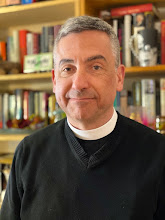

 Posts
Posts

