St. Michael’s Episcopal Church, Gainesville FL
The Chapel of the Incarnation, Gainesville FL
October 17, 2010
Year C: Proper 24, The Twenty-First Sunday after Pentecost
Jeremiah 31:27-34
Psalm 119:97-104
2 Timothy 3:14-4:5
Luke 18:1-8
Faith and Prayer
I know I’m a little disoriented because the seasons are different here, but it feels like time is passing very quickly. It’s hard to believe that in just six weeks we will begin the season of Advent – the season in which we both prepare for Christmas and also look ahead to the second coming of Jesus Christ.
It’s during Advent that we are most aware that we live in an in-between time. Jesus has lived, died and risen, changing everything for all time. Yet, when we look at the world around us nothing much seems to have changed at all. Most people, including most of us, just go about our business as usual. But Christians have always understood that we live in an in-between time – the time between Jesus’ resurrection and his return. We live between the twilight of an old world and the dawn of a new world.
For the early followers of Jesus, this in-between time was a very difficult time and place.
It was difficult for a lot of reasons. First, the earliest followers of Jesus had expected that Jesus would return very soon, perhaps today, maybe this week.
Since that didn’t happen, by the last decades of the First Century when the gospels are written, there was understandable anxiety. When Lord? How much longer, Lord? Where are you, Lord?
On top of that, the first followers of Jesus had to deal with their neighbors, who were at best suspicious and at worst openly hostile to the Jesus movement. It was very hard to remain faithful to an apparently tardy Jesus when one’s safety was constantly in danger. The longer Jesus took to return, the easier it was to lose heart.
Today’s parable of the widow and unjust judge from the Gospel of Luke clearly addresses these very real concerns of Jesus’ first followers living in this in-between time. Luke spells out parable’s meaning right from the start:
“Then Jesus told them a parable about their need to pray always and not lose heart.”
There are only two characters in this parable. There’s a judge who lacks both religion and scruples and one very determined widow. In Hebrew Scripture there is a very heavy emphasis placed on taking care of widows – an emphasis that this judge at first chooses to ignore.
Since, as a woman the widow had no standing before the judge, she should have gotten a son or a brother or some other male relative to plead her case. Since she goes to the judge, we can assume that not only was she a widow, but she was utterly alone and very vulnerable.
Yet, despite her aloneness and vulnerability, she persists. She really persists, and she finally gets what she wants. In our translation the judge says, “I will grant her justice, so that she may not wear me out by continually coming.” Other translations are a bit more vivid: “I must give this widow her just rights since she keeps pestering me, or she will come and slap me in the face.”
So, maybe literally to save face, the judge gives the persistent widow what she wants.
We’re meant to conclude that if the unjust judge gives this woman what she wants, then certainly God who is infinitely more just and loving will surely answer the pleas of us, God’s people.
Luke quotes Jesus as asking, “And will not God grant justice to his chosen ones who cry to him day and night? Will he delay long in helping them?”
And then Jesus concludes with one last question, “And yet, when the Son of Man comes, will he find faith on earth?”
So, what does all this mean for us?
At first this seems like a pretty straightforward parable – if we are persistent in prayer – if we cry to God day and night - if we keep the faith - then God will quickly give justice to us.
But, we all know that doesn’t mean that God is like a pushover parent or grandparent. God giving justice to us doesn’t mean that we can get whatever we want from God if we’re just persistent, if we pester God, if we nag God, if we just pray hard enough.
And even if God does grant us what we want, we don’t necessarily get it as quickly as we’d like. There are surely many praying people who wait a long time for justice.
So, I really struggled with this passage over the past few days. And, as I grappled with this parable, I kept circling back to the basics: faith and prayer.
Faith and prayer.
Jesus asks, “And yet, when the Son of Man comes, will he find faith on earth?”
But, what is faith? I think when most of us think about faith we think of a list of propositions that we either believe in – or not. In a few minutes we’ll all stand and say the Nicene Creed. In a way, the creed is a checklist, and we can check off items depending on how much faith we have.
But, I don’t think the checklist is the type of faith that Jesus hopes to find on earth when he returns.
During this in-between time the most important kind of faith is trust. The great challenge for us as Christians past and present is to put our trust in a God who operates on a timetable that is not the same as ours. Our great challenge is to have faith – to put our trust in God – even though in this in-between time we can’t always see how God is at work in our lives. Our great challenge is to persist in faith – to persist in placing our trust in God.
And that’s why we’re here today. Since persisting in faith can be so hard, we gather here each week to tell the old stories, to sing the hymns, to encourage each other, and to receive the bread of heaven and the cup of salvation.
And since persisting in faith can be so hard, we also look for inspiration to the lives of Christians who’ve gone before us. We remember the holy women and men who have also faced challenges and persisted in putting their faith in – placing their trust in - God.
On Friday the Church remembered Teresa of Avila (and today here at St. Michael’s we are honoring our Teresa of Avila chapter of the Daughters of the King.) Teresa is a great example of a woman who faced many challenges and obstacles and yet persisted in putting her trust in God.
Teresa was born in 1515 to a wealthy Spanish merchant family. Against her family’s wishes she became Carmelite nun. A couple of years later she suffered a devastating illness, which gave her fainting fits, heart problems and even paralysis. At one point she seemed so close to death that a grave was dug in preparation for her burial.
But, she recovered and devoted the rest of her life to reforming the Carmelite order, opening new convents, writing, and, most of all, prayer.
When we look at the lives of Teresa and all the holy women and men who have persisted in faith we find that the best way for us in this in-between time to persist in faith is through prayer.
The persistent widow is a role model of one kind of prayer – petition – asking God for what we want – sometimes over and over and over! And there’s certainly nothing wrong with petition. We do it all the time – here in church and in our own lives. And God certainly wants us to ask for good gifts for others and ourselves.
But petition is just one kind of prayer – and not the most important.
Teresa of Avila understood this. She was a great mystic who wrote profoundly about prayer. Here’s her beautiful description of what she called mental prayer - simply spending time with God:
“For mental prayer in my opinion is nothing else than an intimate sharing between friends; it means taking time frequently to be alone with Him who we know loves us.”
Teresa described the Christian spiritual life as an “interior castle.” Through our own prayer we enter the first few rooms of the castle but then when we are quiet and simply spend time with God, when we make time for God, when we are open to God, God draws us ever closer. As we move deeper into the “interior castle,” our faith – our trust in God – becomes more and more complete.
And isn’t that the kind of faith, the kind of trust and closeness, that God predicts and dreams of in today’s lesson from Jeremiah? God says,
“I will put my law within them, and I will write it on their hearts; and I will be their God, and they shall be my people.”
It’s six weeks to Advent - time is passing quickly, but you and I are still in this in-between time. Jesus has lived, died and risen again, but we’re still here trying to remain persistently faithful.
The great challenge of our lives is to put our faith – our trust – in God. And it’s through prayer – here together in church, at home and in the quiet of our own hearts – that our trust deepens, our faith grows, and we come to know the God whose nature and name is Love.
It’s through prayer that when the Son of Man comes he will find faith on earth.
The basics: faith and prayer.
Amen.
Sunday, October 17, 2010
Sunday, October 10, 2010
We Are Here (At the Chapel)
The Chapel of the Incarnation, Gainesville FL
October 10, 2010
Year C: Proper 23 – The Twentieth Sunday after Pentecost
Jeremiah 29:1, 4-7
Psalm 66:1-11
2 Timothy 2:8-15
Luke 17:11-19
We are Here
Anyone ever have trouble paying attention? Like, say, when you’re trying to study and yet it’s so tempting to check facebook or to text a friend or to just daydream about the weekend.
It’s not always easy to pay attention, yet, most, if not all, religious traditions emphasize the importance of paying attention, the importance of being mindful of how God might be at work right here and now in this present moment.
In the gospels, at the end of a parable or a teaching, Jesus is often quoted as saying, “Let anyone with ears to hear listen!”
In other words, pay attention! Be mindful!
Mindfulness is especially valued in Buddhism. The great Buddhist spiritual teacher Thich Nhat Hanh has written:
“The miracle of mindfulness is, first of all, you are here. Being truly here is very important – being here for yourself, and for the one you love. How can you love if you are not here? A fundamental condition for love is your own presence. In order to love, you must be here. That is certain. Fortunately, being here is not a difficult thing to accomplish.”
I’m not so sure about that last line. At least for me, it’s not so easy to pay attention, to be mindful. It’s easy to take people, places and things for granted. It’s easy to forget how miraculous it is that we are right here, right now.
How many of us really paid attention when we walked, or biked, or drove to the chapel this evening?
How many of us really pay attention to our friends and families? How many of us have had the experience of having a phone conversation in which we half – or even less than half – listen to what the other person is saying. And sometimes we get caught, right?
“Tom? I just asked you a question! Were you even listening to me?”
Even worse, sometimes we do the same thing when we’re with people in person. And if we get caught then – man, that’s even more embarrassing! You know how it happens, the other person notices our eyes glaze over or notices that we are looking off in the distance and not paying any attention to the here and now.
It’s not easy to pay attention to what’s going on around us.
It’s easy for us to forget, “we are here.”
As we get older, sometimes we forget “we are here” because we are so focused on the past. The glow of the glory days or the anguish of an old pain, can distract us from being mindful of the present. The past can get in the way of us remembering, “we are here.”
I bet many of you are more likely to forget “we are here” because you’re so busy looking ahead to the future. People say these are the best years of your life. But how much of that time is spent thinking about – or worrying about – the future?
A change in scenery can sometimes be very helpful to mindfulness. These days I have to pay close attention when I’m driving because usually I’m not really sure where I’m going.
Over the past month and a half or so there have been quite a few times that Sue and I have thought, “Isn’t it amazing that we are here?”
Sometimes we’ll be walking down West University Avenue or driving around Gainesville and one of us will turn to the other and ask something like, “Can you believe that we live here?”
To be honest, these are ambiguous thoughts and questions.
I’m mindful of living in Gainesville – this Gator-crazy, football-mad town where an RV was already parked on the chapel lawn when I unlocked the gates at 7:30 on Friday morning – in position for last night’s game.
I’m mindful of living in Gainesville, driving on its confusing streets as helmet-free students whiz by on scooters as they talk on cell phones or even text. It’s amazing to be living in Gainesville with its threats of Koran-burning and senseless murders.
I’m mindful of living in Gainesville, so far from our family and friends. Last week was my father’s birthday and the best I could do was give him a call in the evening. I am sad that we won’t be seeing each other anytime soon.
We are here.
Sometimes my homesickness and my focus on the past can blind me to all the blessings that are being poured out, that are all around me, right here and now.
We are here.
It’s amazing to be living in Gainesville – this interesting and cool town, filled with great restaurants and unusual shops, humming with the energy of so many young people and the intellectual and artistic firepower of a first-class faculty.
It’s amazing to be living in Gainesville, so beautiful with its towering palm trees and gently hanging moss, so beautiful with its lush gardens and surrounded by vast stretches of wild nature.
It’s amazing to be in Gainesville, to live “above the store” to come downstairs and sit in our beautiful garden, to hang out with many of you, to pray together, to support one another in tough times and to celebrate in good times.
We are here.
Now, don’t get me wrong, I don’t think of myself as an exile. But, I guess because Sue and I do find ourselves living in a new and unfamiliar place, today’s reading from the Prophet Jeremiah really spoke to me.
A little background: Jeremiah is writing during the Babylonian exile in the 6th Century BC when the Jewish kingdoms had been defeated and a sizable portion of the Jewish people were living in exile in Babylon.
For the exiles, this was kind of an ambiguous situation because Jerusalem had not been destroyed and many Jews were still living back in the homeland, although under foreign rule.
For the exiles, this ambiguous situation left them unsettled. They looked to the past and yearned for home. They looked to the future with anxiety. How long would their exile last? How long would they be under Babylonian rule?
The prophets weren’t much help. The prophets were not in agreement about the exile and so gave a mixed message. Some said with confidence that the exile would be ending soon – that God was about to take action to liberate his people. Those prophecies led to Jewish revolts both in Jerusalem and in Babylon.
But, Jeremiah offered a very different prophecy. Jeremiah believed that God was at work here and now. Jeremiah believed that God was making use of Nebuchadnezzar, the Babylonian king. Jeremiah believed that God was making use of the exile itself.
And so through the Prophet Jeremiah, essentially God says to the people of Israel: “You are there.” God says to the people of Israel, “And I am right there with you.”
Through Jeremiah, God says: “Build houses and live in them; plant gardens and eat what they produce. Take wives and have sons and daughters; take wives for your sons, and give your daughters in marriage, that they may bear sons and daughters; multiply there, and do not decrease.”
In other words, “You are there. And I am right there with you.”
You and I, we’re not exiles. But, we face the same challenge of being really present in the here and now. We face the same challenge of focusing on – and being open to – the blessings that are being poured out all around us.
We face the same challenge of keeping our eyes and ears open to God at work all around us. We face the same challenge of remembering how good it is just to breathe. How good it is just to feel the warmth of the sun. How good it is just to hang out with friends. How good it is to have the opportunity to study and learn. How good it is to laugh. How good it is to eat and drink.
And here in our beautiful chapel, how good it is to eat and drink the Body and Blood of Christ. How good it is to unite with Christ and with one another, to be the Body of Christ here in the beautiful place, right here and now.
And when we’re paying attention to all that we receive, right here and now, then we’re likely to feel deep love. As Thich Nhat Hanh says, “In order to love you must be here.”
And when we’re mindful of all that we receive right here and now, then we’re likely to also feel profound gratitude. We’re likely to be like that one healed leper who paid attention, who returned to Jesus and said thank you.
We are here.
Amen.
October 10, 2010
Year C: Proper 23 – The Twentieth Sunday after Pentecost
Jeremiah 29:1, 4-7
Psalm 66:1-11
2 Timothy 2:8-15
Luke 17:11-19
We are Here
Anyone ever have trouble paying attention? Like, say, when you’re trying to study and yet it’s so tempting to check facebook or to text a friend or to just daydream about the weekend.
It’s not always easy to pay attention, yet, most, if not all, religious traditions emphasize the importance of paying attention, the importance of being mindful of how God might be at work right here and now in this present moment.
In the gospels, at the end of a parable or a teaching, Jesus is often quoted as saying, “Let anyone with ears to hear listen!”
In other words, pay attention! Be mindful!
Mindfulness is especially valued in Buddhism. The great Buddhist spiritual teacher Thich Nhat Hanh has written:
“The miracle of mindfulness is, first of all, you are here. Being truly here is very important – being here for yourself, and for the one you love. How can you love if you are not here? A fundamental condition for love is your own presence. In order to love, you must be here. That is certain. Fortunately, being here is not a difficult thing to accomplish.”
I’m not so sure about that last line. At least for me, it’s not so easy to pay attention, to be mindful. It’s easy to take people, places and things for granted. It’s easy to forget how miraculous it is that we are right here, right now.
How many of us really paid attention when we walked, or biked, or drove to the chapel this evening?
How many of us really pay attention to our friends and families? How many of us have had the experience of having a phone conversation in which we half – or even less than half – listen to what the other person is saying. And sometimes we get caught, right?
“Tom? I just asked you a question! Were you even listening to me?”
Even worse, sometimes we do the same thing when we’re with people in person. And if we get caught then – man, that’s even more embarrassing! You know how it happens, the other person notices our eyes glaze over or notices that we are looking off in the distance and not paying any attention to the here and now.
It’s not easy to pay attention to what’s going on around us.
It’s easy for us to forget, “we are here.”
As we get older, sometimes we forget “we are here” because we are so focused on the past. The glow of the glory days or the anguish of an old pain, can distract us from being mindful of the present. The past can get in the way of us remembering, “we are here.”
I bet many of you are more likely to forget “we are here” because you’re so busy looking ahead to the future. People say these are the best years of your life. But how much of that time is spent thinking about – or worrying about – the future?
A change in scenery can sometimes be very helpful to mindfulness. These days I have to pay close attention when I’m driving because usually I’m not really sure where I’m going.
Over the past month and a half or so there have been quite a few times that Sue and I have thought, “Isn’t it amazing that we are here?”
Sometimes we’ll be walking down West University Avenue or driving around Gainesville and one of us will turn to the other and ask something like, “Can you believe that we live here?”
To be honest, these are ambiguous thoughts and questions.
I’m mindful of living in Gainesville – this Gator-crazy, football-mad town where an RV was already parked on the chapel lawn when I unlocked the gates at 7:30 on Friday morning – in position for last night’s game.
I’m mindful of living in Gainesville, driving on its confusing streets as helmet-free students whiz by on scooters as they talk on cell phones or even text. It’s amazing to be living in Gainesville with its threats of Koran-burning and senseless murders.
I’m mindful of living in Gainesville, so far from our family and friends. Last week was my father’s birthday and the best I could do was give him a call in the evening. I am sad that we won’t be seeing each other anytime soon.
We are here.
Sometimes my homesickness and my focus on the past can blind me to all the blessings that are being poured out, that are all around me, right here and now.
We are here.
It’s amazing to be living in Gainesville – this interesting and cool town, filled with great restaurants and unusual shops, humming with the energy of so many young people and the intellectual and artistic firepower of a first-class faculty.
It’s amazing to be living in Gainesville, so beautiful with its towering palm trees and gently hanging moss, so beautiful with its lush gardens and surrounded by vast stretches of wild nature.
It’s amazing to be in Gainesville, to live “above the store” to come downstairs and sit in our beautiful garden, to hang out with many of you, to pray together, to support one another in tough times and to celebrate in good times.
We are here.
Now, don’t get me wrong, I don’t think of myself as an exile. But, I guess because Sue and I do find ourselves living in a new and unfamiliar place, today’s reading from the Prophet Jeremiah really spoke to me.
A little background: Jeremiah is writing during the Babylonian exile in the 6th Century BC when the Jewish kingdoms had been defeated and a sizable portion of the Jewish people were living in exile in Babylon.
For the exiles, this was kind of an ambiguous situation because Jerusalem had not been destroyed and many Jews were still living back in the homeland, although under foreign rule.
For the exiles, this ambiguous situation left them unsettled. They looked to the past and yearned for home. They looked to the future with anxiety. How long would their exile last? How long would they be under Babylonian rule?
The prophets weren’t much help. The prophets were not in agreement about the exile and so gave a mixed message. Some said with confidence that the exile would be ending soon – that God was about to take action to liberate his people. Those prophecies led to Jewish revolts both in Jerusalem and in Babylon.
But, Jeremiah offered a very different prophecy. Jeremiah believed that God was at work here and now. Jeremiah believed that God was making use of Nebuchadnezzar, the Babylonian king. Jeremiah believed that God was making use of the exile itself.
And so through the Prophet Jeremiah, essentially God says to the people of Israel: “You are there.” God says to the people of Israel, “And I am right there with you.”
Through Jeremiah, God says: “Build houses and live in them; plant gardens and eat what they produce. Take wives and have sons and daughters; take wives for your sons, and give your daughters in marriage, that they may bear sons and daughters; multiply there, and do not decrease.”
In other words, “You are there. And I am right there with you.”
You and I, we’re not exiles. But, we face the same challenge of being really present in the here and now. We face the same challenge of focusing on – and being open to – the blessings that are being poured out all around us.
We face the same challenge of keeping our eyes and ears open to God at work all around us. We face the same challenge of remembering how good it is just to breathe. How good it is just to feel the warmth of the sun. How good it is just to hang out with friends. How good it is to have the opportunity to study and learn. How good it is to laugh. How good it is to eat and drink.
And here in our beautiful chapel, how good it is to eat and drink the Body and Blood of Christ. How good it is to unite with Christ and with one another, to be the Body of Christ here in the beautiful place, right here and now.
And when we’re paying attention to all that we receive, right here and now, then we’re likely to feel deep love. As Thich Nhat Hanh says, “In order to love you must be here.”
And when we’re mindful of all that we receive right here and now, then we’re likely to also feel profound gratitude. We’re likely to be like that one healed leper who paid attention, who returned to Jesus and said thank you.
We are here.
Amen.

We Are Here (At St. Michael's)
St. Michael’s Episcopal Church, Gainesville FL
October 10, 2010
Year C: Proper 23 – The Twentieth Sunday after Pentecost
Jeremiah 29:1, 4-7
Psalm 66:1-11
2 Timothy 2:8-15
Luke 17:11-19
We are Here
Anyone ever have trouble paying attention?
It’s not always easy to pay attention, yet, most, if not all, religious traditions emphasize the importance of paying attention, the importance of being mindful of how God might be at work right here and now in this present moment.
In the gospels, at the end of a parable or a teaching, Jesus is often quoted as saying, “Let anyone with ears to hear listen!”
In other words, pay attention! Be mindful!
Mindfulness is especially valued in Buddhism. The great Buddhist spiritual teacher Thich Nhat Hanh has written:
“The miracle of mindfulness is, first of all, you are here. Being truly here is very important – being here for yourself, and for the one you love. How can you love if you are not here? A fundamental condition for love is your own presence. In order to love, you must be here. That is certain. Fortunately, being here is not a difficult thing to accomplish.”
I’m not so sure about that last line. At least for me, it’s not so easy to pay attention, to be mindful. It’s easy to take people, places and things for granted. It’s easy to forget how miraculous it is that we are here.
How many of us really pay attention to the world around us when we drive the familiar route between home and church or home and work?
How many of us really pay attention to the people with whom we share our lives – to the people who are most important to us? How many of us have had the experience of having a phone conversation in which we half – or even less than half – listen to what the other person is saying. And sometimes we get caught, right?
“Tom, I just asked you a question! Were you even listening to me?”
Even worse, sometimes we do the same thing when we’re with people in person. And if we get caught then – that’s even more embarrassing! You know how it happens, the other person notices our eyes glaze over or notices that we are looking off in the distance and not paying any attention to the here and now.
It’s not easy to pay attention to what’s going on around us.
It’s easy for us to forget, “we are here.”
Sometimes we forget “we are here” because we are so focused on the past. The glow of the glory days or the anguish of an old pain, can distract us from being mindful of the present. The past can get in the way of us remembering, “we are here.”
Sometimes we forget “we are here” because we’re so busy looking ahead to the future. I remember when I was coming through the ordination process how hard it was to stay mindful of the present. Instead I was consumed by so many questions about the future. Would I be accepted into the process? Would I do well in seminary? Would the bishop ordain me? Would I get a job? Would I be any good at it?
Looking back, I know I missed out on many good people, places and things that God brought into my life during those years.
A change in scenery can sometimes be very helpful to mindfulness. These days I have to pay close attention when I’m driving because usually I’m not really sure where I’m going.
Over the past month and a half or so there have been quite a few times that Sue and I have thought, “Isn’t it amazing that we are here?”
Sometimes Sue and I will be walking down West University Avenue or driving around Gainesville and one of us will turn to the other and ask something like, “Can you believe that we live here?”
To be honest, these are ambiguous thoughts and questions.
I’m mindful of living in Gainesville – this Gator-crazy, football-mad town where an RV was already parked on the chapel lawn when I unlocked the gates at 7:30 on Friday morning – in position for last night’s LSU game.
I’m mindful of living in Gainesville, driving on its confusing streets as helmet-free young people whiz by on scooters as they talk on cell phones or even text, convinced they are invincible. It’s amazing to be living in Gainesville with its threats of Koran-burning and senseless murders.
I’m mindful of living in Gainesville, so far from our family and friends. Last week was my father’s birthday and the best I could do was give him a call in the evening. I am sad that we won’t be seeing each other anytime soon. I still get emails from my former church and I get little nostalgic when I read about what’s going on up there and all that I’m missing. I worry about the future – will we fit in here? Will St. Michael’s grow? Will the chapel still be an attractive place for students and others?
“We are here.”
Sometimes my homesickness and my focus on the past and worries about the future can blind me to all the blessings that are being poured out, that are all around me, right here and now.
“We are here.”
It’s amazing to be living in Gainesville – this interesting and cool town, filled with great restaurants and unusual shops, humming with the energy of so many young people and the intellectual and artistic firepower of a first-class faculty.
It’s amazing to be living in Gainesville, so beautiful with its towering palm trees and gently hanging moss, so beautiful with its lush gardens and surrounded by vast stretches of wild nature.
It’s amazing to be in Gainesville, to be responsible for nurturing the spiritual lives of young people during the crucial college years. It’s amazing to be in Gainesville, getting to know all of you and working together to build our future together here at St. Michael’s.
“We are here.”
Now, don’t get me wrong, I don’t think of myself as an exile. But, I guess because Sue and I do find ourselves living in a new and unfamiliar place, today’s reading from the Prophet Jeremiah really spoke to me.
A little background: Jeremiah is writing during the Babylonian exile in the 6th Century BC when the Jewish kingdoms had been defeated and a sizable portion of the Jewish people were living in exile in Babylon.
For the exiles, this was kind of an ambiguous situation because Jerusalem had not been destroyed and many Jews were still living back in the homeland, although under foreign rule.
For the exiles, this ambiguous situation left them unsettled. They looked to the past and yearned for home. They looked to the future with anxiety. How long would their exile last? How long would they be under Babylonian rule?
The prophets weren’t much help. The prophets were not in agreement about the exile and so gave a mixed message. Some said with confidence that the exile would be ending soon – that God was about to take action to liberate his people. Those prophecies led to Jewish revolts both in Jerusalem and in Babylon.
But, Jeremiah offered a very different prophecy. Jeremiah believed that God was at work here and now. Jeremiah believed that God was making use of Nebuchadnezzar, the Babylonian king. Jeremiah believed that God was making use of the exile itself.
And so through the Prophet Jeremiah, essentially God says to the people of Israel: “You are there.” God says to the people of Israel, “And I am right there with you.”
Through Jeremiah, God says: “Build houses and live in them; plant gardens and eat what they produce. Take wives and have sons and daughters; take wives for your sons, and give your daughters in marriage, that they may bear sons and daughters; multiply there, and do not decrease.”
In other words, “You are there. And I am right there with you.”
You and I, we’re not exiles exactly. But, we face the same challenge of being really present in the here and now. We face the same challenge of accepting the past, hoping for the future, but mostly focusing on – and being open to – the blessings that are being poured out all around us.
We face the same challenge of keeping our eyes and ears open to God at work all around us. How good it is just to breathe, to hold the hand of a person we love. How good it is to hear beautiful music – and, for some of us, how good it is to make beautiful music. How good it is to greet another. How good it is to laugh. How good it is to eat and drink.
And this morning, how good it is to eat and drink the Body and Blood of Christ. How good it is to unite with Christ and with one another, to be the Boy of Christ here in the beautiful place, right here and now.
And when we’re paying attention to all that we receive, right here and now, then we’re likely to feel deep love. As Thich Nhat Hanh says, “In order to love you must be here.”
And when we’re mindful of all that we receive right here and now, then we’re likely to also feel profound gratitude. We’re likely to be like that one healed leper who paid attention, who returned to Jesus and said thank you.
We are here.
Amen.
October 10, 2010
Year C: Proper 23 – The Twentieth Sunday after Pentecost
Jeremiah 29:1, 4-7
Psalm 66:1-11
2 Timothy 2:8-15
Luke 17:11-19
We are Here
Anyone ever have trouble paying attention?
It’s not always easy to pay attention, yet, most, if not all, religious traditions emphasize the importance of paying attention, the importance of being mindful of how God might be at work right here and now in this present moment.
In the gospels, at the end of a parable or a teaching, Jesus is often quoted as saying, “Let anyone with ears to hear listen!”
In other words, pay attention! Be mindful!
Mindfulness is especially valued in Buddhism. The great Buddhist spiritual teacher Thich Nhat Hanh has written:
“The miracle of mindfulness is, first of all, you are here. Being truly here is very important – being here for yourself, and for the one you love. How can you love if you are not here? A fundamental condition for love is your own presence. In order to love, you must be here. That is certain. Fortunately, being here is not a difficult thing to accomplish.”
I’m not so sure about that last line. At least for me, it’s not so easy to pay attention, to be mindful. It’s easy to take people, places and things for granted. It’s easy to forget how miraculous it is that we are here.
How many of us really pay attention to the world around us when we drive the familiar route between home and church or home and work?
How many of us really pay attention to the people with whom we share our lives – to the people who are most important to us? How many of us have had the experience of having a phone conversation in which we half – or even less than half – listen to what the other person is saying. And sometimes we get caught, right?
“Tom, I just asked you a question! Were you even listening to me?”
Even worse, sometimes we do the same thing when we’re with people in person. And if we get caught then – that’s even more embarrassing! You know how it happens, the other person notices our eyes glaze over or notices that we are looking off in the distance and not paying any attention to the here and now.
It’s not easy to pay attention to what’s going on around us.
It’s easy for us to forget, “we are here.”
Sometimes we forget “we are here” because we are so focused on the past. The glow of the glory days or the anguish of an old pain, can distract us from being mindful of the present. The past can get in the way of us remembering, “we are here.”
Sometimes we forget “we are here” because we’re so busy looking ahead to the future. I remember when I was coming through the ordination process how hard it was to stay mindful of the present. Instead I was consumed by so many questions about the future. Would I be accepted into the process? Would I do well in seminary? Would the bishop ordain me? Would I get a job? Would I be any good at it?
Looking back, I know I missed out on many good people, places and things that God brought into my life during those years.
A change in scenery can sometimes be very helpful to mindfulness. These days I have to pay close attention when I’m driving because usually I’m not really sure where I’m going.
Over the past month and a half or so there have been quite a few times that Sue and I have thought, “Isn’t it amazing that we are here?”
Sometimes Sue and I will be walking down West University Avenue or driving around Gainesville and one of us will turn to the other and ask something like, “Can you believe that we live here?”
To be honest, these are ambiguous thoughts and questions.
I’m mindful of living in Gainesville – this Gator-crazy, football-mad town where an RV was already parked on the chapel lawn when I unlocked the gates at 7:30 on Friday morning – in position for last night’s LSU game.
I’m mindful of living in Gainesville, driving on its confusing streets as helmet-free young people whiz by on scooters as they talk on cell phones or even text, convinced they are invincible. It’s amazing to be living in Gainesville with its threats of Koran-burning and senseless murders.
I’m mindful of living in Gainesville, so far from our family and friends. Last week was my father’s birthday and the best I could do was give him a call in the evening. I am sad that we won’t be seeing each other anytime soon. I still get emails from my former church and I get little nostalgic when I read about what’s going on up there and all that I’m missing. I worry about the future – will we fit in here? Will St. Michael’s grow? Will the chapel still be an attractive place for students and others?
“We are here.”
Sometimes my homesickness and my focus on the past and worries about the future can blind me to all the blessings that are being poured out, that are all around me, right here and now.
“We are here.”
It’s amazing to be living in Gainesville – this interesting and cool town, filled with great restaurants and unusual shops, humming with the energy of so many young people and the intellectual and artistic firepower of a first-class faculty.
It’s amazing to be living in Gainesville, so beautiful with its towering palm trees and gently hanging moss, so beautiful with its lush gardens and surrounded by vast stretches of wild nature.
It’s amazing to be in Gainesville, to be responsible for nurturing the spiritual lives of young people during the crucial college years. It’s amazing to be in Gainesville, getting to know all of you and working together to build our future together here at St. Michael’s.
“We are here.”
Now, don’t get me wrong, I don’t think of myself as an exile. But, I guess because Sue and I do find ourselves living in a new and unfamiliar place, today’s reading from the Prophet Jeremiah really spoke to me.
A little background: Jeremiah is writing during the Babylonian exile in the 6th Century BC when the Jewish kingdoms had been defeated and a sizable portion of the Jewish people were living in exile in Babylon.
For the exiles, this was kind of an ambiguous situation because Jerusalem had not been destroyed and many Jews were still living back in the homeland, although under foreign rule.
For the exiles, this ambiguous situation left them unsettled. They looked to the past and yearned for home. They looked to the future with anxiety. How long would their exile last? How long would they be under Babylonian rule?
The prophets weren’t much help. The prophets were not in agreement about the exile and so gave a mixed message. Some said with confidence that the exile would be ending soon – that God was about to take action to liberate his people. Those prophecies led to Jewish revolts both in Jerusalem and in Babylon.
But, Jeremiah offered a very different prophecy. Jeremiah believed that God was at work here and now. Jeremiah believed that God was making use of Nebuchadnezzar, the Babylonian king. Jeremiah believed that God was making use of the exile itself.
And so through the Prophet Jeremiah, essentially God says to the people of Israel: “You are there.” God says to the people of Israel, “And I am right there with you.”
Through Jeremiah, God says: “Build houses and live in them; plant gardens and eat what they produce. Take wives and have sons and daughters; take wives for your sons, and give your daughters in marriage, that they may bear sons and daughters; multiply there, and do not decrease.”
In other words, “You are there. And I am right there with you.”
You and I, we’re not exiles exactly. But, we face the same challenge of being really present in the here and now. We face the same challenge of accepting the past, hoping for the future, but mostly focusing on – and being open to – the blessings that are being poured out all around us.
We face the same challenge of keeping our eyes and ears open to God at work all around us. How good it is just to breathe, to hold the hand of a person we love. How good it is to hear beautiful music – and, for some of us, how good it is to make beautiful music. How good it is to greet another. How good it is to laugh. How good it is to eat and drink.
And this morning, how good it is to eat and drink the Body and Blood of Christ. How good it is to unite with Christ and with one another, to be the Boy of Christ here in the beautiful place, right here and now.
And when we’re paying attention to all that we receive, right here and now, then we’re likely to feel deep love. As Thich Nhat Hanh says, “In order to love you must be here.”
And when we’re mindful of all that we receive right here and now, then we’re likely to also feel profound gratitude. We’re likely to be like that one healed leper who paid attention, who returned to Jesus and said thank you.
We are here.
Amen.
Sunday, October 03, 2010
Francis on Sunday
St. Michael’s Episcopal Church, Gainesville FL
The Chapel of the Incarnation, Gainesville FL
October 3, 2010
The Blessing of the Animals in Honor of St. Francis of Assisi
Matthew 11:25-30
Francis on Sunday
We go to church on Sunday because the Church considers every Sunday to be a feast dedicated to Jesus – to be, in fact, a “little Easter.” Every Sunday we remember and celebrate the life, death and resurrection of Jesus Christ.
And as we hear the Word of God, sing our hymns, pray together, exchange the peace and most of all when we receive the Body and Blood of Christ we deepen our commitment to be a follower of Jesus, to be part of the Body of Christ.
So, every Sunday is dedicated to Jesus. On many of the other days of the week the church remembers some extraordinary people who have lived lives devoted to Jesus; who have lived lives that pointed to Jesus. Some of those people are not very well known. For example, on Friday we remembered St. Remigius. Extra credit to anyone who can tell me one fact about his life!
Others are very famous and much-beloved – like St. Francis, whose feast day is tomorrow. So, we’re bending the rules a bit by honoring Francis today, but I think it’s worth it, because Francis lived a life totally devoted to Christ. And so, by honoring him, we honor the One to whom he devoted his life. And we’re reminded that our faith calls for us to have that same kind of radical devotion to our crucified and risen Lord.
Francis was born in 1181 or 1182 into a wealthy merchant family northern Italy. No surprise, when he was young he had some money so he really liked having a good time, but a year as a prisoner of war and a vision directing him back to Assisi sent his life in a different direction.
In 1207, while praying in a ruined chapel Francis heard Jesus call to him, saying, “Francis, Francis, go and rebuild my house.” Naturally enough, Francis began to rebuild the crumbling chapel stone by stone and then he went on to repair other churches. His radical change of direction led to a break with his father and his old friends.
Gradually, though, Francis came to understand that Jesus was calling him to something much bigger and more radical than repairing falling-down church buildings. Instead, Jesus was calling Francis to rebuild the Church that in his day had largely lost its way, had grown corrupt, whose leaders had forgotten that Jesus called them - and calls all of us - to lives of service and simplicity.
Jesus calls all of us to take on his yoke – to obey Jesus, to follow Jesus, to put our trust in Jesus.
Francis devoted his life to obeying Jesus’ command to give up everything and proclaim the Good News – sometime through words but mostly through his actions. You’d think that kind of life would be hard and miserable, yet by all reports, Francis was a remarkably joyful person.
Francis discovered that Jesus’ yoke really is easy and his burden really is light.
That kind of devotion and integrity and joy is attractive, and soon other men began to join Francis’ movement and women began to gather around his friend Clare. And the Franciscan religious orders for men and women were born and continue to echo the life and work and faith of Francis.
It was important to Francis that we not separate our work and our prayer. He believed our whole life should be a prayer. And since that means we’re doing a lot of praying out in the world, then we are going to encounter God in nature. So, Francis is associated with deep devotion to Christ and also a deep appreciation for God’s creation, a deep love for nature.
Francis knew that if we’re open and paying attention, we’re going to encounter God in Brother Sun and Sister Moon, through Brother Wind and Sister Water, through Brother Fire and Sister Mother Earth. If we’re open and paying attention, we can encounter God in all of the earth’s creatures – even alligators.
For Sue and me this is a difficult day, because our own cat, Noelle, is each day struggling a little more with cancer of the jaw. Over the ten years she’s been with us, she has poured out a lot of love for us – even after we put her in a cat carrier and drove her to Florida! And over the ten years she’s been with us, loving her has made Sue and me more loving people – more aware of what God’s love is like.
And so today we ask God’s blessing on Noelle and all our pets. We ask God’s blessing on Brother Dog and Sister Cat, because through their love and companionship we experience God’s love. Today we bless Brother Fish and Sister Bird, because our care for them reminds us of how we are to treat all our brothers and sisters, and how we are to treat every living thing.
Because of his love of nature, we have a tendency to sentimentalize Francis. But, make no mistake, Francis was a radical who gave away his life in obedience to and in imitation of Jesus Christ.
And near the end of his life, Francis’ desire to imitate Christ was rewarded with the gift of the stigmata – Francis suffered the same wounds suffered by the crucified Christ. His imitation of Christ was complete.
Inspired by the example of Francis, may we all follow Jesus with great joy and devotion, taking on Jesus’ easy yoke and his light burden, transforming our lives into prayer, and building the Kingdom of God right here on earth.
Amen.
The Chapel of the Incarnation, Gainesville FL
October 3, 2010
The Blessing of the Animals in Honor of St. Francis of Assisi
Matthew 11:25-30
Francis on Sunday
We go to church on Sunday because the Church considers every Sunday to be a feast dedicated to Jesus – to be, in fact, a “little Easter.” Every Sunday we remember and celebrate the life, death and resurrection of Jesus Christ.
And as we hear the Word of God, sing our hymns, pray together, exchange the peace and most of all when we receive the Body and Blood of Christ we deepen our commitment to be a follower of Jesus, to be part of the Body of Christ.
So, every Sunday is dedicated to Jesus. On many of the other days of the week the church remembers some extraordinary people who have lived lives devoted to Jesus; who have lived lives that pointed to Jesus. Some of those people are not very well known. For example, on Friday we remembered St. Remigius. Extra credit to anyone who can tell me one fact about his life!
Others are very famous and much-beloved – like St. Francis, whose feast day is tomorrow. So, we’re bending the rules a bit by honoring Francis today, but I think it’s worth it, because Francis lived a life totally devoted to Christ. And so, by honoring him, we honor the One to whom he devoted his life. And we’re reminded that our faith calls for us to have that same kind of radical devotion to our crucified and risen Lord.
Francis was born in 1181 or 1182 into a wealthy merchant family northern Italy. No surprise, when he was young he had some money so he really liked having a good time, but a year as a prisoner of war and a vision directing him back to Assisi sent his life in a different direction.
In 1207, while praying in a ruined chapel Francis heard Jesus call to him, saying, “Francis, Francis, go and rebuild my house.” Naturally enough, Francis began to rebuild the crumbling chapel stone by stone and then he went on to repair other churches. His radical change of direction led to a break with his father and his old friends.
Gradually, though, Francis came to understand that Jesus was calling him to something much bigger and more radical than repairing falling-down church buildings. Instead, Jesus was calling Francis to rebuild the Church that in his day had largely lost its way, had grown corrupt, whose leaders had forgotten that Jesus called them - and calls all of us - to lives of service and simplicity.
Jesus calls all of us to take on his yoke – to obey Jesus, to follow Jesus, to put our trust in Jesus.
Francis devoted his life to obeying Jesus’ command to give up everything and proclaim the Good News – sometime through words but mostly through his actions. You’d think that kind of life would be hard and miserable, yet by all reports, Francis was a remarkably joyful person.
Francis discovered that Jesus’ yoke really is easy and his burden really is light.
That kind of devotion and integrity and joy is attractive, and soon other men began to join Francis’ movement and women began to gather around his friend Clare. And the Franciscan religious orders for men and women were born and continue to echo the life and work and faith of Francis.
It was important to Francis that we not separate our work and our prayer. He believed our whole life should be a prayer. And since that means we’re doing a lot of praying out in the world, then we are going to encounter God in nature. So, Francis is associated with deep devotion to Christ and also a deep appreciation for God’s creation, a deep love for nature.
Francis knew that if we’re open and paying attention, we’re going to encounter God in Brother Sun and Sister Moon, through Brother Wind and Sister Water, through Brother Fire and Sister Mother Earth. If we’re open and paying attention, we can encounter God in all of the earth’s creatures – even alligators.
For Sue and me this is a difficult day, because our own cat, Noelle, is each day struggling a little more with cancer of the jaw. Over the ten years she’s been with us, she has poured out a lot of love for us – even after we put her in a cat carrier and drove her to Florida! And over the ten years she’s been with us, loving her has made Sue and me more loving people – more aware of what God’s love is like.
And so today we ask God’s blessing on Noelle and all our pets. We ask God’s blessing on Brother Dog and Sister Cat, because through their love and companionship we experience God’s love. Today we bless Brother Fish and Sister Bird, because our care for them reminds us of how we are to treat all our brothers and sisters, and how we are to treat every living thing.
Because of his love of nature, we have a tendency to sentimentalize Francis. But, make no mistake, Francis was a radical who gave away his life in obedience to and in imitation of Jesus Christ.
And near the end of his life, Francis’ desire to imitate Christ was rewarded with the gift of the stigmata – Francis suffered the same wounds suffered by the crucified Christ. His imitation of Christ was complete.
Inspired by the example of Francis, may we all follow Jesus with great joy and devotion, taking on Jesus’ easy yoke and his light burden, transforming our lives into prayer, and building the Kingdom of God right here on earth.
Amen.
Wednesday, September 29, 2010
Michaelmas on Holy Ground
St. Michael’s Episcopal Church, Gainesville FL
September 29, 2010
The Feast of St. Michael and All Angels
Genesis 28:10-17
Psalm 103
Revelation 12:7-12
John 1:47-51
Michaelmas on Holy Ground
God is always reaching out to us.
That’s the heart of our faith and the great theme of the Bible. Throughout the centuries, over and over, no matter how far we stray from the path, no matter how many times we reject God, God is always reaching out to us.
God is always reaching out to us, wanting to be friends with us, wanting to heal us, to guide us, and to strengthen us.
God uses everything at God’s disposal to reach out to us. God prods us through our consciences. God brings other people into our lives. God challenges us through prophetic voices. God feeds us through the Church and the sacraments. God inspires us through the beauty and wonder of the world.
Our tradition teaches us that God has also reached out us through the ministry of the mysterious, supernatural beings we call angels. Our tradition teaches us that the angels worship God in heaven and are also sent to us here on earth as messengers and defenders.
In today’s lesson from Genesis, we heard about a very early angelic appearance in Jacob’s powerfully vivid dream of the ladder between heaven and earth.
The angelic appearance helps Jacob to realize that he was asleep on holy ground. Jacob has a moment of extraordinary clarity and mindfulness. Jacob sees things as they really are. Jacob cries out, “Surely the LORD is in this place – and I did not know it!” “How awesome is this place! This is none other than the house of God, and this is the gate of heaven.”
God used this angelic dream to reach out to the snoozing Jacob. God used this angelic dream to help Jacob see things as they really are, to recognize God’s presence not just at the top of the ladder in heaven, but right here and now on earth.
God is always reaching out to us. And God’s ultimate and definitive attempt to reach out to us is in Jesus of Nazareth. In Jesus, God reaches out to us by breaking down the barrier that separated us. In Jesus, we see what God is really like. In Jesus, we see what we are really like.
In today’s gospel lesson, like Jacob, Nathanael also has a moment of extraordinary mindfulness and clarity. Nathanael also sees things as they really are. Nathanael cries out to Jesus, “Rabbi, you are the Son of God! You are the King of Israel!”
And then the Evangelist John quotes Jesus as saying, “Very truly, I tell you, you will see heaven opened and the angels of God ascending and descending upon the Son of Man.”
Long ago Jacob recognized that God was reaching out to him and that he was on holy ground, right here on earth.
The Evangelist John draws upon the story of Jacob’s ladder to offer us an even greater moment of clarity and mindfulness. John wants us to recognize that Jesus is both the revelation and the dwelling of God.
In Jesus, God has reached out to us in the ultimate way by breaking down forever the barrier that separated God and humanity.
From the start, Christians have understood that in the life, death and resurrection of Jesus, the victory has already been won – evil, fear and death are already defeated.
The angels should be able to enjoy a well-deserved retirement.
Unfortunately, from the start, Christians have also understood that evil, fear and death still stalk the earth; we have known that evil, fear and death still lurk in our hearts.
The victory is already won, but we’re not there yet.
Already but not yet.
So, our tradition teaches us that since we live in this “already, but not yet” time, the angels are still hard at work. And our patron, Michael, is one of the hardest working of all.
Michael, whose name means “Who is like God?” first appears in the Book of Daniel as the patron angel of Israel. Later, he appears in many non-biblical texts that were written after the Old Testament and before the New Testament. The mystics who wrote these texts saw Michael as both the leader of God’s army but also as a great healer.
In the vision of the Book of Revelation that we heard today, it’s Michael who leads the battle against Satan casting him and his demons out of heaven and down to earth.
So the author of Revelation writes, “Rejoice then, you heavens and those who dwell in them! But woe to the earth and the sea, for the devil has come down to you with great wrath, because he knows that his time is short!”
The victory is already won, but we’re not there yet.
We live in the “already, but not yet” time.
And it’s already, but not yet, here at St. Michael’s in Gainesville. God is still reaching out to us, wanting to be friends with us, wanting to heal us, to guide us, and to strengthen us.
God is still using everything at God’s disposal to reach out to us, including the angels, helping us to resist the powerful and very real evils of the world.
God is still using everything at God’s disposal to reach out to us, including the angels, helping us to have moments of clarity and mindfulness, so, like Jacob, we can wake up and see things as they really are, to realize that we are on holy ground.
And, in those moments of clarity and mindfulness, like Jacob, we can cry out: “Surely the LORD is in this place – and I did not know it!” “How awesome is this place! This is none other than the house of God, and this is the gate of heaven.”
On this, our patronal feast, may God send St. Michael and all the angels to help us in this “already, but not yet” time. May God give us the gifts of clarity, mindfulness, healing and strength.
Amen.
September 29, 2010
The Feast of St. Michael and All Angels
Genesis 28:10-17
Psalm 103
Revelation 12:7-12
John 1:47-51
Michaelmas on Holy Ground
God is always reaching out to us.
That’s the heart of our faith and the great theme of the Bible. Throughout the centuries, over and over, no matter how far we stray from the path, no matter how many times we reject God, God is always reaching out to us.
God is always reaching out to us, wanting to be friends with us, wanting to heal us, to guide us, and to strengthen us.
God uses everything at God’s disposal to reach out to us. God prods us through our consciences. God brings other people into our lives. God challenges us through prophetic voices. God feeds us through the Church and the sacraments. God inspires us through the beauty and wonder of the world.
Our tradition teaches us that God has also reached out us through the ministry of the mysterious, supernatural beings we call angels. Our tradition teaches us that the angels worship God in heaven and are also sent to us here on earth as messengers and defenders.
In today’s lesson from Genesis, we heard about a very early angelic appearance in Jacob’s powerfully vivid dream of the ladder between heaven and earth.
The angelic appearance helps Jacob to realize that he was asleep on holy ground. Jacob has a moment of extraordinary clarity and mindfulness. Jacob sees things as they really are. Jacob cries out, “Surely the LORD is in this place – and I did not know it!” “How awesome is this place! This is none other than the house of God, and this is the gate of heaven.”
God used this angelic dream to reach out to the snoozing Jacob. God used this angelic dream to help Jacob see things as they really are, to recognize God’s presence not just at the top of the ladder in heaven, but right here and now on earth.
God is always reaching out to us. And God’s ultimate and definitive attempt to reach out to us is in Jesus of Nazareth. In Jesus, God reaches out to us by breaking down the barrier that separated us. In Jesus, we see what God is really like. In Jesus, we see what we are really like.
In today’s gospel lesson, like Jacob, Nathanael also has a moment of extraordinary mindfulness and clarity. Nathanael also sees things as they really are. Nathanael cries out to Jesus, “Rabbi, you are the Son of God! You are the King of Israel!”
And then the Evangelist John quotes Jesus as saying, “Very truly, I tell you, you will see heaven opened and the angels of God ascending and descending upon the Son of Man.”
Long ago Jacob recognized that God was reaching out to him and that he was on holy ground, right here on earth.
The Evangelist John draws upon the story of Jacob’s ladder to offer us an even greater moment of clarity and mindfulness. John wants us to recognize that Jesus is both the revelation and the dwelling of God.
In Jesus, God has reached out to us in the ultimate way by breaking down forever the barrier that separated God and humanity.
From the start, Christians have understood that in the life, death and resurrection of Jesus, the victory has already been won – evil, fear and death are already defeated.
The angels should be able to enjoy a well-deserved retirement.
Unfortunately, from the start, Christians have also understood that evil, fear and death still stalk the earth; we have known that evil, fear and death still lurk in our hearts.
The victory is already won, but we’re not there yet.
Already but not yet.
So, our tradition teaches us that since we live in this “already, but not yet” time, the angels are still hard at work. And our patron, Michael, is one of the hardest working of all.
Michael, whose name means “Who is like God?” first appears in the Book of Daniel as the patron angel of Israel. Later, he appears in many non-biblical texts that were written after the Old Testament and before the New Testament. The mystics who wrote these texts saw Michael as both the leader of God’s army but also as a great healer.
In the vision of the Book of Revelation that we heard today, it’s Michael who leads the battle against Satan casting him and his demons out of heaven and down to earth.
So the author of Revelation writes, “Rejoice then, you heavens and those who dwell in them! But woe to the earth and the sea, for the devil has come down to you with great wrath, because he knows that his time is short!”
The victory is already won, but we’re not there yet.
We live in the “already, but not yet” time.
And it’s already, but not yet, here at St. Michael’s in Gainesville. God is still reaching out to us, wanting to be friends with us, wanting to heal us, to guide us, and to strengthen us.
God is still using everything at God’s disposal to reach out to us, including the angels, helping us to resist the powerful and very real evils of the world.
God is still using everything at God’s disposal to reach out to us, including the angels, helping us to have moments of clarity and mindfulness, so, like Jacob, we can wake up and see things as they really are, to realize that we are on holy ground.
And, in those moments of clarity and mindfulness, like Jacob, we can cry out: “Surely the LORD is in this place – and I did not know it!” “How awesome is this place! This is none other than the house of God, and this is the gate of heaven.”
On this, our patronal feast, may God send St. Michael and all the angels to help us in this “already, but not yet” time. May God give us the gifts of clarity, mindfulness, healing and strength.
Amen.
Sunday, September 26, 2010
GatorAID
The Chapel of the Incarnation, Gainesville FL
September 26, 2010
Year C, Proper 21: The Eighteenth Sunday after Pentecost
Jeremiah 32:1-3a, 6-15
Psalm 91:1-6, 14-16
1 Timothy 6:6-19
Luke 16:19-31
GatorAID
I’m envious of those of you who are really good at math. In school math was always my downfall – often keeping me off honors and providing me with many hours of upset stomach and sweaty palms. Pre-Calculus alone took about five years off my life.
In our family, Sue handles the finances – which is a very good thing. A number of years ago we thought we’d try our hand at some small-scale investing in stocks. I convinced Sue that we should buy stock in The New York Times Company. To me, my argument seemed flawless. I argued that with the internet becoming more and more popular people are going to want a brand they can trust for their news – and that brand would be the New York Times. Plus, I added with a flourish, people are always going to read newspapers!
Well, you can imagine how well that’s worked out for us over the years. Back in my former parish each Friday morning we had a men’s breakfast at a local diner. Most of these guys worked or had worked in finance and over three years they tried to tutor me on the ins and outs of the financial world. They tried to teach me how to invest wisely.
The brain trust, as I called them, had some success with me, though I still don’t trust myself to invest wisely. And judging from the way things have gone for many of us these past few years, it looks like most people shouldn’t trust themselves to invest wisely, either.
Jesus was very concerned that we learn how to invest wisely. He’s very interested in how we use – or misuse – our wealth. It’s a theme that runs throughout the gospel. How do we use or misuse our wealth, our possessions?
In today’s vivid and disturbing parable of the rich man and Lazarus, Jesus gives us a powerful vision of what happens when a person doesn’t invest wisely – when a person chooses to serve wealth rather than God – when a person chooses the love of money over the love of God and of neighbor. And it’s not a pretty sight.
It’s interesting that the first part of the parable contains nothing about morality. The rich man is rich and Lazarus is poor. Luke paints the picture expertly, the rich man “was dressed in purple and fine linen and who feasted sumptuously every day.” Meanwhile right outside the rich man’s gate, there’s Lazarus who was “covered in sores, who longed to satisfy his hunger with what fell from the rich man’s table; even the dogs would come and lick his sores.”
The rich man is about as rich as they come. And Lazarus, probably crippled and ritually unclean with skin ailments and dog saliva, is about as poor as they come.
But, notice, so far there’s nothing about the rich man being particularly bad or Lazarus being particularly saintly.
And then they both die and we see the Beatitudes put into action.
“Blessed are you who are poor, for yours is the kingdom of God. Blessed are you who are hungry now, for you will be filled."
They both die and we see the Beatitudes put into action.
“But woe to you who are rich, for you have received your consolation. Woe to you who are laughing now, for you will mourn and weep.”
But, this parable is not only – or even mostly – about reversal of fortune. When the scene shifts to hell we learn a lot about the rich man’s character and realize that the parable is really about investing wisely here and now.
So, the rich man’s in hell, he looks to heaven and sees Abraham with Lazarus beside him. And the rich man reveals a whole lot about his sense of entitlement when he has he nerve to ask Abraham to send Lazarus down into the flames to serve him.
In the parable, though, Abraham doesn’t chew out the rich man for his arrogance. Instead, Abraham maintains a sense of moral neutrality. Abraham says basically, “You had your good times on earth and now it’s Lazarus’ turn.”
It’s the next section that reveals what this parable is all about. The rich man still thinks Lazarus should be at his service. The rich man says to Abraham, “Then, father, I beg you to send him to my father’s house – for I have five brothers – that he may warn them, so that they will not also come into this place of torment.”
There it is. The rich man understands that he’s in hell not as the result of a reversal of fortune, not because he was rich. He’s in hell as a result of how he had used – or misused his fortune on earth. The rich man had not invested wisely. The rich man had invested in his fine garments and his sumptuous feasts instead of investing in loving God and loving neighbor.
I’m sure it seemed wonderful – the great clothes, the great meals, the big house and all the rest. And I’m sure he told himself that he was worth it, that he deserved what he had, that God must have wanted him to have all that he had.
But, later, I bet if the rich man reflected back on his life, he’d realize that he began living in hell long before he died. By over and over again choosing to satisfy himself and ignoring the desperately poor man right outside his gate, he had already begun to live in the hell of selfishness and materialism. He had not invested wisely.
And in our own culture we don’t have to look too far to find examples of the rich and famous living in the hell of selfishness and materialism. We don’t have to look too far to find examples of people investing in their own pleasure and extravagance rather than investing wisely in love and generosity.
But, what about us?
What kind of investors are we?
In my sermon last week I slipped in a phrase that I hope will become a central theme for all of us here at the chapel: Gators for Others.
In our high pressure world of tests and papers and resumes and interviews it is so easy for us to get so wrapped up in investing only in ourselves. It is easy for us to forget that for us Christians wise investment means loving God and loving our neighbor as ourselves.
So, we’ve created something to help all of us with our investing. It’s called the “GatorAID” box and it will be kept in the back of the chapel. The Gainesville Community Ministry has created a list of items that are particularly needed by the Lazaruses in our community. Each week an item from that list will be our “GatorAID Item of the Week.”
The “GatorAID Box” is a call to mindfulness. The “GatorAID Box” can help us avoid being like the rich man in the parable. The “GatorAID Box” can make it a little harder to ignore or choose to ignore the Lazaruses all around us. The “GatorAID Box” can help us be more faithful followers of Jesus.
The “GatorAID Box” can help us truly be Gators for Others.
Amen.
September 26, 2010
Year C, Proper 21: The Eighteenth Sunday after Pentecost
Jeremiah 32:1-3a, 6-15
Psalm 91:1-6, 14-16
1 Timothy 6:6-19
Luke 16:19-31
GatorAID
I’m envious of those of you who are really good at math. In school math was always my downfall – often keeping me off honors and providing me with many hours of upset stomach and sweaty palms. Pre-Calculus alone took about five years off my life.
In our family, Sue handles the finances – which is a very good thing. A number of years ago we thought we’d try our hand at some small-scale investing in stocks. I convinced Sue that we should buy stock in The New York Times Company. To me, my argument seemed flawless. I argued that with the internet becoming more and more popular people are going to want a brand they can trust for their news – and that brand would be the New York Times. Plus, I added with a flourish, people are always going to read newspapers!
Well, you can imagine how well that’s worked out for us over the years. Back in my former parish each Friday morning we had a men’s breakfast at a local diner. Most of these guys worked or had worked in finance and over three years they tried to tutor me on the ins and outs of the financial world. They tried to teach me how to invest wisely.
The brain trust, as I called them, had some success with me, though I still don’t trust myself to invest wisely. And judging from the way things have gone for many of us these past few years, it looks like most people shouldn’t trust themselves to invest wisely, either.
Jesus was very concerned that we learn how to invest wisely. He’s very interested in how we use – or misuse – our wealth. It’s a theme that runs throughout the gospel. How do we use or misuse our wealth, our possessions?
In today’s vivid and disturbing parable of the rich man and Lazarus, Jesus gives us a powerful vision of what happens when a person doesn’t invest wisely – when a person chooses to serve wealth rather than God – when a person chooses the love of money over the love of God and of neighbor. And it’s not a pretty sight.
It’s interesting that the first part of the parable contains nothing about morality. The rich man is rich and Lazarus is poor. Luke paints the picture expertly, the rich man “was dressed in purple and fine linen and who feasted sumptuously every day.” Meanwhile right outside the rich man’s gate, there’s Lazarus who was “covered in sores, who longed to satisfy his hunger with what fell from the rich man’s table; even the dogs would come and lick his sores.”
The rich man is about as rich as they come. And Lazarus, probably crippled and ritually unclean with skin ailments and dog saliva, is about as poor as they come.
But, notice, so far there’s nothing about the rich man being particularly bad or Lazarus being particularly saintly.
And then they both die and we see the Beatitudes put into action.
“Blessed are you who are poor, for yours is the kingdom of God. Blessed are you who are hungry now, for you will be filled."
They both die and we see the Beatitudes put into action.
“But woe to you who are rich, for you have received your consolation. Woe to you who are laughing now, for you will mourn and weep.”
But, this parable is not only – or even mostly – about reversal of fortune. When the scene shifts to hell we learn a lot about the rich man’s character and realize that the parable is really about investing wisely here and now.
So, the rich man’s in hell, he looks to heaven and sees Abraham with Lazarus beside him. And the rich man reveals a whole lot about his sense of entitlement when he has he nerve to ask Abraham to send Lazarus down into the flames to serve him.
In the parable, though, Abraham doesn’t chew out the rich man for his arrogance. Instead, Abraham maintains a sense of moral neutrality. Abraham says basically, “You had your good times on earth and now it’s Lazarus’ turn.”
It’s the next section that reveals what this parable is all about. The rich man still thinks Lazarus should be at his service. The rich man says to Abraham, “Then, father, I beg you to send him to my father’s house – for I have five brothers – that he may warn them, so that they will not also come into this place of torment.”
There it is. The rich man understands that he’s in hell not as the result of a reversal of fortune, not because he was rich. He’s in hell as a result of how he had used – or misused his fortune on earth. The rich man had not invested wisely. The rich man had invested in his fine garments and his sumptuous feasts instead of investing in loving God and loving neighbor.
I’m sure it seemed wonderful – the great clothes, the great meals, the big house and all the rest. And I’m sure he told himself that he was worth it, that he deserved what he had, that God must have wanted him to have all that he had.
But, later, I bet if the rich man reflected back on his life, he’d realize that he began living in hell long before he died. By over and over again choosing to satisfy himself and ignoring the desperately poor man right outside his gate, he had already begun to live in the hell of selfishness and materialism. He had not invested wisely.
And in our own culture we don’t have to look too far to find examples of the rich and famous living in the hell of selfishness and materialism. We don’t have to look too far to find examples of people investing in their own pleasure and extravagance rather than investing wisely in love and generosity.
But, what about us?
What kind of investors are we?
In my sermon last week I slipped in a phrase that I hope will become a central theme for all of us here at the chapel: Gators for Others.
In our high pressure world of tests and papers and resumes and interviews it is so easy for us to get so wrapped up in investing only in ourselves. It is easy for us to forget that for us Christians wise investment means loving God and loving our neighbor as ourselves.
So, we’ve created something to help all of us with our investing. It’s called the “GatorAID” box and it will be kept in the back of the chapel. The Gainesville Community Ministry has created a list of items that are particularly needed by the Lazaruses in our community. Each week an item from that list will be our “GatorAID Item of the Week.”
The “GatorAID Box” is a call to mindfulness. The “GatorAID Box” can help us avoid being like the rich man in the parable. The “GatorAID Box” can make it a little harder to ignore or choose to ignore the Lazaruses all around us. The “GatorAID Box” can help us be more faithful followers of Jesus.
The “GatorAID Box” can help us truly be Gators for Others.
Amen.
Investing Wisely
St. Michael’s Episcopal Church, Gainesville FL
September 26, 2010
Year C, Proper 21: The Eighteenth Sunday after Pentecost
Jeremiah 32:1-3a, 6-15
Psalm 91:1-6, 14-16
1 Timothy 6:6-19
Luke 16:19-31
Investing Wisely
I’m terrible at math. Throughout my days as a student math was always my downfall – often keeping me off honors and providing me with many hours of upset stomach and sweaty palms. Pre-Calculus took about five years off my life.
Fortunately, in our family, Sue handles the finances. One exception was a number of years ago when we thought we’d try our hand at some small-scale stock investing. I convinced Sue that we should buy stock in The New York Times Company. To me, my argument seemed flawless. I argued that with the Internet becoming more and more popular people are going to want a brand they can trust for their news – and that brand would be the New York Times. Plus, I added with a flourish, people are always going to read newspapers!
Well, you can imagine how well that’s worked out for us.
Back in my former parish each Friday morning we had a men’s breakfast at a local diner. (Maybe something for us to consider?) Anyway, most of these guys who came to the breakfast worked or had worked in finance. Over the three years I was there they tried their best to tutor me on the ins and outs of the financial world. They tried to teach me how to invest wisely.
The brain trust, as I called them, had some success with me, though I still don’t trust myself to invest wisely. And judging from the way things have gone for many of us these past few years, it looks like most people shouldn’t trust themselves to invest wisely, either.
Money is a touchy subject, isn’t it? It’s very personal. Most of us get uncomfortable, annoyed or even angry if anyone asks us how much money we earn, how much we have, how much we spend, how much we give away. My finances are none of your business.
I’m sure in the ancient world people who had money felt the same way. Yet, Jesus seems to have spent a lot of time talking about wealth – probably making some people awfully uncomfortable, annoyed and even angry. Nevertheless, Jesus seems to have spent a lot of time warning people – teaching people – to invest wisely.
Last week we heard the parable of the dishonest manager. At the conclusion of that parable Luke listed a series of Jesus sayings on wealth concluding with, “No slave can serve two masters; for a slave will either hate the one and love the other, or be devoted to the one and despise the other. You cannot serve God and wealth.”
Well, in today’s parable of the rich man and Lazarus we can almost hear Luke saying, “See, I told you so.” In this vivid and disturbing parable Jesus gives us a powerful vision of what happens when a person doesn’t invest wisely – when a person chooses to serve wealth rather than God – when a person chooses the love of money over the love of God and of neighbor. And it’s not a pretty sight.
It’s interesting that the first part of the parable contains nothing about morality. The rich man is rich and Lazarus is poor. That’s just the way it is. Luke paints the picture expertly. The rich man “was dressed in purple and fine linen and feasted sumptuously every day.” Meanwhile right outside the rich man’s gate, there’s Lazarus who was “covered in sores, who longed to satisfy his hunger with what fell from the rich man’s table; even the dogs would come and lick his sores.”
The rich man is about as rich as they come. And Lazarus, probably crippled, and covered with skin ailments and dog saliva that made him ritually unclean, is about as poor as they come.
But, notice, so far there’s nothing about the rich man being particularly bad or Lazarus being particularly saintly.
And then they both die and we see Luke’s very concrete version of the Beatitudes put into action.
“Blessed are you who are poor, for yours is the kingdom of God. Blessed are you who are hungry now, for you will be filled.
They both die and we see Luke’s very concrete version Beatitudes put into action.
“But woe to you who are rich, for you have received your consolation. Woe to you who are laughing now, for you will mourn and weep.”
But, this parable is not only – or even mostly – about reversal of fortune. When the scene shifts to hell we get a sense of the rich man’s character and realize that the parable is about investing wisely.
So, the rich man’s in hell, he looks to heaven and sees Abraham with Lazarus beside him. And the rich man reveals a whole lot about his sense of entitlement when, from hell, he asks Abraham to send Lazarus down into the flames to serve him.
In the parable, though, Abraham doesn’t chew out the rich man for his arrogance. Instead, Abraham maintains a sense of moral neutrality, saying essentially, “You had your good times on earth and now it’s Lazarus’ turn.”
It’s the next section that reveals what this parable is all about. The rich man still thinks Lazarus should be at his service. The rich man says to Abraham, “Then, father, I beg you to send him to my father’s house – for I have five brothers – that he may warn them, so that they will not also come into this place of torment.”
There it is. The rich man wants to warn his brothers to change their behavior because he understands he’s in hell because he had misused his fortune on earth. The rich man had not invested wisely.
The rich man had invested in his fine garments and his sumptuous feasts. The rich man had invested in his own pleasure, comfort and security.
And I’m sure the rich man told himself that he deserved these things, that he had worked hard for these things, that actually he didn’t really have that much, that he had to hold on to his wealth because you never know what the future might bring.
In fact, the rich man began living in hell long before he died. By choosing to satisfy himself and ignoring the desperately poor man right outside his gate, he had already begun to live in the hell of selfishness and materialism.
He had not invested wisely.
And in our own culture we don’t have to look too far to find examples of the rich and famous living in the hell of selfishness and materialism. Bernie Madoff, anyone? We don’t have to look too far to find examples of people investing in their own pleasure, comfort and security rather than investing wisely in love and generosity.
Well, what about us?
What kind of investors are we?
I don’t know this community very well, yet, but I’m guessing that none of us consider ourselves fabulously wealthy. Yet, as I’m sure members of the Cuba Committee and everyone else knows, by the standards of the world, we are some of the richest people who have ever lived.
Do we invest our wealth mostly in our own pleasure, comfort and security? Or do we invest our wealth primarily in living lives of loving service to the poorest and the weakest, regardless of their character? Remember, the parable tells us nothing about Lazarus’ character. All we need to know – all the rich man needed to know – was that he was poor and suffering.
This autumn, as we begin our life together, I invite all of us here at St. Michael’s to reflect on our investments. How much do we - individually and as a community - invest in ourselves and how much do we invest in sharing with the poor and suffering? And I invite us to reflect on who are the poor and suffering around us? Who are the people who might be right outside our gate? Who are the people we choose to ignore?
I invite all of us to invest wisely, to live our lives carefully and mindfully, because, just as for the rich man in today’s parable, whether we realize it or not, heaven or hell begin for us right here and now.
May God give us the wisdom to invest wisely.
Amen.
September 26, 2010
Year C, Proper 21: The Eighteenth Sunday after Pentecost
Jeremiah 32:1-3a, 6-15
Psalm 91:1-6, 14-16
1 Timothy 6:6-19
Luke 16:19-31
Investing Wisely
I’m terrible at math. Throughout my days as a student math was always my downfall – often keeping me off honors and providing me with many hours of upset stomach and sweaty palms. Pre-Calculus took about five years off my life.
Fortunately, in our family, Sue handles the finances. One exception was a number of years ago when we thought we’d try our hand at some small-scale stock investing. I convinced Sue that we should buy stock in The New York Times Company. To me, my argument seemed flawless. I argued that with the Internet becoming more and more popular people are going to want a brand they can trust for their news – and that brand would be the New York Times. Plus, I added with a flourish, people are always going to read newspapers!
Well, you can imagine how well that’s worked out for us.
Back in my former parish each Friday morning we had a men’s breakfast at a local diner. (Maybe something for us to consider?) Anyway, most of these guys who came to the breakfast worked or had worked in finance. Over the three years I was there they tried their best to tutor me on the ins and outs of the financial world. They tried to teach me how to invest wisely.
The brain trust, as I called them, had some success with me, though I still don’t trust myself to invest wisely. And judging from the way things have gone for many of us these past few years, it looks like most people shouldn’t trust themselves to invest wisely, either.
Money is a touchy subject, isn’t it? It’s very personal. Most of us get uncomfortable, annoyed or even angry if anyone asks us how much money we earn, how much we have, how much we spend, how much we give away. My finances are none of your business.
I’m sure in the ancient world people who had money felt the same way. Yet, Jesus seems to have spent a lot of time talking about wealth – probably making some people awfully uncomfortable, annoyed and even angry. Nevertheless, Jesus seems to have spent a lot of time warning people – teaching people – to invest wisely.
Last week we heard the parable of the dishonest manager. At the conclusion of that parable Luke listed a series of Jesus sayings on wealth concluding with, “No slave can serve two masters; for a slave will either hate the one and love the other, or be devoted to the one and despise the other. You cannot serve God and wealth.”
Well, in today’s parable of the rich man and Lazarus we can almost hear Luke saying, “See, I told you so.” In this vivid and disturbing parable Jesus gives us a powerful vision of what happens when a person doesn’t invest wisely – when a person chooses to serve wealth rather than God – when a person chooses the love of money over the love of God and of neighbor. And it’s not a pretty sight.
It’s interesting that the first part of the parable contains nothing about morality. The rich man is rich and Lazarus is poor. That’s just the way it is. Luke paints the picture expertly. The rich man “was dressed in purple and fine linen and feasted sumptuously every day.” Meanwhile right outside the rich man’s gate, there’s Lazarus who was “covered in sores, who longed to satisfy his hunger with what fell from the rich man’s table; even the dogs would come and lick his sores.”
The rich man is about as rich as they come. And Lazarus, probably crippled, and covered with skin ailments and dog saliva that made him ritually unclean, is about as poor as they come.
But, notice, so far there’s nothing about the rich man being particularly bad or Lazarus being particularly saintly.
And then they both die and we see Luke’s very concrete version of the Beatitudes put into action.
“Blessed are you who are poor, for yours is the kingdom of God. Blessed are you who are hungry now, for you will be filled.
They both die and we see Luke’s very concrete version Beatitudes put into action.
“But woe to you who are rich, for you have received your consolation. Woe to you who are laughing now, for you will mourn and weep.”
But, this parable is not only – or even mostly – about reversal of fortune. When the scene shifts to hell we get a sense of the rich man’s character and realize that the parable is about investing wisely.
So, the rich man’s in hell, he looks to heaven and sees Abraham with Lazarus beside him. And the rich man reveals a whole lot about his sense of entitlement when, from hell, he asks Abraham to send Lazarus down into the flames to serve him.
In the parable, though, Abraham doesn’t chew out the rich man for his arrogance. Instead, Abraham maintains a sense of moral neutrality, saying essentially, “You had your good times on earth and now it’s Lazarus’ turn.”
It’s the next section that reveals what this parable is all about. The rich man still thinks Lazarus should be at his service. The rich man says to Abraham, “Then, father, I beg you to send him to my father’s house – for I have five brothers – that he may warn them, so that they will not also come into this place of torment.”
There it is. The rich man wants to warn his brothers to change their behavior because he understands he’s in hell because he had misused his fortune on earth. The rich man had not invested wisely.
The rich man had invested in his fine garments and his sumptuous feasts. The rich man had invested in his own pleasure, comfort and security.
And I’m sure the rich man told himself that he deserved these things, that he had worked hard for these things, that actually he didn’t really have that much, that he had to hold on to his wealth because you never know what the future might bring.
In fact, the rich man began living in hell long before he died. By choosing to satisfy himself and ignoring the desperately poor man right outside his gate, he had already begun to live in the hell of selfishness and materialism.
He had not invested wisely.
And in our own culture we don’t have to look too far to find examples of the rich and famous living in the hell of selfishness and materialism. Bernie Madoff, anyone? We don’t have to look too far to find examples of people investing in their own pleasure, comfort and security rather than investing wisely in love and generosity.
Well, what about us?
What kind of investors are we?
I don’t know this community very well, yet, but I’m guessing that none of us consider ourselves fabulously wealthy. Yet, as I’m sure members of the Cuba Committee and everyone else knows, by the standards of the world, we are some of the richest people who have ever lived.
Do we invest our wealth mostly in our own pleasure, comfort and security? Or do we invest our wealth primarily in living lives of loving service to the poorest and the weakest, regardless of their character? Remember, the parable tells us nothing about Lazarus’ character. All we need to know – all the rich man needed to know – was that he was poor and suffering.
This autumn, as we begin our life together, I invite all of us here at St. Michael’s to reflect on our investments. How much do we - individually and as a community - invest in ourselves and how much do we invest in sharing with the poor and suffering? And I invite us to reflect on who are the poor and suffering around us? Who are the people who might be right outside our gate? Who are the people we choose to ignore?
I invite all of us to invest wisely, to live our lives carefully and mindfully, because, just as for the rich man in today’s parable, whether we realize it or not, heaven or hell begin for us right here and now.
May God give us the wisdom to invest wisely.
Amen.
Saturday, September 25, 2010
A Life of Love: Funeral Sermon for Thomas C. Maresco, Jr.
The Chapel of the Incarnation, Gainesville FL
September 25, 2010
Memorial Service for Thomas Carmine Maresco, Jr.
John 10: 11-16
A Life of Love
That famous passage of Scripture I just read comes from the Gospel of John. Most scholars think the fourth gospel was written sometime around the end of the First Century – some sixty years after Jesus’ death and resurrection.
At first, no one had written down their memories of Jesus, probably because few could write and most expected that the Second Coming was going to happen any day now.
As the years went by, the early followers of Jesus , inspired by God, began to assemble their memories of Jesus – who he was, what he had done, what he had taught, what he had meant – and what he still meant - to them.
The gospels don’t contain every single detail or fact about Jesus. In fact, at the end of the Gospel of John the evangelist writes, “But there are also many other things that Jesus did; if every one of them were written down, I suppose that the world itself could not contain the books that would be written.”
The gospels don’t contain every single fact or detail about Jesus, because, as John claims, there just isn’t enough room. Also, we have to admit, by the time the gospels were written, many early disciples had died and the memories of those still living must have faded.
The gospels don’t contain every single fact or detail about Jesus, but they capture his essence – who he was and who he is – the meaning of his life, death and resurrection.
And we hear the essence of Jesus in today’s reading from the Gospel of John. Jesus says, “I am the good shepherd. The good shepherd lays down his life for the sheep.”
That’s the essence of Jesus. Jesus is the good shepherd who loves each of us. Jesus is the good shepherd who poured out his life in loving service and sacrifice.
Jesus is the good shepherd who shows us what God is really like. Jesus is the good shepherd who shows us what we are really like. Jesus is the good shepherd who gives up his life for us, his sheep.
That’s the essence of Jesus that’s remembered in the gospels and that’s the essence of Jesus that has been remembered by the Church for these many centuries and passed down to us here today.
Just as Jesus poured out his live in love for each of us, so we are invited and expected to pour out our lives in love for God and for one another.
When Jesus was asked to name the greatest commandment, he replied, “You shall love the Lord your God with all your heart, and with all your soul, and with al your mind. This is the greatest and first commandment. And the second is like it: You shall love your neighbor as yourself.”
That’s the kind of life that Jesus lived. And it’s that kind of life of love that God invites us and expects us to live.
And, that’s the kind of life of love that Tom Maresco lived. I’m very sorry I never had the chance to know Tom, but everything I’ve heard from his friends points to the fact that Tom lived a life of love – a life of love for God and for his brothers and sisters, both here in America and in Lesotho.
Tom poured out his life in love for others, interrupting his promising career path in order to serve some of the poorest of us all. And on his last day, Tom poured out his life in love and care for others.
And our faith, our trust, teaches us that in the next instant Tom’s essence was in the full presence of the God who has loved him since before the beginning of time; the God who imagined Tom into existence. Tom’s essence is in the arms of the Good Shepherd and is at peace.
But, what about the rest of us?
For those of you who knew and loved Tom best, your loss and anguish are indescribable and unknowable to all of us who have managed to avoid such pain. Life will go on, but this tragedy is not something you get over or put behind you. Instead, the only hope is asking God’s help in accepting that Tom’s death is a wound - an absence - that you will feel for the rest of your life.
For the rest of us – those who weren’t that close to Tom or didn’t know him at all, the facts and details of his life will fade from our memories.
And eventually the day will come when we’ll all be gone – those who were closest to Tom and those who never met him. The day will come when no one will be alive who knew Tom or even knew about him.
Tom’s essence will live on forever in heaven. But Tom’s essence will also live right here on earth through us. Tom’s essence will live on right here and now if we follow his example and live lives of love, if we pour out our lives in love for God and in love for our neighbors both near and far.
And, just like Tom, if we live lives of love, then not only will we be in the arms of the Good Shepherd for all eternity, but our essence will live on through countless generations and centuries.
Tom Maresco lived a life of love. God is inviting and expecting us to be like Tom – to also pour out our lives in love of God and love of neighbor.
Amen.
September 25, 2010
Memorial Service for Thomas Carmine Maresco, Jr.
John 10: 11-16
A Life of Love
That famous passage of Scripture I just read comes from the Gospel of John. Most scholars think the fourth gospel was written sometime around the end of the First Century – some sixty years after Jesus’ death and resurrection.
At first, no one had written down their memories of Jesus, probably because few could write and most expected that the Second Coming was going to happen any day now.
As the years went by, the early followers of Jesus , inspired by God, began to assemble their memories of Jesus – who he was, what he had done, what he had taught, what he had meant – and what he still meant - to them.
The gospels don’t contain every single detail or fact about Jesus. In fact, at the end of the Gospel of John the evangelist writes, “But there are also many other things that Jesus did; if every one of them were written down, I suppose that the world itself could not contain the books that would be written.”
The gospels don’t contain every single fact or detail about Jesus, because, as John claims, there just isn’t enough room. Also, we have to admit, by the time the gospels were written, many early disciples had died and the memories of those still living must have faded.
The gospels don’t contain every single fact or detail about Jesus, but they capture his essence – who he was and who he is – the meaning of his life, death and resurrection.
And we hear the essence of Jesus in today’s reading from the Gospel of John. Jesus says, “I am the good shepherd. The good shepherd lays down his life for the sheep.”
That’s the essence of Jesus. Jesus is the good shepherd who loves each of us. Jesus is the good shepherd who poured out his life in loving service and sacrifice.
Jesus is the good shepherd who shows us what God is really like. Jesus is the good shepherd who shows us what we are really like. Jesus is the good shepherd who gives up his life for us, his sheep.
That’s the essence of Jesus that’s remembered in the gospels and that’s the essence of Jesus that has been remembered by the Church for these many centuries and passed down to us here today.
Just as Jesus poured out his live in love for each of us, so we are invited and expected to pour out our lives in love for God and for one another.
When Jesus was asked to name the greatest commandment, he replied, “You shall love the Lord your God with all your heart, and with all your soul, and with al your mind. This is the greatest and first commandment. And the second is like it: You shall love your neighbor as yourself.”
That’s the kind of life that Jesus lived. And it’s that kind of life of love that God invites us and expects us to live.
And, that’s the kind of life of love that Tom Maresco lived. I’m very sorry I never had the chance to know Tom, but everything I’ve heard from his friends points to the fact that Tom lived a life of love – a life of love for God and for his brothers and sisters, both here in America and in Lesotho.
Tom poured out his life in love for others, interrupting his promising career path in order to serve some of the poorest of us all. And on his last day, Tom poured out his life in love and care for others.
And our faith, our trust, teaches us that in the next instant Tom’s essence was in the full presence of the God who has loved him since before the beginning of time; the God who imagined Tom into existence. Tom’s essence is in the arms of the Good Shepherd and is at peace.
But, what about the rest of us?
For those of you who knew and loved Tom best, your loss and anguish are indescribable and unknowable to all of us who have managed to avoid such pain. Life will go on, but this tragedy is not something you get over or put behind you. Instead, the only hope is asking God’s help in accepting that Tom’s death is a wound - an absence - that you will feel for the rest of your life.
For the rest of us – those who weren’t that close to Tom or didn’t know him at all, the facts and details of his life will fade from our memories.
And eventually the day will come when we’ll all be gone – those who were closest to Tom and those who never met him. The day will come when no one will be alive who knew Tom or even knew about him.
Tom’s essence will live on forever in heaven. But Tom’s essence will also live right here on earth through us. Tom’s essence will live on right here and now if we follow his example and live lives of love, if we pour out our lives in love for God and in love for our neighbors both near and far.
And, just like Tom, if we live lives of love, then not only will we be in the arms of the Good Shepherd for all eternity, but our essence will live on through countless generations and centuries.
Tom Maresco lived a life of love. God is inviting and expecting us to be like Tom – to also pour out our lives in love of God and love of neighbor.
Amen.
Sunday, September 19, 2010
Gators for Others
The Chapel of the Incarnation, Gainesville FL
September 19, 2010
Year C, Proper 20: The Seventeenth Sunday after Pentecost
Jeremiah 8:18-9:1
Psalm 79:1-9
1 Timothy 2:1-7
Luke 16:1-13
Gators for Others
The gospel lesson I just read is usually called the parable of the dishonest manager. It’s found only in the Gospel of Luke – and, it’s one of Jesus’ more difficult parables. It’s difficult because at first it seems as if Jesus is praising dishonest behavior. But, since we know that can’t be right for nearly two-thousand years Christians have struggled to figure out what Jesus was trying to teach the disciples and is trying to teach us today.
The parable is about a manager who gets in trouble because he’s been squandering his master’s property. Jesus doesn’t give us any more detail, but I’m sure we can all fill in the blanks. We’ve all heard way too many stories of corruption and so-called white-collar crime.
Many of you know that it drives me a little crazy that so much of your knowledge of my home state comes from watching “Jersey Shore” and “The Real Housewives of New Jersey.” Obviously, those shows give New Jersey a bad rap. But even I have to admit that New Jersey, although a wonderful place, is notorious for corruption. Not too long ago a young guy was elected mayor of Hoboken as a…reformer. But, it turned out that he accepted $25,000 in bribes before he took office. He ended up serving as mayor for only three weeks before he was arrested. He admitted his crimes and it’s off to jail for him. Corruption is alive and well in New Jersey and all over, I guess.
Since this is the Bible, we might reasonably expect that, like the mayor, this dishonest manager would get his comeuppance and the moral of the story would be clear. The moral would be: Jesus teaches us not to steal. I could wrap up the sermon early and we could get on with the delicious meal made by our friends at Grace Church in Ocala.
Sorry, not so fast. Of course we shouldn’t steal, but that doesn’t seem to be the point of this parable.
The manager very cleverly goes around to all those who were in debt to the master and cuts their bills. He hopes to make these debtors happy enough that they will welcome him into their homes after he gets axed by his master.
The manager probably didn’t earn a salary. Instead he made his living by taking a cut of what people owed to the master. So most scholars think that the manager was eliminating his own “commission” on the debt. In that case, at least this time, he’s not really being dishonest.
But then, as usual, Jesus throws us a curveball. The master finds out what the manager has done. Jesus concludes the parable saying, “And the master commended the dishonest manager because he had acted shrewdly.”
“And the master commended the dishonest manager because he had acted shrewdly.”
And that’s it. That’s the end of the parable. In my imagination, I can see the disciples sitting around Jesus trying to make sense of this parable – and trying especially to make sense of that last sentence. What message are we supposed to take away from this parable?
And here we are two thousand years later here we are in Gainesville, sitting around doing the same thing - trying to make sense of this parable – and trying to make sense of that last sentence.
“And the master commended the dishonest manager because he had acted shrewdly.”
It seems followers of Jesus have struggled with this parable from the start. Luke himself seems to struggle with explaining it. After the conclusion of the parable, Luke offers us a series of Jesus sayings – as if hoping that something will fit. If you look at them, you’ll see that the sayings are mostly about how we use our wealth and the importance of being trustworthy.
But, I think it’s the first Jesus saying that is speaking to us today. “For the children of this age are more shrewd in dealing with their own generation than are the children of light.”
In the parable, the dishonest manager faced a crisis. The manager responded to the crisis cleverly and shrewdly.
Well, today you and I here at the chapel are also faced with a crisis.
We live in a world that is hungry and in pain. Much of that hunger and pain is in far-off places. I’m sure many of us suffer from compassion fatigue after seeing reports from the earthquake in Haiti and the floods in Pakistan – just the latest in a litany of disasters. We live in a world that is hungry and in pain, filled with people crying out to us. And God expects us to be shrewd and clever in responding to those cries.
Some of that hunger and pain is closer to home. The statistics on poverty in the US are bleak. In 2009, 43.6 million Americans lived below the official poverty line. And many more millions were poor by any reasonable measure. Many of our neighbors and maybe some of us here experience real economic poverty. In just a few weeks, I’ve been approached frequently by people looking for money – whether I’m wearing my clerical collar or not.
God expects us to be shrewd and clever in responding to that need.
We live in a world that is hungry and in pain. And some of that hunger and pain is just about invisible because it lives inside our own hearts. How many of us are anxious about the future? Will I be able to get a job? How many of us worry that we’re not good enough, not smart enough, not good-looking enough? How many of us feel guilty about what we’ve done or not done? How many of us feel alone? How many of us are angry - at someone else or angry at ourselves?
Yes, you and I are faced with a crisis.
Since we live in a world that is hungry and in despair, God is challenging us – daring us – expecting us - to be shrewd and clever just like the manager in the parable. We need to be shrewd and clever in figuring out ways to feed and heal our brothers and sisters who are hungry and in despair.
God is calling us to be Gators for others.
And we need to be shrewd and clever in letting our brothers and sisters who are hungry and in despair know about this special place. This is where we are fed – fed by the Word of God, fed by the fellowship, fed by the music, fed by the opportunity to serve and to lead, fed by this beautiful chapel, and most of all, fed by the Body and Blood of Christ that we will receive in just a few minutes.
We live in a world, in a community, that is hungry and in despair. So, we, the children of light, need to be clever and shrewd like the manager in today’s parable. We need to figure out here in Gainesville, here at UF – with all its challenges and distractions – how to serve others and to invite the hungry into our community.
We need to be Gators for others.
Like the master in the parable, God is challenging us – God is daring us – expecting us - to deal with this crisis.
And at the same time God is also giving us everything we need. The Holy Spirit will continue to guide us and inspire us and, yes, make us shrewd and clever. The Holy Spirit will strengthen us as we continue to build the kingdom of God right here on West University Avenue.
And, if we give this our best shot, the master will commend us for acting shrewdly; God will thank us and congratulate us for being Gators for others.
Amen.
September 19, 2010
Year C, Proper 20: The Seventeenth Sunday after Pentecost
Jeremiah 8:18-9:1
Psalm 79:1-9
1 Timothy 2:1-7
Luke 16:1-13
Gators for Others
The gospel lesson I just read is usually called the parable of the dishonest manager. It’s found only in the Gospel of Luke – and, it’s one of Jesus’ more difficult parables. It’s difficult because at first it seems as if Jesus is praising dishonest behavior. But, since we know that can’t be right for nearly two-thousand years Christians have struggled to figure out what Jesus was trying to teach the disciples and is trying to teach us today.
The parable is about a manager who gets in trouble because he’s been squandering his master’s property. Jesus doesn’t give us any more detail, but I’m sure we can all fill in the blanks. We’ve all heard way too many stories of corruption and so-called white-collar crime.
Many of you know that it drives me a little crazy that so much of your knowledge of my home state comes from watching “Jersey Shore” and “The Real Housewives of New Jersey.” Obviously, those shows give New Jersey a bad rap. But even I have to admit that New Jersey, although a wonderful place, is notorious for corruption. Not too long ago a young guy was elected mayor of Hoboken as a…reformer. But, it turned out that he accepted $25,000 in bribes before he took office. He ended up serving as mayor for only three weeks before he was arrested. He admitted his crimes and it’s off to jail for him. Corruption is alive and well in New Jersey and all over, I guess.
Since this is the Bible, we might reasonably expect that, like the mayor, this dishonest manager would get his comeuppance and the moral of the story would be clear. The moral would be: Jesus teaches us not to steal. I could wrap up the sermon early and we could get on with the delicious meal made by our friends at Grace Church in Ocala.
Sorry, not so fast. Of course we shouldn’t steal, but that doesn’t seem to be the point of this parable.
The manager very cleverly goes around to all those who were in debt to the master and cuts their bills. He hopes to make these debtors happy enough that they will welcome him into their homes after he gets axed by his master.
The manager probably didn’t earn a salary. Instead he made his living by taking a cut of what people owed to the master. So most scholars think that the manager was eliminating his own “commission” on the debt. In that case, at least this time, he’s not really being dishonest.
But then, as usual, Jesus throws us a curveball. The master finds out what the manager has done. Jesus concludes the parable saying, “And the master commended the dishonest manager because he had acted shrewdly.”
“And the master commended the dishonest manager because he had acted shrewdly.”
And that’s it. That’s the end of the parable. In my imagination, I can see the disciples sitting around Jesus trying to make sense of this parable – and trying especially to make sense of that last sentence. What message are we supposed to take away from this parable?
And here we are two thousand years later here we are in Gainesville, sitting around doing the same thing - trying to make sense of this parable – and trying to make sense of that last sentence.
“And the master commended the dishonest manager because he had acted shrewdly.”
It seems followers of Jesus have struggled with this parable from the start. Luke himself seems to struggle with explaining it. After the conclusion of the parable, Luke offers us a series of Jesus sayings – as if hoping that something will fit. If you look at them, you’ll see that the sayings are mostly about how we use our wealth and the importance of being trustworthy.
But, I think it’s the first Jesus saying that is speaking to us today. “For the children of this age are more shrewd in dealing with their own generation than are the children of light.”
In the parable, the dishonest manager faced a crisis. The manager responded to the crisis cleverly and shrewdly.
Well, today you and I here at the chapel are also faced with a crisis.
We live in a world that is hungry and in pain. Much of that hunger and pain is in far-off places. I’m sure many of us suffer from compassion fatigue after seeing reports from the earthquake in Haiti and the floods in Pakistan – just the latest in a litany of disasters. We live in a world that is hungry and in pain, filled with people crying out to us. And God expects us to be shrewd and clever in responding to those cries.
Some of that hunger and pain is closer to home. The statistics on poverty in the US are bleak. In 2009, 43.6 million Americans lived below the official poverty line. And many more millions were poor by any reasonable measure. Many of our neighbors and maybe some of us here experience real economic poverty. In just a few weeks, I’ve been approached frequently by people looking for money – whether I’m wearing my clerical collar or not.
God expects us to be shrewd and clever in responding to that need.
We live in a world that is hungry and in pain. And some of that hunger and pain is just about invisible because it lives inside our own hearts. How many of us are anxious about the future? Will I be able to get a job? How many of us worry that we’re not good enough, not smart enough, not good-looking enough? How many of us feel guilty about what we’ve done or not done? How many of us feel alone? How many of us are angry - at someone else or angry at ourselves?
Yes, you and I are faced with a crisis.
Since we live in a world that is hungry and in despair, God is challenging us – daring us – expecting us - to be shrewd and clever just like the manager in the parable. We need to be shrewd and clever in figuring out ways to feed and heal our brothers and sisters who are hungry and in despair.
God is calling us to be Gators for others.
And we need to be shrewd and clever in letting our brothers and sisters who are hungry and in despair know about this special place. This is where we are fed – fed by the Word of God, fed by the fellowship, fed by the music, fed by the opportunity to serve and to lead, fed by this beautiful chapel, and most of all, fed by the Body and Blood of Christ that we will receive in just a few minutes.
We live in a world, in a community, that is hungry and in despair. So, we, the children of light, need to be clever and shrewd like the manager in today’s parable. We need to figure out here in Gainesville, here at UF – with all its challenges and distractions – how to serve others and to invite the hungry into our community.
We need to be Gators for others.
Like the master in the parable, God is challenging us – God is daring us – expecting us - to deal with this crisis.
And at the same time God is also giving us everything we need. The Holy Spirit will continue to guide us and inspire us and, yes, make us shrewd and clever. The Holy Spirit will strengthen us as we continue to build the kingdom of God right here on West University Avenue.
And, if we give this our best shot, the master will commend us for acting shrewdly; God will thank us and congratulate us for being Gators for others.
Amen.
The Crisis
St. Michael’s Episcopal Church, Gainesville FL
September 19, 2010
Year C, Proper 20: The Seventeenth Sunday after Pentecost
Jeremiah 8:18-9:1
Psalm 79:1-9
1 Timothy 2:1-7
Luke 16:1-13
The Crisis
The gospel lesson I just read is usually called the parable of the dishonest manager. It’s found only in the Gospel of Luke – and, I’ll be honest, at first I wished we had a different gospel today.
Here it is my first Sunday as your new priest and we are given this strange and challenging parable about a manager who gets in trouble because he’s been squandering his master’s property. Jesus doesn’t give us any more detail, but I’m sure we can all fill in the blanks. We’ve all heard way too many stories of corruption and embezzlement.
Since this is the Bible, we might reasonably expect that this dishonest manager would get his comeuppance and the moral of the story would be clear. The moral would be: Jesus teaches us not to steal. I could wrap up the sermon early and we could get on with the rest of the service. Everyone would go home, call their friends and say – “Hey, great news, our new priest preaches short sermons!”
Well, sometimes, but not this time. Of course there’s a commandment about not stealing, but that doesn’t seem to be the point of today’s parable. The point is how the manager deals with this crisis.
He very cleverly goes around to all those who were in debt to the master and cuts their bills. He hopes to make these debtors happy enough that they will welcome him into their homes after he gets axed by his master.
Keep in mind, the manager probably didn’t earn a salary. Instead he made his living by taking a cut of what people owed to the master. So most scholars think that the manager was eliminating his own “commission” on the debt owed to the master. In that case, at least this time, he’s not really being dishonest.
In any event, up to this point, this is sort of interesting, but kind of a routine, everyday story of corruption. But then, as usual, Jesus throws us a curveball. The master finds out what the manager has done. Jesus concludes the parable saying, “And the master commended the dishonest manager because he had acted shrewdly.”
“And the master commended the dishonest manager because he had acted shrewdly.”
And that’s it. That’s the end of the parable. In my imagination, I can see the disciples sitting around Jesus trying to make sense of this parable – and trying especially to make sense of that last sentence. What are we supposed to take away from this parable?
And here we are two thousand years later here at St. Michael’s in Gainesville, sitting around doing the same thing - trying to make sense of this parable – and trying to make sense of that last sentence.
“And the master commended the dishonest manager because he had acted shrewdly.”
I would have chosen some other piece of Scripture, but this is what the Holy Spirit has given us to hear and to wrestle with today. And, more than that, I believe it’s the Holy Spirit who has brought us together this morning.
To be honest, I never thought I’d live in Florida. I had never even been to Florida! Sue and I were both really comfortable back in New Jersey. It’s where we both grew up. It’s where our families and friends are. When the opportunity of serving as chaplain at UF and serving as your rector, at first I just dismissed it.
It was too far away - too different from what we’ve always known.
But then I kept hearing this little voice gnawing away in my head. It was my own voice. It was my own voice in my own sermons. Over and over I had preached that we need to be open to how God might be at work in our lives. Over and over I had preached that we had to be mindful of the Holy Spirit gently but firmly nudging us along the road of life.
So, a few months ago I said, OK, I’d better not be a hypocrite. I’ll fly down to Florida and check it out. But, I was still only taking this openness business only so far. I said I’ll go down to Florida, but I feel bad wasting the diocese’s money because I’m pretty sure I’m not going to take this job.
I came down for just about twenty-four hours. I spent a whirlwind day meeting the bishop and the diocesan staff in Jacksonville. Then Canon Griffiths drove me to Gainesville and I toured the chapel and the apartment. And then we came to St. Michael’s. For some reason, we didn’t have keys to the church. So, I could only peer in through the glass. And, although it was different from anything I had known before, I could imagine myself here. I didn’t meet a single person from St. Michael’s, yet I could imagine us here together.
It was really inconvenient and not what we expected, but through the grace of God and the power of the Holy Spirit, here we are.
So, what might the Holy Spirit be saying to us today through this difficult parable of the dishonest manager? What does this story have to do with us?
Followers of Jesus have struggled with this parable from the start. Luke himself seems to struggle with explaining it, listing a series of Jesus sayings.
But, I think it’s the first Jesus saying that is speaking directly to us today. Jesus said, “For the children of this age are more shrewd in dealing with their own generation than are the children of light.”
In the parable, the dishonest manager faced a crisis. The manager responded to the crisis cleverly and shrewdly.
Well, you and I here at St. Michael’s are also faced with a crisis.
We live in a world that is hungry and in pain. Much of that hunger and pain is in far-off places. I’m sure many of us suffer from compassion fatigue after seeing reports from the earthquake in Haiti and the floods in Pakistan – just the latest in a litany of disasters. We get appeal after appeal for help. Yet, we still live in a world that is hungry and in pain, filled with people crying out to us. And God expects us to be shrewd and clever in responding to those cries.
Some of that hunger and pain is closer to home. The statistics on poverty in the US are bleak. In 2009, 43.6 million Americans lived below the official poverty line. And many more millions are poor by any reasonable measure. Many of our neighbors and maybe some of us here experience real economic poverty. In just a few weeks, here in Gainesville I’ve been approached frequently by people looking for money – whether I’m wearing my clerical collar or not.
God expects us to be shrewd and clever in responding to those needs.
We live in a world that is hungry and in pain. And some of that hunger and pain is just about invisible because it lives inside our own hearts. How many of us are anxious about the future? How many of us worry that our children and grandchildren will live in a world poorer and meaner and hotter than the world we’ve known? How many of us feel disappointed by our lives? How many of us feel guilty about what we’ve done or left undone? How many of us feel trapped and alone? How many of us are angry - at someone else or angry at ourselves?
Yes, like the manager, you and I here at St. Michael’s are faced with a crisis.
Since we live in a world that is hungry and in despair, God is challenging us – God is daring us – God is expecting us - to be shrewd and clever just like the manager in the parable. We need to be shrewd and clever in figuring out ways to feed and heal our brothers and sisters who are hungry and in despair.
And we need to be shrewd and clever in letting our brothers and sisters who are hungry and in despair know about this special place. I know enough about St. Michael’s and its history to know that you – and now we – are here because this is where we are fed. This is where we are fed – fed by the Word of God, fed by the fellowship, fed by the beautiful music, fed by the opportunity to serve and to lead, fed by this beautiful space, and most of all, fed by the Body and Blood of Christ that we will receive in just a few minutes.
Someone once said, “Evangelism is one beggar telling another beggar where to find bread.”
So, my fellow beggars, we are faced with a crisis. We live in a world, in a community, that is hungry and in despair. So, we, the children of light, need to be clever and shrewd like the manager in today’s parable. We need to figure out in this time and place – with all its challenges and distractions – how to let the other beggars know where to find bread.
Like the master in the parable, God is challenging us – God is daring us – God is expecting us - to deal with this crisis.
It’s a big job, yet God is also giving us everything we need. The same Holy Spirit who has brought us together will continue to guide us and inspire us and, yes, make us shrewd and clever. The Holy Spirit who has brought us together will strengthen us as we continue to build the kingdom of God right here in this corner of Gainesville.
And, if we give this our best shot, the master will commend us for acting shrewdly.
You know, maybe this difficult parable is just what we needed as we begin our life together. Let’s get started!
Amen.
September 19, 2010
Year C, Proper 20: The Seventeenth Sunday after Pentecost
Jeremiah 8:18-9:1
Psalm 79:1-9
1 Timothy 2:1-7
Luke 16:1-13
The Crisis
The gospel lesson I just read is usually called the parable of the dishonest manager. It’s found only in the Gospel of Luke – and, I’ll be honest, at first I wished we had a different gospel today.
Here it is my first Sunday as your new priest and we are given this strange and challenging parable about a manager who gets in trouble because he’s been squandering his master’s property. Jesus doesn’t give us any more detail, but I’m sure we can all fill in the blanks. We’ve all heard way too many stories of corruption and embezzlement.
Since this is the Bible, we might reasonably expect that this dishonest manager would get his comeuppance and the moral of the story would be clear. The moral would be: Jesus teaches us not to steal. I could wrap up the sermon early and we could get on with the rest of the service. Everyone would go home, call their friends and say – “Hey, great news, our new priest preaches short sermons!”
Well, sometimes, but not this time. Of course there’s a commandment about not stealing, but that doesn’t seem to be the point of today’s parable. The point is how the manager deals with this crisis.
He very cleverly goes around to all those who were in debt to the master and cuts their bills. He hopes to make these debtors happy enough that they will welcome him into their homes after he gets axed by his master.
Keep in mind, the manager probably didn’t earn a salary. Instead he made his living by taking a cut of what people owed to the master. So most scholars think that the manager was eliminating his own “commission” on the debt owed to the master. In that case, at least this time, he’s not really being dishonest.
In any event, up to this point, this is sort of interesting, but kind of a routine, everyday story of corruption. But then, as usual, Jesus throws us a curveball. The master finds out what the manager has done. Jesus concludes the parable saying, “And the master commended the dishonest manager because he had acted shrewdly.”
“And the master commended the dishonest manager because he had acted shrewdly.”
And that’s it. That’s the end of the parable. In my imagination, I can see the disciples sitting around Jesus trying to make sense of this parable – and trying especially to make sense of that last sentence. What are we supposed to take away from this parable?
And here we are two thousand years later here at St. Michael’s in Gainesville, sitting around doing the same thing - trying to make sense of this parable – and trying to make sense of that last sentence.
“And the master commended the dishonest manager because he had acted shrewdly.”
I would have chosen some other piece of Scripture, but this is what the Holy Spirit has given us to hear and to wrestle with today. And, more than that, I believe it’s the Holy Spirit who has brought us together this morning.
To be honest, I never thought I’d live in Florida. I had never even been to Florida! Sue and I were both really comfortable back in New Jersey. It’s where we both grew up. It’s where our families and friends are. When the opportunity of serving as chaplain at UF and serving as your rector, at first I just dismissed it.
It was too far away - too different from what we’ve always known.
But then I kept hearing this little voice gnawing away in my head. It was my own voice. It was my own voice in my own sermons. Over and over I had preached that we need to be open to how God might be at work in our lives. Over and over I had preached that we had to be mindful of the Holy Spirit gently but firmly nudging us along the road of life.
So, a few months ago I said, OK, I’d better not be a hypocrite. I’ll fly down to Florida and check it out. But, I was still only taking this openness business only so far. I said I’ll go down to Florida, but I feel bad wasting the diocese’s money because I’m pretty sure I’m not going to take this job.
I came down for just about twenty-four hours. I spent a whirlwind day meeting the bishop and the diocesan staff in Jacksonville. Then Canon Griffiths drove me to Gainesville and I toured the chapel and the apartment. And then we came to St. Michael’s. For some reason, we didn’t have keys to the church. So, I could only peer in through the glass. And, although it was different from anything I had known before, I could imagine myself here. I didn’t meet a single person from St. Michael’s, yet I could imagine us here together.
It was really inconvenient and not what we expected, but through the grace of God and the power of the Holy Spirit, here we are.
So, what might the Holy Spirit be saying to us today through this difficult parable of the dishonest manager? What does this story have to do with us?
Followers of Jesus have struggled with this parable from the start. Luke himself seems to struggle with explaining it, listing a series of Jesus sayings.
But, I think it’s the first Jesus saying that is speaking directly to us today. Jesus said, “For the children of this age are more shrewd in dealing with their own generation than are the children of light.”
In the parable, the dishonest manager faced a crisis. The manager responded to the crisis cleverly and shrewdly.
Well, you and I here at St. Michael’s are also faced with a crisis.
We live in a world that is hungry and in pain. Much of that hunger and pain is in far-off places. I’m sure many of us suffer from compassion fatigue after seeing reports from the earthquake in Haiti and the floods in Pakistan – just the latest in a litany of disasters. We get appeal after appeal for help. Yet, we still live in a world that is hungry and in pain, filled with people crying out to us. And God expects us to be shrewd and clever in responding to those cries.
Some of that hunger and pain is closer to home. The statistics on poverty in the US are bleak. In 2009, 43.6 million Americans lived below the official poverty line. And many more millions are poor by any reasonable measure. Many of our neighbors and maybe some of us here experience real economic poverty. In just a few weeks, here in Gainesville I’ve been approached frequently by people looking for money – whether I’m wearing my clerical collar or not.
God expects us to be shrewd and clever in responding to those needs.
We live in a world that is hungry and in pain. And some of that hunger and pain is just about invisible because it lives inside our own hearts. How many of us are anxious about the future? How many of us worry that our children and grandchildren will live in a world poorer and meaner and hotter than the world we’ve known? How many of us feel disappointed by our lives? How many of us feel guilty about what we’ve done or left undone? How many of us feel trapped and alone? How many of us are angry - at someone else or angry at ourselves?
Yes, like the manager, you and I here at St. Michael’s are faced with a crisis.
Since we live in a world that is hungry and in despair, God is challenging us – God is daring us – God is expecting us - to be shrewd and clever just like the manager in the parable. We need to be shrewd and clever in figuring out ways to feed and heal our brothers and sisters who are hungry and in despair.
And we need to be shrewd and clever in letting our brothers and sisters who are hungry and in despair know about this special place. I know enough about St. Michael’s and its history to know that you – and now we – are here because this is where we are fed. This is where we are fed – fed by the Word of God, fed by the fellowship, fed by the beautiful music, fed by the opportunity to serve and to lead, fed by this beautiful space, and most of all, fed by the Body and Blood of Christ that we will receive in just a few minutes.
Someone once said, “Evangelism is one beggar telling another beggar where to find bread.”
So, my fellow beggars, we are faced with a crisis. We live in a world, in a community, that is hungry and in despair. So, we, the children of light, need to be clever and shrewd like the manager in today’s parable. We need to figure out in this time and place – with all its challenges and distractions – how to let the other beggars know where to find bread.
Like the master in the parable, God is challenging us – God is daring us – God is expecting us - to deal with this crisis.
It’s a big job, yet God is also giving us everything we need. The same Holy Spirit who has brought us together will continue to guide us and inspire us and, yes, make us shrewd and clever. The Holy Spirit who has brought us together will strengthen us as we continue to build the kingdom of God right here in this corner of Gainesville.
And, if we give this our best shot, the master will commend us for acting shrewdly.
You know, maybe this difficult parable is just what we needed as we begin our life together. Let’s get started!
Amen.
Sunday, September 12, 2010
God's Search
Chapel of the Incarnation, Gainesville FL
September 12, 2010
Year C, Proper 19: The Sixteenth Sunday after Pentecost
Jeremiah 4:11-12, 22-28
Psalm 14
1 Timothy 1:12-17
Luke 15:1-10
God’s Search
I grew up in the 1970s and 1980s in Jersey City, New Jersey. It’s a pretty big city – with about twice the population of Gainesville. And like a lot of cities during that time much of Jersey City was pretty rough place. Poverty and crime were big problems. Fortunately, my family lived in a pretty safe area, but, still, we had to be careful.
For kindergarten, I went to the nearest public school, which was maybe a mile away from our house. Not too far, but the school was on the other side of a very busy four-lane street called Kennedy Boulevard. The boulevard was the unofficial dividing line between the relatively safe area where we lived and a part of town that was considered more dangerous.
Anyway, my mother and the mother of a kid who lived across the street, Michael, would take turns bringing us to school and picking us up at the end of the day.
Everything went very smoothly until one day Michael and I came out of school and I didn’t see my mother. As I remember it, I said to Michael something like, “Oh, I guess my mom forgot to pick us up. But, it’s OK, I know the way home, so let’s just walk home on our own.”
Michael stupidly went along with this great idea of mine. So, Michael and I, two little boys carrying lunch boxes, made our way home. We successfully crossed the four lanes of Kennedy Boulevard. We made all the correct choices at each intersection and got home safely.
Now, why did I do this? It was a long time ago so it’s hard to recreate my thinking. But, it seems to me now that there are a couple of possibilities. Maybe I really believed that my mom forgot to pick us up. But, I don’t think that’s it.
Probably I wanted to show off to Michael and maybe to my parents that I was smart enough and brave enough to get home on my own. You think I’m just a little kid, but, look, I don’t really need you! I can do it myself!
Probably I was just being selfish. Probably I was just thinking of myself and not giving a second thought to the fact that my mother would be frantically looking for me - and for her neighbor’s son.
While Michael and I were making our way through the streets of Jersey City, my mother was in a panic. I can imagine the increasingly scary thoughts that were racing through her mind as she searched for Michael and me.
The rest of my memory is a little fuzzy. I can’t remember my mother’s reaction when she got home and found us safely waiting. I probably can’t remember because it was painful to see how upset she was because she loved me so much.
A mother’s love for her child is profoundly strong. But, even a mother’s love is still only a pale reflection of God’s love for all of us.
One of the themes that runs throughout the Bible is the fact that God is always searching for us, always reaching out to us, always wanting to be close to us, always wanting to be friends. For me, one of the most powerful examples of that theme is in the Garden of Eden, after Adam and Eve have disobeyed God, eaten the forbidden fruit, and are now ashamed of their nakedness. God comes searching for them in the garden. And Adam and Eve hide from God.
God is still searching for us.
Today’s gospel is about God’s search for us. In fact, the whole Gospel is about God’s search for us. In Jesus, we see most clearly God’s search for us – God’s search for all of us.
So, in today’s gospel we find Jesus as usual hanging out with the “wrong” people. And, as usual, the “right” people, the religious people, tsk-tsk their disapproval. They say, “This fellow welcomes sinners and eats with them.”
It’s in that eating and drinking with the “wrong” people that Jesus embodies God’s search for all of us. And, Jesus tells these parables – about the lost sheep and the lost coin – to make the same point:
God is searching for us.
God is relentless in searching for us. God is like that shepherd, risking everything to find that one lost sheep. God is like that woman, searching and searching for her coin. God is searching for us.
After finding what’s lost, both the shepherd and the woman get their friends together and have a party.
And when God finds us and we return to God there is great rejoicing. When God finds us and we return, God wants to have a tailgate party much bigger and better than anything Gainesville has ever seen!
God is searching for us, but of course, God knows exactly where we are. God doesn’t need GPS. God knows where we are, but
God is searching for our hearts. And God finds us when we open our hearts to God.
God finds us when we spend even just a minute or two in prayer. God finds us when we reach out to a friend or a classmate who is in trouble. God finds us when we offer service to our community. God finds us when we sacrifice. God finds us when it’s not all about us. God finds us when it’s not all about what we can do on our own – when it’s not all about how we don’t need other people.
And God finds us when we gather right here in this chapel. God finds us when we listen to God’s Word, sing our hymns, and most of all when we open our hands and our mouths and our hearts and receive the Body and Blood of Christ.
A long time ago my mother’s search ended when she found Michael and me safe and sound after our little adventure on the streets of Jersey City. But, God’s search for me and for all of us continues.
God is still searching for us. And God finds us each time we open our hearts to God and to one another. And when God finds us there is much rejoicing and God invites everyone to tailgate.
Amen.
September 12, 2010
Year C, Proper 19: The Sixteenth Sunday after Pentecost
Jeremiah 4:11-12, 22-28
Psalm 14
1 Timothy 1:12-17
Luke 15:1-10
God’s Search
I grew up in the 1970s and 1980s in Jersey City, New Jersey. It’s a pretty big city – with about twice the population of Gainesville. And like a lot of cities during that time much of Jersey City was pretty rough place. Poverty and crime were big problems. Fortunately, my family lived in a pretty safe area, but, still, we had to be careful.
For kindergarten, I went to the nearest public school, which was maybe a mile away from our house. Not too far, but the school was on the other side of a very busy four-lane street called Kennedy Boulevard. The boulevard was the unofficial dividing line between the relatively safe area where we lived and a part of town that was considered more dangerous.
Anyway, my mother and the mother of a kid who lived across the street, Michael, would take turns bringing us to school and picking us up at the end of the day.
Everything went very smoothly until one day Michael and I came out of school and I didn’t see my mother. As I remember it, I said to Michael something like, “Oh, I guess my mom forgot to pick us up. But, it’s OK, I know the way home, so let’s just walk home on our own.”
Michael stupidly went along with this great idea of mine. So, Michael and I, two little boys carrying lunch boxes, made our way home. We successfully crossed the four lanes of Kennedy Boulevard. We made all the correct choices at each intersection and got home safely.
Now, why did I do this? It was a long time ago so it’s hard to recreate my thinking. But, it seems to me now that there are a couple of possibilities. Maybe I really believed that my mom forgot to pick us up. But, I don’t think that’s it.
Probably I wanted to show off to Michael and maybe to my parents that I was smart enough and brave enough to get home on my own. You think I’m just a little kid, but, look, I don’t really need you! I can do it myself!
Probably I was just being selfish. Probably I was just thinking of myself and not giving a second thought to the fact that my mother would be frantically looking for me - and for her neighbor’s son.
While Michael and I were making our way through the streets of Jersey City, my mother was in a panic. I can imagine the increasingly scary thoughts that were racing through her mind as she searched for Michael and me.
The rest of my memory is a little fuzzy. I can’t remember my mother’s reaction when she got home and found us safely waiting. I probably can’t remember because it was painful to see how upset she was because she loved me so much.
A mother’s love for her child is profoundly strong. But, even a mother’s love is still only a pale reflection of God’s love for all of us.
One of the themes that runs throughout the Bible is the fact that God is always searching for us, always reaching out to us, always wanting to be close to us, always wanting to be friends. For me, one of the most powerful examples of that theme is in the Garden of Eden, after Adam and Eve have disobeyed God, eaten the forbidden fruit, and are now ashamed of their nakedness. God comes searching for them in the garden. And Adam and Eve hide from God.
God is still searching for us.
Today’s gospel is about God’s search for us. In fact, the whole Gospel is about God’s search for us. In Jesus, we see most clearly God’s search for us – God’s search for all of us.
So, in today’s gospel we find Jesus as usual hanging out with the “wrong” people. And, as usual, the “right” people, the religious people, tsk-tsk their disapproval. They say, “This fellow welcomes sinners and eats with them.”
It’s in that eating and drinking with the “wrong” people that Jesus embodies God’s search for all of us. And, Jesus tells these parables – about the lost sheep and the lost coin – to make the same point:
God is searching for us.
God is relentless in searching for us. God is like that shepherd, risking everything to find that one lost sheep. God is like that woman, searching and searching for her coin. God is searching for us.
After finding what’s lost, both the shepherd and the woman get their friends together and have a party.
And when God finds us and we return to God there is great rejoicing. When God finds us and we return, God wants to have a tailgate party much bigger and better than anything Gainesville has ever seen!
God is searching for us, but of course, God knows exactly where we are. God doesn’t need GPS. God knows where we are, but
God is searching for our hearts. And God finds us when we open our hearts to God.
God finds us when we spend even just a minute or two in prayer. God finds us when we reach out to a friend or a classmate who is in trouble. God finds us when we offer service to our community. God finds us when we sacrifice. God finds us when it’s not all about us. God finds us when it’s not all about what we can do on our own – when it’s not all about how we don’t need other people.
And God finds us when we gather right here in this chapel. God finds us when we listen to God’s Word, sing our hymns, and most of all when we open our hands and our mouths and our hearts and receive the Body and Blood of Christ.
A long time ago my mother’s search ended when she found Michael and me safe and sound after our little adventure on the streets of Jersey City. But, God’s search for me and for all of us continues.
God is still searching for us. And God finds us each time we open our hearts to God and to one another. And when God finds us there is much rejoicing and God invites everyone to tailgate.
Amen.
Sunday, September 05, 2010
Hard Work
The Chapel of the Incarnation, Gainesville FL
September 5, 2010
Year C, Proper 18: The Fifteenth Sunday after Pentecost
Jeremiah 18:1-11
Psalm 139: 1-5, 13-17
Philemon 1-21
Luke 14: 25-33
Hard Work
It’s Labor Day weekend and sure enough today’s three Scripture readings are about hard work. It’s hard work to be a student and it’s hard work to be out in the world trying to earn a living. (And I guess today it’s especially hard work to be a Gator football player!) And it’s also hard work to be a person of faith. It’s hard work to be a Christian. It’s hard work because over and over God calls us to open our hearts, to deepen our love of God and to deepen our love for one another. It’s hard work to be a Christian.
All three of the readings: Jeremiah’s powerful image of God as the potter, Paul’s letter to Philemon, and Jesus’ tough teaching on discipleship, remind us that over and over God calls us to the hard work of opening our hearts. And like any other kind of hard work, we can choose to do it or choose not to do it.
The passage we heard from the Prophet Jeremiah probably took its final form around the 6th Century BC, when Judah had been defeated and most of its people were sent into exile in Babylon. Then and now, whenever bad things happen to us, we ask why? Or, more specifically, we ask, why me?
Well, the same was true for the Jewish people during the Babylonian exile. Why had this calamity happened? Why had God allowed this to happen?
First, the prophet Jeremiah makes it very clear that God is ultimately in control. Through Jeremiah, God says, “Just like the clay in the potter’s hand, so are you in my hand…”
God can do whatever God wants. But, first Jeremiah understands that God offers the people an opportunity, a choice. God reaches out, calls the people to open their hearts. God says, “Turn now, all of you from your evil way, and amend your ways and doings.”
Of course, then and now people can - and do - say no to God. Jeremiah understood that the people of Israel at that time had failed to open their hearts to God, had failed to amend their ways and doings.
But, the story of Israel didn’t end with the Babylonian Exile. No matter what, God continues to reach out to us, calling us to the hard work of opening our hearts.
God’s ultimate way of reaching out to us is Jesus. In the gospel lesson I just read, Jesus lays out the very stark reality of what it means to be his disciple. Talk about hard work! Luke mentions that, amazingly, Jesus is addressing large crowds. You’d think, considering how many people were listening, that Jesus might want to sugarcoat things a little. You know, tell people it’ll be easy to be a disciple; tell people if they follow him they’ll be rich, successful and happy.
Instead, Jesus is brutally honest about what it means to follow him. Jesus is brutally honest about the hard work of opening our hearts to God.
“Whoever comes to me and does not hate father and mother, wife and children, brothers and sisters, yes, and even life itself, cannot be my disciple. Whoever does not carry the cross and follow me cannot be my disciple.”
We have here some very hard and brutally honest teaching from Jesus. Jesus calls us to the hard work of opening our hearts. When Jesus calls us to hate the people we love, he’s not talking about emotion. Instead, he’s using a bit of exaggeration – very common in the ancient world – to make a point.
Jesus is calling us to the hard work of opening our hearts to God. It’s hard work to open our hearts to God, to put God above all the attachments and cares – even the good attachments and cares – of this world.
But Jesus knows being open to God is worth the hard work. Jesus knows that being open to God allows us to live more fully and to love our families and friends more deeply than we ever thought possible.
Still, being a disciple will cost us. So Jesus urges us to consider carefully the costs of following him. Jesus advises us to be like the person building a tower or the king planning to wage war. Consider the costs, then make the free choice to open our hearts to God.
But, wait, there’s more! Opening our hearts to God is not a once-in-a-lifetime event that happens at our baptism or when we are “born again.” Instead, God is always calling us to the hard work of opening our hearts.
And we heard an amazing example about the ongoing hard work of opening our hearts in Paul’s letter to Philemon. Here’s the story in a nutshell.
Paul had taught Philemon about Jesus and maybe had also baptized him. Now, Paul refers to Philemon as his “dear friend and co-worker.” Philemon is a leader of a house church. Philemon is also the owner of at least one slave, named Onesimus.
It’s not clear why, but the slave Onesimus had fled from Philemon and had gone to be with Paul in prison. There, thanks to Paul, Onesimus also became a disciple of Jesus. Now Philemon the owner and Onesimus the slave are both brothers in Christ. Starting to see the problem?
Now, Paul writes this letter to his “dear friend and co-worker” Philemon. By becoming a disciple of Jesus, Philemon had already considered the cost of discipleship and opened his heart to God in Christ. But, now Paul is calling Philemon to the hard work of opening his heart a little more.
Paul is clear that he could order Philemon to welcome back Onesimus but instead has chosen to ask Philemon to open his heart a little more. Philemon is free to say no.
Paul is calling Philemon to the hard work of opening his heart – to love Onesimus, as his brother in Christ. Paul is calling Philemon to open his heart a little more – to love his runaway slave, as himself. Paul writes,
“Perhaps this is the reason he was separated from you for a while, so that you might have him back forever, no longer as a slave but more than a slave, a beloved brother…”
Hard work. For Philemon, the cost of opening his heart - the cost of being a disciple of Jesus - has just gone up.
So, what about us? In what ways is God calling us to open our hearts? In what ways are we being called to deepen our commitment to being a disciple of Jesus?
What’s our hard work?
Are we too attached to material things – or too attached to certain people in our lives?
Do we really try to put God first and to love others as we love ourselves?
Are there some people we just can’t forgive?
Can we accept that God really loves us for who we are?
Do we have trouble forgiving ourselves for something we’ve done or not done?
We call ourselves Christians, but really, what difference does that make in our everyday lives?
Honestly, how much does it really cost us to be a disciple of Jesus?
What’s our hard work?
Just as Jeremiah heard God calling the people of Israel to open their hearts, God is calling us to the hard work of opening our hearts and deepening our love of God and deepening our love for one another. Just as Jesus told the crowds that following him would cost, Jesus is telling us here in the chapel today about the cost of discipleship. And just as Philemon the Christian disciple found out that the call to open our hearts never ends, so too for us on this Labor Day weekend the call to open our hearts never ends.
Yes, it’s hard work to be a Christian. But if we answer God’s call and do the hard work of opening our hearts, then it’s possible for us to live more fully and love more deeply, than we ever thought possible.
Amen.
September 5, 2010
Year C, Proper 18: The Fifteenth Sunday after Pentecost
Jeremiah 18:1-11
Psalm 139: 1-5, 13-17
Philemon 1-21
Luke 14: 25-33
Hard Work
It’s Labor Day weekend and sure enough today’s three Scripture readings are about hard work. It’s hard work to be a student and it’s hard work to be out in the world trying to earn a living. (And I guess today it’s especially hard work to be a Gator football player!) And it’s also hard work to be a person of faith. It’s hard work to be a Christian. It’s hard work because over and over God calls us to open our hearts, to deepen our love of God and to deepen our love for one another. It’s hard work to be a Christian.
All three of the readings: Jeremiah’s powerful image of God as the potter, Paul’s letter to Philemon, and Jesus’ tough teaching on discipleship, remind us that over and over God calls us to the hard work of opening our hearts. And like any other kind of hard work, we can choose to do it or choose not to do it.
The passage we heard from the Prophet Jeremiah probably took its final form around the 6th Century BC, when Judah had been defeated and most of its people were sent into exile in Babylon. Then and now, whenever bad things happen to us, we ask why? Or, more specifically, we ask, why me?
Well, the same was true for the Jewish people during the Babylonian exile. Why had this calamity happened? Why had God allowed this to happen?
First, the prophet Jeremiah makes it very clear that God is ultimately in control. Through Jeremiah, God says, “Just like the clay in the potter’s hand, so are you in my hand…”
God can do whatever God wants. But, first Jeremiah understands that God offers the people an opportunity, a choice. God reaches out, calls the people to open their hearts. God says, “Turn now, all of you from your evil way, and amend your ways and doings.”
Of course, then and now people can - and do - say no to God. Jeremiah understood that the people of Israel at that time had failed to open their hearts to God, had failed to amend their ways and doings.
But, the story of Israel didn’t end with the Babylonian Exile. No matter what, God continues to reach out to us, calling us to the hard work of opening our hearts.
God’s ultimate way of reaching out to us is Jesus. In the gospel lesson I just read, Jesus lays out the very stark reality of what it means to be his disciple. Talk about hard work! Luke mentions that, amazingly, Jesus is addressing large crowds. You’d think, considering how many people were listening, that Jesus might want to sugarcoat things a little. You know, tell people it’ll be easy to be a disciple; tell people if they follow him they’ll be rich, successful and happy.
Instead, Jesus is brutally honest about what it means to follow him. Jesus is brutally honest about the hard work of opening our hearts to God.
“Whoever comes to me and does not hate father and mother, wife and children, brothers and sisters, yes, and even life itself, cannot be my disciple. Whoever does not carry the cross and follow me cannot be my disciple.”
We have here some very hard and brutally honest teaching from Jesus. Jesus calls us to the hard work of opening our hearts. When Jesus calls us to hate the people we love, he’s not talking about emotion. Instead, he’s using a bit of exaggeration – very common in the ancient world – to make a point.
Jesus is calling us to the hard work of opening our hearts to God. It’s hard work to open our hearts to God, to put God above all the attachments and cares – even the good attachments and cares – of this world.
But Jesus knows being open to God is worth the hard work. Jesus knows that being open to God allows us to live more fully and to love our families and friends more deeply than we ever thought possible.
Still, being a disciple will cost us. So Jesus urges us to consider carefully the costs of following him. Jesus advises us to be like the person building a tower or the king planning to wage war. Consider the costs, then make the free choice to open our hearts to God.
But, wait, there’s more! Opening our hearts to God is not a once-in-a-lifetime event that happens at our baptism or when we are “born again.” Instead, God is always calling us to the hard work of opening our hearts.
And we heard an amazing example about the ongoing hard work of opening our hearts in Paul’s letter to Philemon. Here’s the story in a nutshell.
Paul had taught Philemon about Jesus and maybe had also baptized him. Now, Paul refers to Philemon as his “dear friend and co-worker.” Philemon is a leader of a house church. Philemon is also the owner of at least one slave, named Onesimus.
It’s not clear why, but the slave Onesimus had fled from Philemon and had gone to be with Paul in prison. There, thanks to Paul, Onesimus also became a disciple of Jesus. Now Philemon the owner and Onesimus the slave are both brothers in Christ. Starting to see the problem?
Now, Paul writes this letter to his “dear friend and co-worker” Philemon. By becoming a disciple of Jesus, Philemon had already considered the cost of discipleship and opened his heart to God in Christ. But, now Paul is calling Philemon to the hard work of opening his heart a little more.
Paul is clear that he could order Philemon to welcome back Onesimus but instead has chosen to ask Philemon to open his heart a little more. Philemon is free to say no.
Paul is calling Philemon to the hard work of opening his heart – to love Onesimus, as his brother in Christ. Paul is calling Philemon to open his heart a little more – to love his runaway slave, as himself. Paul writes,
“Perhaps this is the reason he was separated from you for a while, so that you might have him back forever, no longer as a slave but more than a slave, a beloved brother…”
Hard work. For Philemon, the cost of opening his heart - the cost of being a disciple of Jesus - has just gone up.
So, what about us? In what ways is God calling us to open our hearts? In what ways are we being called to deepen our commitment to being a disciple of Jesus?
What’s our hard work?
Are we too attached to material things – or too attached to certain people in our lives?
Do we really try to put God first and to love others as we love ourselves?
Are there some people we just can’t forgive?
Can we accept that God really loves us for who we are?
Do we have trouble forgiving ourselves for something we’ve done or not done?
We call ourselves Christians, but really, what difference does that make in our everyday lives?
Honestly, how much does it really cost us to be a disciple of Jesus?
What’s our hard work?
Just as Jeremiah heard God calling the people of Israel to open their hearts, God is calling us to the hard work of opening our hearts and deepening our love of God and deepening our love for one another. Just as Jesus told the crowds that following him would cost, Jesus is telling us here in the chapel today about the cost of discipleship. And just as Philemon the Christian disciple found out that the call to open our hearts never ends, so too for us on this Labor Day weekend the call to open our hearts never ends.
Yes, it’s hard work to be a Christian. But if we answer God’s call and do the hard work of opening our hearts, then it’s possible for us to live more fully and love more deeply, than we ever thought possible.
Amen.
Sunday, August 29, 2010
Some Things Never Change
The Chapel of the Incarnation, Gainesville FL
August 29, 2010
Year C, Proper 17: The Fourteenth Sunday after Pentecost
Jeremiah 2:4-13
Psalm 81:1, 10-16
Hebrews 13:1-8, 15-16
Some Things Never Change
When I first sat down to read, and pray about and think about today’s Scripture readings, I immediately thought, “Some things never change.”
The reading from Jeremiah comes from a time when the kingdoms of Israel and Judah lost their independence. The prophet clearly chalks up these devastating events to the people losing faith in God and putting their faith in false gods such as Baal. The prophet also blames these devastating events on the people losing their faith in God and instead putting their faith in alliances with other countries.
Without a doubt, the prophet believes that God is angry at this lack of faith. But, more than that, there’s a sense of God almost being hurt by this lack of faith.
Jeremiah interprets God as saying, “What wrong did your ancestors find in me that they went far from me, and went after worthless things, and became worthless themselves?”
You can hear the sadness in that divine question, “What wrong did your ancestors find in me?”
Jeremiah was a prophet who lived during a time when people put their faith in earthly things and suffered the consequences.
It sure seems like some things never change.
We also live in a time when we put our ultimate faith in earthly gods and suffer the consequences. Think of how many people put their faith in their wealth only to see it evaporate during this terrible recession. I read a news story about a former mayor of my hometown who had made a killing on Wall Street back in the ‘80s and retired when he was still a young man, and served as mayor for a couple of terms. Now, according to the news report, because of what’s happened to his investment portfolio, he and his wife have only $5000 in the bank.
Not unlike the long-ago people of Israel and Judah, too often we put our ultimate faith in earthly gods and suffer the consequences. Think of how many of us put our ultimate faith in our talents or our intelligence or our charm or our appearance. Think of how many of us put our ultimate faith in our political leaders or in our military power.
It sure seems like some things never change.
But, no matter how things seem, as Christians we know that things have changed and are changing. We don’t have the option of looking at the state of the world and shrugging our shoulders and saying, “Eh, what are you gonna do? Some things never change.”
That’s not an option because in Jesus, God reveals to us what God dreams we will be. In Jesus, God reveals to us what God dreams the world will be. In Jesus, God reveals what the kingdom of God is like and what the kingdom of God will be like.
In Jesus, the kingdom of God draws near. Things have begun to change.
So, in the reading from the Gospel of Luke, we find Jesus at a Sabbath meal with Pharisees and others. At first, Jesus offers what seems like just pretty good etiquette advice. Essentially, Jesus says, to avoid embarrassment at a dinner party, don’t sit at the place of honor unless you’re invited to do so by the host. And it’s true, it’s embarrassing to be told, uh, sorry, I’m saving this seat for my friend. Or, sorry, this area is reserved for our first class customers. You’re seat is back there.
So, OK, Jesus gives some good, sort of ho-hum etiquette advice. But, then, just when we think Jesus has made his point, he reveals something about the kingdom of God. Jesus reveals that in the kingdom of God things are different. Things are going to change.
Jesus says, “For all who exalt themselves will be humbled, and those who humble themselves will be exalted.”
In God’s kingdom, the world will be turned upside-down. We hear this message throughout the Gospel of Luke. Early on, when the pregnant Mary visits her cousin Elizabeth, she bursts into song, singing God’s praises, singing a vision of God’s kingdom. She sings, that God “has brought down the powerful from their thrones, and lifted up the lowly; he has filled the hungry with good things, and sent the rich away empty.”
And in Jesus’ great sermon in the Gospel of Luke, Jesus teaches that in God’s kingdom it’s the poor and the hungry and the weeping and the outcast and the mocked who are blessed.
In Jesus, the kingdom of God has drawn near. And in God’s kingdom things are changing, things are going to change.
So, what about us? Are we part of the change that begins with Jesus? In us, in the way we live our lives, does the kingdom of God continue to draw near?
In our New Testament reading, we heard a powerful passage from the Letter to the Hebrews – which, by the way, was neither a letter nor addressed to the Hebrews! Instead, it’s a sermon sent to an early Christian community made up of probably both Jews and gentiles. It seems that maybe this community had begun to lose some of its enthusiasm for Christian living. So the anonymous author of Hebrews sends some very clear and pointed reminders of how they – and we – are to live Christian lives.
Today’s excerpt began with the beautiful phrase, “Let mutual love continue.” Do we live lives of love? Or do we live like things never change – concerned only about ourselves or about our stuff?
Then the author of Hebrews tells that early Christian community to offer hospitality to strangers and adds “for by doing that some have entertained angels without knowing it.” Just how important is hospitality to us? Did we really mean it a few minutes ago when we sang “All are Welcome”? How well do we welcome the stranger into this chapel – or is there a tendency for us to be a nice, cozy little club?
Then we’re called to remember those in prison and those who are being tortured. Probably the author had in mind other Christians who were being persecuted for their faith. And there are many thousands of Christians around the world who being persecuted for following Jesus. Do we ever remember them? And, closer to home, how much thought do we give to the many tens of thousands who are imprisoned all around us?
I read a startling statistic in the diocesan newspaper. In the Diocese of Florida there are 33 prisons, containing over 33,000 prisoners. They are all around us and yet nearly invisible and easy to forget. Yet, if in us the kingdom of God is drawing near, then not only do we need to remember those thousands of prisoners but we also need to ask some uncomfortable questions.
Why is there so much crime in our country? Why are so many of our brothers and sisters locked up?
Finally, the author of Hebrews calls us to keep our commitments, to be faithful, and to avoid the love of money.
When we live this way then truly the kingdom of God draws near. When we live lives of love and compassion and humility and simplicity and faithfulness and integrity, then the kingdom of God draws near. When we live this way then the world turns upside-down and just about everything changes.
But, it turns out that some things really never do change. Living this kind of Christian life was a challenge back in the First Century and it’s a challenge for us today. But, we don’t do it alone. We live out our Christian lives together here in community and always supported by the love and grace and power of Jesus. And as the author of Hebrews writes, “Jesus Christ is the same yesterday, and today and forever.”
Some things never change.
Amen.
August 29, 2010
Year C, Proper 17: The Fourteenth Sunday after Pentecost
Jeremiah 2:4-13
Psalm 81:1, 10-16
Hebrews 13:1-8, 15-16
Some Things Never Change
When I first sat down to read, and pray about and think about today’s Scripture readings, I immediately thought, “Some things never change.”
The reading from Jeremiah comes from a time when the kingdoms of Israel and Judah lost their independence. The prophet clearly chalks up these devastating events to the people losing faith in God and putting their faith in false gods such as Baal. The prophet also blames these devastating events on the people losing their faith in God and instead putting their faith in alliances with other countries.
Without a doubt, the prophet believes that God is angry at this lack of faith. But, more than that, there’s a sense of God almost being hurt by this lack of faith.
Jeremiah interprets God as saying, “What wrong did your ancestors find in me that they went far from me, and went after worthless things, and became worthless themselves?”
You can hear the sadness in that divine question, “What wrong did your ancestors find in me?”
Jeremiah was a prophet who lived during a time when people put their faith in earthly things and suffered the consequences.
It sure seems like some things never change.
We also live in a time when we put our ultimate faith in earthly gods and suffer the consequences. Think of how many people put their faith in their wealth only to see it evaporate during this terrible recession. I read a news story about a former mayor of my hometown who had made a killing on Wall Street back in the ‘80s and retired when he was still a young man, and served as mayor for a couple of terms. Now, according to the news report, because of what’s happened to his investment portfolio, he and his wife have only $5000 in the bank.
Not unlike the long-ago people of Israel and Judah, too often we put our ultimate faith in earthly gods and suffer the consequences. Think of how many of us put our ultimate faith in our talents or our intelligence or our charm or our appearance. Think of how many of us put our ultimate faith in our political leaders or in our military power.
It sure seems like some things never change.
But, no matter how things seem, as Christians we know that things have changed and are changing. We don’t have the option of looking at the state of the world and shrugging our shoulders and saying, “Eh, what are you gonna do? Some things never change.”
That’s not an option because in Jesus, God reveals to us what God dreams we will be. In Jesus, God reveals to us what God dreams the world will be. In Jesus, God reveals what the kingdom of God is like and what the kingdom of God will be like.
In Jesus, the kingdom of God draws near. Things have begun to change.
So, in the reading from the Gospel of Luke, we find Jesus at a Sabbath meal with Pharisees and others. At first, Jesus offers what seems like just pretty good etiquette advice. Essentially, Jesus says, to avoid embarrassment at a dinner party, don’t sit at the place of honor unless you’re invited to do so by the host. And it’s true, it’s embarrassing to be told, uh, sorry, I’m saving this seat for my friend. Or, sorry, this area is reserved for our first class customers. You’re seat is back there.
So, OK, Jesus gives some good, sort of ho-hum etiquette advice. But, then, just when we think Jesus has made his point, he reveals something about the kingdom of God. Jesus reveals that in the kingdom of God things are different. Things are going to change.
Jesus says, “For all who exalt themselves will be humbled, and those who humble themselves will be exalted.”
In God’s kingdom, the world will be turned upside-down. We hear this message throughout the Gospel of Luke. Early on, when the pregnant Mary visits her cousin Elizabeth, she bursts into song, singing God’s praises, singing a vision of God’s kingdom. She sings, that God “has brought down the powerful from their thrones, and lifted up the lowly; he has filled the hungry with good things, and sent the rich away empty.”
And in Jesus’ great sermon in the Gospel of Luke, Jesus teaches that in God’s kingdom it’s the poor and the hungry and the weeping and the outcast and the mocked who are blessed.
In Jesus, the kingdom of God has drawn near. And in God’s kingdom things are changing, things are going to change.
So, what about us? Are we part of the change that begins with Jesus? In us, in the way we live our lives, does the kingdom of God continue to draw near?
In our New Testament reading, we heard a powerful passage from the Letter to the Hebrews – which, by the way, was neither a letter nor addressed to the Hebrews! Instead, it’s a sermon sent to an early Christian community made up of probably both Jews and gentiles. It seems that maybe this community had begun to lose some of its enthusiasm for Christian living. So the anonymous author of Hebrews sends some very clear and pointed reminders of how they – and we – are to live Christian lives.
Today’s excerpt began with the beautiful phrase, “Let mutual love continue.” Do we live lives of love? Or do we live like things never change – concerned only about ourselves or about our stuff?
Then the author of Hebrews tells that early Christian community to offer hospitality to strangers and adds “for by doing that some have entertained angels without knowing it.” Just how important is hospitality to us? Did we really mean it a few minutes ago when we sang “All are Welcome”? How well do we welcome the stranger into this chapel – or is there a tendency for us to be a nice, cozy little club?
Then we’re called to remember those in prison and those who are being tortured. Probably the author had in mind other Christians who were being persecuted for their faith. And there are many thousands of Christians around the world who being persecuted for following Jesus. Do we ever remember them? And, closer to home, how much thought do we give to the many tens of thousands who are imprisoned all around us?
I read a startling statistic in the diocesan newspaper. In the Diocese of Florida there are 33 prisons, containing over 33,000 prisoners. They are all around us and yet nearly invisible and easy to forget. Yet, if in us the kingdom of God is drawing near, then not only do we need to remember those thousands of prisoners but we also need to ask some uncomfortable questions.
Why is there so much crime in our country? Why are so many of our brothers and sisters locked up?
Finally, the author of Hebrews calls us to keep our commitments, to be faithful, and to avoid the love of money.
When we live this way then truly the kingdom of God draws near. When we live lives of love and compassion and humility and simplicity and faithfulness and integrity, then the kingdom of God draws near. When we live this way then the world turns upside-down and just about everything changes.
But, it turns out that some things really never do change. Living this kind of Christian life was a challenge back in the First Century and it’s a challenge for us today. But, we don’t do it alone. We live out our Christian lives together here in community and always supported by the love and grace and power of Jesus. And as the author of Hebrews writes, “Jesus Christ is the same yesterday, and today and forever.”
Some things never change.
Amen.
Sunday, August 22, 2010
Healers
Chapel of the Incarnation, Gainesville FL
August 22, 2010
Year C, Proper 16: The Thirteenth Sunday after Pentecost
Jeremiah 1:4-10
Psalm 71:1-6
Hebrews 12:18-29
Luke 13:10-17
Healers
This is a really exciting time. For my wife Sue and me, we’ve managed to finish the move of ourselves and our cat, Noelle, and (I hope) all our stuff from New Jersey to Gainesville. The unpacking is going to take a while, but we’re glad to be here and excited to be with all of you.
And, of course, with school starting this is an exciting time here at UF. It’s been fun these past couple of days to see freshmen and their parents wearing their brand-new Gator t-shirts, wandering around, taking it all in. We were over at Target a couple of days ago and there they were, filling the aisles, buying all the stuff needed to equip a dorm room.
Way back when I was in elementary school, I would moan and groan about the end of summer vacation. Maybe you did the same thing. But, secretly I was excited that school was about to start, excited that I was going to see my friends and excited to learn new things. Maybe you felt the same way. At the end of each summer I always liked going with my mom and sister to buy new notebooks and book bags and lunch boxes – although for a little kid it was a lot of pressure to decide which was the coolest lunch box to have.
Later in college I was always eager to get to the bookstore as early as I could – to get good deals on used books, but mostly just to see what books I’d be reading, to find out what new things I’d be studying and learning about that semester. You probably know the feeling.
And that’s all good. But, of course, school isn’t about the new books and book bags and clothes and laptops and textbooks, and all the rest. All of that stuff, including what will be blessed in a few minutes, needs to be used. The bindings of your books need to be broken. Notes need to be written on the margins. Your laptop needs to get beaten up a little bit. If we keep our supplies in mint condition we’ve missed the point. Those things are just means to an end.
When school would start and throughout the school year I’d also worry a lot about my grades. Maybe you can relate. I’d be especially worried about math. I was always weak in math and my math grades would sometimes keep me off of honor roll. I remember being at honor assemblies seething with resentment of my teachers and anger at myself when I’d see my friends and classmates get their little honor cards and I’d just be sitting there, fuming.
But, despite my bad attitude, there’s nothing wrong with wanting to get good grades, to do as well as you can, to receive honors for your ability and hard work. But, just like your notebooks and textbooks, grades are just a means to an end.
School isn’t about clean new notebooks or perfect grades.
School is about learning about the world and about yourself. School is about getting ready to go out into the world. School is about getting prepared to earn a living so you can support yourself. But, more important, school is about getting ready to go out into the world and help to build a better world. School is about getting prepared to go out and help build a better world. I don’t need to tell you that we live in a world bent by poverty and injustice and materialism and immorality. All of us are needed - all of us are called - to help heal our bent and broken world.
We need to be healers.
And what’s true about school is even truer about our religious life.
In today’s gospel lesson, we heard a story told only by Luke of Jesus healing a woman who has been bent over for eighteen years. Nothing unusual about that. The problem, of course, is that Jesus healed her on the Sabbath. According Jewish law, there should be no physical work on the Sabbath.
Now, since this woman had been in pain for so long, presumably Jesus could have waited another day to do the healing. But, obviously Jesus and Luke are trying to make a point in setting this healing on the Sabbath.
The point is that our religious practices are just fine so long as we remember that that they are means to an end. If our religious practices help us to be better Christians - better healers of a bent and broken world - then that’s great. But, we shouldn’t think that it’s our religious practices that make us Christians.
What makes us Christians is opening our hearts to the power of God. What makes us Christians is allowing God to work through us to heal our bent and broken world, to build the kingdom of God right here and now.
I don’t know this community very well yet, but I bet there are bent people all around us. There are people who are bent because they are unpopular or outcasts, who are bent by regrets about bad decisions, who are bent by worry about illness or money, who are bent by addiction, who are bent by fears about the future. I bet there are bent people all around us.
As Christians we are called to imitate and continue the healing work of Jesus.
We are called to be healers.
And you don’t have to wait until after graduation to get started on that healing work. In our Old Testament lesson we heard God’s call to the prophet Jeremiah. God calls him to the difficult work of being a prophet. Jeremiah replies, no way, God, I’m too young:
“Ah, Lord GOD, Truly I do not know how to speak, for I am only a boy.”
And God replies, “Do not say, ‘I am only a boy’; for you shall go to all whom I send you, and you shall speak whatever I command you. Do not be afraid of them, for I am with you to deliver you, says the LORD.”
So, two good messages for us as we begin an exciting new year. I pray that we remember that as Christians we are called to imitate and continue the healing work of Jesus, no matter our age. And I pray that through our life together here at Chapel House, we may receive the strength and the grace to do the healing work God has given us to do.
We need to be – and we are called to be – healers.
Amen.
August 22, 2010
Year C, Proper 16: The Thirteenth Sunday after Pentecost
Jeremiah 1:4-10
Psalm 71:1-6
Hebrews 12:18-29
Luke 13:10-17
Healers
This is a really exciting time. For my wife Sue and me, we’ve managed to finish the move of ourselves and our cat, Noelle, and (I hope) all our stuff from New Jersey to Gainesville. The unpacking is going to take a while, but we’re glad to be here and excited to be with all of you.
And, of course, with school starting this is an exciting time here at UF. It’s been fun these past couple of days to see freshmen and their parents wearing their brand-new Gator t-shirts, wandering around, taking it all in. We were over at Target a couple of days ago and there they were, filling the aisles, buying all the stuff needed to equip a dorm room.
Way back when I was in elementary school, I would moan and groan about the end of summer vacation. Maybe you did the same thing. But, secretly I was excited that school was about to start, excited that I was going to see my friends and excited to learn new things. Maybe you felt the same way. At the end of each summer I always liked going with my mom and sister to buy new notebooks and book bags and lunch boxes – although for a little kid it was a lot of pressure to decide which was the coolest lunch box to have.
Later in college I was always eager to get to the bookstore as early as I could – to get good deals on used books, but mostly just to see what books I’d be reading, to find out what new things I’d be studying and learning about that semester. You probably know the feeling.
And that’s all good. But, of course, school isn’t about the new books and book bags and clothes and laptops and textbooks, and all the rest. All of that stuff, including what will be blessed in a few minutes, needs to be used. The bindings of your books need to be broken. Notes need to be written on the margins. Your laptop needs to get beaten up a little bit. If we keep our supplies in mint condition we’ve missed the point. Those things are just means to an end.
When school would start and throughout the school year I’d also worry a lot about my grades. Maybe you can relate. I’d be especially worried about math. I was always weak in math and my math grades would sometimes keep me off of honor roll. I remember being at honor assemblies seething with resentment of my teachers and anger at myself when I’d see my friends and classmates get their little honor cards and I’d just be sitting there, fuming.
But, despite my bad attitude, there’s nothing wrong with wanting to get good grades, to do as well as you can, to receive honors for your ability and hard work. But, just like your notebooks and textbooks, grades are just a means to an end.
School isn’t about clean new notebooks or perfect grades.
School is about learning about the world and about yourself. School is about getting ready to go out into the world. School is about getting prepared to earn a living so you can support yourself. But, more important, school is about getting ready to go out into the world and help to build a better world. School is about getting prepared to go out and help build a better world. I don’t need to tell you that we live in a world bent by poverty and injustice and materialism and immorality. All of us are needed - all of us are called - to help heal our bent and broken world.
We need to be healers.
And what’s true about school is even truer about our religious life.
In today’s gospel lesson, we heard a story told only by Luke of Jesus healing a woman who has been bent over for eighteen years. Nothing unusual about that. The problem, of course, is that Jesus healed her on the Sabbath. According Jewish law, there should be no physical work on the Sabbath.
Now, since this woman had been in pain for so long, presumably Jesus could have waited another day to do the healing. But, obviously Jesus and Luke are trying to make a point in setting this healing on the Sabbath.
The point is that our religious practices are just fine so long as we remember that that they are means to an end. If our religious practices help us to be better Christians - better healers of a bent and broken world - then that’s great. But, we shouldn’t think that it’s our religious practices that make us Christians.
What makes us Christians is opening our hearts to the power of God. What makes us Christians is allowing God to work through us to heal our bent and broken world, to build the kingdom of God right here and now.
I don’t know this community very well yet, but I bet there are bent people all around us. There are people who are bent because they are unpopular or outcasts, who are bent by regrets about bad decisions, who are bent by worry about illness or money, who are bent by addiction, who are bent by fears about the future. I bet there are bent people all around us.
As Christians we are called to imitate and continue the healing work of Jesus.
We are called to be healers.
And you don’t have to wait until after graduation to get started on that healing work. In our Old Testament lesson we heard God’s call to the prophet Jeremiah. God calls him to the difficult work of being a prophet. Jeremiah replies, no way, God, I’m too young:
“Ah, Lord GOD, Truly I do not know how to speak, for I am only a boy.”
And God replies, “Do not say, ‘I am only a boy’; for you shall go to all whom I send you, and you shall speak whatever I command you. Do not be afraid of them, for I am with you to deliver you, says the LORD.”
So, two good messages for us as we begin an exciting new year. I pray that we remember that as Christians we are called to imitate and continue the healing work of Jesus, no matter our age. And I pray that through our life together here at Chapel House, we may receive the strength and the grace to do the healing work God has given us to do.
We need to be – and we are called to be – healers.
Amen.
Subscribe to:
Posts (Atom)
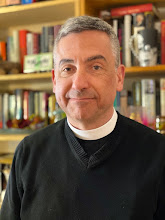

 Posts
Posts

