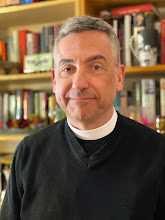
Sunday, October 22, 2023

It All Belongs to God


St. Thomas’ Episcopal Church, Owings Mills MD
October 22, 2023

Year A, Proper 24: The Twenty-First Sunday after Pentecost – Green Team Sunday
Exodus 33:12-23
Psalm 99
1 Thessalonians 1:1-10
Matthew 22:15-22

It All Belongs to God

Well, like many of you I’m sure, during this tragic and dangerous time, I’ve been praying extra-hard for peace – somehow, peace – in the Middle East.
And, with so much suffering out there, I have also been trying my best to be extra-thankful for the good stuff going on here at St. Thomas’, God’s abundant blessings that cascade upon us each and every day.
There’s the stunning beauty of our campus, of course, especially these days as the leaves shade into gold and red before they fall to the ground, doing their part to prepare for the new life of spring.
And I have some big news! We have back-to-back baptisms coming up! Next Sunday, young Nathan, and then the following Sunday not quite so young Sean, will plunge into the holy water, dying with Christ and, like a green shoot breaking through the spring soil, they will rise again to new life.
Right here, God will make an unbreakable, indissoluble bond with Nathan and Sean – a bond stronger than anything, stronger even than death itself.
You know that I can’t wait!
Also, if you’re keeping track at home, we are now halfway through “wedding season”. This afternoon, right here, Remington Brooks and Courtney DeVeau will make some big promises to each other, pledging to give one another mutual joy. It will be a joyful celebration and we are all invited.
Last Sunday afternoon a bunch of us spent an hour or so hiking through the Irvine Nature Center, led most of the way by our intrepid young parishioner, Brendan. We admired the beauty of that place and along the trail we even encountered a garter snake, who, frankly, did not seem to appreciate all the attention.
But out of all the recent events here, the one I keep returning to the most is the Newcomers Reception we held last Saturday afternoon, up the road at the Rectory.
It was such a great event.
God has blessed us with so many wonderful newcomers, so many people who have quickly grown to love this place and are already enriching our common life in really meaningful ways.
Naturally, the newcomers had never been to the Rectory before. In fact, most of them hadn’t even known where or what it was.
Longtime parishioners know that the Rectory is an awfully nice house, surrounded by beautiful grounds. Certainly, Sue and I never imagined that we would live in such a grand place.
Anyway, a couple of the newcomers were wide-eyed and kind of exclaimed when they came into the house.
One person looked around in wonder and asked me, “Is this all yours?”
Well, actually, no, not really.


One of the gifts of being a priest is that there are lots of reminders that many have come before me and done their best for the church and then handed it off to the next person.
For example, I see the portraits of four of my predecessors each time I go in and out of my office.
And although you have done so much to make us feel at home – and we do - living in church housing also reminds us that the Ellises and the Baxters and many others have made a home here for a time and then passed it on to others.
And someday Sue and I will do the same.
And, while you may not get reminded quite so often, this is true for all of us.
No matter whose name is on the deed or the mailbox, no matter what lines we draw on a map, no matter whose flag flutters in the breeze, none of this is really ours.
It all belongs to God.
And, as Frances Horich writes so beautifully in this week’s stewardship reflection, God simply asks us to be good stewards – to care for all that we have been given and then hand it off to those who come next, hopefully a little better than we found it. 
It all belongs to God.

In today’s gospel lesson we are still in the midst of the conflict between various religious leaders and Jesus – an ongoing conflict that we’ve been hearing about for the last few weeks.
Next up today are the Pharisees, a group within Judaism, usually depicted in the gospels as opponents of Jesus.
Right from the start, Matthew sets a negative tone, writing that the Pharisees “went and plotted to entrap Jesus in what he said.”
The Pharisees may have indeed been trying to trip up Jesus but it’s also possible that they sincerely wanted to know what Jesus thought about a particularly thorny issue among the Jews of the first century: paying taxes to the Roman emperor – paying taxes to the often brutal regime that occupied their land.
And really, this tax question is part of a larger issue that continues to vex us to this day: how to balance our civic responsibilities with our religious beliefs and obligations.
Our consciences and our courts continue to wrestle with these questions, and probably always will.
Well, whatever their motives, Jesus has no trouble answering the Pharisees:
“Give…to the emperor the things that are the emperor’s, and to God the things that are God’s.”
Left unsaid, of course, is that, in reality, the emperor – Caesar – has nothing that is his own. No matter his great wealth and his exalted titles, despite all that tax money, he will exit life with nothing, leaving behind all that he thought he possessed, leaving behind the legacy, for better or worse, of the life that he lived.
It all belongs to God.

Here at St. Thomas’, today is Green Team Sunday, a chance for us to hear about the work we are doing to be good stewards of this beautiful campus, and to learn ways that we can better care for God’s earth in our everyday lives.
I’m so grateful to the Green Team and especially its co-chairs, Donna Eden and Leslie Steele.
Leslie, by the way, is still technically a newcomer, although that’s easy to forget, since she and her intrepid son Brendan have become such familiar presences around here and have already contributed so much to our community.
Which brings me back to the Newcomers Reception.
As I said earlier, I was struck by how the newcomers already love this place, already seem quite at home here.
Obviously, that really speaks to the quality of the welcome they’ve received.
Those of you who have been here a long time, you have a strong sense of responsibility for this place.
You care about St. Thomas’ very deeply.
Honestly, it’s one of the things that drew me to you.
But it’s a sense of responsibility, not ownership.
Around here, there is a real joy in welcoming new people, sliding down the pew to make room for others, delight as people take their first steps over the well-worn threshold, adding their hopes and sorrows to the prayers offered here by so many generations.
Especially considering the grim state of the world, it is a great blessing and comfort that so many of you are such good stewards, caring so much for this church, but always remembering that, just like our homes, just like the whole world, it’s not really ours.
It all belongs to God.
Amen.

Sunday, October 15, 2023

Rejecting Idolatry, Choosing Loving Service


St. Thomas’ Episcopal Church, Owings Mills MD
October 15, 2023

Year A, Proper 23: The Twentieth Sunday after Pentecost – Outreach Sunday
Exodus 32:1-14
Psalm 106:1-6, 19-23
Philippians 4:1-9
Matthew 22:1-14

Rejecting Idolatry, Choosing Loving Service

This past week, I have been so disoriented by the dramatic contrast between our life together here at St. Thomas’ and what’s going on out there in the world.
Here, we have so much good stuff going on. 
Last Sunday, we had a joyful Blessing of the Animals service, with a couple of dozen happy barking dogs and one probably less than thrilled cat.
And just yesterday, we had the second session of a lively and thoughtful book study – and a bunch of parishioners and preschool families went to First Fruits Farm and helped to bag 33,000 pounds of potatoes (!) that will feed the poor – and, later in the day, the rectory was filled with parishioners who came to our Newcomers Reception.
But out there, it has been a heartbreaking, terrifying, and infuriating week.
Sometimes I think we really have seen it all – that we have grown numb to violence and suffering.
But the surprise attack by Hamas on Israel was truly shocking – shocking in its horrific brutality – and also shocking because so many of us, including many Israelis, had placed so much confidence in their surveillance and defense abilities.
And now, Israel is in the midst of a furious response, which may or may not be effective but is already causing even more suffering and death for innocent people just trying to get by in Gaza, in what was already an awful situation.
The outbreak of war in the Middle East has overshadowed suffering elsewhere – for example, thousands were killed in an earthquake in Afghanistan – and also the steady drumbeat of violence continues closer to home, including shootings at both Bowie State and Morgan State – bringing fear and bloodshed once again to places of learning.

Well, what might today’s readings say to us in these days of trouble?
Today’s parable from Jesus is a tough one – one that doesn’t make much sense if we assume that the king is a stand-in for God.
No, this king sounds just like the kind of king that people in the ancient world would have known well – the kind of dictator that we find all too often in the world today – vengeful and placing a very low value on life.
Not properly dressed for the wedding? You are cast into the outer darkness!
Yes, unfortunately, we know the type.
And then there’s today’s first lesson, the familiar story of the Golden Calf.
The people of Israel are out in the wilderness and Moses has been up on that mountain an awfully long time and it sure seems like God isn’t really coming through for God’s people.
What has God done for us lately, anyway?
So, you know, why don’t we make ourselves a statue and worship it?
The people think to themselves, times are tough, so let’s live like everybody else and bow down before an idol and see if that works.
Bad idea.
You may have seen on the news that, in an effort to prevent future violence, the leadership of Morgan State is looking to fence in much of their campus.
It’s not my place to second-guess their decision – it’s a heavy responsibility to keep a campus safe. But the truth is that desperate and determined people usually find a way.
Walls and gates often fail, as Israel has learned so painfully.
And, I will say this – it is not an option for the church to build a kind of wall or gate to protect ourselves from the suffering of the world.
No, just the opposite.
We are called to reject idolatry – the idolatry of violence – the idolatry of hate - even the idolatry of our own safety.
Instead, we are meant to stand beside the suffering, offering loving service to and with people in need.
No matter what is going on out there, we are called to be a servant church, to bring some of the good stuff from in here to people out there.
And that’s why we celebrate Outreach Sunday today – this is why we have invited some of our ministry partners to speak with us today.
The prophets envisioned that someday we – all of us - would lay down our weapons and live together in peace.
When I look out into the world, that vision sure seems like a fantasy.
But when I look closer to home, when I look around here, I think, we are on our way.
So, with God’s help, may we continue to reject idolatry and instead choose loving service.
Amen.


Sunday, October 08, 2023

"Rebuild My Church"


St. Thomas’ Episcopal Church, Owings Mills MD
October 8, 2023

Year A, Proper 22: The Nineteenth Sunday after Pentecost
Exodus 20:1-4, 7-9, 12-20
Psalm 19
Philippians 3:4b-14
Matthew 21:33-46

“Rebuild My Church”

In today’s gospel lesson, we pick up right where we left off last week.
The conflict between the religious leaders and Jesus continues.
If you were here last week, you may remember that the “Chief Priests and elders” asked Jesus about the source of his authority. 
Who or what gave Jesus this power to teach and heal?
Who or what gave Jesus the right to challenge the official religious authorities?
Jesus responds to the questioning religious leaders by bringing up a touchy subject: John the Baptist.
The people had no trouble recognizing John as the real deal but the religious leaders, not so much.
And the same was true for Jesus – people knew that Jesus was teaching like no one they had ever seen or heard - people knew that Jesus was healing like no one they had ever seen or heard.
But, the religious leaders, not so much.
Today, as the conflict between the religious leaders and Jesus continues, Jesus offers a parable – and not a particularly subtle parable, at that.
It’s a parable that tells the history of religious leaders rejecting God’s prophets, religious leaders even rejecting God’s Son – and that rejection leads to dire circumstances for the religious leaders who were sure that they knew God so very well.

So, no surprise, as a religious leader myself, this ongoing conflict between the religious leaders and Jesus makes me… uncomfortable. 
And, actually, the ongoing conflict between the religious leaders and Jesus should probably make all of us churchgoers at least a little uncomfortable.
How often do we miss signs of God at work around us?
How often do we miss God at work in and through seemingly unlikely people?

Well, 800 years ago, in the central Italian region of Umbria, quite a few people saw God at work in and through a seemingly unlikely person: Francis of Assisi.
Born in probably 1181, Francis grew up in a well-to-do family – his father was a prosperous cloth merchant.
In his youth, Francis liked the usual things for his time, place, and class: the songs of the troubadours, the ideals of chivalry, and the supposed glory of battle.
But after being held for a year as a prisoner of war, Francis began to change.
Or, God began to change Francis.
Francis felt called to follow Jesus as closely as he could, determined to give away all of his possessions and live in holy poverty, to preach peace and love and forgiveness to both people and animals, to radically trust that God would provide all that he really needed.
Early on during his time of transformation, Francis was praying alone in a falling down chapel – the Chapel of San Damiano. While he was praying, he heard Jesus call to him. The Lord said:
“Francis, Francis, go and repair my church which, as you can see, is falling into ruins.”
At first, Francis interpreted this call as a “Buildings and Grounds” issue. 
We know all about that!
So, Francis began to literally repair that dilapidated chapel. 
But later, Francis came to understand that Jesus was calling him to something more.
You see, the church of Francis’ time had grown wealthy, corrupted by worldly power. 
Many in the church had forgotten – or had chosen to forget – Jesus’ way of loving service.
Francis, and the men and women who followed in his footsteps, rebuilt the church not with stone and mortar, and not even by criticizing the religious authorities of that time.
No, Francis and his followers simply rebuilt the church with love - love for God’s people – love for all of God’s creatures.
Francis and his friends trusted that Jesus is the cornerstone, and upon that sure foundation they rebuilt – or renewed – a church of love and service.

Renewal is an ongoing task, of course.
It won’t be news to you that today the Church is in desperate need of renewal.
So many dismiss the Church as corrupt, irrelevant, closed-minded, and abusive.
And, let’s be honest, considering how so many religious leaders and self-professed Christians have behaved, who can blame people for seeing the Church this way?
So, while we may not be able to hear him quite as clearly as Francis did, Jesus is calling to us here today: “Rebuild my church.”
And, right here and now at St. Thomas’, I see so many you, each in your own way, answering that call and following the way of Jesus, the way of Francis:
Offering love to everyone, especially the poor and suffering.
Devoting so much time, talent, and treasure to serving others.
Caring for our little corner of the earth, and the creatures who depend on it.

Yes, the great rebuilding – the holy renewal – of the Church is underway.
With God’s help, may we continue to follow the way of Jesus and Francis. 
In a world that is so broken and fearful, may we be instruments of God’s peace.
Amen.


Sunday, October 01, 2023

The Blessing of Humility


St. Thomas’ Episcopal Church, Owings Mills
October 1, 2023

Year A, Proper 21: The Eighteenth Sunday after Pentecost
Exodus 17:1-7
Psalm 78:1-4, 12-16
Philippians 2:1-13
Matthew 21:23-32

The Blessing of Humility

Most of you know that before I was a priest I was a history teacher.
(I know that most of you know that because I’ve mentioned it to you like a hundred times already!)
Growing up, I hadn’t really thought about becoming a teacher, hadn’t planned on it. Instead, I sort of fell into teaching.
After I graduated from college, I wasn’t sure what I wanted to do. I had considered graduate school but it seemed unwise to devote so much time and money to more studying when I was still so up in the air about my future.
So, to give myself some time, and because pretty much all I really knew was the classroom, near the end of the summer I applied for and got a job, teaching eighth graders at a local Catholic grammar school.
And so began seventeen years of teaching, while I figured out what I really wanted to be when I grew up!
I was aware that I got the job because the principal was getting desperate and I guess I seemed presentable enough. I knew nothing about teaching, aside from having watched and listened to teachers for almost my whole life.
(I actually didn’t take my first Education course until after I started teaching.)
So, I approached teaching by imitating my favorite teachers and hoped for the best.
In those early insecure days and years, I remember being very concerned that I come across as knowledgeable and competent. It really bothered me when students would ask a question that I couldn’t answer – and it’s entirely possible that early on I fudged a little, trying to look like I knew more than I actually did.
But, over time – probably with experience and through learning – I came to understand that school was not supposed to be a kind of “brain dump” from teacher to student – that teachers didn’t have to be – and really shouldn’t be – know-it-alls.
No, instead the best teachers are lifelong learners – people open enough and humble enough to keep learning, to learn from their students.
That kind of mutual learning happens all the time in our wonderful preschool that we celebrate today – our magical school where our bright and curious children ask thoughtful questions and give unexpected answers that get their teachers looking at the world with new insights and renewed wonder.
The blessing of humility. 

Like many of you I’m sure, this past week I read a lot about the great Brooks Robinson, Mr. Oriole, the Human Vacuum Cleaner, Hall of Fame third basemen, considered by many to be the best to ever play that position.
One thread that ran through all of the remembrances of Brooks was the fact that, as a great a player as he was, he was an even greater man.
And what made him truly great was his humility – never boastful about his own amazing accomplishments, he spent decades attending countless community events, donating his awards to support various charities (There’s a famous photo of Brooks posing with all of his 16 Gold Glove awards but they had to create replicas because he had given so many of them away).
He signed his autograph whenever and wherever someone asked for it, and he introduced himself to strangers even though certainly everybody in Baltimore knew who he was.
The stories go on and on. 
There are lots of great ballplayers but this is why so many parents named their kids Brooks.
The blessing of humility.

It may sound strange, but our God is a humble God.
Or, if you don’t want to go that far, at the very least, we know that God is willing to humble God’s Self.
God could have come among us with thunder and lightning, with dazzling displays of divine power, but instead God comes among us in and through Jesus of Nazareth, a human being just like us, born to people who were quite ordinary, or, at least so they seemed.
From the earliest days, those who followed the way of Jesus picked up on this blessing of humility.
In fact, in today’s lesson from the Letter to the Philippians, Saint Paul quotes what is probably a very early Christian hymn:
“(Christ Jesus) who, though he was in the form of God, did not regard equality with God as something to be exploited, but emptied himself, taking the form of a slave, being born in human likeness. And being found in human form, he humbled himself and became obedient to the point of death, even death on a cross.”
The blessing of humility.
And Jesus, the humble Son of God, he was open to all sorts of people – was delighted by all kinds of people – tax collectors, Gentile women who stood up for themselves and their children, his own often bumbling and confused disciples – Jesus the humble Son of God was open to all sorts of people, with one glaring exception:
The religious people who thought they had God all figured out – the holy know-it-alls who could not, or would not, see God at work all around them.
And we certainly hear these know-it-alls missing the point in today’s gospel lesson.
Jesus has been performing all sorts of signs and teaching unlike anyone has ever heard.
Jesus has also directly challenged some of the practices in the Temple, overturning tables and chasing out the moneychangers – and so the “Chief Priests and elders” ask him, “By what authority or you doing these things and who gave you this authority?”
In his usual way, Jesus doesn’t answer directly.
Instead, Jesus brings up a touchy subject: John the Baptist.
You see, the religious authorities hadn’t accepted John the Baptist (and, to be fair, the feeling seems to have been mutual!).
But, although the Baptist hadn’t received an official seal of approval, the people, well, they recognized John’s authority and power all right, flocking to the banks of the River Jordan to repent, and get dunked, and begin anew.
So when Jesus asks the religious leaders about the source of John’s authority, they are stuck and can only answer, “We do not know.”
Which, who knows, for these leaders, that just might be the beginning of humility.

I’ve told you before that I believe that the church – especially our church – has a special vocation.
We are one of the very few places left where people from lots of different backgrounds – where people young and old and in-between – can be together, celebrate together, serve together, and love one another.
With God’s help and a healthy dose of humility, we can learn from one another.
We can learn from our youngest children, from our preschoolers and kindergartners, as they ask their innocent questions and give their wonderfully creative answers.
We can learn from our youngest parishioners as they come bounding up to the altar rail, sticking out their hands to receive the Good Stuff, the Best Food of All.
We can learn from those of us in the middle, navigating a rapidly changing world, often caring for both parents and children.
And we can learn from the old, not dismissing them as out of touch but opening our ears and hearts to receive a lifetime of hard-earned wisdom.
That is our special vocation – and our special gift.
And, thanks be to God, it can all be ours, if only we accept the blessing of humility.
Amen.


Sunday, September 24, 2023

Rooted in Abundance


St. Thomas’ Episcopal Church, Owings Mills MD
September 24, 2023

Year A, Proper 20: The Seventeenth Sunday after Pentecost
Exodus 16:2-15
Psalm 105:1-6, 37-45
Philippians 1:21-30
Matthew 20:1-16

Rooted in Abundance

I don’t know about you but I’m a public radio fan.
Pretty much whenever I’m driving, I usually turn on WYPR and listen to their news and talk programs. I even like hearing the traffic reports. When I first moved here I had no idea about the places they were talking about, but now I do.
On Friday morning as I was running my day off errands, I had the radio on as usual and listened to the news – and also the annual fall pledge drive.
I thought about how for every pledge drive they have to come up with a different slogan or angle – it must be a challenge. 
This year they are suggesting that we can become part of the WYPR “family” by becoming what they call a “sustaining member.”
I was thinking about all of this when I remembered that here at St. Thomas’ today is Stewardship Sunday – the official start of our fall stewardship campaign – which is, in part, an effort to encourage all of us to give as generously as we can to support this church that we love so much.
But, for the church, stewardship is much more than fundraising – it’s really about gratitude – gratitude to God for the many, many blessings we have received. And stewardship is also about generosity – how do we respond generously to the God who has been so generous with us.
Just like public radio, each year we offer a different theme – this year’s is “Rooted in Abundance” – and whoever is preaching on Stewardship Sunday is tasked with somehow presenting stewardship in a way that captures people’s imaginations and moves our hearts.
One way to do that is by coming up with an example of a time when we have given from our hearts and our wallets – to recall a joyful time when our generosity has echoed God’s great generosity.
Gosh, I don’t know, can anyone think of a time like that?
Well, most of you know where I am going with this. Last Sunday was officially Renewal Sunday but, honestly, we could have just as accurately called it Stewardship Sunday.
My goodness – talk about abundance!
I’ve been floating all week.
Now, going into Renewal Sunday, I was pretty sure it was going to be a good day but nothing prepared me for just how wonderful it was. If you weren’t here last week, or even if you were, I strongly encourage you to watch – and listen to - the video of the 10:00 service on our website.

        https://www.stthomaschurch.us/sermons/september-17-2023/
        But, for now, a quick recap:
Our Senior Warden Jesse Van Geison and I spoke about an important and challenging and emotional topic – the plan to remember and re-member the North Cemetery and the enslaved people and their descendants who are buried out there – resting in sacred ground, just outside our churchyard wall.
Your response has been deeply moving and encouraging. Some of you have expressed relief and gratitude that we are addressing this part of our history and others have been fascinated to learn a little of this previously unknown story and eager to learn more.
Our choir – oh man, our choir – our choir always does a beautiful job but last week was… transcendent. And it was so gratifying to know that the congregation was moved by what they – you – heard – so moved, in fact, that applause broke out!
And then, with our hearts full of the finest spiritual food, most of us made our way over to the Parish Hall for a fine lunch of fried chicken and sides and delicious desserts – including, of course, soft-serve, with optional sprinkles, from the ice cream truck.
With a big smile, one newcomer joked that if we have the ice cream truck every week, he will become a member of our church!
That’s the kind of challenge I can get behind!
But we weren’t just here to enjoy good food and fellowship.
St. Thomas’ the Servant Church swung into action – writing more than 50 personal thank you notes to teachers at Owings Mills Elementary School – assembling 150 beauty and wellness bags with all sorts of treats for guests at the Community Crisis Center (I think this is my favorite – to give people who are struggling not just the basics but something nice, something to make life just a little bit sweet. Just beautiful.).
We created 20 celebration packages with all sorts of good stuff that the principal at OMES will give to Students of the Month and we assembled nearly 40 teacher appreciation bags – to thank teachers who work so hard in an ever more challenging profession.
So, that’s a lot, right?
And more than enough for one day.
But… that afternoon, the Orioles clinched a playoff spot and then managed yet another come-from-behind victory. I confess that I was following the game on my phone before the 5:00 service.
(Actually, a parishioner texted me, asking if I was going to delay the start of the service. I would never do that – of course not – but fortunately it wasn’t necessary anyway!)
So it was quite a day.
It’s kind of hard to describe exactly what it felt like.
But I imagine our Renewal Sunday was sort of like what the hungry and cranky Israelites in the wilderness experienced when the manna fell from heaven – this unexpected blessing – really not quite like anything they had ever seen or tasted before – this unexpected blessing filling them up for the journey ahead.
Or, maybe our Renewal Sunday was sort of like being one of the 5:00 workers in today’s parable.
No doubt they were grateful for the work but still had kind of low expectations – they only worked for a few minutes, after all. Yet, they received more than they would have dared to hope – more than they even deserved.
I love today’s parable - the Parable of the Laborers in the Vineyard.
I love it because, while sometimes we may not be exactly sure how Jesus’ first listeners heard his parables, in this case I am pretty certain that our reaction is exactly the same as people two thousand years ago.
The landowner gathers workers to work in his vineyard – he promised the first early morning group they would receive the “usual daily wage” and then he brought in another group at 9:00 and then another at noon and yet another at 3:00 and then, finally, he hired the last, probably pretty forlorn group, at 5:00.
Apparently, there were a lot of day laborers desperate for work – just like today.
Well, you remember what happened next.
The 5:00’ers are paid first – receiving the “usual daily wage” – a big surprise, I’m sure – a big surprise which got everybody else thinking that they were going to get a bit more – maybe a lot more - than the “usual daily wage.”
But instead, everyone received the same amount, and the early workers are unhappy – just as they would be unhappy today – just as we would probably be unhappy today.
“Not fair!” we would shout.
But the landowner is generous – sharing abundance - just as God is generous – sharing abundance with all of us.
I mean, seriously, go back and watch last week’s video.
Or, actually, just take a look around right now.
God has been so good to us here at St. Thomas’.
You might say that we are “rooted in abundance.”

“Rooted in Abundance” is this year’s stewardship theme but it’s also just the plain truth.
Thanks be to God, all of us here at St. Thomas’ – you and I – are rooted in abundance.
So my hope is that everyone who considers this old and holy place our spiritual home – whether you’ve been here “all day” or just arrived with the 5:00 crew – my hope is that all of us will give as generously as we can – give money, yes, please, but also give our hearts, just like we did on Renewal Sunday, just like we do around here all the time.
Giving thanks to God who has blessed us so extravagantly – seriously watch the video from last week – my hope is that all of us will give as generously as we can, giving thanks to God who has rooted us – who has rooted us so deeply – in abundance.
Amen. 

Sunday, September 17, 2023

Re-Membering


St. Thomas’ Episcopal Church, Owings Mills MD
September 17, 2023

The Sixteenth Sunday after Pentecost – Renewal Sunday
For the Mission of the Church I
Isaiah 2:2-4
Psalm 96:1-7
Ephesians 2:13-22
Luke 10:1-9

Re-Membering

I think I once admitted to you that, back when St. Thomas’ and Sue and I were discerning if we would come here and serve and live beside all of you, back when we were listening carefully to the Holy Spirit, we made a secret, clandestine visit to Owings Mills.
We wanted to see this community for ourselves and try to imagine ourselves living and working here.
So, on Friday, December 11, 2020 (I looked it up!), I picked up Sue after school and we drove down 95 and, for the first of many times, we exited onto the Beltway and made our way here – or, actually, to the Owings Mills Holiday Inn, to be precise.
The next morning – on what turned out to be a bleak and gray day - we were up and out early.
We went to Starbucks – yes, the old hole-in-the-wall one over in the shopping plaza on Reisterstown Road. We sat outside as we sipped our coffee, watching the people coming and going. Living in a place where there were lots of different kinds of people is important to us and so were glad to see the beautiful diversity of Owings Mills on early morning display.
And then, we headed over toward St. Thomas Lane. As we drove up this now oh-so-familiar road, we spotted the rectory and decided to take a chance and turned up the driveway for a closer look.
Could we imagine ourselves living in such a grand place, surrounded by what sure looked like our own personal park?
And then we continued our journey here, to church.
Fortunately, nobody was around that morning – we had the campus to ourselves.
I saw the Advent wreaths on the church door, with the pretty blue ribbons.
I didn’t know it, but Sue took a picture of me as I peered through those old clear windows, gazing into the empty church, seeing the bright, whitewashed walls, the quaint pews with their little doors, the monuments on the walls, etched and erected in loving memory of those who had gone before.
I tried to imagine my story becoming part of the St. Thomas’ story – the St. Thomas’ story becoming part of my story.
As we walked around the churchyard – Sam Shoemaker’s grave was much easier to find than I expected – as we walked around, we saw that this is a place of remembering.
A place of remembering.

Remembering means recalling the past, of course, but there’s another, less familiar, deeper meaning that I love.
Remembering can also mean re-membering.
When people or things have been broken, re-membering is gathering and reassembling the broken pieces.
Where there is division, re-membering is renewing – restoring – unity.
Re-membering.
You know, regardless of our particular beliefs, I think there is a human intuition that things are not the way they were meant to be.
Some Jewish mystics offered a vision of how everything seemed to go wrong, right from the first moment of creation.
These mystics suggest that God’s creative light was too strong for the vessels meant to carry it – so strong that, in the first moment, those vessels shattered, leaving sparks of God’s light scattered all over the broken creation.
And these mystics teach that our task is to gather up these sparks of divine light – to re-member – to reassemble the shattered creation, which we do through love and forgiveness, through good works – aiming to restore things to the way they were always meant to be, while recognizing that the cracks of the past will always remain.
In the Bible, of course, things go wrong practically from the start, too – when Adam and Eve mess up and things are never again the way they were meant to be.
But God doesn’t give up on us, doesn’t forget us. God goes right on remembering and re-membering us, until finally God comes among us in and through Jesus.
And, Jesus’ mission is all about re-membering, drawing the whole world to himself, transforming division into oneness. 
In Christ, there is no longer Jew or Greek, no longer slave or free, no longer male or female – in Christ there is no East or West, in him no South or North, but one great fellowship of love throughout the whole wide earth.
And so, St. Thomas’ is not only a place of remembering, not just a church that recalls the past – but we are also called to be a place of re-membering - Christ working through us to reassemble what has been broken, to reunite what has been divided – journeying together to the Kingdom of God, to the way things were always meant to be. 

Now, I could stand up here all day and talk about the many ways that, with God’s help, we have been re-membering:
Greeting people who have been away from our community for a while, and welcoming people as they step over that well-worn threshold for the first time. 
Rebuilding our programs for children and youth and young adults, signaling that they are of infinite value to God and us, and so very loved.
Being even more of a servant church, giving so generously to our Afghan friends, the guests at the Community Crisis Center and Paul’s Place, and supporting our neighbors at Owings Mills Elementary School.
Truly, this is a place of remembering and re-membering.
And now, I believe that God is calling us to a challenging and also beautiful task of remembering and re-membering.
For several years, a couple of parishioners wondered about the handful of gravestones that are located north of the churchyard wall – the monuments that many of us pass on our way from the parking lot to the church and back again.
After asking around about these graves and getting a variety of uncertain answers, they discovered the truth. It’s right there on page 321 in the official history of our church: that strip of land, north of the churchyard wall, had been used as what was called the “Colored Cemetery” – a burial ground for enslaved people and their descendants, especially the Breckinridge family.
In fact, Mary Breckinridge was the last person to be buried out there.
In 2012. 
For the past year or more, the wardens, vestry, and I have spent a lot of time learning about, and reflecting on, what we’ve been calling the North Cemetery.
The vestry voted unanimously to commission a brilliant researcher and genealogist named Malissa Ruffner to learn as much as she could about the history of that piece of land and the people who are buried there.
She produced a fascinating report that tells a complex tale of interconnected families and the division and distribution of parcels of land.
It seems clear that this particular piece of land was chosen for burials because of its proximity to the sacred space of St. Thomas’. But, one of the biggest surprises was that the North Cemetery did not come into the church’s possession until quite late – it was offered as gift in 1931 but, for whatever reason, not accepted until 1954.
In addition to commissioning Malissa Ruffner’s report, the vestry also unanimously voted to create a committee to formulate a plan for how we might respond to what we have learned.
How might we remember this part of our story?
And how might we re-member the North Cemetery and the people buried there?
And so the members of what we call the Cemetery Unity Committee – parishioners Betsy Baetjer, Annette Brown, Shyla Cadogan, Bob Kenyon, Cassandra Naylor, Frances Rockwell, Tuck Washburne, Senior Warden Jesse VanGeison, and I – have been meeting and have begun formulating a proposal – a plan that will enclose the North Cemetery, treating it as the sacred space it has always been, and using design elements that will unite it to the rest of the cemetery.
There will also be a memorial listing the names of the additional people we have learned are buried there, and acknowledging that there are others whose names will remain unknown to us, though never forgotten by the God who remembers us all. 
Our aim is to remember – and to re-member.

In Malissa Ruffner’s report there is passing mention of the fact that one of my predecessors hired out an enslaved man named Nick. Nick’s owner got the money, not Nick, of course.
Not shocking, but I found it painful to read and hard to accept.
But, here’s the thing: I’m not guilty of anything done by my predecessors.
And we are not guilty of anything done by our spiritual ancestors - or even our literal ancestors.
But we – you and I - are responsible for what we do here and now.

As you would guess, I have spent a lot of time thinking and praying about all of this.
Some people who knew what was coming have asked me if I was nervous to speak with you today.
And while I have certainly felt the weight of trying to find the right words, I haven’t been nervous - because what I dared to imagine nearly three years ago on a gray December morning has come to pass.
Just like you, my story has become part of the story of this place – this old and holy church, filled with so many sacred hearts - this old and holy church, built on the sure foundation of Christ.
Our stories have been woven together.
And now, God calls us as God has always called us – to remember the past – to re-member the broken and divided pieces of creation – and to renew our little corner of God’s world.
Amen.


Sunday, September 10, 2023

No Outcasts


St. Thomas’ Church, Owings Mills MD
September 10, 2023

Year A, Proper 18: The Fifteenth Sunday after Pentecost
Exodus 12:1-14
Psalm 149
Romans 13:8-14
Matthew 18:15-20

No Outcasts

I don’t want to sound super-obvious but, whether we like it or not, change is inevitable.
For example, Sue and I have lived in Owings Mills for just a little over two years now, and we’ve already witnessed a good bit of change around here. Sometimes we joke about it – how, we remember the days when we didn’t have that fancy stand-alone Starbucks with the drive-thru on Reisterstown Road. No, “back in the day,” all we had was that little hole-in-the-wall Starbucks, nearly hidden away in the shopping plaza.
People don’t know how good they have it today!
Or, in a reverse example, we’ll sometimes say that we go so far back that we remember the big stand-alone Barnes and Noble in Pikesville – shaking our heads in mock sadness at how people new to the community only know the nice, but smaller, scaled-down bookstore.
And, don’t get us started on the new townhouses going up near the bottom of St. Thomas Lane!
What in the world is happening to our neighborhood!?!
Yes, change is inevitable – in our communities – and also in the church.
You “Cradle Episcopalians” of a certain vintage have certainly witnessed a great deal of change in the church.
There was the ordination of women, the introduction of the “new” Prayer Book in 1979 and the “new” Hymnal in 1982.
There has been the open inclusion of LGBTQ people and the blessing of their love.
And, especially the last few years, the Episcopal Church has begun the hard but necessary work of facing the racism that stains our history and still lurks in the church today.
        A lot of change. Not always easy.
I once heard a bishop say that he believed that there had been two most transformative changes in the Episcopal Church in his lifetime.
One was the reintroduction of the ancient practice of Exchanging the Peace, which he believed went a long way to “warming up” the church, reminding us that we gather here each Sunday not so much as individuals but as a community – a community, no matter our differences, whose members, with God’s help, should be at peace with one another.
I’m not a “Cradle Episcopalian” but I can tell you that more than twenty years ago, when Sue and I first walked into St. Paul’s Episcopal Church, we were so impressed by – nearly overwhelmed by, really - the Exchange of Peace.
That first Sunday we kind of hung back shyly, staying in our pew, giving some  hesitant waves, shaking a few hands, watching in wonder as most parishioners were out in the aisle greeting each other with hugs and smiles and laughter, like they hadn’t seen each other in forever, seemingly genuinely delighted to see each other.
That Exchange of Peace made a huge impression on us.
And soon enough, just a Sunday or two later, we joined the crowd out in the aisle.
Years later, when I was Rector of that church, a longtime parishioner complained that I was not giving enough time for the Peace.
When I asked why she that felt that way, she said, because she wasn’t able to get around and greet every single person in church!
How about that?

The bishop said that the second most transformative change that he had witnessed was the introduction of the Baptismal Covenant in the 1979 Book of Common Prayer.
Back in the 1970s, the people crafting the new prayer book wanted to restore Baptism back to the center of church life (hooray!) and they also recognized that we could no longer assume that people knew the basics of Christianity.
And so the Baptismal Covenant, which begins with an ancient statement of belief, the Apostles’ Creed, and then concludes with five promises – promises that we renew each time there is a Baptism – promises that we will renew next week during Renewal Sunday.
With God’s help, we promise to gather here in our community – we promise to turn away from sin and ask forgiveness when we mess up – we promise to proclaim the Good News by word and example – to seek and serve Christ in all persons, loving our neighbor as our self – we promise to strive for justice and peace among all people, respecting the dignity of every human being.
Truly awesome promises – promises we can only hope to keep with God’s help – promises that did and do transform us – promises that continue to transform the church, getting us to think and act bigger and bolder, and with much more love.
As Paul wrote to church in Rome, “Owe no one anything, except to love one another.”
The idea – the hope - is that these changes to our worship – exchanging peace and making big Baptismal promises – they should change the way the church lives, not just when we’re in here, but when we’re out there, too.
For example, when Edmond Browning was elected Presiding Bishop of the Episcopal Church in 1985, just a few years after the new Prayer Book, he boldly declared, “I want to be very clear – this church of ours is open to all – there will be no outcasts – the convictions and hopes of all will be honored.”
“This church of ours is open to all – there will be no outcasts.”

In today’s gospel lesson, at first glance it might seem that Jesus does not agree with Bishop Browning.
In this excerpt from the Gospel of Matthew, Jesus lays out some procedures for the church – what to do when a member of the church sins against us.
First, we are to point out the fault privately.
If that doesn’t work, then we bring one or two others along with us to serve as witnesses.
And if that doesn’t get us anywhere, then we tell the whole church.
Jesus wants us to give the offending party every possible opportunity to repent and change their ways.
But, if they won’t listen to church, Jesus says, “then let such a one be to you as a Gentile and a tax collector.”
Which sure sounds like: “That’s it, we’ve tried everything we can think of, nothing worked, so we’re done with you!”
It sounds like they’re being cast out.
Or, it would sound like that, except we know that Jesus cast out demons, not people.
We know that Jesus offered healing to Gentiles, to non-Jews like the Canaanite woman’s tormented daughter, who we heard about just a few weeks ago.
And we know that Jesus hung around with tax collectors, people who were despised by their own people as traitors and cheats – not only did Jesus spend time with tax collectors, he invited one of them, Matthew, to be one of the Twelve, one of his closest followers.
So, when Jesus says, “…then let such a one be to you as a Gentile and a tax collector,” I don’t hear, “cast them out!”
No, I hear Jesus saying, “Don’t ever give up on them! Always keep the door open to healing and renewal.”
No outcasts.

We live in a time of great change, changes much bigger, deeper, and more challenging than a fancy new Starbucks or a scaled-back Barnes and Noble, or a couple of townhouses getting built down the road.
But no matter the changes ahead in our community and here in the church - my prayer is that we will continue to open wide our doors, to welcome and serve everyone.
During this time of change and renewal, my prayer is that we here at St. Thomas’ will continue to embrace one another – everyone - in peace and love. 
Who knows, maybe we’ll even give a little more time for the Peace!
My prayer is that we will try our best, with God’s help, to live out our Baptismal promises – that we will continue to build a church that is open to all, where there are no outcasts.
Amen.

Sunday, September 03, 2023

The Parable of the Orioles (Or, Remaining Faithful to the Hard Road)


St. Thomas’ Episcopal Church, Owings Mills MD
September 3, 2023

Year A, Proper 17: The Fourteenth Sunday after Pentecost
Exodus 3:1-15
Psalm 105:1-6, 23-26, 45c
Romans 12:9-21
Matthew 16:21-28

The Parable of the Orioles (Or, Remaining Faithful to the Hard Road)

Sometimes – like when I stop by the Parish Hall early on a Wednesday morning and visit with our faithful parishioners making a mountain of sandwiches for the guests at Paul’s Place, or like the other day when I turned into the driveway and saw the sunlight bouncing off the copper trim of our beautiful new church roof – sometimes I ask myself, how did I get here?
In a very real way, that journey began way back in the 1950s, with a Jersey City boy – my future dad - a baseball fan, who rooted for the almost always terrible St. Louis Browns.
Why the Browns, you ask? I really don’t know. I think maybe he just liked rooting for the underdog.
And when the Browns moved to Baltimore in 1954, my loyal dad transferred his allegiance to the Orioles, and has rooted for them ever since.
As many of you know, when my sister and I were little, my family made several trips to Baltimore, which always included at least one Orioles game at Memorial Stadium.
In those days, the players just parked in a lot with no apparent security and, if you got there early enough, you could see them making their way into the stadium, and you could ask them for autographs.
One time, when I was eleven years old, my dad and I were at the stadium early and we spotted the star pitcher Jim Palmer, who happened to be carrying his laundry. I went over and shyly asked for his autograph. He was about to sign but then saw a bunch of other kids running over. He said since he was pitching he couldn’t sign for everybody. So, instead, I got a picture of Number 22, his laundry, and me – a future, though very different, number 22!
    (I'm the 22nd Rector of St. Thomas'.)
    (And, by the way, Palmer pitched 12 innings that game. Something that would NEVER happen today!)


Although those family trips eventually came to an end, I never lost my interest in, and fondness for, Baltimore.
Fast forward to seven years ago.
I suggested to my dad that we should restart the tradition of those trips, head down to Baltimore, take in an Orioles game or two, see some of the sights, and, most important, spend some time together.
And that’s what we did – and it was great – and became an annual event.
Unfortunately, the revival of our family tradition coincided almost exactly with the total collapse of the Orioles - and the start of the long and painful rebuild.
As many of you know only too well, the new General Manager of the Orioles, Mike Elias, formulated a plan of rebuilding – or, you might say, renewal – that involved nurturing young minor league talent while leaving the major league team – and its fans – to suffer so many ugly and painful defeats.
During our annual trips to Camden Yards, my father and I saw quite a few terrible games, usually surrounded by delighted fans of the opposing team.
It was a hard road, one that required a lot of faith in the plan and a lot of hope for the future. And I bet there was a lot of pressure to choose a quicker and easier way, but, to their credit, the Orioles stuck with this hard road and now are experiencing the joy of new life – so much joy and so much new life that well over 100 of us have signed up to go to the last home game of the season, including that Jersey City kid who transferred his allegiance to the team way back in 1954!
The Parable of the Orioles.
Or, remaining faithful to a hard road.

If you were here last week, you may remember that Peter had a really good day.
Jesus asked his disciples, “But who do you say that I am?”
And to everyone’s surprise, including probably his own, it’s Peter – well-meaning but often bumbling Peter – who gets the answer exactly right:
“You are the Messiah, the Son of the Living God,” he says.
Jesus then goes on to declare that Peter will be the first stone upon which he will build the Church.
A really good – even glorious - day for Peter.
And now in today’s gospel lesson we pick up right where we left off last week, and, well, Peter’s glory sure is fleeting, isn’t it?
Jesus describes to his disciples the hard road ahead, “that he must go to Jerusalem and undergo great suffering…and be killed, and on the third day be raised.”
Peter is so shocked, devastated, by what Jesus has said that he is unable to hear the promise of new life – the promise of renewal – at the end of the hard road.
Instead, all Peter can hear is that Jesus – his friend and Lord, the one he had correctly identified as Messiah and Son of God – all Peter can hear is suffering and death.
And so Peter takes Jesus aside and he “rebukes” Jesus.
“God forbid it, Lord! This must never happen to you!”
That’s a strong word, “rebuke.”
And Jesus, he goes right back at Peter – rebuking Peter in return – “Get behind me, Satan! You are a stumbling block to me; for you are setting your mind not on divine things but on human things.”
Strong words that must have been hard for Peter to hear.
Why did Jesus rebuke Peter?
Probably because Jesus really was tempted to turn away from the hard road of his mission, the hard road of the cross.
And, knowing what we know is waiting for Jesus in Jerusalem, who could blame him?
But, Jesus knows that the hard road, as painful as it is, is the only way to Easter, the only way to new life, the only way to renewal.
And so, Jesus remains faithful to the hard road.

As we know from the life, death, and resurrection of Jesus – and also from the Parable of the Orioles – there are no shortcuts on the hard road to new life, the hard road to renewal.
People in recovery know this – the Twelve Steps that our friend Sam Shoemaker helped to develop – they chart a hard road: recognizing and admitting powerlessness over addiction, taking a searching and fearless moral inventory, making amends for the wrongs done – a hard road indeed.
And our own Baptismal Covenant is a hard road – proclaiming the Good News by word and example – seeking and serving Christ in all persons, loving our neighbor as our self, striving for justice and peace among all people, respecting the dignity of every human being – a hard road, a road we can travel only with God’s help.
A hard road that we are often tempted to turn away from.
A hard road that, fortunately, we travel together.

In two weeks, we will celebrate Renewal Sunday.
It will be a time to celebrate how far we have traveled on our hard road – how we have done the hard work of rebuilding and enhancing both our buildings and our ministries – how we have done the hard work of opening our doors to absolutely everybody – how we have done the hard work of looking beyond our church walls, looking for those who need our help, looking for those we may have forgotten.
Renewal Sunday won’t be the end of the road – just another step in our journey.
And if we remain faithful to the way of Jesus, the road ahead will no doubt be hard.
We may be tempted to turn away.
But, as Jesus – and, yes, the Orioles - teach us, the hard road is the only way to new life, the only way to renewal.
Amen.