Grace Episcopal Church, Madison NJ
March 18, 2012
Year B: The Fourth Sunday in Lent
Numbers 21:4-9
Psalm 107:1-3, 17-22
(Ephesians 2:1-10)
John 3:14-21
Shadows and Light
Well, today the rose vestments make one of their two annual appearances. It’s the Fourth Sunday in Lent, called Laetare Sunday from a Latin word meaning joy. We take a break from the Lenten purple because today is the Sunday when we begin to glimpse the joyful light of Easter that’s already shining for us all.
And today, for the second Sunday in a row, we heard a passage from the Gospel of John. The Fourth Gospel was almost certainly the last of the gospels to be written, probably completed right around the end of the First Century – several generations after the earthly lifetime of Jesus.
It’s a gospel that was written at a particularly difficult time for the still-young Jesus Movement.
Of course, Jesus and all of his first followers were Jews. And they lived during a time when, like today, Judaism was very diverse. In fact, it makes more sense to talk about “Judaisms” than one monolithic faith.
Thanks to that Jewish diversity of belief, in the earliest years after the Resurrection it seems that for the most part the followers of Jesus were able to continue worshipping along with their fellow Jews, more or less harmoniously.
But, as the years went by the situation began to change.
First, thanks to the missionary work of Paul and others, non-Jews became an increasingly larger part of the Jesus Movement.
Second, among the followers of Jesus there was increasing use of God language for Jesus. There were lots of supposed messiahs around in the First Century, but to talk about Jesus as in some sense divine was tough for the staunchly monotheistic Jews to accept as permissible, even under the big tent of Judaism.
Finally, the destruction of the Jerusalem Temple by the Romans in the year 70 led Jews by necessity to reflect on what their faith would look like without its center of worship and sacrifice.
In a nutshell, the Gospel of John was written during the challenging, frightening and - for some - exciting time when the followers of Jesus were beginning to develop a new religion, Christianity.
Many Jews, of course, never accepted Jesus as the messiah.
But, others did, and maybe some of them now had to part from their fellow Jews.
And then there were those people who were in-between – those who were attracted to Jesus and his message – but had only partial faith. They were not quite able to fully commit to Jesus.
In the Gospel of John, these in-between people with partial faith are represented by Nicodemus – the Pharisee, the Jewish leader full of questions who comes to see Jesus in the shadowy darkness of night.
In today’s gospel lesson we heard the end of Jesus’ conversation with Nicodemus.
In the gospel, written during a time of parting, Nicodemus’ choice is described as one between light and darkness.
Now today, when many Christians have made progress toward respecting the Jews as our elder sisters and brothers in faith, we wouldn’t describe Nicodemus’ choice quite that way.
Today, Nicodemus doesn’t represent the Jews of two thousand years ago. No, today Nicodemus represents us – people who just by being here today have said that we’re drawn to Jesus and to his message. Yet, like Nicodemus, our faith is still only partial – we’re not quite ready to commit fully to Jesus and his message.
Like Nicodemus, we’re somewhere in the shadowy place between light and darkness.
Sometimes, with God’s help, we move out of the shadows and closer to the light of Christ.
That’s why we’re here today. Week after week we come here to move closer to the light when we confess our sins and receive absolution, when we hear God’s Word, when we’re moved by sacred music, when we pray, when we exchange the peace, and most especially when we take the Body and Blood of Christ into our bodies and into our heats.
With God’s help, we move closer to the light when we reach out to someone in need, when we invite someone to cry on our shoulder, when we share with others the blessings that we’ve received.
Now, I know only too well that the church isn’t perfect and can sometimes get in the way of the light, but I think for the most part this is one of the places where it is easiest to move out of the shadows and into the light of Christ.
But, moving out of the shadows and into the light gets a lot more difficult when we leave this place and go out through the church doors and into the world.
During Lent (in the Rite II services) we’ve been saying the second post-communion prayer, in which we pray, “And now, Father, send us out to do the work you have given us to do, to love and serve you as faithful witnesses of Christ our Lord.”
Much easier said than done. Once we go through those doors and into the “real world” it’s very easy to move away from the light of Christ and deeper into the shadows.
Maybe hearing the Ten Commandments each Sunday has reminded us of how often we move away from the light and deeper into the shadows.
For those of you in school, that move to the shadows might be cheating on a quiz or test or copying someone else’s homework. Or it might be being mean to a kid who’s different.
In our lives maybe we move away from the light into the shadows by gossiping about or ridiculing others, or holding a grudge, or spreading falsehoods or demonizing people who think or act differently than we do.
Many of us may have experienced the tension between light and shadow at work. That’s probably always true, but maybe especially during tough economic times. There’s so much pressure – we depend on our income to support ourselves and maybe other people count on us, too. Every workplace has its own culture – and often that culture can easily and subtly draw us from the light of Christ and deeper into the shadows.
In my own case, I remember very well how toxic the faculty room could be – a very shadowy place of cynicism and negativity – a place to dwell on grievances – the administration is stupid, the kids don’t want to learn, the parents are a pain, …
The faculty room often provided a toxic environment where it was hard to love and serve God as a faithful witness of Christ our Lord.
I’m sure many of you heard about or read the op-ed piece in the New York Times written by a mid-level executive at a major investment bank and published on the day of his resignation.
In the ultimate example of burning one’s bridges, this 12-year veteran of the firm criticized a corporate culture that he described as “toxic” and “destructive.”
He bemoaned a shadowy culture that puts profit over anything and everything, including, he claimed, the best interests of the firm’s clients – clients who were often ridiculed by his colleagues.
Now, I have no idea if his description of that company’s culture is accurate and fair. And I have no idea how much his description fits the rest of the financial industry or the corporate world.
My sister works for an investment bank and of course a good number of parishioners here work or have worked in the financial industry. Although, obviously, these companies exist to make money, I can’t really imagine my sister or our parishioners putting profit above integrity.
But, I can imagine the pressures created by a high-stakes and cutthroat culture and I can imagine how working in that toxic environment could make it very hard indeed to love and serve God as faithful witnesses of Christ our Lord.
No matter who we are, for all of us, it’s an everyday struggle not to get drawn into the shadows.
The struggle between shadow and light doesn’t only take place at work. It can happen any place and any time.
Recently in the Wall Street Journal there was a story about an experiment conducted by a computer security firm. They deliberately “lost” 50 smart phones in various American and Canadian cities. But these were not just any phones – they were loaded with tracking software that allowed the company to follow what the people who found the phones did with them.
First, the good news: it was actually hard to lose the phones because often people would say something when they saw a phone “accidentally” left behind.
But, it’s a discouraging story because, whether out of curiosity or malice or both, 89 percent of the finders clicked on something they shouldn’t have – like banking information, passwords, and photos.
And only 50 percent of the finders offered to return the phones, although the security company made it very easy to find the owner’s contact information.
Faced with a choice, most of the people who found the phones chose to retreat into the shadows rather than move towards the light. In the language of the Gospel of John, they loved darkness rather than light.
So, today, like Nicodemus long ago, you and I are in-between people, living in the shadowy place between darkness and light.
Like Nicodemus, we’re drawn to Jesus and to his message. Yet, like Nicodemus, for most of us our faith is still only partial – we’re not quite ready to commit fully to Jesus and his message.
So we keep coming here week after week, stepping into the light of Christ to be fed through Word and sacrament - fed to give us the strength that we’ll need when we walk through those doors and out into a world where it’s so easy to be drawn into the shadows.
We keep coming here week after week to be reminded that God so loves our shadowy world that he gave – and continues to give – his Son, so that everyone who believes in him may not perish but have eternal life.
We keep coming here on Laetare Sunday and week after week because it’s here that - with God’s help - we move out of the shadows.
We keep coming here week after week because it’s here that we glimpse the joyful light of Easter that’s already shining for us all.
Amen.
Sunday, March 18, 2012
Sunday, March 04, 2012
Consequences
Grace Episcopal Church, Madison NJ
March 4, 2012
Year B: The Second Sunday in Lent
Genesis 17:1-7, 15-16
Psalm 22:22-30
(Romans 4:13-25)
Mark 8:31-38
Consequences
Today we have a tough gospel lesson – Jesus’ prediction of his own fate, an unusually heated exchange between Jesus and Peter, and Jesus’ frank assessment of the costs – the consequences - of discipleship.
But, just before the passage I read Jesus asks his disciples the famous question, “Who do people say that I am?”
Considering all that Jesus had been doing up to that point, it’s no surprise that people were talking about him. Of course, the disciples (and probably Jesus himself) had heard this buzz, which could be summed up with the question, “Who is this guy?”
So the disciples were ready with answers to Jesus’ question: some say John the Baptist, others say Elijah, and others say one of the other prophets. Those answers probably reflect actual speculation about Jesus’ identity.
Then Jesus asks his disciples a harder question: “But, who do you say that I am?”
Maybe surprisingly, it’s Peter who speaks up – and gets the answer right – saying, “You are the Messiah.”
Now, this would seem to be a moment to give Peter a little encouragement – a little congratulations on recognizing who Jesus is – maybe even a little critique of the others for being too slow or timid to recognize and proclaim Jesus’ identity.
Instead, Jesus simply warns them not to tell anyone about him.
The command to keep silence is the first sign that Jesus understands only too well the consequences of being the messiah.
After that little exchange about Jesus’ identity – the little question and answer session when Peter shined as the star student – we move right on to today’s gospel lesson.
For the first time in the Gospel of Mark, Jesus offers a prediction of the consequences of being the messiah. He predicts great suffering, rejection, death, and then, finally, resurrection.
That prediction must have been difficult for the disciples to hear. They had sacrificed much to follow Jesus, and they had probably hurt and disappointed the people closest to them – think for poor Zebedee sitting in his fishing boat watching his sons James and John – watching his future - walk off with this charismatic teacher and healer from Nazareth.
The disciples followed Jesus, tried to make sense of his teachings and had come to love him.
It must have been devastating and just about unbearable to hear him predict his suffering and death. Rising from the dead – if they could even hear that - must have sounded pie in the sky. Suffering, rejection and death must have sounded all too real.
Now, It probably would have been a good time for the disciples to stay quiet. But, Peter – oh, Peter, things had been going so well – instead takes Jesus aside and we’re told rebukes him. That “rebuke” is a strong word – in the gospels it’s usually reserved for addressing demons and evil forces.
Mark doesn’t tell us what Peter says. In the Gospel of Matthew we’re told that Peter says to Jesus, “God forbid it, Lord; this must never happen to you.”
Whatever Peter says, it seems that he is unable or unwilling to accept the consequences that lie ahead for Jesus.
Jesus then does some rebuking of his own and turns the whole exchange into a “teachable moment” by looking at all of the disciples when he tells Peter, “Get behind me, Satan!”
It’s a strong reaction with harsh language and it only makes sense if in truth Jesus was tempted by what Peter was saying - if he was really tempted to avoid the consequences of his identity and his mission. Last Sunday we heard Mark’s account of Jesus’ temptations in the wilderness, but there’s no reason to believe that all of his temptations were put to rest after those forty days.
There were consequences for Jesus and there are consequences for us when we choose to follow Jesus. And it’s tempting to try to avoid those consequences.
Jesus then calls to the crowd who were with the disciples and very frankly says that if they – if we – want to follow Jesus then we need to take up our own cross and to give away our lives for Jesus and for his mission.
There were consequences for Jesus and there are consequences for us when we choose to follow Jesus.
Sometimes we get that. But, most of the time we’re like Peter. It’s scary to think about the consequences of really following Jesus.
Unfortunately, sometimes, with the best intentions, the Church tries to make it easy to follow Jesus. Sometimes we try make following Jesus convenient and easy - a choice without any real or costly consequences.
There were consequences for Jesus and there are consequences for us when we choose to follow Jesus.
Two examples from just this weekend at Grace Church:
Yesterday morning we had the first meeting of the group reading Barbara Brown Taylor’s book, Speaking of Sin.
We spent some time talking about the general confession of sin that we say here in church. Most of the time, but not during Lent, the confession is tucked into the middle of the service – the last section before we get to the peace – what some of us might think of as sort of the intermission of the service.
Anyway, in our conversation yesterday we wondered, because the words are so familiar for most us, how much thought do we really give to what we’re saying. Do we really stop and think about the specific ways we’ve sinned against God and our neighbor? Are we truly sorry? Do we really humbly repent?
On the one hand, we talked about the comfort of saying the same words as everyone else – the recognition that on a fundamental level we’re all the same – that we’ve all sinned against God in thought, word and deed, by what we have done and what we have left undone.
But, then we wondered if our general confession sort of lets us off the hook too easily for the consequences of our sin. We wondered if the nice and easy general confession and absolution lets us off the hook from the hard consequence of facing up to our wrongdoing, the hard consequence of asking God personally for forgiveness, the hard consequence of asking forgiveness from the people we’ve wronged, and the hard consequence of true repentance, of truly changing our ways.
There were consequences for Jesus and there are consequences for us when we choose to follow Jesus.
A second example from this weekend: Diane Riley was our featured parishioner at our First Friday potluck supper. She spoke to us about her work as Director of Advocacy at the Community FoodBank of New Jersey. She shared with us depressing statistics about the depth of hunger in the US and here in New Jersey – and about the massive amounts of food provided by the Community FoodBank and other providers like Trinity Lutheran Church in Dover, which is supported by Grace Church.
Listening to her, I felt indicted. Maybe some of you who were there felt the same way.
The cabinets and the refrigerator over at Surrey Lane are pretty full. I enjoy eating out. Sometimes I remember to pick up something at the supermarket for the Food for Friends barrel and sometimes I don’t. I try to work at the soup kitchen the few times a year that we’re there to provide lunch. And that’s about the grand total of what I, a supposed follower of Jesus, do to feed the hungry.
Maybe some of you do better. I hope so.
But, all of us need to ask ourselves are there any real and costly consequences of following Jesus if we are willing and able to tolerate hunger right here in our communities – let alone in faraway lands?
Those are just two examples of ways that maybe we try to avoid the consequences of following Jesus.
We try to avoid those consequences because most of the time we’re like Peter. It’s scary to think about what it will really cost us to follow Jesus.
But, in his shock and fear, maybe Peter wasn’t able to hear everything that Jesus predicted for himself. Peter definitely heard the suffering, rejection, and death.
But, at least this time, Peter seems to have missed or not understood the ultimate consequence for Jesus – the ultimate consequence for us - resurrection to new life.
So, yes, the consequences of really following Jesus can be scary and costly. The consequences will involve sacrifice and suffering. But the ultimate consequence is resurrection to new life – the ultimate consequence is the joy of Easter morning.
Jesus said, “For those who want to save their life will lose it, and those who lose their life for my sake, and for the sake of the gospel, will save it.”
Amen.
March 4, 2012
Year B: The Second Sunday in Lent
Genesis 17:1-7, 15-16
Psalm 22:22-30
(Romans 4:13-25)
Mark 8:31-38
Consequences
Today we have a tough gospel lesson – Jesus’ prediction of his own fate, an unusually heated exchange between Jesus and Peter, and Jesus’ frank assessment of the costs – the consequences - of discipleship.
But, just before the passage I read Jesus asks his disciples the famous question, “Who do people say that I am?”
Considering all that Jesus had been doing up to that point, it’s no surprise that people were talking about him. Of course, the disciples (and probably Jesus himself) had heard this buzz, which could be summed up with the question, “Who is this guy?”
So the disciples were ready with answers to Jesus’ question: some say John the Baptist, others say Elijah, and others say one of the other prophets. Those answers probably reflect actual speculation about Jesus’ identity.
Then Jesus asks his disciples a harder question: “But, who do you say that I am?”
Maybe surprisingly, it’s Peter who speaks up – and gets the answer right – saying, “You are the Messiah.”
Now, this would seem to be a moment to give Peter a little encouragement – a little congratulations on recognizing who Jesus is – maybe even a little critique of the others for being too slow or timid to recognize and proclaim Jesus’ identity.
Instead, Jesus simply warns them not to tell anyone about him.
The command to keep silence is the first sign that Jesus understands only too well the consequences of being the messiah.
After that little exchange about Jesus’ identity – the little question and answer session when Peter shined as the star student – we move right on to today’s gospel lesson.
For the first time in the Gospel of Mark, Jesus offers a prediction of the consequences of being the messiah. He predicts great suffering, rejection, death, and then, finally, resurrection.
That prediction must have been difficult for the disciples to hear. They had sacrificed much to follow Jesus, and they had probably hurt and disappointed the people closest to them – think for poor Zebedee sitting in his fishing boat watching his sons James and John – watching his future - walk off with this charismatic teacher and healer from Nazareth.
The disciples followed Jesus, tried to make sense of his teachings and had come to love him.
It must have been devastating and just about unbearable to hear him predict his suffering and death. Rising from the dead – if they could even hear that - must have sounded pie in the sky. Suffering, rejection and death must have sounded all too real.
Now, It probably would have been a good time for the disciples to stay quiet. But, Peter – oh, Peter, things had been going so well – instead takes Jesus aside and we’re told rebukes him. That “rebuke” is a strong word – in the gospels it’s usually reserved for addressing demons and evil forces.
Mark doesn’t tell us what Peter says. In the Gospel of Matthew we’re told that Peter says to Jesus, “God forbid it, Lord; this must never happen to you.”
Whatever Peter says, it seems that he is unable or unwilling to accept the consequences that lie ahead for Jesus.
Jesus then does some rebuking of his own and turns the whole exchange into a “teachable moment” by looking at all of the disciples when he tells Peter, “Get behind me, Satan!”
It’s a strong reaction with harsh language and it only makes sense if in truth Jesus was tempted by what Peter was saying - if he was really tempted to avoid the consequences of his identity and his mission. Last Sunday we heard Mark’s account of Jesus’ temptations in the wilderness, but there’s no reason to believe that all of his temptations were put to rest after those forty days.
There were consequences for Jesus and there are consequences for us when we choose to follow Jesus. And it’s tempting to try to avoid those consequences.
Jesus then calls to the crowd who were with the disciples and very frankly says that if they – if we – want to follow Jesus then we need to take up our own cross and to give away our lives for Jesus and for his mission.
There were consequences for Jesus and there are consequences for us when we choose to follow Jesus.
Sometimes we get that. But, most of the time we’re like Peter. It’s scary to think about the consequences of really following Jesus.
Unfortunately, sometimes, with the best intentions, the Church tries to make it easy to follow Jesus. Sometimes we try make following Jesus convenient and easy - a choice without any real or costly consequences.
There were consequences for Jesus and there are consequences for us when we choose to follow Jesus.
Two examples from just this weekend at Grace Church:
Yesterday morning we had the first meeting of the group reading Barbara Brown Taylor’s book, Speaking of Sin.
We spent some time talking about the general confession of sin that we say here in church. Most of the time, but not during Lent, the confession is tucked into the middle of the service – the last section before we get to the peace – what some of us might think of as sort of the intermission of the service.
Anyway, in our conversation yesterday we wondered, because the words are so familiar for most us, how much thought do we really give to what we’re saying. Do we really stop and think about the specific ways we’ve sinned against God and our neighbor? Are we truly sorry? Do we really humbly repent?
On the one hand, we talked about the comfort of saying the same words as everyone else – the recognition that on a fundamental level we’re all the same – that we’ve all sinned against God in thought, word and deed, by what we have done and what we have left undone.
But, then we wondered if our general confession sort of lets us off the hook too easily for the consequences of our sin. We wondered if the nice and easy general confession and absolution lets us off the hook from the hard consequence of facing up to our wrongdoing, the hard consequence of asking God personally for forgiveness, the hard consequence of asking forgiveness from the people we’ve wronged, and the hard consequence of true repentance, of truly changing our ways.
There were consequences for Jesus and there are consequences for us when we choose to follow Jesus.
A second example from this weekend: Diane Riley was our featured parishioner at our First Friday potluck supper. She spoke to us about her work as Director of Advocacy at the Community FoodBank of New Jersey. She shared with us depressing statistics about the depth of hunger in the US and here in New Jersey – and about the massive amounts of food provided by the Community FoodBank and other providers like Trinity Lutheran Church in Dover, which is supported by Grace Church.
Listening to her, I felt indicted. Maybe some of you who were there felt the same way.
The cabinets and the refrigerator over at Surrey Lane are pretty full. I enjoy eating out. Sometimes I remember to pick up something at the supermarket for the Food for Friends barrel and sometimes I don’t. I try to work at the soup kitchen the few times a year that we’re there to provide lunch. And that’s about the grand total of what I, a supposed follower of Jesus, do to feed the hungry.
Maybe some of you do better. I hope so.
But, all of us need to ask ourselves are there any real and costly consequences of following Jesus if we are willing and able to tolerate hunger right here in our communities – let alone in faraway lands?
Those are just two examples of ways that maybe we try to avoid the consequences of following Jesus.
We try to avoid those consequences because most of the time we’re like Peter. It’s scary to think about what it will really cost us to follow Jesus.
But, in his shock and fear, maybe Peter wasn’t able to hear everything that Jesus predicted for himself. Peter definitely heard the suffering, rejection, and death.
But, at least this time, Peter seems to have missed or not understood the ultimate consequence for Jesus – the ultimate consequence for us - resurrection to new life.
So, yes, the consequences of really following Jesus can be scary and costly. The consequences will involve sacrifice and suffering. But the ultimate consequence is resurrection to new life – the ultimate consequence is the joy of Easter morning.
Jesus said, “For those who want to save their life will lose it, and those who lose their life for my sake, and for the sake of the gospel, will save it.”
Amen.

Friday, March 02, 2012
A Little Lent and A Little Easter
Grace Episcopal Church, Madison NJ
March 2, 2012
Funeral Sermon for Mary Elizabeth Frain
Lamentations 3:22-26, 31-33
Colossians 3:12-17
John 14:1-6a
A Little Lent and A Little Easter
The lesson I just read is an excerpt from the Evangelist John’s account of the Last Supper. Jesus has gathered for a final meal with his closest friends and disciples. They are all beginning to face what they probably had been denying for a long time: their friend, their teacher, the one they had recognized as the messiah – Jesus – was going to die.
In John’s account, Jesus tries to reassure his friends – and tries to reassure us here today - do not let your hearts be troubled – in my Father’s house there are many dwelling places – I go to prepare a place for you – I will come again and will take you to myself – and you know the way.
But, all these centuries later we can still hear and maybe even feel the sadness and the bewilderment in Thomas’ question, “Lord, we do not know where you are going. How can we know the way?”
And Jesus replies, “I am the way and the truth and the life.”
In 21st Century America many of us do a pretty good job of denial – denial of our total dependence on God and denial of the fact that we will all die.
One of the ways that the Church tries to push back at our denial is the season of Lent – the season that offers 40 days of preparation for Easter - the season that began last week on Ash Wednesday.
Ash Wednesday is a tough day – it’s a day that offers a dramatic reminder of our dependence on God and a very tangible reminder of our mortality.
If you’ve ever received ashes you know how powerful getting that smudge on your forehead can be.
Imposing ashes is one of the most moving experiences I have as priest.
As we mark people with an ashen sign of the cross, we say, “Remember that you are dust, and to dust you shall return.”
It’s especially moving when I really know the person – have some sense of their struggles and hopes. It’s especially moving to mark the ashes on babies and young children – a reminder that even those so young and so full of life and promise will not be exempt from death. And it’s especially moving to mark the ashes on someone gravely ill – someone who is in the thin space between this life and the life to come.
So we begin Lent with ashes. No surprise, Lent is a somber season – a season when we Christians are invited to take stock of our lives, to reflect on the ways that we have turned away from God and the ways that we have been less than loving toward our brothers and sisters.
Lent is a season when we are called to sacrifice. Some people - maybe some of you here today – give up something like chocolate, or wine with dinner, or maybe smoking. It’s a season when we sacrifice something unnecessary – or even hazardous – in order to remind ourselves of our total dependence on God.
Here in church we do our best to create an environment that sets an appropriate tone. The shiny silver and brass are put away, replaced by wood and pottery. We priests wear somber purple vestments. And we don’t say the great celebratory word Alleluia until the Easter Vigil.
But, although each year we go through this somber exercise of Lent, we Christians know how the story ends.
It would be morbid – and, frankly, unbearable – to impose ashes on all those foreheads if we didn’t know how the story ends.
We know how the story ends. We know that after the forty days of Lent, after we remember the sacrifice and death of Jesus on the cross on Good Friday, after we remember the time when all hope seemed to be lost – we know that the story ends with the great celebration of Easter.
The silver and brass will be back, we’ll be in white vestments, and the Alleluias will ring out as we celebrate Christ’s resurrection, as we remember that in the words of Lamentations, “the steadfast love of the Lord never ceases, his mercies never come to an end.”
On Easter, we’ll celebrate God doing what God always does – turn death into new life.
You know, in some ways a Christian funeral is like a little Lent and a little Easter.
We begin today with a little Lent. We come here this morning with sadness that we will not see Mary again in this life. Although she lived a long, full life – a life with its share of pain and disappointment but mostly a life blessed with love and laughter – although she lived a long, full life, I know it still would be wonderful to have her with you even for just a little longer.
We begin today with a little Lent. We come here very much reminded of our mortality. And maybe that reminder is causing us to take stock of our own lives. If we were to die tomorrow, how would we be remembered? Would we be remembered as loving and generous people? Would we be remembered the way you remember Mary?
So, yes, today we begin with a little Lent. But, we know how the story ends.
We know how the story ends for Jesus. We know how the story ends for Mary. And we know how the story ends for us.
So, you may have noticed that we’re taking a break from Lent this morning and we’re celebrating a little Easter.
There’s no somber purple today – we’re decked out in our white vestments. And a little later there will even be some of those otherwise forbidden alleluias!
At the end of the service, during what’s called the Commendation, Lauren will read words that echo both the solemnity of Ash Wednesday and the joy of Easter.
She’ll say, “All we go down to the dust; yet even at the grave we make our song: Alleluia, alleluia, alleluia.”
So, today is a little Lent – a day to mourn the loss of a remarkable woman and maybe face some things about ourselves that we usually try to deny.
But, more importantly, today is also a little Easter – a day when we celebrate God doing what God always does, turn death into new life – new life for Jesus, new life for Mary - and new life for us all.
Alleluia, alleluia, alleluia!
Amen.
March 2, 2012
Funeral Sermon for Mary Elizabeth Frain
Lamentations 3:22-26, 31-33
Colossians 3:12-17
John 14:1-6a
A Little Lent and A Little Easter
The lesson I just read is an excerpt from the Evangelist John’s account of the Last Supper. Jesus has gathered for a final meal with his closest friends and disciples. They are all beginning to face what they probably had been denying for a long time: their friend, their teacher, the one they had recognized as the messiah – Jesus – was going to die.
In John’s account, Jesus tries to reassure his friends – and tries to reassure us here today - do not let your hearts be troubled – in my Father’s house there are many dwelling places – I go to prepare a place for you – I will come again and will take you to myself – and you know the way.
But, all these centuries later we can still hear and maybe even feel the sadness and the bewilderment in Thomas’ question, “Lord, we do not know where you are going. How can we know the way?”
And Jesus replies, “I am the way and the truth and the life.”
In 21st Century America many of us do a pretty good job of denial – denial of our total dependence on God and denial of the fact that we will all die.
One of the ways that the Church tries to push back at our denial is the season of Lent – the season that offers 40 days of preparation for Easter - the season that began last week on Ash Wednesday.
Ash Wednesday is a tough day – it’s a day that offers a dramatic reminder of our dependence on God and a very tangible reminder of our mortality.
If you’ve ever received ashes you know how powerful getting that smudge on your forehead can be.
Imposing ashes is one of the most moving experiences I have as priest.
As we mark people with an ashen sign of the cross, we say, “Remember that you are dust, and to dust you shall return.”
It’s especially moving when I really know the person – have some sense of their struggles and hopes. It’s especially moving to mark the ashes on babies and young children – a reminder that even those so young and so full of life and promise will not be exempt from death. And it’s especially moving to mark the ashes on someone gravely ill – someone who is in the thin space between this life and the life to come.
So we begin Lent with ashes. No surprise, Lent is a somber season – a season when we Christians are invited to take stock of our lives, to reflect on the ways that we have turned away from God and the ways that we have been less than loving toward our brothers and sisters.
Lent is a season when we are called to sacrifice. Some people - maybe some of you here today – give up something like chocolate, or wine with dinner, or maybe smoking. It’s a season when we sacrifice something unnecessary – or even hazardous – in order to remind ourselves of our total dependence on God.
Here in church we do our best to create an environment that sets an appropriate tone. The shiny silver and brass are put away, replaced by wood and pottery. We priests wear somber purple vestments. And we don’t say the great celebratory word Alleluia until the Easter Vigil.
But, although each year we go through this somber exercise of Lent, we Christians know how the story ends.
It would be morbid – and, frankly, unbearable – to impose ashes on all those foreheads if we didn’t know how the story ends.
We know how the story ends. We know that after the forty days of Lent, after we remember the sacrifice and death of Jesus on the cross on Good Friday, after we remember the time when all hope seemed to be lost – we know that the story ends with the great celebration of Easter.
The silver and brass will be back, we’ll be in white vestments, and the Alleluias will ring out as we celebrate Christ’s resurrection, as we remember that in the words of Lamentations, “the steadfast love of the Lord never ceases, his mercies never come to an end.”
On Easter, we’ll celebrate God doing what God always does – turn death into new life.
You know, in some ways a Christian funeral is like a little Lent and a little Easter.
We begin today with a little Lent. We come here this morning with sadness that we will not see Mary again in this life. Although she lived a long, full life – a life with its share of pain and disappointment but mostly a life blessed with love and laughter – although she lived a long, full life, I know it still would be wonderful to have her with you even for just a little longer.
We begin today with a little Lent. We come here very much reminded of our mortality. And maybe that reminder is causing us to take stock of our own lives. If we were to die tomorrow, how would we be remembered? Would we be remembered as loving and generous people? Would we be remembered the way you remember Mary?
So, yes, today we begin with a little Lent. But, we know how the story ends.
We know how the story ends for Jesus. We know how the story ends for Mary. And we know how the story ends for us.
So, you may have noticed that we’re taking a break from Lent this morning and we’re celebrating a little Easter.
There’s no somber purple today – we’re decked out in our white vestments. And a little later there will even be some of those otherwise forbidden alleluias!
At the end of the service, during what’s called the Commendation, Lauren will read words that echo both the solemnity of Ash Wednesday and the joy of Easter.
She’ll say, “All we go down to the dust; yet even at the grave we make our song: Alleluia, alleluia, alleluia.”
So, today is a little Lent – a day to mourn the loss of a remarkable woman and maybe face some things about ourselves that we usually try to deny.
But, more importantly, today is also a little Easter – a day when we celebrate God doing what God always does, turn death into new life – new life for Jesus, new life for Mary - and new life for us all.
Alleluia, alleluia, alleluia!
Amen.
Thursday, March 01, 2012
Re-Gifting
Grace Episcopal Church
Madison NJ
The Messenger
March 2012
Associate’s Message
Re-Gifting
Many of you know that a few years ago the structure of our annual parish meeting was changed to give time for Anne, Mary Lea and me to report on the highlights of our ministries during the previous year. I think that was a very positive change, not because I need another chance to speak to the parish, but because I never cease to marvel at the amazingly rich and creative work done by my colleagues and friends. I am always moved by the stories they tell, capturing a little of the crucial ministry that goes on largely hidden from view at choir practice, or in a Sunday school classroom or during one of the many events they devise and lead, especially for the children of Grace.
This year’s annual meeting presented me with a bit of a problem, though. I had only started back at Grace in mid-November, leaving me with very little material for my report. I also knew that in the latter part of the meeting there was going to be a frank and sober discussion about some longstanding and increasingly troubling parish financial issues. So, what should I say?
A few days before the meeting, I settled on the theme of gratitude. Of course, you can’t go wrong with gratitude! But, I was feeling particularly grateful to be back with all of you and to be working again with Lauren and my other friends and colleagues. Plus, as I flipped through the annual report, I was reminded of just how much we have to be thankful for – of all the many wonderful ministries that happen here and the talents and abundance we have been given. We have been given so many gifts!
The morning of the meeting one final idea popped into my head: God wants us to re-gift. In my remarks I wanted to make the point that usualy when we give someone a gift it’s hurtful if that person re-gifts what we have given to them. I made up a story about carefully choosing a sweater to give to Lauren for Christmas, only to later find that she had re-gifted my thoughtful gift to the clothing sale. Not a true story, though it got a big laugh at the meeting.
But, God’s different – God is all about gifts. God has given us everything that we have. It’s all gift! Moreover, God wants, hopes - even demands - that we re-gift. God calls each of us to re-gift what we have so generously been given.
Perhaps getting a little carried away, many of you will remember that I then challenged the parish to raise $4,000 in our “Souper Bowl” fundraiser on Super Bowl Sunday. I thought it was a doable goal but a challenging one, since we would not be receiving the matching grant that has been given in recent years. But, this would be a great opportunity to re-gift a little of what we have been given to some of the poorest and neediest people in our area, the people who are fed each day by the Community Soup Kitchen in Morristown.
Well, you know the rest of the story. The parishioners of Grace Church – you – came through with a whopping $5,460.50! After the 9:00 service on Super Bowl Sunday the Rite 13 youth group and I counted what had been collected so far, and, we had already achieved our original goal. The kids were so excited and amazed. I hadn’t thought of it beforehand, but what a lesson for them about the power and joy of generosity.
The Souper Bowl collection was a great example of re-gifting, of sharing with others even just a little of the abundant gifts we have received.
The season of Lent is a time when the Church invites and challenges us to focus on the ways that we have fallen short of living the loving and generous lives that God hopes and expects for us. During these forty days we are given a special opportunity to repent, to turn back to God and to turn back to our brothers and sisters. Many of us appropriately think of Lent as a time of self-denial, a time to give up chocolate or soda or smoking or something else that’s unessential, or even destructive, in our lives. In more recent times there has been an increased emphasis on “taking on” something for Lent – often a new ministry or spiritual practice. Again, this is certainly an appropriate way to mark the season, assuming that you can take on something that will help you and others and not just add one more burden to an already packed and stressful life.
Personally, while I may give up something and take something on during Lent, mostly I’m going to think of this as a special season of re-gifting. I’m going to try to use these days to reflect on all the good gifts that God has given me – my family and friends, meaningful and challenging work, and a comfortable life in a very pleasant community. And I’m going to look for ways to re-gift, maybe by dropping some cash into my “mite box” or in other unforeseen ways that God may have in mind.
I invite you to join me, since during Lent and in every season, we’re all called by God to re-gift.
Madison NJ
The Messenger
March 2012
Associate’s Message
Re-Gifting
Many of you know that a few years ago the structure of our annual parish meeting was changed to give time for Anne, Mary Lea and me to report on the highlights of our ministries during the previous year. I think that was a very positive change, not because I need another chance to speak to the parish, but because I never cease to marvel at the amazingly rich and creative work done by my colleagues and friends. I am always moved by the stories they tell, capturing a little of the crucial ministry that goes on largely hidden from view at choir practice, or in a Sunday school classroom or during one of the many events they devise and lead, especially for the children of Grace.
This year’s annual meeting presented me with a bit of a problem, though. I had only started back at Grace in mid-November, leaving me with very little material for my report. I also knew that in the latter part of the meeting there was going to be a frank and sober discussion about some longstanding and increasingly troubling parish financial issues. So, what should I say?
A few days before the meeting, I settled on the theme of gratitude. Of course, you can’t go wrong with gratitude! But, I was feeling particularly grateful to be back with all of you and to be working again with Lauren and my other friends and colleagues. Plus, as I flipped through the annual report, I was reminded of just how much we have to be thankful for – of all the many wonderful ministries that happen here and the talents and abundance we have been given. We have been given so many gifts!
The morning of the meeting one final idea popped into my head: God wants us to re-gift. In my remarks I wanted to make the point that usualy when we give someone a gift it’s hurtful if that person re-gifts what we have given to them. I made up a story about carefully choosing a sweater to give to Lauren for Christmas, only to later find that she had re-gifted my thoughtful gift to the clothing sale. Not a true story, though it got a big laugh at the meeting.
But, God’s different – God is all about gifts. God has given us everything that we have. It’s all gift! Moreover, God wants, hopes - even demands - that we re-gift. God calls each of us to re-gift what we have so generously been given.
Perhaps getting a little carried away, many of you will remember that I then challenged the parish to raise $4,000 in our “Souper Bowl” fundraiser on Super Bowl Sunday. I thought it was a doable goal but a challenging one, since we would not be receiving the matching grant that has been given in recent years. But, this would be a great opportunity to re-gift a little of what we have been given to some of the poorest and neediest people in our area, the people who are fed each day by the Community Soup Kitchen in Morristown.
Well, you know the rest of the story. The parishioners of Grace Church – you – came through with a whopping $5,460.50! After the 9:00 service on Super Bowl Sunday the Rite 13 youth group and I counted what had been collected so far, and, we had already achieved our original goal. The kids were so excited and amazed. I hadn’t thought of it beforehand, but what a lesson for them about the power and joy of generosity.
The Souper Bowl collection was a great example of re-gifting, of sharing with others even just a little of the abundant gifts we have received.
The season of Lent is a time when the Church invites and challenges us to focus on the ways that we have fallen short of living the loving and generous lives that God hopes and expects for us. During these forty days we are given a special opportunity to repent, to turn back to God and to turn back to our brothers and sisters. Many of us appropriately think of Lent as a time of self-denial, a time to give up chocolate or soda or smoking or something else that’s unessential, or even destructive, in our lives. In more recent times there has been an increased emphasis on “taking on” something for Lent – often a new ministry or spiritual practice. Again, this is certainly an appropriate way to mark the season, assuming that you can take on something that will help you and others and not just add one more burden to an already packed and stressful life.
Personally, while I may give up something and take something on during Lent, mostly I’m going to think of this as a special season of re-gifting. I’m going to try to use these days to reflect on all the good gifts that God has given me – my family and friends, meaningful and challenging work, and a comfortable life in a very pleasant community. And I’m going to look for ways to re-gift, maybe by dropping some cash into my “mite box” or in other unforeseen ways that God may have in mind.
I invite you to join me, since during Lent and in every season, we’re all called by God to re-gift.
Sunday, February 19, 2012
Focus
Grace Episcopal Church, Madison NJ
February 19, 2012
Year B: The Last Sunday after Epiphany
2 Kings 2:1-12
Psalm 50:1-6
(2 Corinthians 4:3-6)
Mark 9:2-9
Focus
Lately I’ve been having trouble with focus.
Part of my problem, frankly, has been a reluctance to admit that I’m getting older and that just as my hair is getting grayer and grayer, my eyes just aren’t working as well as they used to.
So, really out of vanity, I had resisted getting reading glasses until finally last week Sue got tired of watching me struggle to read tags on clothes or to read the small print on restaurant bills and dragged me not quite kicking and screaming to the drugstore to buy…these.
I noticed my sharpened focus right away when I read the newspaper. Then, after Sue left for her class, I picked up the book I had been reading in fits and starts – usually able to get through a few pages before my tired eyes would lead me to put it down and maybe turn on the computer or TV instead.
When Sue came home hours later I was still in the same spot on couch, happily reading away – with a renewed focus on my book.
But, usually it’s not that easy to solve the problem.
It’s hard to focus, isn’t it?
There’s so much going on – so many distractions.
First, there’s all that’s going on in the world and in our country. It’s hard to know what’s really important, what’s worth paying attention to and what we can safely ignore. How concerned should we be about the financial collapse of Greece or the possibility of Israel launching a preemptive strike on Iran? How much attention should we really be giving to a presidential election that’s still many months away? How much time should we spend trying to make sense of whether the economy is really improving or if statistics are really telling the full story? And then there’s all the time I spent this week reading about the sad life story of Whitney Houston…
Over the years I’ve occasionally made pastoral visits both in homes and hospitals where the TV seemed to be permanently set to cable news. I’m reminded of my grandfather who after he retired spent much of the last decades of his life sitting in the kitchen listening to round the clock news on 1010 WINS.
I wonder how he could really focus on what was most important when he kept hearing over and over about the terrible traffic near the Elmhurst gas tanks …just like I wonder how any of us can focus on what’s most important, when we’re distracted by the steady drumbeat of crisis that’s pounded out day after day by cable news.
It’s hard to focus, isn’t it?
It’s hard to focus on what’s most important because there’s so much stuff going on in our lives – and in the lives of the people we love most. When I hear about the complicated and demanding schedules of families in this church I’m amazed that parents and children don’t just collapse under the weight of so much to do. Then there’s all the stuff we worry about – for ourselves and others. There are the worries about health and employment. And there are the worries that somehow life has passed us by or is passing us by. There are the worries that somehow we’re missing the boat – that somehow we were meant to be more than we seem to be.
It’s hard to focus, isn’t it?
And then there’s so much going on here in church. I remember when Grace Notes was simply printed on a single tri-fold piece of paper. Don’t look at it during the sermon but today Grace Notes has evolved into a twelve page magazine jam-packed with information about all the good stuff coming up in Lent!
I’m glad to be at a busy church but it doesn’t always make it easy for me – and maybe for some of you – to stay focused on what’s most important.
I wonder if Jesus sometimes found it hard to focus.
Just about everything we know about Jesus’ earthly comes from the four gospels. This year we’ve been reading the Gospel of Mark, probably the earliest of the four, completed around the year 70.
Apparently Mark doesn’t know about or isn’t interested in Jesus’ birth and early life. Instead he jumps right in with John the Baptist preaching repentance in the wilderness.
You may remember near the start of the Epiphany season we heard what happened next: one day a grown-up Jesus appears and is baptized by John. And you may remember that Mark tells us that as Jesus came up out of the water “He saw the heavens torn apart and the Spirit descending like a dove on him. And a voice came from heaven, ‘You are my Son, the Beloved; with you I am well pleased.’”
And then Mark describes a dizzying series of events for Jesus: temptations in the wilderness, the calling of the first disciples, exorcisms and healings, debate with the Pharisees, teaching with parables, the miraculous multiplication of the loaves and fishes, and finally a growing realization that Jesus would pay for his mission with his life.
With all of that going on, I imagine at least sometimes it must have been hard for our brother Jesus – and certainly for the disciples - to focus on what was most important.
Fortunately, God wants to sharpen our focus.
And I think that’s what God was up to that day on the mountain when Peter, James and John saw Jesus wearing clothes of dazzling white - transfigured – transformed – before their very eyes.
I think that’s what God was up to that day on the mountain when Peter, James and John saw the transfigured – transformed – Jesus standing beside Elijah and Moses.
That day on the mountain God sharpened the focus of Peter, James and John – and maybe even the focus of Jesus. That day on the mountain God reminded them – and reminds us today – that God’s mission is transformation.
God’s mission is the transformation of the world into what it was always meant to be.
God’s mission is the transformation of all of us into what we were always meant to be.
God transforms us and transforms the whole world through the life, death and resurrection of Jesus.
At the Transfiguration, God now speaks so everyone can hear, “This my Son, the Beloved; listen to him!”
Jesus’ work began at his baptism.
And then after his Transfiguration – after his transformation - Jesus comes down off the mountain and takes up his difficult work with a new focus – a focus on the betrayal and suffering ahead – and a focus on the ultimate transformation that awaited him after his sacrifice on the cross.
All of these centuries later, and maybe especially in this time and place, there are so many distractions that make it hard for us focus on what’s most important.
We are coming to the end of the Epiphany season and are about to start Lent, but no matter the season, God wants to sharpen our focus on what’s most important.
God wants to sharpen our focus on our work that began – that begins – at our baptism.
God wants to sharpen our focus on what’s most important: God’s mission of transforming us and transforming the world.
So, I think that’s what God is up to when suddenly we get the urge to come back to church after having been away.
I think that’s what God is up to when something in a Scripture passage or a hymn or a prayer touches our hearts.
God wants to sharpen our focus.
That’s what God is up to when we know about people in need, like say those who are fed every day at a soup kitchen, and are moved to give and to serve.
That’s what God is up to when we realize that we love someone – a parent, a friend, a spouse, a child – more than we ever thought we could love anyone.
God wants to sharpen our focus.
That’s what God is up to when a person we’ve wronged forgives us or we’re able to forgive someone who has hurt us.
That’s what God is up to when we find the strength to love and the courage to hope.
God wants to sharpen our focus.
God’s mission is the transformation of the world into what it was always meant to be.
God’s mission is the transformation of all of us into what we were always meant to be.
God transforms us and transforms the whole world through the life, death and resurrection of Jesus.
And God continues that mission – God’s mission of transfiguration - God’s mission of transformation - right here and now, when we put on our spiritual glasses… and focus.
Amen.
February 19, 2012
Year B: The Last Sunday after Epiphany
2 Kings 2:1-12
Psalm 50:1-6
(2 Corinthians 4:3-6)
Mark 9:2-9
Focus
Lately I’ve been having trouble with focus.
Part of my problem, frankly, has been a reluctance to admit that I’m getting older and that just as my hair is getting grayer and grayer, my eyes just aren’t working as well as they used to.
So, really out of vanity, I had resisted getting reading glasses until finally last week Sue got tired of watching me struggle to read tags on clothes or to read the small print on restaurant bills and dragged me not quite kicking and screaming to the drugstore to buy…these.
I noticed my sharpened focus right away when I read the newspaper. Then, after Sue left for her class, I picked up the book I had been reading in fits and starts – usually able to get through a few pages before my tired eyes would lead me to put it down and maybe turn on the computer or TV instead.
When Sue came home hours later I was still in the same spot on couch, happily reading away – with a renewed focus on my book.
But, usually it’s not that easy to solve the problem.
It’s hard to focus, isn’t it?
There’s so much going on – so many distractions.
First, there’s all that’s going on in the world and in our country. It’s hard to know what’s really important, what’s worth paying attention to and what we can safely ignore. How concerned should we be about the financial collapse of Greece or the possibility of Israel launching a preemptive strike on Iran? How much attention should we really be giving to a presidential election that’s still many months away? How much time should we spend trying to make sense of whether the economy is really improving or if statistics are really telling the full story? And then there’s all the time I spent this week reading about the sad life story of Whitney Houston…
Over the years I’ve occasionally made pastoral visits both in homes and hospitals where the TV seemed to be permanently set to cable news. I’m reminded of my grandfather who after he retired spent much of the last decades of his life sitting in the kitchen listening to round the clock news on 1010 WINS.
I wonder how he could really focus on what was most important when he kept hearing over and over about the terrible traffic near the Elmhurst gas tanks …just like I wonder how any of us can focus on what’s most important, when we’re distracted by the steady drumbeat of crisis that’s pounded out day after day by cable news.
It’s hard to focus, isn’t it?
It’s hard to focus on what’s most important because there’s so much stuff going on in our lives – and in the lives of the people we love most. When I hear about the complicated and demanding schedules of families in this church I’m amazed that parents and children don’t just collapse under the weight of so much to do. Then there’s all the stuff we worry about – for ourselves and others. There are the worries about health and employment. And there are the worries that somehow life has passed us by or is passing us by. There are the worries that somehow we’re missing the boat – that somehow we were meant to be more than we seem to be.
It’s hard to focus, isn’t it?
And then there’s so much going on here in church. I remember when Grace Notes was simply printed on a single tri-fold piece of paper. Don’t look at it during the sermon but today Grace Notes has evolved into a twelve page magazine jam-packed with information about all the good stuff coming up in Lent!
I’m glad to be at a busy church but it doesn’t always make it easy for me – and maybe for some of you – to stay focused on what’s most important.
I wonder if Jesus sometimes found it hard to focus.
Just about everything we know about Jesus’ earthly comes from the four gospels. This year we’ve been reading the Gospel of Mark, probably the earliest of the four, completed around the year 70.
Apparently Mark doesn’t know about or isn’t interested in Jesus’ birth and early life. Instead he jumps right in with John the Baptist preaching repentance in the wilderness.
You may remember near the start of the Epiphany season we heard what happened next: one day a grown-up Jesus appears and is baptized by John. And you may remember that Mark tells us that as Jesus came up out of the water “He saw the heavens torn apart and the Spirit descending like a dove on him. And a voice came from heaven, ‘You are my Son, the Beloved; with you I am well pleased.’”
And then Mark describes a dizzying series of events for Jesus: temptations in the wilderness, the calling of the first disciples, exorcisms and healings, debate with the Pharisees, teaching with parables, the miraculous multiplication of the loaves and fishes, and finally a growing realization that Jesus would pay for his mission with his life.
With all of that going on, I imagine at least sometimes it must have been hard for our brother Jesus – and certainly for the disciples - to focus on what was most important.
Fortunately, God wants to sharpen our focus.
And I think that’s what God was up to that day on the mountain when Peter, James and John saw Jesus wearing clothes of dazzling white - transfigured – transformed – before their very eyes.
I think that’s what God was up to that day on the mountain when Peter, James and John saw the transfigured – transformed – Jesus standing beside Elijah and Moses.
That day on the mountain God sharpened the focus of Peter, James and John – and maybe even the focus of Jesus. That day on the mountain God reminded them – and reminds us today – that God’s mission is transformation.
God’s mission is the transformation of the world into what it was always meant to be.
God’s mission is the transformation of all of us into what we were always meant to be.
God transforms us and transforms the whole world through the life, death and resurrection of Jesus.
At the Transfiguration, God now speaks so everyone can hear, “This my Son, the Beloved; listen to him!”
Jesus’ work began at his baptism.
And then after his Transfiguration – after his transformation - Jesus comes down off the mountain and takes up his difficult work with a new focus – a focus on the betrayal and suffering ahead – and a focus on the ultimate transformation that awaited him after his sacrifice on the cross.
All of these centuries later, and maybe especially in this time and place, there are so many distractions that make it hard for us focus on what’s most important.
We are coming to the end of the Epiphany season and are about to start Lent, but no matter the season, God wants to sharpen our focus on what’s most important.
God wants to sharpen our focus on our work that began – that begins – at our baptism.
God wants to sharpen our focus on what’s most important: God’s mission of transforming us and transforming the world.
So, I think that’s what God is up to when suddenly we get the urge to come back to church after having been away.
I think that’s what God is up to when something in a Scripture passage or a hymn or a prayer touches our hearts.
God wants to sharpen our focus.
That’s what God is up to when we know about people in need, like say those who are fed every day at a soup kitchen, and are moved to give and to serve.
That’s what God is up to when we realize that we love someone – a parent, a friend, a spouse, a child – more than we ever thought we could love anyone.
God wants to sharpen our focus.
That’s what God is up to when a person we’ve wronged forgives us or we’re able to forgive someone who has hurt us.
That’s what God is up to when we find the strength to love and the courage to hope.
God wants to sharpen our focus.
God’s mission is the transformation of the world into what it was always meant to be.
God’s mission is the transformation of all of us into what we were always meant to be.
God transforms us and transforms the whole world through the life, death and resurrection of Jesus.
And God continues that mission – God’s mission of transfiguration - God’s mission of transformation - right here and now, when we put on our spiritual glasses… and focus.
Amen.
Sunday, February 05, 2012
Love, Not Magic
Grace Episcopal Church, Madison NJ
February 5, 2012
Year B: The Fifth Sunday after the Epiphany
Isaiah 40:21-31
(Psalm 147:1-12, 21c)
(1 Corinthians 9:16-23)
Mark 1:29-39
Love, Not Magic
Who here is familiar with Penn and Teller?
They’re magicians – Penn’s the tall, talkative one and Teller is the short, silent partner. They’re both who’ve been around for a few decades now, appearing on TV and for the past few years they’ve had a regular gig out in Las Vegas. Sue and I have seen them a couple of times and - though not appropriate for young children – they put on a pretty entertaining show.
They do all sorts of magic tricks – some traditional and others amazingly creative and seemingly very dangerous.
What sets Penn and Teller apart from other magicians, though, is that they often explain how they do their own tricks. During Teller’s famous red ball trick, Penn usually tells the audience, “It’s done with thread!”
Penn and Teller also delight in explaining how other magicians - and also psychics - manage to pull off their seemingly amazing feats. They’re happy to explain how the woman in the box is never in any danger of being sawed in half or how the psychic can figure out the name of your long-lost relative. Needless to say this doesn’t make them too popular with magicians and psychics!
Well, Penn and Teller would have had a great time if they lived in First Century Palestine, during Jesus’ earthly lifetime.
In those very pre-scientific days, as among many today, there was a profound belief in the spirit world. In particular, people believed in – and feared - the power of evil spirits – of demons – who were always hard at work causing pain and suffering, especially in the form of possession and illness.
That firm belief in a powerful spirit world provided many opportunities for magicians, sorcerers and enchanters to roam the land claiming they had special powers or knew just the right mix of herbs and potions or understood how to cast spells that could cure whatever ailed you – from demonic possession to a skin disease to infertility to, well, you name it.
From this distance it’s hard to judge how many of these magicians were charlatans out to fool people in pursuit of fame and fortune and how many really believed they had special powers or knowledge. And there were probably some magicians who were some mix of fraud and sincere belief.
But this is the world in which Jesus and his first followers lived. This was a world that expected exorcisms to occur. This was a world in which people looked for miraculous healings and honored people who could perform them.
I’m sure Penn and Teller would have delighted in trying to expose them as frauds.
As we’ve mentioned before, for most of the Sundays this year we’re going to be making our way through the Gospel of Mark – the earliest and the most barebones of the four gospels.
And the Evangelist Mark likes to tell us that people were impressed by the teaching of Jesus. Last week we heard about Jesus and his first followers arriving at Capernaum, a fishing town on the Sea of Galilee.
Mark tells us that on the Sabbath Jesus entered the synagogue and taught. He writes, “They were astounded at his teaching, for he taught them as one having authority, and not as the scribes.”
Mark then goes on to tell us that there was a man with an “unclean spirit” – an unclean spirit who recognizes who Jesus is – the Holy One of God.
Jesus performs an exorcism – using language and a formula that are found in other accounts of exorcisms from around that time. So, although I’m sure we’d all be quite surprised to have an exorcism this morning here at Grace Church, people in the synagogue in Capernaum probably weren’t shocked at all. Exorcisms, while not routine, were not unheard of in that time and place.
Then we move from the synagogue to the home of the brothers Simon and Andrew. Jesus is told at once that Simon’s mother-in-law is sick in bed with a fever. We’re told that Jesus “took her by the hand and lifted her up. Then the fever left her, and she began to serve them.”
Again, this kind of healing would have been familiar and expected in the ancient world. In fact, people at that time - and maybe even we - might even start to think that Jesus was just another magician or sorcerer like those guys out roaming around selling their “special” powers.
But, there are some key differences.
First of all, Jesus doesn’t do anything to promote himself – just the opposite, really.
Maybe because he doesn’t want to be associated with the charlatans, throughout the Gospel of Mark Jesus specifically tells his followers not to say a word about the mighty wonders they’ve seen. For example, in today’s lesson, Jesus goes off by himself to pray even though – or maybe because - the word about him has gotten out and everyone was searching for him.
Second, Jesus’ miracles are not merely physical healings. Jesus’ miracles are part of his teaching. Jesus’ miracles are about the transformation of the whole person.
And Mark makes this point in the little snapshot of Simon’s mother-in-law. It’s almost comical: she’s healed and then immediately she began to serve them. But, in those few words, in that little scene, we see not magic but the true power of God to transform us from broken, sick people into people who give away our lives in humble, loving, and generous service.
Over the past few months, Lauren and I have been doing a lot of anointing of the sick. At our Wednesday morning healing Eucharist some members of the congregation stay at the altar rail to be anointed for themselves or for another or sometimes both.
And then both of us have been visiting – and anointing - people who are ill – in homes or hospitals or nursing homes.
It’s one of the great privileges of my life and work. Because I want to be careful about what I say, I just about always say the same prayer when I anoint someone – it’s basically right out of the book:
“I lay my hand upon you and anoint you with oil, in the name of our Lord and Savior Jesus Christ, beseeching him to uphold you, to fill you with grace, so you may know the healing power of his love.”
“The healing power of his love.”
Love, not magic.
I always hope and pray that the people I anoint will recover, but sometimes they don’t. Just in the last few months we’ve anointed two parishioners repeatedly, but they still died.
To be honest, it would be unbearable and I’d give up anointing people if I thought it was only, or even mostly, about physical healing.
But, it’s not. After all, eventually Simon’s mother-in-law died even though Jesus had healed her fever that day in Capernaum. She died just as all of us will die someday.
What’s most important is God’s love – that healing power of love that we experience in and through Jesus – that healing power of love that transforms us, even in – or especially in - times of great suffering.
And I know the healing power of God’s love is real because I’ve seen it.
I’ve seen the healing power of God’s love when in times of great sadness and fear, in a hospital room filled with beeping and blinking machines, people are able to express… joy, to remember happy times, to give thanks for good gifts, and sometimes are even able to laugh.
I’ve seen the healing power of God’s love when a person found Grace Church in the phonebook and called asking if a priest would hear her confession. After she made her confession and I pronounced absolution I could actually see a physical change in her face as a huge burden of shame and guilt was lifted off her soul.
Love, not magic.
We don’t like to admit it, but in some ways we’re all broken and sick and all in need of the healing power of God’s love.
We all have fears and regrets and doubts. We all suffer loss and will lose more in the future. We all carry heavy baggage - though we try to fool everyone, including maybe ourselves, into thinking we’ve got our act together and don’t have a care in the world.
But God knows. And so we’re all offered the healing power of God’s love.
We’re offered God’s healing power of love through the support of family and friends.
We’re offered God’s healing power of love when we pray, when we listen to God’s Word, when we’re anointed and most especially when we take the Body and Blood of Christ into our bodies and into our hearts.
God’s healing power of love can transform us just as it transformed Simon’s mother-in-law. God’s healing power of love can transform us from being sick and broken into people who give away our lives in humble, loving, and generous service to one another and to God.
The truth is, there’s nothing here for Penn and Teller to debunk because it’s love, not magic.
May God fill us with grace so we may all know the healing power of God’s love.
Amen.
February 5, 2012
Year B: The Fifth Sunday after the Epiphany
Isaiah 40:21-31
(Psalm 147:1-12, 21c)
(1 Corinthians 9:16-23)
Mark 1:29-39
Love, Not Magic
Who here is familiar with Penn and Teller?
They’re magicians – Penn’s the tall, talkative one and Teller is the short, silent partner. They’re both who’ve been around for a few decades now, appearing on TV and for the past few years they’ve had a regular gig out in Las Vegas. Sue and I have seen them a couple of times and - though not appropriate for young children – they put on a pretty entertaining show.
They do all sorts of magic tricks – some traditional and others amazingly creative and seemingly very dangerous.
What sets Penn and Teller apart from other magicians, though, is that they often explain how they do their own tricks. During Teller’s famous red ball trick, Penn usually tells the audience, “It’s done with thread!”
Penn and Teller also delight in explaining how other magicians - and also psychics - manage to pull off their seemingly amazing feats. They’re happy to explain how the woman in the box is never in any danger of being sawed in half or how the psychic can figure out the name of your long-lost relative. Needless to say this doesn’t make them too popular with magicians and psychics!
Well, Penn and Teller would have had a great time if they lived in First Century Palestine, during Jesus’ earthly lifetime.
In those very pre-scientific days, as among many today, there was a profound belief in the spirit world. In particular, people believed in – and feared - the power of evil spirits – of demons – who were always hard at work causing pain and suffering, especially in the form of possession and illness.
That firm belief in a powerful spirit world provided many opportunities for magicians, sorcerers and enchanters to roam the land claiming they had special powers or knew just the right mix of herbs and potions or understood how to cast spells that could cure whatever ailed you – from demonic possession to a skin disease to infertility to, well, you name it.
From this distance it’s hard to judge how many of these magicians were charlatans out to fool people in pursuit of fame and fortune and how many really believed they had special powers or knowledge. And there were probably some magicians who were some mix of fraud and sincere belief.
But this is the world in which Jesus and his first followers lived. This was a world that expected exorcisms to occur. This was a world in which people looked for miraculous healings and honored people who could perform them.
I’m sure Penn and Teller would have delighted in trying to expose them as frauds.
As we’ve mentioned before, for most of the Sundays this year we’re going to be making our way through the Gospel of Mark – the earliest and the most barebones of the four gospels.
And the Evangelist Mark likes to tell us that people were impressed by the teaching of Jesus. Last week we heard about Jesus and his first followers arriving at Capernaum, a fishing town on the Sea of Galilee.
Mark tells us that on the Sabbath Jesus entered the synagogue and taught. He writes, “They were astounded at his teaching, for he taught them as one having authority, and not as the scribes.”
Mark then goes on to tell us that there was a man with an “unclean spirit” – an unclean spirit who recognizes who Jesus is – the Holy One of God.
Jesus performs an exorcism – using language and a formula that are found in other accounts of exorcisms from around that time. So, although I’m sure we’d all be quite surprised to have an exorcism this morning here at Grace Church, people in the synagogue in Capernaum probably weren’t shocked at all. Exorcisms, while not routine, were not unheard of in that time and place.
Then we move from the synagogue to the home of the brothers Simon and Andrew. Jesus is told at once that Simon’s mother-in-law is sick in bed with a fever. We’re told that Jesus “took her by the hand and lifted her up. Then the fever left her, and she began to serve them.”
Again, this kind of healing would have been familiar and expected in the ancient world. In fact, people at that time - and maybe even we - might even start to think that Jesus was just another magician or sorcerer like those guys out roaming around selling their “special” powers.
But, there are some key differences.
First of all, Jesus doesn’t do anything to promote himself – just the opposite, really.
Maybe because he doesn’t want to be associated with the charlatans, throughout the Gospel of Mark Jesus specifically tells his followers not to say a word about the mighty wonders they’ve seen. For example, in today’s lesson, Jesus goes off by himself to pray even though – or maybe because - the word about him has gotten out and everyone was searching for him.
Second, Jesus’ miracles are not merely physical healings. Jesus’ miracles are part of his teaching. Jesus’ miracles are about the transformation of the whole person.
And Mark makes this point in the little snapshot of Simon’s mother-in-law. It’s almost comical: she’s healed and then immediately she began to serve them. But, in those few words, in that little scene, we see not magic but the true power of God to transform us from broken, sick people into people who give away our lives in humble, loving, and generous service.
Over the past few months, Lauren and I have been doing a lot of anointing of the sick. At our Wednesday morning healing Eucharist some members of the congregation stay at the altar rail to be anointed for themselves or for another or sometimes both.
And then both of us have been visiting – and anointing - people who are ill – in homes or hospitals or nursing homes.
It’s one of the great privileges of my life and work. Because I want to be careful about what I say, I just about always say the same prayer when I anoint someone – it’s basically right out of the book:
“I lay my hand upon you and anoint you with oil, in the name of our Lord and Savior Jesus Christ, beseeching him to uphold you, to fill you with grace, so you may know the healing power of his love.”
“The healing power of his love.”
Love, not magic.
I always hope and pray that the people I anoint will recover, but sometimes they don’t. Just in the last few months we’ve anointed two parishioners repeatedly, but they still died.
To be honest, it would be unbearable and I’d give up anointing people if I thought it was only, or even mostly, about physical healing.
But, it’s not. After all, eventually Simon’s mother-in-law died even though Jesus had healed her fever that day in Capernaum. She died just as all of us will die someday.
What’s most important is God’s love – that healing power of love that we experience in and through Jesus – that healing power of love that transforms us, even in – or especially in - times of great suffering.
And I know the healing power of God’s love is real because I’ve seen it.
I’ve seen the healing power of God’s love when in times of great sadness and fear, in a hospital room filled with beeping and blinking machines, people are able to express… joy, to remember happy times, to give thanks for good gifts, and sometimes are even able to laugh.
I’ve seen the healing power of God’s love when a person found Grace Church in the phonebook and called asking if a priest would hear her confession. After she made her confession and I pronounced absolution I could actually see a physical change in her face as a huge burden of shame and guilt was lifted off her soul.
Love, not magic.
We don’t like to admit it, but in some ways we’re all broken and sick and all in need of the healing power of God’s love.
We all have fears and regrets and doubts. We all suffer loss and will lose more in the future. We all carry heavy baggage - though we try to fool everyone, including maybe ourselves, into thinking we’ve got our act together and don’t have a care in the world.
But God knows. And so we’re all offered the healing power of God’s love.
We’re offered God’s healing power of love through the support of family and friends.
We’re offered God’s healing power of love when we pray, when we listen to God’s Word, when we’re anointed and most especially when we take the Body and Blood of Christ into our bodies and into our hearts.
God’s healing power of love can transform us just as it transformed Simon’s mother-in-law. God’s healing power of love can transform us from being sick and broken into people who give away our lives in humble, loving, and generous service to one another and to God.
The truth is, there’s nothing here for Penn and Teller to debunk because it’s love, not magic.
May God fill us with grace so we may all know the healing power of God’s love.
Amen.
Wednesday, February 01, 2012
Rooted in Worship
Grace Episcopal Church
Madison, NJ
The Messenger
February 2012
Rooted in Worship
I have had a wonderful first few months back at Grace Church! It’s been a time of unpacking (with, unfortunately, still more boxes waiting) and a time to re-immerse myself into parish life. It has been a great joy to be with you again – to pray and worship together, to work the line at the Community Soup Kitchen, to hang out at the Men’s Breakfast each Friday at the Bagel Chateau, to enjoy good food and drink and even better fellowship at social events, to begin a new Confirmation class, and so much more.
It’s been a joyful time and, frankly, it’s also been a strange time. It’s rare for a priest to return to a parish. For that matter, it’s unusual to move back into a house after being gone for about 15 months. When Sue and I were moving back into Surrey Lane a neighbor came over and introduced himself and pointed across the street to his house. When I told him that I remembered him, he exclaimed, “It is you – you are the same people! That’s never happened before!”
Before I came back I wondered how much the church might have changed during our time away. And I wondered – to use the cliché – if it really would be possible to come home again.
As for changes, of course there is the obvious and sad absence of parishioners who died during the months I was away. Preaching on the Feast of the Holy Name (January 1) I observed how Grace Church had suffered some especially painful losses in the preceding year, including Joe Adamczyk, John Cassidy, Bill Foster, Larry Taber and Phyllis Hendry. All of them - each in their own way - contributed so much to our life together and are so dearly missed.
In addition to those who died, there are some who moved away because of family obligations or to pursue new opportunities. And, sadly, there are some who discerned that the next steps of their faith journey meant leaving our community. Although we are all poorer for their absence, we continue to be blessed by the gifts they shared while they prayed and sang and served with us.
Then there are the many new parishioners who have arrived since I left in August, 2010 – and visitors and seekers who are continuing to discover us week after week. I’m starting to make progress, but there are so many names to learn! I’m impressed and pleased by how many have already gotten involved beyond coming to church. Some are attending Graceful Gatherings, or joining the choir, or attending First Friday potluck suppers, or participating in our many programs for children. This blast of newcomer energy and enthusiasm was made manifest a few weeks ago when I called up a relatively new parishioner asking for a favor. Without hesitation she said, “Oh, I’d do anything for Grace Church!”
Of course, there have been other changes. Some programs have run their course while new offerings keep popping up on the calendar. However, the core of Grace Church remains very much the same.
I remember when I first interviewed with Lauren for the position of curate back in the spring of 2007. After she described all the vibrant ministries that went on here, I asked her why she thought Grace was so healthy and thriving when so many other churches – including churches in similar communities – were withering on the vine. She said she believed it was the daily services offered here – day after day we gather to offer our prayers and our worship. She chalked up Grace Church’s health to the daily worship that “bathes” our church in prayer – the daily worship symbolizing that the Christian life is not just something we do for an hour (give or take!) on Sunday.
We remain rooted in worship. Sometimes our worship is a tiny congregation – or even a congregation of one – at Evening Prayer, bearing the gift and responsibility of praying on our behalf. Sometimes our worship is the Wednesday Eucharist when we pray for God’s healing power of love. Sometimes our worship is the Thursday Eucharist when a faithful group of friends gathers for prayer and fellowship. And sometimes our worship is a large Sunday morning service filled with gorgeous music, lifting us beyond ourselves and helping us glimpse the presence of God.
I’ll close with this quote from Kathleen Norris in her book Amazing Grace. It sums up how I feel about being back home here with all of you, rooted in worship: “We praise God not to celebrate our own faith but to give thanks for the faith God has in us. To let ourselves look at God, and let God look back at us. And to laugh, and sing, and be delighted because God has called us his own.”
Madison, NJ
The Messenger
February 2012
Rooted in Worship
I have had a wonderful first few months back at Grace Church! It’s been a time of unpacking (with, unfortunately, still more boxes waiting) and a time to re-immerse myself into parish life. It has been a great joy to be with you again – to pray and worship together, to work the line at the Community Soup Kitchen, to hang out at the Men’s Breakfast each Friday at the Bagel Chateau, to enjoy good food and drink and even better fellowship at social events, to begin a new Confirmation class, and so much more.
It’s been a joyful time and, frankly, it’s also been a strange time. It’s rare for a priest to return to a parish. For that matter, it’s unusual to move back into a house after being gone for about 15 months. When Sue and I were moving back into Surrey Lane a neighbor came over and introduced himself and pointed across the street to his house. When I told him that I remembered him, he exclaimed, “It is you – you are the same people! That’s never happened before!”
Before I came back I wondered how much the church might have changed during our time away. And I wondered – to use the cliché – if it really would be possible to come home again.
As for changes, of course there is the obvious and sad absence of parishioners who died during the months I was away. Preaching on the Feast of the Holy Name (January 1) I observed how Grace Church had suffered some especially painful losses in the preceding year, including Joe Adamczyk, John Cassidy, Bill Foster, Larry Taber and Phyllis Hendry. All of them - each in their own way - contributed so much to our life together and are so dearly missed.
In addition to those who died, there are some who moved away because of family obligations or to pursue new opportunities. And, sadly, there are some who discerned that the next steps of their faith journey meant leaving our community. Although we are all poorer for their absence, we continue to be blessed by the gifts they shared while they prayed and sang and served with us.
Then there are the many new parishioners who have arrived since I left in August, 2010 – and visitors and seekers who are continuing to discover us week after week. I’m starting to make progress, but there are so many names to learn! I’m impressed and pleased by how many have already gotten involved beyond coming to church. Some are attending Graceful Gatherings, or joining the choir, or attending First Friday potluck suppers, or participating in our many programs for children. This blast of newcomer energy and enthusiasm was made manifest a few weeks ago when I called up a relatively new parishioner asking for a favor. Without hesitation she said, “Oh, I’d do anything for Grace Church!”
Of course, there have been other changes. Some programs have run their course while new offerings keep popping up on the calendar. However, the core of Grace Church remains very much the same.
I remember when I first interviewed with Lauren for the position of curate back in the spring of 2007. After she described all the vibrant ministries that went on here, I asked her why she thought Grace was so healthy and thriving when so many other churches – including churches in similar communities – were withering on the vine. She said she believed it was the daily services offered here – day after day we gather to offer our prayers and our worship. She chalked up Grace Church’s health to the daily worship that “bathes” our church in prayer – the daily worship symbolizing that the Christian life is not just something we do for an hour (give or take!) on Sunday.
We remain rooted in worship. Sometimes our worship is a tiny congregation – or even a congregation of one – at Evening Prayer, bearing the gift and responsibility of praying on our behalf. Sometimes our worship is the Wednesday Eucharist when we pray for God’s healing power of love. Sometimes our worship is the Thursday Eucharist when a faithful group of friends gathers for prayer and fellowship. And sometimes our worship is a large Sunday morning service filled with gorgeous music, lifting us beyond ourselves and helping us glimpse the presence of God.
I’ll close with this quote from Kathleen Norris in her book Amazing Grace. It sums up how I feel about being back home here with all of you, rooted in worship: “We praise God not to celebrate our own faith but to give thanks for the faith God has in us. To let ourselves look at God, and let God look back at us. And to laugh, and sing, and be delighted because God has called us his own.”
Sunday, January 15, 2012
Come and See
Grace Episcopal Church, Madison NJ
January 15, 2012
Year B: The Second Sunday after Epiphany
1 Samuel 3:1-20
Psalm 139: 1-5, 12-17
(1 Corinthians 6:12-20)
John 1:43-51
Come and See
On most Sundays this year we’re going to be reading and hearing excerpts from the Gospel of Mark – the earliest of the four gospels in the New Testament, written probably around the year 70. Mark is also the primary source for the Gospels of Matthew and Luke, so those three gospels share many stories and the basic outline of Jesus’ life and ministry.
But today’s gospel lesson is from the Gospel of John, the fourth gospel, the last of the gospels to be written - probably around the end of the First Century. The fourth gospel is very different from the others – so different in fact that in the early centuries of Christianity some people thought it didn’t belong in the Bible.
The Gospel of John offers a different outline of Jesus’ life and ministry and presents many stories that are not found in the other three gospels.
The Gospel of John also shines the spotlight on characters barely mentioned – or nonexistent - in the other gospels.
For example, Philip is only mentioned in the other gospels but gets a speaking part in the Gospel of John, especially in the lesson we just heard.
We’re told that Philip was from the same fishing town as Peter and Andrew. We’re told that Jesus “found” Philip and said to him, “Follow me.” And like other disciples it seems that Philip’s life was transformed by his encounter with Jesus. Like his neighbors Andrew and Simon Peter, Philip left behind his old life to follow Jesus.
Philip became a disciple.
And a disciple invites other people to follow Jesus.
Which is exactly what Philip the brand-new disciple did when he found Nathanael.
Nathanael appears only in the Gospel of John. He’s not even on the lists of apostles in the other gospels. Some people think that he’s the apostle who’s called Bartholomew in the other gospels. Other people think that Nathanael is a composite character, representing Jewish people who were open to Jesus.
It doesn’t really matter. What matters is that Philip the brand-new disciple tells Nathanael the news that he’s found the one “about whom Moses in the law and also the prophets wrote, Jesus son of Joseph from Nazareth.”
Actually, Philip’s description isn’t quite right.
First of all, Philip didn’t find Jesus – Jesus found Philip.
Second, his description of Jesus isn’t really adequate. Philip describes Jesus as “him about whom Moses in the law and also the prophets wrote, Jesus son of Joseph from Nazareth.” Not the worst description, just not adequate. Then again, what description of Jesus would be adequate?
Philip the brand-new disciple doesn’t get everything right, but he does seem to understand the most important job of a disciple.
Nathanael expresses skepticism, wondering if anything good could come out of an insignificant town like Nazareth.
Then, rather than taking another crack at explaining or describing Jesus, Philip the disciple says to Nathanael, “Come and see.”
Nathanael accepted the invitation and like so many others, Nathanael’s life was transformed by his encounter with Jesus. In fact, Nathanael seems to recognize who Jesus is a little better than Philip, crying out with a mix of Joy and wonder, “Rabbi, you are the Son of God! You are the King of Israel.”
This powerful story of Philip’s invitation to Nathanael really resonates with me.
Many of you know that both my wife Sue and I grew up as Roman Catholics. And many of you know that before I became a priest I was a history teacher in two Catholic high schools.
I loved being a teacher and really felt that it was my vocation. I also loved the sense of community in the schools – the sense of faithful people working with a real sense of mission – of together building the kingdom of God by shaping the lives of young people.
In a very real way, school was my church.
After a while, though, I realized that Sue was not really part of this. So one day I suggested we start going to church together. Being a good sport, she said yes.
And so on the first Sunday of Advent – or actually the Saturday evening before the first Sunday of Advent – we went to our local Catholic church.
Disaster.
Please know that I’m not one to knock the Catholic Church – just the opposite, really. And it could be that we caught them on a bad night. But, on that occasion, the church was gloomy and no one seemed happy to be there. The less said about the music the better. And actually the same goes for the homily.
At one point I looked over at Sue and could see that she was upset.
I thought, well, I can add this to my long list of terrible ideas.
One day the following week I was in the faculty room telling this story pretty much the way I just told it to you. There were laughs and some knowing nods and headshaking.
And then one of my colleagues, a math teacher, said, “Oh, you should come to my church one Sunday.”
She told me it was an Episcopal church just a few blocks from our house and didn’t say much more about it.
Come and see.
Somehow I talked Sue into giving this a shot. I think I told her that since the church is a rare wood-frame Victorian from the 1860s if nothing else it would be interesting to see what the inside looked like.
The church was indeed beautiful but that Sunday – the second Sunday of Advent – we discovered something most unexpected. We found a warm and welcoming and diverse community of people who seemed genuinely happy to be there – and who seemed genuinely happy that we were there.
The music was beautiful, the sermon was smart and passionate, and at the peace everyone was out in the aisle shaking hands and embracing.
This was my epiphany.
My life was transformed that morning – veering off in a totally unexpected direction. And although I didn’t realize it at the time, the transformation actually began a few days earlier in the faculty room when, like Philip long ago, my colleague the disciple said, “Come and see.”
You and I aren’t called to get everything right.
You and I aren’t called to give an accurate description of Jesus or even of our life together.
Maybe you’ve tried to describe what goes on in church. It never quite works does it?
“Yes, well, we get up early and sit on benches. We sing – or pretend to sing – or listen to some songs. We hear Bible stories. One of the priests gets up and talks about the stories, trying to connect them to our lives. We sing some more. We pray. And then we all get a thin wafer of what’s supposedly bread and take a sip of wine. Sometimes we stay after and have coffee.”
I’m sure we could all do better than that, but there’s no way to really describe what happens when we come together. There’s no way to really describe the power of being together and praying together. There’s no way to really describe how the Word of God can touch our lives. There’s no way to really describe what it means to exchange the sign of peace with one another. There’s no way to really describe what it’s like to take the Body and Blood of Christ into our bodies and into our hearts. There’s no way to really describe how what happens here can shape the way we live when we’re out there in the world.
There’s no way to describe that in a special way it’s here that Jesus finds us.
So, since there’s no way to really describe all of this, you and I – like Philip long ago and my colleague in the faculty room – are simply called to extend the invitation and leave the rest to God.
Come and see.
Amen.
January 15, 2012
Year B: The Second Sunday after Epiphany
1 Samuel 3:1-20
Psalm 139: 1-5, 12-17
(1 Corinthians 6:12-20)
John 1:43-51
Come and See
On most Sundays this year we’re going to be reading and hearing excerpts from the Gospel of Mark – the earliest of the four gospels in the New Testament, written probably around the year 70. Mark is also the primary source for the Gospels of Matthew and Luke, so those three gospels share many stories and the basic outline of Jesus’ life and ministry.
But today’s gospel lesson is from the Gospel of John, the fourth gospel, the last of the gospels to be written - probably around the end of the First Century. The fourth gospel is very different from the others – so different in fact that in the early centuries of Christianity some people thought it didn’t belong in the Bible.
The Gospel of John offers a different outline of Jesus’ life and ministry and presents many stories that are not found in the other three gospels.
The Gospel of John also shines the spotlight on characters barely mentioned – or nonexistent - in the other gospels.
For example, Philip is only mentioned in the other gospels but gets a speaking part in the Gospel of John, especially in the lesson we just heard.
We’re told that Philip was from the same fishing town as Peter and Andrew. We’re told that Jesus “found” Philip and said to him, “Follow me.” And like other disciples it seems that Philip’s life was transformed by his encounter with Jesus. Like his neighbors Andrew and Simon Peter, Philip left behind his old life to follow Jesus.
Philip became a disciple.
And a disciple invites other people to follow Jesus.
Which is exactly what Philip the brand-new disciple did when he found Nathanael.
Nathanael appears only in the Gospel of John. He’s not even on the lists of apostles in the other gospels. Some people think that he’s the apostle who’s called Bartholomew in the other gospels. Other people think that Nathanael is a composite character, representing Jewish people who were open to Jesus.
It doesn’t really matter. What matters is that Philip the brand-new disciple tells Nathanael the news that he’s found the one “about whom Moses in the law and also the prophets wrote, Jesus son of Joseph from Nazareth.”
Actually, Philip’s description isn’t quite right.
First of all, Philip didn’t find Jesus – Jesus found Philip.
Second, his description of Jesus isn’t really adequate. Philip describes Jesus as “him about whom Moses in the law and also the prophets wrote, Jesus son of Joseph from Nazareth.” Not the worst description, just not adequate. Then again, what description of Jesus would be adequate?
Philip the brand-new disciple doesn’t get everything right, but he does seem to understand the most important job of a disciple.
Nathanael expresses skepticism, wondering if anything good could come out of an insignificant town like Nazareth.
Then, rather than taking another crack at explaining or describing Jesus, Philip the disciple says to Nathanael, “Come and see.”
Nathanael accepted the invitation and like so many others, Nathanael’s life was transformed by his encounter with Jesus. In fact, Nathanael seems to recognize who Jesus is a little better than Philip, crying out with a mix of Joy and wonder, “Rabbi, you are the Son of God! You are the King of Israel.”
This powerful story of Philip’s invitation to Nathanael really resonates with me.
Many of you know that both my wife Sue and I grew up as Roman Catholics. And many of you know that before I became a priest I was a history teacher in two Catholic high schools.
I loved being a teacher and really felt that it was my vocation. I also loved the sense of community in the schools – the sense of faithful people working with a real sense of mission – of together building the kingdom of God by shaping the lives of young people.
In a very real way, school was my church.
After a while, though, I realized that Sue was not really part of this. So one day I suggested we start going to church together. Being a good sport, she said yes.
And so on the first Sunday of Advent – or actually the Saturday evening before the first Sunday of Advent – we went to our local Catholic church.
Disaster.
Please know that I’m not one to knock the Catholic Church – just the opposite, really. And it could be that we caught them on a bad night. But, on that occasion, the church was gloomy and no one seemed happy to be there. The less said about the music the better. And actually the same goes for the homily.
At one point I looked over at Sue and could see that she was upset.
I thought, well, I can add this to my long list of terrible ideas.
One day the following week I was in the faculty room telling this story pretty much the way I just told it to you. There were laughs and some knowing nods and headshaking.
And then one of my colleagues, a math teacher, said, “Oh, you should come to my church one Sunday.”
She told me it was an Episcopal church just a few blocks from our house and didn’t say much more about it.
Come and see.
Somehow I talked Sue into giving this a shot. I think I told her that since the church is a rare wood-frame Victorian from the 1860s if nothing else it would be interesting to see what the inside looked like.
The church was indeed beautiful but that Sunday – the second Sunday of Advent – we discovered something most unexpected. We found a warm and welcoming and diverse community of people who seemed genuinely happy to be there – and who seemed genuinely happy that we were there.
The music was beautiful, the sermon was smart and passionate, and at the peace everyone was out in the aisle shaking hands and embracing.
This was my epiphany.
My life was transformed that morning – veering off in a totally unexpected direction. And although I didn’t realize it at the time, the transformation actually began a few days earlier in the faculty room when, like Philip long ago, my colleague the disciple said, “Come and see.”
You and I aren’t called to get everything right.
You and I aren’t called to give an accurate description of Jesus or even of our life together.
Maybe you’ve tried to describe what goes on in church. It never quite works does it?
“Yes, well, we get up early and sit on benches. We sing – or pretend to sing – or listen to some songs. We hear Bible stories. One of the priests gets up and talks about the stories, trying to connect them to our lives. We sing some more. We pray. And then we all get a thin wafer of what’s supposedly bread and take a sip of wine. Sometimes we stay after and have coffee.”
I’m sure we could all do better than that, but there’s no way to really describe what happens when we come together. There’s no way to really describe the power of being together and praying together. There’s no way to really describe how the Word of God can touch our lives. There’s no way to really describe what it means to exchange the sign of peace with one another. There’s no way to really describe what it’s like to take the Body and Blood of Christ into our bodies and into our hearts. There’s no way to really describe how what happens here can shape the way we live when we’re out there in the world.
There’s no way to describe that in a special way it’s here that Jesus finds us.
So, since there’s no way to really describe all of this, you and I – like Philip long ago and my colleague in the faculty room – are simply called to extend the invitation and leave the rest to God.
Come and see.
Amen.
Sunday, January 01, 2012
The Ultimate Name Tag
Grace Episcopal Church, Madison NJ
January 1, 2012
The Feast of the Holy Name of Our Lord Jesus Christ
Numbers 6:22-27
Psalm 8
Luke 2:15-21
The Ultimate Name tag
Today is the Feast of the Holy Name – a principal feast of the Church - but I’m sure most of us are more focused on turning the page from 2011 to 2012. It’s a time when we look back on the year that’s drawing to a close. And for many of us 2011 was a year we’re happy to see come an end. It was a rough year for the world with much bloodshed, political upheaval, continued economic weakness and horrific natural and man-made disasters.
For many of us here it was a rough year, too. Although for Sue and me the year finished joyfully with our return to Grace Church, for us it was mostly a year that had more than its share of loneliness, anxiety, disappointment, and uncertainty.
For some of us, it was a year when some of our relationships got broken.
It was a year when some of us lost jobs or worried about losing work.
It was a year when some of us faced a serious illness or injury.
It was a year when people close to us died – some of us lost spouses, parents, grandparents, siblings, neighbors, and friends.
And it was a year when Grace Church suffered some especially painful losses. I really feel the absence Joe Adamczyk, John Cassidy, Bill Foster, Larry Taber and Phyllis Hendry. All of them - each in their own way - contributed so much to our life together and are so dearly missed.
But, even in the rough year just behind us lots of wonderful things happened, too. Some of us got married or attended the weddings of family or friends. Some of us began new relationships filled with hope and promise. Some of us took on new jobs or reached for new opportunities. Some of us recovered from illnesses and personal setbacks. Some of us watched in wonder as our children and grandchildren continued to grow into fine young people.
Here in church there have been beautiful services filled with exceptional music and so many people doing remarkable ministry in ways large and small, known and unknown. There were weddings and lots of baptisms – 21 of them in all!
And in the last year many new people have discovered Grace Church and found a home in this wonderful place – something that I’ve realized because there are so many people who weren’t here in August 2010 whose names I don’t know and am trying to learn.
Which is why I was so grateful that last month was our first-ever name tag month. It was a huge help to match names to faces – mostly names of new parishioners, but also I have to admit also the occasional name that I had forgotten.
It was interesting watching how people responded to name tag month. Some people happily filled out their name tag, sometimes with just a first name or sometimes with first and last names.
Some people were reluctant to fill out the name tag but did it grudgingly.
Some people didn’t see the table and missed the whole name tag thing.
And some people just flat out refused to join in our celebration of name tag month.
And I can understand that, actually. I can understand not wanting everyone to know your name just by looking at you. It’s kind of a personal thing to tell someone your name, isn’t it?
Especially in the age of google and facebook we can learn a whole lot about someone once we have their name.
A couple of years ago I visited an Episcopal church in California for several services. As I was leaving I greeted the priest and introduced myself, “Hi I’m Tom Murphy. I’m a priest from the Diocese of Newark. I’m here visiting for a few days…”
The priest shook my hand, welcomed me, but didn’t tell me his name.
The next time I was there it was a different priest but the exact same thing happened.
I remember feeling irritated that I had shared something personal – I told them my name! I had shared something of my identity – and that sharing had not been reciprocated.
So, sharing our name can be a big deal. But, that’s nothing compared to the importance of names in the ancient world. Back then there was a very close connection between people and their names.
In the ancient world knowing someone’s name would provide an enormous amount of information. Today it might be like knowing someone’s Social Security number or having access to credit and medical records.
In the ancient world the name revealed a person’s identity – who they were and how they lived their lives. The name revealed a person’s place in the world – what they were all about. It’s sounds strange, but in a very real sense to know a person’s name meant really knowing that person.
And if a person’s name was so important and revealing you can imagine the great significance of God’s name.
In the Jewish and Christian tradition there is a tension in our understanding of God. On the one hand God is transcendent – God is wholly Other – God can’t be put in any category and is infinitely beyond our understanding.
But, on the other hand God is also immanent – the transcendent God is right here. God wants to be known by us here in the physical and material world.
So, since God wants to be known by us, in a sense God wears a name tag.
In the famous moment in the Book of Exodus when Moses encounters the presence of God in the burning bush, God says, “I am the God of your father, the God of Abraham, the God of Isaac, and the God of Jacob.”
But, Moses wants more information and bravely asks for God’s name.
God says, “I am who I am.”
Now, to us “I am who I am” sounds like a pretty weird name but for Israel God’s name revealed a whole lot about God. God’s name revealed that the God of their ancestors is also the transcendent God who is beyond time and space, perfectly free, the creator and ruler of the universe.
God wears a name tag.
But, God didn’t stop there. Wanting to be known by us, God continued to speak through the prophets and then finally in the boldest move imaginable God chose to share our human life in and through Jesus of Nazareth.
In and through Jesus, God says this is who I am.
In and through Jesus, God wears the ultimate name tag - revealing more about God than we could have ever imagined.
In and through Jesus, we discover a God who loves us enough to take the worst we have to offer and then transform death into life.
In and through Jesus, we discover a God who offers unlimited forgiveness and insists that we do the same.
In and through Jesus, we discover a God who calls us to live lives of love – love for God, love for one another, and especially love for the weakest and poorest among us.
In and through Jesus, we know God. In and through Jesus God wears the ultimate name tag. So the name Jesus itself becomes holy.
As St. Paul writes to the Philippians: “Therefore God also highly exalted him and gave him the name that is above every name, so that at the name of Jesus every knee should bend, in heaven, and on earth and under the earth, and every tongue should confess that Jesus Christ is Lord, to the glory of God the Father.”
So, today we turn the page from 2011 to 2012. We begin a new year – a year that like every year will no doubt be filled with some mix of sadness and joy. We don’t know what 2012 will bring but we do know that the transcendent God will be really here with us through it all.
We know that God is with us because God has revealed God’s self to us, most especially in the holy name and the holy life, death and resurrection of Jesus.
We know that God is with us, no matter what, because, in and through Jesus, God wears the ultimate name tag.
Amen.
January 1, 2012
The Feast of the Holy Name of Our Lord Jesus Christ
Numbers 6:22-27
Psalm 8
Luke 2:15-21
The Ultimate Name tag
Today is the Feast of the Holy Name – a principal feast of the Church - but I’m sure most of us are more focused on turning the page from 2011 to 2012. It’s a time when we look back on the year that’s drawing to a close. And for many of us 2011 was a year we’re happy to see come an end. It was a rough year for the world with much bloodshed, political upheaval, continued economic weakness and horrific natural and man-made disasters.
For many of us here it was a rough year, too. Although for Sue and me the year finished joyfully with our return to Grace Church, for us it was mostly a year that had more than its share of loneliness, anxiety, disappointment, and uncertainty.
For some of us, it was a year when some of our relationships got broken.
It was a year when some of us lost jobs or worried about losing work.
It was a year when some of us faced a serious illness or injury.
It was a year when people close to us died – some of us lost spouses, parents, grandparents, siblings, neighbors, and friends.
And it was a year when Grace Church suffered some especially painful losses. I really feel the absence Joe Adamczyk, John Cassidy, Bill Foster, Larry Taber and Phyllis Hendry. All of them - each in their own way - contributed so much to our life together and are so dearly missed.
But, even in the rough year just behind us lots of wonderful things happened, too. Some of us got married or attended the weddings of family or friends. Some of us began new relationships filled with hope and promise. Some of us took on new jobs or reached for new opportunities. Some of us recovered from illnesses and personal setbacks. Some of us watched in wonder as our children and grandchildren continued to grow into fine young people.
Here in church there have been beautiful services filled with exceptional music and so many people doing remarkable ministry in ways large and small, known and unknown. There were weddings and lots of baptisms – 21 of them in all!
And in the last year many new people have discovered Grace Church and found a home in this wonderful place – something that I’ve realized because there are so many people who weren’t here in August 2010 whose names I don’t know and am trying to learn.
Which is why I was so grateful that last month was our first-ever name tag month. It was a huge help to match names to faces – mostly names of new parishioners, but also I have to admit also the occasional name that I had forgotten.
It was interesting watching how people responded to name tag month. Some people happily filled out their name tag, sometimes with just a first name or sometimes with first and last names.
Some people were reluctant to fill out the name tag but did it grudgingly.
Some people didn’t see the table and missed the whole name tag thing.
And some people just flat out refused to join in our celebration of name tag month.
And I can understand that, actually. I can understand not wanting everyone to know your name just by looking at you. It’s kind of a personal thing to tell someone your name, isn’t it?
Especially in the age of google and facebook we can learn a whole lot about someone once we have their name.
A couple of years ago I visited an Episcopal church in California for several services. As I was leaving I greeted the priest and introduced myself, “Hi I’m Tom Murphy. I’m a priest from the Diocese of Newark. I’m here visiting for a few days…”
The priest shook my hand, welcomed me, but didn’t tell me his name.
The next time I was there it was a different priest but the exact same thing happened.
I remember feeling irritated that I had shared something personal – I told them my name! I had shared something of my identity – and that sharing had not been reciprocated.
So, sharing our name can be a big deal. But, that’s nothing compared to the importance of names in the ancient world. Back then there was a very close connection between people and their names.
In the ancient world knowing someone’s name would provide an enormous amount of information. Today it might be like knowing someone’s Social Security number or having access to credit and medical records.
In the ancient world the name revealed a person’s identity – who they were and how they lived their lives. The name revealed a person’s place in the world – what they were all about. It’s sounds strange, but in a very real sense to know a person’s name meant really knowing that person.
And if a person’s name was so important and revealing you can imagine the great significance of God’s name.
In the Jewish and Christian tradition there is a tension in our understanding of God. On the one hand God is transcendent – God is wholly Other – God can’t be put in any category and is infinitely beyond our understanding.
But, on the other hand God is also immanent – the transcendent God is right here. God wants to be known by us here in the physical and material world.
So, since God wants to be known by us, in a sense God wears a name tag.
In the famous moment in the Book of Exodus when Moses encounters the presence of God in the burning bush, God says, “I am the God of your father, the God of Abraham, the God of Isaac, and the God of Jacob.”
But, Moses wants more information and bravely asks for God’s name.
God says, “I am who I am.”
Now, to us “I am who I am” sounds like a pretty weird name but for Israel God’s name revealed a whole lot about God. God’s name revealed that the God of their ancestors is also the transcendent God who is beyond time and space, perfectly free, the creator and ruler of the universe.
God wears a name tag.
But, God didn’t stop there. Wanting to be known by us, God continued to speak through the prophets and then finally in the boldest move imaginable God chose to share our human life in and through Jesus of Nazareth.
In and through Jesus, God says this is who I am.
In and through Jesus, God wears the ultimate name tag - revealing more about God than we could have ever imagined.
In and through Jesus, we discover a God who loves us enough to take the worst we have to offer and then transform death into life.
In and through Jesus, we discover a God who offers unlimited forgiveness and insists that we do the same.
In and through Jesus, we discover a God who calls us to live lives of love – love for God, love for one another, and especially love for the weakest and poorest among us.
In and through Jesus, we know God. In and through Jesus God wears the ultimate name tag. So the name Jesus itself becomes holy.
As St. Paul writes to the Philippians: “Therefore God also highly exalted him and gave him the name that is above every name, so that at the name of Jesus every knee should bend, in heaven, and on earth and under the earth, and every tongue should confess that Jesus Christ is Lord, to the glory of God the Father.”
So, today we turn the page from 2011 to 2012. We begin a new year – a year that like every year will no doubt be filled with some mix of sadness and joy. We don’t know what 2012 will bring but we do know that the transcendent God will be really here with us through it all.
We know that God is with us because God has revealed God’s self to us, most especially in the holy name and the holy life, death and resurrection of Jesus.
We know that God is with us, no matter what, because, in and through Jesus, God wears the ultimate name tag.
Amen.
Sunday, December 25, 2011
Saved by Beauty
Grace Episcopal Church, Madison NJ
December 25, 2011
Christmas: The Nativity of Our Lord
Isaiah 62:6-7, 10-12
Titus 3:4-7
Luke 2:1-20
Saved by Beauty
As usual, Christmas has been just so beautiful here at Grace Church. The church looks great, yesterday’s pageant was as charming as ever, and somehow Dr. Anne and the choirs keep topping themselves with gorgeous music.
Surrounded by all of this beauty reminds of a line from a character in a Dostoevsky novel. The character says, “The world will be saved by beauty.” “The world will be saved by beauty.”
Actually, for Christians that’s half-right. The world will be saved by beauty and the world is already saved by beauty – by the beauty of the life, death and resurrection of Jesus, the holy one whose birth we celebrate this morning.
Now, often the world doesn’t seem very beautiful at all. But, sometimes during times when we’re really paying attention, when we’re really mindful, we can see clearly the beauty that saves the world, the beauty that will save the world.
We are fortunate to live in a time and place where most births – though sometimes quite difficult and painful - are moments of great beauty.
A couple of months ago close friends of ours had their first child. Although she was a little early everything went just about as well as possible. After a short labor a healthy baby girl with a thick shock of dark hair on top of her head was welcomed joyfully into the world.
My wife Sue and I went to the hospital a few hours later to see the new parents and to meet the baby. I was moved by the beauty of what we found in the hospital room. The new mother’s eyes glowed with joy as she held and nursed her newborn daughter. The father was excited and proud to show off his daughter while also busily working the phone – calling and texting to spread the good news far and wide. Other family members and friends arrived, relieved and overjoyed.
“The world will be saved by beauty.”
Now, before you think I’ve gotten all sentimental, I also noticed a starkness to the beauty of the scene in that hospital room. There were deep lines under the mother’s glowing eyes. Even an easy birth takes a physical toll. And I glimpsed a dawning recognition in both new parents that this was as real as it gets: their daughter is really here, beginning that day a life that, like all of our lives, will be filled with some mixture of sadness and joy, failure and success, fear and hope.
It was a big moment. And that day in the hospital with our friends and their newborn child I saw the beauty that will save the world.
Just a couple of weeks ago I had a different kind of hospital room experience where I also saw the beauty that will save the world.
As many of you know, after a valiant effort, the doctors reached the conclusion that there was nothing more that could be done for our beloved parishioner Phyllis. Her two sons honored her wishes by not keeping her alive through extraordinary means.
When the time came to disconnect the machines, with Phyllis unconscious and comfortable, we had a short service at her bedside and shared communion. Then her sons stood on either side of her bed, each holding one of her hands, and began to tell wonderful stories from their childhood. There were tears and there was also laughter.
Although unconscious, in her last moments in this life Phyllis was surrounded by love and laughter. And in the midst of pain and sorrow in her family’s love I had the privilege of seeing the beauty that will save the world.
This morning we heard Luke’s telling of the story of Jesus’ birth. It’s a story that remains beautiful no matter how many times we’ve heard it, no matter how familiar it’s become.
There’s the beauty of the angel appearing to the shepherds keeping watch over their flock by night. There’s the beauty of the heavenly host singing their great hymn, “Glory to God in the highest heaven!”
There’s the beauty of the shepherds seeming to drop everything to go see for themselves the newborn savior and then later returning, “Glorifying and praising God for all they had heard and seen.”
But, there’s nothing sentimental about this story. There’s a stark beauty to the story of Jesus’ birth, too. Mary and Joseph seem to be alone in the world. Although hospitality was an important practice in the ancient world, no one in Bethlehem seems willing to welcome Mary, Joseph and the child. Instead the Messiah enters the world humbly, primitively, placed in a feeding trough meant for animals.
Most of us can only imagine the terror of heartbreakingly young Mary, maybe just 13 years old, giving birth to her son in such harsh conditions. And then later, maybe while resting and beginning to recuperate, she and Joseph receive a visit from the shepherds telling them – or reminding them – that their child is the Savior, the Messiah, the Lord.
And then there is the beauty of young Mary treasuring all of these words and pondering them in her heart.
I’m sure Mary didn’t yet understand that the world would be saved through the beautiful life of her son. We who know the rest of the story see this beauty in Jesus’ teaching – his call to love God and to love one another. We see this beauty in the parable of the prodigal son whose father rushes out to welcome him home, no questions asked. We see this beauty in the feeding of the multitudes – the overflowing abundance of God that fills everyone - and there are even leftovers. We see this beauty in the parable of the Good Samaritan when it’s the outcast who shows mercy. We see this beauty in Jesus’ bold declaration that in God’s kingdom it’s the poor and the hungry and the mourners who are blessed. We see this beauty in Jesus’ command to love our enemies, to do good to those who hate us, to bless those who curse us and to pray for those who hurt us.
The world is saved by beauty.
We can even see the beauty of Jesus’ life in the horror of the cross where he completed his life of love by asking God to forgive what seems most unforgivable.
And, at last, the world is saved by the beauty of Easter morning when God does the most beautiful thing imaginable by doing what God always does, turn death into life.
The world is saved by beauty.
It’s Christmas morning and right now we are surrounded by beauty.
Yet, for some of us here and for lots of people out there the world doesn’t seem beautiful at all – and lots of us don’t feel saved at all.
So, God’s work continues. And God calls us, invites us, to be part of the ongoing salvation of the world.
We’re called to be beautiful – to love each other like brand new parents love their child and as children love their dying mother.
We’re called to be beautiful – to offer hospitality to all the Marys and Josephs who are out there right now, alone and frightened in the world.
We’re called to be beautiful – to forgive one another especially when they – or we - seem most unforgivable.
We’re called to be beautiful – to give of ourselves without counting the cost and expecting nothing in return.
Dostoevsky’s character got it half-right. The world is already saved by the beauty of Jesus’ life, death and resurrection. And now that work of salvation continues through us – through the Body of Christ on earth – through all of us here at Grace Church - through whom the world will be saved by beauty.
Merry Christmas.
Amen.
December 25, 2011
Christmas: The Nativity of Our Lord
Isaiah 62:6-7, 10-12
Titus 3:4-7
Luke 2:1-20
Saved by Beauty
As usual, Christmas has been just so beautiful here at Grace Church. The church looks great, yesterday’s pageant was as charming as ever, and somehow Dr. Anne and the choirs keep topping themselves with gorgeous music.
Surrounded by all of this beauty reminds of a line from a character in a Dostoevsky novel. The character says, “The world will be saved by beauty.” “The world will be saved by beauty.”
Actually, for Christians that’s half-right. The world will be saved by beauty and the world is already saved by beauty – by the beauty of the life, death and resurrection of Jesus, the holy one whose birth we celebrate this morning.
Now, often the world doesn’t seem very beautiful at all. But, sometimes during times when we’re really paying attention, when we’re really mindful, we can see clearly the beauty that saves the world, the beauty that will save the world.
We are fortunate to live in a time and place where most births – though sometimes quite difficult and painful - are moments of great beauty.
A couple of months ago close friends of ours had their first child. Although she was a little early everything went just about as well as possible. After a short labor a healthy baby girl with a thick shock of dark hair on top of her head was welcomed joyfully into the world.
My wife Sue and I went to the hospital a few hours later to see the new parents and to meet the baby. I was moved by the beauty of what we found in the hospital room. The new mother’s eyes glowed with joy as she held and nursed her newborn daughter. The father was excited and proud to show off his daughter while also busily working the phone – calling and texting to spread the good news far and wide. Other family members and friends arrived, relieved and overjoyed.
“The world will be saved by beauty.”
Now, before you think I’ve gotten all sentimental, I also noticed a starkness to the beauty of the scene in that hospital room. There were deep lines under the mother’s glowing eyes. Even an easy birth takes a physical toll. And I glimpsed a dawning recognition in both new parents that this was as real as it gets: their daughter is really here, beginning that day a life that, like all of our lives, will be filled with some mixture of sadness and joy, failure and success, fear and hope.
It was a big moment. And that day in the hospital with our friends and their newborn child I saw the beauty that will save the world.
Just a couple of weeks ago I had a different kind of hospital room experience where I also saw the beauty that will save the world.
As many of you know, after a valiant effort, the doctors reached the conclusion that there was nothing more that could be done for our beloved parishioner Phyllis. Her two sons honored her wishes by not keeping her alive through extraordinary means.
When the time came to disconnect the machines, with Phyllis unconscious and comfortable, we had a short service at her bedside and shared communion. Then her sons stood on either side of her bed, each holding one of her hands, and began to tell wonderful stories from their childhood. There were tears and there was also laughter.
Although unconscious, in her last moments in this life Phyllis was surrounded by love and laughter. And in the midst of pain and sorrow in her family’s love I had the privilege of seeing the beauty that will save the world.
This morning we heard Luke’s telling of the story of Jesus’ birth. It’s a story that remains beautiful no matter how many times we’ve heard it, no matter how familiar it’s become.
There’s the beauty of the angel appearing to the shepherds keeping watch over their flock by night. There’s the beauty of the heavenly host singing their great hymn, “Glory to God in the highest heaven!”
There’s the beauty of the shepherds seeming to drop everything to go see for themselves the newborn savior and then later returning, “Glorifying and praising God for all they had heard and seen.”
But, there’s nothing sentimental about this story. There’s a stark beauty to the story of Jesus’ birth, too. Mary and Joseph seem to be alone in the world. Although hospitality was an important practice in the ancient world, no one in Bethlehem seems willing to welcome Mary, Joseph and the child. Instead the Messiah enters the world humbly, primitively, placed in a feeding trough meant for animals.
Most of us can only imagine the terror of heartbreakingly young Mary, maybe just 13 years old, giving birth to her son in such harsh conditions. And then later, maybe while resting and beginning to recuperate, she and Joseph receive a visit from the shepherds telling them – or reminding them – that their child is the Savior, the Messiah, the Lord.
And then there is the beauty of young Mary treasuring all of these words and pondering them in her heart.
I’m sure Mary didn’t yet understand that the world would be saved through the beautiful life of her son. We who know the rest of the story see this beauty in Jesus’ teaching – his call to love God and to love one another. We see this beauty in the parable of the prodigal son whose father rushes out to welcome him home, no questions asked. We see this beauty in the feeding of the multitudes – the overflowing abundance of God that fills everyone - and there are even leftovers. We see this beauty in the parable of the Good Samaritan when it’s the outcast who shows mercy. We see this beauty in Jesus’ bold declaration that in God’s kingdom it’s the poor and the hungry and the mourners who are blessed. We see this beauty in Jesus’ command to love our enemies, to do good to those who hate us, to bless those who curse us and to pray for those who hurt us.
The world is saved by beauty.
We can even see the beauty of Jesus’ life in the horror of the cross where he completed his life of love by asking God to forgive what seems most unforgivable.
And, at last, the world is saved by the beauty of Easter morning when God does the most beautiful thing imaginable by doing what God always does, turn death into life.
The world is saved by beauty.
It’s Christmas morning and right now we are surrounded by beauty.
Yet, for some of us here and for lots of people out there the world doesn’t seem beautiful at all – and lots of us don’t feel saved at all.
So, God’s work continues. And God calls us, invites us, to be part of the ongoing salvation of the world.
We’re called to be beautiful – to love each other like brand new parents love their child and as children love their dying mother.
We’re called to be beautiful – to offer hospitality to all the Marys and Josephs who are out there right now, alone and frightened in the world.
We’re called to be beautiful – to forgive one another especially when they – or we - seem most unforgivable.
We’re called to be beautiful – to give of ourselves without counting the cost and expecting nothing in return.
Dostoevsky’s character got it half-right. The world is already saved by the beauty of Jesus’ life, death and resurrection. And now that work of salvation continues through us – through the Body of Christ on earth – through all of us here at Grace Church - through whom the world will be saved by beauty.
Merry Christmas.
Amen.
Sunday, December 18, 2011
Marginal Mary
Grace Episcopal Church, Madison NJ
December 18, 2011
Year B: The Fourth Sunday of Advent
2 Samuel 7:1-11, 16
Psalm 89:1-4, 19-26
(Romans 16:25-27)
Luke 1:26-38
Marginal Mary
Today we begin the final week of Advent – the final week of preparation for Christmas, which ready or not, arrives a week from last night.
With time growing short, we can feel a shift in our Christmas preparation. It feels like a change in the weather.
I’m sure you’ve all got everything done but out in the world Christmas preparations are getting more frantic. The mall parking lots are packed as people scramble to cross the final items off their Christmas list. If it hasn’t started yet, soon we’ll be receiving emails from online retailers warning us that time is running out to get items purchased and shipped in time for Christmas. As usual at the end of the week I’ll finally get to the card store only to find that just about all the really nice cards are long gone.
And we can feel a shift in our preparation here in church.
It’s still Advent but this afternoon we’ll have a performance of Messiah followed by the greening of the church and a potluck supper. All week it will still be Advent yet the church will be decorated for Christmas, bathed in that wonderful evergreen scent.
And we can feel the shift in preparation in today’s gospel lesson.
For the last two Sundays the spotlight has been on John the Baptist. We’ve had “purple preparation” courtesy of the prophet who prepared the way for the Messiah through his message of repentance and forgiveness.
But now finally today we finally get to the blue preparation of hope and joy. The spotlight turns from John the Baptist to the other central Advent figure – Mary, a heartbreakingly young girl probably about 12 or 13 years old. A girl from Nazareth, a town so unimportant that it’s never even once mentioned in the Hebrew Scriptures.
Out of the four gospels it’s only Luke that has much interest in Mary. Matthew tells us about the birth of Jesus from Joseph’s perspective and Mark and John are silent about the nativity.
But, Luke is very interested in Mary. And I think Luke is interested in Mary not only because it’s a wonderful story that has enchanted and inspired people for two millennia. Luke is interested in Mary because her story tells us a lot about God and tells us a lot about us.
Luke is writing for a primarily non-Jewish Christian audience – people who were already followers of Jesus. But their Gentile friends and family would have known lots of stories about miraculous births so Luke’s story of a divine messenger appearing to a human woman telling her that she would carry the Son of God wouldn’t have raised too many pagan eyebrows.
“Oh, sure, human-divine births happen all the time. No big deal.”
What would have surprised the Gentiles was who is chosen for this awesome task of bearing God into the world: Mary of Nazareth – a nobody – a girl who lived way off at the margins of society.
Life was almost unimaginably hard for just about everyone in the ancient world – very much including the Jews in the First Century. And in a harsh time Mary would have had it tougher than just about anyone else.
She lived in Galilee – a rural backwater.
She was young in a society that valued age.
She was female in a society ruled by men.
She was poor: which meant she was almost inevitably destined for a life filled with unending backbreaking labor ended only by what we would call a shockingly premature death.
She lived in a society in which a woman gained status only through having a husband and giving birth to children. But now the angel has given her news that will end any hope having a “normal” life. Luke doesn’t tell us but obviously Mary must have known and worried that her betrothal to Joseph was at risk. And she must have known only too well that the busybodies in little Nazareth who minded everybody’s business would be gossiping about her pregnancy and the birth of her child.
In her time and place people would have looked at Mary and seen someone way off on the margins of society – nobody special at all.
But, God saw who she really was and chose marginal Mary to carry the Messiah into the world.
Look at how Luke describes marginal Mary and get a glimpse of what God saw in her. She must have been just about completely uneducated but she is deeply thoughtful. Instead of running away in fear from the angel, Mary ponders what this totally unexpected announcement means.
Marginal Mary is faithful – although she surely doesn’t understand or imagine all of what’s in store for her, she puts her trust in God. She says to the angel, “Here am I, the servant of the Lord; let it be with me according to your word.”
Gentiles – and Jews for that matter - would have been surprised that God chose marginal Mary to bear God into the world. Just as they would have been skeptical that her son – who was born and lived almost his whole life on the margins – could really have been the Son of God.
And even Christians have sometimes struggled with the idea that God chose a woman from the margins to be mother of the messiah.
There is a Second Century text called the Proto-Gospel of James that didn’t make it into the Bible although it was very popular for centuries and influenced a lot of Christian art. And in this very interesting text marginal Mary is given a back-story that takes her from the margins of society right into the heart of First Century Judaism.
The author of the Proto-Gospel of James tells us that when Mary was three her parents brought her to the Temple. He writes,
“And the priest of the Lord received her and gave her a kiss, blessing her and saying, ‘The Lord has made your name great for all generations. Through you will the Lord reveal his redemption to the sons of Israel at the end of time.’ He set her on the third step of the altar, and the Lord God cast his grace down upon her. She danced on her feet, and the entire house of Israel loved her.”
The Proto-Gospel claims that Mary lived in the Temple until she was twelve and betrothed to Joseph. It’s a charming story but I’m glad it didn’t make it into the Bible because it undoes Luke’s point that God has chosen the last person you’d expect, marginal Mary, for the most important task of all time.
Luke knows that God’s choice of marginal Mary tells us something important about God and about us. Luke knows that God’s choice of marginal Mary tells that God has a special love for the poor and the outcast. And Luke knows that with God’s choice of marginal Mary the world is turned downside-up. Since Luke knows all of this, he has Mary sing her great song about God:
“He has brought down the powerful from their thrones, and lifted up the lowly; he has filled the hungry with good things, and sent the rich away empty.”
So, what does this have to do with us here in Madison today as begin our final preparations for Christmas?
Since God has a special love for the people on the margins, you and I as followers of marginal Jesus, son of marginal Mary, are called and expected to share God’s special love for our brothers and sisters on the margins of our society.
So, we’re called to have the soup kitchen sign up sheet filled out so quickly and fully that there’s a waiting list to donate food and there are so many volunteers that they’re tripping over each other to serve the hungry and the homeless.
We’re called to overflow the Food for Friends barrel with the best food we can afford, dropping off so much food that we create a temporary safety hazard in the lobby.
We’re called to visit people in nursing homes not just around Christmas or on other special days but on a random Tuesday.
We’re called to sit with the unpopular kid in the cafeteria at lunchtime or to befriend the neighbor who seems strange or who’s maybe just plain annoying.
We’re called to reach out to our friends and family members who’ve been out of work for what seems like forever even if it means confronting our own fears about our fragile security.
We’re called to reach out to people who are sick even if it means confronting our own fears about illness and death.
We’re called to give as much as we can to the people on the margins – people who can’t even dream of the kinds of lives that most of us enjoy.
And we’re called to face the maybe unsettling truth that most of us live far from the margins, far from Nazareth, far better than just about anyone else past or present.
Like a change in the weather, there’s been a shift in our Christmas preparation. With a week to go, the spotlight is on faithful, courageous, marginal Mary who said yes to God and carried marginal Jesus into the world.
Today you and I can best say yes to God, best prepare for Christmas and best honor Mary if we share our wealth, share our time and share our love with God’s beloved marginal people.
Amen.
December 18, 2011
Year B: The Fourth Sunday of Advent
2 Samuel 7:1-11, 16
Psalm 89:1-4, 19-26
(Romans 16:25-27)
Luke 1:26-38
Marginal Mary
Today we begin the final week of Advent – the final week of preparation for Christmas, which ready or not, arrives a week from last night.
With time growing short, we can feel a shift in our Christmas preparation. It feels like a change in the weather.
I’m sure you’ve all got everything done but out in the world Christmas preparations are getting more frantic. The mall parking lots are packed as people scramble to cross the final items off their Christmas list. If it hasn’t started yet, soon we’ll be receiving emails from online retailers warning us that time is running out to get items purchased and shipped in time for Christmas. As usual at the end of the week I’ll finally get to the card store only to find that just about all the really nice cards are long gone.
And we can feel a shift in our preparation here in church.
It’s still Advent but this afternoon we’ll have a performance of Messiah followed by the greening of the church and a potluck supper. All week it will still be Advent yet the church will be decorated for Christmas, bathed in that wonderful evergreen scent.
And we can feel the shift in preparation in today’s gospel lesson.
For the last two Sundays the spotlight has been on John the Baptist. We’ve had “purple preparation” courtesy of the prophet who prepared the way for the Messiah through his message of repentance and forgiveness.
But now finally today we finally get to the blue preparation of hope and joy. The spotlight turns from John the Baptist to the other central Advent figure – Mary, a heartbreakingly young girl probably about 12 or 13 years old. A girl from Nazareth, a town so unimportant that it’s never even once mentioned in the Hebrew Scriptures.
Out of the four gospels it’s only Luke that has much interest in Mary. Matthew tells us about the birth of Jesus from Joseph’s perspective and Mark and John are silent about the nativity.
But, Luke is very interested in Mary. And I think Luke is interested in Mary not only because it’s a wonderful story that has enchanted and inspired people for two millennia. Luke is interested in Mary because her story tells us a lot about God and tells us a lot about us.
Luke is writing for a primarily non-Jewish Christian audience – people who were already followers of Jesus. But their Gentile friends and family would have known lots of stories about miraculous births so Luke’s story of a divine messenger appearing to a human woman telling her that she would carry the Son of God wouldn’t have raised too many pagan eyebrows.
“Oh, sure, human-divine births happen all the time. No big deal.”
What would have surprised the Gentiles was who is chosen for this awesome task of bearing God into the world: Mary of Nazareth – a nobody – a girl who lived way off at the margins of society.
Life was almost unimaginably hard for just about everyone in the ancient world – very much including the Jews in the First Century. And in a harsh time Mary would have had it tougher than just about anyone else.
She lived in Galilee – a rural backwater.
She was young in a society that valued age.
She was female in a society ruled by men.
She was poor: which meant she was almost inevitably destined for a life filled with unending backbreaking labor ended only by what we would call a shockingly premature death.
She lived in a society in which a woman gained status only through having a husband and giving birth to children. But now the angel has given her news that will end any hope having a “normal” life. Luke doesn’t tell us but obviously Mary must have known and worried that her betrothal to Joseph was at risk. And she must have known only too well that the busybodies in little Nazareth who minded everybody’s business would be gossiping about her pregnancy and the birth of her child.
In her time and place people would have looked at Mary and seen someone way off on the margins of society – nobody special at all.
But, God saw who she really was and chose marginal Mary to carry the Messiah into the world.
Look at how Luke describes marginal Mary and get a glimpse of what God saw in her. She must have been just about completely uneducated but she is deeply thoughtful. Instead of running away in fear from the angel, Mary ponders what this totally unexpected announcement means.
Marginal Mary is faithful – although she surely doesn’t understand or imagine all of what’s in store for her, she puts her trust in God. She says to the angel, “Here am I, the servant of the Lord; let it be with me according to your word.”
Gentiles – and Jews for that matter - would have been surprised that God chose marginal Mary to bear God into the world. Just as they would have been skeptical that her son – who was born and lived almost his whole life on the margins – could really have been the Son of God.
And even Christians have sometimes struggled with the idea that God chose a woman from the margins to be mother of the messiah.
There is a Second Century text called the Proto-Gospel of James that didn’t make it into the Bible although it was very popular for centuries and influenced a lot of Christian art. And in this very interesting text marginal Mary is given a back-story that takes her from the margins of society right into the heart of First Century Judaism.
The author of the Proto-Gospel of James tells us that when Mary was three her parents brought her to the Temple. He writes,
“And the priest of the Lord received her and gave her a kiss, blessing her and saying, ‘The Lord has made your name great for all generations. Through you will the Lord reveal his redemption to the sons of Israel at the end of time.’ He set her on the third step of the altar, and the Lord God cast his grace down upon her. She danced on her feet, and the entire house of Israel loved her.”
The Proto-Gospel claims that Mary lived in the Temple until she was twelve and betrothed to Joseph. It’s a charming story but I’m glad it didn’t make it into the Bible because it undoes Luke’s point that God has chosen the last person you’d expect, marginal Mary, for the most important task of all time.
Luke knows that God’s choice of marginal Mary tells us something important about God and about us. Luke knows that God’s choice of marginal Mary tells that God has a special love for the poor and the outcast. And Luke knows that with God’s choice of marginal Mary the world is turned downside-up. Since Luke knows all of this, he has Mary sing her great song about God:
“He has brought down the powerful from their thrones, and lifted up the lowly; he has filled the hungry with good things, and sent the rich away empty.”
So, what does this have to do with us here in Madison today as begin our final preparations for Christmas?
Since God has a special love for the people on the margins, you and I as followers of marginal Jesus, son of marginal Mary, are called and expected to share God’s special love for our brothers and sisters on the margins of our society.
So, we’re called to have the soup kitchen sign up sheet filled out so quickly and fully that there’s a waiting list to donate food and there are so many volunteers that they’re tripping over each other to serve the hungry and the homeless.
We’re called to overflow the Food for Friends barrel with the best food we can afford, dropping off so much food that we create a temporary safety hazard in the lobby.
We’re called to visit people in nursing homes not just around Christmas or on other special days but on a random Tuesday.
We’re called to sit with the unpopular kid in the cafeteria at lunchtime or to befriend the neighbor who seems strange or who’s maybe just plain annoying.
We’re called to reach out to our friends and family members who’ve been out of work for what seems like forever even if it means confronting our own fears about our fragile security.
We’re called to reach out to people who are sick even if it means confronting our own fears about illness and death.
We’re called to give as much as we can to the people on the margins – people who can’t even dream of the kinds of lives that most of us enjoy.
And we’re called to face the maybe unsettling truth that most of us live far from the margins, far from Nazareth, far better than just about anyone else past or present.
Like a change in the weather, there’s been a shift in our Christmas preparation. With a week to go, the spotlight is on faithful, courageous, marginal Mary who said yes to God and carried marginal Jesus into the world.
Today you and I can best say yes to God, best prepare for Christmas and best honor Mary if we share our wealth, share our time and share our love with God’s beloved marginal people.
Amen.
Sunday, December 04, 2011
Purple and Blue Preparation
Grace Episcopal Church, Madison NJ
December 4, 2011
Year B: The Second Sunday of Advent
Isaiah 40:1-11
Psalm 85:1-2, 8-13
(2 Peter 3:8-15a)
Mark 1:1-8
Purple and Blue Preparation
In her sermon last Sunday Lauren talked about how in a very real way we Christians live in two worlds – the world of the church and the world outside the church doors. That’s always true, of course, but we’re probably most aware of our split existence during these weeks leading up to Christmas.
This time of year both worlds encourage us – urge us – to prepare in very different ways for Christmas. Out in the world that preparation mostly means buying and buying some more and also wrapping presents, decorating our homes, and getting cards and packages into the mail.
The church also encourages us – urges us – to prepare for Christmas. Here in this world during Advent there are two types of preparation – two types of preparation that I’ll call purple preparation and blue preparation. And in order to really prepare for Christmas we need both types of preparation – purple and blue.
This Wednesday evening I’ll be leading my first Compline for Kids service since I’ve been back. Many of you know that the program begins with the children and me making pizza in the church kitchen. I remember being a little, um, hesitant when I first heard that this was part of my job, but over the years I came to enjoy it. And I think the pizza is pretty good, too.
Anyway, once the pizzas are in the oven, the children usually work on some craft or service project that Mary Lea has created. Then we say grace. Then we eat. And then we come into church for a beautiful, if a little chaotic, service of music and prayers and a brief reflection from me.
I remember a couple of years ago trying to think of a visual way to talk about Advent when finally I decided to use our Advent vestments to illustrate the purple and blue sides of Advent.
At the service with the children gathered around me I held up the chasuble (that Lauren is wearing right now) and began my talk. Unfortunately, the children – who, of course, normally would hang on my every word – now only wanted one thing: to touch the chasuble… with their greasy pizza hands. At the last second I pulled the vestment away from them, just barely avoiding a serious altar guild crisis!
Maybe that didn’t work so well. But, I still think our vestments offer a good illustration of the purple and blue sides of Advent.
Many of you remember when the color for Advent was purple and it was a season of repentance and sacrifice very much like Lent. In many churches (including here) in more recent times there’s been a shift to blue – a color associated both with hope and with the Virgin Mary. And that’s very appropriate since Mary is one of the central figures of Advent – the young woman who said yes to God, accepting the awesome gift and responsibility of bringing Jesus into the world.
Although blue now dominates the season we still haven’t lost the purple – if you look carefully it’s right here in the lining of our vestments. And the purple is very much in our gospel lesson both today and next Sunday when the spotlight shines on that great prophet of repentance, the other central figure of Advent, John the Baptist. Or, as he’s called in the Gospel of Mark, John the Baptizer.
So, whether we like it or not, during Advent the church gives us two Sundays worth of John the Baptist – two weeks of purple preparation - because the truth is that without repentance we can’t truly experience the hope of Advent. And without repentance we can’t truly experience the joy of Christmas.
Today we heard the opening verses of the Gospel of Mark. Most scholars agree that Mark is the earliest of the four gospels to be written, probably around the year 70 – drawing on stories about Jesus that had been passed around for decades both orally and in writing.
Mark is both the oldest and the most barebones of the gospels. Apparently the author doesn’t know about or isn’t interested in any birth stories about Jesus. If all we had was the Gospel of Mark there’d be no Christmas pageant.
Instead of birth stories, Mark opens his gospel with a simple but profound declaration: “The beginning of the good news of Jesus Christ, the Son of God.”
It’s kind of redundant to begin the gospel… by telling us it’s the beginning of the gospel. But that opening makes more sense when we consider that the Greek word that’s translated as “the beginning” can also mean “the starting point, foundation, origin.”
Mark’s opening line suggests that the story of Jesus’ life that he’s about to tell is the foundation of the good news that his community was sharing and experiencing in the First Century. And Mark’s story of Jesus’ life is the starting point of the good news that you and I share today.
Mark begins his beginning by looking back to the prophets of Hebrew Scripture.
The prophets had two main roles. One was to call the people to repentance. Over and over the prophets called the people to turn away from their wrongdoing and to turn back to God.
The prophets’ second task was to offer a vision of the world transformed by God – to offer a vision of what the world could really be like, of what the world was always meant to be like. The prophets offered a vision of a world that was and is possible if only we accept the invitation to turn back to God.
In today’s first lesson from Isaiah the people of Israel have endured exile in Babylon but now that bleak time is drawing to a close – as the prophet says, the term has been served, the penalty has been paid.
Then Isaiah offers a vision of a transformed world where “every valley shall be lifted up and every mountain and hill made low.” Isaiah offers a vision of a world in which “the glory of the Lord shall be revealed, and all the people shall see it together.”
In the gospels John the Baptist is presented as the last of the Hebrew prophets – he plays the role of messenger described in Isaiah and he dresses like Elijah. Like the prophets before him he calls the people to repentance – he calls them to turn away from wrongdoing and to turn back to God.
And, like the prophets before him, John the Baptist also offers a vision of a world transformed by God – a transformation that begins with the birth of Jesus, the one who baptizes with the Holy Spirit.
Mark tells us that John’s message of repentance was popular – people from the country and the city came to be baptized by him in the Jordan. And Josephus a near-contemporary Jewish historian agrees that John had a wide appeal.
John’s popularity shouldn’t surprise us. I’m sure back then people felt the weight of their sin – really felt the burden of not loving God and not loving one another.
I’m sure back then people were quick to put their own self-interest above the needs of others. I’m sure back then people found it easy to look the other way when they saw people suffering in mind, body or spirit. I’m sure back then people chose to assume the worst of others rather than giving them the benefit of the doubt.
The offer of repentance and forgiveness – symbolized by washing in the Jordan would have been very attractive.
And I’m sure that many of us here today feel the weight of our sin – really feel the burden of not loving God and not loving one another.
Fortunately, God still invites us to repent. Fortunately, God still offers forgiveness. If only we turn back to God.
So, it’s now the Second Sunday of Advent and the spotlight is on John the Baptist. We’re given this time of purple preparation so we can truly experience the hope of Advent. We’re given the opportunity to repent so we can truly experience the joy of Christmas.
We Christians live a split existence, so while we answer the world out there when it urges us to prepare for Christmas by buying and buying some more, let’s make sure we also answer the call to repent – to turn away from whatever separates us from God and from one another. Let’s make sure we turn back to God.
Then, freed from the burden of our sin, we’ll truly be able to experience the blue preparation of Advent. Freed from the burden of our sin, we’ll truly be able to experience the hope of a world transformed by the good news of Jesus Christ, the Son of God. Freed from the burden of our sin, we’ll truly be able to experience the joy of Christmas.
Amen.
December 4, 2011
Year B: The Second Sunday of Advent
Isaiah 40:1-11
Psalm 85:1-2, 8-13
(2 Peter 3:8-15a)
Mark 1:1-8
Purple and Blue Preparation
In her sermon last Sunday Lauren talked about how in a very real way we Christians live in two worlds – the world of the church and the world outside the church doors. That’s always true, of course, but we’re probably most aware of our split existence during these weeks leading up to Christmas.
This time of year both worlds encourage us – urge us – to prepare in very different ways for Christmas. Out in the world that preparation mostly means buying and buying some more and also wrapping presents, decorating our homes, and getting cards and packages into the mail.
The church also encourages us – urges us – to prepare for Christmas. Here in this world during Advent there are two types of preparation – two types of preparation that I’ll call purple preparation and blue preparation. And in order to really prepare for Christmas we need both types of preparation – purple and blue.
This Wednesday evening I’ll be leading my first Compline for Kids service since I’ve been back. Many of you know that the program begins with the children and me making pizza in the church kitchen. I remember being a little, um, hesitant when I first heard that this was part of my job, but over the years I came to enjoy it. And I think the pizza is pretty good, too.
Anyway, once the pizzas are in the oven, the children usually work on some craft or service project that Mary Lea has created. Then we say grace. Then we eat. And then we come into church for a beautiful, if a little chaotic, service of music and prayers and a brief reflection from me.
I remember a couple of years ago trying to think of a visual way to talk about Advent when finally I decided to use our Advent vestments to illustrate the purple and blue sides of Advent.
At the service with the children gathered around me I held up the chasuble (that Lauren is wearing right now) and began my talk. Unfortunately, the children – who, of course, normally would hang on my every word – now only wanted one thing: to touch the chasuble… with their greasy pizza hands. At the last second I pulled the vestment away from them, just barely avoiding a serious altar guild crisis!
Maybe that didn’t work so well. But, I still think our vestments offer a good illustration of the purple and blue sides of Advent.
Many of you remember when the color for Advent was purple and it was a season of repentance and sacrifice very much like Lent. In many churches (including here) in more recent times there’s been a shift to blue – a color associated both with hope and with the Virgin Mary. And that’s very appropriate since Mary is one of the central figures of Advent – the young woman who said yes to God, accepting the awesome gift and responsibility of bringing Jesus into the world.
Although blue now dominates the season we still haven’t lost the purple – if you look carefully it’s right here in the lining of our vestments. And the purple is very much in our gospel lesson both today and next Sunday when the spotlight shines on that great prophet of repentance, the other central figure of Advent, John the Baptist. Or, as he’s called in the Gospel of Mark, John the Baptizer.
So, whether we like it or not, during Advent the church gives us two Sundays worth of John the Baptist – two weeks of purple preparation - because the truth is that without repentance we can’t truly experience the hope of Advent. And without repentance we can’t truly experience the joy of Christmas.
Today we heard the opening verses of the Gospel of Mark. Most scholars agree that Mark is the earliest of the four gospels to be written, probably around the year 70 – drawing on stories about Jesus that had been passed around for decades both orally and in writing.
Mark is both the oldest and the most barebones of the gospels. Apparently the author doesn’t know about or isn’t interested in any birth stories about Jesus. If all we had was the Gospel of Mark there’d be no Christmas pageant.
Instead of birth stories, Mark opens his gospel with a simple but profound declaration: “The beginning of the good news of Jesus Christ, the Son of God.”
It’s kind of redundant to begin the gospel… by telling us it’s the beginning of the gospel. But that opening makes more sense when we consider that the Greek word that’s translated as “the beginning” can also mean “the starting point, foundation, origin.”
Mark’s opening line suggests that the story of Jesus’ life that he’s about to tell is the foundation of the good news that his community was sharing and experiencing in the First Century. And Mark’s story of Jesus’ life is the starting point of the good news that you and I share today.
Mark begins his beginning by looking back to the prophets of Hebrew Scripture.
The prophets had two main roles. One was to call the people to repentance. Over and over the prophets called the people to turn away from their wrongdoing and to turn back to God.
The prophets’ second task was to offer a vision of the world transformed by God – to offer a vision of what the world could really be like, of what the world was always meant to be like. The prophets offered a vision of a world that was and is possible if only we accept the invitation to turn back to God.
In today’s first lesson from Isaiah the people of Israel have endured exile in Babylon but now that bleak time is drawing to a close – as the prophet says, the term has been served, the penalty has been paid.
Then Isaiah offers a vision of a transformed world where “every valley shall be lifted up and every mountain and hill made low.” Isaiah offers a vision of a world in which “the glory of the Lord shall be revealed, and all the people shall see it together.”
In the gospels John the Baptist is presented as the last of the Hebrew prophets – he plays the role of messenger described in Isaiah and he dresses like Elijah. Like the prophets before him he calls the people to repentance – he calls them to turn away from wrongdoing and to turn back to God.
And, like the prophets before him, John the Baptist also offers a vision of a world transformed by God – a transformation that begins with the birth of Jesus, the one who baptizes with the Holy Spirit.
Mark tells us that John’s message of repentance was popular – people from the country and the city came to be baptized by him in the Jordan. And Josephus a near-contemporary Jewish historian agrees that John had a wide appeal.
John’s popularity shouldn’t surprise us. I’m sure back then people felt the weight of their sin – really felt the burden of not loving God and not loving one another.
I’m sure back then people were quick to put their own self-interest above the needs of others. I’m sure back then people found it easy to look the other way when they saw people suffering in mind, body or spirit. I’m sure back then people chose to assume the worst of others rather than giving them the benefit of the doubt.
The offer of repentance and forgiveness – symbolized by washing in the Jordan would have been very attractive.
And I’m sure that many of us here today feel the weight of our sin – really feel the burden of not loving God and not loving one another.
Fortunately, God still invites us to repent. Fortunately, God still offers forgiveness. If only we turn back to God.
So, it’s now the Second Sunday of Advent and the spotlight is on John the Baptist. We’re given this time of purple preparation so we can truly experience the hope of Advent. We’re given the opportunity to repent so we can truly experience the joy of Christmas.
We Christians live a split existence, so while we answer the world out there when it urges us to prepare for Christmas by buying and buying some more, let’s make sure we also answer the call to repent – to turn away from whatever separates us from God and from one another. Let’s make sure we turn back to God.
Then, freed from the burden of our sin, we’ll truly be able to experience the blue preparation of Advent. Freed from the burden of our sin, we’ll truly be able to experience the hope of a world transformed by the good news of Jesus Christ, the Son of God. Freed from the burden of our sin, we’ll truly be able to experience the joy of Christmas.
Amen.
Thursday, December 01, 2011
The Long Loneliness
Grace Episcopal Church
Madison, NJ
The Messenger
December 2011 - January 2012
The Long Loneliness
After Sue and I returned from Florida in mid-August we rented from some friends an apartment in downtown Jersey City, just around the corner from where we lived when were first married. Those few months felt like a slow-motion homecoming as we gradually put the pieces of our lives back together again. Sue resumed her studies, but, aside from filling in at various churches on some Sundays, I had the mixed blessing of a good bit of free time. During beautiful late summer and early autumn days I took long walks around the old neighborhood and often took advantage of the quick and easy access to Manhattan.
I also used this time to read as much as I could. Browsing in a bookstore one day, I spotted and bought The Long Loneliness, the autobiography of Dorothy Day (1897-1980). Born into a non-religious family, as a young woman Day was drawn to the writer’s life, both as a journalist for radical publications and also as a Hollywood screenwriter. She traveled in artistic circles, counting the playwright Eugene O’Neill as a friend. Then Day’s life took a wholly unexpected and radical change. To the dismay of her common law husband, around the time of their daughter’s birth, Dorothy Day began to feel Christ’s call.
After formally entering the Roman Catholic Church in 1927, she prayed for God to show her how to live out her sense of vocation as a writer committed both to the poor and to building God’s kingdom here on Earth. She received her answer in 1933 when in the depths of the Great Depression, she and a handful of others founded a movement called The Catholic Worker. While living in voluntary poverty, Day and her coworkers churned out a newspaper (still published today), opened houses of hospitality in Lower East Side slums, and protested against war and injustice, leading to heated debates and frequent arrests.
Some of Dorothy Day’s views were controversial within the Catholic Church and even among some in the Catholic Worker. For example, during World War II she remained an adamant pacifist. Yet, even those who were sometimes exasperated by her recognized that her life and work were rooted in a radical attempt to live out the Gospel of Jesus Christ. At great cost to herself and those around her, she sought to love her neighbor – especially the poorest and most broken – as herself.
Today there are over 200 Catholic Worker communities around the world, and there is a move underway in the Catholic Church to canonize Dorothy Day a saint. During these days of economic uncertainty, deepening poverty and rampant militarism, Dorothy Day’s faithful witness remains as provocative and challenging as ever.
At the conclusion of her autobiography, Day writes, “We have all known the long loneliness and we have learned that the only solution is love and that love comes with community.”
I’ve reflected on these words a great deal over the past few months. Many of you know that Sue and I had a lonely time in Florida. We hadn’t realized just how challenging it would be living so far from our families and friends. Fortunately, even during that difficult year we were sustained by the love we received and shared in community. The people at St. Michael’s Church welcomed us with open arms and were incredibly gracious when we announced that we were leaving much sooner than anyone had expected. At the university chapel we held our services on Sunday evenings followed by a free supper lovingly prepared and provided by parishioners at local Episcopal churches. Each week undergraduate and graduate students sat beside the homeless and the poor – all attracted by a free home-cooked meal and the promise of warm fellowship.
And then there was the love we received from so many of you in the Grace Church community. Your prayers, calls, emails, cards, gifts, and even a couple of visits, helped us to remember that we were in your hearts and still very much part of this wonderful community.
Now, amazingly enough, we’re back in this place where we receive love from one another when we pray together and work together and play together. We’re back in this place where we receive Love each time we stretch out our hands and take the Body and Blood of Christ into our bodies and into our hearts.
As both a new church year and a new calendar year begin, I give thanks that right here at Grace Church we discover and receive the only solution to the long loneliness: the love that comes with community.
Madison, NJ
The Messenger
December 2011 - January 2012
The Long Loneliness
After Sue and I returned from Florida in mid-August we rented from some friends an apartment in downtown Jersey City, just around the corner from where we lived when were first married. Those few months felt like a slow-motion homecoming as we gradually put the pieces of our lives back together again. Sue resumed her studies, but, aside from filling in at various churches on some Sundays, I had the mixed blessing of a good bit of free time. During beautiful late summer and early autumn days I took long walks around the old neighborhood and often took advantage of the quick and easy access to Manhattan.
I also used this time to read as much as I could. Browsing in a bookstore one day, I spotted and bought The Long Loneliness, the autobiography of Dorothy Day (1897-1980). Born into a non-religious family, as a young woman Day was drawn to the writer’s life, both as a journalist for radical publications and also as a Hollywood screenwriter. She traveled in artistic circles, counting the playwright Eugene O’Neill as a friend. Then Day’s life took a wholly unexpected and radical change. To the dismay of her common law husband, around the time of their daughter’s birth, Dorothy Day began to feel Christ’s call.
After formally entering the Roman Catholic Church in 1927, she prayed for God to show her how to live out her sense of vocation as a writer committed both to the poor and to building God’s kingdom here on Earth. She received her answer in 1933 when in the depths of the Great Depression, she and a handful of others founded a movement called The Catholic Worker. While living in voluntary poverty, Day and her coworkers churned out a newspaper (still published today), opened houses of hospitality in Lower East Side slums, and protested against war and injustice, leading to heated debates and frequent arrests.
Some of Dorothy Day’s views were controversial within the Catholic Church and even among some in the Catholic Worker. For example, during World War II she remained an adamant pacifist. Yet, even those who were sometimes exasperated by her recognized that her life and work were rooted in a radical attempt to live out the Gospel of Jesus Christ. At great cost to herself and those around her, she sought to love her neighbor – especially the poorest and most broken – as herself.
Today there are over 200 Catholic Worker communities around the world, and there is a move underway in the Catholic Church to canonize Dorothy Day a saint. During these days of economic uncertainty, deepening poverty and rampant militarism, Dorothy Day’s faithful witness remains as provocative and challenging as ever.
At the conclusion of her autobiography, Day writes, “We have all known the long loneliness and we have learned that the only solution is love and that love comes with community.”
I’ve reflected on these words a great deal over the past few months. Many of you know that Sue and I had a lonely time in Florida. We hadn’t realized just how challenging it would be living so far from our families and friends. Fortunately, even during that difficult year we were sustained by the love we received and shared in community. The people at St. Michael’s Church welcomed us with open arms and were incredibly gracious when we announced that we were leaving much sooner than anyone had expected. At the university chapel we held our services on Sunday evenings followed by a free supper lovingly prepared and provided by parishioners at local Episcopal churches. Each week undergraduate and graduate students sat beside the homeless and the poor – all attracted by a free home-cooked meal and the promise of warm fellowship.
And then there was the love we received from so many of you in the Grace Church community. Your prayers, calls, emails, cards, gifts, and even a couple of visits, helped us to remember that we were in your hearts and still very much part of this wonderful community.
Now, amazingly enough, we’re back in this place where we receive love from one another when we pray together and work together and play together. We’re back in this place where we receive Love each time we stretch out our hands and take the Body and Blood of Christ into our bodies and into our hearts.
As both a new church year and a new calendar year begin, I give thanks that right here at Grace Church we discover and receive the only solution to the long loneliness: the love that comes with community.
Subscribe to:
Posts (Atom)
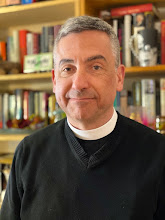

 Posts
Posts

