St. Michael’s Episcopal Church, Gainesville FL
September 19, 2010
Year C, Proper 20: The Seventeenth Sunday after Pentecost
Jeremiah 8:18-9:1
Psalm 79:1-9
1 Timothy 2:1-7
Luke 16:1-13
The Crisis
The gospel lesson I just read is usually called the parable of the dishonest manager. It’s found only in the Gospel of Luke – and, I’ll be honest, at first I wished we had a different gospel today.
Here it is my first Sunday as your new priest and we are given this strange and challenging parable about a manager who gets in trouble because he’s been squandering his master’s property. Jesus doesn’t give us any more detail, but I’m sure we can all fill in the blanks. We’ve all heard way too many stories of corruption and embezzlement.
Since this is the Bible, we might reasonably expect that this dishonest manager would get his comeuppance and the moral of the story would be clear. The moral would be: Jesus teaches us not to steal. I could wrap up the sermon early and we could get on with the rest of the service. Everyone would go home, call their friends and say – “Hey, great news, our new priest preaches short sermons!”
Well, sometimes, but not this time. Of course there’s a commandment about not stealing, but that doesn’t seem to be the point of today’s parable. The point is how the manager deals with this crisis.
He very cleverly goes around to all those who were in debt to the master and cuts their bills. He hopes to make these debtors happy enough that they will welcome him into their homes after he gets axed by his master.
Keep in mind, the manager probably didn’t earn a salary. Instead he made his living by taking a cut of what people owed to the master. So most scholars think that the manager was eliminating his own “commission” on the debt owed to the master. In that case, at least this time, he’s not really being dishonest.
In any event, up to this point, this is sort of interesting, but kind of a routine, everyday story of corruption. But then, as usual, Jesus throws us a curveball. The master finds out what the manager has done. Jesus concludes the parable saying, “And the master commended the dishonest manager because he had acted shrewdly.”
“And the master commended the dishonest manager because he had acted shrewdly.”
And that’s it. That’s the end of the parable. In my imagination, I can see the disciples sitting around Jesus trying to make sense of this parable – and trying especially to make sense of that last sentence. What are we supposed to take away from this parable?
And here we are two thousand years later here at St. Michael’s in Gainesville, sitting around doing the same thing - trying to make sense of this parable – and trying to make sense of that last sentence.
“And the master commended the dishonest manager because he had acted shrewdly.”
I would have chosen some other piece of Scripture, but this is what the Holy Spirit has given us to hear and to wrestle with today. And, more than that, I believe it’s the Holy Spirit who has brought us together this morning.
To be honest, I never thought I’d live in Florida. I had never even been to Florida! Sue and I were both really comfortable back in New Jersey. It’s where we both grew up. It’s where our families and friends are. When the opportunity of serving as chaplain at UF and serving as your rector, at first I just dismissed it.
It was too far away - too different from what we’ve always known.
But then I kept hearing this little voice gnawing away in my head. It was my own voice. It was my own voice in my own sermons. Over and over I had preached that we need to be open to how God might be at work in our lives. Over and over I had preached that we had to be mindful of the Holy Spirit gently but firmly nudging us along the road of life.
So, a few months ago I said, OK, I’d better not be a hypocrite. I’ll fly down to Florida and check it out. But, I was still only taking this openness business only so far. I said I’ll go down to Florida, but I feel bad wasting the diocese’s money because I’m pretty sure I’m not going to take this job.
I came down for just about twenty-four hours. I spent a whirlwind day meeting the bishop and the diocesan staff in Jacksonville. Then Canon Griffiths drove me to Gainesville and I toured the chapel and the apartment. And then we came to St. Michael’s. For some reason, we didn’t have keys to the church. So, I could only peer in through the glass. And, although it was different from anything I had known before, I could imagine myself here. I didn’t meet a single person from St. Michael’s, yet I could imagine us here together.
It was really inconvenient and not what we expected, but through the grace of God and the power of the Holy Spirit, here we are.
So, what might the Holy Spirit be saying to us today through this difficult parable of the dishonest manager? What does this story have to do with us?
Followers of Jesus have struggled with this parable from the start. Luke himself seems to struggle with explaining it, listing a series of Jesus sayings.
But, I think it’s the first Jesus saying that is speaking directly to us today. Jesus said, “For the children of this age are more shrewd in dealing with their own generation than are the children of light.”
In the parable, the dishonest manager faced a crisis. The manager responded to the crisis cleverly and shrewdly.
Well, you and I here at St. Michael’s are also faced with a crisis.
We live in a world that is hungry and in pain. Much of that hunger and pain is in far-off places. I’m sure many of us suffer from compassion fatigue after seeing reports from the earthquake in Haiti and the floods in Pakistan – just the latest in a litany of disasters. We get appeal after appeal for help. Yet, we still live in a world that is hungry and in pain, filled with people crying out to us. And God expects us to be shrewd and clever in responding to those cries.
Some of that hunger and pain is closer to home. The statistics on poverty in the US are bleak. In 2009, 43.6 million Americans lived below the official poverty line. And many more millions are poor by any reasonable measure. Many of our neighbors and maybe some of us here experience real economic poverty. In just a few weeks, here in Gainesville I’ve been approached frequently by people looking for money – whether I’m wearing my clerical collar or not.
God expects us to be shrewd and clever in responding to those needs.
We live in a world that is hungry and in pain. And some of that hunger and pain is just about invisible because it lives inside our own hearts. How many of us are anxious about the future? How many of us worry that our children and grandchildren will live in a world poorer and meaner and hotter than the world we’ve known? How many of us feel disappointed by our lives? How many of us feel guilty about what we’ve done or left undone? How many of us feel trapped and alone? How many of us are angry - at someone else or angry at ourselves?
Yes, like the manager, you and I here at St. Michael’s are faced with a crisis.
Since we live in a world that is hungry and in despair, God is challenging us – God is daring us – God is expecting us - to be shrewd and clever just like the manager in the parable. We need to be shrewd and clever in figuring out ways to feed and heal our brothers and sisters who are hungry and in despair.
And we need to be shrewd and clever in letting our brothers and sisters who are hungry and in despair know about this special place. I know enough about St. Michael’s and its history to know that you – and now we – are here because this is where we are fed. This is where we are fed – fed by the Word of God, fed by the fellowship, fed by the beautiful music, fed by the opportunity to serve and to lead, fed by this beautiful space, and most of all, fed by the Body and Blood of Christ that we will receive in just a few minutes.
Someone once said, “Evangelism is one beggar telling another beggar where to find bread.”
So, my fellow beggars, we are faced with a crisis. We live in a world, in a community, that is hungry and in despair. So, we, the children of light, need to be clever and shrewd like the manager in today’s parable. We need to figure out in this time and place – with all its challenges and distractions – how to let the other beggars know where to find bread.
Like the master in the parable, God is challenging us – God is daring us – God is expecting us - to deal with this crisis.
It’s a big job, yet God is also giving us everything we need. The same Holy Spirit who has brought us together will continue to guide us and inspire us and, yes, make us shrewd and clever. The Holy Spirit who has brought us together will strengthen us as we continue to build the kingdom of God right here in this corner of Gainesville.
And, if we give this our best shot, the master will commend us for acting shrewdly.
You know, maybe this difficult parable is just what we needed as we begin our life together. Let’s get started!
Amen.
Sunday, September 19, 2010
Sunday, September 12, 2010
God's Search
Chapel of the Incarnation, Gainesville FL
September 12, 2010
Year C, Proper 19: The Sixteenth Sunday after Pentecost
Jeremiah 4:11-12, 22-28
Psalm 14
1 Timothy 1:12-17
Luke 15:1-10
God’s Search
I grew up in the 1970s and 1980s in Jersey City, New Jersey. It’s a pretty big city – with about twice the population of Gainesville. And like a lot of cities during that time much of Jersey City was pretty rough place. Poverty and crime were big problems. Fortunately, my family lived in a pretty safe area, but, still, we had to be careful.
For kindergarten, I went to the nearest public school, which was maybe a mile away from our house. Not too far, but the school was on the other side of a very busy four-lane street called Kennedy Boulevard. The boulevard was the unofficial dividing line between the relatively safe area where we lived and a part of town that was considered more dangerous.
Anyway, my mother and the mother of a kid who lived across the street, Michael, would take turns bringing us to school and picking us up at the end of the day.
Everything went very smoothly until one day Michael and I came out of school and I didn’t see my mother. As I remember it, I said to Michael something like, “Oh, I guess my mom forgot to pick us up. But, it’s OK, I know the way home, so let’s just walk home on our own.”
Michael stupidly went along with this great idea of mine. So, Michael and I, two little boys carrying lunch boxes, made our way home. We successfully crossed the four lanes of Kennedy Boulevard. We made all the correct choices at each intersection and got home safely.
Now, why did I do this? It was a long time ago so it’s hard to recreate my thinking. But, it seems to me now that there are a couple of possibilities. Maybe I really believed that my mom forgot to pick us up. But, I don’t think that’s it.
Probably I wanted to show off to Michael and maybe to my parents that I was smart enough and brave enough to get home on my own. You think I’m just a little kid, but, look, I don’t really need you! I can do it myself!
Probably I was just being selfish. Probably I was just thinking of myself and not giving a second thought to the fact that my mother would be frantically looking for me - and for her neighbor’s son.
While Michael and I were making our way through the streets of Jersey City, my mother was in a panic. I can imagine the increasingly scary thoughts that were racing through her mind as she searched for Michael and me.
The rest of my memory is a little fuzzy. I can’t remember my mother’s reaction when she got home and found us safely waiting. I probably can’t remember because it was painful to see how upset she was because she loved me so much.
A mother’s love for her child is profoundly strong. But, even a mother’s love is still only a pale reflection of God’s love for all of us.
One of the themes that runs throughout the Bible is the fact that God is always searching for us, always reaching out to us, always wanting to be close to us, always wanting to be friends. For me, one of the most powerful examples of that theme is in the Garden of Eden, after Adam and Eve have disobeyed God, eaten the forbidden fruit, and are now ashamed of their nakedness. God comes searching for them in the garden. And Adam and Eve hide from God.
God is still searching for us.
Today’s gospel is about God’s search for us. In fact, the whole Gospel is about God’s search for us. In Jesus, we see most clearly God’s search for us – God’s search for all of us.
So, in today’s gospel we find Jesus as usual hanging out with the “wrong” people. And, as usual, the “right” people, the religious people, tsk-tsk their disapproval. They say, “This fellow welcomes sinners and eats with them.”
It’s in that eating and drinking with the “wrong” people that Jesus embodies God’s search for all of us. And, Jesus tells these parables – about the lost sheep and the lost coin – to make the same point:
God is searching for us.
God is relentless in searching for us. God is like that shepherd, risking everything to find that one lost sheep. God is like that woman, searching and searching for her coin. God is searching for us.
After finding what’s lost, both the shepherd and the woman get their friends together and have a party.
And when God finds us and we return to God there is great rejoicing. When God finds us and we return, God wants to have a tailgate party much bigger and better than anything Gainesville has ever seen!
God is searching for us, but of course, God knows exactly where we are. God doesn’t need GPS. God knows where we are, but
God is searching for our hearts. And God finds us when we open our hearts to God.
God finds us when we spend even just a minute or two in prayer. God finds us when we reach out to a friend or a classmate who is in trouble. God finds us when we offer service to our community. God finds us when we sacrifice. God finds us when it’s not all about us. God finds us when it’s not all about what we can do on our own – when it’s not all about how we don’t need other people.
And God finds us when we gather right here in this chapel. God finds us when we listen to God’s Word, sing our hymns, and most of all when we open our hands and our mouths and our hearts and receive the Body and Blood of Christ.
A long time ago my mother’s search ended when she found Michael and me safe and sound after our little adventure on the streets of Jersey City. But, God’s search for me and for all of us continues.
God is still searching for us. And God finds us each time we open our hearts to God and to one another. And when God finds us there is much rejoicing and God invites everyone to tailgate.
Amen.
September 12, 2010
Year C, Proper 19: The Sixteenth Sunday after Pentecost
Jeremiah 4:11-12, 22-28
Psalm 14
1 Timothy 1:12-17
Luke 15:1-10
God’s Search
I grew up in the 1970s and 1980s in Jersey City, New Jersey. It’s a pretty big city – with about twice the population of Gainesville. And like a lot of cities during that time much of Jersey City was pretty rough place. Poverty and crime were big problems. Fortunately, my family lived in a pretty safe area, but, still, we had to be careful.
For kindergarten, I went to the nearest public school, which was maybe a mile away from our house. Not too far, but the school was on the other side of a very busy four-lane street called Kennedy Boulevard. The boulevard was the unofficial dividing line between the relatively safe area where we lived and a part of town that was considered more dangerous.
Anyway, my mother and the mother of a kid who lived across the street, Michael, would take turns bringing us to school and picking us up at the end of the day.
Everything went very smoothly until one day Michael and I came out of school and I didn’t see my mother. As I remember it, I said to Michael something like, “Oh, I guess my mom forgot to pick us up. But, it’s OK, I know the way home, so let’s just walk home on our own.”
Michael stupidly went along with this great idea of mine. So, Michael and I, two little boys carrying lunch boxes, made our way home. We successfully crossed the four lanes of Kennedy Boulevard. We made all the correct choices at each intersection and got home safely.
Now, why did I do this? It was a long time ago so it’s hard to recreate my thinking. But, it seems to me now that there are a couple of possibilities. Maybe I really believed that my mom forgot to pick us up. But, I don’t think that’s it.
Probably I wanted to show off to Michael and maybe to my parents that I was smart enough and brave enough to get home on my own. You think I’m just a little kid, but, look, I don’t really need you! I can do it myself!
Probably I was just being selfish. Probably I was just thinking of myself and not giving a second thought to the fact that my mother would be frantically looking for me - and for her neighbor’s son.
While Michael and I were making our way through the streets of Jersey City, my mother was in a panic. I can imagine the increasingly scary thoughts that were racing through her mind as she searched for Michael and me.
The rest of my memory is a little fuzzy. I can’t remember my mother’s reaction when she got home and found us safely waiting. I probably can’t remember because it was painful to see how upset she was because she loved me so much.
A mother’s love for her child is profoundly strong. But, even a mother’s love is still only a pale reflection of God’s love for all of us.
One of the themes that runs throughout the Bible is the fact that God is always searching for us, always reaching out to us, always wanting to be close to us, always wanting to be friends. For me, one of the most powerful examples of that theme is in the Garden of Eden, after Adam and Eve have disobeyed God, eaten the forbidden fruit, and are now ashamed of their nakedness. God comes searching for them in the garden. And Adam and Eve hide from God.
God is still searching for us.
Today’s gospel is about God’s search for us. In fact, the whole Gospel is about God’s search for us. In Jesus, we see most clearly God’s search for us – God’s search for all of us.
So, in today’s gospel we find Jesus as usual hanging out with the “wrong” people. And, as usual, the “right” people, the religious people, tsk-tsk their disapproval. They say, “This fellow welcomes sinners and eats with them.”
It’s in that eating and drinking with the “wrong” people that Jesus embodies God’s search for all of us. And, Jesus tells these parables – about the lost sheep and the lost coin – to make the same point:
God is searching for us.
God is relentless in searching for us. God is like that shepherd, risking everything to find that one lost sheep. God is like that woman, searching and searching for her coin. God is searching for us.
After finding what’s lost, both the shepherd and the woman get their friends together and have a party.
And when God finds us and we return to God there is great rejoicing. When God finds us and we return, God wants to have a tailgate party much bigger and better than anything Gainesville has ever seen!
God is searching for us, but of course, God knows exactly where we are. God doesn’t need GPS. God knows where we are, but
God is searching for our hearts. And God finds us when we open our hearts to God.
God finds us when we spend even just a minute or two in prayer. God finds us when we reach out to a friend or a classmate who is in trouble. God finds us when we offer service to our community. God finds us when we sacrifice. God finds us when it’s not all about us. God finds us when it’s not all about what we can do on our own – when it’s not all about how we don’t need other people.
And God finds us when we gather right here in this chapel. God finds us when we listen to God’s Word, sing our hymns, and most of all when we open our hands and our mouths and our hearts and receive the Body and Blood of Christ.
A long time ago my mother’s search ended when she found Michael and me safe and sound after our little adventure on the streets of Jersey City. But, God’s search for me and for all of us continues.
God is still searching for us. And God finds us each time we open our hearts to God and to one another. And when God finds us there is much rejoicing and God invites everyone to tailgate.
Amen.

Sunday, September 05, 2010
Hard Work
The Chapel of the Incarnation, Gainesville FL
September 5, 2010
Year C, Proper 18: The Fifteenth Sunday after Pentecost
Jeremiah 18:1-11
Psalm 139: 1-5, 13-17
Philemon 1-21
Luke 14: 25-33
Hard Work
It’s Labor Day weekend and sure enough today’s three Scripture readings are about hard work. It’s hard work to be a student and it’s hard work to be out in the world trying to earn a living. (And I guess today it’s especially hard work to be a Gator football player!) And it’s also hard work to be a person of faith. It’s hard work to be a Christian. It’s hard work because over and over God calls us to open our hearts, to deepen our love of God and to deepen our love for one another. It’s hard work to be a Christian.
All three of the readings: Jeremiah’s powerful image of God as the potter, Paul’s letter to Philemon, and Jesus’ tough teaching on discipleship, remind us that over and over God calls us to the hard work of opening our hearts. And like any other kind of hard work, we can choose to do it or choose not to do it.
The passage we heard from the Prophet Jeremiah probably took its final form around the 6th Century BC, when Judah had been defeated and most of its people were sent into exile in Babylon. Then and now, whenever bad things happen to us, we ask why? Or, more specifically, we ask, why me?
Well, the same was true for the Jewish people during the Babylonian exile. Why had this calamity happened? Why had God allowed this to happen?
First, the prophet Jeremiah makes it very clear that God is ultimately in control. Through Jeremiah, God says, “Just like the clay in the potter’s hand, so are you in my hand…”
God can do whatever God wants. But, first Jeremiah understands that God offers the people an opportunity, a choice. God reaches out, calls the people to open their hearts. God says, “Turn now, all of you from your evil way, and amend your ways and doings.”
Of course, then and now people can - and do - say no to God. Jeremiah understood that the people of Israel at that time had failed to open their hearts to God, had failed to amend their ways and doings.
But, the story of Israel didn’t end with the Babylonian Exile. No matter what, God continues to reach out to us, calling us to the hard work of opening our hearts.
God’s ultimate way of reaching out to us is Jesus. In the gospel lesson I just read, Jesus lays out the very stark reality of what it means to be his disciple. Talk about hard work! Luke mentions that, amazingly, Jesus is addressing large crowds. You’d think, considering how many people were listening, that Jesus might want to sugarcoat things a little. You know, tell people it’ll be easy to be a disciple; tell people if they follow him they’ll be rich, successful and happy.
Instead, Jesus is brutally honest about what it means to follow him. Jesus is brutally honest about the hard work of opening our hearts to God.
“Whoever comes to me and does not hate father and mother, wife and children, brothers and sisters, yes, and even life itself, cannot be my disciple. Whoever does not carry the cross and follow me cannot be my disciple.”
We have here some very hard and brutally honest teaching from Jesus. Jesus calls us to the hard work of opening our hearts. When Jesus calls us to hate the people we love, he’s not talking about emotion. Instead, he’s using a bit of exaggeration – very common in the ancient world – to make a point.
Jesus is calling us to the hard work of opening our hearts to God. It’s hard work to open our hearts to God, to put God above all the attachments and cares – even the good attachments and cares – of this world.
But Jesus knows being open to God is worth the hard work. Jesus knows that being open to God allows us to live more fully and to love our families and friends more deeply than we ever thought possible.
Still, being a disciple will cost us. So Jesus urges us to consider carefully the costs of following him. Jesus advises us to be like the person building a tower or the king planning to wage war. Consider the costs, then make the free choice to open our hearts to God.
But, wait, there’s more! Opening our hearts to God is not a once-in-a-lifetime event that happens at our baptism or when we are “born again.” Instead, God is always calling us to the hard work of opening our hearts.
And we heard an amazing example about the ongoing hard work of opening our hearts in Paul’s letter to Philemon. Here’s the story in a nutshell.
Paul had taught Philemon about Jesus and maybe had also baptized him. Now, Paul refers to Philemon as his “dear friend and co-worker.” Philemon is a leader of a house church. Philemon is also the owner of at least one slave, named Onesimus.
It’s not clear why, but the slave Onesimus had fled from Philemon and had gone to be with Paul in prison. There, thanks to Paul, Onesimus also became a disciple of Jesus. Now Philemon the owner and Onesimus the slave are both brothers in Christ. Starting to see the problem?
Now, Paul writes this letter to his “dear friend and co-worker” Philemon. By becoming a disciple of Jesus, Philemon had already considered the cost of discipleship and opened his heart to God in Christ. But, now Paul is calling Philemon to the hard work of opening his heart a little more.
Paul is clear that he could order Philemon to welcome back Onesimus but instead has chosen to ask Philemon to open his heart a little more. Philemon is free to say no.
Paul is calling Philemon to the hard work of opening his heart – to love Onesimus, as his brother in Christ. Paul is calling Philemon to open his heart a little more – to love his runaway slave, as himself. Paul writes,
“Perhaps this is the reason he was separated from you for a while, so that you might have him back forever, no longer as a slave but more than a slave, a beloved brother…”
Hard work. For Philemon, the cost of opening his heart - the cost of being a disciple of Jesus - has just gone up.
So, what about us? In what ways is God calling us to open our hearts? In what ways are we being called to deepen our commitment to being a disciple of Jesus?
What’s our hard work?
Are we too attached to material things – or too attached to certain people in our lives?
Do we really try to put God first and to love others as we love ourselves?
Are there some people we just can’t forgive?
Can we accept that God really loves us for who we are?
Do we have trouble forgiving ourselves for something we’ve done or not done?
We call ourselves Christians, but really, what difference does that make in our everyday lives?
Honestly, how much does it really cost us to be a disciple of Jesus?
What’s our hard work?
Just as Jeremiah heard God calling the people of Israel to open their hearts, God is calling us to the hard work of opening our hearts and deepening our love of God and deepening our love for one another. Just as Jesus told the crowds that following him would cost, Jesus is telling us here in the chapel today about the cost of discipleship. And just as Philemon the Christian disciple found out that the call to open our hearts never ends, so too for us on this Labor Day weekend the call to open our hearts never ends.
Yes, it’s hard work to be a Christian. But if we answer God’s call and do the hard work of opening our hearts, then it’s possible for us to live more fully and love more deeply, than we ever thought possible.
Amen.
September 5, 2010
Year C, Proper 18: The Fifteenth Sunday after Pentecost
Jeremiah 18:1-11
Psalm 139: 1-5, 13-17
Philemon 1-21
Luke 14: 25-33
Hard Work
It’s Labor Day weekend and sure enough today’s three Scripture readings are about hard work. It’s hard work to be a student and it’s hard work to be out in the world trying to earn a living. (And I guess today it’s especially hard work to be a Gator football player!) And it’s also hard work to be a person of faith. It’s hard work to be a Christian. It’s hard work because over and over God calls us to open our hearts, to deepen our love of God and to deepen our love for one another. It’s hard work to be a Christian.
All three of the readings: Jeremiah’s powerful image of God as the potter, Paul’s letter to Philemon, and Jesus’ tough teaching on discipleship, remind us that over and over God calls us to the hard work of opening our hearts. And like any other kind of hard work, we can choose to do it or choose not to do it.
The passage we heard from the Prophet Jeremiah probably took its final form around the 6th Century BC, when Judah had been defeated and most of its people were sent into exile in Babylon. Then and now, whenever bad things happen to us, we ask why? Or, more specifically, we ask, why me?
Well, the same was true for the Jewish people during the Babylonian exile. Why had this calamity happened? Why had God allowed this to happen?
First, the prophet Jeremiah makes it very clear that God is ultimately in control. Through Jeremiah, God says, “Just like the clay in the potter’s hand, so are you in my hand…”
God can do whatever God wants. But, first Jeremiah understands that God offers the people an opportunity, a choice. God reaches out, calls the people to open their hearts. God says, “Turn now, all of you from your evil way, and amend your ways and doings.”
Of course, then and now people can - and do - say no to God. Jeremiah understood that the people of Israel at that time had failed to open their hearts to God, had failed to amend their ways and doings.
But, the story of Israel didn’t end with the Babylonian Exile. No matter what, God continues to reach out to us, calling us to the hard work of opening our hearts.
God’s ultimate way of reaching out to us is Jesus. In the gospel lesson I just read, Jesus lays out the very stark reality of what it means to be his disciple. Talk about hard work! Luke mentions that, amazingly, Jesus is addressing large crowds. You’d think, considering how many people were listening, that Jesus might want to sugarcoat things a little. You know, tell people it’ll be easy to be a disciple; tell people if they follow him they’ll be rich, successful and happy.
Instead, Jesus is brutally honest about what it means to follow him. Jesus is brutally honest about the hard work of opening our hearts to God.
“Whoever comes to me and does not hate father and mother, wife and children, brothers and sisters, yes, and even life itself, cannot be my disciple. Whoever does not carry the cross and follow me cannot be my disciple.”
We have here some very hard and brutally honest teaching from Jesus. Jesus calls us to the hard work of opening our hearts. When Jesus calls us to hate the people we love, he’s not talking about emotion. Instead, he’s using a bit of exaggeration – very common in the ancient world – to make a point.
Jesus is calling us to the hard work of opening our hearts to God. It’s hard work to open our hearts to God, to put God above all the attachments and cares – even the good attachments and cares – of this world.
But Jesus knows being open to God is worth the hard work. Jesus knows that being open to God allows us to live more fully and to love our families and friends more deeply than we ever thought possible.
Still, being a disciple will cost us. So Jesus urges us to consider carefully the costs of following him. Jesus advises us to be like the person building a tower or the king planning to wage war. Consider the costs, then make the free choice to open our hearts to God.
But, wait, there’s more! Opening our hearts to God is not a once-in-a-lifetime event that happens at our baptism or when we are “born again.” Instead, God is always calling us to the hard work of opening our hearts.
And we heard an amazing example about the ongoing hard work of opening our hearts in Paul’s letter to Philemon. Here’s the story in a nutshell.
Paul had taught Philemon about Jesus and maybe had also baptized him. Now, Paul refers to Philemon as his “dear friend and co-worker.” Philemon is a leader of a house church. Philemon is also the owner of at least one slave, named Onesimus.
It’s not clear why, but the slave Onesimus had fled from Philemon and had gone to be with Paul in prison. There, thanks to Paul, Onesimus also became a disciple of Jesus. Now Philemon the owner and Onesimus the slave are both brothers in Christ. Starting to see the problem?
Now, Paul writes this letter to his “dear friend and co-worker” Philemon. By becoming a disciple of Jesus, Philemon had already considered the cost of discipleship and opened his heart to God in Christ. But, now Paul is calling Philemon to the hard work of opening his heart a little more.
Paul is clear that he could order Philemon to welcome back Onesimus but instead has chosen to ask Philemon to open his heart a little more. Philemon is free to say no.
Paul is calling Philemon to the hard work of opening his heart – to love Onesimus, as his brother in Christ. Paul is calling Philemon to open his heart a little more – to love his runaway slave, as himself. Paul writes,
“Perhaps this is the reason he was separated from you for a while, so that you might have him back forever, no longer as a slave but more than a slave, a beloved brother…”
Hard work. For Philemon, the cost of opening his heart - the cost of being a disciple of Jesus - has just gone up.
So, what about us? In what ways is God calling us to open our hearts? In what ways are we being called to deepen our commitment to being a disciple of Jesus?
What’s our hard work?
Are we too attached to material things – or too attached to certain people in our lives?
Do we really try to put God first and to love others as we love ourselves?
Are there some people we just can’t forgive?
Can we accept that God really loves us for who we are?
Do we have trouble forgiving ourselves for something we’ve done or not done?
We call ourselves Christians, but really, what difference does that make in our everyday lives?
Honestly, how much does it really cost us to be a disciple of Jesus?
What’s our hard work?
Just as Jeremiah heard God calling the people of Israel to open their hearts, God is calling us to the hard work of opening our hearts and deepening our love of God and deepening our love for one another. Just as Jesus told the crowds that following him would cost, Jesus is telling us here in the chapel today about the cost of discipleship. And just as Philemon the Christian disciple found out that the call to open our hearts never ends, so too for us on this Labor Day weekend the call to open our hearts never ends.
Yes, it’s hard work to be a Christian. But if we answer God’s call and do the hard work of opening our hearts, then it’s possible for us to live more fully and love more deeply, than we ever thought possible.
Amen.
Sunday, August 29, 2010
Some Things Never Change
The Chapel of the Incarnation, Gainesville FL
August 29, 2010
Year C, Proper 17: The Fourteenth Sunday after Pentecost
Jeremiah 2:4-13
Psalm 81:1, 10-16
Hebrews 13:1-8, 15-16
Some Things Never Change
When I first sat down to read, and pray about and think about today’s Scripture readings, I immediately thought, “Some things never change.”
The reading from Jeremiah comes from a time when the kingdoms of Israel and Judah lost their independence. The prophet clearly chalks up these devastating events to the people losing faith in God and putting their faith in false gods such as Baal. The prophet also blames these devastating events on the people losing their faith in God and instead putting their faith in alliances with other countries.
Without a doubt, the prophet believes that God is angry at this lack of faith. But, more than that, there’s a sense of God almost being hurt by this lack of faith.
Jeremiah interprets God as saying, “What wrong did your ancestors find in me that they went far from me, and went after worthless things, and became worthless themselves?”
You can hear the sadness in that divine question, “What wrong did your ancestors find in me?”
Jeremiah was a prophet who lived during a time when people put their faith in earthly things and suffered the consequences.
It sure seems like some things never change.
We also live in a time when we put our ultimate faith in earthly gods and suffer the consequences. Think of how many people put their faith in their wealth only to see it evaporate during this terrible recession. I read a news story about a former mayor of my hometown who had made a killing on Wall Street back in the ‘80s and retired when he was still a young man, and served as mayor for a couple of terms. Now, according to the news report, because of what’s happened to his investment portfolio, he and his wife have only $5000 in the bank.
Not unlike the long-ago people of Israel and Judah, too often we put our ultimate faith in earthly gods and suffer the consequences. Think of how many of us put our ultimate faith in our talents or our intelligence or our charm or our appearance. Think of how many of us put our ultimate faith in our political leaders or in our military power.
It sure seems like some things never change.
But, no matter how things seem, as Christians we know that things have changed and are changing. We don’t have the option of looking at the state of the world and shrugging our shoulders and saying, “Eh, what are you gonna do? Some things never change.”
That’s not an option because in Jesus, God reveals to us what God dreams we will be. In Jesus, God reveals to us what God dreams the world will be. In Jesus, God reveals what the kingdom of God is like and what the kingdom of God will be like.
In Jesus, the kingdom of God draws near. Things have begun to change.
So, in the reading from the Gospel of Luke, we find Jesus at a Sabbath meal with Pharisees and others. At first, Jesus offers what seems like just pretty good etiquette advice. Essentially, Jesus says, to avoid embarrassment at a dinner party, don’t sit at the place of honor unless you’re invited to do so by the host. And it’s true, it’s embarrassing to be told, uh, sorry, I’m saving this seat for my friend. Or, sorry, this area is reserved for our first class customers. You’re seat is back there.
So, OK, Jesus gives some good, sort of ho-hum etiquette advice. But, then, just when we think Jesus has made his point, he reveals something about the kingdom of God. Jesus reveals that in the kingdom of God things are different. Things are going to change.
Jesus says, “For all who exalt themselves will be humbled, and those who humble themselves will be exalted.”
In God’s kingdom, the world will be turned upside-down. We hear this message throughout the Gospel of Luke. Early on, when the pregnant Mary visits her cousin Elizabeth, she bursts into song, singing God’s praises, singing a vision of God’s kingdom. She sings, that God “has brought down the powerful from their thrones, and lifted up the lowly; he has filled the hungry with good things, and sent the rich away empty.”
And in Jesus’ great sermon in the Gospel of Luke, Jesus teaches that in God’s kingdom it’s the poor and the hungry and the weeping and the outcast and the mocked who are blessed.
In Jesus, the kingdom of God has drawn near. And in God’s kingdom things are changing, things are going to change.
So, what about us? Are we part of the change that begins with Jesus? In us, in the way we live our lives, does the kingdom of God continue to draw near?
In our New Testament reading, we heard a powerful passage from the Letter to the Hebrews – which, by the way, was neither a letter nor addressed to the Hebrews! Instead, it’s a sermon sent to an early Christian community made up of probably both Jews and gentiles. It seems that maybe this community had begun to lose some of its enthusiasm for Christian living. So the anonymous author of Hebrews sends some very clear and pointed reminders of how they – and we – are to live Christian lives.
Today’s excerpt began with the beautiful phrase, “Let mutual love continue.” Do we live lives of love? Or do we live like things never change – concerned only about ourselves or about our stuff?
Then the author of Hebrews tells that early Christian community to offer hospitality to strangers and adds “for by doing that some have entertained angels without knowing it.” Just how important is hospitality to us? Did we really mean it a few minutes ago when we sang “All are Welcome”? How well do we welcome the stranger into this chapel – or is there a tendency for us to be a nice, cozy little club?
Then we’re called to remember those in prison and those who are being tortured. Probably the author had in mind other Christians who were being persecuted for their faith. And there are many thousands of Christians around the world who being persecuted for following Jesus. Do we ever remember them? And, closer to home, how much thought do we give to the many tens of thousands who are imprisoned all around us?
I read a startling statistic in the diocesan newspaper. In the Diocese of Florida there are 33 prisons, containing over 33,000 prisoners. They are all around us and yet nearly invisible and easy to forget. Yet, if in us the kingdom of God is drawing near, then not only do we need to remember those thousands of prisoners but we also need to ask some uncomfortable questions.
Why is there so much crime in our country? Why are so many of our brothers and sisters locked up?
Finally, the author of Hebrews calls us to keep our commitments, to be faithful, and to avoid the love of money.
When we live this way then truly the kingdom of God draws near. When we live lives of love and compassion and humility and simplicity and faithfulness and integrity, then the kingdom of God draws near. When we live this way then the world turns upside-down and just about everything changes.
But, it turns out that some things really never do change. Living this kind of Christian life was a challenge back in the First Century and it’s a challenge for us today. But, we don’t do it alone. We live out our Christian lives together here in community and always supported by the love and grace and power of Jesus. And as the author of Hebrews writes, “Jesus Christ is the same yesterday, and today and forever.”
Some things never change.
Amen.
August 29, 2010
Year C, Proper 17: The Fourteenth Sunday after Pentecost
Jeremiah 2:4-13
Psalm 81:1, 10-16
Hebrews 13:1-8, 15-16
Some Things Never Change
When I first sat down to read, and pray about and think about today’s Scripture readings, I immediately thought, “Some things never change.”
The reading from Jeremiah comes from a time when the kingdoms of Israel and Judah lost their independence. The prophet clearly chalks up these devastating events to the people losing faith in God and putting their faith in false gods such as Baal. The prophet also blames these devastating events on the people losing their faith in God and instead putting their faith in alliances with other countries.
Without a doubt, the prophet believes that God is angry at this lack of faith. But, more than that, there’s a sense of God almost being hurt by this lack of faith.
Jeremiah interprets God as saying, “What wrong did your ancestors find in me that they went far from me, and went after worthless things, and became worthless themselves?”
You can hear the sadness in that divine question, “What wrong did your ancestors find in me?”
Jeremiah was a prophet who lived during a time when people put their faith in earthly things and suffered the consequences.
It sure seems like some things never change.
We also live in a time when we put our ultimate faith in earthly gods and suffer the consequences. Think of how many people put their faith in their wealth only to see it evaporate during this terrible recession. I read a news story about a former mayor of my hometown who had made a killing on Wall Street back in the ‘80s and retired when he was still a young man, and served as mayor for a couple of terms. Now, according to the news report, because of what’s happened to his investment portfolio, he and his wife have only $5000 in the bank.
Not unlike the long-ago people of Israel and Judah, too often we put our ultimate faith in earthly gods and suffer the consequences. Think of how many of us put our ultimate faith in our talents or our intelligence or our charm or our appearance. Think of how many of us put our ultimate faith in our political leaders or in our military power.
It sure seems like some things never change.
But, no matter how things seem, as Christians we know that things have changed and are changing. We don’t have the option of looking at the state of the world and shrugging our shoulders and saying, “Eh, what are you gonna do? Some things never change.”
That’s not an option because in Jesus, God reveals to us what God dreams we will be. In Jesus, God reveals to us what God dreams the world will be. In Jesus, God reveals what the kingdom of God is like and what the kingdom of God will be like.
In Jesus, the kingdom of God draws near. Things have begun to change.
So, in the reading from the Gospel of Luke, we find Jesus at a Sabbath meal with Pharisees and others. At first, Jesus offers what seems like just pretty good etiquette advice. Essentially, Jesus says, to avoid embarrassment at a dinner party, don’t sit at the place of honor unless you’re invited to do so by the host. And it’s true, it’s embarrassing to be told, uh, sorry, I’m saving this seat for my friend. Or, sorry, this area is reserved for our first class customers. You’re seat is back there.
So, OK, Jesus gives some good, sort of ho-hum etiquette advice. But, then, just when we think Jesus has made his point, he reveals something about the kingdom of God. Jesus reveals that in the kingdom of God things are different. Things are going to change.
Jesus says, “For all who exalt themselves will be humbled, and those who humble themselves will be exalted.”
In God’s kingdom, the world will be turned upside-down. We hear this message throughout the Gospel of Luke. Early on, when the pregnant Mary visits her cousin Elizabeth, she bursts into song, singing God’s praises, singing a vision of God’s kingdom. She sings, that God “has brought down the powerful from their thrones, and lifted up the lowly; he has filled the hungry with good things, and sent the rich away empty.”
And in Jesus’ great sermon in the Gospel of Luke, Jesus teaches that in God’s kingdom it’s the poor and the hungry and the weeping and the outcast and the mocked who are blessed.
In Jesus, the kingdom of God has drawn near. And in God’s kingdom things are changing, things are going to change.
So, what about us? Are we part of the change that begins with Jesus? In us, in the way we live our lives, does the kingdom of God continue to draw near?
In our New Testament reading, we heard a powerful passage from the Letter to the Hebrews – which, by the way, was neither a letter nor addressed to the Hebrews! Instead, it’s a sermon sent to an early Christian community made up of probably both Jews and gentiles. It seems that maybe this community had begun to lose some of its enthusiasm for Christian living. So the anonymous author of Hebrews sends some very clear and pointed reminders of how they – and we – are to live Christian lives.
Today’s excerpt began with the beautiful phrase, “Let mutual love continue.” Do we live lives of love? Or do we live like things never change – concerned only about ourselves or about our stuff?
Then the author of Hebrews tells that early Christian community to offer hospitality to strangers and adds “for by doing that some have entertained angels without knowing it.” Just how important is hospitality to us? Did we really mean it a few minutes ago when we sang “All are Welcome”? How well do we welcome the stranger into this chapel – or is there a tendency for us to be a nice, cozy little club?
Then we’re called to remember those in prison and those who are being tortured. Probably the author had in mind other Christians who were being persecuted for their faith. And there are many thousands of Christians around the world who being persecuted for following Jesus. Do we ever remember them? And, closer to home, how much thought do we give to the many tens of thousands who are imprisoned all around us?
I read a startling statistic in the diocesan newspaper. In the Diocese of Florida there are 33 prisons, containing over 33,000 prisoners. They are all around us and yet nearly invisible and easy to forget. Yet, if in us the kingdom of God is drawing near, then not only do we need to remember those thousands of prisoners but we also need to ask some uncomfortable questions.
Why is there so much crime in our country? Why are so many of our brothers and sisters locked up?
Finally, the author of Hebrews calls us to keep our commitments, to be faithful, and to avoid the love of money.
When we live this way then truly the kingdom of God draws near. When we live lives of love and compassion and humility and simplicity and faithfulness and integrity, then the kingdom of God draws near. When we live this way then the world turns upside-down and just about everything changes.
But, it turns out that some things really never do change. Living this kind of Christian life was a challenge back in the First Century and it’s a challenge for us today. But, we don’t do it alone. We live out our Christian lives together here in community and always supported by the love and grace and power of Jesus. And as the author of Hebrews writes, “Jesus Christ is the same yesterday, and today and forever.”
Some things never change.
Amen.
Sunday, August 22, 2010
Healers
Chapel of the Incarnation, Gainesville FL
August 22, 2010
Year C, Proper 16: The Thirteenth Sunday after Pentecost
Jeremiah 1:4-10
Psalm 71:1-6
Hebrews 12:18-29
Luke 13:10-17
Healers
This is a really exciting time. For my wife Sue and me, we’ve managed to finish the move of ourselves and our cat, Noelle, and (I hope) all our stuff from New Jersey to Gainesville. The unpacking is going to take a while, but we’re glad to be here and excited to be with all of you.
And, of course, with school starting this is an exciting time here at UF. It’s been fun these past couple of days to see freshmen and their parents wearing their brand-new Gator t-shirts, wandering around, taking it all in. We were over at Target a couple of days ago and there they were, filling the aisles, buying all the stuff needed to equip a dorm room.
Way back when I was in elementary school, I would moan and groan about the end of summer vacation. Maybe you did the same thing. But, secretly I was excited that school was about to start, excited that I was going to see my friends and excited to learn new things. Maybe you felt the same way. At the end of each summer I always liked going with my mom and sister to buy new notebooks and book bags and lunch boxes – although for a little kid it was a lot of pressure to decide which was the coolest lunch box to have.
Later in college I was always eager to get to the bookstore as early as I could – to get good deals on used books, but mostly just to see what books I’d be reading, to find out what new things I’d be studying and learning about that semester. You probably know the feeling.
And that’s all good. But, of course, school isn’t about the new books and book bags and clothes and laptops and textbooks, and all the rest. All of that stuff, including what will be blessed in a few minutes, needs to be used. The bindings of your books need to be broken. Notes need to be written on the margins. Your laptop needs to get beaten up a little bit. If we keep our supplies in mint condition we’ve missed the point. Those things are just means to an end.
When school would start and throughout the school year I’d also worry a lot about my grades. Maybe you can relate. I’d be especially worried about math. I was always weak in math and my math grades would sometimes keep me off of honor roll. I remember being at honor assemblies seething with resentment of my teachers and anger at myself when I’d see my friends and classmates get their little honor cards and I’d just be sitting there, fuming.
But, despite my bad attitude, there’s nothing wrong with wanting to get good grades, to do as well as you can, to receive honors for your ability and hard work. But, just like your notebooks and textbooks, grades are just a means to an end.
School isn’t about clean new notebooks or perfect grades.
School is about learning about the world and about yourself. School is about getting ready to go out into the world. School is about getting prepared to earn a living so you can support yourself. But, more important, school is about getting ready to go out into the world and help to build a better world. School is about getting prepared to go out and help build a better world. I don’t need to tell you that we live in a world bent by poverty and injustice and materialism and immorality. All of us are needed - all of us are called - to help heal our bent and broken world.
We need to be healers.
And what’s true about school is even truer about our religious life.
In today’s gospel lesson, we heard a story told only by Luke of Jesus healing a woman who has been bent over for eighteen years. Nothing unusual about that. The problem, of course, is that Jesus healed her on the Sabbath. According Jewish law, there should be no physical work on the Sabbath.
Now, since this woman had been in pain for so long, presumably Jesus could have waited another day to do the healing. But, obviously Jesus and Luke are trying to make a point in setting this healing on the Sabbath.
The point is that our religious practices are just fine so long as we remember that that they are means to an end. If our religious practices help us to be better Christians - better healers of a bent and broken world - then that’s great. But, we shouldn’t think that it’s our religious practices that make us Christians.
What makes us Christians is opening our hearts to the power of God. What makes us Christians is allowing God to work through us to heal our bent and broken world, to build the kingdom of God right here and now.
I don’t know this community very well yet, but I bet there are bent people all around us. There are people who are bent because they are unpopular or outcasts, who are bent by regrets about bad decisions, who are bent by worry about illness or money, who are bent by addiction, who are bent by fears about the future. I bet there are bent people all around us.
As Christians we are called to imitate and continue the healing work of Jesus.
We are called to be healers.
And you don’t have to wait until after graduation to get started on that healing work. In our Old Testament lesson we heard God’s call to the prophet Jeremiah. God calls him to the difficult work of being a prophet. Jeremiah replies, no way, God, I’m too young:
“Ah, Lord GOD, Truly I do not know how to speak, for I am only a boy.”
And God replies, “Do not say, ‘I am only a boy’; for you shall go to all whom I send you, and you shall speak whatever I command you. Do not be afraid of them, for I am with you to deliver you, says the LORD.”
So, two good messages for us as we begin an exciting new year. I pray that we remember that as Christians we are called to imitate and continue the healing work of Jesus, no matter our age. And I pray that through our life together here at Chapel House, we may receive the strength and the grace to do the healing work God has given us to do.
We need to be – and we are called to be – healers.
Amen.
August 22, 2010
Year C, Proper 16: The Thirteenth Sunday after Pentecost
Jeremiah 1:4-10
Psalm 71:1-6
Hebrews 12:18-29
Luke 13:10-17
Healers
This is a really exciting time. For my wife Sue and me, we’ve managed to finish the move of ourselves and our cat, Noelle, and (I hope) all our stuff from New Jersey to Gainesville. The unpacking is going to take a while, but we’re glad to be here and excited to be with all of you.
And, of course, with school starting this is an exciting time here at UF. It’s been fun these past couple of days to see freshmen and their parents wearing their brand-new Gator t-shirts, wandering around, taking it all in. We were over at Target a couple of days ago and there they were, filling the aisles, buying all the stuff needed to equip a dorm room.
Way back when I was in elementary school, I would moan and groan about the end of summer vacation. Maybe you did the same thing. But, secretly I was excited that school was about to start, excited that I was going to see my friends and excited to learn new things. Maybe you felt the same way. At the end of each summer I always liked going with my mom and sister to buy new notebooks and book bags and lunch boxes – although for a little kid it was a lot of pressure to decide which was the coolest lunch box to have.
Later in college I was always eager to get to the bookstore as early as I could – to get good deals on used books, but mostly just to see what books I’d be reading, to find out what new things I’d be studying and learning about that semester. You probably know the feeling.
And that’s all good. But, of course, school isn’t about the new books and book bags and clothes and laptops and textbooks, and all the rest. All of that stuff, including what will be blessed in a few minutes, needs to be used. The bindings of your books need to be broken. Notes need to be written on the margins. Your laptop needs to get beaten up a little bit. If we keep our supplies in mint condition we’ve missed the point. Those things are just means to an end.
When school would start and throughout the school year I’d also worry a lot about my grades. Maybe you can relate. I’d be especially worried about math. I was always weak in math and my math grades would sometimes keep me off of honor roll. I remember being at honor assemblies seething with resentment of my teachers and anger at myself when I’d see my friends and classmates get their little honor cards and I’d just be sitting there, fuming.
But, despite my bad attitude, there’s nothing wrong with wanting to get good grades, to do as well as you can, to receive honors for your ability and hard work. But, just like your notebooks and textbooks, grades are just a means to an end.
School isn’t about clean new notebooks or perfect grades.
School is about learning about the world and about yourself. School is about getting ready to go out into the world. School is about getting prepared to earn a living so you can support yourself. But, more important, school is about getting ready to go out into the world and help to build a better world. School is about getting prepared to go out and help build a better world. I don’t need to tell you that we live in a world bent by poverty and injustice and materialism and immorality. All of us are needed - all of us are called - to help heal our bent and broken world.
We need to be healers.
And what’s true about school is even truer about our religious life.
In today’s gospel lesson, we heard a story told only by Luke of Jesus healing a woman who has been bent over for eighteen years. Nothing unusual about that. The problem, of course, is that Jesus healed her on the Sabbath. According Jewish law, there should be no physical work on the Sabbath.
Now, since this woman had been in pain for so long, presumably Jesus could have waited another day to do the healing. But, obviously Jesus and Luke are trying to make a point in setting this healing on the Sabbath.
The point is that our religious practices are just fine so long as we remember that that they are means to an end. If our religious practices help us to be better Christians - better healers of a bent and broken world - then that’s great. But, we shouldn’t think that it’s our religious practices that make us Christians.
What makes us Christians is opening our hearts to the power of God. What makes us Christians is allowing God to work through us to heal our bent and broken world, to build the kingdom of God right here and now.
I don’t know this community very well yet, but I bet there are bent people all around us. There are people who are bent because they are unpopular or outcasts, who are bent by regrets about bad decisions, who are bent by worry about illness or money, who are bent by addiction, who are bent by fears about the future. I bet there are bent people all around us.
As Christians we are called to imitate and continue the healing work of Jesus.
We are called to be healers.
And you don’t have to wait until after graduation to get started on that healing work. In our Old Testament lesson we heard God’s call to the prophet Jeremiah. God calls him to the difficult work of being a prophet. Jeremiah replies, no way, God, I’m too young:
“Ah, Lord GOD, Truly I do not know how to speak, for I am only a boy.”
And God replies, “Do not say, ‘I am only a boy’; for you shall go to all whom I send you, and you shall speak whatever I command you. Do not be afraid of them, for I am with you to deliver you, says the LORD.”
So, two good messages for us as we begin an exciting new year. I pray that we remember that as Christians we are called to imitate and continue the healing work of Jesus, no matter our age. And I pray that through our life together here at Chapel House, we may receive the strength and the grace to do the healing work God has given us to do.
We need to be – and we are called to be – healers.
Amen.
Sunday, August 15, 2010
Love is a Verb
Grace Episcopal Church, Madison NJ
August 15, 2010
Love is a Verb: A Farewell to Grace Church
First, I’d like to thank everyone who worked so hard to make this a special day for Sue and me, and really for all of us, as we celebrate these three years together. So, thank you to the amazing and tireless Midge Cassidy for her very hard work putting this reception together under less than ideal circumstances. Thanks also to Mary Lea for organizing all of those pictures out in the lobby – it’s kind of overwhelming, actually. I can’t really take it all in at once. Thanks to Stacy Wilde for the decorations here today. And thanks to Dr. Anne and Eric Stroud and all the members of the choir who in the dog days of summer rehearsed this past week and as always gave us the gift of beautiful music. Sue and I are very grateful.
Looking back over the past three years, I’d like to thank the wardens (Geoff Brooks, Judy Jurgensen, Dave Gates and Chris Wilde) and vestry members past and present for their leadership and support. I’d also like to thank again Chris Wilde and all the J2A leaders past and present for their commitment to our youth. Thanks to Kit Cone for the many ways he has helped us over the past three years and now for volunteering to drive one of our cars to Florida next week. Thanks to the head acolytes, Will Brooks and Siobhan McCulloch – the acolytes are in very good hands with these two young leaders. And thanks to George Hayman for his friendship and in a quiet way for helping Sue in the strange role of clergy spouse.
On one of our first Sundays here the J2A group was having a fundraiser making and selling tie-dye t-shirts. And on the back of the shirts was printed the phrase, “Love is a Verb.”
I’ve liked that expression ever since and have worked it into a couple of sermons these past three years. It’s a phrase that captures what this church is all about. Grace Church is a church that expresses its faith and love through action. Love is a verb. Sometimes the verb is quietly opening a checkbook and offering remarkable generosity to the souper bowl fundraiser, the J2A pilgrimage, the Recycling Ministry, or simply in a pledge.
Sometimes the verb is standing for a couple of hours at the Community Soup Kitchen serving food or washing hundreds of trays and pots and pans. Sometimes the verb is day after day delivering furniture to the least among us. Sometimes the verb is personally visiting all of the places that receive outreach money from Grace. The verb is reaching out to a parishioner or a family in trouble. The verb is picking up the phone or sending a note to someone who is lonely or sad or frightened. Sometimes the verb is working on the church budget or managing the endowment or crafting new window sills, or upgrading our technology. Sometimes the verb is giving up a week of summer vacation time to go on a mission trip or pilgrimage with our youth.
Sometimes the verb is organizing the clothing sale and the auction, or volunteering at the clothing sale or auction. Sometimes the verb is spending hours polishing brass or ironing linens. Sometimes the verb is helping a fellow choir member who’s lost his or her place. Other times the verb is attending long vestry meetings. The verb is staying to clean up after an event. Sometimes the verb is sacrificing the time to teach Sunday School or lead a youth group. Sometimes the verb is coming by church near dusk or early in the morning to make sure the plants are getting enough water.
And sometimes the verb is simply being here, worshiping together, praying for ourselves, our families and friends, the community and the world.
Because I had used the phrase in a couple of sermons, a while back Jabez Van Cleef gave me the screen used to make “Love is a Verb” shirts. I will bring the phrase in my heart but this really belongs here as a reminder of who you really are. It’s been a while, so maybe it’s time to make some more shirts – and, if you do, don’t forget to send us a couple.
Believe me, this past month I’ve been thinking a lot of all I will miss about Grace Church. And as I’ve thought about it, I’ve realized how Grace Church is made up of little communities. So I give special thanks for Tuesday evening craft guild, the Wednesday and Thursday morning congregations, the Friday men’s breakfast, choir moms (and an occasional dad) on Friday afternoon, the Saturday breakfast group and the gang at the Last Chance Mass, and the list goes on. And if you’re not connected to one or more of the little communities here, I hope you’ll give it a try.
The little community I will miss the most is the group of colleagues I’ve worked with here these past three years. Working with them – you - has been not only an excellent professional experience, but also a great gift to me personally. We have been partners in ministry. Everyone in this little community of colleagues and friends has understood that love is a verb.
So, thank you to the three parish administrators, Nina Nicholson, Jabez VanCleef, and Kirk Petersen. Especially these days, it’s not so hard to find skilled people, but Nina, Jabez and Kirk brought not only fine skills but also a deep love for the Church and its mission. All three were also great fun to work with – and never once seemed to lose their patience when I would say something like, “I hate to ask you to do one more thing, but…”
It’s hard to find superlatives that are superlative enough to describe what it’s been like to work with Mary Lea Crawley and Anne Matlack. Both are geniuses with huge hearts and willing and able to work, keep working and work some more. One important and rare thing they both share is that they both care about the life of the whole church – not just the areas in their job description. The kind of pastoral care they both give to so many is a precious gift – and one of the most important reasons this is as strong a church as it is. They both have been great friends and although the team is breaking up I hope our friendship will stay strong.
A little more than three years ago I told a priest in this diocese that there was a possibility I would be going to Grace Madison to be Lauren Ackland’s curate. I told him that I had seen Lauren at different diocesan events and a couple of times over at General Seminary, but didn’t really know her at all. I told him I wasn’t sure about moving to the suburbs and what it would be like to work with her at Grace Madison.
He looked at me and said, “Jump at it.”
This priest went on to tell me how wonderful Lauren was, how smart and talented, how well-respected and how envious he would be if I had this opportunity. Frankly, I thought it was a little over the top. He did say that she would expect me to work hard, and, get this, she would want to read my sermons before she’d let me get into the pulpit.
All true, but what I’ve discovered is that he wasn’t over the top enough. When we first met and talked about the job, we seemed to hit it off and be on the same page about things church. But, one thing I remember from that day is she took me to lunch at Charlie Brown’s and when she said grace she thanked God for new friends.
At the time I was surprised, but she was right – we did become great friends. I was so honored to have her preach at my ordination and it has been the most amazing experience to learn from and to work side by side with a priest who is so deeply dedicated to the Church and its people; a priest who exemplifies the ordination vow to be a faithful pastor; a priest who is also a great friend.
When I interviewed here, I asked Lauren why she thought this church was doing so well while so many others seem to be struggling. There are many reasons, of course, many of whom are in this room, but Lauren said she believed that the fact that Grace has at lest one service of public worship every day of the year was an important reason.
Over my three years here I have come to believe that’s true. So much prayer in that beautiful building has a powerful spiritual effect. I also compare our daily services to the Sunday New York Times. I’m probably not going to read it all or maybe not even most of it, but it’s nice to know it’s there. So, even when I’ve missed a weekday service, it was comforting to know that at least one person was there praying for all of us.
When I began thinking about a gift for the parish, I thought about how much the weekday services have meant to me. Now, Lauren and I and the worship leaders know that the books containing the weekday lessons are falling apart. So, it may not be very dramatic, but it’s very meaningful to me to give to you a new set of lesson books; it’s very meaningful that these books will help with daily prayer in a place that has been a place of prayer for me and where I learned that love is a verb.
August 15, 2010
Love is a Verb: A Farewell to Grace Church
First, I’d like to thank everyone who worked so hard to make this a special day for Sue and me, and really for all of us, as we celebrate these three years together. So, thank you to the amazing and tireless Midge Cassidy for her very hard work putting this reception together under less than ideal circumstances. Thanks also to Mary Lea for organizing all of those pictures out in the lobby – it’s kind of overwhelming, actually. I can’t really take it all in at once. Thanks to Stacy Wilde for the decorations here today. And thanks to Dr. Anne and Eric Stroud and all the members of the choir who in the dog days of summer rehearsed this past week and as always gave us the gift of beautiful music. Sue and I are very grateful.
Looking back over the past three years, I’d like to thank the wardens (Geoff Brooks, Judy Jurgensen, Dave Gates and Chris Wilde) and vestry members past and present for their leadership and support. I’d also like to thank again Chris Wilde and all the J2A leaders past and present for their commitment to our youth. Thanks to Kit Cone for the many ways he has helped us over the past three years and now for volunteering to drive one of our cars to Florida next week. Thanks to the head acolytes, Will Brooks and Siobhan McCulloch – the acolytes are in very good hands with these two young leaders. And thanks to George Hayman for his friendship and in a quiet way for helping Sue in the strange role of clergy spouse.
On one of our first Sundays here the J2A group was having a fundraiser making and selling tie-dye t-shirts. And on the back of the shirts was printed the phrase, “Love is a Verb.”
I’ve liked that expression ever since and have worked it into a couple of sermons these past three years. It’s a phrase that captures what this church is all about. Grace Church is a church that expresses its faith and love through action. Love is a verb. Sometimes the verb is quietly opening a checkbook and offering remarkable generosity to the souper bowl fundraiser, the J2A pilgrimage, the Recycling Ministry, or simply in a pledge.
Sometimes the verb is standing for a couple of hours at the Community Soup Kitchen serving food or washing hundreds of trays and pots and pans. Sometimes the verb is day after day delivering furniture to the least among us. Sometimes the verb is personally visiting all of the places that receive outreach money from Grace. The verb is reaching out to a parishioner or a family in trouble. The verb is picking up the phone or sending a note to someone who is lonely or sad or frightened. Sometimes the verb is working on the church budget or managing the endowment or crafting new window sills, or upgrading our technology. Sometimes the verb is giving up a week of summer vacation time to go on a mission trip or pilgrimage with our youth.
Sometimes the verb is organizing the clothing sale and the auction, or volunteering at the clothing sale or auction. Sometimes the verb is spending hours polishing brass or ironing linens. Sometimes the verb is helping a fellow choir member who’s lost his or her place. Other times the verb is attending long vestry meetings. The verb is staying to clean up after an event. Sometimes the verb is sacrificing the time to teach Sunday School or lead a youth group. Sometimes the verb is coming by church near dusk or early in the morning to make sure the plants are getting enough water.
And sometimes the verb is simply being here, worshiping together, praying for ourselves, our families and friends, the community and the world.
Because I had used the phrase in a couple of sermons, a while back Jabez Van Cleef gave me the screen used to make “Love is a Verb” shirts. I will bring the phrase in my heart but this really belongs here as a reminder of who you really are. It’s been a while, so maybe it’s time to make some more shirts – and, if you do, don’t forget to send us a couple.
Believe me, this past month I’ve been thinking a lot of all I will miss about Grace Church. And as I’ve thought about it, I’ve realized how Grace Church is made up of little communities. So I give special thanks for Tuesday evening craft guild, the Wednesday and Thursday morning congregations, the Friday men’s breakfast, choir moms (and an occasional dad) on Friday afternoon, the Saturday breakfast group and the gang at the Last Chance Mass, and the list goes on. And if you’re not connected to one or more of the little communities here, I hope you’ll give it a try.
The little community I will miss the most is the group of colleagues I’ve worked with here these past three years. Working with them – you - has been not only an excellent professional experience, but also a great gift to me personally. We have been partners in ministry. Everyone in this little community of colleagues and friends has understood that love is a verb.
So, thank you to the three parish administrators, Nina Nicholson, Jabez VanCleef, and Kirk Petersen. Especially these days, it’s not so hard to find skilled people, but Nina, Jabez and Kirk brought not only fine skills but also a deep love for the Church and its mission. All three were also great fun to work with – and never once seemed to lose their patience when I would say something like, “I hate to ask you to do one more thing, but…”
It’s hard to find superlatives that are superlative enough to describe what it’s been like to work with Mary Lea Crawley and Anne Matlack. Both are geniuses with huge hearts and willing and able to work, keep working and work some more. One important and rare thing they both share is that they both care about the life of the whole church – not just the areas in their job description. The kind of pastoral care they both give to so many is a precious gift – and one of the most important reasons this is as strong a church as it is. They both have been great friends and although the team is breaking up I hope our friendship will stay strong.
A little more than three years ago I told a priest in this diocese that there was a possibility I would be going to Grace Madison to be Lauren Ackland’s curate. I told him that I had seen Lauren at different diocesan events and a couple of times over at General Seminary, but didn’t really know her at all. I told him I wasn’t sure about moving to the suburbs and what it would be like to work with her at Grace Madison.
He looked at me and said, “Jump at it.”
This priest went on to tell me how wonderful Lauren was, how smart and talented, how well-respected and how envious he would be if I had this opportunity. Frankly, I thought it was a little over the top. He did say that she would expect me to work hard, and, get this, she would want to read my sermons before she’d let me get into the pulpit.
All true, but what I’ve discovered is that he wasn’t over the top enough. When we first met and talked about the job, we seemed to hit it off and be on the same page about things church. But, one thing I remember from that day is she took me to lunch at Charlie Brown’s and when she said grace she thanked God for new friends.
At the time I was surprised, but she was right – we did become great friends. I was so honored to have her preach at my ordination and it has been the most amazing experience to learn from and to work side by side with a priest who is so deeply dedicated to the Church and its people; a priest who exemplifies the ordination vow to be a faithful pastor; a priest who is also a great friend.
When I interviewed here, I asked Lauren why she thought this church was doing so well while so many others seem to be struggling. There are many reasons, of course, many of whom are in this room, but Lauren said she believed that the fact that Grace has at lest one service of public worship every day of the year was an important reason.
Over my three years here I have come to believe that’s true. So much prayer in that beautiful building has a powerful spiritual effect. I also compare our daily services to the Sunday New York Times. I’m probably not going to read it all or maybe not even most of it, but it’s nice to know it’s there. So, even when I’ve missed a weekday service, it was comforting to know that at least one person was there praying for all of us.
When I began thinking about a gift for the parish, I thought about how much the weekday services have meant to me. Now, Lauren and I and the worship leaders know that the books containing the weekday lessons are falling apart. So, it may not be very dramatic, but it’s very meaningful to me to give to you a new set of lesson books; it’s very meaningful that these books will help with daily prayer in a place that has been a place of prayer for me and where I learned that love is a verb.
Uncomfortable Words
Grace Episcopal Church, Madison NJ
August 15, 2010
Year C, Proper 15: The Twelfth Sunday after Pentecost
Isaiah 5:1-7
Psalm 80 1-2, 8-18
(Hebrews 11:29-12:2)
Luke 12:49-56
Uncomfortable Words
Well, I don’t know about you, but I was hoping we were going to hear something a little more upbeat today. It’s an emotional day – we have a baptism at the 10:00 service, which is always an occasion for tears of joy and wonder – and sometimes shrieks of anger as water is poured over a baby’s head. And, as most of you are sick of hearing about by now, today is my last day as your curate. Tomorrow morning the movers arrive and Sue and I begin a journey into our exciting and humid future in Florida.
So, I admit I was hoping for something a little easier, a little lighter, a little more comfortable today. In our Rite I service we continue the very old Anglican practice of saying scripture verses known as the “Comfortable Words.” Now, one of those would have been great today. “Come unto me, all ye that travail and are heavy laden, and I will refresh you.” “God so loved the world that he gave his only begotten Son, to the end that all that believe in him should not perish, but have everlasting life.” Much better, right?
But, instead we get uncomfortable words. We began with a rich passage from the Prophet Isaiah, what’s called “The Song of the Vineyard.” The prophet compares Israel to a vineyard. God did everything God could to nurture Israel and expected it to produce good fruit.
We’re told that instead Israel produced “wild grapes.” And so the prophet tells us that God will withdraw God’s protection from the land and it will be destroyed. Uncomfortable words.
Of course, this song isn’t about growing grapes – it’s about human behavior, or misbehavior. It’s about how we respond to the great gifts God has given us – the gift of life itself, this beautiful planet, our families and friends, the Church, the ability to love and to create. It’s a song about how so often we take these beautiful gifts and warps them into something horrible.
The prophet writes that God “expected justice, but saw bloodshed; righteousness, but heard a cry!”
And that sums up much of the human story then and now, doesn’t it? From the senseless murder of a hard-working restaurant worker and family man just a few miles away in Summit to the senseless massacre of ten medical workers in Afghanistan, still today God expects justice, yet sees bloodshed. Right now, at least 80% of the world is living on less than $10 a day. Still today God expects righteousness, yet hears cries.
Bloodshed and tears are still the status quo for much of humanity.
The life and mission of Jesus was about challenging that bloody and tearful status quo. In his parables, Jesus reveals what God is really like. God is like the father who can’t wait, who runs out to welcome the prodigal son who has returned. God is like the shepherd who is willing to go out and search for the one sheep that got away.
In his teaching, Jesus reveals what God is really like. Jesus went around teaching people to love their enemies, to forgive seven times seventy times. Jesus went around telling people to give away their possessions. Jesus went around telling people that we are to show mercy to the outcast, the outsider, the bloody near-dead man lying by the side of the road, even if that means risking our status or even our lives.
In his vision, Jesus reveals what God is really like. Jesus went around telling people that the kingdom of God was coming near and in God’s kingdom blessed are the poor, blessed are the hungry, the weeping and the hated. Jesus went around telling people that the kingdom of God was coming near and in God’s kingdom woe to the rich, woe to those who are full, woe to those who are laughing and spoken well of.
In his actions, Jesus reveals what God is really like. God is not impressed or intimidated by the powers of the world. God is not satisfied with the ways of the world. God is always calling us something better, to the transformed world Jesus called the kingdom of God.
In his death and resurrection, Jesus reveals what God is really like. God still loves us even when we reject and rebel against that love – and despite what the world thinks, love is stronger than death itself.
Jesus knew very well that challenging the status quo would rock the world. And so it’s not the meek and mild Jesus we heard today. It’s the totally honest and realistic Jesus. “I came to bring fire to the earth, and how I wish it were already kindled!” “Do you think that I have come to bring peace to the earth? No, I tell you, but rather division!”
Uncomfortable words.
As some of you remember, for a long time in our country, going to church, being a Christian in the most superficial sense, was simply what people did. It was part of the culture. Being a Christian was mainstream, normal. There was very little cost – beyond paying one’s pledge – to being that kind of Christian.
In the past few decades the culture has changed, and at least in our part of the country churchgoing is not so normal anymore. (We’ll see about Florida!) But, there are now many young adults who have no experience of church, have only the haziest understanding of who Jesus is, of what Christianity is all about.
Back in the 1970s the people who created our prayer book had the insight to recognize how the culture was changing. The Church realized it had to be a lot more explicit about what it means to be a Christian. The Church had to be a lot clearer about the cost of being a disciple of Jesus Christ. The Church had to underline that Jesus upset the status quo and so we are called to upset the status quo, too. The people who crafted the prayer book realized they needed to include some uncomfortable words.
And they put those uncomfortable words in what may seem an unlikely place – the baptism service. But, if you think about it, it makes sense. In baptism we are transformed by the Holy Spirit and given the grace, the strength, the power to continue the work of Jesus right here and now. And that work will make us anything but comfortable. So, here are the uncomfortable words, the uncomfortable questions, the uncomfortable challenges of the Baptismal Covenant:
“Will you continue in the apostles’ teaching and fellowship, in the breaking of bread, and in the prayers?” Even when it’s inconvenient, even when we don’t feel like it, even when people think we’re weird?
“Will you persevere in resisting evil, and, whenever you fall into sin, repent and return to the Lord?” Do we resist that status quo of the world? Do we resist when the culture tells us profit above all, cut corners, nobody will ever know, look out for number one? Do we resist peer pressure in the office, or in school, or even in the emails and text messages we receive and send? And if we mess up are we courageous enough to confess, dust ourselves off, and try better?
“Will you proclaim by word and example the Good News of God in Christ?” Do we live our lives in such a way so that when people see us they say hey, maybe there really is something to this Christianity stuff?
“Will you seek and serve Christ in all persons, loving your neighbor as yourself?” and “Will you strive for justice and peace among all people, and respect the dignity of every human being?” Is there anything more counter-cultural, more upsetting to the status quo than loving your neighbor as yourself and respecting the dignity of every human being?
Uncomfortable questions. We can’t do any of this alone, of course. And that’s why in the Baptismal Covenant, we respond to each uncomfortable question with, “I will, with God’s help.” Or as I heard someone once say, maybe “With God’s help, I will” would be a better response.
But, if we’re open and willing, with God’s help so much is possible. I know that’s true because over the past three years here at Grace I’ve seen so many people take these uncomfortable words so seriously, not counting the cost. I’ve seen in countless, often small and nearly invisible ways people living profoundly Christian lives – loving wholeheartedly, giving generously, setting aside prejudices, joining together in prayer and work and fellowship. I’ve seen people live out the uncomfortable words of Jesus.
So, in baptism this is what we sign up for – or more often – get signed up for. If we take seriously continuing the work of Jesus, then, with God’s help, we will offer uncomfortable words, we will live uncomfortable lives, and we will challenge the status quo. If we take seriously the uncomfortable words of Jesus, with God’s help, together we will transform the world into the vineyard God always intended it to be, the vineyard God dreams of still.
Amen.
August 15, 2010
Year C, Proper 15: The Twelfth Sunday after Pentecost
Isaiah 5:1-7
Psalm 80 1-2, 8-18
(Hebrews 11:29-12:2)
Luke 12:49-56
Uncomfortable Words
Well, I don’t know about you, but I was hoping we were going to hear something a little more upbeat today. It’s an emotional day – we have a baptism at the 10:00 service, which is always an occasion for tears of joy and wonder – and sometimes shrieks of anger as water is poured over a baby’s head. And, as most of you are sick of hearing about by now, today is my last day as your curate. Tomorrow morning the movers arrive and Sue and I begin a journey into our exciting and humid future in Florida.
So, I admit I was hoping for something a little easier, a little lighter, a little more comfortable today. In our Rite I service we continue the very old Anglican practice of saying scripture verses known as the “Comfortable Words.” Now, one of those would have been great today. “Come unto me, all ye that travail and are heavy laden, and I will refresh you.” “God so loved the world that he gave his only begotten Son, to the end that all that believe in him should not perish, but have everlasting life.” Much better, right?
But, instead we get uncomfortable words. We began with a rich passage from the Prophet Isaiah, what’s called “The Song of the Vineyard.” The prophet compares Israel to a vineyard. God did everything God could to nurture Israel and expected it to produce good fruit.
We’re told that instead Israel produced “wild grapes.” And so the prophet tells us that God will withdraw God’s protection from the land and it will be destroyed. Uncomfortable words.
Of course, this song isn’t about growing grapes – it’s about human behavior, or misbehavior. It’s about how we respond to the great gifts God has given us – the gift of life itself, this beautiful planet, our families and friends, the Church, the ability to love and to create. It’s a song about how so often we take these beautiful gifts and warps them into something horrible.
The prophet writes that God “expected justice, but saw bloodshed; righteousness, but heard a cry!”
And that sums up much of the human story then and now, doesn’t it? From the senseless murder of a hard-working restaurant worker and family man just a few miles away in Summit to the senseless massacre of ten medical workers in Afghanistan, still today God expects justice, yet sees bloodshed. Right now, at least 80% of the world is living on less than $10 a day. Still today God expects righteousness, yet hears cries.
Bloodshed and tears are still the status quo for much of humanity.
The life and mission of Jesus was about challenging that bloody and tearful status quo. In his parables, Jesus reveals what God is really like. God is like the father who can’t wait, who runs out to welcome the prodigal son who has returned. God is like the shepherd who is willing to go out and search for the one sheep that got away.
In his teaching, Jesus reveals what God is really like. Jesus went around teaching people to love their enemies, to forgive seven times seventy times. Jesus went around telling people to give away their possessions. Jesus went around telling people that we are to show mercy to the outcast, the outsider, the bloody near-dead man lying by the side of the road, even if that means risking our status or even our lives.
In his vision, Jesus reveals what God is really like. Jesus went around telling people that the kingdom of God was coming near and in God’s kingdom blessed are the poor, blessed are the hungry, the weeping and the hated. Jesus went around telling people that the kingdom of God was coming near and in God’s kingdom woe to the rich, woe to those who are full, woe to those who are laughing and spoken well of.
In his actions, Jesus reveals what God is really like. God is not impressed or intimidated by the powers of the world. God is not satisfied with the ways of the world. God is always calling us something better, to the transformed world Jesus called the kingdom of God.
In his death and resurrection, Jesus reveals what God is really like. God still loves us even when we reject and rebel against that love – and despite what the world thinks, love is stronger than death itself.
Jesus knew very well that challenging the status quo would rock the world. And so it’s not the meek and mild Jesus we heard today. It’s the totally honest and realistic Jesus. “I came to bring fire to the earth, and how I wish it were already kindled!” “Do you think that I have come to bring peace to the earth? No, I tell you, but rather division!”
Uncomfortable words.
As some of you remember, for a long time in our country, going to church, being a Christian in the most superficial sense, was simply what people did. It was part of the culture. Being a Christian was mainstream, normal. There was very little cost – beyond paying one’s pledge – to being that kind of Christian.
In the past few decades the culture has changed, and at least in our part of the country churchgoing is not so normal anymore. (We’ll see about Florida!) But, there are now many young adults who have no experience of church, have only the haziest understanding of who Jesus is, of what Christianity is all about.
Back in the 1970s the people who created our prayer book had the insight to recognize how the culture was changing. The Church realized it had to be a lot more explicit about what it means to be a Christian. The Church had to be a lot clearer about the cost of being a disciple of Jesus Christ. The Church had to underline that Jesus upset the status quo and so we are called to upset the status quo, too. The people who crafted the prayer book realized they needed to include some uncomfortable words.
And they put those uncomfortable words in what may seem an unlikely place – the baptism service. But, if you think about it, it makes sense. In baptism we are transformed by the Holy Spirit and given the grace, the strength, the power to continue the work of Jesus right here and now. And that work will make us anything but comfortable. So, here are the uncomfortable words, the uncomfortable questions, the uncomfortable challenges of the Baptismal Covenant:
“Will you continue in the apostles’ teaching and fellowship, in the breaking of bread, and in the prayers?” Even when it’s inconvenient, even when we don’t feel like it, even when people think we’re weird?
“Will you persevere in resisting evil, and, whenever you fall into sin, repent and return to the Lord?” Do we resist that status quo of the world? Do we resist when the culture tells us profit above all, cut corners, nobody will ever know, look out for number one? Do we resist peer pressure in the office, or in school, or even in the emails and text messages we receive and send? And if we mess up are we courageous enough to confess, dust ourselves off, and try better?
“Will you proclaim by word and example the Good News of God in Christ?” Do we live our lives in such a way so that when people see us they say hey, maybe there really is something to this Christianity stuff?
“Will you seek and serve Christ in all persons, loving your neighbor as yourself?” and “Will you strive for justice and peace among all people, and respect the dignity of every human being?” Is there anything more counter-cultural, more upsetting to the status quo than loving your neighbor as yourself and respecting the dignity of every human being?
Uncomfortable questions. We can’t do any of this alone, of course. And that’s why in the Baptismal Covenant, we respond to each uncomfortable question with, “I will, with God’s help.” Or as I heard someone once say, maybe “With God’s help, I will” would be a better response.
But, if we’re open and willing, with God’s help so much is possible. I know that’s true because over the past three years here at Grace I’ve seen so many people take these uncomfortable words so seriously, not counting the cost. I’ve seen in countless, often small and nearly invisible ways people living profoundly Christian lives – loving wholeheartedly, giving generously, setting aside prejudices, joining together in prayer and work and fellowship. I’ve seen people live out the uncomfortable words of Jesus.
So, in baptism this is what we sign up for – or more often – get signed up for. If we take seriously continuing the work of Jesus, then, with God’s help, we will offer uncomfortable words, we will live uncomfortable lives, and we will challenge the status quo. If we take seriously the uncomfortable words of Jesus, with God’s help, together we will transform the world into the vineyard God always intended it to be, the vineyard God dreams of still.
Amen.
Sunday, August 08, 2010
More Mindfulness, Less Anxiety
Grace Episcopal Church, Madison NJ
August 8, 2010
Year C, Proper 14: The Eleventh Sunday after Pentecost
Isaiah 1:1, 10-20
Psalm 50:1-8, 23-24
(Hebrews 11:1-3, 8-16)
Luke 12:32-40
More Mindfulness, Less Anxiety
I’ve been here just under three years, so now that we’ve gotten to know each other, I’ll admit that by nature I’m a pretty anxious person. I tend to worry about all sorts of things. Some of you know that last year Sue and I went through the ordeal of selling our house in Jersey City. In reality we hit some stumbling blocks, but as these things go, it was a fairly quick sale. In my mind, though, anxiety was in control. I had convinced myself that we would never be free of this house – that this house would haunt us for the rest of our lives. I imagined a newspaper article with the headline, “Couple Tries to Sell House for 30 Years.” For months I had trouble focusing on anything else and I know at least one person was praying for me.
Anxiety. The house was just a thing. Even if we didn’t sell it as quickly as we’d like, Sue and I were able to pay our bills. We had great people helping us. And eventually all houses, including ours, get sold. But still for a while I was nearly consumed by anxiety.
I was very much aware of my anxious nature when I began the ordination process nearly ten years ago. Ironically, one of the things that made me anxious was the idea that priests are supposed to provide a non-anxious presence. Yes, I was anxious about being non-anxious!
This was an especially big issue the summer I did what’s called Clinical Pastoral Education at Christ Hospital in Jersey City. In our training we were reminded that as chaplains we had the awesome responsibility and privilege of being signs of God’s presence with people who were frightened by their own illness or injury – or worried about someone they loved. Just thinking about that made me more anxious.
So, when I went into hospital rooms I worked very hard at projecting a non-anxious presence, all while my anxiety was causing my stomach to churn. But, with experience, I became pretty good at projecting – OK, faking - a non-anxious presence. In fact, I became too good at it.
After describing several hospital room visits, in which I said very little and maintained what I hoped was a pleasant, non-anxious expression on my face, my supervisor became concerned. She realized that I had been so focused on me, on being a non-anxious presence that I wasn’t expressing to these suffering people that I understood at least in part the pain, fear, anger, confusion and, yes, anxiety, they were feeling. These suffering people weren’t sure that I really got it.
I was so busy paying attention to what was going on inside me and what I was projecting to others, that I wasn’t being mindful of what was happening in those hospital rooms. My efforts to hide anxiety prevented me from offering compassion.
My supervisor told me that sometimes the best pastoral care we can give is saying to a suffering person, “This is really terrible.” Sometimes, depending on the person, more colorful language is called for. And after many experiences I’ve come to know that it’s true – suffering people want to know that the people around them understand that they’re going through something horrible. Suffering people want to know that we’re paying attention to them – not to how their suffering is making us feel. We have to recognize and acknowledge the anxiety we feel. Once that’s out of the way, it’s possible to offer real compassion and comfort.
The truth is, though, often we just get stuck at anxiety – which never produces anything positive. Our house didn’t sell any faster or for a higher price because of all my worrying. My anxiety just made me miserable, made the lives of those around me not so much fun, and distracted me from all the ways that God was at work in the world.
So, it should be no surprise that many, if not all, religious traditions call us to mindfulness. When we’re mindful we focus on what’s most important. When we’re mindful we remember God’s love and all the many gifts we receive every day. We remember what a gift it is to just be alive, to breathe, to love and to be loved. And sure enough, when we’re mindful anxiety seems to fade at least a bit, and we become more loving and peaceful people.
More mindfulness, less anxiety.
There’s no doubt we live in a time of great anxiety. It’s easy to be anxious. It’s hard to be mindful. We all know the economy continues to sputter. The war in Iraq has cost us precious blood and many billions of dollars and yet yielded less than satisfactory results. Meanwhile in Afghanistan we’re faced with the dreaded and familiar problem of not knowing who’s an ally and who’s an enemy. Here at home there’s great concern about the influx of undocumented immigrants, while at the same time we depend on them to harvest our food, clean our homes, mow our lawns, and much more. And this hot summer may just be a taste of what’s to come if the earth continues to heat up, in part because of the massive amounts of carbon we spew into the atmosphere.
These are all real issues. And many of us face our own personal challenges and worries. The question for us is, do we get stuck at anxiety? Do we expend vast amounts of energy worrying or getting angry or casting blame? If we get stuck at anxiety we never get anywhere – we just make ourselves miserable, make the people around us miserable, and get distracted from all the ways that God is at work in the world.
In the gospel, Jesus warns us about anxiety. In the section of the Gospel of Luke just before what we heard today, we have Jesus’ famous words about anxiety, or worry:
“And can any of you by worrying add a single hour to your span of life? If then you are not able to do so small a thing as that, why do you worry about the rest? Consider the lilies how they grow: they neither toil nor spin; yet, I tell you, even Solomon in all his glory was not clothed like one of these.”
Jesus knows that anxiety gets us nowhere. As he says in today’s lesson, “Do not be afraid, little flock, for it is your Father’s good pleasure to give you the kingdom.”
Jesus says don’t be anxious. Instead, Jesus calls us to be mindful.
More mindfulness, less anxiety.
After reassuring us of God’s love and generosity, Jesus says, “sell your possessions, and give alms.” This is always difficult to talk about, because, of course, there are some things we need to live our lives and to take care of our families. But, speaking as someone who is moving next week, and as someone who has tried over these past three years not to accumulate possessions, man, we have a lot of stuff. All that stuff can be a big source of anxiety. We could live quite well on so much less. We could use that money for the good of those who have far, far less than we do. Today’s gospel is a call to mindfulness. We live better than just about anyone else on the planet.
Then there’s one of Jesus’ famous lines, “For where your treasure is, there your heart will be also.” Again, Jesus calls us to mindfulness. From time to time we should stop and pray and think. What do we really treasure? What’s most important to us? Is it our stuff? Is it the size of our bank accounts? Is it our address? Is it our level of education? Is it our appearance? Is it our status at work or in the community?
What do we really treasure? What’s most important to us? Is it our families and friends? Is it our church? Is it the opportunity to offer service to others?
Does how we live our lives, the choices we make, reflect what we treasure? Does how we live our lives reflect what’s most important to us?
Finally Luke quotes Jesus looking ahead to the end and calling us to be mindful, “You also must be ready, for the Son of Man is coming at an unexpected hour.”
Jesus gives us a sense of urgency. There’s no time to waste. And, the truth is, if we live mindfully, then we we’re less likely to put off what’s most important. We’re less likely to say I’ll love later when I have more time. If we live mindfully, we’re less likely to say, maybe next year I’ll volunteer, maybe next year I’ll give a little more. If we live mindfully, we’re less likely to say, next time I move I’ll simplify my life.
Part of being mindful is recognizing that we don’t know how much time we have. So, now’s the time to acknowledge our anxiety. Yes, there are big problems in the world and many of us face big personal challenges. Yet, when we’re mindful, when we pay attention, we remember the many gifts we’ve been given, we can be more compassionate to the suffering of others, and we find that at least some of our anxiety fades.
More mindfulness, less anxiety.
Amen.
August 8, 2010
Year C, Proper 14: The Eleventh Sunday after Pentecost
Isaiah 1:1, 10-20
Psalm 50:1-8, 23-24
(Hebrews 11:1-3, 8-16)
Luke 12:32-40
More Mindfulness, Less Anxiety
I’ve been here just under three years, so now that we’ve gotten to know each other, I’ll admit that by nature I’m a pretty anxious person. I tend to worry about all sorts of things. Some of you know that last year Sue and I went through the ordeal of selling our house in Jersey City. In reality we hit some stumbling blocks, but as these things go, it was a fairly quick sale. In my mind, though, anxiety was in control. I had convinced myself that we would never be free of this house – that this house would haunt us for the rest of our lives. I imagined a newspaper article with the headline, “Couple Tries to Sell House for 30 Years.” For months I had trouble focusing on anything else and I know at least one person was praying for me.
Anxiety. The house was just a thing. Even if we didn’t sell it as quickly as we’d like, Sue and I were able to pay our bills. We had great people helping us. And eventually all houses, including ours, get sold. But still for a while I was nearly consumed by anxiety.
I was very much aware of my anxious nature when I began the ordination process nearly ten years ago. Ironically, one of the things that made me anxious was the idea that priests are supposed to provide a non-anxious presence. Yes, I was anxious about being non-anxious!
This was an especially big issue the summer I did what’s called Clinical Pastoral Education at Christ Hospital in Jersey City. In our training we were reminded that as chaplains we had the awesome responsibility and privilege of being signs of God’s presence with people who were frightened by their own illness or injury – or worried about someone they loved. Just thinking about that made me more anxious.
So, when I went into hospital rooms I worked very hard at projecting a non-anxious presence, all while my anxiety was causing my stomach to churn. But, with experience, I became pretty good at projecting – OK, faking - a non-anxious presence. In fact, I became too good at it.
After describing several hospital room visits, in which I said very little and maintained what I hoped was a pleasant, non-anxious expression on my face, my supervisor became concerned. She realized that I had been so focused on me, on being a non-anxious presence that I wasn’t expressing to these suffering people that I understood at least in part the pain, fear, anger, confusion and, yes, anxiety, they were feeling. These suffering people weren’t sure that I really got it.
I was so busy paying attention to what was going on inside me and what I was projecting to others, that I wasn’t being mindful of what was happening in those hospital rooms. My efforts to hide anxiety prevented me from offering compassion.
My supervisor told me that sometimes the best pastoral care we can give is saying to a suffering person, “This is really terrible.” Sometimes, depending on the person, more colorful language is called for. And after many experiences I’ve come to know that it’s true – suffering people want to know that the people around them understand that they’re going through something horrible. Suffering people want to know that we’re paying attention to them – not to how their suffering is making us feel. We have to recognize and acknowledge the anxiety we feel. Once that’s out of the way, it’s possible to offer real compassion and comfort.
The truth is, though, often we just get stuck at anxiety – which never produces anything positive. Our house didn’t sell any faster or for a higher price because of all my worrying. My anxiety just made me miserable, made the lives of those around me not so much fun, and distracted me from all the ways that God was at work in the world.
So, it should be no surprise that many, if not all, religious traditions call us to mindfulness. When we’re mindful we focus on what’s most important. When we’re mindful we remember God’s love and all the many gifts we receive every day. We remember what a gift it is to just be alive, to breathe, to love and to be loved. And sure enough, when we’re mindful anxiety seems to fade at least a bit, and we become more loving and peaceful people.
More mindfulness, less anxiety.
There’s no doubt we live in a time of great anxiety. It’s easy to be anxious. It’s hard to be mindful. We all know the economy continues to sputter. The war in Iraq has cost us precious blood and many billions of dollars and yet yielded less than satisfactory results. Meanwhile in Afghanistan we’re faced with the dreaded and familiar problem of not knowing who’s an ally and who’s an enemy. Here at home there’s great concern about the influx of undocumented immigrants, while at the same time we depend on them to harvest our food, clean our homes, mow our lawns, and much more. And this hot summer may just be a taste of what’s to come if the earth continues to heat up, in part because of the massive amounts of carbon we spew into the atmosphere.
These are all real issues. And many of us face our own personal challenges and worries. The question for us is, do we get stuck at anxiety? Do we expend vast amounts of energy worrying or getting angry or casting blame? If we get stuck at anxiety we never get anywhere – we just make ourselves miserable, make the people around us miserable, and get distracted from all the ways that God is at work in the world.
In the gospel, Jesus warns us about anxiety. In the section of the Gospel of Luke just before what we heard today, we have Jesus’ famous words about anxiety, or worry:
“And can any of you by worrying add a single hour to your span of life? If then you are not able to do so small a thing as that, why do you worry about the rest? Consider the lilies how they grow: they neither toil nor spin; yet, I tell you, even Solomon in all his glory was not clothed like one of these.”
Jesus knows that anxiety gets us nowhere. As he says in today’s lesson, “Do not be afraid, little flock, for it is your Father’s good pleasure to give you the kingdom.”
Jesus says don’t be anxious. Instead, Jesus calls us to be mindful.
More mindfulness, less anxiety.
After reassuring us of God’s love and generosity, Jesus says, “sell your possessions, and give alms.” This is always difficult to talk about, because, of course, there are some things we need to live our lives and to take care of our families. But, speaking as someone who is moving next week, and as someone who has tried over these past three years not to accumulate possessions, man, we have a lot of stuff. All that stuff can be a big source of anxiety. We could live quite well on so much less. We could use that money for the good of those who have far, far less than we do. Today’s gospel is a call to mindfulness. We live better than just about anyone else on the planet.
Then there’s one of Jesus’ famous lines, “For where your treasure is, there your heart will be also.” Again, Jesus calls us to mindfulness. From time to time we should stop and pray and think. What do we really treasure? What’s most important to us? Is it our stuff? Is it the size of our bank accounts? Is it our address? Is it our level of education? Is it our appearance? Is it our status at work or in the community?
What do we really treasure? What’s most important to us? Is it our families and friends? Is it our church? Is it the opportunity to offer service to others?
Does how we live our lives, the choices we make, reflect what we treasure? Does how we live our lives reflect what’s most important to us?
Finally Luke quotes Jesus looking ahead to the end and calling us to be mindful, “You also must be ready, for the Son of Man is coming at an unexpected hour.”
Jesus gives us a sense of urgency. There’s no time to waste. And, the truth is, if we live mindfully, then we we’re less likely to put off what’s most important. We’re less likely to say I’ll love later when I have more time. If we live mindfully, we’re less likely to say, maybe next year I’ll volunteer, maybe next year I’ll give a little more. If we live mindfully, we’re less likely to say, next time I move I’ll simplify my life.
Part of being mindful is recognizing that we don’t know how much time we have. So, now’s the time to acknowledge our anxiety. Yes, there are big problems in the world and many of us face big personal challenges. Yet, when we’re mindful, when we pay attention, we remember the many gifts we’ve been given, we can be more compassionate to the suffering of others, and we find that at least some of our anxiety fades.
More mindfulness, less anxiety.
Amen.
Sunday, August 01, 2010
One Big Thing
Grace Episcopal Church, Madison NJ
August 1, 2010
Year C, Proper 13: The Tenth Sunday after Pentecost
Hosea 11:1-11
Psalm 107:1-9, 43
(Colossians 3:1-11)
Luke 12:13-21
The One Big Thing
The story of Mary and Martha is still on my mind. This past Thursday was their feast day and you may remember that a couple of Sundays ago we heard the story of Jesus and his disciples visiting the home of these two sisters who react to his presence in very different ways. Martha is busy with her many tasks while Mary sits at Jesus’ feet, hanging on every word. Martha expresses understandable frustration at her sister, but Jesus says, “Martha, Martha, you are worried and distracted by many things; there is need of only one thing. Mary has chosen the better part, which will not be taken away from her.”
“There is need of only one thing.”
An ancient Greek poet famously said, “The fox knows many things, but the hedgehog knows one big thing.” And when it comes to how we live our lives we’re really supposed to be spiritual hedgehogs – knowing and focused on that one big thing.
But, what is that one thing Mary has chosen? What is the one big thing we’re supposed to know and focus on? Well, when Jesus summarizes the Law, he tells us that the one big thing – the one big thing we are to know and focus on, is love of God and love of neighbor. We are meant to be spiritual hedgehogs living our lives focused on that – loving God and loving our neighbors as ourselves.
Over the centuries, many Christians have offered their own takes on the one big thing – on how to live as spiritual hedgehogs. One of the best definitions of “the one big thing” comes from Ignatius of Loyola, whose feast day, it so happens, was yesterday. (It was a good week for the church calendar!)
Ignatius, who lived during the first half of the 16th Century, is best known as the founder of the Jesuits and also as a master of discernment. He wrote an entire manual to help people figure out how they could choose “the better part”, to help people recognize the one big thing, to help people be spiritual hedgehogs – living lives focused on the one big thing.
At the start of his manual, called The Spiritual Exercises, Ignatius defines the purpose of human life. He writes, “Human beings are created to praise, reverence, and serve God our Lord, and by means of this to save their souls.”
For Ignatius, that’s what it’s all about – that’s the one big thing – to praise, reverence and serve God. His next sentence is interesting. He writes, “The other things on the face of the earth are created for the human beings, to help them in working toward the end for which they were created.”
So, for Ignatius, the material world exists to help us live as spiritual hedgehogs knowing and focused on the one big thing - praising, reverencing and serving God, loving God, loving our neighbor.
And then Ignatius continues, “From this it follows that I should use these things to the extent that they help me toward my end, and rid myself of them to the extent that they hinder me.”
So any material goods that help us live as spiritual hedgehogs, praising, reverencing and serving God are perfectly fine. But, Ignatius insists, if material things get in the way of knowing and focusing on the one big thing, then we need to get rid of them. Material things are means, not ends.
Finally, Ignatius throws us a tough one: “To do this, I must make myself indifferent to all created things…”
Indifferent is kind of a funny word. At best, it sounds neutral, right? “Where do you want to go to dinner tonight – Houlihan’s or TGI Fridays’s?” “Eh, I don’t care, it doesn’t matter, I’m indifferent.”
Or, sometimes there’s a negative meaning to indifference, like when all too often we are indifferent to the suffering of others.
But, Ignatius actually puts a positive spin on indifference. Of course, Ignatius believed that we should be caring people – that’s really the whole point - but he believed we should be caring people who care only about the one big thing. Ignatius insisted that we should be indifferent about everything except praising, reverencing and serving God. We should be indifferent to everything except loving God and loving our neighbor as ourselves.
Ignatius believed we should be indifferent to material things because he understood the dangers of idolatry. Loving material things more than we love God and our neighbor - idolatry - never really satisfies us. Loving material things more than we love God and our neighbor – idolatry – is a distortion of who we are meant to be and who we really are. Loving material things more than we love God and our neighbor - idolatry – means forgetting the one big thing and instead focusing on and trusting in the fragile and the temporary. And, in the end, loving material things more than we love God and our neighbor – idolatry – leads to disaster.
Which brings us to today’s gospel lesson – the parable of the rich fool. Just as an aside – I don’t know whether it’s on purpose or by accident, but the setting of this parable in Luke’s gospel is a nice, subtle example of putting our needs first, of forgetting or missing the one big thing. Here’s the scene: Jesus is teaching a large group of people. Jesus is speaking very seriously about the costs of following him, but also offers reassurance. According to Luke, Jesus says,
“When they bring you before the synagogues, the rulers, and the authorities, do not worry about how you are to defend yourselves or what you are to say; for the Holy Spirit will teach you at that very hour what you ought to say.” Serious business, right? A reminder of the one big thing of how we are meant to live our lives – despite the cost. Probably the best response to Jesus’ words would be to be quiet, think and pray. Instead, the very next verse is the start of today’s lesson:
“Someone in the crowd said to him, ‘Teacher, tell my brother to divide the family inheritance with me.’” It reminds me of my teaching days, when we’d be in class talking about something important, like, say, the First Amendment, and some knucklehead would raise his hand and ask something like, “Mr. Murphy, why do you still call it a blackboard, when it’s actually green?”
Anyway, here’s Jesus, here’s the messiah, right there in front of you, talking about the one big thing, talking about the cost of following him, promising the gift of the Holy Spirit, and this guy is concerned only about his inheritance- a nice little example of idolatry – loving material things more than loving God and neighbor.
In the parable of the rich fool, Jesus gives us an almost cartoonish example of idolatry. The rich man has an abundance of crops and instead of offering his surplus to his family or to his neighbors – he builds larger barns, thinking he’s now guaranteed himself security. His kind of idolatry is concern only for himself – he thinks that taking care of “number one” is the one big thing. Big mistake. Sure enough his idolatry leads to disaster.
God says, “You fool! This very night your life is being demanded of you. And the things you have prepared, whose will they be?” Jesus concludes the parable, “So it is with those who store up treasures for themselves but are not rich toward God.”
It’s one of Jesus’ clearest parables – to be honest, it pretty much preaches itself.
And after getting to know you over these past three years, I can say with confidence that this parable doesn’t really have much to do with us. I’ve never met a single person here who is concerned only with himself or herself. I can’t think of a single person who only looks out for “number one” and then sits back, relaxes and says, “Now I can eat, drink and be merry.”
That’s not our kind of idolatry. Our kind of idolatry is Martha’s kind of idolatry. For some of us, idolatry is when all the many tasks and concerns of life – all good things as far as it goes – prevent us from the one big thing – praising, reverencing and serving God, loving God and loving neighbor. For some of us idolatry is getting so attached to certain places and things, that they become little gods to us. For some of us idolatry is focusing on our work so that our career becomes a god to us. Our idolatry is thinking there will always be time later on for love of God, and for love of neighbor; there will always be time later on for our families and friends. Big mistake.
Our kind of idolatry isn’t as blatant as the rich fool of the parable, but it is idolatry all the same. We get distracted and forget the one big thing. In our idolatry the means becomes the end.
If it’s any consolation, all the different kinds of idolatry have been around for a long time. The prophet Hosea was a near-contemporary of the prophet Amos, from whom we heard a couple of weeks ago. Hosea lived in the 8th Century BC when the Jewish people were divided into two kingdoms, Judah in the South and Israel in the North. Hosea is actually the only purely northern prophet in the Bible. This was a time of great prosperity – at least for some – in Israel. But, it was also a time when many people forgot the one big thing – love of God and love of neighbor. In some cases, their idolatry may have been more obvious than ours – at the time a lot of people’s names included “Baal,” the name of a major Canaanite god. But, I’m sure in most cases they were people trying to get through the day, earn a living, get ahead in the world, and do right by their families. I’m sure most of them were people like us, who because of our many distractions and pressures forget the one big thing, people who grew too attached to places and things.
A couple of weeks ago we heard Amos warn Israel that the Day of the Lord – the day of God’s anger and punishment – was coming.
But, in the passage we heard today, Hosea offers a different message, a profound and very comforting insight into the nature of God. Hosea takes us into the mind of God. Hosea depicts God as sad and disappointed.
God seems to be talking to God’s Self, saying, “The more I called them, the more they went from me; they kept sacrificing to the Baals, and offering incense to idols.” But despite God’s disappointment, God can’t seem to turn away from God’s people. God says, “How can I hand you over, O Israel?”
In a sense, God is a spiritual hedgehog. God is love, knowing and focusing on one big thing, love for us and for all of creation.
God is love, and we are made to praise, reverence and serve God. We are made to love God and love our neighbor as ourselves. That’s who we really are. That’s what life is all about. That’s the one big thing.
So, my fellow spiritual hedgehogs, we’re not like the rich fool, caring only for ourselves – storing up our material goods so we can eat, drink and be merry. That’s not our kind of idolatry. But, we are like Martha – distracted by our many tasks and problems. We get so attached to places and things; we get so focused on our careers and our work, that we forget the one big thing. We put off for some other day what’s most important. We can become foxes who know many things, who focus on many things, but forget the one big thing.
But, here’s the good news: Hosea shows us that despite our idolatry, God is always, no matter what, focused on loving us.
So, maybe this is a good time to take Ignatius’ advice and ask God’s help to refocus our lives on the one big thing – praising, reverencing and serving God; loving God and loving our neighbor. Maybe this is a good time to be like Mary, to be a spiritual hedgehog, knowing and focusing on the one big thing.
Amen.
August 1, 2010
Year C, Proper 13: The Tenth Sunday after Pentecost
Hosea 11:1-11
Psalm 107:1-9, 43
(Colossians 3:1-11)
Luke 12:13-21
The One Big Thing
The story of Mary and Martha is still on my mind. This past Thursday was their feast day and you may remember that a couple of Sundays ago we heard the story of Jesus and his disciples visiting the home of these two sisters who react to his presence in very different ways. Martha is busy with her many tasks while Mary sits at Jesus’ feet, hanging on every word. Martha expresses understandable frustration at her sister, but Jesus says, “Martha, Martha, you are worried and distracted by many things; there is need of only one thing. Mary has chosen the better part, which will not be taken away from her.”
“There is need of only one thing.”
An ancient Greek poet famously said, “The fox knows many things, but the hedgehog knows one big thing.” And when it comes to how we live our lives we’re really supposed to be spiritual hedgehogs – knowing and focused on that one big thing.
But, what is that one thing Mary has chosen? What is the one big thing we’re supposed to know and focus on? Well, when Jesus summarizes the Law, he tells us that the one big thing – the one big thing we are to know and focus on, is love of God and love of neighbor. We are meant to be spiritual hedgehogs living our lives focused on that – loving God and loving our neighbors as ourselves.
Over the centuries, many Christians have offered their own takes on the one big thing – on how to live as spiritual hedgehogs. One of the best definitions of “the one big thing” comes from Ignatius of Loyola, whose feast day, it so happens, was yesterday. (It was a good week for the church calendar!)
Ignatius, who lived during the first half of the 16th Century, is best known as the founder of the Jesuits and also as a master of discernment. He wrote an entire manual to help people figure out how they could choose “the better part”, to help people recognize the one big thing, to help people be spiritual hedgehogs – living lives focused on the one big thing.
At the start of his manual, called The Spiritual Exercises, Ignatius defines the purpose of human life. He writes, “Human beings are created to praise, reverence, and serve God our Lord, and by means of this to save their souls.”
For Ignatius, that’s what it’s all about – that’s the one big thing – to praise, reverence and serve God. His next sentence is interesting. He writes, “The other things on the face of the earth are created for the human beings, to help them in working toward the end for which they were created.”
So, for Ignatius, the material world exists to help us live as spiritual hedgehogs knowing and focused on the one big thing - praising, reverencing and serving God, loving God, loving our neighbor.
And then Ignatius continues, “From this it follows that I should use these things to the extent that they help me toward my end, and rid myself of them to the extent that they hinder me.”
So any material goods that help us live as spiritual hedgehogs, praising, reverencing and serving God are perfectly fine. But, Ignatius insists, if material things get in the way of knowing and focusing on the one big thing, then we need to get rid of them. Material things are means, not ends.
Finally, Ignatius throws us a tough one: “To do this, I must make myself indifferent to all created things…”
Indifferent is kind of a funny word. At best, it sounds neutral, right? “Where do you want to go to dinner tonight – Houlihan’s or TGI Fridays’s?” “Eh, I don’t care, it doesn’t matter, I’m indifferent.”
Or, sometimes there’s a negative meaning to indifference, like when all too often we are indifferent to the suffering of others.
But, Ignatius actually puts a positive spin on indifference. Of course, Ignatius believed that we should be caring people – that’s really the whole point - but he believed we should be caring people who care only about the one big thing. Ignatius insisted that we should be indifferent about everything except praising, reverencing and serving God. We should be indifferent to everything except loving God and loving our neighbor as ourselves.
Ignatius believed we should be indifferent to material things because he understood the dangers of idolatry. Loving material things more than we love God and our neighbor - idolatry - never really satisfies us. Loving material things more than we love God and our neighbor – idolatry – is a distortion of who we are meant to be and who we really are. Loving material things more than we love God and our neighbor - idolatry – means forgetting the one big thing and instead focusing on and trusting in the fragile and the temporary. And, in the end, loving material things more than we love God and our neighbor – idolatry – leads to disaster.
Which brings us to today’s gospel lesson – the parable of the rich fool. Just as an aside – I don’t know whether it’s on purpose or by accident, but the setting of this parable in Luke’s gospel is a nice, subtle example of putting our needs first, of forgetting or missing the one big thing. Here’s the scene: Jesus is teaching a large group of people. Jesus is speaking very seriously about the costs of following him, but also offers reassurance. According to Luke, Jesus says,
“When they bring you before the synagogues, the rulers, and the authorities, do not worry about how you are to defend yourselves or what you are to say; for the Holy Spirit will teach you at that very hour what you ought to say.” Serious business, right? A reminder of the one big thing of how we are meant to live our lives – despite the cost. Probably the best response to Jesus’ words would be to be quiet, think and pray. Instead, the very next verse is the start of today’s lesson:
“Someone in the crowd said to him, ‘Teacher, tell my brother to divide the family inheritance with me.’” It reminds me of my teaching days, when we’d be in class talking about something important, like, say, the First Amendment, and some knucklehead would raise his hand and ask something like, “Mr. Murphy, why do you still call it a blackboard, when it’s actually green?”
Anyway, here’s Jesus, here’s the messiah, right there in front of you, talking about the one big thing, talking about the cost of following him, promising the gift of the Holy Spirit, and this guy is concerned only about his inheritance- a nice little example of idolatry – loving material things more than loving God and neighbor.
In the parable of the rich fool, Jesus gives us an almost cartoonish example of idolatry. The rich man has an abundance of crops and instead of offering his surplus to his family or to his neighbors – he builds larger barns, thinking he’s now guaranteed himself security. His kind of idolatry is concern only for himself – he thinks that taking care of “number one” is the one big thing. Big mistake. Sure enough his idolatry leads to disaster.
God says, “You fool! This very night your life is being demanded of you. And the things you have prepared, whose will they be?” Jesus concludes the parable, “So it is with those who store up treasures for themselves but are not rich toward God.”
It’s one of Jesus’ clearest parables – to be honest, it pretty much preaches itself.
And after getting to know you over these past three years, I can say with confidence that this parable doesn’t really have much to do with us. I’ve never met a single person here who is concerned only with himself or herself. I can’t think of a single person who only looks out for “number one” and then sits back, relaxes and says, “Now I can eat, drink and be merry.”
That’s not our kind of idolatry. Our kind of idolatry is Martha’s kind of idolatry. For some of us, idolatry is when all the many tasks and concerns of life – all good things as far as it goes – prevent us from the one big thing – praising, reverencing and serving God, loving God and loving neighbor. For some of us idolatry is getting so attached to certain places and things, that they become little gods to us. For some of us idolatry is focusing on our work so that our career becomes a god to us. Our idolatry is thinking there will always be time later on for love of God, and for love of neighbor; there will always be time later on for our families and friends. Big mistake.
Our kind of idolatry isn’t as blatant as the rich fool of the parable, but it is idolatry all the same. We get distracted and forget the one big thing. In our idolatry the means becomes the end.
If it’s any consolation, all the different kinds of idolatry have been around for a long time. The prophet Hosea was a near-contemporary of the prophet Amos, from whom we heard a couple of weeks ago. Hosea lived in the 8th Century BC when the Jewish people were divided into two kingdoms, Judah in the South and Israel in the North. Hosea is actually the only purely northern prophet in the Bible. This was a time of great prosperity – at least for some – in Israel. But, it was also a time when many people forgot the one big thing – love of God and love of neighbor. In some cases, their idolatry may have been more obvious than ours – at the time a lot of people’s names included “Baal,” the name of a major Canaanite god. But, I’m sure in most cases they were people trying to get through the day, earn a living, get ahead in the world, and do right by their families. I’m sure most of them were people like us, who because of our many distractions and pressures forget the one big thing, people who grew too attached to places and things.
A couple of weeks ago we heard Amos warn Israel that the Day of the Lord – the day of God’s anger and punishment – was coming.
But, in the passage we heard today, Hosea offers a different message, a profound and very comforting insight into the nature of God. Hosea takes us into the mind of God. Hosea depicts God as sad and disappointed.
God seems to be talking to God’s Self, saying, “The more I called them, the more they went from me; they kept sacrificing to the Baals, and offering incense to idols.” But despite God’s disappointment, God can’t seem to turn away from God’s people. God says, “How can I hand you over, O Israel?”
In a sense, God is a spiritual hedgehog. God is love, knowing and focusing on one big thing, love for us and for all of creation.
God is love, and we are made to praise, reverence and serve God. We are made to love God and love our neighbor as ourselves. That’s who we really are. That’s what life is all about. That’s the one big thing.
So, my fellow spiritual hedgehogs, we’re not like the rich fool, caring only for ourselves – storing up our material goods so we can eat, drink and be merry. That’s not our kind of idolatry. But, we are like Martha – distracted by our many tasks and problems. We get so attached to places and things; we get so focused on our careers and our work, that we forget the one big thing. We put off for some other day what’s most important. We can become foxes who know many things, who focus on many things, but forget the one big thing.
But, here’s the good news: Hosea shows us that despite our idolatry, God is always, no matter what, focused on loving us.
So, maybe this is a good time to take Ignatius’ advice and ask God’s help to refocus our lives on the one big thing – praising, reverencing and serving God; loving God and loving our neighbor. Maybe this is a good time to be like Mary, to be a spiritual hedgehog, knowing and focusing on the one big thing.
Amen.
Saturday, July 31, 2010
Discernment on the Uneven Road
Discernment on the Uneven Road
A Message to the People of Grace Church in Madison, NJ
July 2010
Throughout the ordination process I was asked over and over why exactly I wanted to be – or felt called to be – a priest. For me, the answer was, and continues to be, because I can’t think of a more exciting and fulfilling way to spend my life than building and leading a Christian community. My dream has been to minister in a place where we walk together on the uneven road of life, day after day, year after year. While I was in seminary and imagined the future, I saw myself settling in at a small urban parish and throwing myself into building a community that would be a sign of God’s loving presence both for the congregation and for the neighborhood.
As a lifelong city-dweller, of course I knew for sure that I would be working in an urban church. Yet, apparently God had other, suburban, ideas and fortunately I was just barely open enough to the gift God had in mind for me. It is difficult to find adequate words to capture how I am feeling as my three years at Grace Church draw to a close. In an unexpected place, God has fulfilled my dream of ministering in a church where we have walked together on the uneven road of life: celebrating new life, facing fears, mourning loss, and through it all, praying and singing together. Here in Madison, I have had the joyous privilege of helping to build with you a community that in so many ways truly is a sign of God’s loving presence. Many of you remember that I was ordained a priest at Grace Church in December, 2007. The truth is, however, that my entire time with you has felt like ordination – God and the community blessing me with the ever-deepening gift of priesthood.
From our arrival at Grace, Sue and I have known that, like all the previous curates and their spouses, we were only passing through. We stored our moving boxes in the garage at Surrey Lane and never quite forgot that they were there waiting to be filled again and brought with us to a yet unknown destination. When I imagined my next step, I knew for sure that I would be at some other church in the Diocese of Newark or maybe one of the surrounding dioceses. After all, nearly all of our family and friends live around here.
Apparently some people never learn. When I first heard about the position as chaplain at the University of Florida and rector of St. Michael’s in Gainesville, I initially rejected it out of hand. Moving to Florida was out of the question. But, then I heard this nagging, annoying little voice in my head reminding me of all of my sermons in which I’ve urged all of us to be open – even just a little - to the power of God. So, a little ashamed of my hypocrisy, I opened myself again to the possibility of the unknown and unexpected.
I was very surprised by what I found in Florida. I felt myself clicking with the bishop and other members of the diocesan staff. When I visited the Chapel of the Incarnation and the rest of the campus ministry complex, I was excited by what already exists there and what might be possible in the future. Gradually, the thought of ministering to students, faculty and staff at the University of Florida seemed to fit with my own background and interests. The other part of my job, serving as rector of St. Michael’s, presents an exciting challenge. This church was broken by schism a couple of years ago when a previous rector left with most of the congregation to set up a new Anglican church in Gainesville. As a stop-gap measure the previous chaplain at UF took charge of St. Michael’s. Sure enough, under her leadership, the church began to grow. My task is to continue that good work, to continue the healing and rebuilding that is already underway.
I quickly realized that this chaplain/rector position offers a unique and challenging opportunity. Sue made it clear she was on board with whatever decision I made. But, taking the position in Florida was an agonizing decision because it means moving away from our family and friends and leaving all of you at Grace Church. It was a spiritual exercise that finally convinced me to take the leap and accept this new challenge. Many of you know my admiration for Ignatius of Loyola, the 16th Century saint who founded the Society of Jesus and was a master of discernment. When faced with a difficult decision, Ignatius suggested imagining ourselves at the point of death and asking what choice we should have made.
When I imagined that scene, I realized that despite the very high cost, I would regret not taking this chance. I knew I would regret not being open to this unexpected opportunity. So, ready or not, here we go. In just a couple of weeks Sue and I will take our next steps on the uneven road of life, venturing into an unknown (and awfully humid) new life. Thanks to our summer study series St. Paul has been on my mind lately. His words to the church in Philippi capture my feelings for you, the church in Madison:
I thank my God every time I remember you, constantly praying with joy in every one of my prayers for all of you, because of your sharing in the gospel from the first day until now. (Philippians 1:3-5)
A Message to the People of Grace Church in Madison, NJ
July 2010
Throughout the ordination process I was asked over and over why exactly I wanted to be – or felt called to be – a priest. For me, the answer was, and continues to be, because I can’t think of a more exciting and fulfilling way to spend my life than building and leading a Christian community. My dream has been to minister in a place where we walk together on the uneven road of life, day after day, year after year. While I was in seminary and imagined the future, I saw myself settling in at a small urban parish and throwing myself into building a community that would be a sign of God’s loving presence both for the congregation and for the neighborhood.
As a lifelong city-dweller, of course I knew for sure that I would be working in an urban church. Yet, apparently God had other, suburban, ideas and fortunately I was just barely open enough to the gift God had in mind for me. It is difficult to find adequate words to capture how I am feeling as my three years at Grace Church draw to a close. In an unexpected place, God has fulfilled my dream of ministering in a church where we have walked together on the uneven road of life: celebrating new life, facing fears, mourning loss, and through it all, praying and singing together. Here in Madison, I have had the joyous privilege of helping to build with you a community that in so many ways truly is a sign of God’s loving presence. Many of you remember that I was ordained a priest at Grace Church in December, 2007. The truth is, however, that my entire time with you has felt like ordination – God and the community blessing me with the ever-deepening gift of priesthood.
From our arrival at Grace, Sue and I have known that, like all the previous curates and their spouses, we were only passing through. We stored our moving boxes in the garage at Surrey Lane and never quite forgot that they were there waiting to be filled again and brought with us to a yet unknown destination. When I imagined my next step, I knew for sure that I would be at some other church in the Diocese of Newark or maybe one of the surrounding dioceses. After all, nearly all of our family and friends live around here.
Apparently some people never learn. When I first heard about the position as chaplain at the University of Florida and rector of St. Michael’s in Gainesville, I initially rejected it out of hand. Moving to Florida was out of the question. But, then I heard this nagging, annoying little voice in my head reminding me of all of my sermons in which I’ve urged all of us to be open – even just a little - to the power of God. So, a little ashamed of my hypocrisy, I opened myself again to the possibility of the unknown and unexpected.
I was very surprised by what I found in Florida. I felt myself clicking with the bishop and other members of the diocesan staff. When I visited the Chapel of the Incarnation and the rest of the campus ministry complex, I was excited by what already exists there and what might be possible in the future. Gradually, the thought of ministering to students, faculty and staff at the University of Florida seemed to fit with my own background and interests. The other part of my job, serving as rector of St. Michael’s, presents an exciting challenge. This church was broken by schism a couple of years ago when a previous rector left with most of the congregation to set up a new Anglican church in Gainesville. As a stop-gap measure the previous chaplain at UF took charge of St. Michael’s. Sure enough, under her leadership, the church began to grow. My task is to continue that good work, to continue the healing and rebuilding that is already underway.
I quickly realized that this chaplain/rector position offers a unique and challenging opportunity. Sue made it clear she was on board with whatever decision I made. But, taking the position in Florida was an agonizing decision because it means moving away from our family and friends and leaving all of you at Grace Church. It was a spiritual exercise that finally convinced me to take the leap and accept this new challenge. Many of you know my admiration for Ignatius of Loyola, the 16th Century saint who founded the Society of Jesus and was a master of discernment. When faced with a difficult decision, Ignatius suggested imagining ourselves at the point of death and asking what choice we should have made.
When I imagined that scene, I realized that despite the very high cost, I would regret not taking this chance. I knew I would regret not being open to this unexpected opportunity. So, ready or not, here we go. In just a couple of weeks Sue and I will take our next steps on the uneven road of life, venturing into an unknown (and awfully humid) new life. Thanks to our summer study series St. Paul has been on my mind lately. His words to the church in Philippi capture my feelings for you, the church in Madison:
I thank my God every time I remember you, constantly praying with joy in every one of my prayers for all of you, because of your sharing in the gospel from the first day until now. (Philippians 1:3-5)
Sunday, July 18, 2010
Everyday Mystics
Grace Episcopal Church, Madison NJ
July 18, 2010
Year C, Proper 11: The Eighth Sunday after Pentecost
Amos 8:1-12
Psalm 52
(Colossians 1:15-28)
Luke 10:38-42
Everyday Mystics
I haven’t been around much the past couple of weeks, so unfortunately I missed the first few sessions of “Eclipsing Empire,” our Thursday evening summer study series about St. Paul.
But, I was glad to be there this past Thursday when the group had a very interesting discussion about mysticism. Now, it’s clear that Paul himself was a mystic. On the road to Damascus, he had a powerful mystical experience of the resurrected Christ – a powerful mystical experience that transformed Paul from a Pharisee persecuting the followers of Jesus into a man who gave away his life, traveling around the Mediterranean world telling as many people as he could the Good News of Jesus Christ.
When most of us think of mysticism and mystics – we think of very rare experiences that happen to very unusual people: Paul encountering the Risen Christ on the road to Damascus; Francis of Assisi receiving the wounds of the crucified Jesus; We think of mystics as people wearing strange clothes, or living in a cave or on top of a mountain or in a monastery.
But, the scholars in the “Eclipsing Empire” program offered a more general definition of mysticism and a broad expectation of who can be a mystic.
They defined mysticism as an experience of the sacred, an experience of union with God. They also suggested that Paul believed it’s possible – in fact, expected - for all Christians to be mystics, it’s possible for all of us to have encounters with the sacred, it’s possible for all of us to experience union with God.
I happen to believe that’s true.
It sounds odd, but mysticism can be an everyday experience. The truth is we don’t have to go into a cave or climb a mountain or even make a pilgrimage to be mystics, to experience the sacred, to experience union with God. It can and does happen right here, every day, I bet, right here in Madison, and Florham Park, and, yes, even Chatham.
It happens when we realize how good it is to be alive. It can happen when we enjoy a meal with family or friends. It can happen on a hot summer day when we treat ourselves to a cold, creamy chocolate milkshake. It can happen when we pick up the phone and call an old friend, or when we say we’re sorry to someone we’ve hurt, or when we offer forgiveness to someone who has hurt us. It can happen when we hold the hand of one we love or pet our dog or cat. We can have a mystical experience when we pray for a person in need or visit someone who is sick or lonely.
This church is built for mystical experiences. When we gather here in this beautiful place and listen to the Word of God and sing hymns and reach out in peace to our brothers and sisters and most of all when we offer up our hands and hearts to receive the Body and Blood of Christ, we can have an experience of the sacred, an experience of union with God.
We can be everyday mystics.
The heart of Christianity is that in Jesus we have a profound and personal and unique encounter with God. When we look at Jesus, when we listen to Jesus, we see and we hear what God is really like. Jesus is the ultimate mystical experience!
Sounds great, right? So, how come we don’t feel like everyday mystics? Why is it that most of us, most of the time, in our everyday lives, don’t remember how good it is to be alive, we don’t experience the sacred, we don’t experience a sense of union with God? Why is it that so often church seems like just part of the routine, something we’re supposed to do before we get on with the rest of the weekend? Why don’t we feel like everyday mystics?
Well, the answer is a little different for each of us. But, it boils down to this simple, irrefutable fact: we have a lot on our minds. We’re distracted.
Some of us are wondering how long today’s sermon will be. Some of us are worried about our health or the health of someone we care about. Some of us are worried about our jobs, about being able to pay the bills, about being able to support our families, about being able to leave something behind for our children or grandchildren. Some of us are lonely or afraid of being alone. Some of us deeply miss those who have died. Some of us are disappointed by our lives. Some of us are bored. Some of us watch TV news or read the paper and get so depressed and anxious. Some of us get so mad at the Democrats just like some of us get so mad at the Republicans. And more of us are mad at the whole bunch.
We have a lot on our minds. We’re distracted. Some of us are afraid we won’t keep up with the people on our street – that our cars, our lawns, our houses, our haircuts, just won’t be up to snuff. Some of us are thinking about what we need to buy at the supermarket. Some of us keep forgetting to pick up the dry cleaning. Some of us have to figure out how to get the kids to camp, to sports practice, to piano and dance lessons – sometimes all at the same time while driving one minivan. Some of us have regrets about the past – choices and mistakes that still haunt us. Some of us wonder if our children and grandchildren are doomed to grow up in a poorer and meaner and scarier country than we did.
And some of us even have a house full of guests and our sister has left us to do all the cleaning and the cooking and the serving.
In just a handful of verses, Luke gives us the rich story of the two sisters Mary and Martha. Martha, busy with her tasks, isn’t doing anything wrong. Just like when we think about all that we have to think about, we’re not doing anything wrong.
But, when we’re distracted by our many tasks, when our minds go over and over all the stuff we worry about, we shut ourselves off to the mystical experiences that are possible for us. Martha and we miss out on experiences of the sacred; we miss out on union with God.
Mary, though, she’s an everyday mystic, she’s focused on what’s most important, sitting at Jesus’ feet, hanging on every word. Jesus is right here! And since Jesus is the ultimate mystical experience, this is no time to be doing the dishes! Jesus is right here! For now, it’s time to set aside our tasks and worries. It’s time to be quiet and listen. It’s time to be a mystic.
Sounds great, right? But then what? Do we just hold on to our mystical experiences, our encounters with the sacred? Many of us dismiss mysticism because we think it has nothing to do with the real world. Yet, throughout Jewish and Christian tradition when mystics experience the sacred and experience union with God, they are inspired to speak out against injustice and work to build the kingdom of God right here in the soil and stone of the earth. Thanks to their experiences of the holy, mystics see what’s truly possible. Mystics see the way God wants the world to be.
The Prophet Amos is a perfect example of the connection between mysticism and social justice. Amos lived in the first half of the 8th Century BC, a time when the Jewish people were divided into two kingdoms: Israel in the North and Judah in the South. In the northern kingdom this was a time of great prosperity – but it was a prosperity enjoyed only by a slim percentage of people at the top of society. There was great economic inequality – the cliché was true - the rich were getting richer and the poor were getting poorer.
Amos was from the southern kingdom, Judah. We’re told he was an ordinary person, a farmer and a herder. Amos was an ordinary person but he was also a mystic. He experienced the sacred, experienced union with God. And those mystical experiences led him to condemn the great economic inequality in Israel. Amos’s mystical experiences inspired him to warn Israel about the dangers of worshipping God without also showing compassion and without offering justice to the poor and the suffering.
Throughout the Book of Amos there are warnings that the Day of the Lord was coming. Elsewhere in Hebrew Scripture the Day of the Lord was seen as the time when Israel’s enemies would be punished. But, Amos the mystic has a different idea. He warns that in the Day of the Lord, Israel will also be punished with the other nations of the world for how it has mistreated the poor and the suffering.
In the passage we heard today, Amos warns Israel that time is running out – the summer fruit has already been harvested and placed in the basket. Through Amos, God warns of the worst punishment of all – the living hell of being separated from the presence of God.
“The time is surely coming, says the Lord God, when I will send famine on the land; not a famine of bread, or a thirst for water, but of hearing the words of the Lord. They shall wander from sea to sea, and from north to east; they shall run to and fro, seeking the word of the Lord, but they shall not find it.”
This should be a sobering prophecy for all of us who live in such great prosperity while most of the world groans in poverty and despair.
As, Christians, though, we know that God has not hidden from us. Just the opposite! In Jesus we have a profound and personal and unique encounter with God. When we look at Jesus, when we listen to Jesus, we see and hear what God is really like. Jesus is the ultimate mystical experience!
And so it’s possible for us – right here and now – to be everyday mystics. Mysticism isn’t about wearing strange clothes or spending years in a cave, or on a mountain or in a monastery. Mysticism is about being like Mary, open to the God who is always reaching out to us. Mysticism is about being open to the God who is always seeking to cut through Martha’s and our worries and distractions, inviting us to realize how good it is to be alive, to experience the sacred, and to unite with God.
And then we mystics are called to be like Amos – to demand justice and compassion, to practice justice and compassion, to build the kingdom of God here in Madison, here in America, here on earth.
Amen.
July 18, 2010
Year C, Proper 11: The Eighth Sunday after Pentecost
Amos 8:1-12
Psalm 52
(Colossians 1:15-28)
Luke 10:38-42
Everyday Mystics
I haven’t been around much the past couple of weeks, so unfortunately I missed the first few sessions of “Eclipsing Empire,” our Thursday evening summer study series about St. Paul.
But, I was glad to be there this past Thursday when the group had a very interesting discussion about mysticism. Now, it’s clear that Paul himself was a mystic. On the road to Damascus, he had a powerful mystical experience of the resurrected Christ – a powerful mystical experience that transformed Paul from a Pharisee persecuting the followers of Jesus into a man who gave away his life, traveling around the Mediterranean world telling as many people as he could the Good News of Jesus Christ.
When most of us think of mysticism and mystics – we think of very rare experiences that happen to very unusual people: Paul encountering the Risen Christ on the road to Damascus; Francis of Assisi receiving the wounds of the crucified Jesus; We think of mystics as people wearing strange clothes, or living in a cave or on top of a mountain or in a monastery.
But, the scholars in the “Eclipsing Empire” program offered a more general definition of mysticism and a broad expectation of who can be a mystic.
They defined mysticism as an experience of the sacred, an experience of union with God. They also suggested that Paul believed it’s possible – in fact, expected - for all Christians to be mystics, it’s possible for all of us to have encounters with the sacred, it’s possible for all of us to experience union with God.
I happen to believe that’s true.
It sounds odd, but mysticism can be an everyday experience. The truth is we don’t have to go into a cave or climb a mountain or even make a pilgrimage to be mystics, to experience the sacred, to experience union with God. It can and does happen right here, every day, I bet, right here in Madison, and Florham Park, and, yes, even Chatham.
It happens when we realize how good it is to be alive. It can happen when we enjoy a meal with family or friends. It can happen on a hot summer day when we treat ourselves to a cold, creamy chocolate milkshake. It can happen when we pick up the phone and call an old friend, or when we say we’re sorry to someone we’ve hurt, or when we offer forgiveness to someone who has hurt us. It can happen when we hold the hand of one we love or pet our dog or cat. We can have a mystical experience when we pray for a person in need or visit someone who is sick or lonely.
This church is built for mystical experiences. When we gather here in this beautiful place and listen to the Word of God and sing hymns and reach out in peace to our brothers and sisters and most of all when we offer up our hands and hearts to receive the Body and Blood of Christ, we can have an experience of the sacred, an experience of union with God.
We can be everyday mystics.
The heart of Christianity is that in Jesus we have a profound and personal and unique encounter with God. When we look at Jesus, when we listen to Jesus, we see and we hear what God is really like. Jesus is the ultimate mystical experience!
Sounds great, right? So, how come we don’t feel like everyday mystics? Why is it that most of us, most of the time, in our everyday lives, don’t remember how good it is to be alive, we don’t experience the sacred, we don’t experience a sense of union with God? Why is it that so often church seems like just part of the routine, something we’re supposed to do before we get on with the rest of the weekend? Why don’t we feel like everyday mystics?
Well, the answer is a little different for each of us. But, it boils down to this simple, irrefutable fact: we have a lot on our minds. We’re distracted.
Some of us are wondering how long today’s sermon will be. Some of us are worried about our health or the health of someone we care about. Some of us are worried about our jobs, about being able to pay the bills, about being able to support our families, about being able to leave something behind for our children or grandchildren. Some of us are lonely or afraid of being alone. Some of us deeply miss those who have died. Some of us are disappointed by our lives. Some of us are bored. Some of us watch TV news or read the paper and get so depressed and anxious. Some of us get so mad at the Democrats just like some of us get so mad at the Republicans. And more of us are mad at the whole bunch.
We have a lot on our minds. We’re distracted. Some of us are afraid we won’t keep up with the people on our street – that our cars, our lawns, our houses, our haircuts, just won’t be up to snuff. Some of us are thinking about what we need to buy at the supermarket. Some of us keep forgetting to pick up the dry cleaning. Some of us have to figure out how to get the kids to camp, to sports practice, to piano and dance lessons – sometimes all at the same time while driving one minivan. Some of us have regrets about the past – choices and mistakes that still haunt us. Some of us wonder if our children and grandchildren are doomed to grow up in a poorer and meaner and scarier country than we did.
And some of us even have a house full of guests and our sister has left us to do all the cleaning and the cooking and the serving.
In just a handful of verses, Luke gives us the rich story of the two sisters Mary and Martha. Martha, busy with her tasks, isn’t doing anything wrong. Just like when we think about all that we have to think about, we’re not doing anything wrong.
But, when we’re distracted by our many tasks, when our minds go over and over all the stuff we worry about, we shut ourselves off to the mystical experiences that are possible for us. Martha and we miss out on experiences of the sacred; we miss out on union with God.
Mary, though, she’s an everyday mystic, she’s focused on what’s most important, sitting at Jesus’ feet, hanging on every word. Jesus is right here! And since Jesus is the ultimate mystical experience, this is no time to be doing the dishes! Jesus is right here! For now, it’s time to set aside our tasks and worries. It’s time to be quiet and listen. It’s time to be a mystic.
Sounds great, right? But then what? Do we just hold on to our mystical experiences, our encounters with the sacred? Many of us dismiss mysticism because we think it has nothing to do with the real world. Yet, throughout Jewish and Christian tradition when mystics experience the sacred and experience union with God, they are inspired to speak out against injustice and work to build the kingdom of God right here in the soil and stone of the earth. Thanks to their experiences of the holy, mystics see what’s truly possible. Mystics see the way God wants the world to be.
The Prophet Amos is a perfect example of the connection between mysticism and social justice. Amos lived in the first half of the 8th Century BC, a time when the Jewish people were divided into two kingdoms: Israel in the North and Judah in the South. In the northern kingdom this was a time of great prosperity – but it was a prosperity enjoyed only by a slim percentage of people at the top of society. There was great economic inequality – the cliché was true - the rich were getting richer and the poor were getting poorer.
Amos was from the southern kingdom, Judah. We’re told he was an ordinary person, a farmer and a herder. Amos was an ordinary person but he was also a mystic. He experienced the sacred, experienced union with God. And those mystical experiences led him to condemn the great economic inequality in Israel. Amos’s mystical experiences inspired him to warn Israel about the dangers of worshipping God without also showing compassion and without offering justice to the poor and the suffering.
Throughout the Book of Amos there are warnings that the Day of the Lord was coming. Elsewhere in Hebrew Scripture the Day of the Lord was seen as the time when Israel’s enemies would be punished. But, Amos the mystic has a different idea. He warns that in the Day of the Lord, Israel will also be punished with the other nations of the world for how it has mistreated the poor and the suffering.
In the passage we heard today, Amos warns Israel that time is running out – the summer fruit has already been harvested and placed in the basket. Through Amos, God warns of the worst punishment of all – the living hell of being separated from the presence of God.
“The time is surely coming, says the Lord God, when I will send famine on the land; not a famine of bread, or a thirst for water, but of hearing the words of the Lord. They shall wander from sea to sea, and from north to east; they shall run to and fro, seeking the word of the Lord, but they shall not find it.”
This should be a sobering prophecy for all of us who live in such great prosperity while most of the world groans in poverty and despair.
As, Christians, though, we know that God has not hidden from us. Just the opposite! In Jesus we have a profound and personal and unique encounter with God. When we look at Jesus, when we listen to Jesus, we see and hear what God is really like. Jesus is the ultimate mystical experience!
And so it’s possible for us – right here and now – to be everyday mystics. Mysticism isn’t about wearing strange clothes or spending years in a cave, or on a mountain or in a monastery. Mysticism is about being like Mary, open to the God who is always reaching out to us. Mysticism is about being open to the God who is always seeking to cut through Martha’s and our worries and distractions, inviting us to realize how good it is to be alive, to experience the sacred, and to unite with God.
And then we mystics are called to be like Amos – to demand justice and compassion, to practice justice and compassion, to build the kingdom of God here in Madison, here in America, here on earth.
Amen.
Sunday, July 04, 2010
American Scripture
Grace Episcopal Church, Madison NJ
July 4, 2010
Year C, Proper 9: The Sixth Sunday after Pentecost
2 Kings 5:1-14
Psalm 30
(Galatians 6:1-16)
Luke 10:1-11, 16-20
American Scripture
Of course, today we’re celebrating the birth of our country – a birth that was announced by a remarkably powerful and inspiring document, the Declaration of Independence. But, on the same day that we celebrate our independence from one kingdom, we just heard Luke’s story of Jesus sending out the seventy to proclaim the Good News that “the kingdom of God has come near.” And, although we might not want to hear it, the implication is that Jesus is calling us to be disciples, sending us out to proclaim that same good news: “the kingdom of God has come near.”
So, we’ve got two seemingly contrary things going on today. Today we are celebrating our independence. At the same time, we are called to proclaim the kingdom of God.
Let’s start with independence. In my previous life as a high school history teacher, I loved teaching about Colonial America and the War for Independence. Those early years of our nation’s history tell a remarkable story of people leaving home, hoping for a better life with land of their own and the freedom to worship God in their own way.
Those early years of our nation’s history also tell a tragic story - marred by the near-annihilation of the Native Americans and the importation of African slaves – the twin original sins of American history.
Today, of course, we focus on a decision by leaders of the thirteen thinly-populated English colonies stretching from New Hampshire to Georgia. In the heat of a Philadelphia summer, those brave leaders made the formal decision to declare independence from the mightiest country in the world, knowing that in the probable event of failure, they would be executed for treason.
In the midst of that hot summer of 1776, Thomas Jefferson led the team that crafted the Declaration of Independence – what at least one scholar calls “American Scripture”.
“We hold these truths to be self-evident, that all men are created equal; that they are endowed by their Creator with certain unalienable rights; that among these are life, liberty and the pursuit of happiness…”
Jefferson and many of his colleagues were only nominally Christian. Instead they subscribed to deism – the idea that God, like a clock-maker, created the universe, set it in motion, and now has nothing more to do with it. In private, Jefferson spent a good bit of time pouring over the New Testament, cutting out anything that seemed implausible or supernatural, reducing Jesus to simply a noble teacher of ethics. So, in the declaration, America’s founding document, there are only glancing references to God, using the generic terms “nature’s God” or “Creator”.
Nevertheless, with this powerful piece of American scripture, Jefferson declared and summarized what America values the most. “Life, liberty and the pursuit of happiness” have shaped us as a people who strongly value our personal freedom to live our lives how we want to live them – with as little interference from the government, or anybody else, as possible. We sure hate paying taxes and try to pay as little as we can legally get away with. Most of the Declaration of Independence is a tirade against George III. We’ve been highly suspicious of authority ever since. No kings for us.
Like everything created by human beings, the legacy of the Declaration of Independence, of this American scripture, is a mixed bag. On the one hand, we are fortunate to live in a country providing us with great freedom and potential. I was very moved reading the obituary of Robert Byrd – born into deep poverty in one of our poorest states, infected by the worst prejudices of his time and place, and yet able to rise above and beyond all of that, serving in the Senate for more than half a century, and now mourned by both Democrats and Republicans. Whatever we might think of his politics, he made great use of his life, liberty and the pursuit of happiness.
On the other hand, we can misuse our life, liberty and pursuit of happiness. We happily enjoy our barbeques and fireworks not giving a thought to our best and bravest fighting wars in faraway lands and carrying the heavy burden of protecting us. Our focus on individual wealth often leads us to neglect the common good. Our roads and bridges are crumbling and the quality of our schools is wildly uneven. Meanwhile, the gap between the rich and poor grows ever wider and so many are falling out of the middle class. Our mistrust of authority can be so great that leaders are unable to make difficult decisions or to accomplish necessary tasks.
So, yes, today we celebrate our independence, recognizing, though, that we both use and misuse our blessings of life, liberty and the pursuit of happiness.
Which brings us to the kingdom of God. In today’s gospel we pick up right where we left off last week in the Gospel of Luke. In what Lauren called in her sermon “the cost of discipleship” Jesus calls for total commitment from his followers. Jesus says to one follower with family responsibilities, “Let the dead bury their own dead; but as for you, go and proclaim the kingdom of God.” To another hesitating follower Jesus says, “No one who puts a hand to the plow and looks back is fit for the kingdom of god.”
Surprisingly, according to Luke, at least seventy people were willing to pay the high cost of discipleship and were sent out by Jesus to proclaim the coming of the kingdom of God. The number seventy echoes the story of Moses appointing the seventy elders to continue his work. Traditionally Jews believed there were seventy nations in the world – so that might be another reason for this specific number. Anyway, the first readers and hearers of the gospel would have picked up on this important symbolic number.
Jesus warns the seventy they have a dangerous and difficult mission. Jesus says he is sending them out “like lambs into the midst of wolves.” It’s a dangerous world out there, so they shouldn’t greet anyone on the road. They’ll have no equipment – no purse, no bag, no sandals – only their faith, their trust in God. Sometimes people will welcome them warmly and sometimes not so much.
In any event they are to proclaim, “the kingdom of God has come near.”
And here’s where we run into trouble. What exactly does that mean, “the kingdom of God has come near”?
The expression is all over the gospels, though Matthew calls it the “kingdom of heaven” probably to avoid using God’s name. It’s a central part of Jesus’ message, yet for a long time the church and scholars have puzzled over what the kingdom of God is. Or, more to the point, they’ve puzzled over when the kingdom of God is.
Some say that Jesus and the Gospel writers were thinking of the end of time, the Second Coming of Jesus, when all of creation will be transformed into the kingdom of God.
Others say, no, Jesus and the gospel writers saw the kingdom of God as something that was happening now – something that was beginning with Jesus’ own life and ministry and was to continue with the seventy and all the other followers of Jesus right down through time to us today.
I think the answer is probably both – the kingdom of God is already happening and not yet here. As the seventy were instructed to say, “the kingdom of God has drawn near.” And our job is to build the kingdom of God right here, right now – to be a sign that the kingdom of God has drawn near.
Earlier in the Gospel of Luke, Jesus gives us a clear vision of what the kingdom of God looks like – it’s the world turned upside down. Jesus said, “Blessed are you who are poor, for yours is the kingdom of God. Blessed are you who are hungry now, for you will be filled. Blessed are you who weep now, for you will laugh.”
“…Love your enemies, do good to those who hate you, bless those who curse you, pray for those who abuse you.” “Do to others as you would have them do to you.”
Challenging – we’ll have to sacrifice a lot in that upside-down world - but that’s what the kingdom of God looks like. That’s the kingdom of God that’s already happening but not yet here. That’s the kingdom of God that the seventy and you and I and all Christians are sent out by Jesus to proclaim and to build.
That’s the kingdom of God we see when we prepare a really good meal for the homeless shelter or the soup kitchen. That’s the kingdom of God we touch when we reach out to a person in sorrow or pain. That’s the kingdom of God we feel when, like Robert Byrd, we overcome our prejudices. That’s the kingdom of God that we hear when together we sing God’s praises. That’s the kingdom of God we taste each time we gather together at the Lord’s Table and become one with Christ and one another.
And, you know, I believe that old deist Thomas Jefferson with his cut-up Bible has given us Americans a special opportunity to build the kingdom of God. At the birth of our country, during that hot Philadelphia summer, in our “American Scripture,” Jefferson and the others rightly declared that our Creator had given all of us rights that could never be taken from us – including life, liberty and the pursuit of happiness.
But, Jefferson and the others didn’t show us how to use these rights, these gifts from God. Unfortunately all too often we can and often do misuse these rights, these gifts for our own selfish purposes. The sad truth is that when we misuse these rights in effect we forfeit them – when we focus only on ourselves we end up not having much of a life, we end up imprisoned by our fear of losing our money and possessions, and we end up not happy at all.
But, Jesus shows us the way – Jesus shows us how to use these rights, these gifts. We are called to give away our lives in loving service, using our liberty to build the kingdom of God right here and now. And it’s when we do that - when we choose to help build the kingdom of God - then we discover true happiness.
Happy Independence Day!
Amen.
July 4, 2010
Year C, Proper 9: The Sixth Sunday after Pentecost
2 Kings 5:1-14
Psalm 30
(Galatians 6:1-16)
Luke 10:1-11, 16-20
American Scripture
Of course, today we’re celebrating the birth of our country – a birth that was announced by a remarkably powerful and inspiring document, the Declaration of Independence. But, on the same day that we celebrate our independence from one kingdom, we just heard Luke’s story of Jesus sending out the seventy to proclaim the Good News that “the kingdom of God has come near.” And, although we might not want to hear it, the implication is that Jesus is calling us to be disciples, sending us out to proclaim that same good news: “the kingdom of God has come near.”
So, we’ve got two seemingly contrary things going on today. Today we are celebrating our independence. At the same time, we are called to proclaim the kingdom of God.
Let’s start with independence. In my previous life as a high school history teacher, I loved teaching about Colonial America and the War for Independence. Those early years of our nation’s history tell a remarkable story of people leaving home, hoping for a better life with land of their own and the freedom to worship God in their own way.
Those early years of our nation’s history also tell a tragic story - marred by the near-annihilation of the Native Americans and the importation of African slaves – the twin original sins of American history.
Today, of course, we focus on a decision by leaders of the thirteen thinly-populated English colonies stretching from New Hampshire to Georgia. In the heat of a Philadelphia summer, those brave leaders made the formal decision to declare independence from the mightiest country in the world, knowing that in the probable event of failure, they would be executed for treason.
In the midst of that hot summer of 1776, Thomas Jefferson led the team that crafted the Declaration of Independence – what at least one scholar calls “American Scripture”.
“We hold these truths to be self-evident, that all men are created equal; that they are endowed by their Creator with certain unalienable rights; that among these are life, liberty and the pursuit of happiness…”
Jefferson and many of his colleagues were only nominally Christian. Instead they subscribed to deism – the idea that God, like a clock-maker, created the universe, set it in motion, and now has nothing more to do with it. In private, Jefferson spent a good bit of time pouring over the New Testament, cutting out anything that seemed implausible or supernatural, reducing Jesus to simply a noble teacher of ethics. So, in the declaration, America’s founding document, there are only glancing references to God, using the generic terms “nature’s God” or “Creator”.
Nevertheless, with this powerful piece of American scripture, Jefferson declared and summarized what America values the most. “Life, liberty and the pursuit of happiness” have shaped us as a people who strongly value our personal freedom to live our lives how we want to live them – with as little interference from the government, or anybody else, as possible. We sure hate paying taxes and try to pay as little as we can legally get away with. Most of the Declaration of Independence is a tirade against George III. We’ve been highly suspicious of authority ever since. No kings for us.
Like everything created by human beings, the legacy of the Declaration of Independence, of this American scripture, is a mixed bag. On the one hand, we are fortunate to live in a country providing us with great freedom and potential. I was very moved reading the obituary of Robert Byrd – born into deep poverty in one of our poorest states, infected by the worst prejudices of his time and place, and yet able to rise above and beyond all of that, serving in the Senate for more than half a century, and now mourned by both Democrats and Republicans. Whatever we might think of his politics, he made great use of his life, liberty and the pursuit of happiness.
On the other hand, we can misuse our life, liberty and pursuit of happiness. We happily enjoy our barbeques and fireworks not giving a thought to our best and bravest fighting wars in faraway lands and carrying the heavy burden of protecting us. Our focus on individual wealth often leads us to neglect the common good. Our roads and bridges are crumbling and the quality of our schools is wildly uneven. Meanwhile, the gap between the rich and poor grows ever wider and so many are falling out of the middle class. Our mistrust of authority can be so great that leaders are unable to make difficult decisions or to accomplish necessary tasks.
So, yes, today we celebrate our independence, recognizing, though, that we both use and misuse our blessings of life, liberty and the pursuit of happiness.
Which brings us to the kingdom of God. In today’s gospel we pick up right where we left off last week in the Gospel of Luke. In what Lauren called in her sermon “the cost of discipleship” Jesus calls for total commitment from his followers. Jesus says to one follower with family responsibilities, “Let the dead bury their own dead; but as for you, go and proclaim the kingdom of God.” To another hesitating follower Jesus says, “No one who puts a hand to the plow and looks back is fit for the kingdom of god.”
Surprisingly, according to Luke, at least seventy people were willing to pay the high cost of discipleship and were sent out by Jesus to proclaim the coming of the kingdom of God. The number seventy echoes the story of Moses appointing the seventy elders to continue his work. Traditionally Jews believed there were seventy nations in the world – so that might be another reason for this specific number. Anyway, the first readers and hearers of the gospel would have picked up on this important symbolic number.
Jesus warns the seventy they have a dangerous and difficult mission. Jesus says he is sending them out “like lambs into the midst of wolves.” It’s a dangerous world out there, so they shouldn’t greet anyone on the road. They’ll have no equipment – no purse, no bag, no sandals – only their faith, their trust in God. Sometimes people will welcome them warmly and sometimes not so much.
In any event they are to proclaim, “the kingdom of God has come near.”
And here’s where we run into trouble. What exactly does that mean, “the kingdom of God has come near”?
The expression is all over the gospels, though Matthew calls it the “kingdom of heaven” probably to avoid using God’s name. It’s a central part of Jesus’ message, yet for a long time the church and scholars have puzzled over what the kingdom of God is. Or, more to the point, they’ve puzzled over when the kingdom of God is.
Some say that Jesus and the Gospel writers were thinking of the end of time, the Second Coming of Jesus, when all of creation will be transformed into the kingdom of God.
Others say, no, Jesus and the gospel writers saw the kingdom of God as something that was happening now – something that was beginning with Jesus’ own life and ministry and was to continue with the seventy and all the other followers of Jesus right down through time to us today.
I think the answer is probably both – the kingdom of God is already happening and not yet here. As the seventy were instructed to say, “the kingdom of God has drawn near.” And our job is to build the kingdom of God right here, right now – to be a sign that the kingdom of God has drawn near.
Earlier in the Gospel of Luke, Jesus gives us a clear vision of what the kingdom of God looks like – it’s the world turned upside down. Jesus said, “Blessed are you who are poor, for yours is the kingdom of God. Blessed are you who are hungry now, for you will be filled. Blessed are you who weep now, for you will laugh.”
“…Love your enemies, do good to those who hate you, bless those who curse you, pray for those who abuse you.” “Do to others as you would have them do to you.”
Challenging – we’ll have to sacrifice a lot in that upside-down world - but that’s what the kingdom of God looks like. That’s the kingdom of God that’s already happening but not yet here. That’s the kingdom of God that the seventy and you and I and all Christians are sent out by Jesus to proclaim and to build.
That’s the kingdom of God we see when we prepare a really good meal for the homeless shelter or the soup kitchen. That’s the kingdom of God we touch when we reach out to a person in sorrow or pain. That’s the kingdom of God we feel when, like Robert Byrd, we overcome our prejudices. That’s the kingdom of God that we hear when together we sing God’s praises. That’s the kingdom of God we taste each time we gather together at the Lord’s Table and become one with Christ and one another.
And, you know, I believe that old deist Thomas Jefferson with his cut-up Bible has given us Americans a special opportunity to build the kingdom of God. At the birth of our country, during that hot Philadelphia summer, in our “American Scripture,” Jefferson and the others rightly declared that our Creator had given all of us rights that could never be taken from us – including life, liberty and the pursuit of happiness.
But, Jefferson and the others didn’t show us how to use these rights, these gifts from God. Unfortunately all too often we can and often do misuse these rights, these gifts for our own selfish purposes. The sad truth is that when we misuse these rights in effect we forfeit them – when we focus only on ourselves we end up not having much of a life, we end up imprisoned by our fear of losing our money and possessions, and we end up not happy at all.
But, Jesus shows us the way – Jesus shows us how to use these rights, these gifts. We are called to give away our lives in loving service, using our liberty to build the kingdom of God right here and now. And it’s when we do that - when we choose to help build the kingdom of God - then we discover true happiness.
Happy Independence Day!
Amen.
Subscribe to:
Posts (Atom)
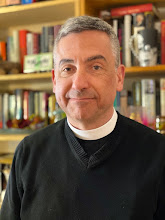

 Posts
Posts

