Grace Episcopal Church, Madison NJ
April 11, 2010
Year C: The Second Sunday of Easter
Acts 5:27-32
Psalm 118:14-29
(Revelation 1:4-8)
John 20:19-31
The Buoyancy of God
As I’ve gotten a little older more and more when I remember things about the past I question the reliability of my memory. Did that really happen the way I remember? Or sometimes I feel kind of removed from things that I know happened. In my memory it feels like I’m watching a movie or a TV show in which I’m one of the actors.
Some of the most vivid memories of my childhood come from the summer my family belonged to the Skyline Cabana Club. I think it was the summer of 1973 and I was about six years old. The Skyline Cabana Club was in Jersey City, just next to what is today Liberty State Park. Back then, however, the park was just a dream for what was mostly abandoned railyards.
Anyway, I don’t know how it would stack up against Noe Pond, but to us from the mean streets of Jersey City, the club was an amazing oasis. There were fields and playgrounds, restaurants, and lots of cabanas. As I remember them, the cabanas were too small to be anything other than large changing rooms. But the centerpiece of the Skyline Cabana Club was the pool.
It was the biggest, deepest pool I had ever seen. It was an in-ground and it had diving boards that seemed dangerously high to six year-old me. I had been in modest, above-ground backyard pools, but this pool was something very different and pretty scary. Reasonably cautious, I stayed in the shallow end and was definitely too afraid to even go near the diving boards.
I wish I could remember all the details. But at the pool one day I guess I must have been talking about my fear of the pool and the diving boards. Suddenly my aunt’s boyfriend (who was a lifeguard) scooped me up and carried me to the tallest of the three diving boards. I remember trying not to panic and not to cry in front of this guy who was in high school and who seemed so much older and so much bigger than I.
In my memory I can picture the scene. I can see him carrying me out onto the diving board, bouncing and jumping off. I remember opening my eyes for an instant and seeing the steps of the ladder racing by. And then we were in the water. And then I was on the surface, coughing, my little arms and legs wiggling, and my aunt’s boyfriend holding on to me and guiding me back to the pool’s edge.
I can’t claim to remember everything with complete accuracy but I know it was a dramatic experience. I wish I could tell you that it was a breakthrough experience for me – that I got out of the pool, ran up onto the diving board and jumped in again.
But, in fact, it took a long time before I gained confidence in the water. It took a long time before I was able trust that I would be OK in the water. It was a long time before I trusted in the buoyancy of the water.
This is how faith develops and grows. Faith is not perfected by a sudden and dramatic experience. And faith is not so much convincing ourselves that facts about God are true. Instead faith is much better understood simply as developing trust in God. In his book The Heart of Christianity, Marcus Borg writes, “Faith as trust is trusting in the buoyancy of God. Faith is trusting in the sea of being in which we live and move and have our being.
“Faith as trust is trusting in the buoyancy of God.” I really like that.
“Faith as trust is trusting in the buoyancy of God.” This is very difficult.
Every year on the Second Sunday of Easter the Church presents the story of an apostle who had some difficulties trusting in the buoyancy of God.
I like that each year the Church offers the story of Doubting Thomas on the Second Sunday of Easter. I like it because it reflects a certain honesty and realism on the part of Christianity. We recognize the claim that we make – the claim that Christ is risen, that the Lord is risen indeed – is a claim that is not easy for us to accept or trust. Faith is trust and, let’s be honest, it’s not easy for most of us to trust.
The story of Doubting Thomas is wonderful, but it does create some problems. It’s found only in the Gospel of John - the last of the four gospels, written near the end of the First Century, a couple of generations after the arrest and crucifixion of Jesus. This gospel was written for a community that was now faced with an excruciating choice.
Of course, there had been tensions all along between the Jewish religious authorities and Jesus and his first followers. We heard some of that tension in the reading from the Acts of the Apostles when Peter and the others were testifying before the council. But, for the most part, for the first few decades after Jesus’ earthly lifetime it had been possible for Jewish believers in Jesus to continue to worship in the synagogue. For those first few decades it was possible to both Jewish and Christian.
But by the end of the First Century both Judaism and Christianity were changing. The Temple in Jerusalem had been destroyed by the Romans, believers in Jesus were increasingly claiming that he was divine, and meanwhile more and more non-Jews were discovering Jesus and seeing him not only as the Jewish messiah but the messiah for the whole world.
And so near the end of the First Century the Jewish followers of Jesus faced a choice: continue to follow Jesus and cut themselves off from Jewish life or reject Jesus and remain in the faith tradition of their ancestors.
You can imagine just how difficult that choice must have been.
I mention this little history lesson because for most of Christian history parts of the Gospel of John – and most especially the story of the Passion and Resurrection of Jesus – have been used to justify Christian anti-Semitism.
And so each time we read these scriptures, each time we read that the disciples locked the doors of the house “for fear of the Jews” it is necessary to remind ourselves of the context in which this text was written. The Jesus movement began as a Jewish movement and the Gospel of John was written by Jews, to Jews and for Jews.
The disciples may have been afraid of the authorities, of the religious establishment, but since they were all Jews themselves, it would make no sense for them to be afraid of “the Jews.” And of course the later “Christian” idea that the Jewish people bear collective responsibility for the death of Jesus would have been incomprehensible to the author of the gospel and its first readers and hearers.
With that context in mind, what might the powerful story of Doubting Thomas powerful story might say to us here and now?
There’s always been a lot of speculation about why Thomas wasn’t with the other apostles when the Resurrected Christ first appeared. I’ve imagined Thomas out in the desert, venting his anger and disappointment by yelling into the sky at God. Recently I read something written by a seminary classmate who suggested a beautiful and intriguing idea: maybe Thomas wasn’t around because he was off tending to the burial of Judas.
In any event, like the first readers and hearers of the gospel and of course like us, Thomas was not present at the first resurrection appearance. Maybe like the first readers and hearers of the gospel and maybe like us, Thomas doubted the claims made by the other disciples. But then, Thomas, better late than never, rejoins the group and has his dramatic encounter with the Resurrected Christ.
The gospel quotes Jesus as saying to Thomas and, in effect, saying to us, “Have you believed because you have seen me? Blessed are those who have not seen and yet have come to believe.”
In effect Jesus says, blessed are those who trust in the buoyancy of God. Blessed are those who trust that in Christ we see what God is really like. Blessed are those who trust that for Christ death was not the end. Blessed are those who trust that since Christ is risen, then for us also death is not the end.
We often wonder why Thomas wasn’t around when the disciples first encountered the Resurrected Christ. But, I wonder what the rest of his life was like. There is an ancient tradition that Thomas brought the Good News all the way to India. Wherever he went he must have carried the powerful memory of his encounter with the Resurrected Christ.
But I wonder if as time passed he began to doubt again. I wonder if he didn’t start to doubt his own memory. I wonder if he didn’t look back on all that had happened and wonder if that had really happened the way he remembered. I wonder if he didn’t look back and it seemed like he was watching himself playing a part in a great drama.
Thomas had a powerful experience, but I bet that dramatic experience didn’t perfect his faith. I think it must have taken the rest of his life to build trust in the buoyancy of God. Like all of us, each day in the midst of the ordinary and extraordinary challenges of life, Thomas needed to pay attention and to be open to the power of God. Just like for all of us, it must have taken the rest of his life of seeing and sensing the power of God for Thomas to let go, to breathe, and to trust in the buoyancy of God.
At the 11:15 service we’re going to baptize a child, Katelyn Anne. The baptism may not seem as dramatic as encountering the Resurrected Christ in a locked room. It may not seem as dramatic, but it will be. In baptism God will make an unbreakable, indissoluble bond with Katelyn Anne. Yet Katelyn’s plunge into the water, this encounter with the Resurrected Christ, will of course not perfect her faith. No this baptism, this plunge into the water, this encounter with the Resurrected Christ, will be for her as it is for all Christians, the beginning of a lifetime of letting go, of breathing, and trusting in the buoyancy of God.
Amen.
Sunday, April 11, 2010
Sunday, April 04, 2010
In the Garden
Grace Episcopal Church, Madison NJ
April 4, 2010
Sunday of the Resurrection: Easter Day
Acts 10:34-43
Psalm 118:1-2, 14-24
1 Corinthians 15:19-26
John 20:1-18
In the Garden
Alleluia! Christ is risen! The Lord is risen indeed! Alleluia!
I’m not sure why, but for some reason last night at the Great Vigil of Easter it felt especially good to finally say and sing “Alleluia!”
Maybe because this weekend the weather has been so beautiful, more than ever it seemed to me that there was a real disconnect between what was going on in church and what was going on in the world.
On Good Friday, while the world was outside enjoying the radiant sunshine and warm breezes, here in church we were remembering the betrayal of Jesus in a garden, we were remembering the cries of the crowd calling for his crucifixion; we were remembering his death on the cross and his burial in brand-new tomb.
And Holy Saturday was a disorienting day, too. Again it was beautiful outside. But the Church was in a strange place, somewhere between death and life. In the beautiful morning a handful of us gathered for the simple Holy Saturday service. There was no communion, of course, highlighting the absence of the executed messiah.
But then there were the first stirrings of life here in church. The altar guild arrived and began the remarkable transformation of the bare church into this dazzling display of life and color.
It’s a wonderful thing to see, but by necessity we were getting ahead of ourselves.
So, as always, the Great Vigil of Easter began with the lights off – the absence of light bringing us right back to Good Friday, bringing us right back to the death of Jesus on the Cross, bringing us right back to the tomb.
Maybe in the gloom of the shadowy church we remembered what had gotten us into this mess. Maybe we remembered how because of sin and selfishness and betrayal, human beings – we – had broken our relationship with God. Maybe in the gloom of the shadowy church we remembered the story of that first garden when man and woman hid from God who right from the start was seeking them out, wanting to walk in love with humanity.
Maybe in the gloom of the shadowy church we remembered Good Friday. Maybe we remembered how in Jesus God had come and lived among us. Maybe we remembered how Jesus taught and healed and reached out to the poor and the oppressed.
Maybe in the gloom we remembered all that bad history between God and humanity.
But then in the midst of the gloom of the shadowy church, the Paschal Candle was lighted - symbolizing the resurrection, symbolizing that God is more powerful than death. The Paschal Candle was lighted, symbolizing that nothing can extinguish the light of Christ.
This is the Good News! And the only correct response to this joyous good news is to praise God. So in the service last night we read once again the stories of God’s saving acts. The prayer book offers nine options but requires only two. And the prayer book requires that the story of Israel’s deliverance at the Red Sea must be read. When all hope seemed to be lost, God always manages to turn death into life. We look back at these stories of salvation and give praise to God..
But those great acts of God recorded in the Old Testament are a prologue to God’s greatest act of all – the Resurrection of Jesus Christ.
Genesis tells us that creation began in a garden. Genesis also tells us that the relationship between God and humanity was broken in a garden. The Evangelist John tells us that Jesus was betrayed in a garden. And as we heard just a few minutes ago, the Evangelist John also tells us that the new creation begins in a garden. The healing of the broken relationship between God and humanity begins in a garden.
But, that’s not all. After Mary Magdalene encountered the resurrected Christ – after first mistaking him for a gardener – she went to the disciples and announced, “I have seen the Lord.” Magdalene’s encounter with the Resurrected Christ and her willingness to share this joyous good news marks the beginning of the Christian community. The Christian community began right there in that garden. Later, at the end of the Great Fifty Days of Easter, on Pentecost, the Christian community received the gift of the Holy Spirit and became the Church.
Over time the Church’s understanding of its identity and mission changed and deepened. As we heard in the lesson from the Acts of the Apostles, the Church came to understand that Jesus is the messiah for the whole world. So Peter can say to the gentiles, “I truly understand that God shows no partiality, but in every nation anyone who fears him and does what is right is acceptable to him.”
Paul, who never met Jesus during his earthly lifetime, spent his life traveling around the Mediterranean world telling people from many different nations that Jesus is Lord of all and that Jesus is risen. And Paul understood what Christ’s resurrection means for us. Paul saw the connection between that first garden where the relationship between God and humanity was broken and that other garden where Magdalene encountered the Risen Christ. Paul understood the awesomely Good News of what Christ’s resurrection means for all of us. Paul writes to the Corinthians, “for as all die in Adam, so all will be made alive in Christ.”
Recognizing that Jesus has opened the way for all of us, Paul and Peter and so many others were willing – and are willing – to give away their lives sharing this Good News with the world.
And thanks to all of those women and men who gave away their lives sharing the Good News of Christ, here we are today – here we are, the Church remembering this greatest saving act of God, the raising of Jesus Christ from the dead.
But, you know, as much as the Church has changed over the past two thousand years, at our core, we’re still right there with Mary Magdalene in the garden.
At our core, you and I – the Church – we’re still right there with Mary Magdalene in the garden, encountering the Resurrected Christ. In very special ways we encounter the Resurrected Christ in the water of baptism and we encounter the Resurrected Christ in the bread and wine we receive at the Lord’s Table.
At our core, you and I – the Church – we’re still right there with Mary Magdalene in the garden. We encounter the Resurrected Christ in Scripture and, who knows, maybe even in the sermon. We encounter the Resurrected Christ in the hymns and the prayers. We encounter the Resurrected Christ when we receive forgiveness of our sins and exchange a sign of peace with our brothers and sisters.
You and I – the Church – encounter the Resurrected Christ when we become the Body of Christ in the world – raising large sums of money for Haiti, dropping a can of food into the barrel, visiting the sick and lonely, ladling soup into the bowls of hungry people, sharing in one another’s joys and sorrows.
At our core, you and I – the Church – we’re still right there with Mary Magdalene in the garden. We’re in the garden – the place where God gives us all that we need. We’re in the garden, where Christ really is the gardener, caring for us, tending to us, praying alongside of us. We’re in the garden - where God gives us rich soil and fertile plants. We’re in the garden – where God gives us abundant rainfall and plentiful sunshine. We’re in the garden – the place where God gives us all that we need and gives us the freedom and the skill to feed and bless one another.
At our core, you and I – the Church – we’re still right there with Mary Magdalene in the garden. We’re in the garden – the place where God searches for us, wanting to be in relationship with us. We’re in the garden – the place where we discover that nothing – nothing - not even death – can extinguish the light of Christ.
We’re still right there with Mary Magdalene in the garden – surprised, tearful, and overjoyed. We’re in the garden – encountering the Resurrected Christ.
Alleluia!
April 4, 2010
Sunday of the Resurrection: Easter Day
Acts 10:34-43
Psalm 118:1-2, 14-24
1 Corinthians 15:19-26
John 20:1-18
In the Garden
Alleluia! Christ is risen! The Lord is risen indeed! Alleluia!
I’m not sure why, but for some reason last night at the Great Vigil of Easter it felt especially good to finally say and sing “Alleluia!”
Maybe because this weekend the weather has been so beautiful, more than ever it seemed to me that there was a real disconnect between what was going on in church and what was going on in the world.
On Good Friday, while the world was outside enjoying the radiant sunshine and warm breezes, here in church we were remembering the betrayal of Jesus in a garden, we were remembering the cries of the crowd calling for his crucifixion; we were remembering his death on the cross and his burial in brand-new tomb.
And Holy Saturday was a disorienting day, too. Again it was beautiful outside. But the Church was in a strange place, somewhere between death and life. In the beautiful morning a handful of us gathered for the simple Holy Saturday service. There was no communion, of course, highlighting the absence of the executed messiah.
But then there were the first stirrings of life here in church. The altar guild arrived and began the remarkable transformation of the bare church into this dazzling display of life and color.
It’s a wonderful thing to see, but by necessity we were getting ahead of ourselves.
So, as always, the Great Vigil of Easter began with the lights off – the absence of light bringing us right back to Good Friday, bringing us right back to the death of Jesus on the Cross, bringing us right back to the tomb.
Maybe in the gloom of the shadowy church we remembered what had gotten us into this mess. Maybe we remembered how because of sin and selfishness and betrayal, human beings – we – had broken our relationship with God. Maybe in the gloom of the shadowy church we remembered the story of that first garden when man and woman hid from God who right from the start was seeking them out, wanting to walk in love with humanity.
Maybe in the gloom of the shadowy church we remembered Good Friday. Maybe we remembered how in Jesus God had come and lived among us. Maybe we remembered how Jesus taught and healed and reached out to the poor and the oppressed.
Maybe in the gloom we remembered all that bad history between God and humanity.
But then in the midst of the gloom of the shadowy church, the Paschal Candle was lighted - symbolizing the resurrection, symbolizing that God is more powerful than death. The Paschal Candle was lighted, symbolizing that nothing can extinguish the light of Christ.
This is the Good News! And the only correct response to this joyous good news is to praise God. So in the service last night we read once again the stories of God’s saving acts. The prayer book offers nine options but requires only two. And the prayer book requires that the story of Israel’s deliverance at the Red Sea must be read. When all hope seemed to be lost, God always manages to turn death into life. We look back at these stories of salvation and give praise to God..
But those great acts of God recorded in the Old Testament are a prologue to God’s greatest act of all – the Resurrection of Jesus Christ.
Genesis tells us that creation began in a garden. Genesis also tells us that the relationship between God and humanity was broken in a garden. The Evangelist John tells us that Jesus was betrayed in a garden. And as we heard just a few minutes ago, the Evangelist John also tells us that the new creation begins in a garden. The healing of the broken relationship between God and humanity begins in a garden.
But, that’s not all. After Mary Magdalene encountered the resurrected Christ – after first mistaking him for a gardener – she went to the disciples and announced, “I have seen the Lord.” Magdalene’s encounter with the Resurrected Christ and her willingness to share this joyous good news marks the beginning of the Christian community. The Christian community began right there in that garden. Later, at the end of the Great Fifty Days of Easter, on Pentecost, the Christian community received the gift of the Holy Spirit and became the Church.
Over time the Church’s understanding of its identity and mission changed and deepened. As we heard in the lesson from the Acts of the Apostles, the Church came to understand that Jesus is the messiah for the whole world. So Peter can say to the gentiles, “I truly understand that God shows no partiality, but in every nation anyone who fears him and does what is right is acceptable to him.”
Paul, who never met Jesus during his earthly lifetime, spent his life traveling around the Mediterranean world telling people from many different nations that Jesus is Lord of all and that Jesus is risen. And Paul understood what Christ’s resurrection means for us. Paul saw the connection between that first garden where the relationship between God and humanity was broken and that other garden where Magdalene encountered the Risen Christ. Paul understood the awesomely Good News of what Christ’s resurrection means for all of us. Paul writes to the Corinthians, “for as all die in Adam, so all will be made alive in Christ.”
Recognizing that Jesus has opened the way for all of us, Paul and Peter and so many others were willing – and are willing – to give away their lives sharing this Good News with the world.
And thanks to all of those women and men who gave away their lives sharing the Good News of Christ, here we are today – here we are, the Church remembering this greatest saving act of God, the raising of Jesus Christ from the dead.
But, you know, as much as the Church has changed over the past two thousand years, at our core, we’re still right there with Mary Magdalene in the garden.
At our core, you and I – the Church – we’re still right there with Mary Magdalene in the garden, encountering the Resurrected Christ. In very special ways we encounter the Resurrected Christ in the water of baptism and we encounter the Resurrected Christ in the bread and wine we receive at the Lord’s Table.
At our core, you and I – the Church – we’re still right there with Mary Magdalene in the garden. We encounter the Resurrected Christ in Scripture and, who knows, maybe even in the sermon. We encounter the Resurrected Christ in the hymns and the prayers. We encounter the Resurrected Christ when we receive forgiveness of our sins and exchange a sign of peace with our brothers and sisters.
You and I – the Church – encounter the Resurrected Christ when we become the Body of Christ in the world – raising large sums of money for Haiti, dropping a can of food into the barrel, visiting the sick and lonely, ladling soup into the bowls of hungry people, sharing in one another’s joys and sorrows.
At our core, you and I – the Church – we’re still right there with Mary Magdalene in the garden. We’re in the garden – the place where God gives us all that we need. We’re in the garden, where Christ really is the gardener, caring for us, tending to us, praying alongside of us. We’re in the garden - where God gives us rich soil and fertile plants. We’re in the garden – where God gives us abundant rainfall and plentiful sunshine. We’re in the garden – the place where God gives us all that we need and gives us the freedom and the skill to feed and bless one another.
At our core, you and I – the Church – we’re still right there with Mary Magdalene in the garden. We’re in the garden – the place where God searches for us, wanting to be in relationship with us. We’re in the garden – the place where we discover that nothing – nothing - not even death – can extinguish the light of Christ.
We’re still right there with Mary Magdalene in the garden – surprised, tearful, and overjoyed. We’re in the garden – encountering the Resurrected Christ.
Alleluia!

Friday, April 02, 2010
The Marginal Messiah
Grace Episcopal Church, Madison NJ
April 2, 2010
Good Friday
Isaiah 52:13-53:12
Hebrews 10:1-25
John 18:1-19:37
The Marginal Messiah
If we didn’t know better, we would think that this is how the story ends. If we didn’t know better we would think that with the brutal death of Jesus on the Cross, the story of God reaching out to humanity had once and for all come to an end.
It’s a story truer than history, a story that began in a garden, a story that began with God seeking out human beings for friendship – God seeking to walk in love with us. But, we know how that worked out. Human beings gave into temptation and chose betrayal instead - and our relationship with God was broken.
The story of the Hebrew Scriptures is the story of God making a deal with God’s people – a covenant that God promises to never break, no matter what. But God wanted more than just a contractual relationship with the people. Over and over God appointed patriarchs and judges and prophets in a relentless but seemingly hopeless attempt to repair our broken relationship with God. And over and over God’s messengers were rejected
And the story of the New Testament is the story of God doing something truly unexpected and mind-blowing in an apparently all-out effort to repair the broken relationship with humanity. God becomes uniquely present in an individual human being, Jesus of Nazareth. When we look at Jesus we see what God is really like.
One of our Eucharistic Prayers captures beautifully Jesus’ life and ministry: “Living among us, Jesus loved us. He broke bread with outcasts and sinners, healed the sick, and proclaimed good news to the poor. He yearned to draw all the world to himself. Yet we were heedless of his call to walk in love.”
“Yet we were heedless of his call to walk in love.” Beautiful language for the very ugly scene we just heard described in John’s Gospel. This was the last of the four gospels, written near the end of the First Century, a couple of generations after the arrest and crucifixion of Jesus. The gospel was written for a community that was now faced with an excruciating choice. For the first few decades after Jesus’ earthly lifetime it had been possible for Jewish believers in Jesus to continue to worship in the synagogue. For those first few decades it was possible to both Jewish and Christian.
But by the end of the First Century both Judaism and Christianity were changing. The Temple in Jerusalem had been destroyed by the Romans, believers in Jesus were increasingly claiming that he was divine, and meanwhile more and more non-Jews were discovering Jesus and seeing him not only as the Jewish messiah but the messiah for the whole world.
And so near the end of the First Century the Jewish followers of Jesus faced a choice. Continue to follow Jesus and cut themselves off from Jewish life or reject Jesus and remain in the faith tradition of their ancestors.
You can imagine just how difficult that choice must have been.
I mention this little history lesson because for most of Christian history parts of the Gospel of John – and most especially the Passion – have been used to justify Christian anti-Semitism.
And so each time we read these scriptures it is necessary to remind ourselves of the context in which they were written. The Jesus movement began as a Jewish movement and the Gospel of John was written by Jews, to Jews and for Jews.
And so the later “Christian” idea that the Jewish people bear collective responsibility for the death of Jesus would have been incomprehensible to the author of the gospel and its first readers and hearers.
However, the author of the gospel and the first readers and hearers of the gospel certainly mourned the tragedy of what happened to Jesus. After God took the risk to reveal God’s Self in Jesus, after all the teaching and the healing and the miracles, we end up once again with God betrayed by humanity in a garden. More than that, we end up with God buried in a garden.
You have to admit that if we were writing an opera or a novel this would be an intensely sad and immensely powerful ending.
If we didn’t know better we’d think this is how the story ends.
But let’s back up and look more closely at these betrayals. It’s easy to explain the temptation that led to the betrayal in the Garden of Eden, isn’t it? You know the story; God says all of this is yours, except for the fruit of this one tree. I remember back in my teaching days, when students were taking exams they would not be allowed to use the bathroom or to get a drink from the water fountain. There were always a few students who would immediately fixate on these reasonable prohibitions – maybe because they wanted to cheat or more likely just because they wanted what was forbidden.
We all know about that kind of temptation, and maybe we know about the betrayal that can come if we give into that kind of temptation.
But why the betrayal of Jesus?
The Gospel of John doesn’t have anything good to say about Judas. He’s described as a thief, as someone who pretends to be interested in the poor. In the end, though, the explanation we’re given for Judas’ betrayal of his Lord is that “Satan entered into him.” Satan the tempter enters Judas and he acts out the old, old story of human beings giving in to temptation and betraying God.
What was the temptation for Judas? Maybe Judas wanted Jesus to be a different kind of messiah. Maybe Judas wanted Jesus to boldly challenge and overthrow the Romans and the Temple Priests and to create his kingdom here and now on earth.
If that’s the case, then the real temptation for Judas was to see the world his way and not the way God sees the world. Maybe Judas’ downfall was remaining too focused on what the world saw as central – the Roman imperial regime and the powerful Jewish priestly class. But, God’s focus is different.
It turns out that when we look to the margins we find the heart of God.
God chose to enter the world on the margins. The priest and scholar John Meier has referred to Jesus as “a marginal Jew.” Jesus was raised in Galilee – an agricultural land given to the humble work of growing of grapes and olives, to fishing and to the herding of sheep. The sophisticated people in Jerusalem saw the Galileans as backward country bumpkins – easy to identify because of their funny accent. The way the world saw it, Jerusalem was the center and Galilee was on the margins.
God enters the world through this marginal Jew with a funny accent, Jesus of Nazareth. Born under circumstances that must have provoked lots of gossip, Jesus spent most of his earthly lifetime on the margins – growing up and beginning his ministry in Galilee, reaching out to the other marginal people, the fishermen, the shepherds, the women, the tax collectors, the blind, the ill. Jesus is the marginal messiah.
When we look to the margins we find the heart of God.
Throughout his earthly ministry, Jesus doesn’t have much to do with those the world considers central. Instead Jesus lifts up those the world dismisses as marginal.
In the Beatitudes Jesus lifts up the poor in spirit, the mourners, the meek, those who hunger and thirst for righteousness, the merciful, the pure in heart, the peacemakers, the persecuted. Jesus says in the kingdom, in God’s way of seeing the world, these are the people who are central. The world dismisses them as marginal, but it’s when we look to the margins that we find the heart of God.
The world sees accumulating wealth and possessions as absolutely central. But when a man who had obeyed the commandments asked Jesus what he must do to inherit eternal life, Jesus told him, “You lack one thing; go, sell what you own, and give the money to the poor, and you will have treasure in heaven; then come, follow me.” Not a common view, to be sure. When we look to the margins we find the heart of God.
The world teaches hate your enemy, hold a grudge, and seek revenge on those who hurt you. And yet just a few weeks ago here in church we once again heard the familiar parable of the Prodigal Son. The way the world sees things, the father in that story should have shut the door in the face of the disgraceful son who had gone off and wasted his inheritance. Instead, when the father spots his lost son approaching in the distance, Jesus tells us, “he was filled with compassion; he ran out and put his arms around him and kissed him.”
The world would have condemned the son as a loser, leaving him to rot at the margins of society. Yet, when we look to the margins we find the heart of God.
In much of the world today, half of humanity is seen as marginal. At best women are at best second-class citizens and at worst women are reduced to handing over control of their lives to fathers and husbands. Yet, two thousand years ago the gospels tell us that Jesus the marginal messiah treated women with great respect and friendship. He engaged in conversation with – and revealed his identity to – the Samaritan woman at the well. When the crowd was willing to stone the woman caught in adultery, Jesus instead challenged the men who would condemn her and offered mercy to the woman.
The sisters Mary and Martha were two of his closest friends and, of course, there was Mary Magdalene. On Sunday once again we will hear the story of Mary Magdalene, the apostle to the apostles. Then as now women were on the margins of society. And over and over, Jesus lifts up what the world dismisses as marginal.
When we look to the margins we find the heart of God.
If God owned a newspaper or a cable news network I believe God would open news bureaus in all the marginal places. There would be news bureaus in Camden; in Port-au-Prince; in Flint, Michigan; in a refugee camp in Sudan; in a small mining town in Appalachia; and maybe even a few blocks away, right here in Madison, where poor people are hidden away, crammed into tiny apartments.
When we look to the margins we find the heart of God.
So, what about us? Let’s face it; living here we are some of the most fortunate people in the world. Does this mean that we buy into what the world considers to be central? Or, although we are fortunate enough to live here, are we willing to look to the margins? Are we willing to even try to see the world how God sees the world? Or do we give into the temptation to just see the world our way?
If we see as central what the world sees as central then just like Judas we fall to temptation and betray Jesus, the marginal messiah.
If we don’t even try to see the world how God sees the world, if we don’t even try to look to the margins, then we fall to temptation and join with Judas in betraying Jesus, the marginal messiah.
“Living among us, Jesus loved us. He broke bread with outcasts and sinners, healed the sick, and proclaimed good news to the poor. He yearned to draw all the world to himself. Yet we were heedless of his call to walk in love.”
If we didn’t know better we would think this is how the story ends. But we know the story doesn’t end at the tomb. We know that God’s not done reaching out to us. We know that God’s not done trying to heal the broken relationship with us. We know on Sunday morning we’ll gather with Mary Magdalene in the garden and make the joyful discovery that Jesus has conquered death.
But for now let’s mourn all the times we’ve looked away from the margins. Let’s mourn all the times we’ve been heedless of Jesus’ call to walk in love. For now, let’s mourn our betrayal of Jesus, the marginal messiah.
April 2, 2010
Good Friday
Isaiah 52:13-53:12
Hebrews 10:1-25
John 18:1-19:37
The Marginal Messiah
If we didn’t know better, we would think that this is how the story ends. If we didn’t know better we would think that with the brutal death of Jesus on the Cross, the story of God reaching out to humanity had once and for all come to an end.
It’s a story truer than history, a story that began in a garden, a story that began with God seeking out human beings for friendship – God seeking to walk in love with us. But, we know how that worked out. Human beings gave into temptation and chose betrayal instead - and our relationship with God was broken.
The story of the Hebrew Scriptures is the story of God making a deal with God’s people – a covenant that God promises to never break, no matter what. But God wanted more than just a contractual relationship with the people. Over and over God appointed patriarchs and judges and prophets in a relentless but seemingly hopeless attempt to repair our broken relationship with God. And over and over God’s messengers were rejected
And the story of the New Testament is the story of God doing something truly unexpected and mind-blowing in an apparently all-out effort to repair the broken relationship with humanity. God becomes uniquely present in an individual human being, Jesus of Nazareth. When we look at Jesus we see what God is really like.
One of our Eucharistic Prayers captures beautifully Jesus’ life and ministry: “Living among us, Jesus loved us. He broke bread with outcasts and sinners, healed the sick, and proclaimed good news to the poor. He yearned to draw all the world to himself. Yet we were heedless of his call to walk in love.”
“Yet we were heedless of his call to walk in love.” Beautiful language for the very ugly scene we just heard described in John’s Gospel. This was the last of the four gospels, written near the end of the First Century, a couple of generations after the arrest and crucifixion of Jesus. The gospel was written for a community that was now faced with an excruciating choice. For the first few decades after Jesus’ earthly lifetime it had been possible for Jewish believers in Jesus to continue to worship in the synagogue. For those first few decades it was possible to both Jewish and Christian.
But by the end of the First Century both Judaism and Christianity were changing. The Temple in Jerusalem had been destroyed by the Romans, believers in Jesus were increasingly claiming that he was divine, and meanwhile more and more non-Jews were discovering Jesus and seeing him not only as the Jewish messiah but the messiah for the whole world.
And so near the end of the First Century the Jewish followers of Jesus faced a choice. Continue to follow Jesus and cut themselves off from Jewish life or reject Jesus and remain in the faith tradition of their ancestors.
You can imagine just how difficult that choice must have been.
I mention this little history lesson because for most of Christian history parts of the Gospel of John – and most especially the Passion – have been used to justify Christian anti-Semitism.
And so each time we read these scriptures it is necessary to remind ourselves of the context in which they were written. The Jesus movement began as a Jewish movement and the Gospel of John was written by Jews, to Jews and for Jews.
And so the later “Christian” idea that the Jewish people bear collective responsibility for the death of Jesus would have been incomprehensible to the author of the gospel and its first readers and hearers.
However, the author of the gospel and the first readers and hearers of the gospel certainly mourned the tragedy of what happened to Jesus. After God took the risk to reveal God’s Self in Jesus, after all the teaching and the healing and the miracles, we end up once again with God betrayed by humanity in a garden. More than that, we end up with God buried in a garden.
You have to admit that if we were writing an opera or a novel this would be an intensely sad and immensely powerful ending.
If we didn’t know better we’d think this is how the story ends.
But let’s back up and look more closely at these betrayals. It’s easy to explain the temptation that led to the betrayal in the Garden of Eden, isn’t it? You know the story; God says all of this is yours, except for the fruit of this one tree. I remember back in my teaching days, when students were taking exams they would not be allowed to use the bathroom or to get a drink from the water fountain. There were always a few students who would immediately fixate on these reasonable prohibitions – maybe because they wanted to cheat or more likely just because they wanted what was forbidden.
We all know about that kind of temptation, and maybe we know about the betrayal that can come if we give into that kind of temptation.
But why the betrayal of Jesus?
The Gospel of John doesn’t have anything good to say about Judas. He’s described as a thief, as someone who pretends to be interested in the poor. In the end, though, the explanation we’re given for Judas’ betrayal of his Lord is that “Satan entered into him.” Satan the tempter enters Judas and he acts out the old, old story of human beings giving in to temptation and betraying God.
What was the temptation for Judas? Maybe Judas wanted Jesus to be a different kind of messiah. Maybe Judas wanted Jesus to boldly challenge and overthrow the Romans and the Temple Priests and to create his kingdom here and now on earth.
If that’s the case, then the real temptation for Judas was to see the world his way and not the way God sees the world. Maybe Judas’ downfall was remaining too focused on what the world saw as central – the Roman imperial regime and the powerful Jewish priestly class. But, God’s focus is different.
It turns out that when we look to the margins we find the heart of God.
God chose to enter the world on the margins. The priest and scholar John Meier has referred to Jesus as “a marginal Jew.” Jesus was raised in Galilee – an agricultural land given to the humble work of growing of grapes and olives, to fishing and to the herding of sheep. The sophisticated people in Jerusalem saw the Galileans as backward country bumpkins – easy to identify because of their funny accent. The way the world saw it, Jerusalem was the center and Galilee was on the margins.
God enters the world through this marginal Jew with a funny accent, Jesus of Nazareth. Born under circumstances that must have provoked lots of gossip, Jesus spent most of his earthly lifetime on the margins – growing up and beginning his ministry in Galilee, reaching out to the other marginal people, the fishermen, the shepherds, the women, the tax collectors, the blind, the ill. Jesus is the marginal messiah.
When we look to the margins we find the heart of God.
Throughout his earthly ministry, Jesus doesn’t have much to do with those the world considers central. Instead Jesus lifts up those the world dismisses as marginal.
In the Beatitudes Jesus lifts up the poor in spirit, the mourners, the meek, those who hunger and thirst for righteousness, the merciful, the pure in heart, the peacemakers, the persecuted. Jesus says in the kingdom, in God’s way of seeing the world, these are the people who are central. The world dismisses them as marginal, but it’s when we look to the margins that we find the heart of God.
The world sees accumulating wealth and possessions as absolutely central. But when a man who had obeyed the commandments asked Jesus what he must do to inherit eternal life, Jesus told him, “You lack one thing; go, sell what you own, and give the money to the poor, and you will have treasure in heaven; then come, follow me.” Not a common view, to be sure. When we look to the margins we find the heart of God.
The world teaches hate your enemy, hold a grudge, and seek revenge on those who hurt you. And yet just a few weeks ago here in church we once again heard the familiar parable of the Prodigal Son. The way the world sees things, the father in that story should have shut the door in the face of the disgraceful son who had gone off and wasted his inheritance. Instead, when the father spots his lost son approaching in the distance, Jesus tells us, “he was filled with compassion; he ran out and put his arms around him and kissed him.”
The world would have condemned the son as a loser, leaving him to rot at the margins of society. Yet, when we look to the margins we find the heart of God.
In much of the world today, half of humanity is seen as marginal. At best women are at best second-class citizens and at worst women are reduced to handing over control of their lives to fathers and husbands. Yet, two thousand years ago the gospels tell us that Jesus the marginal messiah treated women with great respect and friendship. He engaged in conversation with – and revealed his identity to – the Samaritan woman at the well. When the crowd was willing to stone the woman caught in adultery, Jesus instead challenged the men who would condemn her and offered mercy to the woman.
The sisters Mary and Martha were two of his closest friends and, of course, there was Mary Magdalene. On Sunday once again we will hear the story of Mary Magdalene, the apostle to the apostles. Then as now women were on the margins of society. And over and over, Jesus lifts up what the world dismisses as marginal.
When we look to the margins we find the heart of God.
If God owned a newspaper or a cable news network I believe God would open news bureaus in all the marginal places. There would be news bureaus in Camden; in Port-au-Prince; in Flint, Michigan; in a refugee camp in Sudan; in a small mining town in Appalachia; and maybe even a few blocks away, right here in Madison, where poor people are hidden away, crammed into tiny apartments.
When we look to the margins we find the heart of God.
So, what about us? Let’s face it; living here we are some of the most fortunate people in the world. Does this mean that we buy into what the world considers to be central? Or, although we are fortunate enough to live here, are we willing to look to the margins? Are we willing to even try to see the world how God sees the world? Or do we give into the temptation to just see the world our way?
If we see as central what the world sees as central then just like Judas we fall to temptation and betray Jesus, the marginal messiah.
If we don’t even try to see the world how God sees the world, if we don’t even try to look to the margins, then we fall to temptation and join with Judas in betraying Jesus, the marginal messiah.
“Living among us, Jesus loved us. He broke bread with outcasts and sinners, healed the sick, and proclaimed good news to the poor. He yearned to draw all the world to himself. Yet we were heedless of his call to walk in love.”
If we didn’t know better we would think this is how the story ends. But we know the story doesn’t end at the tomb. We know that God’s not done reaching out to us. We know that God’s not done trying to heal the broken relationship with us. We know on Sunday morning we’ll gather with Mary Magdalene in the garden and make the joyful discovery that Jesus has conquered death.
But for now let’s mourn all the times we’ve looked away from the margins. Let’s mourn all the times we’ve been heedless of Jesus’ call to walk in love. For now, let’s mourn our betrayal of Jesus, the marginal messiah.
Thursday, April 01, 2010
Transformational Leadership
Grace Episcopal Church, Madison NJ
The Messenger
Curate’s Corner
Transformational Leadership
I have mentioned before that I have given a good deal of thought to the subject of leadership. What is effective leadership? Is Christian leadership any different from solid leadership in the secular world? Well, during Lent I had two very different experiences which have helped me to clarify my answers to these big questions.
The first experience was “Beyond the Baptismal Covenant: Lay Leadership for the 21st Century,” a three-part program sponsored by the Diocese of Newark, led by Donald Romanik, president of the Episcopal Church Foundation, and held right here at Grace Church. Mr. Romanik suggested that, although the Episcopal Church has enshrined lay leadership since at least the first General Convention in 1785, for much of the Church’s history the clergy were expected to lead and lay people were encouraged to simply follow. He claimed that the 1979 Book of Common Prayer marked a significant shift in our understanding of church leadership. He pointed to this sentence from the Catechism: “The ministers of the Church are lay persons, bishops, priests, and deacons” (BCP pg. 855). Mr. Romanik argued that over the past thirty years the lay people of the Church have begun to live into their top billing, but now during a time of rapid change we need to go even further and encourage “transformational leadership” among the laity.
These ideas were rattling around my brain when I had my second experience. I was invited to speak at St. Vincent Academy, an all-girls Roman Catholic high school in Newark, where I had taught history in the early and mid-1990s. For the past 35 years during the week before Holy Week the juniors and seniors are sent out to volunteer at schools, hospitals, day care centers and other places providing social services as part of an a remakable program called “Students in Community.” I was invited to speak at the “Sending Forth” on the Friday before they began this adventure in service.
In my talk I reflected back on my time at SVA and used as my theme a quote I first had heard back then and has stuck with me ever since. Marian Wright Edelman, president of the Children’s Defense Fund, once said, “Service is the rent we pay to be living. It is the very purpose of life and not something you do in your spare time.” Isn’t that a great line? I suggested to the students that this truth is what they had been learning at St. Vincent’s. To clinch my case I quoted a portion of the school’s wonderful mission statement:
Saint Vincent Academy inspires students to develop lifelong commitments to Christian service and a capacity for hope, compassionate leadership and the desire to transform the world into a more just and peaceful society.
The pieces all came together! The SVA mission statement elegantly links service, leadership and transformation. When I reflected on this I realized what should have been obvious all along: The only truly transformational leadership is servant leadership. The late Bishop of Atlanta, Bennett J. Sims, once wrote, “Servant leadership defines success as giving, and measures achievement by devotion to serving.” I said to students that not only were they going out to offer service but that they were also to be servant leaders.
Imagine the transformation that would take place if all of us aspired to be servant leaders! Actually, we don’t have to imagine because at Grace Church that transformation is already underway thanks to our many servant leaders. Think of the person who sacrifices a week of vacation to take care of a laundry list of odd jobs that needed doing around church. Think of the person who personally visits all of the organizations who receive outreach money from us. Think of the person who faithfully and quietly reaches out to people who are shut in at home or living in a nursing home. Think of the person who offers his expertise to struggling churches in the diocese. Think of the person who anonymously matches the money raised by our children to help the people of Haiti. All of these people and many more are not just offering service but are also acting as servant leaders.
Finally, especially during Eastertide we should look to the greatest of all servant leaders, Jesus of Nazareth. In his life of love and sacrifice, Jesus models for us true greatness and true leadership through service. Each year during Holy Week at the Compline for Kids service we reenact the foot washing done by Jesus at the Last Supper for his closest followers, the people who would take the lead in carrying his message to the world. Deeper than words, this dramatically humble action taught them - and teaches us - that the ultimate transformational leadership is servant leadership.
The Messenger
Curate’s Corner
Transformational Leadership
I have mentioned before that I have given a good deal of thought to the subject of leadership. What is effective leadership? Is Christian leadership any different from solid leadership in the secular world? Well, during Lent I had two very different experiences which have helped me to clarify my answers to these big questions.
The first experience was “Beyond the Baptismal Covenant: Lay Leadership for the 21st Century,” a three-part program sponsored by the Diocese of Newark, led by Donald Romanik, president of the Episcopal Church Foundation, and held right here at Grace Church. Mr. Romanik suggested that, although the Episcopal Church has enshrined lay leadership since at least the first General Convention in 1785, for much of the Church’s history the clergy were expected to lead and lay people were encouraged to simply follow. He claimed that the 1979 Book of Common Prayer marked a significant shift in our understanding of church leadership. He pointed to this sentence from the Catechism: “The ministers of the Church are lay persons, bishops, priests, and deacons” (BCP pg. 855). Mr. Romanik argued that over the past thirty years the lay people of the Church have begun to live into their top billing, but now during a time of rapid change we need to go even further and encourage “transformational leadership” among the laity.
These ideas were rattling around my brain when I had my second experience. I was invited to speak at St. Vincent Academy, an all-girls Roman Catholic high school in Newark, where I had taught history in the early and mid-1990s. For the past 35 years during the week before Holy Week the juniors and seniors are sent out to volunteer at schools, hospitals, day care centers and other places providing social services as part of an a remakable program called “Students in Community.” I was invited to speak at the “Sending Forth” on the Friday before they began this adventure in service.
In my talk I reflected back on my time at SVA and used as my theme a quote I first had heard back then and has stuck with me ever since. Marian Wright Edelman, president of the Children’s Defense Fund, once said, “Service is the rent we pay to be living. It is the very purpose of life and not something you do in your spare time.” Isn’t that a great line? I suggested to the students that this truth is what they had been learning at St. Vincent’s. To clinch my case I quoted a portion of the school’s wonderful mission statement:
Saint Vincent Academy inspires students to develop lifelong commitments to Christian service and a capacity for hope, compassionate leadership and the desire to transform the world into a more just and peaceful society.
The pieces all came together! The SVA mission statement elegantly links service, leadership and transformation. When I reflected on this I realized what should have been obvious all along: The only truly transformational leadership is servant leadership. The late Bishop of Atlanta, Bennett J. Sims, once wrote, “Servant leadership defines success as giving, and measures achievement by devotion to serving.” I said to students that not only were they going out to offer service but that they were also to be servant leaders.
Imagine the transformation that would take place if all of us aspired to be servant leaders! Actually, we don’t have to imagine because at Grace Church that transformation is already underway thanks to our many servant leaders. Think of the person who sacrifices a week of vacation to take care of a laundry list of odd jobs that needed doing around church. Think of the person who personally visits all of the organizations who receive outreach money from us. Think of the person who faithfully and quietly reaches out to people who are shut in at home or living in a nursing home. Think of the person who offers his expertise to struggling churches in the diocese. Think of the person who anonymously matches the money raised by our children to help the people of Haiti. All of these people and many more are not just offering service but are also acting as servant leaders.
Finally, especially during Eastertide we should look to the greatest of all servant leaders, Jesus of Nazareth. In his life of love and sacrifice, Jesus models for us true greatness and true leadership through service. Each year during Holy Week at the Compline for Kids service we reenact the foot washing done by Jesus at the Last Supper for his closest followers, the people who would take the lead in carrying his message to the world. Deeper than words, this dramatically humble action taught them - and teaches us - that the ultimate transformational leadership is servant leadership.
Friday, March 19, 2010
Paying Our Rent
St. Vincent Academy, Newark NJ
Students in Community Sending Forth Ceremony
March 19, 2010
Paying Our Rent
It is a great gift to be back here at St. Vincent’s. You and I have something in common – just like you I did a lot of my growing up here at SVA. I didn’t know what I was in for when I interviewed with Sister June in January, 1992. I had one thing on my mind – I need this job. I hadn’t worked since September and I was just about out of money to pay for rent and life’s other necessities. I was looking at having to give up my little studio apartment and move back with my parents. I love my parents very much, but rightly or wrongly it felt like failure to move back home.
So I arrived here that day with that one thought: I need this job. During the interview Sister June shared with me the mission of SVA – which has really been the mission of the Sisters of Charity for these past 150 years – and is really the mission of the whole Church: the mission to proclaim the Good News of Jesus by living lives of service to our sisters and brothers. To quote from the SVA mission statement:
Saint Vincent Academy inspires students to develop lifelong commitments to Christian service and a capacity for hope, compassionate leadership and the desire to transform the world into a more just and peaceful society.
During my interview as Sister June was telling me all this I was asking myself two questions. You already know the first one: would I get this job? Second, all this stuff about living lives of service sounds very nice, but is SVA really different from other good schools?
And then she began to tell me about Students in Community. I remember being amazed as she described this carefully thought-out program that began in freshman year and then culminated in what you are about to do next week – going out into the world and give yourself in service to others. It was then that I realized that if I got this job – which have I mentioned I really needed? – I was in for a lot more than just teaching history.
In the same way, I’m sure it didn’t take you long to realize that being an SVA student means learning a lot more than math or English or science.
So, this is why I say that like you I grew up at SVA. It was here that I finally really learned that life is about discovering our gifts and giving away our lives in service to others. Our two readings today from St. Paul could not be more appropriate. Paul understood that God has given us all different gifts. Big deal - everyone knows that, right? But Paul also understood that while we have different gifts, we are all united by the job of using our gifts, of giving away our lives, for the “common good.”
It was here at SVA that I finally really learned that this is what life is all about. It’s here that I grew up. Now, don’t get me wrong, I also went to a great high school and I have wonderful parents who tried to get this message across to me. But, it was here, working with Sisters June and Margaret, Ms. Nolan, the Freshman Team and all the rest, that I really learned that the Christian life is discovering the gifts we have been given by God and then giving them all away in lives of service to others. Life is about service. It was here that I first heard the quote from Marian Wright Edelman, “Service is the rent we pay to be living. It is the very purpose of life and not something you do in your spare time.”
I love that. I learned all of these lessons about service working with these remarkable people and I also learned about service from the amazing girls I taught here in the 1990s. I learned from my students in the classroom and I especially learned from them when I visited them in their SIC placements.
I have vivid memories of getting lost riding around the unfamiliar streets of Newark, trying to find the schools and hospitals where the girls were working. This was long before GPS or even mapquest. But my most vivid memories are finding and seeing these young women in a whole different light. It was during SIC that I found out who they really were – talented and generous young people, eager to serve others.
They may not have been too happy about doing social studies homework (I know, hard to believe, right?) but I found them working so hard in a hospital or in a classroom. I found them gently rocking a baby to sleep or sitting patiently listening to a sick and frightened patient tell his or her sad story. I found them comforting an upset little boy or girl in the classroom and I found them competently assisting a teacher.
Thinking about what those girls did in SIC back then, I’m reminded of something we do in the Episcopal Church. Whenever someone is baptized – whenever they decide to formally become a follower of Jesus, they publicly sign on for what we call the Baptismal Covenant. The idea is that baptism is really the beginning of our life of Christian service.
Listen to some of the questions we ask of the newly baptized (or, if it’s a baby being baptized, questions we ask of their parents and godparents): Will you proclaim by word and example the Good News of God and Christ? Will you seek and serve Christ in all persons, loving your neighbor as yourself? Will you strive for justice and peace among all people, and respect the dignity of every human being?
Big questions! For each of those very challenging questions we are asked to respond, “I will, with God’s help.”
Well, back when I was teaching here those SVA juniors and seniors, probably without knowing it, said “I will, with God’s help” and were sent out on SIC and proclaimed the Good News by their example, tried their best to love their neighbor as themselves and tried their best to respect the dignity of every human being.
It’s hard to believe that was nearly twenty years ago – nearly a generation. But, although much time has passed, the impact of SIC and SVA continues to be felt in the lives of those young women and in my own life.
In my own case, I know that my years at SVA helped to set me on a direction that led to ordination in the Episcopal Church. And I continue to apply those lessons in my life as a priest. Just last summer, the youth at my church made a mission trip to Camden, one of the poorest cities in the country, where we spent a very SIC-like week volunteering at food pantries, homeless shelters, adult day care centers and more. At the end of each day we would reflect on our experience, looking for how we had seen God at work in the people and places we had met and learning about how and why our rich country allows some people to live in such desperate poverty.
And I know for a fact that SIC continues to affect the girls I taught back in the 1990s. For years every once in a while I’d run to one of my former SVA students. It was always great to be remembered and to catch up. But, now thanks to the miracle of facebook I’ve managed to reconnect with dozens of those girls and get a sense of the kinds of lives they are leading. Making me feel old, many are now married and many have children. And making me feel very happy, many of them are involved in serving other people. Some serve others by being in a helping profession, working as teachers, or doctors or nurses and more. Others serve by volunteering.
So many of that generation have remembered that “Service is the rent we pay to be living. It is the very purpose of life and not something you do in your spare time.”
Now it’s your turn. Now it’s time for this generation to build on the 150 year long service of the Sisters of Charity and it’s time for this generation to build on the service of your SVA sisters who have gone before you during the 35 years or so of Students in Community.
Now it’s your turn. But actually, I’m told, it’s been your turn for a while now. Sister Noreen told me that back when you were freshmen, the seniors worked at the Community Food Bank in Hillside and that two years ago both the current juniors and seniors hosted second graders at an Easter party. And I’m sure the juniors remember the cold day last year they spent cleaning the beach at Sandy Hook. And this year your younger sisters are taking their turn, hosting a luncheon for all of the Sisters of Charity during this anniversary year.
So, now it’s your turn and I’m really happy and excited for you. I’m also a little jealous of your teachers who will get to go out and see you and support you as you do such important service in our communities.
Before I finish I want to mention one other aspect of this service business. Let’s hear again that excerpt from the SVA mission statement:
Saint Vincent Academy inspires students to develop lifelong commitments to Christian service and a capacity for hope, compassionate leadership and the desire to transform the world into a more just and peaceful society.
Another thing I learned during my time at SVA is that leadership is the flip side of service. In fact all of us are called to be servant leaders. Someone once wrote, “Servant leadership defines success as giving, and measures achievement by devotion to serving.” I don’t need to tell you this is not how the world defines leadership. The world defines leadership as getting people to do what the leader wants them to do.
You might think that servant leadership is impossible. But, stop and think about the leaders you know right here at SVA – leaders who are not interested in gaining power or wealth or making people do things that aren’t good for them. Instead, here at SVA you see servant leadership in action – leaders who have given away their lives in service to you and to the generations who have gone before you.
And stop and think of the greatest of all servant leaders, Jesus of Nazareth. In church on Holy Thursday we’ll tell the story of the Last Supper when Jesus got on his knees and like a servant washed the feet of his friends. And he told them that this is how they – how we – are supposed to treat one another. We are supposed to be servant leaders.
And if you go into SIC with an open heart, then not only will you be serving. You will also be a servant leader.
So, that’s it. Now it’s your turn to pay your rent. Now it’s your turn to say “I will, with God’s help.” Now it’s your turn to be sent forth from this remarkable school to serve your sisters and brothers out in a world that desperately needs your service. But more than that, now it’s your turn to begin – or to continue - your lives of servant leadership. I’ll be praying for you. May God continue to bless this generation and to bless St. Vincent Academy.
Students in Community Sending Forth Ceremony
March 19, 2010
Paying Our Rent
It is a great gift to be back here at St. Vincent’s. You and I have something in common – just like you I did a lot of my growing up here at SVA. I didn’t know what I was in for when I interviewed with Sister June in January, 1992. I had one thing on my mind – I need this job. I hadn’t worked since September and I was just about out of money to pay for rent and life’s other necessities. I was looking at having to give up my little studio apartment and move back with my parents. I love my parents very much, but rightly or wrongly it felt like failure to move back home.
So I arrived here that day with that one thought: I need this job. During the interview Sister June shared with me the mission of SVA – which has really been the mission of the Sisters of Charity for these past 150 years – and is really the mission of the whole Church: the mission to proclaim the Good News of Jesus by living lives of service to our sisters and brothers. To quote from the SVA mission statement:
Saint Vincent Academy inspires students to develop lifelong commitments to Christian service and a capacity for hope, compassionate leadership and the desire to transform the world into a more just and peaceful society.
During my interview as Sister June was telling me all this I was asking myself two questions. You already know the first one: would I get this job? Second, all this stuff about living lives of service sounds very nice, but is SVA really different from other good schools?
And then she began to tell me about Students in Community. I remember being amazed as she described this carefully thought-out program that began in freshman year and then culminated in what you are about to do next week – going out into the world and give yourself in service to others. It was then that I realized that if I got this job – which have I mentioned I really needed? – I was in for a lot more than just teaching history.
In the same way, I’m sure it didn’t take you long to realize that being an SVA student means learning a lot more than math or English or science.
So, this is why I say that like you I grew up at SVA. It was here that I finally really learned that life is about discovering our gifts and giving away our lives in service to others. Our two readings today from St. Paul could not be more appropriate. Paul understood that God has given us all different gifts. Big deal - everyone knows that, right? But Paul also understood that while we have different gifts, we are all united by the job of using our gifts, of giving away our lives, for the “common good.”
It was here at SVA that I finally really learned that this is what life is all about. It’s here that I grew up. Now, don’t get me wrong, I also went to a great high school and I have wonderful parents who tried to get this message across to me. But, it was here, working with Sisters June and Margaret, Ms. Nolan, the Freshman Team and all the rest, that I really learned that the Christian life is discovering the gifts we have been given by God and then giving them all away in lives of service to others. Life is about service. It was here that I first heard the quote from Marian Wright Edelman, “Service is the rent we pay to be living. It is the very purpose of life and not something you do in your spare time.”
I love that. I learned all of these lessons about service working with these remarkable people and I also learned about service from the amazing girls I taught here in the 1990s. I learned from my students in the classroom and I especially learned from them when I visited them in their SIC placements.
I have vivid memories of getting lost riding around the unfamiliar streets of Newark, trying to find the schools and hospitals where the girls were working. This was long before GPS or even mapquest. But my most vivid memories are finding and seeing these young women in a whole different light. It was during SIC that I found out who they really were – talented and generous young people, eager to serve others.
They may not have been too happy about doing social studies homework (I know, hard to believe, right?) but I found them working so hard in a hospital or in a classroom. I found them gently rocking a baby to sleep or sitting patiently listening to a sick and frightened patient tell his or her sad story. I found them comforting an upset little boy or girl in the classroom and I found them competently assisting a teacher.
Thinking about what those girls did in SIC back then, I’m reminded of something we do in the Episcopal Church. Whenever someone is baptized – whenever they decide to formally become a follower of Jesus, they publicly sign on for what we call the Baptismal Covenant. The idea is that baptism is really the beginning of our life of Christian service.
Listen to some of the questions we ask of the newly baptized (or, if it’s a baby being baptized, questions we ask of their parents and godparents): Will you proclaim by word and example the Good News of God and Christ? Will you seek and serve Christ in all persons, loving your neighbor as yourself? Will you strive for justice and peace among all people, and respect the dignity of every human being?
Big questions! For each of those very challenging questions we are asked to respond, “I will, with God’s help.”
Well, back when I was teaching here those SVA juniors and seniors, probably without knowing it, said “I will, with God’s help” and were sent out on SIC and proclaimed the Good News by their example, tried their best to love their neighbor as themselves and tried their best to respect the dignity of every human being.
It’s hard to believe that was nearly twenty years ago – nearly a generation. But, although much time has passed, the impact of SIC and SVA continues to be felt in the lives of those young women and in my own life.
In my own case, I know that my years at SVA helped to set me on a direction that led to ordination in the Episcopal Church. And I continue to apply those lessons in my life as a priest. Just last summer, the youth at my church made a mission trip to Camden, one of the poorest cities in the country, where we spent a very SIC-like week volunteering at food pantries, homeless shelters, adult day care centers and more. At the end of each day we would reflect on our experience, looking for how we had seen God at work in the people and places we had met and learning about how and why our rich country allows some people to live in such desperate poverty.
And I know for a fact that SIC continues to affect the girls I taught back in the 1990s. For years every once in a while I’d run to one of my former SVA students. It was always great to be remembered and to catch up. But, now thanks to the miracle of facebook I’ve managed to reconnect with dozens of those girls and get a sense of the kinds of lives they are leading. Making me feel old, many are now married and many have children. And making me feel very happy, many of them are involved in serving other people. Some serve others by being in a helping profession, working as teachers, or doctors or nurses and more. Others serve by volunteering.
So many of that generation have remembered that “Service is the rent we pay to be living. It is the very purpose of life and not something you do in your spare time.”
Now it’s your turn. Now it’s time for this generation to build on the 150 year long service of the Sisters of Charity and it’s time for this generation to build on the service of your SVA sisters who have gone before you during the 35 years or so of Students in Community.
Now it’s your turn. But actually, I’m told, it’s been your turn for a while now. Sister Noreen told me that back when you were freshmen, the seniors worked at the Community Food Bank in Hillside and that two years ago both the current juniors and seniors hosted second graders at an Easter party. And I’m sure the juniors remember the cold day last year they spent cleaning the beach at Sandy Hook. And this year your younger sisters are taking their turn, hosting a luncheon for all of the Sisters of Charity during this anniversary year.
So, now it’s your turn and I’m really happy and excited for you. I’m also a little jealous of your teachers who will get to go out and see you and support you as you do such important service in our communities.
Before I finish I want to mention one other aspect of this service business. Let’s hear again that excerpt from the SVA mission statement:
Saint Vincent Academy inspires students to develop lifelong commitments to Christian service and a capacity for hope, compassionate leadership and the desire to transform the world into a more just and peaceful society.
Another thing I learned during my time at SVA is that leadership is the flip side of service. In fact all of us are called to be servant leaders. Someone once wrote, “Servant leadership defines success as giving, and measures achievement by devotion to serving.” I don’t need to tell you this is not how the world defines leadership. The world defines leadership as getting people to do what the leader wants them to do.
You might think that servant leadership is impossible. But, stop and think about the leaders you know right here at SVA – leaders who are not interested in gaining power or wealth or making people do things that aren’t good for them. Instead, here at SVA you see servant leadership in action – leaders who have given away their lives in service to you and to the generations who have gone before you.
And stop and think of the greatest of all servant leaders, Jesus of Nazareth. In church on Holy Thursday we’ll tell the story of the Last Supper when Jesus got on his knees and like a servant washed the feet of his friends. And he told them that this is how they – how we – are supposed to treat one another. We are supposed to be servant leaders.
And if you go into SIC with an open heart, then not only will you be serving. You will also be a servant leader.
So, that’s it. Now it’s your turn to pay your rent. Now it’s your turn to say “I will, with God’s help.” Now it’s your turn to be sent forth from this remarkable school to serve your sisters and brothers out in a world that desperately needs your service. But more than that, now it’s your turn to begin – or to continue - your lives of servant leadership. I’ll be praying for you. May God continue to bless this generation and to bless St. Vincent Academy.
Sunday, March 14, 2010
Surprised by Joy
Grace Episcopal Church, Madison NJ
March 14, 2010
Year C: The Fourth Sunday in Lent
(Joshua 5:9-12)
Psalm 32
2 Corinthians 5:16-21
Luke 15:1-3, 11b-32
Surprised by Joy
We’ve already reached the fourth Sunday in Lent and if you’ve been coming to church regularly over the past few weeks, by now you may have gotten used to our somewhat toned-down atmosphere here. George Hayman has a running joke that his wife the rector has forbidden the use of Joy dish detergent during the season of Lent. While that’s not true - I think - Lent, of course, is a season for penance and sacrifice and reflection and so our surroundings here at church are designed to reflect that. In an effort to create the appropriate atmosphere all the shiny items are either put away or covered up with purple cloth.
Rather than our usual sparkling silver chalices and patens, we use duller ceramics. Just the other day a parishioner was bemoaning that there aren’t any great Lenten tunes. I’ll defer to Anne’s judgment about that, but certainly the music is more somber than usual. At our Rite I service we say the Prayer of Humble Access before communion, calling us to humility before we receive the Body and Blood of Christ:
“We do not presume to come to this thy Table, O merciful Lord, trusting in our own righteousness, but in thy manifold and great mercies. We are not worthy so much as to gather up the crumbs under thy Table…”
On one level the Prayer of Humble Access offers a powerful reminder of our sinfulness and unworthiness and calls us to repentance before we approach the Lord’s Table.
Lent, like all of the church’s seasons, is an artificial creation designed to make a theological point. Lent reminds us of our sinfulness and challenges us to make sacrifices, to change our ways, to remind ourselves of our total dependence on God. Lent is especially important for you and me – people living in this rich and comfortable society.
Some people, though, don’t need this artificial creation to remind them of sacrifices and dependence on God. When our Presiding Bishop recently visited Haiti, she rightly told the suffering people there that they could skip Lent this year – they had already experienced a real world Lent. They could and should skip ahead to Easter – skip ahead to the joy of the Resurrection, to the joy that comes from knowing that for Jesus and for us death is not the end.
Of course, it’s not just people in Haiti or Chile who have already experienced a real world Lent. There are people right here in our community, right here in our congregation who are experiencing a real world Lent. There are people facing serious illness or are caring for someone who is ill. There are people who have lost their jobs and there are people afraid of when they will get the dreaded visit or call from a supervisor telling them to clear out their desks. There are people who are depressed and anxious. There are people filled with regret and remorse.
Many of us right here have already experienced a real world Lent.
Yet, even in the midst of artificial Lent and even in the midst of real world Lent, it’s always the mission and purpose of the Church to proclaim the Good News. In fact the Prayer of Humble Access proclaims joyful Good News too: We say to God, “But thou art the same Lord whose property is always to have mercy.”
During Lent we cover up the crosses and put away the silver, but the Church can never ban joy. And to remind us of the joy that is at the heart of the Christian message, today we put away the purple and bring out the rose vestments and hangings. We set aside this fourth Sunday in Lent is as Laetare Sunday, as rejoice Sunday.
And if we pay attention, if we keep our eyes open, even in the midst of artificial and real world Lents, we may find ourselves, to borrow the title of a book by C.S. Lewis, surprised by joy. Even in the midst of our own struggles and pain, we may find ourselves surprised by joy.
Take a moment and think about just last weekend here at Grace Church and see if we’re not surprised by joy. Twenty of the men had a retreat that was filled with honest and prayerful discussion about the big issues of life and faith. Meanwhile at church, I hear Jacki Connell led a fine First Friday and the next morning Dorothy Hayes and Sue Mangina coordinated the successful second annual craft day. Mary Lea Crawley put together a wonderful Help Haiti Sunday encouraging the children to come up with creative ways to raise money for the people of that devastated country. And to add to the joy, an anonymous parishioner generously offered to match the money raised by the children. Together they raised about $1000 for Haiti. Communion was brought to faithful people over at Pine Acres and Harmonium had one of its most successful concerts ever. And at the end of the day one tired priest and a Confirmation class of 13 lively kids talked about how God makes an unbreakable bond with us in baptism.
If we pay attention even in the midst of Lent we may find that we are surprised by joy.
And if we paid attention to today’s lessons we may very well have been surprised by joy. Today’s gospel lesson is one of the all-time greats, what’s usually called the Parable of the Prodigal Son. It’s found only in the Gospel of Luke and captures our imagination because Jesus gives us a parable that stretches us to imagine how we would act if we were the prodigal son, the older brother or the father. Or maybe we don’t have to imagine. I remember hearing someone say the longer he lived, eventually he had played all of the parts.
Since we call it the Parable of the Prodigal Son it’s natural for us to think that the parable is really about this wayward young man who squanders his inheritance, and ends up begging to be taken back in, not as a son but as a hired hand.
When we stop and think about it, though, this great parable is not mostly about the prodigal son. His is an all-too-common, everyday story. Jesus’ great parable is about someone much more unusual. Jesus’ parable is about the loving father.
When we look at this loving and forgiving father, just as when we look at Jesus, we see what God is really like. “But thou art the same Lord whose property is to always have mercy.” No matter how we’ve gone astray, God is ready to welcome us back with forgiveness and open arms. And we might very well find ourselves surprised by joy.
Whenever I think of this parable I’m reminded of a priest friend of mine. He had been rector of a big suburban parish and lost everything – his church and some of his family, his sense of self – to the ravages of alcoholism. After going through rehab and beginning the road to recovery he finally worked up the courage to make an appointment with the bishop to see if he might have a future in the Church. Many times he told the story of waiting nervously outside the bishop’s office. Suddenly the bishop came out of his office and without saying a word, walked over, embraced him and welcomed him back to the church.
And my friend was surprised by joy.
St. Paul is someone else who was surprised by joy. Today we heard a passage from what we call the Second Letter of Paul to the Corinthians. Most scholars, however, think that this letter is actually a collection of letters from Paul to Corinth that were stitched together by a later editor.
Paul’s story is amazing – he never knew Jesus during his earthly lifetime. In fact, he had persecuted early followers of Jesus. Later he had a powerful encounter with the resurrected Christ that dramatically changes his direction. He spent the rest of his life traveling around the Mediterranean telling people the Good News about Jesus and setting up Christian congregations.
One of those congregations was in the rich Greek port city of Corinth. The Corinthian congregation gave Paul a lot of trouble. After he was gone they were tempted by other, probably Jewish-Christian, missionaries who offered a different kind of gospel and were perhaps more eloquent and better-looking than Paul. If you read all of Second Corinthians you find that Paul gets very angry at and hurt by the church in Corinth.
We don’t know if Paul was familiar with the parable of the prodigal son and his loving father, but Paul definitely understood that in Jesus we see that God is merciful and loving. And Paul definitely understood that we are called to also be loving and merciful.
He writes to his troublesome congregation in Corinth, “…In Christ God was reconciling the world to himself, not counting their trespasses against them, and entrusting the ministry of reconciliation to us.”
So, just like the loving father in the parable. Just like the bishop in my story, Paul set aside his hurts and disappointments, and opened his arms in forgiveness and welcome for the people of Corinth.
And today, if we keep our eyes and hearts open, even in the midst of our artificial and real world Lents, as we receive forgiveness of our sins, as we offer peace to our fellow Christians, as we receive the Body and Blood of Christ, as we donate pajamas or drop food into the bin, today we also may find ourselves surprised by joy.
Amen.
March 14, 2010
Year C: The Fourth Sunday in Lent
(Joshua 5:9-12)
Psalm 32
2 Corinthians 5:16-21
Luke 15:1-3, 11b-32
Surprised by Joy
We’ve already reached the fourth Sunday in Lent and if you’ve been coming to church regularly over the past few weeks, by now you may have gotten used to our somewhat toned-down atmosphere here. George Hayman has a running joke that his wife the rector has forbidden the use of Joy dish detergent during the season of Lent. While that’s not true - I think - Lent, of course, is a season for penance and sacrifice and reflection and so our surroundings here at church are designed to reflect that. In an effort to create the appropriate atmosphere all the shiny items are either put away or covered up with purple cloth.
Rather than our usual sparkling silver chalices and patens, we use duller ceramics. Just the other day a parishioner was bemoaning that there aren’t any great Lenten tunes. I’ll defer to Anne’s judgment about that, but certainly the music is more somber than usual. At our Rite I service we say the Prayer of Humble Access before communion, calling us to humility before we receive the Body and Blood of Christ:
“We do not presume to come to this thy Table, O merciful Lord, trusting in our own righteousness, but in thy manifold and great mercies. We are not worthy so much as to gather up the crumbs under thy Table…”
On one level the Prayer of Humble Access offers a powerful reminder of our sinfulness and unworthiness and calls us to repentance before we approach the Lord’s Table.
Lent, like all of the church’s seasons, is an artificial creation designed to make a theological point. Lent reminds us of our sinfulness and challenges us to make sacrifices, to change our ways, to remind ourselves of our total dependence on God. Lent is especially important for you and me – people living in this rich and comfortable society.
Some people, though, don’t need this artificial creation to remind them of sacrifices and dependence on God. When our Presiding Bishop recently visited Haiti, she rightly told the suffering people there that they could skip Lent this year – they had already experienced a real world Lent. They could and should skip ahead to Easter – skip ahead to the joy of the Resurrection, to the joy that comes from knowing that for Jesus and for us death is not the end.
Of course, it’s not just people in Haiti or Chile who have already experienced a real world Lent. There are people right here in our community, right here in our congregation who are experiencing a real world Lent. There are people facing serious illness or are caring for someone who is ill. There are people who have lost their jobs and there are people afraid of when they will get the dreaded visit or call from a supervisor telling them to clear out their desks. There are people who are depressed and anxious. There are people filled with regret and remorse.
Many of us right here have already experienced a real world Lent.
Yet, even in the midst of artificial Lent and even in the midst of real world Lent, it’s always the mission and purpose of the Church to proclaim the Good News. In fact the Prayer of Humble Access proclaims joyful Good News too: We say to God, “But thou art the same Lord whose property is always to have mercy.”
During Lent we cover up the crosses and put away the silver, but the Church can never ban joy. And to remind us of the joy that is at the heart of the Christian message, today we put away the purple and bring out the rose vestments and hangings. We set aside this fourth Sunday in Lent is as Laetare Sunday, as rejoice Sunday.
And if we pay attention, if we keep our eyes open, even in the midst of artificial and real world Lents, we may find ourselves, to borrow the title of a book by C.S. Lewis, surprised by joy. Even in the midst of our own struggles and pain, we may find ourselves surprised by joy.
Take a moment and think about just last weekend here at Grace Church and see if we’re not surprised by joy. Twenty of the men had a retreat that was filled with honest and prayerful discussion about the big issues of life and faith. Meanwhile at church, I hear Jacki Connell led a fine First Friday and the next morning Dorothy Hayes and Sue Mangina coordinated the successful second annual craft day. Mary Lea Crawley put together a wonderful Help Haiti Sunday encouraging the children to come up with creative ways to raise money for the people of that devastated country. And to add to the joy, an anonymous parishioner generously offered to match the money raised by the children. Together they raised about $1000 for Haiti. Communion was brought to faithful people over at Pine Acres and Harmonium had one of its most successful concerts ever. And at the end of the day one tired priest and a Confirmation class of 13 lively kids talked about how God makes an unbreakable bond with us in baptism.
If we pay attention even in the midst of Lent we may find that we are surprised by joy.
And if we paid attention to today’s lessons we may very well have been surprised by joy. Today’s gospel lesson is one of the all-time greats, what’s usually called the Parable of the Prodigal Son. It’s found only in the Gospel of Luke and captures our imagination because Jesus gives us a parable that stretches us to imagine how we would act if we were the prodigal son, the older brother or the father. Or maybe we don’t have to imagine. I remember hearing someone say the longer he lived, eventually he had played all of the parts.
Since we call it the Parable of the Prodigal Son it’s natural for us to think that the parable is really about this wayward young man who squanders his inheritance, and ends up begging to be taken back in, not as a son but as a hired hand.
When we stop and think about it, though, this great parable is not mostly about the prodigal son. His is an all-too-common, everyday story. Jesus’ great parable is about someone much more unusual. Jesus’ parable is about the loving father.
When we look at this loving and forgiving father, just as when we look at Jesus, we see what God is really like. “But thou art the same Lord whose property is to always have mercy.” No matter how we’ve gone astray, God is ready to welcome us back with forgiveness and open arms. And we might very well find ourselves surprised by joy.
Whenever I think of this parable I’m reminded of a priest friend of mine. He had been rector of a big suburban parish and lost everything – his church and some of his family, his sense of self – to the ravages of alcoholism. After going through rehab and beginning the road to recovery he finally worked up the courage to make an appointment with the bishop to see if he might have a future in the Church. Many times he told the story of waiting nervously outside the bishop’s office. Suddenly the bishop came out of his office and without saying a word, walked over, embraced him and welcomed him back to the church.
And my friend was surprised by joy.
St. Paul is someone else who was surprised by joy. Today we heard a passage from what we call the Second Letter of Paul to the Corinthians. Most scholars, however, think that this letter is actually a collection of letters from Paul to Corinth that were stitched together by a later editor.
Paul’s story is amazing – he never knew Jesus during his earthly lifetime. In fact, he had persecuted early followers of Jesus. Later he had a powerful encounter with the resurrected Christ that dramatically changes his direction. He spent the rest of his life traveling around the Mediterranean telling people the Good News about Jesus and setting up Christian congregations.
One of those congregations was in the rich Greek port city of Corinth. The Corinthian congregation gave Paul a lot of trouble. After he was gone they were tempted by other, probably Jewish-Christian, missionaries who offered a different kind of gospel and were perhaps more eloquent and better-looking than Paul. If you read all of Second Corinthians you find that Paul gets very angry at and hurt by the church in Corinth.
We don’t know if Paul was familiar with the parable of the prodigal son and his loving father, but Paul definitely understood that in Jesus we see that God is merciful and loving. And Paul definitely understood that we are called to also be loving and merciful.
He writes to his troublesome congregation in Corinth, “…In Christ God was reconciling the world to himself, not counting their trespasses against them, and entrusting the ministry of reconciliation to us.”
So, just like the loving father in the parable. Just like the bishop in my story, Paul set aside his hurts and disappointments, and opened his arms in forgiveness and welcome for the people of Corinth.
And today, if we keep our eyes and hearts open, even in the midst of our artificial and real world Lents, as we receive forgiveness of our sins, as we offer peace to our fellow Christians, as we receive the Body and Blood of Christ, as we donate pajamas or drop food into the bin, today we also may find ourselves surprised by joy.
Amen.
Monday, March 01, 2010
Patrick of Ireland
Grace Episcopal Church, Madison NJ
The Messenger
March 2010
Curate’s Corner
Patrick of Ireland
One of the great gifts and distinctive features of Grace Church is that we have at least one public worship service every day of the year. As I have heard Lauren mention many times, these daily services “bathe” our church in prayer. Day after day we give thanks to God for the many blessings of our lives. We pray for people throughout the Anglican Communion, the Episcopal Church and Grace Church. Each day we pray for all of those on our parish prayer list – lifting up to God some people we may know well and the many more who are unknown, yet all are in some kind of spiritual or physical need.
Another major benefit of the daily services is that we honor the holy men and women of Christian history who are commemorated on our church calendar. The guidelines for inclusion on our church calendar adopted by the General Convention of the Episcopal Church call for people who demonstrate heroic faith, love, goodness of life, joyousness, service to others for Christ’s sake, and devotion. I remember in seminary a professor once said that we should “become friends” with these faithful people who can serve as inspiring examples for us as we try to live Christian lives in our own time and place.
Our calendar includes both relatively obscure figures from the Episcopal and Anglican past and those who are well-known throughout the Christian world. In the month of March, for example, we honor the obscure Cuthbert (7th Century bishop of Lindisfarne) and also Patrick, the famed 5th Century bishop and missionary of Ireland. There’s just one problem – during Lent we refrain from celebrating the lesser feasts. That means that this year Cuthbert, Patrick and the other holy people commemorated in March will not get their due. Inspired by some Irish pride, I thought I would use part of my space here to write a little about Patrick, a holy and brave man whose name, unfortunately, has become closely associated with the over-consumption of alcohol on and around March 17, the day the Church sets aside in his honor.
Although Patrick wrote an autobiography, Confessions, considered fairly reliable by most scholars, the details of his life remain sketchy and blanketed by charming mythology. Patrick was born in Britain (not Ireland!) around the year 390. His father was both a deacon and a member of the local town council. When Patrick was 16 he was captured by pirates and held in captivity for six years in Ireland where he worked as a shepherd. When he was about 21, Patrick made his escape back home to Britain – a daring and risky adventure that he claimed was inspired and sustained by God.
Patrick was unsurprisingly changed by such difficult and profound experiences. He now took his Christian faith very seriously and was ordained a priest and also apparently a bishop. After his time as a slave in Ireland, it is remarkable that Patrick chose to return to Ireland as a free man, determined to convert the Irish to Christianity. He spent the rest of his life spreading the Good News to all, from chieftains to peasants. Like many missionaries before and since, he built on the local pagan religions, converting their sacred sites to Christian shrines. He ordained men to the priesthood and established convents and monasteries. Patrick died probably in 461.
The Gospel appointed for the Feast of St. Patrick is Matthew 28:16-20, known as “the great commission.” At the conclusion of Matthew’s gospel the Risen Jesus appears to the eleven disciples and presents them with what came to be seen as the mission of the Church: “Go therefore and make disciples of all nations, baptizing them in the name of the Father and of the Son and the Holy Spirit, and teaching them to obey everything I have commanded you. And remember I am with you always, to the end of the age.”
A millennium and a half ago Patrick heard that call and devoted his life to proclaiming the Good News of Jesus in the land that had once held him captive. We live in a very different time and place, yet we are also challenged to find ways to spread the word about Jesus. For a few of us maybe that means imitating Patrick and going off to a strange land. Most of us, however, have the perhaps more difficult job of spreading the Gospel through our deeds and words right here in Morris County.
Wherever we live our Christian lives we can have that same confidence of Patrick that Christ is with us always. This confidence is captured beautifully in St. Patrick’s Breastplate, a hymn attributed to the great missionary of Ireland:
Christ be with me, Christ within me, Christ behind me, Christ before me, Christ beside me, Christ to win me, Christ to comfort and restore me. Christ beneath me, Christ above me, Christ in quiet, Christ in danger, Christ in hearts of all that love me, Christ in mouth of friend and stranger.
The Messenger
March 2010
Curate’s Corner
Patrick of Ireland
One of the great gifts and distinctive features of Grace Church is that we have at least one public worship service every day of the year. As I have heard Lauren mention many times, these daily services “bathe” our church in prayer. Day after day we give thanks to God for the many blessings of our lives. We pray for people throughout the Anglican Communion, the Episcopal Church and Grace Church. Each day we pray for all of those on our parish prayer list – lifting up to God some people we may know well and the many more who are unknown, yet all are in some kind of spiritual or physical need.
Another major benefit of the daily services is that we honor the holy men and women of Christian history who are commemorated on our church calendar. The guidelines for inclusion on our church calendar adopted by the General Convention of the Episcopal Church call for people who demonstrate heroic faith, love, goodness of life, joyousness, service to others for Christ’s sake, and devotion. I remember in seminary a professor once said that we should “become friends” with these faithful people who can serve as inspiring examples for us as we try to live Christian lives in our own time and place.
Our calendar includes both relatively obscure figures from the Episcopal and Anglican past and those who are well-known throughout the Christian world. In the month of March, for example, we honor the obscure Cuthbert (7th Century bishop of Lindisfarne) and also Patrick, the famed 5th Century bishop and missionary of Ireland. There’s just one problem – during Lent we refrain from celebrating the lesser feasts. That means that this year Cuthbert, Patrick and the other holy people commemorated in March will not get their due. Inspired by some Irish pride, I thought I would use part of my space here to write a little about Patrick, a holy and brave man whose name, unfortunately, has become closely associated with the over-consumption of alcohol on and around March 17, the day the Church sets aside in his honor.
Although Patrick wrote an autobiography, Confessions, considered fairly reliable by most scholars, the details of his life remain sketchy and blanketed by charming mythology. Patrick was born in Britain (not Ireland!) around the year 390. His father was both a deacon and a member of the local town council. When Patrick was 16 he was captured by pirates and held in captivity for six years in Ireland where he worked as a shepherd. When he was about 21, Patrick made his escape back home to Britain – a daring and risky adventure that he claimed was inspired and sustained by God.
Patrick was unsurprisingly changed by such difficult and profound experiences. He now took his Christian faith very seriously and was ordained a priest and also apparently a bishop. After his time as a slave in Ireland, it is remarkable that Patrick chose to return to Ireland as a free man, determined to convert the Irish to Christianity. He spent the rest of his life spreading the Good News to all, from chieftains to peasants. Like many missionaries before and since, he built on the local pagan religions, converting their sacred sites to Christian shrines. He ordained men to the priesthood and established convents and monasteries. Patrick died probably in 461.
The Gospel appointed for the Feast of St. Patrick is Matthew 28:16-20, known as “the great commission.” At the conclusion of Matthew’s gospel the Risen Jesus appears to the eleven disciples and presents them with what came to be seen as the mission of the Church: “Go therefore and make disciples of all nations, baptizing them in the name of the Father and of the Son and the Holy Spirit, and teaching them to obey everything I have commanded you. And remember I am with you always, to the end of the age.”
A millennium and a half ago Patrick heard that call and devoted his life to proclaiming the Good News of Jesus in the land that had once held him captive. We live in a very different time and place, yet we are also challenged to find ways to spread the word about Jesus. For a few of us maybe that means imitating Patrick and going off to a strange land. Most of us, however, have the perhaps more difficult job of spreading the Gospel through our deeds and words right here in Morris County.
Wherever we live our Christian lives we can have that same confidence of Patrick that Christ is with us always. This confidence is captured beautifully in St. Patrick’s Breastplate, a hymn attributed to the great missionary of Ireland:
Christ be with me, Christ within me, Christ behind me, Christ before me, Christ beside me, Christ to win me, Christ to comfort and restore me. Christ beneath me, Christ above me, Christ in quiet, Christ in danger, Christ in hearts of all that love me, Christ in mouth of friend and stranger.
Sunday, February 28, 2010
God Cuts a Deal: The Joy of Confession and Repentance
Grace Episcopal Church, Madison NJ
February 28, 2010
Year C: The Second Sunday in Lent
Genesis 15:1-12, 17-18
Psalm 27
(Philippians 3:17-4:1)
Luke 13:31-35
God Cuts a Deal: The Joy of Confession and Repentance
As part of our service of Holy Eucharist we always say some form of the confession and then either Lauren or I stand and offer God’s forgiveness for our sins. When you stop and think about what we say and do and believe happens each Sunday, the only response is to feel awe. We offer our repentance and each time God offers forgiveness.
But, the truth is that for those of us who come to church a lot the service can become pretty much rote – often we don’t stop and think about it much at all. The confession and the absolution can become simply the words we say and hear before we get to the peace – when we get to take a break and say hi to our friends, our parents, our kids. Or, for some of us, the peace is the time which we just grin and bear it until we get to announcements and the rest of the service.
Since confession and absolution can become overly familiar and routine, during Lent, during this season of repentance, we start the service with the Penitential Order. Hopefully putting our confession and absolution up front gets our attention and prompts us to say these familiar words more mindfully.
But, sometimes putting the confession at the start of the service may still not seem like enough. Sometimes – maybe because we believe we have done something so serious –we still don’t feel forgiven. When we feel that way then it might be time for sacramental confession, one-on-one with a priest. As our friend Bernie Poppe, rector of St. George’s in Maplewood, recently pointed out in a sermon, most Episcopalians are unaware that we have that kind of confession in the Episcopal Church. But we do –it’s right there in the prayer book, “Reconciliation of a Penitent” starting on page 447.
Those of you, who, like me, grew up as a Roman Catholic, may be feeling a little anxious right now. I went to a Catholic grammar school, and by and large I liked the nuns and priests of the school and the parish. But, the thought of going into the dark confessional and revealing my sins to the priest was terrifying.
I can remember us as kids lined up, waiting to go in and face the music. To be honest, at least some of us strained to make out the mumbles we could hear coming through the confessional door. When our classmates would come out, we’d scan their faces to get a hint of just how bad it had been and what kind of penance they now had to make. Usually the boy or girl who had just received absolution of all of his or her sins, would shyly avoid eye contact, head back to a pew and begin to recite the required number of Our Fathers and Hail Marys.
The confessional itself was a weird and forbidding space – a small, dark room with a screen separating me from the priest. Most of the time I worried that the priest could recognize my voice as I revealed the sin of not being nice to my sister, talking back to my parents, and not cleaning my room.
This was the 1970s – a time of great change in the church. During that time the confessionals were ditched and replaced with face-to-face confession in an all-too-bright room. They actually had a screen available if you’d still prefer that level of privacy. From my point of view we had gone from very bad to even worse.
My last confession as a Roman Catholic was in high school on a retreat. Confession was offered as an option, and I remember thinking now that I was a mature teenager it was time to get over my fear of confession. I sat face-to-face alone with the priest, took a deep breath and told him my sins. So far, so good. Then he told me to say the Act of Contrition. At first I thought he meant later. But then as he looked at me, waiting, I realized he meant, say the Act of Contrition now.
There was just one problem – I had never memorized the Act of Contrition. Not good. So that was the last of my unpleasant experiences with confession.
I think I can speak for Lauren, that if you should ever decide to make your confession to us, it will be a much more positive experience.
The result of those childhood confessions is that it wasn’t until I was an adult, with sins much bigger than not cleaning my room, that I came to appreciate the joy of confession and repentance.
The joy of confession and repentance sounds like an oxymoron – but it’s true. And this might come as surprise but the source of this joy can be found in today’s strange and gory lesson from Genesis.
We’re dropped in the middle of the story of Abraham, or Abram as he’s still called here. He has already received instruction from God to leave his homeland in Mesopotamia and headed to Canaan. The passage we heard today is set right after Abraham has won a victory against Eastern kings and rescued his nephew Lot who was being held captive.
Despite his victory, Abraham is still concerned that he is childless – a major problem for the leader of a people. Yet, despite the hopelessness of his situation, God makes a bold promise to Abraham – God promises that his descendants will be as numerous as the stars in the night sky – and Abraham takes God’s word for it; Abraham places his trust in God.
Then God makes a seemingly bizarre request for a heifer, a female goat, a ram, a turtledove and a young pigeon. Abraham acquires these creatures and cuts the heifer, goat and ram in two.
Then as Abraham is sleeping the author of Genesis tells us, “a smoking pot and a flaming torch passed between these pieces. On that day the LORD made a covenant with Abram…”
In turns out that this strange story reflects the way contracts or covenants were made in the ancient Middle East. Animals would be cut in two and the people making the contract or the covenant would pass between the two parts, symbolizing that they would end up like the animal if they violated the covenant. In fact, in Hebrew the expression is to “cut a covenant” and may be the source of the English expression to “cut a deal.”
So God makes a covenant, God cuts a deal, with Abraham and his descendants. But notice it’s only God who passes between the broken animals. Abraham is not required to pass between them. This is a profound image and statement.
In the covenant God is promising to be faithful to God’s people. God is willing to be held accountable for God’s end of deal. But since God knows that the people’s faith will falter and since God knows that the people will not hold up their end of the covenant, God spares them – spares us - the consequences of breaking the deal.
At first this covenant is understood as a promise of land, but over time the meaning of the covenant will deepen. The covenant – this deal cut by God - will be understood as God’s total faithfulness, God’s persistent reaching out to be in relationship, and God’s constant offer of forgiveness.
Through this weird and gory ancient ritual, God cuts an amazingly good deal with us –if we repent, if we turn back to God, then God stands ready to forgive.
Which is a very good thing, since throughout history and throughout our lives, over and over we turn away from God and are in need of forgiveness.
Which brings us to Jesus and today’s snippet from Luke’s Gospel. Whatever their motive, some Pharisees warn Jesus that his life is in danger.
Then Luke packs a lot into this little passage. Jesus looks ahead to the Passion and the Resurrection. He says, “on the third day I finish my work.” Jesus looks back to the history of Israel – over and over God has inspired prophets and over and over they were rejected, just as Jesus himself will be rejected.
But what jumps out at me is the way Jesus describes God’s feelings toward Jerusalem, toward God’s people: “How often have I desired to gather your children together as a hen gathers her brood under her wings, and you were not willing!”
“As a hen gathers her brood under her wings.” What a beautiful image of God’s love and care for us.
No matter what sins we are carrying around with us, it’s not too late. God has cut a deal with us. No matter what we have done or not done, God is still like a hen gathering her brood under her wings; God is still ready to gather us back in with forgiveness. We can make our confession – alone in our room, or here in church, or with a priest.
We can make our confession because God has cut a deal with us - and we can know the joy of confession and repentance.
Amen.
February 28, 2010
Year C: The Second Sunday in Lent
Genesis 15:1-12, 17-18
Psalm 27
(Philippians 3:17-4:1)
Luke 13:31-35
God Cuts a Deal: The Joy of Confession and Repentance
As part of our service of Holy Eucharist we always say some form of the confession and then either Lauren or I stand and offer God’s forgiveness for our sins. When you stop and think about what we say and do and believe happens each Sunday, the only response is to feel awe. We offer our repentance and each time God offers forgiveness.
But, the truth is that for those of us who come to church a lot the service can become pretty much rote – often we don’t stop and think about it much at all. The confession and the absolution can become simply the words we say and hear before we get to the peace – when we get to take a break and say hi to our friends, our parents, our kids. Or, for some of us, the peace is the time which we just grin and bear it until we get to announcements and the rest of the service.
Since confession and absolution can become overly familiar and routine, during Lent, during this season of repentance, we start the service with the Penitential Order. Hopefully putting our confession and absolution up front gets our attention and prompts us to say these familiar words more mindfully.
But, sometimes putting the confession at the start of the service may still not seem like enough. Sometimes – maybe because we believe we have done something so serious –we still don’t feel forgiven. When we feel that way then it might be time for sacramental confession, one-on-one with a priest. As our friend Bernie Poppe, rector of St. George’s in Maplewood, recently pointed out in a sermon, most Episcopalians are unaware that we have that kind of confession in the Episcopal Church. But we do –it’s right there in the prayer book, “Reconciliation of a Penitent” starting on page 447.
Those of you, who, like me, grew up as a Roman Catholic, may be feeling a little anxious right now. I went to a Catholic grammar school, and by and large I liked the nuns and priests of the school and the parish. But, the thought of going into the dark confessional and revealing my sins to the priest was terrifying.
I can remember us as kids lined up, waiting to go in and face the music. To be honest, at least some of us strained to make out the mumbles we could hear coming through the confessional door. When our classmates would come out, we’d scan their faces to get a hint of just how bad it had been and what kind of penance they now had to make. Usually the boy or girl who had just received absolution of all of his or her sins, would shyly avoid eye contact, head back to a pew and begin to recite the required number of Our Fathers and Hail Marys.
The confessional itself was a weird and forbidding space – a small, dark room with a screen separating me from the priest. Most of the time I worried that the priest could recognize my voice as I revealed the sin of not being nice to my sister, talking back to my parents, and not cleaning my room.
This was the 1970s – a time of great change in the church. During that time the confessionals were ditched and replaced with face-to-face confession in an all-too-bright room. They actually had a screen available if you’d still prefer that level of privacy. From my point of view we had gone from very bad to even worse.
My last confession as a Roman Catholic was in high school on a retreat. Confession was offered as an option, and I remember thinking now that I was a mature teenager it was time to get over my fear of confession. I sat face-to-face alone with the priest, took a deep breath and told him my sins. So far, so good. Then he told me to say the Act of Contrition. At first I thought he meant later. But then as he looked at me, waiting, I realized he meant, say the Act of Contrition now.
There was just one problem – I had never memorized the Act of Contrition. Not good. So that was the last of my unpleasant experiences with confession.
I think I can speak for Lauren, that if you should ever decide to make your confession to us, it will be a much more positive experience.
The result of those childhood confessions is that it wasn’t until I was an adult, with sins much bigger than not cleaning my room, that I came to appreciate the joy of confession and repentance.
The joy of confession and repentance sounds like an oxymoron – but it’s true. And this might come as surprise but the source of this joy can be found in today’s strange and gory lesson from Genesis.
We’re dropped in the middle of the story of Abraham, or Abram as he’s still called here. He has already received instruction from God to leave his homeland in Mesopotamia and headed to Canaan. The passage we heard today is set right after Abraham has won a victory against Eastern kings and rescued his nephew Lot who was being held captive.
Despite his victory, Abraham is still concerned that he is childless – a major problem for the leader of a people. Yet, despite the hopelessness of his situation, God makes a bold promise to Abraham – God promises that his descendants will be as numerous as the stars in the night sky – and Abraham takes God’s word for it; Abraham places his trust in God.
Then God makes a seemingly bizarre request for a heifer, a female goat, a ram, a turtledove and a young pigeon. Abraham acquires these creatures and cuts the heifer, goat and ram in two.
Then as Abraham is sleeping the author of Genesis tells us, “a smoking pot and a flaming torch passed between these pieces. On that day the LORD made a covenant with Abram…”
In turns out that this strange story reflects the way contracts or covenants were made in the ancient Middle East. Animals would be cut in two and the people making the contract or the covenant would pass between the two parts, symbolizing that they would end up like the animal if they violated the covenant. In fact, in Hebrew the expression is to “cut a covenant” and may be the source of the English expression to “cut a deal.”
So God makes a covenant, God cuts a deal, with Abraham and his descendants. But notice it’s only God who passes between the broken animals. Abraham is not required to pass between them. This is a profound image and statement.
In the covenant God is promising to be faithful to God’s people. God is willing to be held accountable for God’s end of deal. But since God knows that the people’s faith will falter and since God knows that the people will not hold up their end of the covenant, God spares them – spares us - the consequences of breaking the deal.
At first this covenant is understood as a promise of land, but over time the meaning of the covenant will deepen. The covenant – this deal cut by God - will be understood as God’s total faithfulness, God’s persistent reaching out to be in relationship, and God’s constant offer of forgiveness.
Through this weird and gory ancient ritual, God cuts an amazingly good deal with us –if we repent, if we turn back to God, then God stands ready to forgive.
Which is a very good thing, since throughout history and throughout our lives, over and over we turn away from God and are in need of forgiveness.
Which brings us to Jesus and today’s snippet from Luke’s Gospel. Whatever their motive, some Pharisees warn Jesus that his life is in danger.
Then Luke packs a lot into this little passage. Jesus looks ahead to the Passion and the Resurrection. He says, “on the third day I finish my work.” Jesus looks back to the history of Israel – over and over God has inspired prophets and over and over they were rejected, just as Jesus himself will be rejected.
But what jumps out at me is the way Jesus describes God’s feelings toward Jerusalem, toward God’s people: “How often have I desired to gather your children together as a hen gathers her brood under her wings, and you were not willing!”
“As a hen gathers her brood under her wings.” What a beautiful image of God’s love and care for us.
No matter what sins we are carrying around with us, it’s not too late. God has cut a deal with us. No matter what we have done or not done, God is still like a hen gathering her brood under her wings; God is still ready to gather us back in with forgiveness. We can make our confession – alone in our room, or here in church, or with a priest.
We can make our confession because God has cut a deal with us - and we can know the joy of confession and repentance.
Amen.
Sunday, February 14, 2010
The Transfiguration: An Overlook
Grace Episcopal Church, Madison NJ
February 14, 2010
Year C: The Last Sunday after Epiphany
Exodus 34:29-35
Psalm 99
(2 Corinthians 3:12-4:2)
Luke 9:28-43a
The Transfiguration: An Overlook
I have a question - when you’re driving on a highway and you see a sign that says “Scenic Overlook Ahead” do you usually take the time to pull over and check it out?
I never do. Maybe it’s because I’m focused on getting to wherever it is I’m going or maybe having lived nearly my whole life in the city I’m just not that interested in scenic views. But whatever the reason I always just keep on driving right past the scenic overlook.
Sometimes, though, I’m not the one driving so it’s not my choice on whether we stop to look at the scenic overlook.
For example, on our J2A pilgrimage to California – about a year and a half ago now – I was happy to let Chris Wilde drive our large rental van up and down the coast of California. I remember one day we drove pretty far south on Highway 1 – the curvy road that hugs the Pacific Coast.
Near Big Sur we spotted a scenic overlook and Chris pulled over so we could take a look. It was nice to get out of the van to stretch my legs, but I remember thinking we’ve all seen the Pacific Ocean these last few days – you’ve seen it once you’ve seen it all, I thought.
Boy, was I wrong. It was spectacular looking down the steep drop to the ocean, watching the waves crashing onto the narrow strip of beach and slamming into the cliffs. We looked down at the pelicans as they looked down into the ocean on the hunt for something tasty. Once the pelicans spotted something worth the effort, they dove straight down into the ocean like missiles and then back up again with a presumably full gullet.
That scenic overlook gave a glimpse of the big picture – the truth that we live in a world glowing with God’s power. That overlook was one of those moments when I thought, it’s so good to be alive, to live in God’s beautiful world and to be able to do this work here and now.
I was glad that Chris had made the decision to pull over and check out that scenic overlook.
Sometimes we stumble upon scenic overlooks without seeking them out.
You all know about Overlook Hospital in Summit. I’ve been there a few times to visit parishioners – but I definitely don’t know it nearly as well as Morristown Hospital and I don’t think I ever consciously thought about its name – Overlook.
Anyway, a few months ago I went to visit someone at Overlook Hospital and I must have made a wrong turn and ended up in an unfamiliar hospital parking garage. It was nearly full so I had to park on the upper deck. By the time I parked and got out of the car I was very irritated at myself for having gotten lost and annoyed that I’d have to walk what looked to be about three miles to the hospital. I never bothered to look around at my surroundings.
After the visit I walked back the three miles to my car but by now I had calmed down. When I got to my car, I looked up and discovered this spectacular view – the city of Summit and the hospital called Overlook lived up to their names.
Down below I saw the New Jersey Transit trains snaking along the side of the cliff as they made their way in and out of Summit. And then I looked out to what from this height looked to be a vast plain stretching all the way to the skylines of Newark and New York.
I just stood there for a few minutes – standing atop what I later learned is the Second Watchung Mountain. Once again this overlook gave me a glimpse of the big picture – the truth that we live in a world glowing with God’s power. That overlook was one of those moments when I thought, it’s so good to be alive, to live in God’s beautiful world and to be able to do this work here and now.
Today we’ve come to the last Sunday after Epiphany – the season between Christmas and Lent when each week in church we retell the stories that manifest Jesus’ identity and power.
We began with Epiphany itself when the wise men recognize Jesus’ identity as king. Then we retold the story of Jesus’ baptism when he heard the voice from heaven say, “You are my Son, the Beloved; with you I am well pleased.”
We heard two stories in which Jesus is revealed as a sign of God’s power and abundance – first, he turned water into fine wine at the wedding at Cana and second he told his fishermen friends to cast their nets on the other side, where they haul in the catch of their lives.
We imagined Jesus in his hometown synagogue telling the congregation that he was the fulfillment of prophecy.
For these past few weeks we’ve told epiphany story after epiphany story and on this last Sunday after Epiphany we tell two stories. These are Epiphany stories but they are also overlook stories.
First we tell the story of Moses coming down off the mountain with second set of tablets containing the law. In a powerful image, the author of the Book of Exodus tells us that since Moses had been so close to God, his face shined. His face shined so much that the Israelites were terrified and Moses covered his face with a veil.
Moses had the ultimate overlook experience on Mt. Sinai. In the most dramatic way imaginable, Moses saw the big picture - that we live a world glowing with God’s power. And Moses is marked by this encounter on the mountain.
The second story is the story of the Transfiguration. Once again it’s an overlook experience – Jesus takes Peter, John and James up on the mountain to pray. There the three disciples see Jesus transfigured and talking with Moses and Elijah. As if that weren’t enough for one overlook experience, they then hear the voice of God, “This is my Son, my Chosen; listen to him!”
J
esus had heard very similar words at his baptism – but that was private, just between God the Father and Jesus the Son. This time God speaks publicly - the three disciples hear this confirmation, this manifestation of Jesus’ identity and power.
The three disciples have a powerful overlook experience. They saw the big picture – that we live in a world glowing with God’s power. They recognized that God’s power was present in a unique way in God’s Son, Jesus.
So who can blame Peter for wanting to commemorate this event, to hold on to this overlook experience, by building shrines right there on the mountain.
Who can blame Peter, because the truth is that these overlook experiences are fleeting, we come down off the mountain and back to what seems like the humdrum, the routine, the everyday.
After Moses came down off the mountain, he and the Israelites still had a long journey, filled with wrong turns and betrayals, before reaching the Promised Land. And Moses himself won’t quite make it the journey’s end. Who could blame Moses if in the difficult days ahead he yearned for that time on the mountain with God – that overlook experience when he saw the big picture – when he experienced God’s glow.
And after Jesus and his disciples came down off the mountain, Luke tells us they are immediately thrust back into the messiness and the pain of life – a boy is sick and the disciples are powerless to help. Only Jesus has the power to heal him.
Who could blame Jesus and his disciples if they yearned to be back up on that mountain – back having that overlook experience seeing the big picture, seeing that the world is glowing with God’s power.
I think most, if not all, of us have had these overlook experiences. Even at low elevations there are moments in life when we glimpse the big picture – when we see the world is glowing with God’s power.
Maybe it was falling in love, or the birth of a child. Maybe it was reconnecting with an old friend, or experiencing the joy of helping someone in need. Maybe it was asking for and receiving forgiveness. Maybe it was hearing a beautiful piece of music or looking at a night sky filled with stars.
All of these can be overlook experiences – times when we glimpse the big picture. The challenge is how to hold on to these experiences when we return to the messiness and tedium of everyday life.
And that’s where Lent comes in. Starting on Wednesday, when ashes on our forehead remind us of our total dependence on God’s power, we are given the opportunity to slow down, to be mindful, to pay attention, to sacrifice, to take on some new ministry or service.
Lent gives us the opportunity to bring the epiphanies – the overlook experiences – into our daily lives. Maybe that happens by coming to one of the quiet and simple weekday services here. Maybe that happens by living more mindfully – taking the time to appreciate the ordinary overlook experiences of our lives – the food that we eat, our health, our friends and family. Maybe when we see the sign “Scenic Overlook Ahead” we pull over and check it out.
The Epiphany season is drawing to a close and Lent is about to begin. That means all sorts of changes here at church and maybe in our lives. But, the truth is, all of the church seasons are designed for one purpose – to help us see the overlook experience that is life itself. To help us see that we live in a world glowing with God’s power – and to recognize God’s power uniquely present in Jesus – King of Kings, Son of God, sign of God’s abundance, and fulfillment of prophecy.
Amen.
February 14, 2010
Year C: The Last Sunday after Epiphany
Exodus 34:29-35
Psalm 99
(2 Corinthians 3:12-4:2)
Luke 9:28-43a
The Transfiguration: An Overlook
I have a question - when you’re driving on a highway and you see a sign that says “Scenic Overlook Ahead” do you usually take the time to pull over and check it out?
I never do. Maybe it’s because I’m focused on getting to wherever it is I’m going or maybe having lived nearly my whole life in the city I’m just not that interested in scenic views. But whatever the reason I always just keep on driving right past the scenic overlook.
Sometimes, though, I’m not the one driving so it’s not my choice on whether we stop to look at the scenic overlook.
For example, on our J2A pilgrimage to California – about a year and a half ago now – I was happy to let Chris Wilde drive our large rental van up and down the coast of California. I remember one day we drove pretty far south on Highway 1 – the curvy road that hugs the Pacific Coast.
Near Big Sur we spotted a scenic overlook and Chris pulled over so we could take a look. It was nice to get out of the van to stretch my legs, but I remember thinking we’ve all seen the Pacific Ocean these last few days – you’ve seen it once you’ve seen it all, I thought.
Boy, was I wrong. It was spectacular looking down the steep drop to the ocean, watching the waves crashing onto the narrow strip of beach and slamming into the cliffs. We looked down at the pelicans as they looked down into the ocean on the hunt for something tasty. Once the pelicans spotted something worth the effort, they dove straight down into the ocean like missiles and then back up again with a presumably full gullet.
That scenic overlook gave a glimpse of the big picture – the truth that we live in a world glowing with God’s power. That overlook was one of those moments when I thought, it’s so good to be alive, to live in God’s beautiful world and to be able to do this work here and now.
I was glad that Chris had made the decision to pull over and check out that scenic overlook.
Sometimes we stumble upon scenic overlooks without seeking them out.
You all know about Overlook Hospital in Summit. I’ve been there a few times to visit parishioners – but I definitely don’t know it nearly as well as Morristown Hospital and I don’t think I ever consciously thought about its name – Overlook.
Anyway, a few months ago I went to visit someone at Overlook Hospital and I must have made a wrong turn and ended up in an unfamiliar hospital parking garage. It was nearly full so I had to park on the upper deck. By the time I parked and got out of the car I was very irritated at myself for having gotten lost and annoyed that I’d have to walk what looked to be about three miles to the hospital. I never bothered to look around at my surroundings.
After the visit I walked back the three miles to my car but by now I had calmed down. When I got to my car, I looked up and discovered this spectacular view – the city of Summit and the hospital called Overlook lived up to their names.
Down below I saw the New Jersey Transit trains snaking along the side of the cliff as they made their way in and out of Summit. And then I looked out to what from this height looked to be a vast plain stretching all the way to the skylines of Newark and New York.
I just stood there for a few minutes – standing atop what I later learned is the Second Watchung Mountain. Once again this overlook gave me a glimpse of the big picture – the truth that we live in a world glowing with God’s power. That overlook was one of those moments when I thought, it’s so good to be alive, to live in God’s beautiful world and to be able to do this work here and now.
Today we’ve come to the last Sunday after Epiphany – the season between Christmas and Lent when each week in church we retell the stories that manifest Jesus’ identity and power.
We began with Epiphany itself when the wise men recognize Jesus’ identity as king. Then we retold the story of Jesus’ baptism when he heard the voice from heaven say, “You are my Son, the Beloved; with you I am well pleased.”
We heard two stories in which Jesus is revealed as a sign of God’s power and abundance – first, he turned water into fine wine at the wedding at Cana and second he told his fishermen friends to cast their nets on the other side, where they haul in the catch of their lives.
We imagined Jesus in his hometown synagogue telling the congregation that he was the fulfillment of prophecy.
For these past few weeks we’ve told epiphany story after epiphany story and on this last Sunday after Epiphany we tell two stories. These are Epiphany stories but they are also overlook stories.
First we tell the story of Moses coming down off the mountain with second set of tablets containing the law. In a powerful image, the author of the Book of Exodus tells us that since Moses had been so close to God, his face shined. His face shined so much that the Israelites were terrified and Moses covered his face with a veil.
Moses had the ultimate overlook experience on Mt. Sinai. In the most dramatic way imaginable, Moses saw the big picture - that we live a world glowing with God’s power. And Moses is marked by this encounter on the mountain.
The second story is the story of the Transfiguration. Once again it’s an overlook experience – Jesus takes Peter, John and James up on the mountain to pray. There the three disciples see Jesus transfigured and talking with Moses and Elijah. As if that weren’t enough for one overlook experience, they then hear the voice of God, “This is my Son, my Chosen; listen to him!”
J
esus had heard very similar words at his baptism – but that was private, just between God the Father and Jesus the Son. This time God speaks publicly - the three disciples hear this confirmation, this manifestation of Jesus’ identity and power.
The three disciples have a powerful overlook experience. They saw the big picture – that we live in a world glowing with God’s power. They recognized that God’s power was present in a unique way in God’s Son, Jesus.
So who can blame Peter for wanting to commemorate this event, to hold on to this overlook experience, by building shrines right there on the mountain.
Who can blame Peter, because the truth is that these overlook experiences are fleeting, we come down off the mountain and back to what seems like the humdrum, the routine, the everyday.
After Moses came down off the mountain, he and the Israelites still had a long journey, filled with wrong turns and betrayals, before reaching the Promised Land. And Moses himself won’t quite make it the journey’s end. Who could blame Moses if in the difficult days ahead he yearned for that time on the mountain with God – that overlook experience when he saw the big picture – when he experienced God’s glow.
And after Jesus and his disciples came down off the mountain, Luke tells us they are immediately thrust back into the messiness and the pain of life – a boy is sick and the disciples are powerless to help. Only Jesus has the power to heal him.
Who could blame Jesus and his disciples if they yearned to be back up on that mountain – back having that overlook experience seeing the big picture, seeing that the world is glowing with God’s power.
I think most, if not all, of us have had these overlook experiences. Even at low elevations there are moments in life when we glimpse the big picture – when we see the world is glowing with God’s power.
Maybe it was falling in love, or the birth of a child. Maybe it was reconnecting with an old friend, or experiencing the joy of helping someone in need. Maybe it was asking for and receiving forgiveness. Maybe it was hearing a beautiful piece of music or looking at a night sky filled with stars.
All of these can be overlook experiences – times when we glimpse the big picture. The challenge is how to hold on to these experiences when we return to the messiness and tedium of everyday life.
And that’s where Lent comes in. Starting on Wednesday, when ashes on our forehead remind us of our total dependence on God’s power, we are given the opportunity to slow down, to be mindful, to pay attention, to sacrifice, to take on some new ministry or service.
Lent gives us the opportunity to bring the epiphanies – the overlook experiences – into our daily lives. Maybe that happens by coming to one of the quiet and simple weekday services here. Maybe that happens by living more mindfully – taking the time to appreciate the ordinary overlook experiences of our lives – the food that we eat, our health, our friends and family. Maybe when we see the sign “Scenic Overlook Ahead” we pull over and check it out.
The Epiphany season is drawing to a close and Lent is about to begin. That means all sorts of changes here at church and maybe in our lives. But, the truth is, all of the church seasons are designed for one purpose – to help us see the overlook experience that is life itself. To help us see that we live in a world glowing with God’s power – and to recognize God’s power uniquely present in Jesus – King of Kings, Son of God, sign of God’s abundance, and fulfillment of prophecy.
Amen.
Monday, February 01, 2010
Deep Roots
Grace Episcopal Church
Madison, NJ
The Messenger
February 2010
Curate’s Corner
Deep Roots
One of my personal goals since I arrived here has been to figure out why Grace Church is a thriving Christian community at a time when many other churches are in decline. Over the past two and a half years I’ve come up with many different explanations. In one of our first conversations, Lauren chalked it up to daily prayer and I believe that’s undoubtedly true. There is also the fortunate history of strong clergy and lay leadership as well as a clear understanding and support of lay ministry. The bottom line is that every day of the year vital ministry is being done by a wide range of parishioners.
Recently I recognized another source of our strength when I had the eye-opening experience of reading a new book, The Lost History of Christianity by Philip Jenkins. The book’s title might lead you to think that it tells some DaVinci Code-inspired story of lost gospels or secrets about Jesus and his first followers. Instead, Jenkins tells the true and nearly-forgotten story of Christianity in Asia and North Africa, making the case that this was the thriving center of our faith during the first thousand years of its history.
The energetic and confident Middle Eastern churches sent out missionaries to India, Tibet, China and beyond. For many centuries monasteries in places such as Egypt, Asia Minor and Mesopotamia were great centers of spirituality and learning. For the proud and faithful Christians in this part of the world it must have seemed like their sophisticated and rich churches, in some cases founded by Jesus’ first disciples, would last forever.
The sad truth is that for a variety of reasons today Christianity is almost extinct in the Middle East and North Africa. Jenkins devotes a good bit of space to reflecting on why some churches die and others live on, even in the face of long-term persecution. He suggests that some churches die because they become too closely associated with one demographic group or geographic area. On the other hand, Jenkins claims that successful churches “reach broadly across sections of society and make their religion part of the ordinary lived reality of a diverse range of communities.”
In other words, successful churches plant deep roots in their communities.
This is exactly what happens here at Grace Church! It doesn’t take much effort to see the deep roots of our church in many communities. Although we don’t make these connections in an effort to increase our average Sunday attendance, the truth is people join our church because they learn about our many activities or because they are invited by parishioners who are excited to share the good things that are happening here.
Many of our ministries help to deepen our roots in many communities. We have a longstanding connection to the Community Soup Kitchen in Morristown, sending volunteers every other month to prepare a nutritious and delicious lunch while also donating thousands of dollars through our annual “Souper Bowl” fundraiser. We also have a deep connection to St. John’s Church in Dover, the co-sponsoring congregation of the Recycling Ministry. For the past two years, we have sent people and resources to support St. John’s vacation bible school, which provides a summer camp-like service to people in need. Others of us are closely involved with the Church of the Good Shepherd in Ringwood and Apostles House in Newark. Closer to home, many people have benefited from services provided by the Grace Counseling Center. In addition, recently we have been renewing our connection to Project Community Pride, a remarkable family-centered counseling agency supporting some of the most vulnerable people in our communities.
Grace Community Music plays an invaluable role in deepening our roots in the community. Many people have first entered Grace Church to hear a Harmonium concert or a Lenten organ recital or to be entertained by the Halloween Concert. Plus, we have long-term relationships with a host of local musicians and groups. Again, we don’t offer these musical programs to grow our church, but inevitably these events and relationships help us become, in the words of Philip Jenkins, “part of the ordinary lived reality” of people in our community. As one woman who regularly attends our musical events said to me at Bottle Hill Day, “I’m Jewish, but if I were Christian I’d go to Grace Church!”
Finally, many individual parishioners work to deepen our roots in the community. Each week I page through the Madison Eagle looking for stories and photos featuring Grace Church parishioners. Without exception, every week there is always at least one article and picture to cut out and proudly put up on the bulletin board. At our First Friday in May, we are planning to feature parishioners who volunteer outside of church. This has created a wonderful problem; in response to my inquiry in Grace Notes so many people have identified themselves as volunteers that we may have a panel of 40 or more people!
As we begin another year we can – and should – be thankful for Grace Church, our thriving Christian community. We can also give thanks for our deep roots in our communities and continue to look for ways we can be “part of the ordinary lived reality” for our neighbors.
Madison, NJ
The Messenger
February 2010
Curate’s Corner
Deep Roots
One of my personal goals since I arrived here has been to figure out why Grace Church is a thriving Christian community at a time when many other churches are in decline. Over the past two and a half years I’ve come up with many different explanations. In one of our first conversations, Lauren chalked it up to daily prayer and I believe that’s undoubtedly true. There is also the fortunate history of strong clergy and lay leadership as well as a clear understanding and support of lay ministry. The bottom line is that every day of the year vital ministry is being done by a wide range of parishioners.
Recently I recognized another source of our strength when I had the eye-opening experience of reading a new book, The Lost History of Christianity by Philip Jenkins. The book’s title might lead you to think that it tells some DaVinci Code-inspired story of lost gospels or secrets about Jesus and his first followers. Instead, Jenkins tells the true and nearly-forgotten story of Christianity in Asia and North Africa, making the case that this was the thriving center of our faith during the first thousand years of its history.
The energetic and confident Middle Eastern churches sent out missionaries to India, Tibet, China and beyond. For many centuries monasteries in places such as Egypt, Asia Minor and Mesopotamia were great centers of spirituality and learning. For the proud and faithful Christians in this part of the world it must have seemed like their sophisticated and rich churches, in some cases founded by Jesus’ first disciples, would last forever.
The sad truth is that for a variety of reasons today Christianity is almost extinct in the Middle East and North Africa. Jenkins devotes a good bit of space to reflecting on why some churches die and others live on, even in the face of long-term persecution. He suggests that some churches die because they become too closely associated with one demographic group or geographic area. On the other hand, Jenkins claims that successful churches “reach broadly across sections of society and make their religion part of the ordinary lived reality of a diverse range of communities.”
In other words, successful churches plant deep roots in their communities.
This is exactly what happens here at Grace Church! It doesn’t take much effort to see the deep roots of our church in many communities. Although we don’t make these connections in an effort to increase our average Sunday attendance, the truth is people join our church because they learn about our many activities or because they are invited by parishioners who are excited to share the good things that are happening here.
Many of our ministries help to deepen our roots in many communities. We have a longstanding connection to the Community Soup Kitchen in Morristown, sending volunteers every other month to prepare a nutritious and delicious lunch while also donating thousands of dollars through our annual “Souper Bowl” fundraiser. We also have a deep connection to St. John’s Church in Dover, the co-sponsoring congregation of the Recycling Ministry. For the past two years, we have sent people and resources to support St. John’s vacation bible school, which provides a summer camp-like service to people in need. Others of us are closely involved with the Church of the Good Shepherd in Ringwood and Apostles House in Newark. Closer to home, many people have benefited from services provided by the Grace Counseling Center. In addition, recently we have been renewing our connection to Project Community Pride, a remarkable family-centered counseling agency supporting some of the most vulnerable people in our communities.
Grace Community Music plays an invaluable role in deepening our roots in the community. Many people have first entered Grace Church to hear a Harmonium concert or a Lenten organ recital or to be entertained by the Halloween Concert. Plus, we have long-term relationships with a host of local musicians and groups. Again, we don’t offer these musical programs to grow our church, but inevitably these events and relationships help us become, in the words of Philip Jenkins, “part of the ordinary lived reality” of people in our community. As one woman who regularly attends our musical events said to me at Bottle Hill Day, “I’m Jewish, but if I were Christian I’d go to Grace Church!”
Finally, many individual parishioners work to deepen our roots in the community. Each week I page through the Madison Eagle looking for stories and photos featuring Grace Church parishioners. Without exception, every week there is always at least one article and picture to cut out and proudly put up on the bulletin board. At our First Friday in May, we are planning to feature parishioners who volunteer outside of church. This has created a wonderful problem; in response to my inquiry in Grace Notes so many people have identified themselves as volunteers that we may have a panel of 40 or more people!
As we begin another year we can – and should – be thankful for Grace Church, our thriving Christian community. We can also give thanks for our deep roots in our communities and continue to look for ways we can be “part of the ordinary lived reality” for our neighbors.
Sunday, January 24, 2010
Homecomings
Grace Episcopal Church, Madison NJ
January 24, 2010
Year C: The Third Sunday after Epiphany
Nehemiah 8:1-3, 5-6, 8-10
Psalm 19
(1 Corinthians 12:12-31a)
Luke 4:14-21
Homecomings
As I’ve gotten older I’ve come to recognize the power of homecomings. Of course, part of the power of homecomings comes from nostalgia. But, it’s more than that. I have found there is something deeply emotional and even unsettling about visiting places from my past – the houses, streets, neighborhoods, churches and schools that helped to make me who I am today.
It’s emotional to see these places from our past, to stand on the same sidewalk where we played as children, to touch the doorknob we turned thousands of times, to feel again the wood of the banister. Homecomings are emotional. It’s emotional to revisit places that once seemed so ordinary, places that we took for granted, but now are loaded with memories and meaning.
Homecomings are emotional and they can also be unsettling. Many of us have experienced the cliché of returning to a place and everything looking so much smaller than we remember. Homecomings can be unsettling because we see the changes, often dramatic changes, which have occurred since the last time we were back. There’s a driveway where the garden used to be? They tore down the house next door and replaced it with a McMansion! They put aluminum siding on our house! Wow – the old neighborhood sure has changed! Homecomings can be unsettling.
But homecomings can also be moments of grace and clarity. Obviously, homecomings remind us of our roots and our history. Homecomings can also remind us of how we became the people we are today. Homecomings can also help to remind us of what’s most important in our lives – and to get us back on track if we’ve lost our way.
Since today’s lessons are very much about homecomings, I got to thinking about some of my own homecomings and how they were emotional and unsettling, but were also times of great grace and clarity.
A few years ago, just as seminary was wrapping up, I really felt like I had lost my way. I had left my comfortable teaching life behind and stepped into the unknown – and three years later it felt like I was still stepping into the unknown. Meanwhile my best friend and high school classmate and former teaching colleague had just gotten the job of principal at our school. I remember thinking, here we are both stepping into middle age and he can point to real achievement while I might have made some very big wrong turns and ruined everything.
With all of this anxiety swirling around in my head, I took a beautiful spring day to just wander and think, walking up and down the familiar streets of downtown Jersey City. Finally, I came to what had been my grandparents’ house – where I had spent a lot of time as a child. Standing on the sidewalk looking at that familiar red brick row house, touching the cold metal railings on the stoop, the memories seemed to wash over me.
Yes, that homecoming was emotional and unsettling – my grandparents are long gone from that house. But that homecoming was also a moment of grace and clarity – a moment when I remembered the unconditional love given to me by my family – a moment when I remembered that ultimately life is about sharing that kind of love - and all the rest just isn’t that important.
My second homecoming was more recent. I’m very fortunate to love my job, but like any other job the daily routines can make me stale, make it easy to lose sight of the big picture, to forget why I wanted to do this in the first place. Maybe some of you have had a similar experience.
Anyway, a few months ago I was back at our home parish, St. Paul’s in Jersey City. This was a sad homecoming since we were there for Sue’s mom’s funeral. I arrived very early to make sure I had plenty of time to get everything ready for the service.
As soon as I walked into the church, the sight of all that dark wood and the red carpet – and the slightly musty smell the church always had – brought me right back to why I fell in love with that church and felt called to the priesthood.
I especially found myself thinking back to my two role models – two very different priests who each in their own way continue to inspire me. I remembered the retired rector of the church, Frank Carr, warning me to stay focused on the Gospel and not to worry so much about my career. I remembered the joy and passion that the church’s rector, Dave Hamilton, brought to his priesthood, even when times were not so good.
My homecoming at St. Paul’s was emotional and unsettling. Of course, we were there for a sad reason. But it was also sad and emotional because Frank and Dave, and Sue and I for that matter, are no longer there. But that homecoming was also a time of grace and clarity – a reminder of the excitement and sense of call I felt, a reminder of the kind of priest I want to be.
Homecomings are powerful experiences. Today’s lessons are about two very powerful, very emotional homecomings. Both of these homecomings are also times of great grace and clarity.
The setting of the lesson from the Book of Nehemiah is Jerusalem after the Babylonian Exile. Many Jews had spent much of the Sixth Century exiled to Babylon, where it had been a great challenge to maintain their distinctive identity living as a minority in a foreign land.
Some, of course, completely lost their way, and were absorbed into the larger Babylonian culture. Others made all sorts of compromises in order to survive, but tried their best to remain faithful to God.
After the Persians defeated Babylon, the Jews were allowed to return to their homeland. Some chose to stay while others made the trek back to their largely ruined home. It’s an understatement to say that this homecoming was emotional and unsettling. The biblical account tells us that Jerusalem, including the Temple, was in ruins. This homecoming was the beginning of the painful and difficult task of rebuilding Jerusalem, the Temple and, most of all, rebuilding their Jewish identity.
The homecoming of the Jewish people after the Babylonian exile was emotional and unsettling, but it was also a time of grace and clarity. It’s during this homecoming that Jewish people rediscover, or maybe really discover, themselves and their relationship with God.
The passage we heard from Nehemiah tells of the celebration in Jerusalem at the culmination of the homecoming and reconstruction. At the celebration Ezra the priest reads from the Torah – reads from the Law of Moses. No surprise, there was great emotion in the crowd that day – we’re told “For all the people wept when they heard the words of the Law.”
Homecomings are emotional and unsettling and are also times of grace and clarity. The Jewish people had returned home and rediscovered who they were and rediscovered their relationship with God.
In today’s gospel lesson, Jesus has a powerful homecoming of his own. Unlike Mark and Matthew, Luke places this incident in the Nazareth synagogue right at the start of Jesus’ ministry. By putting it first, Luke is letting us know that he thinks this is a very important moment in Jesus’ life and work. It’s almost as if he can’t wait to get Jesus back to his hometown.
At this homecoming in Nazareth we have the next in our series of epiphanies. So far this Epiphany season we’ve seen Jesus revealed as king and as God’s beloved Son. Last week at the wedding at Cana, Jesus is revealed as a sign of God’s overflowing abundance. And now in this emotional and unsettling homecoming, Jesus reveals both his identity and his mission.
Imagine the scene. The synagogue was probably just a large room in someone’s house, but at this homecoming maybe the room seemed smaller than Jesus remembered it. Maybe he noticed how people had aged or the absence of those who had died since he had last been there.
For their part, the people may have noticed many changes in Jesus since the last they had seen him. Luke tells us that Jesus had heard the voice from heaven at his baptism say “You are my Son, the Beloved; with you I am well pleased.” And then Jesus had been tested for 40 days in the wilderness. Jesus must have seemed very different, making this homecoming emotional and unsettling for everyone present.
But, this homecoming to Nazareth was also a time of grace and clarity. Jesus reads from the prophet Isaiah and reveals both his identity and his mission.
At his homecoming Jesus reveals that he is God’s anointed, chosen to bring good news, freedom and healing to the least and the poorest.
Homecomings are emotional and unsettling and are also times of grace and clarity. But, there’s something else about homecomings – they don’t last. In my case there will always be times when I feel like I’ve lost my way or that my work has grown stale – but I can always remember my times of homecoming.
We know that after their return from Babylon the Jewish people will face many more trials, yet the memory of that homecoming celebration in Jerusalem continues to echo down through Scripture and Jewish memory right to the present day.
We also know what lies ahead for Jesus. Be sure to come back next week for the dramatic conclusion of Jesus’ homecoming. (Hint: they want to throw Jesus off a cliff.) But even though it was a brief experience and didn’t end as well as Jesus must have hoped, Luke recognizes how important this homecoming was for Jesus – a moment of grace and clarity when Jesus reveals both his identity and his mission.
So today, let’s give thanks for the homecoming of Jesus and our own homecomings. Let’s give thanks for these emotional and unsettling experiences that are also times of clarity and grace. Let’s look back at them, remembering where we come from, remembering the people and places that have shaped our lives, and especially remembering the God who loves us, the God who is our true home.
Amen.
January 24, 2010
Year C: The Third Sunday after Epiphany
Nehemiah 8:1-3, 5-6, 8-10
Psalm 19
(1 Corinthians 12:12-31a)
Luke 4:14-21
Homecomings
As I’ve gotten older I’ve come to recognize the power of homecomings. Of course, part of the power of homecomings comes from nostalgia. But, it’s more than that. I have found there is something deeply emotional and even unsettling about visiting places from my past – the houses, streets, neighborhoods, churches and schools that helped to make me who I am today.
It’s emotional to see these places from our past, to stand on the same sidewalk where we played as children, to touch the doorknob we turned thousands of times, to feel again the wood of the banister. Homecomings are emotional. It’s emotional to revisit places that once seemed so ordinary, places that we took for granted, but now are loaded with memories and meaning.
Homecomings are emotional and they can also be unsettling. Many of us have experienced the cliché of returning to a place and everything looking so much smaller than we remember. Homecomings can be unsettling because we see the changes, often dramatic changes, which have occurred since the last time we were back. There’s a driveway where the garden used to be? They tore down the house next door and replaced it with a McMansion! They put aluminum siding on our house! Wow – the old neighborhood sure has changed! Homecomings can be unsettling.
But homecomings can also be moments of grace and clarity. Obviously, homecomings remind us of our roots and our history. Homecomings can also remind us of how we became the people we are today. Homecomings can also help to remind us of what’s most important in our lives – and to get us back on track if we’ve lost our way.
Since today’s lessons are very much about homecomings, I got to thinking about some of my own homecomings and how they were emotional and unsettling, but were also times of great grace and clarity.
A few years ago, just as seminary was wrapping up, I really felt like I had lost my way. I had left my comfortable teaching life behind and stepped into the unknown – and three years later it felt like I was still stepping into the unknown. Meanwhile my best friend and high school classmate and former teaching colleague had just gotten the job of principal at our school. I remember thinking, here we are both stepping into middle age and he can point to real achievement while I might have made some very big wrong turns and ruined everything.
With all of this anxiety swirling around in my head, I took a beautiful spring day to just wander and think, walking up and down the familiar streets of downtown Jersey City. Finally, I came to what had been my grandparents’ house – where I had spent a lot of time as a child. Standing on the sidewalk looking at that familiar red brick row house, touching the cold metal railings on the stoop, the memories seemed to wash over me.
Yes, that homecoming was emotional and unsettling – my grandparents are long gone from that house. But that homecoming was also a moment of grace and clarity – a moment when I remembered the unconditional love given to me by my family – a moment when I remembered that ultimately life is about sharing that kind of love - and all the rest just isn’t that important.
My second homecoming was more recent. I’m very fortunate to love my job, but like any other job the daily routines can make me stale, make it easy to lose sight of the big picture, to forget why I wanted to do this in the first place. Maybe some of you have had a similar experience.
Anyway, a few months ago I was back at our home parish, St. Paul’s in Jersey City. This was a sad homecoming since we were there for Sue’s mom’s funeral. I arrived very early to make sure I had plenty of time to get everything ready for the service.
As soon as I walked into the church, the sight of all that dark wood and the red carpet – and the slightly musty smell the church always had – brought me right back to why I fell in love with that church and felt called to the priesthood.
I especially found myself thinking back to my two role models – two very different priests who each in their own way continue to inspire me. I remembered the retired rector of the church, Frank Carr, warning me to stay focused on the Gospel and not to worry so much about my career. I remembered the joy and passion that the church’s rector, Dave Hamilton, brought to his priesthood, even when times were not so good.
My homecoming at St. Paul’s was emotional and unsettling. Of course, we were there for a sad reason. But it was also sad and emotional because Frank and Dave, and Sue and I for that matter, are no longer there. But that homecoming was also a time of grace and clarity – a reminder of the excitement and sense of call I felt, a reminder of the kind of priest I want to be.
Homecomings are powerful experiences. Today’s lessons are about two very powerful, very emotional homecomings. Both of these homecomings are also times of great grace and clarity.
The setting of the lesson from the Book of Nehemiah is Jerusalem after the Babylonian Exile. Many Jews had spent much of the Sixth Century exiled to Babylon, where it had been a great challenge to maintain their distinctive identity living as a minority in a foreign land.
Some, of course, completely lost their way, and were absorbed into the larger Babylonian culture. Others made all sorts of compromises in order to survive, but tried their best to remain faithful to God.
After the Persians defeated Babylon, the Jews were allowed to return to their homeland. Some chose to stay while others made the trek back to their largely ruined home. It’s an understatement to say that this homecoming was emotional and unsettling. The biblical account tells us that Jerusalem, including the Temple, was in ruins. This homecoming was the beginning of the painful and difficult task of rebuilding Jerusalem, the Temple and, most of all, rebuilding their Jewish identity.
The homecoming of the Jewish people after the Babylonian exile was emotional and unsettling, but it was also a time of grace and clarity. It’s during this homecoming that Jewish people rediscover, or maybe really discover, themselves and their relationship with God.
The passage we heard from Nehemiah tells of the celebration in Jerusalem at the culmination of the homecoming and reconstruction. At the celebration Ezra the priest reads from the Torah – reads from the Law of Moses. No surprise, there was great emotion in the crowd that day – we’re told “For all the people wept when they heard the words of the Law.”
Homecomings are emotional and unsettling and are also times of grace and clarity. The Jewish people had returned home and rediscovered who they were and rediscovered their relationship with God.
In today’s gospel lesson, Jesus has a powerful homecoming of his own. Unlike Mark and Matthew, Luke places this incident in the Nazareth synagogue right at the start of Jesus’ ministry. By putting it first, Luke is letting us know that he thinks this is a very important moment in Jesus’ life and work. It’s almost as if he can’t wait to get Jesus back to his hometown.
At this homecoming in Nazareth we have the next in our series of epiphanies. So far this Epiphany season we’ve seen Jesus revealed as king and as God’s beloved Son. Last week at the wedding at Cana, Jesus is revealed as a sign of God’s overflowing abundance. And now in this emotional and unsettling homecoming, Jesus reveals both his identity and his mission.
Imagine the scene. The synagogue was probably just a large room in someone’s house, but at this homecoming maybe the room seemed smaller than Jesus remembered it. Maybe he noticed how people had aged or the absence of those who had died since he had last been there.
For their part, the people may have noticed many changes in Jesus since the last they had seen him. Luke tells us that Jesus had heard the voice from heaven at his baptism say “You are my Son, the Beloved; with you I am well pleased.” And then Jesus had been tested for 40 days in the wilderness. Jesus must have seemed very different, making this homecoming emotional and unsettling for everyone present.
But, this homecoming to Nazareth was also a time of grace and clarity. Jesus reads from the prophet Isaiah and reveals both his identity and his mission.
At his homecoming Jesus reveals that he is God’s anointed, chosen to bring good news, freedom and healing to the least and the poorest.
Homecomings are emotional and unsettling and are also times of grace and clarity. But, there’s something else about homecomings – they don’t last. In my case there will always be times when I feel like I’ve lost my way or that my work has grown stale – but I can always remember my times of homecoming.
We know that after their return from Babylon the Jewish people will face many more trials, yet the memory of that homecoming celebration in Jerusalem continues to echo down through Scripture and Jewish memory right to the present day.
We also know what lies ahead for Jesus. Be sure to come back next week for the dramatic conclusion of Jesus’ homecoming. (Hint: they want to throw Jesus off a cliff.) But even though it was a brief experience and didn’t end as well as Jesus must have hoped, Luke recognizes how important this homecoming was for Jesus – a moment of grace and clarity when Jesus reveals both his identity and his mission.
So today, let’s give thanks for the homecoming of Jesus and our own homecomings. Let’s give thanks for these emotional and unsettling experiences that are also times of clarity and grace. Let’s look back at them, remembering where we come from, remembering the people and places that have shaped our lives, and especially remembering the God who loves us, the God who is our true home.
Amen.
Sunday, January 10, 2010
Personal, Not Private
Grace Episcopal Church, Madison NJ
January 10, 2010
Year C: The Baptism of Our Lord
Isaiah 43:1-7
Psalm 29
(Acts 8:14-17)
Luke 3:15-17, 21-22
Personal, Not Private
Show of hands - do people ever ask you why you joined or why you go to the Episcopal Church? When Sue and I started going to the Episcopal Church, I used to get asked that question a lot by family and friends.
I used to give many different reasons for the switch – some pretty typical, others maybe not. I liked the friendliness of the congregation, the preaching, the music, the smaller scale. I liked how I was encouraged to think for myself. All very typical, I guess. But one of the things I like best about the Episcopal Church, that might not be typical, is that we have our baptisms during regular Sunday church services.
Now, I know it wasn’t always this way and some of you “Cradle Episcopalians” can remember the days when private baptisms were very common. Maybe you miss those days. Now private baptisms are rare - and are really only supposed to be done in emergencies. Now our custom is to gather as a community, to witness the baptisms of our brothers and sisters, and to promise to support the newly baptized in the Christian life.
Public Baptism is important for lots of reasons. It reminds us of our own baptism – and the baptismal promises we made or were made for us.
Public Baptism reminds us that we live our Christian lives in community – making the journey beside people we might otherwise never encounter and, frankly, might never choose to be with.
Public Baptism reminds me of a line from Jim Wallis, the founder and editor of Sojourners magazine. Wallis says, “God is always personal, but never private.” And the same is true of our baptism – baptism is personal, but never private. And the same should be true of our Christian faith – our faith should be personal, but never private.
During the season of Epiphany we remember a series of manifestations of who Jesus really is and what he means for all of us. Last week we remembered the first of these epiphanies when the wise men arrive in Bethlehem and recognize the newborn king, not in a palace but in a simple house in a little town.
Today we remember the second in our series of epiphanies, the baptism of our Lord. But, this epiphany is an epiphany for Jesus himself. At his baptism it seems that Jesus discovers who he is. Luke tells us that after his baptism while Jesus was praying he hears the voice from heaven, “You are my Son, the Beloved; with you I am well pleased.”
It’s obviously a very important moment in Jesus’ life.
This year we heard Luke’s version. Let’s take a look at what Luke tells us, piece by piece.
Luke writes, “Now when all the people were baptized, and when Jesus also had been baptized…” So, first off, Luke makes it pretty clear that Jesus’ baptism is a public event. Jesus is baptized with other people. Jesus’ baptism is not some secret, private event.
Second, Luke makes it clear that he’s interested in Jesus, and not so interested in John the Baptist. Just as in the other two gospels Luke begins the baptism story with John telling the crowd that, no, he’s not the messiah; someone greater is coming who will baptize with the Holy Spirit and fire. Mark, the earliest of the gospels, leaves it at that.
Scholars think that there was competition between the followers of John and the followers of Jesus. So, Luke wants to make sure we really get that John can’t hold a candle to his cousin Jesus. The point of Luke’s gospel is that Jesus is the Lord, the Son of God.
Luke’s other point is that in baptism it’s not about the person who is actually pouring the water. At our 11:15 service today Lauren is going to pour water over two children, Samuel and Chelsea. But Lauren, or I or John or any baptizer is just a vehicle used by God.
Baptism is an encounter between God and the person being baptized.
So, if we look carefully at the baptism scene itself, Luke bends over backwards to actually eliminate John from the scene. We can presume that it was John who baptized Jesus, but that’s not exactly what the text says.
Take a look: Luke writes, “Now when all the people were baptized, and when Jesus also had been baptized…”
So, this baptism is a public event that is all about Jesus.
But there’s more. Luke writes, “Now when all the people were baptized, and when Jesus also had been baptized and was praying, the heaven was opened, and the Holy Spirit descended upon him in bodily form like a dove. And a voice came from heaven, “You are my Son, the Beloved; with you I am well pleased.”
Jesus’ baptism is definitely a public event, but Luke tells us that Jesus’ baptism is also personal encounter between God the Father and Jesus the Son.
God is always personal, but never private. Baptism is always personal, but never private. Our faith should always be personal but never be private.
Just in case we forget the public nature of Jesus’ life and the public nature of our Christian life, the next verses in Luke’s gospel are, “Jesus was about thirty years old when he began his work…”
After Jesus’ public baptism, after Jesus’ personal encounter with God the Father, Jesus doesn’t just continue his life as if nothing happened. After his baptism, Jesus doesn’t just keep this experience private. Just the opposite! After his baptism, Jesus begins his work, begins his public ministry, begins his teaching, preaching, and healing.
And what was true for Jesus should also be true for us.
After our baptism, we shouldn’t continue our lives as if nothing happened, as if we’re the same. Just the opposite! After our baptism, just like Jesus, we are called to publicly begin our work, to share the Good News with a broken and hungry world.
We often forget – or would like to forget – that we are called to live out our Christian faith in public. Many of us were taught and maybe believe that religion is a private matter. We may be embarrassed to reveal our faith to the world. In our hearts we may think that all this stuff is fine in church but doesn’t really apply to the “real world” of work or school or the Shop Rite parking lot.
We also may confuse being a public Christian with boasting about how religious we are. For good reason, we don’t want to be part of that crowd.
But, let’s be honest, even if we’re ready to try, it’s not easy to be a public Christian. In the Baptismal Covenant there are some powerful reminders of how we are to live out our faith in public.
We are asked, “Will you continue in the apostles’ teaching and fellowship, in the breaking of bread, and in the prayers?” So, here’s some good news – congratulations to us - just by being here in church today we are living out our faith in public!
Our faith should always be personal but never be private.
But, hold on; let’s not get too self-congratulatory. The next questions about being a public Christian get harder. We are asked, “Will you proclaim by word and example the Good News of God in Christ?”
“Will you seek and serve Christ in all persons, loving your neighbor as yourself?”
“Will you strive for justice and peace among all people, and respect the dignity of every human being?”
Even those of us who have heard these questions many times can still find them at best challenging and at worst impossible. I mean, can we really “seek and serve Christ in all persons”? Can we really “strive for justice and peace among all people”?
It’s not easy being a public Christian. But, although the questions asked in the Baptismal Covenant are important, maybe the answer we give is even more important. After each of these tough questions we answer, “I will, with God’s help.”
If we try to live our public Christian lives without God’s help then we are doomed to dismal failure. But, the story changes when we recognize that we can do nothing on our own. With God’s help and the support of the Christian community, then all things are possible, then loving our neighbors as ourselves becomes a real possibility.
And since God makes an unbreakable bond with us in baptism, then God’s help is always available to us as we try to live as public Christians.
Today we remember and celebrate the second in our series of epiphanies. In his public baptism, Jesus the Son had a personal experience with God the Father.
After his baptism, Jesus doesn’t just continue his life as if nothing happened. After his baptism, Jesus begins his work, begins his public ministry, begins his teaching, preaching, and healing.
Today we recall our own baptism and the promises we made or were made for us and we celebrate the baptism of Samuel and Chelsea.
And we remember that God is always personal but never private. We remember that Baptism is always personal but never private. And we remember that our Christian faith is always personal but should never be private.
Amen.
January 10, 2010
Year C: The Baptism of Our Lord
Isaiah 43:1-7
Psalm 29
(Acts 8:14-17)
Luke 3:15-17, 21-22
Personal, Not Private
Show of hands - do people ever ask you why you joined or why you go to the Episcopal Church? When Sue and I started going to the Episcopal Church, I used to get asked that question a lot by family and friends.
I used to give many different reasons for the switch – some pretty typical, others maybe not. I liked the friendliness of the congregation, the preaching, the music, the smaller scale. I liked how I was encouraged to think for myself. All very typical, I guess. But one of the things I like best about the Episcopal Church, that might not be typical, is that we have our baptisms during regular Sunday church services.
Now, I know it wasn’t always this way and some of you “Cradle Episcopalians” can remember the days when private baptisms were very common. Maybe you miss those days. Now private baptisms are rare - and are really only supposed to be done in emergencies. Now our custom is to gather as a community, to witness the baptisms of our brothers and sisters, and to promise to support the newly baptized in the Christian life.
Public Baptism is important for lots of reasons. It reminds us of our own baptism – and the baptismal promises we made or were made for us.
Public Baptism reminds us that we live our Christian lives in community – making the journey beside people we might otherwise never encounter and, frankly, might never choose to be with.
Public Baptism reminds me of a line from Jim Wallis, the founder and editor of Sojourners magazine. Wallis says, “God is always personal, but never private.” And the same is true of our baptism – baptism is personal, but never private. And the same should be true of our Christian faith – our faith should be personal, but never private.
During the season of Epiphany we remember a series of manifestations of who Jesus really is and what he means for all of us. Last week we remembered the first of these epiphanies when the wise men arrive in Bethlehem and recognize the newborn king, not in a palace but in a simple house in a little town.
Today we remember the second in our series of epiphanies, the baptism of our Lord. But, this epiphany is an epiphany for Jesus himself. At his baptism it seems that Jesus discovers who he is. Luke tells us that after his baptism while Jesus was praying he hears the voice from heaven, “You are my Son, the Beloved; with you I am well pleased.”
It’s obviously a very important moment in Jesus’ life.
This year we heard Luke’s version. Let’s take a look at what Luke tells us, piece by piece.
Luke writes, “Now when all the people were baptized, and when Jesus also had been baptized…” So, first off, Luke makes it pretty clear that Jesus’ baptism is a public event. Jesus is baptized with other people. Jesus’ baptism is not some secret, private event.
Second, Luke makes it clear that he’s interested in Jesus, and not so interested in John the Baptist. Just as in the other two gospels Luke begins the baptism story with John telling the crowd that, no, he’s not the messiah; someone greater is coming who will baptize with the Holy Spirit and fire. Mark, the earliest of the gospels, leaves it at that.
Scholars think that there was competition between the followers of John and the followers of Jesus. So, Luke wants to make sure we really get that John can’t hold a candle to his cousin Jesus. The point of Luke’s gospel is that Jesus is the Lord, the Son of God.
Luke’s other point is that in baptism it’s not about the person who is actually pouring the water. At our 11:15 service today Lauren is going to pour water over two children, Samuel and Chelsea. But Lauren, or I or John or any baptizer is just a vehicle used by God.
Baptism is an encounter between God and the person being baptized.
So, if we look carefully at the baptism scene itself, Luke bends over backwards to actually eliminate John from the scene. We can presume that it was John who baptized Jesus, but that’s not exactly what the text says.
Take a look: Luke writes, “Now when all the people were baptized, and when Jesus also had been baptized…”
So, this baptism is a public event that is all about Jesus.
But there’s more. Luke writes, “Now when all the people were baptized, and when Jesus also had been baptized and was praying, the heaven was opened, and the Holy Spirit descended upon him in bodily form like a dove. And a voice came from heaven, “You are my Son, the Beloved; with you I am well pleased.”
Jesus’ baptism is definitely a public event, but Luke tells us that Jesus’ baptism is also personal encounter between God the Father and Jesus the Son.
God is always personal, but never private. Baptism is always personal, but never private. Our faith should always be personal but never be private.
Just in case we forget the public nature of Jesus’ life and the public nature of our Christian life, the next verses in Luke’s gospel are, “Jesus was about thirty years old when he began his work…”
After Jesus’ public baptism, after Jesus’ personal encounter with God the Father, Jesus doesn’t just continue his life as if nothing happened. After his baptism, Jesus doesn’t just keep this experience private. Just the opposite! After his baptism, Jesus begins his work, begins his public ministry, begins his teaching, preaching, and healing.
And what was true for Jesus should also be true for us.
After our baptism, we shouldn’t continue our lives as if nothing happened, as if we’re the same. Just the opposite! After our baptism, just like Jesus, we are called to publicly begin our work, to share the Good News with a broken and hungry world.
We often forget – or would like to forget – that we are called to live out our Christian faith in public. Many of us were taught and maybe believe that religion is a private matter. We may be embarrassed to reveal our faith to the world. In our hearts we may think that all this stuff is fine in church but doesn’t really apply to the “real world” of work or school or the Shop Rite parking lot.
We also may confuse being a public Christian with boasting about how religious we are. For good reason, we don’t want to be part of that crowd.
But, let’s be honest, even if we’re ready to try, it’s not easy to be a public Christian. In the Baptismal Covenant there are some powerful reminders of how we are to live out our faith in public.
We are asked, “Will you continue in the apostles’ teaching and fellowship, in the breaking of bread, and in the prayers?” So, here’s some good news – congratulations to us - just by being here in church today we are living out our faith in public!
Our faith should always be personal but never be private.
But, hold on; let’s not get too self-congratulatory. The next questions about being a public Christian get harder. We are asked, “Will you proclaim by word and example the Good News of God in Christ?”
“Will you seek and serve Christ in all persons, loving your neighbor as yourself?”
“Will you strive for justice and peace among all people, and respect the dignity of every human being?”
Even those of us who have heard these questions many times can still find them at best challenging and at worst impossible. I mean, can we really “seek and serve Christ in all persons”? Can we really “strive for justice and peace among all people”?
It’s not easy being a public Christian. But, although the questions asked in the Baptismal Covenant are important, maybe the answer we give is even more important. After each of these tough questions we answer, “I will, with God’s help.”
If we try to live our public Christian lives without God’s help then we are doomed to dismal failure. But, the story changes when we recognize that we can do nothing on our own. With God’s help and the support of the Christian community, then all things are possible, then loving our neighbors as ourselves becomes a real possibility.
And since God makes an unbreakable bond with us in baptism, then God’s help is always available to us as we try to live as public Christians.
Today we remember and celebrate the second in our series of epiphanies. In his public baptism, Jesus the Son had a personal experience with God the Father.
After his baptism, Jesus doesn’t just continue his life as if nothing happened. After his baptism, Jesus begins his work, begins his public ministry, begins his teaching, preaching, and healing.
Today we recall our own baptism and the promises we made or were made for us and we celebrate the baptism of Samuel and Chelsea.
And we remember that God is always personal but never private. We remember that Baptism is always personal but never private. And we remember that our Christian faith is always personal but should never be private.
Amen.
Subscribe to:
Posts (Atom)
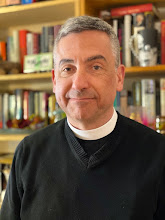

 Posts
Posts

