Sunday, November 27, 2022

"Come, Let Us Walk in the Light of the Lord!"


St. Thomas’ Episcopal Church, Owings Mills MD
November 27, 2022

Year A: The First Sunday of Advent
Isaiah 2:1-5
Psalm 122
Romans 13:1—14
Matthew 24:36-44

“Come, Let Us Walk in the Light of the Lord!”

You may remember that about a month ago I spent a week on a silent retreat at a monastery in Kentucky, a place called the Abbey of Gethsemani.
Parishioners have reacted to this piece of news in different ways.
Some people like the idea. Some have even been a little envious, saying something like “Oh that sounds like heaven. I wish I could get away for a few days of peace and quiet.”
Others shake their heads – nope, nope - and say something like, “There’s no way I could stay quiet for that long.”
And others have looked at me kind of skeptically and asked what exactly did you do with all that quiet time?
Well, in case you’re wondering, I prayed a lot – both on my own and in church with the monks and the other guests – and I did a lot of reading. I got to bed earlier than usual. And, fortunately, since the weather was beautiful, I walked a lot on long and meandering trails throughout the abbey’s vast grounds.
Almost everything I saw on those walks was so beautiful – the fall foliage glowing orange and gold, birds fluttering away as I approached, the occasional cross or religious statue.
But these walks were a little unsettling, too.
The abbey is pretty remote so I often didn’t have cellphone service, and I almost never saw anyone else on the trails.
As I walked, it crossed my mind that I didn’t know any of the other guests, and nobody took attendance at meals, and nobody would check that I was back in my room at night. 
Along the way, I did have to step around evidence left behind by wild animals – just what kind of wild animals, I wasn’t sure. And, maybe because as a kid I watched too many Saturday morning cartoons, I can never remember what you’re supposed to do when you encounter a bear – is it run, stand still, play dead, or take off in a zigzag?
It dawned on me that I was about as alone as I’ve ever been, and that if something happened to middle-aged me, it might be a while before anyone knew about it and was able to get me help.
Well, obviously, everything turned out just fine but those long walks were a reminder of what’s always true as we journey through of life.
So much of our journey is beautiful but along the way there is always danger and often much suffering.

Of course, you don’t have to spend a silent week at a monastery to be reminded about that!
Recently we’ve had some terrible reminders of the world’s brokenness and just how much suffering there is all around us.
Our parish has some strong and deep connections with the University of Virginia, so many of us were especially shocked and heartbroken a couple of weeks ago when a UVA student senselessly shot three of his fellow students, talented athletes with bright smiles and brighter futures, young men who loved and were loved.
And last week, yet another messed up, angry, armed-to-the-teeth man, who had probably been fed a rotten diet of ignorance, fear, and hate, walked into Club Q, a bar and nightclub that had been seen as one of the few safe places in Colorado Springs for LGBTQ people and their friends. This man opened fire, killing five people, people who worked there and people who were there just to relax and enjoy themselves - to be themselves.
And not long after that, the close-knit night shift workers at the Walmart in Chesapeake, Virginia, was shattered when one of their own turned violent, killing six of his coworkers before taking his own life.
And we can’t lose sight of the relentless violence and suffering in the city just down the road from us, enduring yet another year with more than 300 homicides.
So much suffering.
And, in a way, even our Thanksgiving meal bags are a reminder of suffering. 
It is simply amazing to me that we donated 180 bags, heavy bags filled to the brim with food and fixings and treats! Last Monday a small group of parishioners loaded all those heavy bags into their cars and trucks and brought them over to the Community Crisis Center.
Here’s the thing, though: by the end of the day, all but 10 of those bags had been distributed to hungry people – a sobering reminder of the great need that’s all around us.

Much of our journey is beautiful but there is always danger, and often much suffering.
And we have a hard time seeing our destination.
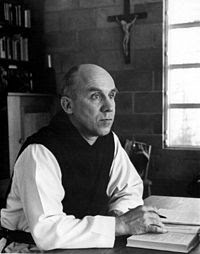
As Gethsemani’s most famous monk, Thomas Merton once wrote,
“My Lord God, I have no idea where I am going. I do not see the road ahead of me. I cannot know for certain where it will end.”

Today is all about beginnings and endings. 
It’s the start of a new church year, the First Sunday of Advent. 
And during these four quick Advent Sundays, we prepare for the birth of Jesus, born far from home and in the humblest of circumstances.
And we also look ahead to the end of time – ahead to our ultimate destination – ahead to the day of judgment.
In today’s gospel lesson, Jesus reminds us that we do not know when we will reach our destination. He warns us that it will be sudden and unexpected – even Jesus doesn’t know the exact date and time! So we’d better pay attention and be prepared.

Although the schedule is a mystery, the Prophet Isaiah does give us some idea of where we are headed.
In today’s first lesson, Isaiah offers a powerful vision, foreseeing a time and place when and where God will draw all the peoples of the world to God’s holy mountain.
There, we will learn together.
There, we will walk beside one another.
There, God will be our judge.
There, we will bend our tools of death into tools of new life.
There, we will set aside hate.

And Isaiah concludes by extending a most beautiful invitation:
“Come, let us walk in the light of the Lord!”

Since I keep talking about it, you can probably tell that I really enjoyed my silent retreat. And, although I was mindful that things could go wrong, I loved my long walks up and down the hills.
I’m grateful to have had that time away but, you know, as good as it was, it really can’t compare with walking beside you, here, week after week.
Because it’s here that we walk in the light of the Lord – together - checking on one another, rushing to help when one of us is in trouble. 
It’s here that we walk in the light of the Lord – together - giving away a small mountain of food for Thanksgiving, welcoming guests from faraway lands, singing our hearts out, guiding young acolytes into their new ministry, opening our doors to absolutely everybody, studying God’s Word together, caring for this old holy place, placing Christmas wreaths throughout the churchyard, honoring the dead who in most cases have no one alive to remember them.
It’s right here that we walk in the light of the Lord – together - listening for God’s call, wondering what more we can do to serve God and our neighbors.  

Much of our journey is beautiful but there is always danger, and, often much suffering.
And we have a hard time seeing our destination.
Considering our many troubles, maybe Isaiah’s vision seems like a fantasy, impossibly far beyond our reach.
But, you know, on especially clear days – like when I’m over at Gilead House with Hizbullah and Abdul and friends new and old - on clear days like last Sunday evening when we celebrated the Last Chance Mass literally surrounded by all those bags of food - on especially clear days, I can look down the trail and, if I squint a little, I can almost see God’s holy mountain, where we will all finally live in peace, where we will all have enough, living the life that God has always meant for us.
A new year has begun.
“Come, let us walk in the light of the Lord!”
Amen.

Sunday, November 20, 2022

Where Christ is King


St. Thomas’ Episcopal Church, Owings Mills MD
November 20, 2022

Year C, Proper 29: The Last Sunday after Pentecost – Christ the King
Jeremiah 23:1-6
Canticle 16
Colossians 1:11-20
Luke 23:33-40

Where Christ is King

Once Jesus was asked by the Pharisees when the kingdom of God was coming, and he answered, “The kingdom of God is not coming with things that can be observed; nor will they say, ‘Look, here it is!’ or ‘There it is!’ For, in fact, the kingdom of God is among you. (Luke 17:20-21)
And, actually, that last line can also be translated, “the kingdom of God is within you.”

It seems hard to believe but today is the Last Sunday after Pentecost – the final Sunday of the church year.
Next week, we will turn the page to a new year and begin the holy season of Advent – those quick four Sundays when we prepare for the birth of Jesus, far from home and in the humblest of circumstances.
And during those four quick Advent Sundays, we also look ahead to the end of time, to the day of judgment.
But, first, today, the church offers us an opportunity to reflect on Christ the King.
For many centuries, artists have depicted Christ the King wearing and holding the symbols of an earthly kingship: the golden bejeweled crown, the orb and scepter.
Those symbols were used to honor Jesus, but also to enhance the prestige of the church – the church that, unlike Jesus, very much wanted, and often wielded, worldly power and enjoyed worldly prestige.
But by the 1920s, some church leaders recognized that their worldly power and prestige were fading.
Christians were getting swept up into the ideologies and systems of the world – fascism, communism, nationalism, secularism, materialism, and all the rest.
By the 1920s, many Christians were giving their ultimate allegiance not to Christ the King, or even to the church, but to some truly bad ideas and some really awful leaders.
So, the Church created today’s Feast of Christ the King as a way to push back at these trends, to remind people of where – and in whom – they should place their faith.
You may have noticed that this effort has not worked.
For all sorts of reasons, the church has continued to lose much of its worldly power and prestige.
This can be unnerving for people like me who earn their living from the church.
And, I know it’s sad and disappointing for the many people who miss how the church used to be – packed with people, the place to be, the place to be seen, an influential force in the community.
But, you know, these dramatic changes remind us that Jesus never sought worldly power – quite the opposite.
The Jesus who was born far from home and in the humblest of circumstances wore only one crown: a crown of thorns. 

As we heard in today’s gospel lesson, as Jesus was dying on the cross, the leaders and the soldiers mocked him.
What kind of king ends up like this, bloody and humiliated, hanging beside two criminals?
Where is all that power that we’ve heard about? Supposedly you’re able to heal others but you can’t get yourself down from that cross, can you?
Even one of the criminals uses some of his last breaths to express disgust at Jesus
What kind of king – what kind of kingdom – is this?
Jesus said, “The kingdom of God is not coming with things that can be observed; nor will they say, ‘Look, here it is!’ or ‘There it is!’ For, in fact, the kingdom of God is among – within - you.”

So, here’s what I think: losing our worldly power and prestige has given us new eyes to see the kingdom of God among us – and new hearts to humbly share the kingdom with people all around us.
A few examples:

Once a month, Sara and I gather here in church with our preschool children and their teachers for Children’s Chapel. Although it’s quite a challenge to hold the attention of 60 or so young children, this time has become one of the highlights of my month.
The whole service is probably shorter than the time it takes to walk the kids over here but I think it’s worth the trip.
We sing some songs. At our most recent service, Wanda played the organ and explained how it works. And, as usual, I gave a very short talk, usually inviting participation from the children.
This past time we talked about Thanksgiving and I invited the children to say who and what we’re thankful for. One of the first kids to pipe up was a little girl who gave thanks for her iPad. That made me worry if we were about to celebrate materialism, but, without any prompting from me or from the teachers, everyone else shouted out answers like “My mommy and daddy!” or “My sister!” or “My friend!”
The Kingdom of God is among – within – us.
This is where Christ is king.

Another example.
I’m still dazzled by the courage and generosity of the group of parishioners who have welcomed and cared for Hizbullah and have now offered the same hospitality to Abdul, just 18 years old.
I’m not sure you all know just how generous some of our parishioners have been to these two young men far from home.
There have been countless car rides – some of them over long distances – assistance with Hizbullah’s job search and getting Abdul enrolled in school – navigating all sorts of government bureaucracy – driving lessons - offering fun activities to break the monotony of sitting around the house – invitations to lunch and dinner – the gift of a basketball hoop for Abdul, who loves the game.
And an invitation to Thanksgiving dinner for Hizbullah, Abdul, and the other refugees at Gilead House, who aren’t really our responsibility - well, not officially, anyway.
The Kingdom of God is among – within – us.
This is where Christ is king.

Finally, over the past week it has been such a blessing to see so many of you bring in bags filled with food to share with people who might not be able to afford a Thanksgiving meal.
Day by day, the bags have taken over more and more of the Old School Building, where we have our weekday services. I like to think that they’ve been blessed by the prayers said in that room – just as your generosity will be a blessing to so many.
You all know that we distributed a list of items that we hoped would be included in each bag – pretty much the basics.
Here’s the thing, though. I noticed that quite a few of the bags looked awfully full, so I took a peek inside some of them. And, sure enough, so many of you went way beyond our basic list, doubling up on items, adding all sorts of extras and treats – party cups and festive napkins – the things that may seem small to us but really make for a special celebration for people we don’t know and who will never be able to thank us.
And, I know that many of you had to hunt long and hard for canned hams!
The Kingdom of God is among – within – us.
This is where Christ is king.

And so, we have reached the end of another church year – and what a year it’s been.
It’s true that the church doesn’t have the worldly power and prestige that it once did.
It’s true that pretty much nobody comes here to be seen or to impress anybody.
But, it’s also true that, without his golden crown, we have a clearer view of Christ the King – we can better see his life of love and sacrifice – and, most of all, the gift of new life that is offered to us all.
And without our worldly power and prestige, we have a clearer view of the Kingdom of God – a kingdom found among grateful children – a kingdom experienced when we extend hospitality to strangers – a kingdom discovered when we give even more than we are asked.
The Kingdom of God is among – within – us.
This is where Christ is king.
Amen.


Tuesday, November 08, 2022

Our Platform


St. Thomas’ Episcopal Church, Owings Mills MD
November 8, 2022

Election Day
Deuteronomy 10:17-21
Psalm 145:1-9
Matthew 5:43-48

Our Platform

It’s good for us to be together this evening.
Although Zoom gives it a modern twist, the truth is that we are doing what Christians have done since the very beginning: gathering together to hear God’s Word and to pray for others and for ourselves.
Our Christian ancestors gathered in good times and especially during times of trouble, like the days we have been living through, the hard days, that, unfortunately, we will continue to face, no matter the outcome of today’s election.
Regardless of our politics, I hope we can all agree on the need for prayer – maybe not so much prayers for a particular electoral outcome (though, of course, I get that, and confess that I have prayed like that myself. And you’re welcome to pray for whatever and whomever you’d like!).
But we’re especially called to pray for our community, for our country – to offer prayers for peace and justice and, most of all, love – the good gifts that only God can give.
If we’re being honest, we can admit that, in our overheated political environment, there’s some risk in getting together to pray tonight – there’s the chance that some will hear unintended partisan endorsements from me or maybe from the prayers and lessons included in the service.
So, for the record, the prayers are all from the Prayer Book and the lessons are those appointed for Independence Day.
In church a couple of weeks ago, when I first announced that we would be having this service, I sensed a little bit of electricity travel around the pews.
Maybe that was just because we haven’t had an Election Day service before. Or maybe some people thought that this work is just too political for the church – that the risk of giving offense or creating division is just too great – so, better just to let people watch the election coverage on cable news, just leave them to the tension of waiting, the joy of victory, the agony of defeat, and the worries about what is yet to come.
But this moment is too important for us to chicken out.
And one of the messages that Jesus repeats over and over again is simply this: 
Be not afraid.
No matter what, God will not let go of us. 
Do not be afraid.

So that’s the first thing I want to say tonight.
And the second thing I want to say is that we Christians have our own political platform and it does not align perfectly with either the Democratic or Republican platforms, or, for that matter, with any other ideology.
In fact, Christians make a very big mistake when we think that some other political platform matches Jesus’ vision of the Kingdom of God.
The church gets into big trouble when we grow too cozy with political leaders, and we go right off the rails when we become too infatuated with worldly power.
So, what is our political platform – what’s the foundation for how we are to live together?
Well, it’s right there in tonight’s lessons, and it’s in the Baptismal Covenant we are about to renew.
Our Christian platform is putting God first, far above any worldly leaders, no matter how much we might like and support them.
Our Christian platform is sticking together, recognizing that, whatever our differences, they are not wide enough to prevent us from praying together.
Our differing points of view must not – cannot - break our bonds of love.
Our Christian platform is caring for the poor, the vulnerable, the oppressed, and welcoming the stranger. We do this not because they’re better or nicer than anybody else, but simply because they’re poor and vulnerable and oppressed and far from home, and they need our help.
Our Christian platform is trying, with God’s help, to love the people we find really hard to love – to love the tax collectors, the lepers, even the Romans, of our own day, of our own lives.
This is our platform – this is our Christian political platform.
        So now, after a seemingly endless election season, the polls have closed and we await a future that is in many ways uncertain and unsettling.
But, my dear friends, remembering who we are and whose we are, do not be afraid. 
        And, with God’s help, together, let’s stand firm on our platform – keeping our promise to love God and to love one another. 
        Amen.

Sunday, November 06, 2022

"To Be a Saint Means to Be Myself"


St. Thomas’ Episcopal Church, Owings Mills MD
November 6, 2022

Year C: All Saints’ Sunday
Daniel 7:1-3, 15-18
Psalm 149
Ephesians 1:11-23
Luke 6:20-31

“To Be a Saint Means to Be Myself”

By now, I’m guessing that at least some of you are starting to get tired of hearing about the silent retreat that I went on a couple of weeks ago.
You may be asking, “Hasn’t he caught up on talking yet?” 
To which I answer, almost.
Retreats are different from vacations, but in both cases you can return and have to catch up on so many tasks that it feels like you need a vacation or a retreat from your vacation or retreat - or that your getaway never happened at all.
But, for whatever reason, my retreat has been sticking with me, helping me feel more grounded, even when there’s so much anxiety and fear all around.
For my retreat I visited the Abbey of Gethsemani in Kentucky. It’s a Trappist monastery that first became well known to the wider world thanks to its most famous monk, the writer Thomas Merton.
Merton, who was born in 1915, was an adult convert to Christianity.
In 1938, while Merton was finishing a Master’s Degree at Columbia University in New York City, he was baptized in the Roman Catholic Church.
And not long after his Baptism, a friend of his named Bob Lax asked Merton what he wanted to become.
That can be a hard question to answer and Merton struggled a bit to come up with something until he finally said, “I don’t know, I guess what I want to be is a good Catholic.”
But his friend corrected him, “What you should say is that you want to be a saint.”
Merton thought this was crazy talk – how could he, a just-baptized Christian, getting such a late start on the road of faith, ever hope to be a saint?
But Merton’s wise friend explained, “All that is necessary to be a saint is to want to be one. Don’t you believe God will make you what He created you to be, if you consent to let Him do it? All you have to do is desire it.”


Well today, on All Saints’ Sunday, we have a lot going on!
We’re celebrating the saints whose holiness has been recognized by many and officially acknowledged – holy women and men like the Virgin Mary, St. Thomas, St. Paul, St. Francis, and all the rest.
At the same time we’re also giving thanks for a vastly larger group, all the baptized, all of those who died and rose again with Christ in the water of Baptism, just as Teddy and Frankie will in just a few minutes.
And today is also an opportunity to remember the people who have been saints in our lives, the parents, grandparents, godparents, teachers, mentors, friends, and others who first shared the faith with us – the people who taught us, often through their quiet example, just what love, mercy, forgiveness, and generosity look like.
And there’s one last most important thing that we are meant to remember today on All Saints’ Sunday.
We  - you and I - are already saints – this is what we are made for – this is who we really are.
Later in life, after he had entered the monastery and reflected more deeply on the idea of sainthood, Thomas Merton wrote this:
“For me to be a saint means to be myself.”
Merton didn’t mean that to be a saint we should just act normal – you know how we say to a person who’s nervous about an interview or some other big event, “Just be yourself!”
No, Merton is talking about something much deeper – to be our true selves – to be the loving and generous people that God created us to be.
Often this is not so easy.
And, in fact, there are many of us who maybe never really know who we are – or maybe we forget – or maybe we would just rather not know, since our true identity can be inconvenient and downright costly.
In my time here with you, it has become kind of a running gag that I love Baptism - that as a priest there’s not much I like better than baptizing people.
And that’s the absolute truth – I hope you can tell I’m not faking it – but I’ve also hoped that my excitement would be contagious – that you would also feel the joy of these days – that you would see that Baptism isn’t just a nice little ritual we do with and to children, the quiet ones and the ones who scream their heads off.
No, Baptism is a big deal because it’s here and now that we are reminded of who God made us to be – the person we really are.
For me to be a saint means to be my true self, a person who gathers here with other saints to ponder God’s Word, to pray together, to break bread. 
For me to be a saint means to be my true self, a person resisting evil but, when I mess up, quick to repent and return to the Lord.
For me to be a saint means to be my true self, a person proclaiming by word and example the Good News.
For me to be a saint means to be my true self, a person seeking and serving Christ in all persons, loving my neighbor as myself.
For me to be a saint means to be my true self, a person striving for justice and peace, respecting the dignity of every human being.
For me to be a saint means to be myself – my true self  – with God’s help – always and only with God’s help.

I don’t need to tell you that, especially these days, there are some powerful forces at work, tempting us to be other than – much less than - who we really are.
But when we, with God’s help, really are our true selves – when we love one another, including the people we’re not too sure about – when we strive to even love the people we’re told we should hate and fear – when we are our true selves, then Jesus’ beautiful vision of the Kingdom starts to become more real.
And when we who are rich and full and laughing remember the poor and the hungry and the mournful – when we stand beside them and love them and serve them as beloved brothers and sisters, then Jesus’ beautiful vision of the Kingdom starts to become real.

At the start of my sermon, I mentioned that the grace of my recent retreat hasn’t faded very much, so far.
I’m not sure why exactly, but I wonder if it’s because I find myself here, surrounded by so many people who strive, with God’s help, to fulfill their baptismal vows – to be the loving and generous people God created them to be.
After today’s 10:00 service, many of us will have lunch with our guest from Afghanistan, Hizbullah.
Or, actually, I should say that Hizbullah is our first guest from Afghanistan, because last week we welcomed guest number two, a fine young man named Abdul.
When I think of the courage, generosity and creativity and persistence of the little team that has stepped into the unknown and welcomed Hizbullah and now Abdul and has cared for them and gotten them off to such a good start – and when I think of the people who have worked so hard to prepare a beautiful feast for us later today - well, no doubt they will recoil in embarrassment and modesty, but this is saintly behavior for sure, moving us a little closer to the Kingdom of God.
So, you know, St. Thomas’ may not be a quiet monastery in the Kentucky countryside, but this is a holy place where many people answer God’s call to be our true selves.
To be a saint means to be myself.
Amen.


Sunday, October 30, 2022

Getting and Giving a Good Look at Jesus


St. Thomas’ Episcopal Church, Owings Mills MD
October 30, 2022

Year C, Proper 26: The Twenty-First Sunday after Pentecost
Habakkuk 1:1-4, 2:1-4
Psalm 119:137-144
2 Thessalonians 1:1-4, 11-12
Luke 19:1-10

Getting and Giving a Good Look at Jesus

As many of you know, I spent last week at a monastery in Kentucky on a silent retreat (yes, I could do it, no problem!) and, while I have a whole backlog of things to talk about, I just want to say a few words about today’s wonderful gospel lesson.
We’re told Jesus is passing through the historic city of Jericho where he has attracted a large crowd.
A man named Zacchaeus was there. He was the chief tax collector and was very rich.
Now, in most times and places, tax collectors are never the most popular people but Zacchaeus and his colleagues were especially despised because they were Jews who collaborated with the hated Roman occupiers.
But for whatever reason, Zacchaeus is drawn to Jesus, so much so that he climbs a sycamore tree to get a good look, because, we’re told, “he was short of stature.”
Jesus spots short Zacchaeus up in the tree, and promptly invites himself over to the tax collector’s house - freaking out absolutely everyone, except the happy and hospitable Zacchaeus.  
And transformed by this encounter with Jesus, Zacchaeus gives away much of his wealth to the poor and anyone he “may” have defrauded (cough, cough).

So, what does this wonderful story have to say to us today?
Well, at this point, I wonder how many people are even trying to get a good look at Jesus.
So many of our neighbors and family members have been turned off by Christianity for reasons well known to us all: the institutional church itself, its seeming irrelevance, its complacency and self-absorption, its many scandals – the fact that the loudest “Christian” voices in our country spew so much hate and ignorance – the truth that there are lots of nice ways to spend our Sunday mornings, and plenty of meaningful ways to help others, that have nothing to do with church or faith.
And yet we believe – we know – that Jesus is the way of new life, just as he was for Zacchaeus long ago.
So, especially in this time of much trouble, it seems to me that our job, with God’s help, is to show Jesus to the world again – to help them get a good look.
We do that by being a community where all are welcome, where we offer ourselves in loving service, where there are no benchwarmers, where we all contribute: by praying, by caring for one another, and by giving not just from what we have left over, but giving in ways that really cost us, just like a certain short tax collector did long ago.
We need to give people a good look at Jesus.

Sunday, October 16, 2022

Answered Prayers


St. Thomas’ Episcopal Church, Owings Mills MD
October 16, 2022

Year C, Proper 24: The Nineteenth Sunday after Pentecost 
Jeremiah 31:27-34
Psalm 119:97-104
2 Timothy 3:14-4:5
Luke 18:1-8

Answered Prayers 

Today is Outreach Sunday when we are blessed to hear from leaders of some of our truly amazing ministry partners – people who are out there serving others, week after week, year after year.
I’d like to say just a few words about the parable that I just read – what’s often called the Parable of the Persistent Widow.
Although we don’t know much about the two characters in this parable, they’re both vivid and memorable – and they may even remind us of people we know!
We’re told the judge “neither feared God nor had respect for people.”
And, while in Scripture and elsewhere, widows are often depicted as weak and defenseless, this particular widow is a tough customer. We might say that she even harasses the judge, relentlessly demanding justice – a word that in this case can also be translated as “vengeance” – which kind of changes things, doesn’t it?
Well, the judge finally gives in, out of exhaustion or even fear. He says that he’s concerned that she will wear him out. But the original Greek can also be translated that he’s afraid she’s going to punch him in the eye!

Jesus uses this strange and unsettling parable as an opportunity to encourage us to pray persistently.
I’m all for praying persistently.
And, in fact, I believe that prayer is and has to be the foundation of the renewal that we see happening here at St. Thomas’ – it’s why this fall we’re reading a book called Learning to Pray and why we’ve added a weekly service of Morning Prayer, with even more opportunities for prayer coming in the months and years ahead.
So, I’m all for praying persistently.
But during the last few days leading up to Outreach Sunday, I’ve been thinking about the people all around us who have already been praying persistently. People like the clients at Paul’s Place and the Community Crisis Center, praying persistently that they will have enough food to feed their families, enough diapers to keep their children clean and comfortable.
People like the parents, teachers, and administrators of Owings Mills Elementary School, praying persistently that their school will have enough resources – praying that their children will be safe, that they will learn and grow, and build lives of meaning and prosperity.
People like the refugees who have fled war, oppression, and poverty, praying persistently for a warm welcome - praying for peace, freedom and opportunity.
And here’s the thing: I believe that God invites us to help answer the persistent prayers of these people and others.
Not out of exhaustion and certainly not fear, but out of love and gratitude.
In fact, I wonder if we shouldn’t change the name of “Outreach” to “Answered Prayers!” 
As it happens, yesterday was the Feast of Teresa of Avila, the 16th Century Spanish nun, mystic, and reformer.
And I’ll conclude with her words, which, now that I think about it, could be the mission statement for “Answered Prayers” -
“Christ has no body now but yours. No hands, no feet on earth but yours. Yours are the eyes through which he looks compassion on this world. Yours are the feet with which he walks to do good. Yours are the hands through which he blesses all the world. Yours are the hands, yours are the feet, yours are the eyes, you are his body. Christ has no body now on earth but yours.”
Amen.

Saturday, October 08, 2022

Resurrections


Trinity & St. Philip’s Cathedral, Newark NJ
October 8, 2022

The Funeral of The Rev. Canon Dr. David H. Hamilton
Isaiah 61:1-3
Psalm 23
1 Peter 5:1-4
John 21:1-14

Resurrections


I guess about twenty years ago, the now-famous St. Peter’s University in Jersey City erected a statue of its patron saint, right in front of the campus on Kennedy Boulevard.
The statue is a classic depiction of Saint Peter. He’s wearing the “Keys to the Kingdom” and he’s hauling a net filled with the day’s catch.
Peter is presented as a strong man with a full beard and a face that looks like it’s seen a few things, weathered both by the sea and by the storms of life.
Among Jesus’ disciples, we know the most about Peter.
His life as a simple but hard-working fisherman was interrupted by the sudden and unexpected and life-transforming call of Jesus.
Jesus nicknamed him Cephas – “the Rock” – though often he didn’t seem rock solid, exactly.  The truth is that Peter made quite a few mistakes, including one that was catastrophic. Not only did Peter abandon Jesus in his greatest moment of need but he denied that he even knew Jesus, denied his Lord three times.
What must it have been like for Peter during those hours between the heartbreak of Good Friday and the indescribable joy of Easter morning?
For Peter, during that in-between time, death might have seemed preferable to living with his shame, fear, and regret.
But, we know what happened next.
On the first Easter morning, Jesus is raised from the dead – but not just Jesus!
The disciples, led by Peter, they will be raised, too. 
Soon they will be brought back to life, no longer fearful people hiding behind locked doors but now bold apostles of the Good News.
In today’s gospel lesson we hear a story that sounds to me like Peter’s shame being washed away in the water – a story that ends with a meal hosted by the Risen Christ – a celebration that sure sounds like Holy Communion, with a side of abundant fish.
Resurrection happens all the time.

The Rev. Canon Dr. David H. Hamilton was Rector of St. Paul’s Jersey City when St. Peter’s put up its statue, just a few blocks away from the church.
Dave really liked that statue – and, in fact, later it became the destination of his post-open heart surgery walks, as he regained strength, maybe inspired by Peter’s own example of resurrection.
And, although Dave was rector of two churches named in honor of St. Paul, the truth is he was always more of a St. Peter guy – he loved the sea, and he really loved the Shore.
Most of all, the story of Peter’s resurrection resonated with Dave – the amazing grace of Jesus that saved Peter – the amazing grace that saved Dave – the amazing grace that saves us all.
Sue and I first met Dave at St. Paul’s Jersey City on the Second Sunday of Advent in 2000.
We lived just a few blocks away from the church, and at the invitation of Patty Nickerson - a St. Paul’s parishioner who was also one of my teaching colleagues - we were there to check out this interesting-looking church and also its priest, who Patty was convinced we would like a lot.
Now, my St. Paul’s family has heard me tell this story a million times, but please bear with me.
That first Sunday, I was dazzled by the beauty of the building, the excellence of the music, the diversity of the people, the compassion and intelligence of the sermon, and, most of all the warm welcome of the people.
Sue and I will never forget that first passing of the peace – everyone out in the aisle seemingly delighted to see one another – and right there in the middle of the action was Dave. Like any good priest, he had spotted these two newcomers and so he made his way down the aisle to our pew – where we must have looked more than a little overwhelmed – and Dave stretched out his hand to us and said,
“I’m Dave. Welcome to St. Paul’s.”
Sue and I didn’t know it at the time, of course, but that encounter was a fork in the road for us, sending us off in a direction we could have never imagined.
It was the beginning of a particularly close friendship between Dave and me – father and son – brothers – mentor and mentee – all of it mixed up together.
Dave made us part of his family where we got to know Cheryl and Lori, his pride and joy.
By the time we met Dave, his face was a little weathered, too.
Like Peter, he had endured the storms of life. Like all of us, he made his share of mistakes, but by the amazing grace of God, he had reached the safety of the shore at last.
Dave loved telling the story of his return to the church.
He was doing the hard work of getting sober and regaining his health, and so he made an appointment with Bishop Spong to see about getting back into ministry.
Dave waited, nervously, in the reception area. Then the bishop’s office door opened and out he came. Without saying a word, Bishop Spong stretched out his arms and embraced Dave, welcoming him back into the fold.
In that amazing moment, Bishop Spong was a light along the shore for Dave, guiding him back to safety.
Resurrection happens all the time.
I’m convinced that Dave’s troubles and losses made him a better priest.
(Actually, he thought so, too!)
Like Peter, perhaps, Dave’s travails made him more patient with the failures of others, less judgmental, more forgiving, and just more easygoing about the whole thing.
To me, Dave was the embodiment of the “wounded healer,” a leader unafraid to show his scars – a leader authentic enough to admit that he didn’t have everything figured out – a leader humble enough to say that he was a pilgrim on the road just like the rest of us – a brother who stretched out his hand in welcome and friendship and said, come on, let’s walk together.
Dave was also really funny – one of the best parts of being friends with him was the laughter.
My friend Laurie Wurm tells the story of sitting beside Dave at some probably overly long and really boring church meeting when Dave leaned over to her and deadpanned, “Thank God I’m sober.”
Back when I was coming through the ordination process, I used to worry that there wouldn’t be enough church jobs to go around. Dave used to reassure me that it would all turn out OK. “There are always good jobs for good people,” he’d say. But then one year at convention, when all the postulants and candidates for Holy Orders stood to be introduced, he looked at the long line and said, “My God, I don’t know, Tom, maybe you’re right. That IS a lot of people!”
And he could laugh at himself, too.
In his early days he was quite conservative and vocally opposed the ordination of women. At some church meeting he stood up and said something like, “May my hand wither if I ever participate in the ordination of a woman!” Well, a few years later, after he had a change of heart on that subject, he did indeed participate in the ordination of a woman. And after the part of the service when all the priests lay hands on the ordinand, the bishop remembered Dave’s earlier bold declaration and asked him, “Hey Dave, how’s your hand?”
And after each joke or funny story there was always Dave’s laughter – laughter that started in his belly, and ended as a coughing fit.

When I was coming through the ordination process, I always imagined that Dave and I would serve as priests together, that he would lean over to me at some boring church meeting and say something like, “Thank God, I’m sober.”
But, having been through a lot and dreaming of days at the Shore, he decided to retire right around the time I was ordained.
I remember I once gently suggested that he retire closer to us, suggesting maybe a nice condo in Bayonne.
“Bayonne!” he roared and then came the coughing fit.
But, retirement was not what he had hoped and the last fifteen years were hard ones for Dave and his family as he faced one ailment and setback after another.
Here’s the thing, though: each time I counted him out, God would raise him from the dead once again and he would somehow find new ways to do ministry – working with a Roman Catholic deacon to bring Communion to the homebound – appointing himself unofficial chaplain of his assisted living facility – finding meaningful work at St. Mark’s in Keansburg where he got to once again celebrate the Eucharist and preach and spent time hanging out with the folks who came to the church’s community meals, offering that same hand of welcome and friendship, just like old times.
And then, a few years ago, Dave surprised me by asking if he could come and preach and celebrate the Eucharist with us back at St. Paul’s in Jersey City.
It was a day we won’t ever forget, as a frail but somehow also incredibly strong David Hamilton – like a diminished but indomitable Saint Peter – stood in the aisle and preached from his heart without notes, sharing the amazing grace that he had experienced in his own life and had shared with so many of us over the years.


And, when we stood at the altar – brother priests, at last – it felt like a journey that had begun with a hand offered in welcome had come full circle with a hand now extended in blessing.


Over the past year, it had become increasingly clear that Dave’s life was drawing to a close, although, because he had experienced resurrection so many times, I half-expected him to surprise us once again.
But now, our brother and friend is finally at rest, welcomed no doubt by his kindred spirit, Saint Peter.
Dave is at rest, waiting for one last resurrection, that great day when we will all be reunited.
If he were preaching today, I think he’d tell us to be not afraid, to trust in the Risen Christ, and believe that resurrection happens all the time.
And he would add, “I don’t have to believe it, because I’ve seen it.”
Amen.


Sunday, October 02, 2022

Even in a Time of Lengthening Shadows, the Promise of Renewal


St. Thomas’ Episcopal Church, Owings Mills MD
October 3, 2022

Year C, Proper 22: The Seventeenth Sunday after Pentecost
Lamentations 1:1-6
Lamentations 3:19-26
2 Timothy 1:1-14
Luke 17:5-10

Even in a Time of Lengthening Shadows, the Promise of Renewal

So, it was just a few weeks ago that I stood up here and talked about seeing the first gold and brown leaves beginning to fall along the rail trail and here on our church campus.
We all knew what was coming. And yet, doesn’t it feel like we suddenly turned the page from summer to fall?
Just like that, it’s October!
I like the fall, with its more comfortable temperatures and the beautiful foliage.
And while we certainly had a rich and full summer here at St. Thomas’, fall feels like the time to get back to work – Sunday School has resumed in its beautiful new space - the full choir is back (and processing before and after the service, which, I have to say, looks really sharp!) – at last week’s Outreach Forum, we dreamed about even more ways to live into our calling as a “servant church” – and our stewardship campaign is off to an exciting start, calling all of us to be generous, giving thanks for God’s abundant generosity.
So, it’s a great time, and I feel excited and energized.
Mostly.
I say “mostly” because, while I like the fall, I’m always saddened by the shorter days.
It’s already too dark to squeeze in an early morning walk on the rail trail.
And, to me, the lengthening shadows of the Northern Hemisphere seem to reflect the shadowy news from so much of the world – the increasingly dangerous war in Ukraine, the unimaginably devastating floods in Pakistan, the destruction caused by Hurricanes Fiona and Ian in the Caribbean and Florida – the rise of of hate and violence in our country and in so many places.
And the lengthening shadows seem to reflect the hard times faced by a lot of people, including some of us - the strain caused by inflation, the troubles of illness and age, the heartbreak of broken relationships, and the fear of what is yet to come.
It is a time of lengthening shadows, for sure.
And in times of trouble, a natural reaction is lament – to grieve what and who have been lost - just like how the people of Israel wept over the destruction of Solomon’s Temple in 586 BC, mourning the loss of what they considered the most sacred place in the world, grieving that so many of their people had been exiled, maybe forever, in faraway Babylon.
In today’s lessons, we actually heard two selections from the Book of Lamentations, which is a biblical collection of poems written probably not long after Jerusalem had been sacked and so many people had been scattered.
“How lonely sits the city that once was full of people!”
Much of Lamentations is quite sad, understandably so, but what keeps it from being depressing is an undercurrent of hope, a persistent faith in God that seems to me to be a whole lot larger than a mustard seed.
In today’s second selection from Lamentations, despite the deep shadows, the terrible losses, all the bad news, we heard this:
“The steadfast love of the Lord never ceases, his mercies never come to an end; they are new every morning; great is your faithfulness.”
One commentator compared the beautiful faith-filled poetry of Lamentations to the traditional Jewish prayer on waking in the morning:
“I thank You, everliving King, who has mercifully restored my soul within me; ample is your grace.”
With God, even in a time of lengthening shadows, there is always the promise of renewal.

As you know, today’s rain has prevented us from having our Blessing of the Animals service, a service offered in honor of Francis of Assisi, but I’d still like to say a few words about him.
Francis is often depicted as a kind of of adorable oddball, preaching to the birds, commanding a wolf to stop terrorizing people. So, we stick him out in the birdbath, bless the animals once a year, and that’s about it. 
But he’s there’s much more to his story.
Francis was born in Italy in either 1180 or 1181 and grew up in a well-to-do family - his father was a successful silk merchant. As a youth, Francis was high-spirited and popular, enjoying the finer things of life. 
When Francis was about 20, he joined a military expedition against a neighboring city. He was taken prisoner and held for a year, which must have been a traumatic experience, probably causing him to lose his taste for chivalry and combat and to turn his attention toward God.
The story goes that one day he was praying in a ruined chapel when suddenly he heard the voice of Jesus calling to him from a crucifix, saying:
“Francis, Francis, go and repair my church which, as you can see, is falling into ruins.”
Reasonably enough, Francis interpreted this as a buildings and grounds problem and so he went and secretly sold some of his father’s cloth and gave the money to the priest to repair the chapel, money the priest refused to accept by the way.
But, of course, Jesus was calling Francis to something much bigger and more important than fixing up a falling-down chapel.
Francis lived in a time of lengthening shadows, days when the Church had largely lost its way, more interested in worldly wealth and power than in following Jesus of Nazareth who called his followers to give away their possessions – Jesus who had no home of his own.
So, with faith far larger than a mustard seed, Francis took Jesus at his word, gave away everything that he had, celebrated God’s good creation, and proclaimed the Good News with words, yes, but through his life, most of all.
And, maybe most amazing of all, people responded to Francis’s vision – they continue to respond to Francis’ vision - which was always really just Jesus’ vision of the God’s kingdom where the poor and the hungry and the mourners are the ones truly blessed. 
With God, even in a time of shadow, there is always the promise of renewal.

When Jesus says to his disciples, “If you had faith the size of a mustard seed…” it’s not clear if he’s criticizing them (“You don’t even have that tiny amount of faith!”), or if he’s encouraging them (“Even your tiny faith can do amazing things!”)
I’m going with option two – and I think you should, too!
Because in a time of lengthening shadows, when there is much to mourn and much to fear, often it’s hard to have faith even the size of a mustard seed, I know.
And yet, while we could let the shadows overcome us, we here at St. Thomas’ during this season of renewal have an undercurrent of hope, a persistent faith in God and faith in the future, like the poets who wrote Lamentations, like Francis who took Jesus at his word.
There’s the devoted team that worked at offering hospitality to Afghan refugees and has now welcomed Hizbullah to our community, helping him as he builds a new life here.
There are all the people who keep donating diapers and other hygiene products to our Bottoms Up program, giving it all away to clients at the Community Crisis Center, people we’ll never know and who won’t be able to thank us.
There are all the parishioners zooming into weekly Bible study, puzzling over ancient texts, trusting that God still has something to say to us through these old stories.
There are the parents bringing their children here for Sunday School. True, it’s no longer the thing that everybody just does, but these parents are convinced that this is an important preparation – an essential foundation - for their kids’ lives, especially for the inevitable hard times.
I don’t know how to measure faith, if it’s bigger or smaller than a mustard seed. All I know is that God is doing amazing things through us.

So, just like that, it’s October.
The shadows are lengthening and the news is often grim indeed.
But, like our spiritual ancestors, we know that, with God, even in a time of lengthening shadows, there is always the promise of renewal.
“The steadfast love of the Lord never ceases, his mercies never come to an end; they are new every morning; great is your faithfulness.”
Amen.