St. Michael’s Episcopal Church, Gainesville FL
April 21, 2012
Good Friday
Isaiah 52:13-53:12
Psalm 22
Hebrews 10:16-25
John 18:1-19:42
Good Earth
Whenever people die, it’s perfectly normal to reflect on the meaning of their lives.
Sometimes, especially if a person has lived a long, full, loving life, we give thanks for a life well lived and quietly hope the same for us.
And sometimes, if a person dies young or tragically, we wonder why, we mourn the lost promise – and quietly whisper the cliché, “There but for the grace of God go I.”
Reflection about the meaning of the life and death of Jesus probably began when his lifeless body still hung on the cross.
His mother and the other women and the Beloved Disciple standing at the foot of the cross, probably barely able to look through their tears at Jesus’ battered body, must have struggled to make sense of what had happened to this man – son, friend, rabbi.
And I imagine the disciples - wherever they were hiding - must have also begun reflecting on Jesus, reflecting on the meaning of his life, reflecting on the meaning of their time together. And, maybe they also reflected with shame on their own cowardly abandonment of their teacher and friend, the one who had so recently broken bread with them, the one who had just washed their feet.
We know of course what’s going to happen next. Unlike the women at the foot of the cross and the other disciples we’re already planning and anticipating the celebrations that will take place tomorrow night and Sunday morning.
Of course, the resurrection didn’t stop people from reflecting on the meaning of Jesus’ life and death – just the opposite, really.
Among Christians in the early centuries there was a lot of reflection about Jesus’ nature. Who and what was Jesus?
Some people had a hard time accepting that Jesus was a human being just like us. Instead, some people argued that, like a character out of mythology, Jesus was a divine being who was only pretending to be a human being.
People who believed Jesus was just pretending to be a human being could and did point to how Jesus is usually depicted in the Gospel of John. More than the other gospels, John nearly always presents Jesus as being very much in control, very confident about his identity, and very certain of his mission.
In the Gospel of John, Jesus often seems more divine than human. Usually Jesus doesn’t seem to share the doubts and fears that you and I have in abundance.
From the cosmic opening verses of his Gospel, John makes the point that the Word of God has come and lived among us in Jesus of Nazareth - Jesus who lived right here on this same beautiful and fragile planet where today you and I go about our lives.
As we just heard in the reading of the Passion, the great tragedy is that people not so different from us rejected God’s presence and nailed the Word of God to a piece of wood.
Two thousand years ago it was the Jewish religious authorities and the Roman political authorities who killed Jesus. But, I suspect the abandonment by his friends hurt Jesus more than the nails that pierced his wrists.
And, let’s face it, few if any of us, would have done better than the cowardly disciples or the people in the crowd calling for Jesus’ death.
John is the most spiritual of the gospels, but even John presents the stark fact that Jesus’ body was a vulnerable human body – just like our bodies.
Jesus’ body was a body born of a woman – and so Mary endures the agony of watching her son die an excruciating death.
Jesus’ body was a vulnerable human body – a body that was easily flogged by physically stronger men.
John tells us that Jesus’ face – a real face just like ours - was struck.
John tells us that a mocking crown of thorns was placed on Jesus’ head and a mocking purple robe draped over his battered body.
John tells us that Jesus was thirsty – just as our own mouths get parched.
None of this was happening on a mysterious spiritual plane, but right here on planet earth. Flesh and blood human beings brutalized another flesh and blood human being - an old, old story.
But, as the first Christians reflected on the life and death and resurrection of Jesus of Nazareth, they came to a mind-blowing conclusion. As the first Christians continued to experience Jesus’ presence in Scripture, in the bread and the wine, in one another, in their hears, they came to a mid-blowing conclusion.
They came to the mind-blowing conclusion that in a unique and unexpected way, God entered our flesh and blood world in this particular human being – this particular human being who was battered and killed by those temporarily more powerful than he.
When we look at Jesus we see what God is really like.
And, then, despite that horrible rejection – God still didn’t – and still doesn’t give up on us.
Why?
The only possible answer is love.
God loves us - not in some abstract way – God doesn’t just love the idea of us – God loves flesh and blood us.
God loves the good creation – loves this beautiful and fragile planet where Jesus walked among us and where today you and I go about our lives.
And so, because God loves us and loves creation, God reveals God’s Self to us in Jesus of Nazareth.
God reveals God’s Self in Jesus who taught about the kingdom of God; Jesus who gave sight to the sightless; Jesus who gave new life to those thought to be dead forever.
We look at Jesus and see what God is really like.
And because Jesus is a flesh and blood human being – we look at Jesus and see what we are meant to be – what we were always meant to be.
We look at Jesus and see that we are meant to give of ourselves in loving service to one another.
We look at Jesus and see that we are meant to love the good creation just as God loves the good creation.
Reflection about the meaning of the life and death of Jesus probably began when his lifeless body still hung on the cross.
And the fruit of that reflection is that when we look at Jesus, we see what God is really like.
And when we look at Jesus, we see what we are meant to be like.
Amen.
Friday, April 22, 2011
Thursday, April 21, 2011
Participants
St. Michael’s Episcopal Church, Gainesville FL
April 21, 2011
Maundy Thursday
Exodus 12:1-4, (5-10), 11-14
1 Corinthians 11:23-26
Psalm 116:1, 10-17
John 13:1-17, 31b-35
Participants
I’m sure many of you are aware that this year marks the 150th anniversary of the start of the Civil War. Last week there were commemorations of the first shots of the war – the first shots fired by the Confederate forces on Fort Sumter, barely visible in the predawn gloom of Charleston Harbor.
Large numbers of Civil War re-enactors with their obsessive attention to every detail, down to making sure they have the right kind of laces in their boots and the right blend of coffee in their cups, converged on Charleston and recreated the beginnings of our bloodiest war - as history buffs, tourists and the merely curious looked on.
I can understand the appeal of historical reenactments like this. And I can understand why people want to be re-enactors. There’s a genuine appeal to immersing yourself in the past, becoming expert in a particular time and place, a particular group of people. I’m sure it’s fun, interesting, and educational.
But, though it may seem like it, we are not here tonight for a historical reenactment.
Yes, like those people in Charleston, tonight we are remembering an event that took place in the past. We are remembering an event that took place in a room in Jerusalem on or near the Passover, nearly two thousand years ago.
Jesus and his closest friends and disciples went to Jerusalem for the great Passover feast. Throughout his ministry, Jesus had warned his followers what was going to happen to him. Most of the time they seem to have not understood – or maybe they just didn’t want to understand.
But now in this room at Passover, even the dimmest and most stubborn of Jesus’ followers must have understood that the unthinkable was happening - Jesus’ life was going to end. Jesus’ life was going to end in an especially dismaying, shocking, horrific way.
After Jesus’ death and resurrection, the disciples must have spent a lot of time remembering and reflecting on all that they had experienced with their teacher. And this last meal remained an especially vivid memory for the rest of their lives. They must have told the story of this last meal over and over.
In fact, I think it’s safe to say that what we call the Last Supper is the most memorable and most remembered meal of all time.
In the brief passage from his first letter to the Corinthians, written twenty or so years later the events of that Passover, St. Paul gives us the earliest account of the Last Supper and the way the first Christians remembered it and experienced it– and have continued to remember it and experience it right down to today.
All four gospels tell the story of Jesus’ last meal with his friends, though the descriptions differ a bit.
Each year on Maundy Thursday we hear the account of the Last Supper in the Gospel of John. The Gospel of John was the last of the four gospels to be written so -no surprise - John’s account of the Last Supper is by far the longest of the four.
But, what is surprising is that in his long description of the Last Supper, John makes no mention of Jesus instituting the Eucharist. There’s no mention of Jesus blessing and sharing the bread and wine and instructing his followers to do the same in his memory.
Instead, only John paints the remarkable picture of Jesus the Son of God washing the feet of his friends.
In Jesus’ remarkable act of humility, we see what God is really like. We see a God who loves us beyond our imagination. We see a God who pours out grace on us – pours out grace to serve us, to strengthen us, to purify us.
In Jesus we see what God is really like.
And in Jesus we see what we are meant to be like.
Jesus tells his followers, commands his followers, “For I have set you an example, that you should do as I have done to you.”
And so over and over we gather around the Lord’s Table, hearing the words of Jesus echo down through the centuries, echo through and beyond time and space, “This is my body. This is my blood.”
And on Maundy Thursday we have a ritual foot-washing.
At the first foot-washing, once he realized how important it was, Peter exclaimed, to Jesus, “Lord, not my feet only but also my hands and head!” That sounds like Baptism to me. And, so from time to time, we gather around the font – as we’ll do here on Saturday night - joyfully pouring water and welcoming a new member of the Christian community.
But, aside from me, we don’t do these things in period costume as if we were historical re-enactors.
We don’t dress up as if we were at a biblical theme park. We come to the table just as we are - wearing our normal clothes – ordinary 21st Century clothes – because we are not re-enactors.
Those re-enactors in Charleston last week weren’t really firing the first shots of the Civil War.
But, when you and I come to the table with our hands and hearts outstretched, we are in a mystical but very real way gathered around Jesus at the Last Supper. We really are united with the first disciples and with Christians through the centuries.
We’re not re-enactors, we’re participants.
And when I symbolically wash the feet of a few of our parishioners, at first glance it may look like a historical reenactment. But, notice they’re not dressed in period costume.
The foot-washing is meant to remind us of what Jesus did for his followers – people just like us. The foot-washing is meant to remind us that Jesus calls us – commands us – to be like him – to live lives of loving service to others.
And so when we quietly visit the sick and the lonely – when we help someone with the rent or to fill up their gas tank – when we help the stranger even if we’re pretty sure we’re being scammed – when we pray for the suffering – when we pray for our enemies - then we’re not re-enactors.
We’re not re-enactors.
We’re participants.
In our own time and place, right here in Gainesville, we’re participants in the life of Christ – a life like bread that is broken to feed the multitudes – a life like wine poured out to quench the thirsty – a life like water washing away grime – a life of loving and humble and sacrificial service.
In Jesus we see what God is really like.
And in Jesus we see what we are meant to be like.
Amen.
April 21, 2011
Maundy Thursday
Exodus 12:1-4, (5-10), 11-14
1 Corinthians 11:23-26
Psalm 116:1, 10-17
John 13:1-17, 31b-35
Participants
I’m sure many of you are aware that this year marks the 150th anniversary of the start of the Civil War. Last week there were commemorations of the first shots of the war – the first shots fired by the Confederate forces on Fort Sumter, barely visible in the predawn gloom of Charleston Harbor.
Large numbers of Civil War re-enactors with their obsessive attention to every detail, down to making sure they have the right kind of laces in their boots and the right blend of coffee in their cups, converged on Charleston and recreated the beginnings of our bloodiest war - as history buffs, tourists and the merely curious looked on.
I can understand the appeal of historical reenactments like this. And I can understand why people want to be re-enactors. There’s a genuine appeal to immersing yourself in the past, becoming expert in a particular time and place, a particular group of people. I’m sure it’s fun, interesting, and educational.
But, though it may seem like it, we are not here tonight for a historical reenactment.
Yes, like those people in Charleston, tonight we are remembering an event that took place in the past. We are remembering an event that took place in a room in Jerusalem on or near the Passover, nearly two thousand years ago.
Jesus and his closest friends and disciples went to Jerusalem for the great Passover feast. Throughout his ministry, Jesus had warned his followers what was going to happen to him. Most of the time they seem to have not understood – or maybe they just didn’t want to understand.
But now in this room at Passover, even the dimmest and most stubborn of Jesus’ followers must have understood that the unthinkable was happening - Jesus’ life was going to end. Jesus’ life was going to end in an especially dismaying, shocking, horrific way.
After Jesus’ death and resurrection, the disciples must have spent a lot of time remembering and reflecting on all that they had experienced with their teacher. And this last meal remained an especially vivid memory for the rest of their lives. They must have told the story of this last meal over and over.
In fact, I think it’s safe to say that what we call the Last Supper is the most memorable and most remembered meal of all time.
In the brief passage from his first letter to the Corinthians, written twenty or so years later the events of that Passover, St. Paul gives us the earliest account of the Last Supper and the way the first Christians remembered it and experienced it– and have continued to remember it and experience it right down to today.
All four gospels tell the story of Jesus’ last meal with his friends, though the descriptions differ a bit.
Each year on Maundy Thursday we hear the account of the Last Supper in the Gospel of John. The Gospel of John was the last of the four gospels to be written so -no surprise - John’s account of the Last Supper is by far the longest of the four.
But, what is surprising is that in his long description of the Last Supper, John makes no mention of Jesus instituting the Eucharist. There’s no mention of Jesus blessing and sharing the bread and wine and instructing his followers to do the same in his memory.
Instead, only John paints the remarkable picture of Jesus the Son of God washing the feet of his friends.
In Jesus’ remarkable act of humility, we see what God is really like. We see a God who loves us beyond our imagination. We see a God who pours out grace on us – pours out grace to serve us, to strengthen us, to purify us.
In Jesus we see what God is really like.
And in Jesus we see what we are meant to be like.
Jesus tells his followers, commands his followers, “For I have set you an example, that you should do as I have done to you.”
And so over and over we gather around the Lord’s Table, hearing the words of Jesus echo down through the centuries, echo through and beyond time and space, “This is my body. This is my blood.”
And on Maundy Thursday we have a ritual foot-washing.
At the first foot-washing, once he realized how important it was, Peter exclaimed, to Jesus, “Lord, not my feet only but also my hands and head!” That sounds like Baptism to me. And, so from time to time, we gather around the font – as we’ll do here on Saturday night - joyfully pouring water and welcoming a new member of the Christian community.
But, aside from me, we don’t do these things in period costume as if we were historical re-enactors.
We don’t dress up as if we were at a biblical theme park. We come to the table just as we are - wearing our normal clothes – ordinary 21st Century clothes – because we are not re-enactors.
Those re-enactors in Charleston last week weren’t really firing the first shots of the Civil War.
But, when you and I come to the table with our hands and hearts outstretched, we are in a mystical but very real way gathered around Jesus at the Last Supper. We really are united with the first disciples and with Christians through the centuries.
We’re not re-enactors, we’re participants.
And when I symbolically wash the feet of a few of our parishioners, at first glance it may look like a historical reenactment. But, notice they’re not dressed in period costume.
The foot-washing is meant to remind us of what Jesus did for his followers – people just like us. The foot-washing is meant to remind us that Jesus calls us – commands us – to be like him – to live lives of loving service to others.
And so when we quietly visit the sick and the lonely – when we help someone with the rent or to fill up their gas tank – when we help the stranger even if we’re pretty sure we’re being scammed – when we pray for the suffering – when we pray for our enemies - then we’re not re-enactors.
We’re not re-enactors.
We’re participants.
In our own time and place, right here in Gainesville, we’re participants in the life of Christ – a life like bread that is broken to feed the multitudes – a life like wine poured out to quench the thirsty – a life like water washing away grime – a life of loving and humble and sacrificial service.
In Jesus we see what God is really like.
And in Jesus we see what we are meant to be like.
Amen.

Sunday, April 17, 2011
What God Is Really Like
St. Michael’s Episcopal Church, Gainesville FL
The Chapel of the Incarnation, Gainesville FL
April 17, 2011
Year A: The Sunday of the Passion: Palm Sunday
Matthew 21:1-11
Isaiah 45:21-25
Psalm 22:1-11
Philippians 2:5-11
Matthew 26:36-27:66
What God Is Really Like
We are told that the moment Jesus died on the cross, the curtain of the temple was torn in two, from top to bottom.
That curtain – a large tapestry - hung in front of the Holy of Holies – the innermost part of the Temple where in a sense God was believed to dwell. The tearing of the curtain when Jesus dies symbolizes that now God is no longer hidden from view.
In the life and death of Jesus, we see what God is really like.
We see a God who enters the world on the margins – in out of the way places like Bethlehem, born to a couple of nobodies, surrounded by shepherds and farm animals.
In the life and death of Jesus, we see what God is really like.
In the life and death of Jesus we see God at work transforming this broken, messed up world into a kingdom – a downside-up kingdom in which blessed are the poor in spirit, blessed are those who mourn, blessed are the meek, blessed are those who hunger and thirst for righteousness, blessed are the merciful, blessed are the pure in heart, blessed are the peacemakers, blessed are those who are persecuted for righteousness’ sake, and blessed are those persecuted on Jesus’ account.
In the life and death of Jesus, we see what God is really like – building a kingdom for those the world thinks of as the losers.
In the life and death of Jesus, we see what God is really like.
In the life and death of Jesus, we see God’s power quenching thirst. We see God’s power giving sight to the sightless. In the life and death of Jesus, we see God’s power giving new life to those thought to be dead.
In the life and death of Jesus, we see what God is really like.
And at the start of today’s service, we heard how at least some people greeted Jesus – how at least some people welcomed God into their midst – with a parade, with songs, with hope and joy.
Jesus’ parade is a parody of political and military parades. Jesus doesn’t enter the capital city riding a magnificent stallion the way a triumphant king or warrior would. There’s no army in uniform - just a ragtag group of supporters welcoming their unlikely king with branches and acclamations of “Hosanna!”
Maybe more even than Jesus’ own followers, the political and religious leaders saw the immense power behind Jesus’ humility and simplicity. The political and religious leaders recognized that this unusual parade was a glimpse of a kingdom in which they aren’t in charge – the kingdom in which it’s the losers of the world who are blessed.
The political and religious leaders saw very well the threat posed by this revolutionary rabbi from Nazareth – and so, helped by own of his own, they moved quickly against Jesus.
Matthew downplays the responsibility of Pilate and the Romans and places more blame on the Jewish religious leaders and the crowd that chose the bandit Barabbas rather than Jesus of Nazareth.
In truth, there’s plenty of blame to go around.
In the life and death of Jesus we see what God is really like. We see a God who is rejected over and over – rejected at the start of creation in the garden; rejected by the leaders and the crowds in Jerusalem two thousand years ago; rejected by us more often than we’d ever want to admit.
While there’s plenty of blame to go around, in this case it’s the Romans who do the deed. Crucifixion was a common and particularly brutal form of Roman punishment, reserved for non-citizens who were viewed as threats to the empire. It was a punishment reserved for the losers.
The victims were literally and figuratively stripped of their dignity.
For Jews, a crucified person was ritually unclean, an untouchable.
Many people mistakenly think that the crucified bled to death from their wounds. The truth is worse. In most cases they became gradually too weak to breathe and eventually suffocated – often after hanging on the cross for days.
Jesus himself died relatively quickly, perhaps a sign that the Son of God was already physically weak even before this ordeal began.
Matthew tells us that, not long before he died, Jesus cried out from the cross, quoting from the start of Psalm 22, “My God, my God, why have you forsaken me?”
In that cry of anguish, Jesus is united once and for all with the all the broken people of the world – all the broken people who in the midst of great suffering still hope and trust in God.
In that cry of anguish, Jesus is united once and for all with the losers who will be – who are – blessed in the kingdom of God.
When Jesus took his last agonizing breath the curtain in the Temple was torn in two. God is no longer hidden from us.
In the life and death of Jesus, we see what God is really like.
In Jesus, born in an out of the way place to a couple of nobodies, we see what God is really like.
In Jesus, who taught about the downside-up kingdom of God, we see what God is really like.
In Jesus, who gave sight to the blind and new life to the dead, we see what God is really like.
In Jesus, who endured the pain, shame and abandonment of the cross, we see what God is really like.
In the life and death of Jesus, we see what God is really like.
Amen.
The Chapel of the Incarnation, Gainesville FL
April 17, 2011
Year A: The Sunday of the Passion: Palm Sunday
Matthew 21:1-11
Isaiah 45:21-25
Psalm 22:1-11
Philippians 2:5-11
Matthew 26:36-27:66
What God Is Really Like
We are told that the moment Jesus died on the cross, the curtain of the temple was torn in two, from top to bottom.
That curtain – a large tapestry - hung in front of the Holy of Holies – the innermost part of the Temple where in a sense God was believed to dwell. The tearing of the curtain when Jesus dies symbolizes that now God is no longer hidden from view.
In the life and death of Jesus, we see what God is really like.
We see a God who enters the world on the margins – in out of the way places like Bethlehem, born to a couple of nobodies, surrounded by shepherds and farm animals.
In the life and death of Jesus, we see what God is really like.
In the life and death of Jesus we see God at work transforming this broken, messed up world into a kingdom – a downside-up kingdom in which blessed are the poor in spirit, blessed are those who mourn, blessed are the meek, blessed are those who hunger and thirst for righteousness, blessed are the merciful, blessed are the pure in heart, blessed are the peacemakers, blessed are those who are persecuted for righteousness’ sake, and blessed are those persecuted on Jesus’ account.
In the life and death of Jesus, we see what God is really like – building a kingdom for those the world thinks of as the losers.
In the life and death of Jesus, we see what God is really like.
In the life and death of Jesus, we see God’s power quenching thirst. We see God’s power giving sight to the sightless. In the life and death of Jesus, we see God’s power giving new life to those thought to be dead.
In the life and death of Jesus, we see what God is really like.
And at the start of today’s service, we heard how at least some people greeted Jesus – how at least some people welcomed God into their midst – with a parade, with songs, with hope and joy.
Jesus’ parade is a parody of political and military parades. Jesus doesn’t enter the capital city riding a magnificent stallion the way a triumphant king or warrior would. There’s no army in uniform - just a ragtag group of supporters welcoming their unlikely king with branches and acclamations of “Hosanna!”
Maybe more even than Jesus’ own followers, the political and religious leaders saw the immense power behind Jesus’ humility and simplicity. The political and religious leaders recognized that this unusual parade was a glimpse of a kingdom in which they aren’t in charge – the kingdom in which it’s the losers of the world who are blessed.
The political and religious leaders saw very well the threat posed by this revolutionary rabbi from Nazareth – and so, helped by own of his own, they moved quickly against Jesus.
Matthew downplays the responsibility of Pilate and the Romans and places more blame on the Jewish religious leaders and the crowd that chose the bandit Barabbas rather than Jesus of Nazareth.
In truth, there’s plenty of blame to go around.
In the life and death of Jesus we see what God is really like. We see a God who is rejected over and over – rejected at the start of creation in the garden; rejected by the leaders and the crowds in Jerusalem two thousand years ago; rejected by us more often than we’d ever want to admit.
While there’s plenty of blame to go around, in this case it’s the Romans who do the deed. Crucifixion was a common and particularly brutal form of Roman punishment, reserved for non-citizens who were viewed as threats to the empire. It was a punishment reserved for the losers.
The victims were literally and figuratively stripped of their dignity.
For Jews, a crucified person was ritually unclean, an untouchable.
Many people mistakenly think that the crucified bled to death from their wounds. The truth is worse. In most cases they became gradually too weak to breathe and eventually suffocated – often after hanging on the cross for days.
Jesus himself died relatively quickly, perhaps a sign that the Son of God was already physically weak even before this ordeal began.
Matthew tells us that, not long before he died, Jesus cried out from the cross, quoting from the start of Psalm 22, “My God, my God, why have you forsaken me?”
In that cry of anguish, Jesus is united once and for all with the all the broken people of the world – all the broken people who in the midst of great suffering still hope and trust in God.
In that cry of anguish, Jesus is united once and for all with the losers who will be – who are – blessed in the kingdom of God.
When Jesus took his last agonizing breath the curtain in the Temple was torn in two. God is no longer hidden from us.
In the life and death of Jesus, we see what God is really like.
In Jesus, born in an out of the way place to a couple of nobodies, we see what God is really like.
In Jesus, who taught about the downside-up kingdom of God, we see what God is really like.
In Jesus, who gave sight to the blind and new life to the dead, we see what God is really like.
In Jesus, who endured the pain, shame and abandonment of the cross, we see what God is really like.
In the life and death of Jesus, we see what God is really like.
Amen.
Sunday, April 10, 2011
The Agony of God
St. Michael’s Episcopal Church, Gainesville FL
The Chapel of the Incarnation, Gainesville FL
April 10, 2011
Year A: The Fifth Sunday in Lent
Ezekiel 37:1-14
Psalm 130
Romans 8:6-11
John 11:1-45
The Agony of God
Here in church over the past few Sundays in Lent we’ve been hearing very long excerpts from the Gospel of John.
As I’ve mentioned before, the Gospel of John is the last of the four gospels to have been written, probably some time around the end of the First Century, several generations after the earthly lifetime of Jesus.
In part because it’s a relatively late gospel, it’s also the most theologically sophisticated of the four gospels.
There has been more time for people to reflect on who Jesus was and is – more time to reflect on the meaning of Jesus’ life, death and resurrection.
We hear some of the fruit of that reflection in the grand and cosmic opening verses of the Gospel of John:
“In the beginning was the Word, and the Word was with God, and the Word was God.”
“And the Word became flesh and lived among us, and we have seen his glory, the glory as of a father’s only son, full of grace and truth.”
Throughout the Gospel of John, Jesus is presented very much as the Word made flesh – as God’s Son in whom we see what God is really like.
Throughout the Gospel of John, Jesus is presented as more divine than human - very much in control, very certain of his mission and its eventual outcome.
Just like the other gospels, the Gospel of John describes powerful supernatural acts of Jesus. But in John these supernatural acts are not called miracles. In the Gospel of John the powerful acts of Jesus are called signs.
In the Gospel of John, Jesus performs signs to point to the truth – the truth about God, the truth about himself, the truth about us, and the truth about life and death.
For example, at the wedding at Cana Jesus turned water into wine not because it was something amazing to do, though, of course it was amazing. Jesus also doesn’t go around doing this all the time, though I’m sure it would have gotten him invited to a lot more parties! Jesus changed water into a wine as a sign pointing to the truth that it’s in Jesus that we find overflowing abundance.
Another example: the man born blind we heard about last week was given sight not because it was something amazing – and merciful - to do, though of course it was amazing and merciful. And Jesus doesn’t go around giving sight to every blind person he met. Jesus gave the man sight as a sign pointing to the truth that it’s in Jesus that we really see the power and love of God.
And today, we heard the story Jesus’ greatest sign – the raising of his beloved friend Lazarus from the dead.
Again, Jesus doesn’t travel around to every funeral in the area raising the deceased back to life.
The entire sequence of events in the Lazarus story is designed so that in this sign Jesus can point to and reveal the glory of God.
So, Jesus waits two extra days after receiving word that his friend Lazarus was ill.
Jesus misses out on the funeral. Jesus wasn’t there to console Mary and Martha.
When Jesus arrives Lazarus has been dead for four days.
There was a belief in Judaism that the spirit hovered near the body for three days after death. So, when Jesus arrives on the fourth day, there can be no doubt that resuscitation is impossible: All hope is lost. Lazarus is dead – really dead.
Now the stage is set for Jesus’ greatest sign. John is about to tell the story of how Jesus – how the Word of God made flesh living among us – reveals that death is no match for the power of God.
But first, looking at Mary and the others mourning Lazarus, surrounded by their grief, Jesus seems to be overcome with emotion.
John tells us that Jesus was “greatly disturbed in spirit and deeply moved.” The word translated as “deeply moved” is more accurately translated as “angered.”
And then, Jesus, the Word of God, cries.
Now, if we were talking about anyone else, this reaction would be no surprise. Anger and sadness at the death of a friend is perfectly normal human behavior, of course.
But, John nearly always presents Jesus the Word of God as being supremely confident and in control – so he must have had an important reason to include the details of Jesus seeming to lose control. John must have had an important reason to include the details of Jesus angry and weeping.
In his anger and in his tears Jesus is most fully human.
And in his anger and in his tears Jesus is also most fully divine.
John seems to be making the point that in the anger and tears of Jesus we see that, just like us, God is angered by the power of suffering, grief and death.
In the anger and tears of Jesus we see that, just like us, God is saddened by our suffering, grief and death.
In the anger and the tears of Jesus we see the agony of God – the agony of God who loves us.
In the anger and tears of Jesus we see the agony of God – the agony of God who loves us and who suffers along with us.
The agony of God leads God to act.
It’s because of the agony of God that the Word became flesh and lived among us.
It’s because of the agony of God that Lazarus was raised from the dead. It’s because of the agony of God that we are given this powerful sign of God’s triumph over death.
Jesus cries with a loud voice, “Lazarus, come out!”
And love defeats death.
Of course, the story doesn’t end there. In his book What Jesus Meant, Garry Wills writes, “Jesus embraced his own death when he gave life to Lazarus.”
In the Gospel of John, when Jesus raises Lazarus from the dead he sets in motion a chain of events leading to his arrest and execution. This awesome and unprecedented act of power and love convinces the powers that be that Jesus is just too dangerous to live.
And so on Good Friday we will see even more clearly the agony of God.
On Good Friday we will see the agony of God who came and lived among us and was rejected by people just like us.
On Good Friday we will see the agony of God whose offer of love was rejected with nails and a crown of thorns.
But, the good news is that, despite even this painful rejection, God doesn’t give up on us. God doesn’t leave us in our sin, suffering and grief.
The agony of God leads God to act.
The agony of God leads to the best news for us for all time.
The agony of God leads to Easter morning, when love defeats death once and for all.
Thanks be to God.
The Chapel of the Incarnation, Gainesville FL
April 10, 2011
Year A: The Fifth Sunday in Lent
Ezekiel 37:1-14
Psalm 130
Romans 8:6-11
John 11:1-45
The Agony of God
Here in church over the past few Sundays in Lent we’ve been hearing very long excerpts from the Gospel of John.
As I’ve mentioned before, the Gospel of John is the last of the four gospels to have been written, probably some time around the end of the First Century, several generations after the earthly lifetime of Jesus.
In part because it’s a relatively late gospel, it’s also the most theologically sophisticated of the four gospels.
There has been more time for people to reflect on who Jesus was and is – more time to reflect on the meaning of Jesus’ life, death and resurrection.
We hear some of the fruit of that reflection in the grand and cosmic opening verses of the Gospel of John:
“In the beginning was the Word, and the Word was with God, and the Word was God.”
“And the Word became flesh and lived among us, and we have seen his glory, the glory as of a father’s only son, full of grace and truth.”
Throughout the Gospel of John, Jesus is presented very much as the Word made flesh – as God’s Son in whom we see what God is really like.
Throughout the Gospel of John, Jesus is presented as more divine than human - very much in control, very certain of his mission and its eventual outcome.
Just like the other gospels, the Gospel of John describes powerful supernatural acts of Jesus. But in John these supernatural acts are not called miracles. In the Gospel of John the powerful acts of Jesus are called signs.
In the Gospel of John, Jesus performs signs to point to the truth – the truth about God, the truth about himself, the truth about us, and the truth about life and death.
For example, at the wedding at Cana Jesus turned water into wine not because it was something amazing to do, though, of course it was amazing. Jesus also doesn’t go around doing this all the time, though I’m sure it would have gotten him invited to a lot more parties! Jesus changed water into a wine as a sign pointing to the truth that it’s in Jesus that we find overflowing abundance.
Another example: the man born blind we heard about last week was given sight not because it was something amazing – and merciful - to do, though of course it was amazing and merciful. And Jesus doesn’t go around giving sight to every blind person he met. Jesus gave the man sight as a sign pointing to the truth that it’s in Jesus that we really see the power and love of God.
And today, we heard the story Jesus’ greatest sign – the raising of his beloved friend Lazarus from the dead.
Again, Jesus doesn’t travel around to every funeral in the area raising the deceased back to life.
The entire sequence of events in the Lazarus story is designed so that in this sign Jesus can point to and reveal the glory of God.
So, Jesus waits two extra days after receiving word that his friend Lazarus was ill.
Jesus misses out on the funeral. Jesus wasn’t there to console Mary and Martha.
When Jesus arrives Lazarus has been dead for four days.
There was a belief in Judaism that the spirit hovered near the body for three days after death. So, when Jesus arrives on the fourth day, there can be no doubt that resuscitation is impossible: All hope is lost. Lazarus is dead – really dead.
Now the stage is set for Jesus’ greatest sign. John is about to tell the story of how Jesus – how the Word of God made flesh living among us – reveals that death is no match for the power of God.
But first, looking at Mary and the others mourning Lazarus, surrounded by their grief, Jesus seems to be overcome with emotion.
John tells us that Jesus was “greatly disturbed in spirit and deeply moved.” The word translated as “deeply moved” is more accurately translated as “angered.”
And then, Jesus, the Word of God, cries.
Now, if we were talking about anyone else, this reaction would be no surprise. Anger and sadness at the death of a friend is perfectly normal human behavior, of course.
But, John nearly always presents Jesus the Word of God as being supremely confident and in control – so he must have had an important reason to include the details of Jesus seeming to lose control. John must have had an important reason to include the details of Jesus angry and weeping.
In his anger and in his tears Jesus is most fully human.
And in his anger and in his tears Jesus is also most fully divine.
John seems to be making the point that in the anger and tears of Jesus we see that, just like us, God is angered by the power of suffering, grief and death.
In the anger and tears of Jesus we see that, just like us, God is saddened by our suffering, grief and death.
In the anger and the tears of Jesus we see the agony of God – the agony of God who loves us.
In the anger and tears of Jesus we see the agony of God – the agony of God who loves us and who suffers along with us.
The agony of God leads God to act.
It’s because of the agony of God that the Word became flesh and lived among us.
It’s because of the agony of God that Lazarus was raised from the dead. It’s because of the agony of God that we are given this powerful sign of God’s triumph over death.
Jesus cries with a loud voice, “Lazarus, come out!”
And love defeats death.
Of course, the story doesn’t end there. In his book What Jesus Meant, Garry Wills writes, “Jesus embraced his own death when he gave life to Lazarus.”
In the Gospel of John, when Jesus raises Lazarus from the dead he sets in motion a chain of events leading to his arrest and execution. This awesome and unprecedented act of power and love convinces the powers that be that Jesus is just too dangerous to live.
And so on Good Friday we will see even more clearly the agony of God.
On Good Friday we will see the agony of God who came and lived among us and was rejected by people just like us.
On Good Friday we will see the agony of God whose offer of love was rejected with nails and a crown of thorns.
But, the good news is that, despite even this painful rejection, God doesn’t give up on us. God doesn’t leave us in our sin, suffering and grief.
The agony of God leads God to act.
The agony of God leads to the best news for us for all time.
The agony of God leads to Easter morning, when love defeats death once and for all.
Thanks be to God.
Sunday, April 03, 2011
Give Glory to God!
St. Michael’s Episcopal Church, Gainesville FL
The Chapel of the Incarnation, Gainesville FL
April 3, 2011
Year A: The Fourth Sunday in Lent
1 Samuel 16:1-13
Psalm 23
Ephesians 5:8-14
John 9:1-41
Give Glory to God!
Well, another Sunday brings another very long reading from the Gospel of John.
As I mentioned last week, most scholars consider the Gospel of John to be the last of the four gospels to have been written – probably sometime around the end of the First Century – several generations after the earthly lifetime of Jesus.
That late date means that this gospel is the product of divine inspiration working through several generations of Christians as they reflected on the meaning of the life, death and resurrection of Jesus.
The Gospel of John is also the product of an early Christian community in crisis.
The Temple in Jerusalem had been destroyed by the Romans in the year 70. Jews had considered the Temple to be the holiest place on earth – in a sense God’s dwelling place - so its destruction was a extremely traumatic experience.
The Temple’s destruction led Jews to reassess and restructure their faith. Judaism had been amazingly diverse – in fact, there were many different Judaisms, many different ways of being a Jew. But now the Temple’s destruction led Jews to think carefully about what exactly it meant to be a Jew.
By the end of the First Century many Jewish religious leaders had real doubts about whether the Jewish followers of Jesus – the people who claimed Jesus was the long-awaited messiah, the people who believed Jesus was the Son of God who had risen from the dead, the people who gathered each week for the Lord’s Supper - were in fact still part of the Jewish community.
So, the Gospel of John was written at a time when Jewish followers of Jesus faced an excruciating choice. Do they continue to follow Jesus and cut themselves off from the community – the nation – the people - of their ancestors? Or, do they remain part of the synagogue and turn their back on Jesus and his followers?
When we hear passages from the Gospel of John like the one I just read, on one level we are hearing a story of how different people responded to a powerful sign performed by Jesus – giving sight to a man blind from birth.
But, on another level, we are hearing a story about the crisis faced by a Christian community decades later. The people referred to as “the Jews” are really the Jewish religious authorities. The people referred to as “the Jews” are the Jewish religious authorities who challenged the followers of Jesus to take the risk of their lives, to break from the past and head into an uncertain future.
Over time, the Church forgot some of this history – forgot that everyone in this and other stories was Jewish – including Jesus. The negative depiction of “the Jews” in Christian scripture, especially in the Gospel of John, served as a tragic foundation for the horrors of Christian anti-Semitism.
All that I’ve said so far is a – hopefully – interesting history lesson. But it’s much more than history. As Christians, you and I face the same kind of choice as the man born blind, the man’s parents, the religious authorities and those early Jewish followers of Jesus living near the end of the First Century.
How do we respond to what we’ve seen – what we continue to see?
The man’s parents pass the buck. Talk to our son – we don’t want to get involved.
The religious leaders stubbornly and arrogantly think they’re the only ones who can really see - and so they miss out on seeing God at work.
And how does the man born blind respond to his extraordinary gift?
The Pharisees said to him, “Give glory to God!” In this context, “Give glory to God!” is a legal command to testify. The Pharisees command the man born blind to testify to what he has experienced, to testify to the gift he has been given, to testify to what he has seen.
Give Glory to God!
And, as best he can, that’s exactly what he does. Although his physical sight was restored after he washed in the pool of Siloam, it takes time to for his spiritual sight to clear.
First, he doesn’t know where Jesus is.
Then, he declares that Jesus is a prophet.
And finally he recognizes Jesus as the Son of Man.
But, although it takes time for his spiritual sight to clear, all along the man born blind testifies as best he can to what he has experienced, testifies to the gift he has been given, testifies to what he has seen.
In our own lives, you and I have probably never experienced something quite as dramatic as what happened to the man born blind. But, then again, maybe we have. When we stop and think about it, we see that we have received extraordinary gifts from God.
We’ve received the gift of life itself. We exist – which in itself is pretty amazing. We all receive the simple pleasures of life on this beautiful planet - feeling the warmth of the sun on our faces, hearing the birds chirping in the morning, enjoying the taste of food and the refreshment of cold water.
And most of us have received the gift of Baptism – the water in which God makes an indissoluble, an unbreakable bond with us.
In the water of Baptism God shows us the bottomless depths of love.
And day after day, Sunday after Sunday, we receive the gift of being part of the Church. For all the church’s failings and faults, it’s here that we experience God’s love in a community like no other. It’s here that we experience God’s love with people we might not otherwise ever meet or might not otherwise even want to meet. It’s here that we experience God’s love through God’s Word, through the Body and Blood of Christ, through the simple exchange of peace, through our fellowship and care for one another.
No doubt the distractions, burdens, disappointments and fears of life can cloud our spiritual vision. Like the man born blind, it takes time – maybe a lifetime – for our spiritual vision to clear.
Yet, although his spiritual vision was still not clear, the man born blind gave glory to God. The man born blind testified to what he had experienced, testified to the gift he had been given, testified to what he had seen.
How about us? are we willing to give glory to God by testifying to what we have experienced, by testifying to the gifts we have been given, by testifying to what we have seen?
We testify by the way we live our lives out there in the world.
We testify by living lives and by having values that are very different from the values out there in the world.
And, sometimes, like the man born blind we testify through our words. Like the man born blind, each in our own way, we tell people out there in the world, “One thing I do know, that though I was blind, now I see.”
The story of Jesus giving sight to the man born blind operates on several levels.
On one level, it’s a story about how everyone responds in very different ways to what they have seen.
On another level, it’s a story about the Jewish Christian community around the end of the First Century facing the excruciating choice between the faith of their mothers and fathers or stepping out into an uncertain future as followers of Jesus.
And now here today you and I face our own decision. Although our spiritual vision may not be completely clear, how do we respond to the gifts we have received?
How do we respond to what we have seen – what we continue to see – all around us?
Like the man’s parents, do we pass the buck?
Like the Pharisees, do we stubbornly and arrogantly refuse to see?
Or, like the man born blind, do we testify?
Do we give glory to God?
Amen.
The Chapel of the Incarnation, Gainesville FL
April 3, 2011
Year A: The Fourth Sunday in Lent
1 Samuel 16:1-13
Psalm 23
Ephesians 5:8-14
John 9:1-41
Give Glory to God!
Well, another Sunday brings another very long reading from the Gospel of John.
As I mentioned last week, most scholars consider the Gospel of John to be the last of the four gospels to have been written – probably sometime around the end of the First Century – several generations after the earthly lifetime of Jesus.
That late date means that this gospel is the product of divine inspiration working through several generations of Christians as they reflected on the meaning of the life, death and resurrection of Jesus.
The Gospel of John is also the product of an early Christian community in crisis.
The Temple in Jerusalem had been destroyed by the Romans in the year 70. Jews had considered the Temple to be the holiest place on earth – in a sense God’s dwelling place - so its destruction was a extremely traumatic experience.
The Temple’s destruction led Jews to reassess and restructure their faith. Judaism had been amazingly diverse – in fact, there were many different Judaisms, many different ways of being a Jew. But now the Temple’s destruction led Jews to think carefully about what exactly it meant to be a Jew.
By the end of the First Century many Jewish religious leaders had real doubts about whether the Jewish followers of Jesus – the people who claimed Jesus was the long-awaited messiah, the people who believed Jesus was the Son of God who had risen from the dead, the people who gathered each week for the Lord’s Supper - were in fact still part of the Jewish community.
So, the Gospel of John was written at a time when Jewish followers of Jesus faced an excruciating choice. Do they continue to follow Jesus and cut themselves off from the community – the nation – the people - of their ancestors? Or, do they remain part of the synagogue and turn their back on Jesus and his followers?
When we hear passages from the Gospel of John like the one I just read, on one level we are hearing a story of how different people responded to a powerful sign performed by Jesus – giving sight to a man blind from birth.
But, on another level, we are hearing a story about the crisis faced by a Christian community decades later. The people referred to as “the Jews” are really the Jewish religious authorities. The people referred to as “the Jews” are the Jewish religious authorities who challenged the followers of Jesus to take the risk of their lives, to break from the past and head into an uncertain future.
Over time, the Church forgot some of this history – forgot that everyone in this and other stories was Jewish – including Jesus. The negative depiction of “the Jews” in Christian scripture, especially in the Gospel of John, served as a tragic foundation for the horrors of Christian anti-Semitism.
All that I’ve said so far is a – hopefully – interesting history lesson. But it’s much more than history. As Christians, you and I face the same kind of choice as the man born blind, the man’s parents, the religious authorities and those early Jewish followers of Jesus living near the end of the First Century.
How do we respond to what we’ve seen – what we continue to see?
The man’s parents pass the buck. Talk to our son – we don’t want to get involved.
The religious leaders stubbornly and arrogantly think they’re the only ones who can really see - and so they miss out on seeing God at work.
And how does the man born blind respond to his extraordinary gift?
The Pharisees said to him, “Give glory to God!” In this context, “Give glory to God!” is a legal command to testify. The Pharisees command the man born blind to testify to what he has experienced, to testify to the gift he has been given, to testify to what he has seen.
Give Glory to God!
And, as best he can, that’s exactly what he does. Although his physical sight was restored after he washed in the pool of Siloam, it takes time to for his spiritual sight to clear.
First, he doesn’t know where Jesus is.
Then, he declares that Jesus is a prophet.
And finally he recognizes Jesus as the Son of Man.
But, although it takes time for his spiritual sight to clear, all along the man born blind testifies as best he can to what he has experienced, testifies to the gift he has been given, testifies to what he has seen.
In our own lives, you and I have probably never experienced something quite as dramatic as what happened to the man born blind. But, then again, maybe we have. When we stop and think about it, we see that we have received extraordinary gifts from God.
We’ve received the gift of life itself. We exist – which in itself is pretty amazing. We all receive the simple pleasures of life on this beautiful planet - feeling the warmth of the sun on our faces, hearing the birds chirping in the morning, enjoying the taste of food and the refreshment of cold water.
And most of us have received the gift of Baptism – the water in which God makes an indissoluble, an unbreakable bond with us.
In the water of Baptism God shows us the bottomless depths of love.
And day after day, Sunday after Sunday, we receive the gift of being part of the Church. For all the church’s failings and faults, it’s here that we experience God’s love in a community like no other. It’s here that we experience God’s love with people we might not otherwise ever meet or might not otherwise even want to meet. It’s here that we experience God’s love through God’s Word, through the Body and Blood of Christ, through the simple exchange of peace, through our fellowship and care for one another.
No doubt the distractions, burdens, disappointments and fears of life can cloud our spiritual vision. Like the man born blind, it takes time – maybe a lifetime – for our spiritual vision to clear.
Yet, although his spiritual vision was still not clear, the man born blind gave glory to God. The man born blind testified to what he had experienced, testified to the gift he had been given, testified to what he had seen.
How about us? are we willing to give glory to God by testifying to what we have experienced, by testifying to the gifts we have been given, by testifying to what we have seen?
We testify by the way we live our lives out there in the world.
We testify by living lives and by having values that are very different from the values out there in the world.
And, sometimes, like the man born blind we testify through our words. Like the man born blind, each in our own way, we tell people out there in the world, “One thing I do know, that though I was blind, now I see.”
The story of Jesus giving sight to the man born blind operates on several levels.
On one level, it’s a story about how everyone responds in very different ways to what they have seen.
On another level, it’s a story about the Jewish Christian community around the end of the First Century facing the excruciating choice between the faith of their mothers and fathers or stepping out into an uncertain future as followers of Jesus.
And now here today you and I face our own decision. Although our spiritual vision may not be completely clear, how do we respond to the gifts we have received?
How do we respond to what we have seen – what we continue to see – all around us?
Like the man’s parents, do we pass the buck?
Like the Pharisees, do we stubbornly and arrogantly refuse to see?
Or, like the man born blind, do we testify?
Do we give glory to God?
Amen.
Sunday, March 27, 2011
No Secrets are Hid
St. Michael’s Episcopal Church, Gainesville FL
The Chapel of the Incarnation, Gainesville FL
March 27, 2011
Year A: The Third Sunday in Lent
Exodus 17:1-7
Psalm 95
Romans 5:1-11
John 4:5-42
No Secrets are Hid
The story of the Samaritan woman at the well is found only in the Gospel of John.
Most scholars believe that the fourth gospel was the last to be written, sometime around the end of the First Century – decades after the earthly lifetime of Jesus.
This means that the Gospel of John is the product of divine inspiration working through a couple of generations of Christian reflection on the meaning of Jesus’ life, death and resurrection.
So, no surprise, the Gospel of John is the most polished and the most complex of the four.
We hear some of the gospel’s richness and complexity in the story of Jesus’ encounter with the Samaritan woman at the well.
Jesus smashes cultural and religious boundaries just by speaking with this woman.
First, she’s a woman and no rabbi should be speaking to a female stranger.
Second, she’s a Samaritan. We don’t know as much about the Samaritans as we’d like, but we do know that they were viewed themselves as faithful descendants of ancient Israel who rejected the importance of the Temple in Jerusalem. Relations between the Samaritans and the Jews were very poor.
Thanks to the famous parable in Luke we think of Samaritans as “good” but Jews in the First Century would have avoided Samaria and Samaritans as much as possible.
So, against that backdrop a tired Jesus has this remarkable encounter with the unnamed woman.
At first, typically for the Gospel of John, they seem to speak past each other. She almost comically misunderstands Jesus.
Jesus tells her he has living water and the woman notes that he doesn’t even have a bucket.
Jesus tells her that anyone who drinks this water will never thirst again. She says give me this water so I don’t have to do the hard work of drawing water from the well.
And then we get to the part of the story that I’d like to focus on today.
Jesus says to her, “Go, call your husband, and come back.”
The woman says, “I have no husband.”
And Jesus replies, “You are right in saying ‘I have no husband’; for you have had five husbands, and the one you have now is not your husband. What you have said is true.”
Often people assume that here Jesus is criticizing the woman’s sinfulness. But, there’s no criticism in the text and her multiple marriages are not necessarily a sign of sinfulness. Jesus simply acknowledges the fact of the woman’s marriages and acknowledges that she has told him the truth.
But, maybe out of discomfort with Jesus’ insight and knowledge, at this point the woman tries to change the subject to talk about one of the major disagreements between Jews and Samaritans – their disagreement about where they are supposed to worship God.
But, then, at the end of their conversation, the woman does something unexpected. She leaves her valuable water jar and heads to the city, telling people about Jesus: “Come and see a man who told me everything I have ever done!”
Thinking about this, I’m not so sure we’d be too excited to meet Jesus, let’s say while buying some bottled water in Publix, and to realize that he knows everything we’ve ever done.
It’s one of those things that we just take for granted, but probably don’t like to dwell on too much: God knows everything that there is to know about us – everything we’ve ever done, everything we’ve ever thought – the good stuff and, of course, the stuff that we’d rather forget – the embarrassing and shameful stuff we hide even from the people closest to us – the stuff that maybe we even try to hide from ourselves.
Just like for the woman at the well, God knows everything about us.
During most of the year, we begin our services with what’s called the Collect for Purity, which in earlier times was a prayer said privately by a priest as he prepared for Mass.
The words are familiar for Episcopalians, but now that we haven’t said it in a couple of weeks maybe we can really hear the words:
“Almighty God, to you all hearts are open, all desires known, and from you no secrets are hid.”
Whether we like it or not, God can tell us everything we’ve ever done. No secrets are hid from God.
And God’s all-encompassing knowledge would be terrifying except we know that the God who knows all our secrets is also the same God who loves us with an unconditional love beyond our understanding or imagining.
The same God who knows all our secrets is the same God whose unconditional love for us we see in the life, death and resurrection of Jesus Christ.
After the Samaritan woman has her encounter with Jesus at the well, she excitedly leaves behind her valuable water jar because she can’t wait to tell her friends and neighbors the great news:
“Come and see a man who told me everything I have ever done!”
And I have to believe that the reason she’s excited to have met this man who knows everything about her is because he’s made it clear that it doesn’t matter what she’s done or hasn’t done. It doesn’t matter that she’s a Samaritan. It doesn’t matter that she’s had five husbands – no matter what the story behind that is.
The only thing that matters is that she is loved.
God knows all her secrets and still loves her unconditionally.
And she responds to that amazing truth, to that unconditional love, with the only response that makes any sense. Drop everything and tell everyone you can find this wonderful news.
“Come and see a man who told me everything I have ever done!”
We don’t meet Jesus in quite the same way as the woman at the well. But, we do encounter Jesus in the words of Scripture and in the bread and wine of the Eucharist. We meet Jesus in our fellowship. We meet Jesus in the people we encounter in our everyday lives. We meet Jesus in our prayers and in our hearts.
And if we’re listening and paying attention, we receive the same good news as the woman at the well.
God knows all our secrets and still loves us unconditionally.
The only question left is - how do we respond?
Do we still somehow think that we can hide parts of ourselves from God the way we can hide from other people?
Do we just keep the news to ourselves – enjoying privately the comfort of God’s love?
Or, do we respond like the Samaritan woman?
In our own way, right here in Gainesville, do we drop everything and excitedly tell people the Good News:
“Come and see a man who told me everything I have ever done!”
“Almighty God, to you all hearts are open, all desires known, and from you no secrets are hid.”
And, still, you love us unconditionally.
Thanks be to God.
The Chapel of the Incarnation, Gainesville FL
March 27, 2011
Year A: The Third Sunday in Lent
Exodus 17:1-7
Psalm 95
Romans 5:1-11
John 4:5-42
No Secrets are Hid
The story of the Samaritan woman at the well is found only in the Gospel of John.
Most scholars believe that the fourth gospel was the last to be written, sometime around the end of the First Century – decades after the earthly lifetime of Jesus.
This means that the Gospel of John is the product of divine inspiration working through a couple of generations of Christian reflection on the meaning of Jesus’ life, death and resurrection.
So, no surprise, the Gospel of John is the most polished and the most complex of the four.
We hear some of the gospel’s richness and complexity in the story of Jesus’ encounter with the Samaritan woman at the well.
Jesus smashes cultural and religious boundaries just by speaking with this woman.
First, she’s a woman and no rabbi should be speaking to a female stranger.
Second, she’s a Samaritan. We don’t know as much about the Samaritans as we’d like, but we do know that they were viewed themselves as faithful descendants of ancient Israel who rejected the importance of the Temple in Jerusalem. Relations between the Samaritans and the Jews were very poor.
Thanks to the famous parable in Luke we think of Samaritans as “good” but Jews in the First Century would have avoided Samaria and Samaritans as much as possible.
So, against that backdrop a tired Jesus has this remarkable encounter with the unnamed woman.
At first, typically for the Gospel of John, they seem to speak past each other. She almost comically misunderstands Jesus.
Jesus tells her he has living water and the woman notes that he doesn’t even have a bucket.
Jesus tells her that anyone who drinks this water will never thirst again. She says give me this water so I don’t have to do the hard work of drawing water from the well.
And then we get to the part of the story that I’d like to focus on today.
Jesus says to her, “Go, call your husband, and come back.”
The woman says, “I have no husband.”
And Jesus replies, “You are right in saying ‘I have no husband’; for you have had five husbands, and the one you have now is not your husband. What you have said is true.”
Often people assume that here Jesus is criticizing the woman’s sinfulness. But, there’s no criticism in the text and her multiple marriages are not necessarily a sign of sinfulness. Jesus simply acknowledges the fact of the woman’s marriages and acknowledges that she has told him the truth.
But, maybe out of discomfort with Jesus’ insight and knowledge, at this point the woman tries to change the subject to talk about one of the major disagreements between Jews and Samaritans – their disagreement about where they are supposed to worship God.
But, then, at the end of their conversation, the woman does something unexpected. She leaves her valuable water jar and heads to the city, telling people about Jesus: “Come and see a man who told me everything I have ever done!”
Thinking about this, I’m not so sure we’d be too excited to meet Jesus, let’s say while buying some bottled water in Publix, and to realize that he knows everything we’ve ever done.
It’s one of those things that we just take for granted, but probably don’t like to dwell on too much: God knows everything that there is to know about us – everything we’ve ever done, everything we’ve ever thought – the good stuff and, of course, the stuff that we’d rather forget – the embarrassing and shameful stuff we hide even from the people closest to us – the stuff that maybe we even try to hide from ourselves.
Just like for the woman at the well, God knows everything about us.
During most of the year, we begin our services with what’s called the Collect for Purity, which in earlier times was a prayer said privately by a priest as he prepared for Mass.
The words are familiar for Episcopalians, but now that we haven’t said it in a couple of weeks maybe we can really hear the words:
“Almighty God, to you all hearts are open, all desires known, and from you no secrets are hid.”
Whether we like it or not, God can tell us everything we’ve ever done. No secrets are hid from God.
And God’s all-encompassing knowledge would be terrifying except we know that the God who knows all our secrets is also the same God who loves us with an unconditional love beyond our understanding or imagining.
The same God who knows all our secrets is the same God whose unconditional love for us we see in the life, death and resurrection of Jesus Christ.
After the Samaritan woman has her encounter with Jesus at the well, she excitedly leaves behind her valuable water jar because she can’t wait to tell her friends and neighbors the great news:
“Come and see a man who told me everything I have ever done!”
And I have to believe that the reason she’s excited to have met this man who knows everything about her is because he’s made it clear that it doesn’t matter what she’s done or hasn’t done. It doesn’t matter that she’s a Samaritan. It doesn’t matter that she’s had five husbands – no matter what the story behind that is.
The only thing that matters is that she is loved.
God knows all her secrets and still loves her unconditionally.
And she responds to that amazing truth, to that unconditional love, with the only response that makes any sense. Drop everything and tell everyone you can find this wonderful news.
“Come and see a man who told me everything I have ever done!”
We don’t meet Jesus in quite the same way as the woman at the well. But, we do encounter Jesus in the words of Scripture and in the bread and wine of the Eucharist. We meet Jesus in our fellowship. We meet Jesus in the people we encounter in our everyday lives. We meet Jesus in our prayers and in our hearts.
And if we’re listening and paying attention, we receive the same good news as the woman at the well.
God knows all our secrets and still loves us unconditionally.
The only question left is - how do we respond?
Do we still somehow think that we can hide parts of ourselves from God the way we can hide from other people?
Do we just keep the news to ourselves – enjoying privately the comfort of God’s love?
Or, do we respond like the Samaritan woman?
In our own way, right here in Gainesville, do we drop everything and excitedly tell people the Good News:
“Come and see a man who told me everything I have ever done!”
“Almighty God, to you all hearts are open, all desires known, and from you no secrets are hid.”
And, still, you love us unconditionally.
Thanks be to God.
Saturday, March 26, 2011
Forever Part of the Fold
St. Michael’s Episcopal Church, Gainesville FL
March 25, 2011
Funeral Sermon for Robert Bret Henley
Isaiah 61:1-3
Psalm 23
Revelation 7:9-17
John 10:11-16
Forever Part of the Fold
There’s always a mix of emotions involved when it comes to a Christian funeral.
Sometimes people think that somehow they lack faith if they feel sad that someone they love has died.
Sometimes people think that they lack faith if they ask why? Why did this happen? Why couldn’t Bret have recovered? Why couldn’t Bret have recovered and lived on for decades?
Of course, there is nothing wrong with feeling sad or asking these difficult questions. We are suffering a very real loss. Tears have been shed all week. Tears will be shed during this service and tears will be shed in the days and weeks to come.
The devastating fact is that we will not see Bret again in this life.
We mourn the very real loss of Bret who has left behind parents who never wanted to outlive their child.
We mourn the loss of this man who was fortunate enough to find true and abiding love with Erica.
We mourn the very real loss of Bret, who has died too young, leaving behind a brokenhearted wife who hoped for many more years of happy life together
I had the painful privilege of seeing the power of their shared love in the hospital as Bret’s life drew to a close. Erica tended to him so lovingly, hugging and kissing him, whispering in his ear.
I could see the pain but also the determination in Erica’s face when she knew the time had come – when she made one last sacrifice and respected Bret’s wish not to be kept alive by machines.
We can’t know everything Bret was thinking or feeling in his last days, but we can take comfort that he knew he was loved very deeply.
We mourn the very real loss of Bret, this man who gave generously of himself to others as teacher and coach and mentor.
We mourn the very real loss of Bret, this man who loved playing the harmonica, who loved sports, who loved getting out on a boat, who loved taking a cruise, this man who enjoyed the occasional trip to Vegas.
So, we’re here in part to mourn the very real loss of Bret –t he man his mother-in-law described as “everything good.”
We’re also here to show our love and support for Erica and for the rest of Bret’s family.
But, the most important reason we’re here is to celebrate. We’re here to celebrate the life of this man.
And we’re here to celebrate because as Christians we are convinced that Bret’s life didn’t end earlier this week in the Intensive Care Unit at Shands Hospital.
We’re here to celebrate because as Christians we believe, we trust – we know - that God takes death and turns it into life. That’s what God did when Jesus hung lifeless on the cross and all hope seemed to be lost. And yet three days later the resurrected Christ revealed to his shocked followers and eventually to the world that love wins and death had been defeated once and for all.
In the passage from the Gospel of John I read a few minutes ago, Jesus describes himself as the “Good Shepherd.”
Throughout the Bible there is lots of sheep and shepherd imagery – which makes sense since the Bible was written by and for people who probably saw sheep and shepherds just about every day.
Throughout the Bible shepherding the people is a common and obvious metaphor for leadership. And the people who lack leadership are described as lost sheep.
And even those of us who’ve never seen a shepherd in person, can relate to the imagery can’t we? We’ve all felt a little bit like lost sheep at least sometimes, haven’t we? We’ve all looked for a shepherd to lead us - and to take care of us – to make sure we’ll be OK
Often we invest those hopes in political leaders. And the truth is no political leader, no matter how wise or brave or compassionate, can be the Good Shepherd.
There’s only one Good Shepherd and he’s Jesus.
Jesus is the Good Shepherd because he is wiling to die for us - his sheep.
Jesus is the Good Shepherd because he never abandons us in our time of need. In the hospital room with Bret and Erica and their family I could feel God’s grace being poured out. I could feel everyone present receiving the strength they needed in the face of such sadness, in the midst of this ordeal.
I could feel the love of Christ reflected in the love shared between Bret and Erica.
Jesus is the Good Shepherd because there is nothing we can do to be expelled from his fold. Once we are part of his flock we are part of his flock forever.
And we become part of the flock of the Good Shepherd in the water of Baptism. Bret became part of the flock of the Good Shepherd when he was baptized right here at St. Michael’s – or actually right over there at St. Michael’s.
The Church teaches that it’s in the water of Baptism that we are fully initiated into the Body of Christ.
The Church teaches that the bond which God establishes with us in baptism is indissoluble. The bond between God and us can never be dissolved, can never be broken.
No matter what we do or don’t do, no matter how far we stray, no matter how much we disappoint ourselves or disappoint others, no matter how much we mess up, we always remain part of the flock.
No matter what we do or don’t do, no matter how far we stray, no matter how much we disappoint ourselves or disappoint others, no matter how much we mess up, we always remain in the fold of the Good Shepherd.
That’s why at the end of today’s service, I will stand at Bret’s casket and pray to Jesus,
“Acknowledge, we humbly beseech you, a sheep of your own fold, a lamb of your own flock, a sinner of your own redeeming.”
In his death, Bret has moved from one part of the Good Shepherd’s fold to another. He’s in another part of the fold where for now we can no longer see him. Bret’s in another part of the fold but we can feel his presence, his closeness to us, even now – or especially now – in our grief.
So we’ve gathered here today with a mix of emotions.
We are sad, heartbroken, at the death of Bret.
We ask why did this have to happen?
We’ve come to support Erica and all those loved Bret.
We’re here to celebrate Bret’s life.
We’re here to give thanks to God for the life of Bret Henley.
And we’re here to give thanks to Jesus the Good Shepherd who died for us. We’re here to give thanks to Jesus the Good Shepherd who welcomes all of us into his fold. We’re here to give thanks to Jesus the Good Shepherd who - no matter what - never gives up on us.
Thanks be to God!
March 25, 2011
Funeral Sermon for Robert Bret Henley
Isaiah 61:1-3
Psalm 23
Revelation 7:9-17
John 10:11-16
Forever Part of the Fold
There’s always a mix of emotions involved when it comes to a Christian funeral.
Sometimes people think that somehow they lack faith if they feel sad that someone they love has died.
Sometimes people think that they lack faith if they ask why? Why did this happen? Why couldn’t Bret have recovered? Why couldn’t Bret have recovered and lived on for decades?
Of course, there is nothing wrong with feeling sad or asking these difficult questions. We are suffering a very real loss. Tears have been shed all week. Tears will be shed during this service and tears will be shed in the days and weeks to come.
The devastating fact is that we will not see Bret again in this life.
We mourn the very real loss of Bret who has left behind parents who never wanted to outlive their child.
We mourn the loss of this man who was fortunate enough to find true and abiding love with Erica.
We mourn the very real loss of Bret, who has died too young, leaving behind a brokenhearted wife who hoped for many more years of happy life together
I had the painful privilege of seeing the power of their shared love in the hospital as Bret’s life drew to a close. Erica tended to him so lovingly, hugging and kissing him, whispering in his ear.
I could see the pain but also the determination in Erica’s face when she knew the time had come – when she made one last sacrifice and respected Bret’s wish not to be kept alive by machines.
We can’t know everything Bret was thinking or feeling in his last days, but we can take comfort that he knew he was loved very deeply.
We mourn the very real loss of Bret, this man who gave generously of himself to others as teacher and coach and mentor.
We mourn the very real loss of Bret, this man who loved playing the harmonica, who loved sports, who loved getting out on a boat, who loved taking a cruise, this man who enjoyed the occasional trip to Vegas.
So, we’re here in part to mourn the very real loss of Bret –t he man his mother-in-law described as “everything good.”
We’re also here to show our love and support for Erica and for the rest of Bret’s family.
But, the most important reason we’re here is to celebrate. We’re here to celebrate the life of this man.
And we’re here to celebrate because as Christians we are convinced that Bret’s life didn’t end earlier this week in the Intensive Care Unit at Shands Hospital.
We’re here to celebrate because as Christians we believe, we trust – we know - that God takes death and turns it into life. That’s what God did when Jesus hung lifeless on the cross and all hope seemed to be lost. And yet three days later the resurrected Christ revealed to his shocked followers and eventually to the world that love wins and death had been defeated once and for all.
In the passage from the Gospel of John I read a few minutes ago, Jesus describes himself as the “Good Shepherd.”
Throughout the Bible there is lots of sheep and shepherd imagery – which makes sense since the Bible was written by and for people who probably saw sheep and shepherds just about every day.
Throughout the Bible shepherding the people is a common and obvious metaphor for leadership. And the people who lack leadership are described as lost sheep.
And even those of us who’ve never seen a shepherd in person, can relate to the imagery can’t we? We’ve all felt a little bit like lost sheep at least sometimes, haven’t we? We’ve all looked for a shepherd to lead us - and to take care of us – to make sure we’ll be OK
Often we invest those hopes in political leaders. And the truth is no political leader, no matter how wise or brave or compassionate, can be the Good Shepherd.
There’s only one Good Shepherd and he’s Jesus.
Jesus is the Good Shepherd because he is wiling to die for us - his sheep.
Jesus is the Good Shepherd because he never abandons us in our time of need. In the hospital room with Bret and Erica and their family I could feel God’s grace being poured out. I could feel everyone present receiving the strength they needed in the face of such sadness, in the midst of this ordeal.
I could feel the love of Christ reflected in the love shared between Bret and Erica.
Jesus is the Good Shepherd because there is nothing we can do to be expelled from his fold. Once we are part of his flock we are part of his flock forever.
And we become part of the flock of the Good Shepherd in the water of Baptism. Bret became part of the flock of the Good Shepherd when he was baptized right here at St. Michael’s – or actually right over there at St. Michael’s.
The Church teaches that it’s in the water of Baptism that we are fully initiated into the Body of Christ.
The Church teaches that the bond which God establishes with us in baptism is indissoluble. The bond between God and us can never be dissolved, can never be broken.
No matter what we do or don’t do, no matter how far we stray, no matter how much we disappoint ourselves or disappoint others, no matter how much we mess up, we always remain part of the flock.
No matter what we do or don’t do, no matter how far we stray, no matter how much we disappoint ourselves or disappoint others, no matter how much we mess up, we always remain in the fold of the Good Shepherd.
That’s why at the end of today’s service, I will stand at Bret’s casket and pray to Jesus,
“Acknowledge, we humbly beseech you, a sheep of your own fold, a lamb of your own flock, a sinner of your own redeeming.”
In his death, Bret has moved from one part of the Good Shepherd’s fold to another. He’s in another part of the fold where for now we can no longer see him. Bret’s in another part of the fold but we can feel his presence, his closeness to us, even now – or especially now – in our grief.
So we’ve gathered here today with a mix of emotions.
We are sad, heartbroken, at the death of Bret.
We ask why did this have to happen?
We’ve come to support Erica and all those loved Bret.
We’re here to celebrate Bret’s life.
We’re here to give thanks to God for the life of Bret Henley.
And we’re here to give thanks to Jesus the Good Shepherd who died for us. We’re here to give thanks to Jesus the Good Shepherd who welcomes all of us into his fold. We’re here to give thanks to Jesus the Good Shepherd who - no matter what - never gives up on us.
Thanks be to God!
Monday, March 21, 2011
The Greatest Generations
St. Michael’s Episcopal Church, Gainesville FL
March 21, 2011
Funeral Sermon for Alice Tredup
Isaiah 2:1-4; 11:6-10; 65:24-25
Psalm 23
Revelation 21:2-7
John 14:1-6
The Greatest Generations
As his death approached, Jesus gathered with his friends for one last meal. Throughout his ministry Jesus had warned his disciples what was going to happen to him, yet they couldn’t or wouldn’t understand, refused to accept, refused to believe, that the one they had recognized as the messiah was going to die.
But, that last time gathered around the table, the truth must have begun to sink in.
The gospels give somewhat different accounts of the last meal shared by Jesus and his disciples.
The passage we just heard comes from the Gospel of John – the last of the four gospels to be written – probably around the end of the First Century – several generations after the earthly lifetime of Jesus.
That means this gospel is the product of God’s inspiration working through decades of Christian reflection on the life, death and resurrection of Jesus of Nazareth.
In this gospel, Jesus reassures the disciples that although he is leaving them, they know the way – they know the way to the place where they – where we - will all be reunited.
The Apostle Thomas speaks for all the disciples, speaks for all of us, when in confusion and fear, and, yes, doubt, he asks Jesus, “Lord, we do not know where you are going. How can we know the way?”
And Jesus offers his bold, reassuring and, yes, cryptic response: “I am the way, and the truth, and the life.”
And we’ve been wondering what exactly that means ever since.
How exactly is Jesus the way, the truth and the life?
A big part of the answer, I believe, is found just a little bit earlier in John’s account of the Last Supper.
John tells us that during supper, Jesus “poured water into a basin and began to wash the disciples’ feet and to wipe them with the towel that was tied around him.”
After he was done, Jesus tells the disciples, “I have set you an example, that you also should do as I have done to you.”
By getting on his knees and washing the feet of the disciples, Jesus taught them a lesson I’m sure none of them ever forgot.
To follow Jesus means giving away our lives in loving service to God and to one another.
For the rest of their lives, the disciples would have carried in their minds and their hearts the memory and example of Jesus the Son of God getting on his hands and knees and washing their feet.
The disciples dedicated the rest of their lives to sharing with people the amazingly Good News of Jesus.
The disciples left behind the security of their old lives and dedicated themselves to love of God and love of their fellow human beings.
The disciples dedicated the rest of their lives to laying the foundation of the Christian Church – a church that began with just a handful of followers in First Century Palestine and spread - and continues to spread - around the world.
There have been many great and faithful and courageous Christians over the centuries, but the first disciples are our greatest generation.
A few years back Tom Brokaw wrote a book about the Americans of the World War II era – a group of people that he called the Greatest Generation.
He included the famous figures of that time, but mostly he focused on the ordinary men and women who rose to the challenge of living in extraordinary times.
It wasn’t fame or wealth that made them the greatest generation.
What made them the greatest generation was their willingness to sacrifice themselves in loving service to others.
And today we mourn the death and much more we celebrate the life of our sister Alice, a member of our greatest generation.
Today we celebrate the life and example of Alice, who was willing to sacrifice herself in loving service to others.
Today we celebrate the life and example of Alice who in that extraordinary time did her part by caring for American and British soldiers at the Pepsi-Cola canteen in Times Square.
Today we celebrate the life and example of Alice who gave the rest of her life in loving service to her family and her communities and to God.
I only met Alice in the last months of her long and full life. By then we couldn’t get to know each other. Though once when I was visiting her at Harbor Chase there was a show about dogs on TV. Making conversation, I casually mentioned that I’ve never owned a dog. Alice snapped to attention. She turned to me in shock and disbelief that I’ve missed out on what had been such a rich part of her life.
Reading her obituary and reading her son Fred’s remembrance and hearing the wonderful reflection by her grandson here today, have made me very sorry not to have had the chance to know her.
But, you’re the fortunate ones. You’ve all received the gift of Alice. Somewhere along a journey that took her from New York to Oregon to Hawaii to Washington State back to New York and finally to Florida – somewhere along that journey - her life and example touched your life.
Now, Alice’s long and full life has come to an end. Her journey has ended in the loving presence of the God who had imagined her into existence.
Alice’s journey has come to an end, but for us the journey continues.
According to tradition the journey of the Apostle Thomas brought him all the way to India. I’m sure over his long and eventful and challenging journey Thomas carried with him the memories of Jesus and maybe especially the example of Jesus washing his feet and the feet of the others.
Those memories would have sustained Thomas and inspired that member of the greatest Christian generation over the journey of his life.
As we continue the journeys of our lives, we carry the examples of people who have followed Jesus’ example most faithfully.
As we continue the journeys of our lives, we carry the examples of people who have sacrificed themselves in loving service to others.
As we continue the journeys of our lives, we carry the examples of the greatest generation.
As we continue the journeys of our lives, we carry the example of Alice.
Thanks be to God.
March 21, 2011
Funeral Sermon for Alice Tredup
Isaiah 2:1-4; 11:6-10; 65:24-25
Psalm 23
Revelation 21:2-7
John 14:1-6
The Greatest Generations
As his death approached, Jesus gathered with his friends for one last meal. Throughout his ministry Jesus had warned his disciples what was going to happen to him, yet they couldn’t or wouldn’t understand, refused to accept, refused to believe, that the one they had recognized as the messiah was going to die.
But, that last time gathered around the table, the truth must have begun to sink in.
The gospels give somewhat different accounts of the last meal shared by Jesus and his disciples.
The passage we just heard comes from the Gospel of John – the last of the four gospels to be written – probably around the end of the First Century – several generations after the earthly lifetime of Jesus.
That means this gospel is the product of God’s inspiration working through decades of Christian reflection on the life, death and resurrection of Jesus of Nazareth.
In this gospel, Jesus reassures the disciples that although he is leaving them, they know the way – they know the way to the place where they – where we - will all be reunited.
The Apostle Thomas speaks for all the disciples, speaks for all of us, when in confusion and fear, and, yes, doubt, he asks Jesus, “Lord, we do not know where you are going. How can we know the way?”
And Jesus offers his bold, reassuring and, yes, cryptic response: “I am the way, and the truth, and the life.”
And we’ve been wondering what exactly that means ever since.
How exactly is Jesus the way, the truth and the life?
A big part of the answer, I believe, is found just a little bit earlier in John’s account of the Last Supper.
John tells us that during supper, Jesus “poured water into a basin and began to wash the disciples’ feet and to wipe them with the towel that was tied around him.”
After he was done, Jesus tells the disciples, “I have set you an example, that you also should do as I have done to you.”
By getting on his knees and washing the feet of the disciples, Jesus taught them a lesson I’m sure none of them ever forgot.
To follow Jesus means giving away our lives in loving service to God and to one another.
For the rest of their lives, the disciples would have carried in their minds and their hearts the memory and example of Jesus the Son of God getting on his hands and knees and washing their feet.
The disciples dedicated the rest of their lives to sharing with people the amazingly Good News of Jesus.
The disciples left behind the security of their old lives and dedicated themselves to love of God and love of their fellow human beings.
The disciples dedicated the rest of their lives to laying the foundation of the Christian Church – a church that began with just a handful of followers in First Century Palestine and spread - and continues to spread - around the world.
There have been many great and faithful and courageous Christians over the centuries, but the first disciples are our greatest generation.
A few years back Tom Brokaw wrote a book about the Americans of the World War II era – a group of people that he called the Greatest Generation.
He included the famous figures of that time, but mostly he focused on the ordinary men and women who rose to the challenge of living in extraordinary times.
It wasn’t fame or wealth that made them the greatest generation.
What made them the greatest generation was their willingness to sacrifice themselves in loving service to others.
And today we mourn the death and much more we celebrate the life of our sister Alice, a member of our greatest generation.
Today we celebrate the life and example of Alice, who was willing to sacrifice herself in loving service to others.
Today we celebrate the life and example of Alice who in that extraordinary time did her part by caring for American and British soldiers at the Pepsi-Cola canteen in Times Square.
Today we celebrate the life and example of Alice who gave the rest of her life in loving service to her family and her communities and to God.
I only met Alice in the last months of her long and full life. By then we couldn’t get to know each other. Though once when I was visiting her at Harbor Chase there was a show about dogs on TV. Making conversation, I casually mentioned that I’ve never owned a dog. Alice snapped to attention. She turned to me in shock and disbelief that I’ve missed out on what had been such a rich part of her life.
Reading her obituary and reading her son Fred’s remembrance and hearing the wonderful reflection by her grandson here today, have made me very sorry not to have had the chance to know her.
But, you’re the fortunate ones. You’ve all received the gift of Alice. Somewhere along a journey that took her from New York to Oregon to Hawaii to Washington State back to New York and finally to Florida – somewhere along that journey - her life and example touched your life.
Now, Alice’s long and full life has come to an end. Her journey has ended in the loving presence of the God who had imagined her into existence.
Alice’s journey has come to an end, but for us the journey continues.
According to tradition the journey of the Apostle Thomas brought him all the way to India. I’m sure over his long and eventful and challenging journey Thomas carried with him the memories of Jesus and maybe especially the example of Jesus washing his feet and the feet of the others.
Those memories would have sustained Thomas and inspired that member of the greatest Christian generation over the journey of his life.
As we continue the journeys of our lives, we carry the examples of people who have followed Jesus’ example most faithfully.
As we continue the journeys of our lives, we carry the examples of people who have sacrificed themselves in loving service to others.
As we continue the journeys of our lives, we carry the examples of the greatest generation.
As we continue the journeys of our lives, we carry the example of Alice.
Thanks be to God.
Sunday, March 20, 2011
(Dis-)Trust
St. Michael’s Episcopal Church, Gainesville FL
The Chapel of the Incarnation, Gainesville FL
March 20, 2011
Year A: The Second Sunday in Lent
Genesis 12:1-4a
Psalm 121
Romans 4:1-5, 13-17
John 3:1-17
(Dis-)Trust
In last Sunday’s sermon I talked about how hard it is for many of us to obey. We just don’t like being told what to do.
Well, obedience is hard, but for many of us trust is even harder.
Many of us have a hard time trusting other people.
Some of us are just naturally suspicious. When I was growing up, if someone rang the doorbell our first response was to surreptitiously peak out the kitchen window to try and see who was at the door. You certainly don’t just take your chances and open the door! It could be a Jehovah’s Witness or some neighbor we didn’t want to deal with.
Sometimes people offer to help us and we wonder what’s their angle? What’s in it for them? How am I being taken advantage of? Watch your wallet!
Some of us have hard time with trust because we’ve been hurt when people have let us down by breaking a trust. For some of us that’s happened too many times to count.
And some of us have a hard time with trust because we ourselves have not always been trustworthy and so we assume that everyone is as untrustworthy as we are.
Whatever the reason, for many of us trust is hard.
Lacking trust is a big deal because of course it messes up our relationships with other people. It’s difficult if not impossible to form friendships or to love another if there is no trust.
And lacking trust is a big deal because it wounds us spiritually.
At its heart, faith is trust.
We usually think of faith as accepting a series of claims as fact. And that’s certainly part of what faith is. In a few minutes we’ll stand and say the Nicene Creed. Part of faith is standing up and saying, yes, I believe these things. Or, at least faith is standing and saying I have my doubts about some of this stuff, but with God’s help I’m trying my best to believe.
But, much more important than accepting the claims of the creed, faith is trusting in God.
Faith is trusting God even when – or especially when – we don’t understand why terrible things happen.
Faith is trusting God when tectonic plates rub against each other and cause horrifically destructive earthquakes and tidal waves.
Faith is trusting God when a young person, a college freshman, dies in a senseless and meaningless way.
Faith is trusting God – trusting that God is in the midst of suffering, pouring out grace and strength.
Faith is trusting God – trusting that God is at work as God is always at work – turning death into life.
Faith is trusting God.
In the words of Psalm 121:
“I lift my eyes to the hills; from where is my help to come? My help comes from the LORD, the maker of heaven and earth.”
Faith is trusting God. But trust – trusting one another and trusting God - is hard for many of us.
Today’s lessons offer us an example of one person who trusted God and another struggled mightily with trust.
In today’s brief passage from Genesis, we heard the story of God sending Abram away from his home into an uncertain future in a foreign land. God makes big promises, “I will make of you a great nation, and I will bless you, and make your name great, so that you will be a blessing.”
Genesis tells us that Abram was seventy-five when he trusted God and along with his wife and his nephew left home for Canaan. I’m sure in those seventy-five years Abram had put his trust in others and sometimes they had let him down. And I’m sure in those seventy-five years others had put their trust in Abram and sometimes he had let them down.
Yet, Abram trusts God and trusts in God’s promises.
And then there’s Nicodemus.
We’re told that Nicodemus is a Pharisee and a leader of the Jews. The Pharisees are usually depicted very negatively in the New Testament, but not Nicodemus. He recognizes Jesus as “a teacher who has come from God.” Nicodemus recognizes that God’s power is working through Jesus.
But, Nicodemus comes to Jesus by night. Nicodemus is not yet ready or able to put his trust in Jesus.
Nicodemus represents of other First Century people who recognized the power of Jesus and yet were unready or unable to put their trust in him.
And Nicodemus is probably a representative for many of us who have also seen the power of Jesus working in our own lives and in the lives of those around us.
Nicodemus is probably a representative for many of us who have seen God at work turning death into life, and yet…
And yet, we’re unable or unwilling to put our trust in God.
Christians believe that faith is a gift from God. There’s nothing we can do to make ourselves have faith, to convince ourselves to trust God.
On the one hand, God has been reaching out to us, calling to us, since the beginning.
And God’s ultimate reaching out to us, calling to us, is the life, death and resurrection of Jesus Christ.
In the familiar but still powerful words of John’s Gospel:
“For God so loved the world that he gave his only Son, so that everyone who believes in him may not perish but have everlasting life. Indeed, God did not send the Son into the world to condemn the world, but in order that the world might be saved through him.”
On the other hand, trust takes time. We need to take the time to open ourselves to God who is reaching out to us, calling to us, through Jesus.
Trust is hard. Trust takes time. During Lent we have a chance to make a little more time for God, make a little more time for God to grow closer to us, make a little more time to allow our trust in God to deepen.
Maybe that means setting aside a little extra time for prayer and Scripture reading. Maybe that means setting aside a little extra time to take a reflective walk in this beautiful place. Maybe that means attending a weekday service. Maybe that means offering some kind of sacrifice or service to someone in need.
At its heart, faith is trust.
Faith is trusting God even when – or especially when – we don’t understand why terrible things happen.
Faith is trusting God when tectonic plates rub against each other and cause horrifically destructive earthquakes and tidal waves.
Faith is trusting God when a young person, a college freshman, dies in a senseless and meaningless way.
Faith is trusting God – trusting that God is in the midst of suffering, pouring out grace and strength.
Faith is trusting God – trusting that God is at work as God is always at work – turning death into life.
Faith is trusting God.
And trust takes time. I’m sure Abram’s trust of God grew over the seventy-five years before he set out into the unknown - to Canaan.
And maybe Nicodemus’s trust of God also grew over time.
Nicodemus who came to Jesus by night makes a brief but important reappearance near the end of John’s Gospel.
After Jesus’ death on the cross, it’s Nicodemus who uses an abundance of myrrh and aloes – weighing about a hundred pounds, we’re told - to anoint Jesus’ body before burial.
Why do that? To me, that sounds like faith as trust.
I don’t know if Nicodemus had worked out all his theology or if he ever would have been able to stand with us and say the creed.
But Nicodemus made time for God and for God’s Son - giving generously of himself, trusting that somehow, someway, in the midst of great suffering, God was at work as God is always at work - turning death into life.
Amen.
The Chapel of the Incarnation, Gainesville FL
March 20, 2011
Year A: The Second Sunday in Lent
Genesis 12:1-4a
Psalm 121
Romans 4:1-5, 13-17
John 3:1-17
(Dis-)Trust
In last Sunday’s sermon I talked about how hard it is for many of us to obey. We just don’t like being told what to do.
Well, obedience is hard, but for many of us trust is even harder.
Many of us have a hard time trusting other people.
Some of us are just naturally suspicious. When I was growing up, if someone rang the doorbell our first response was to surreptitiously peak out the kitchen window to try and see who was at the door. You certainly don’t just take your chances and open the door! It could be a Jehovah’s Witness or some neighbor we didn’t want to deal with.
Sometimes people offer to help us and we wonder what’s their angle? What’s in it for them? How am I being taken advantage of? Watch your wallet!
Some of us have hard time with trust because we’ve been hurt when people have let us down by breaking a trust. For some of us that’s happened too many times to count.
And some of us have a hard time with trust because we ourselves have not always been trustworthy and so we assume that everyone is as untrustworthy as we are.
Whatever the reason, for many of us trust is hard.
Lacking trust is a big deal because of course it messes up our relationships with other people. It’s difficult if not impossible to form friendships or to love another if there is no trust.
And lacking trust is a big deal because it wounds us spiritually.
At its heart, faith is trust.
We usually think of faith as accepting a series of claims as fact. And that’s certainly part of what faith is. In a few minutes we’ll stand and say the Nicene Creed. Part of faith is standing up and saying, yes, I believe these things. Or, at least faith is standing and saying I have my doubts about some of this stuff, but with God’s help I’m trying my best to believe.
But, much more important than accepting the claims of the creed, faith is trusting in God.
Faith is trusting God even when – or especially when – we don’t understand why terrible things happen.
Faith is trusting God when tectonic plates rub against each other and cause horrifically destructive earthquakes and tidal waves.
Faith is trusting God when a young person, a college freshman, dies in a senseless and meaningless way.
Faith is trusting God – trusting that God is in the midst of suffering, pouring out grace and strength.
Faith is trusting God – trusting that God is at work as God is always at work – turning death into life.
Faith is trusting God.
In the words of Psalm 121:
“I lift my eyes to the hills; from where is my help to come? My help comes from the LORD, the maker of heaven and earth.”
Faith is trusting God. But trust – trusting one another and trusting God - is hard for many of us.
Today’s lessons offer us an example of one person who trusted God and another struggled mightily with trust.
In today’s brief passage from Genesis, we heard the story of God sending Abram away from his home into an uncertain future in a foreign land. God makes big promises, “I will make of you a great nation, and I will bless you, and make your name great, so that you will be a blessing.”
Genesis tells us that Abram was seventy-five when he trusted God and along with his wife and his nephew left home for Canaan. I’m sure in those seventy-five years Abram had put his trust in others and sometimes they had let him down. And I’m sure in those seventy-five years others had put their trust in Abram and sometimes he had let them down.
Yet, Abram trusts God and trusts in God’s promises.
And then there’s Nicodemus.
We’re told that Nicodemus is a Pharisee and a leader of the Jews. The Pharisees are usually depicted very negatively in the New Testament, but not Nicodemus. He recognizes Jesus as “a teacher who has come from God.” Nicodemus recognizes that God’s power is working through Jesus.
But, Nicodemus comes to Jesus by night. Nicodemus is not yet ready or able to put his trust in Jesus.
Nicodemus represents of other First Century people who recognized the power of Jesus and yet were unready or unable to put their trust in him.
And Nicodemus is probably a representative for many of us who have also seen the power of Jesus working in our own lives and in the lives of those around us.
Nicodemus is probably a representative for many of us who have seen God at work turning death into life, and yet…
And yet, we’re unable or unwilling to put our trust in God.
Christians believe that faith is a gift from God. There’s nothing we can do to make ourselves have faith, to convince ourselves to trust God.
On the one hand, God has been reaching out to us, calling to us, since the beginning.
And God’s ultimate reaching out to us, calling to us, is the life, death and resurrection of Jesus Christ.
In the familiar but still powerful words of John’s Gospel:
“For God so loved the world that he gave his only Son, so that everyone who believes in him may not perish but have everlasting life. Indeed, God did not send the Son into the world to condemn the world, but in order that the world might be saved through him.”
On the other hand, trust takes time. We need to take the time to open ourselves to God who is reaching out to us, calling to us, through Jesus.
Trust is hard. Trust takes time. During Lent we have a chance to make a little more time for God, make a little more time for God to grow closer to us, make a little more time to allow our trust in God to deepen.
Maybe that means setting aside a little extra time for prayer and Scripture reading. Maybe that means setting aside a little extra time to take a reflective walk in this beautiful place. Maybe that means attending a weekday service. Maybe that means offering some kind of sacrifice or service to someone in need.
At its heart, faith is trust.
Faith is trusting God even when – or especially when – we don’t understand why terrible things happen.
Faith is trusting God when tectonic plates rub against each other and cause horrifically destructive earthquakes and tidal waves.
Faith is trusting God when a young person, a college freshman, dies in a senseless and meaningless way.
Faith is trusting God – trusting that God is in the midst of suffering, pouring out grace and strength.
Faith is trusting God – trusting that God is at work as God is always at work – turning death into life.
Faith is trusting God.
And trust takes time. I’m sure Abram’s trust of God grew over the seventy-five years before he set out into the unknown - to Canaan.
And maybe Nicodemus’s trust of God also grew over time.
Nicodemus who came to Jesus by night makes a brief but important reappearance near the end of John’s Gospel.
After Jesus’ death on the cross, it’s Nicodemus who uses an abundance of myrrh and aloes – weighing about a hundred pounds, we’re told - to anoint Jesus’ body before burial.
Why do that? To me, that sounds like faith as trust.
I don’t know if Nicodemus had worked out all his theology or if he ever would have been able to stand with us and say the creed.
But Nicodemus made time for God and for God’s Son - giving generously of himself, trusting that somehow, someway, in the midst of great suffering, God was at work as God is always at work - turning death into life.
Amen.
Sunday, March 13, 2011
(Dis-)Obedience
St. Michael’s Episcopal Church, Gainesville FL
The Chapel of the Incarnation, Gainesville FL
March 13, 2011
Year A: The First Sunday in Lent
Genesis 2:15-17; 3:1-7
Psalm 32
Romans 5:12-19
Matthew 4:1-11
(Dis-)Obedience
Anyone here have a problem with obedience?
If you’re like me, you don’t really like being told what to do.
Americans are often notoriously bad at obedience. Disobedience is sort of in our national DNA. After all, our country was begun by a group of disobedient people who refused to submit to the legal authorities across the ocean in London.
Lately, memories of that first American disobedience have been revived by members of the so-called Tea Party as they have resisted what they view as unwarranted increases in government power.
In yesterday’s New York Times there was a front-page story of people who for a number of reasons are resisting the switch from incandescent light bulbs to compact florescent bulbs. Some are concerned about the cost and others wonder about the environmental impact.
But I think beneath those reasons there’s the very American resistance to the government telling us what kind of light bulb we should use. So some people are stocking up on the old bulbs and others are trying to get Congress to repeal the 2007 law that makes the old incandescent bulb subject to strict efficiency standards.
We have a problem with obedience.
In American history, especially in the second half of the last century, there is, of course, a noble tradition of civil disobedience – people practicing boycotts and sit-ins in peaceful defiance of unjust laws and practices.
So, I’m not sure about light bulbs, but certainly there are occasions when, following the examples of Gandhi and King, we are called to be disobedient in the fight for justice.
Political disobedience is one thing. Spiritual disobedience is something very different.
Disobeying God – the God who is perfect love and perfect justice – leads to disaster.
No matter how many times we hear it, the story of Adam and Eve in the Garden of Eden never loses its power. In the beginning humanity is given nearly everything – especially a relationship with God that’s this close – and humanity nearly throws it all away through disobedience.
God commanded Adam, “You may freely eat of every tree in the garden; but of the tree of the knowledge of good and evil you shall not eat, for in the day that you eat of it you shall die.”
Now, wait a second. Adam and Eve didn’t die after eating the forbidden fruit, did they?
No, Adam and Eve suffered a death worse than what happens when our hearts stop beating.
They suffered the death that maybe some of us have experienced when we realize that we have broken something valuable.
They suffered the death that maybe some of us have experienced when we’ve broken a promise, violated a trust, shattered a relationship.
They suffered the death that maybe some of us have experienced in our sinking stomach when we realize what we’ve done and wonder if what’s been broken can ever be fixed again.
Adam and Eve recognized that their disobedience of God had broken nearly everything. In their nakedness they recognized their total dependence on the God whose trust they had violated. And so they did what we would do. They did what we often do. They hid from God.
The cost of our disobedience of God is very high indeed.
Yet, the greatest news of all, the entire theme of the Bible, and the core of our faith, is the fact that no matter how disobedient we are, God never gives up on us.
In the very next scene of the Genesis story, God comes through the garden, searching for Adam and Eve.
God calls out, “Where are you?”
Where are you?
And God has been searching for us, reaching out to us, calling to us, ever since.
And we Christians believe that God’s ultimate search for us, God’s ultimate reaching out to us, is the life death and resurrection of Jesus Christ.
Adam is a model of disobedience and Jesus, the new Adam, is the model of perfect obedience.
Human disobedience nearly breaks our relationship with God.
But, Jesus’ perfect obedience – Jesus’ resistance of temptation - repairs and heals the break between God and humanity. As Paul writes to the church in Rome, “For just as by the one man’s disobedience the many were made sinners, so by the one man’s obedience the many will be made righteous.”
The many will be made righteous, but, we’re not quite righteous yet. Let’s be honest, we still sin. We’re still disobedient.
I was at a clergy conference on Thursday and Friday led by the Bishop of Peru, Bill Godfrey. He is a very impressive man. He radiated gentleness, wisdom and a deep spirituality.
At one point during the retreat Bishop Godfrey reminded us that the word translated in the Bible as “obedience” is actually the word meaning “to hear.”
God still calls to us, “Where are you?”
Our disobedience is mainly a failure to hear God’s call to us.
And that’s a big reason why we come to this place, isn’t it? We come to church to hear God’s call to us in the old stories and in the prayers.
We come to church to hear God’s call to us in the breaking of the bread.
We come to church to hear God’s call to us through the love and fellowship of one another.
And during the next forty days or so, the Church tries to make it a little easier than usual to hear God’s call to us.
During Lent we’re encouraged to sacrifice in order to hear more clearly God’s call to us.
During Lent we’re encouraged to spend even just a little more time in prayer in order to hear more clearly God’s call to us.
During Lent we’re encouraged to turn down the volume and cut out the distractions.
Here in church, the music is quieter and all the shiny things have been covered or put away.
We change some of the prayers. A little later we’ll say the contemporary version of the Lord’s Prayer.
And we even put away the “A” word which I know for many of you will be a real sacrifice - especially at the dismissal!
Church can become routine and the familiar words can lose their meaning after a while. All of these seasonal changes to the service are made to make it easier for us to hear God calling to us.
We all, especially we Americans, have a problem with obedience. And it’s appropriate to disobey in the struggle for justice in the world.
Political disobedience is one thing. Spiritual disobedience is something very different.
Disobeying God – the God who is perfect love and perfect justice – led to disaster for Adam and Eve and leads to disaster for us today.
The good news is that God has never stopped and will never stop calling to us.
“Where are you?”
During this holy season of Lent may we all take the time to listen for God’s call and to obey God who never stops calling to us.
Amen.
The Chapel of the Incarnation, Gainesville FL
March 13, 2011
Year A: The First Sunday in Lent
Genesis 2:15-17; 3:1-7
Psalm 32
Romans 5:12-19
Matthew 4:1-11
(Dis-)Obedience
Anyone here have a problem with obedience?
If you’re like me, you don’t really like being told what to do.
Americans are often notoriously bad at obedience. Disobedience is sort of in our national DNA. After all, our country was begun by a group of disobedient people who refused to submit to the legal authorities across the ocean in London.
Lately, memories of that first American disobedience have been revived by members of the so-called Tea Party as they have resisted what they view as unwarranted increases in government power.
In yesterday’s New York Times there was a front-page story of people who for a number of reasons are resisting the switch from incandescent light bulbs to compact florescent bulbs. Some are concerned about the cost and others wonder about the environmental impact.
But I think beneath those reasons there’s the very American resistance to the government telling us what kind of light bulb we should use. So some people are stocking up on the old bulbs and others are trying to get Congress to repeal the 2007 law that makes the old incandescent bulb subject to strict efficiency standards.
We have a problem with obedience.
In American history, especially in the second half of the last century, there is, of course, a noble tradition of civil disobedience – people practicing boycotts and sit-ins in peaceful defiance of unjust laws and practices.
So, I’m not sure about light bulbs, but certainly there are occasions when, following the examples of Gandhi and King, we are called to be disobedient in the fight for justice.
Political disobedience is one thing. Spiritual disobedience is something very different.
Disobeying God – the God who is perfect love and perfect justice – leads to disaster.
No matter how many times we hear it, the story of Adam and Eve in the Garden of Eden never loses its power. In the beginning humanity is given nearly everything – especially a relationship with God that’s this close – and humanity nearly throws it all away through disobedience.
God commanded Adam, “You may freely eat of every tree in the garden; but of the tree of the knowledge of good and evil you shall not eat, for in the day that you eat of it you shall die.”
Now, wait a second. Adam and Eve didn’t die after eating the forbidden fruit, did they?
No, Adam and Eve suffered a death worse than what happens when our hearts stop beating.
They suffered the death that maybe some of us have experienced when we realize that we have broken something valuable.
They suffered the death that maybe some of us have experienced when we’ve broken a promise, violated a trust, shattered a relationship.
They suffered the death that maybe some of us have experienced in our sinking stomach when we realize what we’ve done and wonder if what’s been broken can ever be fixed again.
Adam and Eve recognized that their disobedience of God had broken nearly everything. In their nakedness they recognized their total dependence on the God whose trust they had violated. And so they did what we would do. They did what we often do. They hid from God.
The cost of our disobedience of God is very high indeed.
Yet, the greatest news of all, the entire theme of the Bible, and the core of our faith, is the fact that no matter how disobedient we are, God never gives up on us.
In the very next scene of the Genesis story, God comes through the garden, searching for Adam and Eve.
God calls out, “Where are you?”
Where are you?
And God has been searching for us, reaching out to us, calling to us, ever since.
And we Christians believe that God’s ultimate search for us, God’s ultimate reaching out to us, is the life death and resurrection of Jesus Christ.
Adam is a model of disobedience and Jesus, the new Adam, is the model of perfect obedience.
Human disobedience nearly breaks our relationship with God.
But, Jesus’ perfect obedience – Jesus’ resistance of temptation - repairs and heals the break between God and humanity. As Paul writes to the church in Rome, “For just as by the one man’s disobedience the many were made sinners, so by the one man’s obedience the many will be made righteous.”
The many will be made righteous, but, we’re not quite righteous yet. Let’s be honest, we still sin. We’re still disobedient.
I was at a clergy conference on Thursday and Friday led by the Bishop of Peru, Bill Godfrey. He is a very impressive man. He radiated gentleness, wisdom and a deep spirituality.
At one point during the retreat Bishop Godfrey reminded us that the word translated in the Bible as “obedience” is actually the word meaning “to hear.”
God still calls to us, “Where are you?”
Our disobedience is mainly a failure to hear God’s call to us.
And that’s a big reason why we come to this place, isn’t it? We come to church to hear God’s call to us in the old stories and in the prayers.
We come to church to hear God’s call to us in the breaking of the bread.
We come to church to hear God’s call to us through the love and fellowship of one another.
And during the next forty days or so, the Church tries to make it a little easier than usual to hear God’s call to us.
During Lent we’re encouraged to sacrifice in order to hear more clearly God’s call to us.
During Lent we’re encouraged to spend even just a little more time in prayer in order to hear more clearly God’s call to us.
During Lent we’re encouraged to turn down the volume and cut out the distractions.
Here in church, the music is quieter and all the shiny things have been covered or put away.
We change some of the prayers. A little later we’ll say the contemporary version of the Lord’s Prayer.
And we even put away the “A” word which I know for many of you will be a real sacrifice - especially at the dismissal!
Church can become routine and the familiar words can lose their meaning after a while. All of these seasonal changes to the service are made to make it easier for us to hear God calling to us.
We all, especially we Americans, have a problem with obedience. And it’s appropriate to disobey in the struggle for justice in the world.
Political disobedience is one thing. Spiritual disobedience is something very different.
Disobeying God – the God who is perfect love and perfect justice – led to disaster for Adam and Eve and leads to disaster for us today.
The good news is that God has never stopped and will never stop calling to us.
“Where are you?”
During this holy season of Lent may we all take the time to listen for God’s call and to obey God who never stops calling to us.
Amen.
Sunday, February 27, 2011
Striving for the Worry-Free Kingdom
St. Michael’s Episcopal Church, Gainesville FL
The Chapel of the Incarnation, Gainesville FL
February 27, 2011
Year A: The Eighth Sunday after Epiphany
Isaiah 49:8-16a
Psalm 131
1 Corinthians 4:1-5
Matthew 6:24-34
Striving for the Worry-Free Kingdom
Over the past few Sundays we’ve been making our way through the Sermon on the Mount – this extraordinary collection of Jesus sayings assembled by the Evangelist Matthew.
This is one of the best-known parts of the gospel – and also one of the most challenging.
It begins with Jesus’ extraordinary vision of the downside-up kingdom of God – a kingdom in which the poor in spirit, the mournful, the meek, the peacemakers and the persecuted are blessed.
Then Jesus moves on to give us very challenging instructions on how to build the kingdom of God, right here and now.
To build the kingdom we are called to reconcile with our brothers and sisters.
To build the kingdom we are called to strive for self-control.
To build the kingdom we are called to honor our vows.
To build the kingdom we are called to turn the other cheek, give away our cloak, walk the extra mile, and to love our enemies.
To build the kingdom we are called to be perfect as God is perfect.
A very tall order.
In my sermon last week I pointed out that God has the highest expectations of us but that God also knows that in this life at least we’re not going to meet those highest expectations.
So, God invites us to try. And when we stumble and fall, God always stands ready to forgive. The God who has inscribed us on the divine palms, always stands ready to pour out the grace and strength we need to continue.
And now we come to the section of the Sermon on the Mount we heard today.
Actually, there are really three parts to what we heard today.
First, Jesus says we cannot serve God and wealth.
Then Jesus tells us not to worry about our material needs.
Finally, Jesus says to focus on today because tomorrow will bring its own worries.
I have to tell you that following these teachings are a big struggle for me – and I bet for most of you, too.
It’s hard to stay focused on what’s most important.
It’s hard not to worry about material needs – and it’s hard not to worry about the future.
About three and a half years ago I was hired to serve as curate at Grace Church in Madison, New Jersey. At the time Sue and I were living in a house we owned in our hometown of Jersey City. When we had bought this 90 year-old row house I think we both believed that this where we’d live for a long time – maybe even the rest of our lives.
But, now my new job created an unexpected complication. It came with a very nice house in Madison.
So, after some thought, we decided to move to Madison - great decision - and to rent our Jersey City house.
Big mistake. I’ll spare you the details, except to say some tenants don’t always pay their rent and can also really do a lot of damage to a house.
Finally, I guess about two years ago, “Tom and Sue Landlord” decided to sell the house.
You may remember that this was right around the time the housing market was collapsing. There were real doubts that we’d be able to sell this place anytime soon. Month after month went by of us paying a mortgage on an empty house. Despite having already spent a lot of money on home improvements, the inspection report on this nearly a century old house was forty pages of nausea.
It’s not much of an exaggeration to say that worrying about this house took over my life.
I didn’t really care about making money on our investment. Instead, I worried that we’d never be able to sell it. I worried that we’d always be absentee landlords. I worried that for decades we’d be paying the mortgage on this house where we’d probably never live again. I worried that it would be one expensive thing after another – new roof, new windows, new furnace, foundation cracks, termite infestations.
I worried and I worried.
I did my best to focus on my work, but, to be honest, I was at best distracted by – and at worst consumed by – worries about this stupid house.
Meanwhile, during those dismal months God was at work all around me I was missing out on much of what God was doing – much, but not all of it. A few people close to me knew just how much the house thing was bothering me. And they prayed for us.
I know they did because I could actually feel God using their prayers to keep me going, giving me strength in a very bleak time.
My all-consuming worrying about selling our house is exactly what Jesus warns about – what Jesus teaches us – in today’s gospel.
Jesus calls us to mindfulness – to focus on what’s most important.
Jesus calls us to mindfulness – to focus on loving God and loving our neighbor
Jesus calls us to mindfulness – to focus on building the kingdom of God, today, right here and now.
Notice that Jesus doesn’t say that our material needs are unimportant.
Instead, Jesus says, “Indeed your heavenly Father knows that you need all these things.”
And then here comes the key to the whole passage:
“But strive first for the kingdom of God and his righteousness, and all these things will be given to you as well.”
Jesus is teaching us to focus on building the kingdom of God, today, right here and now.
Jesus is teaching us, urging us, expecting us, to give our lives to building the kingdom in which the poor in spirit, the mournful, the meek, the peacemakers and the persecuted are blessed.
Jesus is teaching us, urging us, expecting us, to build the kingdom by reconciling with our brothers and sisters.
- To build the kingdom by striving for self-control.
- To build the kingdom by honoring our vows.
- To build the kingdom by turning the other cheek, giving away our cloak, walking the extra mile, and by loving our enemies.
- To build the kingdom we are called to be perfect as God is perfect.
And when we commit to this challenging work – when we commit to building the kingdom of God - sure enough our broken and worried world is transformed just a little bit more into the kingdom that God always intended, the kingdom that God dreams of, still.
We saw a glimpse of that transformation at St. Michael’s just a few weeks ago when tragedy struck two of our parishioners.
As word got out I immediately started getting calls and emails from parishioners asking how they could help – people trying to be perfect as God is perfect.
In the end, the extraordinary generosity and hospitality offered by this little parish was a powerful sign of what’s possible when we strive first to build the kingdom of God, today, right here and now.
When we strive first to build the kingdom of God, our worries about tomorrow fade.
When we strive first to build the kingdom of God, today, right here and now, God’s abundance and love is shared with all – material needs are met – and houses are eventually sold.
When we strive first to build the kingdom of God, today, right here and now, then we begin live the worry-free lives of love that God always intended for us – the worry-free lives of love that God dreams for us still.
Amen.
The Chapel of the Incarnation, Gainesville FL
February 27, 2011
Year A: The Eighth Sunday after Epiphany
Isaiah 49:8-16a
Psalm 131
1 Corinthians 4:1-5
Matthew 6:24-34
Striving for the Worry-Free Kingdom
Over the past few Sundays we’ve been making our way through the Sermon on the Mount – this extraordinary collection of Jesus sayings assembled by the Evangelist Matthew.
This is one of the best-known parts of the gospel – and also one of the most challenging.
It begins with Jesus’ extraordinary vision of the downside-up kingdom of God – a kingdom in which the poor in spirit, the mournful, the meek, the peacemakers and the persecuted are blessed.
Then Jesus moves on to give us very challenging instructions on how to build the kingdom of God, right here and now.
To build the kingdom we are called to reconcile with our brothers and sisters.
To build the kingdom we are called to strive for self-control.
To build the kingdom we are called to honor our vows.
To build the kingdom we are called to turn the other cheek, give away our cloak, walk the extra mile, and to love our enemies.
To build the kingdom we are called to be perfect as God is perfect.
A very tall order.
In my sermon last week I pointed out that God has the highest expectations of us but that God also knows that in this life at least we’re not going to meet those highest expectations.
So, God invites us to try. And when we stumble and fall, God always stands ready to forgive. The God who has inscribed us on the divine palms, always stands ready to pour out the grace and strength we need to continue.
And now we come to the section of the Sermon on the Mount we heard today.
Actually, there are really three parts to what we heard today.
First, Jesus says we cannot serve God and wealth.
Then Jesus tells us not to worry about our material needs.
Finally, Jesus says to focus on today because tomorrow will bring its own worries.
I have to tell you that following these teachings are a big struggle for me – and I bet for most of you, too.
It’s hard to stay focused on what’s most important.
It’s hard not to worry about material needs – and it’s hard not to worry about the future.
About three and a half years ago I was hired to serve as curate at Grace Church in Madison, New Jersey. At the time Sue and I were living in a house we owned in our hometown of Jersey City. When we had bought this 90 year-old row house I think we both believed that this where we’d live for a long time – maybe even the rest of our lives.
But, now my new job created an unexpected complication. It came with a very nice house in Madison.
So, after some thought, we decided to move to Madison - great decision - and to rent our Jersey City house.
Big mistake. I’ll spare you the details, except to say some tenants don’t always pay their rent and can also really do a lot of damage to a house.
Finally, I guess about two years ago, “Tom and Sue Landlord” decided to sell the house.
You may remember that this was right around the time the housing market was collapsing. There were real doubts that we’d be able to sell this place anytime soon. Month after month went by of us paying a mortgage on an empty house. Despite having already spent a lot of money on home improvements, the inspection report on this nearly a century old house was forty pages of nausea.
It’s not much of an exaggeration to say that worrying about this house took over my life.
I didn’t really care about making money on our investment. Instead, I worried that we’d never be able to sell it. I worried that we’d always be absentee landlords. I worried that for decades we’d be paying the mortgage on this house where we’d probably never live again. I worried that it would be one expensive thing after another – new roof, new windows, new furnace, foundation cracks, termite infestations.
I worried and I worried.
I did my best to focus on my work, but, to be honest, I was at best distracted by – and at worst consumed by – worries about this stupid house.
Meanwhile, during those dismal months God was at work all around me I was missing out on much of what God was doing – much, but not all of it. A few people close to me knew just how much the house thing was bothering me. And they prayed for us.
I know they did because I could actually feel God using their prayers to keep me going, giving me strength in a very bleak time.
My all-consuming worrying about selling our house is exactly what Jesus warns about – what Jesus teaches us – in today’s gospel.
Jesus calls us to mindfulness – to focus on what’s most important.
Jesus calls us to mindfulness – to focus on loving God and loving our neighbor
Jesus calls us to mindfulness – to focus on building the kingdom of God, today, right here and now.
Notice that Jesus doesn’t say that our material needs are unimportant.
Instead, Jesus says, “Indeed your heavenly Father knows that you need all these things.”
And then here comes the key to the whole passage:
“But strive first for the kingdom of God and his righteousness, and all these things will be given to you as well.”
Jesus is teaching us to focus on building the kingdom of God, today, right here and now.
Jesus is teaching us, urging us, expecting us, to give our lives to building the kingdom in which the poor in spirit, the mournful, the meek, the peacemakers and the persecuted are blessed.
Jesus is teaching us, urging us, expecting us, to build the kingdom by reconciling with our brothers and sisters.
- To build the kingdom by striving for self-control.
- To build the kingdom by honoring our vows.
- To build the kingdom by turning the other cheek, giving away our cloak, walking the extra mile, and by loving our enemies.
- To build the kingdom we are called to be perfect as God is perfect.
And when we commit to this challenging work – when we commit to building the kingdom of God - sure enough our broken and worried world is transformed just a little bit more into the kingdom that God always intended, the kingdom that God dreams of, still.
We saw a glimpse of that transformation at St. Michael’s just a few weeks ago when tragedy struck two of our parishioners.
As word got out I immediately started getting calls and emails from parishioners asking how they could help – people trying to be perfect as God is perfect.
In the end, the extraordinary generosity and hospitality offered by this little parish was a powerful sign of what’s possible when we strive first to build the kingdom of God, today, right here and now.
When we strive first to build the kingdom of God, our worries about tomorrow fade.
When we strive first to build the kingdom of God, today, right here and now, God’s abundance and love is shared with all – material needs are met – and houses are eventually sold.
When we strive first to build the kingdom of God, today, right here and now, then we begin live the worry-free lives of love that God always intended for us – the worry-free lives of love that God dreams for us still.
Amen.
Sunday, February 20, 2011
The Highest Expectations
St. Michael’s Episcopal Church, Gainesville FL
The Chapel of the Incarnation, Gainesville FL
February 20, 2011
Year A: The Seventh Sunday after Epiphany
Leviticus 19:1-2, 9-18
Psalm 119:33-40
1 Corinthians 3:10-11,16-23
Matthew 5:38-48
The Highest Expectations
Some of you know that before I got into the priest business I spent about fifteen years as a high school history teacher. I loved teaching, and still miss it – the interaction with students, the challenge of trying to come up with new ways to teach familiar material, the chance to work closely with colleagues.
And, yes, I admit it, I miss the amazingly long summer vacations.
Grading tests and essays was no fun, but the rest of it was great.
Over the years I got to be pretty good, though not perfect, at sizing up students. I got to be pretty good at knowing who was really trying and who was trying to pull a fast one. I could recognize students who really wanted to learn and those I had to keep my eye on during tests.
All of us have been students and some of us still are, so I don’t need to tell you that we all get pretty good at sizing up teachers. We can tell when a teacher (or a professor) doesn’t really care, is just phoning it in, is burnt out and is maybe only hanging in there until retirement.
And we can also tell when a teacher is passionate about his or her subject. We can tell when a teacher genuinely cares about his or her students.
And, if we’re really fortunate, every once in a while we encounter a teacher who can see something extraordinary in us - something that maybe we can’t see in ourselves.
These are the teachers who challenge us with the highest expectations.
It can be frightening to encounter a teacher who sees something in us that we don’t see – or, maybe, don’t want to see.
Jesus is often described as the greatest teacher of all. And listening to the gospel lessons these past couple of Sundays, there’s no question that Jesus the great teacher sees something extraordinary in all of us.
Jesus sees something in us that maybe we can’t see - or don’t want to see. Jesus the great teacher challenges us, his followers, with the highest expectations of all.
Over the past couple of Sundays we’ve been making our way through the collection of Jesus sayings that Matthew organized into what we call the Sermon on the Mount.
Matthew’s gospel was probably written near the end of the First Century, several generations after the earthly lifetime of Jesus.
With the passage of time, you’d think that Matthew might water down Jesus’ sayings a bit – to make it easier for people to say yes to Jesus.
You’d think that Matthew would lower Jesus’ expectations.
Instead, Matthew collects the most demanding of Jesus’ teachings and organizes them into the sermon that we’ve been hearing in church these past couple of weeks.
Jesus the great teacher uses vivid, maybe even exaggerated, language, but it’s clear that because Jesus sees something extraordinary in us, Jesus has the highest expectations of us.
Obviously, following Jesus isn’t going to be an easy course.
Jesus says that if we call another “you fool” we will be punished in hell.
Jesus says that looking at someone with lust is just as bad as acting on our desires.
Jesus says we should tear out our eye or cut off our hand if they are causing us to sin.
Jesus teaches us that we must take our marriage vows with the utmost seriousness.
And then just when we might have been considering dropping this difficult course, we have the sayings we heard today.
Jesus teaches us, do not resist evildoers, regardless of the consequences.
Jesus teaches us to give away our coat and our cloak, even if that leaves us naked.
Jesus teaches us to give to everyone who begs from us.
Jesus teaches us to love our enemies and pray for those who persecute us.
And finally, just when we might be ready to give up and transfer to another religion, Jesus concludes with, “Be perfect, therefore, as your heavenly Father is perfect.”
Jesus sees something extraordinary in us so Jesus has the highest expectations of us.
What is it that Jesus sees in us?
At the very root of our tradition there is the bold, nearly absurd, recognition that we are made in the image of the God of the universe. We have a hard time seeing that in ourselves, because so often we sin - we mess up - we fall short.
But, despite our stumbling and fumbling, God sees far better than we do what’s inside us. We are created in the divine image.
Knowing who we are and what’s inside us, God’s command to us in Leviticus makes sense:
“You shall be holy, for I the LORD your God am holy.”
In other words, God says, “I made you to be like me. You really can be like me. So be like me!”
That means, God loves all, so we should, too.
God forgives all, so we should, too.
God gives to all, so we should, too.
The highest expectations.
Since we keep coming to church, I guess we’ve decided to stick with this most challenging course.
Let’s face it, though, we know that in this life we’ll never meet God’s highest expectations, the highest expectations expressed by Jesus in the Sermon on the Mount.
Despite our best intentions, some marriages will end in divorce, and sometimes we’ll look someone who’s attractive.
Despite our best intentions, we won’t always turn the other cheek and we won’t always give to everyone who begs of us.
Despite our best intentions, we won’t always bring ourselves to pray for our enemies.
It sure seems like we’re going to fail, but the very good news is that although Jesus has the highest expectations for us, it’s actually not so hard to pass this course.
The only requirement is trusting in Christ and trying to follow God’s will.
The 20th Century monk and writer Thomas Merton summed up what’s required of us when he prayed:
MY LORD GOD, I have no idea where I am going.
I do not see the road ahead of me.
I cannot know for certain where it will end.
Nor do I really know myself, and the fact that I think I am following your will does not mean that I am actually doing so.
But I believe that the desire to please you does in fact please you.
And I hope I have that desire in all that I am doing.
Amen.
The Chapel of the Incarnation, Gainesville FL
February 20, 2011
Year A: The Seventh Sunday after Epiphany
Leviticus 19:1-2, 9-18
Psalm 119:33-40
1 Corinthians 3:10-11,16-23
Matthew 5:38-48
The Highest Expectations
Some of you know that before I got into the priest business I spent about fifteen years as a high school history teacher. I loved teaching, and still miss it – the interaction with students, the challenge of trying to come up with new ways to teach familiar material, the chance to work closely with colleagues.
And, yes, I admit it, I miss the amazingly long summer vacations.
Grading tests and essays was no fun, but the rest of it was great.
Over the years I got to be pretty good, though not perfect, at sizing up students. I got to be pretty good at knowing who was really trying and who was trying to pull a fast one. I could recognize students who really wanted to learn and those I had to keep my eye on during tests.
All of us have been students and some of us still are, so I don’t need to tell you that we all get pretty good at sizing up teachers. We can tell when a teacher (or a professor) doesn’t really care, is just phoning it in, is burnt out and is maybe only hanging in there until retirement.
And we can also tell when a teacher is passionate about his or her subject. We can tell when a teacher genuinely cares about his or her students.
And, if we’re really fortunate, every once in a while we encounter a teacher who can see something extraordinary in us - something that maybe we can’t see in ourselves.
These are the teachers who challenge us with the highest expectations.
It can be frightening to encounter a teacher who sees something in us that we don’t see – or, maybe, don’t want to see.
Jesus is often described as the greatest teacher of all. And listening to the gospel lessons these past couple of Sundays, there’s no question that Jesus the great teacher sees something extraordinary in all of us.
Jesus sees something in us that maybe we can’t see - or don’t want to see. Jesus the great teacher challenges us, his followers, with the highest expectations of all.
Over the past couple of Sundays we’ve been making our way through the collection of Jesus sayings that Matthew organized into what we call the Sermon on the Mount.
Matthew’s gospel was probably written near the end of the First Century, several generations after the earthly lifetime of Jesus.
With the passage of time, you’d think that Matthew might water down Jesus’ sayings a bit – to make it easier for people to say yes to Jesus.
You’d think that Matthew would lower Jesus’ expectations.
Instead, Matthew collects the most demanding of Jesus’ teachings and organizes them into the sermon that we’ve been hearing in church these past couple of weeks.
Jesus the great teacher uses vivid, maybe even exaggerated, language, but it’s clear that because Jesus sees something extraordinary in us, Jesus has the highest expectations of us.
Obviously, following Jesus isn’t going to be an easy course.
Jesus says that if we call another “you fool” we will be punished in hell.
Jesus says that looking at someone with lust is just as bad as acting on our desires.
Jesus says we should tear out our eye or cut off our hand if they are causing us to sin.
Jesus teaches us that we must take our marriage vows with the utmost seriousness.
And then just when we might have been considering dropping this difficult course, we have the sayings we heard today.
Jesus teaches us, do not resist evildoers, regardless of the consequences.
Jesus teaches us to give away our coat and our cloak, even if that leaves us naked.
Jesus teaches us to give to everyone who begs from us.
Jesus teaches us to love our enemies and pray for those who persecute us.
And finally, just when we might be ready to give up and transfer to another religion, Jesus concludes with, “Be perfect, therefore, as your heavenly Father is perfect.”
Jesus sees something extraordinary in us so Jesus has the highest expectations of us.
What is it that Jesus sees in us?
At the very root of our tradition there is the bold, nearly absurd, recognition that we are made in the image of the God of the universe. We have a hard time seeing that in ourselves, because so often we sin - we mess up - we fall short.
But, despite our stumbling and fumbling, God sees far better than we do what’s inside us. We are created in the divine image.
Knowing who we are and what’s inside us, God’s command to us in Leviticus makes sense:
“You shall be holy, for I the LORD your God am holy.”
In other words, God says, “I made you to be like me. You really can be like me. So be like me!”
That means, God loves all, so we should, too.
God forgives all, so we should, too.
God gives to all, so we should, too.
The highest expectations.
Since we keep coming to church, I guess we’ve decided to stick with this most challenging course.
Let’s face it, though, we know that in this life we’ll never meet God’s highest expectations, the highest expectations expressed by Jesus in the Sermon on the Mount.
Despite our best intentions, some marriages will end in divorce, and sometimes we’ll look someone who’s attractive.
Despite our best intentions, we won’t always turn the other cheek and we won’t always give to everyone who begs of us.
Despite our best intentions, we won’t always bring ourselves to pray for our enemies.
It sure seems like we’re going to fail, but the very good news is that although Jesus has the highest expectations for us, it’s actually not so hard to pass this course.
The only requirement is trusting in Christ and trying to follow God’s will.
The 20th Century monk and writer Thomas Merton summed up what’s required of us when he prayed:
MY LORD GOD, I have no idea where I am going.
I do not see the road ahead of me.
I cannot know for certain where it will end.
Nor do I really know myself, and the fact that I think I am following your will does not mean that I am actually doing so.
But I believe that the desire to please you does in fact please you.
And I hope I have that desire in all that I am doing.
Amen.
Saturday, February 12, 2011
The Way: Funeral Sermon for William M. "Bill" Foster
Grace Episcopal Church, Madison NJ
February 12, 2011
Funeral Sermon for William M. “Bill” Foster
Wisdom 3:1-5, 9
Revelation 21:2-7
John 14:1-6a
The Way
As his death approached, Jesus gathered with his friends for one last meal. Throughout his ministry Jesus had warned his disciples what was going to happen to him, yet they couldn’t or wouldn’t understand, refused to accept, refused to believe, that the one they had recognized as the messiah was going to die.
But, that last time gathered around the table, the truth must have begun to sink in.
The gospels give somewhat different accounts of the last meal shared by Jesus and his disciples.
The passage we just heard comes from the Gospel of John – the last of the four gospels to be written – probably around the end of the First Century – several generations after the earthly lifetime of Jesus.
That means this gospel is the product of God’s inspiration working through decades of Christian reflection on the life, death and resurrection of Jesus of Nazareth.
In this gospel, Jesus reassures the disciples that although he is leaving them, they know the way – they know the way to the place where they – where we - will all be reunited.
The Apostle Thomas speaks for all the disciples, speaks for all of us, when in confusion and fear, and, yes, doubt, he asks Jesus, “Lord, we do not know where you are going. How can we know the way?”
And Jesus offers his bold, reassuring and, yes, cryptic response: “I am the way, and the truth, and the life.”
And we’ve been wondering what that means ever since.
How exactly is Jesus the way, the truth and the life?
A big part of the answer, I believe, is found just a little bit earlier in John’s account of the Last Supper.
John tells us that during supper, Jesus “poured water into a basin and began to wash the disciples’ feet and to wipe them with the towel that was tied around him.”
After he was done, Jesus tells the disciples, “I have set you an example, that you also should do as I have done to you.”
The way.
Jesus is the way not only by believing in him, but by following his example – following his example of loving service to those who were closest to him and his example of loving service to those who were the least – the forgotten and the outcast.
We see the way when we look at Jesus and when we look at those who have followed him most faithfully.
We walk the way when we follow the example of Jesus and those who have followed him most faithfully.
And that’s why you and I are so fortunate to have known Bill Foster. We are so blessed to have seen right here in our midst this remarkable man walk the way of Jesus. We have seen Bill walk the way of loving service.
We have seen Bill walk the way of loving service to those who were closest to him.
We have seen the way in the profoundly deep love he shared with Lyn over more than fifty years of marriage.
I glimpsed that love one last time when I visited with Bill and Lyn at their home a few weeks ago. We all knew it would be the last time the three of us would be together. Bill was painfully thin and obviously failing.
But, he only acknowledged his own struggles by mentioning that he no longer had enough energy to stand and shave. Instead, he grew what I thought was a rather distinguished-looking beard – good-looking right to the end!
Instead of talking about his own troubles, he redirected the conversation away from himself – and to his concern about the toll caring for him was taking on Lyn.
We have seen the way in the quiet and deep reservoir of love he poured out onto his children, Beth and Jim and later, Mark and Vickie. We have seen the way in the love and pride he poured out onto his grandchildren, Kristin and Erik.
And we saw the way when Bill’s solid core of love and faith helped this family endure Beth’s wrenching and unspeakably sad final illness and death.
We have seen the way when Bill offered loving service to the countless little leaguers and to the students at Upsala and Drew, for whom he was both mentor and coach.
We have seen the way when Bill offered loving service here at Grace Church, where half a century ago Fr. Neiman, that great talent scout, spotted Bill and Lyn right away. Bill played a key role in the enormous project to expand this church building, making possible decades of ministry and growth.
He served the vestry and taught Sunday School. (And as anyone who has ever been in those positions can tell you – sometimes you’d rather was people’s feet.)
And for over fifty years he served in the crucially important ministry of usher. Thinking about all of those years of service, I’ve been wondering how much of this church’s steady and longstanding health is a result of Bill’s ushering? I mean, who wouldn’t want to be a member of a church where you were first greeted by Bill Foster?!
Finally, we have seen the way in Bill’s loving service to the forgotten and to the outcast.
You know that Bill was in remarkable shape. He was still coaching baseball until just a few years ago and was a regular at the Y until nearly the end. Now, if I were in my 80s and healthy, just about the last place I’d ever want to visit would be a nursing home.
Yet, that’s where Bill was each month as the crew from Grace Church offered its prayer service. That’s where Bill was handing out bulletins, gamely singing the hymns, or assisting residents who were very likely quite a bit younger than himself.
In his own quiet way, Bill was passionate about the work of the Community Soup Kitchen in Morristown. Some of the most powerful prayers I heard during my time here at Grace were the prayers offered by Bill Foster as we gathered - maybe with some trepidation - just before the soup kitchen doors were opened.
In his prayer Bill always reminded us of how privileged we were to feed the hungry – and how by feeding the hungry we were feeding Christ himself.
There in that soup kitchen Bill and we were feeding Christ, the way, the truth and the life.
As his death approached Jesus reassured the disciples that, although he was leaving them, they knew the way – they knew the way to the place where we will all be reunited.
Jesus told them, “I am the way, the truth and the life.”
The way is to put our trust in Christ and live a life of loving service.
The way is for each of us in our own way to get on our hands and knees and wash the feet of one another.
The way is for each of us in our own way to get on our hands and knees and wash the feet of the forgotten and the outcast.
We know the way because we have seen it. We’ve seen the way in the lives of people who have followed Jesus’ example.
We know the way because we have seen Bill Foster.
Amen.
February 12, 2011
Funeral Sermon for William M. “Bill” Foster
Wisdom 3:1-5, 9
Revelation 21:2-7
John 14:1-6a
The Way
As his death approached, Jesus gathered with his friends for one last meal. Throughout his ministry Jesus had warned his disciples what was going to happen to him, yet they couldn’t or wouldn’t understand, refused to accept, refused to believe, that the one they had recognized as the messiah was going to die.
But, that last time gathered around the table, the truth must have begun to sink in.
The gospels give somewhat different accounts of the last meal shared by Jesus and his disciples.
The passage we just heard comes from the Gospel of John – the last of the four gospels to be written – probably around the end of the First Century – several generations after the earthly lifetime of Jesus.
That means this gospel is the product of God’s inspiration working through decades of Christian reflection on the life, death and resurrection of Jesus of Nazareth.
In this gospel, Jesus reassures the disciples that although he is leaving them, they know the way – they know the way to the place where they – where we - will all be reunited.
The Apostle Thomas speaks for all the disciples, speaks for all of us, when in confusion and fear, and, yes, doubt, he asks Jesus, “Lord, we do not know where you are going. How can we know the way?”
And Jesus offers his bold, reassuring and, yes, cryptic response: “I am the way, and the truth, and the life.”
And we’ve been wondering what that means ever since.
How exactly is Jesus the way, the truth and the life?
A big part of the answer, I believe, is found just a little bit earlier in John’s account of the Last Supper.
John tells us that during supper, Jesus “poured water into a basin and began to wash the disciples’ feet and to wipe them with the towel that was tied around him.”
After he was done, Jesus tells the disciples, “I have set you an example, that you also should do as I have done to you.”
The way.
Jesus is the way not only by believing in him, but by following his example – following his example of loving service to those who were closest to him and his example of loving service to those who were the least – the forgotten and the outcast.
We see the way when we look at Jesus and when we look at those who have followed him most faithfully.
We walk the way when we follow the example of Jesus and those who have followed him most faithfully.
And that’s why you and I are so fortunate to have known Bill Foster. We are so blessed to have seen right here in our midst this remarkable man walk the way of Jesus. We have seen Bill walk the way of loving service.
We have seen Bill walk the way of loving service to those who were closest to him.
We have seen the way in the profoundly deep love he shared with Lyn over more than fifty years of marriage.
I glimpsed that love one last time when I visited with Bill and Lyn at their home a few weeks ago. We all knew it would be the last time the three of us would be together. Bill was painfully thin and obviously failing.
But, he only acknowledged his own struggles by mentioning that he no longer had enough energy to stand and shave. Instead, he grew what I thought was a rather distinguished-looking beard – good-looking right to the end!
Instead of talking about his own troubles, he redirected the conversation away from himself – and to his concern about the toll caring for him was taking on Lyn.
We have seen the way in the quiet and deep reservoir of love he poured out onto his children, Beth and Jim and later, Mark and Vickie. We have seen the way in the love and pride he poured out onto his grandchildren, Kristin and Erik.
And we saw the way when Bill’s solid core of love and faith helped this family endure Beth’s wrenching and unspeakably sad final illness and death.
We have seen the way when Bill offered loving service to the countless little leaguers and to the students at Upsala and Drew, for whom he was both mentor and coach.
We have seen the way when Bill offered loving service here at Grace Church, where half a century ago Fr. Neiman, that great talent scout, spotted Bill and Lyn right away. Bill played a key role in the enormous project to expand this church building, making possible decades of ministry and growth.
He served the vestry and taught Sunday School. (And as anyone who has ever been in those positions can tell you – sometimes you’d rather was people’s feet.)
And for over fifty years he served in the crucially important ministry of usher. Thinking about all of those years of service, I’ve been wondering how much of this church’s steady and longstanding health is a result of Bill’s ushering? I mean, who wouldn’t want to be a member of a church where you were first greeted by Bill Foster?!
Finally, we have seen the way in Bill’s loving service to the forgotten and to the outcast.
You know that Bill was in remarkable shape. He was still coaching baseball until just a few years ago and was a regular at the Y until nearly the end. Now, if I were in my 80s and healthy, just about the last place I’d ever want to visit would be a nursing home.
Yet, that’s where Bill was each month as the crew from Grace Church offered its prayer service. That’s where Bill was handing out bulletins, gamely singing the hymns, or assisting residents who were very likely quite a bit younger than himself.
In his own quiet way, Bill was passionate about the work of the Community Soup Kitchen in Morristown. Some of the most powerful prayers I heard during my time here at Grace were the prayers offered by Bill Foster as we gathered - maybe with some trepidation - just before the soup kitchen doors were opened.
In his prayer Bill always reminded us of how privileged we were to feed the hungry – and how by feeding the hungry we were feeding Christ himself.
There in that soup kitchen Bill and we were feeding Christ, the way, the truth and the life.
As his death approached Jesus reassured the disciples that, although he was leaving them, they knew the way – they knew the way to the place where we will all be reunited.
Jesus told them, “I am the way, the truth and the life.”
The way is to put our trust in Christ and live a life of loving service.
The way is for each of us in our own way to get on our hands and knees and wash the feet of one another.
The way is for each of us in our own way to get on our hands and knees and wash the feet of the forgotten and the outcast.
We know the way because we have seen it. We’ve seen the way in the lives of people who have followed Jesus’ example.
We know the way because we have seen Bill Foster.
Amen.
Sunday, February 06, 2011
Who We Really Are
St. Michael’s Episcopal Church, Gainesville FL
The Chapel of the Incarnation, Gainesville FL
February 6, 2011
Year A: The Fifth Sunday after Epiphany
Isaiah 58:1-12
Psalm 112:1-10
1 Corinthians 2:1-16
Matthew 5:13-20
Who We Really Are
Many of you know that once a month I lead the chapel service for the 60 or so children of the St. Michael’s Day School.
It’s a fun and challenging experience to engage these wonderful children and their teachers for about twenty minutes. Since it’s not my usual demographic, I struggle to come up with something that will be relevant and meaningful for their young lives.
A couple of weeks ago I thought I’d talk about the wonderful truth that God loves us, even though we’re not perfect.
So, I began by asking the kids if they knew what the word “perfect” meant. Lots of hands went up. Many of the children could use “perfect” in context such as “My house is perfect.”
That comment set off a chain reaction of children telling me about their houses. “My house is white.” “My house is white and blue.”
You know how it goes.
Finally, we pretty much nailed down what “perfect” means.
Then I asked, “How many of you are perfect?”
Without hesitation, every hand shot up.
Low self-esteem is obviously not much of a problem for this group!
I was reminded of that experience with those “perfect” children when I began to think about today’s gospel lesson.
We pick up in the Gospel of Matthew right where we left of last week. Matthew presents us with the teachings of Jesus, organized into what’s called the Sermon on the Mount.
Last week we heard the Beatitudes, Jesus’ vision of the downside-up kingdom of God. In God’s the kingdom the blessed are the poor in spirit, the mourners, the meek, those who hunger and thirst for righteousness. In God’s kingdom the blessed are the pure in heart, the peacemakers, and those who are persecuted for righteousness’ sake.
Jesus’ vision of God’s kingdom is powerful. It’s a vision of a kingdom that has already been established – these people are already blessed. But, it’s also a vision of a kingdom that has not yet been completed.
So, we – the disciples of Jesus - are invited to be part of the building of God’s kingdom here and now.
Now, Jesus switches gears. Instead of teaching about the kingdom that is already here and not yet here, Jesus addresses his disciples – addresses us – directly, using the present tense.
Jesus tells us something important, something truly awesome, about ourselves.
No, Jesus doesn’t tell us we’re perfect.
But, what Jesus does tell us is almost as amazing.
Jesus says to us, “You are the salt of the earth.”
In a world that all too often is flat and drab, Jesus tells us that we are the ones who can bring out the flavors of hope and joy.
In a world that all too often is obsessed with what doesn’t last, with what doesn’t satisfy, with what adds to our burdens rather than gives us hope and joy, we are the ones who can bring out the flavor of life as God intends it to be.
Then Jesus tells us, “You are the light of the world.”
In a world that is all too often shadowed and gloomy with suffering and despair, Jesus tells us that we are the ones who are light and we can shine our light – the light of Christ - into the world’s darkness.
Now, before we get too full of ourselves and like the children raise our hands and claim perfection (after all, we’re the salt of the earth – and the light of the world!), Jesus gives a couple of warnings.
“You are the salt of the earth; but if salt has lost its taste, how can its saltiness be restored? It is no longer good for anything, but is thrown out and trampled under foot.”
“You are the light of the world. A city built on a hill cannot be hid. No one after lighting a lamp puts it under the bushel basket, but on the lampstand, and it gives light to all in the house.”
Jesus tells us we are the salt of the earth. We are the light of the world.
This is who we are.
We will build God’s kingdom only by being who we really are.
Our challenge is to live like we are the salt of the earth; to live like we are the light of the world.
But it’s not so easy to be who we really are.
The forces of the world are very powerful. The temptations to be like everyone else – to just look out for number one, to pile up possessions, to look away from injustice, to bend or break the rules like everyone else, to despise the other - to be like everyone else – these are very great temptations. These are temptations that, sadly, you and I give into all the time.
Being like everyone else makes our salt lose its saltiness. Being like everyone else hides our light under a bushel basket.
So, the truth is, we need to practice at being the salt and light that we really are.
And that’s a big reason why we come here. Each time we gather here we practice living lives as the salt of the earth and the light of the world. In this building, as part of this community, we practice being different from the world.
We practice being the salt of the earth each time we gather here and find ourselves sitting with people we may not know and maybe don’t particularly like, and yet embracing them as beloved sisters and brothers in Christ.
We practice being the light of the world each time we gather here and in front of everyone display our weakness - admit that we’ve sinned, we’ve missed the mark, we’re not perfect – and ask God for forgiveness.
We practice being the salt of the earth each time we gather here and stretch out our hands to receive the Body and Blood of Christ – everyone receiving the same portion – everyone drinking from a common cup.
We practice being the light of the world each time when we prepare to leave this place and we remind ourselves of who we really are by thanking God for accepting us as living members of the Body of Christ.
And just before we go, we ask God’s help to be who we really are – to be the salt of the earth, to be the light of the world - to be the pure in heart, the peacemakers, to be those who hunger and thirst for righteousness - to be the builders of the kingdom of God.
(“And we humbly beseech thee, O heavenly Father, so to assist us with thy grace, that we may continue in that holy fellowship, and do all such good works as thou hast prepared for us to walk in.”)
“Send us now into the world in peace, and grant us strength and courage to love and serve you with gladness and singleness of heart.”
In today’s gospel, Jesus tells his disciples – tells us - us who we really are.
We’re not perfect, but we are the salt of the earth. On an earth that is often flat and drab, we are the ones who can bring out the flavors of hope and joy.
We’re not perfect, but we are the light of the world.
In a world that is all too often shadowed and gloomy with suffering and despair, we are the ones who are light and can shine our light – the light of Christ - into darkness.
We’re not perfect, so we’ve come here to practice at being who we really are. Soon, though, this practice session will be over.
Then once again, we’ll have the chance to walk through those doors. Then once again, we’ll have the chance to go out into the world and, with God’s help, be who we really are – the salt of the earth and the light of the world, the builders of the kingdom of God.
Thanks be to God!
Amen.
The Chapel of the Incarnation, Gainesville FL
February 6, 2011
Year A: The Fifth Sunday after Epiphany
Isaiah 58:1-12
Psalm 112:1-10
1 Corinthians 2:1-16
Matthew 5:13-20
Who We Really Are
Many of you know that once a month I lead the chapel service for the 60 or so children of the St. Michael’s Day School.
It’s a fun and challenging experience to engage these wonderful children and their teachers for about twenty minutes. Since it’s not my usual demographic, I struggle to come up with something that will be relevant and meaningful for their young lives.
A couple of weeks ago I thought I’d talk about the wonderful truth that God loves us, even though we’re not perfect.
So, I began by asking the kids if they knew what the word “perfect” meant. Lots of hands went up. Many of the children could use “perfect” in context such as “My house is perfect.”
That comment set off a chain reaction of children telling me about their houses. “My house is white.” “My house is white and blue.”
You know how it goes.
Finally, we pretty much nailed down what “perfect” means.
Then I asked, “How many of you are perfect?”
Without hesitation, every hand shot up.
Low self-esteem is obviously not much of a problem for this group!
I was reminded of that experience with those “perfect” children when I began to think about today’s gospel lesson.
We pick up in the Gospel of Matthew right where we left of last week. Matthew presents us with the teachings of Jesus, organized into what’s called the Sermon on the Mount.
Last week we heard the Beatitudes, Jesus’ vision of the downside-up kingdom of God. In God’s the kingdom the blessed are the poor in spirit, the mourners, the meek, those who hunger and thirst for righteousness. In God’s kingdom the blessed are the pure in heart, the peacemakers, and those who are persecuted for righteousness’ sake.
Jesus’ vision of God’s kingdom is powerful. It’s a vision of a kingdom that has already been established – these people are already blessed. But, it’s also a vision of a kingdom that has not yet been completed.
So, we – the disciples of Jesus - are invited to be part of the building of God’s kingdom here and now.
Now, Jesus switches gears. Instead of teaching about the kingdom that is already here and not yet here, Jesus addresses his disciples – addresses us – directly, using the present tense.
Jesus tells us something important, something truly awesome, about ourselves.
No, Jesus doesn’t tell us we’re perfect.
But, what Jesus does tell us is almost as amazing.
Jesus says to us, “You are the salt of the earth.”
In a world that all too often is flat and drab, Jesus tells us that we are the ones who can bring out the flavors of hope and joy.
In a world that all too often is obsessed with what doesn’t last, with what doesn’t satisfy, with what adds to our burdens rather than gives us hope and joy, we are the ones who can bring out the flavor of life as God intends it to be.
Then Jesus tells us, “You are the light of the world.”
In a world that is all too often shadowed and gloomy with suffering and despair, Jesus tells us that we are the ones who are light and we can shine our light – the light of Christ - into the world’s darkness.
Now, before we get too full of ourselves and like the children raise our hands and claim perfection (after all, we’re the salt of the earth – and the light of the world!), Jesus gives a couple of warnings.
“You are the salt of the earth; but if salt has lost its taste, how can its saltiness be restored? It is no longer good for anything, but is thrown out and trampled under foot.”
“You are the light of the world. A city built on a hill cannot be hid. No one after lighting a lamp puts it under the bushel basket, but on the lampstand, and it gives light to all in the house.”
Jesus tells us we are the salt of the earth. We are the light of the world.
This is who we are.
We will build God’s kingdom only by being who we really are.
Our challenge is to live like we are the salt of the earth; to live like we are the light of the world.
But it’s not so easy to be who we really are.
The forces of the world are very powerful. The temptations to be like everyone else – to just look out for number one, to pile up possessions, to look away from injustice, to bend or break the rules like everyone else, to despise the other - to be like everyone else – these are very great temptations. These are temptations that, sadly, you and I give into all the time.
Being like everyone else makes our salt lose its saltiness. Being like everyone else hides our light under a bushel basket.
So, the truth is, we need to practice at being the salt and light that we really are.
And that’s a big reason why we come here. Each time we gather here we practice living lives as the salt of the earth and the light of the world. In this building, as part of this community, we practice being different from the world.
We practice being the salt of the earth each time we gather here and find ourselves sitting with people we may not know and maybe don’t particularly like, and yet embracing them as beloved sisters and brothers in Christ.
We practice being the light of the world each time we gather here and in front of everyone display our weakness - admit that we’ve sinned, we’ve missed the mark, we’re not perfect – and ask God for forgiveness.
We practice being the salt of the earth each time we gather here and stretch out our hands to receive the Body and Blood of Christ – everyone receiving the same portion – everyone drinking from a common cup.
We practice being the light of the world each time when we prepare to leave this place and we remind ourselves of who we really are by thanking God for accepting us as living members of the Body of Christ.
And just before we go, we ask God’s help to be who we really are – to be the salt of the earth, to be the light of the world - to be the pure in heart, the peacemakers, to be those who hunger and thirst for righteousness - to be the builders of the kingdom of God.
(“And we humbly beseech thee, O heavenly Father, so to assist us with thy grace, that we may continue in that holy fellowship, and do all such good works as thou hast prepared for us to walk in.”)
“Send us now into the world in peace, and grant us strength and courage to love and serve you with gladness and singleness of heart.”
In today’s gospel, Jesus tells his disciples – tells us - us who we really are.
We’re not perfect, but we are the salt of the earth. On an earth that is often flat and drab, we are the ones who can bring out the flavors of hope and joy.
We’re not perfect, but we are the light of the world.
In a world that is all too often shadowed and gloomy with suffering and despair, we are the ones who are light and can shine our light – the light of Christ - into darkness.
We’re not perfect, so we’ve come here to practice at being who we really are. Soon, though, this practice session will be over.
Then once again, we’ll have the chance to walk through those doors. Then once again, we’ll have the chance to go out into the world and, with God’s help, be who we really are – the salt of the earth and the light of the world, the builders of the kingdom of God.
Thanks be to God!
Amen.
Subscribe to:
Posts (Atom)
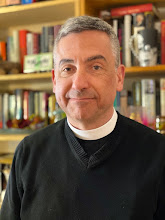

 Posts
Posts

