Grace Episcopal Church, Madison NJ
July 12, 2009
Year B, Proper 10: The Sixth Sunday after Pentecost
2 Samuel 6:1-5, 12b-19
Psalm 24
(Ephesians 1:3-14)
Mark 6:14-29
Servant Leadership
What makes a good leader? Is Christian leadership different from good leadership in the world?
These are questions I think about a lot. And fortunately I have some time to think about them because one of the best parts of my job at Grace is that I am not the one in charge. But now that Lauren is on vacation a few people have said to me, “Oh, now you get to be in charge!” Not true! For the record, I’d like to point out that in the absence of the rector it’s the wardens who are in charge – not me.
But, of course, as a priest I am in a position of leadership and so I do think very seriously about what makes a good leader – and I wonder if good Christian leadership is different from good leadership in the business world and the political world.
Most, if not all of us, at some points in our lives are called to be leaders. Maybe we are called to be leaders in our families, or our communities or leaders at work.
So, naturally, since most if not all of us serve as leaders at some point lots of people think about – and write about – leadership. The other day just out of curiosity I typed in the word “leadership” at barnesandnonble.com and found over 20,000 titles were listed!
After scanning through some of these titles it’s safe to say that the general understanding of leadership is the ability to get people to do what you want them to do. Apparently most would agree that leadership is about accumulating and exercising power over other people.
But in reality is that good leadership? And is that good Christian leadership? Does God call us to the kind of leadership that is about accumulating and exercising power?
Today’s lessons give us the chance to see several different leaders in action. We see King David and we see Herod Antipas. And we also see the leadership of John the Baptist.
And of course above all of these we have the example of the leadership of Jesus Christ.
So here are two questions. What makes a good leader? Is Christian leadership different from leadership in the world?
From the Old Testament we heard the next installment in the amazing adventures of David. Over the past few weeks we’ve heard the unlikely story of Jesse’s youngest son’s rise from tending the sheep to being anointed as the king of Israel. We heard the story of God choosing David through the prophet Samuel. We heard the familiar story of David proving himself by slinging a rock and defeating the giant Goliath. And last week we heard how, after the death of Israel’s first king, the elders of Israel anoint David as their new leader.
Which brings us to today’s lesson. David has a triumphant victory parade, gathering “the chosen men of Israel” – some thirty thousand we’re told – and processing with the ark of God. The ark was a container which contained the stone tablets of the Ten Commandments – but more than that the ark was believed to contain the very presence of God.
So this is quite an event – and quite a statement by David. By moving the ark and “dancing before the Lord” David is making it very clear that he is God’s anointed and he’s letting everyone know that to oppose David was to oppose the God of Israel.
There are two ominous notes in this story, however. It’s too bad that one of these ominous notes was left out from the section we read from Second Samuel.
The part that’s left out describes how during the procession, Uzzah, one of the men helping to move the ark, reached out and touched the ark when it was in danger of tipping over. Despite his good intentions, he violated the taboo against touching the ark and Uzzah was immediately struck dead.
David is understandably upset by this event and temporarily changes his plan to bring the ark to Jerusalem. After a few months pass without further incident, though, he is able to work up the courage to bring the ark into his city – and eventually it will be placed in the Temple.
Maybe David should have hesitated even more and reflected on the danger of trying to use God for his own political purposes.
The other ominous note is included in what we heard today. The author of Second Samuel writes, “As the ark of the LORD came into the city of David, Michal daughter of Saul looked out of the window, and saw King David leaping and dancing before the Lord; and she despised him in her heart.”
We’re not given any explanation here for Michal’s strong emotions. She was a daughter of Saul, the previous king, and later she will criticize David for making a spectacle of himself in the procession with the “common people.” But perhaps as a king’s daughter she recognized the danger of a leader flaunting his relationship with God and the danger of abusing his status as God’s anointed.
Although David surrounded himself with the trappings of religion, in truth he governed Israel pretty much like any of the pagan rulers of his time and for that matter pretty much like dictators and absolute monarchs of today.
He placed himself above the law and violated God’s justice. The most famous example of this is his adultery with Bathsheba and the sending of her husband Uriah to the front lines to die in battle. Like other leaders then and now he did all of this because he wanted to – and because he could.
As a leader David transformed Israel for the first and last time into a political and military power – and yet he betrayed many and most especially he betrayed the God who had anointed him as king.
Today’s second king, Herod Antipas, is not quite as complex as David. Herod was a son of Herod the Great and he was ruler of Galilee during Jesus’ earthly lifetime. He was essentially a puppet of the Romans. As long as he maintained the favor of Rome he remained in power. When that favor was withdrawn, he was finished.
He is best-remembered for his relationship with Herodias – who was both his niece and sister-in-law! John the Baptist, of course is critical of this relationship and according to the gospel this leads to his demise.
Herod isn’t a one-dimensional character. Mark notes that Herod fears John the Baptist and recognizes him as a righteous and holy man. Mark tells us when Herod heard John “he was greatly perplexed; and yet he liked to listen to him.”
But Herod is an essentially weak man and so he needs to boast and exercise his “power” to impress his guests with bold oaths to Herodias’ daughter Salome (incorrectly and confusingly called Herodias in our bible translation). And so, probably with a mix of fear and regret Herod orders the beheading of John.
And Herod is painfully reminded of his essential weakness when Jesus gains notoriety for his teaching and healing. With dread, Herod is convinced that the righteous and holy John has been raised from the dead.
And what about the leadership of John the Baptist? He doesn’t surround himself with religious trappings the way David did, and yet even Herod is able to see that John is righteous and holy.
John leads a radically simple life in the wilderness and attracts a committed group of followers including, most scholars think, Jesus himself.
John speaks the truth to both the powerful and the not so powerful. He condemns Herod for his relationship with Herodias but he also challenges ordinary people to repent of their sins and change their ways. And his leadership attracts crowds to the River Jordan and transforms lives.
John the Baptist – John the leader – will pay the ultimate price for speaking the truth to power and yet his power and his leadership can still be felt today when we imitate him at the baptismal font.
There isn’t much Jesus in today’s lessons, but if we are looking for what makes a good leader – a good Christian leader – we have to look to Jesus.
Jesus didn’t need the religious trappings of David. And unlike Herod, Jesus was no one’s puppet.
Like John, Jesus spoke the truth to the powerful and the not so powerful. And, like John, Jesus paid the ultimate price for that honesty.
But there is something distinctive about the leadership of Jesus. Jesus practices a leadership of service.
Jesus does nothing to glorify himself. Instead he makes it very clear that he has come into the world to serve human beings and to glorify God the Father. Over and over he offers this service in his teaching and his healing. Jesus reveals this servant leadership at the Last Supper when describes the bread as his body broken for the world and the wine as his blood poured out for the world. And Jesus models that servant leadership when he gets on his knees and washes the feet of the apostles.
Servant leadership is leadership. Servant leadership is Christian leadership.
Bennett J. Sims, the late bishop of Atlanta once wrote, “Servant leadership defines success as giving and measures achievement by devotion to serving.”
As Christians all of us are called and challenged to follow the example of Jesus and to be servant leaders. In baptism we all promise to seek and serve Christ in all persons, loving our neighbor as our self. We don’t have to look very far to see opportunities for servant leadership – opportunities for giving and serving.
And with God’s grace we all can be far greater leaders than David or Herod. With God’s grace we can be servant leaders – defining success as giving and measuring achievement by devotion to serving.
Amen.
Sunday, July 12, 2009
Wednesday, July 01, 2009
Mission to Camden
Grace Episcopal Church, Madison NJ
The Messenger
Curate’s Corner
"Mission to Camden"
One of my best friends serves as Director of Campus Ministry at the Loyola School, a Roman Catholic high school on Manhattan’s Upper East Side. From time to time over the past four or five years I have heard her tell stories about the powerful experience of bringing groups of her students on mission trips to Camden. She has told me that these young men and women are so transformed by their time there that they frequently sign up for return visits, although they receive no school credit for their service.
I know in the past Grace Church youth and their adult chaperones have had excellent mission trips to Central America, Indian reservations and Appalachia. As I began to think about this year’s mission trip, I recalled the stories I have heard from my friend about the Romero Center. I also reflected on how our world has changed since the last mission trip. I considered the economic recession which has caused anxiety for many and real suffering for some. Maybe this would be a good year to stay closer to home and work among the poor in our part of the country. After talking it over with Lauren and the J2A leaders, I decided that this year’s mission trip would take us just under a hundred miles away from Madison. This year, from August 3rd to the 8th, our mission is to Camden.
The facts and figures about Camden are horrifying. It is the second-poorest city in the nation with an unemployment rate more than three times the national average. The median income for a family of four in the city is $18,000. Camden has a population of 80,000 and has three high schools, three supermarkets, three prisons and three hospitals. Half of the population is illiterate and the school dropout rate is 70%. Only 7% of the population has a college degree or higher. One out of every five homes in Camden is abandoned and there are 200 active drug corners with 3000 drug dealers in the city. It is estimated that $200 million is spent on drugs every year in Camden. This is a place of great suffering right here in New Jersey.
Our group of ten young people and five adults will be participating in the “Urban Challenge” program at the Romero Center located in a former convent in the heart of Camden. Named for the martyred El Salvadoran archbishop Oscar Romero, the center describes itself as a “Peace and Social Justice Education Center.” Its mission is “to build bridges of understanding between people of faith in urban and suburban churches, leading people to a deeper awareness of our prophetic vocation, as we respond to our sisters and brothers in remarkable need.” The center aims to achieve this mission through means of “service, education, community and reflection.”
During the week we will be living in community, preparing our own meals and cleaning up after ourselves. Each day will begin with morning prayer, led by participants. Then we will head out to various work sites in the Camden and Philadelphia area. These may include rehabilitating housing, working in schools and pre-schools, preparing and serving meals at soup kitchens, assisting at the South Jersey Food Bank, and more. One of the most attractive elements of the “Urban Challenge” is the emphasis on how we will benefit from our encounter with the people of Camden. These sentences from the Romero Center’s promotional literature jumped out at me: “Most participants come prepared for what they will do for Camden. Typically, they are unprepared for what Camden will do for them.”
Each afternoon we will return to the Romero Center, discuss the places we have visited and the people we have met and reflect on the social justice issues raised by our experiences. Each evening after dinner the Romero Center presents a variety of social justice programs including an impressive roster of guest speakers and community activities and events. Our days will conclude with evening prayer during which each of us will reflect on the day – recalling a gift we received and how God challenged or stretched us.
Our time in Camden promises to be both challenging and rewarding. I look forward to sharing the experience with the parish in the fall. Meanwhile I hope that you will keep all of the participants in your prayers. The youth are: Will Brooks, Alexis Cardwell, Grace Cole, Tommy Cullen, Erica Faletto, Joey Geyer, Will Geyer, Lindsey Kellstrom, Kathy Meyer and Brian Tross. Along with me, the adults are: Geoff Brooks, Mike Cullen, Bill Geyer, and Lisa Lawson.
The Messenger
Curate’s Corner
"Mission to Camden"
One of my best friends serves as Director of Campus Ministry at the Loyola School, a Roman Catholic high school on Manhattan’s Upper East Side. From time to time over the past four or five years I have heard her tell stories about the powerful experience of bringing groups of her students on mission trips to Camden. She has told me that these young men and women are so transformed by their time there that they frequently sign up for return visits, although they receive no school credit for their service.
I know in the past Grace Church youth and their adult chaperones have had excellent mission trips to Central America, Indian reservations and Appalachia. As I began to think about this year’s mission trip, I recalled the stories I have heard from my friend about the Romero Center. I also reflected on how our world has changed since the last mission trip. I considered the economic recession which has caused anxiety for many and real suffering for some. Maybe this would be a good year to stay closer to home and work among the poor in our part of the country. After talking it over with Lauren and the J2A leaders, I decided that this year’s mission trip would take us just under a hundred miles away from Madison. This year, from August 3rd to the 8th, our mission is to Camden.
The facts and figures about Camden are horrifying. It is the second-poorest city in the nation with an unemployment rate more than three times the national average. The median income for a family of four in the city is $18,000. Camden has a population of 80,000 and has three high schools, three supermarkets, three prisons and three hospitals. Half of the population is illiterate and the school dropout rate is 70%. Only 7% of the population has a college degree or higher. One out of every five homes in Camden is abandoned and there are 200 active drug corners with 3000 drug dealers in the city. It is estimated that $200 million is spent on drugs every year in Camden. This is a place of great suffering right here in New Jersey.
Our group of ten young people and five adults will be participating in the “Urban Challenge” program at the Romero Center located in a former convent in the heart of Camden. Named for the martyred El Salvadoran archbishop Oscar Romero, the center describes itself as a “Peace and Social Justice Education Center.” Its mission is “to build bridges of understanding between people of faith in urban and suburban churches, leading people to a deeper awareness of our prophetic vocation, as we respond to our sisters and brothers in remarkable need.” The center aims to achieve this mission through means of “service, education, community and reflection.”
During the week we will be living in community, preparing our own meals and cleaning up after ourselves. Each day will begin with morning prayer, led by participants. Then we will head out to various work sites in the Camden and Philadelphia area. These may include rehabilitating housing, working in schools and pre-schools, preparing and serving meals at soup kitchens, assisting at the South Jersey Food Bank, and more. One of the most attractive elements of the “Urban Challenge” is the emphasis on how we will benefit from our encounter with the people of Camden. These sentences from the Romero Center’s promotional literature jumped out at me: “Most participants come prepared for what they will do for Camden. Typically, they are unprepared for what Camden will do for them.”
Each afternoon we will return to the Romero Center, discuss the places we have visited and the people we have met and reflect on the social justice issues raised by our experiences. Each evening after dinner the Romero Center presents a variety of social justice programs including an impressive roster of guest speakers and community activities and events. Our days will conclude with evening prayer during which each of us will reflect on the day – recalling a gift we received and how God challenged or stretched us.
Our time in Camden promises to be both challenging and rewarding. I look forward to sharing the experience with the parish in the fall. Meanwhile I hope that you will keep all of the participants in your prayers. The youth are: Will Brooks, Alexis Cardwell, Grace Cole, Tommy Cullen, Erica Faletto, Joey Geyer, Will Geyer, Lindsey Kellstrom, Kathy Meyer and Brian Tross. Along with me, the adults are: Geoff Brooks, Mike Cullen, Bill Geyer, and Lisa Lawson.

Sunday, June 14, 2009
How God Sees the World
Grace Episcopal Church, Madison NJ
June 14, 2009
The Second Sunday after Pentecost
Year B, Proper 6
1 Samuel 15:34-16:13
Psalm 20
(2 Corinthians 6:6-10; 14-17)
Mark 4:26-34
How God Sees the World
Well, it’s now the middle of June and graduation season is drawing to a close. A couple of weeks ago colleges and universities across the country held their commencements and now high schools are sending their newly minted graduates off into the world.
We’ve already heard some wonderful senior sermons here at Grace and we have a couple more next Sunday. I’m sure it’s both an exciting and scary time both for the graduates and for the people who love them.
Of course, at graduation ceremonies it’s very common to have a commencement speaker. You know how it usually works. Colleges try to invite distinguished alumni, or politicians, or successful business people or, increasingly, celebrities to make a speech to the graduates and their families. Ideally the speech should have some piece of wisdom for the graduates to take with them into the next phase of their lives.
Unfortunately, more often than not, these speeches from distinguished and famous people are filled with clichés and platitudes and are almost entirely forgettable. And it seems this year’s speeches were more of the same. Now, to be fair, this year the college commencement speakers had an even bigger challenge than usual because the grads in their caps and gowns are entering a job market with very limited opportunities.
So one after the other these distinguished and famous people tried to put their best spin on the current situation and the prospects facing the graduates. A few weeks ago the New York Times ran a piece quoting from some of these commencement speeches. Here are some of the excerpts.
In his controversial appearance at Notre Dame, President Obama told the graduates, “Your class has come of age at a moment of great consequence. It is a privilege and responsibility afforded to few generations.”
For his part, Vice President Biden told the graduates, “Remember from your physics class…your hands are on the steering wheel of the automobile. It’s going straight. And one slight turn sends the car in a direction fundamentally different and initially unalterable in the direction it’s been going in. Few people – few generations – get to put their hands on the steering wheel at that moment.”
Um, OK. If that doesn’t inspire you, here’s Ben Bernanke, the chairman of the Federal Reserve, addressing the graduates of Boston College School of Law. “We are in a recession and the labor market is weak. Many of you may not have gotten the job you wanted; some may have had offers rescinded or the start of employment delayed.” To soften the blow he added, “So, my advice to you is to stay optimistic. Things usually have a way of working out.”
Finally in her speech at Tulane, Ellen DeGeneres tried to buck up the grads by recalling when she was 19: “I was living in a basement apartment, I had no heat, no air, I had a mattress on the floor and the apartment was infested with fleas.”
Reading these excerpts from the commencement addresses and thinking about today’s lessons, I’ve come to the conclusion that it’s a mistake for colleges to ask the distinguished and the famous to speak to the graduates. Maybe the colleges would get better speeches if they followed God’s example.
God doesn’t see the world the way we do. Of course God loves the distinguished and famous but God doesn’t seem to be impressed by them. And if God were choosing commencement speakers I’m pretty sure God wouldn’t choose the people the world considers distinguished or famous.
Instead, throughout history God turns to the young, to the old, to the anonymous, to the poor and to the seemingly ordinary. God turns to these people to do God’s work. God turns to these “nobodies” to do great things.
While the world dismisses the seemingly ordinary, the nobodies – it’s exactly these people God turns to over and over again to do great things.
And isn’t that one of the messages in today’s lessons?
In that long reading from First Samuel, God has become disappointed in Israel’s first king, Saul, so God sends the prophet Samuel to meet the new king God has chosen. Now, although by this time Samuel was pretty familiar with the ways of God, when Samuel meets Jesse’s oldest son, Eliab, he sees the eldest son the way the world would see him. Samuel is impressed by his seniority and appearance, and figures that the oldest is God’s chosen. That’s the way of the world, right?
But that’s not God’s way. That’s not the way God sees the world. So God has to remind Samuel, “Do not look on his appearance or on the height of his stature, because I have rejected him; for the Lord does not see as mortals see; they look on the outward appearance, but the Lord looks on the heart.”
“The Lord does not see as mortals see.” God selects Jesse’s youngest and least likely son, David – someone although apparently good-looking, but still undistinguished and certainly not famous. God sees that this nobody should be the king of Israel.
All of the parables of Jesus challenge us to see the world the way God sees the world. Today we heard two parables from the Gospel of Mark – both of which illustrate great abundance and power coming from the seemingly ordinary and insignificant – great abundance and power coming from the tiniest of seeds.
How would Jesus’ first followers have heard these parables? How would the first readers and hearers of the Gospel of Mark have understood these parables a couple of generations after the earthly lifetime of Jesus? It is likely that the first followers of Jesus and the first readers and hearers of the Gospel of Mark would have identified with the tiny, seemingly insignificant seeds.
From our perspective as Christians, the life, death and resurrection of Jesus is the central event of human history. Yet, in the First Century the vast majority of people even in Israel were unaware of Jesus of Nazareth.
True to form, God had once again chosen someone the world saw as an insignificant nobody to do remarkable things.
And a generation or two later, the Jesus movement was still small and struggling, a bunch of nobodies, still just a small seed. And so those first readers and hearers of the Gospel of Mark would have seen themselves as those small seeds – small seeds that with God’s grace have the potential to bring forth great abundance.
From our perspective, we know that those small First Century seeds took root and grew into the worldwide Christian church – and here we are today.
Yet, despite all of this history, despite our own experience, most of the time we don’t see the world the way God sees the world. Like Samuel we get impressed by appearances, by stature. Like colleges we give our attention to those the world considers distinguished and famous and ignore those the world sees as insignificant nobodies.
But at our best, and with the grace of God, we sometimes do see the world the way God sees the world. At our best and with the grace of God we see that everyone has infinite value and importance – no matter what the world thinks of them.
In her beautiful sermon last week, Katie Doyle talked about Grace Church as a place where there is no age gap. She said it’s a place where she has friends who are three years old and friends who are old enough to be her parents and grandparents.
What a powerful example of seeing the world the way God sees the world!
Today in our Rite 13 ceremony we honor our young people on or near their 13th birthday. We honor them not because the world says “children are our future.” No, we honor them because of who they are right now – and all that they give to our Christian community right now.
What a powerful example of seeing the world the way God sees the world!
Lately some of us have been learning a great deal about poverty right here in Madison. We’ve discovered that poverty is carefully hidden here and there’s whole lot more need than we expected. And we are beginning to think about ways that we can serve people right here in town that the world sees as insignificant nobodies but who God sees as having infinite value and importance.
And it turns out Grace Church has been given a challenge to see the world – to see Madison – the way God sees it. Thanks to Marilyn D’Amelio at Central Avenue School, we’ve learned of four or five families in town that cannot afford membership at the pool. If we could raise $2000 we could make a very real difference in the lives of some of our neighbors this summer. So, next Sunday we are going to station some of our youth at the end of each service just as we did for the Souper Bowl collection to accept your donations to help these people who the world sees as insignificant nobodies but who God sees as people of infinite value. Kit has even come up with a name: “Pooling Our Resources.” This is a chance for us to show that we see the world the way God sees the world.
And with God’s grace we can see the world as God sees the world. With God’s grace we can see that the people the world considers as insignificant nobodies actually have infinite value and importance.
Our challenge is simply to open our hearts to God’s grace and allow God to transform the way see the world.
Amen.
June 14, 2009
The Second Sunday after Pentecost
Year B, Proper 6
1 Samuel 15:34-16:13
Psalm 20
(2 Corinthians 6:6-10; 14-17)
Mark 4:26-34
How God Sees the World
Well, it’s now the middle of June and graduation season is drawing to a close. A couple of weeks ago colleges and universities across the country held their commencements and now high schools are sending their newly minted graduates off into the world.
We’ve already heard some wonderful senior sermons here at Grace and we have a couple more next Sunday. I’m sure it’s both an exciting and scary time both for the graduates and for the people who love them.
Of course, at graduation ceremonies it’s very common to have a commencement speaker. You know how it usually works. Colleges try to invite distinguished alumni, or politicians, or successful business people or, increasingly, celebrities to make a speech to the graduates and their families. Ideally the speech should have some piece of wisdom for the graduates to take with them into the next phase of their lives.
Unfortunately, more often than not, these speeches from distinguished and famous people are filled with clichés and platitudes and are almost entirely forgettable. And it seems this year’s speeches were more of the same. Now, to be fair, this year the college commencement speakers had an even bigger challenge than usual because the grads in their caps and gowns are entering a job market with very limited opportunities.
So one after the other these distinguished and famous people tried to put their best spin on the current situation and the prospects facing the graduates. A few weeks ago the New York Times ran a piece quoting from some of these commencement speeches. Here are some of the excerpts.
In his controversial appearance at Notre Dame, President Obama told the graduates, “Your class has come of age at a moment of great consequence. It is a privilege and responsibility afforded to few generations.”
For his part, Vice President Biden told the graduates, “Remember from your physics class…your hands are on the steering wheel of the automobile. It’s going straight. And one slight turn sends the car in a direction fundamentally different and initially unalterable in the direction it’s been going in. Few people – few generations – get to put their hands on the steering wheel at that moment.”
Um, OK. If that doesn’t inspire you, here’s Ben Bernanke, the chairman of the Federal Reserve, addressing the graduates of Boston College School of Law. “We are in a recession and the labor market is weak. Many of you may not have gotten the job you wanted; some may have had offers rescinded or the start of employment delayed.” To soften the blow he added, “So, my advice to you is to stay optimistic. Things usually have a way of working out.”
Finally in her speech at Tulane, Ellen DeGeneres tried to buck up the grads by recalling when she was 19: “I was living in a basement apartment, I had no heat, no air, I had a mattress on the floor and the apartment was infested with fleas.”
Reading these excerpts from the commencement addresses and thinking about today’s lessons, I’ve come to the conclusion that it’s a mistake for colleges to ask the distinguished and the famous to speak to the graduates. Maybe the colleges would get better speeches if they followed God’s example.
God doesn’t see the world the way we do. Of course God loves the distinguished and famous but God doesn’t seem to be impressed by them. And if God were choosing commencement speakers I’m pretty sure God wouldn’t choose the people the world considers distinguished or famous.
Instead, throughout history God turns to the young, to the old, to the anonymous, to the poor and to the seemingly ordinary. God turns to these people to do God’s work. God turns to these “nobodies” to do great things.
While the world dismisses the seemingly ordinary, the nobodies – it’s exactly these people God turns to over and over again to do great things.
And isn’t that one of the messages in today’s lessons?
In that long reading from First Samuel, God has become disappointed in Israel’s first king, Saul, so God sends the prophet Samuel to meet the new king God has chosen. Now, although by this time Samuel was pretty familiar with the ways of God, when Samuel meets Jesse’s oldest son, Eliab, he sees the eldest son the way the world would see him. Samuel is impressed by his seniority and appearance, and figures that the oldest is God’s chosen. That’s the way of the world, right?
But that’s not God’s way. That’s not the way God sees the world. So God has to remind Samuel, “Do not look on his appearance or on the height of his stature, because I have rejected him; for the Lord does not see as mortals see; they look on the outward appearance, but the Lord looks on the heart.”
“The Lord does not see as mortals see.” God selects Jesse’s youngest and least likely son, David – someone although apparently good-looking, but still undistinguished and certainly not famous. God sees that this nobody should be the king of Israel.
All of the parables of Jesus challenge us to see the world the way God sees the world. Today we heard two parables from the Gospel of Mark – both of which illustrate great abundance and power coming from the seemingly ordinary and insignificant – great abundance and power coming from the tiniest of seeds.
How would Jesus’ first followers have heard these parables? How would the first readers and hearers of the Gospel of Mark have understood these parables a couple of generations after the earthly lifetime of Jesus? It is likely that the first followers of Jesus and the first readers and hearers of the Gospel of Mark would have identified with the tiny, seemingly insignificant seeds.
From our perspective as Christians, the life, death and resurrection of Jesus is the central event of human history. Yet, in the First Century the vast majority of people even in Israel were unaware of Jesus of Nazareth.
True to form, God had once again chosen someone the world saw as an insignificant nobody to do remarkable things.
And a generation or two later, the Jesus movement was still small and struggling, a bunch of nobodies, still just a small seed. And so those first readers and hearers of the Gospel of Mark would have seen themselves as those small seeds – small seeds that with God’s grace have the potential to bring forth great abundance.
From our perspective, we know that those small First Century seeds took root and grew into the worldwide Christian church – and here we are today.
Yet, despite all of this history, despite our own experience, most of the time we don’t see the world the way God sees the world. Like Samuel we get impressed by appearances, by stature. Like colleges we give our attention to those the world considers distinguished and famous and ignore those the world sees as insignificant nobodies.
But at our best, and with the grace of God, we sometimes do see the world the way God sees the world. At our best and with the grace of God we see that everyone has infinite value and importance – no matter what the world thinks of them.
In her beautiful sermon last week, Katie Doyle talked about Grace Church as a place where there is no age gap. She said it’s a place where she has friends who are three years old and friends who are old enough to be her parents and grandparents.
What a powerful example of seeing the world the way God sees the world!
Today in our Rite 13 ceremony we honor our young people on or near their 13th birthday. We honor them not because the world says “children are our future.” No, we honor them because of who they are right now – and all that they give to our Christian community right now.
What a powerful example of seeing the world the way God sees the world!
Lately some of us have been learning a great deal about poverty right here in Madison. We’ve discovered that poverty is carefully hidden here and there’s whole lot more need than we expected. And we are beginning to think about ways that we can serve people right here in town that the world sees as insignificant nobodies but who God sees as having infinite value and importance.
And it turns out Grace Church has been given a challenge to see the world – to see Madison – the way God sees it. Thanks to Marilyn D’Amelio at Central Avenue School, we’ve learned of four or five families in town that cannot afford membership at the pool. If we could raise $2000 we could make a very real difference in the lives of some of our neighbors this summer. So, next Sunday we are going to station some of our youth at the end of each service just as we did for the Souper Bowl collection to accept your donations to help these people who the world sees as insignificant nobodies but who God sees as people of infinite value. Kit has even come up with a name: “Pooling Our Resources.” This is a chance for us to show that we see the world the way God sees the world.
And with God’s grace we can see the world as God sees the world. With God’s grace we can see that the people the world considers as insignificant nobodies actually have infinite value and importance.
Our challenge is simply to open our hearts to God’s grace and allow God to transform the way see the world.
Amen.
Monday, June 01, 2009
Through the Wringer
Grace Episcopal Church
Madison NJ
The Messenger
June 2009
“Through the Wringer”
Recently I had the privilege and joy of officiating at my first wedding. A few months ago a good friend of mine from college called and asked if I would “marry” her and her future husband. I agreed on the condition that we go through the normal pre-marital conversations – which might mean talking about difficult and personal issues. They both agreed, and in fact seemed eager to have the opportunity to talk about the often difficult journeys that brought them together. My friend and her new husband have experienced serious illness and much loss in their lives. Talking with them, I became increasingly moved that despite everything they had been through they were still willing to make this serious commitment to one another and to have so much hope for the future.
For their wedding they chose to read a passage from the Letter to the Philippians. St. Paul writes, “Rejoice in the Lord always; again I will say, Rejoice. Let your gentleness be known to everyone. The Lord is near. Do not worry about anything, but in everything by prayer and supplication with thanksgiving let your requests be known to God.”
In my wedding sermon, I mentioned that, much like the bride and groom, St. Paul had been “through the wringer” when he wrote these words. He was writing from prison and had experienced all sorts of painful setbacks in his attempts to spread the Good News of Jesus Christ. Yet, despite having been “through the wringer” – or maybe because of this suffering – Paul’s commitment to his mission and his confidence in God was stronger than ever. And as I’ve thought more about this image, I’ve realized that, like my friends and St. Paul, many of us have been “through the wringer” lately.
Just since the fall we have endured an intense presidential election – with a result that elated some and disappointed others. Our country has faced a seemingly sudden and nauseating economic collapse, pirate attacks, ongoing wars in Iraq and Afghanistan, a loss of stability in Pakistan, “swine flu” and news about a foiled terrorist plot in the Bronx.
Here at Grace Church, many of us have grieved over the death of a family member or a friend while others have worried about their own health or the well-being of a loved one. Some of us have lost our jobs and many more are anxious about their future employment. Those who have retired or are nearing retirement have been dismayed by the loss of their investments. The increasing number of empty storefronts along Main Street in Madison is vivid testimony that this community has been seriously affected by the recession. Yes, we have been “through the wringer.”
As is true with my friends and St. Paul, these difficult experiences can make the bonds between and among us – and our relationship with God – stronger. The longer days and (hopefully) somewhat slower pace of summer offers us an opportunity to reflect on what we have been through during this difficult year of being “through the wringer.” With a little effort we can use summer as a chance to reflect, to deepen our relationships with one another, and to make room for God’s power within us.
In terms of making room for God, maybe this summer we can try to set aside just a little bit of quiet time for personal prayer and reflection. Even just five minutes can make a huge difference in our lives. Maybe this summer we might do some reading to challenge or nourish us spiritually. There are a few books I find myself going back to over and over. One is a book of Christian spiritual exercises called Sadhana: A Way to God. It was written by an Indian Jesuit named Anthony de Mello and offers a user-friendly approach to various prayer techniques. Another book I frequently dip into is Amazing Grace: A Vocabulary of Faith. In this book Kathleen Norris offers brief, thoughtful reflections on religious and theological terms such as “Grace,” “Trinity” and “Hospitality.”
And, of course, Grace Church is still going strong during the summer. Maybe this summer you can make time for one of the weekday services. Many of us are excited that this summer “Mass on the Grass” returns on Wednesday evenings after last year’s hiatus caused by the construction. Later on Wednesday evenings we are going to have a summer-long reading and discussion of an excellent book, What Jesus Meant, by Garry Wills. Plus, our “First Fridays” potluck and speaker series will continue in June, July and August!
I am planning to use this summer to take a breath and to reflect on “the wringer” we have all been through this year. My prayer is that we can take advantage of this summer to strengthen our relationships with one another and to make room for God.
Madison NJ
The Messenger
June 2009
“Through the Wringer”
Recently I had the privilege and joy of officiating at my first wedding. A few months ago a good friend of mine from college called and asked if I would “marry” her and her future husband. I agreed on the condition that we go through the normal pre-marital conversations – which might mean talking about difficult and personal issues. They both agreed, and in fact seemed eager to have the opportunity to talk about the often difficult journeys that brought them together. My friend and her new husband have experienced serious illness and much loss in their lives. Talking with them, I became increasingly moved that despite everything they had been through they were still willing to make this serious commitment to one another and to have so much hope for the future.
For their wedding they chose to read a passage from the Letter to the Philippians. St. Paul writes, “Rejoice in the Lord always; again I will say, Rejoice. Let your gentleness be known to everyone. The Lord is near. Do not worry about anything, but in everything by prayer and supplication with thanksgiving let your requests be known to God.”
In my wedding sermon, I mentioned that, much like the bride and groom, St. Paul had been “through the wringer” when he wrote these words. He was writing from prison and had experienced all sorts of painful setbacks in his attempts to spread the Good News of Jesus Christ. Yet, despite having been “through the wringer” – or maybe because of this suffering – Paul’s commitment to his mission and his confidence in God was stronger than ever. And as I’ve thought more about this image, I’ve realized that, like my friends and St. Paul, many of us have been “through the wringer” lately.
Just since the fall we have endured an intense presidential election – with a result that elated some and disappointed others. Our country has faced a seemingly sudden and nauseating economic collapse, pirate attacks, ongoing wars in Iraq and Afghanistan, a loss of stability in Pakistan, “swine flu” and news about a foiled terrorist plot in the Bronx.
Here at Grace Church, many of us have grieved over the death of a family member or a friend while others have worried about their own health or the well-being of a loved one. Some of us have lost our jobs and many more are anxious about their future employment. Those who have retired or are nearing retirement have been dismayed by the loss of their investments. The increasing number of empty storefronts along Main Street in Madison is vivid testimony that this community has been seriously affected by the recession. Yes, we have been “through the wringer.”
As is true with my friends and St. Paul, these difficult experiences can make the bonds between and among us – and our relationship with God – stronger. The longer days and (hopefully) somewhat slower pace of summer offers us an opportunity to reflect on what we have been through during this difficult year of being “through the wringer.” With a little effort we can use summer as a chance to reflect, to deepen our relationships with one another, and to make room for God’s power within us.
In terms of making room for God, maybe this summer we can try to set aside just a little bit of quiet time for personal prayer and reflection. Even just five minutes can make a huge difference in our lives. Maybe this summer we might do some reading to challenge or nourish us spiritually. There are a few books I find myself going back to over and over. One is a book of Christian spiritual exercises called Sadhana: A Way to God. It was written by an Indian Jesuit named Anthony de Mello and offers a user-friendly approach to various prayer techniques. Another book I frequently dip into is Amazing Grace: A Vocabulary of Faith. In this book Kathleen Norris offers brief, thoughtful reflections on religious and theological terms such as “Grace,” “Trinity” and “Hospitality.”
And, of course, Grace Church is still going strong during the summer. Maybe this summer you can make time for one of the weekday services. Many of us are excited that this summer “Mass on the Grass” returns on Wednesday evenings after last year’s hiatus caused by the construction. Later on Wednesday evenings we are going to have a summer-long reading and discussion of an excellent book, What Jesus Meant, by Garry Wills. Plus, our “First Fridays” potluck and speaker series will continue in June, July and August!
I am planning to use this summer to take a breath and to reflect on “the wringer” we have all been through this year. My prayer is that we can take advantage of this summer to strengthen our relationships with one another and to make room for God.
Sunday, May 31, 2009
"Also the Holy Ghost the Comforter"
Grace Episcopal Church, Madison NJ
May 31, 2009
Year B: The Day of Pentecost
Acts 2:1-21
Psalm 104:25-35, 37
John 15:26-27; 16:4b-15
“Also the Holy Ghost the Comforter”
One of my favorite features in The Messenger is the “Did You Know?” column. Each month Mary Lea reports on some of the interesting activities that our fellow parishioners have been up to – the awards that have been won, the children and grandchildren who have been born, and so on. Each month I always learn something new about at least one person in the parish.
Well, today is Pentecost and I thought I might try out a “Did you know?” on all of us here today. Here goes: Did you know that Pentecost is second most important feast on the church calendar – second only to Easter?
It’s true – Pentecost is a principal feast - second only to Easter in importance. So, the Church considers Pentecost a pretty big deal. On Pentecost we celebrate the “birthday of the Church” and remember the pouring out of the Holy Spirit on the apostles in Jerusalem so long ago.
The account in the Acts of the Apostles paints quite a vivid picture doesn’t it? In this dramatic depiction we encounter the small group of Jesus’ timid and directionless disciples – “all together in one place.” Apparently the small group of disciples was still keeping a low profile, still fearful despite having encountered the Risen Christ.
And then something remarkable happens – Pentecost happens – God pours out the Holy Spirit on the disciples. The disciples are knocked off their feet. The timid and directionless disciples are transformed into courageous and bold witnesses for Christ. As amazing as Pentecost must have been, it must have been a little scary for the disciples too. First their lives had been upended when they encountered Jesus, now God pours out the Holy Spirit, knocks them off their feet and once again changes the direction of their lives forever.
The account of Pentecost in the Acts of the Apostles paints a vivid picture of a prediction and promise fulfilled. Way back, John the Baptist had predicted that Jesus would bring a baptism of fire and the Holy Spirit. And as we heard in the Gospel of John, Jesus himself promised that he would send the Holy Spirit “to guide us into all truth.” And now John the Baptist’s prediction and Jesus’ promise have both been fulfilled in Pentecost.
So, having said all that, it seems appropriate, doesn’t it, that Pentecost is the second most important feast of the church year. And today we do kick it up a notch. Lauren and I are wearing our red vestments. And the service is full of festive hymns celebrating the Holy Spirit.
But that’s about it.
Let’s face it, our celebration today – as fine as it is – pales in comparison to Easter and pales in comparison to Christmas. (Maybe we should give everyone a bookmark today?!) The attendance is nowhere near as high, and even though Pentecost is a big deal, even though the birthday of the church is a big deal, even though the pouring out of the Holy Spirit is a big deal, there just doesn’t seem to be that same sense of joy and excitement that we experience at Easter and Christmas.
Part of the problem is that here in the Northern Hemisphere we’re at the start of the summer season and in the United States we’ve passed Memorial Day so for many of us our minds are drifting from church to vacation or just outdoor activities.
But, I think the problem is deeper than just the summer weather. I think that we are a little uncomfortable with the Holy Spirit. We tend to downplay the Holy Spirit. We often treat the Holy Spirit as an afterthought.
There’s a canticle we sometimes say at Morning Prayer that is a perfect example of treating the Holy Spirit as an afterthought. And, I have to admit, it’s a canticle that always makes me smile a little.
It’s Canticle 7, called “We Praise Thee.” In beautiful Rite 1 language it lavishes much praise on God the Father and God the Son. Here’s the part that always makes me smile and illustrates how we downplay the power of the Holy Spirit. It’s right in the middle of the canticle and the only time the Holy Spirit is mentioned:
“The holy Church throughout all the world doth acknowledge thee, the Father, of an infinite majesty, thine adorable, true and only Son, also the Holy Ghost the Comforter.”
I always smile at describing Jesus as “adorable” since nowadays we use “adorable” as a synonym for cute. And I smile at the one throwaway line about the Third Person of the Trinity, “Also the Holy Ghost the Comforter.”
The Holy Spirit is described as the “Comforter” but we have some discomfort with the Holy Spirit.
If we are open to it, the Holy Spirit can knock us off our feet and transform our lives just as those first disciples were knocked off their feet and their lives were transformed. And that can be scary.
But there is no reason to be afraid because if we are open to it Pentecost is not a one time event. Pentecost continues to happen to us. The Holy Spirit really is the “Comforter” The Holy Spirit knocks us off of our feet but then the Holy Sprit continues to sustain and to comfort us as we more fully live out our Christian lives.
If Pentecost were a one time event then after that amazing day described in the Acts of the Apostles, the disciples would have gone back to being their timid and directionless selves. If Pentecost were a one time event I can imagine them sitting around years later, shaking their heads sadly, saying to one another, “Remember that day when we were walking around preaching the Good News in different languages? Remember when we were so filled with the Holy Spirit that people thought we were drunk? Wow, that was a really crazy day, huh?”
And then in my imagination they all look at each other sad, disappointed and a little embarrassed that they had gotten so carried away on that amazing day in Jerusalem.
But, that’s not what happened. Pentecost is not a one-time event. Pentecost is an ongoing experience. Pentecost is the birthday of the Church, the beginning of the Church, and the ongoing experience of the Church. God continued to pour out the Holy Spirit to sustain and comfort those first disciples as they lived out their lives as followers of Jesus. The Holy Spirit continued to sustain and comfort those first disciples even as most of them gave up their lives for Jesus.
If we are open to it, the Holy Spirit knocks us off our feet, transforms our lives and continues to sustain and comfort us.
Maybe you’ve experienced the Holy Spirit knocking you off your feet and then also sustaining and comforting you.
In my own life if I had to name a Pentecost moment I’d say it was when I decided I really was called to be a priest. I really felt the presence and power of the Holy Spirit. It was the most carefully and prayerfully made decision of my life.
And then after three years of seminary it was time to get a job. And nothing much seemed to be happening. There might be a part-time position, but that was about it.
I began to have doubts about the whole thing. That decision a few years back had been amazing and seemed to be Spirit-filled. I was convinced that the Holy Spirit had knocked me off my feet and changed the direction of my life. But now there was no job and Sue and I had depleted our savings. I began to wonder if it had all been a mistake. I imagined a time in the future when Sue and I would be sitting around and I’d say something like, “Remember when I went to seminary and thought I should be a priest. That was a really crazy time, wasn’t it?”
The day of my seminary graduation was kind of bittersweet. It was great to be done but most of my classmates had already lined up jobs and were eager to get started.
And then in the midst of my anxiety and despair Lauren Ackland walked up to me, congratulated me on my graduation and asked if I had a job yet. And here I am. Back when I left teaching the Holy Spirit had knocked me off my feet and changed the direction of my life. But maybe more importantly, when I pay attention I know that the Holy Spirit has continued to sustain and comfort me and to offer blessings here at Grace Church far richer than I could have imagined.
So on Pentecost, the second most important feast of the Christian year, we give thanks that Pentecost was not a one-time event. If we are open to it, Pentecost continues to happen to us. The Holy Spirit is poured out on us, knocks us off our feet, transforms our lives and continues to comfort and sustain us to more fully live out our Christian lives.
Now, confident of the Holy Spirit’s power to sustain and comfort us, let us stand and renew our baptismal vows…
May 31, 2009
Year B: The Day of Pentecost
Acts 2:1-21
Psalm 104:25-35, 37
John 15:26-27; 16:4b-15
“Also the Holy Ghost the Comforter”
One of my favorite features in The Messenger is the “Did You Know?” column. Each month Mary Lea reports on some of the interesting activities that our fellow parishioners have been up to – the awards that have been won, the children and grandchildren who have been born, and so on. Each month I always learn something new about at least one person in the parish.
Well, today is Pentecost and I thought I might try out a “Did you know?” on all of us here today. Here goes: Did you know that Pentecost is second most important feast on the church calendar – second only to Easter?
It’s true – Pentecost is a principal feast - second only to Easter in importance. So, the Church considers Pentecost a pretty big deal. On Pentecost we celebrate the “birthday of the Church” and remember the pouring out of the Holy Spirit on the apostles in Jerusalem so long ago.
The account in the Acts of the Apostles paints quite a vivid picture doesn’t it? In this dramatic depiction we encounter the small group of Jesus’ timid and directionless disciples – “all together in one place.” Apparently the small group of disciples was still keeping a low profile, still fearful despite having encountered the Risen Christ.
And then something remarkable happens – Pentecost happens – God pours out the Holy Spirit on the disciples. The disciples are knocked off their feet. The timid and directionless disciples are transformed into courageous and bold witnesses for Christ. As amazing as Pentecost must have been, it must have been a little scary for the disciples too. First their lives had been upended when they encountered Jesus, now God pours out the Holy Spirit, knocks them off their feet and once again changes the direction of their lives forever.
The account of Pentecost in the Acts of the Apostles paints a vivid picture of a prediction and promise fulfilled. Way back, John the Baptist had predicted that Jesus would bring a baptism of fire and the Holy Spirit. And as we heard in the Gospel of John, Jesus himself promised that he would send the Holy Spirit “to guide us into all truth.” And now John the Baptist’s prediction and Jesus’ promise have both been fulfilled in Pentecost.
So, having said all that, it seems appropriate, doesn’t it, that Pentecost is the second most important feast of the church year. And today we do kick it up a notch. Lauren and I are wearing our red vestments. And the service is full of festive hymns celebrating the Holy Spirit.
But that’s about it.
Let’s face it, our celebration today – as fine as it is – pales in comparison to Easter and pales in comparison to Christmas. (Maybe we should give everyone a bookmark today?!) The attendance is nowhere near as high, and even though Pentecost is a big deal, even though the birthday of the church is a big deal, even though the pouring out of the Holy Spirit is a big deal, there just doesn’t seem to be that same sense of joy and excitement that we experience at Easter and Christmas.
Part of the problem is that here in the Northern Hemisphere we’re at the start of the summer season and in the United States we’ve passed Memorial Day so for many of us our minds are drifting from church to vacation or just outdoor activities.
But, I think the problem is deeper than just the summer weather. I think that we are a little uncomfortable with the Holy Spirit. We tend to downplay the Holy Spirit. We often treat the Holy Spirit as an afterthought.
There’s a canticle we sometimes say at Morning Prayer that is a perfect example of treating the Holy Spirit as an afterthought. And, I have to admit, it’s a canticle that always makes me smile a little.
It’s Canticle 7, called “We Praise Thee.” In beautiful Rite 1 language it lavishes much praise on God the Father and God the Son. Here’s the part that always makes me smile and illustrates how we downplay the power of the Holy Spirit. It’s right in the middle of the canticle and the only time the Holy Spirit is mentioned:
“The holy Church throughout all the world doth acknowledge thee, the Father, of an infinite majesty, thine adorable, true and only Son, also the Holy Ghost the Comforter.”
I always smile at describing Jesus as “adorable” since nowadays we use “adorable” as a synonym for cute. And I smile at the one throwaway line about the Third Person of the Trinity, “Also the Holy Ghost the Comforter.”
The Holy Spirit is described as the “Comforter” but we have some discomfort with the Holy Spirit.
If we are open to it, the Holy Spirit can knock us off our feet and transform our lives just as those first disciples were knocked off their feet and their lives were transformed. And that can be scary.
But there is no reason to be afraid because if we are open to it Pentecost is not a one time event. Pentecost continues to happen to us. The Holy Spirit really is the “Comforter” The Holy Spirit knocks us off of our feet but then the Holy Sprit continues to sustain and to comfort us as we more fully live out our Christian lives.
If Pentecost were a one time event then after that amazing day described in the Acts of the Apostles, the disciples would have gone back to being their timid and directionless selves. If Pentecost were a one time event I can imagine them sitting around years later, shaking their heads sadly, saying to one another, “Remember that day when we were walking around preaching the Good News in different languages? Remember when we were so filled with the Holy Spirit that people thought we were drunk? Wow, that was a really crazy day, huh?”
And then in my imagination they all look at each other sad, disappointed and a little embarrassed that they had gotten so carried away on that amazing day in Jerusalem.
But, that’s not what happened. Pentecost is not a one-time event. Pentecost is an ongoing experience. Pentecost is the birthday of the Church, the beginning of the Church, and the ongoing experience of the Church. God continued to pour out the Holy Spirit to sustain and comfort those first disciples as they lived out their lives as followers of Jesus. The Holy Spirit continued to sustain and comfort those first disciples even as most of them gave up their lives for Jesus.
If we are open to it, the Holy Spirit knocks us off our feet, transforms our lives and continues to sustain and comfort us.
Maybe you’ve experienced the Holy Spirit knocking you off your feet and then also sustaining and comforting you.
In my own life if I had to name a Pentecost moment I’d say it was when I decided I really was called to be a priest. I really felt the presence and power of the Holy Spirit. It was the most carefully and prayerfully made decision of my life.
And then after three years of seminary it was time to get a job. And nothing much seemed to be happening. There might be a part-time position, but that was about it.
I began to have doubts about the whole thing. That decision a few years back had been amazing and seemed to be Spirit-filled. I was convinced that the Holy Spirit had knocked me off my feet and changed the direction of my life. But now there was no job and Sue and I had depleted our savings. I began to wonder if it had all been a mistake. I imagined a time in the future when Sue and I would be sitting around and I’d say something like, “Remember when I went to seminary and thought I should be a priest. That was a really crazy time, wasn’t it?”
The day of my seminary graduation was kind of bittersweet. It was great to be done but most of my classmates had already lined up jobs and were eager to get started.
And then in the midst of my anxiety and despair Lauren Ackland walked up to me, congratulated me on my graduation and asked if I had a job yet. And here I am. Back when I left teaching the Holy Spirit had knocked me off my feet and changed the direction of my life. But maybe more importantly, when I pay attention I know that the Holy Spirit has continued to sustain and comfort me and to offer blessings here at Grace Church far richer than I could have imagined.
So on Pentecost, the second most important feast of the Christian year, we give thanks that Pentecost was not a one-time event. If we are open to it, Pentecost continues to happen to us. The Holy Spirit is poured out on us, knocks us off our feet, transforms our lives and continues to comfort and sustain us to more fully live out our Christian lives.
Now, confident of the Holy Spirit’s power to sustain and comfort us, let us stand and renew our baptismal vows…
Sunday, May 17, 2009
What Makes You Happy?
Grace Episcopal Church, Madison NJ
May 17, 2009
Year B: The Sixth Sunday of Easter
(Acts 10:44-48)
Psalm 98
1 John 5:1-6
John 15:9-17
What Makes You Happy?
Jesus said to his disciples, “I have said these things to you so that my joy may be in you, and that your joy may be complete.”
Today’s gospel lesson picks up right where we left off last week. You may remember that last Sunday we heard one of the “I am” statements of Jesus in the Gospel of John. In this case, at the Last Supper, Jesus said to his disciples, “I am the vine, you are the branches.”
As Lauren pointed out in last week’s sermon, these “I am” statements by Jesus in the Gospel of John would have packed quite a wallop for the first Jewish readers and hearers of the gospel. They would have picked up the reference to the name of God revealed to Moses in the Book of Exodus. The first readers and hearers would have understood that the author of the Gospel of John was making the bold claim that Jesus was divine.
That bold claim of Jesus’ divinity doesn’t have quite the same impact for us Christians two thousand years later.
But the rich metaphor given by Jesus, “I am the vine, you are the branches” should still pack quite a wallop for us today because it offers us deep insight into our relationship with Jesus and with one another.
“I am the vine, you are the branches” reminds us of our complete dependence on Jesus and our deep connection with another.
And then in today’s lesson Jesus continues by telling the disciples how the branches of the vine – how we – are to live. Jesus says, “This is my commandment, that you love one another as I have loved you.”
I don’t need to tell you that’s a tall order – and we might very well reject it as pie in the sky, idealistic nonsense. Or we might look at that commandment and see it as an undue burden – with all that we have to do, with all of our worries and responsibilities, on top of all that, we have to not just tolerate, not just get along OK with, but we are commanded to love one another.
Everybody here knows this commandment, but even though it’s familiar, it still seems unreasonable. Really, love one another? Is that really necessary?
But Jesus insists loving one another is necessary when he says, “I have said these things to you so that my joy may be in you, and that your joy may be complete.”
Jesus gives this great commandment to love one another so that our joy may be complete. The truth is, when we love one another we’re the most joyful, the happiest, the most human we can be.
And I think everyone here knows that’s true. And yet, and yet… It’s still a tall order for lots of reasons. When we offer love we make ourselves vulnerable – vulnerable to rejection and, let’s face it, there’s a good chance people may just take advantage of us. And, needless to say, society gives us a very different message than love one another as Jesus has loved us.
And sometimes, with all that goes on in our lives, we may simply forget of us that it’s when we love one another that we’re the most joyful, the happiest, the most human we can be.
And since offering love makes us vulnerable, since offering love is not the way of the world and since we sometimes forget, we try to find that joy and happiness elsewhere – maybe in buying and accumulating stuff, maybe making a lot of money, maybe in achieving prestige, maybe in entertainment.
And, time after time, all of that fails to truly satisfy us – fails to give us the joy and happiness we receive when we love one another.
Maybe because the world hasn’t made them cynical yet, I think children can remind us that loving one another gives us true joy and happiness.
I received one of those reminders from the kids who came to this month’s “Pizza Compline.” Now, you may think this is funny, but “Pizza Compline” is one of the more challenging parts of my job.
Many of you know that on the first Wednesday of the month the kids and I make pizzas in the kitchen, Mary Lea provides leads a craft or service activity and then we all go into church for compline – the beautiful bedtime service of the church.
Now, I know what you’re thinking – but it’s not the pizza-making in a hot kitchen full of kids that makes “Pizza Compline” so challenging for me. (And, if I may so myself – the pizza we make is actually pretty good.)
What makes “Pizza Compline” challenging each month is coming up with a homily that can say something meaningful to the children, but also at the same time also offer some food to the adults who are present.
A couple of weeks ago I was really struggling to come up with something for my homily so I asked Mary Lea if she had any ideas about what I could talk about.
She thought for a few moments and then she said how the kids – and all of us, for that matter – are constantly bombarded with images and sales pitches that tell us that we’ll be happy if we have a particular object, or dress in a certain way, or drive this kind of car. She thought this would be something worthwhile to talk about with our children. Yes! I wholeheartedly agreed – relieved to have something good for my homily.
So, that evening I began my homily by simply asking the children, “What makes you happy?”
I thought I was ready for their answers. I expected that they would talk about all the things that make them happy – things like their American Girl dolls, or video games, or some TV show.
Instead, one by one, they talked about their friends, their families and (especially) their pets as what made them happy. Not one of the children mentioned a “thing” – only the people and pets they loved. One of the adults did chime in and said gin and tonic made him happy, but I chose to ignore that at the time.
What the kids had to say was very moving, but also created a problem for me – because with their beautiful answers, one by one the children were preaching my homily. They were stealing my thunder! At the end, I was left in the position of saying something like, “well, keep up the good work,” and then quickly throwing it to Dr. Anne to lead us in the next hymn.
Although my homily was ruined, I was deeply moved by how the kids understand what really gives us joy, what really makes us happy. The children offered a powerful reminder that Jesus is right – we find our true joy and happiness in loving one another as he has loved us.
If you’re still not convinced, it turns out that science backs up Jesus and the children about what gives us true joy and happiness.
In this month’s issue of The Atlantic there is a fascinating article called “What Makes Us Happy?” It’s about a Harvard study that’s been going on for 72 years, tracking 268 men who entered Harvard in the late 1930s, tracking them through all the ups and downs of life. About half of the subjects are still alive and they are almost all anonymous, although we know that John F. Kennedy and Ben Bradlee (the former editor of the Washington Post) were part of the study.
Not surprisingly, many members of the study achieved a great deal of worldly success, rising to high levels in government and business, writing best-selling novels. And, maybe also unsurprisingly, the lives of others in the study seemed to fall apart and end tragically. Reading the summaries of the case studies, it’s disturbing how young men who seemed well adjusted in their youth, full of optimism and promise, ended up dying drunk and alone. And others, who seemed to be dealt a pretty bad hand in life, ended up overcoming challenges and living a happy life.
With over 70 years of data, the study offers some fascinating insight into what makes for a happy life. Some factors are obvious – education, stable marriage, not smoking, not abusing alcohol, some exercise and healthy weight.
Certainly those are all crucially important, but when the current director of the study was asked what he had learned from this enormous study he said, “The only thing that really matters in life are your relationships to other people.”
“The only thing that really matters in life are your relationships to other people.”
This enormous study reveals that although we may try to find happiness and joy elsewhere, it’s in loving one another that we are truly happy and truly joyful.
Jesus said, “I have said these things to you so that my joy may be in you, and that your joy may be complete. This is my commandment, that you love one another as I have loved you.”
Jesus gives us this commandment not as a burden, but because this is the way to a joyful, happy life. We can try to live other ways, looking for joy and happiness in things, or money, or prestige, but each time we’ll find that they don’t satisfy us.
Jesus knows, the children know and even the scientists know that it’s loving one another that gives us true joy and happiness.
What makes you happy?
Amen.
May 17, 2009
Year B: The Sixth Sunday of Easter
(Acts 10:44-48)
Psalm 98
1 John 5:1-6
John 15:9-17
What Makes You Happy?
Jesus said to his disciples, “I have said these things to you so that my joy may be in you, and that your joy may be complete.”
Today’s gospel lesson picks up right where we left off last week. You may remember that last Sunday we heard one of the “I am” statements of Jesus in the Gospel of John. In this case, at the Last Supper, Jesus said to his disciples, “I am the vine, you are the branches.”
As Lauren pointed out in last week’s sermon, these “I am” statements by Jesus in the Gospel of John would have packed quite a wallop for the first Jewish readers and hearers of the gospel. They would have picked up the reference to the name of God revealed to Moses in the Book of Exodus. The first readers and hearers would have understood that the author of the Gospel of John was making the bold claim that Jesus was divine.
That bold claim of Jesus’ divinity doesn’t have quite the same impact for us Christians two thousand years later.
But the rich metaphor given by Jesus, “I am the vine, you are the branches” should still pack quite a wallop for us today because it offers us deep insight into our relationship with Jesus and with one another.
“I am the vine, you are the branches” reminds us of our complete dependence on Jesus and our deep connection with another.
And then in today’s lesson Jesus continues by telling the disciples how the branches of the vine – how we – are to live. Jesus says, “This is my commandment, that you love one another as I have loved you.”
I don’t need to tell you that’s a tall order – and we might very well reject it as pie in the sky, idealistic nonsense. Or we might look at that commandment and see it as an undue burden – with all that we have to do, with all of our worries and responsibilities, on top of all that, we have to not just tolerate, not just get along OK with, but we are commanded to love one another.
Everybody here knows this commandment, but even though it’s familiar, it still seems unreasonable. Really, love one another? Is that really necessary?
But Jesus insists loving one another is necessary when he says, “I have said these things to you so that my joy may be in you, and that your joy may be complete.”
Jesus gives this great commandment to love one another so that our joy may be complete. The truth is, when we love one another we’re the most joyful, the happiest, the most human we can be.
And I think everyone here knows that’s true. And yet, and yet… It’s still a tall order for lots of reasons. When we offer love we make ourselves vulnerable – vulnerable to rejection and, let’s face it, there’s a good chance people may just take advantage of us. And, needless to say, society gives us a very different message than love one another as Jesus has loved us.
And sometimes, with all that goes on in our lives, we may simply forget of us that it’s when we love one another that we’re the most joyful, the happiest, the most human we can be.
And since offering love makes us vulnerable, since offering love is not the way of the world and since we sometimes forget, we try to find that joy and happiness elsewhere – maybe in buying and accumulating stuff, maybe making a lot of money, maybe in achieving prestige, maybe in entertainment.
And, time after time, all of that fails to truly satisfy us – fails to give us the joy and happiness we receive when we love one another.
Maybe because the world hasn’t made them cynical yet, I think children can remind us that loving one another gives us true joy and happiness.
I received one of those reminders from the kids who came to this month’s “Pizza Compline.” Now, you may think this is funny, but “Pizza Compline” is one of the more challenging parts of my job.
Many of you know that on the first Wednesday of the month the kids and I make pizzas in the kitchen, Mary Lea provides leads a craft or service activity and then we all go into church for compline – the beautiful bedtime service of the church.
Now, I know what you’re thinking – but it’s not the pizza-making in a hot kitchen full of kids that makes “Pizza Compline” so challenging for me. (And, if I may so myself – the pizza we make is actually pretty good.)
What makes “Pizza Compline” challenging each month is coming up with a homily that can say something meaningful to the children, but also at the same time also offer some food to the adults who are present.
A couple of weeks ago I was really struggling to come up with something for my homily so I asked Mary Lea if she had any ideas about what I could talk about.
She thought for a few moments and then she said how the kids – and all of us, for that matter – are constantly bombarded with images and sales pitches that tell us that we’ll be happy if we have a particular object, or dress in a certain way, or drive this kind of car. She thought this would be something worthwhile to talk about with our children. Yes! I wholeheartedly agreed – relieved to have something good for my homily.
So, that evening I began my homily by simply asking the children, “What makes you happy?”
I thought I was ready for their answers. I expected that they would talk about all the things that make them happy – things like their American Girl dolls, or video games, or some TV show.
Instead, one by one, they talked about their friends, their families and (especially) their pets as what made them happy. Not one of the children mentioned a “thing” – only the people and pets they loved. One of the adults did chime in and said gin and tonic made him happy, but I chose to ignore that at the time.
What the kids had to say was very moving, but also created a problem for me – because with their beautiful answers, one by one the children were preaching my homily. They were stealing my thunder! At the end, I was left in the position of saying something like, “well, keep up the good work,” and then quickly throwing it to Dr. Anne to lead us in the next hymn.
Although my homily was ruined, I was deeply moved by how the kids understand what really gives us joy, what really makes us happy. The children offered a powerful reminder that Jesus is right – we find our true joy and happiness in loving one another as he has loved us.
If you’re still not convinced, it turns out that science backs up Jesus and the children about what gives us true joy and happiness.
In this month’s issue of The Atlantic there is a fascinating article called “What Makes Us Happy?” It’s about a Harvard study that’s been going on for 72 years, tracking 268 men who entered Harvard in the late 1930s, tracking them through all the ups and downs of life. About half of the subjects are still alive and they are almost all anonymous, although we know that John F. Kennedy and Ben Bradlee (the former editor of the Washington Post) were part of the study.
Not surprisingly, many members of the study achieved a great deal of worldly success, rising to high levels in government and business, writing best-selling novels. And, maybe also unsurprisingly, the lives of others in the study seemed to fall apart and end tragically. Reading the summaries of the case studies, it’s disturbing how young men who seemed well adjusted in their youth, full of optimism and promise, ended up dying drunk and alone. And others, who seemed to be dealt a pretty bad hand in life, ended up overcoming challenges and living a happy life.
With over 70 years of data, the study offers some fascinating insight into what makes for a happy life. Some factors are obvious – education, stable marriage, not smoking, not abusing alcohol, some exercise and healthy weight.
Certainly those are all crucially important, but when the current director of the study was asked what he had learned from this enormous study he said, “The only thing that really matters in life are your relationships to other people.”
“The only thing that really matters in life are your relationships to other people.”
This enormous study reveals that although we may try to find happiness and joy elsewhere, it’s in loving one another that we are truly happy and truly joyful.
Jesus said, “I have said these things to you so that my joy may be in you, and that your joy may be complete. This is my commandment, that you love one another as I have loved you.”
Jesus gives us this commandment not as a burden, but because this is the way to a joyful, happy life. We can try to live other ways, looking for joy and happiness in things, or money, or prestige, but each time we’ll find that they don’t satisfy us.
Jesus knows, the children know and even the scientists know that it’s loving one another that gives us true joy and happiness.
What makes you happy?
Amen.
Sunday, May 03, 2009
Consolation and Challenge
Grace Episcopal Church, Madison NJ
May 3, 2009
Year B: The Fourth Sunday of Easter
(Acts 4:5-12)
Psalm 23
1 John 3:16-24
John 10:11-18
Consolation and Challenge
Today’s lessons and psalm offer us a mix of the familiar and the unfamiliar, a mix of consolation and challenge.
The 23rd Psalm definitely falls into the familiar and consoling category, doesn’t it? Thinking about the 23rd Psalm, I was reminded of an experience I had early in the ordination process when I attended my first conference – a series of meetings with members of the Commission on Ministry who asked me a variety of questions about my sense of call for the priesthood.
It was the first time I was being asked questions like this by strangers and in a formal setting, but I was fortunate enough to have some good mentors who prepared me well for the kinds of questions you get asked at this kind of thing – so, although nervous, I felt I was ready to talk about why I wanted to be a priest.
Things got off to a good start and then I got what felt like a curveball question. One of the members of the Commission on Ministry asked, “What’s your favorite psalm?”
I stated at him blankly. “My favorite psalm?” I said, cleverly stalling. “Yeah, what’s your favorite psalm?” he said in reply.
After an uncomfortable pause I finally admitted, “I’m not sure I have a favorite psalm.”
He looked at me for a moment and then we went on to talk about other things but the whole rest of the time I felt that sinking feeling in my stomach. How could I be a priest if I couldn’t name my favorite psalm?!
At the end of our interview he looked at me and said, “If anyone ever asks you that question again, I’d suggest you say the 23rd Psalm.”
No one ever did ask me my favorite psalm again, but it was a good piece of advice. Especially in the King James Version and especially in times of fear or loss the 23rd Psalm offers us the profoundly consoling image of God as the good shepherd…
Yea, though I walk through the valley of the shadow of death, I will fear no evil; for thou art with me; thy rod and they staff, they comfort me.
And I’m sure the 23rd Psalm has been in many of our hearts and on many of our lips in recent months and days as many of us in this community have worried about the economy and some of us have faced illness and some of us the death of one we love.
Maybe through tears and with queasy stomachs and perhaps even with anger we say those familiar words,
The Lord is my shepherd; I shall not want.
And just as famous - and maybe even more consoling - as the 23rd Psalm is the passage we just heard from the Gospel of John in which Jesus declares,
I am the good shepherd. The good shepherd lays down his life for the sheep.
Of course, there are many other examples of sheep and shepherd imagery in the Bible. And, of course, the Bible was written by people who were very familiar with the everyday lives of sheep and shepherds – they didn’t need to use much imagination when they thought of God as a shepherd or of Jesus as a good shepherd, laying down his life for the sheep.
But, here in lovely suburban Morris County it is all too easy for us to romanticize the pastoral imagery in this gospel passage. It’s easy for us to imagine the sweet scene of Jesus looking after the cute little lambs – perhaps even carrying one of the sheep around on his shoulders. It’s a scene that’s often depicted in religious art, isn’t it?
But if we stop and think about it, there’s nothing romantic about being a shepherd. It’s a hard and unpleasant and tedious way to earn a living – spending day and night with smelly sheep who, let’s face it, are none too bright.
Yet in the gospel passage, Jesus goes even further than the psalmist when he declares that he, the good shepherd, lays down his life for the sheep. John’s Gospel tells us that Jesus the good shepherd loves these stinky and not very bright sheep – loves us – so much that he lays down his life for us.
There’s nothing sweet or romantic about it - the good shepherd living and dying for the sheep. Instead the sacrificial love of Jesus Christ is an awesome, mind-blowing flesh and blood reality.
And maybe we’d all like to stop right here. The Lord is my shepherd; I shall not want. And Jesus is the good shepherd who lays down his life for the sheep. Sounds good to me – I feel very consoled.
But today the church also offers us a reading from the First Letter of John – a challenging reading that should make us very uncomfortable.
First John was probably written after the Gospel of John, some time around the start of the Second Century. And it seems like this epistle was written during a time when there was a major and painful split in this early Christian community – a community that was shaped by the Gospel of John.
We only get one side of the story in the Bible, but it appears that some people in this early Christian community were downplaying the humanity of Jesus. And since they were downplaying the humanity of Jesus it would follow that they would downplay the real, unromantic, flesh and blood death of Jesus on the cross.
It seems that at least some of these early Christians preferred to think of Jesus mostly as a divine being and not so much as a real flesh and blood human being. It will be a continuing challenge throughout Christian history to remember that Jesus is both fully human and fully divine.
Anyway, the author of First John writes this epistle in an attempt to correct these errors, insisting that it is in Jesus’ flesh and blood life and death, in Jesus’ flesh and blood sacrifice, that we see God’s love.
We know love by this, that he laid down his life for us.
So far, so good – still very consoling. But then here comes a curveball for all of us. Here comes the challenge for all of us… The author of First John continues,
And we ought to lay down our lives for one another. How does God’s love abide in anyone who has the world’s goods and sees a brother or sister in need and yet refuses to help?
So, yes, today’s lessons and psalm offer us consolation.
Yes, the Lord is my shepherd and I shall not want.
And, yes, Jesus is the Good Shepherd who lays down his life for the sheep.
Yes, it’s in this sacrifice that we see God’s love.
We’ve received our consolation; we’ve received our assurances of God’s love. And now as Christians you and I are challenged to lay down our lives for one another. And it’s in our unromantic, flesh and blood sacrifice, our loving sacrifice for one another, right here and now, that the world sees God’s love.
It’s quite a challenge. It’s easy for us to love and sacrifice for our family and friends. But the author of First John has the whole community in mind when he writes, “How does God’s love abide in anyone who has the world’s goods and sees a brother or sister in need and yet refuses to help?”
Most of you know that I used to be a high school teacher. Believe it or not, many times I would get frustrated by students who obviously didn’t want to be in my class, who wouldn’t or couldn’t do the work, and who sometimes even cheated on tests or quizzes.
And when I would get frustrated I would try to remember what a wise older teacher once told me. She said that we always had to give our best even to the kids who drove us up the wall because they were deeply loved and cherished by someone – hopefully a parent or a grandparent. And even if they didn’t get love from a parent or a grandparent, they were deeply loved and cherished by God.
Just as the Good Shepherd sacrifices his life for the sheep you and I are challenged to show that God’s love abides in us by sacrificing ourselves for one another – for people who drive us up the wall and for people we may not even know.
Our faith challenges us to sacrifice for one another and we may very well wonder if that’s just religious pie in the sky stuff, since our society insists we must look out for “Number One” first and foremost.
But if we look around we have so many examples of people sacrificing themselves not just for people they know and love but for strangers - brothers and sisters who are loved and cherished by God.
On Monday as I was driving along Greenwood Avenue on my way to the vestry meeting I had to pull over to make way for a fire engine racing into Madison from Florham Park. As I got closer to Main Street from the smoke I saw that it was a pretty bad fire. As I passed by I thought of our own parishioner, Ed Nunn, who’s a captain in the Madison fire department, and then saw another fire engine arriving from Cedar Knolls.
Most of us take the fire department for granted, but what an example of flesh and blood sacrifice. They stand ready to sacrifice for strangers – but still beloved brothers and sisters.
Here are two other examples, a little less dramatic, but still impressive.
If you were around here two weeks ago you saw a core group of people who spent the entire week here at church getting ready for the rummage sale. I don’t think they gave up so much of their time out of a deep love of rummage. Instead, they offered this unromantic, flesh and blood sacrifice because they know the good that comes out of the sale.
A couple of weeks ago we had our turn at the Community Soup Kitchen again, and you can read in the Messenger about all the people who donated food and/or spent the morning cooking and serving food. I was particularly struck by the people who spent so much time and money preparing tray after tray of what looked like delicious chicken so that, at least this day, these strangers – but still beloved brothers and sisters will have a substantial meal. And I was also struck that day by the parishioner who spent the entire morning over the sink washing hundreds of trays and scouring pots and pans.
You can probably think of many more, but these are just a few examples of people hearing the challenge given to all of us in today’s lesson. How does God’s love abide in anyone who has the world’s goods and sees a brother or sister in need and yet refuses to help?
Today’s lessons offer us a mix of the familiar and the unfamiliar, a mix of consolation and challenge.
In the life, death and resurrection of Jesus the Good Shepherd we have received our consolation.
And now, strengthened by Christ’s loving sacrifice, we are given the challenge of sacrificing ourselves, laying down our lives, for one another.
Amen.
May 3, 2009
Year B: The Fourth Sunday of Easter
(Acts 4:5-12)
Psalm 23
1 John 3:16-24
John 10:11-18
Consolation and Challenge
Today’s lessons and psalm offer us a mix of the familiar and the unfamiliar, a mix of consolation and challenge.
The 23rd Psalm definitely falls into the familiar and consoling category, doesn’t it? Thinking about the 23rd Psalm, I was reminded of an experience I had early in the ordination process when I attended my first conference – a series of meetings with members of the Commission on Ministry who asked me a variety of questions about my sense of call for the priesthood.
It was the first time I was being asked questions like this by strangers and in a formal setting, but I was fortunate enough to have some good mentors who prepared me well for the kinds of questions you get asked at this kind of thing – so, although nervous, I felt I was ready to talk about why I wanted to be a priest.
Things got off to a good start and then I got what felt like a curveball question. One of the members of the Commission on Ministry asked, “What’s your favorite psalm?”
I stated at him blankly. “My favorite psalm?” I said, cleverly stalling. “Yeah, what’s your favorite psalm?” he said in reply.
After an uncomfortable pause I finally admitted, “I’m not sure I have a favorite psalm.”
He looked at me for a moment and then we went on to talk about other things but the whole rest of the time I felt that sinking feeling in my stomach. How could I be a priest if I couldn’t name my favorite psalm?!
At the end of our interview he looked at me and said, “If anyone ever asks you that question again, I’d suggest you say the 23rd Psalm.”
No one ever did ask me my favorite psalm again, but it was a good piece of advice. Especially in the King James Version and especially in times of fear or loss the 23rd Psalm offers us the profoundly consoling image of God as the good shepherd…
Yea, though I walk through the valley of the shadow of death, I will fear no evil; for thou art with me; thy rod and they staff, they comfort me.
And I’m sure the 23rd Psalm has been in many of our hearts and on many of our lips in recent months and days as many of us in this community have worried about the economy and some of us have faced illness and some of us the death of one we love.
Maybe through tears and with queasy stomachs and perhaps even with anger we say those familiar words,
The Lord is my shepherd; I shall not want.
And just as famous - and maybe even more consoling - as the 23rd Psalm is the passage we just heard from the Gospel of John in which Jesus declares,
I am the good shepherd. The good shepherd lays down his life for the sheep.
Of course, there are many other examples of sheep and shepherd imagery in the Bible. And, of course, the Bible was written by people who were very familiar with the everyday lives of sheep and shepherds – they didn’t need to use much imagination when they thought of God as a shepherd or of Jesus as a good shepherd, laying down his life for the sheep.
But, here in lovely suburban Morris County it is all too easy for us to romanticize the pastoral imagery in this gospel passage. It’s easy for us to imagine the sweet scene of Jesus looking after the cute little lambs – perhaps even carrying one of the sheep around on his shoulders. It’s a scene that’s often depicted in religious art, isn’t it?
But if we stop and think about it, there’s nothing romantic about being a shepherd. It’s a hard and unpleasant and tedious way to earn a living – spending day and night with smelly sheep who, let’s face it, are none too bright.
Yet in the gospel passage, Jesus goes even further than the psalmist when he declares that he, the good shepherd, lays down his life for the sheep. John’s Gospel tells us that Jesus the good shepherd loves these stinky and not very bright sheep – loves us – so much that he lays down his life for us.
There’s nothing sweet or romantic about it - the good shepherd living and dying for the sheep. Instead the sacrificial love of Jesus Christ is an awesome, mind-blowing flesh and blood reality.
And maybe we’d all like to stop right here. The Lord is my shepherd; I shall not want. And Jesus is the good shepherd who lays down his life for the sheep. Sounds good to me – I feel very consoled.
But today the church also offers us a reading from the First Letter of John – a challenging reading that should make us very uncomfortable.
First John was probably written after the Gospel of John, some time around the start of the Second Century. And it seems like this epistle was written during a time when there was a major and painful split in this early Christian community – a community that was shaped by the Gospel of John.
We only get one side of the story in the Bible, but it appears that some people in this early Christian community were downplaying the humanity of Jesus. And since they were downplaying the humanity of Jesus it would follow that they would downplay the real, unromantic, flesh and blood death of Jesus on the cross.
It seems that at least some of these early Christians preferred to think of Jesus mostly as a divine being and not so much as a real flesh and blood human being. It will be a continuing challenge throughout Christian history to remember that Jesus is both fully human and fully divine.
Anyway, the author of First John writes this epistle in an attempt to correct these errors, insisting that it is in Jesus’ flesh and blood life and death, in Jesus’ flesh and blood sacrifice, that we see God’s love.
We know love by this, that he laid down his life for us.
So far, so good – still very consoling. But then here comes a curveball for all of us. Here comes the challenge for all of us… The author of First John continues,
And we ought to lay down our lives for one another. How does God’s love abide in anyone who has the world’s goods and sees a brother or sister in need and yet refuses to help?
So, yes, today’s lessons and psalm offer us consolation.
Yes, the Lord is my shepherd and I shall not want.
And, yes, Jesus is the Good Shepherd who lays down his life for the sheep.
Yes, it’s in this sacrifice that we see God’s love.
We’ve received our consolation; we’ve received our assurances of God’s love. And now as Christians you and I are challenged to lay down our lives for one another. And it’s in our unromantic, flesh and blood sacrifice, our loving sacrifice for one another, right here and now, that the world sees God’s love.
It’s quite a challenge. It’s easy for us to love and sacrifice for our family and friends. But the author of First John has the whole community in mind when he writes, “How does God’s love abide in anyone who has the world’s goods and sees a brother or sister in need and yet refuses to help?”
Most of you know that I used to be a high school teacher. Believe it or not, many times I would get frustrated by students who obviously didn’t want to be in my class, who wouldn’t or couldn’t do the work, and who sometimes even cheated on tests or quizzes.
And when I would get frustrated I would try to remember what a wise older teacher once told me. She said that we always had to give our best even to the kids who drove us up the wall because they were deeply loved and cherished by someone – hopefully a parent or a grandparent. And even if they didn’t get love from a parent or a grandparent, they were deeply loved and cherished by God.
Just as the Good Shepherd sacrifices his life for the sheep you and I are challenged to show that God’s love abides in us by sacrificing ourselves for one another – for people who drive us up the wall and for people we may not even know.
Our faith challenges us to sacrifice for one another and we may very well wonder if that’s just religious pie in the sky stuff, since our society insists we must look out for “Number One” first and foremost.
But if we look around we have so many examples of people sacrificing themselves not just for people they know and love but for strangers - brothers and sisters who are loved and cherished by God.
On Monday as I was driving along Greenwood Avenue on my way to the vestry meeting I had to pull over to make way for a fire engine racing into Madison from Florham Park. As I got closer to Main Street from the smoke I saw that it was a pretty bad fire. As I passed by I thought of our own parishioner, Ed Nunn, who’s a captain in the Madison fire department, and then saw another fire engine arriving from Cedar Knolls.
Most of us take the fire department for granted, but what an example of flesh and blood sacrifice. They stand ready to sacrifice for strangers – but still beloved brothers and sisters.
Here are two other examples, a little less dramatic, but still impressive.
If you were around here two weeks ago you saw a core group of people who spent the entire week here at church getting ready for the rummage sale. I don’t think they gave up so much of their time out of a deep love of rummage. Instead, they offered this unromantic, flesh and blood sacrifice because they know the good that comes out of the sale.
A couple of weeks ago we had our turn at the Community Soup Kitchen again, and you can read in the Messenger about all the people who donated food and/or spent the morning cooking and serving food. I was particularly struck by the people who spent so much time and money preparing tray after tray of what looked like delicious chicken so that, at least this day, these strangers – but still beloved brothers and sisters will have a substantial meal. And I was also struck that day by the parishioner who spent the entire morning over the sink washing hundreds of trays and scouring pots and pans.
You can probably think of many more, but these are just a few examples of people hearing the challenge given to all of us in today’s lesson. How does God’s love abide in anyone who has the world’s goods and sees a brother or sister in need and yet refuses to help?
Today’s lessons offer us a mix of the familiar and the unfamiliar, a mix of consolation and challenge.
In the life, death and resurrection of Jesus the Good Shepherd we have received our consolation.
And now, strengthened by Christ’s loving sacrifice, we are given the challenge of sacrificing ourselves, laying down our lives, for one another.
Amen.
Friday, May 01, 2009
Our Spiritual Heritage
Grace Episcopal Church, Madison NJ
The Messenger
May 2009
Our Spiritual Heritage
The Episcopal Church, with its roots in the Church of England, is profoundly enriched by the long history of deep spirituality found in Britain and Ireland. We most often experience the legacy of that spirituality in the elegant language of the Book of Common Prayer as well as in our beautiful – and theologically rich – hymns. Our church calendar also gives us the opportunity to get acquainted with some of the spiritual masters produced by the British Isles who have much to say to us today.
In May the Church honors three of these important figures: Dame Julian of Norwich (May 8), Dunstan, Archbishop of Canterbury (May 19) and the Venerable Bede (May 25).
In recent years there has been a renewed interest in the spirituality of Julian of Norwich, who was born probably in 1342. In May of 1373 she experienced a series of visions of our Lord’s Passion. Claiming that these vivid “showings” gave her a sense of peace and joy, she spent the rest of her life as an anchoress (essentially a recluse) reflecting on what her visions meant and writing about them in her book, known to us as Showings or Revelation(s) of Divine Love.
In her vision Julian vividly sees the evil and pain of sin in the rejection and crucifixion of Jesus. Although for Julian this is a very frightening image, it passes quickly and she comes to realize that the power of God ‘s love – especially as experienced in Jesus’ life, death and resurrection – is more than a match for the sin of the world. Julian writes, “Because of his tender love for all those who are to be saved our Good Lord comforts us at once and sweetly, as if to say: ‘It is true that sin is the cause of all this pain; but it is going to be all right; it is going to be all right; everything is going to be all right.’” In our time when the world is filled with so much pain and anxiety, Julian’s message is as timely as ever: God’s love is more powerful than sin and in the end all will be well.
Dunstan, who became Archbishop of Canterbury in 959, is not nearly as well-known as Julian of Norwich. He is, however, an important figure in his own right mostly because as abbot he reformed practices at the famous monastery at Glastonbury, making it a center both of serious spiritual practice as well as of learning. As Archbishop of Canterbury he attempted to extend the same kind of reforms across the entire English Church, with limited success.
In 973, Dunstan composed the Coronation Oath for English kings which contains worthy ideals for any Christian leader. Dunstan included these promises in the oath: “Three things I promise in Christ’s name to the Christian people subject to me: First that the church of God and the whole Christian people shall have true peace at all time by our judgment. Second, that I will forbid extortion and all kinds of wrong-doing to all orders of persons. Third, that I will enjoin equity and mercy in all judgments, so that God, who is kind and merciful, may vouchsafe his mercy to me and to you.”
The Venerable Bede (c. 673-735) has been described as “the foremost and most influential scholar from Anglo-Saxon England.” As a priest and monk Bede devoted himself to a wide variety of scholarly pursuits, writing books about Latin, natural phenomena and a large number of biblical commentaries. Today he is almost exclusively remembered for his greatest work, The Ecclesiastical History of the English People – the most important source of information we have about life in early England from the invasion of Julius Caesar to Bede’s own day.
Bede is particularly important as an early model of the Anglican priest-scholar, a person eager to understand the world but at the same time deeply grounded in the Christian faith. Bede captures the hopes of the priest-scholar at the conclusion of his Ecclesiastical History when he writes, “I pray you, noble Jesu, that as you have graciously granted me joyfully to imbibe the words of your knowledge, so you will also of your bounty grant me to come at length to yourself, the fount of all wisdom, and to dwell in your presence for ever.”
As Episcopalians, let us give thanks for the rich spiritual heritage found in our prayer book, our hymns and in the holy men and women of our tradition.
The Messenger
May 2009
Our Spiritual Heritage
The Episcopal Church, with its roots in the Church of England, is profoundly enriched by the long history of deep spirituality found in Britain and Ireland. We most often experience the legacy of that spirituality in the elegant language of the Book of Common Prayer as well as in our beautiful – and theologically rich – hymns. Our church calendar also gives us the opportunity to get acquainted with some of the spiritual masters produced by the British Isles who have much to say to us today.
In May the Church honors three of these important figures: Dame Julian of Norwich (May 8), Dunstan, Archbishop of Canterbury (May 19) and the Venerable Bede (May 25).
In recent years there has been a renewed interest in the spirituality of Julian of Norwich, who was born probably in 1342. In May of 1373 she experienced a series of visions of our Lord’s Passion. Claiming that these vivid “showings” gave her a sense of peace and joy, she spent the rest of her life as an anchoress (essentially a recluse) reflecting on what her visions meant and writing about them in her book, known to us as Showings or Revelation(s) of Divine Love.
In her vision Julian vividly sees the evil and pain of sin in the rejection and crucifixion of Jesus. Although for Julian this is a very frightening image, it passes quickly and she comes to realize that the power of God ‘s love – especially as experienced in Jesus’ life, death and resurrection – is more than a match for the sin of the world. Julian writes, “Because of his tender love for all those who are to be saved our Good Lord comforts us at once and sweetly, as if to say: ‘It is true that sin is the cause of all this pain; but it is going to be all right; it is going to be all right; everything is going to be all right.’” In our time when the world is filled with so much pain and anxiety, Julian’s message is as timely as ever: God’s love is more powerful than sin and in the end all will be well.
Dunstan, who became Archbishop of Canterbury in 959, is not nearly as well-known as Julian of Norwich. He is, however, an important figure in his own right mostly because as abbot he reformed practices at the famous monastery at Glastonbury, making it a center both of serious spiritual practice as well as of learning. As Archbishop of Canterbury he attempted to extend the same kind of reforms across the entire English Church, with limited success.
In 973, Dunstan composed the Coronation Oath for English kings which contains worthy ideals for any Christian leader. Dunstan included these promises in the oath: “Three things I promise in Christ’s name to the Christian people subject to me: First that the church of God and the whole Christian people shall have true peace at all time by our judgment. Second, that I will forbid extortion and all kinds of wrong-doing to all orders of persons. Third, that I will enjoin equity and mercy in all judgments, so that God, who is kind and merciful, may vouchsafe his mercy to me and to you.”
The Venerable Bede (c. 673-735) has been described as “the foremost and most influential scholar from Anglo-Saxon England.” As a priest and monk Bede devoted himself to a wide variety of scholarly pursuits, writing books about Latin, natural phenomena and a large number of biblical commentaries. Today he is almost exclusively remembered for his greatest work, The Ecclesiastical History of the English People – the most important source of information we have about life in early England from the invasion of Julius Caesar to Bede’s own day.
Bede is particularly important as an early model of the Anglican priest-scholar, a person eager to understand the world but at the same time deeply grounded in the Christian faith. Bede captures the hopes of the priest-scholar at the conclusion of his Ecclesiastical History when he writes, “I pray you, noble Jesu, that as you have graciously granted me joyfully to imbibe the words of your knowledge, so you will also of your bounty grant me to come at length to yourself, the fount of all wisdom, and to dwell in your presence for ever.”
As Episcopalians, let us give thanks for the rich spiritual heritage found in our prayer book, our hymns and in the holy men and women of our tradition.
Sunday, April 19, 2009
Low Sunday
Grace Episcopal Church, Madison NJ
April 19, 2009
Year B: The Second Sunday of Easter
Acts 4:32-35
Psalm 133
(1 John 1:1-2:2)
John 20:19-31
Low Sunday
It’s really too bad that the Second Sunday of Easter is traditionally a “low Sunday.” It’s too bad because each year we hope that the joyful spectacle of Easter will inspire people to come back the following Sunday for some more – even if we don’t have brass and timpani. And it’s also too bad this is traditionally a “low Sunday” because the gospel that we always hear on this day – the account of Jesus twice appearing to the disciples in the locked room – has so much to say to us, right here and now.
Today’s gospel lesson is from the Gospel of John. Most scholars think this fourth gospel was the last to be written, some time around the end of the First Century – several generations after the earthly lifetime of Jesus.
The Evangelist John is writing to a primarily Jewish community that faced an excruciating choice. For the first few decades the Jews who believed that Jesus was the messiah had continued to live as Jews. But by the year 100, for a variety of reasons, being a Jewish Christian was becoming increasingly impossible.
The Jewish Christians at the end of the First Century had to make a choice. They could no longer have it both ways.
It’s important to remember this excruciating choice because it largely accounts for the glaringly negative references to “the Jews” in the Gospel of John that tragically have helped fuel two thousand years of Christian anti-Semitism. We hear it even in today’s passage. John tells us the disciples were hiding in a locked room “for fear of the Jews.” We need to remember that the disciples themselves were Jews!
So, near the end of the First Century the Evangelist John is writing to a community faced with a very painful choice.
On the one hand, they could remain faithful to the traditions of their Jewish ancestors and surrender their faith in Jesus.
On the other hand, they could reject their Jewish identity and place their faith in Jesus the resurrected messiah – the resurrected messiah who they could not see in the flesh.
But, they couldn’t have it both ways.
I’m sure one of the stumbling blocks to choosing option number two - one of the things that made it hard to choose Jesus - was that people at the end of the First Century were unable to see the resurrected Jesus in the flesh.
In other words, the first audience for the Gospel of John was essentially in the same position as we are all these centuries later – we are all challenged to believe in the resurrected Jesus we cannot see in the flesh.
It turns out that John is writing as much to us in the 21st Century as to those people at the end of the First Century. We have to make a choice. We can’t have it both ways.
Not so long ago, it was sort of possible for Christians to have it both ways, wasn’t it? Not so long ago, pretty much everyone went to church. After World War II the church went on a building spree, planting churches throughout the suburbs - churches that were packed with young families. In those days, I’m told, going to church was one of the things you did – it was one of the major ways people were expected to be involved in the community. And sports teams wouldn’t dare schedule practices on Sunday mornings!
When I was a kid in the ‘70s the blue laws were still in effect in Hudson County. I can remember going to Two Guys – sort of the Wal-Mart or Target of its day – and seeing the chains that separated the grocery section from the rest of the store. On Sunday in Hudson County you could by a steak but you couldn’t buy a sweater.
For better or for worse, except in Bergen County, those days are over.
Today, our culture certainly does not encourage us to go to church. And, let’s face it - we get no benefit or acknowledgement from the world if we actually go to church.
If anyone even notices, they probably think it is “nice” that we go to church or they think that we are a hangover from an earlier, more religious age. And since church is no longer the thing to do, it would be very easy to roll over on Sunday morning and go along with the rest of the culture.
And I don’t need to tell you, practices and games and all sorts of events are now routinely scheduled on Sunday mornings.
And so just like the people at the First Century, you and I are faced with a difficult choice. Just like the people at the end of the First Century, we can’t have it both ways.
On the one hand, we can go along with the larger culture – we can live pretty much like everybody else – we can live like our neighbors who think our faith is a lot of nonsense or irrelevant or quaint.
Or we can put our faith in the resurrected Jesus we cannot see in the flesh.
And since we’re here – even on “Low Sunday” – I guess we’ve made our choice.
But what about all of those other people out there? What about all those people who were here last week and who we won’t see again until Christmas? What about all of those people who haven’t heard or experienced the Good News that we proclaimed right at the start of today’s service: “Alleluia, Christ is risen! The Lord is risen indeed. Alleluia!”
What about all those people out there?
Although just like people in the First Century we can’t see Jesus in the flesh, the truth is that if the Church really is the Body of Christ then we are Jesus in the flesh.
John the Evangelist describes that in today’s gospel when Jesus breathes the Holy Spirit onto the disciples. If we weren’t paying attention, we might have missed that in today’s gospel not only do we have two resurrection appearances we also have Pentecost!
Jesus gives us the gift of the Holy Spirit so we – the Church - can be his body in the world.
We glimpse a probably idealized view of the early Church as the Body of Christ in the snippet that we heard from the Acts of the Apostles: “Now the whole group of those who believed were of one heart and soul…”
And when we are open enough to receive the gift of the Holy Spirit, when we are of one heart and soul, then the world can look at us and really see the Risen Christ in the flesh.
On Good Friday, even though I was expecting it, I was still so moved when all of the young people in the choir quietly took their places during the three-hour service. So many were present, even though it was spring break in Madison, even though many of the older kids had been up most of the night during the Maundy Thursday lock-in. For me, on the day we remember Jesus’ death, in those faithful young people I could see the Risen Christ in the flesh.
At our best, at our most open, when we are of one heart and soul, the world can look at us and see the Risen Christ in the flesh.
The other day Eliot Knight was outside the post office when someone pointed out the Recycling Ministry sweatshirt he was wearing. Eliot began his R.M. spiel when the person said "I know! I help out at Eric Johnson House next to Church of the Redeemer in Morristown. I know about you. You're one of the few churches that do what you say you do!”
At our best, at our most open, when we are of one heart and soul, the world can look at us and see the Risen Christ in the flesh.
During Lent our kids and their parents donated 593 cans of tuna – think about how many people were fed by that generosity! And, in part because we stepped up our contributions, Food for Friends in Dover said they had enough food and we are now able to give our donations to the Apostle’s House in Newark. (And in case you’ve forgotten, today is cereal day and next week is 100% fruit juice!)
At our best, at our most open, when we are of one heart and soul, the world can look at us and see the Risen Christ in the flesh.
If you were at the 9:00am service on Easter you know that Bishop Charles Keyser - whose daughter and grandchildren are parishioners here – was our guest celebrant. At the end of the service during the recessional, the bishop’s granddaughter – Lena Caroline – stepped out of the pew, took her grandfather’s hand and they joyfully walked down the aisle together. It was one of the most beautiful sights I’ve ever seen and made my Easter.
You and I, we’ve made our choice, but all of those people out there face a choice between the world and the church. It’s not an easy choice, but we can make it a little easier for them. At our best, at our most open, when we are of one heart and soul, the world can look at us and see the Risen Christ in the flesh.
Amen.
April 19, 2009
Year B: The Second Sunday of Easter
Acts 4:32-35
Psalm 133
(1 John 1:1-2:2)
John 20:19-31
Low Sunday
It’s really too bad that the Second Sunday of Easter is traditionally a “low Sunday.” It’s too bad because each year we hope that the joyful spectacle of Easter will inspire people to come back the following Sunday for some more – even if we don’t have brass and timpani. And it’s also too bad this is traditionally a “low Sunday” because the gospel that we always hear on this day – the account of Jesus twice appearing to the disciples in the locked room – has so much to say to us, right here and now.
Today’s gospel lesson is from the Gospel of John. Most scholars think this fourth gospel was the last to be written, some time around the end of the First Century – several generations after the earthly lifetime of Jesus.
The Evangelist John is writing to a primarily Jewish community that faced an excruciating choice. For the first few decades the Jews who believed that Jesus was the messiah had continued to live as Jews. But by the year 100, for a variety of reasons, being a Jewish Christian was becoming increasingly impossible.
The Jewish Christians at the end of the First Century had to make a choice. They could no longer have it both ways.
It’s important to remember this excruciating choice because it largely accounts for the glaringly negative references to “the Jews” in the Gospel of John that tragically have helped fuel two thousand years of Christian anti-Semitism. We hear it even in today’s passage. John tells us the disciples were hiding in a locked room “for fear of the Jews.” We need to remember that the disciples themselves were Jews!
So, near the end of the First Century the Evangelist John is writing to a community faced with a very painful choice.
On the one hand, they could remain faithful to the traditions of their Jewish ancestors and surrender their faith in Jesus.
On the other hand, they could reject their Jewish identity and place their faith in Jesus the resurrected messiah – the resurrected messiah who they could not see in the flesh.
But, they couldn’t have it both ways.
I’m sure one of the stumbling blocks to choosing option number two - one of the things that made it hard to choose Jesus - was that people at the end of the First Century were unable to see the resurrected Jesus in the flesh.
In other words, the first audience for the Gospel of John was essentially in the same position as we are all these centuries later – we are all challenged to believe in the resurrected Jesus we cannot see in the flesh.
It turns out that John is writing as much to us in the 21st Century as to those people at the end of the First Century. We have to make a choice. We can’t have it both ways.
Not so long ago, it was sort of possible for Christians to have it both ways, wasn’t it? Not so long ago, pretty much everyone went to church. After World War II the church went on a building spree, planting churches throughout the suburbs - churches that were packed with young families. In those days, I’m told, going to church was one of the things you did – it was one of the major ways people were expected to be involved in the community. And sports teams wouldn’t dare schedule practices on Sunday mornings!
When I was a kid in the ‘70s the blue laws were still in effect in Hudson County. I can remember going to Two Guys – sort of the Wal-Mart or Target of its day – and seeing the chains that separated the grocery section from the rest of the store. On Sunday in Hudson County you could by a steak but you couldn’t buy a sweater.
For better or for worse, except in Bergen County, those days are over.
Today, our culture certainly does not encourage us to go to church. And, let’s face it - we get no benefit or acknowledgement from the world if we actually go to church.
If anyone even notices, they probably think it is “nice” that we go to church or they think that we are a hangover from an earlier, more religious age. And since church is no longer the thing to do, it would be very easy to roll over on Sunday morning and go along with the rest of the culture.
And I don’t need to tell you, practices and games and all sorts of events are now routinely scheduled on Sunday mornings.
And so just like the people at the First Century, you and I are faced with a difficult choice. Just like the people at the end of the First Century, we can’t have it both ways.
On the one hand, we can go along with the larger culture – we can live pretty much like everybody else – we can live like our neighbors who think our faith is a lot of nonsense or irrelevant or quaint.
Or we can put our faith in the resurrected Jesus we cannot see in the flesh.
And since we’re here – even on “Low Sunday” – I guess we’ve made our choice.
But what about all of those other people out there? What about all those people who were here last week and who we won’t see again until Christmas? What about all of those people who haven’t heard or experienced the Good News that we proclaimed right at the start of today’s service: “Alleluia, Christ is risen! The Lord is risen indeed. Alleluia!”
What about all those people out there?
Although just like people in the First Century we can’t see Jesus in the flesh, the truth is that if the Church really is the Body of Christ then we are Jesus in the flesh.
John the Evangelist describes that in today’s gospel when Jesus breathes the Holy Spirit onto the disciples. If we weren’t paying attention, we might have missed that in today’s gospel not only do we have two resurrection appearances we also have Pentecost!
Jesus gives us the gift of the Holy Spirit so we – the Church - can be his body in the world.
We glimpse a probably idealized view of the early Church as the Body of Christ in the snippet that we heard from the Acts of the Apostles: “Now the whole group of those who believed were of one heart and soul…”
And when we are open enough to receive the gift of the Holy Spirit, when we are of one heart and soul, then the world can look at us and really see the Risen Christ in the flesh.
On Good Friday, even though I was expecting it, I was still so moved when all of the young people in the choir quietly took their places during the three-hour service. So many were present, even though it was spring break in Madison, even though many of the older kids had been up most of the night during the Maundy Thursday lock-in. For me, on the day we remember Jesus’ death, in those faithful young people I could see the Risen Christ in the flesh.
At our best, at our most open, when we are of one heart and soul, the world can look at us and see the Risen Christ in the flesh.
The other day Eliot Knight was outside the post office when someone pointed out the Recycling Ministry sweatshirt he was wearing. Eliot began his R.M. spiel when the person said "I know! I help out at Eric Johnson House next to Church of the Redeemer in Morristown. I know about you. You're one of the few churches that do what you say you do!”
At our best, at our most open, when we are of one heart and soul, the world can look at us and see the Risen Christ in the flesh.
During Lent our kids and their parents donated 593 cans of tuna – think about how many people were fed by that generosity! And, in part because we stepped up our contributions, Food for Friends in Dover said they had enough food and we are now able to give our donations to the Apostle’s House in Newark. (And in case you’ve forgotten, today is cereal day and next week is 100% fruit juice!)
At our best, at our most open, when we are of one heart and soul, the world can look at us and see the Risen Christ in the flesh.
If you were at the 9:00am service on Easter you know that Bishop Charles Keyser - whose daughter and grandchildren are parishioners here – was our guest celebrant. At the end of the service during the recessional, the bishop’s granddaughter – Lena Caroline – stepped out of the pew, took her grandfather’s hand and they joyfully walked down the aisle together. It was one of the most beautiful sights I’ve ever seen and made my Easter.
You and I, we’ve made our choice, but all of those people out there face a choice between the world and the church. It’s not an easy choice, but we can make it a little easier for them. At our best, at our most open, when we are of one heart and soul, the world can look at us and see the Risen Christ in the flesh.
Amen.
Sunday, April 12, 2009
Not Merely Speculation
Grace Episcopal Church, Madison NJ
April 12, 2009
Year B: The Sunday of the Resurrection: Easter Day
Acts 10:34-43
Psalm 118:1-2, 14-24
Colossians 3:1-4
Mark 16:1-8
Not Merely Speculation
Even if we weren’t churchgoers the supermarket would remind us that it’s Easter. We would see the overflowing shelves of candy and those little pink and yellow marshmallow chicks. And there are also palm crosses and lilies for sale.
And when we check out of the supermarket we would probably see newsmagazines devoting their covers to stories that speculate about Jesus or some of the other figures from the New Testament. They often have headlines like “Who was the real Mary Magdalene?” or “The Search for the Historical Jesus.” And sometimes these articles speculate about the really big question, the question that cuts right to the heart of our Easter faith – “Did Jesus Really Rise from the Dead?”
I never read those magazines, although I admit I do skim them sometimes when if the line at Shop Rite is a little long.
I also never really watch the so-called documentaries on channels such as The History Channel or the Biography Channel that speculate about the same questions and claim to offer answers, and even proof one way or the other.
And, of course, you can find the same kind of questions being asked and “answers” and even “proof” being given on the Internet, too. The other day I visited one of the news sites I look at frequently and stumbled across an article called “10 Reasons the Resurrection Really Happened.”
I guess the headline piqued my curiosity so I went ahead and read the whole article. It turns out that the ten reasons offered by the author all hinge on the authenticity of the Shroud of Turin.
You’re probably familiar with this famous piece of cloth that bears the image of a crucified man. Scientists and scholars have offered all sorts of explanations for the shroud, ranging from elaborate hoax to physical evidence of Jesus’ resurrection.
Since the article I read is called “10 Reasons the Resurrection Really Happened” obviously the author doesn’t think the shroud is a hoax.
I’ll spare you all ten reasons offered by the author, but here are two: First he writes, “Had the image been painted on the cloth by a forger, the paint traces of the pigment would have remained on the surface. The color here penetrates the cloth evenly from one side to another. Note: In this, it is more like a scorch.”
And second, “Speculation: the scorch might have been made by radioactivity attendant upon the resurrection. Whether or not it is pertinent, the Big Bang at the beginning of the universe produced measurable radiation that determines that the universe is about 13.7 billion years old. If the scorch on the shroud is the result of radiation, it could have been radiation that reconstituted the dead body. But that is merely speculation.”
Yes, I think we can all agree that that is “merely speculation.”
Now, if you’re looking for reasons to prove the resurrection of Jesus really happened, at first glance it would seem the Gospel of Mark doesn’t offer much help. What we just heard this morning is what most scholars believe is the original ending of the Gospel of Mark, probably the earliest of the four gospels. And that original ending is quite open-ended, isn’t it?
The women go to the tomb to anoint the body of Jesus. They find the large stone rolled away. Inside the tomb they find a young man dressed in a white robe who tells them Jesus has been raised and has gone ahead to Galilee. And the gospel ends, “So they went out and fled from the tomb, for terror and amazement had seized them; and they said nothing to anyone, for they were afraid.”
And at first glance it would seem that Mark’s gospel gives us the least amount of proof of all. There are no stories of Jesus appearing to the apostles, showing his wounds to Thomas, appearing on the road to Emmaus. Nothing like that.
Mark ends with “They said nothing to anyone, for they were afraid.”
You can see why apparently a little later on, some Christians thought it was necessary to add a little more to this gospel, kind of summarizing the post-resurrection appearances found in the other gospels.
But, with his open-ended ending Mark offers us profound proof of the Resurrection.
And, if you want that proof, just look around you.
Everyone sitting here is a living reason why the resurrection really happened.
Everyone sitting here and all Christians around the world are living proof of the transformation that occurs when people encounter the risen Christ.
Mark doesn’t tell us how it happened, but those frightened women fleeing the tomb and those frightened apostles who had gone off into hiding when Jesus was arrested, were transformed into bold women and men who proclaimed the Gospel of Jesus Christ.
Peter who had denied Jesus three times in his greatest hour of need is transformed and proclaims the Gospel, gives up his life for the Gospel.
Paul the Pharisee who never met Jesus during his earthly lifetime, Paul who persecuted the first followers of Jesus is transformed into a man who spends his life tirelessly traveling around the Mediterranean world, boldly proclaiming the Gospel of Jesus Christ.
And even if we don’t know all the details, we know that the Jesus movement – the early Church – survived the extreme trauma of Jesus’ death – the church survived the deep shame of Jesus dying on a cross.
And the church survived because Jesus’ first followers were transformed by their encounter with the resurrected Jesus.
And that’s not merely speculation.
In his gospel, Mark doesn’t have to spell that out because he is writing around the year 70, a couple of generations after the earthly lifetime of Jesus. Mark doesn’t have to spell it out because that audience, that community, would have been well aware that the story didn’t end with a handful of frightened women running from the tomb in terror and amazement.
Those first readers and hearers of the Gospel of Mark, a couple of generations after the earthly lifetime of Jesus would have known the story of transformation because they were the living result, the living proof, of that transformation.
It’s not merely speculation that you and I are here this morning at Grace Church, two thousand years later, because of the transformation that took place so long ago when the first disciples encountered the resurrected Jesus.
And it’s not merely speculation that you and I here this morning at Grace Church, are also here because of the transformation that has occurred in our own lives when we encounter the resurrected Jesus.
We may have our own personal stories of encounter and transformation, but we all share the experience of encountering the resurrected Jesus in the water of baptism and especially in the bread and wine of the Eucharist.
Yesterday morning a handful of us were present for the Holy Saturday service. There is no communion at that service. In fact, on Good Friday the day before we had administered all of the consecrated bread and wine, since the Eucharist would not be celebrated again until the Easter Vigil last night.
It’s not merely speculation that part of the power of the stark and simple Holy Saturday service is that we experience Jesus’ absence – echoing what the first disciples must have experienced the day after Jesus’ death.
And seeing your faces and your hands week after week as you come to receive Communion I know it’s not merely speculation that in some mysterious and inexplicable way we experience the resurrected Jesus right here in bread and wine.
So Mark gives us an open-ended conclusion to his gospel. He doesn’t spell out the story of transformation when the first disciples encountered the risen Jesus.
Mark doesn’t have to spell out that transformation because you and I and Christians all around the world are the living result of that transformation. And you and I and Christians all around the world continue to be transformed by our encounters with the risen Christ.
And that’s not merely speculation.
Happy Easter.
Amen.
April 12, 2009
Year B: The Sunday of the Resurrection: Easter Day
Acts 10:34-43
Psalm 118:1-2, 14-24
Colossians 3:1-4
Mark 16:1-8
Not Merely Speculation
Even if we weren’t churchgoers the supermarket would remind us that it’s Easter. We would see the overflowing shelves of candy and those little pink and yellow marshmallow chicks. And there are also palm crosses and lilies for sale.
And when we check out of the supermarket we would probably see newsmagazines devoting their covers to stories that speculate about Jesus or some of the other figures from the New Testament. They often have headlines like “Who was the real Mary Magdalene?” or “The Search for the Historical Jesus.” And sometimes these articles speculate about the really big question, the question that cuts right to the heart of our Easter faith – “Did Jesus Really Rise from the Dead?”
I never read those magazines, although I admit I do skim them sometimes when if the line at Shop Rite is a little long.
I also never really watch the so-called documentaries on channels such as The History Channel or the Biography Channel that speculate about the same questions and claim to offer answers, and even proof one way or the other.
And, of course, you can find the same kind of questions being asked and “answers” and even “proof” being given on the Internet, too. The other day I visited one of the news sites I look at frequently and stumbled across an article called “10 Reasons the Resurrection Really Happened.”
I guess the headline piqued my curiosity so I went ahead and read the whole article. It turns out that the ten reasons offered by the author all hinge on the authenticity of the Shroud of Turin.
You’re probably familiar with this famous piece of cloth that bears the image of a crucified man. Scientists and scholars have offered all sorts of explanations for the shroud, ranging from elaborate hoax to physical evidence of Jesus’ resurrection.
Since the article I read is called “10 Reasons the Resurrection Really Happened” obviously the author doesn’t think the shroud is a hoax.
I’ll spare you all ten reasons offered by the author, but here are two: First he writes, “Had the image been painted on the cloth by a forger, the paint traces of the pigment would have remained on the surface. The color here penetrates the cloth evenly from one side to another. Note: In this, it is more like a scorch.”
And second, “Speculation: the scorch might have been made by radioactivity attendant upon the resurrection. Whether or not it is pertinent, the Big Bang at the beginning of the universe produced measurable radiation that determines that the universe is about 13.7 billion years old. If the scorch on the shroud is the result of radiation, it could have been radiation that reconstituted the dead body. But that is merely speculation.”
Yes, I think we can all agree that that is “merely speculation.”
Now, if you’re looking for reasons to prove the resurrection of Jesus really happened, at first glance it would seem the Gospel of Mark doesn’t offer much help. What we just heard this morning is what most scholars believe is the original ending of the Gospel of Mark, probably the earliest of the four gospels. And that original ending is quite open-ended, isn’t it?
The women go to the tomb to anoint the body of Jesus. They find the large stone rolled away. Inside the tomb they find a young man dressed in a white robe who tells them Jesus has been raised and has gone ahead to Galilee. And the gospel ends, “So they went out and fled from the tomb, for terror and amazement had seized them; and they said nothing to anyone, for they were afraid.”
And at first glance it would seem that Mark’s gospel gives us the least amount of proof of all. There are no stories of Jesus appearing to the apostles, showing his wounds to Thomas, appearing on the road to Emmaus. Nothing like that.
Mark ends with “They said nothing to anyone, for they were afraid.”
You can see why apparently a little later on, some Christians thought it was necessary to add a little more to this gospel, kind of summarizing the post-resurrection appearances found in the other gospels.
But, with his open-ended ending Mark offers us profound proof of the Resurrection.
And, if you want that proof, just look around you.
Everyone sitting here is a living reason why the resurrection really happened.
Everyone sitting here and all Christians around the world are living proof of the transformation that occurs when people encounter the risen Christ.
Mark doesn’t tell us how it happened, but those frightened women fleeing the tomb and those frightened apostles who had gone off into hiding when Jesus was arrested, were transformed into bold women and men who proclaimed the Gospel of Jesus Christ.
Peter who had denied Jesus three times in his greatest hour of need is transformed and proclaims the Gospel, gives up his life for the Gospel.
Paul the Pharisee who never met Jesus during his earthly lifetime, Paul who persecuted the first followers of Jesus is transformed into a man who spends his life tirelessly traveling around the Mediterranean world, boldly proclaiming the Gospel of Jesus Christ.
And even if we don’t know all the details, we know that the Jesus movement – the early Church – survived the extreme trauma of Jesus’ death – the church survived the deep shame of Jesus dying on a cross.
And the church survived because Jesus’ first followers were transformed by their encounter with the resurrected Jesus.
And that’s not merely speculation.
In his gospel, Mark doesn’t have to spell that out because he is writing around the year 70, a couple of generations after the earthly lifetime of Jesus. Mark doesn’t have to spell it out because that audience, that community, would have been well aware that the story didn’t end with a handful of frightened women running from the tomb in terror and amazement.
Those first readers and hearers of the Gospel of Mark, a couple of generations after the earthly lifetime of Jesus would have known the story of transformation because they were the living result, the living proof, of that transformation.
It’s not merely speculation that you and I are here this morning at Grace Church, two thousand years later, because of the transformation that took place so long ago when the first disciples encountered the resurrected Jesus.
And it’s not merely speculation that you and I here this morning at Grace Church, are also here because of the transformation that has occurred in our own lives when we encounter the resurrected Jesus.
We may have our own personal stories of encounter and transformation, but we all share the experience of encountering the resurrected Jesus in the water of baptism and especially in the bread and wine of the Eucharist.
Yesterday morning a handful of us were present for the Holy Saturday service. There is no communion at that service. In fact, on Good Friday the day before we had administered all of the consecrated bread and wine, since the Eucharist would not be celebrated again until the Easter Vigil last night.
It’s not merely speculation that part of the power of the stark and simple Holy Saturday service is that we experience Jesus’ absence – echoing what the first disciples must have experienced the day after Jesus’ death.
And seeing your faces and your hands week after week as you come to receive Communion I know it’s not merely speculation that in some mysterious and inexplicable way we experience the resurrected Jesus right here in bread and wine.
So Mark gives us an open-ended conclusion to his gospel. He doesn’t spell out the story of transformation when the first disciples encountered the risen Jesus.
Mark doesn’t have to spell out that transformation because you and I and Christians all around the world are the living result of that transformation. And you and I and Christians all around the world continue to be transformed by our encounters with the risen Christ.
And that’s not merely speculation.
Happy Easter.
Amen.
Friday, April 10, 2009
Faithful Witnesses
Grace Episcopal Church, Madison NJ
April 10, 2009
Good Friday
Isaiah 52:13-53:12
Psalm 69:1-23
John 18:1-19:37
Faithful Witnesses
In church on each Good Friday we hear the Passion According to St. John. I think it’s obvious that John’s gospel is chosen for this solemn day because of its power and its vividness and its beauty.
Most scholars believe that the Gospel of John was written near the end of the First Century – decades after the earthly lifetime of Jesus - and after decades of reflection on Jesus - reflection on his life, death and resurrection.
And near the end of the First Century the author of John’s Gospel was writing for a community that was now faced with an excruciating choice. For the first few decades after Jesus’ earthly lifetime it had been possible for Jewish believers in Jesus to continue to worship in the synagogue. For those first few decades it was possible to both Jewish and Christian.
But by the end of the First Century both Judaism and Christianity were changing. The Temple in Jerusalem had been destroyed by the Romans, believers in Jesus were increasingly claiming that he was divine, and meanwhile more and more non-Jews were discovering Jesus and seeing him not only as the Jewish messiah but the messiah for the whole world.
And so near the end of the First Century the Jewish followers of Jesus faced a choice. Continue to follow Jesus and cut themselves off from Jewish life or reject Jesus and remain in the faith tradition of their ancestors.
You can imagine just how difficult that choice must have been.
I mention this not because you and I are faced with difficult choices in our own lives – although that’s certainly true. I mention this little history lesson because for most of Christian history parts of the Gospel of John – and most especially the Passion – have been used to justify Christian anti-Semitism.
And so each time we read these scriptures it is necessary to remind ourselves of the context in which they were written. The Jesus movement began as a Jewish movement and the Gospel of John was written by Jews, primarily to Jews and for Jews.
And so the later “Christian” idea that the Jewish people bear responsibility for the death of Jesus would have been incomprehensible to the author of the gospel and its first readers.
What they would have understood, though, was that, in Jesus, God had entered the world in a personal and physical way and nearly everyone – despite hearing the teachings, despite seeing the miracles – nearly everyone rejected Jesus and nearly everyone went along with putting Jesus to death.
And that’s the horrifying truth we recall on Good Friday – the horrifying truth that God entered the world in Jesus and human beings rejected him, abandoned him, and killed him.
Although written decades later, the description of the Passion of our Lord in the Gospel of John is so powerful, so gripping, and so vivid that it’s the version of the Passion that we turn to each Good Friday.
This powerful, gripping and vivid gospel captures our imaginations, doesn’t it? How many of us as we heard the familiar story being told once again were able to imagine it in our mind’s eye?
Can you imagine Peter, the man of action, impulsively grabbing a sword and cutting off the slave’s ear?
Could you see the shrewd yet puzzled face of Pilate questioning this so-called king of the Jews? Pilate asks, “What is truth?”
Could you see the beaten and bloodied Jesus mockingly dressed in a purple robe and wearing a crown of thorns? Could you see God having entered the world in Jesus and now turned into a figure of ridicule?
As I’ve reflected on the Passion this year the image that I keep on returning to is the vision of Mary and the Beloved Disciple standing there at the foot of the Cross.
And from the cross Jesus looks down and says, “Woman, here is your son.” “Here is your mother.”
Now, most of us have seen all of this in art, or in passion plays or in movies. And even if we haven’t, John’s gospel is so vivid that we can imagine the scene very easily. Yet, I find it difficult to imagine the expression on Mary’s face and what she might say confronted by the horror of watching her son die in agony before her.
When I do try to imagine it, I keep thinking back to a couple of weeks ago – March 25, to be exact – when we celebrated the Feast of the Annunciation.
Luke tells us that the Angel Gabriel appeared to the young Mary with the words, “Greetings, favored one! The Lord is with you.”
And then the angel goes on to tell the startled Mary, “He will be great, and will be called the Son of the Most High, and the Lord God will give to him the throne of his ancestor David. He will reign over the house of Jacob forever, and of his kingdom there will be no end.”
And, Mary, of course, takes that great leap of faith and says yes and brings Jesus – brings God - into the world.
Little did Mary know what that yes was going to mean for her, for Jesus and for the whole world. Oh, she would have known how hard it would be for her and for Joseph to bring this child of dubious paternity into her society. And she would have been well aware that in her time and place at least half of the children died in infancy or early childhood. And she would have known that even if everything went right, her child would be fortunate to live 40 years.
But I doubt that Mary could have anticipated the horrible scene she faced on that first Good Friday – watching her son, abandoned by his friends and followers, take agonizing breath after agonizing breath, hanging, dying on the cross.
Mary and the Beloved Disciple and the handful of other women who remained were powerless. All they could do for Jesus was stand as faithful witnesses.
As I thought about this I was reminded of a story about my grandmother. Before I was born, one of her sons died of leukemia. And each year after that on his birthday, my grandmother would have mass on that day offered in his memory. Anyway, this one year not long before she died, my grandmother as usual went to church on his birthday and was shocked and devastated when it was announced that the mass was being offered in memory of someone else.
I could hear the deep hurt and even anger when she told me the story later. After mass she went to the church office and asked the secretary what had happened. Apparently the secretary was apologetic but kind of nonchalant about it. She said something like, “Oh sorry – you know these things happen.”
I’ll never forget what my grandmother said next. With tears in her voice she said, “This is all I can do for my son.”
“This is all I can do for my son.”
At the foot of the cross, all Mary and the others could do was pray and be faithful witnesses.
And that’s why so many of our young people were here last night, keeping the vigil before the Altar of Repose. And that’s why we are here today.
We are not here to do anything. There is nothing really to be done except to pray and to serve as faithful witnesses to the horrifying truth that God entered the world in Jesus and human beings rejected him, abandoned him, and killed him.
Maybe that doesn’t sound like much. But, we shouldn’t underestimate the importance of being faithful witnesses just because it seems we aren’t “doing” anything.
John’s version of the Passion doesn’t include this, but Matthew and Mark tell us that from the cross Jesus cried out a verse from Psalm 22, “My God, my God, why have you abandoned me?”
Since we know what comes next, we know, of course, that God hadn’t abandoned Jesus and the faithful witnesses huddled at the foot of the cross, seemingly doing nothing, would have served as a reminder of God’s presence and God’s love and God’s power to turn death into life. The faithful witnesses would have served as a reminder that with God hope is never lost.
When Jesus looks down at Mary and the Beloved Disciple and says “Woman, here is your son” and “Here is your mother” he announces the birth of the Christian community of faithful witnesses.
And just as Mary and the Beloved Disciple stood as faithful witnesses, you and I today are called to be faithful witnesses. We are called to stand with those who are suffering in mind, body or spirit.
We are not called to give easy answers like, “Don’t worry, everything will be fine.” We are not called to try to “fix” people – because in truth we can’t.
We are called to be faithful witnesses – to stand with those who suffer. We are called to be signs, to be reminders of God’s presence and God’s love and God’s power to turn death into life.
On Good Friday, and every day, we are called to be faithful witnesses, to serve as a reminder that with God hope is never lost.
Amen.
April 10, 2009
Good Friday
Isaiah 52:13-53:12
Psalm 69:1-23
John 18:1-19:37
Faithful Witnesses
In church on each Good Friday we hear the Passion According to St. John. I think it’s obvious that John’s gospel is chosen for this solemn day because of its power and its vividness and its beauty.
Most scholars believe that the Gospel of John was written near the end of the First Century – decades after the earthly lifetime of Jesus - and after decades of reflection on Jesus - reflection on his life, death and resurrection.
And near the end of the First Century the author of John’s Gospel was writing for a community that was now faced with an excruciating choice. For the first few decades after Jesus’ earthly lifetime it had been possible for Jewish believers in Jesus to continue to worship in the synagogue. For those first few decades it was possible to both Jewish and Christian.
But by the end of the First Century both Judaism and Christianity were changing. The Temple in Jerusalem had been destroyed by the Romans, believers in Jesus were increasingly claiming that he was divine, and meanwhile more and more non-Jews were discovering Jesus and seeing him not only as the Jewish messiah but the messiah for the whole world.
And so near the end of the First Century the Jewish followers of Jesus faced a choice. Continue to follow Jesus and cut themselves off from Jewish life or reject Jesus and remain in the faith tradition of their ancestors.
You can imagine just how difficult that choice must have been.
I mention this not because you and I are faced with difficult choices in our own lives – although that’s certainly true. I mention this little history lesson because for most of Christian history parts of the Gospel of John – and most especially the Passion – have been used to justify Christian anti-Semitism.
And so each time we read these scriptures it is necessary to remind ourselves of the context in which they were written. The Jesus movement began as a Jewish movement and the Gospel of John was written by Jews, primarily to Jews and for Jews.
And so the later “Christian” idea that the Jewish people bear responsibility for the death of Jesus would have been incomprehensible to the author of the gospel and its first readers.
What they would have understood, though, was that, in Jesus, God had entered the world in a personal and physical way and nearly everyone – despite hearing the teachings, despite seeing the miracles – nearly everyone rejected Jesus and nearly everyone went along with putting Jesus to death.
And that’s the horrifying truth we recall on Good Friday – the horrifying truth that God entered the world in Jesus and human beings rejected him, abandoned him, and killed him.
Although written decades later, the description of the Passion of our Lord in the Gospel of John is so powerful, so gripping, and so vivid that it’s the version of the Passion that we turn to each Good Friday.
This powerful, gripping and vivid gospel captures our imaginations, doesn’t it? How many of us as we heard the familiar story being told once again were able to imagine it in our mind’s eye?
Can you imagine Peter, the man of action, impulsively grabbing a sword and cutting off the slave’s ear?
Could you see the shrewd yet puzzled face of Pilate questioning this so-called king of the Jews? Pilate asks, “What is truth?”
Could you see the beaten and bloodied Jesus mockingly dressed in a purple robe and wearing a crown of thorns? Could you see God having entered the world in Jesus and now turned into a figure of ridicule?
As I’ve reflected on the Passion this year the image that I keep on returning to is the vision of Mary and the Beloved Disciple standing there at the foot of the Cross.
And from the cross Jesus looks down and says, “Woman, here is your son.” “Here is your mother.”
Now, most of us have seen all of this in art, or in passion plays or in movies. And even if we haven’t, John’s gospel is so vivid that we can imagine the scene very easily. Yet, I find it difficult to imagine the expression on Mary’s face and what she might say confronted by the horror of watching her son die in agony before her.
When I do try to imagine it, I keep thinking back to a couple of weeks ago – March 25, to be exact – when we celebrated the Feast of the Annunciation.
Luke tells us that the Angel Gabriel appeared to the young Mary with the words, “Greetings, favored one! The Lord is with you.”
And then the angel goes on to tell the startled Mary, “He will be great, and will be called the Son of the Most High, and the Lord God will give to him the throne of his ancestor David. He will reign over the house of Jacob forever, and of his kingdom there will be no end.”
And, Mary, of course, takes that great leap of faith and says yes and brings Jesus – brings God - into the world.
Little did Mary know what that yes was going to mean for her, for Jesus and for the whole world. Oh, she would have known how hard it would be for her and for Joseph to bring this child of dubious paternity into her society. And she would have been well aware that in her time and place at least half of the children died in infancy or early childhood. And she would have known that even if everything went right, her child would be fortunate to live 40 years.
But I doubt that Mary could have anticipated the horrible scene she faced on that first Good Friday – watching her son, abandoned by his friends and followers, take agonizing breath after agonizing breath, hanging, dying on the cross.
Mary and the Beloved Disciple and the handful of other women who remained were powerless. All they could do for Jesus was stand as faithful witnesses.
As I thought about this I was reminded of a story about my grandmother. Before I was born, one of her sons died of leukemia. And each year after that on his birthday, my grandmother would have mass on that day offered in his memory. Anyway, this one year not long before she died, my grandmother as usual went to church on his birthday and was shocked and devastated when it was announced that the mass was being offered in memory of someone else.
I could hear the deep hurt and even anger when she told me the story later. After mass she went to the church office and asked the secretary what had happened. Apparently the secretary was apologetic but kind of nonchalant about it. She said something like, “Oh sorry – you know these things happen.”
I’ll never forget what my grandmother said next. With tears in her voice she said, “This is all I can do for my son.”
“This is all I can do for my son.”
At the foot of the cross, all Mary and the others could do was pray and be faithful witnesses.
And that’s why so many of our young people were here last night, keeping the vigil before the Altar of Repose. And that’s why we are here today.
We are not here to do anything. There is nothing really to be done except to pray and to serve as faithful witnesses to the horrifying truth that God entered the world in Jesus and human beings rejected him, abandoned him, and killed him.
Maybe that doesn’t sound like much. But, we shouldn’t underestimate the importance of being faithful witnesses just because it seems we aren’t “doing” anything.
John’s version of the Passion doesn’t include this, but Matthew and Mark tell us that from the cross Jesus cried out a verse from Psalm 22, “My God, my God, why have you abandoned me?”
Since we know what comes next, we know, of course, that God hadn’t abandoned Jesus and the faithful witnesses huddled at the foot of the cross, seemingly doing nothing, would have served as a reminder of God’s presence and God’s love and God’s power to turn death into life. The faithful witnesses would have served as a reminder that with God hope is never lost.
When Jesus looks down at Mary and the Beloved Disciple and says “Woman, here is your son” and “Here is your mother” he announces the birth of the Christian community of faithful witnesses.
And just as Mary and the Beloved Disciple stood as faithful witnesses, you and I today are called to be faithful witnesses. We are called to stand with those who are suffering in mind, body or spirit.
We are not called to give easy answers like, “Don’t worry, everything will be fine.” We are not called to try to “fix” people – because in truth we can’t.
We are called to be faithful witnesses – to stand with those who suffer. We are called to be signs, to be reminders of God’s presence and God’s love and God’s power to turn death into life.
On Good Friday, and every day, we are called to be faithful witnesses, to serve as a reminder that with God hope is never lost.
Amen.
Subscribe to:
Posts (Atom)
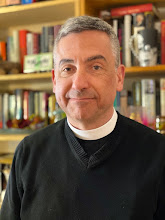

 Posts
Posts

