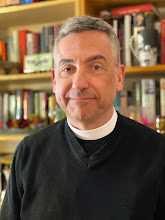
Sunday, February 23, 2014

Trying Difficult Christianity

St. Paul’s Church in Bergen, Jersey City NJ
February 23, 2014

Year A: The Seventh Sunday after Epiphany
Leviticus 19:1-2, 9-18
Psalm 119:33-40
1 Corinthians 3:10-11, 16-23
Matthew 5:38-48

Trying Difficult Christianity
            So, have you ever wondered what clergy talk about when they get together?
            Oh, we talk about all the same kinds of things as everybody else: for example, the latest styles of vestments, which communion wine tastes best, the benefits of using whole wheat wafers, and so forth.
            Seriously, one topic that comes up a lot is church attendance.
            Since I’ve been rector here a number of my clergy colleagues have been checking in with me.
            “How are things going?” they ask.
            And some bolder and, yes, nosier colleagues ask, “What’s your average Sunday attendance?”
            Now, since, thank God, we’re growing, I don’t really mind be asked about our attendance, though it really isn’t any of their business. But, some people are very uncomfortable getting asked that kind of question because a low or dropping average Sunday attendance, or ASA, unfairly indicates some kind of failure on the part of the priest, the vestry, and even the congregation itself.
            The disturbing truth is that church attendance has been dropping in the Episcopal Church and in most other denominations for years. The decline has begun to affect the Southern Baptists and even the nondenominational mega-churches, whose growth not too long ago seemed unstoppable.
            So we clergy and others church people puzzle and worry over the decline.
            Why don’t people come to church like they used to?
            Well, there are lots of reasons, of course.
            Over the years the Church has lost credibility with a lot of people because of various scandals – usually either sexual or financial or both.
            And then some supposedly Christian leaders have hurt all of our reputations, stained us all, by the hate that they spew from their pulpits and over the airwaves and on the streets.
            Some people get turned off or even rejected by the church they grew up in. Rather than looking for another Christian community where they might be welcomed and fed, they drop out, or dabble in another religion or create their own religion or describe themselves as “spiritual but not religious.”
            And then in this age of skepticism there are lots of people just don’t find our claims about God and Jesus and life to be believable and so they fall away.
            And, then we all know that in recent years, for better or worse, American culture has changed a whole lot.
            For example, for many Americans Sunday used to be set aside for church and family – even here in Hudson County.
            I’m old enough to remember the days of the Blue Laws, strictly limiting shopping on Sundays. (Most of you probably know that Blue Laws are still in place in Bergen County.)
            Not too long ago, the idea of schools or athletic teams scheduling Sunday morning practices or games was practically unthinkable.
            I’m not really sure how it is here in the city, but certainly out in the suburbs church has a lot of tough competition from soccer, football, ice hockey, field hockey, lacrosse and all the rest. Out in Grace Church in Madison I saw many parents really torn by having to make the choice between sports and church. Some would just figure out a way to do both, coming to an early service for example. But, others would reluctantly give in and drive their kids to the field or the rink.
            And then there are people who are simply exhausted. Sunday is maybe the one morning they get to sleep in; the one morning they get to have a real breakfast; the one morning they get to spend with family and friends.
            So, you see we’ve given some thought to the decline in church attendance.
            But, I wonder if there might not be another reason why not as many people show up for church.
            Christianity is difficult.
            Now, Christianity isn’t so difficult if you’re just going to go through the motions, if you’re just going to come here and say the words and sing the songs, eat the bread and drink the wine and then go out into the world and live just like everybody else.
            That kind of Christianity is easy.
            But, of course, that’s not real Christianity.
            Real Christianity is hard.
            Thinking about how hard it is to be a Christian reminds me of a famous quote by G.K. Chesterton, a writer who lived about a hundred years ago.
            He wrote: “Christianity has not been tried and found wanting. It has been found difficult and not tried.”
            I think that’s absolutely true. Christianity – real Christianity is difficult and is usually not even tried.
            And this Sunday and last Sunday we’ve been reminded just how difficult Christianity is – this Sunday and last Sunday we’ve heard the highest expectations that Jesus sets for us.
            Those of you who braved the ice and were here last week may remember that we heard Jesus dig down into the roots of God’s law – we heard Jesus dig down to the heart of the Law.
            Jesus teaches us that in his view, in God’s view, hate is as bad as murder and lust is as bad as adultery.
            Jesus teaches us that we are to keep our promises and commitments – and we are to be absolutely honest.
            Jesus sets the highest expectations for us.
            And then today difficult Christianity gets just a little more difficult.
            Jesus calls us not to resist the evildoer, but to turn the other cheek.
            Jesus calls us to give away to those in need not just our coat but our cloak as well. That may not sound so tough except when we realize that in the First Century if you gave away you coat and your cloak, you were naked.
            Difficult Christianity.
            In the Roman Empire soldiers could force civilians to carry their stuff for one mile. Jesus calls his followers to go a second mile.
            Jesus commands us, “Give to everyone who begs from you, and do not refuse anyone who wants to borrow from you.”
            Very difficult. So difficult that I’m surprised some people haven’t begun to make their way out the door!
            Jesus demands that we love our enemies and pray for those who persecute us.
            And, finally, Jesus calls us to be perfect as God is perfect.
            G.K. Chesterton again: “Christianity has not been tried and found wanting. It has been found difficult and not tried.”
            And, yet.
            And yet we need to try to live this difficult Christianity because Jesus’ way of love, forgiveness, and sacrifice really is “The Way.”
            We need to try because Jesus’ way of love, forgiveness and sacrifice is the way to true joy and fullness of life.
            We need to try because Jesus’ way of love, forgiveness and sacrifice is the way things were always meant to be, the way we were always meant to be.
            But, real Christianity, the way of the Cross, the way Jesus, sure is difficult.
            So, as I said last Sunday, that’s why we come back here week after week.
            That’s really why we get together here each Sunday – to get the support we need to meet the highest expectations that Jesus has for us.
            That’s really why we get together here each Sunday, to receive forgiveness for the many, many – too many times to count or remember – times that we fail to meet Jesus’ highest expectations – that we fail to follow the difficult way of Jesus.
            That’s why we come to church, to receive the help of God’s grace, the help of God’s grace that we receive in and through the Scriptures, our prayers and songs, our fellowship, our service to one another and to the wider community, and most especially in the Body and Blood of Christ that we take into our bodies and into our hearts.
            We may wish otherwise, but Jesus has set the highest expectations for us, his disciples and followers.
            Jesus has called us to his way, the way of the Cross, the difficult way of love, forgiveness and sacrifice.
            And, together, with God’s grace, we can begin to rise to Jesus’ highest expectations.
            Together, with God’s grace, we can actually, finally, try this difficult Christianity and take even just a few small steps towards perfection.
            So, actually, yes, our average Sunday attendance is pretty important after all. Amen.

Sunday, February 16, 2014

The Highest Expectations

St. Paul’s Church in Bergen, Jersey City NJ
Church of the Incarnation, Jersey City NJ
February 16, 2014

Year A: The Sixth Sunday after Epiphany
Deuteronomy 30:15-20
Psalm 119:1-8
1 Corinthians 3:1-9
Matthew 5:21-37

The Highest Expectations
            Many of you know that before I became a priest I was a high school teacher.
            I taught for quite a while – for seventeen years, actually.
            And during that time I learned a few things – a few things about teaching, about kids, and about life.
            One thing I learned is something many of you have also probably learned in your lives.
            Generally, people rise or sink to the expectations that are set for them.
            When it’s clear that no one really expects us to succeed, we may try really hard to prove them wrong. But, more often, when no one really expects us to succeed we prove them right by sinking to the low expectations that have been set for us.
            On the other hand, when the people in our lives really believe in us – when the people in our lives – our parents, teachers, bosses – really expect us to succeed – when they set high expectations for us – we are more likely to meet those high expectations - or at least give it our best shot.
            Thinking back to my teaching years, one of the things I emphasized was geography.  As you probably know, it’s a subject that’s not really taught anymore. And, sure enough, Americans have very little geographical knowledge. Every once in a while the news will report some study how even our best and brightest – students at places like Harvard – can’t locate places like New York City or London on a map.
            Well, in my small way, I was determined to do something about that. (And, it seemed bizarre to be talking about all this history in class and the students had absolutely no idea where these places were.)
            So, in my freshman World Civilizations class we had a series of map quizzes. Continent by continent, the kids had to memorize and then identify all the countries of the world.
            You can imagine their faces and their groans when I first explained this to them.
            The one map that they dreaded more than the others was Africa.
            So many countries. So many countries that are hard to spell. (Yes, it was half off for misspellings!)
            They would pout and complain.
            “Mr. Murphy, there are too many countries.”
            “There’s no way that we can remember all of these.”
            “There are three countries named Guinea – how can we remember which is which?!)
            “This is impossible.” “This is unfair.” “You’re unfair.” “Other teachers don’t make their classes do this.”
            And I’m sure they said worse under their breath or when I wasn’t around.
            I sympathized with them. After all, it was a hard task. But, I was determined to hold the line.
            I would try to reassure them saying that I knew, if they tried, they could do it.
            High expectations.
            And, sure enough, when the day came for the dreaded Africa map quiz, most of the kids did just fine. I fact, there were always a few who got a perfect score.
            High expectations.
            Well, in today’s gospel lesson Jesus offers some very high expectations – the highest expectations of us, doesn’t he?
            Actually, to understand today’s passage we need to back up to what we heard last week. Remember, Jesus calls to be the salt of the earth and the light of the world?
            And then Jesus goes on to say, “Do not think that I have come to abolish the law or the prophets; I have come not to abolish but to fulfill.”
            In today’s passage, Jesus explains what he means by fulfilling the law and the prophets.
            Jesus doesn’t abolish the law but instead he goes deeper – gets to the roots of the law – gets to the heart of the law.
            And, it turns out, the roots of the law – the heart of the law – is about what’s going on inside our hearts at least as much as it’s about our actions in the world.
            If you think about, this is nothing new. Even way back in the Ten Commandments, God commands us not only about our behavior but also about coveting our neighbor’s wife or our neighbor’s goods.
            From the start, God sets high expectations for us.
            So, Jesus continues that old tradition of high expectations, equating anger, equating saying, “You fool!” with murder.
            Jesus continues that old tradition of high expectations, equating lust with adultery, demanding that we practice absolute honesty.
            Jesus continues that old tradition of high expectations, demanding that we honor our marriage vows – offering the very tough teaching that divorcing a woman causes her to commit adultery and marrying a divorced woman is committing adultery.
            That’s probably the hardest one for us to hear since we may be divorced ourselves or we certainly know people who are divorced and remarried.
            It’s hard to talk about, but we have to admit that in our day, legal divorce is relatively easy – so easy that sometimes people choose divorce rather than even trying to work through their problems.
            But, we also know that unfortunately marriage can sometimes be physically and/or emotionally dangerous. I am certain that Jesus is not demanding stay in abusive relationships.
            But, keep in mind that for most of history – and in much of the world today – divorce was very bad news for women. For the most frivolous reasons, men would – and still often do – cruelly cast women off into a life of poverty and disgrace.
            So, the bottom line is that Jesus has the high expectation that we will work hard to keep our commitments – and that we certainly won’t throw away people when we grow tired of them or someone more attractive comes along.
            The highest expectations.
            Really, Jesus is calling us to perfection.
            Perfection.
            Now, at this point, we might be feeling overwhelmed, discouraged, even depressed. We might be feeling like my students back in World Civ. class.
            Anger is just as bad as murder?
            Lust is just as bad as adultery?
            No divorce except in cases of unchastity?
            Absolute honesty, no matter what?
            Ridiculous. Unfair. Other people don’t have to do this. There’s no way we can do it. It’s impossible.
            And, we’d be right.
            It is ridiculously impossible to do any of this.
            Or, rather, it’s ridiculously impossible to do any of this on our own.
            You know, back in World Civ. class the kids who did best on the map quiz were the ones who worked together – who quizzed each other, who corrected each other’s spelling, who practiced and practiced and practiced.
            And the same is true in our lives. We can only take even tiny steps towards perfection when we work together – when we support and encourage each other – when we forgive and love each other.
            That’s really why we get together here each Sunday – to get the support we need to meet the highest expectations that Jesus has for us.
            That’s really why we get together here each Sunday, to receive forgiveness for the many, many – too many times to count or remember – times that we fail to meet Jesus’ highest expectations – that we fail to achieve perfection.
            That’s why we come to church, to receive the help of God’s grace, the help of God’s grace that we receive in and through the Scriptures, our prayers and songs, our fellowship, our service to one another and to the wider community, and most especially in the Body and Blood of Christ that we take into our bodies and into our hearts.
            We may wish otherwise, but Jesus has set the highest expectations for us, his disciples and followers.
            Jesus has set the highest expectations for us Christians.
            And, together, with God’s grace, we can begin to rise to Jesus’ highest expectations.
            Together, with God’s grace, we can take even just a few halting steps towards perfection.
            Amen. 

Sunday, February 09, 2014

Salt and Light

St. Paul’s Church in Bergen, Jersey City NJ
February 9, 2014

Year A: The Fifth Sunday after Epiphany
Isaiah 58:1-12
Psalm 112:1-10
1 Corinthians 2:1-16
Mathew 5:13-20
Salt and Light
            I know it feels like Christmas just ended – like we just took down the tree and put away the decorations until next year.
            But, in fact, the holy season of Lent is just a few weeks away.
            Lent, those forty days of preparation for Easter, starts, of course, on Ash Wednesday, which this year is March 5. We’ll have three services here in church and I’m going out to McGinley Square at both rush hours to offer “Ashes to Go” to people who can’t or won’t come to church. Hopefully some of you will join me.
            Whether here in church or out on the street, the imposition of ashes with the words, “Remember you are dust and to dust you shall return” is powerful. It’s a powerful ritual that reminds us that we don’t have all the time in the world – reminds us that we are completely dependent on God who created us from dust and will not let go of us even when our bodies return to the earth.
            And then, throughout Lent we’re going to offer other services and practices designed to  help us have a better Lent – to make us more mindful of the ways we’ve let down God, let down each other and let down ourselves –and  to open our heats to repent, to ask forgiveness, and to be transformed.
            The services on Sunday will be different, with the confession right up front, some different prayers and more somber music.
            Of course, we’ll put away the word “Alleluia” until Easter.
            A friend has created Stations of the Cross for us, which will be displayed in church during Lent. And on Wednesday evenings we’ll walk those stations, reflecting on the rejection of God’s Son and the great sacrifice of Jesus on the Cross.
            And, we’ll also be reading a powerful little book called Speaking of Sin.
            So, during Lent there will be a lot going on here.
            And, maybe, on top of all that, at least some of us will take on our own special spiritual practices during Lent. And what’s the most common practice during Lent?
            “Giving something up.” Fasting!
            Maybe that means giving up something extra like chocolate or wine. Some people try to quit smoking. I know some people who give up computer games or (can you imagine?) facebook!
            Why do we do this? Why do we sacrifice? Why do we fast?
            Well, like the ashes, fasting reminds us of our total dependence on God. Fasting reminds us of our many blessings. Fasting helps us experience in a very small way what life’s like for those who are forced to fast every day. Fasting cuts away some of the extras, some of the distractions, that weaken our focus on loving and serving God.
            So, these Lenten practices, especially fasting, are all good. And I hope that each in our own way, we’ll try to give up something, sacrifice a little, during Lent.
            But, it’s not enough.
            All our religious practices – our fasting, our walking the Stations of the Cross, our confessions – are worthless if they have no effect on how we live our lives when we’re out there in the world.
            If we give up chocolate and then go out into the world and live pretty much like everybody else, then God is displeased.
            It would be much better just to eat the chocolate.
            Today’s long reading from the Prophet Isaiah comes from what should have been a wonderful and joyous time in the history of the people of Israel. Many of them have returned home from exile in Babylon.
            Homecomings are usually times of great excitement and celebration.
            Yet, that doesn’t seem to be the case here.
            The people seem to be doing everything right. They follow their religious obligations. The follow the rules. They fast.
            But, despite following all the religious rules, despite fasting, their country is still a broken mess.
            So, in confusion, they cry out to God,
            “Why do we fast, but you do not see? Why humble ourselves but you do not notice?”
            And God, speaking through the Prophet Isaiah, tells them why their practices, their fasting, have made no difference. God says,
            “Look, you serve your own interest on your fast day, and oppress all your workers. Look, you fast only to quarrel and to fight and to strike with a wicked fist.”
            In other words, the people gave up whatever they gave up, they fasted, but those practices made no difference on how they lived their lives. Out in the world they lived pretty much like everybody else. And God is displeased.
            It would be much better just to eat the chocolate.
            And then, in one of the greatest passages of all of Scripture, God, speaking through Isaiah, describes the kinds of sacrifice God really wants.
            God calls on the people – God calls on us – to loose the bonds of injustice and to let the oppressed go free.
            God calls on the people – God calls on us – to share our bread with the hungry, to bring the homeless poor into our home, to clothe the naked, to not hide from those in need.
            Or, as Jesus teaches us in today’s gospel lesson, God calls us to be the salt of the earth and the light of the world.
            It’s hard to know exactly what Jesus meant by salt. In the ancient world, like today, salt was used for many things. It was used to season and preserve food. It was used in religious ceremonies. And, salt was also a symbol of purity and wisdom – which I’d guess is what Jesus is pointing us to.
            Light is easier to understand. Jesus is the light of the world. And we, his followers, are called to be the light – to let our light shine - in what’s an often dark and shadowy world.
            We are called to be salt in a world filled with suffering – filled with suffering people like the great actor Philip Seymour Hoffman who died last week enslaved by addiction.
            We are called to be light in a world filled with suffering – filled with suffering people who don’t know where they’ll stay tonight, filled with people right now, today, who don’t know how they’ll feed themselves or their families.
            Fortunately, just like we have ritual opportunities to pray and to fast, we have other opportunities to serve, to be salt and light in the world.
            First, every time we come into church the first thing we see are the bins waiting for food donations to hungry neighbors. We’ve been doing OK, but the truth is that a lot of us still come to church empty handed. The truth is, a lot of us go to the market and don’t pick up an item for the poor. The truth is we can do better. Let’s all be part of this work. Let’s all be salt and light for our poorest neighbors.
            Second, as I’ve mentioned before, faith leaders and others in Hudson County have begun the work of starting a shelter for homeless families. Right now, there is no shelter in our heavily populated county for families. If they enter a shelter they need to split up.
            Our second meeting is this Tuesday at 7:00pm at Grace Van Vorst. Come to the meeting if you can. Whether you can be there or not, let’s all be part of this work. Let’s all be salt and light right here in Hudson County.
            Finally, this Thursday, we have our first “Stone Soup” supper. We’re throwing open our doors to absolutely everybody – rich and poor and everybody in between is welcome. We need your help. We need food for the meal and help with the preparation. We need you to be here to welcome our guests. Let’s all be part of this work. Let’s all be salt and light right here at St. Paul’s.
            So, even if your Christmas decorations are still up, it’s just a few weeks until Lent.
            Here in church we’ll be offering all sorts of opportunities to pray and reflect.
            Some of us will give up something for Lent. We’ll fast.
            That’s all good.
            But, our prayer and fasting are worthless and displeasing to God if they aren’t matched by how we live our lives, if we don’t also strive to the salt of the earth and the light of the world.
            If we live like everybody else, it would be better just to eat the chocolate.
            Amen.
            

Sunday, February 02, 2014

Presenting Jesus

St. Paul’s Church in Bergen, Jersey City NJ
February 2, 2014

The Feast of the Presentation of Our Lord
Malachi 3:1-4
Psalm 84
Hebrews 2:14-18
Luke 2:22-40

Presenting Jesus
            Today we celebrate the Feast of the Presentation.
            The Feast of the Presentation is sometimes called Candlemas – because it’s the day when priests would bless the candles that would be used for the year ahead.
            On the Feast of the Presentation we remember a story told only in Luke’s gospel – the story of Jesus’ parents bringing the child Jesus to the Temple.
            Actually, In the story of the Presentation, Luke combines two different Jewish rituals.
            First, according to Exodus, every firstborn son belonged to God and could be brought home after the father made an offering to God.
            Second, Jewish Law required women to undergo a ritual purification forty days after giving birth to a male child. The purification included the sacrifice of a lamb in the Temple. Or, if the family was poor, they had the less expensive option of offering a pair of doves or pigeons.
            Notice that Luke tells us that Jesus’ parents could only afford to sacrifice two birds.
            Mary and Joseph are poor.
            Yet, they are pious and faithful people who do the right thing. They obey the religious Law.
            So, imagine the scene for a moment.
            The Temple was the religious, cultural and political center of Israel. It would have been teeming with people from Jerusalem and far beyond. Jews came great distances to offer ritual sacrifices.
            Others came just to marvel at the magnificent architecture and observe the spectacle.
            There were big crowds – lots of people, lots of noise, lots of smells.
            And in the midst of all of this activity, here come Mary and Joseph, two poor peasants from Nazareth carrying their son, just forty days old.
            They have come all this way to present Jesus.
            They would have been unremarkable in every way. Mary and Joseph were a couple of nobodies in a city – in a world - filled with people just like them.
            Maybe some people would have mocked their little offering, ridiculed them for only being able to afford the two birds.
            But, Mary and Joseph do the best they can, offer the most, the best, they could to God.
            Mary and Joseph have come to Jerusalem to present Jesus.
            Now, of course, we know that this isn’t any ordinary couple. And we know that the child they present is no ordinary child.
            And we know that Mary and Joseph know that their child is no ordinary child.
            And, it turns out, thanks to the Holy Spirit, there were others in the Jerusalem Temple that day who saw beyond and behind the ordinariness and the poverty of Mary and Joseph – there are others able to recognize Jesus when he is presented.
            Luke tells us that one of those people is a “righteous and devout” man named Simeon. Luke tells us that the Holy Spirit had revealed to Simeon that he would not die before he had seen the Lord’s Messiah.
            And, sure enough, when Mary and Joseph present Jesus, Simeon recognizes him. Simeon recognizes the forty-day old infant Jesus as the Messiah – the Savior not only of the Jews but of the whole world. In his great song, Simeon sings that he can die because he has seen God’s salvation, “a light for revelation to the Gentiles and for the glory of your people Israel.”
            Mary and Joseph present Jesus. And Simeon recognizes Jesus.
            But, it’s not just Simeon.
            Luke tells us there’s somebody else – there’s also a prophet – an elderly woman named Anna.
            Mary and Joseph present Jesus. And Anna recognizes Jesus.
            We’re told that Anna “began to praise God and to speak about the child to all who were looking for the redemption of Jerusalem.”
            Poor and ordinary as they were, Mary and Joseph present Jesus.
            And, guided by the Holy Spirit, at least some people, at least Simeon and Anna, recognize Jesus.
            Presenting Jesus. Recognizing Jesus.
            As you know, today is the day of our Annual Parish Meeting. It’s the day when we report and review statistics. It’s the day to celebrate that, for example, our average Sunday attendance jumped from 51 in 2012 to 69 in 2013, and, I’m happy to say, continues to climb as we become more regular in our church attendance and as more people discover and join our warm and loving community.
            It’s a day to review of financial situation, which I’m relieved to tell you is, thanks to all of you, much brighter than it was this time last year.
            It’s a day to talk about individual ministries – to celebrate what’s been done and to plan ahead for the exciting future that God has in store for us all.
            But, the annual meeting is also a time to reflect on the big picture – it’s a time to ask: Why does St. Paul’s exist?
            Why are we here?
            We aren’t here to keep me employed or to give us all a great place to be together and enjoy each other’s company. (Although, ahem, those are both good things that I wouldn’t want to be without!)
            No, at our very heart, the Church – this church – is here to present Jesus to the world.
            Poor and ordinary as we are, God has given us the awesome responsibility – the magnificent privilege – of presenting Jesus to the world – presenting Jesus to a world broken by sin, wounded by violence and haunted by despair.
            Poor and ordinary as we are, God has given St. Paul’s the awesome responsibility – the magnificent privilege  - of presenting Jesus to Jersey City – of presenting Jesus to a city broken by sin, wounded by violence and haunted by despair.
            Just like Mary and Joseph long ago, our job is to present Jesus.
            And when we present Jesus to the world – when we present Jesus to Jersey City – some, like Simeon and Anna, will recognize Jesus.
            Presenting Jesus. Recognizing Jesus.
            Here in church, here in our much-loved old building, we present and recognize Jesus in our music and prayers, and in our fellowship.
            Here in church we present and recognize Jesus when we take the Body and Blood of Christ into our bodies and into our hearts.
            And then we go out those doors into the world to present Jesus.
            Out there, we present Jesus when we actually work up the courage to talk to someone else about our faith. When we get the nerve to invite a friend or a neighbor to come to church, to come and see.
            We present Jesus when we partner with Garden State Episcopal to feed the hungry and to provide the basic human dignity that comes from, for example, having of clean teeth.
            We present Jesus when we offer a shoulder to cry on, when we work together with people in other churches to promise homeless families shelter and a better future.
            We present Jesus when we teach our children to reject violence, to respect the dignity of every human being, to live lives of love and generosity.
            We present Jesus when we give and give to those who can never pay us back and when we offer hospitality - when we help - even those who turn out to be dishonest and insincere.
            We present Jesus when we forgive those who hurt us – and forgive and forgive some more.
            First as a parishioner and now as your priest, I have seen Jesus presented here at St. Paul’s in so many life-changing ways.
            And, like many if not all of you, I have recognized Jesus – I have recognized Jesus who is presented right here – who is presented right here in and through us - in life-changing ways.
            Presenting Jesus. That’s the awesome responsibility – the magnificent privilege – the great truth – the great mission – behind all the facts and figures we will discuss today.
            God called Mary and Joseph, poor and ordinary as they were, to present Jesus to the world.
            And, today and in the year and years ahead, God calls us – calls St. Paul’s - poor and ordinary as we are – to present Jesus to the world.
            May it be so.
            Amen. 

Sunday, January 26, 2014

Paul's Epiphany


St. Paul’s Church in Bergen, Jersey City NJ
January 26, 2014

The Feast of the Conversion of St. Paul
Acts 26:9-21
Psalm 67
Galatians 1:11-24
Matthew 10:16-22

Paul’s Epiphany

            For the past couple of weeks now we’ve been in the season of Epiphany. So, each Sunday we’ve been hearing stories of epiphanies – stories of God’s power and love manifested in and through Jesus – stories of God’s power and love manifested in and through Jesus’ followers – stories that call us to reflect on how God’s power and love are manifested in and through us, right here and now.
            Two Sundays ago we remembered the story of Jesus’ baptism by John the Baptist. At Jesus’ baptism God announces to the world – including maybe Jesus himself – who Jesus is:
            “This is my Son, the beloved, with whom I am well pleased.”
             And then last Sunday we remembered the beginning of Jesus’ ministry. People like the brothers Andrew and Peter begin to have epiphanies about Jesus.
            Andrew tells his brother, “We have found the messiah.”
            But, now, today we are not hearing the readings scheduled for the Third Sunday after Epiphany.
            Instead, here at St. Paul’s, we are celebrating the Feast of the Conversion of St. Paul – a feast that was yesterday but, since St. Paul is our patron saint, we are allowed to move the feast to today.
            It’s a day to celebrate our wonderful church and it’s a day to remember that Paul had a life-transforming encounter with the Risen Christ.
            In fact, Paul experienced one of the most powerful epiphanies of all time.
            We know about Paul from the letters he wrote and that later became part of the New Testament. And we know about Paul from the Acts of the Apostles, which was written later by the same person who wrote the Gospel of Luke.
            From those sources, we know that Paul was Jewish. In fact, Paul was a Pharisee – part of the group that in the gospels clashes with Jesus all the time.
            And those clashes didn’t end with Jesus’ death and resurrection. For the next decades there was heated debate and sometimes violence between Jews who believed and proclaimed Jesus to be the long-awaited messiah and Jews who did not believe Jesus was God’s anointed one.
            Early on, Paul was firmly on the side of those who rejected Jesus.
            In the Letter to the Galatians – our second reading today – Paul admits that he had persecuted followers of Jesus. Paul writes,
            “I was violently persecuting the church of God and was trying to destroy it.”
            But then Paul had a life-transforming encounter with the Risen Christ.
            But then Paul experienced one of the most powerful epiphanies of all time.
            In his Letter to the Galatians, Paul doesn’t go into much detail about his epiphany. He writes simply that God revealed his Son to him – and that revelation transforms Paul, sending him off in a totally different direction.
            We get more details in the Acts of the Apostles.
            In fact, the story of Paul’s epiphany is so important that we hear it three times in the Acts of the Apostles.
            In the passage we heard today, Paul testifies that he violently persecuted Jesus’ followers.
            Then, we’re told, one day Paul was on his way to Damascus – on his way to get more Christians. And there on the road to Damascus, Paul (or Saul as he was called then) was surrounded by a bright light and heard the voice of Jesus ask, “Why are you persecuting me?”
            That day on the road to Damascus, the Risen Christ tells Paul to stop kicking the goads – which means stop resisting God’s call.
            On the road to Damascus, Paul received his vocation.
            On the road to Damascus, Paul became God’s co-worker.
            On the road to Damascus, Paul found his life’s work – his life’s work to bring the Good News of Jesus to the non-Jews, to the Gentles.
            On the road to Damascus, Paul had a life-transforming encounter with the Risen Christ.
            On the road to Damascus, Paul experienced one of the most powerful epiphanies of all time.
            Now, instead of persecuting Christians, Paul devoted the rest of his life to sharing the Good News of Christ with as many people as he could. He traveled around the Mediterranean world spending time in towns in cities, telling both Jews and Gentiles alike about Jesus – about God offering love and salvation not just to Jews but to everybody.
            Paul set up little Christian communities and then moved on to the next place. He kept up with his far-flung churches through letters, some of which – like the Letter to the Galatians - have survived as part of the New Testament.
            It was hard and often discouraging work.
            And it was dangerous. Paul suffered a lot and, ultimately, according to tradition, he was executed in the mid-60s in Rome during the reign of Emperor Nero.
            There were also some factors working against Paul. Like all of us, he was an imperfect human being. Apparently he wasn’t the most eloquent speaker and he wasn’t physically attractive. Paul had a temper. Sometimes he got defensive. He didn’t always get along with other disciples.
            Yet, at least some people were attracted to the gospel proclaimed by Paul.
            And when we read his letters it’s easy to see why.
            Paul writes to the Corinthians: “Love is patient; love is kind; love is not envious or boastful or arrogant or rude. It does not insist on its own way; it is not irritable or resentful; it does not rejoice in wrongdoing, but rejoices in the truth. It bears all things, believes all things, hopes all things, endures all things. Love never ends.”
            And to the Philippians: “I thank my God every time I remember you, constantly praying with joy in every one of my prayers for all of you, because of your sharing in the gospel from the first day until now.”
            And to the Galatians, the passage that probably best sums up what Paul believed and taught: “…for in Christ Jesus you are all children of God through faith. As many of you as were baptized into Christ have clothed yourself with Christ. There is no longer Jew or Greek, there is no longer slave or free, there is no longer male or female; for all of you are one in Christ Jesus.”
            On the road to Damascus, Paul had a life-transforming encounter with the Risen Christ.
            On the road to Damascus, Paul experienced one of the most powerful epiphanies of all time.
            Paul was overjoyed by the realization that God’s love and salvation is offered to everyone – and he gave away his life sharing that joy with as many people as he could.
            So, what about us?
            Most people don’t have epiphanies like Paul’s – the blinding light – the voice from heaven.
            But, we’re offered plenty of epiphanies – we’re given plenty of opportunities to see and hear and feel God’s love and power.
            If we pay attention, we can discover epiphanies in our daily lives.
            And we are certainly offered epiphanies  - in our prayers, in our music, in our fellowship, in the bread and the wine - each Sunday here at St. Paul’s.
            And, occasionally, we’re offered epiphanies in the water of baptism.
            In a few moments, little Ava will have a life-transforming encounter in the water of baptism – and we will all experience an epiphany of God’s love – a manifestation of God’s power as this child dies and rises with Christ.
            Like St. Paul, may she and we all be transformed by our epiphanies.
            Like St. Paul, may we all give away our lives, overjoyed by God’s love and salvation offered to absolutely everybody.
            Amen.

Sunday, January 19, 2014

Co-Workers with God


St. Paul’s Church in Bergen, Jersey City NJ
January 19, 2014

Year A: The Second Sunday after Epiphany
Isaiah 49:1-7
Psalm 40:1-12
An Excerpt from A Letter from a Birmingham Jail
John 1:29-42

Co-Workers with God
            Well, if you were in church last Sunday you may be feeling a bit of déjà vu right now.
            Last week we remembered and celebrated the Baptism of Jesus.
            We heard Matthew’s account of Jesus’ baptism. Jesus presented himself to John the Baptist. It’s a little awkward. At first John the Baptist is understandably reluctant to baptize Jesus, saying, “I need to be baptized by you, and do you come to me?” But, Jesus insists and, we’re told, as he was coming up out of the waters of the Jordan, a voice from heaven declares, “This is my Son, the beloved, with whom I am well pleased.”
            The Baptism of Jesus is a great epiphany – a manifestation of God’s relationship with Jesus the beloved Son – God’s unbreakable bond with Jesus.
            And, in the same way, our baptism is a great epiphany for us – a manifestation of God’s relationship with us – a manifestation of God’s unbreakable bond with us.
            And now here we are back again today.
            And it turns out that our gospel lesson is partly about…the Baptism of Jesus.
            Déjà vu.
            But, this week we heard the account of the baptism of Jesus found in the Gospel of John.
            And, you’ll notice that there are some interesting differences between John’s account that we heard today and Matthew’s take on it that we heard last week.
            To make things slightly less confusing I’m going to call the Gospel of John the Fourth Gospel.
            In the Fourth Gospel, John the Baptist is the narrator. He tells the story of Jesus’ baptism which has already happened at some point in the past.
            Well, actually, if you read or listen carefully, the Fourth Gospel deals with the awkwardness of John baptizing Jesus by skipping over the baptism itself. Here John the Baptist never quite says that he did baptize Jesus. So, on the one hand, the Fourth Gospel gives John the Baptist extra attention by making him the narrator, by giving him the opportunity to be the first to declare that Jesus is the Son of God.
            But on the other hand, John the Baptist is diminished.
            His baptizing ministry is described as simply a way to discover the Lamb of God. And, in the Fourth Gospel, John doesn’t even get to baptize Jesus.
            But, then, look what happens next.
            We’re told that the next day John the Baptist points out Jesus, “Look, here is the Lamb of God!”
            Some of John’s disciples are understandably curious about this “Lamb of God” and they begin to follow Jesus.
            And so, it begins.
            At his baptism, Jesus receives his call from God.           
            And, Jesus won’t live out his call on his own but surrounded by others.
            So, now, Andrew, Peter and others receive their call to follow Jesus.
            There is a special word for a call from God: “vocation.”
            Unfortunately, until pretty recently, that word vocation usually referred only to people who felt called to ordained ministry or to serve as a nun or a monk.
            Certainly when I was growing up that was the sense of the word.
            If someone asked me if I “had a vocation” I knew they were asking if I felt if I wanted to be – if I felt called to be – a priest.
            Fortunately, in more recent times we have rediscovered the profound and powerful truth that all of us - teachers, accountants, cooks, musicians, cleaners, doctors, students, cashiers, editors, soldiers, unemployed people, retired people, volunteers, parents, grandparents, children, aunts, uncles, cousins, priests, worship leaders, vergers, acolytes, choir members, ushers – all of us are called by God – all of us have a vocation.
            And, like Jesus, and like Christians through the centuries, we receive our call – we receive our vocation – at our Baptism.
            In the words of the prayer book, at our Baptism we are called “to continue in the apostles’ teaching and fellowship, in the breaking of bread, and in the prayers.”
            At our Baptism we receive our vocation to “persevere in resisting evil, and whenever we fall into sin, repent and return to the Lord.”
            At our Baptism we are called to “proclaim by word and example the Good News of God in Christ.”
            At our Baptism we receive our vocation to “seek and serve Christ in all persons, loving our neighbor as our self.”
            At our Baptism we are called to “strive for justice among all people, and respect the dignity of every human being.”
            At our Baptism we are called – at our baptism we receive our vocation.
            We receive our vocation - which, let’s be honest, is a lot.
            It’s a lot to remember. And it’s a lot to live out.
            Today as part of our Martin Luther King celebration, we heard an excerpt from Dr. King’s “Letter from a Birmingham Jail.” It’s one of his most famous pieces of writing but we may not know the context.
            Dr. King and others had gone to Birmingham, Alabama, in an effort to desegregate one of the most segregated cities in America. He and others were arrested on April 16, 1963, which happened to be Good Friday that year.
            While he was jailed a group of eight local white clergymen, including the Episcopal bishop of Alabama, issued a statement titled, “A Call for Unity.” They urged those who demanded civil rights to take their fight off the streets and into the courts of law. They rejected Dr. King and the others as “outsiders” who should leave the people of Birmingham to deal with their own issues. And they called for patience. They asked Dr. King and the others to wait.
            In response, Dr. King wrote his famous letter. He wrote it in his jail cell, on scraps of newspaper, which were then smuggled out of jail.
            Reading the excerpt we heard this morning, a sentence jumped out at me:
            “Human progress never rolls in on wheels of inevitability; it comes through the tireless efforts of men willing to be co-workers with God…”
            “Co-workers with God.”
            At our Baptism we are called – at our Baptism we receive our vocation.
            And we have lots of words and images to describe our vocation but what it all boils down to is that God calls us to be co-workers.
            We are meant to be co-workers with God.
            And, really, that’s all God has ever wanted – that’s all that God has ever asked of us, isn’t it?
            This past week at Evening Prayer we heard the story of Adam and Eve eating fruit from the Tree of Knowledge – the story of the first disobedience, the first sin, that messed up everything.
            Really all God wanted was for Adam and Eve to work with God to tend the garden.
            And that’s all God really wants now.
            God still gives us our vocation – still calls us to be co-workers.
            Just like all of us, Dr. King was an imperfect human being but in his life and work he answered God’s call – he lived out his vocation to be one of God’s co-workers.
            And, like the Lamb of God, Dr. King ultimately sacrificed his life for his vocation.
            Beginning at our Baptism, right here and now, in this time and place, we are all called, each in our own way, to be co-workers with God.
            God calls each of us to tend our little patch of the garden here: to love the hard to love, to give to outstretched hands, to demand justice for the oppressed, to forgive and forgive again.
            So, this week’s epiphany is that God calls each of us – God calls all of us – to be co-workers with God.
            Dr. King answered God’s call.
            How about us?
            Amen.