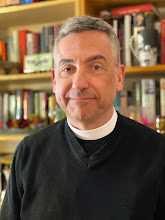
Sunday, June 24, 2012

Looming Giants and Threatening Storms

Grace Episcopal Church, Madison NJ
June 24, 2012

Year B – Proper 7: The Fourth Sunday after Pentecost
1 Samuel 17:1a, 4-11, 19-23, 32-49
Psalm 9:9-20
(2 Corinthians 6:1-13)
Mark 4:35-41

Looming Giants and Threatening Storms
           
I think one of the reasons I ended up becoming a priest might be that I really like ritual and routine. We live in such an uncertain world that I find it comforting that there are some things in my life that are regular and predictable.
           
For example, Monday is my day off. And almost without fail on Monday morning I take the shopping list that Sue has made and I go to Shop Rite to buy our groceries for the week. Most of the time I actually enjoy it.
           
There must be other people who follow the same routine since I see some of the same people making their way up and down the aisles week after week.
           
When it comes to checking out, maybe because I’m a little standoffish, I’m usually not too chatty with the cashier. But other customers and cashiers seem to enjoy having a little conversation as the groceries are scanned and bagged.
           
A couple of weeks ago I was checking out in my usual standoffish way but I couldn’t help noticing that a customer in the next lane – a guy about my age, I’d say – was talking pretty loudly with the cashier. I wasn’t listening since I was focused on things liking making sure the eggs didn’t end up at the bottom of a bag.
           
But then I heard the cashier say something like, “Oh, you could bring these with you for a snack at the office.”
           
And then in a loud voice the man said, “Nope, there’s no more office for me! I got laid off last week! Yep, I’m gonna be spending a lot of time at home from now on!”
           
We all – his cashier, my cashier, and I – all froze for a moment.
           
For a moment I felt sorrow for this obviously upset guy but I also felt a shiver of fear – and maybe the others did, too. For a moment I felt and acknowledged the menace of a looming giant and a threatening storm.           
           
The truth is we live in an uncertain world filled with all sorts of looming giants and threatening storms.
The fragile economy is just one.
           
For some of us the looming giant is the fact of getting older, the potential loss of both our independence and our sense of purpose and meaning.
           
For some of us the threatening storm is a relationship – with a spouse, a child or a friend – that’s unraveling or has already collapsed.           
           
For some of us the looming giant is a physical or mental illness – either our own illness or the illness of someone we love.
           
For some of us the threatening storm is a nagging sense of disappointment in our lives – the realization that we expected to do more, to achieve more, to be more than it seems we’ve been able to do, to achieve or to be.
           
We live in an uncertain world filled with looming giants and threatening storms.
           
Of course, today’s lessons tell stories about one particular looming giant and one threatening storm, but maybe we can find something in these old stories that can help us face the giants and weather the storms in our lives.
           
If you’ve been in church over the past few Sundays, you know that we’ve been hearing the story of the beginning of the Israelite monarchy in the 11th Century BC.
           
We’re told that for the first time the people of Israel had demanded an earthly king. So, following God’s instructions, the prophet and judge Samuel gave them what they thought they wanted, anointing Saul to be Israel’s first king.
           
For whatever reason, maybe out of a sense of his own inferiority, Saul turns out to be a disappointment, disobeying God in ways big and small.  We’re told that God withdraws favor from Saul and instructs Samuel to secretly anoint the unlikely David to be Israel’s next king.
           
We didn’t hear the next part of the story in church but David actually ends up in Saul’s court where he plays the lyre – an instrument that looks like a small harp – which soothes Saul, who, we’re told, is afflicted by an evil spirit.
           
Which brings us to today’s installment – to Goliath – the looming Philistine giant.
           
The story of David and Goliath that we heard today was long, but it’s such a good story that I didn’t want to cut it short. But, in fact, the biblical account is even longer. And we didn’t hear one of my favorite parts of the story.
           
One of the things I like is that, David is presented as a person with many fine qualities but also as someone very imperfect, fully capable of being underhanded and selfish.
In this case, before he goes into battle David asks what’s the reward for the person who kills Goliath. Supremely confident, David wants to know what’s in it for him! And it turns out it’s a pretty good deal – Saul will reward Goliath’s killer with wealth and also the hand of a princess in marriage.
           
And most of us learned long ago how this great story ends. The unlikely David brings down the looming giant, Goliath.
           
Today’s gospel lesson is also a familiar one for many of us: Jesus calms the threatening storm – the raging waters which in the Bible usually symbolize chaos and ominous power.
           
In today’s story Jesus is presented as almost comically calm, fast asleep while the disciples are in a panic. After being awakened, Jesus demonstrates his power by calming the storm and then he asks his disciples pointed questions:

“Why are you afraid? Have you still no faith?”
           
Jesus doesn’t mean faith in the sense of believing every word of the creed that we’ll say in a few minutes. No, Jesus is asking, “You still don’t trust me?”
           
Jesus is really asking his disciples, even after everything you’ve seen God do in and through me, you still don’t trust that God is at work right here and now?
           
And Jesus might ask us the same question.
           
And, if we’re honest, most of us might say, well, sometimes we trust that God is at work right here and now. But, in an uncertain world filled with looming giants and threatening storms most of us are like Saul and the disciples, frightened – and unwilling to put our trust in God. For most of us, it’s really hard to trust and it’s so easy to be afraid.
           
But, let’s go back to David for a minute.
           
Although a flawed character, David realizes that God has prepared him to face the dangerous giant.
           
David may be Jesse’s youngest son, but thanks to those long hours tending and protecting the sheep, God has prepared him to face the giant.
           
David may be Jesse’s youngest son, but he doesn’t need to wear Saul’s armor. Instead, he has faith – he trusts – that God has given him all the armor he needs.
           
And if we reflect on our lives, we see that God has given us all the armor we need for the times we face the looming giants and threatening storms of our lives.
When we choose to not be standoffish- when we allow God and other people into our lives - we get the love and support we need.
           
When we choose to not be standoffish – when we allow God and other people into our lives – we get all the armor we need.
           
Right here at Grace Church, over and over I’ve seen God pour out love and support in and through us.
           
I’ve seen it when people here have lost jobs, or faced illness and death. I’ve seen it when people here have grappled with aging, or suffered broken relationships, or when people have just been disappointed by life - disappointed in themselves.
           
Over and over I’ve seen God pour out love and support in and through us.
           
Personally, I saw it and felt it through your prayers and support a year ago during the hard months when Sue and I faced our own looming giant and threatening storm, when we were trying to come home from Florida and were having trouble seeing the way, trouble putting our life back together again. It was a rough time of disappointment and anxiety, but thanks to the prayers of people in this room at some point we were simply able to trust. And look what happened!
           
So, yes, we live in an uncertain world filled with looming giants and threatening storms.
           
Yet, over and over, especially in times of great suffering and loss, God pours out love and protection.
           
In and through each other, God gives us all the armor we need.
           
All God asks for in return is for us to be like imperfect David – all we have to do is not be standoffish, to let God and other people into our lives – to try our best to trust God.
           
Amen.            

Sunday, June 17, 2012

God Starts Small

Grace Episcopal Church, Madison NJ
June 17, 2012

Year B: The Third Sunday after Pentecost
1 Samuel 15:34-16:13
Psalm 20
(2 Corinthians 5:6-17)
Mark 4:26-34

God Starts Small

If you were here last week you’ll remember that we heard the story of how Israel became a monarchy.
           
All the other Near Eastern countries had tyrannical kings, but not the people of Israel. Instead, according to the biblical account, they had put their trust and loyalty in God, the divine King who had led them out of slavery in Egypt.
           
But now, in the 11th Century BC, there is a big change. Maybe because they feel that the prophet and judge Samuel’s sons are not appropriate for the job, or maybe because they just want to be like everyone else, now the people of Israel demand an earthly king of their own.
           
You’ll remember that God tells Samuel not to take this demand personally. Instead it’s God who’s being rejected.
           
God tells Samuel to warn the people that a king will take their land, their wealth, and their children. But, if that’s what they want, give them their king.
           
So, we’re told that Saul is made the first Israelite king.
           
And, no surprise, Saul turns out to be all too human.
           
As king he enjoys some military success against Israel’s archenemy, the Philistines.
           
But, of course, like all kings – and like all of us  - Saul is flawed. And, I suppose like all kings – and like all of us – Saul disobeys God in ways large and small and has to pay the consequences for his disobedience.
           
Saul, though, has a particular flaw that caught my eye.
           
In a passage between what we heard last Sunday and what we heard today, the prophet Samuel rebukes Saul for his disobedience. Listen to what Samuel says to the disobedient king:
“Though you are little in your own eyes, are you not the head of the tribes of Israel? The Lord anointed you king over Israel.”
           
Three thousand years before modern psychology, the prophet Samuel recognizes that Saul the king has an inferiority complex.
           
And, ultimately, Saul’s inferiority complex will lead to his own self-destruction.
           
It’s an old story and unfortunately it’s a story that we’ve all experienced –experienced maybe in ourselves and certainly in other people.
           
A sense of inferiority can lead us to ruthless competition.
           
A sense of inferiority can lead us to unseemly bragging and exaggeration of our skills and achievements.
           
A sense of inferiority can prevent us – can paralyze us - from making an effort, from taking a calculated risk, from trusting that God might have something important and wonderful for us to do.
           
I think that last one is the way our sense of inferiority trips up most of us.
           
For us Christians, though, our inferiority complex comes from a total misunderstanding of our situation.
           
We feel inferior because to varying degrees we’re all broken, frightened, anxious, insecure, and weak. We’re all far from perfect.           
           
But, the good news is that’s OK. It’s OK because God sees past all of our flaws and failings.
           
The good news is that if we put our trust in God, if we’re open to God, if we’re willing to work with God, God can take the little seeds of goodness and talent that are within us and grow something amazing.
           
In today’s gospel lesson, Jesus gives what are for most of us two familiar parables involving seeds.
           
There are a couple of key points here.
           
First, the growth of seeds into full grain is mysterious and not really under our control. We can help create the conditions that promote health and growth, but for the most part it’s not really up to us.
           
The mustard seed illustrates the second key point – God starts small. God starts with seeds so small they’re nearly invisible to us. God starts small but, with our cooperation, is able to grow something amazing.
           
The story of God starting small and growing something amazing is one that runs throughout Scripture and throughout Jewish and Christian history.
           
We hear it, of course, in the tail end of today’s Old Testament lesson. God tells Samuel to move on – to get over Saul and go to Bethlehem to meet Jesse and his sons, one of whom God has selected as the next king of Israel.
           
Samuel is impressed by the oldest son and thinks he must be the one, but God tells Samuel, “Do not look on his appearance or on his height of stature, because I have rejected him; for the Lord does not see as mortals see; they look on the outward appearance, but the Lord looks on the heart.”
           
God starts small.
           
And so, of course, God selects the youngest and least likely of the sons. David is so unlikely and unimportant that his father left him tending the sheep, certain that Samuel – and maybe God, for that matter – would have no interest in his youngest son.
           
David was an unlikely – and as we will see - a deeply flawed character, yet God saw the seeds of talent and goodness that were within him and was able to grow him into an imperfect but most powerful king.
           
God starts small.
           
A thousand years later Jesus of Nazareth was also an unlikely Son and an unlikely King – in the eyes of the world he was a nobody, someone who grew up in a rural backwater and yet was supremely open to God working in and through him.
           
Jesus was so open to God that early on some people realized that God was uniquely present in his life – so much so that when we look at Jesus we see what God is really like.
           
Jesus of Nazareth was an unlikely Son and an unlikely King – dying just about the most shameful death imaginable, leaving his tiny band of followers lost and crushed by horror and disappointment.
           
Yet, over the past two thousand years, God has been able to take these seeds – the beautiful seeds that were Jesus’ life and death and especially the seed of Jesus’ Resurrection – and grow them into something amazing – something that you and I get to experience, get to receive, right here and now.
           
God starts small.
           
And, actually, we don’t need the Bible or me to tell us this because we see it in creation. We see it in our own lives. We know God starts small because we can see it all around us.
           
Maybe those of you who are parents – and especially today those of you who are fathers - can see it most clearly.
           
I’ve been at Grace long enough now that kids who seemed like little kids when I arrived are now graduating from high school and are on the cusp of adulthood.
           
All along God has seen the beautiful seeds in them and God is hard at work growing something amazing in and through their lives.
           
A couple of weeks ago three of them gave beautiful senior sermons and today at 10:00 there will be two more. I’ve read them and can tell you that they’re beautiful too. Make sure you take the time to read them all in the next Messenger.
           
Seeing and listening to them in the pulpit, we could see God at work growing something – someone – amazing when Tommy talked about the power of commitment, when Sharlys described Grace Church as her spiritual family, and when Siobhan described herself as being on a journey of spiritual rebirth.
           
God starts small.
           
No matter our age, many of us, like Saul long ago, often feel inferior because to varying degrees we’re all broken, frightened, anxious, insecure, and weak. We’re all far from perfect.           
           
But, the good news is that’s OK. It’s OK because God sees past all of our flaws and failings.
           
The good news is that, if we put our trust in God, if we’re open to God, if we’re willing to work with God, no matter our age God can take the little seeds of goodness and talent that are within us and grow something amazing.
           
The good news is that God starts small.
           
Amen.


Sunday, June 10, 2012

What Kind of Community?

Grace Episcopal Church, Madison NJ
June 10, 2012

Year B: The Second Sunday after Pentecost
1 Samuel 8:4-20, 11:14-15
Psalm 138
(2 Corinthians 4:13-5:1)
Mark 3:20-35
What Kind of Community?
You may have missed it, but this past Tuesday was Election Day. The voter turnout was predictably very light for this primary election.
           
Four districts in Madison voted right here in Grace Hall. Each time I passed by I looked in and the very bored-looking poll workers glanced up expectantly, hoping that a voter had arrived to break the monotony.
           
George Hayman was working the polls and I had some fun all day stopping by and saying hi, asking how many hours he had still to go, and then torturing him a little bit by being able to come and go as I pleased while he was stuck manning his table, waiting in vain for voters to turn up.
           
Tuesday was quiet, but it’s safe to say that our next Election Day will be very different. It will be a presidential election, of course, and the many people who only vote once every four years will be out in large numbers, especially since it’s looking like this will be a close race.
           
Behind all the campaign rhetoric, behind all the political strategy, behind all the ideology, every election is attempt to answer the same question:
           
What kind of town – what kind of state – what kind of country – what kind of world - do we want?
           
Every election – from choosing members of the Board of Ed to electing the President of the United States is a way for us to answer the question:
           
What kind of community do we want?
           
It’s obviously an important question and hopefully it’s a question we think about carefully before we cast our vote.
           
But, today’s lessons suggest a much more important question:
           
What kind of community does God want for us?

The lesson from First Samuel captures a key moment in the history of Israel, the birth of the monarchy in the 11th Century BC.

At least the way the story is told here, while all the other nations of the Near East had their tyrannical kings the people of Israel had so far resisted joining the crowd, insisting that God alone was their king.
           
But, now, maybe because the prophet and judge Samuel’s sons are not up to the job of succeeding him or maybe because of a desire to be like all the other countries, the people of Israel demand that Samuel give them a king.
           
In a powerful and moving passage, God reassures Samuel that he’s not the one who’s being rejected but it’s God who is being forsaken by the people. God tells Samuel to warn the people what kings do, but in the end, give them what they want.
           
And so Samuel tells the people that a human king will be very different from the divine King who led the people out of Egypt.
           
Samuel warns them that a human king will take their sons and daughters, their land, their animals and their slaves.
           
Samuel warns the people of Israel that they are choosing the kind of community in which vast amounts of wealth and power will be in the hands of the king. But still the people insist, saying:
           
“We are determined to have a king over us, so that we may be like other nations, and that our king may govern us and go out before us and fight our battles.”
           
So they got their king. And sure enough, the history of the Israelite monarchy is very much a mixed bag. It’s a history filled with great achievement but filled also with violence, greed, corruption, betrayal and, ultimately, defeat and collapse.
           
The people of Israel got the kind of community they thought they wanted.
           
What kind of community do we want?
           
What kind of community does God want for us?
           
In today’s gospel lesson, the Evangelist Mark combines two themes.
           
The first is the increasing opposition to Jesus. Just before the passage we heard today, Jesus has been out demonstrating his power in word and deed and now faces growing opposition from both predictable and maybe not so predictable sources.
           
Mark tells us that Jesus is now home where he embarrasses his family. They’re embarrassed because “people” are saying, “He has gone out of his mind.” The scribes accuse Jesus of being possessed by demons.
           
Jesus refutes that charge and then warns that it is an unforgivable sin to credit Satan with the good works of God.
           
That’s all very important, but Mark’s other theme is more interesting and relevant for us.
           
Jesus is at work building a new community. Jesus is building the community that God wants.
           
Just before the passage we heard today Jesus appointed the twelve apostles – a deeply symbolic act signifying the creation of a new Israel, the birth of the kind of community that God has always wanted and still wants for us.
           
It’s the kind of community in which the scribes – the well-educated people – don’t get special treatment and in fact manage to miss God at work right there in front of them.
           
What kind of community does God want for us?
           
When Jesus was told that his family was outside, he looked around at his disciples and said, “Here are my mother and brothers! Whoever does the will of God is my brother and sister and mother.”
           
What kind of community does God want for us?
           
God wants a community of love in which only God is king – a community in which when we do God’s will we become not just citizens of God’s kingdom but members of God’s family.
           
God wants a community of love that praises God for being God, that gives thanks for being alive and for all the good gifts we are given, and cares for those who are broken by fear, sadness and pain.
           
God wants a community of love that gathers week after week to practice being the kind of people we were always meant to be – people who listen to God’s Word, who ask forgiveness from God and from each other, who extend a sign of peace to those we love and to those we can’t stand, to those we’ve known forever and to those we’ve never seen before.
           
God wants a community of love that gathers at God’s Table, reaching out and taking God into our bodies and into our hearts.
           
God wants a community of love that doesn’t just exist within these walls and behind these doors, but a community of love that bursts out of this place, transforming the world into the community of love that God has always wanted for all of us.
           
We’ve got a long way to go – and sometimes, like the people of Israel insisting on having a king like everybody else, we choose to follow our earthly rulers – we choose to be like everybody else - rather than choosing to do God’s will.     
           
We’ve got a long way to go, but, if we keep our eyes open, we can see signs of God’s community of love all around us.
           
We see God’s community of love in a young Kathy Meyer who a few years ago started a Relay for Life team in honor of a sick friend that has so far raised $12,000 for the fight against cancer.
           
Speaking of Relay for Life, we see God’s community of love in our own Barbara Bartolomeo who a few years ago wanted to honor her niece who had died of cancer and now has stepped up to serve as the chair of the Madison/Florham Park Relay.
           
We see God’s community of love in some among us spending their time picking up furniture and appliances from donors and then delivering them to people in need.
           
We see God’s community of love in a bunch of guys from Grace spending a couple of days working at Haven of Hope, helping to prepare cottages that offer a much needed break for families with seriously ill children. And then, we see it again when some of those same guys give even more help on their own, asking for nothing in return.
           
We see God’s community of love when the Food for Friends barrel overflows with - unexpired! - food and when the soup kitchen sign-up sheet has every line filled in.
           
We see God’s community of love when we care for someone else’s kid as if he or she were our very own.
           
We see God’s community of love every time we sacrifice our time and our wealth even if it hurts a bit, every time we pick up the phone and call someone we know is struggling, every time we pray for the needs of others, every time we pray for our enemies, every time we invite someone to join our celebration, and every time we welcome another member of Jesus’ family to our community.
           
In just a few months George and the other poll workers will be back at work. They’re going to be very busy on Tuesday, November 6
           
Like every election, at the heart of this election there’s the question: what kind of community do we want?
           
We all have to think about that and come up with an answer.
           
But we already know the answer to the much more important question: what kind of community does God want for us?
           
It’s not a community led by tyrants and filled with violence, greed, corruption and betrayal and, ultimately defeat and collapse. It’s not a community in which vast amounts of wealth and power are in the hands of very few.
           
No, God wants a community of love.
           
What kind of community do we want?
           
Amen.
           

Friday, June 01, 2012

Even Hermits Need Community!

Grace Episcopal Church
Madison NJ

The Messenger
June 2012
Associate’s Message

Even Hermits Need Community!


Summer always gets me thinking back to my childhood. Maybe the same is true for you. I grew up in Jersey City during the 1970s and ‘80s, a bleak time of dramatic change for that old industrial city on the “left bank” of the Hudson. In an all too familiar story, many manufacturers such as Colgate-Palmolive and Dixon Ticonderoga were closing up their massive operations and moving to states - or other countries - with much lower labor costs. While the industrial base of the city’s economy was collapsing, many middle class people were moving out to the suburbs to take advantage of advantages many of us enjoy here in Madison and the surrounding towns: low crime, fine schools, spacious backyards and the rest.

Thanks to my parents, we lived in what was then the least urban part of Jersey City, a 1960s housing development called Country Village, located at the city’s southern boundary with Bayonne. It was designed as a little bit of the suburbs in the city, with winding streets with names like “Sycamore Road” and even “Suburbia Court.” Although I admit to more than a little nostalgia, it was in many ways an idyllic place to grow up. In my memory, there were always lots of kids around. We walked in small herds back and forth to school. In the afternoons we were all out playing on our little elbow-shaped street until one by one our mothers called us in to supper.

And in the summer, it seems like we were out playing every day from dawn to dusk during the long, hot season that seemed to have lasted for years.

My parents still live in that same house. Country Village has remained stable, still one of the more desirable Jersey City neighborhoods though there are many other attractive options that didn’t exist (and couldn’t have been imagined!) a few decades ago. But, in at least one way the neighborhood has changed. It’s almost always quiet now. There are still many young families around but the street is no longer teeming with kids in the afternoon or all summer long. Maybe they’re all busy with school activities or maybe they’re inside texting their friends or checking Facebook. And since the children aren’t out playing, the adults aren’t outside supervising and chatting with one another. In Country Village as in so many of our communities we’ve retreated behind closed doors into our own little worlds.

As lots of people have noted, this is a dangerous development for human beings and particularly troubling for Christians. Being in community with other Christians is essential to living out our faith. I recently read a book that was in part about the life of Thomas Merton, the well-known Trappist monk and spiritual writer from the last century. As a monk he felt especially called to life as a hermit and eventually convinced the abbot of his monastery to allow him to live in a hermitage away from his fellow monks. Maybe unsurprisingly, it was as a hermit that Merton realized most clearly the need for community. He carried on extensive correspondence with all sorts of people around the world, received visitors to his hermitage, and even did some traveling beyond the monastery walls. Apparently, even hermits need community!

Now as adults, our responsibilities and maybe limitations keep us from experiencing the seemingly endless summers that we remember from childhood. But, if we’re fortunate, life’s pace does slow down or at least change even just a little. Many of us will go away on vacation while others may just enjoy a “staycation.” (After all, this is a pretty nice place to live and play!) We all know that summer is not endless and will most likely seem to fly by, so it’s important to think about how we want to spend this precious time.

I’m mostly preaching to myself here, but I hope that we’ll all take some time to reconnect with the people in our lives and especially the people we may have allowed to drift out of our lives. For me, I’m looking forward to some time off to get away for a few days but also to just be around here catching up with family and friends. At Grace, I’m excited about our summer reading group and look forward to great conversations (both in person and online) about our book, After You Believe: Why Christian Character Matters by N.T. Wright. Plus we have some wonderful First Friday potluck suppers planned and there’s Vacation Bible School and our mission trip in August to West Virginia.

Summer can be a time not only to reconnect with other people but also with God.

I love that our congregation for the most part doesn’t go on “church vacation.” So, when you’re in town I look forward to seeing you in church. Who knows, maybe during the slower pace of summer there will be more time to pray for a few minutes before the service and to linger at coffee hour, reconnecting with, or getting to know, other parishioners. And when you’re away be sure to check out a local Episcopal church.

Remember, even hermits need community! Have a great summer!

Sunday, May 27, 2012

May the Wind Be at Our Back

Grace Episcopal Church, Madison NJ

May 27, 2012

Year B: The Day of Pentecost

Acts 2:1-21

Psalm 104:25-35, 37

(Romans 8:22-27)

John 15:26-27; 16:4b-15

May the Wind Be at Our Back

It’s been fifty days since Easter, so following the chronology of Luke the Evangelist, today we celebrate the second greatest Christian feast, Pentecost.

Pentecost is sometimes called the birthday of the Church. And that’s about right. Before Pentecost the disciples of Jesus were dazed and confused, still reeling from all that had happened to Jesus and all that had happened to them.

The disciples had put their trust in Jesus of Nazareth, believing that he was the long-promised and long-hoped-for messiah. And then everything seemed to go horribly wrong. When Jesus was arrested and executed in the most shameful way the disciples’ world seemed to come crashing down around them.

But then, when all hope seemed lost, the disciples meet the Risen Christ. Just when their heads must have been spinning and their hearts were broken, suddenly they knew for sure that God’s love is more powerful than death itself.

The Evangelists Matthew, Luke and John reach the limits of human language trying to describe what it was like to meet the Risen Christ – it was still the same wounded Jesus, yet it was a transformed Jesus – able to appear and disappear without warning. It was still the same wounded Jesus, but now sometimes even those who had known him so well in life couldn’t recognize him, at least not right away.

Luke tells us that then, when the disciples were just beginning to wrap their minds around this new reality of resurrection, the Risen Christ takes his leave of them at the Ascension.

As Lauren described last week the disciples then entered an uncomfortable in-between time when we’re told they busied themselves with bureaucratic matters such as finding a replacement for Judas.

But now on Pentecost that in-between time comes to an end in an amazingly dramatic way.

And once again, an evangelist reaches the limit of human language.

Luke writes, “suddenly there came a sound like the rush of violent wind, and it filled the entire house where they were sitting. Divided tongues, as of fire, appeared among them, and a tongue rested on each of them.”

As Jesus had promised, the disciples received the Holy Spirit.

At Pentecost the Church was born and the Good News of Jesus began its long journey from Jerusalem to the ends of the earth.

But, the greatest thing about Pentecost – and one of the reasons it’s such a perfect day for a baptism – is that Pentecost is not just a historical event that happened in Jerusalem two thousand years ago.

Pentecost happens all the time.

Now, maybe our experience isn’t as dramatic as what happened in Jerusalem back then, but like the first disciples you and I receive the gift of the Holy Spirit. We receive the Holy Spirit at our baptism and throughout our lives.

But, like the evangelists, it’s hard for us to put into words, isn’t it? We push the limits of language to describe our experience and understanding of the Holy Spirit.

There are some visual images of the Holy Spirit that maybe are helpful – the tongues of flame and, of course, the dove. In today’s gospel lesson, Jesus uses a legal term, the advocate, to describe the Holy Spirit.

Our word “spirit” comes from the Latin word meaning breath. And, that’s the oldest and most powerful image of the Holy Spirit. And, given the limits of language, it’s probably the best we’re going to do.

The Holy Spirit is the breath of God. The Holy Spirit is the wind from God that in Genesis sweeps over the waters at creation.

The Holy Spirit is the wind from God that prevents us from falling down. The Holy Spirit is the wind from God that keeps us aloft when our world seems to be crashing down around us.

The Holy Spirit is the wind from God that carries us into the future that God has dreamed for us.

The image of the Holy Spirit as the wind of God reminds me of the Irish Blessing, which begins, “May the road rise up to meet you. May the wind be always at your back.”

The Holy Spirit, God’s wind, really is always at our backs, keeping us aloft and carrying us into the future.

Pentecost really does happen all the time.

The Holy Spirit keeps us aloft when it feels like there’s no way that we can get through this, no way that we can find the strength to deal with a crisis or a loss, no way to take care of - to love enough - the people who count on us.

The other day I gave someone a ride home from Morristown Hospital. As it happens, I was meeting her at the entrance to the cancer center. While I was waiting there, I saw maybe a dozen patients come and go through the hospital doors. Most of them bore the obvious marks of chemotherapy. I was moved by the fact that all of them were accompanied by a family member or friend who - often literally - held them up as they inched from car to hospital or hospital to car.

For a moment, I could sense God’s Holy Spirit somehow holding these people – both caregivers and patients - aloft.

Sensing the Holy Spirit at work that day reminded me of what I’ve witnessed many times as a priest. Over and over I’ve been with people – with some of you - who in the face real suffering are somehow kept aloft by God’s holy wind.

Sometimes the suffering is caused by our own illness or the illness of one we love. Sometimes the suffering is caused by broken relationships or economic anxiety or worry about a child or a friend making bad choices.

Many times people have said to me things like, “I don’t know how I can get through this” and yet they – you – have discovered vast reservoirs of strength, patience and comfort.

God’s Holy Spirit is always at our back, keeping us aloft.

With God’s wind behind us we’re somehow able to keep going and we’re able to discover and pour out seemingly bottomless amounts of love.

Pentecost happens all the time.

But, God’s Holy Spirit doesn’t only keep us aloft. God’s holy wind also carries us into the future that God has dreamed for us.

After the day of Pentecost, the first disciples could have gone back home and picked up their old lives. Who knows, maybe from time to time they would have reminisced about that amazing day in Jerusalem with the sound of wind and tongues of flame and people from all around the world somehow able to understand the Good News of Jesus. Over time, though, Pentecost would have become an increasingly faint and kind of embarrassing memory.

But, of course, that’s not what happened. Instead, Jesus’ first followers said yes - and allowed the Holy Spirit, God’s holy wind, to be at their backs, carrying them into a future they could scarcely have imagined.

There were lots of struggles ahead and many of those first followers gave their lives for Christ yet, through it all, God’s Holy Spirit carried them forward, spreading the Good News and sparking the transformation of the world.

And what was true for the first disciples is just as true for us.

In a little while, Eve Zoila Albiston will be sealed by the Holy Spirit in baptism. Throughout her life, no matter what, God’s holy wind will hold her aloft and carry her into the future that God dreams for her.

But just before Eve is baptized we’ll all renew our baptismal promises. Like the first disciples, we’ll say yes, allowing the Holy Spirit to carry us forward. We’ll promise to spread the Good News and play our own part in the ongoing transformation of the world.

It’s a lot to promise. And the only way we can hope to ever keep those bold promises is with God’s help.

Fortunately, Pentecost happens all the time.

God’s help is the Holy Spirit – the holy wind of God that keeps us aloft when it feels like our whole world is crashing down.

God’s help is the Holy Spirit – the holy wind of God that carries us into the future that God has dreamed for us.

Happy Pentecost!

May the wind – God’s Holy Spirit – be always at our back.

Amen.

Sunday, May 13, 2012

Love Is Possible

Grace Episcopal Church, Madison NJ
May 13, 2012

Year B: The Sixth Sunday of Easter
(Acts 10:44-48)
Psalm 98
1 John 5:1-6
John 15:9-17

Love Is Possible


I don’t know about you, but as a “religious professional” I take an interest in church signs.

There are lots and lots of churches down in Florida, and most of them had some kind of sign that tried to get the church’s message across to motorists as they sped by.

Some of the messages on these signs were basic: service times, phone number, the minister’s name, those sorts of things.

Others tried to use clever or corny messages. I’m sure you’ve seen these. One I remember read, “God answers knee mail.”

Others would actually have the title of the upcoming sermon. It always impressed and shamed me, a little, that these preachers knew the title of their sermon a week in advance. I admit that sometimes seeing those signs reminded me that I needed to get cracking on my sermon!

Around here for the most part church signs aren’t so interesting – like ours, they mostly just display the basic facts.

But one I like is the Presbyterian church in Florham Park, on Ridgedale Avenue. I pass it at least twice just about every day and often they have a special message on their sign.

One I like is blue with a picture of a dove accompanying the words, “Peace is Possible.” Have you seen it?

Good message, but of course, like with everything we say, tone is important.

Even in the face of our violent and broken world, we Christians can say with confidence: “Peace is possible!”

On the other hand, in the face of our violent and broken world, we can say, “Peace is possible…” implying that, let’s be real, real peace is not very likely.

The theme of today’s lessons from the First Letter of John and the Gospel of John is not peace, but the only force in the universe capable of bringing true peace: love.

In the gospel lesson we pick up right where we left off last week.

You may remember last week in the Gospel of John we heard Jesus use two more of his “I am” statements. Jesus says, “I am the true vine, and my Father is the vinegrower.” And then a little later Jesus says, “I am the vine, you are the branches.”

In her sermon last week, Lauren reflected on our interconnectedness as the Body of Christ in the world, as branches of the vine that is Christ.

Well, today we pick up with Jesus describing what that interconnectedness should look like.

God the Father loves the Son and the Son loves us so we should love one another.

As Lauren mentioned last week, this is not a sentimental, lovey-dovey kind of love but a fierce, sacrificial, self-giving love.

It’s the love that is a gift from God – it’s the love that is God.

It’s the kind of love that’s modeled perfectly by Jesus himself who, in the powerful words of one of our collects, stretched out his arms of love on the hard wood of the cross that everyone might come within the reach of his saving embrace.

That’s the self-giving, self-sacrificing kind of love showed to us by Jesus. And that’s the kind of love that Jesus commands us to share with one another.

Jesus says, “This is my commandment, that you love one another as I have loved you.”

Jesus shows us that, with God, this self-giving, sacrificial kind of love is possible.

Love is possible.

But, what kind of tone do we use when we think about the possibility of loving one another this way? In our hyper-competitive, materialistic and often violent world, do we really believe that this kind of love is possible? Do we think, well, that kind of love may be possible for Jesus but not really for me or other people?

Do we say, “Love is possible, but…”?

Well, Christian history is filled with people who took Jesus at his word and tried their best to love one another as Jesus has loved us.

Some of them are famous, like Francis of Assisi. He lived in the late 12th and early 13th Century, a time when the leaders of the Church had seriously lost their way, more concerned with worldly power than imitating the sacrificial, self-giving love of Jesus.

Along comes Francis who through the example of his life reminds the Church that we are called to simplicity, to overflowing generosity, and most of all to love for one another and for all of creation. Along comes Francis, so bursting with sacrificial love that he had to be ordered by his Franciscan superior to stop giving away his clothes every time he encountered someone dressed more shabbily than he was.

Love is possible.

But, let’s be real. That’s St. Francis. How many of us could really love like St. Francis?

Here’s another example from Christian history, from the more recent past.

For a while now I’ve been interested in the life and work of Dorothy Day. She was born in 1897, baptized in the Episcopal Church and grew up in a religiously indifferent family. Yet, she always felt the pull of God. After the birth of her only child, she had a powerful conversion experience, which ultimately led her to co-found the Catholic Worker movement in 1933, during the worst of the Great Depression.

Day and her fellow Catholic Workers took Jesus at his word and tried their best to love one another as Jesus has loved us.

The Catholic Worker is probably best known for its newspaper that’s still published, and still costs only a penny, and for the houses of hospitality that were founded in New York and across the country.

Day and her fellow Catholic Workers tried to treat every person who came through their doors – the poor, the smelly, the alcoholic, the drug addicted, the demented and even the violent, as if he or she were Christ himself.

Day lost a lot of friends when during World War II she insisted on maintaining her absolute pacifism. She made the lonely argument that if Christians are really serious about loving our neighbors as Jesus has loved us then there can be no justification for killing under any circumstances.

Despite – or maybe because of – her radical love, when she died in 1980 she was widely revered as a modern saint. Although she had misgivings about it whenever the topic came up, there is a strong movement underway in the Catholic Church to formally canonize her as a saint.

Love is possible.

But, let’s be real. That’s Dorothy Day. How many of us could really love like Dorothy Day?

Here’s another example from just the other day in a place not so far and not so different from here.

On Thursday, May 3, an apparently deranged homeless man walked into St. Peter’s Episcopal Church in affluent Ellicott City, Maryland, and shot the parish administrator and the co-rector. He then apparently crossed the parking lot and shot and killed himself.

The administrator was already dead when this was discovered and the priest died two days later.

It was a horrific and sad story and throughout the Episcopal Church there were prayers and concern for all those involved. But, unfortunately, there wasn’t a whole lot of shock about this incident. Let’s face it, we’ve all heard stories like this before.

But, here’s what is surprising about this story. Echoing the dramatic forgiveness offered by the Amish community after the well-publicized school shooting in 2006, several nearby Episcopal churches have taken Jesus at his word, offering to host the funeral of the shooter, expressing forgiveness to him and love to his family.

Love is possible.

Finally, we know that the self-giving, sacrificial, love of Jesus is possible because we experience it all around us.

Today especially I’m reminded of the sacrificial love of my own mother. Here at Grace over and over I see the self-giving love that mothers and fathers and grandmothers and grandfathers give to their children and grandchildren.

As priests, we have the privilege of often being with people during many big moments of their lives, and most especially as their lives draw to a close. Over and over I’ve had the experience of being with spouses, parents, children, siblings and friends who manage to transform sterile hospital rooms into places of love, who manage to turn days of decline and death into times of love.

Love – the fierce, sacrificial, self-giving love of Jesus – is possible.

Our challenge is to obey Jesus’ commandment to love one another – to love not just the people we like, the people who like us, the people who are like us, the people related to us, and the people who agree with us but to love those who drive us crazy, those who repulse us, and those who have wronged us or others.

Jesus is the vine and we are the branches. We bear fruit when we follow Jesus’ commandment to love one another as he has loved us.

This is not a sentimental, lovey-dovey kind of love but a fierce, sacrificial, self-giving love.

It’s the love that is a gift from God – it’s the love that is God.

It’s the love that we see shared throughout Christian history. And it’s the love that we see – that we experience – shared among us.

Love is possible.

Amen.

Tuesday, May 01, 2012

After We Believe

Grace Episcopal Church, Madison NJ
The Messenger
Associate’s Message
May 2012

After We Believe


Every year the gospel lesson appointed for the Second Sunday of Easter is John 20:19-31. In this passage from the Fourth Gospel we hear the story of the Risen Christ appearing to his disciples in the locked room. He greets his frightened and bewildered friends by saying, “Peace be with you” and showing them his wounded hands and side. As the disciples are filled with joy at meeting the Risen Lord, they receive the gift of the Holy Spirit and the authority to forgive sins. But, one of the disciples was absent for this dramatic appearance: our old friend the doubting Apostle Thomas.

Thomas is famously skeptical when the other disciples share with him the amazing news of the Resurrection, saying, “Unless I see the mark of the nails in his hands, and put my finger in the mark of the nails and my hand in his side, I will not believe.” Thomas, of course, is very much a stand-in for all of us who do not see Jesus in the flesh and yet are called to have faith – to trust that God reaches out to the world in a unique and ultimate way in the life, death and resurrection of Jesus Christ.

If we’re honest, we’ll admit that our lives are a mix of doubt and faith. Sometimes we’re like Thomas when he doesn’t believe a word that the other disciples say and demands to see proof with his own eyes – and to feel proof with his own hands. And other times we’re like Thomas when he meets the Risen Christ, crying out, “My Lord and my God!”

In my sermon from the Second Sunday of Easter I quoted Ruth Burrows, an English Carmelite nun and spiritual writer: “Many people think they have no faith because they feel they haven’t. They do not realize that they must make a choice to believe, to take the risk of believing, of committing themselves and setting themselves to live out the commitment. Never mind that they continue to feel that they do not believe. Under cover of being ‘authentic’ we can spend our lives waiting for the kind of certainty we cannot have.” We cannot have certainty, yet, we choose to believe every time we pray, every time we come to church, and every time we reach out our hands and receive the Body and Blood of Christ.

And then, what? What happens after, despite our doubts, we persist in believing? What happens after we put our trust in the Risen Christ?

I recently read a book by N.T. Wright, noted biblical scholar and former Bishop of Durham in England, called After You Believe: Why Christian Character Matters. In his book Wright argues that for historical reasons Protestant Christianity has been heavily focused on conversion, the actual process or event that leads to faith in Christ, while downplaying the works that we might do after we believe. Wright is clear that we are not saved by our good works, yet it is essential that we continue to develop our Christian character. Wright suggests that we develop our Christian character through the fruit of the Spirit which St. Paul names as “love, joy, peace, patience, kindness, generosity, faithfulness, gentleness and self-control.” (Galatians 5:22-23) All of these are gifts from God, but like seeds planted in a garden they require careful attention and nurturing by us otherwise they can wither and die.

Fortunately, here at Grace Church there are so many opportunities to further develop our Christian character by nurturing the fruit of the Spirit.

There are all the year-round opportunities such as serving as an acolyte, a worship leader, or as choir member. We have the privilege of serving at the Community Soup Kitchen in Morristown or simply dropping an item into the Food for Friends barrel. There’s the experience of volunteering with the Recycling Ministry. One of the youth confirmands said that she “met the Risen Christ” when she spent the day with one of her friends and Kit Cone delivering furniture and other household items to people in need.

Then there are some once-a-year opportunities to nurture the fruit of the Spirit. As I write this volunteers are hard at work accepting and arranging donations for our annual rummage sale. As you know the sale provides may of us with the opportunity to clear away clutter, offers affordable items to those in need, and raises money for outreach. In the fall, the same thing will happen all over again at the clothing sale.

In August a group of us will be spending a week in West Virginia working with Habitat for Humanity. Next month, some of our men and older boys will be involved in our second mission retreat, fanning out around the area for two days offering service at places like Apostles House (which provides social services to people in Newark) and Haven of Hope (which offers a get-away home in the summer to families of children with serious illnesses).

Like the Apostle Thomas, we have our doubts, but also like Thomas, we persist in our faith. We believe - placing our trust in the Risen Christ. And, after we believe, we are blessed here at Grace Church with so many exciting and rewarding opportunities to further develop our Christian character by nurturing the fruit of the Spirit. The challenge – and the gift – is to take advantage of these opportunities and grow!