Grace Episcopal Church, Madison NJ
May 31, 2009
Year B: The Day of Pentecost
Acts 2:1-21
Psalm 104:25-35, 37
John 15:26-27; 16:4b-15
“Also the Holy Ghost the Comforter”
One of my favorite features in The Messenger is the “Did You Know?” column. Each month Mary Lea reports on some of the interesting activities that our fellow parishioners have been up to – the awards that have been won, the children and grandchildren who have been born, and so on. Each month I always learn something new about at least one person in the parish.
Well, today is Pentecost and I thought I might try out a “Did you know?” on all of us here today. Here goes: Did you know that Pentecost is second most important feast on the church calendar – second only to Easter?
It’s true – Pentecost is a principal feast - second only to Easter in importance. So, the Church considers Pentecost a pretty big deal. On Pentecost we celebrate the “birthday of the Church” and remember the pouring out of the Holy Spirit on the apostles in Jerusalem so long ago.
The account in the Acts of the Apostles paints quite a vivid picture doesn’t it? In this dramatic depiction we encounter the small group of Jesus’ timid and directionless disciples – “all together in one place.” Apparently the small group of disciples was still keeping a low profile, still fearful despite having encountered the Risen Christ.
And then something remarkable happens – Pentecost happens – God pours out the Holy Spirit on the disciples. The disciples are knocked off their feet. The timid and directionless disciples are transformed into courageous and bold witnesses for Christ. As amazing as Pentecost must have been, it must have been a little scary for the disciples too. First their lives had been upended when they encountered Jesus, now God pours out the Holy Spirit, knocks them off their feet and once again changes the direction of their lives forever.
The account of Pentecost in the Acts of the Apostles paints a vivid picture of a prediction and promise fulfilled. Way back, John the Baptist had predicted that Jesus would bring a baptism of fire and the Holy Spirit. And as we heard in the Gospel of John, Jesus himself promised that he would send the Holy Spirit “to guide us into all truth.” And now John the Baptist’s prediction and Jesus’ promise have both been fulfilled in Pentecost.
So, having said all that, it seems appropriate, doesn’t it, that Pentecost is the second most important feast of the church year. And today we do kick it up a notch. Lauren and I are wearing our red vestments. And the service is full of festive hymns celebrating the Holy Spirit.
But that’s about it.
Let’s face it, our celebration today – as fine as it is – pales in comparison to Easter and pales in comparison to Christmas. (Maybe we should give everyone a bookmark today?!) The attendance is nowhere near as high, and even though Pentecost is a big deal, even though the birthday of the church is a big deal, even though the pouring out of the Holy Spirit is a big deal, there just doesn’t seem to be that same sense of joy and excitement that we experience at Easter and Christmas.
Part of the problem is that here in the Northern Hemisphere we’re at the start of the summer season and in the United States we’ve passed Memorial Day so for many of us our minds are drifting from church to vacation or just outdoor activities.
But, I think the problem is deeper than just the summer weather. I think that we are a little uncomfortable with the Holy Spirit. We tend to downplay the Holy Spirit. We often treat the Holy Spirit as an afterthought.
There’s a canticle we sometimes say at Morning Prayer that is a perfect example of treating the Holy Spirit as an afterthought. And, I have to admit, it’s a canticle that always makes me smile a little.
It’s Canticle 7, called “We Praise Thee.” In beautiful Rite 1 language it lavishes much praise on God the Father and God the Son. Here’s the part that always makes me smile and illustrates how we downplay the power of the Holy Spirit. It’s right in the middle of the canticle and the only time the Holy Spirit is mentioned:
“The holy Church throughout all the world doth acknowledge thee, the Father, of an infinite majesty, thine adorable, true and only Son, also the Holy Ghost the Comforter.”
I always smile at describing Jesus as “adorable” since nowadays we use “adorable” as a synonym for cute. And I smile at the one throwaway line about the Third Person of the Trinity, “Also the Holy Ghost the Comforter.”
The Holy Spirit is described as the “Comforter” but we have some discomfort with the Holy Spirit.
If we are open to it, the Holy Spirit can knock us off our feet and transform our lives just as those first disciples were knocked off their feet and their lives were transformed. And that can be scary.
But there is no reason to be afraid because if we are open to it Pentecost is not a one time event. Pentecost continues to happen to us. The Holy Spirit really is the “Comforter” The Holy Spirit knocks us off of our feet but then the Holy Sprit continues to sustain and to comfort us as we more fully live out our Christian lives.
If Pentecost were a one time event then after that amazing day described in the Acts of the Apostles, the disciples would have gone back to being their timid and directionless selves. If Pentecost were a one time event I can imagine them sitting around years later, shaking their heads sadly, saying to one another, “Remember that day when we were walking around preaching the Good News in different languages? Remember when we were so filled with the Holy Spirit that people thought we were drunk? Wow, that was a really crazy day, huh?”
And then in my imagination they all look at each other sad, disappointed and a little embarrassed that they had gotten so carried away on that amazing day in Jerusalem.
But, that’s not what happened. Pentecost is not a one-time event. Pentecost is an ongoing experience. Pentecost is the birthday of the Church, the beginning of the Church, and the ongoing experience of the Church. God continued to pour out the Holy Spirit to sustain and comfort those first disciples as they lived out their lives as followers of Jesus. The Holy Spirit continued to sustain and comfort those first disciples even as most of them gave up their lives for Jesus.
If we are open to it, the Holy Spirit knocks us off our feet, transforms our lives and continues to sustain and comfort us.
Maybe you’ve experienced the Holy Spirit knocking you off your feet and then also sustaining and comforting you.
In my own life if I had to name a Pentecost moment I’d say it was when I decided I really was called to be a priest. I really felt the presence and power of the Holy Spirit. It was the most carefully and prayerfully made decision of my life.
And then after three years of seminary it was time to get a job. And nothing much seemed to be happening. There might be a part-time position, but that was about it.
I began to have doubts about the whole thing. That decision a few years back had been amazing and seemed to be Spirit-filled. I was convinced that the Holy Spirit had knocked me off my feet and changed the direction of my life. But now there was no job and Sue and I had depleted our savings. I began to wonder if it had all been a mistake. I imagined a time in the future when Sue and I would be sitting around and I’d say something like, “Remember when I went to seminary and thought I should be a priest. That was a really crazy time, wasn’t it?”
The day of my seminary graduation was kind of bittersweet. It was great to be done but most of my classmates had already lined up jobs and were eager to get started.
And then in the midst of my anxiety and despair Lauren Ackland walked up to me, congratulated me on my graduation and asked if I had a job yet. And here I am. Back when I left teaching the Holy Spirit had knocked me off my feet and changed the direction of my life. But maybe more importantly, when I pay attention I know that the Holy Spirit has continued to sustain and comfort me and to offer blessings here at Grace Church far richer than I could have imagined.
So on Pentecost, the second most important feast of the Christian year, we give thanks that Pentecost was not a one-time event. If we are open to it, Pentecost continues to happen to us. The Holy Spirit is poured out on us, knocks us off our feet, transforms our lives and continues to comfort and sustain us to more fully live out our Christian lives.
Now, confident of the Holy Spirit’s power to sustain and comfort us, let us stand and renew our baptismal vows…
Sunday, May 31, 2009
Sunday, May 17, 2009
What Makes You Happy?
Grace Episcopal Church, Madison NJ
May 17, 2009
Year B: The Sixth Sunday of Easter
(Acts 10:44-48)
Psalm 98
1 John 5:1-6
John 15:9-17
What Makes You Happy?
Jesus said to his disciples, “I have said these things to you so that my joy may be in you, and that your joy may be complete.”
Today’s gospel lesson picks up right where we left off last week. You may remember that last Sunday we heard one of the “I am” statements of Jesus in the Gospel of John. In this case, at the Last Supper, Jesus said to his disciples, “I am the vine, you are the branches.”
As Lauren pointed out in last week’s sermon, these “I am” statements by Jesus in the Gospel of John would have packed quite a wallop for the first Jewish readers and hearers of the gospel. They would have picked up the reference to the name of God revealed to Moses in the Book of Exodus. The first readers and hearers would have understood that the author of the Gospel of John was making the bold claim that Jesus was divine.
That bold claim of Jesus’ divinity doesn’t have quite the same impact for us Christians two thousand years later.
But the rich metaphor given by Jesus, “I am the vine, you are the branches” should still pack quite a wallop for us today because it offers us deep insight into our relationship with Jesus and with one another.
“I am the vine, you are the branches” reminds us of our complete dependence on Jesus and our deep connection with another.
And then in today’s lesson Jesus continues by telling the disciples how the branches of the vine – how we – are to live. Jesus says, “This is my commandment, that you love one another as I have loved you.”
I don’t need to tell you that’s a tall order – and we might very well reject it as pie in the sky, idealistic nonsense. Or we might look at that commandment and see it as an undue burden – with all that we have to do, with all of our worries and responsibilities, on top of all that, we have to not just tolerate, not just get along OK with, but we are commanded to love one another.
Everybody here knows this commandment, but even though it’s familiar, it still seems unreasonable. Really, love one another? Is that really necessary?
But Jesus insists loving one another is necessary when he says, “I have said these things to you so that my joy may be in you, and that your joy may be complete.”
Jesus gives this great commandment to love one another so that our joy may be complete. The truth is, when we love one another we’re the most joyful, the happiest, the most human we can be.
And I think everyone here knows that’s true. And yet, and yet… It’s still a tall order for lots of reasons. When we offer love we make ourselves vulnerable – vulnerable to rejection and, let’s face it, there’s a good chance people may just take advantage of us. And, needless to say, society gives us a very different message than love one another as Jesus has loved us.
And sometimes, with all that goes on in our lives, we may simply forget of us that it’s when we love one another that we’re the most joyful, the happiest, the most human we can be.
And since offering love makes us vulnerable, since offering love is not the way of the world and since we sometimes forget, we try to find that joy and happiness elsewhere – maybe in buying and accumulating stuff, maybe making a lot of money, maybe in achieving prestige, maybe in entertainment.
And, time after time, all of that fails to truly satisfy us – fails to give us the joy and happiness we receive when we love one another.
Maybe because the world hasn’t made them cynical yet, I think children can remind us that loving one another gives us true joy and happiness.
I received one of those reminders from the kids who came to this month’s “Pizza Compline.” Now, you may think this is funny, but “Pizza Compline” is one of the more challenging parts of my job.
Many of you know that on the first Wednesday of the month the kids and I make pizzas in the kitchen, Mary Lea provides leads a craft or service activity and then we all go into church for compline – the beautiful bedtime service of the church.
Now, I know what you’re thinking – but it’s not the pizza-making in a hot kitchen full of kids that makes “Pizza Compline” so challenging for me. (And, if I may so myself – the pizza we make is actually pretty good.)
What makes “Pizza Compline” challenging each month is coming up with a homily that can say something meaningful to the children, but also at the same time also offer some food to the adults who are present.
A couple of weeks ago I was really struggling to come up with something for my homily so I asked Mary Lea if she had any ideas about what I could talk about.
She thought for a few moments and then she said how the kids – and all of us, for that matter – are constantly bombarded with images and sales pitches that tell us that we’ll be happy if we have a particular object, or dress in a certain way, or drive this kind of car. She thought this would be something worthwhile to talk about with our children. Yes! I wholeheartedly agreed – relieved to have something good for my homily.
So, that evening I began my homily by simply asking the children, “What makes you happy?”
I thought I was ready for their answers. I expected that they would talk about all the things that make them happy – things like their American Girl dolls, or video games, or some TV show.
Instead, one by one, they talked about their friends, their families and (especially) their pets as what made them happy. Not one of the children mentioned a “thing” – only the people and pets they loved. One of the adults did chime in and said gin and tonic made him happy, but I chose to ignore that at the time.
What the kids had to say was very moving, but also created a problem for me – because with their beautiful answers, one by one the children were preaching my homily. They were stealing my thunder! At the end, I was left in the position of saying something like, “well, keep up the good work,” and then quickly throwing it to Dr. Anne to lead us in the next hymn.
Although my homily was ruined, I was deeply moved by how the kids understand what really gives us joy, what really makes us happy. The children offered a powerful reminder that Jesus is right – we find our true joy and happiness in loving one another as he has loved us.
If you’re still not convinced, it turns out that science backs up Jesus and the children about what gives us true joy and happiness.
In this month’s issue of The Atlantic there is a fascinating article called “What Makes Us Happy?” It’s about a Harvard study that’s been going on for 72 years, tracking 268 men who entered Harvard in the late 1930s, tracking them through all the ups and downs of life. About half of the subjects are still alive and they are almost all anonymous, although we know that John F. Kennedy and Ben Bradlee (the former editor of the Washington Post) were part of the study.
Not surprisingly, many members of the study achieved a great deal of worldly success, rising to high levels in government and business, writing best-selling novels. And, maybe also unsurprisingly, the lives of others in the study seemed to fall apart and end tragically. Reading the summaries of the case studies, it’s disturbing how young men who seemed well adjusted in their youth, full of optimism and promise, ended up dying drunk and alone. And others, who seemed to be dealt a pretty bad hand in life, ended up overcoming challenges and living a happy life.
With over 70 years of data, the study offers some fascinating insight into what makes for a happy life. Some factors are obvious – education, stable marriage, not smoking, not abusing alcohol, some exercise and healthy weight.
Certainly those are all crucially important, but when the current director of the study was asked what he had learned from this enormous study he said, “The only thing that really matters in life are your relationships to other people.”
“The only thing that really matters in life are your relationships to other people.”
This enormous study reveals that although we may try to find happiness and joy elsewhere, it’s in loving one another that we are truly happy and truly joyful.
Jesus said, “I have said these things to you so that my joy may be in you, and that your joy may be complete. This is my commandment, that you love one another as I have loved you.”
Jesus gives us this commandment not as a burden, but because this is the way to a joyful, happy life. We can try to live other ways, looking for joy and happiness in things, or money, or prestige, but each time we’ll find that they don’t satisfy us.
Jesus knows, the children know and even the scientists know that it’s loving one another that gives us true joy and happiness.
What makes you happy?
Amen.
May 17, 2009
Year B: The Sixth Sunday of Easter
(Acts 10:44-48)
Psalm 98
1 John 5:1-6
John 15:9-17
What Makes You Happy?
Jesus said to his disciples, “I have said these things to you so that my joy may be in you, and that your joy may be complete.”
Today’s gospel lesson picks up right where we left off last week. You may remember that last Sunday we heard one of the “I am” statements of Jesus in the Gospel of John. In this case, at the Last Supper, Jesus said to his disciples, “I am the vine, you are the branches.”
As Lauren pointed out in last week’s sermon, these “I am” statements by Jesus in the Gospel of John would have packed quite a wallop for the first Jewish readers and hearers of the gospel. They would have picked up the reference to the name of God revealed to Moses in the Book of Exodus. The first readers and hearers would have understood that the author of the Gospel of John was making the bold claim that Jesus was divine.
That bold claim of Jesus’ divinity doesn’t have quite the same impact for us Christians two thousand years later.
But the rich metaphor given by Jesus, “I am the vine, you are the branches” should still pack quite a wallop for us today because it offers us deep insight into our relationship with Jesus and with one another.
“I am the vine, you are the branches” reminds us of our complete dependence on Jesus and our deep connection with another.
And then in today’s lesson Jesus continues by telling the disciples how the branches of the vine – how we – are to live. Jesus says, “This is my commandment, that you love one another as I have loved you.”
I don’t need to tell you that’s a tall order – and we might very well reject it as pie in the sky, idealistic nonsense. Or we might look at that commandment and see it as an undue burden – with all that we have to do, with all of our worries and responsibilities, on top of all that, we have to not just tolerate, not just get along OK with, but we are commanded to love one another.
Everybody here knows this commandment, but even though it’s familiar, it still seems unreasonable. Really, love one another? Is that really necessary?
But Jesus insists loving one another is necessary when he says, “I have said these things to you so that my joy may be in you, and that your joy may be complete.”
Jesus gives this great commandment to love one another so that our joy may be complete. The truth is, when we love one another we’re the most joyful, the happiest, the most human we can be.
And I think everyone here knows that’s true. And yet, and yet… It’s still a tall order for lots of reasons. When we offer love we make ourselves vulnerable – vulnerable to rejection and, let’s face it, there’s a good chance people may just take advantage of us. And, needless to say, society gives us a very different message than love one another as Jesus has loved us.
And sometimes, with all that goes on in our lives, we may simply forget of us that it’s when we love one another that we’re the most joyful, the happiest, the most human we can be.
And since offering love makes us vulnerable, since offering love is not the way of the world and since we sometimes forget, we try to find that joy and happiness elsewhere – maybe in buying and accumulating stuff, maybe making a lot of money, maybe in achieving prestige, maybe in entertainment.
And, time after time, all of that fails to truly satisfy us – fails to give us the joy and happiness we receive when we love one another.
Maybe because the world hasn’t made them cynical yet, I think children can remind us that loving one another gives us true joy and happiness.
I received one of those reminders from the kids who came to this month’s “Pizza Compline.” Now, you may think this is funny, but “Pizza Compline” is one of the more challenging parts of my job.
Many of you know that on the first Wednesday of the month the kids and I make pizzas in the kitchen, Mary Lea provides leads a craft or service activity and then we all go into church for compline – the beautiful bedtime service of the church.
Now, I know what you’re thinking – but it’s not the pizza-making in a hot kitchen full of kids that makes “Pizza Compline” so challenging for me. (And, if I may so myself – the pizza we make is actually pretty good.)
What makes “Pizza Compline” challenging each month is coming up with a homily that can say something meaningful to the children, but also at the same time also offer some food to the adults who are present.
A couple of weeks ago I was really struggling to come up with something for my homily so I asked Mary Lea if she had any ideas about what I could talk about.
She thought for a few moments and then she said how the kids – and all of us, for that matter – are constantly bombarded with images and sales pitches that tell us that we’ll be happy if we have a particular object, or dress in a certain way, or drive this kind of car. She thought this would be something worthwhile to talk about with our children. Yes! I wholeheartedly agreed – relieved to have something good for my homily.
So, that evening I began my homily by simply asking the children, “What makes you happy?”
I thought I was ready for their answers. I expected that they would talk about all the things that make them happy – things like their American Girl dolls, or video games, or some TV show.
Instead, one by one, they talked about their friends, their families and (especially) their pets as what made them happy. Not one of the children mentioned a “thing” – only the people and pets they loved. One of the adults did chime in and said gin and tonic made him happy, but I chose to ignore that at the time.
What the kids had to say was very moving, but also created a problem for me – because with their beautiful answers, one by one the children were preaching my homily. They were stealing my thunder! At the end, I was left in the position of saying something like, “well, keep up the good work,” and then quickly throwing it to Dr. Anne to lead us in the next hymn.
Although my homily was ruined, I was deeply moved by how the kids understand what really gives us joy, what really makes us happy. The children offered a powerful reminder that Jesus is right – we find our true joy and happiness in loving one another as he has loved us.
If you’re still not convinced, it turns out that science backs up Jesus and the children about what gives us true joy and happiness.
In this month’s issue of The Atlantic there is a fascinating article called “What Makes Us Happy?” It’s about a Harvard study that’s been going on for 72 years, tracking 268 men who entered Harvard in the late 1930s, tracking them through all the ups and downs of life. About half of the subjects are still alive and they are almost all anonymous, although we know that John F. Kennedy and Ben Bradlee (the former editor of the Washington Post) were part of the study.
Not surprisingly, many members of the study achieved a great deal of worldly success, rising to high levels in government and business, writing best-selling novels. And, maybe also unsurprisingly, the lives of others in the study seemed to fall apart and end tragically. Reading the summaries of the case studies, it’s disturbing how young men who seemed well adjusted in their youth, full of optimism and promise, ended up dying drunk and alone. And others, who seemed to be dealt a pretty bad hand in life, ended up overcoming challenges and living a happy life.
With over 70 years of data, the study offers some fascinating insight into what makes for a happy life. Some factors are obvious – education, stable marriage, not smoking, not abusing alcohol, some exercise and healthy weight.
Certainly those are all crucially important, but when the current director of the study was asked what he had learned from this enormous study he said, “The only thing that really matters in life are your relationships to other people.”
“The only thing that really matters in life are your relationships to other people.”
This enormous study reveals that although we may try to find happiness and joy elsewhere, it’s in loving one another that we are truly happy and truly joyful.
Jesus said, “I have said these things to you so that my joy may be in you, and that your joy may be complete. This is my commandment, that you love one another as I have loved you.”
Jesus gives us this commandment not as a burden, but because this is the way to a joyful, happy life. We can try to live other ways, looking for joy and happiness in things, or money, or prestige, but each time we’ll find that they don’t satisfy us.
Jesus knows, the children know and even the scientists know that it’s loving one another that gives us true joy and happiness.
What makes you happy?
Amen.

Sunday, May 03, 2009
Consolation and Challenge
Grace Episcopal Church, Madison NJ
May 3, 2009
Year B: The Fourth Sunday of Easter
(Acts 4:5-12)
Psalm 23
1 John 3:16-24
John 10:11-18
Consolation and Challenge
Today’s lessons and psalm offer us a mix of the familiar and the unfamiliar, a mix of consolation and challenge.
The 23rd Psalm definitely falls into the familiar and consoling category, doesn’t it? Thinking about the 23rd Psalm, I was reminded of an experience I had early in the ordination process when I attended my first conference – a series of meetings with members of the Commission on Ministry who asked me a variety of questions about my sense of call for the priesthood.
It was the first time I was being asked questions like this by strangers and in a formal setting, but I was fortunate enough to have some good mentors who prepared me well for the kinds of questions you get asked at this kind of thing – so, although nervous, I felt I was ready to talk about why I wanted to be a priest.
Things got off to a good start and then I got what felt like a curveball question. One of the members of the Commission on Ministry asked, “What’s your favorite psalm?”
I stated at him blankly. “My favorite psalm?” I said, cleverly stalling. “Yeah, what’s your favorite psalm?” he said in reply.
After an uncomfortable pause I finally admitted, “I’m not sure I have a favorite psalm.”
He looked at me for a moment and then we went on to talk about other things but the whole rest of the time I felt that sinking feeling in my stomach. How could I be a priest if I couldn’t name my favorite psalm?!
At the end of our interview he looked at me and said, “If anyone ever asks you that question again, I’d suggest you say the 23rd Psalm.”
No one ever did ask me my favorite psalm again, but it was a good piece of advice. Especially in the King James Version and especially in times of fear or loss the 23rd Psalm offers us the profoundly consoling image of God as the good shepherd…
Yea, though I walk through the valley of the shadow of death, I will fear no evil; for thou art with me; thy rod and they staff, they comfort me.
And I’m sure the 23rd Psalm has been in many of our hearts and on many of our lips in recent months and days as many of us in this community have worried about the economy and some of us have faced illness and some of us the death of one we love.
Maybe through tears and with queasy stomachs and perhaps even with anger we say those familiar words,
The Lord is my shepherd; I shall not want.
And just as famous - and maybe even more consoling - as the 23rd Psalm is the passage we just heard from the Gospel of John in which Jesus declares,
I am the good shepherd. The good shepherd lays down his life for the sheep.
Of course, there are many other examples of sheep and shepherd imagery in the Bible. And, of course, the Bible was written by people who were very familiar with the everyday lives of sheep and shepherds – they didn’t need to use much imagination when they thought of God as a shepherd or of Jesus as a good shepherd, laying down his life for the sheep.
But, here in lovely suburban Morris County it is all too easy for us to romanticize the pastoral imagery in this gospel passage. It’s easy for us to imagine the sweet scene of Jesus looking after the cute little lambs – perhaps even carrying one of the sheep around on his shoulders. It’s a scene that’s often depicted in religious art, isn’t it?
But if we stop and think about it, there’s nothing romantic about being a shepherd. It’s a hard and unpleasant and tedious way to earn a living – spending day and night with smelly sheep who, let’s face it, are none too bright.
Yet in the gospel passage, Jesus goes even further than the psalmist when he declares that he, the good shepherd, lays down his life for the sheep. John’s Gospel tells us that Jesus the good shepherd loves these stinky and not very bright sheep – loves us – so much that he lays down his life for us.
There’s nothing sweet or romantic about it - the good shepherd living and dying for the sheep. Instead the sacrificial love of Jesus Christ is an awesome, mind-blowing flesh and blood reality.
And maybe we’d all like to stop right here. The Lord is my shepherd; I shall not want. And Jesus is the good shepherd who lays down his life for the sheep. Sounds good to me – I feel very consoled.
But today the church also offers us a reading from the First Letter of John – a challenging reading that should make us very uncomfortable.
First John was probably written after the Gospel of John, some time around the start of the Second Century. And it seems like this epistle was written during a time when there was a major and painful split in this early Christian community – a community that was shaped by the Gospel of John.
We only get one side of the story in the Bible, but it appears that some people in this early Christian community were downplaying the humanity of Jesus. And since they were downplaying the humanity of Jesus it would follow that they would downplay the real, unromantic, flesh and blood death of Jesus on the cross.
It seems that at least some of these early Christians preferred to think of Jesus mostly as a divine being and not so much as a real flesh and blood human being. It will be a continuing challenge throughout Christian history to remember that Jesus is both fully human and fully divine.
Anyway, the author of First John writes this epistle in an attempt to correct these errors, insisting that it is in Jesus’ flesh and blood life and death, in Jesus’ flesh and blood sacrifice, that we see God’s love.
We know love by this, that he laid down his life for us.
So far, so good – still very consoling. But then here comes a curveball for all of us. Here comes the challenge for all of us… The author of First John continues,
And we ought to lay down our lives for one another. How does God’s love abide in anyone who has the world’s goods and sees a brother or sister in need and yet refuses to help?
So, yes, today’s lessons and psalm offer us consolation.
Yes, the Lord is my shepherd and I shall not want.
And, yes, Jesus is the Good Shepherd who lays down his life for the sheep.
Yes, it’s in this sacrifice that we see God’s love.
We’ve received our consolation; we’ve received our assurances of God’s love. And now as Christians you and I are challenged to lay down our lives for one another. And it’s in our unromantic, flesh and blood sacrifice, our loving sacrifice for one another, right here and now, that the world sees God’s love.
It’s quite a challenge. It’s easy for us to love and sacrifice for our family and friends. But the author of First John has the whole community in mind when he writes, “How does God’s love abide in anyone who has the world’s goods and sees a brother or sister in need and yet refuses to help?”
Most of you know that I used to be a high school teacher. Believe it or not, many times I would get frustrated by students who obviously didn’t want to be in my class, who wouldn’t or couldn’t do the work, and who sometimes even cheated on tests or quizzes.
And when I would get frustrated I would try to remember what a wise older teacher once told me. She said that we always had to give our best even to the kids who drove us up the wall because they were deeply loved and cherished by someone – hopefully a parent or a grandparent. And even if they didn’t get love from a parent or a grandparent, they were deeply loved and cherished by God.
Just as the Good Shepherd sacrifices his life for the sheep you and I are challenged to show that God’s love abides in us by sacrificing ourselves for one another – for people who drive us up the wall and for people we may not even know.
Our faith challenges us to sacrifice for one another and we may very well wonder if that’s just religious pie in the sky stuff, since our society insists we must look out for “Number One” first and foremost.
But if we look around we have so many examples of people sacrificing themselves not just for people they know and love but for strangers - brothers and sisters who are loved and cherished by God.
On Monday as I was driving along Greenwood Avenue on my way to the vestry meeting I had to pull over to make way for a fire engine racing into Madison from Florham Park. As I got closer to Main Street from the smoke I saw that it was a pretty bad fire. As I passed by I thought of our own parishioner, Ed Nunn, who’s a captain in the Madison fire department, and then saw another fire engine arriving from Cedar Knolls.
Most of us take the fire department for granted, but what an example of flesh and blood sacrifice. They stand ready to sacrifice for strangers – but still beloved brothers and sisters.
Here are two other examples, a little less dramatic, but still impressive.
If you were around here two weeks ago you saw a core group of people who spent the entire week here at church getting ready for the rummage sale. I don’t think they gave up so much of their time out of a deep love of rummage. Instead, they offered this unromantic, flesh and blood sacrifice because they know the good that comes out of the sale.
A couple of weeks ago we had our turn at the Community Soup Kitchen again, and you can read in the Messenger about all the people who donated food and/or spent the morning cooking and serving food. I was particularly struck by the people who spent so much time and money preparing tray after tray of what looked like delicious chicken so that, at least this day, these strangers – but still beloved brothers and sisters will have a substantial meal. And I was also struck that day by the parishioner who spent the entire morning over the sink washing hundreds of trays and scouring pots and pans.
You can probably think of many more, but these are just a few examples of people hearing the challenge given to all of us in today’s lesson. How does God’s love abide in anyone who has the world’s goods and sees a brother or sister in need and yet refuses to help?
Today’s lessons offer us a mix of the familiar and the unfamiliar, a mix of consolation and challenge.
In the life, death and resurrection of Jesus the Good Shepherd we have received our consolation.
And now, strengthened by Christ’s loving sacrifice, we are given the challenge of sacrificing ourselves, laying down our lives, for one another.
Amen.
May 3, 2009
Year B: The Fourth Sunday of Easter
(Acts 4:5-12)
Psalm 23
1 John 3:16-24
John 10:11-18
Consolation and Challenge
Today’s lessons and psalm offer us a mix of the familiar and the unfamiliar, a mix of consolation and challenge.
The 23rd Psalm definitely falls into the familiar and consoling category, doesn’t it? Thinking about the 23rd Psalm, I was reminded of an experience I had early in the ordination process when I attended my first conference – a series of meetings with members of the Commission on Ministry who asked me a variety of questions about my sense of call for the priesthood.
It was the first time I was being asked questions like this by strangers and in a formal setting, but I was fortunate enough to have some good mentors who prepared me well for the kinds of questions you get asked at this kind of thing – so, although nervous, I felt I was ready to talk about why I wanted to be a priest.
Things got off to a good start and then I got what felt like a curveball question. One of the members of the Commission on Ministry asked, “What’s your favorite psalm?”
I stated at him blankly. “My favorite psalm?” I said, cleverly stalling. “Yeah, what’s your favorite psalm?” he said in reply.
After an uncomfortable pause I finally admitted, “I’m not sure I have a favorite psalm.”
He looked at me for a moment and then we went on to talk about other things but the whole rest of the time I felt that sinking feeling in my stomach. How could I be a priest if I couldn’t name my favorite psalm?!
At the end of our interview he looked at me and said, “If anyone ever asks you that question again, I’d suggest you say the 23rd Psalm.”
No one ever did ask me my favorite psalm again, but it was a good piece of advice. Especially in the King James Version and especially in times of fear or loss the 23rd Psalm offers us the profoundly consoling image of God as the good shepherd…
Yea, though I walk through the valley of the shadow of death, I will fear no evil; for thou art with me; thy rod and they staff, they comfort me.
And I’m sure the 23rd Psalm has been in many of our hearts and on many of our lips in recent months and days as many of us in this community have worried about the economy and some of us have faced illness and some of us the death of one we love.
Maybe through tears and with queasy stomachs and perhaps even with anger we say those familiar words,
The Lord is my shepherd; I shall not want.
And just as famous - and maybe even more consoling - as the 23rd Psalm is the passage we just heard from the Gospel of John in which Jesus declares,
I am the good shepherd. The good shepherd lays down his life for the sheep.
Of course, there are many other examples of sheep and shepherd imagery in the Bible. And, of course, the Bible was written by people who were very familiar with the everyday lives of sheep and shepherds – they didn’t need to use much imagination when they thought of God as a shepherd or of Jesus as a good shepherd, laying down his life for the sheep.
But, here in lovely suburban Morris County it is all too easy for us to romanticize the pastoral imagery in this gospel passage. It’s easy for us to imagine the sweet scene of Jesus looking after the cute little lambs – perhaps even carrying one of the sheep around on his shoulders. It’s a scene that’s often depicted in religious art, isn’t it?
But if we stop and think about it, there’s nothing romantic about being a shepherd. It’s a hard and unpleasant and tedious way to earn a living – spending day and night with smelly sheep who, let’s face it, are none too bright.
Yet in the gospel passage, Jesus goes even further than the psalmist when he declares that he, the good shepherd, lays down his life for the sheep. John’s Gospel tells us that Jesus the good shepherd loves these stinky and not very bright sheep – loves us – so much that he lays down his life for us.
There’s nothing sweet or romantic about it - the good shepherd living and dying for the sheep. Instead the sacrificial love of Jesus Christ is an awesome, mind-blowing flesh and blood reality.
And maybe we’d all like to stop right here. The Lord is my shepherd; I shall not want. And Jesus is the good shepherd who lays down his life for the sheep. Sounds good to me – I feel very consoled.
But today the church also offers us a reading from the First Letter of John – a challenging reading that should make us very uncomfortable.
First John was probably written after the Gospel of John, some time around the start of the Second Century. And it seems like this epistle was written during a time when there was a major and painful split in this early Christian community – a community that was shaped by the Gospel of John.
We only get one side of the story in the Bible, but it appears that some people in this early Christian community were downplaying the humanity of Jesus. And since they were downplaying the humanity of Jesus it would follow that they would downplay the real, unromantic, flesh and blood death of Jesus on the cross.
It seems that at least some of these early Christians preferred to think of Jesus mostly as a divine being and not so much as a real flesh and blood human being. It will be a continuing challenge throughout Christian history to remember that Jesus is both fully human and fully divine.
Anyway, the author of First John writes this epistle in an attempt to correct these errors, insisting that it is in Jesus’ flesh and blood life and death, in Jesus’ flesh and blood sacrifice, that we see God’s love.
We know love by this, that he laid down his life for us.
So far, so good – still very consoling. But then here comes a curveball for all of us. Here comes the challenge for all of us… The author of First John continues,
And we ought to lay down our lives for one another. How does God’s love abide in anyone who has the world’s goods and sees a brother or sister in need and yet refuses to help?
So, yes, today’s lessons and psalm offer us consolation.
Yes, the Lord is my shepherd and I shall not want.
And, yes, Jesus is the Good Shepherd who lays down his life for the sheep.
Yes, it’s in this sacrifice that we see God’s love.
We’ve received our consolation; we’ve received our assurances of God’s love. And now as Christians you and I are challenged to lay down our lives for one another. And it’s in our unromantic, flesh and blood sacrifice, our loving sacrifice for one another, right here and now, that the world sees God’s love.
It’s quite a challenge. It’s easy for us to love and sacrifice for our family and friends. But the author of First John has the whole community in mind when he writes, “How does God’s love abide in anyone who has the world’s goods and sees a brother or sister in need and yet refuses to help?”
Most of you know that I used to be a high school teacher. Believe it or not, many times I would get frustrated by students who obviously didn’t want to be in my class, who wouldn’t or couldn’t do the work, and who sometimes even cheated on tests or quizzes.
And when I would get frustrated I would try to remember what a wise older teacher once told me. She said that we always had to give our best even to the kids who drove us up the wall because they were deeply loved and cherished by someone – hopefully a parent or a grandparent. And even if they didn’t get love from a parent or a grandparent, they were deeply loved and cherished by God.
Just as the Good Shepherd sacrifices his life for the sheep you and I are challenged to show that God’s love abides in us by sacrificing ourselves for one another – for people who drive us up the wall and for people we may not even know.
Our faith challenges us to sacrifice for one another and we may very well wonder if that’s just religious pie in the sky stuff, since our society insists we must look out for “Number One” first and foremost.
But if we look around we have so many examples of people sacrificing themselves not just for people they know and love but for strangers - brothers and sisters who are loved and cherished by God.
On Monday as I was driving along Greenwood Avenue on my way to the vestry meeting I had to pull over to make way for a fire engine racing into Madison from Florham Park. As I got closer to Main Street from the smoke I saw that it was a pretty bad fire. As I passed by I thought of our own parishioner, Ed Nunn, who’s a captain in the Madison fire department, and then saw another fire engine arriving from Cedar Knolls.
Most of us take the fire department for granted, but what an example of flesh and blood sacrifice. They stand ready to sacrifice for strangers – but still beloved brothers and sisters.
Here are two other examples, a little less dramatic, but still impressive.
If you were around here two weeks ago you saw a core group of people who spent the entire week here at church getting ready for the rummage sale. I don’t think they gave up so much of their time out of a deep love of rummage. Instead, they offered this unromantic, flesh and blood sacrifice because they know the good that comes out of the sale.
A couple of weeks ago we had our turn at the Community Soup Kitchen again, and you can read in the Messenger about all the people who donated food and/or spent the morning cooking and serving food. I was particularly struck by the people who spent so much time and money preparing tray after tray of what looked like delicious chicken so that, at least this day, these strangers – but still beloved brothers and sisters will have a substantial meal. And I was also struck that day by the parishioner who spent the entire morning over the sink washing hundreds of trays and scouring pots and pans.
You can probably think of many more, but these are just a few examples of people hearing the challenge given to all of us in today’s lesson. How does God’s love abide in anyone who has the world’s goods and sees a brother or sister in need and yet refuses to help?
Today’s lessons offer us a mix of the familiar and the unfamiliar, a mix of consolation and challenge.
In the life, death and resurrection of Jesus the Good Shepherd we have received our consolation.
And now, strengthened by Christ’s loving sacrifice, we are given the challenge of sacrificing ourselves, laying down our lives, for one another.
Amen.
Friday, May 01, 2009
Our Spiritual Heritage
Grace Episcopal Church, Madison NJ
The Messenger
May 2009
Our Spiritual Heritage
The Episcopal Church, with its roots in the Church of England, is profoundly enriched by the long history of deep spirituality found in Britain and Ireland. We most often experience the legacy of that spirituality in the elegant language of the Book of Common Prayer as well as in our beautiful – and theologically rich – hymns. Our church calendar also gives us the opportunity to get acquainted with some of the spiritual masters produced by the British Isles who have much to say to us today.
In May the Church honors three of these important figures: Dame Julian of Norwich (May 8), Dunstan, Archbishop of Canterbury (May 19) and the Venerable Bede (May 25).
In recent years there has been a renewed interest in the spirituality of Julian of Norwich, who was born probably in 1342. In May of 1373 she experienced a series of visions of our Lord’s Passion. Claiming that these vivid “showings” gave her a sense of peace and joy, she spent the rest of her life as an anchoress (essentially a recluse) reflecting on what her visions meant and writing about them in her book, known to us as Showings or Revelation(s) of Divine Love.
In her vision Julian vividly sees the evil and pain of sin in the rejection and crucifixion of Jesus. Although for Julian this is a very frightening image, it passes quickly and she comes to realize that the power of God ‘s love – especially as experienced in Jesus’ life, death and resurrection – is more than a match for the sin of the world. Julian writes, “Because of his tender love for all those who are to be saved our Good Lord comforts us at once and sweetly, as if to say: ‘It is true that sin is the cause of all this pain; but it is going to be all right; it is going to be all right; everything is going to be all right.’” In our time when the world is filled with so much pain and anxiety, Julian’s message is as timely as ever: God’s love is more powerful than sin and in the end all will be well.
Dunstan, who became Archbishop of Canterbury in 959, is not nearly as well-known as Julian of Norwich. He is, however, an important figure in his own right mostly because as abbot he reformed practices at the famous monastery at Glastonbury, making it a center both of serious spiritual practice as well as of learning. As Archbishop of Canterbury he attempted to extend the same kind of reforms across the entire English Church, with limited success.
In 973, Dunstan composed the Coronation Oath for English kings which contains worthy ideals for any Christian leader. Dunstan included these promises in the oath: “Three things I promise in Christ’s name to the Christian people subject to me: First that the church of God and the whole Christian people shall have true peace at all time by our judgment. Second, that I will forbid extortion and all kinds of wrong-doing to all orders of persons. Third, that I will enjoin equity and mercy in all judgments, so that God, who is kind and merciful, may vouchsafe his mercy to me and to you.”
The Venerable Bede (c. 673-735) has been described as “the foremost and most influential scholar from Anglo-Saxon England.” As a priest and monk Bede devoted himself to a wide variety of scholarly pursuits, writing books about Latin, natural phenomena and a large number of biblical commentaries. Today he is almost exclusively remembered for his greatest work, The Ecclesiastical History of the English People – the most important source of information we have about life in early England from the invasion of Julius Caesar to Bede’s own day.
Bede is particularly important as an early model of the Anglican priest-scholar, a person eager to understand the world but at the same time deeply grounded in the Christian faith. Bede captures the hopes of the priest-scholar at the conclusion of his Ecclesiastical History when he writes, “I pray you, noble Jesu, that as you have graciously granted me joyfully to imbibe the words of your knowledge, so you will also of your bounty grant me to come at length to yourself, the fount of all wisdom, and to dwell in your presence for ever.”
As Episcopalians, let us give thanks for the rich spiritual heritage found in our prayer book, our hymns and in the holy men and women of our tradition.
The Messenger
May 2009
Our Spiritual Heritage
The Episcopal Church, with its roots in the Church of England, is profoundly enriched by the long history of deep spirituality found in Britain and Ireland. We most often experience the legacy of that spirituality in the elegant language of the Book of Common Prayer as well as in our beautiful – and theologically rich – hymns. Our church calendar also gives us the opportunity to get acquainted with some of the spiritual masters produced by the British Isles who have much to say to us today.
In May the Church honors three of these important figures: Dame Julian of Norwich (May 8), Dunstan, Archbishop of Canterbury (May 19) and the Venerable Bede (May 25).
In recent years there has been a renewed interest in the spirituality of Julian of Norwich, who was born probably in 1342. In May of 1373 she experienced a series of visions of our Lord’s Passion. Claiming that these vivid “showings” gave her a sense of peace and joy, she spent the rest of her life as an anchoress (essentially a recluse) reflecting on what her visions meant and writing about them in her book, known to us as Showings or Revelation(s) of Divine Love.
In her vision Julian vividly sees the evil and pain of sin in the rejection and crucifixion of Jesus. Although for Julian this is a very frightening image, it passes quickly and she comes to realize that the power of God ‘s love – especially as experienced in Jesus’ life, death and resurrection – is more than a match for the sin of the world. Julian writes, “Because of his tender love for all those who are to be saved our Good Lord comforts us at once and sweetly, as if to say: ‘It is true that sin is the cause of all this pain; but it is going to be all right; it is going to be all right; everything is going to be all right.’” In our time when the world is filled with so much pain and anxiety, Julian’s message is as timely as ever: God’s love is more powerful than sin and in the end all will be well.
Dunstan, who became Archbishop of Canterbury in 959, is not nearly as well-known as Julian of Norwich. He is, however, an important figure in his own right mostly because as abbot he reformed practices at the famous monastery at Glastonbury, making it a center both of serious spiritual practice as well as of learning. As Archbishop of Canterbury he attempted to extend the same kind of reforms across the entire English Church, with limited success.
In 973, Dunstan composed the Coronation Oath for English kings which contains worthy ideals for any Christian leader. Dunstan included these promises in the oath: “Three things I promise in Christ’s name to the Christian people subject to me: First that the church of God and the whole Christian people shall have true peace at all time by our judgment. Second, that I will forbid extortion and all kinds of wrong-doing to all orders of persons. Third, that I will enjoin equity and mercy in all judgments, so that God, who is kind and merciful, may vouchsafe his mercy to me and to you.”
The Venerable Bede (c. 673-735) has been described as “the foremost and most influential scholar from Anglo-Saxon England.” As a priest and monk Bede devoted himself to a wide variety of scholarly pursuits, writing books about Latin, natural phenomena and a large number of biblical commentaries. Today he is almost exclusively remembered for his greatest work, The Ecclesiastical History of the English People – the most important source of information we have about life in early England from the invasion of Julius Caesar to Bede’s own day.
Bede is particularly important as an early model of the Anglican priest-scholar, a person eager to understand the world but at the same time deeply grounded in the Christian faith. Bede captures the hopes of the priest-scholar at the conclusion of his Ecclesiastical History when he writes, “I pray you, noble Jesu, that as you have graciously granted me joyfully to imbibe the words of your knowledge, so you will also of your bounty grant me to come at length to yourself, the fount of all wisdom, and to dwell in your presence for ever.”
As Episcopalians, let us give thanks for the rich spiritual heritage found in our prayer book, our hymns and in the holy men and women of our tradition.
Sunday, April 19, 2009
Low Sunday
Grace Episcopal Church, Madison NJ
April 19, 2009
Year B: The Second Sunday of Easter
Acts 4:32-35
Psalm 133
(1 John 1:1-2:2)
John 20:19-31
Low Sunday
It’s really too bad that the Second Sunday of Easter is traditionally a “low Sunday.” It’s too bad because each year we hope that the joyful spectacle of Easter will inspire people to come back the following Sunday for some more – even if we don’t have brass and timpani. And it’s also too bad this is traditionally a “low Sunday” because the gospel that we always hear on this day – the account of Jesus twice appearing to the disciples in the locked room – has so much to say to us, right here and now.
Today’s gospel lesson is from the Gospel of John. Most scholars think this fourth gospel was the last to be written, some time around the end of the First Century – several generations after the earthly lifetime of Jesus.
The Evangelist John is writing to a primarily Jewish community that faced an excruciating choice. For the first few decades the Jews who believed that Jesus was the messiah had continued to live as Jews. But by the year 100, for a variety of reasons, being a Jewish Christian was becoming increasingly impossible.
The Jewish Christians at the end of the First Century had to make a choice. They could no longer have it both ways.
It’s important to remember this excruciating choice because it largely accounts for the glaringly negative references to “the Jews” in the Gospel of John that tragically have helped fuel two thousand years of Christian anti-Semitism. We hear it even in today’s passage. John tells us the disciples were hiding in a locked room “for fear of the Jews.” We need to remember that the disciples themselves were Jews!
So, near the end of the First Century the Evangelist John is writing to a community faced with a very painful choice.
On the one hand, they could remain faithful to the traditions of their Jewish ancestors and surrender their faith in Jesus.
On the other hand, they could reject their Jewish identity and place their faith in Jesus the resurrected messiah – the resurrected messiah who they could not see in the flesh.
But, they couldn’t have it both ways.
I’m sure one of the stumbling blocks to choosing option number two - one of the things that made it hard to choose Jesus - was that people at the end of the First Century were unable to see the resurrected Jesus in the flesh.
In other words, the first audience for the Gospel of John was essentially in the same position as we are all these centuries later – we are all challenged to believe in the resurrected Jesus we cannot see in the flesh.
It turns out that John is writing as much to us in the 21st Century as to those people at the end of the First Century. We have to make a choice. We can’t have it both ways.
Not so long ago, it was sort of possible for Christians to have it both ways, wasn’t it? Not so long ago, pretty much everyone went to church. After World War II the church went on a building spree, planting churches throughout the suburbs - churches that were packed with young families. In those days, I’m told, going to church was one of the things you did – it was one of the major ways people were expected to be involved in the community. And sports teams wouldn’t dare schedule practices on Sunday mornings!
When I was a kid in the ‘70s the blue laws were still in effect in Hudson County. I can remember going to Two Guys – sort of the Wal-Mart or Target of its day – and seeing the chains that separated the grocery section from the rest of the store. On Sunday in Hudson County you could by a steak but you couldn’t buy a sweater.
For better or for worse, except in Bergen County, those days are over.
Today, our culture certainly does not encourage us to go to church. And, let’s face it - we get no benefit or acknowledgement from the world if we actually go to church.
If anyone even notices, they probably think it is “nice” that we go to church or they think that we are a hangover from an earlier, more religious age. And since church is no longer the thing to do, it would be very easy to roll over on Sunday morning and go along with the rest of the culture.
And I don’t need to tell you, practices and games and all sorts of events are now routinely scheduled on Sunday mornings.
And so just like the people at the First Century, you and I are faced with a difficult choice. Just like the people at the end of the First Century, we can’t have it both ways.
On the one hand, we can go along with the larger culture – we can live pretty much like everybody else – we can live like our neighbors who think our faith is a lot of nonsense or irrelevant or quaint.
Or we can put our faith in the resurrected Jesus we cannot see in the flesh.
And since we’re here – even on “Low Sunday” – I guess we’ve made our choice.
But what about all of those other people out there? What about all those people who were here last week and who we won’t see again until Christmas? What about all of those people who haven’t heard or experienced the Good News that we proclaimed right at the start of today’s service: “Alleluia, Christ is risen! The Lord is risen indeed. Alleluia!”
What about all those people out there?
Although just like people in the First Century we can’t see Jesus in the flesh, the truth is that if the Church really is the Body of Christ then we are Jesus in the flesh.
John the Evangelist describes that in today’s gospel when Jesus breathes the Holy Spirit onto the disciples. If we weren’t paying attention, we might have missed that in today’s gospel not only do we have two resurrection appearances we also have Pentecost!
Jesus gives us the gift of the Holy Spirit so we – the Church - can be his body in the world.
We glimpse a probably idealized view of the early Church as the Body of Christ in the snippet that we heard from the Acts of the Apostles: “Now the whole group of those who believed were of one heart and soul…”
And when we are open enough to receive the gift of the Holy Spirit, when we are of one heart and soul, then the world can look at us and really see the Risen Christ in the flesh.
On Good Friday, even though I was expecting it, I was still so moved when all of the young people in the choir quietly took their places during the three-hour service. So many were present, even though it was spring break in Madison, even though many of the older kids had been up most of the night during the Maundy Thursday lock-in. For me, on the day we remember Jesus’ death, in those faithful young people I could see the Risen Christ in the flesh.
At our best, at our most open, when we are of one heart and soul, the world can look at us and see the Risen Christ in the flesh.
The other day Eliot Knight was outside the post office when someone pointed out the Recycling Ministry sweatshirt he was wearing. Eliot began his R.M. spiel when the person said "I know! I help out at Eric Johnson House next to Church of the Redeemer in Morristown. I know about you. You're one of the few churches that do what you say you do!”
At our best, at our most open, when we are of one heart and soul, the world can look at us and see the Risen Christ in the flesh.
During Lent our kids and their parents donated 593 cans of tuna – think about how many people were fed by that generosity! And, in part because we stepped up our contributions, Food for Friends in Dover said they had enough food and we are now able to give our donations to the Apostle’s House in Newark. (And in case you’ve forgotten, today is cereal day and next week is 100% fruit juice!)
At our best, at our most open, when we are of one heart and soul, the world can look at us and see the Risen Christ in the flesh.
If you were at the 9:00am service on Easter you know that Bishop Charles Keyser - whose daughter and grandchildren are parishioners here – was our guest celebrant. At the end of the service during the recessional, the bishop’s granddaughter – Lena Caroline – stepped out of the pew, took her grandfather’s hand and they joyfully walked down the aisle together. It was one of the most beautiful sights I’ve ever seen and made my Easter.
You and I, we’ve made our choice, but all of those people out there face a choice between the world and the church. It’s not an easy choice, but we can make it a little easier for them. At our best, at our most open, when we are of one heart and soul, the world can look at us and see the Risen Christ in the flesh.
Amen.
April 19, 2009
Year B: The Second Sunday of Easter
Acts 4:32-35
Psalm 133
(1 John 1:1-2:2)
John 20:19-31
Low Sunday
It’s really too bad that the Second Sunday of Easter is traditionally a “low Sunday.” It’s too bad because each year we hope that the joyful spectacle of Easter will inspire people to come back the following Sunday for some more – even if we don’t have brass and timpani. And it’s also too bad this is traditionally a “low Sunday” because the gospel that we always hear on this day – the account of Jesus twice appearing to the disciples in the locked room – has so much to say to us, right here and now.
Today’s gospel lesson is from the Gospel of John. Most scholars think this fourth gospel was the last to be written, some time around the end of the First Century – several generations after the earthly lifetime of Jesus.
The Evangelist John is writing to a primarily Jewish community that faced an excruciating choice. For the first few decades the Jews who believed that Jesus was the messiah had continued to live as Jews. But by the year 100, for a variety of reasons, being a Jewish Christian was becoming increasingly impossible.
The Jewish Christians at the end of the First Century had to make a choice. They could no longer have it both ways.
It’s important to remember this excruciating choice because it largely accounts for the glaringly negative references to “the Jews” in the Gospel of John that tragically have helped fuel two thousand years of Christian anti-Semitism. We hear it even in today’s passage. John tells us the disciples were hiding in a locked room “for fear of the Jews.” We need to remember that the disciples themselves were Jews!
So, near the end of the First Century the Evangelist John is writing to a community faced with a very painful choice.
On the one hand, they could remain faithful to the traditions of their Jewish ancestors and surrender their faith in Jesus.
On the other hand, they could reject their Jewish identity and place their faith in Jesus the resurrected messiah – the resurrected messiah who they could not see in the flesh.
But, they couldn’t have it both ways.
I’m sure one of the stumbling blocks to choosing option number two - one of the things that made it hard to choose Jesus - was that people at the end of the First Century were unable to see the resurrected Jesus in the flesh.
In other words, the first audience for the Gospel of John was essentially in the same position as we are all these centuries later – we are all challenged to believe in the resurrected Jesus we cannot see in the flesh.
It turns out that John is writing as much to us in the 21st Century as to those people at the end of the First Century. We have to make a choice. We can’t have it both ways.
Not so long ago, it was sort of possible for Christians to have it both ways, wasn’t it? Not so long ago, pretty much everyone went to church. After World War II the church went on a building spree, planting churches throughout the suburbs - churches that were packed with young families. In those days, I’m told, going to church was one of the things you did – it was one of the major ways people were expected to be involved in the community. And sports teams wouldn’t dare schedule practices on Sunday mornings!
When I was a kid in the ‘70s the blue laws were still in effect in Hudson County. I can remember going to Two Guys – sort of the Wal-Mart or Target of its day – and seeing the chains that separated the grocery section from the rest of the store. On Sunday in Hudson County you could by a steak but you couldn’t buy a sweater.
For better or for worse, except in Bergen County, those days are over.
Today, our culture certainly does not encourage us to go to church. And, let’s face it - we get no benefit or acknowledgement from the world if we actually go to church.
If anyone even notices, they probably think it is “nice” that we go to church or they think that we are a hangover from an earlier, more religious age. And since church is no longer the thing to do, it would be very easy to roll over on Sunday morning and go along with the rest of the culture.
And I don’t need to tell you, practices and games and all sorts of events are now routinely scheduled on Sunday mornings.
And so just like the people at the First Century, you and I are faced with a difficult choice. Just like the people at the end of the First Century, we can’t have it both ways.
On the one hand, we can go along with the larger culture – we can live pretty much like everybody else – we can live like our neighbors who think our faith is a lot of nonsense or irrelevant or quaint.
Or we can put our faith in the resurrected Jesus we cannot see in the flesh.
And since we’re here – even on “Low Sunday” – I guess we’ve made our choice.
But what about all of those other people out there? What about all those people who were here last week and who we won’t see again until Christmas? What about all of those people who haven’t heard or experienced the Good News that we proclaimed right at the start of today’s service: “Alleluia, Christ is risen! The Lord is risen indeed. Alleluia!”
What about all those people out there?
Although just like people in the First Century we can’t see Jesus in the flesh, the truth is that if the Church really is the Body of Christ then we are Jesus in the flesh.
John the Evangelist describes that in today’s gospel when Jesus breathes the Holy Spirit onto the disciples. If we weren’t paying attention, we might have missed that in today’s gospel not only do we have two resurrection appearances we also have Pentecost!
Jesus gives us the gift of the Holy Spirit so we – the Church - can be his body in the world.
We glimpse a probably idealized view of the early Church as the Body of Christ in the snippet that we heard from the Acts of the Apostles: “Now the whole group of those who believed were of one heart and soul…”
And when we are open enough to receive the gift of the Holy Spirit, when we are of one heart and soul, then the world can look at us and really see the Risen Christ in the flesh.
On Good Friday, even though I was expecting it, I was still so moved when all of the young people in the choir quietly took their places during the three-hour service. So many were present, even though it was spring break in Madison, even though many of the older kids had been up most of the night during the Maundy Thursday lock-in. For me, on the day we remember Jesus’ death, in those faithful young people I could see the Risen Christ in the flesh.
At our best, at our most open, when we are of one heart and soul, the world can look at us and see the Risen Christ in the flesh.
The other day Eliot Knight was outside the post office when someone pointed out the Recycling Ministry sweatshirt he was wearing. Eliot began his R.M. spiel when the person said "I know! I help out at Eric Johnson House next to Church of the Redeemer in Morristown. I know about you. You're one of the few churches that do what you say you do!”
At our best, at our most open, when we are of one heart and soul, the world can look at us and see the Risen Christ in the flesh.
During Lent our kids and their parents donated 593 cans of tuna – think about how many people were fed by that generosity! And, in part because we stepped up our contributions, Food for Friends in Dover said they had enough food and we are now able to give our donations to the Apostle’s House in Newark. (And in case you’ve forgotten, today is cereal day and next week is 100% fruit juice!)
At our best, at our most open, when we are of one heart and soul, the world can look at us and see the Risen Christ in the flesh.
If you were at the 9:00am service on Easter you know that Bishop Charles Keyser - whose daughter and grandchildren are parishioners here – was our guest celebrant. At the end of the service during the recessional, the bishop’s granddaughter – Lena Caroline – stepped out of the pew, took her grandfather’s hand and they joyfully walked down the aisle together. It was one of the most beautiful sights I’ve ever seen and made my Easter.
You and I, we’ve made our choice, but all of those people out there face a choice between the world and the church. It’s not an easy choice, but we can make it a little easier for them. At our best, at our most open, when we are of one heart and soul, the world can look at us and see the Risen Christ in the flesh.
Amen.
Sunday, April 12, 2009
Not Merely Speculation
Grace Episcopal Church, Madison NJ
April 12, 2009
Year B: The Sunday of the Resurrection: Easter Day
Acts 10:34-43
Psalm 118:1-2, 14-24
Colossians 3:1-4
Mark 16:1-8
Not Merely Speculation
Even if we weren’t churchgoers the supermarket would remind us that it’s Easter. We would see the overflowing shelves of candy and those little pink and yellow marshmallow chicks. And there are also palm crosses and lilies for sale.
And when we check out of the supermarket we would probably see newsmagazines devoting their covers to stories that speculate about Jesus or some of the other figures from the New Testament. They often have headlines like “Who was the real Mary Magdalene?” or “The Search for the Historical Jesus.” And sometimes these articles speculate about the really big question, the question that cuts right to the heart of our Easter faith – “Did Jesus Really Rise from the Dead?”
I never read those magazines, although I admit I do skim them sometimes when if the line at Shop Rite is a little long.
I also never really watch the so-called documentaries on channels such as The History Channel or the Biography Channel that speculate about the same questions and claim to offer answers, and even proof one way or the other.
And, of course, you can find the same kind of questions being asked and “answers” and even “proof” being given on the Internet, too. The other day I visited one of the news sites I look at frequently and stumbled across an article called “10 Reasons the Resurrection Really Happened.”
I guess the headline piqued my curiosity so I went ahead and read the whole article. It turns out that the ten reasons offered by the author all hinge on the authenticity of the Shroud of Turin.
You’re probably familiar with this famous piece of cloth that bears the image of a crucified man. Scientists and scholars have offered all sorts of explanations for the shroud, ranging from elaborate hoax to physical evidence of Jesus’ resurrection.
Since the article I read is called “10 Reasons the Resurrection Really Happened” obviously the author doesn’t think the shroud is a hoax.
I’ll spare you all ten reasons offered by the author, but here are two: First he writes, “Had the image been painted on the cloth by a forger, the paint traces of the pigment would have remained on the surface. The color here penetrates the cloth evenly from one side to another. Note: In this, it is more like a scorch.”
And second, “Speculation: the scorch might have been made by radioactivity attendant upon the resurrection. Whether or not it is pertinent, the Big Bang at the beginning of the universe produced measurable radiation that determines that the universe is about 13.7 billion years old. If the scorch on the shroud is the result of radiation, it could have been radiation that reconstituted the dead body. But that is merely speculation.”
Yes, I think we can all agree that that is “merely speculation.”
Now, if you’re looking for reasons to prove the resurrection of Jesus really happened, at first glance it would seem the Gospel of Mark doesn’t offer much help. What we just heard this morning is what most scholars believe is the original ending of the Gospel of Mark, probably the earliest of the four gospels. And that original ending is quite open-ended, isn’t it?
The women go to the tomb to anoint the body of Jesus. They find the large stone rolled away. Inside the tomb they find a young man dressed in a white robe who tells them Jesus has been raised and has gone ahead to Galilee. And the gospel ends, “So they went out and fled from the tomb, for terror and amazement had seized them; and they said nothing to anyone, for they were afraid.”
And at first glance it would seem that Mark’s gospel gives us the least amount of proof of all. There are no stories of Jesus appearing to the apostles, showing his wounds to Thomas, appearing on the road to Emmaus. Nothing like that.
Mark ends with “They said nothing to anyone, for they were afraid.”
You can see why apparently a little later on, some Christians thought it was necessary to add a little more to this gospel, kind of summarizing the post-resurrection appearances found in the other gospels.
But, with his open-ended ending Mark offers us profound proof of the Resurrection.
And, if you want that proof, just look around you.
Everyone sitting here is a living reason why the resurrection really happened.
Everyone sitting here and all Christians around the world are living proof of the transformation that occurs when people encounter the risen Christ.
Mark doesn’t tell us how it happened, but those frightened women fleeing the tomb and those frightened apostles who had gone off into hiding when Jesus was arrested, were transformed into bold women and men who proclaimed the Gospel of Jesus Christ.
Peter who had denied Jesus three times in his greatest hour of need is transformed and proclaims the Gospel, gives up his life for the Gospel.
Paul the Pharisee who never met Jesus during his earthly lifetime, Paul who persecuted the first followers of Jesus is transformed into a man who spends his life tirelessly traveling around the Mediterranean world, boldly proclaiming the Gospel of Jesus Christ.
And even if we don’t know all the details, we know that the Jesus movement – the early Church – survived the extreme trauma of Jesus’ death – the church survived the deep shame of Jesus dying on a cross.
And the church survived because Jesus’ first followers were transformed by their encounter with the resurrected Jesus.
And that’s not merely speculation.
In his gospel, Mark doesn’t have to spell that out because he is writing around the year 70, a couple of generations after the earthly lifetime of Jesus. Mark doesn’t have to spell it out because that audience, that community, would have been well aware that the story didn’t end with a handful of frightened women running from the tomb in terror and amazement.
Those first readers and hearers of the Gospel of Mark, a couple of generations after the earthly lifetime of Jesus would have known the story of transformation because they were the living result, the living proof, of that transformation.
It’s not merely speculation that you and I are here this morning at Grace Church, two thousand years later, because of the transformation that took place so long ago when the first disciples encountered the resurrected Jesus.
And it’s not merely speculation that you and I here this morning at Grace Church, are also here because of the transformation that has occurred in our own lives when we encounter the resurrected Jesus.
We may have our own personal stories of encounter and transformation, but we all share the experience of encountering the resurrected Jesus in the water of baptism and especially in the bread and wine of the Eucharist.
Yesterday morning a handful of us were present for the Holy Saturday service. There is no communion at that service. In fact, on Good Friday the day before we had administered all of the consecrated bread and wine, since the Eucharist would not be celebrated again until the Easter Vigil last night.
It’s not merely speculation that part of the power of the stark and simple Holy Saturday service is that we experience Jesus’ absence – echoing what the first disciples must have experienced the day after Jesus’ death.
And seeing your faces and your hands week after week as you come to receive Communion I know it’s not merely speculation that in some mysterious and inexplicable way we experience the resurrected Jesus right here in bread and wine.
So Mark gives us an open-ended conclusion to his gospel. He doesn’t spell out the story of transformation when the first disciples encountered the risen Jesus.
Mark doesn’t have to spell out that transformation because you and I and Christians all around the world are the living result of that transformation. And you and I and Christians all around the world continue to be transformed by our encounters with the risen Christ.
And that’s not merely speculation.
Happy Easter.
Amen.
April 12, 2009
Year B: The Sunday of the Resurrection: Easter Day
Acts 10:34-43
Psalm 118:1-2, 14-24
Colossians 3:1-4
Mark 16:1-8
Not Merely Speculation
Even if we weren’t churchgoers the supermarket would remind us that it’s Easter. We would see the overflowing shelves of candy and those little pink and yellow marshmallow chicks. And there are also palm crosses and lilies for sale.
And when we check out of the supermarket we would probably see newsmagazines devoting their covers to stories that speculate about Jesus or some of the other figures from the New Testament. They often have headlines like “Who was the real Mary Magdalene?” or “The Search for the Historical Jesus.” And sometimes these articles speculate about the really big question, the question that cuts right to the heart of our Easter faith – “Did Jesus Really Rise from the Dead?”
I never read those magazines, although I admit I do skim them sometimes when if the line at Shop Rite is a little long.
I also never really watch the so-called documentaries on channels such as The History Channel or the Biography Channel that speculate about the same questions and claim to offer answers, and even proof one way or the other.
And, of course, you can find the same kind of questions being asked and “answers” and even “proof” being given on the Internet, too. The other day I visited one of the news sites I look at frequently and stumbled across an article called “10 Reasons the Resurrection Really Happened.”
I guess the headline piqued my curiosity so I went ahead and read the whole article. It turns out that the ten reasons offered by the author all hinge on the authenticity of the Shroud of Turin.
You’re probably familiar with this famous piece of cloth that bears the image of a crucified man. Scientists and scholars have offered all sorts of explanations for the shroud, ranging from elaborate hoax to physical evidence of Jesus’ resurrection.
Since the article I read is called “10 Reasons the Resurrection Really Happened” obviously the author doesn’t think the shroud is a hoax.
I’ll spare you all ten reasons offered by the author, but here are two: First he writes, “Had the image been painted on the cloth by a forger, the paint traces of the pigment would have remained on the surface. The color here penetrates the cloth evenly from one side to another. Note: In this, it is more like a scorch.”
And second, “Speculation: the scorch might have been made by radioactivity attendant upon the resurrection. Whether or not it is pertinent, the Big Bang at the beginning of the universe produced measurable radiation that determines that the universe is about 13.7 billion years old. If the scorch on the shroud is the result of radiation, it could have been radiation that reconstituted the dead body. But that is merely speculation.”
Yes, I think we can all agree that that is “merely speculation.”
Now, if you’re looking for reasons to prove the resurrection of Jesus really happened, at first glance it would seem the Gospel of Mark doesn’t offer much help. What we just heard this morning is what most scholars believe is the original ending of the Gospel of Mark, probably the earliest of the four gospels. And that original ending is quite open-ended, isn’t it?
The women go to the tomb to anoint the body of Jesus. They find the large stone rolled away. Inside the tomb they find a young man dressed in a white robe who tells them Jesus has been raised and has gone ahead to Galilee. And the gospel ends, “So they went out and fled from the tomb, for terror and amazement had seized them; and they said nothing to anyone, for they were afraid.”
And at first glance it would seem that Mark’s gospel gives us the least amount of proof of all. There are no stories of Jesus appearing to the apostles, showing his wounds to Thomas, appearing on the road to Emmaus. Nothing like that.
Mark ends with “They said nothing to anyone, for they were afraid.”
You can see why apparently a little later on, some Christians thought it was necessary to add a little more to this gospel, kind of summarizing the post-resurrection appearances found in the other gospels.
But, with his open-ended ending Mark offers us profound proof of the Resurrection.
And, if you want that proof, just look around you.
Everyone sitting here is a living reason why the resurrection really happened.
Everyone sitting here and all Christians around the world are living proof of the transformation that occurs when people encounter the risen Christ.
Mark doesn’t tell us how it happened, but those frightened women fleeing the tomb and those frightened apostles who had gone off into hiding when Jesus was arrested, were transformed into bold women and men who proclaimed the Gospel of Jesus Christ.
Peter who had denied Jesus three times in his greatest hour of need is transformed and proclaims the Gospel, gives up his life for the Gospel.
Paul the Pharisee who never met Jesus during his earthly lifetime, Paul who persecuted the first followers of Jesus is transformed into a man who spends his life tirelessly traveling around the Mediterranean world, boldly proclaiming the Gospel of Jesus Christ.
And even if we don’t know all the details, we know that the Jesus movement – the early Church – survived the extreme trauma of Jesus’ death – the church survived the deep shame of Jesus dying on a cross.
And the church survived because Jesus’ first followers were transformed by their encounter with the resurrected Jesus.
And that’s not merely speculation.
In his gospel, Mark doesn’t have to spell that out because he is writing around the year 70, a couple of generations after the earthly lifetime of Jesus. Mark doesn’t have to spell it out because that audience, that community, would have been well aware that the story didn’t end with a handful of frightened women running from the tomb in terror and amazement.
Those first readers and hearers of the Gospel of Mark, a couple of generations after the earthly lifetime of Jesus would have known the story of transformation because they were the living result, the living proof, of that transformation.
It’s not merely speculation that you and I are here this morning at Grace Church, two thousand years later, because of the transformation that took place so long ago when the first disciples encountered the resurrected Jesus.
And it’s not merely speculation that you and I here this morning at Grace Church, are also here because of the transformation that has occurred in our own lives when we encounter the resurrected Jesus.
We may have our own personal stories of encounter and transformation, but we all share the experience of encountering the resurrected Jesus in the water of baptism and especially in the bread and wine of the Eucharist.
Yesterday morning a handful of us were present for the Holy Saturday service. There is no communion at that service. In fact, on Good Friday the day before we had administered all of the consecrated bread and wine, since the Eucharist would not be celebrated again until the Easter Vigil last night.
It’s not merely speculation that part of the power of the stark and simple Holy Saturday service is that we experience Jesus’ absence – echoing what the first disciples must have experienced the day after Jesus’ death.
And seeing your faces and your hands week after week as you come to receive Communion I know it’s not merely speculation that in some mysterious and inexplicable way we experience the resurrected Jesus right here in bread and wine.
So Mark gives us an open-ended conclusion to his gospel. He doesn’t spell out the story of transformation when the first disciples encountered the risen Jesus.
Mark doesn’t have to spell out that transformation because you and I and Christians all around the world are the living result of that transformation. And you and I and Christians all around the world continue to be transformed by our encounters with the risen Christ.
And that’s not merely speculation.
Happy Easter.
Amen.
Friday, April 10, 2009
Faithful Witnesses
Grace Episcopal Church, Madison NJ
April 10, 2009
Good Friday
Isaiah 52:13-53:12
Psalm 69:1-23
John 18:1-19:37
Faithful Witnesses
In church on each Good Friday we hear the Passion According to St. John. I think it’s obvious that John’s gospel is chosen for this solemn day because of its power and its vividness and its beauty.
Most scholars believe that the Gospel of John was written near the end of the First Century – decades after the earthly lifetime of Jesus - and after decades of reflection on Jesus - reflection on his life, death and resurrection.
And near the end of the First Century the author of John’s Gospel was writing for a community that was now faced with an excruciating choice. For the first few decades after Jesus’ earthly lifetime it had been possible for Jewish believers in Jesus to continue to worship in the synagogue. For those first few decades it was possible to both Jewish and Christian.
But by the end of the First Century both Judaism and Christianity were changing. The Temple in Jerusalem had been destroyed by the Romans, believers in Jesus were increasingly claiming that he was divine, and meanwhile more and more non-Jews were discovering Jesus and seeing him not only as the Jewish messiah but the messiah for the whole world.
And so near the end of the First Century the Jewish followers of Jesus faced a choice. Continue to follow Jesus and cut themselves off from Jewish life or reject Jesus and remain in the faith tradition of their ancestors.
You can imagine just how difficult that choice must have been.
I mention this not because you and I are faced with difficult choices in our own lives – although that’s certainly true. I mention this little history lesson because for most of Christian history parts of the Gospel of John – and most especially the Passion – have been used to justify Christian anti-Semitism.
And so each time we read these scriptures it is necessary to remind ourselves of the context in which they were written. The Jesus movement began as a Jewish movement and the Gospel of John was written by Jews, primarily to Jews and for Jews.
And so the later “Christian” idea that the Jewish people bear responsibility for the death of Jesus would have been incomprehensible to the author of the gospel and its first readers.
What they would have understood, though, was that, in Jesus, God had entered the world in a personal and physical way and nearly everyone – despite hearing the teachings, despite seeing the miracles – nearly everyone rejected Jesus and nearly everyone went along with putting Jesus to death.
And that’s the horrifying truth we recall on Good Friday – the horrifying truth that God entered the world in Jesus and human beings rejected him, abandoned him, and killed him.
Although written decades later, the description of the Passion of our Lord in the Gospel of John is so powerful, so gripping, and so vivid that it’s the version of the Passion that we turn to each Good Friday.
This powerful, gripping and vivid gospel captures our imaginations, doesn’t it? How many of us as we heard the familiar story being told once again were able to imagine it in our mind’s eye?
Can you imagine Peter, the man of action, impulsively grabbing a sword and cutting off the slave’s ear?
Could you see the shrewd yet puzzled face of Pilate questioning this so-called king of the Jews? Pilate asks, “What is truth?”
Could you see the beaten and bloodied Jesus mockingly dressed in a purple robe and wearing a crown of thorns? Could you see God having entered the world in Jesus and now turned into a figure of ridicule?
As I’ve reflected on the Passion this year the image that I keep on returning to is the vision of Mary and the Beloved Disciple standing there at the foot of the Cross.
And from the cross Jesus looks down and says, “Woman, here is your son.” “Here is your mother.”
Now, most of us have seen all of this in art, or in passion plays or in movies. And even if we haven’t, John’s gospel is so vivid that we can imagine the scene very easily. Yet, I find it difficult to imagine the expression on Mary’s face and what she might say confronted by the horror of watching her son die in agony before her.
When I do try to imagine it, I keep thinking back to a couple of weeks ago – March 25, to be exact – when we celebrated the Feast of the Annunciation.
Luke tells us that the Angel Gabriel appeared to the young Mary with the words, “Greetings, favored one! The Lord is with you.”
And then the angel goes on to tell the startled Mary, “He will be great, and will be called the Son of the Most High, and the Lord God will give to him the throne of his ancestor David. He will reign over the house of Jacob forever, and of his kingdom there will be no end.”
And, Mary, of course, takes that great leap of faith and says yes and brings Jesus – brings God - into the world.
Little did Mary know what that yes was going to mean for her, for Jesus and for the whole world. Oh, she would have known how hard it would be for her and for Joseph to bring this child of dubious paternity into her society. And she would have been well aware that in her time and place at least half of the children died in infancy or early childhood. And she would have known that even if everything went right, her child would be fortunate to live 40 years.
But I doubt that Mary could have anticipated the horrible scene she faced on that first Good Friday – watching her son, abandoned by his friends and followers, take agonizing breath after agonizing breath, hanging, dying on the cross.
Mary and the Beloved Disciple and the handful of other women who remained were powerless. All they could do for Jesus was stand as faithful witnesses.
As I thought about this I was reminded of a story about my grandmother. Before I was born, one of her sons died of leukemia. And each year after that on his birthday, my grandmother would have mass on that day offered in his memory. Anyway, this one year not long before she died, my grandmother as usual went to church on his birthday and was shocked and devastated when it was announced that the mass was being offered in memory of someone else.
I could hear the deep hurt and even anger when she told me the story later. After mass she went to the church office and asked the secretary what had happened. Apparently the secretary was apologetic but kind of nonchalant about it. She said something like, “Oh sorry – you know these things happen.”
I’ll never forget what my grandmother said next. With tears in her voice she said, “This is all I can do for my son.”
“This is all I can do for my son.”
At the foot of the cross, all Mary and the others could do was pray and be faithful witnesses.
And that’s why so many of our young people were here last night, keeping the vigil before the Altar of Repose. And that’s why we are here today.
We are not here to do anything. There is nothing really to be done except to pray and to serve as faithful witnesses to the horrifying truth that God entered the world in Jesus and human beings rejected him, abandoned him, and killed him.
Maybe that doesn’t sound like much. But, we shouldn’t underestimate the importance of being faithful witnesses just because it seems we aren’t “doing” anything.
John’s version of the Passion doesn’t include this, but Matthew and Mark tell us that from the cross Jesus cried out a verse from Psalm 22, “My God, my God, why have you abandoned me?”
Since we know what comes next, we know, of course, that God hadn’t abandoned Jesus and the faithful witnesses huddled at the foot of the cross, seemingly doing nothing, would have served as a reminder of God’s presence and God’s love and God’s power to turn death into life. The faithful witnesses would have served as a reminder that with God hope is never lost.
When Jesus looks down at Mary and the Beloved Disciple and says “Woman, here is your son” and “Here is your mother” he announces the birth of the Christian community of faithful witnesses.
And just as Mary and the Beloved Disciple stood as faithful witnesses, you and I today are called to be faithful witnesses. We are called to stand with those who are suffering in mind, body or spirit.
We are not called to give easy answers like, “Don’t worry, everything will be fine.” We are not called to try to “fix” people – because in truth we can’t.
We are called to be faithful witnesses – to stand with those who suffer. We are called to be signs, to be reminders of God’s presence and God’s love and God’s power to turn death into life.
On Good Friday, and every day, we are called to be faithful witnesses, to serve as a reminder that with God hope is never lost.
Amen.
April 10, 2009
Good Friday
Isaiah 52:13-53:12
Psalm 69:1-23
John 18:1-19:37
Faithful Witnesses
In church on each Good Friday we hear the Passion According to St. John. I think it’s obvious that John’s gospel is chosen for this solemn day because of its power and its vividness and its beauty.
Most scholars believe that the Gospel of John was written near the end of the First Century – decades after the earthly lifetime of Jesus - and after decades of reflection on Jesus - reflection on his life, death and resurrection.
And near the end of the First Century the author of John’s Gospel was writing for a community that was now faced with an excruciating choice. For the first few decades after Jesus’ earthly lifetime it had been possible for Jewish believers in Jesus to continue to worship in the synagogue. For those first few decades it was possible to both Jewish and Christian.
But by the end of the First Century both Judaism and Christianity were changing. The Temple in Jerusalem had been destroyed by the Romans, believers in Jesus were increasingly claiming that he was divine, and meanwhile more and more non-Jews were discovering Jesus and seeing him not only as the Jewish messiah but the messiah for the whole world.
And so near the end of the First Century the Jewish followers of Jesus faced a choice. Continue to follow Jesus and cut themselves off from Jewish life or reject Jesus and remain in the faith tradition of their ancestors.
You can imagine just how difficult that choice must have been.
I mention this not because you and I are faced with difficult choices in our own lives – although that’s certainly true. I mention this little history lesson because for most of Christian history parts of the Gospel of John – and most especially the Passion – have been used to justify Christian anti-Semitism.
And so each time we read these scriptures it is necessary to remind ourselves of the context in which they were written. The Jesus movement began as a Jewish movement and the Gospel of John was written by Jews, primarily to Jews and for Jews.
And so the later “Christian” idea that the Jewish people bear responsibility for the death of Jesus would have been incomprehensible to the author of the gospel and its first readers.
What they would have understood, though, was that, in Jesus, God had entered the world in a personal and physical way and nearly everyone – despite hearing the teachings, despite seeing the miracles – nearly everyone rejected Jesus and nearly everyone went along with putting Jesus to death.
And that’s the horrifying truth we recall on Good Friday – the horrifying truth that God entered the world in Jesus and human beings rejected him, abandoned him, and killed him.
Although written decades later, the description of the Passion of our Lord in the Gospel of John is so powerful, so gripping, and so vivid that it’s the version of the Passion that we turn to each Good Friday.
This powerful, gripping and vivid gospel captures our imaginations, doesn’t it? How many of us as we heard the familiar story being told once again were able to imagine it in our mind’s eye?
Can you imagine Peter, the man of action, impulsively grabbing a sword and cutting off the slave’s ear?
Could you see the shrewd yet puzzled face of Pilate questioning this so-called king of the Jews? Pilate asks, “What is truth?”
Could you see the beaten and bloodied Jesus mockingly dressed in a purple robe and wearing a crown of thorns? Could you see God having entered the world in Jesus and now turned into a figure of ridicule?
As I’ve reflected on the Passion this year the image that I keep on returning to is the vision of Mary and the Beloved Disciple standing there at the foot of the Cross.
And from the cross Jesus looks down and says, “Woman, here is your son.” “Here is your mother.”
Now, most of us have seen all of this in art, or in passion plays or in movies. And even if we haven’t, John’s gospel is so vivid that we can imagine the scene very easily. Yet, I find it difficult to imagine the expression on Mary’s face and what she might say confronted by the horror of watching her son die in agony before her.
When I do try to imagine it, I keep thinking back to a couple of weeks ago – March 25, to be exact – when we celebrated the Feast of the Annunciation.
Luke tells us that the Angel Gabriel appeared to the young Mary with the words, “Greetings, favored one! The Lord is with you.”
And then the angel goes on to tell the startled Mary, “He will be great, and will be called the Son of the Most High, and the Lord God will give to him the throne of his ancestor David. He will reign over the house of Jacob forever, and of his kingdom there will be no end.”
And, Mary, of course, takes that great leap of faith and says yes and brings Jesus – brings God - into the world.
Little did Mary know what that yes was going to mean for her, for Jesus and for the whole world. Oh, she would have known how hard it would be for her and for Joseph to bring this child of dubious paternity into her society. And she would have been well aware that in her time and place at least half of the children died in infancy or early childhood. And she would have known that even if everything went right, her child would be fortunate to live 40 years.
But I doubt that Mary could have anticipated the horrible scene she faced on that first Good Friday – watching her son, abandoned by his friends and followers, take agonizing breath after agonizing breath, hanging, dying on the cross.
Mary and the Beloved Disciple and the handful of other women who remained were powerless. All they could do for Jesus was stand as faithful witnesses.
As I thought about this I was reminded of a story about my grandmother. Before I was born, one of her sons died of leukemia. And each year after that on his birthday, my grandmother would have mass on that day offered in his memory. Anyway, this one year not long before she died, my grandmother as usual went to church on his birthday and was shocked and devastated when it was announced that the mass was being offered in memory of someone else.
I could hear the deep hurt and even anger when she told me the story later. After mass she went to the church office and asked the secretary what had happened. Apparently the secretary was apologetic but kind of nonchalant about it. She said something like, “Oh sorry – you know these things happen.”
I’ll never forget what my grandmother said next. With tears in her voice she said, “This is all I can do for my son.”
“This is all I can do for my son.”
At the foot of the cross, all Mary and the others could do was pray and be faithful witnesses.
And that’s why so many of our young people were here last night, keeping the vigil before the Altar of Repose. And that’s why we are here today.
We are not here to do anything. There is nothing really to be done except to pray and to serve as faithful witnesses to the horrifying truth that God entered the world in Jesus and human beings rejected him, abandoned him, and killed him.
Maybe that doesn’t sound like much. But, we shouldn’t underestimate the importance of being faithful witnesses just because it seems we aren’t “doing” anything.
John’s version of the Passion doesn’t include this, but Matthew and Mark tell us that from the cross Jesus cried out a verse from Psalm 22, “My God, my God, why have you abandoned me?”
Since we know what comes next, we know, of course, that God hadn’t abandoned Jesus and the faithful witnesses huddled at the foot of the cross, seemingly doing nothing, would have served as a reminder of God’s presence and God’s love and God’s power to turn death into life. The faithful witnesses would have served as a reminder that with God hope is never lost.
When Jesus looks down at Mary and the Beloved Disciple and says “Woman, here is your son” and “Here is your mother” he announces the birth of the Christian community of faithful witnesses.
And just as Mary and the Beloved Disciple stood as faithful witnesses, you and I today are called to be faithful witnesses. We are called to stand with those who are suffering in mind, body or spirit.
We are not called to give easy answers like, “Don’t worry, everything will be fine.” We are not called to try to “fix” people – because in truth we can’t.
We are called to be faithful witnesses – to stand with those who suffer. We are called to be signs, to be reminders of God’s presence and God’s love and God’s power to turn death into life.
On Good Friday, and every day, we are called to be faithful witnesses, to serve as a reminder that with God hope is never lost.
Amen.
Tuesday, April 07, 2009
Two Bookend Experiences
Trinity + St. Philip's Cathedral, Newark NJ
Service of Renewal of Ordination Vows
April 7, 2009
The Tuesday in Holy Week
Jeremiah 1:4-9
Psalm 119:33-40
Matthew 9:35-38
Two Bookend Experiences
At Grace Church in Madison where I’m the curate I have sort of a running joke with the rector, Lauren Ackland. It’s not particularly funny, so don’t feel obliged to laugh. The joke is whenever I’m faced with the task of preaching a difficult text or whenever inspiration doesn’t seem to be striking I often say, “Lauren, don’t worry - it’s no problem, I’ve got it – I’ll just talk about myself.”
Even though by now she’s heard this routine many times, Lauren is very polite so she’ll usually at least smile. Not quitting while I’m ahead, to get a laugh, sometimes I push it a little further and start to say something in “preacher voice” like, “I’m reminded of one day when I was in third grade, I was sitting in math class, and…”
At this point - if I still haven’t gotten a laugh - then I usually back away slowly and slink back to my office and get to work on the sermon.
I had one of those situations a couple of weeks ago when, like many of you, I guess, I had to preach on that bizarre story from Numbers about God sending poisonous snakes to kill the Israelites and then instructing Moses to create an idol, which apparently did the trick. As for the prohibition against idolatry – it seems there’s an exception in case of attack by poisonous snakes.
And now this morning I’m faced with one of those challenging situations again with the task of preaching to you – most of whom have been ordained far longer than I have been – preaching to you about…ordained life.
So, although I’m not a kid anymore, I can really sympathize with Jeremiah when he tries to wiggle out of the task he’s been given from God by saying he’s only a child.
But, Lauren, don’t worry – I’ve got it – I’ll just talk about myself!!
Having lived almost my whole life in Jersey City, I wasn’t able to come up with any poisonous snake stories, but I have had lots of experience with the ordained. And, as I’ve reflected back, I realize that I have had two bookend experiences that have shaped my understanding of what it means to be ordained. These two bookend experiences have shaped my understanding of our vocation, the kinds of lives we are called to lead as deacons and priests.
The first of these bookend experiences was way back in about 1971, when I was three or four years old. As good Roman Catholics, each Sunday my parents and I went to church – in this case St. Boniface Church in downtown Jersey City. One of the priests there was named Jack Egan – some of you Hudson County folks may remember him. He was actually one of the many Roman priests who had been radicalized be Vatican II. But, of course, as a little kid I knew nothing about that – all I knew was when he came down the aisle to shake my hand at the peace, I always refused.
I can’t explain why – maybe shyness or standoffishness - but that is my earliest church memory. The priest, smiling, extending his hand, and I shake my head no, or turn away, as my embarrassed parents smile apologetically.
Fast-forward about thirty years. By then I was married, still living in Jersey City and now teaching history at St. Peter’s Prep. My wife Sue and I were having trouble finding a church home. A fellow teacher said that we should take a look at her church, St. Paul’s Episcopal, which was actually just a few blocks from our house.
Since I’m interested in local history I thought this would be a chance to see the inside of this historic church. The Sunday when we visited St. Paul’s we discovered a beautiful church with a diverse and welcoming congregation, great music and intelligent and passionate preaching.
But what sticks out most in my memory is the exchange of peace. People seemed genuinely happy to see each other and to offer one another a sign of peace. People were out in the aisles, shaking hands and hugging one another.
Sue and I didn’t know how to react. This was very friendly. Very different from what we were used to – maybe you’ve seen this - people hoping no one would sit near them so they could just give a little wave rather than having any physical contact.
Anyway, near the end of the peace the priest approached Sue and me, reached out his hand and said, “I’m Dave Hamilton. Welcome to St. Paul’s.”
This time, instead of standoffishly turning away, I reached out my hand in return and began a journey that has led to me standing here today.
These two bookends – these two stories of priests reaching out – symbolize for me the kind of lives we are called to lead as ordained people.
Reaching out is the heart of ordained ministry.
The work that Jesus describes as the “harvest” is our vocation. It’s the vocation of reaching out to people – to a world – that is surely at least as harassed and helpless as the people of Israel were during Jesus’ earthly lifetime.
And when we stop and think about the enormity of that vocation, I am sure all of us have felt overwhelmed.
Fortunately, though, as I frequently need to be reminded, it’s not really about us. No, our task is simply being open enough to allow God to work through us – open enough to allow God to reach out through us – to reach out to a world desperate to hear the Good News of Jesus Christ and to see that Good News in action.
And - as I’ve already discovered in the short time I’ve been ordained - if we are open enough to allow God to reach out through us - it’s amazing what can happen.
As Gail Godwin writes in her novel Evensong, “Something’s your vocation if it keeps making more of you.”
I’ve heard the bishop quote that line and I quoted it in some the things I wrote for the Commission on Ministry when I was in the ordination process.
But I am only now beginning to realize just what it means.
“Something’s your vocation if it keeps making more of you.”
To be honest, there are plenty of times when I wonder what I’ve gotten myself into and think, you know what, I should have stuck with teaching history. I mean where’s the good news in poisonous snakes? And I do miss Saturday night. And I could really live without having to chant in front of so many talented singers. And I used to have the whole summer off – what was I thinking giving that up!?
But at my best, when I am open enough to allow God to do God’s work through me, then I remember this really is my vocation and that by reaching out God keeps making more of me.
When I’m open enough to allow God to do God’s work, when I’m open enough to allow God to reach out through me, then the visit to the hospital seems to happen at just the right time or an image in a sermon seems to land in someone’s heart, or I run into someone on the street or in the supermarket and it’s like they’ve been waiting for me and their fears and joys just pour out of them right then and there.
And each Sunday at the peace as I make my way down the aisle I remember my two bookends. Sometimes little kids see me coming in this weird outfit, smiling. I reach out my hand and they turn away in fear, or, who knows, maybe standoffishness. And I think – vocation!.
And there are other times when I’ll spot newcomers, go over, reach out my hand and say, “I’m Tom Murphy. Welcome to Grace Church.”
May the renewal of our vows inspire us to even greater openness, allowing God to reach out through us into the harvest.
Amen.
Service of Renewal of Ordination Vows
April 7, 2009
The Tuesday in Holy Week
Jeremiah 1:4-9
Psalm 119:33-40
Matthew 9:35-38
Two Bookend Experiences
At Grace Church in Madison where I’m the curate I have sort of a running joke with the rector, Lauren Ackland. It’s not particularly funny, so don’t feel obliged to laugh. The joke is whenever I’m faced with the task of preaching a difficult text or whenever inspiration doesn’t seem to be striking I often say, “Lauren, don’t worry - it’s no problem, I’ve got it – I’ll just talk about myself.”
Even though by now she’s heard this routine many times, Lauren is very polite so she’ll usually at least smile. Not quitting while I’m ahead, to get a laugh, sometimes I push it a little further and start to say something in “preacher voice” like, “I’m reminded of one day when I was in third grade, I was sitting in math class, and…”
At this point - if I still haven’t gotten a laugh - then I usually back away slowly and slink back to my office and get to work on the sermon.
I had one of those situations a couple of weeks ago when, like many of you, I guess, I had to preach on that bizarre story from Numbers about God sending poisonous snakes to kill the Israelites and then instructing Moses to create an idol, which apparently did the trick. As for the prohibition against idolatry – it seems there’s an exception in case of attack by poisonous snakes.
And now this morning I’m faced with one of those challenging situations again with the task of preaching to you – most of whom have been ordained far longer than I have been – preaching to you about…ordained life.
So, although I’m not a kid anymore, I can really sympathize with Jeremiah when he tries to wiggle out of the task he’s been given from God by saying he’s only a child.
But, Lauren, don’t worry – I’ve got it – I’ll just talk about myself!!
Having lived almost my whole life in Jersey City, I wasn’t able to come up with any poisonous snake stories, but I have had lots of experience with the ordained. And, as I’ve reflected back, I realize that I have had two bookend experiences that have shaped my understanding of what it means to be ordained. These two bookend experiences have shaped my understanding of our vocation, the kinds of lives we are called to lead as deacons and priests.
The first of these bookend experiences was way back in about 1971, when I was three or four years old. As good Roman Catholics, each Sunday my parents and I went to church – in this case St. Boniface Church in downtown Jersey City. One of the priests there was named Jack Egan – some of you Hudson County folks may remember him. He was actually one of the many Roman priests who had been radicalized be Vatican II. But, of course, as a little kid I knew nothing about that – all I knew was when he came down the aisle to shake my hand at the peace, I always refused.
I can’t explain why – maybe shyness or standoffishness - but that is my earliest church memory. The priest, smiling, extending his hand, and I shake my head no, or turn away, as my embarrassed parents smile apologetically.
Fast-forward about thirty years. By then I was married, still living in Jersey City and now teaching history at St. Peter’s Prep. My wife Sue and I were having trouble finding a church home. A fellow teacher said that we should take a look at her church, St. Paul’s Episcopal, which was actually just a few blocks from our house.
Since I’m interested in local history I thought this would be a chance to see the inside of this historic church. The Sunday when we visited St. Paul’s we discovered a beautiful church with a diverse and welcoming congregation, great music and intelligent and passionate preaching.
But what sticks out most in my memory is the exchange of peace. People seemed genuinely happy to see each other and to offer one another a sign of peace. People were out in the aisles, shaking hands and hugging one another.
Sue and I didn’t know how to react. This was very friendly. Very different from what we were used to – maybe you’ve seen this - people hoping no one would sit near them so they could just give a little wave rather than having any physical contact.
Anyway, near the end of the peace the priest approached Sue and me, reached out his hand and said, “I’m Dave Hamilton. Welcome to St. Paul’s.”
This time, instead of standoffishly turning away, I reached out my hand in return and began a journey that has led to me standing here today.
These two bookends – these two stories of priests reaching out – symbolize for me the kind of lives we are called to lead as ordained people.
Reaching out is the heart of ordained ministry.
The work that Jesus describes as the “harvest” is our vocation. It’s the vocation of reaching out to people – to a world – that is surely at least as harassed and helpless as the people of Israel were during Jesus’ earthly lifetime.
And when we stop and think about the enormity of that vocation, I am sure all of us have felt overwhelmed.
Fortunately, though, as I frequently need to be reminded, it’s not really about us. No, our task is simply being open enough to allow God to work through us – open enough to allow God to reach out through us – to reach out to a world desperate to hear the Good News of Jesus Christ and to see that Good News in action.
And - as I’ve already discovered in the short time I’ve been ordained - if we are open enough to allow God to reach out through us - it’s amazing what can happen.
As Gail Godwin writes in her novel Evensong, “Something’s your vocation if it keeps making more of you.”
I’ve heard the bishop quote that line and I quoted it in some the things I wrote for the Commission on Ministry when I was in the ordination process.
But I am only now beginning to realize just what it means.
“Something’s your vocation if it keeps making more of you.”
To be honest, there are plenty of times when I wonder what I’ve gotten myself into and think, you know what, I should have stuck with teaching history. I mean where’s the good news in poisonous snakes? And I do miss Saturday night. And I could really live without having to chant in front of so many talented singers. And I used to have the whole summer off – what was I thinking giving that up!?
But at my best, when I am open enough to allow God to do God’s work through me, then I remember this really is my vocation and that by reaching out God keeps making more of me.
When I’m open enough to allow God to do God’s work, when I’m open enough to allow God to reach out through me, then the visit to the hospital seems to happen at just the right time or an image in a sermon seems to land in someone’s heart, or I run into someone on the street or in the supermarket and it’s like they’ve been waiting for me and their fears and joys just pour out of them right then and there.
And each Sunday at the peace as I make my way down the aisle I remember my two bookends. Sometimes little kids see me coming in this weird outfit, smiling. I reach out my hand and they turn away in fear, or, who knows, maybe standoffishness. And I think – vocation!.
And there are other times when I’ll spot newcomers, go over, reach out my hand and say, “I’m Tom Murphy. Welcome to Grace Church.”
May the renewal of our vows inspire us to even greater openness, allowing God to reach out through us into the harvest.
Amen.
Wednesday, April 01, 2009
Good (!) News from the Greater Church
Grace Episcopal Church, Madison NJ
The Messenger
April 2009
Good (!) News from the Greater Church
Since Grace Church is a big and busy place our monthly vestry meetings tend to be packed with lots of business – reports about various ministries, discussion about finances, and planning for future events. In addition to all of that, at each meeting at least a little bit of time is set aside for “News from the Greater Church.” During this part of the meeting Lauren and I take a few minutes to report on what has been happening in the Episcopal Church and the Diocese of Newark. Sometimes we happily tell the vestry about the ordination of a new priest or the institution of a new rector in a nearby church. Unfortunately, all too often we share sad news about continuing arguments in the Anglican Communion and the Episcopal Church about the interpretation of Scripture, human sexuality, and, of course, money and property. Dwelling on the strife in the “greater church” can be discouraging and often it’s a relief when this part of the meeting is over and we return to the business of Grace Church.
Over the past few months, however, I have had some wonderful experiences of church beyond Grace Church, so I thought I would use this month’s message to share some good news from the greater church!
On February 8th, the youth confirmation class and I attended the annual Absalom Jones service at Trinity + St. Philip’s Cathedral in Newark. Although perhaps a little too long, this was a powerful experience of the Church at its best. Many people from across the diocese attended the service to honor the first African-American priest in the Episcopal Church. This joyful celebration, led by Bishop Beckwith, featured first-rate music performed by choirs from around the diocese and a challenging sermon from the Rev. Renee Hill, an Episcopal priest and Director of Programs at the Temple of Understanding, a multi-faith education organization in New York. And then the confirmands and I finished off this great day with a dinner at Five Guys on Main Street in Madison!
The following weekend I was at St. Paul’s in Chatham serving along with the Rev. Elizabeth Kaeton and the Rev. Michael Sniffen (who was sponsored for ordination by Grace - you may remember him as “our seminarian Michael”) as a spiritual director for Happening, the diocesan retreat for high school age youth. I was very impressed by Ms. Kai Alston, the diocesan youth missioner, as well as the young people from around the diocese who planned and led the retreat. In their talks, the retreat leaders movingly shared some of their own experiences and challenges and offered deep reflection on the place of faith in our lives. One of the best features of the retreat is that it brought together young people from places such as Newark, Chatham, Paterson, and Phillipsburg who otherwise might never have encountered one another but have now become good friends. I came home from Chatham inspired by theses wonderful young people from around our diocese.
In early March our 12 youth confirmands and I made a diocesan confirmation retreat at All Saints in Bergenfield. We were there with people from a number of different churches, including All Saints in Glen Rock and Grace Church in Newark. Again, it was a fantastic opportunity for us to meet others from around the diocese. It was easy to work with this group of young people who were able to have fun playing games such as “Confirmation Jeopardy” but also able to speak freely and honestly about their faith and why they were seeking Confirmation. Many of our confirmands enjoyed their meeting with Bishop Beckwith. They were pleasantly surprised to find out that he is a “normal person” who is genuinely interested in their lives.
Finally, also in early March, George Hayman and I took a tour of St. Philip’s Academy, the Episcopal elementary and middle school housed in a dramatically transformed candy factory in the Central Ward of Newark. We were led around by a remarkably sharp, poised and proud middle school student. He showed off the gym where we saw the fencing team practicing, the cafeteria where he informed us about the organic and nutritious food served there, the rooftop garden where students grow some of their own food, and classrooms creatively decorated and featuring state of the art technology. It is clear that the students at St. Philip’s are receiving a first-class education. I encourage you to visit the school’s website to learn more: www.stphilipsacademy.org.
These experiences have renewed my pride in being a member of the Episcopal Church and the Diocese of Newark. We are part of something very good!
The Messenger
April 2009
Good (!) News from the Greater Church
Since Grace Church is a big and busy place our monthly vestry meetings tend to be packed with lots of business – reports about various ministries, discussion about finances, and planning for future events. In addition to all of that, at each meeting at least a little bit of time is set aside for “News from the Greater Church.” During this part of the meeting Lauren and I take a few minutes to report on what has been happening in the Episcopal Church and the Diocese of Newark. Sometimes we happily tell the vestry about the ordination of a new priest or the institution of a new rector in a nearby church. Unfortunately, all too often we share sad news about continuing arguments in the Anglican Communion and the Episcopal Church about the interpretation of Scripture, human sexuality, and, of course, money and property. Dwelling on the strife in the “greater church” can be discouraging and often it’s a relief when this part of the meeting is over and we return to the business of Grace Church.
Over the past few months, however, I have had some wonderful experiences of church beyond Grace Church, so I thought I would use this month’s message to share some good news from the greater church!
On February 8th, the youth confirmation class and I attended the annual Absalom Jones service at Trinity + St. Philip’s Cathedral in Newark. Although perhaps a little too long, this was a powerful experience of the Church at its best. Many people from across the diocese attended the service to honor the first African-American priest in the Episcopal Church. This joyful celebration, led by Bishop Beckwith, featured first-rate music performed by choirs from around the diocese and a challenging sermon from the Rev. Renee Hill, an Episcopal priest and Director of Programs at the Temple of Understanding, a multi-faith education organization in New York. And then the confirmands and I finished off this great day with a dinner at Five Guys on Main Street in Madison!
The following weekend I was at St. Paul’s in Chatham serving along with the Rev. Elizabeth Kaeton and the Rev. Michael Sniffen (who was sponsored for ordination by Grace - you may remember him as “our seminarian Michael”) as a spiritual director for Happening, the diocesan retreat for high school age youth. I was very impressed by Ms. Kai Alston, the diocesan youth missioner, as well as the young people from around the diocese who planned and led the retreat. In their talks, the retreat leaders movingly shared some of their own experiences and challenges and offered deep reflection on the place of faith in our lives. One of the best features of the retreat is that it brought together young people from places such as Newark, Chatham, Paterson, and Phillipsburg who otherwise might never have encountered one another but have now become good friends. I came home from Chatham inspired by theses wonderful young people from around our diocese.
In early March our 12 youth confirmands and I made a diocesan confirmation retreat at All Saints in Bergenfield. We were there with people from a number of different churches, including All Saints in Glen Rock and Grace Church in Newark. Again, it was a fantastic opportunity for us to meet others from around the diocese. It was easy to work with this group of young people who were able to have fun playing games such as “Confirmation Jeopardy” but also able to speak freely and honestly about their faith and why they were seeking Confirmation. Many of our confirmands enjoyed their meeting with Bishop Beckwith. They were pleasantly surprised to find out that he is a “normal person” who is genuinely interested in their lives.
Finally, also in early March, George Hayman and I took a tour of St. Philip’s Academy, the Episcopal elementary and middle school housed in a dramatically transformed candy factory in the Central Ward of Newark. We were led around by a remarkably sharp, poised and proud middle school student. He showed off the gym where we saw the fencing team practicing, the cafeteria where he informed us about the organic and nutritious food served there, the rooftop garden where students grow some of their own food, and classrooms creatively decorated and featuring state of the art technology. It is clear that the students at St. Philip’s are receiving a first-class education. I encourage you to visit the school’s website to learn more: www.stphilipsacademy.org.
These experiences have renewed my pride in being a member of the Episcopal Church and the Diocese of Newark. We are part of something very good!
Sunday, March 22, 2009
God's Intervention
Grace Episcopal Church, Madison NJ
March 22, 2009
Year B: The Fourth Sunday in Lent
Numbers 21:4-9
Psalm 107:1-3, 17-22
(Ephesians 2:1-10)
John 3:14-21
God’s Intervention
A number of years ago a friend of ours who is an alcoholic went through what’s known as an intervention. We didn’t know him back then, but we’ve heard his story many times. His drinking had gotten out of control. His addiction was destroying his life and the lives of those around him. Finally one day, his friends and family gathered and had an intervention. They told him this was the chance for his life to be saved. This was his chance to choose light over shadow, life over death. He went into rehab and began his life of sobriety that has continued through all the ups and downs of life to this very day.
Our friend has often said to Sue and me that he was a very different person when he was drinking and that we wouldn’t have liked him very much back in those days. I’ve never been part of an intervention, but one of the TV shows I occasionally watch is a reality show on A&E called Intervention. Has anyone ever seen it? It’s fascinating and disturbing television.
Each episode follows pretty much the same format. We are introduced to the addict. Their addictions range from alcohol to drugs to food to gambling – you name it. The addicts have agreed to participate in the filming because they think they are in a documentary about addiction. Supposedly they don’t know that as part of the documentary they will face an intervention.
So the cameras – and we viewers - follow these poor souls through their nightmarish lives of addiction.
Each episode follows a predictable formula. Next the producers switch gears. Next we see photos and sometimes video of the person before addiction overwhelmed their lives. Almost always a parent or a sibling will say something like, “he was such a wonderful child, so outgoing, so much fun, so beautiful…”
And then, almost always, we find out that something terrible went wrong in their lives. Maybe it was the death of a parent. Or maybe it was some kind of child abuse. Or maybe they just fell in with the “wrong crowd” and the downward spiral began.
Next we see the interventionist meeting with the family and friends of the addict. The interventionist emphasizes that they must be firm with him or her. They are going to be offered the gift of treatment. Since the addict is free to refuse this gift, they have to know that if they refuse treatment there will be real consequences – no more money, no more free room and board, no more contact.
Obviously the point is not be cruel, but to convince the person to seek treatment – to accept the gift.
Anyway, the show reaches its dramatic high point when the addict arrives for what he or she thinks is the final interview for the show and is surprised to discover a room full of family and friends.
Each person takes their turn talking about how this addiction has negatively affected their lives. Then they always say, please accept this gift. But, if you don’t accept this gift, these will be the consequences…
Please accept this gift…
And then it’s up to the addicted person. Accept the gift or not? In the language of Jesus in today’s gospel lesson – choose light or darkness? Choose life or choose death?
Today is the Fourth Sunday in Lent – sometimes called Laetare Sunday. It’s one of the two Sundays when we wear the rose vestments, symbolizing a little break from - a little lightening of - the penance of Lent. It’s a day when we are to remind ourselves of the joyfulness of being a Christian.
So imagine my surprise when looked ahead to today’s lessons and saw the reading from Numbers. On Laetare Sunday – when Lauren and I are wearing our rose vestments, not to mention it’s Pajama Sunday! – we are given this somewhat bizarre story of God getting fed up by the complaints of the people and sending poisonous snakes to bite and kill them. Um, OK. And then, the story continues, God tells Moses to make a bronze snake, put it on a pole, and use it in a way that sounds suspiciously like… idolatry. Hmmm…
Now, obviously we are given this lesson because in the gospel Jesus says to Nicodemus, “Just as Moses lifted up the serpent in the wilderness, so must the Son of Man be lifted up, that whoever believes in him may have eternal life.”
The story about the snakes is in the Book of Numbers. And it comes at the end of the first section of that book that retells the story of the Israelites wandering in the desert for forty years. You know the story. This so-called “wilderness generation” has repeatedly complained about leaving Egypt and the leadership of Moses. They are caught up in a seemingly unbreakable, seemingly hopeless pattern of complaint, ingratitude and selfishness.
And so, through Moses, God once again offers the Israelites an intervention. While in the Bible snakes are usually negative symbols, in this story the bronze snake idol becomes a symbol of God’s healing power.
In this story Moses puts the bronze snake on a pole and if a person bitten by the snake chose to look at it, they would live.
If a person bitten by a snake chose to accept the gift they were given, they would live.
In this old and strange story God offered a kind of intervention. But it was up to the Israelites to accept this gift or not accept this gift. It was up to them to choose the light or to choose the darkness, to choose life or choose death.
Of course, God’s ultimate intervention is Jesus.
“For God so loved the world that he gave his only Son…”
God’s ultimate gift is coming and living as one of us, facing rejection and death, so that, as Jesus tells Nicodemus the Pharisee, “everyone who believes in him may not perish but have eternal life.”
The Evangelist John is careful to note that Nicodemus has come to see Jesus by night. Nicodemus the Pharisee is not quite ready to accept the gift that is being offered in Jesus. Nicodemus is not quite willing to accept God’s intervention. Nicodemus is not yet willing to come out into the light.
Not surprisingly, in the TV show Intervention the addicts are very often reluctant to accept the gift that is offered to them. Even after hearing the pleading from their family and friends, even after hearing what the consequences will be if they say no to treatment, often they are still reluctant to choose light over darkness.
Obviously much of that resistance comes from the power of physical addiction and the fear of withdrawal.
Yet, very often the same kind of resistance happens in our spiritual life. In this conversation Nicodemus says to Jesus, “Rabbi, we know that you are a teacher who has come from God; for no one can do these signs that you do apart from the presence of God.”
Nicodemus knows enough to say Jesus has come from God. Nicodemus recognizes the gift being offered in Jesus and yet at least for now he is not yet willing to accept God’s intervention.
How about us?
In our hearts we know that we need God’s help. We know that when we do it our way, when we try to go it alone, we end up in a dead end.
And we also know the gift that is being offered to us in Jesus. What prevents us from accepting the gift? Is it fear? Is it fear of what it would mean to really live as a Christian? Is it fear of the hard work of really facing up to our own sinfulness, our own turning away from God?
We have a choice. We can accept the gift we are being given in Jesus – or not.
On the TV show, most of the time the person accepts the intervention. That doesn’t mean that there won’t be problems and challenges ahead. All of us face the ups and downs of life. But very often the producers interview the person weeks or months later – and the physical, emotional and, yes, spiritual transformation is remarkable. They usually look like different people. Looking back, often they can hardly believe they lived such lives of darkness.
We have a choice. We can accept the gift we are being offered – or not.
As for Nicodemus, he appears twice more in John’s gospel. First, he speaks up for Jesus – in broad daylight apparently – to the chief priests and his fellow Pharisees. And finally, he appears one more time anointing Jesus’ crucified body and helping Joseph of Arimathea bury Jesus in the tomb.
It seems that Nicodemus was making his way from shadow to light. It seems that he was accepting God’s intervention, accepting the gift given to us in Jesus.
How about us? Will we accept the gift given to us in Jesus?
Amen.
March 22, 2009
Year B: The Fourth Sunday in Lent
Numbers 21:4-9
Psalm 107:1-3, 17-22
(Ephesians 2:1-10)
John 3:14-21
God’s Intervention
A number of years ago a friend of ours who is an alcoholic went through what’s known as an intervention. We didn’t know him back then, but we’ve heard his story many times. His drinking had gotten out of control. His addiction was destroying his life and the lives of those around him. Finally one day, his friends and family gathered and had an intervention. They told him this was the chance for his life to be saved. This was his chance to choose light over shadow, life over death. He went into rehab and began his life of sobriety that has continued through all the ups and downs of life to this very day.
Our friend has often said to Sue and me that he was a very different person when he was drinking and that we wouldn’t have liked him very much back in those days. I’ve never been part of an intervention, but one of the TV shows I occasionally watch is a reality show on A&E called Intervention. Has anyone ever seen it? It’s fascinating and disturbing television.
Each episode follows pretty much the same format. We are introduced to the addict. Their addictions range from alcohol to drugs to food to gambling – you name it. The addicts have agreed to participate in the filming because they think they are in a documentary about addiction. Supposedly they don’t know that as part of the documentary they will face an intervention.
So the cameras – and we viewers - follow these poor souls through their nightmarish lives of addiction.
Each episode follows a predictable formula. Next the producers switch gears. Next we see photos and sometimes video of the person before addiction overwhelmed their lives. Almost always a parent or a sibling will say something like, “he was such a wonderful child, so outgoing, so much fun, so beautiful…”
And then, almost always, we find out that something terrible went wrong in their lives. Maybe it was the death of a parent. Or maybe it was some kind of child abuse. Or maybe they just fell in with the “wrong crowd” and the downward spiral began.
Next we see the interventionist meeting with the family and friends of the addict. The interventionist emphasizes that they must be firm with him or her. They are going to be offered the gift of treatment. Since the addict is free to refuse this gift, they have to know that if they refuse treatment there will be real consequences – no more money, no more free room and board, no more contact.
Obviously the point is not be cruel, but to convince the person to seek treatment – to accept the gift.
Anyway, the show reaches its dramatic high point when the addict arrives for what he or she thinks is the final interview for the show and is surprised to discover a room full of family and friends.
Each person takes their turn talking about how this addiction has negatively affected their lives. Then they always say, please accept this gift. But, if you don’t accept this gift, these will be the consequences…
Please accept this gift…
And then it’s up to the addicted person. Accept the gift or not? In the language of Jesus in today’s gospel lesson – choose light or darkness? Choose life or choose death?
Today is the Fourth Sunday in Lent – sometimes called Laetare Sunday. It’s one of the two Sundays when we wear the rose vestments, symbolizing a little break from - a little lightening of - the penance of Lent. It’s a day when we are to remind ourselves of the joyfulness of being a Christian.
So imagine my surprise when looked ahead to today’s lessons and saw the reading from Numbers. On Laetare Sunday – when Lauren and I are wearing our rose vestments, not to mention it’s Pajama Sunday! – we are given this somewhat bizarre story of God getting fed up by the complaints of the people and sending poisonous snakes to bite and kill them. Um, OK. And then, the story continues, God tells Moses to make a bronze snake, put it on a pole, and use it in a way that sounds suspiciously like… idolatry. Hmmm…
Now, obviously we are given this lesson because in the gospel Jesus says to Nicodemus, “Just as Moses lifted up the serpent in the wilderness, so must the Son of Man be lifted up, that whoever believes in him may have eternal life.”
The story about the snakes is in the Book of Numbers. And it comes at the end of the first section of that book that retells the story of the Israelites wandering in the desert for forty years. You know the story. This so-called “wilderness generation” has repeatedly complained about leaving Egypt and the leadership of Moses. They are caught up in a seemingly unbreakable, seemingly hopeless pattern of complaint, ingratitude and selfishness.
And so, through Moses, God once again offers the Israelites an intervention. While in the Bible snakes are usually negative symbols, in this story the bronze snake idol becomes a symbol of God’s healing power.
In this story Moses puts the bronze snake on a pole and if a person bitten by the snake chose to look at it, they would live.
If a person bitten by a snake chose to accept the gift they were given, they would live.
In this old and strange story God offered a kind of intervention. But it was up to the Israelites to accept this gift or not accept this gift. It was up to them to choose the light or to choose the darkness, to choose life or choose death.
Of course, God’s ultimate intervention is Jesus.
“For God so loved the world that he gave his only Son…”
God’s ultimate gift is coming and living as one of us, facing rejection and death, so that, as Jesus tells Nicodemus the Pharisee, “everyone who believes in him may not perish but have eternal life.”
The Evangelist John is careful to note that Nicodemus has come to see Jesus by night. Nicodemus the Pharisee is not quite ready to accept the gift that is being offered in Jesus. Nicodemus is not quite willing to accept God’s intervention. Nicodemus is not yet willing to come out into the light.
Not surprisingly, in the TV show Intervention the addicts are very often reluctant to accept the gift that is offered to them. Even after hearing the pleading from their family and friends, even after hearing what the consequences will be if they say no to treatment, often they are still reluctant to choose light over darkness.
Obviously much of that resistance comes from the power of physical addiction and the fear of withdrawal.
Yet, very often the same kind of resistance happens in our spiritual life. In this conversation Nicodemus says to Jesus, “Rabbi, we know that you are a teacher who has come from God; for no one can do these signs that you do apart from the presence of God.”
Nicodemus knows enough to say Jesus has come from God. Nicodemus recognizes the gift being offered in Jesus and yet at least for now he is not yet willing to accept God’s intervention.
How about us?
In our hearts we know that we need God’s help. We know that when we do it our way, when we try to go it alone, we end up in a dead end.
And we also know the gift that is being offered to us in Jesus. What prevents us from accepting the gift? Is it fear? Is it fear of what it would mean to really live as a Christian? Is it fear of the hard work of really facing up to our own sinfulness, our own turning away from God?
We have a choice. We can accept the gift we are being given in Jesus – or not.
On the TV show, most of the time the person accepts the intervention. That doesn’t mean that there won’t be problems and challenges ahead. All of us face the ups and downs of life. But very often the producers interview the person weeks or months later – and the physical, emotional and, yes, spiritual transformation is remarkable. They usually look like different people. Looking back, often they can hardly believe they lived such lives of darkness.
We have a choice. We can accept the gift we are being offered – or not.
As for Nicodemus, he appears twice more in John’s gospel. First, he speaks up for Jesus – in broad daylight apparently – to the chief priests and his fellow Pharisees. And finally, he appears one more time anointing Jesus’ crucified body and helping Joseph of Arimathea bury Jesus in the tomb.
It seems that Nicodemus was making his way from shadow to light. It seems that he was accepting God’s intervention, accepting the gift given to us in Jesus.
How about us? Will we accept the gift given to us in Jesus?
Amen.
Sunday, March 01, 2009
God's Covenant with Creation
St. John’s Episcopal Church, Dover NJ
Grace Episcopal Church, Madison NJ
March 1, 2009
Year B: The First Sunday in Lent
Genesis 9:8-17
Psalm 25:1-9
(1 Peter 3:18-22)
Mark 1:9-15
God’s Covenant with Creation
Well, we’re already five days into this holy season of Lent. I wonder how’s your Lent going so far? I don’t know what Ash Wednesday was like here at St. John’s but at Grace Church in Madison attendance was up noticeably from Ash Wednesday last year. Could have been because of the good weather, but I think in these difficult and frightening times many of us are turning back to basics. In these difficult and frightening times many of us are turning back to God.
And Lent is a perfect time to turn back to God, isn’t it? During these forty days the church offers us an extraordinary opportunity to allow God back into our lives; during Lent the church offers us an extraordinary opportunity to repent. But, as I preached at Grace on Ash Wednesday, we need to remember there are two parts of repentance.
First, we need to examine our consciences and apologize to God and to one another for things we have done that we shouldn’t have done – and the things that we should have done but didn’t do.
But, that’s just the beginning. Repentance doesn’t stop there. The second part of repentance is to allow God to change our hearts so that we can become the kind of people that God dreams that we can be – the kind of people that God knows we really are.
If you’re sitting there thinking something like “How in the world am I supposed to do that?” or “That sounds like a lot of work, and I don’t really have the time” or “Repentance sounds kind of scary,” well, you’re right.
Repentance – looking into our hearts and confessing our sins to God and one another is not an easy or painless thing to do.
Repentance – allowing God to change our hearts so that we can be the people God intends us to be is not an easy thing to do.
What’s easy is to just give up and throw in the towel, right?
I’m not going to ask for a show of hands but I wonder how many of us have managed to stick with our Lenten sacrifice? How many of us have battled temptation and lost?
I
don’t know what you’ve “given up” or “taken on” for Lent. But, the odds are that we’ve already faltered and given into temptation. Maybe we ate that delicious piece of chocolate that was just sitting there in the kitchen, so chocolaty, so tempting. Or maybe we decided to take something on for Lent – like a few minutes of prayer each day, getting a better night’s sleep, giving a little more to the church or a local charity – and yet we seem just not to have gotten around to it.
There’s another possibility. Maybe we haven’t gotten around to making some kind of sacrifice or taking something on for Lent and now we’re feeling a little guilty and thinking that it’s too late for us.
Maybe I’m being too pessimistic. Maybe it’s so far so good for us – we have strong will power and have managed to stick with our Lenten sacrifices. We’ve actually taken on what we said we would take on. Yet, there is anxiety because we know from previous experience that we may very well falter in a moment of weakness any day now.
Of course, there’s another possibility. Maybe because we’ve failed in previous Lents, this year we haven’t gotten around to making some kind of sacrifice or taking something on for Lent and now we’re feeling a little guilty and thinking that it’s too late for us.
Well, wherever we are in terms of our faith – no matter what kind of Lent we are having – today’s lessons offer us some very good news.
Our Old Testament lesson gives us the finale of the very familiar story of Noah, the flood and the ark. Whenever this story comes up I always think how strange it is that we often think of it as well-suited for children. I guess it must be because of the animals. But when you really reflect on events in this story, on one level it’s terrifying. What could be more frightening than the idea that God gets so fed up with the sinfulness of world and then floods it?
But this story is also terrifying on a more personal level. The story of the flood is terrifying because of its central truth – as most of us have learned the hard way, our misdeeds can bring great destruction to us and to those around us.
But, maybe the flood story becomes less terrifying when we look at it from the perspective of the people who first wrote it down. They knew perfectly well that our misdeeds can bring great destruction, but they didn’t experience God as wrathful and punishing. They didn’t experience God as the kind of God who would mercilessly kill millions of lives.
Instead, the people who wrote down the flood story experienced God as a God of love and mercy. They experienced God as a God of covenant, not just with human beings but with the whole creation – with (in the words of Genesis) “the birds, the domestic animals, and every animal on earth…”
The people who wrote down the story of the flood understood that covenant between God and creation was made on God’s initiative. There was no negotiation. And if you read the text, there wasn’t even anything that we had to do in return to keep to maintain this agreement, to keep this covenant. God gives us this covenant out of pure love for creation.
And the people who first wrote down the story of the flood understood that God keeps promises and the covenant will last forever. As God says in this passage, “I will remember my covenant that is between me and you and every living creature of all flesh.”
This covenant with Noah and all of creation is very good news for us. No matter what – even when we stumble, when we sin, when do what we shouldn’t do or don’t do what we should do, when we don’t stick with our Lenten sacrifices, when we don’t even bother to make a Lenten sacrifices – no matter what – God still loves what God has made and the covenant between God and creation is still in effect.
Speaking of covenants still in effect, let’s move on to the story of Jesus’ baptism in today’s gospel. Since this is Mark’s version, it is typically straight to the point. Mark begins his gospel, begins his story of Jesus’ life and ministry, right here with the baptism in the River Jordan.
It’s here that Jesus hears the voice of God the Father and realizes who he really is – the beloved of God. The bond between God the Father and the Son is an unbreakable bond.
And the bond that is made between God and us in baptism is also an unbreakable bond. In the words of the prayer book, “The bond which God establishes in Baptism is indissoluble.”
And, as if to make that point, right after the baptism Mark gives us the account of Jesus’ forty days of temptation in the wilderness.
Since Jesus faced real-life temptations during those forty days – as well as before and after, I’m sure – God knows precisely what it’s like for us to face temptations in our lives – not in an abstract or spiritual way, but as a flesh and blood human being.
Of course, unlike Jesus, we all too often give into temptation. We all have room for improvement in that department – and with God’s help we can improve.
But, when we inevitably stumble and fall we know that God’s covenant with us remains as strong as ever. We know that no matter what we do or don’t do, God’s love for us remains as strong as ever.
So, Lent is now well underway. We have been given this great gift from God and the Church to look inside ourselves and to say we’re sorry for the things we shouldn’t have done as well as the things we should have done but didn’t. We have this opportunity to allow God to change our hearts so that we can become the kind of people that God dreams that we can be – the kind of people that God knows we really are.
And when we stumble, when we miss the mark, when we sin, we know that God has made an unbreakable covenant with us. We know that God has made an indissoluble bond with us.
And that is very good news.
Amen.
Grace Episcopal Church, Madison NJ
March 1, 2009
Year B: The First Sunday in Lent
Genesis 9:8-17
Psalm 25:1-9
(1 Peter 3:18-22)
Mark 1:9-15
God’s Covenant with Creation
Well, we’re already five days into this holy season of Lent. I wonder how’s your Lent going so far? I don’t know what Ash Wednesday was like here at St. John’s but at Grace Church in Madison attendance was up noticeably from Ash Wednesday last year. Could have been because of the good weather, but I think in these difficult and frightening times many of us are turning back to basics. In these difficult and frightening times many of us are turning back to God.
And Lent is a perfect time to turn back to God, isn’t it? During these forty days the church offers us an extraordinary opportunity to allow God back into our lives; during Lent the church offers us an extraordinary opportunity to repent. But, as I preached at Grace on Ash Wednesday, we need to remember there are two parts of repentance.
First, we need to examine our consciences and apologize to God and to one another for things we have done that we shouldn’t have done – and the things that we should have done but didn’t do.
But, that’s just the beginning. Repentance doesn’t stop there. The second part of repentance is to allow God to change our hearts so that we can become the kind of people that God dreams that we can be – the kind of people that God knows we really are.
If you’re sitting there thinking something like “How in the world am I supposed to do that?” or “That sounds like a lot of work, and I don’t really have the time” or “Repentance sounds kind of scary,” well, you’re right.
Repentance – looking into our hearts and confessing our sins to God and one another is not an easy or painless thing to do.
Repentance – allowing God to change our hearts so that we can be the people God intends us to be is not an easy thing to do.
What’s easy is to just give up and throw in the towel, right?
I’m not going to ask for a show of hands but I wonder how many of us have managed to stick with our Lenten sacrifice? How many of us have battled temptation and lost?
I
don’t know what you’ve “given up” or “taken on” for Lent. But, the odds are that we’ve already faltered and given into temptation. Maybe we ate that delicious piece of chocolate that was just sitting there in the kitchen, so chocolaty, so tempting. Or maybe we decided to take something on for Lent – like a few minutes of prayer each day, getting a better night’s sleep, giving a little more to the church or a local charity – and yet we seem just not to have gotten around to it.
There’s another possibility. Maybe we haven’t gotten around to making some kind of sacrifice or taking something on for Lent and now we’re feeling a little guilty and thinking that it’s too late for us.
Maybe I’m being too pessimistic. Maybe it’s so far so good for us – we have strong will power and have managed to stick with our Lenten sacrifices. We’ve actually taken on what we said we would take on. Yet, there is anxiety because we know from previous experience that we may very well falter in a moment of weakness any day now.
Of course, there’s another possibility. Maybe because we’ve failed in previous Lents, this year we haven’t gotten around to making some kind of sacrifice or taking something on for Lent and now we’re feeling a little guilty and thinking that it’s too late for us.
Well, wherever we are in terms of our faith – no matter what kind of Lent we are having – today’s lessons offer us some very good news.
Our Old Testament lesson gives us the finale of the very familiar story of Noah, the flood and the ark. Whenever this story comes up I always think how strange it is that we often think of it as well-suited for children. I guess it must be because of the animals. But when you really reflect on events in this story, on one level it’s terrifying. What could be more frightening than the idea that God gets so fed up with the sinfulness of world and then floods it?
But this story is also terrifying on a more personal level. The story of the flood is terrifying because of its central truth – as most of us have learned the hard way, our misdeeds can bring great destruction to us and to those around us.
But, maybe the flood story becomes less terrifying when we look at it from the perspective of the people who first wrote it down. They knew perfectly well that our misdeeds can bring great destruction, but they didn’t experience God as wrathful and punishing. They didn’t experience God as the kind of God who would mercilessly kill millions of lives.
Instead, the people who wrote down the flood story experienced God as a God of love and mercy. They experienced God as a God of covenant, not just with human beings but with the whole creation – with (in the words of Genesis) “the birds, the domestic animals, and every animal on earth…”
The people who wrote down the story of the flood understood that covenant between God and creation was made on God’s initiative. There was no negotiation. And if you read the text, there wasn’t even anything that we had to do in return to keep to maintain this agreement, to keep this covenant. God gives us this covenant out of pure love for creation.
And the people who first wrote down the story of the flood understood that God keeps promises and the covenant will last forever. As God says in this passage, “I will remember my covenant that is between me and you and every living creature of all flesh.”
This covenant with Noah and all of creation is very good news for us. No matter what – even when we stumble, when we sin, when do what we shouldn’t do or don’t do what we should do, when we don’t stick with our Lenten sacrifices, when we don’t even bother to make a Lenten sacrifices – no matter what – God still loves what God has made and the covenant between God and creation is still in effect.
Speaking of covenants still in effect, let’s move on to the story of Jesus’ baptism in today’s gospel. Since this is Mark’s version, it is typically straight to the point. Mark begins his gospel, begins his story of Jesus’ life and ministry, right here with the baptism in the River Jordan.
It’s here that Jesus hears the voice of God the Father and realizes who he really is – the beloved of God. The bond between God the Father and the Son is an unbreakable bond.
And the bond that is made between God and us in baptism is also an unbreakable bond. In the words of the prayer book, “The bond which God establishes in Baptism is indissoluble.”
And, as if to make that point, right after the baptism Mark gives us the account of Jesus’ forty days of temptation in the wilderness.
Since Jesus faced real-life temptations during those forty days – as well as before and after, I’m sure – God knows precisely what it’s like for us to face temptations in our lives – not in an abstract or spiritual way, but as a flesh and blood human being.
Of course, unlike Jesus, we all too often give into temptation. We all have room for improvement in that department – and with God’s help we can improve.
But, when we inevitably stumble and fall we know that God’s covenant with us remains as strong as ever. We know that no matter what we do or don’t do, God’s love for us remains as strong as ever.
So, Lent is now well underway. We have been given this great gift from God and the Church to look inside ourselves and to say we’re sorry for the things we shouldn’t have done as well as the things we should have done but didn’t. We have this opportunity to allow God to change our hearts so that we can become the kind of people that God dreams that we can be – the kind of people that God knows we really are.
And when we stumble, when we miss the mark, when we sin, we know that God has made an unbreakable covenant with us. We know that God has made an indissoluble bond with us.
And that is very good news.
Amen.
Subscribe to:
Posts (Atom)
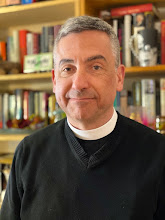

 Posts
Posts

