The Messenger
Grace Episcopal Church, Madison NJ
November 2008
Alternate Histories and Parallel Universes
For the past week or so I have been reading Michael Chabon’s novel, The Yiddish Policemen’s Union. It’s a good thing that Chabon is a brilliant writer because in this book he attempts to tell an improbable alternate history. In the novel, as in actual history, the State of Israel was created in the years after World War II and at least in part as a response to the Holocaust. In the novel, unlike in actual history, Israel is defeated and destroyed in 1948. After the defeat, many Jews migrate to the extremely unlikely location of Sitka, Alaska, where the American government allows them to set up a kind of colony, at least for a time. The story – described on the book jacket as “a gripping whodunit, a love story, and an exploration of the mysteries of exile and redemption” – takes place in this fictional, frigid, absurd and yet believable Jewish settlement.
Reading this amazing book I’ve been reminded of other authors who have attempted to create alternate histories. Probably the best I’ve ever read is Philip Roth’s remarkable novel, The Plot Against America. Roth tells the story of a Jewish family living in Newark that grows increasingly dismayed and fearful when Charles Lindbergh, after defeating Franklin Roosevelt in the 1940 presidential election, moves the United States toward an alliance with Hitler’s Germany.
Especially for us history buffs, it’s fascinating to imagine great what ifs of the past. But it’s not just historians and novelists who have pondered these kinds of questions. Scientists have also wondered about alternatives to the universe that we know. Recently PBS aired a program, “Parallel Worlds, Parallel Lives,” about the physicist Hugh Everett who back in the 1950s proposed the “Many Worlds Interpretation.” Everett’s idea was that are theoretically infinite universes in which every possibility occurs. To give a silly example, according to Everett’s theory, if one day I walk down Main Street and decide to go to On a Roll for lunch there would also be universes where I decide to go to the Nautilus, Bagel Chateau, or even McCool’s!
My understanding of quantum physics is admittedly more than a little shaky, but the “Many Worlds Interpretation” as well as novels that imagine alternative history serve as reminders of the importance and the consequences of the choices that we make. I am sure all of us can think of decisions that were crucial in determining the shape of our lives. And I am sure that all of us can imagine alternative histories, or parallel universes, where our lives turned out to be very different – for better or for worse - from the lives we are living.
I don’t know if there really is a parallel universe where I am still a high school teacher, but I can imagine an alternative history where I am in my classroom grading papers and planning classes. Instead, obviously, I chose to go to seminary, setting in motion a chain of events that have led me to serve as your curate. Although there are parts of teaching that I miss, I’m very glad that my history unfolded in a way that has brought me to Grace Church.
Stewardship season is now upon us in the midst of much economic uncertainty and anxiety. As we all pray about and reflect on our church support maybe it would be a helpful exercise to take some time to imagine an alternative history or a parallel universe without Grace Church in our lives. How different would our lives be without the solid foundation of this church? How different would our lives be without this place where we come together again and again to hear and tell our stories and to receive Jesus into our bodies and souls? I know my life would be much poorer without the gift or working and worshiping with all of you. It’s a tough time for many of us, but I can’t imagine a better history or a better universe than the one that we are sharing together here at Grace Church.
Saturday, November 01, 2008
Sunday, October 19, 2008
Practice
Grace Episcopal Church, Madison NJ
October 19, 2008
Year A: The Twenty-Third Sunday after Pentecost
Exodus 33:12-23
Psalm 99
(1 Thessalonians 1:1-10)
Matthew 22:15-22
Practice
Well, I don’t need to tell you it was another wild week on Wall Street. The image of the market as rollercoaster has been so overused and yet it seems like the best metaphor for the nauseating ride that we’ve all been on. And, meanwhile, the presidential campaign has entered what feels like its 400th week…
For a lot of us it’s a pretty bleak and frightening time. In her sermon last Sunday Lauren admitted that in the midst of the anxiety in the world it was a challenge to find the good news in the lessons that she had to deal with – the Israelites worshipping the golden calf and Jesus’ parable of someone being tossed out of the wedding banquet because he didn’t have the correct robe. I sat over there listening to her sermon, listening to her find the good news, and I gave a deep sigh of relief that she was preaching and I wasn’t.
Then I looked ahead to today’s gospel: “Give therefore to the emperor the things that are the emperor’s, and to God the things that are God’s.” The King James Version of this verse is the one everybody knows, though, right? It’s probably one of Jesus’ best-known and most widely interpreted sayings: “Render unto Caesar what is Caesar’s and unto God what is God’s.”
That’s just great. As we ride the economic rollercoaster and as we enter the last weeks of the presidential campaign we have the gospel lesson about taxes – just what everyone wants to hear today!
Well, let’s start by putting this passage into context. Over the past few Sundays as we’ve been making our way through the Gospel of Matthew, the conflict between Jesus and the religious establishment has been really heating up. Two weeks ago we heard Matthew quote Jesus as telling the Pharisees and the chief priests: “Therefore I tell you, the kingdom of God will be taken away from you and given to a people that produces the fruits of the kingdom.” Ouch. Pretty harsh.
And last week’s wedding banquet parable was directly aimed against the religious establishment that had over and over rejected the prophets and now was rejecting Jesus, the Son of God.
But today it’s time for the Pharisees to respond. Unlike what we’ve heard the past couple of weeks, here Matthew pretty much sticks with Mark and Luke’s version of this story. The Pharisees present Jesus with a question that is designed to get him in trouble. The Pharisees are playing a game of gotcha with Jesus. “Is it lawful to pay taxes to the emperor, or not?”
We all know that talking about taxes can put you on thin ice. We’ve certainly seen that in the current election campaign haven’t we? But in First Century Palestine taxation was an extremely touchy subject. The Romans imposed three different taxes. First there was a land tax which was what it sounds like – a tax on the produce of the land. Second was the customs tax – an often corrupt tax collected through tolls and ports. And finally there was the head tax or the poll tax. Each adult male and maybe each adult female was taxed probably one denarius, or one day’s wage, a year.
Most Jews hated paying these taxes because, well, no one likes to pay taxes, but there was also notorious corruption involved, and they served as a reminder that Israel was ruled by a foreign power and they had to use coins the bore the image of the emperor.
So the Pharisees think they have set up Jesus. If Jesus says it is unlawful to pay the tax he becomes the enemy of the Romans and their local allies. If Jesus says it is lawful then he becomes the enemy of the zealous and patriotic Jews who hate Roman rule.
Instead, of course, Jesus avoids the trap and says, “Give therefore to the emperor the things that are the emperor’s, and to God the things that are God’s.” “Render unto Caesar what is Caesar’s and unto God what is God’s.”
This is the saying of Jesus that launched a million stewardship sermons. As I read commentary after commentary I found that this verse has been interpreted to mean everything from Christians must absolutely obey the state to Christians do not need to pay taxes to the government. Go figure.
As I’ve prayed and thought about this passage I’ve come to the conclusion that in the end it’s not about taxes. The taxes are beside the point. It’s not about taxes for Matthew who mostly is telling this story to show Jesus outfoxing the Pharisees. And it’s not about taxes for us, either.
If we are going to get any meaning out of this long-age game of gotcha, it’s not going to be in determining whether we should pay taxes or determining how much we should give to the church or other worthy causes.
If we are going to get any meaning out of this passage it will be in figuring out what it means for us here and now to render unto Caesar and what it means for us here and now to render unto God.
The meaning for us today is to be at least as careful about our obligation to God as we are about our obligation to Caesar – to be at least as careful about our spiritual obligations as we are to our obligations to the material, the physical, the dollars and cents.
And how can we be careful about our spiritual and material obligations? The answer came to me when I fell for an old joke the other day.
True story: later this week Sue and I are going to a concert at Carnegie Hall. And so the other day, out of the blue Sue asked me, “How do you get to Carnegie Hall?”
Without missing a beat, I started to say, “Well, I was thinking we could take the train from Madison and uh…”
When I saw Sue start to laugh I finally got the old joke. The right answer to the question how do you get to Carnegie Hall is…practice!
That’s the meaning of this passage for us today. It’s about the rendering. It’s about the giving. It’s about the doing. It’s about our practices. Not practices in the sense of rehearsal, but practices in the sense of doing, taking action.
In her book Practicing Our Faith the author Dorothy Bass defines practices as “those shared activities that address fundamental human needs and that, woven together, form a way of life.”
Practices are “those shared activities that address fundamental human needs and that, woven together, form a way of life.”
How do we address our basic needs? How do we give to the emperor and how do we give to God? We do that through specific actions, through specific practices.
We all are learning more about the importance of good financial practices….It seems like as a country maybe we haven’t been as careful as we should have been about our financial practices and now we’ve gotten ourselves into some big trouble. But now many of us are paying a lot more attention to our financial practices these days, aren’t we?
I know that Sue and I don’t eat out as much as we did and when we do it’s very obvious that restaurants are nowhere near as busy as they were a year ago. We are changing our practices.
It might be my imagination but when I’m on line at checkout in Shop Rite it seems like more and more people are handing over a lot of coupons to the cashier. We are changing our practices.
When I started thinking about this idea about the importance of practices – both material and spiritual practices - I asked one of the Men’s Breakfast financial whizzes to come up with a list of specific financial practices that people might consider during this difficult time. He began by tellingme that ignoring the situation, no matter how frightening, won’t make things better. Then he said, “There may be steps that you ought to consider taking now. If so, it’s better to take them now rather than ending up having to say at some future time, “If only I had…”
So what’s first on the list of dealing with the financial crisis? Act. Figure out our financial practices.
We know the importance of financial practices; we know how to render unto "Caesar." But maybe we don’t know or maybe it’s easy for us to forget the importance of spiritual practices; how to render unto God.
So what might be some of these spiritual practices that we can use to give to God the things that are God’s?
One of the most important practices is being right here – praising God in church each Sunday. And there’s the practice of setting aside even just a few moments a day for personal prayer. In the book that I mentioned, Dorothy Bass includes some other practices. She talks about the practice of hospitality. There’s a chapter on the practice of discernment - how does our faith shape the decisions we make? She includes a chapter on the practice of forgiveness and one on the practice of taking care of our bodies because they are gifts from God.
I am sure we could make a list of many practices, many ways that we can give to God the things that are God’s.
Long ago Jesus outsmarted the Pharisees by telling them they had obligations to the emperor and to God. And through the Scripture Jesus is telling us the same thing today – and reminding us that we fulfill those obligations not by sitting around and thinking about them but through practices.
So, how do you get to Carnegie Hall? Practice. How do we render unto Caesar and render unto God? Practice. How do we meet our material and spiritual obligations? Practice.
Amen.
October 19, 2008
Year A: The Twenty-Third Sunday after Pentecost
Exodus 33:12-23
Psalm 99
(1 Thessalonians 1:1-10)
Matthew 22:15-22
Practice
Well, I don’t need to tell you it was another wild week on Wall Street. The image of the market as rollercoaster has been so overused and yet it seems like the best metaphor for the nauseating ride that we’ve all been on. And, meanwhile, the presidential campaign has entered what feels like its 400th week…
For a lot of us it’s a pretty bleak and frightening time. In her sermon last Sunday Lauren admitted that in the midst of the anxiety in the world it was a challenge to find the good news in the lessons that she had to deal with – the Israelites worshipping the golden calf and Jesus’ parable of someone being tossed out of the wedding banquet because he didn’t have the correct robe. I sat over there listening to her sermon, listening to her find the good news, and I gave a deep sigh of relief that she was preaching and I wasn’t.
Then I looked ahead to today’s gospel: “Give therefore to the emperor the things that are the emperor’s, and to God the things that are God’s.” The King James Version of this verse is the one everybody knows, though, right? It’s probably one of Jesus’ best-known and most widely interpreted sayings: “Render unto Caesar what is Caesar’s and unto God what is God’s.”
That’s just great. As we ride the economic rollercoaster and as we enter the last weeks of the presidential campaign we have the gospel lesson about taxes – just what everyone wants to hear today!
Well, let’s start by putting this passage into context. Over the past few Sundays as we’ve been making our way through the Gospel of Matthew, the conflict between Jesus and the religious establishment has been really heating up. Two weeks ago we heard Matthew quote Jesus as telling the Pharisees and the chief priests: “Therefore I tell you, the kingdom of God will be taken away from you and given to a people that produces the fruits of the kingdom.” Ouch. Pretty harsh.
And last week’s wedding banquet parable was directly aimed against the religious establishment that had over and over rejected the prophets and now was rejecting Jesus, the Son of God.
But today it’s time for the Pharisees to respond. Unlike what we’ve heard the past couple of weeks, here Matthew pretty much sticks with Mark and Luke’s version of this story. The Pharisees present Jesus with a question that is designed to get him in trouble. The Pharisees are playing a game of gotcha with Jesus. “Is it lawful to pay taxes to the emperor, or not?”
We all know that talking about taxes can put you on thin ice. We’ve certainly seen that in the current election campaign haven’t we? But in First Century Palestine taxation was an extremely touchy subject. The Romans imposed three different taxes. First there was a land tax which was what it sounds like – a tax on the produce of the land. Second was the customs tax – an often corrupt tax collected through tolls and ports. And finally there was the head tax or the poll tax. Each adult male and maybe each adult female was taxed probably one denarius, or one day’s wage, a year.
Most Jews hated paying these taxes because, well, no one likes to pay taxes, but there was also notorious corruption involved, and they served as a reminder that Israel was ruled by a foreign power and they had to use coins the bore the image of the emperor.
So the Pharisees think they have set up Jesus. If Jesus says it is unlawful to pay the tax he becomes the enemy of the Romans and their local allies. If Jesus says it is lawful then he becomes the enemy of the zealous and patriotic Jews who hate Roman rule.
Instead, of course, Jesus avoids the trap and says, “Give therefore to the emperor the things that are the emperor’s, and to God the things that are God’s.” “Render unto Caesar what is Caesar’s and unto God what is God’s.”
This is the saying of Jesus that launched a million stewardship sermons. As I read commentary after commentary I found that this verse has been interpreted to mean everything from Christians must absolutely obey the state to Christians do not need to pay taxes to the government. Go figure.
As I’ve prayed and thought about this passage I’ve come to the conclusion that in the end it’s not about taxes. The taxes are beside the point. It’s not about taxes for Matthew who mostly is telling this story to show Jesus outfoxing the Pharisees. And it’s not about taxes for us, either.
If we are going to get any meaning out of this long-age game of gotcha, it’s not going to be in determining whether we should pay taxes or determining how much we should give to the church or other worthy causes.
If we are going to get any meaning out of this passage it will be in figuring out what it means for us here and now to render unto Caesar and what it means for us here and now to render unto God.
The meaning for us today is to be at least as careful about our obligation to God as we are about our obligation to Caesar – to be at least as careful about our spiritual obligations as we are to our obligations to the material, the physical, the dollars and cents.
And how can we be careful about our spiritual and material obligations? The answer came to me when I fell for an old joke the other day.
True story: later this week Sue and I are going to a concert at Carnegie Hall. And so the other day, out of the blue Sue asked me, “How do you get to Carnegie Hall?”
Without missing a beat, I started to say, “Well, I was thinking we could take the train from Madison and uh…”
When I saw Sue start to laugh I finally got the old joke. The right answer to the question how do you get to Carnegie Hall is…practice!
That’s the meaning of this passage for us today. It’s about the rendering. It’s about the giving. It’s about the doing. It’s about our practices. Not practices in the sense of rehearsal, but practices in the sense of doing, taking action.
In her book Practicing Our Faith the author Dorothy Bass defines practices as “those shared activities that address fundamental human needs and that, woven together, form a way of life.”
Practices are “those shared activities that address fundamental human needs and that, woven together, form a way of life.”
How do we address our basic needs? How do we give to the emperor and how do we give to God? We do that through specific actions, through specific practices.
We all are learning more about the importance of good financial practices….It seems like as a country maybe we haven’t been as careful as we should have been about our financial practices and now we’ve gotten ourselves into some big trouble. But now many of us are paying a lot more attention to our financial practices these days, aren’t we?
I know that Sue and I don’t eat out as much as we did and when we do it’s very obvious that restaurants are nowhere near as busy as they were a year ago. We are changing our practices.
It might be my imagination but when I’m on line at checkout in Shop Rite it seems like more and more people are handing over a lot of coupons to the cashier. We are changing our practices.
When I started thinking about this idea about the importance of practices – both material and spiritual practices - I asked one of the Men’s Breakfast financial whizzes to come up with a list of specific financial practices that people might consider during this difficult time. He began by tellingme that ignoring the situation, no matter how frightening, won’t make things better. Then he said, “There may be steps that you ought to consider taking now. If so, it’s better to take them now rather than ending up having to say at some future time, “If only I had…”
So what’s first on the list of dealing with the financial crisis? Act. Figure out our financial practices.
We know the importance of financial practices; we know how to render unto "Caesar." But maybe we don’t know or maybe it’s easy for us to forget the importance of spiritual practices; how to render unto God.
So what might be some of these spiritual practices that we can use to give to God the things that are God’s?
One of the most important practices is being right here – praising God in church each Sunday. And there’s the practice of setting aside even just a few moments a day for personal prayer. In the book that I mentioned, Dorothy Bass includes some other practices. She talks about the practice of hospitality. There’s a chapter on the practice of discernment - how does our faith shape the decisions we make? She includes a chapter on the practice of forgiveness and one on the practice of taking care of our bodies because they are gifts from God.
I am sure we could make a list of many practices, many ways that we can give to God the things that are God’s.
Long ago Jesus outsmarted the Pharisees by telling them they had obligations to the emperor and to God. And through the Scripture Jesus is telling us the same thing today – and reminding us that we fulfill those obligations not by sitting around and thinking about them but through practices.
So, how do you get to Carnegie Hall? Practice. How do we render unto Caesar and render unto God? Practice. How do we meet our material and spiritual obligations? Practice.
Amen.

Wednesday, October 01, 2008
Men's Ministry
The Messenger
Grace Episcopal Church, Madison NJ
October 2008
Men’s Ministry
In Christian magazines and books there has been a good deal of ink spilled over the issue of men in church – or, more accurately, the troubling lack of men in church. Probably the best known book about this subject has the provocative title Why Men Hate Going to Church. The author, David Morrow, offers some sobering statistics on his website churchformen.org. For example, on Sunday the typical congregation is 61% women and 39% men. And then there’s this: “More than 90 percent of American men believe in God, and five out of six call themselves Christians. But only two out of six attend church on a given Sunday. The average man accepts the reality of Jesus Christ, but fails to see any value in going to church.” And finally Morrow claims that fewer than 10% of American congregations are able to support “vibrant” men’s ministries.
In many ways Grace Church is an exception to the bleak picture painted by Morrow and others. As you know, many men regularly attend church and are often very active in all sorts of ministries from singing in the choir to serving as a youth leader to maintaining our grounds and buildings. We are very fortunate to have many men who give so much to the church and the wider community. However, since I think our distinctively men’s ministries can be more “vibrant, I want to remind you of what is already available and to begin thinking about future possibilities.
First, I want to invite all the men of Grace Church to our Men’s Breakfast, which assembles every Friday morning at 7:00 at the Bagel Chateau on Main Street. Eliot Knight, Bruce Rudin and I are the most regular attendees but others stop by from time to time. This weekly get-together has been a real highlight of my time at Grace – low-key, relaxed, agenda-free and often a lot of fun. The conversation ranges from the church to the economy to what’s going on at work and at home. If a Friday morning stop at the Bagel Chateau works with your schedule, I hope you will join us.
Second, I hope more of the men of Grace will consider joining the Grace Church Men’s Book Group, which meets monthly. In recent months the group has read and discussed The Power and the Glory by Graham Greene, The People of the Book by Geraldine Brooks, and The Beekeepers Apprentice by Laurie King. Ask Eliot Knight, Bruce Rudin, Steve Hauge or Jim Van Leuven for more information.
Finally, in recent months the newly reconstituted Grace Church Men’s Group has met twice – first at Surrey Lane and then at Bruce Rudin’s home. Both of these casual gatherings were well-attended and gave many of us a chance to meet and talk together for the first time. I learned that, partly because Grace is a fairly large church, many of us do not really know one another. I also learned that there is interest among at least some of the men in having a retreat – something that once was very popular but has not happened in the past couple of years.
We will be having our third meeting of the Men’s Group at 7 p.m. on Friday, October 10, at my place. Once again there will be snacks, drinks and conversation, but this time we will talk a while about some of our concerns, think about other ways we could serve Grace Church and the wider community and begin to plan a men’s retreat. Considering the stress and strain that many of us are under in these uncertain times, I think getting away together for even a short time of prayer and rest would be worthwhile for many of us.
Let me know what you think and I hope to see many of the men of Grace Church on the 10th.
Grace Episcopal Church, Madison NJ
October 2008
Men’s Ministry
In Christian magazines and books there has been a good deal of ink spilled over the issue of men in church – or, more accurately, the troubling lack of men in church. Probably the best known book about this subject has the provocative title Why Men Hate Going to Church. The author, David Morrow, offers some sobering statistics on his website churchformen.org. For example, on Sunday the typical congregation is 61% women and 39% men. And then there’s this: “More than 90 percent of American men believe in God, and five out of six call themselves Christians. But only two out of six attend church on a given Sunday. The average man accepts the reality of Jesus Christ, but fails to see any value in going to church.” And finally Morrow claims that fewer than 10% of American congregations are able to support “vibrant” men’s ministries.
In many ways Grace Church is an exception to the bleak picture painted by Morrow and others. As you know, many men regularly attend church and are often very active in all sorts of ministries from singing in the choir to serving as a youth leader to maintaining our grounds and buildings. We are very fortunate to have many men who give so much to the church and the wider community. However, since I think our distinctively men’s ministries can be more “vibrant, I want to remind you of what is already available and to begin thinking about future possibilities.
First, I want to invite all the men of Grace Church to our Men’s Breakfast, which assembles every Friday morning at 7:00 at the Bagel Chateau on Main Street. Eliot Knight, Bruce Rudin and I are the most regular attendees but others stop by from time to time. This weekly get-together has been a real highlight of my time at Grace – low-key, relaxed, agenda-free and often a lot of fun. The conversation ranges from the church to the economy to what’s going on at work and at home. If a Friday morning stop at the Bagel Chateau works with your schedule, I hope you will join us.
Second, I hope more of the men of Grace will consider joining the Grace Church Men’s Book Group, which meets monthly. In recent months the group has read and discussed The Power and the Glory by Graham Greene, The People of the Book by Geraldine Brooks, and The Beekeepers Apprentice by Laurie King. Ask Eliot Knight, Bruce Rudin, Steve Hauge or Jim Van Leuven for more information.
Finally, in recent months the newly reconstituted Grace Church Men’s Group has met twice – first at Surrey Lane and then at Bruce Rudin’s home. Both of these casual gatherings were well-attended and gave many of us a chance to meet and talk together for the first time. I learned that, partly because Grace is a fairly large church, many of us do not really know one another. I also learned that there is interest among at least some of the men in having a retreat – something that once was very popular but has not happened in the past couple of years.
We will be having our third meeting of the Men’s Group at 7 p.m. on Friday, October 10, at my place. Once again there will be snacks, drinks and conversation, but this time we will talk a while about some of our concerns, think about other ways we could serve Grace Church and the wider community and begin to plan a men’s retreat. Considering the stress and strain that many of us are under in these uncertain times, I think getting away together for even a short time of prayer and rest would be worthwhile for many of us.
Let me know what you think and I hope to see many of the men of Grace Church on the 10th.
Sunday, September 28, 2008
Can God Trust Us?
Grace Episcopal Church, Madison NJ
September 28, 2008
The Twentieth Sunday after Pentecost
Year A - Proper 21
Exodus 17:1-7
Psalm 25:1-8
(Philippians 2:1-13)
Matthew 21:23-32
Can God Trust Us?
Now that a new television season has begun all the returning shows have been reminding us what happened last season. You’ve seen this, right? They start with one of the stars saying something like “Previously on Boston Legal.”
Sometimes I think we should do that in church. If you a miss a Sunday or two it’s easy to lose the thread of the Bible lessons that we read each week. It’s sort of like watching an episode of a TV show without having seen the previous episodes. I think that today’s Old Testament lesson of Moses striking the rock and water gushing forth calls for a little background, so here we go…
“Previously in Exodus…”
The Israelites were enslaved in Egypt and cried out to God for help. God selected the unlikely Moses to lead the Israelites to freedom. Against all odds, and with some dramatic help from God, the Israelites escaped from slavery and start making their way to freedom. But, their problems were just beginning. Out in the desert they began to run out of food and began to complain to Moses and to lose faith in God. But God came through for the Israelites once again – giving them manna – this mysterious bread-like food that appeared all around them in the desert.
Which brings us to today’s episode of Exodus.
Last week the Israelites lost faith in God and Moses because there was no food to eat. This week they lose faith because there is no water to drink.
Now, it’s totally reasonable to be concerned about food and water when you’re out in the middle of the desert. But, the point of these stories is that the Israelites just can’t bring themselves to trust God, no matter how many times God comes through for them. Over and over God proves to be trustworthy. What will it take for people to trust God? The Passover wasn’t enough. The parting of the Red Sea wasn’t enough. The gift of manna – this bread from heaven – wasn’t enough. Today’s episode of Moses striking the rock with his staff and bringing forth water won’t be enough. After all that’s happened at the end of today’s passage the Israelites still ask, “Is the Lord among us or not?” What will it take for people to trust God?
Well, these stories of a lack of trust in God are building to next week’s episode when God gives the Ten Commandments to Moses. Most of us are familiar with the rules contained in the Ten Commandments – but far more important than the individual rules is the idea behind the Commandments – the idea of Covenant.
In the Ten Commandments God once again makes a covenant with the people. Actually, in the Bible God has done this twice before – first with Noah and Abraham, but God does it in a dramatic and definitive way on Mt. Sinai. God says I am your God and you are my people. God says to the Israelites we have a covenant – what the British rabbi Jonathan Sacks defines as a bond of trust and love. God says, do you finally get it? You can trust me. We have a covenant – we have a bond of trust and love.
Which brings us to the New Testament lesson from the Gospel of Matthew. Jesus is now in Jerusalem – the religious and political center of Israel. Jesus’ conflict with the religious establishment is intensifying. Obviously the “chief priests and the elders” are threatened by Jesus’ ministry – by his teaching and his power. And they had been earlier threatened by John the Baptist, too. The “chief priests and the elders” are threatened by John and Jesus because of their grassroots ministry. And they reject John and Jesus because they are operating outside of official channels. The “chief priests and elders” are unable to see God’s power working through John and Jesus.
The “chief priests and the elders” fail to trust God. They fail to trust that God is still at work in the world, often working through the unlikeliest of people and doing more than we can ask or imagine. The chief priests and the elders could see the power of God in John’s ministry but rather than putting their trust in God, these religious leaders close their hearts and minds.
And Jesus calls them on it, doesn’t he? Notice Jesus doesn’t tell the chief priests and the elders that they’ve missed the boat entirely, but he gives them the shocking news that the prostitutes and the tax collectors – the outcasts of society – were going into the Kingdom of God ahead of them.
Over and over the Bible tells the story of God’s trustworthiness. In our own lives we may have experienced God’s trustworthiness. And yet, it’s still hard for us to trust isn’t it?
It’s no news to anyone here that we are living in very difficult and frightening times. We have our Men’s Breakfast on Friday mornings and besides me most of the guys who come to the breakfast know a lot about finance. But, they’re nice to me – they speak slowly and try to explain what they’re talking about. Lately it’s been pretty bleak. Some days after the breakfast, instead of coming to work, I’m tempted to go back home and dive under the covers.
It is a time of anxiety. And yet as people of faith we know God’s trustworthiness. Trusting God doesn’t mean that there won’t be suffering and there won’t be loss. But we can trust that God is suffering along with us and that ultimately nothing is ever lost to God.
And for us Christians one of the most important signs of God’s trustworthiness is baptism. Later this morning we’ll be baptizing six (!) people. They will be initiated into the Church. The prayer book notes, “The bond which God establishes in Baptism is indissoluble.”
This bond of trust and love between God and us can never be broken – no matter what we do or don’t do. This bond – this covenant – between God and us is forever.
But things work both ways in the Baptismal Covenant. God promises to be with us always – to be completely trustworthy. And we make some promises of our own. So, I guess the question is not can we trust God, but can God trust us?
In the Baptismal Covenant we promise with God’s help to “continue in the apostles’ teaching and fellowship, in the breaking of bread, and in the prayers.” Are we going to try to keep that promise? Can God trust us?
In the Baptismal Covenant we promise with God’s help to proclaim by word and example the Good News of Christ. Are we going to try to keep that promise? Can God trust us?
In the Baptismal Covenant we promise with God’s help to seek and serve Christ in all persons, loving our neighbor as ourselves. Are we going to keep that promise? Can God trust us?
And in the Baptismal Covenant we promise with God’s help to strive for justice and peace among all people, respecting the dignity of every human being. Are we going to keep that promise? Can God trust us?
Will we try to keep our promises ow will we be like the second son in Jesus’ parable who says yes to his father, but does nothing?
Over and over, in good times and in bad times, God has proven to be trustworthy. The Israelites of long ago learned about God’s trustworthiness as they drank water in the desert. We learn about God’s trustworthiness in the water of baptism – when God forms an unbreakable, indissoluble bond with us. We can trust God. Can God trust us?
Amen.
September 28, 2008
The Twentieth Sunday after Pentecost
Year A - Proper 21
Exodus 17:1-7
Psalm 25:1-8
(Philippians 2:1-13)
Matthew 21:23-32
Can God Trust Us?
Now that a new television season has begun all the returning shows have been reminding us what happened last season. You’ve seen this, right? They start with one of the stars saying something like “Previously on Boston Legal.”
Sometimes I think we should do that in church. If you a miss a Sunday or two it’s easy to lose the thread of the Bible lessons that we read each week. It’s sort of like watching an episode of a TV show without having seen the previous episodes. I think that today’s Old Testament lesson of Moses striking the rock and water gushing forth calls for a little background, so here we go…
“Previously in Exodus…”
The Israelites were enslaved in Egypt and cried out to God for help. God selected the unlikely Moses to lead the Israelites to freedom. Against all odds, and with some dramatic help from God, the Israelites escaped from slavery and start making their way to freedom. But, their problems were just beginning. Out in the desert they began to run out of food and began to complain to Moses and to lose faith in God. But God came through for the Israelites once again – giving them manna – this mysterious bread-like food that appeared all around them in the desert.
Which brings us to today’s episode of Exodus.
Last week the Israelites lost faith in God and Moses because there was no food to eat. This week they lose faith because there is no water to drink.
Now, it’s totally reasonable to be concerned about food and water when you’re out in the middle of the desert. But, the point of these stories is that the Israelites just can’t bring themselves to trust God, no matter how many times God comes through for them. Over and over God proves to be trustworthy. What will it take for people to trust God? The Passover wasn’t enough. The parting of the Red Sea wasn’t enough. The gift of manna – this bread from heaven – wasn’t enough. Today’s episode of Moses striking the rock with his staff and bringing forth water won’t be enough. After all that’s happened at the end of today’s passage the Israelites still ask, “Is the Lord among us or not?” What will it take for people to trust God?
Well, these stories of a lack of trust in God are building to next week’s episode when God gives the Ten Commandments to Moses. Most of us are familiar with the rules contained in the Ten Commandments – but far more important than the individual rules is the idea behind the Commandments – the idea of Covenant.
In the Ten Commandments God once again makes a covenant with the people. Actually, in the Bible God has done this twice before – first with Noah and Abraham, but God does it in a dramatic and definitive way on Mt. Sinai. God says I am your God and you are my people. God says to the Israelites we have a covenant – what the British rabbi Jonathan Sacks defines as a bond of trust and love. God says, do you finally get it? You can trust me. We have a covenant – we have a bond of trust and love.
Which brings us to the New Testament lesson from the Gospel of Matthew. Jesus is now in Jerusalem – the religious and political center of Israel. Jesus’ conflict with the religious establishment is intensifying. Obviously the “chief priests and the elders” are threatened by Jesus’ ministry – by his teaching and his power. And they had been earlier threatened by John the Baptist, too. The “chief priests and the elders” are threatened by John and Jesus because of their grassroots ministry. And they reject John and Jesus because they are operating outside of official channels. The “chief priests and elders” are unable to see God’s power working through John and Jesus.
The “chief priests and the elders” fail to trust God. They fail to trust that God is still at work in the world, often working through the unlikeliest of people and doing more than we can ask or imagine. The chief priests and the elders could see the power of God in John’s ministry but rather than putting their trust in God, these religious leaders close their hearts and minds.
And Jesus calls them on it, doesn’t he? Notice Jesus doesn’t tell the chief priests and the elders that they’ve missed the boat entirely, but he gives them the shocking news that the prostitutes and the tax collectors – the outcasts of society – were going into the Kingdom of God ahead of them.
Over and over the Bible tells the story of God’s trustworthiness. In our own lives we may have experienced God’s trustworthiness. And yet, it’s still hard for us to trust isn’t it?
It’s no news to anyone here that we are living in very difficult and frightening times. We have our Men’s Breakfast on Friday mornings and besides me most of the guys who come to the breakfast know a lot about finance. But, they’re nice to me – they speak slowly and try to explain what they’re talking about. Lately it’s been pretty bleak. Some days after the breakfast, instead of coming to work, I’m tempted to go back home and dive under the covers.
It is a time of anxiety. And yet as people of faith we know God’s trustworthiness. Trusting God doesn’t mean that there won’t be suffering and there won’t be loss. But we can trust that God is suffering along with us and that ultimately nothing is ever lost to God.
And for us Christians one of the most important signs of God’s trustworthiness is baptism. Later this morning we’ll be baptizing six (!) people. They will be initiated into the Church. The prayer book notes, “The bond which God establishes in Baptism is indissoluble.”
This bond of trust and love between God and us can never be broken – no matter what we do or don’t do. This bond – this covenant – between God and us is forever.
But things work both ways in the Baptismal Covenant. God promises to be with us always – to be completely trustworthy. And we make some promises of our own. So, I guess the question is not can we trust God, but can God trust us?
In the Baptismal Covenant we promise with God’s help to “continue in the apostles’ teaching and fellowship, in the breaking of bread, and in the prayers.” Are we going to try to keep that promise? Can God trust us?
In the Baptismal Covenant we promise with God’s help to proclaim by word and example the Good News of Christ. Are we going to try to keep that promise? Can God trust us?
In the Baptismal Covenant we promise with God’s help to seek and serve Christ in all persons, loving our neighbor as ourselves. Are we going to keep that promise? Can God trust us?
And in the Baptismal Covenant we promise with God’s help to strive for justice and peace among all people, respecting the dignity of every human being. Are we going to keep that promise? Can God trust us?
Will we try to keep our promises ow will we be like the second son in Jesus’ parable who says yes to his father, but does nothing?
Over and over, in good times and in bad times, God has proven to be trustworthy. The Israelites of long ago learned about God’s trustworthiness as they drank water in the desert. We learn about God’s trustworthiness in the water of baptism – when God forms an unbreakable, indissoluble bond with us. We can trust God. Can God trust us?
Amen.
Wednesday, September 17, 2008
Mystics in the World
Drew University: Craig Chapel
September 17, 2008
The Feast of Hildegard of Bingen
Sirach 43:1-2,6-7,9-12,27-28
John 3:16-21
Psalm 104: 25-34
Mystics in the World
One of the great joys and privileges of serving as a priest down the street at Grace Episcopal Church is that, unusually for an Episcopal church, we have at least one service every day. This means I get to preach a lot and often I get to preach on what we call the lesser feasts – the days in the Episcopal calendar when we honor some of the great men and women of our Christian heritage.
I like to think of this task as part of my continuing education. Sometimes the lesser feast honors someone very familiar such as Augustine of Hippo or Dietrich Bonhoeffer. But other times the lesser feast honors someone not very well known (at least to me) such as Bernard Mizeki or Thomas Gallaudet, to mention just two recent examples. When faced with preaching about people like that, it’s time to dust off those books from seminary and get busy continuing my education.
But I think it’s safe to say that out of all the great women and men honored on our church calendar, only one has made it to the Billboard charts. Only one has her name on the wall of the HMV store in midtown Manhattan, alongside other illustrious musicians such as John Coltrane and Duke Ellington. Only one had her music featured in the hit movie A Beautiful Mind. Only one has five or six different CDs of her music in the bin at Barnes and Noble on Route 10 in Morris Plains. And that one is the person we honor today, the remarkable Hildegard of Bingen.
That’s quite a lot of fame for a woman who was born 1098 in the Rhineland Valley. Apparently from a very early age Hildegard began having mystical experiences. Conveniently enough as the tenth child in her family she was tithed to the church – perhaps something to consider during your next stewardship campaign!
Eventually she and other women formed a convent and later Hildegard will found other convents. Her visions continued but Hildegard was reluctant to share them with others until at the age of 43 a voice told her to “See and speak! Hear and write!” And so she compiled descriptions of her visions along with her own interpretations in three books.
Then, as now, the institutional church was skeptical of those claiming to have mystical experiences, but Hildegard had a powerful patron in Bernard of Clairvaux who it just so happens had the ear of the pope. So Hildegard’s mystical writings received an imprimatur from the highest level and Hildegard and her work became famous across Europe.
She conducted four preaching tours and offered her advice and direction to the political and religious leaders of the day. She practiced medicine with a special focus on women’s health. She wrote about natural science and philosophy. In her spare time she wrote a liturgical drama, The Play of Virtues, in which women sing the parts of the virtues and the lone man in the cast plays the part of …the devil, who is unable to sing. And of course she composed large amounts of otherworldly and gorgeous music.
After her death in 1179 there was a movement to canonize her, using the newly created procedure in the Roman church to make new saints, but in Hildegard’s case it never quite came together. And then this remarkable woman was forgotten.
Until the 1970s when thanks to the new interest in the great Christian women, Hildegard and especially her music was rediscovered and celebrated.
Which is wonderful. But, I wonder about Hildegard the mystic. I wonder what we make of the vast Christian mystical heritage. For many centuries now, of course, many Christians have grown increasingly uneasy with mystical experience. How often have we heard someone – maybe even ourselves – say something like “If St. Francis were alive today he’d be institutionalized or be heavily medicated”? And the same might be said of Hildegard. I read that Oliver Sacks chalked up Hildegard’s mystical experiences as the result of migraines.
Is that good enough for us Christians in the 21st Century? Are we willing to dismiss the mystical as a symptom or manifestation of mental illness? Are we willing to leave mystical experience to the New Agers? Are we willing to conclude that God does not speak through mystical experience? Is mysticism embarrassing for Christians in the 21st Century? Are we open to the possibility of having mystical experiences? Have we had mystical experiences?
Those of you who have been ordained or are preparing for ordination may have received the advice that if you believe you’ve had mystical experiences do not under any circumstances tell your Commission of Ministry or whoever the gatekeepers are in your denomination. And that’s unfortunate, but probably good advice. The truth is once we start talking about mystical experiences all sorts of red flags go up.
So I won’t ask for a show of hands about how many of us have had some kind of mystical experience. But I do remember a sermon given by John Koenig, New Testament professor at General Seminary and longtime member of the seminary’s admissions committee. In his sermon he noted that a very large number of applicants to the seminary described experiences – maybe not quite on the level of Hildegard’s visions – but nonetheless experiences that could be described as mystical. Professor Koenig concluded that God speaks to us in this way more often than we might think.
Maybe the key way to recover our confidence in Christian mysticism is to recall that mystical experiences are not given for our enjoyment or edification, but instead they call us to action right here in the flesh and blood world in which we live. The Jesuit scholar Robert J. Eagan notes that mystical experiences are liberating – they remind us that things do not have to be this way.
Maybe we can recover our confidence in Christian mysticism by reminding ourselves that being a mystic doesn’t mean going off on a mountain forever and pondering but instead it means working to translate the mystical vision into a physical reality, in the manner of the 20th Century mystic Martin Luther King.
And sometimes even mystics themselves need to learn the role they are called to play in the world. I remember seeing a photograph of Thomas Merton taken on the day he entered the Abbey of Gethsemane. In the photo he’s laughingly holding up a newspaper, apparently thinking that he was saying farewell to the world described in its pages. Instead, of course, God was going to nudge Merton the cloistered Trappist monk into an even more public role in the world.
In the Christian tradition mysticism calls us to action in the world. And this connection is very clear in the visions of Hildegard. Her visions, for all their mystery and power, usually have a very concrete, here and now message.
For example, there is Hildegard’s vision of God enthroned. She writes: “I saw a great mountain of the color of iron, and enthroned on it One of such great glory that it blinded my sight.” And then God speaks to Hildegard and says: “O human, who are fragile dust of the earth and ashes of ashes! Cry out and speak of the origin of pure salvation until those people are instructed, who, though they see the inmost contents of the Scriptures, do not wish to tell them or preach them, because they are lukewarm and sluggish in serving God’s justice. Unlock for them the enclosure of mysteries that they, timid as they are, conceal in a hidden and fruitless field. Burst forth into a fountain of abundance and overflow with mystical knowledge, until they who now think you contemptible because of Eve’s transgression are stirred up by the flood of your irrigation."
And then the voice of God concludes: “Arise, therefore, cry out and tell what is shown to you by the strong power of God’s help, for He who rules every creature in might and kindness floods those who fear him and serve him in sweet love and humility with the glory of heavenly enlightenment and leads those who persevere in the ways of justice to the joys of the eternal vision.”
The mystics – and you and I – are called to arise and cry out. Mystical experiences are not given for our own enjoyment but rather to give us the strength to speak out, to stand up for the oppressed, to speak the truth to power.
And that’s exactly what the great Christian mystics have done. Think of Paul and his powerful transforming mystical experience of the Risen Lord – which gave him the strength and courage to live a life filled with setbacks and adversity. And Hildegard bravely involved herself in the world – challenging those in authority; a medieval woman emboldened by her mystical experience.
And that’s what we’re called to do. We “Professional Christians” have a special role to play in a society that leaves no time for contemplation and is dismissive of mysticism. We are called to be mystics in the world. When I was ordained a deacon the bishop said something that has continued to haunt and challenge me. He said “We pay you to pray.” “We pay you to pray.”
That pay isn’t just for my own personal spiritual growth. That pay is for me, for us, to translate our spiritual – mystical – experiences into the flesh and blood world, right here and now.
And isn’t that the message of today’s gospel? This very familiar passage sums up the message of the very mystical fourth gospel. “For God so loved the world…” The flesh and blood, right here and now world. “Indeed God did not send the Son into the world to condemn the world, but in order that the world might be saved through him.”
God’s love for the world – for this world - is expressed in the flesh and blood life, death and resurrection of Jesus – the mystical Jesus who had a vision of the Kingdom of God and who lived and proclaimed that vision.
Today we give thanks for Hildegard whose mysticism gave her the confidence and the courage to live and proclaim her Christian faith. May we be open to the possibility that God continues to speak. May we make the time and establish the quiet so we might have our own mystical experiences. And may we follow Hildegard’s example and in our own way, in our own time and place, be mystics in the world.
Amen.
September 17, 2008
The Feast of Hildegard of Bingen
Sirach 43:1-2,6-7,9-12,27-28
John 3:16-21
Psalm 104: 25-34
Mystics in the World
One of the great joys and privileges of serving as a priest down the street at Grace Episcopal Church is that, unusually for an Episcopal church, we have at least one service every day. This means I get to preach a lot and often I get to preach on what we call the lesser feasts – the days in the Episcopal calendar when we honor some of the great men and women of our Christian heritage.
I like to think of this task as part of my continuing education. Sometimes the lesser feast honors someone very familiar such as Augustine of Hippo or Dietrich Bonhoeffer. But other times the lesser feast honors someone not very well known (at least to me) such as Bernard Mizeki or Thomas Gallaudet, to mention just two recent examples. When faced with preaching about people like that, it’s time to dust off those books from seminary and get busy continuing my education.
But I think it’s safe to say that out of all the great women and men honored on our church calendar, only one has made it to the Billboard charts. Only one has her name on the wall of the HMV store in midtown Manhattan, alongside other illustrious musicians such as John Coltrane and Duke Ellington. Only one had her music featured in the hit movie A Beautiful Mind. Only one has five or six different CDs of her music in the bin at Barnes and Noble on Route 10 in Morris Plains. And that one is the person we honor today, the remarkable Hildegard of Bingen.
That’s quite a lot of fame for a woman who was born 1098 in the Rhineland Valley. Apparently from a very early age Hildegard began having mystical experiences. Conveniently enough as the tenth child in her family she was tithed to the church – perhaps something to consider during your next stewardship campaign!
Eventually she and other women formed a convent and later Hildegard will found other convents. Her visions continued but Hildegard was reluctant to share them with others until at the age of 43 a voice told her to “See and speak! Hear and write!” And so she compiled descriptions of her visions along with her own interpretations in three books.
Then, as now, the institutional church was skeptical of those claiming to have mystical experiences, but Hildegard had a powerful patron in Bernard of Clairvaux who it just so happens had the ear of the pope. So Hildegard’s mystical writings received an imprimatur from the highest level and Hildegard and her work became famous across Europe.
She conducted four preaching tours and offered her advice and direction to the political and religious leaders of the day. She practiced medicine with a special focus on women’s health. She wrote about natural science and philosophy. In her spare time she wrote a liturgical drama, The Play of Virtues, in which women sing the parts of the virtues and the lone man in the cast plays the part of …the devil, who is unable to sing. And of course she composed large amounts of otherworldly and gorgeous music.
After her death in 1179 there was a movement to canonize her, using the newly created procedure in the Roman church to make new saints, but in Hildegard’s case it never quite came together. And then this remarkable woman was forgotten.
Until the 1970s when thanks to the new interest in the great Christian women, Hildegard and especially her music was rediscovered and celebrated.
Which is wonderful. But, I wonder about Hildegard the mystic. I wonder what we make of the vast Christian mystical heritage. For many centuries now, of course, many Christians have grown increasingly uneasy with mystical experience. How often have we heard someone – maybe even ourselves – say something like “If St. Francis were alive today he’d be institutionalized or be heavily medicated”? And the same might be said of Hildegard. I read that Oliver Sacks chalked up Hildegard’s mystical experiences as the result of migraines.
Is that good enough for us Christians in the 21st Century? Are we willing to dismiss the mystical as a symptom or manifestation of mental illness? Are we willing to leave mystical experience to the New Agers? Are we willing to conclude that God does not speak through mystical experience? Is mysticism embarrassing for Christians in the 21st Century? Are we open to the possibility of having mystical experiences? Have we had mystical experiences?
Those of you who have been ordained or are preparing for ordination may have received the advice that if you believe you’ve had mystical experiences do not under any circumstances tell your Commission of Ministry or whoever the gatekeepers are in your denomination. And that’s unfortunate, but probably good advice. The truth is once we start talking about mystical experiences all sorts of red flags go up.
So I won’t ask for a show of hands about how many of us have had some kind of mystical experience. But I do remember a sermon given by John Koenig, New Testament professor at General Seminary and longtime member of the seminary’s admissions committee. In his sermon he noted that a very large number of applicants to the seminary described experiences – maybe not quite on the level of Hildegard’s visions – but nonetheless experiences that could be described as mystical. Professor Koenig concluded that God speaks to us in this way more often than we might think.
Maybe the key way to recover our confidence in Christian mysticism is to recall that mystical experiences are not given for our enjoyment or edification, but instead they call us to action right here in the flesh and blood world in which we live. The Jesuit scholar Robert J. Eagan notes that mystical experiences are liberating – they remind us that things do not have to be this way.
Maybe we can recover our confidence in Christian mysticism by reminding ourselves that being a mystic doesn’t mean going off on a mountain forever and pondering but instead it means working to translate the mystical vision into a physical reality, in the manner of the 20th Century mystic Martin Luther King.
And sometimes even mystics themselves need to learn the role they are called to play in the world. I remember seeing a photograph of Thomas Merton taken on the day he entered the Abbey of Gethsemane. In the photo he’s laughingly holding up a newspaper, apparently thinking that he was saying farewell to the world described in its pages. Instead, of course, God was going to nudge Merton the cloistered Trappist monk into an even more public role in the world.
In the Christian tradition mysticism calls us to action in the world. And this connection is very clear in the visions of Hildegard. Her visions, for all their mystery and power, usually have a very concrete, here and now message.
For example, there is Hildegard’s vision of God enthroned. She writes: “I saw a great mountain of the color of iron, and enthroned on it One of such great glory that it blinded my sight.” And then God speaks to Hildegard and says: “O human, who are fragile dust of the earth and ashes of ashes! Cry out and speak of the origin of pure salvation until those people are instructed, who, though they see the inmost contents of the Scriptures, do not wish to tell them or preach them, because they are lukewarm and sluggish in serving God’s justice. Unlock for them the enclosure of mysteries that they, timid as they are, conceal in a hidden and fruitless field. Burst forth into a fountain of abundance and overflow with mystical knowledge, until they who now think you contemptible because of Eve’s transgression are stirred up by the flood of your irrigation."
And then the voice of God concludes: “Arise, therefore, cry out and tell what is shown to you by the strong power of God’s help, for He who rules every creature in might and kindness floods those who fear him and serve him in sweet love and humility with the glory of heavenly enlightenment and leads those who persevere in the ways of justice to the joys of the eternal vision.”
The mystics – and you and I – are called to arise and cry out. Mystical experiences are not given for our own enjoyment but rather to give us the strength to speak out, to stand up for the oppressed, to speak the truth to power.
And that’s exactly what the great Christian mystics have done. Think of Paul and his powerful transforming mystical experience of the Risen Lord – which gave him the strength and courage to live a life filled with setbacks and adversity. And Hildegard bravely involved herself in the world – challenging those in authority; a medieval woman emboldened by her mystical experience.
And that’s what we’re called to do. We “Professional Christians” have a special role to play in a society that leaves no time for contemplation and is dismissive of mysticism. We are called to be mystics in the world. When I was ordained a deacon the bishop said something that has continued to haunt and challenge me. He said “We pay you to pray.” “We pay you to pray.”
That pay isn’t just for my own personal spiritual growth. That pay is for me, for us, to translate our spiritual – mystical – experiences into the flesh and blood world, right here and now.
And isn’t that the message of today’s gospel? This very familiar passage sums up the message of the very mystical fourth gospel. “For God so loved the world…” The flesh and blood, right here and now world. “Indeed God did not send the Son into the world to condemn the world, but in order that the world might be saved through him.”
God’s love for the world – for this world - is expressed in the flesh and blood life, death and resurrection of Jesus – the mystical Jesus who had a vision of the Kingdom of God and who lived and proclaimed that vision.
Today we give thanks for Hildegard whose mysticism gave her the confidence and the courage to live and proclaim her Christian faith. May we be open to the possibility that God continues to speak. May we make the time and establish the quiet so we might have our own mystical experiences. And may we follow Hildegard’s example and in our own way, in our own time and place, be mystics in the world.
Amen.
Sunday, September 07, 2008
God's Justice
Grace Episcopal Church, Madison NJ
September 7, 2008
Year A: The Seventeenth Sunday after Pentecost (Proper 18)
Exodus 12:1-14
Psalm 149
(Romans 13:8-14)
Matthew 18:15-20
God’s Justice
With both the Democratic and Republican conventions behind us, we’re now moving into the heart of the presidential campaign season. In reality the campaign, of course, has been going on for just about four years now (although it seems longer even than that!) but now many of us are starting to really pay attention and to consider who will be our next president and vice president.
And maybe I’m naïve, but I really thought this campaign was going to be different than those in the past. The two presidential candidates have repeatedly pledged to run campaigns that focus on the serious issues facing our nation rather than launching – or encouraging - attacks on one another’s character and personality. Now it seems like those pledges weren’t worth very much.
Each election cycle it seems to me that we never get to talk about the really big issues facing our country. Maybe these issues are just too complicated or too controversial. Maybe it’s because these issues just can’t be boiled down to a catchy slogan or sound byte. Maybe we the people just aren’t very interested in these issues.
One of the issues I wish we would talk about during this election campaign – or any election campaign - is justice.
Over the years whenever I’ve spoken with a lawyer or a police officer they’ve usually thought that our justice system was seriously broken. They often had different ideas about what makes it broken – and how to fix it – but they agreed that things have gone very seriously wrong.
I’m sure we’ve all heard stories about the growth of the so-called prison industrial complex – how in some parts of the country the only growth industry is thanks to increasing incarceration. But the truth is unless we’re directly affected by the justice system it’s easy for us to ignore it – to think it’s out there somewhere and doesn’t have anything to do with us.
But I find the statistics shocking and alarming. The United States has five percent of the world’s population, but it has almost a quarter of the world’s prisoners.
The U.S has 2.3 million criminals behind bars, more than any other nation; more even than China with its much larger population and repressive government.
If you count only adults, one out of every 100 Americans is locked up.
In terms of executions, we’re fifth worldwide – in the rogues’ gallery behind China, Iran, Saudi Arabia and Pakistan.
A New York Times article in April talked to American and foreign experts on crime and law and summarized their explanations for this high incarceration rate: higher levels of violent crime, harsher sentencing laws, a legacy of racism, the war on drugs, “the American temperament,” and the lack of a social safety net. And some also pointed out that in many places judges are elected and so feel the need get public support by being tough.
I don’t know what to make of all of this. I am sure many of us here today can and do reasonably disagree about what’s wrong with our system and how to improve it. But, we’re not even having the conversation. I checked the McCain and Obama websites and both contained statements on a laundry list of issues, but neither directly addressed justice.
And this isn’t just about John McCain and Barack Obama. Justice isn’t just about national statistics. Justice isn’t just about the “justice system.” What about us? What’s our “justice system”? What’s our justice? What do we have to say and do about justice or the injustice right here in our community?
A couple of weeks ago I went with Grace Church parishioners to volunteer at the soup kitchen just up the road in Morristown. On that summer day we served 162 people – right here in prosperous Morris County! And my sense was that a large percentage of the guests belonged to the working poor. In some cases it was clear that they were day laborers who do backbreaking manual labor and yet are paid so little. What do we have to say and do about that injustice? What’s our justice?
And what about justice in our own lives? How do we treat people who wrong us? Are we quick to punish or are we quick to forgive? Do we hold tight to our grudges or do we let them go? What’s our justice?
Our presidential candidates may not have anything to say about justice, and we might not have much to say about justice, but today’s lessons from the Book of Genesis and the Gospel of Matthew make it clear that God has a lot to say about justice.
The lesson from Exodus tells the story of Passover. It’s a very ancient and bloody story and scholars think it has its roots in very early harvest festivals that over time the people of Israel came to associate with their liberation from Egypt. And of course Passover remains a deeply meaningful, central event for the Jewish people.
I’d suggest that the story of Passover continues to have meaning not just because of ancient tradition but because it tells us something very important about God. Passover tells us that for God justice means being on the side of the weak, the poor and the oppressed. The Egyptians were the powerful ones. The Egyptians were the “winners.” The Egyptians were the oppressors. Yet, God took the side of the weak Israelite slaves and led them to liberation.
And in today’s reading from Matthew’s gospel Jesus offers instruction on how to deal with a member of the community who has sinned. But before we go any further we need to put this little section from Matthew into context.
Just before it, Jesus asks the disciples, “What do you think? If a shepherd has a hundred sheep, and one of them has gone astray, does he not leave the ninety-nine on the mountains and go in search of the one that went away?” We might very well answer no to that question, but Jesus makes it clear that our just God does not give up on the one who has gotten away. The God of justice does not throw anyone away. God continues to reach out to us no matter what we do, no matter how lost we are. As Jesus concludes, “it is not the will of your Father in heaven that one of these little ones should be lost.”
And next week in church we’ll read the section just after today’s gospel passage where Peter asks Jesus the familiar question, “Lord, if another member of the church sins against me, how often should I forgive? As many as seven times?” And Jesus says in reply, “Not seven times, but I tell you, seventy-seven times.”
In the gospel Jesus doesn’t ignore sin but Jesus makes it clear that God doesn’t throw anyone away and God offers forgiveness after forgiveness. How about us? What’s our justice?
And in today’s gospel passage Jesus offers a practical plan to put God’s justice into action when a member of the community sins – talk one on one. If that doesn’t work bring some witnesses. If that doesn’t work bring the issue before the whole church. And if the offender still doesn’t listen then Jesus says “let such a one be to you as a Gentile and a tax collector.”
This at first glance sounds pretty harsh. It sounds like this offender should be thrown away, tossed out, excommunicated from the church.
Except that Jesus has just told us that the God of justice never gives up on anyone. And Jesus is about to tell Peter and to tell us to forgive seventy-seven times – to forgive an infinite amount of times. And, if we stop and think about it, it’s exactly the outcasts – the Gentiles and the tax collectors – in other words, the sinners – with whom Jesus seems to spend a lot of time.
“Let such a one be to you as a Gentile and a tax collector.” Jesus isn’t saying give up on this person or throw this person out. Jesus is saying be like me, keep at it, keep trying, keep reaching out to this person. The God of justice never gives up on us, never stops forgiving, never stops reaching out to us.
In thinking about God’s justice I’m reminded of Sister Helen Prejean. Some of you may know her from her book Dead Man Walking or the movie based on her book, where Sister Helen was played by Susan Sarandon. A couple of years ago she visited St. Peter’s Prep and spoke passionately against the death penalty. Two things she said that night, and has said many times elsewhere, have stuck with me.
First, “We are not the worst moments of our lives.”
And second, “We are worth more than the worst act we commit.”
That’s what God’s justice looks like. God is on the side of the weak, the poor and the oppressed. God continues to reach out to us no matter how lost we get. And God offers infinite forgiveness.
That’s God’s justice.
What’s our justice?
Amen.
September 7, 2008
Year A: The Seventeenth Sunday after Pentecost (Proper 18)
Exodus 12:1-14
Psalm 149
(Romans 13:8-14)
Matthew 18:15-20
God’s Justice
With both the Democratic and Republican conventions behind us, we’re now moving into the heart of the presidential campaign season. In reality the campaign, of course, has been going on for just about four years now (although it seems longer even than that!) but now many of us are starting to really pay attention and to consider who will be our next president and vice president.
And maybe I’m naïve, but I really thought this campaign was going to be different than those in the past. The two presidential candidates have repeatedly pledged to run campaigns that focus on the serious issues facing our nation rather than launching – or encouraging - attacks on one another’s character and personality. Now it seems like those pledges weren’t worth very much.
Each election cycle it seems to me that we never get to talk about the really big issues facing our country. Maybe these issues are just too complicated or too controversial. Maybe it’s because these issues just can’t be boiled down to a catchy slogan or sound byte. Maybe we the people just aren’t very interested in these issues.
One of the issues I wish we would talk about during this election campaign – or any election campaign - is justice.
Over the years whenever I’ve spoken with a lawyer or a police officer they’ve usually thought that our justice system was seriously broken. They often had different ideas about what makes it broken – and how to fix it – but they agreed that things have gone very seriously wrong.
I’m sure we’ve all heard stories about the growth of the so-called prison industrial complex – how in some parts of the country the only growth industry is thanks to increasing incarceration. But the truth is unless we’re directly affected by the justice system it’s easy for us to ignore it – to think it’s out there somewhere and doesn’t have anything to do with us.
But I find the statistics shocking and alarming. The United States has five percent of the world’s population, but it has almost a quarter of the world’s prisoners.
The U.S has 2.3 million criminals behind bars, more than any other nation; more even than China with its much larger population and repressive government.
If you count only adults, one out of every 100 Americans is locked up.
In terms of executions, we’re fifth worldwide – in the rogues’ gallery behind China, Iran, Saudi Arabia and Pakistan.
A New York Times article in April talked to American and foreign experts on crime and law and summarized their explanations for this high incarceration rate: higher levels of violent crime, harsher sentencing laws, a legacy of racism, the war on drugs, “the American temperament,” and the lack of a social safety net. And some also pointed out that in many places judges are elected and so feel the need get public support by being tough.
I don’t know what to make of all of this. I am sure many of us here today can and do reasonably disagree about what’s wrong with our system and how to improve it. But, we’re not even having the conversation. I checked the McCain and Obama websites and both contained statements on a laundry list of issues, but neither directly addressed justice.
And this isn’t just about John McCain and Barack Obama. Justice isn’t just about national statistics. Justice isn’t just about the “justice system.” What about us? What’s our “justice system”? What’s our justice? What do we have to say and do about justice or the injustice right here in our community?
A couple of weeks ago I went with Grace Church parishioners to volunteer at the soup kitchen just up the road in Morristown. On that summer day we served 162 people – right here in prosperous Morris County! And my sense was that a large percentage of the guests belonged to the working poor. In some cases it was clear that they were day laborers who do backbreaking manual labor and yet are paid so little. What do we have to say and do about that injustice? What’s our justice?
And what about justice in our own lives? How do we treat people who wrong us? Are we quick to punish or are we quick to forgive? Do we hold tight to our grudges or do we let them go? What’s our justice?
Our presidential candidates may not have anything to say about justice, and we might not have much to say about justice, but today’s lessons from the Book of Genesis and the Gospel of Matthew make it clear that God has a lot to say about justice.
The lesson from Exodus tells the story of Passover. It’s a very ancient and bloody story and scholars think it has its roots in very early harvest festivals that over time the people of Israel came to associate with their liberation from Egypt. And of course Passover remains a deeply meaningful, central event for the Jewish people.
I’d suggest that the story of Passover continues to have meaning not just because of ancient tradition but because it tells us something very important about God. Passover tells us that for God justice means being on the side of the weak, the poor and the oppressed. The Egyptians were the powerful ones. The Egyptians were the “winners.” The Egyptians were the oppressors. Yet, God took the side of the weak Israelite slaves and led them to liberation.
And in today’s reading from Matthew’s gospel Jesus offers instruction on how to deal with a member of the community who has sinned. But before we go any further we need to put this little section from Matthew into context.
Just before it, Jesus asks the disciples, “What do you think? If a shepherd has a hundred sheep, and one of them has gone astray, does he not leave the ninety-nine on the mountains and go in search of the one that went away?” We might very well answer no to that question, but Jesus makes it clear that our just God does not give up on the one who has gotten away. The God of justice does not throw anyone away. God continues to reach out to us no matter what we do, no matter how lost we are. As Jesus concludes, “it is not the will of your Father in heaven that one of these little ones should be lost.”
And next week in church we’ll read the section just after today’s gospel passage where Peter asks Jesus the familiar question, “Lord, if another member of the church sins against me, how often should I forgive? As many as seven times?” And Jesus says in reply, “Not seven times, but I tell you, seventy-seven times.”
In the gospel Jesus doesn’t ignore sin but Jesus makes it clear that God doesn’t throw anyone away and God offers forgiveness after forgiveness. How about us? What’s our justice?
And in today’s gospel passage Jesus offers a practical plan to put God’s justice into action when a member of the community sins – talk one on one. If that doesn’t work bring some witnesses. If that doesn’t work bring the issue before the whole church. And if the offender still doesn’t listen then Jesus says “let such a one be to you as a Gentile and a tax collector.”
This at first glance sounds pretty harsh. It sounds like this offender should be thrown away, tossed out, excommunicated from the church.
Except that Jesus has just told us that the God of justice never gives up on anyone. And Jesus is about to tell Peter and to tell us to forgive seventy-seven times – to forgive an infinite amount of times. And, if we stop and think about it, it’s exactly the outcasts – the Gentiles and the tax collectors – in other words, the sinners – with whom Jesus seems to spend a lot of time.
“Let such a one be to you as a Gentile and a tax collector.” Jesus isn’t saying give up on this person or throw this person out. Jesus is saying be like me, keep at it, keep trying, keep reaching out to this person. The God of justice never gives up on us, never stops forgiving, never stops reaching out to us.
In thinking about God’s justice I’m reminded of Sister Helen Prejean. Some of you may know her from her book Dead Man Walking or the movie based on her book, where Sister Helen was played by Susan Sarandon. A couple of years ago she visited St. Peter’s Prep and spoke passionately against the death penalty. Two things she said that night, and has said many times elsewhere, have stuck with me.
First, “We are not the worst moments of our lives.”
And second, “We are worth more than the worst act we commit.”
That’s what God’s justice looks like. God is on the side of the weak, the poor and the oppressed. God continues to reach out to us no matter how lost we get. And God offers infinite forgiveness.
That’s God’s justice.
What’s our justice?
Amen.
Monday, September 01, 2008
How Do We Do Ministry?
The Messenger
Grace Episcopal Church, Madison NJ
September 2008
How Do We Do Ministry?
In my last column I shared with you some of the responses I received from Grace parishioners to the question, “What is ministry?” Those answers gave good insight into the rich and diverse understanding of ministry that exists in our church. The follow-up question was, “How do we do ministry here at Grace Church?” I like that this question is more ambiguous and open to interpretation – people were able to write about the kinds of ministry that go on here at Grace while also being free to offer an evaluation of the work that we do. The responses I received were heartening, challenging and moving.
One very active parishioner offered this nuanced assessment: “Part of ministry is doing your absolute best, to the glory of God, even when the outside world sends the message that your ministry is irrelevant or too hard. Grace is an exceptional parish in that we are driven by our desire to please God and answer the call to our many ministries.” She continued with this challenging observation: “The biggest challenge Grace faces is our wealth. Although we do not ‘rest’, we do not push our boundaries, in terms of the kinds of programs we try or the community involvement we explore. I think ministry, at its core, demands risk and sacrifice. As a parish, we could grow in our faith by considering those ideas more mindfully – and more often.”
Another parishioner who has been in a leadership position at Grace offered a very moving description of how he was supported during an illness by both lay people and members of the clergy. He noted that this kind of ministry never gets included in the Annual Report, yet “…it may be one of the most important things we do in terms of ministry that more or less just happens because of what we have has a community.” He also identified two key challenges for Grace Church in terms of ministry. First, there is the task of helping visitors become part of the congregation. Second, there is the perhaps more difficult challenge of helping those already in the church to deepen their involvement.
A longtime parishioner offered a less than positive view of our corporate ministry “…our most usual form of ministry is ‘checkbook ministry’. We give away money that isn’t needed to make ourselves comfortable. One of the reasons why the Recycling Ministry and the Community Soup Kitchen are as popular as they are probably is that they aren’t checkbook ministries.”
The issue of “checkbook ministry” is worth thinking about. The truth is that many ministries in our community, including the Community Soup Kitchen and the Recycling Ministry, benefit from the financial support of Grace Church. If all we as a church ever do is write out checks and let other people do the physical labor then something has gone very wrong in our understanding of ministry and sacrifice. However, there are some of us who, perhaps because of age or family and work responsibilities, find it very difficult to give time and/or physical labor to our ministries. No more than any other part of our lives, when it comes to ministry we need to examine our consciences and ask if we are serving to the best of our ability.
A younger member of the congregation gave an upbeat view of ministry at Grace. She wrote, “But HOW MUCH there is to do that allow opportunities for people to serve in so many ways. There are ministries that serve our parish and allow us to continue to do what we do. Others that serve the community. Many that allow both to happen.” She concluded, “But most of the ministries here seem to fill multiple needs – the needs of those serving and those being served.”
Obviously ministry is a complex and important topic and there are wide-ranging perspectives here at Grace. Defining ministry and reflecting on how we do ministry is important work for all of us. One thing is certain – ministry is not a choice between “inreach” and outreach. I would suggest that the idea that we should take care of others instead of taking care of ourselves is a false and ultimately destructive choice. In the long run, only a healthy person or a healthy community is strong enough to serve others. We all know people who have burned out because they didn’t take proper care of their own needs. The same can also be true of the church.
Soon the new parish hall will offer us new opportunities for ministry. So this is a great time to ask – and answer – important questions about ministry. What is ministry? How do we do ministry at Grace Church? How can we get more people more deeply involved in ministry? What do we think about so-called “checkbook ministries”? How can we fit taking good care of the Grace community with offering ministry to the wider world?
I hope you are interested in these questions If you are, then please join us on Sunday, September 28, when I will lead the first in a series of adult seminars on ministry. Hope to see you there.
Grace Episcopal Church, Madison NJ
September 2008
How Do We Do Ministry?
In my last column I shared with you some of the responses I received from Grace parishioners to the question, “What is ministry?” Those answers gave good insight into the rich and diverse understanding of ministry that exists in our church. The follow-up question was, “How do we do ministry here at Grace Church?” I like that this question is more ambiguous and open to interpretation – people were able to write about the kinds of ministry that go on here at Grace while also being free to offer an evaluation of the work that we do. The responses I received were heartening, challenging and moving.
One very active parishioner offered this nuanced assessment: “Part of ministry is doing your absolute best, to the glory of God, even when the outside world sends the message that your ministry is irrelevant or too hard. Grace is an exceptional parish in that we are driven by our desire to please God and answer the call to our many ministries.” She continued with this challenging observation: “The biggest challenge Grace faces is our wealth. Although we do not ‘rest’, we do not push our boundaries, in terms of the kinds of programs we try or the community involvement we explore. I think ministry, at its core, demands risk and sacrifice. As a parish, we could grow in our faith by considering those ideas more mindfully – and more often.”
Another parishioner who has been in a leadership position at Grace offered a very moving description of how he was supported during an illness by both lay people and members of the clergy. He noted that this kind of ministry never gets included in the Annual Report, yet “…it may be one of the most important things we do in terms of ministry that more or less just happens because of what we have has a community.” He also identified two key challenges for Grace Church in terms of ministry. First, there is the task of helping visitors become part of the congregation. Second, there is the perhaps more difficult challenge of helping those already in the church to deepen their involvement.
A longtime parishioner offered a less than positive view of our corporate ministry “…our most usual form of ministry is ‘checkbook ministry’. We give away money that isn’t needed to make ourselves comfortable. One of the reasons why the Recycling Ministry and the Community Soup Kitchen are as popular as they are probably is that they aren’t checkbook ministries.”
The issue of “checkbook ministry” is worth thinking about. The truth is that many ministries in our community, including the Community Soup Kitchen and the Recycling Ministry, benefit from the financial support of Grace Church. If all we as a church ever do is write out checks and let other people do the physical labor then something has gone very wrong in our understanding of ministry and sacrifice. However, there are some of us who, perhaps because of age or family and work responsibilities, find it very difficult to give time and/or physical labor to our ministries. No more than any other part of our lives, when it comes to ministry we need to examine our consciences and ask if we are serving to the best of our ability.
A younger member of the congregation gave an upbeat view of ministry at Grace. She wrote, “But HOW MUCH there is to do that allow opportunities for people to serve in so many ways. There are ministries that serve our parish and allow us to continue to do what we do. Others that serve the community. Many that allow both to happen.” She concluded, “But most of the ministries here seem to fill multiple needs – the needs of those serving and those being served.”
Obviously ministry is a complex and important topic and there are wide-ranging perspectives here at Grace. Defining ministry and reflecting on how we do ministry is important work for all of us. One thing is certain – ministry is not a choice between “inreach” and outreach. I would suggest that the idea that we should take care of others instead of taking care of ourselves is a false and ultimately destructive choice. In the long run, only a healthy person or a healthy community is strong enough to serve others. We all know people who have burned out because they didn’t take proper care of their own needs. The same can also be true of the church.
Soon the new parish hall will offer us new opportunities for ministry. So this is a great time to ask – and answer – important questions about ministry. What is ministry? How do we do ministry at Grace Church? How can we get more people more deeply involved in ministry? What do we think about so-called “checkbook ministries”? How can we fit taking good care of the Grace community with offering ministry to the wider world?
I hope you are interested in these questions If you are, then please join us on Sunday, September 28, when I will lead the first in a series of adult seminars on ministry. Hope to see you there.
Sunday, August 24, 2008
Peter Gets the Job
Grace Episcopal Church, Madison NJ
August 24, 2008: The Baptism of Matthew Patrick Maurer
Year A: The Fifteenth Sunday after Pentecost (Proper 16)
Exodus 1:8-2:10
Psalm 124
Matthew 16:13-20
Peter Gets the Job
I know some of you have had the experience of hiring people. As unpleasant as it is to interview for a job, I think it’s even more difficult to be on the other side – deciding which candidate is best for the job. No matter how carefully you interview people, you can still make the wrong choice. You can still end up getting burned.
I experienced that a little when I was the History Department chairperson at St. Peter’s Prep. I would interview people for positions in the department and often the candidates would dazzle me in the interview. They said – and seemed like – they were passionate about teaching, creative in the classroom, committed to young people. And sometimes that turned out to be real. But in other cases later I’d find myself sitting in their boring classes, wondering what happened to that passionate, creative person? It’s hard to know for sure if we are hiring the right person. It’s hard to know if the right person is getting the job.
But, in the case of the disciples, for better or for worse, Jesus knew exactly what he was getting. Sometimes I love how so often the disciples provide a kind of unintentional comic relief in the New Testament. The disciples usually don’t understand what’s going on; they ask stupid questions; and often they drive Jesus to exasperation.
In Mathew’s gospel, just before the passage we just heard, there’s a great example of the disciples’ unintentional comedy routine.
Jesus is still in the middle of his dispute with the Jewish religious leaders that we talked about last week when he says to the disciples in all seriousness: “Watch out and beware of the yeast of the Pharisees and the Sadducees.” I imagine the disciples blinking and staring blankly at Jesus. Or maybe they stand there and their eyes shift nervously side to side. Matthew then writes about the disciples, “They said to one another ‘It is because we have brought no bread.’
Jesus hears this and lets them have it. I imagine him slapping his forehead or covering his face with his hands. “You of little faith, why are you talking about having no bread? Do you still not perceive? Do you not remember the five loaves for the five thousand and how many baskets you gathered? Or the seven loaves for the four thousand, and how many baskets you gathered? How could you fail to perceive that I was not talking about bread?”
In my imagination I can see the disciples looking down at the ground – embarrassed and sad that they had let down Jesus again. But also still confused, scratching their heads – what is Jesus talking about? “You ask him.” “I’m not going to ask.” You ask.” But no one has the courage to speak up now.
So, yes, the unintentional comedy act of the disciples is funny. Jesus, of course, doesn’t seem to find it very funny – more often he’s just disappointed and exasperated. And maybe we shouldn’t find the foibles of the disciples too funny either – since the disciples are really stand-ins for us. Just like them we don’t always get what Jesus is talking about. And just like them we make big mistakes.
And out of all the disciples the biggest bumbler – the one who usually doesn’t seem to really get it – is Peter. I bet many of you have a soft spot for Peter. He’s a lovable character, all heart, sincere. He’s a working man – think of all those long hours out there on the boat, hauling in the nets, reeking of fish, always living on the edge. If the catch isn’t good he won’t be able to provide for himself and those who depend on him.
And, Peter, this seemingly simple fisherman, throws his lot in with Jesus. And Jesus knows all about Peter’s flaws and weaknesses and yet Jesus chooses Peter to be the leader of the disciples. Peter gets the job. Peter’s there at the big moments, like the Transfiguration. He’s often the spokesman for the other disciples. His name appears first on lists of the disciples.
And, yet, Peter gets a lot wrong. Despite his special position usually Peter doesn’t understand what Jesus is talking about. Like the others he takes Jesus literally, doesn’t get what the parables are about.
And Peter doesn’t just get things wrong. Peter does wrong things. Near the end of Jesus’ life Peter can’t even stay awake to keep Jesus company in the garden. Worse than that, Peter deserts Jesus in his greatest time of need – he’s nowhere to be found as Jesus hangs in agony on the cross.
And worst of all, as Jesus predicted, Peter denies Jesus three times to save his own skin.
Jesus knows all about Peter and yet Peter still gets the job. Jesus knows that Peter can be dense. Jesus knows that Peter can be a coward. Jesus knows that Peter is capable of betrayal – is capable of evil – and yet Peter gets the job.
The sad fact is that all of us can be dense, all of us can be cowards, and all of us are capable of evil – betrayals of God and one another, betrayals both large and small. I don’t know if any of you caught Rick Warren’s interviews last week of Barack Obama and John McCain. I didn’t see them myself but I’ve been reading about them and in particular the questions that Warren – pastor of a well-known megachurch and author of The Purpose Driven Life – asked about evil. He asked the candidates if evil exists and, if it does, do we ignore it? Do we negotiate with it? Do we contain it? Do we defeat it?
An interesting question and it provoked very different answers from the candidates. But as I’ve thought about it I wonder about the premise of the question. Warren seems to assume that if evil exists it exists out there somewhere. And evil is out there. But, unfortunately, evil also exists in our hearts, just as it existed in Peter’s heart.
Jesus knows all about Peter and yet Peter still gets the job.
Why?
Peter gets the job because Peter is open enough to God to get the big thing right. No matter is other mistakes – both past and present – Peter gets the big thing right. No matter the evil that exists in his heart – Peter gets the big thing right.
When Jesus asks, “But who do you say that I am?” Peter is open enough to God that he gets it. Peter tells Jesus, “You are the Messiah, the Son of the living God.” Despite all his bumbling and mistakes and betrayals Peter gets the big thing right. Peter recognized who Jesus is. And so Peter gets the job – a job much bigger than I’m sure he ever bargained for.
“You are Peter, and on this rock I will build my church.”
And here this morning, on behalf of Matthew Patrick, his parents Rob and Cheryl are open enough to God to get the big thing right. On behalf of their son they are saying to Jesus, “You are the Messiah, the Son of the living God.”
And all of us gathered here, despite our own faults and imperfections, our bumbling and our betrayals, we have the chance to be open enough to God to once again to get the big thing right. As we say these prayers, as we renew our own Baptismal Covenant, as we pray for Matthew Patrick as he begins his Christian life, really we are like Peter. We are getting the big thing right. In front of everyone we are saying to Jesus, “You are the Messiah, the Son of the living God.”
Amen.
August 24, 2008: The Baptism of Matthew Patrick Maurer
Year A: The Fifteenth Sunday after Pentecost (Proper 16)
Exodus 1:8-2:10
Psalm 124
Matthew 16:13-20
Peter Gets the Job
I know some of you have had the experience of hiring people. As unpleasant as it is to interview for a job, I think it’s even more difficult to be on the other side – deciding which candidate is best for the job. No matter how carefully you interview people, you can still make the wrong choice. You can still end up getting burned.
I experienced that a little when I was the History Department chairperson at St. Peter’s Prep. I would interview people for positions in the department and often the candidates would dazzle me in the interview. They said – and seemed like – they were passionate about teaching, creative in the classroom, committed to young people. And sometimes that turned out to be real. But in other cases later I’d find myself sitting in their boring classes, wondering what happened to that passionate, creative person? It’s hard to know for sure if we are hiring the right person. It’s hard to know if the right person is getting the job.
But, in the case of the disciples, for better or for worse, Jesus knew exactly what he was getting. Sometimes I love how so often the disciples provide a kind of unintentional comic relief in the New Testament. The disciples usually don’t understand what’s going on; they ask stupid questions; and often they drive Jesus to exasperation.
In Mathew’s gospel, just before the passage we just heard, there’s a great example of the disciples’ unintentional comedy routine.
Jesus is still in the middle of his dispute with the Jewish religious leaders that we talked about last week when he says to the disciples in all seriousness: “Watch out and beware of the yeast of the Pharisees and the Sadducees.” I imagine the disciples blinking and staring blankly at Jesus. Or maybe they stand there and their eyes shift nervously side to side. Matthew then writes about the disciples, “They said to one another ‘It is because we have brought no bread.’
Jesus hears this and lets them have it. I imagine him slapping his forehead or covering his face with his hands. “You of little faith, why are you talking about having no bread? Do you still not perceive? Do you not remember the five loaves for the five thousand and how many baskets you gathered? Or the seven loaves for the four thousand, and how many baskets you gathered? How could you fail to perceive that I was not talking about bread?”
In my imagination I can see the disciples looking down at the ground – embarrassed and sad that they had let down Jesus again. But also still confused, scratching their heads – what is Jesus talking about? “You ask him.” “I’m not going to ask.” You ask.” But no one has the courage to speak up now.
So, yes, the unintentional comedy act of the disciples is funny. Jesus, of course, doesn’t seem to find it very funny – more often he’s just disappointed and exasperated. And maybe we shouldn’t find the foibles of the disciples too funny either – since the disciples are really stand-ins for us. Just like them we don’t always get what Jesus is talking about. And just like them we make big mistakes.
And out of all the disciples the biggest bumbler – the one who usually doesn’t seem to really get it – is Peter. I bet many of you have a soft spot for Peter. He’s a lovable character, all heart, sincere. He’s a working man – think of all those long hours out there on the boat, hauling in the nets, reeking of fish, always living on the edge. If the catch isn’t good he won’t be able to provide for himself and those who depend on him.
And, Peter, this seemingly simple fisherman, throws his lot in with Jesus. And Jesus knows all about Peter’s flaws and weaknesses and yet Jesus chooses Peter to be the leader of the disciples. Peter gets the job. Peter’s there at the big moments, like the Transfiguration. He’s often the spokesman for the other disciples. His name appears first on lists of the disciples.
And, yet, Peter gets a lot wrong. Despite his special position usually Peter doesn’t understand what Jesus is talking about. Like the others he takes Jesus literally, doesn’t get what the parables are about.
And Peter doesn’t just get things wrong. Peter does wrong things. Near the end of Jesus’ life Peter can’t even stay awake to keep Jesus company in the garden. Worse than that, Peter deserts Jesus in his greatest time of need – he’s nowhere to be found as Jesus hangs in agony on the cross.
And worst of all, as Jesus predicted, Peter denies Jesus three times to save his own skin.
Jesus knows all about Peter and yet Peter still gets the job. Jesus knows that Peter can be dense. Jesus knows that Peter can be a coward. Jesus knows that Peter is capable of betrayal – is capable of evil – and yet Peter gets the job.
The sad fact is that all of us can be dense, all of us can be cowards, and all of us are capable of evil – betrayals of God and one another, betrayals both large and small. I don’t know if any of you caught Rick Warren’s interviews last week of Barack Obama and John McCain. I didn’t see them myself but I’ve been reading about them and in particular the questions that Warren – pastor of a well-known megachurch and author of The Purpose Driven Life – asked about evil. He asked the candidates if evil exists and, if it does, do we ignore it? Do we negotiate with it? Do we contain it? Do we defeat it?
An interesting question and it provoked very different answers from the candidates. But as I’ve thought about it I wonder about the premise of the question. Warren seems to assume that if evil exists it exists out there somewhere. And evil is out there. But, unfortunately, evil also exists in our hearts, just as it existed in Peter’s heart.
Jesus knows all about Peter and yet Peter still gets the job.
Why?
Peter gets the job because Peter is open enough to God to get the big thing right. No matter is other mistakes – both past and present – Peter gets the big thing right. No matter the evil that exists in his heart – Peter gets the big thing right.
When Jesus asks, “But who do you say that I am?” Peter is open enough to God that he gets it. Peter tells Jesus, “You are the Messiah, the Son of the living God.” Despite all his bumbling and mistakes and betrayals Peter gets the big thing right. Peter recognized who Jesus is. And so Peter gets the job – a job much bigger than I’m sure he ever bargained for.
“You are Peter, and on this rock I will build my church.”
And here this morning, on behalf of Matthew Patrick, his parents Rob and Cheryl are open enough to God to get the big thing right. On behalf of their son they are saying to Jesus, “You are the Messiah, the Son of the living God.”
And all of us gathered here, despite our own faults and imperfections, our bumbling and our betrayals, we have the chance to be open enough to God to once again to get the big thing right. As we say these prayers, as we renew our own Baptismal Covenant, as we pray for Matthew Patrick as he begins his Christian life, really we are like Peter. We are getting the big thing right. In front of everyone we are saying to Jesus, “You are the Messiah, the Son of the living God.”
Amen.
Sunday, August 17, 2008
Ritual is Easy
Grace Episcopal Church, Madison NJ
August 17, 2008
Year A: Pentecost 14 (Proper 15)
Genesis 45: 1-15
Psalm 133
(Romans 11:1-2a, 29-32)
Matthew 15:10-28
Ritual is Easy
Today we have two gospel lessons for the price of one. First, we heard a bit of a debate between Jesus and the Pharisees about ritual purity. And then second we had this interesting and unusual encounter between Jesus and the Canaanite woman. If you’re thinking that two gospel lessons in one morning is too much, maybe I shouldn’t tell you that I had the tempting option of deleting the ritual purity part. But, I thought the creators of the lectionary included both of them, so, you know, in for a penny, in for a pound.
Both of these passages are challenging and it might be helpful to put them into some context. Although similar stories appear in Mark’s gospel, these of course come from Matthew. And Matthew and his community had particular interests and themes that are clearly reflected in what we heard this morning. Most scholars agree that Matthew’s community was made up mostly of Jewish followers of Jesus, although there were at least some gentile Christians too.
Matthew is very careful to present Jesus as first and foremost the Jewish Messiah who ultimately offers salvation for the whole world. Matthew probably drew from the earlier gospel of Mark. Much of the wording is the same. But it’s not exactly the same. For example, Mark boldly declares that Jesus “declared all foods clean.” Matthew and his Jewish community are not prepared to go that far and so that bold declaration is deleted in Matthew’s gospel.
So for Matthew’s community the debate between Jesus and the Pharisees about ritual purity is a debate taking place within Judaism. It’s not a debate between Jews and Christians! And it’s probably a debate that continued between Jewish followers of Jesus and other Jews throughout the First Century. So for the first readers and hearers of the gospel, this exchange about ritual purity is not a history lesson and it’s definitely not an attack on the Jews. For the first readers and hearers of Matthew’s gospel the debate about ritual purity is a current event.
For Matthew this debate about ritual purity is part of increasing hostility between the Pharisees and Jesus and probably hostility between the Pharisees and the early followers of Jesus. I know we’ve talked about this before, but it’s worth repeating that although we don’t know as much about them as we’d like, the Pharisees probably get a bad rap in the New Testament. At heart, it seems like the Pharisees were interested in making sure that the everyday lives of Jews were holy. So you have this idea of a ritual hand washing before meals – which is not included in the Torah, but apparently was seen as a ritual to make everyday life holy.
Not a bad religious practice and of course it’s simply good hygiene. As a matter of fact, we even do a little ritual hand washing here in church, just before Lauren or I celebrate the Eucharist. Nothing wrong with it at all.
And, we’re a long way from those early debates among Jews who did or didn’t follow Jesus. But we’re still big on ritual, aren’t we? The Episcopal Church is known for ritual – which is all well and good. But in today’s gospel Jesus reminds us that the danger with ritual is that we can allow the ritual to become more important than what’s going on in our hearts. The danger with ritual is that because we’ve done the symbolic action – we’ve gone to church, bowed and kneeled and blessed ourselves - then we think there’s nothing more to be done. We decide that we don’t have to worry that our lives and our hearts don’t quite match what we’re doing symbolically.
We come here for our ritual each Sunday not as the end of our Christian life but as the beginning. We come here each week to be fed, to be strengthened, to hopefully be inspired, for our Christian lives out there in the world.
To the Pharisees and to us, Jesus says ritual is fine and important enough, but it’s nowhere near as important as the content of our hearts and the way we live our lives.
Ritual is easy. Dealing with what’s in our hearts and the way we live our lives is the challenge.
Which brings us to our second gospel lesson, Jesus’ encounter with the Canaanite woman. Since the gospels are usually interested in depicting Jesus’ power, wisdom and even divinity, it’s rare that we see Jesus learning and growing. But if we hold on to Jesus the human being then there must have been countless moments of learning and growing for Jesus. And here Matthew captures a rare moment of growth for Jesus – moment when Jesus has to match up his words with the way he lives his life.
Matthew specifically names her as a Canaanite to make sure we get that she is not a Jew – she is a pagan. So there are two strikes against her – she’s a woman and she’s a pagan. But despite that, like so many others, this woman calls out to Jesus asking him to cast out a demon from her daughter. And although she’s a pagan, she does address Jesus as Lord, Son of David.
The disciples simply find her annoying. And Jesus acts in a very un-Jesus way towards her, doesn’t he? We’re used to Jesus crossing all sorts of boundaries, but here at first he ignores her. That doesn’t seem like Jesus. And then he falls back on boundaries, telling the woman that he had come only for the lost sheep of the house of Israel. Again, not very Jesus-like. But this woman is persistent and Jesus says maybe the most un-Jesus thing in the entire New Testament when he tells her, “It is not fair to take the children’s food and throw it to the dogs.”
Some commentaries point out that the Greek word used for dogs might be better translated as puppies, and that does soften it a little. But isn’t it shocking to hear Jesus equate this woman (who has addressed him as Lord and who has a disturbed daughter) with a dog?!
But the Canaanite woman responds to the insult with a clever line, “Yes, Lord, yet even the dogs eat the crumbs that fall from their masters’ table.”
And at least in my imagination I see Jesus having an “a-ha” moment. Jesus is reminded that God is God of all and he may be sent to the Jews first, but his ministry and message is for the whole world.
Ritual is easy. Dealing with what’s in our hearts and the way we live our lives is the challenge. Our task is to live our lives in a way that matches what we say we believe and who we say we are – to live our lives in a way that matches our rituals. If Jesus had to learn and practice living that way then for sure we do too.
I was reminded of how far I have to go to get my life to match what I say I believe just a few days ago in San Francisco. Many of you know I was away with the six young people and two other adults on the J2A pilgrimage to some of the Spanish missions in and around San Francisco. After the pilgrimage was over I stayed behind in the city for a few quiet days in that beautiful place.
My plan for each morning was to get up early, go to Starbucks, spend some time on the New York Times crossword and then head up to Grace Cathedral where the have a daily 7:30 morning Eucharist.
On Monday everything went according to plan. Starbucks was deserted, the crossword was easy, and it was feast of St. Clare. It felt appropriate and meaningful to celebrate Clare’s feast in the city named in honor of her great friend, Francis of Assisi. I was on kind of a spiritual high.
The next morning it was back to Starbucks but this time things didn’t go quite according to plan. I went at the same time but there were more people including one rather distinguished looking man who was talking to a woman in a fairly loud voice about singers and movie stars. At first I thought they were friends, but when he got up to leave she was visibly relieved. His last words to her were “When you’re in Vegas, just mention my name and you’ll have carte blanche!”
That got my attention for a moment and then I went back to my crossword and immediately forgot about him.
Five minutes later I looked up and he was standing above me. All I wanted was to be left alone. But he says to me that he went outside and asked “the Big Guy Upstairs” who he should turn to and God told him he should choose me. My heart sank. So much for my solitude, so much for the crossword, plus I needed to leave soon if I wanted top get to the cathedral by 7:30. He sat down and began to tell me his story.
Looking more closely at him, although he was clean and neat I noticed that his finger nails were broken and dirty. He told me a fantastic and convoluted story. I’ll spare you most of the details. (I had trouble following it all anyway). But the gist of it was that he was fabulously wealthy, a generous donor to charities, the subject of an upcoming Robin Williams movie and would soon be touring with Frank Sinatra, Jr.
There was just one problem. He needed $28 to get his maroon Bentley out of the garage around the corner. If I gave him the money he would reward me with a cashier’s check for an enormous sum. Although fascinated by his story I was mostly annoyed at being interrupted and I was getting stressed out that I was going to be late for church.
I told him I could only give him $5. He was disappointed and suggested that I must be an alcoholic, a drug addict or a narcissist to turn him down.
I could have given him more money. I could have bought him something to eat and drink. Instead I got away from him as quickly as possible and raced into the cathedral, gasping, just as the service began.
Tuesday was the feast of Florence Nightingale. The gospel that day was from Matthew 25. You know it. Jesus says about those who are condemned, “for I was hungry and you gave me no food, I was thirsty and you gave nothing to drink, I was a stranger and you did not welcome me…”
That familiar gospel reading hit me with new force. I was in such a rush to get to church that I had neglected Jesus right there in that fascinating and disturbed and annoying man.
So I had an “a-ha” moment Tuesday morning at Grace Cathedral. My ritual did not match up with the way I was living my life.
Today we get two gospel lessons for the price of one. But the message is the same. Ritual is easy. Dealing with what’s in our hearts and the way we live our lives is the challenge for all of us.
Amen.
August 17, 2008
Year A: Pentecost 14 (Proper 15)
Genesis 45: 1-15
Psalm 133
(Romans 11:1-2a, 29-32)
Matthew 15:10-28
Ritual is Easy
Today we have two gospel lessons for the price of one. First, we heard a bit of a debate between Jesus and the Pharisees about ritual purity. And then second we had this interesting and unusual encounter between Jesus and the Canaanite woman. If you’re thinking that two gospel lessons in one morning is too much, maybe I shouldn’t tell you that I had the tempting option of deleting the ritual purity part. But, I thought the creators of the lectionary included both of them, so, you know, in for a penny, in for a pound.
Both of these passages are challenging and it might be helpful to put them into some context. Although similar stories appear in Mark’s gospel, these of course come from Matthew. And Matthew and his community had particular interests and themes that are clearly reflected in what we heard this morning. Most scholars agree that Matthew’s community was made up mostly of Jewish followers of Jesus, although there were at least some gentile Christians too.
Matthew is very careful to present Jesus as first and foremost the Jewish Messiah who ultimately offers salvation for the whole world. Matthew probably drew from the earlier gospel of Mark. Much of the wording is the same. But it’s not exactly the same. For example, Mark boldly declares that Jesus “declared all foods clean.” Matthew and his Jewish community are not prepared to go that far and so that bold declaration is deleted in Matthew’s gospel.
So for Matthew’s community the debate between Jesus and the Pharisees about ritual purity is a debate taking place within Judaism. It’s not a debate between Jews and Christians! And it’s probably a debate that continued between Jewish followers of Jesus and other Jews throughout the First Century. So for the first readers and hearers of the gospel, this exchange about ritual purity is not a history lesson and it’s definitely not an attack on the Jews. For the first readers and hearers of Matthew’s gospel the debate about ritual purity is a current event.
For Matthew this debate about ritual purity is part of increasing hostility between the Pharisees and Jesus and probably hostility between the Pharisees and the early followers of Jesus. I know we’ve talked about this before, but it’s worth repeating that although we don’t know as much about them as we’d like, the Pharisees probably get a bad rap in the New Testament. At heart, it seems like the Pharisees were interested in making sure that the everyday lives of Jews were holy. So you have this idea of a ritual hand washing before meals – which is not included in the Torah, but apparently was seen as a ritual to make everyday life holy.
Not a bad religious practice and of course it’s simply good hygiene. As a matter of fact, we even do a little ritual hand washing here in church, just before Lauren or I celebrate the Eucharist. Nothing wrong with it at all.
And, we’re a long way from those early debates among Jews who did or didn’t follow Jesus. But we’re still big on ritual, aren’t we? The Episcopal Church is known for ritual – which is all well and good. But in today’s gospel Jesus reminds us that the danger with ritual is that we can allow the ritual to become more important than what’s going on in our hearts. The danger with ritual is that because we’ve done the symbolic action – we’ve gone to church, bowed and kneeled and blessed ourselves - then we think there’s nothing more to be done. We decide that we don’t have to worry that our lives and our hearts don’t quite match what we’re doing symbolically.
We come here for our ritual each Sunday not as the end of our Christian life but as the beginning. We come here each week to be fed, to be strengthened, to hopefully be inspired, for our Christian lives out there in the world.
To the Pharisees and to us, Jesus says ritual is fine and important enough, but it’s nowhere near as important as the content of our hearts and the way we live our lives.
Ritual is easy. Dealing with what’s in our hearts and the way we live our lives is the challenge.
Which brings us to our second gospel lesson, Jesus’ encounter with the Canaanite woman. Since the gospels are usually interested in depicting Jesus’ power, wisdom and even divinity, it’s rare that we see Jesus learning and growing. But if we hold on to Jesus the human being then there must have been countless moments of learning and growing for Jesus. And here Matthew captures a rare moment of growth for Jesus – moment when Jesus has to match up his words with the way he lives his life.
Matthew specifically names her as a Canaanite to make sure we get that she is not a Jew – she is a pagan. So there are two strikes against her – she’s a woman and she’s a pagan. But despite that, like so many others, this woman calls out to Jesus asking him to cast out a demon from her daughter. And although she’s a pagan, she does address Jesus as Lord, Son of David.
The disciples simply find her annoying. And Jesus acts in a very un-Jesus way towards her, doesn’t he? We’re used to Jesus crossing all sorts of boundaries, but here at first he ignores her. That doesn’t seem like Jesus. And then he falls back on boundaries, telling the woman that he had come only for the lost sheep of the house of Israel. Again, not very Jesus-like. But this woman is persistent and Jesus says maybe the most un-Jesus thing in the entire New Testament when he tells her, “It is not fair to take the children’s food and throw it to the dogs.”
Some commentaries point out that the Greek word used for dogs might be better translated as puppies, and that does soften it a little. But isn’t it shocking to hear Jesus equate this woman (who has addressed him as Lord and who has a disturbed daughter) with a dog?!
But the Canaanite woman responds to the insult with a clever line, “Yes, Lord, yet even the dogs eat the crumbs that fall from their masters’ table.”
And at least in my imagination I see Jesus having an “a-ha” moment. Jesus is reminded that God is God of all and he may be sent to the Jews first, but his ministry and message is for the whole world.
Ritual is easy. Dealing with what’s in our hearts and the way we live our lives is the challenge. Our task is to live our lives in a way that matches what we say we believe and who we say we are – to live our lives in a way that matches our rituals. If Jesus had to learn and practice living that way then for sure we do too.
I was reminded of how far I have to go to get my life to match what I say I believe just a few days ago in San Francisco. Many of you know I was away with the six young people and two other adults on the J2A pilgrimage to some of the Spanish missions in and around San Francisco. After the pilgrimage was over I stayed behind in the city for a few quiet days in that beautiful place.
My plan for each morning was to get up early, go to Starbucks, spend some time on the New York Times crossword and then head up to Grace Cathedral where the have a daily 7:30 morning Eucharist.
On Monday everything went according to plan. Starbucks was deserted, the crossword was easy, and it was feast of St. Clare. It felt appropriate and meaningful to celebrate Clare’s feast in the city named in honor of her great friend, Francis of Assisi. I was on kind of a spiritual high.
The next morning it was back to Starbucks but this time things didn’t go quite according to plan. I went at the same time but there were more people including one rather distinguished looking man who was talking to a woman in a fairly loud voice about singers and movie stars. At first I thought they were friends, but when he got up to leave she was visibly relieved. His last words to her were “When you’re in Vegas, just mention my name and you’ll have carte blanche!”
That got my attention for a moment and then I went back to my crossword and immediately forgot about him.
Five minutes later I looked up and he was standing above me. All I wanted was to be left alone. But he says to me that he went outside and asked “the Big Guy Upstairs” who he should turn to and God told him he should choose me. My heart sank. So much for my solitude, so much for the crossword, plus I needed to leave soon if I wanted top get to the cathedral by 7:30. He sat down and began to tell me his story.
Looking more closely at him, although he was clean and neat I noticed that his finger nails were broken and dirty. He told me a fantastic and convoluted story. I’ll spare you most of the details. (I had trouble following it all anyway). But the gist of it was that he was fabulously wealthy, a generous donor to charities, the subject of an upcoming Robin Williams movie and would soon be touring with Frank Sinatra, Jr.
There was just one problem. He needed $28 to get his maroon Bentley out of the garage around the corner. If I gave him the money he would reward me with a cashier’s check for an enormous sum. Although fascinated by his story I was mostly annoyed at being interrupted and I was getting stressed out that I was going to be late for church.
I told him I could only give him $5. He was disappointed and suggested that I must be an alcoholic, a drug addict or a narcissist to turn him down.
I could have given him more money. I could have bought him something to eat and drink. Instead I got away from him as quickly as possible and raced into the cathedral, gasping, just as the service began.
Tuesday was the feast of Florence Nightingale. The gospel that day was from Matthew 25. You know it. Jesus says about those who are condemned, “for I was hungry and you gave me no food, I was thirsty and you gave nothing to drink, I was a stranger and you did not welcome me…”
That familiar gospel reading hit me with new force. I was in such a rush to get to church that I had neglected Jesus right there in that fascinating and disturbed and annoying man.
So I had an “a-ha” moment Tuesday morning at Grace Cathedral. My ritual did not match up with the way I was living my life.
Today we get two gospel lessons for the price of one. But the message is the same. Ritual is easy. Dealing with what’s in our hearts and the way we live our lives is the challenge for all of us.
Amen.
Sunday, July 27, 2008
A Simple Song
Grace Episcopal Church, Madison NJ
July 27, 2008
Year A: The Eleventh Sunday after Pentecost
Proper 12
Genesis 29:15-28
Psalm 128
(Romans 8:26-39)
Matthew 13:31-33, 44-52
A Simple Song
Today’s gospel lesson brings us to the end of the series of Jesus’ parables in the Gospel of Matthew. Two weeks ago we heard the parable of the sower. Last week we heard the parable of the weeds and the wheat. And this morning we just heard a quick series of shorter parables. I have to admit, I nearly laughed when I imagined this scene. Imagine Jesus running through all of these parables and then he turns to the crowd and asks, “Have you understood all this?”
Can’t you imagine the people in the crowd blinking nervously and instead of admitting their confusion, they nod and smile and say “Yes” to Jesus. And probably their next thought was, “I hope he doesn’t call on me and ask me to explain what these parables mean!”
In the parables Jesus is trying to teach about the Kingdom of God – or as Matthew calls it, the Kingdom of Heaven. But the truth is the parables – although seemingly simple - are not so easy to understand. When you think about it, teaching through parables is an interesting way to teach, isn’t it? In my experience, most teachers are mostly concerned that their students clearly understand the subject being taught. And so, naturally enough, teachers try – not always successfully – to be as clear as possible.
One of the reasons that Jesus is such a great teacher – and so dangerous to those in power – is that he challenges his followers to think on their own. Even today, how bold and dangerous to challenge people to think for themselves! Jesus’ teaching is seemingly simple, but not always clear-cut or obvious. People have spent the past two-thousand years coming up with interpretations of these parables. All across the church I am sure preachers are in pulpits today preaching wildly different sermons on these parables.
In his parables, Jesus uses everyday, simple things – such as seeds and leaven – to offer metaphors for the kingdom of God. The kingdom of heaven is like a mustard seed…the kingdom of heaven is like yeast…the kingdom of heaven is like a merchant in search of fine pearls…the kingdom of heaven is like a net that was thrown into the sea…
Over and over, Jesus uses these everyday, simple images to describe what the kingdom of God - the kingdom of heaven - is like.
Most of you know that on Wednesday evenings this summer a bunch of us have been meeting to watch and discuss a video series called “Saving Jesus.” It’s been a very stimulating and fun experience. Anyway, this past Wednesday in our “Saving Jesus” discussion group we talked about the Kingdom of God – and just what Jesus and his early followers understood that term to mean – and just what we understand the kingdom to be. One of the theologians in the video suggested that Jesus had to use metaphors to describe the kingdom because even he couldn’t see the kingdom clearly. Jesus knew what the kingdom was like – but not precisely what the kingdom is.
That sounds reasonable to me. I think, though, that even if Jesus had a clearer image of the kingdom, human language – the human brain – can only go so far in understanding the eternal and the ultimate. And so the best we can do is grasp that somehow the kingdom is like a mustard seed, the kingdom is like yeast.
And, I’d also suggest that Jesus used these earthy metaphors to describe the kingdom of heaven because he wanted us to get our heads out of the clouds. The kingdom of heaven that Jesus tried to describe is not the afterlife. If we look at the New Testament carefully, we find that Jesus doesn’t have a whole lot to say about the afterlife. Jesus mentions the afterlife, but it’s not his main interest. And, so, clearly, for Jesus the kingdom of God or the kingdom of heaven does not equal life after death.
Instead, for Jesus the kingdom of heaven is a transformation of this world – right here, right now. The kingdom is a transformation that begins with Jesus two thousand years ago and continues with us right here, right now. One of the people in the video powerfully described the kingdom of God as a world where we love other people’s children as much as we love our own.
And the earthy metaphors used by Jesus point us to the fact that the kingdom - this transformation of right here right now begins in very small, simple ways. The transformation of right here right now begins with something as small as a mustard seed and as simple as yeast.
In these parables Jesus says look the kingdom of heaven is beginning all around us – right here, right now in countless small, simple moments that have the potential to grow into something grand and magnificent.
But - we need to pay attention to the simple things. We need eyes to see and ears to hear the transformation that’s underway.
And I think you and I in the early 21st Century are at a distinct disadvantage compared to Jesus’ original followers back in the First Century. You and I are bombarded by so many images and by so much noise; we can become blind and deaf to the kingdom of God that is being unveiled all around us. Our spiritual senses can become dull and so we can’t see or feel the tiny mustard seeds.
For the past couple of weeks I’ve been haunted by the animated movie that’s out right now, WALL-E. Have any of you seen it? I usually don’t like to include movies in sermons because you know if people haven’t seen it they sometimes tune out or there’s the risk of spoiling the movie by giving too much away.
But, I’ll take a chance and make an exception for WALL-E. The premise of the movie is that there has been an environmental catastrophe on earth. Because of pollution the planet has become uninhabitable – a bleak, dusty wasteland filled with all the garbage we’ve left behind. The only activity we see on the planet is one little robot – WALL-E – who is essentially a trash compacter on wheels. The robot spends its day scooping up garbage, compacting it, and piling it in soaring towers of trash. It’s a depressing sight. But, it turns out WALL-E the trash-hauling robot has somehow transcended his programming. This little robot has begun collecting items he finds in the trash that capture his imagination – seemingly simple things like a Rubik’s cube, and most especially a videotape of the movie Hello Dolly that he watches over and over. Again and again he watches the men and women in the movie dancing and singing, holding hands. He imitates their dancing. And most of all WALL-E yearns for the simple feeling of holding another’s hand.
Meanwhile what’s left of humanity is living on a giant spaceship, devouring vast amounts of junk food, their eyes fixated on TV and computer screens, interested only in their own comfort, paying no attention to one another or to the beautiful wonders of space just outside their windows.
Go see the movie to find out what happens next.
In some ways the movie seems like a modern parable. The kingdom of heaven is like a robot realizing that life is about the simple feeling of holding another’s hand – that small, simple gesture of love that we know can be so powerful and mean so much. The kingdom of heaven is like yearning for love.
The God’s kingdom is found in these ordinary, extraordinary moments – these simple acts and gestures. That’s what the kingdom of God is like… The transformation of right here, right now begins with these simple acts of love.
Thinking about simple acts and gestures reminds me of “A Simple Song” from Leonard Bernstein’s Mass. I think Dr. Anne has used it during services a couple of times over the years. It’s a piece that I love very much. Anyway, the lyric goes:
“Sing God a simple song. Make it up as you go along. Sing like you like to sing. God loves all simple things. For God is the simplest of all.”
And today’s Old Testament lesson about Jacob and Rachel gives us a wonderfully touching example of a simple thing that grows into something magnificent. If you were here two weeks ago, you might remember that I was a little tough on Jacob, even calling him a “fink” because of how he treated his brother Esau and tricked his father Isaac. I still stand by that, and in this morning’s passage Jacob gets the tables turned on him in this strange little story of Jacob being tricked into marrying Rachel’s sister, Leah.
But the passage is not really about trickery. The passage is about the love that Jacob had for Rachel - this simple feeling of love. As the Bible says, “So Jacob served seven years for Rachel, and they seemed to him but a few days because of the love he had for her.”
The kingdom of God is like a man who loves a woman so much that he works as an indentured servant for seven years and yet it feels like just a few days.
For the past few Sundays we’ve been reminded of Jesus’ parables, telling his first followers and telling us what the kingdom of God is like. Jesus is not describing heaven. Instead he is offering us a taste of the transformation of the world that begins with simple acts of love. Jesus is offering us metaphors for a world where we love other people’s children as much as we love our own. Jesus is teaching us about a transformation that can happen right here right now with us – with simple acts of love.
“Sing God a simple song. Make it up as you go along. Sing like you like to sing. God loves all simple things. For God is the simplest of all.”
Amen.
July 27, 2008
Year A: The Eleventh Sunday after Pentecost
Proper 12
Genesis 29:15-28
Psalm 128
(Romans 8:26-39)
Matthew 13:31-33, 44-52
A Simple Song
Today’s gospel lesson brings us to the end of the series of Jesus’ parables in the Gospel of Matthew. Two weeks ago we heard the parable of the sower. Last week we heard the parable of the weeds and the wheat. And this morning we just heard a quick series of shorter parables. I have to admit, I nearly laughed when I imagined this scene. Imagine Jesus running through all of these parables and then he turns to the crowd and asks, “Have you understood all this?”
Can’t you imagine the people in the crowd blinking nervously and instead of admitting their confusion, they nod and smile and say “Yes” to Jesus. And probably their next thought was, “I hope he doesn’t call on me and ask me to explain what these parables mean!”
In the parables Jesus is trying to teach about the Kingdom of God – or as Matthew calls it, the Kingdom of Heaven. But the truth is the parables – although seemingly simple - are not so easy to understand. When you think about it, teaching through parables is an interesting way to teach, isn’t it? In my experience, most teachers are mostly concerned that their students clearly understand the subject being taught. And so, naturally enough, teachers try – not always successfully – to be as clear as possible.
One of the reasons that Jesus is such a great teacher – and so dangerous to those in power – is that he challenges his followers to think on their own. Even today, how bold and dangerous to challenge people to think for themselves! Jesus’ teaching is seemingly simple, but not always clear-cut or obvious. People have spent the past two-thousand years coming up with interpretations of these parables. All across the church I am sure preachers are in pulpits today preaching wildly different sermons on these parables.
In his parables, Jesus uses everyday, simple things – such as seeds and leaven – to offer metaphors for the kingdom of God. The kingdom of heaven is like a mustard seed…the kingdom of heaven is like yeast…the kingdom of heaven is like a merchant in search of fine pearls…the kingdom of heaven is like a net that was thrown into the sea…
Over and over, Jesus uses these everyday, simple images to describe what the kingdom of God - the kingdom of heaven - is like.
Most of you know that on Wednesday evenings this summer a bunch of us have been meeting to watch and discuss a video series called “Saving Jesus.” It’s been a very stimulating and fun experience. Anyway, this past Wednesday in our “Saving Jesus” discussion group we talked about the Kingdom of God – and just what Jesus and his early followers understood that term to mean – and just what we understand the kingdom to be. One of the theologians in the video suggested that Jesus had to use metaphors to describe the kingdom because even he couldn’t see the kingdom clearly. Jesus knew what the kingdom was like – but not precisely what the kingdom is.
That sounds reasonable to me. I think, though, that even if Jesus had a clearer image of the kingdom, human language – the human brain – can only go so far in understanding the eternal and the ultimate. And so the best we can do is grasp that somehow the kingdom is like a mustard seed, the kingdom is like yeast.
And, I’d also suggest that Jesus used these earthy metaphors to describe the kingdom of heaven because he wanted us to get our heads out of the clouds. The kingdom of heaven that Jesus tried to describe is not the afterlife. If we look at the New Testament carefully, we find that Jesus doesn’t have a whole lot to say about the afterlife. Jesus mentions the afterlife, but it’s not his main interest. And, so, clearly, for Jesus the kingdom of God or the kingdom of heaven does not equal life after death.
Instead, for Jesus the kingdom of heaven is a transformation of this world – right here, right now. The kingdom is a transformation that begins with Jesus two thousand years ago and continues with us right here, right now. One of the people in the video powerfully described the kingdom of God as a world where we love other people’s children as much as we love our own.
And the earthy metaphors used by Jesus point us to the fact that the kingdom - this transformation of right here right now begins in very small, simple ways. The transformation of right here right now begins with something as small as a mustard seed and as simple as yeast.
In these parables Jesus says look the kingdom of heaven is beginning all around us – right here, right now in countless small, simple moments that have the potential to grow into something grand and magnificent.
But - we need to pay attention to the simple things. We need eyes to see and ears to hear the transformation that’s underway.
And I think you and I in the early 21st Century are at a distinct disadvantage compared to Jesus’ original followers back in the First Century. You and I are bombarded by so many images and by so much noise; we can become blind and deaf to the kingdom of God that is being unveiled all around us. Our spiritual senses can become dull and so we can’t see or feel the tiny mustard seeds.
For the past couple of weeks I’ve been haunted by the animated movie that’s out right now, WALL-E. Have any of you seen it? I usually don’t like to include movies in sermons because you know if people haven’t seen it they sometimes tune out or there’s the risk of spoiling the movie by giving too much away.
But, I’ll take a chance and make an exception for WALL-E. The premise of the movie is that there has been an environmental catastrophe on earth. Because of pollution the planet has become uninhabitable – a bleak, dusty wasteland filled with all the garbage we’ve left behind. The only activity we see on the planet is one little robot – WALL-E – who is essentially a trash compacter on wheels. The robot spends its day scooping up garbage, compacting it, and piling it in soaring towers of trash. It’s a depressing sight. But, it turns out WALL-E the trash-hauling robot has somehow transcended his programming. This little robot has begun collecting items he finds in the trash that capture his imagination – seemingly simple things like a Rubik’s cube, and most especially a videotape of the movie Hello Dolly that he watches over and over. Again and again he watches the men and women in the movie dancing and singing, holding hands. He imitates their dancing. And most of all WALL-E yearns for the simple feeling of holding another’s hand.
Meanwhile what’s left of humanity is living on a giant spaceship, devouring vast amounts of junk food, their eyes fixated on TV and computer screens, interested only in their own comfort, paying no attention to one another or to the beautiful wonders of space just outside their windows.
Go see the movie to find out what happens next.
In some ways the movie seems like a modern parable. The kingdom of heaven is like a robot realizing that life is about the simple feeling of holding another’s hand – that small, simple gesture of love that we know can be so powerful and mean so much. The kingdom of heaven is like yearning for love.
The God’s kingdom is found in these ordinary, extraordinary moments – these simple acts and gestures. That’s what the kingdom of God is like… The transformation of right here, right now begins with these simple acts of love.
Thinking about simple acts and gestures reminds me of “A Simple Song” from Leonard Bernstein’s Mass. I think Dr. Anne has used it during services a couple of times over the years. It’s a piece that I love very much. Anyway, the lyric goes:
“Sing God a simple song. Make it up as you go along. Sing like you like to sing. God loves all simple things. For God is the simplest of all.”
And today’s Old Testament lesson about Jacob and Rachel gives us a wonderfully touching example of a simple thing that grows into something magnificent. If you were here two weeks ago, you might remember that I was a little tough on Jacob, even calling him a “fink” because of how he treated his brother Esau and tricked his father Isaac. I still stand by that, and in this morning’s passage Jacob gets the tables turned on him in this strange little story of Jacob being tricked into marrying Rachel’s sister, Leah.
But the passage is not really about trickery. The passage is about the love that Jacob had for Rachel - this simple feeling of love. As the Bible says, “So Jacob served seven years for Rachel, and they seemed to him but a few days because of the love he had for her.”
The kingdom of God is like a man who loves a woman so much that he works as an indentured servant for seven years and yet it feels like just a few days.
For the past few Sundays we’ve been reminded of Jesus’ parables, telling his first followers and telling us what the kingdom of God is like. Jesus is not describing heaven. Instead he is offering us a taste of the transformation of the world that begins with simple acts of love. Jesus is offering us metaphors for a world where we love other people’s children as much as we love our own. Jesus is teaching us about a transformation that can happen right here right now with us – with simple acts of love.
“Sing God a simple song. Make it up as you go along. Sing like you like to sing. God loves all simple things. For God is the simplest of all.”
Amen.
Sunday, July 13, 2008
Our "Wasteful", Hopeful God
Grace Episcopal Church, Madison NJ
July 13, 2008
Year A: Proper 10
Genesis 25:19-34
Psalm 119:105-12
(Romans 8:1-11)
Matthew 13:1-9, 18-23
Our “Wasteful”, Hopeful God
Today’s gospel lesson is one of the best-known of Jesus’ parables – the parable of the sower. It’s a well-known parable and it seems from the early church it has been recognized as a particularly important parable. The three synoptic gospels, Mark, Matthew and Luke all present the parable of the sower as the first of Jesus’ parables. And a good biblical rule of thumb is that order is usually not accidental. Mark, Matthew and Luke all seem to agree that this is a particularly important parable.
Why? What makes this parable so important? Why is it placed first in these three gospels? Well, unfortunately I’m faced with a problem that I’ve mentioned before. I’m sure Jesus’ original audience could easily relate to the details of the parable of the sower. They may not have understood the meaning of the parable, but they could easily imagine the situation. But, what about us today? Having spent nearly my entire life in the city, what do I know about sowers, seeds and planting? The closest I ever get to a farm is the produce section at Shop Rite.
Having said that, I do wonder about the sower in this parable. Doesn’t the sower seem kind of wasteful? Think about the vast hunger that exists in the world today. Isn’t it scandalous to think of a farmer wasting seeds by not being especially mindful about where they are planted? First Century Palestine was not a particularly rich society. There wasn’t much of a safety net. Seeds must have been especially precious. Wasteful planting would have been at least as scandalous then as it would be now.
Yet in the parable Jesus describes the sower letting seeds fall on the path, giving a snack to the birds. Jesus describes other seeds falling on rocky soil or among thorns. Whatever the reality of First Century farming, this is sloppy and indiscriminate.
But of course this parable isn’t an instruction manual about farming. In this parable Jesus is telling us something very important about God and very important about us.
In his most recent New Year’s message the archbishop of Canterbury pointed out that “God doesn’t do waste.” He went on to say that God never gives up on any of us, never throws any of us away, and never sees any of us as waste. Instead, God’s Word, God’s grace, God’s love is poured out on everyone – the good and the not so good, the smart and the not so smart, the nice and the not so nice. God’s Word, God’s grace is poured out on everyone, no matter if our soil appears to be rich or rocky. We might think that God is being wasteful, but God doesn’t do waste. God is indiscriminate. God is hopeful. God is generous. God’s Word, God’s grace, God’s love is being poured out on all of us.
I remember the summer I did my clinical training at Christ Hospital in Jersey City. Most days in the morning I would walk to the hospital and at the end of the day I’d walk back home. Each way it took about 35 minutes. As many of you know, I love Jersey City, but the truth is it can be a pretty gritty place – lots of concrete and asphalt. Over the course of that summer what I noticed on those walks was how many people took the time and made the effort to plant flowers in front of their houses – sometimes in the little scrap of dirt along the curb. In these little plots of land, in this inhospitable place people “wasted” their time planting and tending gardens. In the midst of cars, trucks and buses there were roses, marigolds and hydrangea. We might think that this was a waste, but obviously, they didn’t think that they were wasting their seed or their time. These were people of hope, not waste. These people believed life and beauty could sprout in the unlikeliest of places.
And so in this parable Jesus tells us the truth that God is busy sowing seeds in the most inhospitable places. God is indiscriminate. God is hopeful. God is generous. God is seemingly wasteful. God is out in the middle of Route 24 planting seeds. Not waste, but hope. Not waste, but love.
Because the truth is, you never know which seeds will flourish. This is a lesson I learned over and over during my teaching years. When you teach gradually you learn it’s hard to tell the good soil from the not so good. I remember in my early years as a teacher I’d get fooled all the time. I’d have students who looked clear-eyed and super attentive, nodding at all my insights, laughing at my jokes. In my mind I’d quickly peg them as the “good students,” the rich soil. And then there were others who seemed to not be paying any attention, fidgeting, doodling, not nodding at my insights, not laughing at my jokes. In my mind I’d quickly peg them as the not so good students, the rocky soil, the waste of my time.
You know where I’m going with this. It didn’t take me too many school years to realize, you never know. Pretty often it was the kids who seemed not into class who ended up doing the best work and the kids who were doing all that nodding and laughing – well, that’s all that they were doing – nodding and laughing.
And of course, we also know that seeds take time to grow - sometimes a really long time. There was an amazing story recently of a 2000 year-old date palm seed discovered in an archaeological dig in Israel that scientists have germinated and have grown into a plant – a date palm tree that they have named Methuselah.
How often in our own lives have we planted seeds that take a long time to bear fruit? Those of you who are parents of young children I’m sure hope that all your care and nurturing will show results long in the future.
I remember one birthday, maybe I was seven or eight, my parents gave me a very nice, illustrated Children’s Bible as a present. I remember being bitterly disappointed. I don’t know what I was hoping for – maybe a Captain Kirk action figure – but it wasn’t a Bible. Sometimes it takes a long time for seeds to bear fruit!
Again as a teacher, there have been a couple of times when a former student has gotten in touch with me to let me know that something I said or did in class had an impact on their lives. There’s no better feeling. And it’s always been a student I would have never expected and sometimes a student I could hardly remember. It’s hard to tell the good soil from the rocky soil. It’s hard to tell the good soil from the rocky soil because it’s not about our talents or intelligence – it’s about how we respond to what God offers to us. How do we respond to God’s word, God’s love, God’s grace that is being poured out on all of us? We choose to be good soil or rocky soil.
And our Old Testament lesson offers a great example of seemingly rocky soil producing great fruit. We’ve been hearing the story of Abraham’s descendants and particularly the story of Jacob – grandson of Abraham, son of Isaac and Rebecca, twin brother of Esau. This is what nowadays we might politely call a dysfunctional family. Jacob in particular is not an especially likable or promising character. Based on these early stories, one wouldn’t look at Jacob and see good soil. In today’s lesson we have the warm and fuzzy family moment of Jacob getting Esau to give up his birthright in exchange for a bowl of lentil stew and a piece of bread. Nice guy, huh? And a couple of Sundays from now we’ll hear the story of Jacob tricking his blind father Isaac into thinking he was Esau and receiving his father’s blessing. To be blunt, Jacob is kind of a fink.
And yet the Bible tells us that the Twelve Tribes of Israel rise out of the seemingly rocky soil of Jacob. God is indiscriminate. God is hopeful. God’s Word, God’s grace, God’s love was poured out on Jacob long ago and is poured out on all of us here today.
In the parable of the sower Jesus tells us something very important about God. God word, God’s grace, God’s love is poured out on all of us. God is seemingly wasteful. God is indiscriminate. God is hopeful.
The question for us is how will we respond to God’s word, God’s love, God’s grace, God’s generosity? Will we say no to God and choose to be rocky soil? Or will we say yes to God and choose to be good soil?
Amen.
July 13, 2008
Year A: Proper 10
Genesis 25:19-34
Psalm 119:105-12
(Romans 8:1-11)
Matthew 13:1-9, 18-23
Our “Wasteful”, Hopeful God
Today’s gospel lesson is one of the best-known of Jesus’ parables – the parable of the sower. It’s a well-known parable and it seems from the early church it has been recognized as a particularly important parable. The three synoptic gospels, Mark, Matthew and Luke all present the parable of the sower as the first of Jesus’ parables. And a good biblical rule of thumb is that order is usually not accidental. Mark, Matthew and Luke all seem to agree that this is a particularly important parable.
Why? What makes this parable so important? Why is it placed first in these three gospels? Well, unfortunately I’m faced with a problem that I’ve mentioned before. I’m sure Jesus’ original audience could easily relate to the details of the parable of the sower. They may not have understood the meaning of the parable, but they could easily imagine the situation. But, what about us today? Having spent nearly my entire life in the city, what do I know about sowers, seeds and planting? The closest I ever get to a farm is the produce section at Shop Rite.
Having said that, I do wonder about the sower in this parable. Doesn’t the sower seem kind of wasteful? Think about the vast hunger that exists in the world today. Isn’t it scandalous to think of a farmer wasting seeds by not being especially mindful about where they are planted? First Century Palestine was not a particularly rich society. There wasn’t much of a safety net. Seeds must have been especially precious. Wasteful planting would have been at least as scandalous then as it would be now.
Yet in the parable Jesus describes the sower letting seeds fall on the path, giving a snack to the birds. Jesus describes other seeds falling on rocky soil or among thorns. Whatever the reality of First Century farming, this is sloppy and indiscriminate.
But of course this parable isn’t an instruction manual about farming. In this parable Jesus is telling us something very important about God and very important about us.
In his most recent New Year’s message the archbishop of Canterbury pointed out that “God doesn’t do waste.” He went on to say that God never gives up on any of us, never throws any of us away, and never sees any of us as waste. Instead, God’s Word, God’s grace, God’s love is poured out on everyone – the good and the not so good, the smart and the not so smart, the nice and the not so nice. God’s Word, God’s grace is poured out on everyone, no matter if our soil appears to be rich or rocky. We might think that God is being wasteful, but God doesn’t do waste. God is indiscriminate. God is hopeful. God is generous. God’s Word, God’s grace, God’s love is being poured out on all of us.
I remember the summer I did my clinical training at Christ Hospital in Jersey City. Most days in the morning I would walk to the hospital and at the end of the day I’d walk back home. Each way it took about 35 minutes. As many of you know, I love Jersey City, but the truth is it can be a pretty gritty place – lots of concrete and asphalt. Over the course of that summer what I noticed on those walks was how many people took the time and made the effort to plant flowers in front of their houses – sometimes in the little scrap of dirt along the curb. In these little plots of land, in this inhospitable place people “wasted” their time planting and tending gardens. In the midst of cars, trucks and buses there were roses, marigolds and hydrangea. We might think that this was a waste, but obviously, they didn’t think that they were wasting their seed or their time. These were people of hope, not waste. These people believed life and beauty could sprout in the unlikeliest of places.
And so in this parable Jesus tells us the truth that God is busy sowing seeds in the most inhospitable places. God is indiscriminate. God is hopeful. God is generous. God is seemingly wasteful. God is out in the middle of Route 24 planting seeds. Not waste, but hope. Not waste, but love.
Because the truth is, you never know which seeds will flourish. This is a lesson I learned over and over during my teaching years. When you teach gradually you learn it’s hard to tell the good soil from the not so good. I remember in my early years as a teacher I’d get fooled all the time. I’d have students who looked clear-eyed and super attentive, nodding at all my insights, laughing at my jokes. In my mind I’d quickly peg them as the “good students,” the rich soil. And then there were others who seemed to not be paying any attention, fidgeting, doodling, not nodding at my insights, not laughing at my jokes. In my mind I’d quickly peg them as the not so good students, the rocky soil, the waste of my time.
You know where I’m going with this. It didn’t take me too many school years to realize, you never know. Pretty often it was the kids who seemed not into class who ended up doing the best work and the kids who were doing all that nodding and laughing – well, that’s all that they were doing – nodding and laughing.
And of course, we also know that seeds take time to grow - sometimes a really long time. There was an amazing story recently of a 2000 year-old date palm seed discovered in an archaeological dig in Israel that scientists have germinated and have grown into a plant – a date palm tree that they have named Methuselah.
How often in our own lives have we planted seeds that take a long time to bear fruit? Those of you who are parents of young children I’m sure hope that all your care and nurturing will show results long in the future.
I remember one birthday, maybe I was seven or eight, my parents gave me a very nice, illustrated Children’s Bible as a present. I remember being bitterly disappointed. I don’t know what I was hoping for – maybe a Captain Kirk action figure – but it wasn’t a Bible. Sometimes it takes a long time for seeds to bear fruit!
Again as a teacher, there have been a couple of times when a former student has gotten in touch with me to let me know that something I said or did in class had an impact on their lives. There’s no better feeling. And it’s always been a student I would have never expected and sometimes a student I could hardly remember. It’s hard to tell the good soil from the rocky soil. It’s hard to tell the good soil from the rocky soil because it’s not about our talents or intelligence – it’s about how we respond to what God offers to us. How do we respond to God’s word, God’s love, God’s grace that is being poured out on all of us? We choose to be good soil or rocky soil.
And our Old Testament lesson offers a great example of seemingly rocky soil producing great fruit. We’ve been hearing the story of Abraham’s descendants and particularly the story of Jacob – grandson of Abraham, son of Isaac and Rebecca, twin brother of Esau. This is what nowadays we might politely call a dysfunctional family. Jacob in particular is not an especially likable or promising character. Based on these early stories, one wouldn’t look at Jacob and see good soil. In today’s lesson we have the warm and fuzzy family moment of Jacob getting Esau to give up his birthright in exchange for a bowl of lentil stew and a piece of bread. Nice guy, huh? And a couple of Sundays from now we’ll hear the story of Jacob tricking his blind father Isaac into thinking he was Esau and receiving his father’s blessing. To be blunt, Jacob is kind of a fink.
And yet the Bible tells us that the Twelve Tribes of Israel rise out of the seemingly rocky soil of Jacob. God is indiscriminate. God is hopeful. God’s Word, God’s grace, God’s love was poured out on Jacob long ago and is poured out on all of us here today.
In the parable of the sower Jesus tells us something very important about God. God word, God’s grace, God’s love is poured out on all of us. God is seemingly wasteful. God is indiscriminate. God is hopeful.
The question for us is how will we respond to God’s word, God’s love, God’s grace, God’s generosity? Will we say no to God and choose to be rocky soil? Or will we say yes to God and choose to be good soil?
Amen.
Tuesday, July 01, 2008
What is Ministry?
The Messenger
Grace Episcopal Church, Madison NJ
July 2008
What is Ministry?
Some of you know that in January at the diocesan convention Bishop Beckwith appointed me to the Commission on Ministry. Traditionally the COM has been responsible for dealing with people who believe they are called to ordained ministry as a deacon or priest. The COM does interviews, reads documents, checks on academic progress and ultimately votes on whether they recommend a candidate for ordination. Although certainly this has always been an important job, the focus of the COM has been exclusively on those who feel called to ordained ministry, necessarily ignoring the ministry of lay people.
The Canons of the Episcopal Church are very clear that this focus on ordained ministry is far too narrow. Title III, Canon 1, Section 1 states: Each Diocese shall make provision for the affirmation and development of the ministry of all baptized persons, including: (a) Assistance in understanding that all baptized persons are called to minister in Christ’s name, to identify their gifts with the help of the Church and to serve Christ’s mission at all times and in all places. (b) Assistance in understanding that all baptized persons are called to sustain their ministries through commitment to life-long Christian formation.
At the diocesan convention Bishop Beckwith announced that for a year no new people would be allowed to enter the ordination process so that the COM would have this time for discernment – a chance to figure out how it could move from the old model of focusing only on those in the ordination process to a larger responsibility for supporting the ministry of all baptized persons. It has been an enormous and complicated task. We are more than halfway through the year and much work remains to be done. I’ve half-joked that we could have used a year of discernment before our year of discernment!
In our discussions we realized that we needed to find out how parishioners understand ministry and how they see and do ministry in their lives. Is ministry only doing specifically religious or charitable acts? Or can we be ministers in our daily lives? Can we, in the words of the canon, “serve Christ’s mission at all times and in all places”? Can we be ministers in the office? Can we be ministers on the playground? Can we be ministers in the supermarket?
In order to find out what people thought, each COM member asked a group of people from their own parish two questions: What is ministry? How is ministry done at our church? For my part I got in touch with a number of Grace Church parishioners by email and received some very interesting, thoughtful and sometimes beautiful responses to these questions.
To define ministry a couple of people rightly turned to the dictionary or the prayer book. Others took a crack at offering their own definition. One person wrote, “…I would define ministry as trying to understand and carry out what God would have us do to the best of our ability.” Another person elaborated on the same idea, “I think ministry is serving others using the gifts we have been given as individuals by God. Part of that includes pushing ourselves past our comfort zones – whether that is something like public speaking or giving up attachments to vocation, place or material things. (I don’t think God ever wants us to give up our primary relationships.) And I think it means considering our ministry in the context of prayer, so that we can discern how best God wants us to minister to the world.”
Another person offered a very concise definition: “Ministry is the work we do to serve God and the world.” She viewed ministry as a response to needs – the needs of our church community and a response to the needs of the wider community around us. She also saw ministry as a response to our own personal needs – “our longing and need to serve.” She also asked her young daughter, “What do you think ministry is?” And the girl answered “I think it’s church.”
So, what do you think ministry is? To help all of us answer that question, beginning in September one adult seminar a month will tackle the issue of ministry and how we do ministry here at Grace Church. I will lead the first discussion on September 28 and hope that many of you will be able to attend. In the meantime, take some time this summer to think about your definition of ministry and what kind of ministry you have done in the past and might be open to in the future. In the next issue of The Messenger I’ll write about what parishioners had to say about how we do ministry here at Grace Church.
Grace Episcopal Church, Madison NJ
July 2008
What is Ministry?
Some of you know that in January at the diocesan convention Bishop Beckwith appointed me to the Commission on Ministry. Traditionally the COM has been responsible for dealing with people who believe they are called to ordained ministry as a deacon or priest. The COM does interviews, reads documents, checks on academic progress and ultimately votes on whether they recommend a candidate for ordination. Although certainly this has always been an important job, the focus of the COM has been exclusively on those who feel called to ordained ministry, necessarily ignoring the ministry of lay people.
The Canons of the Episcopal Church are very clear that this focus on ordained ministry is far too narrow. Title III, Canon 1, Section 1 states: Each Diocese shall make provision for the affirmation and development of the ministry of all baptized persons, including: (a) Assistance in understanding that all baptized persons are called to minister in Christ’s name, to identify their gifts with the help of the Church and to serve Christ’s mission at all times and in all places. (b) Assistance in understanding that all baptized persons are called to sustain their ministries through commitment to life-long Christian formation.
At the diocesan convention Bishop Beckwith announced that for a year no new people would be allowed to enter the ordination process so that the COM would have this time for discernment – a chance to figure out how it could move from the old model of focusing only on those in the ordination process to a larger responsibility for supporting the ministry of all baptized persons. It has been an enormous and complicated task. We are more than halfway through the year and much work remains to be done. I’ve half-joked that we could have used a year of discernment before our year of discernment!
In our discussions we realized that we needed to find out how parishioners understand ministry and how they see and do ministry in their lives. Is ministry only doing specifically religious or charitable acts? Or can we be ministers in our daily lives? Can we, in the words of the canon, “serve Christ’s mission at all times and in all places”? Can we be ministers in the office? Can we be ministers on the playground? Can we be ministers in the supermarket?
In order to find out what people thought, each COM member asked a group of people from their own parish two questions: What is ministry? How is ministry done at our church? For my part I got in touch with a number of Grace Church parishioners by email and received some very interesting, thoughtful and sometimes beautiful responses to these questions.
To define ministry a couple of people rightly turned to the dictionary or the prayer book. Others took a crack at offering their own definition. One person wrote, “…I would define ministry as trying to understand and carry out what God would have us do to the best of our ability.” Another person elaborated on the same idea, “I think ministry is serving others using the gifts we have been given as individuals by God. Part of that includes pushing ourselves past our comfort zones – whether that is something like public speaking or giving up attachments to vocation, place or material things. (I don’t think God ever wants us to give up our primary relationships.) And I think it means considering our ministry in the context of prayer, so that we can discern how best God wants us to minister to the world.”
Another person offered a very concise definition: “Ministry is the work we do to serve God and the world.” She viewed ministry as a response to needs – the needs of our church community and a response to the needs of the wider community around us. She also saw ministry as a response to our own personal needs – “our longing and need to serve.” She also asked her young daughter, “What do you think ministry is?” And the girl answered “I think it’s church.”
So, what do you think ministry is? To help all of us answer that question, beginning in September one adult seminar a month will tackle the issue of ministry and how we do ministry here at Grace Church. I will lead the first discussion on September 28 and hope that many of you will be able to attend. In the meantime, take some time this summer to think about your definition of ministry and what kind of ministry you have done in the past and might be open to in the future. In the next issue of The Messenger I’ll write about what parishioners had to say about how we do ministry here at Grace Church.
Subscribe to:
Posts (Atom)
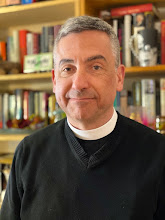

 Posts
Posts

